You know that moment when you desperately need 20 minutes to finish anything – fold laundry, answer an email, drink coffee while it’s still hot?
I used to hand my toddler an iPad and feel guilty about it. Then I discovered sensory trays, and everything changed. These aren’t complicated Pinterest-perfect setups that take an hour to arrange and get destroyed in 30 seconds. I’m talking about simple, throw-it-together sensory play that actually works.
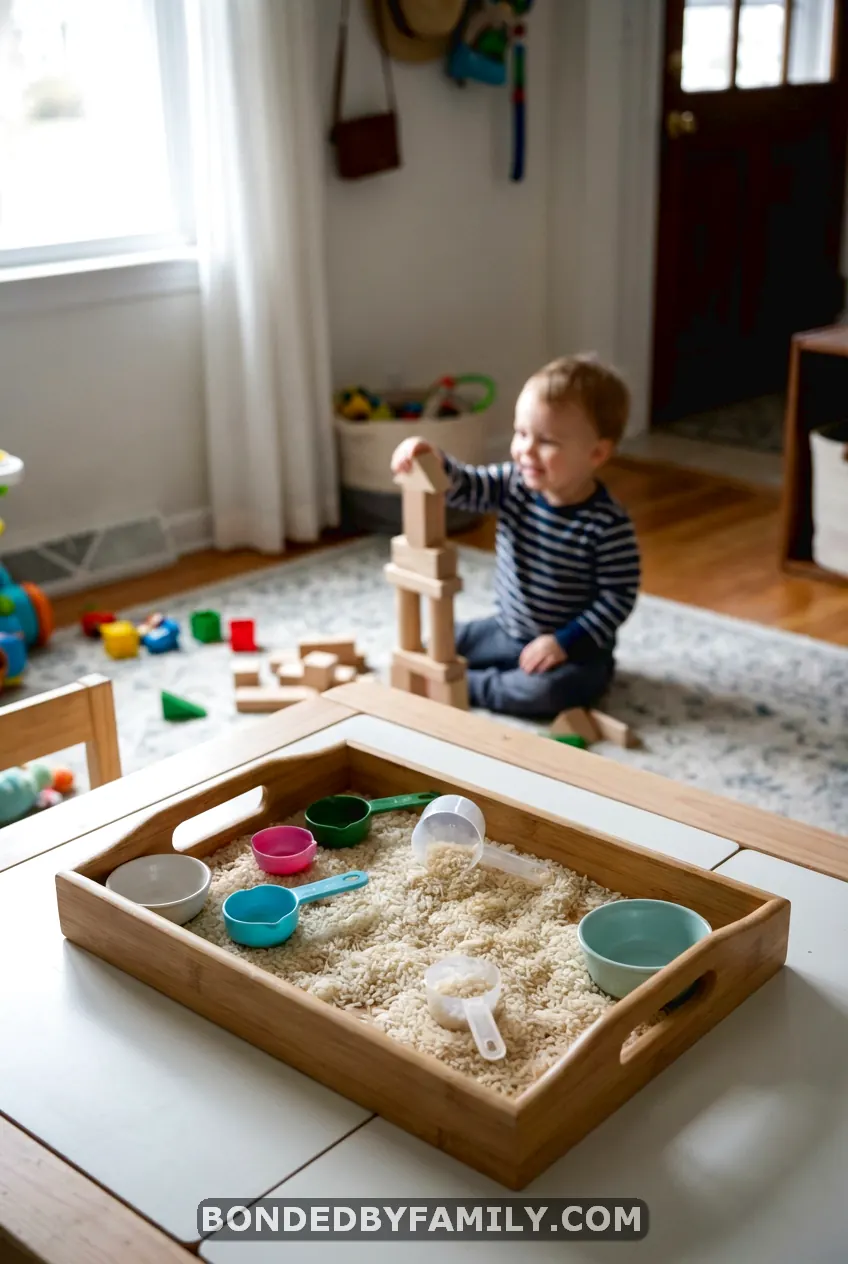
My 2-year-old will sit at our kitchen table for 45 minutes (yes, really) scooping, pouring, and exploring a basic rice bin with some measuring cups. The secret isn’t fancy materials or elaborate themes – it’s understanding what makes sensory play irresistible to little hands and curious minds.
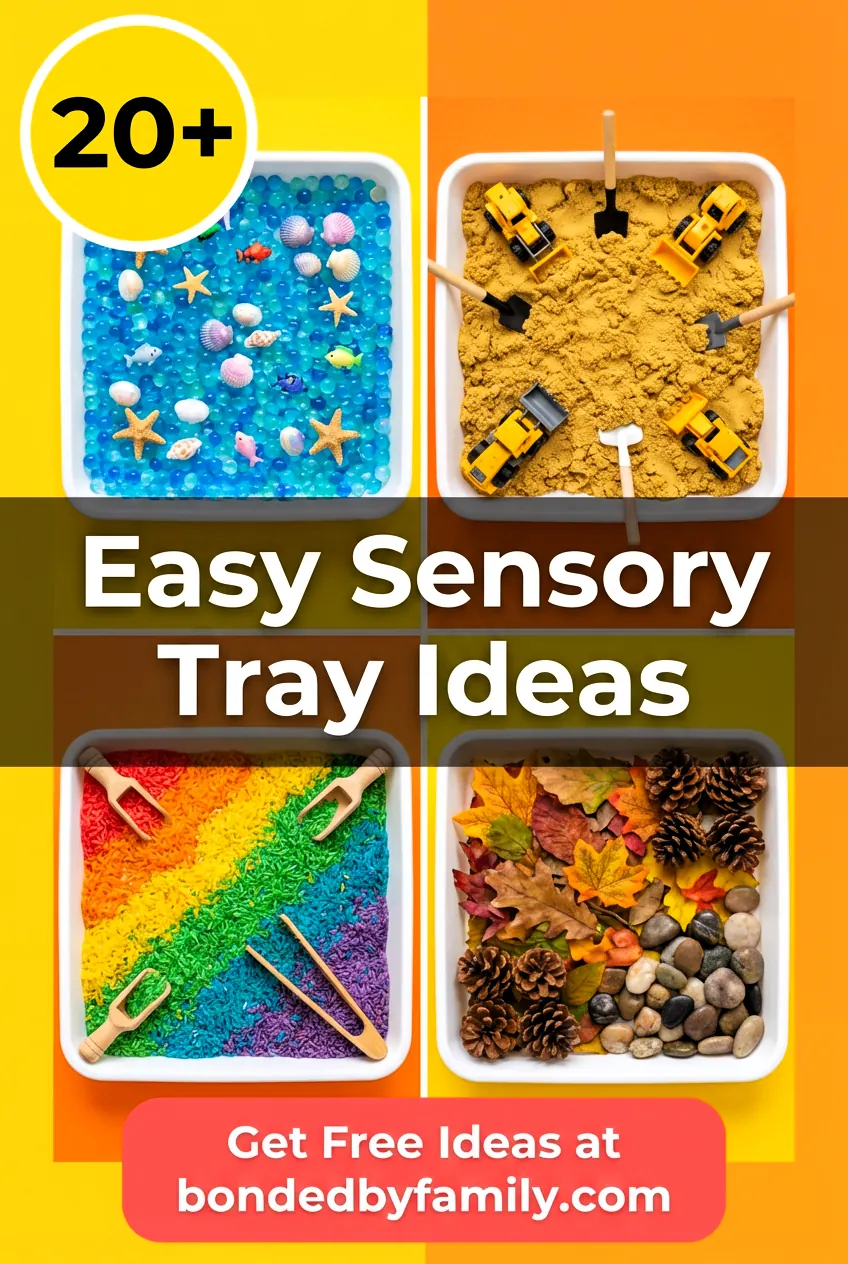
Sensory tray ideas don’t need to be complicated. In fact, the simpler ones often work better because your toddler can actually figure out what to do without constant redirection from you. I’ve learned this the hard way after creating elaborate setups that overwhelmed my daughter or required so much “help” from me that I might as well have just played with her the whole time.
What Makes Sensory Trays Actually Work
I spent my first month creating Pinterest-worthy sensory bins that my daughter ignored. Pretty setups with matching colors and carefully arranged materials that looked amazing in photos, but didn’t engage her for more than 5 minutes.
Here’s what I figured out: toddlers want to manipulate things. They want to scoop, pour, transfer, hide, find, and make satisfying sounds. The Instagram aesthetic matters way less than the tactile experience.
The best sensory tray has multiple textures and tools for exploration. Smooth water beads mixed with rough dried chickpeas. Cold items next to room temperature items. Things that pour easily alongside things that stick together. These contrasts are what keep little hands busy and brains engaged.
The Foundation Materials You Actually Need
Forget buying expensive sensory kits. I’m going to be completely honest about what’s worth the money and what you can skip.
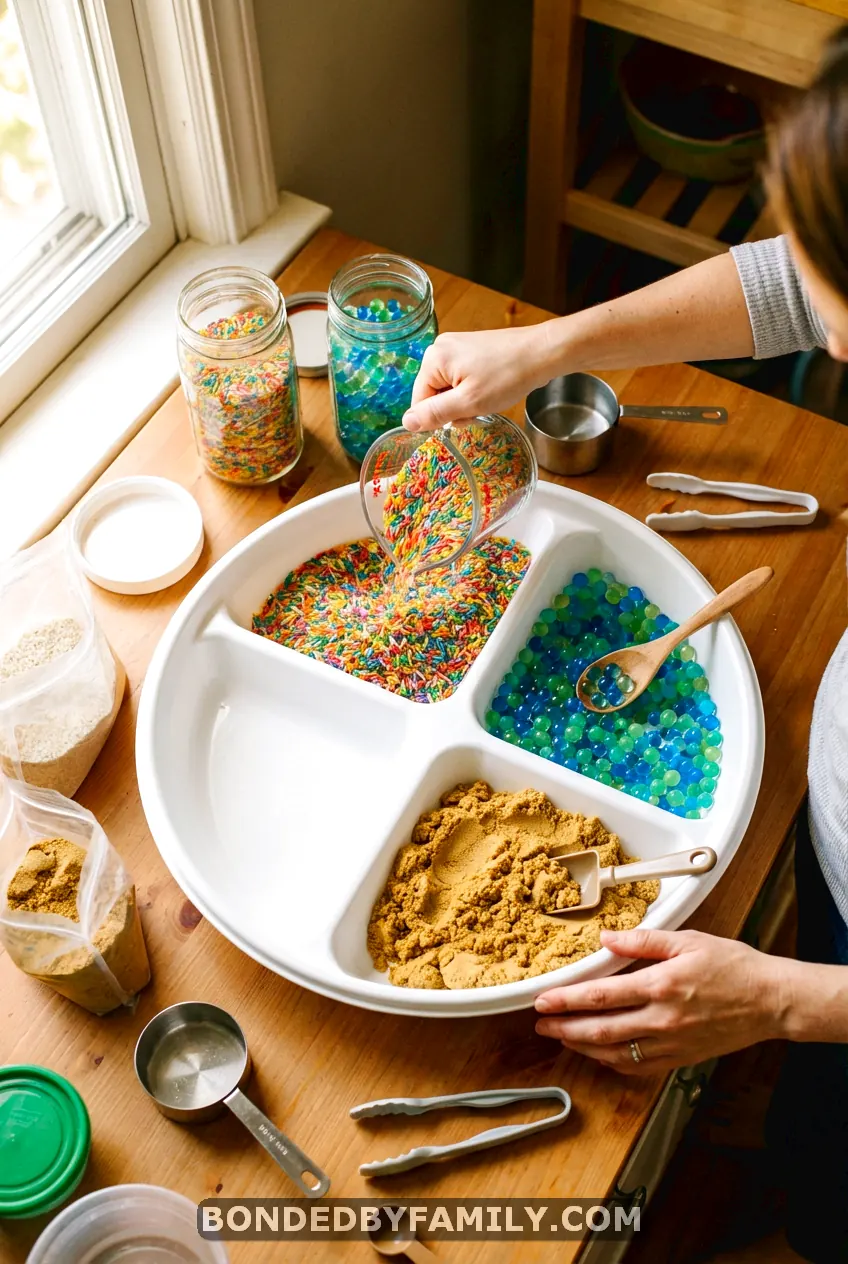
Rice is your MVP. Buy a 10-pound bag for $8, and you’re set for months. Dye it with food coloring and vinegar if you want different colors (takes 5 minutes), or just use it plain. My daughter prefers plain rice half the time anyway because she can mix in whatever she finds interesting that day.
Water beads were a game-changer for us, but here’s the catch – you need to prepare them 4-6 hours ahead. I keep a jar of hydrated water beads in the fridge and they last about a week. They’re $12 for a giant bag that makes hundreds of cups of beads. Worth it.
Dried beans and pasta cost almost nothing and provide totally different textures than rice. Chickpeas are my favorite because they’re big enough that they don’t get stuck in carpet fibers when my daughter inevitably dumps some on the floor.
Kinetic sand is the one “fancy” item I actually recommend buying. Yes, it’s $15-20 for 3 pounds, but it lasts forever because it doesn’t dry out. Regular sand needs water added constantly and makes a bigger mess. Kinetic sand stays moldable and cleans up better.
Ocean & Water-Themed Sensory Trays
Water sensory play is messy, but it’s also the most engaging. My daughter will play with water longer than literally anything else. I’ve learned to embrace the mess because the independent play time is worth it.
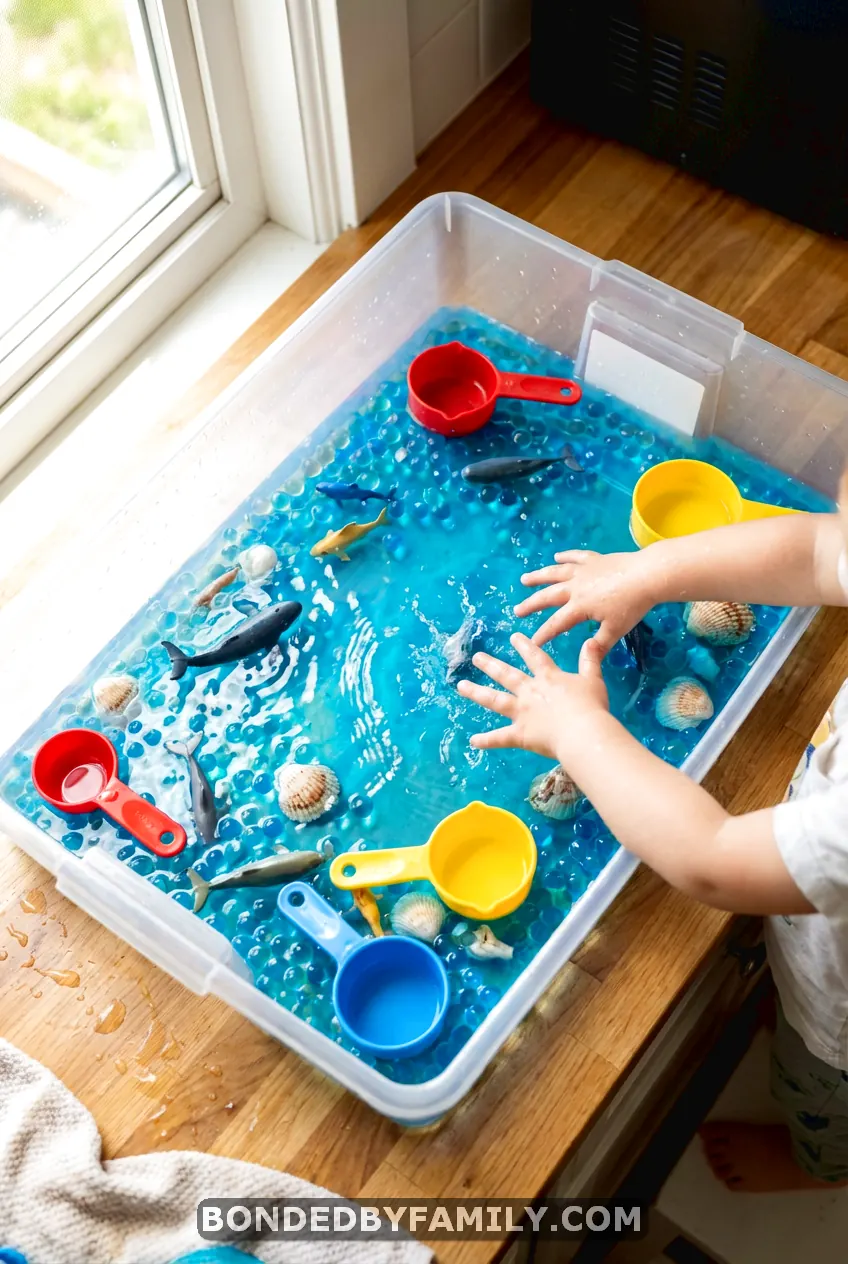
Start with your basic tray – I use an under-bed storage container because it’s big and contains spills better than those cute Instagram trays. Add blue-dyed water (food coloring works fine), drop in some plastic ocean animals, seashells if you have them, and measuring cups in different sizes.
The magic happens when you add water beads to the mix. Suddenly, your ocean sensory tray has “eggs” to find, squishy textures to squish, and things that feel completely different than the water. My daughter calls them “squishy balls” and will spend 30 minutes just transferring them from one container to another.
For a taste-safe version (because let’s be real, toddlers taste everything), use cooked blue spaghetti. Yes, this sounds weird. Yes, it works amazingly well. Cook pasta, rinse with cold water, add blue food coloring and a bit of oil so it doesn’t stick together, and you’ve got ocean “seaweed” that’s safe if they decide to snack while playing.
Construction & Vehicle Sensory Play
This theme was a surprise hit for us. I thought my daughter wouldn’t care about trucks, but turns out all toddlers love dumping, filling, and pretending to “work.”
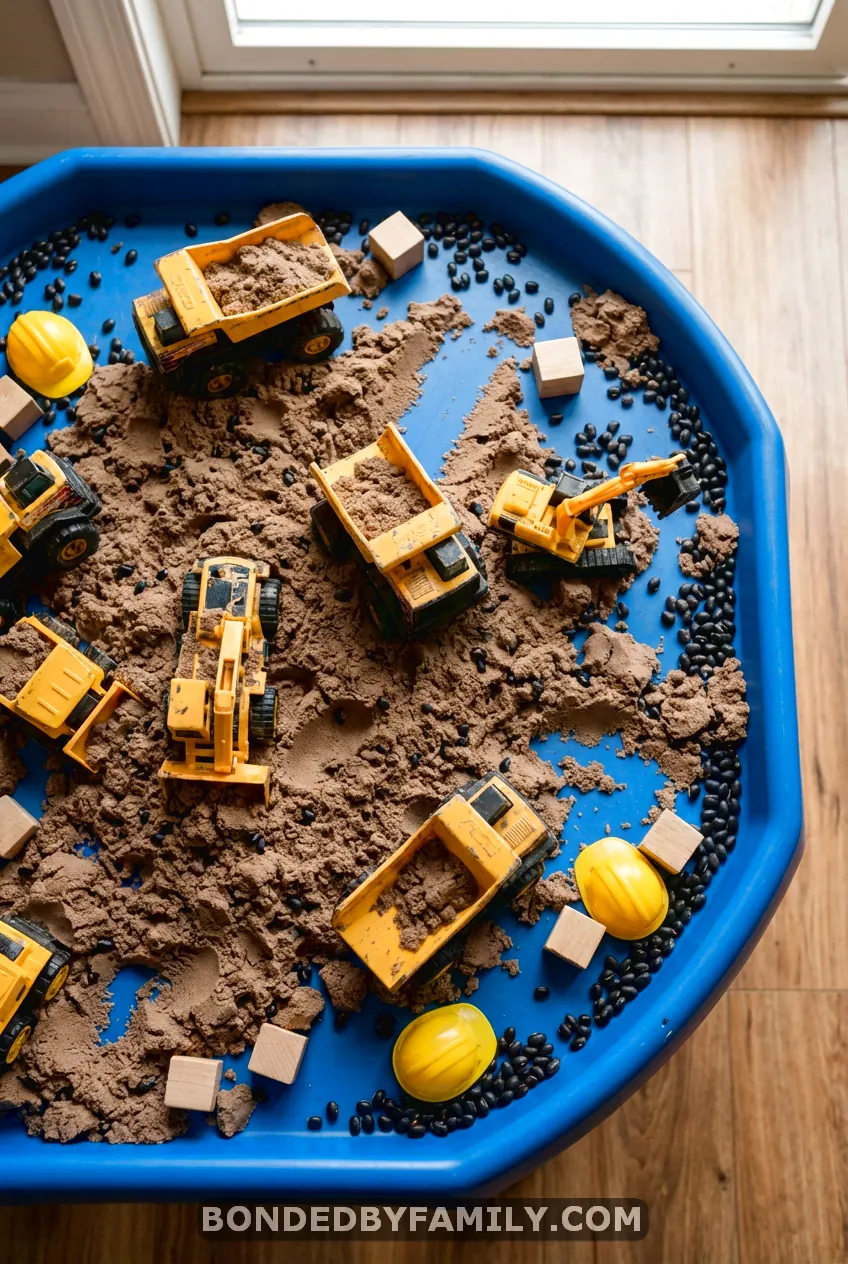
Use kinetic sand or a mixture of flour and oil (makes a moldable “moon sand” that’s taste-safe) as your base. Add in whatever toy vehicles you have – doesn’t need to be fancy. We use hand-me-down trucks that are missing wheels, and she doesn’t care.
The secret ingredient is dried lentils or black beans mixed into the kinetic sand. It creates “rocks” or “gravel” that make satisfying sounds when scooped and give your toddler two distinct textures to work with in the same tray.
Small wooden blocks become “materials to transport.” Cotton balls become “clouds” or “foam.” Literally anything can fit into this theme if you frame it right. I’ve used wadded-up brown paper as “dirt piles” and my daughter was absolutely convinced we had a real construction site.
Rainbow Sorting & Color Learning Trays
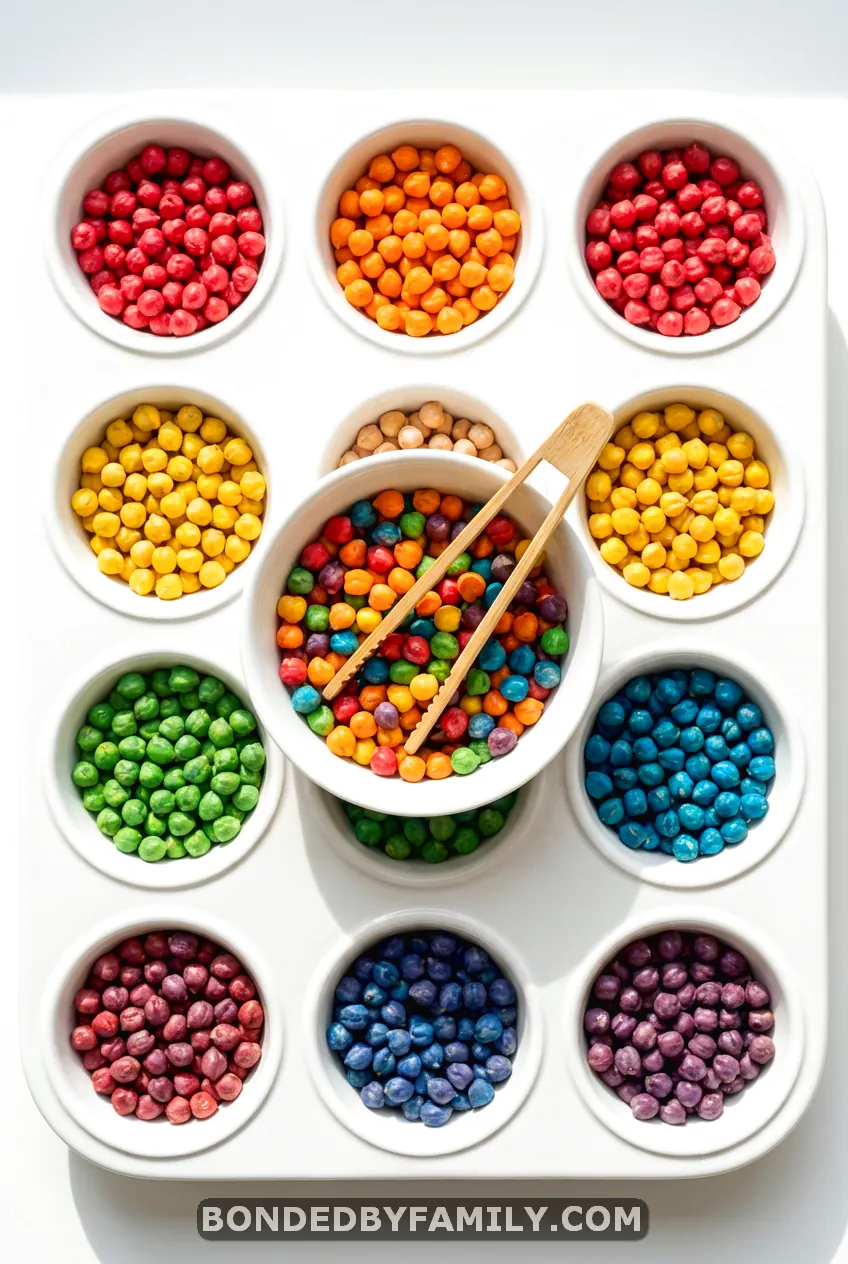
This is the Pinterest-pretty option that actually has educational value. I use muffin tins for this because they’re already divided into sections and I don’t need to buy anything special.
Dye rice or chickpeas in 6 different colors. Yes, this takes time upfront (about 15 minutes total), but then you have colored sensory materials for months. Mix them all together in a bowl, set out your muffin tin, give your toddler some tongs or a spoon, and let them sort.
Here’s what surprised me: my 2-year-old doesn’t sort perfectly by color. She’ll put red items in the blue section because she likes how it looks. And that’s completely fine. The learning happens through the manipulation, the decision-making, and the fine motor practice – not from achieving Instagram-perfect sorted sections.
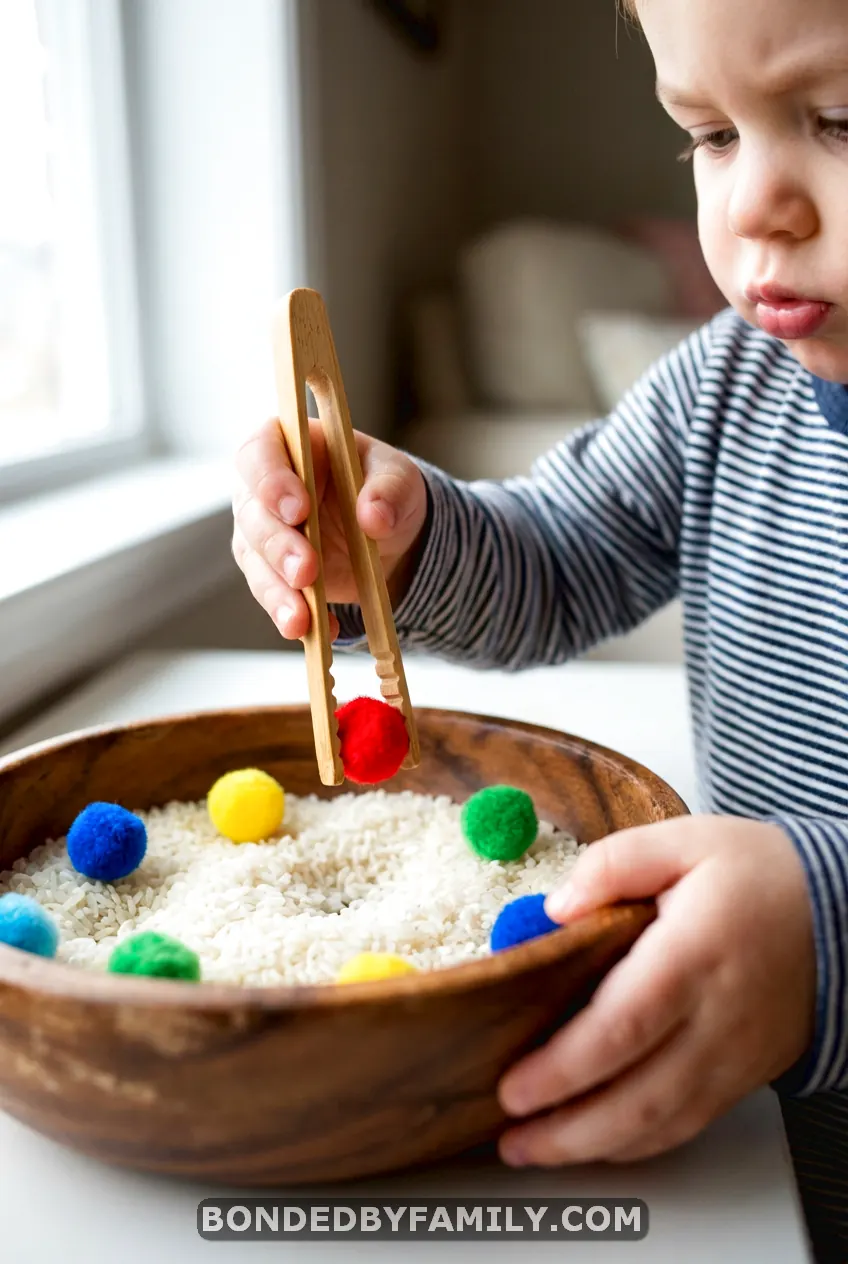
For older toddlers (2.5+), add a “challenge” element by hiding the colored items in a larger base material. Bury colored pom-poms in white rice and let them excavate. It combines the sensory experience with color recognition and adds an element of discovery that keeps them engaged longer.
Seasonal & Holiday Sensory Trays
I rotate our sensory tray themes with the seasons because it takes zero extra effort and makes the activity feel fresh. My daughter genuinely gets excited when I announce we’re doing “fall sensory play” because she knows what’s coming.
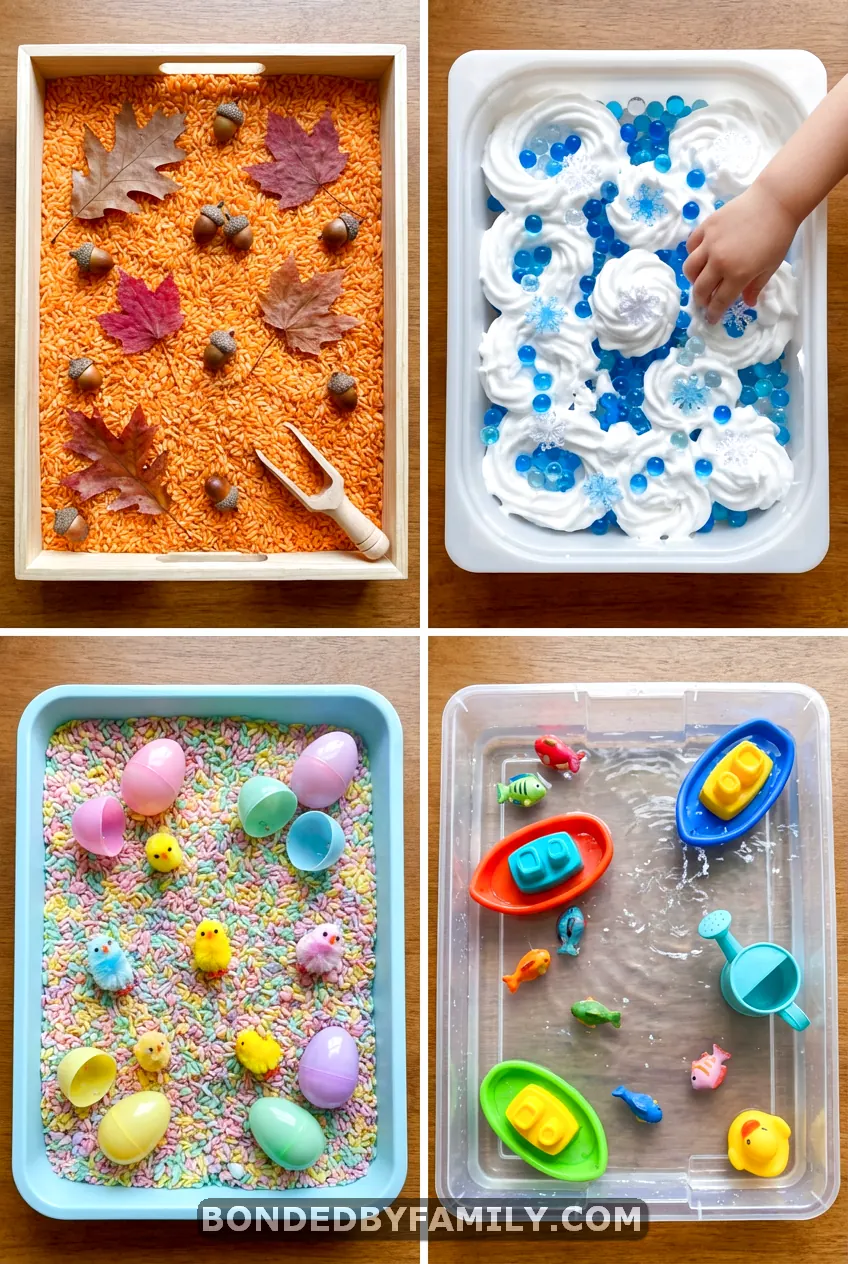
Fall sensory trays are the easiest – go outside and collect leaves, acorns, pinecones, and sticks. Add orange and brown dyed rice, some mini pumpkins from the dollar store, and maybe some cinnamon sticks for smell. The natural materials cost nothing and provide better sensory input than most store-bought items.
Winter sensory play is where fake snow (shaving cream) becomes your best friend. Mix shaving cream with a bit of baking soda for a more snow-like texture. Add plastic snowmen, mini penguin figurines, and some white pom-poms as “snowballs.” The whole setup costs about $3 and provides hours of entertainment.
Spring trays work well with pastel-dyed rice, plastic eggs for hiding and finding games, fake flowers from the dollar store, and grass clippings from your yard. I know grass clippings sound weird, but the smell adds a sensory element that artificial materials can’t match.
For summer sensory bins, embrace the water play outside. Fill a plastic pool or large tray with water, add ice cubes, throw in some bath toys and cups, and let them go wild. The easiest sensory play is also the messiest, but that’s what hoses are for.
Taste-Safe Options for Younger Toddlers
If your kid is still in the “everything goes in my mouth” phase, taste-safe sensory play saves your sanity. I learned this after spending 45 minutes hovering over my daughter, making sure she didn’t eat water beads.
Cooked pasta becomes your multi-tool. Spaghetti for “worms,” penne for building, shells for scooping. Cook it, add food coloring, toss with a bit of oil, and you’ve got sensory play that won’t send you to urgent care if they take a bite.
Oats work exactly like rice, but won’t hurt if swallowed. Add some measuring cups and containers, and younger toddlers get the same scooping and pouring experience without the choking hazard stress.
Flour-based cloud dough (2 parts flour, 1 part oil) is moldable, safe, and actually fun to clean up because it doesn’t stick to everything like playdough. Add a drop of lavender or vanilla extract for smell, and you’ve created a multisensory experience.
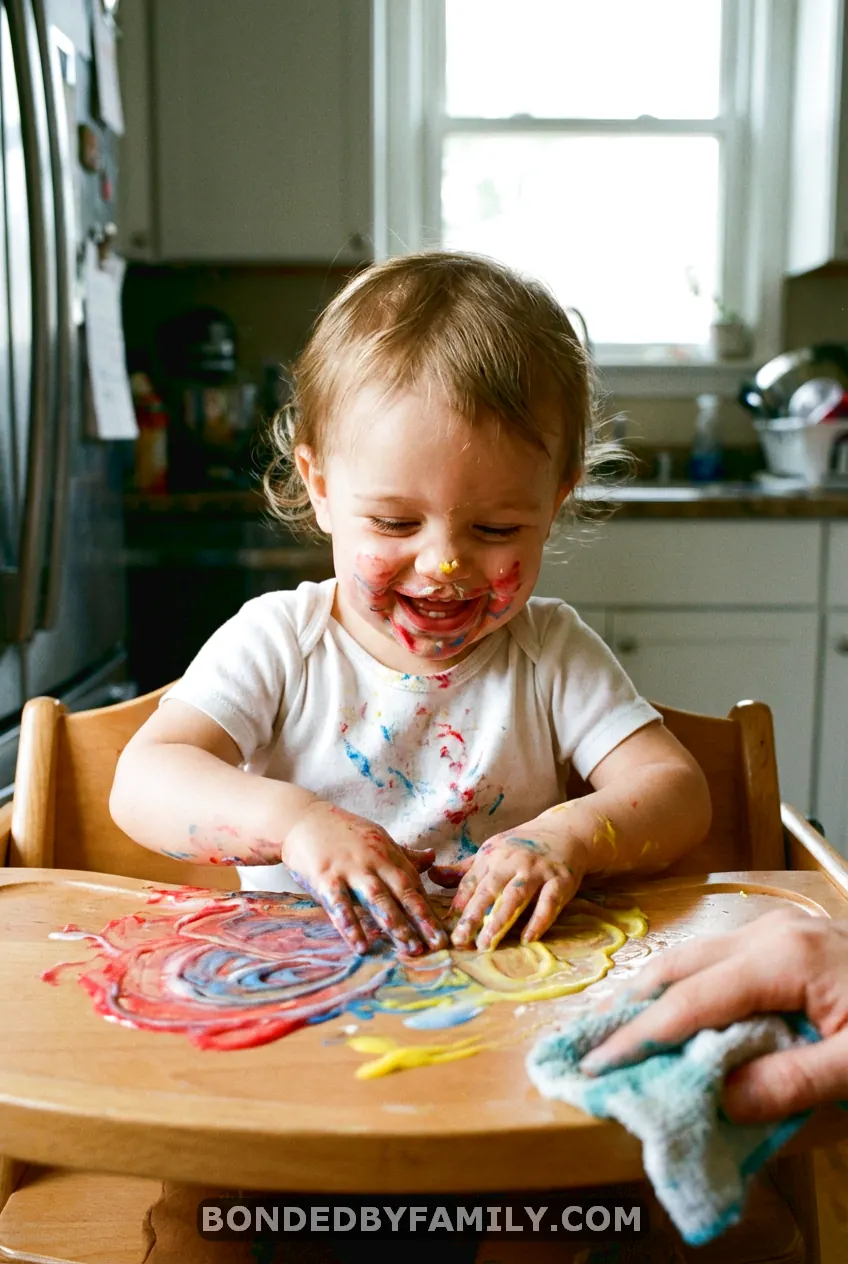
Yogurt painting sounds messy, but it’s a contained mess. Put your toddler in a high chair with just a diaper, put a big glob of yogurt (dyed with food coloring if you want) directly on their tray, and let them finger paint. Everything washes off with a wet cloth, and if they eat some yogurt, that’s literally the point of yogurt.
Small World Play Integration
This is where sensory trays level up from “keep them busy” to actual imaginative play. Small world play means creating miniature scenes that spark storytelling and pretend play.
Take your ocean sensory bin and add a narrative. “The dolphins are looking for their lost baby. Can you help them search in the water beads?” Suddenly, your kid isn’t just scooping – they’re problem-solving and creating stories.
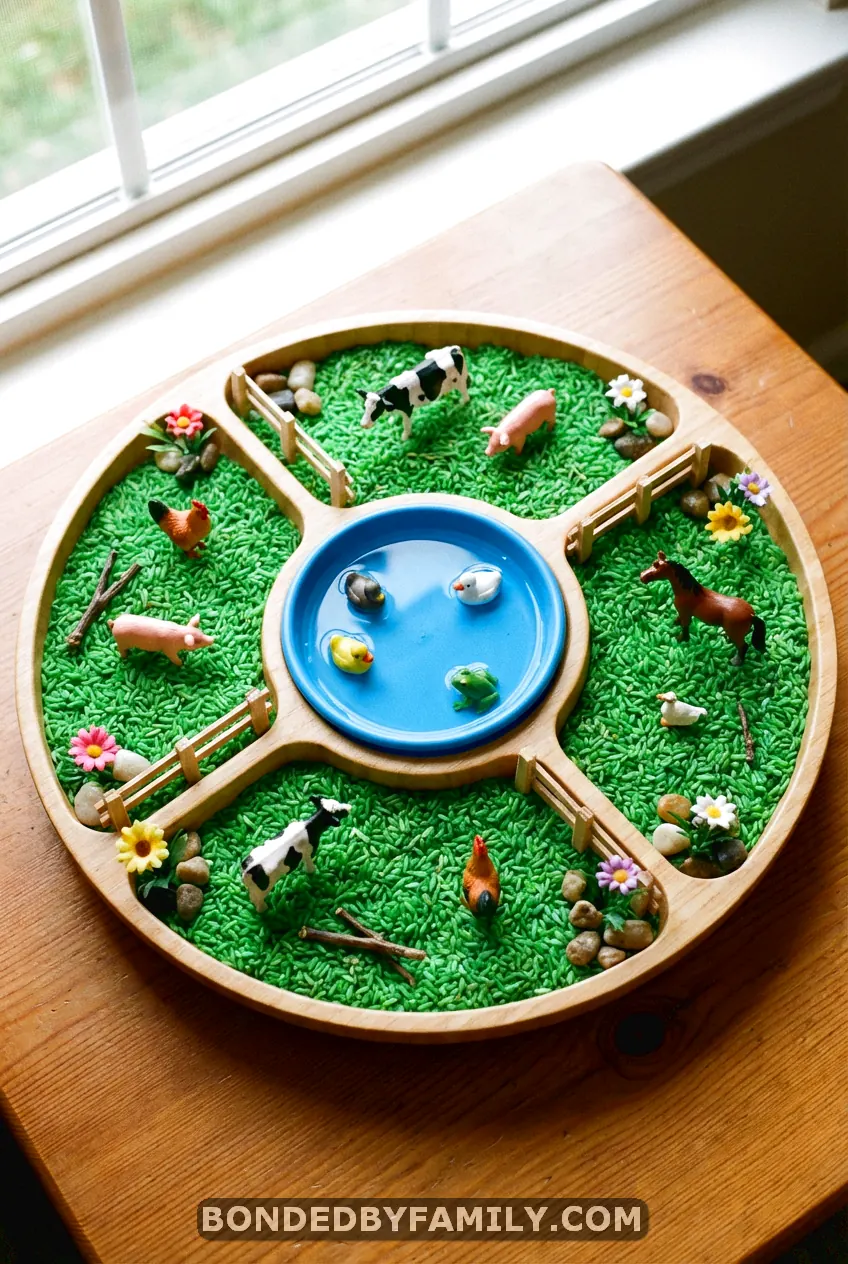
We did a farm sensory tray using green-dyed rice as grass, small farm animal figurines (literally any plastic animals work), a shallow dish of water as a “pond,” and some popsicle sticks as “fences.” My daughter spent an hour setting up farm scenes, moving animals around, and telling me elaborate stories about the pig who didn’t want to share the pond.
For dinosaur small world play, mix sand with small rocks and plastic plants, hide plastic dinosaurs, and let them excavate. The “archaeological dig” angle makes it feel special even though it’s just sand and toys.
The key is having figurines that fit the theme. I’ve collected ours slowly – dollar store animal packs, thrift store finds, hand-me-downs. You don’t need expensive toys. You need objects that spark imagination.
The Tools That Make Sensory Play Better
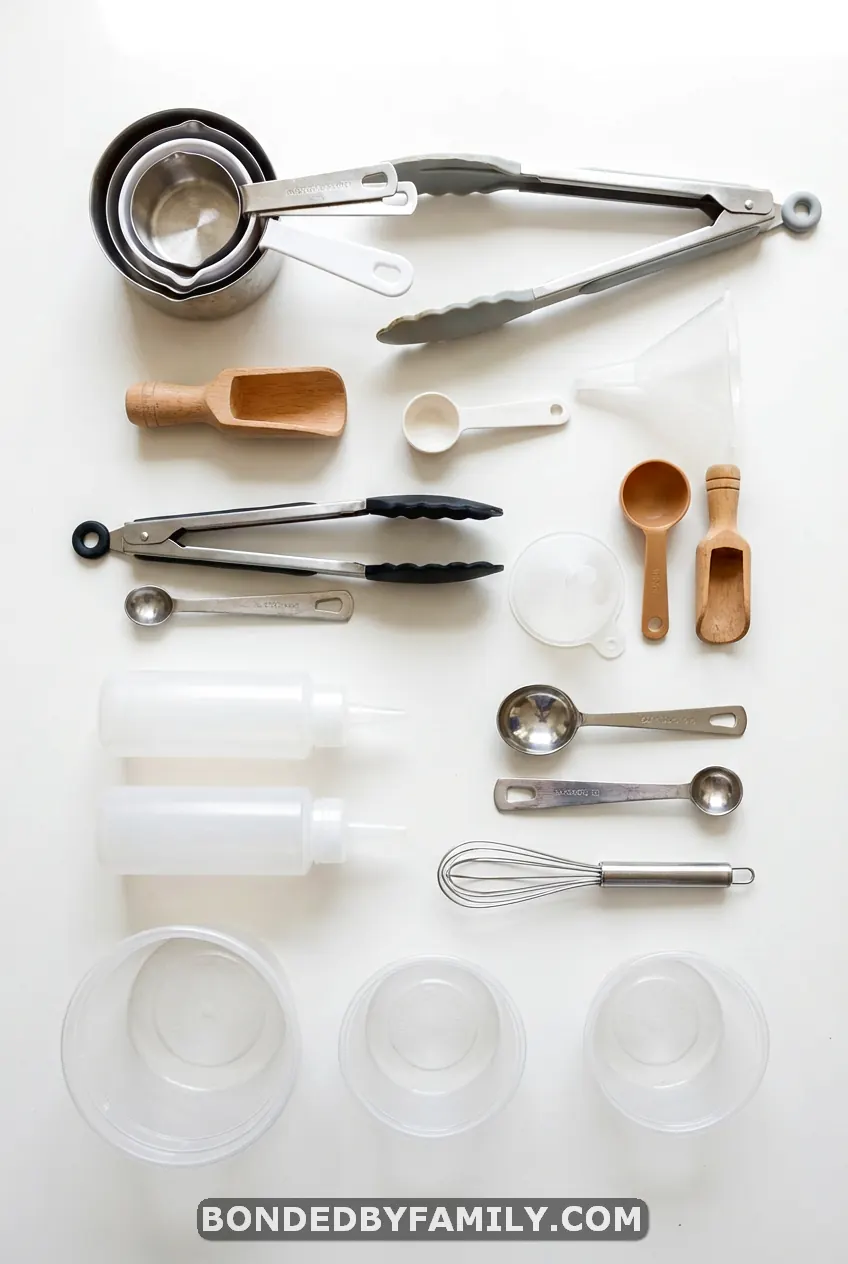
The materials matter, but the tools you provide change how long your kid stays engaged. I learned this when I gave my daughter just a spoon with her sensory bin and she lost interest in 10 minutes. Same bin, multiple tools, and she played for 45 minutes.
Variety in scoops matters. A tablespoon scoops differently than a ladle, which works differently than a measuring cup. Different sizes, shapes, and depths teach cause and effect – “this big scoop can’t fit through that small opening” is a problem-solving experience.
Tongs, tweezers, and grabbers add challenge and develop fine motor skills. My daughter started with fat kitchen tongs and now uses skinny metal ones to pick up individual water beads. Watching her concentration when she’s trying to grab something tiny is actually fascinating.
Funnels and tubes turn pouring into a science experiment. We use old water bottles with the bottoms cut off, actual funnels from baking, and those plastic tubes from old toy sets. Watching rice or water flow through a funnel mesmerizes toddlers in a way that straight pouring doesn’t.
Containers of different sizes let them experiment with volume and spatial relationships. I save yogurt containers, plastic jars, and random cups specifically for sensory play. More containers = more transfer options = longer play time.
Setting Up Your Sensory Tray System
This is the part nobody talks about – how to actually make sensory play sustainable in your daily routine instead of a once-a-month Pinterest project.
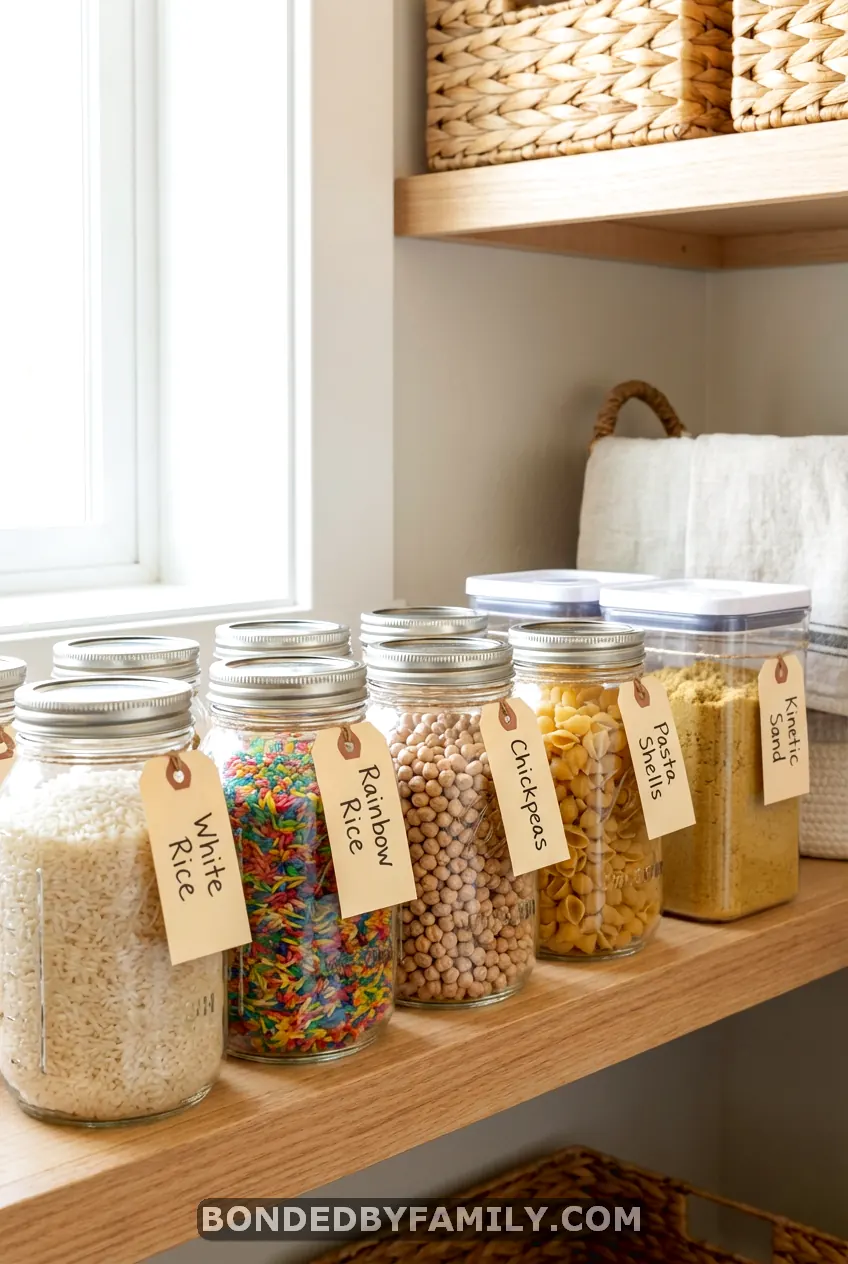
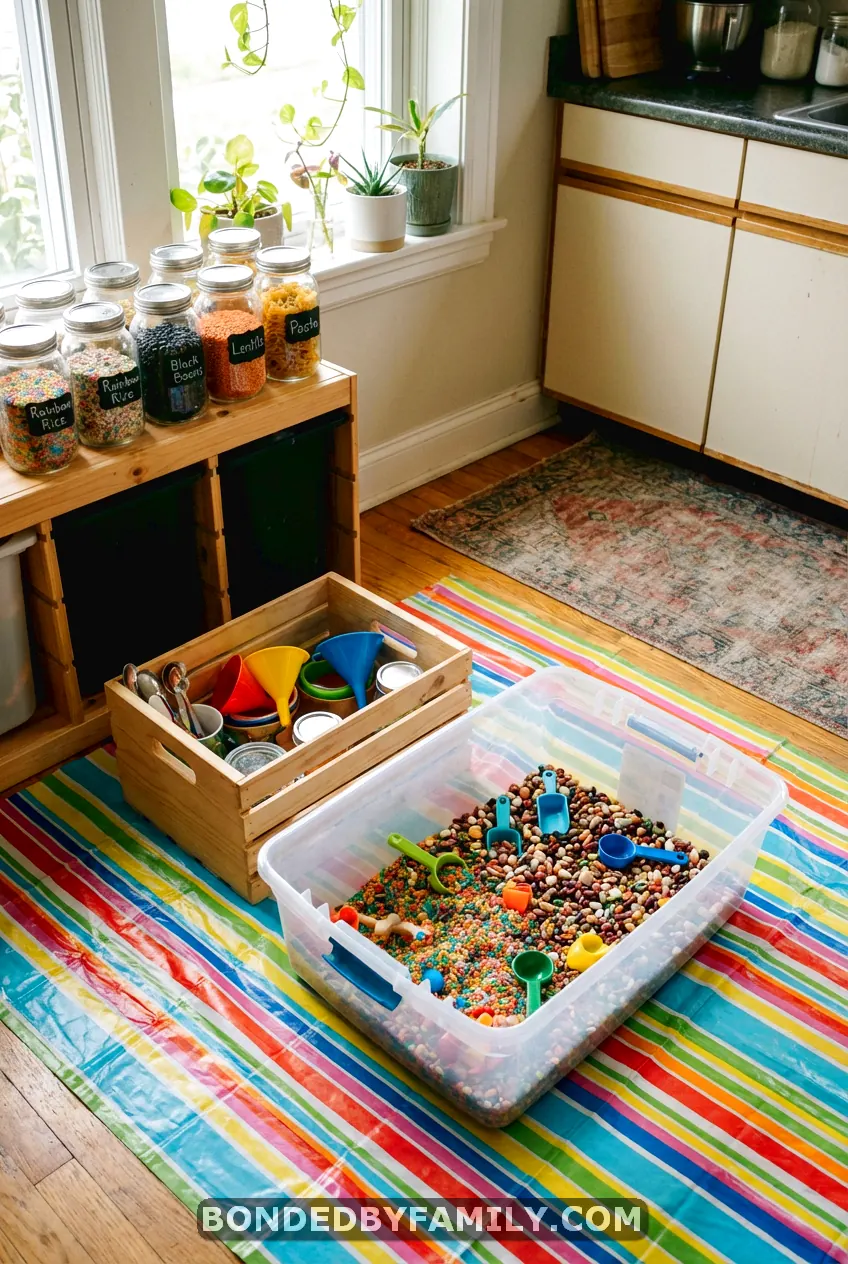
I keep all our sensory bases (rice, beans, pasta, water beads) in clear containers in our pantry. Takes 2 minutes to grab what I need. The figurines and tools live in a labeled bin in our playroom. This isn’t Instagram-worthy organizing, but it means I can set up sensory play in under 5 minutes.
The tray itself matters. I tried those cute wooden trays from Target – too small, materials spilled constantly. Now I use under-bed storage containers ($4 each at Walmart). They’re big enough for real play, have high sides to contain mess, and if they get stained or gross, I’m not heartbroken because they cost $4.
Put a shower curtain or plastic tablecloth under the tray. This was a game-changer for me. Rice on hardwood floors is annoying but manageable. Rice on the carpet? Nightmare. The tablecloth catches 90% of spills, and you can just lift it up and pour everything back into the bin.
Timing matters. I do sensory play mid-morning after breakfast when my daughter’s energy is high, but she’s not yet hungry or tired. Setting up sensory trays at 5 pm when she’s melting down doesn’t work – it just adds stress to an already chaotic time.
Managing the Mess (Because Let’s Be Real)
Sensory play is messy. Anyone who tells you that doesn’t make a mess is either lying or doing it wrong. But mess management is a skill you can learn.
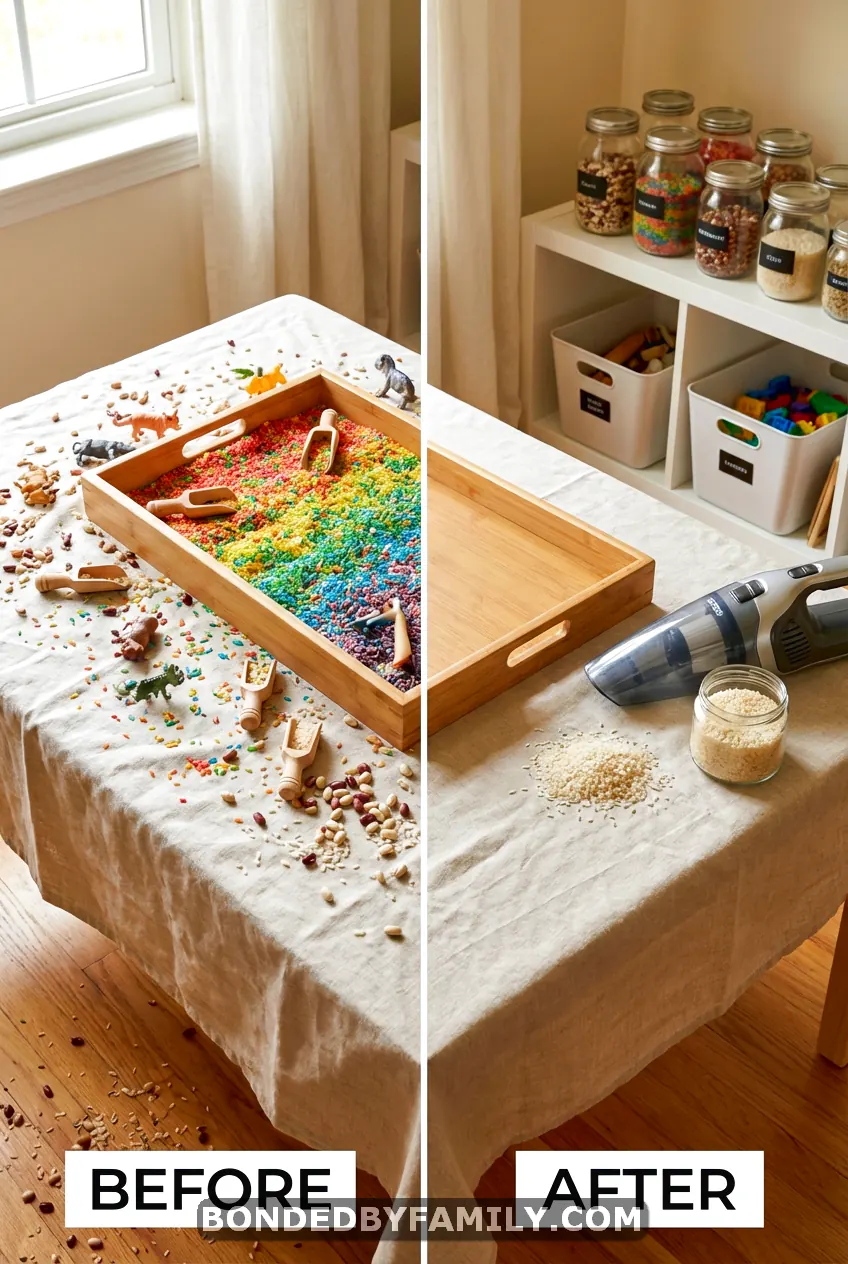
Dry materials (rice, beans, pasta) are actually easier to clean than people think. I sweep up what I can during play, then vacuum after. The secret is having a small handheld vacuum ready to go. Trying to drag out the big vacuum makes cleanup feel overwhelming, so you avoid sensory play entirely.
Water play happens in the bathroom or outside for us. Kitchen floors don’t love standing water, and I got tired of mopping. Bathroom floors are designed to get wet. Put towels around the tray, let them splash, and wipe down the bathroom when you’re done. Same cleanup you’d do after bath time.
Foam and paint activities only happen in the high chair or bathtub now. I learned this the hard way. Yes, you can set up shaving cream on a table, but then you’re spending 20 minutes wiping down chairs, floors, walls, and somehow the ceiling. A high chair or bathtub means contained cleanup.
I make my daughter help with the cleanup. She’s 2. Her “help” is minimal. But the routine matters – we play, then we clean up together. Even if it’s just her putting three beans back in the container while I do the actual work, she’s learning that fun activities come with responsibilities.
What Actually Keeps Toddlers Engaged
I’ve tried 50+ sensory tray setups. Some were hits. Many were flops. Here’s what actually makes the difference between 10 minutes of play and an hour of engagement.
Hide and seek elements. Bury small objects in your sensory base and let them excavate. This works with literally any theme – hide plastic bugs in dirt, hide fish in water beads, hide pom-poms in rice. The discovery aspect keeps them searching even after they’ve found everything once.
Multiple textures in one tray. Don’t just give them rice. Give them rice, water beads, and kinetic sand all in separate sections of the same tray. They’ll spend time exploring the different feelings and figuring out how each material behaves differently.
Problem-solving challenges. “Can you move all the red pom-poms from this bowl to that bowl using only the tongs?” My daughter doesn’t succeed, but she tries for 20 minutes straight. The challenge is engaging even when it’s difficult.
Sound elements. Add materials that make noise – dried beans in a container make shaker sounds, water splashes, rice pours with a satisfying sound. Auditory feedback makes sensory play more engaging for toddlers who are still developing their senses.
The activities that flop? Ones that are too prescribed. If I set up a tray and tell my daughter exactly how to play with it, she’s done in 5 minutes. If I set up the same tray and let her discover it herself, she plays for 45 minutes.
When Sensory Play Doesn’t Work
Sometimes sensory trays flop. My daughter has rejected perfectly good setups for no apparent reason. It’s frustrating when you spend time preparing something and they don’t care.
If your toddler isn’t interested, don’t force it. Pack it up and try another day. I’ve had sensory bins sit ignored for a week, then suddenly become their favorite activity. Toddler interests are unpredictable.
Age matters more than people admit. Some sensory activities work better at 18 months than at 2.5 years. My daughter loved simple scooping bins at 18 months, but needs more complex themes now. If an activity isn’t engaging, it might just be too simple or too advanced for where they are developmentally.
Some kids are sensory sensitive and don’t enjoy messy textures. If your toddler freaks out about getting wet or sticky, that’s valid. Try sensory play with tools only – let them scoop and pour without touching materials directly. Some kids warm up to tactile play over time, others never do, and that’s okay.
Timing is everything. Sensory play when they’re hungry = disaster. Sensory play when they’re overtired = meltdown. Sensory play during their natural active play time = success. Pay attention to when your kid is most engaged with activities in general, and schedule sensory play then.
The Bottom Line About Sensory Trays
Sensory play isn’t magic, but it’s one of the most effective tools I have for keeping my toddler engaged in independent play. The difference between sensory trays that work and ones that fail comes down to understanding what your specific kid finds interesting.
My daughter prefers water play over everything else. Your toddler might love kinetic sand or be obsessed with scooping rice. The themes and setups I’ve shared work for us, but you need to experiment to find what works for your child.
The Pinterest-perfect sensory bins aren’t realistic for daily life. What is realistic? Grabbing rice and some cups, dumping them in a tray, and letting your toddler explore while you get something done. That’s the real goal here – not creating Instagram content, but creating independent play opportunities that genuinely engage your kid.
Start with one simple sensory tray this week. Just rice and measuring cups if that’s all you have. Watch what your toddler does with it. Do they scoop? Pour? Transfer? Mix? Their natural play tells you what elements to add next.
Sensory trays have bought me countless hours of time to be productive, and more importantly, they’ve given my daughter a way to explore, learn, and develop skills through play. That’s worth the occasional mess.