You know that moment when your kid looks at you with the “I’m bored” face, and you realize you’ve got about 37 seconds before chaos erupts? I’ve been there more times than I can count. Not the “let’s scroll through 50 activity ideas and feel overwhelmed” situation – the “I need something that works RIGHT NOW” crisis.
Here’s what I’ve learned after testing activities with my own kids and analyzing what actually gets saved and shared by thousands of other parents: the best activities aren’t complicated. They’re specific, hands-on, and create something kids actually want to make again.
What Parents Really Need (And What Actually Works)
Let me be straight with you – most activity lists are aspirational garbage. They look cute on Pinterest but require supplies you don’t have, time you don’t have, or a level of patience that disappeared after the third time someone asked, “What are we doing today?”
The activities that actually work share three things:
- They use stuff you already have (or can grab in one Target run)
- Kids can do most of it themselves after you show them once
- They’re messy enough to be fun, but not so messy that you want to cry
When I analyzed what activities get saved tens of thousands of times by real parents, three categories dominated: sensory play, creative crafts, and movement games. Not because they’re trendy, but because they actually solve the problem.
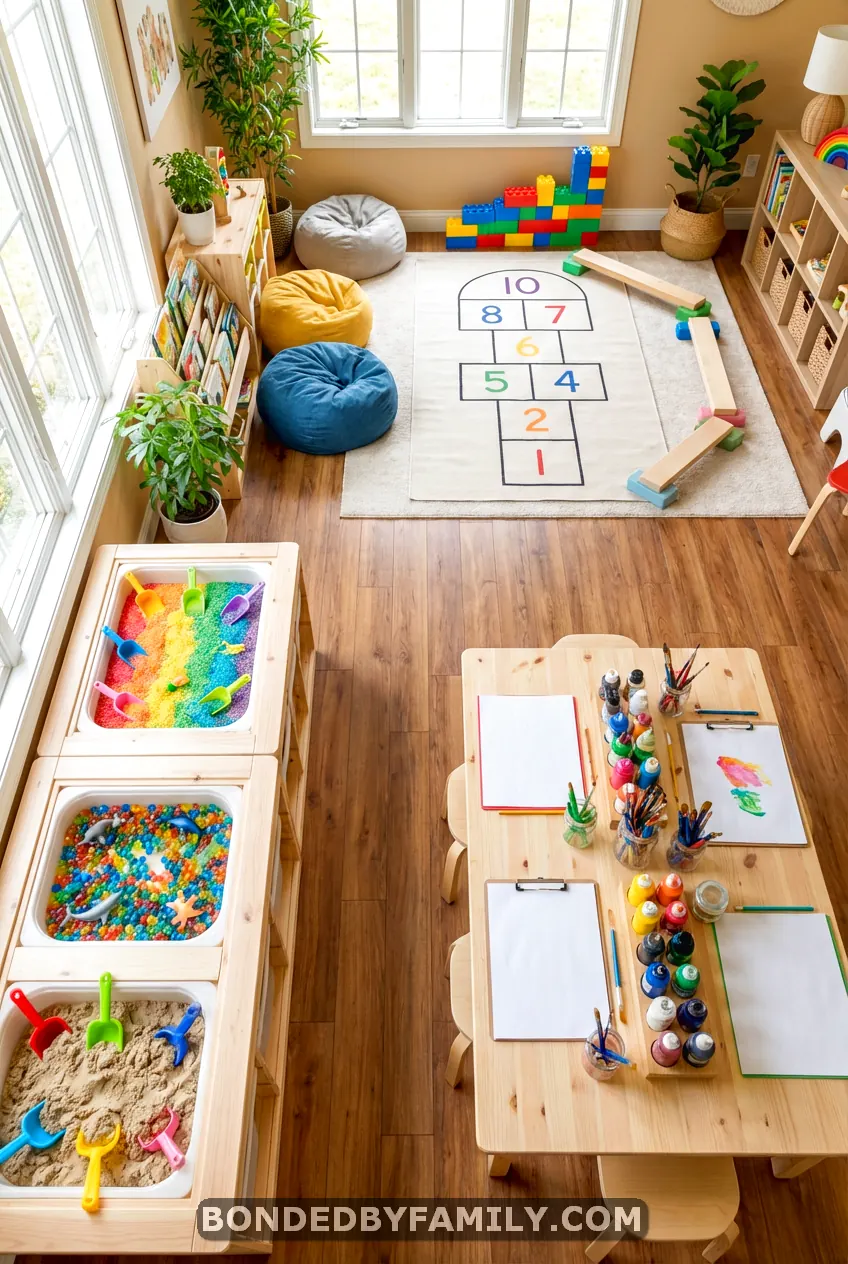
Sensory Play That Buys You Actual Peace
The Make-Your-Own-Material Projects
This category is gold because kids get absorbed in the MAKING, then absorbed in the PLAYING. You’re looking at 30-60 minutes of focus time, which in parent hours equals a small miracle.
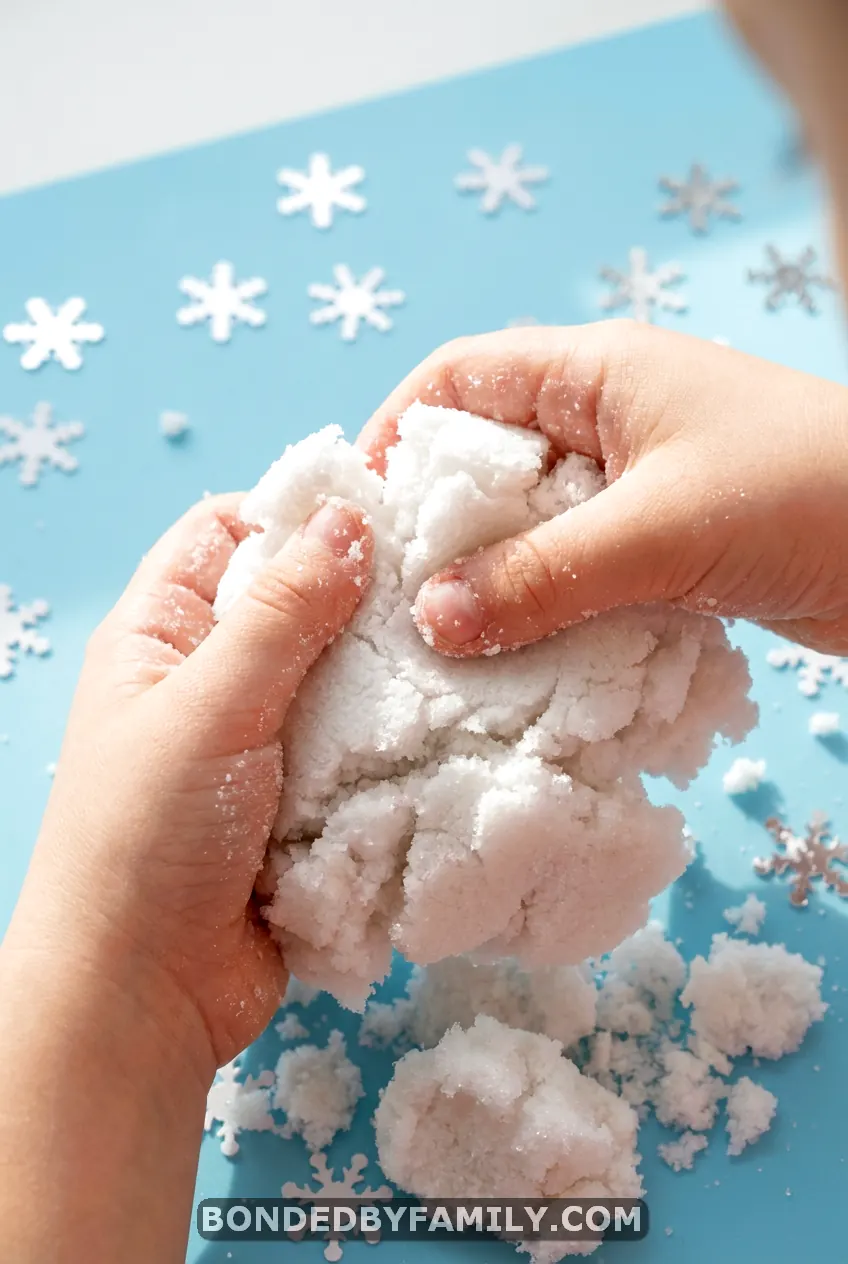
Fake Snow (2 Ingredients): Mix baking soda with hair conditioner until it reaches that perfect moldable texture. My kids have made this at least 20 times, and it never gets old. It actually feels cold like real snow, molds like snow, and doesn’t completely wreck your house.
Proportions: Start with 1 box of baking soda, and add conditioner gradually until it clumps when squeezed. The exact ratio matters less than the texture – you want it to hold shape but crumble when released.
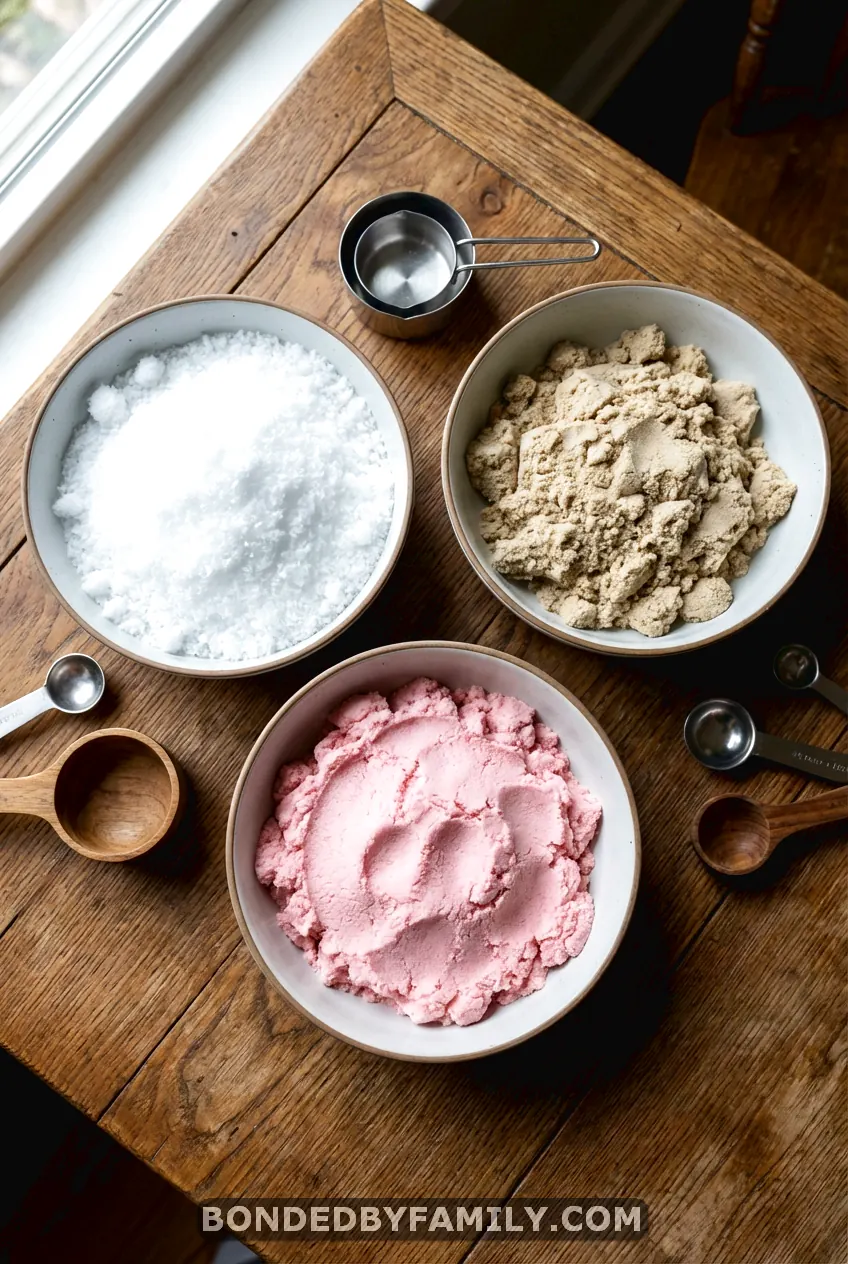
Moon Sand: Combine 8 cups of flour with 1 cup baby oil or cooking oil. This one smells better than fake snow and has this weirdly satisfying texture that kids can’t stop touching. It’s moldable but crumbly, and the oil prevents it from sticking to everything like Play-Doh does.
Pro tip: Add food coloring or liquid watercolors to the oil before mixing. Split the batch into multiple colors for even more engagement.
Cloud Dough: This is baby powder (or cornstarch if you’re sensitive to talc) mixed with the same conditioner technique as fake snow. The texture is somehow different enough that kids who’ve done fake snow still find this exciting.
Why these work: Kids get to measure, mix, and adjust. They’re experimenting with ratios without realizing it. Then they get to PLAY with what they made. Double engagement.
The Craft Projects They’ll Actually Finish
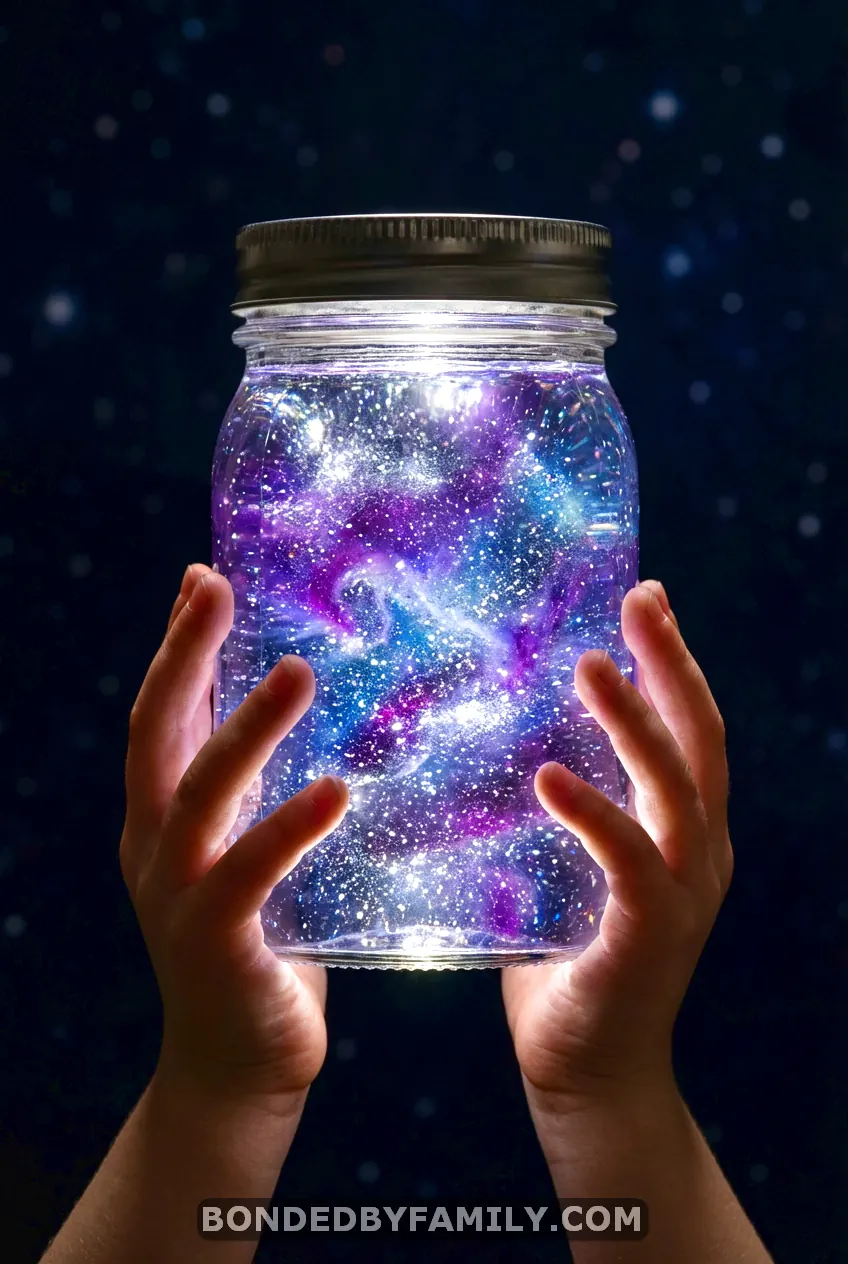
Galaxy Jars
Fill a clear jar or bottle with water (about 3/4 full). Add cotton balls torn into wispy pieces. Squeeze in different colors of acrylic paint or food coloring – blues, purples, a touch of pink. Add glitter. Seal tight and shake.
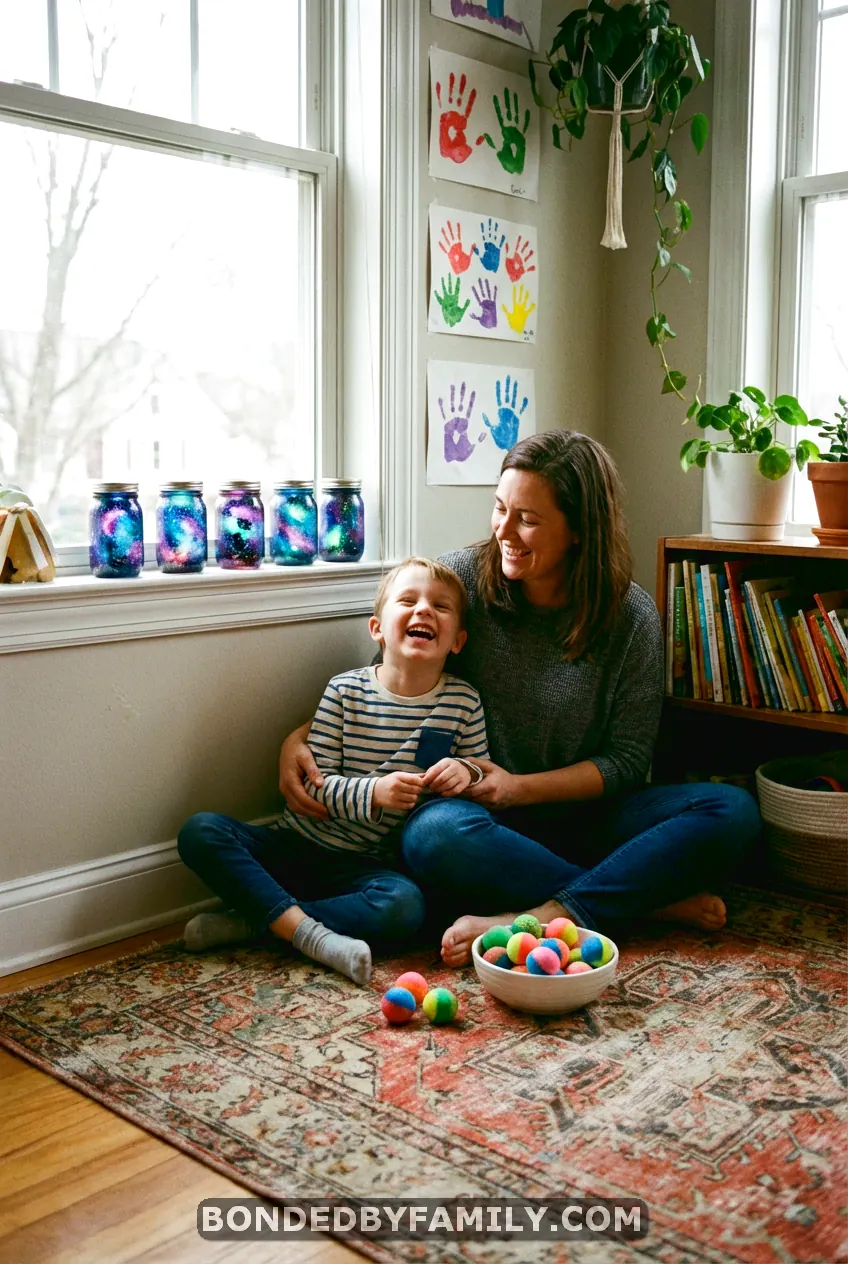
The result looks like a miniature galaxy you can hold in your hand. Kids shake it, watch colors swirl and separate, shake it again. It’s mesmerizing in a way that’s hard to explain until you see it.
Why it works: The transformation from random ingredients to something genuinely beautiful is immediate and satisfying. Plus, it’s a keeper – they’ll display it on their shelf and shake it whenever they walk by.
DIY Bouncy Balls
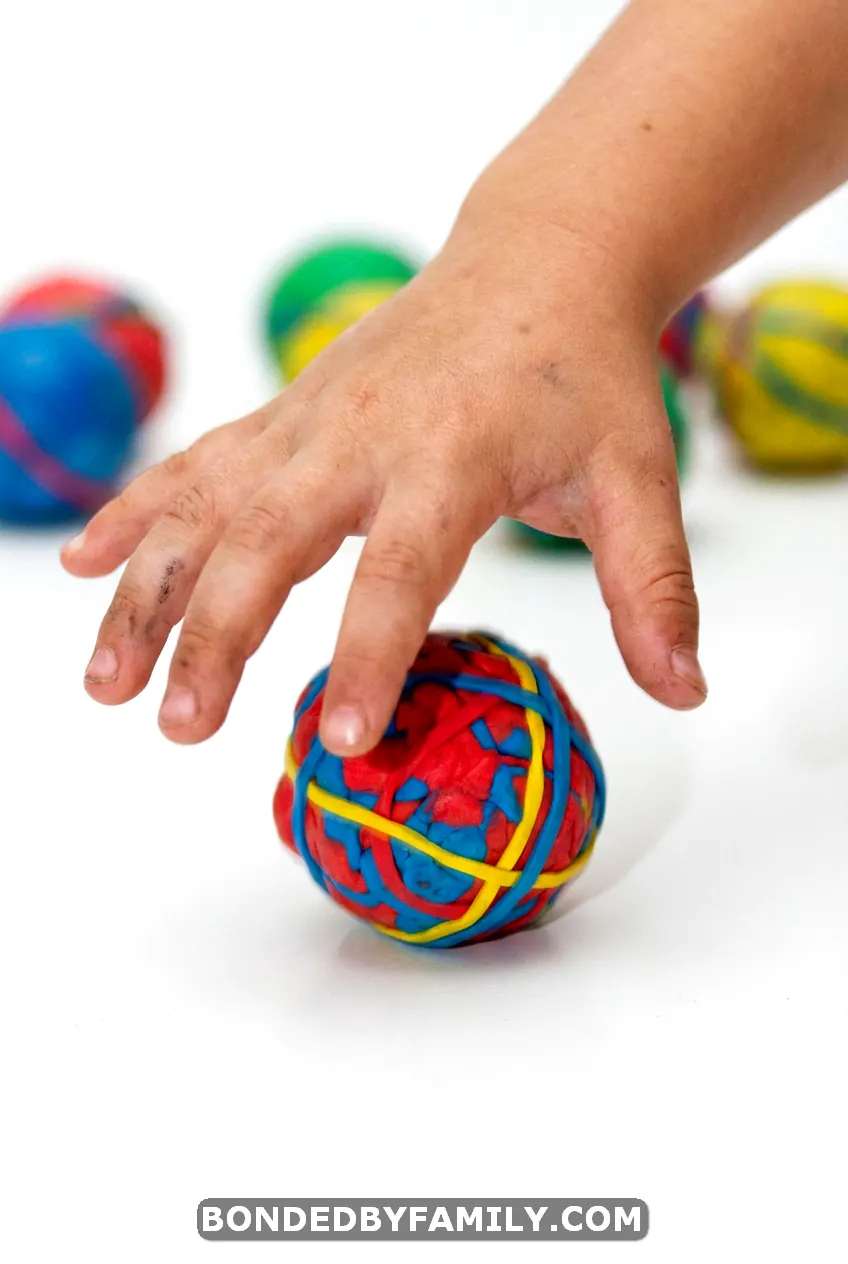
This one surprised me – it’s chemistry disguised as craft time. Mix white glue, cornstarch, and food coloring. Add borax solution (1/2 teaspoon borax dissolved in warm water). When you mix them, it immediately forms a ball. You have to work fast because it hardens quickly.
The ball actually bounces. Not as high as a Superball, but it legitimately bounces. My kids made a dozen in different colors and tested which ones bounced the highest on different surfaces.
Recipe:
- 2 tablespoons white glue
- 1 tablespoon cornstarch
- A few drops of food coloring
- Mix above, then add 1/2 teaspoon borax dissolved in 3 tablespoons warm water
- Stir immediately – it will turn to a solid blob within seconds
- Remove from the container and roll into a ball shape in your hands for 2-3 minutes
Safety note: Borax isn’t for eating. Supervise younger kids and wash their hands afterward.
Handprint Crafts (But Actually Good Ones)
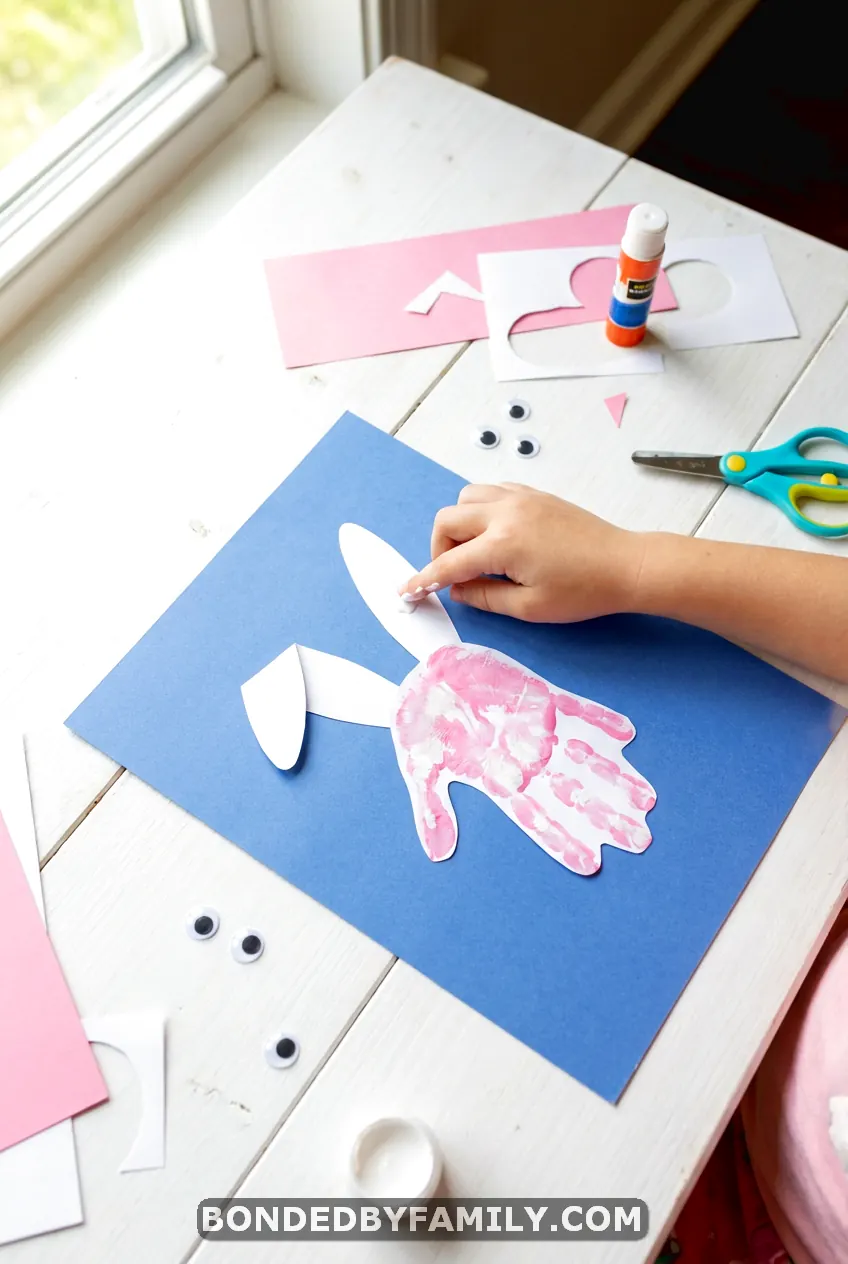
I’m talking about the crafts where the handprint becomes part of an actual recognizable thing, not just “here’s your hand in paint.” Handprint bunnies with paper ears attached. Handprint butterflies where each hand is a wing. Handprint flowers with fingerprint centers.
These work because kids can see what they’re creating AS they create it. The handprint is the starting point, not the finished product.
Movement & Games When They’re Bouncing Off Walls
The Fishbowl Game
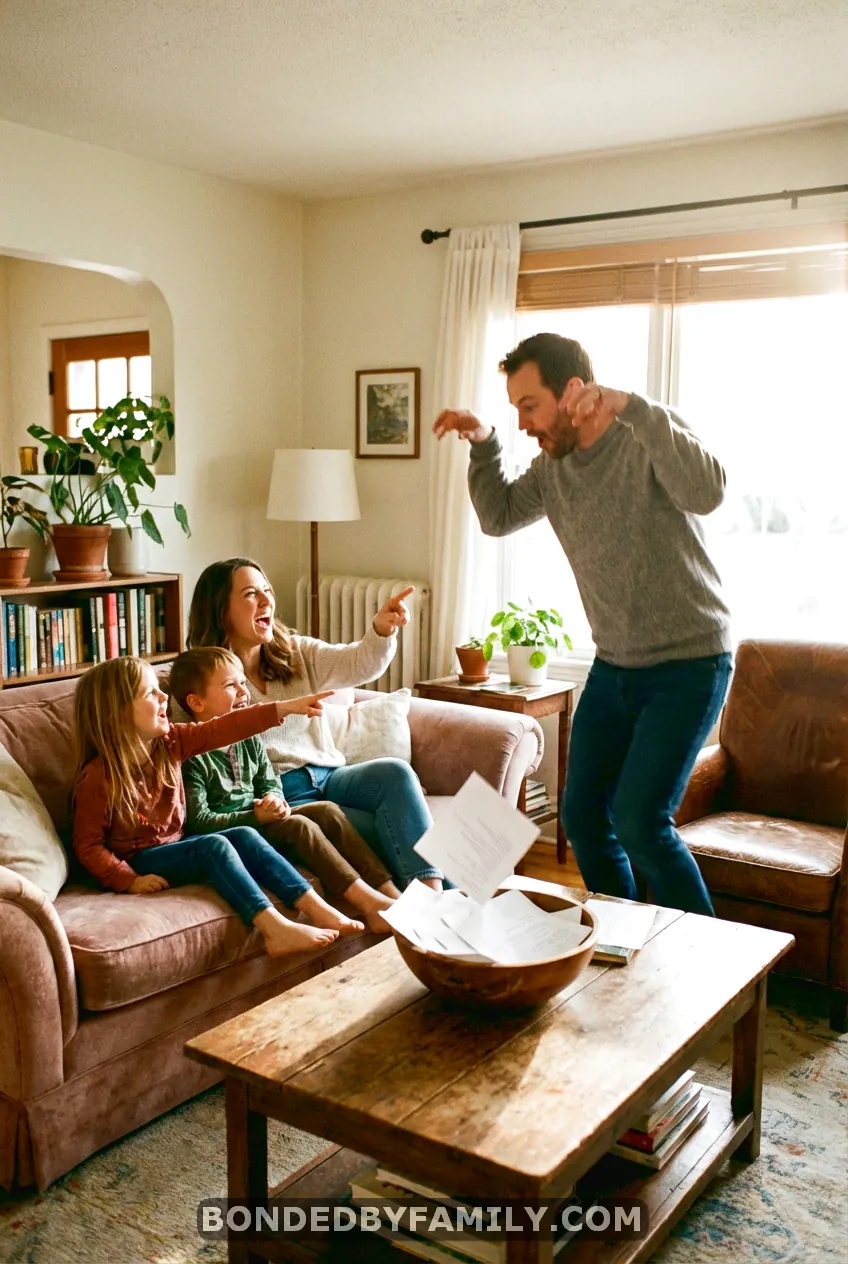
This one’s pure genius for mixed age groups. You need paper, pens, and a bowl.
Round 1 (Taboo): Each person writes 5-10 famous people/characters/things on separate papers. Fold and put in a bowl. Teams take turns – one person draws a paper and describes it WITHOUT saying the word. Team guesses as many as possible in 60 seconds.
Round 2 (Password): Same papers go back in the bowl. Now you can only say ONE WORD as a clue.
Round 3 (Charades): Same papers. No words – only acting.
The brilliance: Everyone already saw these words in rounds 1 and 2, so by round 3, the acting gets hilariously specific, and everyone’s shouting answers before the actor barely moves.
We’ve played this at birthday parties, with grandparents, on rainy weekends. It adapts to any group and always delivers.
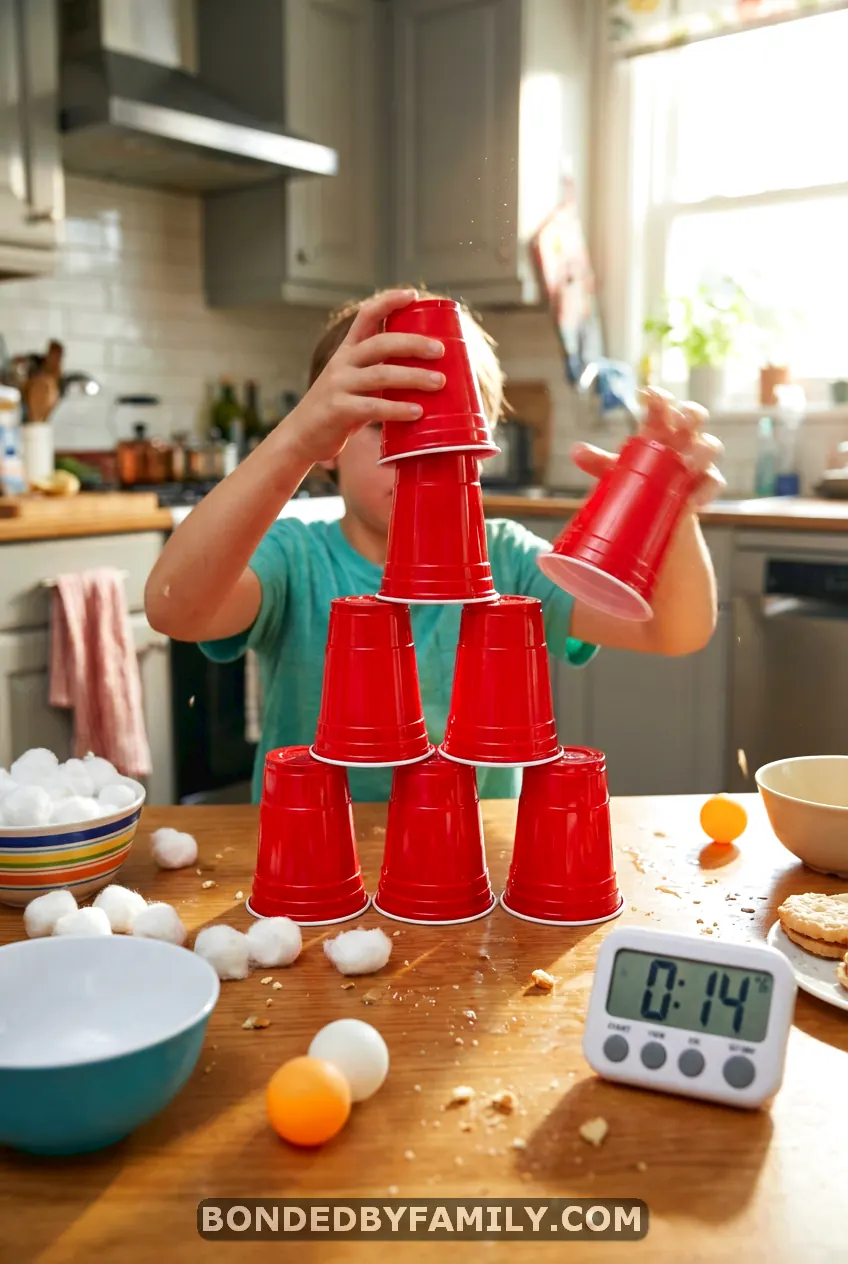
Minute-to-Win-It Challenges
These are perfect because they’re SHORT. One minute per challenge, immediate results, perfect for short attention spans.
Stack cups pyramid style, then unstack. Transfer cotton balls with a spoon between bowls. Balance cookies on foreheads and move to mouths without hands. Bounce ping pong balls into cups.
The competition aspect hooks kids, but the one-minute limit keeps them from getting bored or frustrated.
Set up a challenge station with all supplies ready. Kids can do them solo, trying to beat their own time, or compete against siblings.
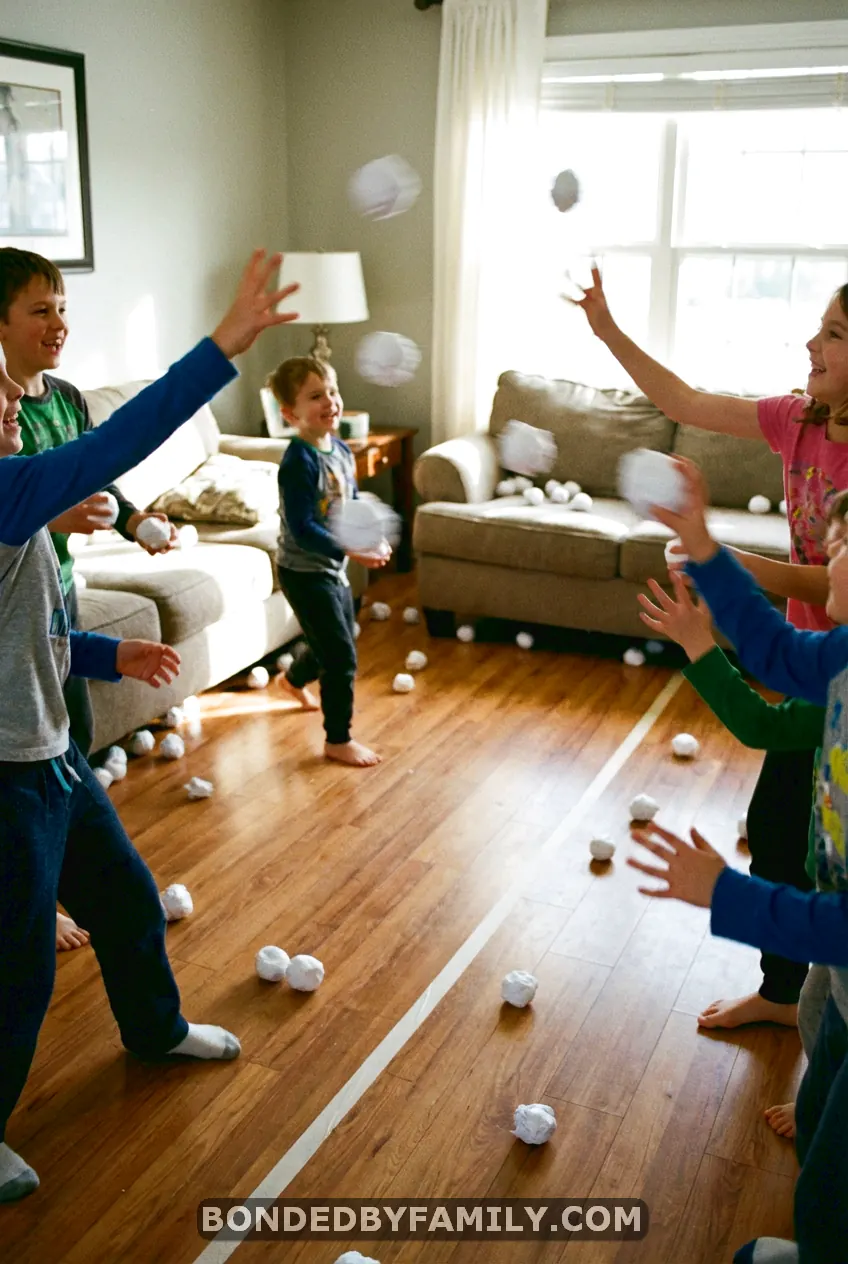
DIY Indoor “Snowball” Fight
Crumple white paper or use white socks rolled into balls. Divide the room in half with a tape line. Set the timer for 2-3 minutes. Goal: Get all snowballs onto the other team’s side.
Pure chaos in the best way. Gets energy out, uses zero special supplies, and when it’s done, you just uncrumple the papers or unroll the socks.
Add rules for variety: Can only throw underhand. Can only throw with the non-dominant hand. Must spin in a circle before throwing.
The Materials List You Actually Need
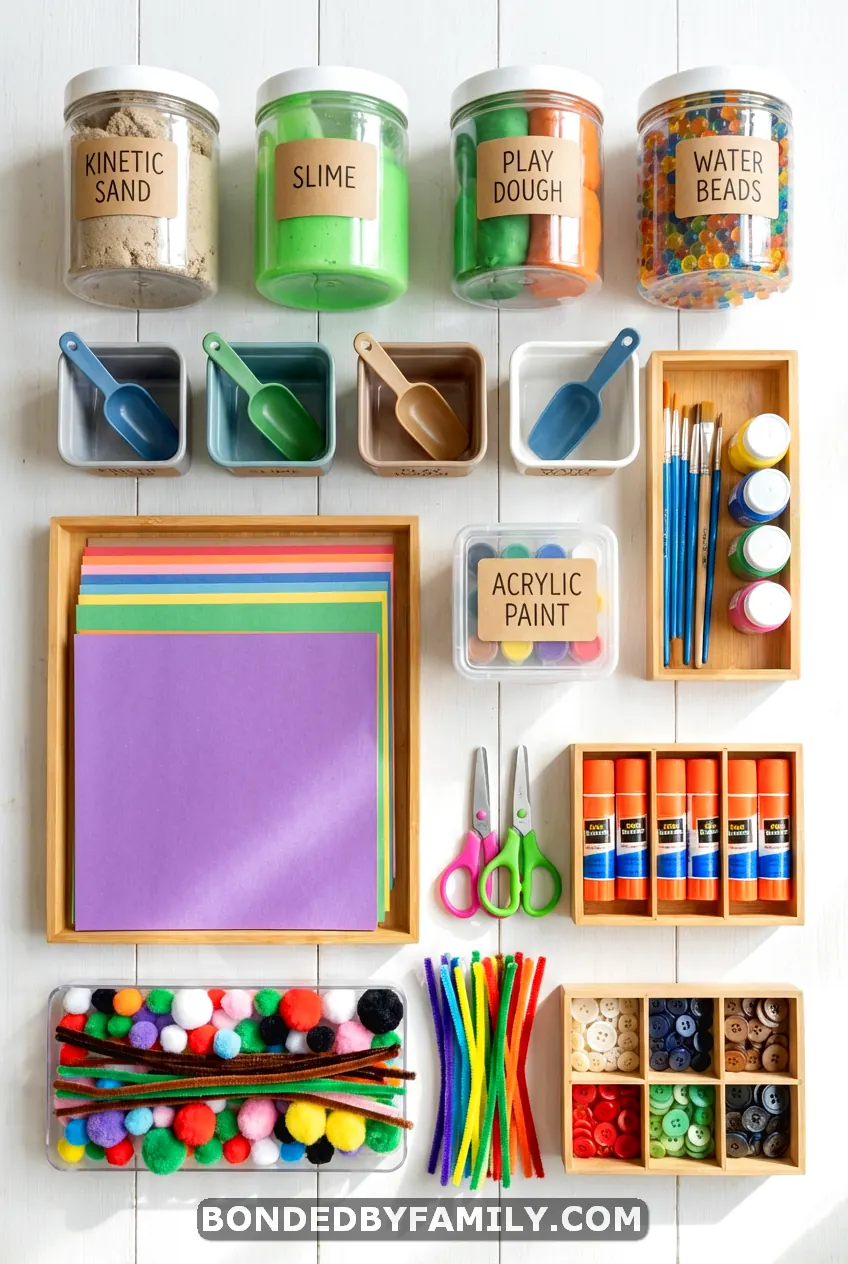
Stop collecting Pinterest supplies you’ll use once. Here’s what covers 90% of high-engagement activities:
Sensory Bin Essentials:
- Baking soda (buy in bulk)
- Cheap conditioner (dollar store brand works)
- Cornstarch
- Food coloring or liquid watercolors
- Dried beans or rice for sensory bins
Craft Supplies:
- White glue
- Clear jars/bottles (save pickle jars, water bottles)
- Acrylic paint or washable paint
- Construction paper
- Cotton balls
- Glitter (embrace it or skip it – there’s no middle ground)
Active Play:
- Plastic cups (solo cups work great)
- Ping pong balls
- Balloons
- Masking tape for floor markers
- Paper for recyclable crafts/games
Total investment: $30-40 if you’re starting from scratch. Most items last months with regular use.
When Activities Fail (And What to Do About It)
Let’s talk about the elephant in the room: Sometimes activities flop.
Your kid loses interest after 5 minutes. The mess exceeds the fun threshold. Someone starts crying because their bouncy ball doesn’t bounce as high as their sister’s.
Reality checks:
- Activities that work for 5-year-olds might bore 9-year-olds
- Some kids are sensory-seeking, others are sensory-avoiding
- Energy levels matter – save active games for when they’re bouncing, sensory play for when they need calming
The pivot strategy: Keep 2-3 backup options ready. If galaxy jars aren’t hitting, pull out the fake snow. If both crafts fail, switch to movement games.
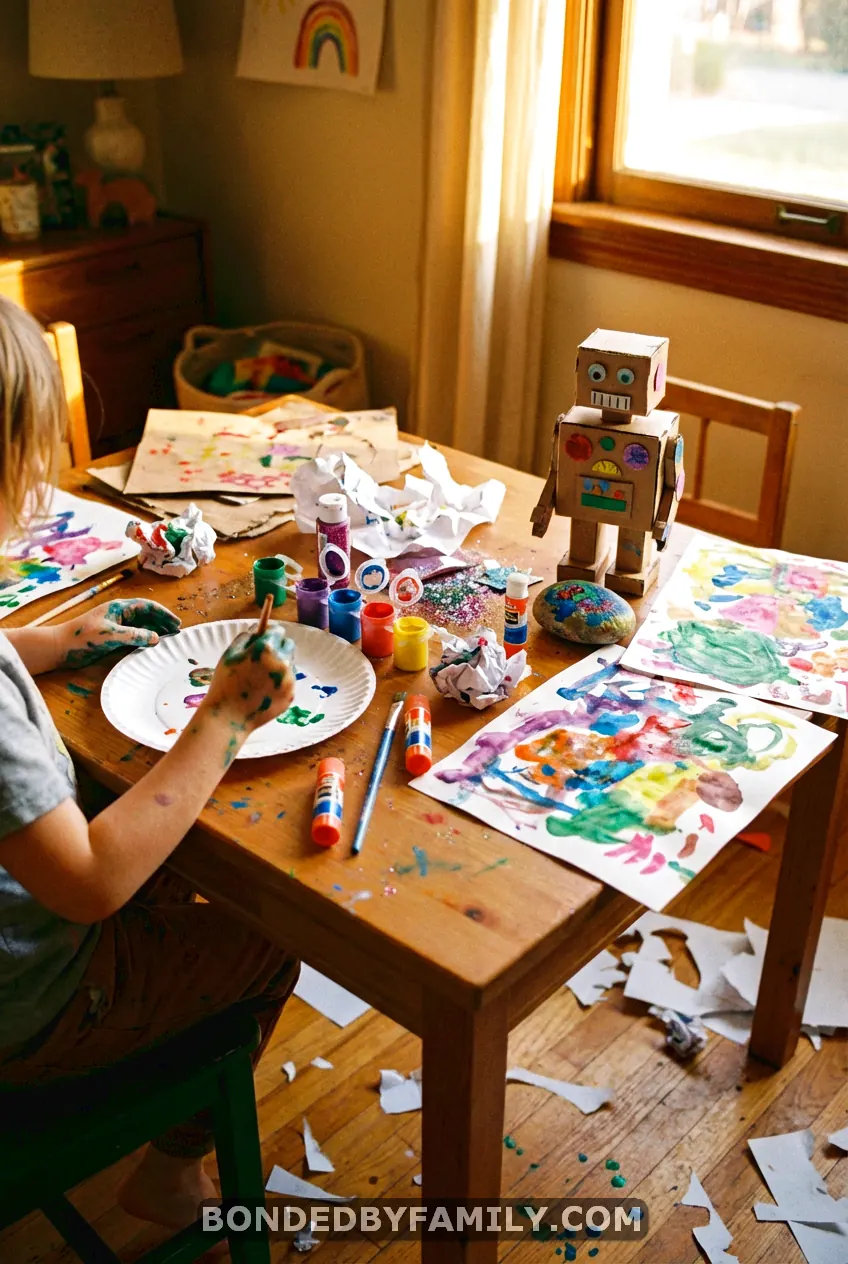
Also, “engagement” doesn’t always look like focus. Sometimes it’s the giggles during setup. The mess they create while experimenting. The 10 minutes of calm while they mold moon sand into shapes.
The Compound Effect Strategy
Here’s the thing nobody talks about: One activity won’t change your parenting life. But having a rotating collection of 10-15 activities you KNOW work? That changes everything.
Start with 3-4 activities from this guide. Try them. Keep what works. Add a new one every week or two.
Over 2-3 months, you’ll have a mental catalog of “proven activities” you can pull from without panicking or scrolling Pinterest for 20 minutes while your kids destroy the living room.
The activities that get hundreds of thousands of saves aren’t magical – they’re RELIABLE. They work for lots of different kids in lots of different situations.
That’s what you’re building toward: reliability, not novelty.
Getting Started This Week
Pick one sensory activity and one craft from this guide. Buy or gather supplies today. Set aside 30 minutes tomorrow (not during witching hour when everyone’s already melting down).
Do the activity WITH your kid the first time. Show them how. Let them lead after that.
The beauty of these high-performing activities: kids want to do them again. And again. You’re not starting from scratch each time – you’re building a repertoire.
That “what do we do today” question? It gets easier when you have answers that actually work.