Your kid can recite the periodic table but can’t scramble an egg. They ace math tests but panic when asked to make change at the store. Sound familiar?
Here’s the uncomfortable truth: schools teach kids to pass tests, not navigate life. The gap between “good student” and “capable adult” keeps growing, and you’re left wondering when someone’s supposed to teach them the stuff that matters.
I get it. Between homework battles and soccer practice, adding “life skills curriculum” to your plate sounds exhausting. But what if these activities were so practical, so immediately useful, that kids wanted to do them? What if teaching life skills didn’t mean another worksheet, but rather real experiences that build genuine confidence?
That’s exactly what these 27 activities do. They turn everyday moments into skill-building opportunities that stick. No forced lessons. No eye rolls. Just practical, hands-on experiences that prepare kids for the real world waiting outside your front door.
Let’s dive into activities that bridge the gap between childhood and capable adulthood.
1. The Weekly Meal Planning Challenge

Give your kid $75 and five days. Their job? Plan every family dinner, make the grocery list, and stay on budget.
This isn’t pretend budgeting with fake money. Real stakes. Real constraints. Real consequences when they blow the budget on organic blueberries and have to figure out how to make Wednesday’s dinner from pantry scraps.
They’ll learn fast. The first week, my daughter spent $40 on ingredients for one fancy pasta dish. By week two, she discovered that a $5 rotisserie chicken makes three meals. By week three, she was comparing unit prices and using coupons without being asked.
Pro tip: Let them fail. That overpriced meal plan that leaves the family eating cereal on Friday? That’s the lesson. Resist the urge to bail them out.
2. Emergency Contact Drill
Can your child recite your phone number from memory? Give their full address to a 911 operator? Most can’t.
Run a drill. Pretend you’re hurt and can’t talk. Hand them the phone. See what happens. The results are usually terrifying and immediately motivating.
3. The Laundry Apprenticeship (Full System)
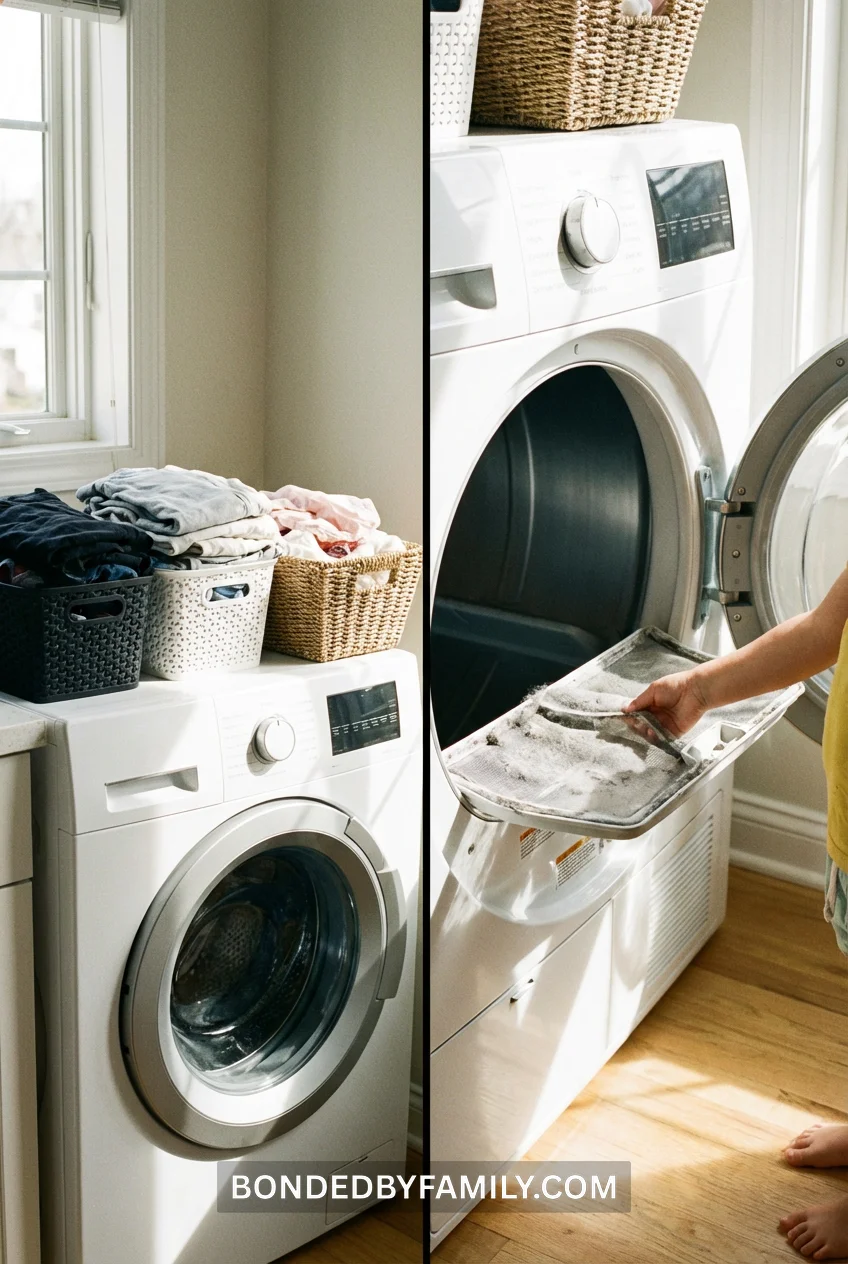
Most kids show up to college never having touched a washing machine. They turn their underwear pink in the first week. You can do better.
Why This Works
Laundry isn’t one skill—it’s a system. Sorting. Reading labels. Measuring detergent. Setting temperatures. Timing. Folding. It’s a perfect gateway to adult responsibility because the feedback is immediate and visual.
The Full Apprenticeship Model
Week 1: Observation Only
- They watch you do two full loads start to finish
- You narrate every decision: “I’m checking this tag because silk melts in hot water”
- They take notes on their phone (makes it feel official)
Week 2: Sorting Practice
- Empty the hamper on the floor
- Three piles: whites, colors, delicates
- Quiz them: where does the red sock go? The white shirt with colored stripes?
- Common mistake: kids think “delicate” means “fancy.” Teach them it means “will shrink or bleed or fall apart.”
Week 3: Stain Treatment
- Show them the three critical stains: blood, grass, grease
- Blood = cold water immediately (hot sets it)
- Grass = dish soap before washing
- Grease = baking soda paste, let sit 20 minutes
- Give them a white t-shirt and some ketchup. Make them fix it.
Week 4: Machine Operation
Setting up for success:
- Tape a laminated cheat sheet inside the laundry room door
- Water temp for each load type
- Detergent amounts (they will use too much)
- Which items NEVER go in the dryer
- Start with their own laundry only (low stakes)
- Make them show you the lint trap before starting the dryer (fire hazard they never think about)
Week 5: The Shrinkage Lesson
This is mean but necessary: Give them a favorite hoodie. Tell them to wash and dry it on high heat. Watch their face when it comes out fitting a toddler. They’ll never make that mistake again.
Explain residual heat: even “low heat” drying shrinks cotton over time. Delicates and anything you love? Hang dry or lay flat.
Week 6-8: Full Independence
- They do their own laundry completely unsupervised
- Natural consequence: they wear wrinkled clothes to school? Their problem.
- Check the lint trap weekly (kids forget this)
Materials & Costs
- Laminated cheat sheet: $2 at FedEx
- Sacrificial hoodie for shrinkage lesson: already own
- Laundry supplies: you already have these
- Time investment: 30 minutes weekly for 8 weeks
The Real Win
Six months from now, they’ll do laundry without being asked because they run out of clean clothes. That’s the goal—natural motivation replacing nagging.
Pro move: Once they’ve got it down, add ironing. Start with pillowcases (hard to mess up) before moving to button-down shirts.
Common mistakes to avoid:
- Letting them use pods (they need to learn measurement)
- Doing it for them when they “forget” (they’ll keep forgetting)
- Not teaching them the dryer lint fire risk (this is serious)
4. Public Transportation Navigation
Give them $5 in bus fare and an address across town. Have them figure out the route, catch the bus, and text when they arrive.
Terrifying? Yes. Essential? Absolutely. The confidence they gain from navigating public space alone is irreplaceable.
5. The Grocery Store Shopping Mission

Hand them a list, twenty dollars, and a time limit. Send them into the store alone.
The list should have a mix: specific brands (“Tide pods, 35 count”) and comparison shopping (“whatever chicken breast is cheapest per pound”). Include one deliberately vague item (“something green for dinner”) to force decision-making.
They’ll learn unit pricing, comparison shopping, and what $20 buys faster than any allowance lecture you could give.
The catch: If they come back over budget, they have to return items and try again. Builds real-world problem-solving under constraint.
6. Basic First Aid Scenarios
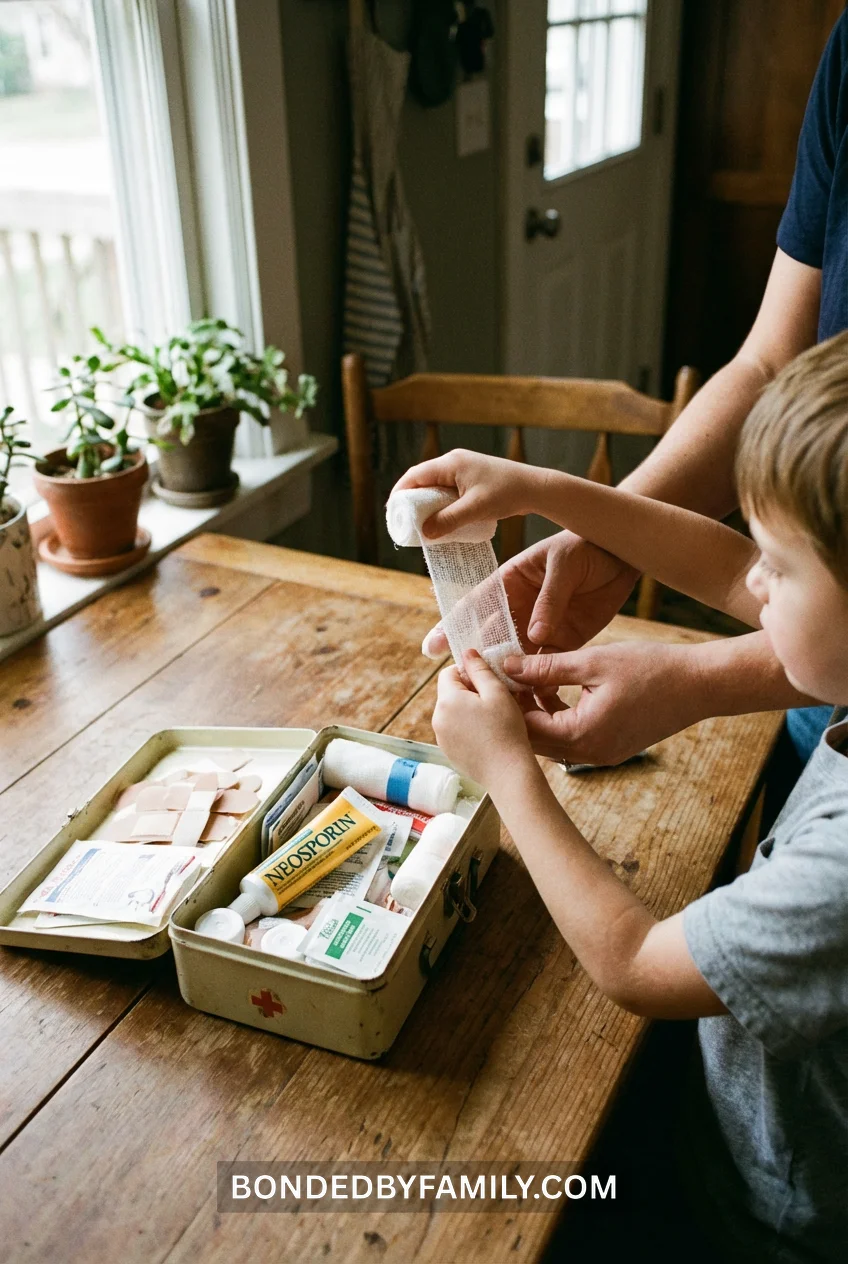
Teach them to clean and bandage a cut properly. Sounds simple. Most kids panic and make it worse by using dirty hands or wrapping it so tight they cut off circulation.
Walk through: wash your own hands first, clean the wound, apply pressure if bleeding, ointment, bandage, check circulation. Role-play scenarios. Make them talk through the steps before you let them touch the injury.
7. The Bank Account Setup (Real Money)
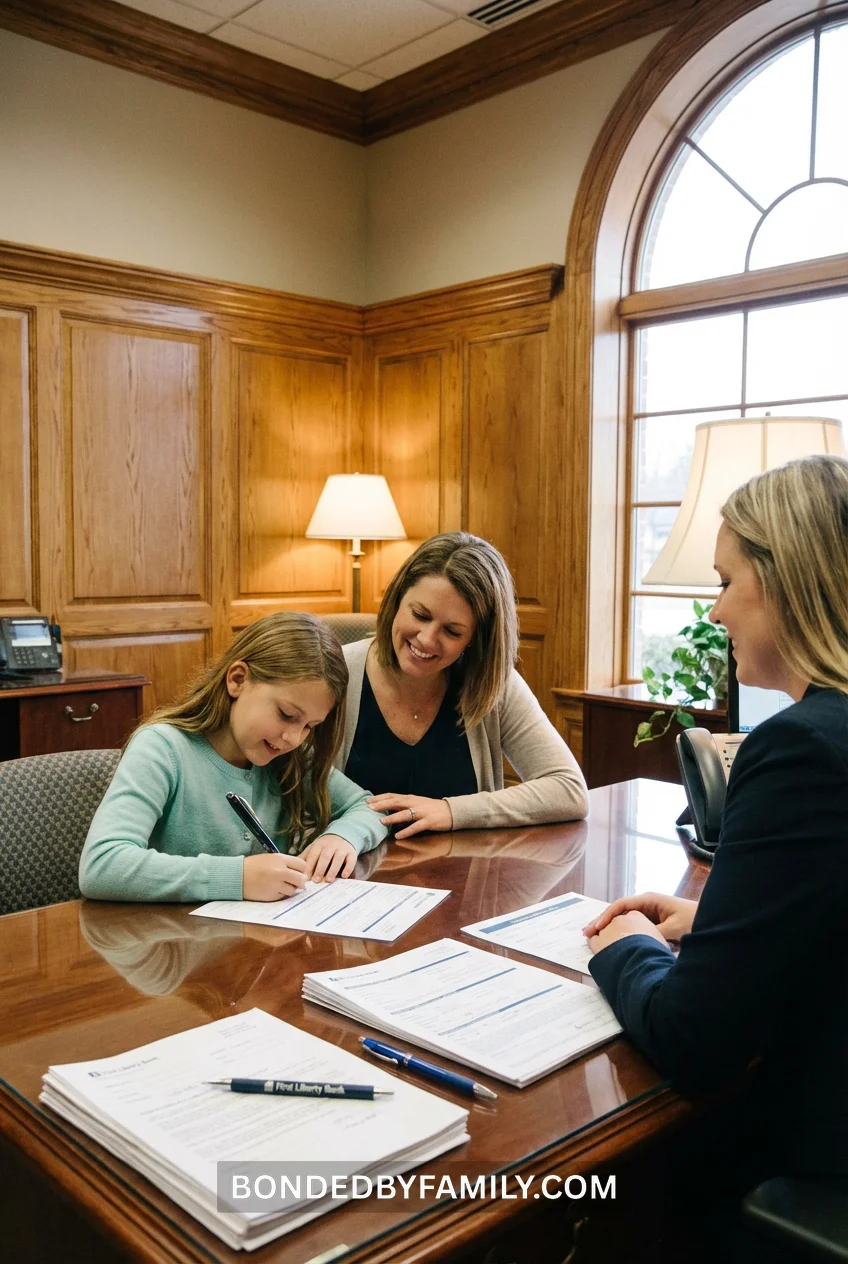
Most kids don’t understand banks until they’re in college overdrafting their accounts.
Better approach: At age 10-12, open a real checking account with them. Deposit their birthday money. Teach them to read statements. Show them how interest works (or more accurately these days, doesn’t work). Let them write checks. Teach them to balance against their statement.
The earlier they see money as numbers in a system they control, the better their financial decisions become.
8. Conflict Resolution Role-Play
Arguments with siblings aren’t just annoying—they’re free conflict resolution training.
Instead of solving it for them, teach them the framework: state your perspective without blame, listen to their side, find common ground, propose solutions. Make them practice this structure during calm moments so it’s available during heated ones.
9. The Cooking Basics Bootcamp (Three Essential Meals)

Your child should be able to cook three meals before leaving home: scrambled eggs, basic pasta with sauce, and a simple stir-fry. That’s survival.
Don’t just demonstrate. Hand them the spatula. Let them burn the eggs. (They will.) Let them overcook the pasta. (They will.) Muscle memory only comes from repetition.
Start with eggs—hardest to master, easiest to practice. Once they can make consistently good scrambled eggs, they understand heat control, which unlocks everything else.
10. Time Management with a Physical Planner
Screen calendars are great. Physical planners teach time awareness in a way apps don’t. There’s something about writing “soccer 4-6pm” and seeing how it eats your afternoon that makes time real.
Get them a paper planner. Teach them to block out committed time first (school, sports, sleep), then see what’s available for homework, friends, and scrolling. Most kids genuinely don’t realize how little discretionary time they have until they see it mapped out.
When it’s worth it: If your kid constantly claims they “don’t have time” for chores or homework, this visual proof shuts down that excuse and shows them they do have time—they’re just using it poorly.
11. The Phone Call Practice

Most kids would rather walk through fire than make a phone call. But adults have to call doctors, dentists, customer service, their boss.
Practice: Have them call to order pizza. Call the dentist to schedule their own appointment. Call a store to ask if something’s in stock. Stand nearby but don’t rescue them when they stutter or pause.
They’ll hate it. They’ll get better. That’s the point.
12. Basic Home Maintenance Tour
Show them where the water main shutoff is. The breaker box. How to reset a tripped breaker. How to plunge a toilet. Where the furnace filter is and how to change it.
Boring? Incredibly. Essential when a pipe bursts and you’re not home? Absolutely.
Make them show you each location without your help. Repetition until it’s automatic.
13. The Receipt Checking Habit
Teach them to check receipts before leaving the store. Scanners make mistakes. Items ring up at wrong prices. You get charged twice for the same thing.
This habit alone will save them thousands over a lifetime. Start young by making it their job to verify every family purchase receipt before you leave the parking lot.
14. Sewing On a Button (The Gateway to All Repairs)
A lost button used to mean throwing out a $40 shirt. Ridiculous. Sewing on a button takes 3 minutes and costs nothing.
Show them once. Supervise them through one button. Then make it their job whenever a button falls off their clothes. They’ll learn fast when the alternative is wearing a shirt that gaps open.
Cost reality: A basic sewing kit is $8 at Walmart and will last them through college and beyond.
15. The Weather-Appropriate Outfit Challenge
Your kid shows up to school freezing because they wore shorts in 45-degree weather. Then they blame you for not reminding them.
New rule: They check the weather forecast themselves every night and lay out appropriate clothes. Natural consequences when they get it wrong teach faster than your nagging ever will. Shivering through recess in a t-shirt? They’ll remember a jacket tomorrow.
16. The “Read All Instructions First” Assembly Test
Buy a simple piece of furniture that requires assembly—a small bookshelf, a desk organizer, whatever. Hand them the box and the instructions.
Most kids (and adults) skip reading and just start screwing things together. They end up with parts left over and a wobbly disaster. This exercise teaches the discipline of reading ALL instructions before starting ANY task.
That habit transfers to everything: recipes, tests, job applications, life.
17. Online Safety Red Flag Recognition
Show them a phishing email. A too-good-to-be-true offer. A sketchy website asking for personal information.
Teach them the red flags: generic greetings, spelling errors, urgent language, requests for passwords, offers that sound impossible. Make it a game—quiz them with real examples. Can they spot the scam?
This protects them from identity theft, fraud, and falling for manipulative tactics online and in person.
18. The Apology Formula (Genuine and Sincere)
Most kids apologize like this: “Sorry” (while walking away). That’s not an apology—it’s a dismissal.
Teach them the real formula: Name what you did wrong. Acknowledge the impact. Say what you’ll do differently. Ask how to make it right.
“I’m sorry I broke your toy. I know it was your favorite and you’re upset. Next time I’ll ask before touching your stuff. Can I help you fix it or save my allowance to replace it?”
That’s an apology that repairs relationships. Practice it until it becomes natural.
19. Car Maintenance Basics (Even If They’re Years from Driving)
Before they ever drive, show them: how to check oil, add windshield fluid, check tire pressure, know what the warning lights mean.
Take them through one full oil change appointment so they know what’s supposed to happen and approximately what it costs. That knowledge prevents mechanics from scamming them later.
20. The Neighborhood Resource Map
Have them map out critical locations within walking distance: nearest hospital, fire station, police station, library, pharmacy, grocery store.
Then walk there together. How long does it take? What route is safest? This builds spatial awareness and community knowledge they’ll use their whole life.
21. The Email Etiquette Crash Course
Texting is casual. Emailing teachers, coaches, employers, or anyone in authority requires different skills.
Teach them the format: Subject line that summarizes the point. Greeting by name. Clear request or question. Polite closing. Proper signature. Then make them draft emails for real situations and show you before sending.
Common mistakes: no subject line, “hey” as a greeting, no punctuation, unclear ask. Fix these now before they email a college admissions officer.
22. The Hygiene Independence Checklist
Create a laminated checklist for their bathroom: brush teeth twice daily, floss, shower with soap (yes, you have to specify), use deodorant, wash face, clean nails, change clothes daily.
Post it where they’ll see it. By middle school, this should be automatic without your reminders. If it’s not, the checklist makes the expectation clear and the accountability theirs.
23. Room Organization Systems That Stick

You can’t nag a kid into being organized. You can teach them a system that works with their brain instead of against it.
Work together to create zones: homework zone, clothes zone, hobby zone. Use clear bins with labels. Make everything visible (kids don’t remember what’s hidden). Build routines around the system (homework goes back in the bin before bed, laundry in the hamper daily).
The system has to make sense to them, not you. If color-coding doesn’t work for their brain, don’t force it. If they need everything visible, drawer organizers won’t help. Customize to their actual habits, not Pinterest ideals.
24. The Restaurant Order Practice
At restaurants, make your kid order their own food directly to the server. Full sentences. Eye contact. “May I please have…” not mumbled while staring at the table.
If they forget to order a drink or sides, they wait until the server comes back naturally. Natural consequences teach social skills faster than your coaching.
25. Basic Tool Recognition and Use
Show them a hammer, screwdriver (both flathead and Phillips), wrench, pliers, level, tape measure. Teach the name and basic function of each.
Then give them projects: hang a picture frame level, tighten a loose drawer pull, assemble something simple. Hands-on use beats explanation every time.
Installation note: Store tools in labeled spots. “A place for everything” prevents the “Where’s the screwdriver?” panic when something breaks.
26. Digital Calendar Sharing and Family Scheduling
By middle school, kids should maintain their own calendar and share it with the family. They input their practices, games, hangouts, and appointments. You can see their schedule; they can see yours.
This teaches them to manage commitments, see scheduling conflicts before they happen, and take ownership of their time. Missed events? They forgot to check their calendar. Their problem, their learning opportunity.
27. The Side Hustle Economics Lesson
Encourage them to earn money outside allowance: lawn mowing, pet sitting, tutoring younger kids, selling crafts. But here’s the key—teach them to track income and expenses in a simple notebook.
They’ll learn: how hard it is to earn money, the difference between revenue and profit, why pricing matters, how to handle difficult customers. These lessons stick deeper than any economics class ever could because the money is real and the stakes are personal.
Let them set their own prices and learn from their mistakes. Too cheap? They work too hard for too little. Too expensive? Nobody hires them. Either way, they learn market dynamics through experience.
The Real Goal: Confidence Over Perfection
None of these activities will be done perfectly the first time. That’s not the point.
The point is building the muscle memory of competence—the deep knowledge that when life throws a problem at them, they can figure it out. They’ve scrambled eggs wrong enough times to know how to fix it. They’ve navigated a grocery store alone. They’ve made a phone call to a stranger.
These aren’t just skills. They’re proof that they’re capable. That confidence changes how they move through the world.
Start with two or three activities that match your kid’s age and personality. Build from there. In six months, they’ll be handling tasks you wouldn’t have trusted them with last week.
And you? You’ll be raising an adult who can function as one.
Frequently Asked Questions
At what age should I start teaching life skills?
Start earlier than feels comfortable. Six-year-olds can sort laundry and make simple meals with supervision. Ten-year-olds can handle money, make phone calls, and navigate stores alone. Twelve-year-olds can manage their own schedules and do basic home repairs. The key is matching the complexity to their maturity, not their age.
How do I teach these skills without it feeling like more chores?
Frame them as privileges, not punishments. “You’re old enough now to manage your own laundry” hits different than “go do your chores.” Give them control and autonomy—that’s what kids want. When they see the connection between the skill and their independence (cooking = eating what they want, budgeting = buying what they choose), motivation shifts.
What if my child resists learning these skills?
Let natural consequences do the teaching. They refuse to learn laundry? They wear dirty clothes or wash them themselves when they run out. They won’t meal plan? They eat what you make or figure out their own dinner. Remove yourself as the safety net where appropriate (obviously not for truly dangerous situations). Discomfort motivates faster than lectures.
Should I pay kids for learning life skills or doing household tasks?
Split the difference. Contributing to household functioning (their own laundry, their own room, shared meal cleanup) isn’t paid—that’s basic membership in a family. Going above that baseline (mowing lawn, deep cleaning, organizing garage) can be paid. This teaches both civic responsibility and the concept of earning.
How do I know if I’m expecting too much or too little from my child?
If they’re succeeding 70-80% of the time with minimal frustration, you’ve got the level right. Too easy (100% success with no effort), and they’re not growing. Too hard (constant failure and tears), and you’ve jumped too far ahead. Adjust based on their response, not their age or what their peers are doing.