Your kid freezes when another child asks to play. Or grabs toys without asking. Or melts down when it’s someone else’s turn.
I’ve been there. My daughter used to hide behind my legs at the playground, then bulldoze through playdates at home. The whiplash was real.
Here’s what I figured out: Kids don’t lack social skills because they’re mean or shy. They lack them because nobody taught them the invisible rules the rest of us take for granted. Things like “wait your turn” or “ask before taking” aren’t instinctive—they’re learned.
These 11 activities teach those invisible rules through games, role-play, and hands-on practice. No lectures. No worksheets that end up in the recycling bin. Just practical activities you can start this afternoon with stuff you already own.
Your kid will practice turn-taking, emotion recognition, sharing, listening, and problem-solving. Most take 10-15 minutes.
1. The Emotion Cups Game
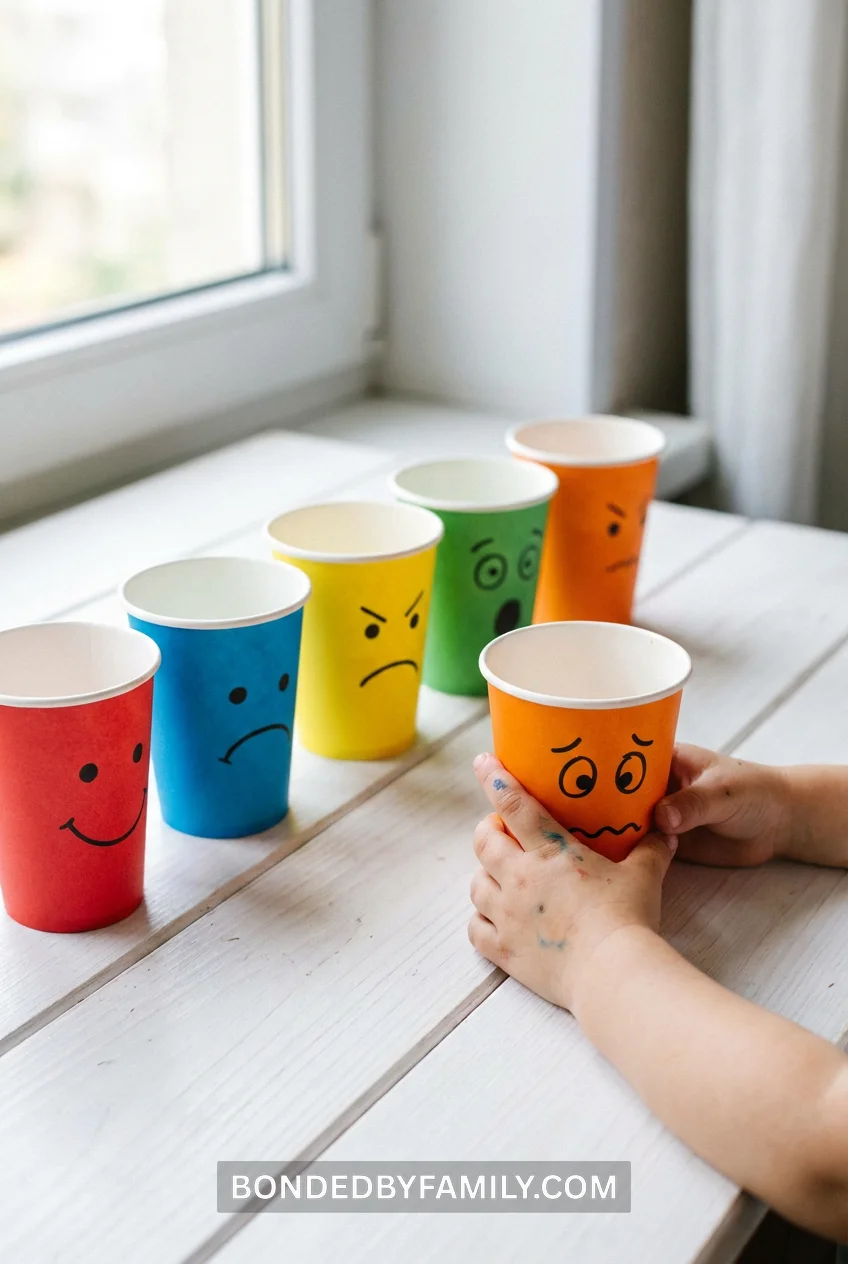
Kids can’t navigate friendships if they can’t read faces. This game builds that skill in 5 minutes flat.
Grab 5 paper cups and a marker. Draw a simple emotion face on each cup: happy, sad, angry, surprised, worried. That’s it.
Now play “Match the Face.” Make an emotion face. Your kid finds the matching cup. Then swap—they make a face, you find the cup.
The sneaky brilliance? You’re teaching them to LOOK at faces instead of just hearing words. When my daughter learned this, she stopped asking “Why is Emma crying?” and started noticing Emma’s scrunched eyebrows before the tears even started.
2. Turn-Taking Towers (With a Timer Twist)
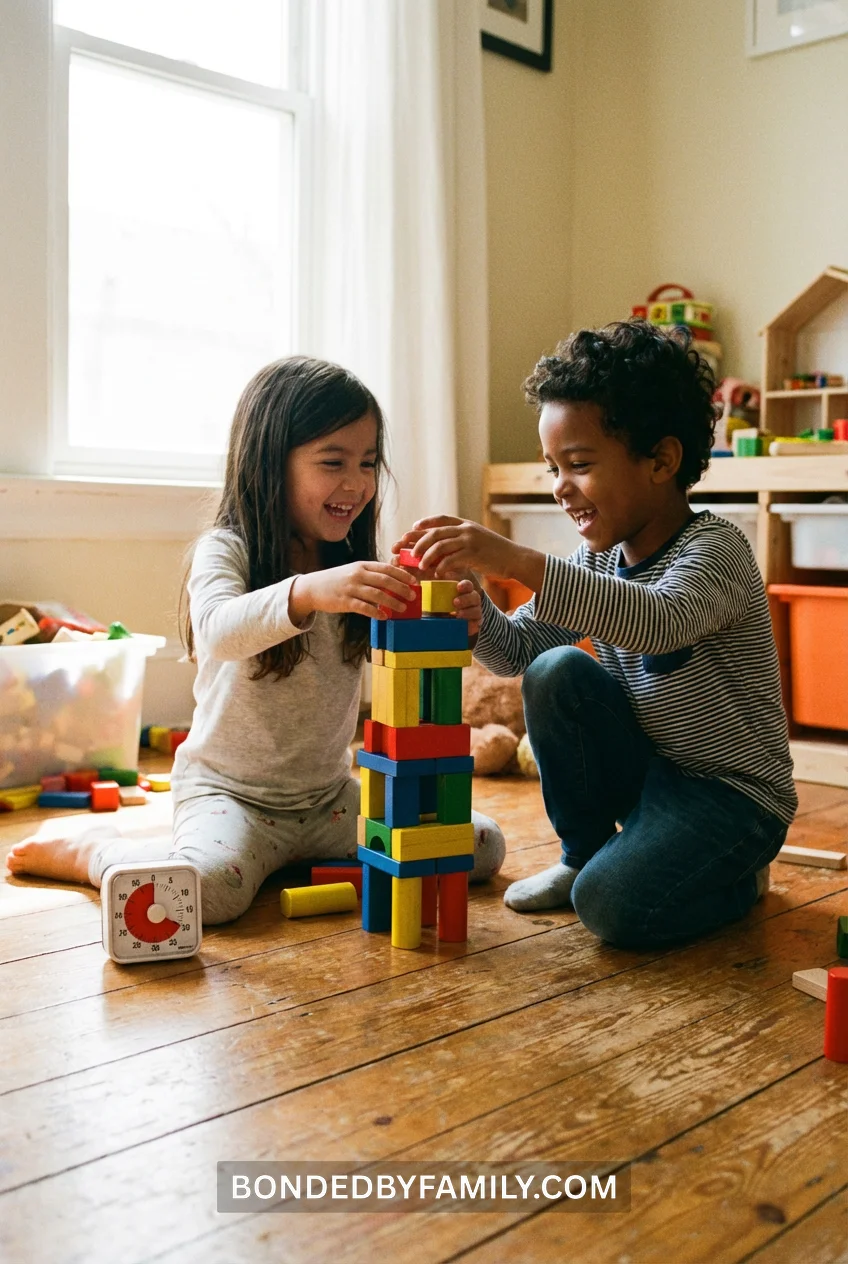
Kids grab. Kids snatch. Kids “forget” it’s someone else’s turn.
Enter: competitive tower building with mandatory turn-taking.
You need: blocks (any kind) and a timer. Each person gets 30 seconds to add ONE block to a shared tower. When the timer beeps, hands off—other person’s turn. Keep going until the tower falls.
The 30-second limit is the secret ingredient. It’s short enough that impatient kids can handle waiting. It’s long enough that they can’t just slap a block on and call it done. They have to think, place carefully, then STOP and watch someone else take over their creation.
My son hated this game at first. He’s a control freak with Legos. But after the tower crashed three times because he rushed his sister’s turns by bouncing around, he figured out that waiting patiently = taller towers = winning.
3. Feelings Faces Printable Chart
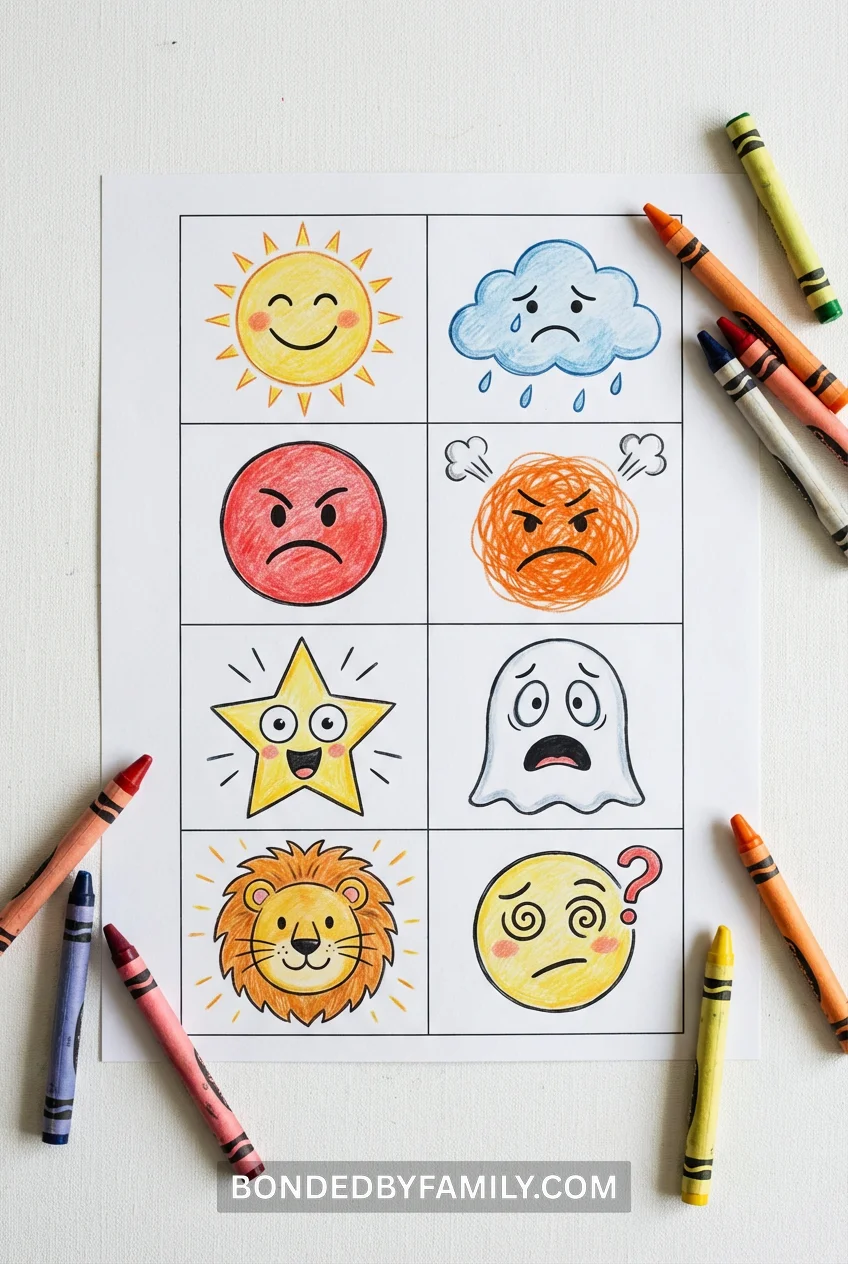
Download a free feelings chart. Print it. Stick it on the fridge.
When your kid can’t find words, they point. “I’m feeling #6.” That’s scared.
No spiraling while trying to remember vocabulary. Just point and talk. Works for kids who shut down AND kids who explode.
4. The Sharing Jar System (Stop the Grabbing)
Here’s the problem with “just share”: it’s vague. What counts as sharing? For how long? Who decides when sharing is over?
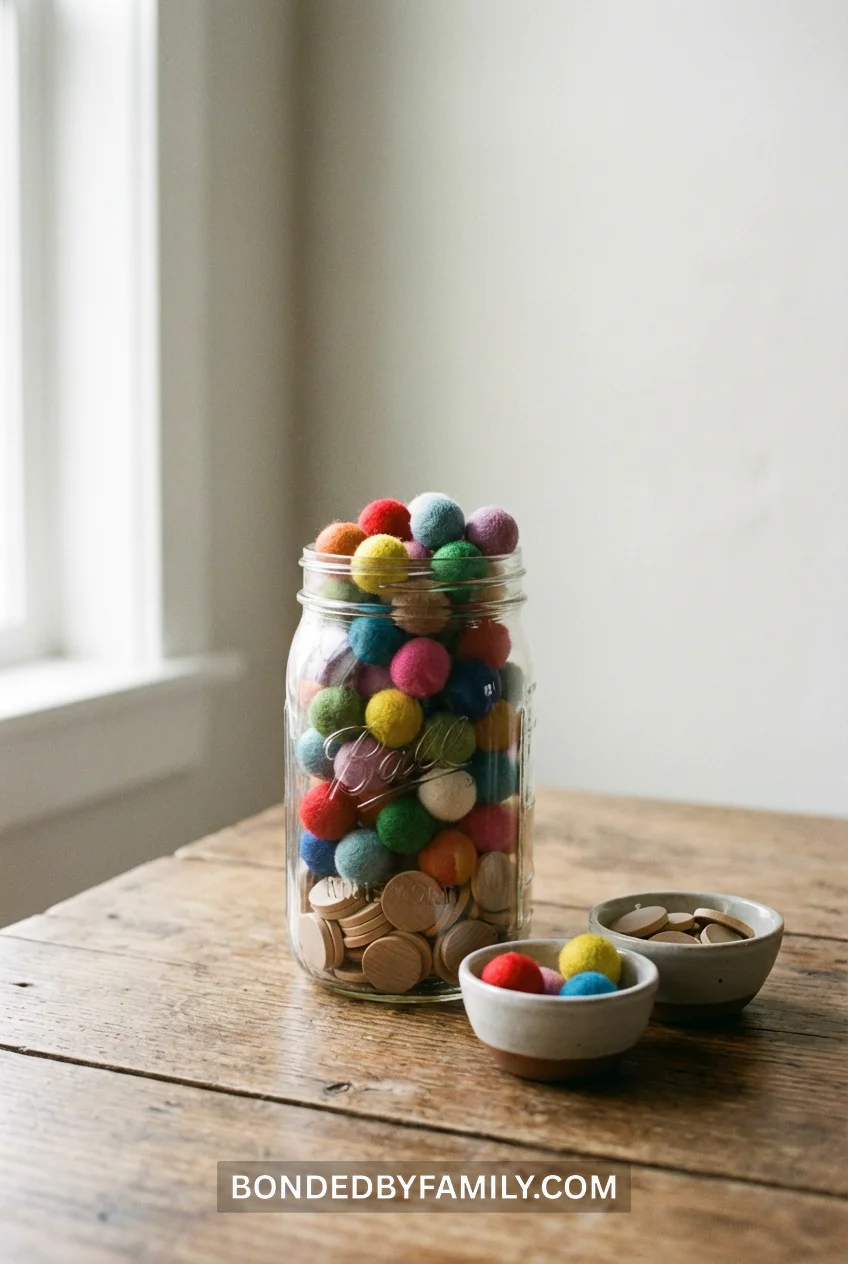
The Sharing Jar solves this. Fill a jar with tokens (buttons, pom-poms, whatever). When Kid A wants Kid B’s toy, Kid A gives Kid B a token. Kid B sets a timer for 3 minutes. When it beeps, Kid B gets the toy back OR keeps it in exchange for returning the token.
Suddenly sharing has rules. It’s not “give me your favorite truck forever.” It’s “I’m offering you a token for 3 minutes with your truck.”
This worked miracles with my kids because the timer removed ME from the equation. I wasn’t the bad guy saying “Okay, Emma’s turn now.” The timer said it. The token system said it. I just refereed.
Pro tip: Start with 5 tokens per kid. When they’re gone, no more trades until tomorrow. Teaches resource management on top of sharing.
5. Problem-Solving Cards: What Would You Do?
The Format
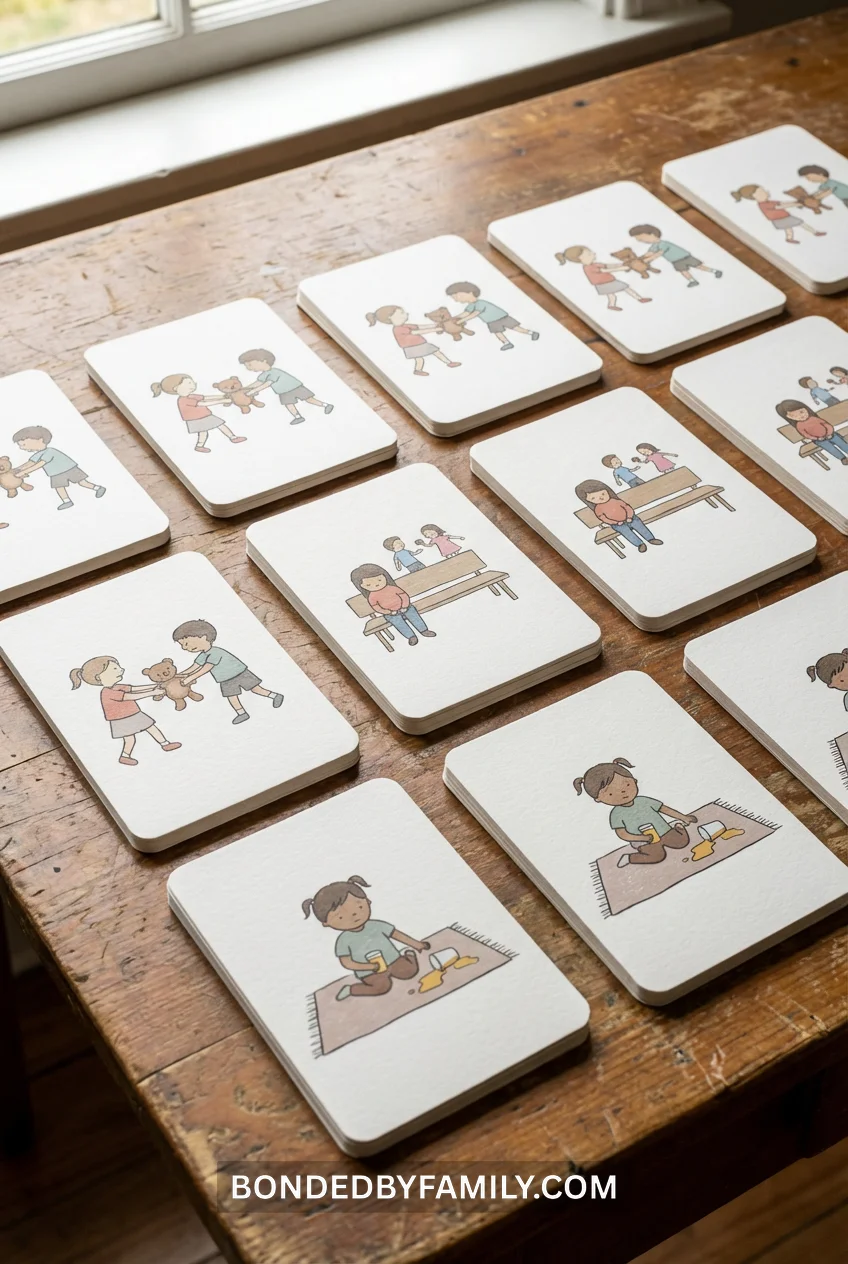
Print out 10-12 scenario cards. Each card shows a social problem:
- Two kids want the same swing
- Someone spilled juice on your artwork
- Your friend won’t share the markers
- A kid at the park called you a mean name
The Game
Draw a card. Read the scenario. Ask: “What would you do?”
Here’s the twist: Every answer is valid FIRST. Don’t correct immediately. Let them say “I would hit them” or “I would cry” or “I would tell them they’re stupid.”
Then ask: “Okay, and then what would happen?”
Let them follow the logic. “If you hit them, then what?” Eventually they’ll land on: “I’d get in trouble” or “They’d hit me back” or “I’d feel bad.”
THEN ask: “What’s a different choice you could make?”
This is the long game. You’re not teaching them THE right answer. You’re teaching them to think through consequences, consider options, and practice solutions BEFORE they’re in the heat of the moment.
Why This Works Better Than Lecturing
When I told my son, “Use your words,” he had no idea what words to use. These cards let him rehearse the words when he’s calm. Then when another kid grabs his toy at the park, he’s already practiced saying “Hey, I was using that. Can I have it back?”
The muscle memory is there. The script is there. He just has to access it instead of inventing it while angry.
Materials You’ll Need
- Index cards or cardstock
- Markers or printed images
- Scenarios covering: sharing conflicts, hurt feelings, physical accidents, exclusion, teasing, disagreements
Common Mistakes to Avoid
Don’t jump in with the “right” answer. Don’t say “No, you wouldn’t do that.” Let them explore bad options in the safety of pretend. The whole point is getting them to THINK, not memorize your answers.
6. Conversation Ball Game
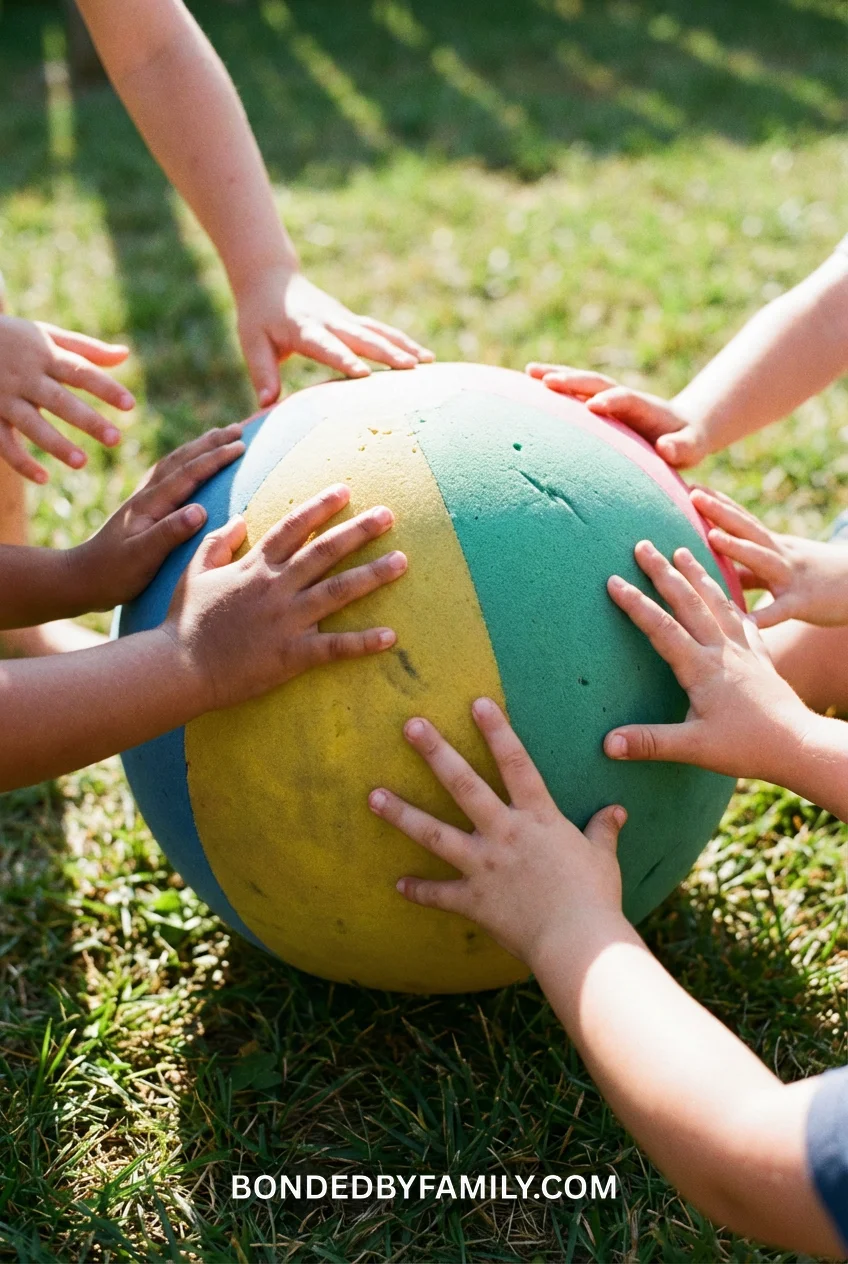
Kids talk AT each other. Not WITH each other. They wait for the other person to stop making noise, then say their thing, then wait again.
The conversation ball fixes this. Whoever holds the ball talks. Everyone else listens. When you’re done talking, you throw the ball to someone else. Now they talk.
The physical object makes the invisible rule visible. You literally can’t talk without the ball. And throwing the ball means you have to choose who speaks next—you can’t just dominate the whole conversation.
We played this at dinner for two weeks. It was annoying at first (passing a ball at the dinner table, really?) but my kids stopped interrupting each other. They started asking questions to keep the conversation going because holding the ball in silence feels awkward.
Now we don’t need the ball. The habit stuck.
7. The Ultimate Empathy Builder: Feelings Charades
What You’re Teaching
This isn’t just a game. It’s training wheels for reading body language, tone, and facial expressions—the foundation of empathy. Kids who can decode emotions in others naturally develop stronger friendships because they can tell when someone needs space, comfort, or backup.
How to Play: The Basic Version
Write emotion words on slips of paper: happy, sad, frustrated, excited, worried, proud, embarrassed, angry, surprised, bored, confused, lonely.
Fold them up. Put them in a bowl. Someone draws a slip and acts out that emotion WITHOUT WORDS. Everyone else guesses.
That’s it. That’s the whole game.
The Pro-Level Version (For Kids Who’ve Mastered the Basics)
Add context cards. Now you’re not just acting out “angry”—you’re acting out “angry because your brother broke your Lego spaceship” or “angry because you studied hard but still failed the test.”
Same emotion. Different expressions. This is where empathy deepens, because kids realize “angry” looks different depending on WHY you’re angry.
Why This Works When Other Methods Don’t
Most empathy lessons sound like this: “How do you think Emma felt when you took her toy?”
The kid shrugs. They don’t know. They weren’t thinking about Emma’s feelings—they were thinking about the toy.
Feelings charades builds the SKILL of reading emotions before you ask kids to apply it. They practice watching faces, noticing body language, connecting expressions to feelings. Then when you ask “How do you think Emma felt?” they have the tools to figure it out.
Step-by-Step Setup (First Time Playing)
- Cut 20-30 small pieces of paper (receipt paper works great, or cut index cards into quarters)
- Write these 15 starter emotions (one per paper):
- Happy
- Sad
- Angry
- Scared
- Excited
- Worried
- Frustrated
- Proud
- Embarrassed
- Surprised
- Bored
- Lonely
- Confused
- Shy
- Disappointed
- Fold each paper in half so you can’t see the words
- Put them in a bowl, hat, or bag
- Decide on house rules before starting:
- No talking while acting (or the person acting can make sounds but not words)
- Everyone gets the same amount of time (30-60 seconds)
- If nobody guesses correctly, the actor can reveal the answer
- Winner is whoever guesses the most emotions correctly
Age Modifications
Ages 3-5: Use only basic emotions (happy, sad, angry, scared). Let them make sounds. Use big, exaggerated facial expressions and movements.
Ages 6-8: Add more nuanced emotions. No sounds allowed. Introduce the context cards for bonus points.
Ages 9+: Add emotion intensity cards: “a little bit frustrated” vs. “furious.” Discuss why the same emotion can look so different.
What Success Looks Like
Week 1: Your kids will ham it up and make it silly. They’ll act out “angry” by pretending to smash things and roar. That’s fine. They’re exploring the emotion through movement.
Week 3: They’ll start noticing subtle differences. “Wait, you’re not just sad—you’re disappointed.” They’re learning the vocabulary AND the visual cues.
Week 6: You’ll notice them reading emotions in real situations. “Mom looks frustrated. Maybe we should clean up before she asks.” They’re connecting the game skills to real life.
The Dinner Table Version
We played this every Sunday for 15 minutes after dinner. Just three rounds—everyone goes twice. It became the thing my kids looked forward to. They started suggesting new emotions to add (“Can we add ‘hangry’?” Yes. Yes we can.).
The breakthrough moment: My daughter came home from school one day and said “I think Sophia was lonely at recess. She had the same face you made when you acted out lonely last week.”
She NOTICED. She CONNECTED. She ACTED ON IT (invited Sophia to play).
That’s empathy. Not because I lectured her about including others, but because she had the tools to recognize the feeling and knew what it meant.
Common Mistakes Parents Make
Mistake #1: Correcting their acting. “No, that’s not how sad looks.” Let them explore. There’s no wrong way to show an emotion.
Mistake #2: Turning it into a lesson. “Remember when you acted out ‘angry’? That’s how Emma felt when—” Stop. Don’t weaponize the game. Keep it fun, and they’ll naturally transfer the skills.
Mistake #3: Playing only once. This isn’t a one-and-done activity. You need repetition for the skill to sink in. Weekly is perfect.
Materials & Cost
- Free version: Scrap paper and a pen. That’s it.
- Upgraded version: Print emotion face cards for visual reference ($0 if you have a printer, or use free clip art online)
- Time required: 15 minutes, including setup
When to Use This Activity
- Weekly game night: Builds the skill slowly over time
- Before playdates: Warm up their emotion-reading muscles
- After emotional incidents: Not as punishment, but as practice for next time
- Road trips: Keeps kids entertained while building skills
The Printable Pack
You can download a free printable version with 30 emotion cards, context cards, and a feelings vocabulary guide at most parenting sites. Search “feelings charades printable” and you’ll find dozens of free options.
Or make your own. Honestly, homemade works just as well, and kids like seeing their own handwriting.
8. Listening Skills: Simon Says (With a Twist)
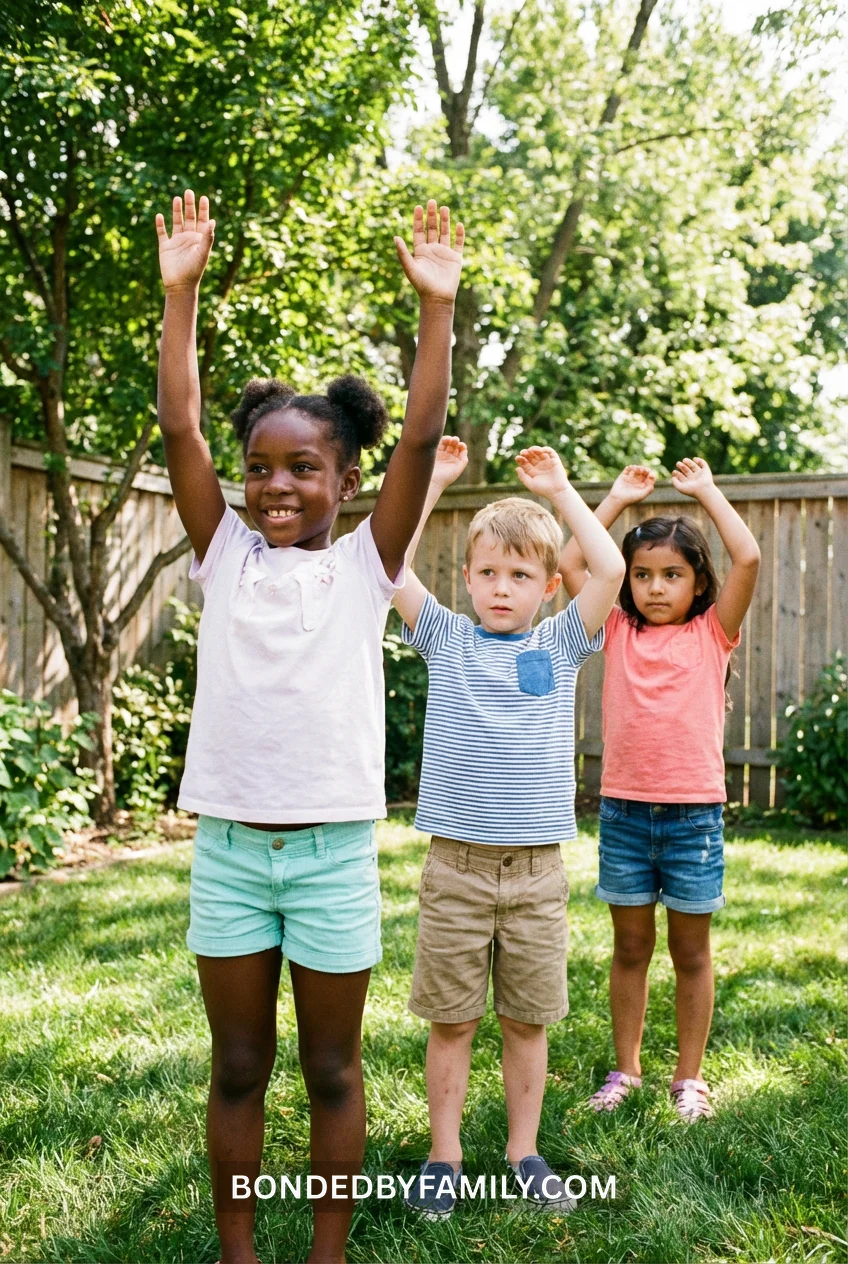
Classic Simon Says with multi-step directions. “Simon says touch your nose, then hop on one foot, then clap twice.”
Kids who only remember the first step aren’t listening—they’re guessing. This forces them to hold multiple instructions in their head and execute them in order. Builds working memory and listening simultaneously.
9. Kindness Sorting Game
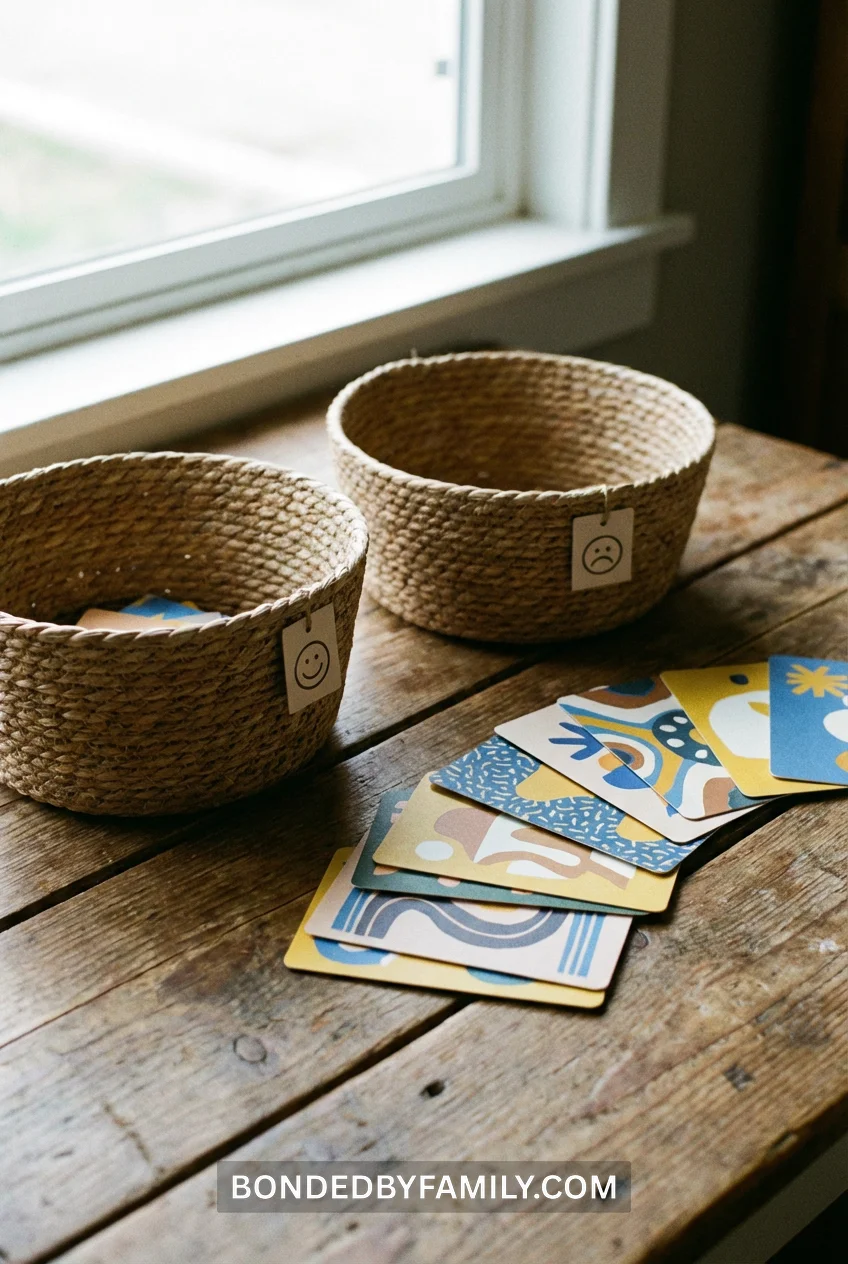
Print scenario cards. Read each one. Kid sorts it: Kind or unkind?
“Sharing snack with a friend” goes in the kind basket. “Laughing when someone falls” goes in unkind.
After sorting, ask: “What happens if you do the unkind thing?” Then: “How could you make it kind?” You’re building their internal compass before they face real situations.
10. Cooperative Puzzle Race
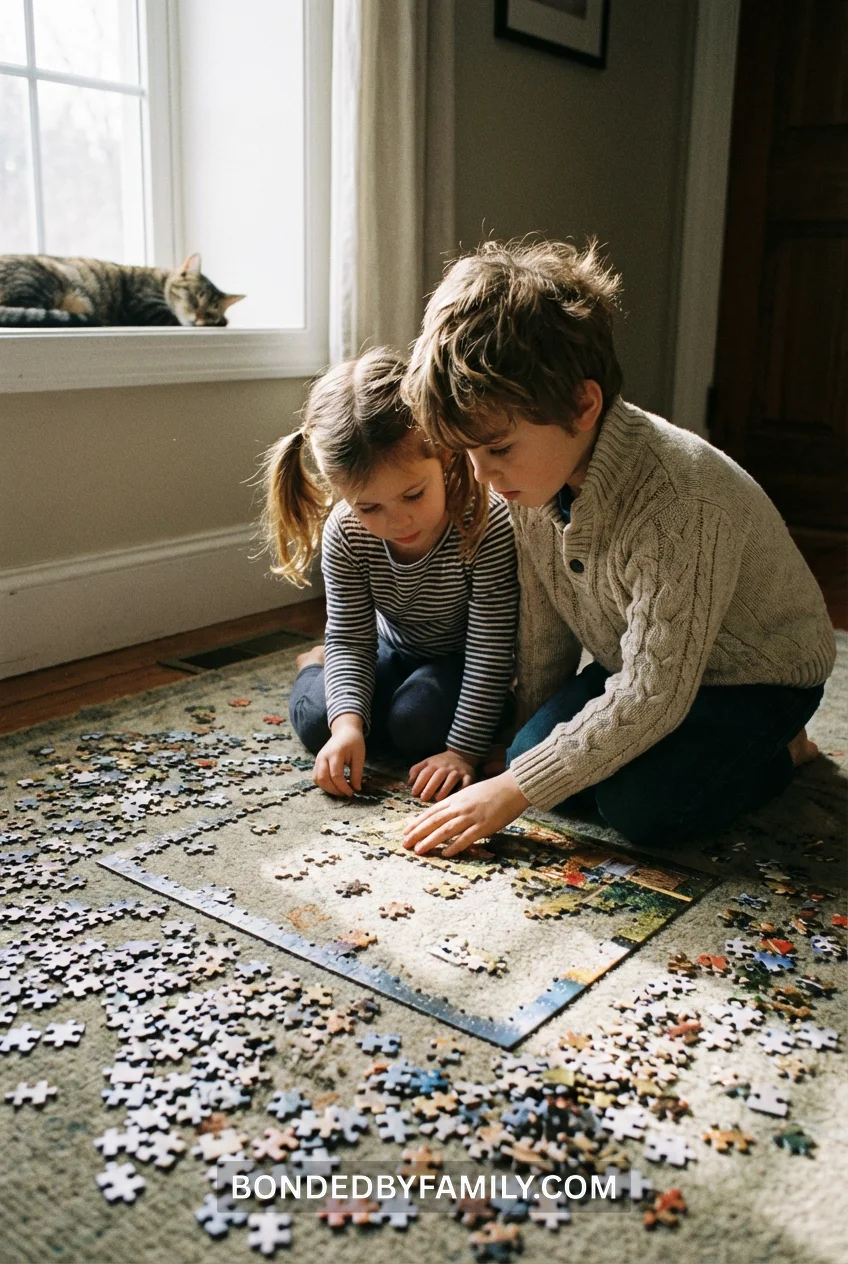
Two kids. One puzzle. Each person uses only one hand.
They have to cooperate, communicate, hold pieces for each other. The one-hand rule prevents one kid from dominating while the other checks out. Forces genuine teamwork.
11. Role Reversal Day
Here’s the one that changed everything in our house, and it costs exactly zero dollars.
For one hour, your kid is the parent. You’re the kid.
They make the rules. They decide what happens. They handle the problems.
My daughter made me clean my room. Made me ask permission before getting a snack. Told me I couldn’t watch TV until I finished my homework.
Then my son wouldn’t share a toy with me. I got upset. My daughter had to solve it. She used the Sharing Jar system from earlier in this article.
She APPLIED the lesson because she was in the position of having to enforce it. That’s when social skills click—when kids have to USE them from the other side.
We do this once a month now. It’s hilarious and instructive and gives me insight into what they think good parenting looks like (apparently I say “in a minute” way too much—noted).
The Real Talk About Social Skills
Some kids pick this stuff up by osmosis. They watch other kids and just GET IT.
Other kids need direct instruction. They need practice. They need repetition.
Neither type is better or worse. But if your kid is the second type and you’re not teaching them explicitly, they fall further behind every year. By third grade, the gap between kids with strong social skills and kids without becomes a canyon.
These 11 activities bridge that gap. They’re not magic. They’re practice. Consistent, low-pressure, game-based practice that builds skills the same way soccer drills build athletic skills.
Pick two activities. Do them weekly for a month. You’ll see the difference.
FAQ
How long does it take to see improvement in social skills?
Most parents notice small changes within 2-3 weeks of consistent practice (2-3 times per week). Big changes—like your kid independently using problem-solving strategies or showing empathy without prompting—typically appear around the 6-8 week mark. The key is consistency, not intensity. Fifteen minutes twice a week beats one marathon session.
What age are these activities appropriate for?
Most activities work for ages 4-10 with minor modifications. Younger kids (3-5) need simpler versions: fewer emotion words, shorter timers, more hands-on props. Older kids (8-10) benefit from added complexity: context cards, longer scenarios, discussions about WHY skills matter. The Emotion Cups and Sharing Jar work across all ages because you can adjust the difficulty on the fly.
My child resists these activities. What should I do?
Don’t call them “social skills practice”—that sounds like homework. Call them games. Lead with the fun ones (Feelings Charades, Conversation Ball) before introducing activities that feel more structured. If resistance continues, check the difficulty level. Activities that are too easy bore kids; activities that are too hard frustrate them. Find the sweet spot where they’re challenged but successful.
Can these activities help kids with ADHD or autism?
Yes, but adapt them. Kids with ADHD often need shorter sessions (5-10 minutes), more physical movement (Conversation Ball, Simon Says), and immediate rewards. Kids with autism may need visual supports (emotion charts, written scenario cards) and predictable structure (same game, same time, same place). Always follow your child’s lead and IEP recommendations if applicable.
Do I need to buy special materials?
No. Most activities use household items: paper cups, markers, blocks, timers, index cards. The most expensive item on this list is a beach ball, which costs $3. Free printables cover the rest. The ROI on social skills is massive—these activities cost almost nothing and pay dividends for years.