My daughter’s meltdowns used to last 45 minutes. Not anymore.
The shift happened when I stopped trying to create Instagram-perfect “calm corners” with $300 teepees and coordinated everything. Instead, I built what she needed with Dollar Tree finds and things we already owned.
Turns out, kids don’t regulate better in Pinterest-pretty spaces. They regulate in spaces designed for their specific nervous system.
These calm-down corner ideas focus on function over aesthetics, sensory science over decoration, and what occupational therapists recommend over what looks good in photos. Some cost nothing. Others require a trip to the dollar store. All of them work because they’re built on how children’s brains calm down, not how we think calming spaces should look.
Corner-Free Calm Zones (Because Not Everyone Has a Corner)
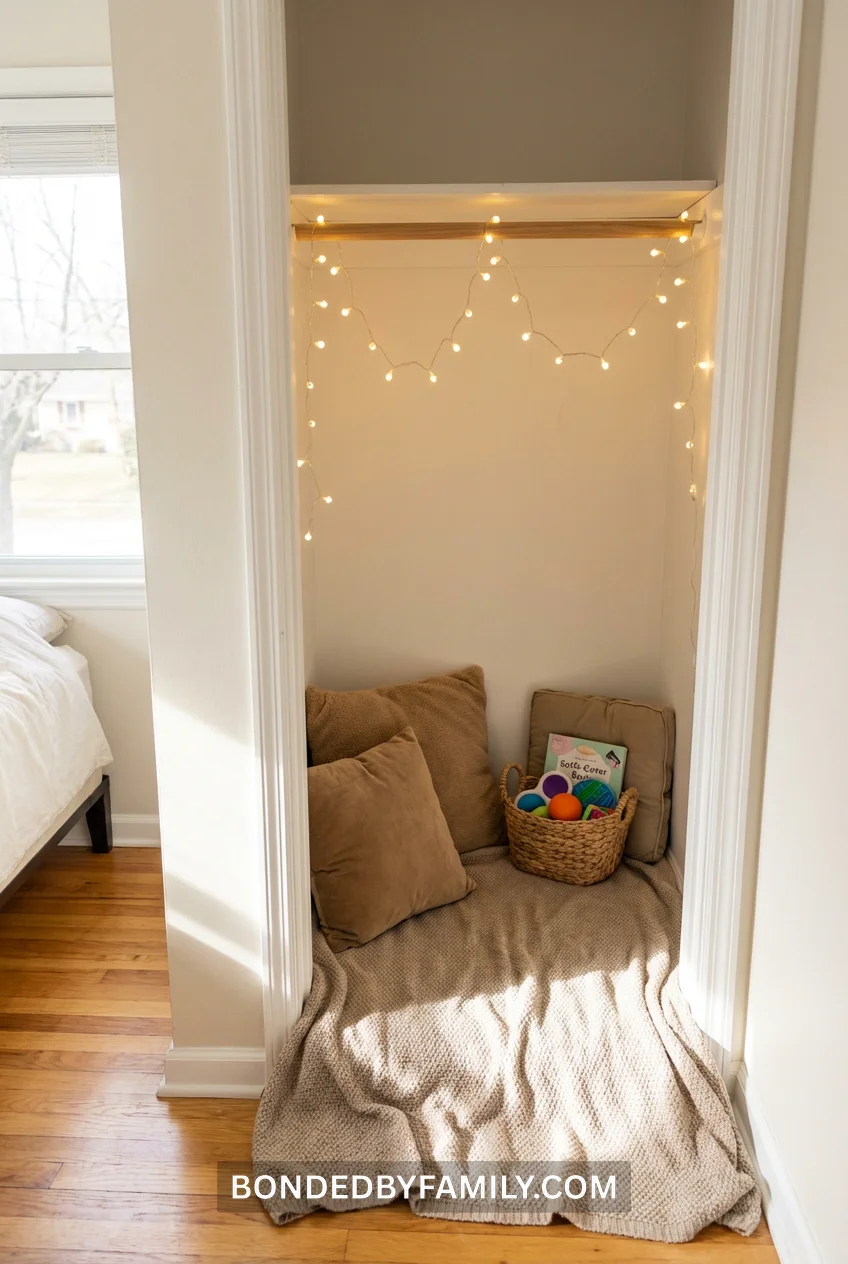
Don’t have a corner? Join the club. My first calm space was a 3-foot section behind our couch.
Regulation happens in defined spaces, not architectural corners. A folding room divider creates instant boundaries. Position it to carve out 4 square feet anywhere – behind furniture, next to a bookshelf, beside a bed. Dollar Tree sells fabric shower curtains that clip onto tension rods. Mount one between two pieces of furniture and you’ve built walls.
The science: spatial boundaries signal to kids’ brains that this zone operates under different rules. You’re not creating a room. You’re creating a psychological shift.
My neighbor uses a pop-up camping tent ($22 at Walmart) in her living room. Her son crawls in when overstimulated. The tent’s still there 18 months later because it works better than the designated playroom corner she tried first.
If you’re working with genuinely zero floor space, go vertical. Clear one bookshelf. Remove three shelves to create a 30-inch-tall opening. Add a cushion. Hang a curtain across the front. Kids squeeze into tight spaces when dysregulated – you’re designing for their nervous system, not adult comfort standards.
What matters: The space needs clear entry/exit, visual privacy from the rest of the room, and enough room to sit or lie down. That’s it. Everything else is negotiable.
The Breathing Cards That Every Therapist Recommends
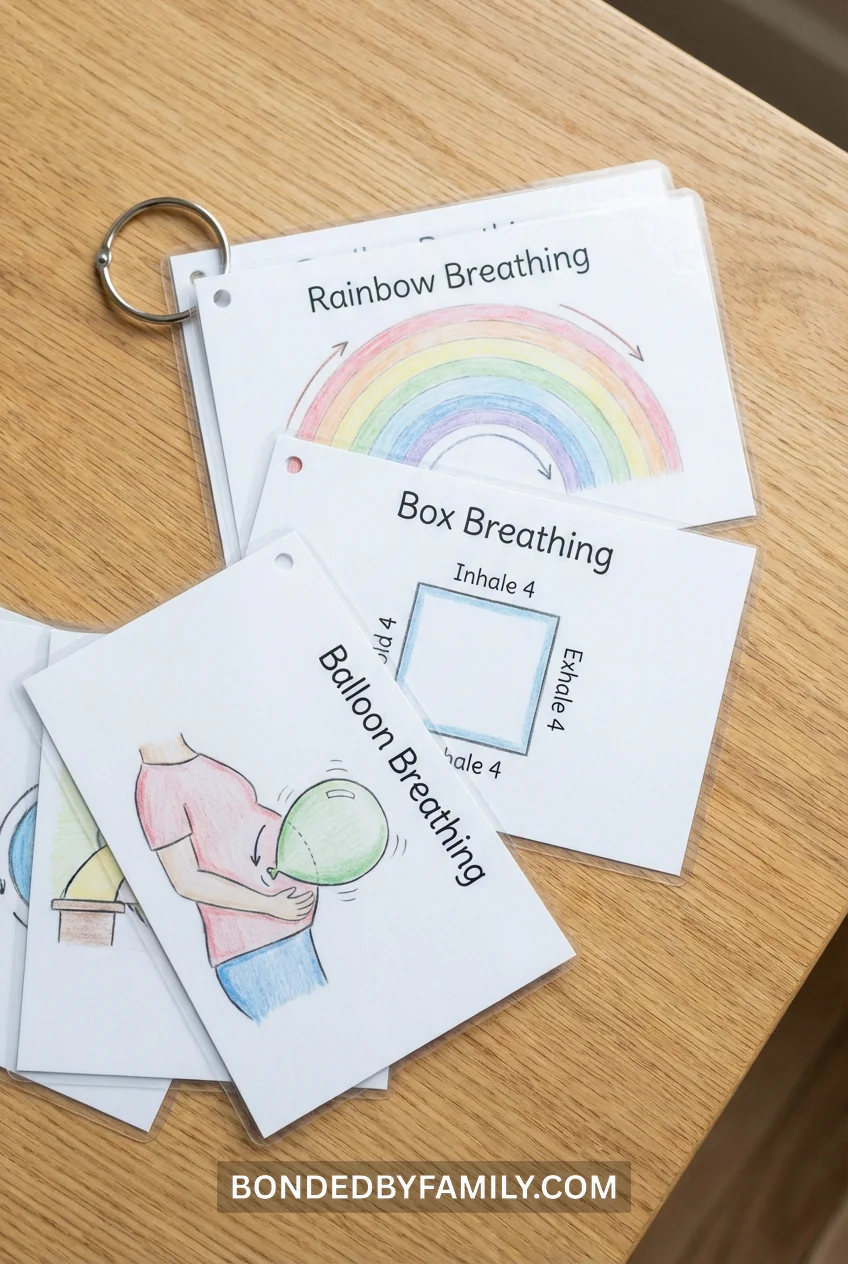
I spent $47 on fancy breathing posters before discovering what works.
Print 5 breathing exercises on cardstock. Cut them to 4×6 inches. Laminate them at Staples ($2). Punch a hole in the corner. Thread them onto a binder ring.
Done. Your kid can flip through techniques until one clicks. The portability means these travel to the car, restaurant, grandma’s house.
Why cards beat posters: choice. When a 6-year-old is melting down, looking at a poster with 12 options creates decision paralysis. Give them 5 cards they can physically manipulate, and suddenly they’re engaging their hands while their brain calms down. The act of flipping becomes part of the regulation.
Techniques that work for elementary-age kids: box breathing (4 counts in, hold 4, out 4, hold 4), balloon breathing (pretend to blow up a balloon with slow exhales), rainbow breathing (trace a rainbow shape in the air while breathing in on the upswing, out on the downswing).
Pro move: Let your kid decorate the backs with stickers or drawings. They’ll use tools they helped create. My daughter drew a terrible stick figure cat on hers. She grabs those cards daily.
Skip anything mentioning “calm down” or “anger management” on the cards themselves. Kids aren’t dumb – they know what the space is for. Making it obvious feels shaming. Just call them “breathing cards” and demonstrate during calm moments.
Test this yourself first. Adults who practice box breathing before teaching kids create better buy-in. You can’t sell a tool you haven’t tried.
Fidget Baskets (Not Bins)
Baskets beat bins because kids see options without dumping everything.
Fill a 10-inch basket with 6-8 quiet fidgets. Rotate items monthly. The goal isn’t variety – it’s finding the 2-3 tools your specific kid reaches for repeatedly, then keeping those in permanent rotation.
What works: smooth river rocks (free from outside), stretchy hair ties, magnetic thinking putty ($8), pop tubes ($6 for a pack), textured fabric squares cut from old clothes.
What doesn’t: anything that makes noise, has 47 pieces, or requires cleanup. You’re designing for a dysregulated child who needs sensory input, not playtime.
The mistake I made: buying a $35 “sensory kit” with 20 items. My kid used exactly two things – a squishy ball and a stretchy string. Spent three months watching her ignore the other 18 options before I donated them and simplified the basket.
Replacement strategy: when fidgets break or disappear (they will), swap in something texturally different. Smooth to bumpy. Soft to firm. You’re helping your kid discover their sensory preferences through trial and error.
Storage specifics: shallow baskets prevent items from getting buried. Label nothing. The space should feel like theirs, not a classroom supply station.
The DIY Calm-Down Bottle That Cost $3
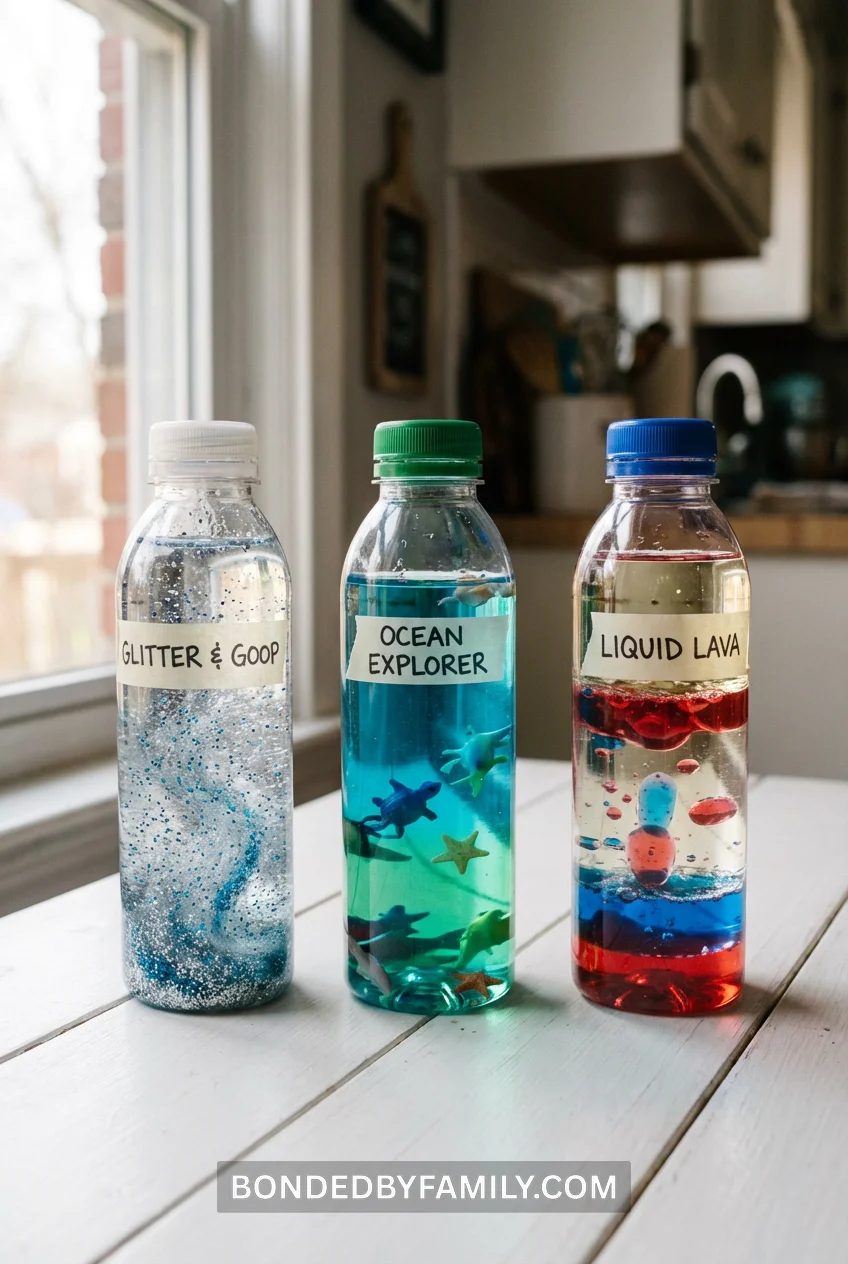
Pinterest will try to sell you $18 “sensory bottles” filled with magical proprietary glitter suspension fluid.
Here’s the formula occupational therapists use: Empty water bottle. Fill 3/4 with clear corn syrup. Add tablespoon of fine glitter. Top off with water. Hot glue the lid shut.
Shake it. Watch glitter swirl for 3-4 minutes as it settles. That’s your timer and your visual focus tool in one object.
The science: watching predictable, slow movement activates the parasympathetic nervous system. It’s the same reason people stare at fish tanks when stressed. You’re giving kids’ brains something to track while their amygdala calms down.
Variations that work: substitute corn syrup with clear dish soap for faster settling, use alphabet beads instead of glitter so kids count letters while it swirls, add a drop of food coloring to create colored glitter suspension.
What I learned through failure: using honey instead of corn syrup. Don’t. It clouds after two weeks. Corn syrup stays clear indefinitely.
Make two bottles. Kids shake one while the other settles, creating a rotation that extends engagement. Mine are 18 months old, still intact, still used weekly.
The bottle sits in their calm corner, not a toy box. Specific locations for specific tools create automatic associations. Brain sees bottle, brain knows “this is regulation time.”
Cost breakdown: Corn syrup $2.47, glitter $1 (you’ll use 1/10 of the container), water bottle free from recycling. Total: $3.47 for a tool that lasts years.
Weighted Lap Pads vs Weighted Blankets (The Comparison You Need)
Kids regulate differently. Some need full-body pressure. Others just need weight on their lap.
Weighted blankets ($40-80) provide deep pressure across the entire body. Great for kids who crawl under couch cushions, request tight hugs, or sleep better when buried in blankets. The pressure activates proprioceptive input, telling the nervous system “you’re safe, you’re grounded.”
Weighted lap pads ($15-25) deliver the same input in a 12×18-inch package. Better for kids who overheat easily, resist blankets, or just need something to ground them while sitting.
When to choose what: If your kid frequently asks for hugs during meltdowns, go blanket. If they resist being touched but will hold objects, go lap pad. If you’re unsure, start with a lap pad – it’s cheaper and less overwhelming.
Weight calculation: 10% of body weight. A 60-pound child needs 6 pounds of weight. Underfilling doesn’t work. Overfilling creates discomfort, not calm.
DIY option that works: sew a 14×20-inch pillowcase. Fill with poly pellets (craft stores sell them by the pound). Sew it shut. Wash the outer cover, not the filled pad. Total cost: $12-15 versus $60+ for commercial versions.
What surprised me: my kid uses her lap pad during homework, not just meltdowns. The weight helps her focus. We’ve stopped calling it a “calm down tool” and started treating it as sensory input she can access anytime.
Storage: weighted items live in the calm corner but can travel. Ours goes to the car for long drives, to restaurants during wait times, to doctor’s appointments. Portable regulation beats location-specific tools.
The catch: some kids hate weighted anything. Don’t force it. Regulation tools only work when kids choose them. Forcing creates resistance. Offer, demonstrate, then let them decide.
Calming Corner Posters That Don’t Patronize
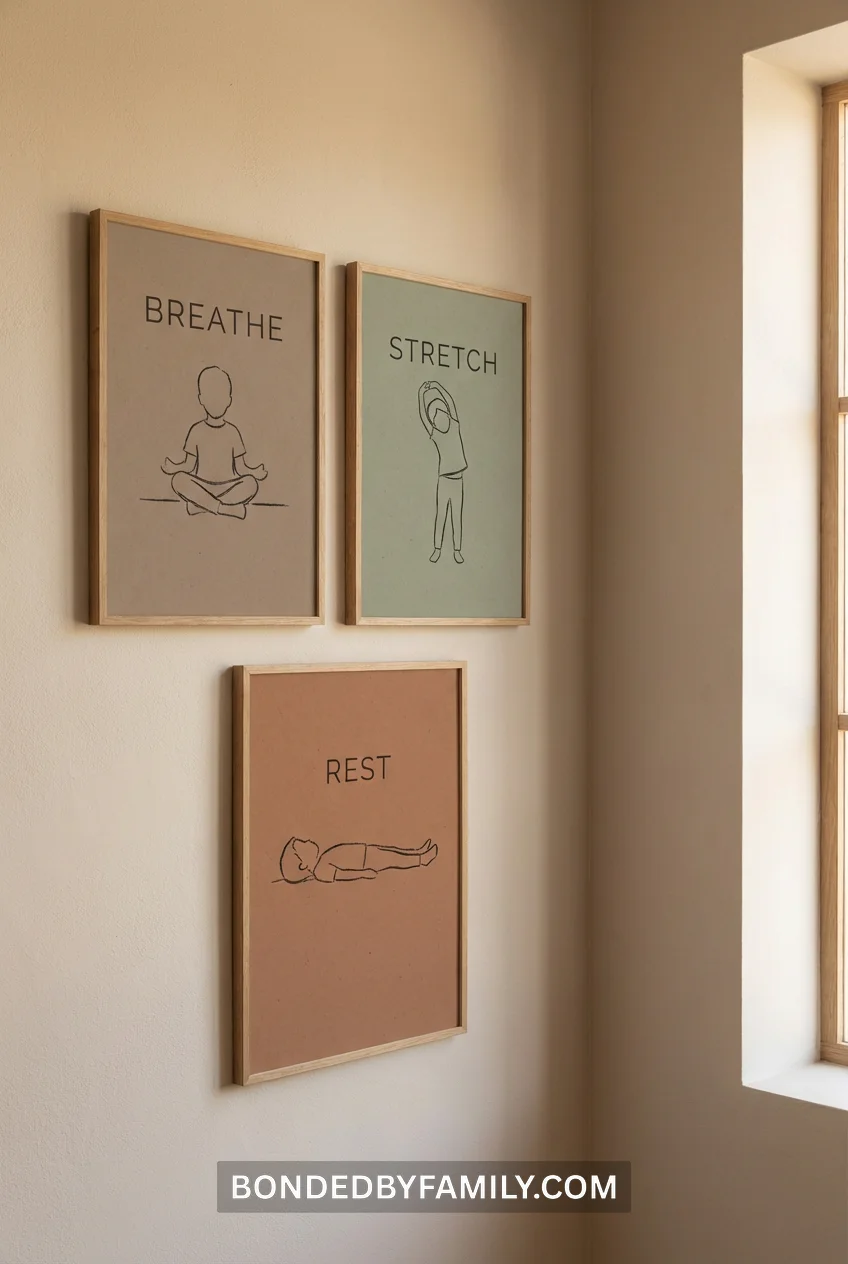
Avoid anything featuring the phrase “I am feeling…” or cartoon emotions with labels like “Mad Max.”
Elementary kids aren’t stupid. They know when materials talk down to them. Posters work when they provide information, not instruction.
What to include: visual breathing cues (hands demonstrating inhale/exhale), body scan checklist (“notice your shoulders, your jaw, your fists”), sensory options chart (no words, just pictures of fidgets/activities available).
What to skip: feelings wheels with 20 emotions, behavior expectation charts, “When I’m angry I will…” statements.
Print format: 8×10 inches, matte finish, neutral colors. Laminate them so they survive. Mount at kid eye-level, not adult height. If your 7-year-old has to crane their neck to read a calming poster, you’ve missed the point.
Free sources: Teachers Pay Teachers has free downloads. Search “calm corner visuals” and filter by price: free. Look for simple graphics, not cluttered designs.
The poster I removed after one day: “I am a calm, capable kid.” My daughter called it “weird and fake.” She was right. Affirmations don’t work during dysregulation. Visual cues for physical actions do.
What replaced it: a single poster showing three stretches (arms overhead, touch toes, twist left and right). She uses it. That’s the only metric that matters.
Quantity: 2-3 posters maximum. More creates visual clutter, which increases overwhelm. You’re building a calming space, not wallpapering an elementary classroom.
The Book Basket Strategy Nobody Mentions
Books in calm corners aren’t for reading. They’re for regulating.
Stock 4-6 picture books with specific qualities: repetitive text, rhythmic language, minimal plot. Kids don’t read them cover-to-cover during meltdowns. They flip pages, absorb images, let their hands do something while their brain settles.
What works: “Giraffes Can’t Dance” (rhythmic text), “Press Here” (interactive dots), “The Pout-Pout Fish” (repetitive rhymes), wordless books where kids narrate pictures.
What doesn’t: chapter books, books with complex plots, anything requiring sustained attention. You’re not building a reading nook. You’re providing a low-stakes activity that engages hands and eyes without demanding cognitive effort.
Rotate monthly. The goal isn’t novelty – it’s familiarity. Kids need predictability when dysregulated. Same books, same basket, same location creates automatic comfort.
Storage: 10-inch basket, books standing upright so covers are visible. Buried books don’t get used. Visual access matters.
The book my kid reaches for most: “The Rabbit Listened.” It’s about different animals offering advice to a kid who’s upset, and none of it helps until the rabbit just sits quietly. She never reads it – she flips to the rabbit page, stares at it, then puts it down. That’s regulation happening.
Secondary benefit: books create time boundaries. “You can look at two books, then we’ll try [whatever they were avoiding].” The structure helps kids transition out of the calm space.
Sensory Lighting That’s Not String Lights
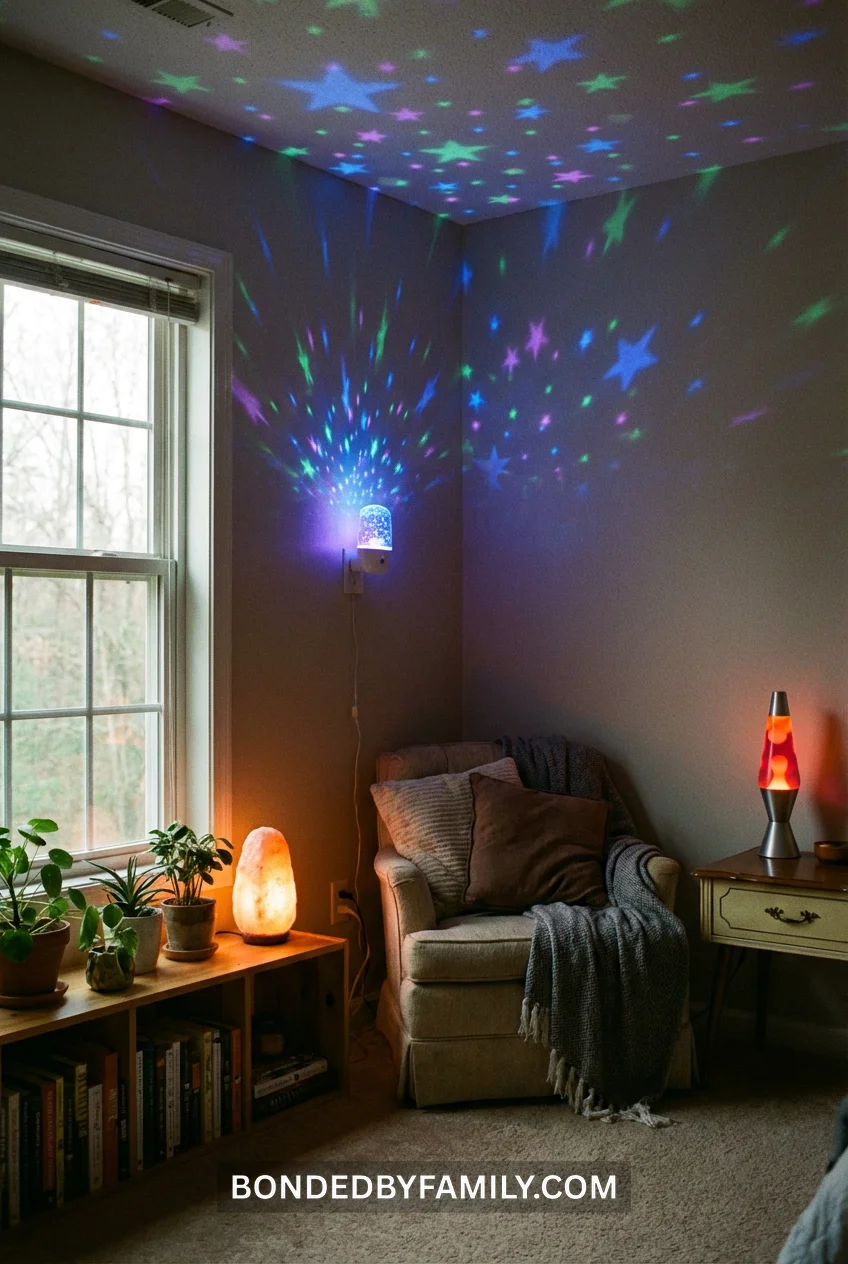
Everyone defaults to battery-operated string lights. They’re fine. They’re also not the only option.
Lava lamps ($12-18) provide movement and soft light. Kids track the blobs rising and falling, which creates the same visual focus as calm-down bottles but with heat-generated motion. Plug them in 30 minutes before the calm corner gets used so wax is flowing.
Color-changing night lights ($8-15) let kids control their environment. Some need blue. Others need warm amber. Giving them the remote means they’re making choices when they feel powerless. That matters.
Himalayan salt lamps ($15-25) emit warm, pink-orange light. The color temperature is naturally calming. Bonus: they double as white noise when you’re not using them – the bulb creates a subtle hum that some kids find grounding.
What to avoid: anything bright white, flickering, or with multiple settings that require setup. Kids in meltdown mode can’t navigate 6-step dimmer switches.
The lighting mistake I made: buying a galaxy projector that rotated stars across the ceiling. Too much movement. My kid got more dysregulated tracking all the motion. We switched to a static star projection (stars stay still) and she uses it.
Installation: everything on timers or easy-access switches. If you have to navigate cords and plugs during a meltdown, you’ll skip it. We use smart plugs controlled by voice (“turn on calm light”) so she can activate them herself.
Daylight consideration: calm corners need to work during the day, not just evenings. We use blackout fabric over the corner during daytime use, creating dim lighting even at 2 pm. A $9 tension rod and a $12 curtain panel solved it.
Real talk: you don’t need all of these. Pick one lighting option. Test it. Add others only if your specific kid needs variety. Less is genuinely more in regulation spaces.
FAQ
How long should kids stay in their calm-down corner?
5-20 minutes, kid-dependent. Set a visual timer so they see time passing. Forcing longer stays creates resentment. Pulling them out too early prevents regulation from completing.
What if my kid refuses to use the calm corner?
Practice during calm moments. Sit in there together reading books. Make it a cozy spot, not a consequence location. If it only gets used during meltdowns, it becomes punishment in their mind.
Can siblings share a calm corner?
Not simultaneously. One kid at a time. Regulation requires privacy. If you have multiple kids who need the space, create a “waiting spot” nearby with one fidget and a timer.
What’s the minimum age for a calm corner?
18 months. Toddlers won’t use tools independently, but they’ll associate the space with comfort if you sit with them there during big feelings. By 3-4, most kids can use it semi-independently.
My kid just plays in there instead of calming down. What now?
Playing is regulating for some kids. If they go in upset and come out calm, the space works even if they didn’t use it “correctly.” If they’re hiding to avoid tasks, that’s different – add a visual timer and expectation (“5 minutes, then we try homework again”).