My kids hit a wall around 4 p.m. – bored, twitchy, one hand reaching for a screen. The outdoor activities for kids that pulled them out of it were never the fancy ones. They were the messy, do-it-yourself kind that send a child back inside tired, dirty, and a little bit proud.
That pride is the point. A child who builds a fort that holds, who finally crosses the balance beam, who paints a rock and shows it off—that child is learning something a worksheet can’t teach. Confidence grows from doing hard things. Creativity grows from open time and a few odd materials.
So this isn’t a list of crafts you’ll spend an hour setting up for five minutes of play. I’ve sorted 21 ideas by what each one does for a kid. Most cost nothing. A few cost a trip to the hardware store. All of them get the wiggles out.
Here’s how the list breaks down: build-and-tinker projects, body challenges, nature discovery, and art with imagination. Skip around. Grab what fits your yard and your kid’s mood today.
Build-It and Tinker Projects
These reward effort with something real. A child plans, fails, fixes, and finishes. That loop is where confidence lives.
1. The Backyard Obstacle Course
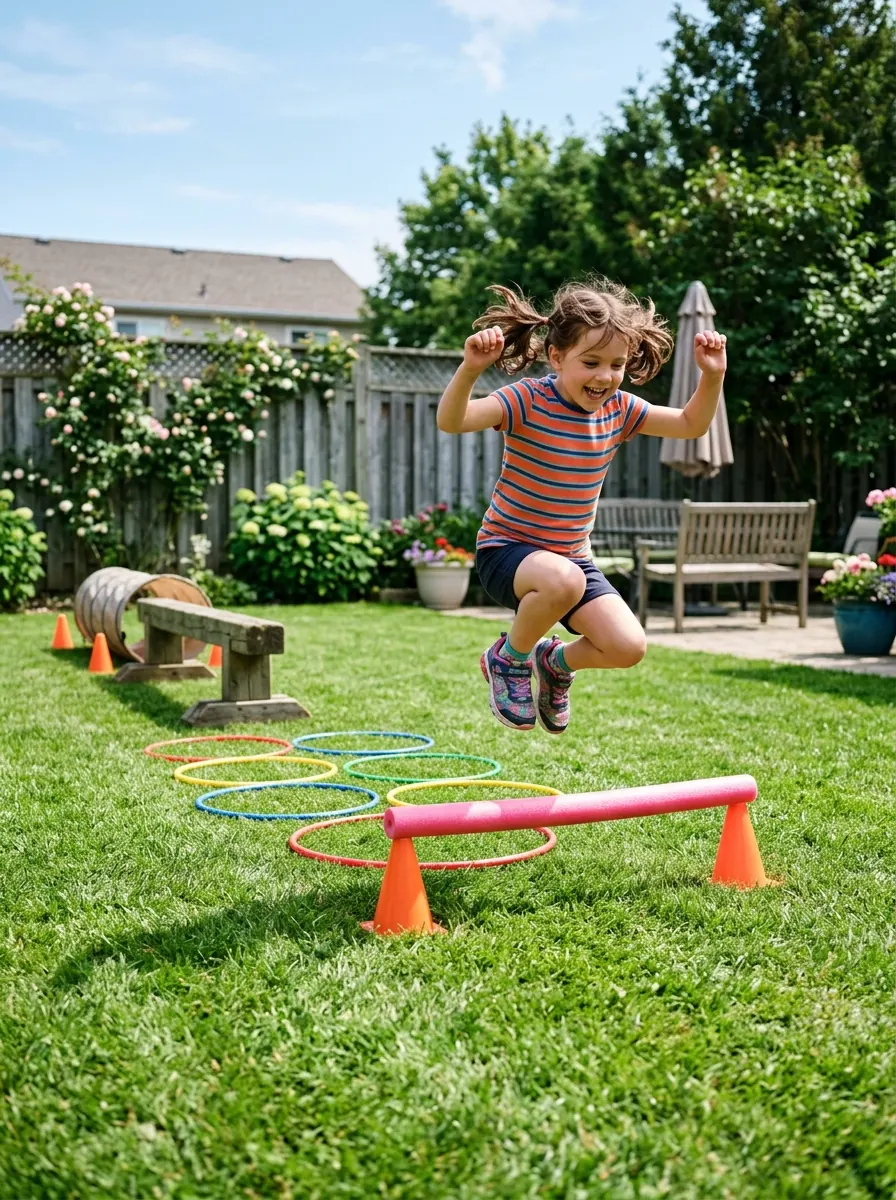
If you build one thing from this list, build this. An obstacle course turns a flat lawn into a challenge a kid wants to beat again and again. The first run is slow and wobbly. By the tenth, they’re shaving seconds and shouting their times at you. That visible progress is what builds grit.
Why it works
Kids crave mastery. A course gives them a clear goal and instant feedback. Each station works a different skill—balance, agility, coordination, planning—so a child who struggles with one part can shine at another. And because they help design it, they own it.
Dimensions and layout
Aim for a course 30 to 50 feet long with five or six stations. Space stations 6 to 8 feet apart so kids have room to move between them. For a balance beam, a standard 2×4 board laid flat gives you a 3.5-inch-wide surface—wide enough for beginners, narrow enough to feel like a win.
Step-by-step
- Walk the yard and pick a loop. Start and finish near the same spot so timing stays clean.
- Set your first station. Lay three or four hula hoops in a line for a jump-through.
- Add hurdles. Push two garden stakes into the ground a foot apart and rest a pool noodle across them. Three hurdles in a row works well.
- Drop a balance beam. Set a 2×4 flat on the grass, or use a chalk line for younger kids.
- Build a weave. Stand five plastic cones in a zigzag for a quick footwork drill.
- End with a crawl. Drape an old sheet over two chairs for a tunnel.
- Time the first run, then let them try to beat it.
Materials and rough costs
- Pool noodles: about $1.25 each at a dollar store. Buy four.
- One 2x4x8 board: $5 to $8 at a hardware store.
- A set of plastic agility cones: around $10.
- Hula hoops: $3 to $5 each, or reuse what you have.
- Garden stakes, an old sheet, and a kitchen timer or phone: free or close to it.
Total starting cost: under $30, and most of it lasts for years.
Pro move
Let your child redesign the course each week. Hand them the noodles and step back. The planning – deciding what goes where and why – stretches their thinking as much as the running does.
Common mistakes to avoid
- Making it too hard. If a five-year-old can’t finish, they quit. Start gently.
- Skipping the timer. The clock is what turns a walk-through into a challenge.
- Building it for them. The fun starts when they build it themselves.
2. A Mud Kitchen
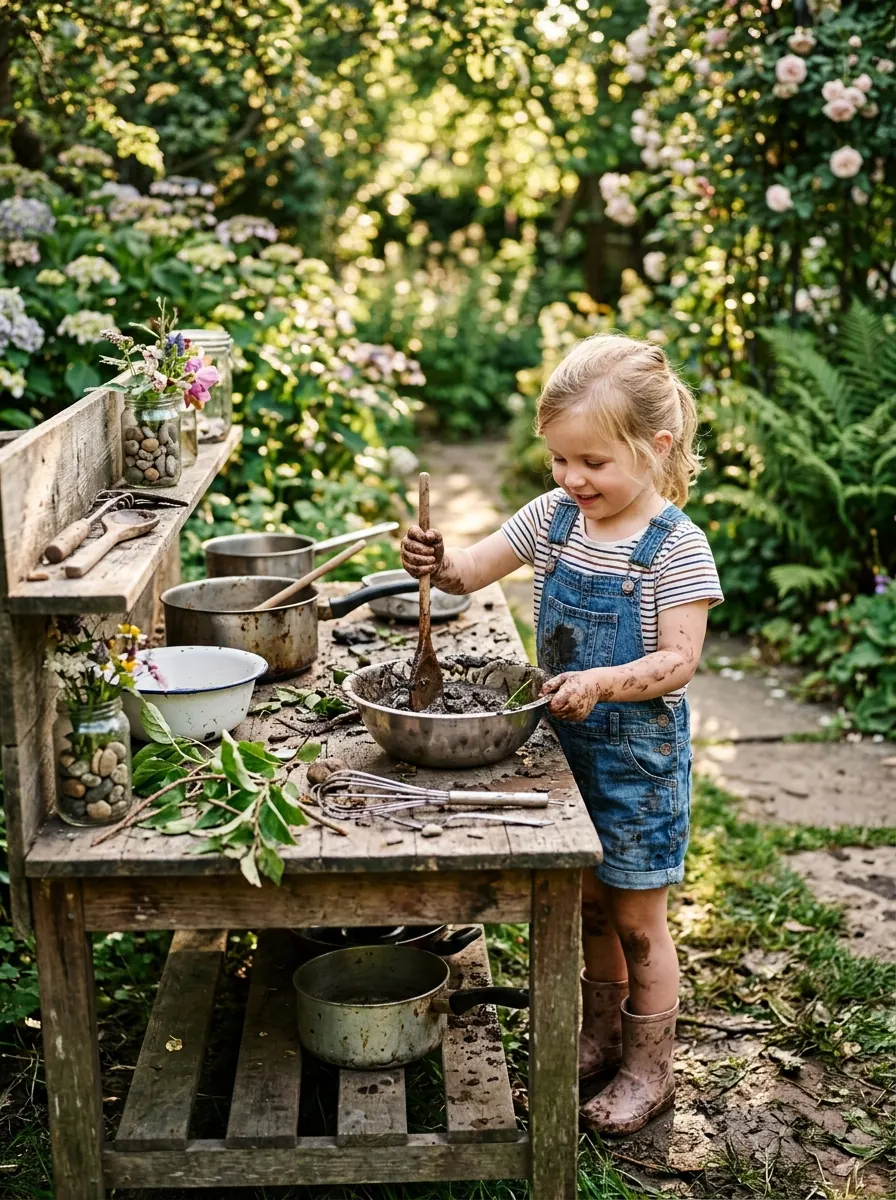
Hand a child mud, water, and a few old pots, and watch what happens. They’ll make soup, bake pies, run a restaurant. No instructions needed.
A mud kitchen costs almost nothing. An old side table, a dented saucepan, a wooden spoon, and a bucket of water do the job. Add some leaves and petals for “ingredients.”
This is open-ended play at its best. There’s no right answer, so there’s no failing. Kids invent the rules, the menu, and the story. That freedom is where imagination stretches.
Yes, they’ll get filthy. Strip them down to old clothes and call the bath part of the deal.
3. Rock Painting
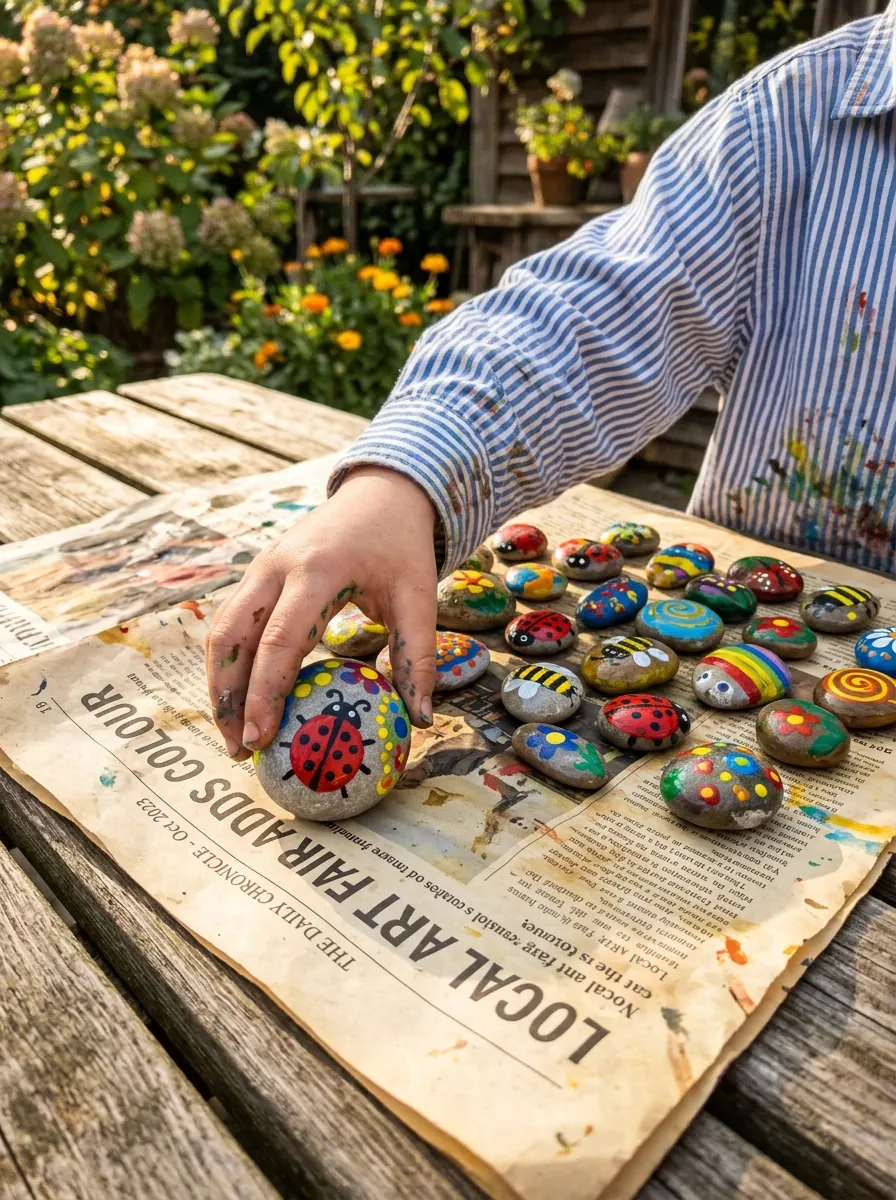
Rock painting shows up on nearly every list of outdoor activities for kids, and for good reason. It’s quiet, it’s cheap, and the result lasts.
Gather smooth stones on a walk first—that’s half the fun. Back home, set out washable acrylic paints and let them go. Dots, faces, bugs, whole stories across a row of rocks.
The confidence boost comes after. A child who paints a rock has made a thing they can hold, keep, or hide for a neighbor to find. Try starting a kindness rock trail down your street.
Seal finished rocks with a coat of clear outdoor varnish if you want them to survive the weather.
4. Build a Stick Fort
A pile of branches becomes a den, a base, a hideout. Kids problem-solve as they go – which stick holds, which falls, how to make a door. Lean long sticks against a low branch for a frame, then fill the gaps.
It rarely works the first time. That’s the lesson. They adjust, rebuild, and try again until it stands.
Move and Challenge Their Bodies
Big movement builds more than muscle. A kid who learns their body can do hard things carries that belief everywhere.
5. The Chalk Obstacle Walk
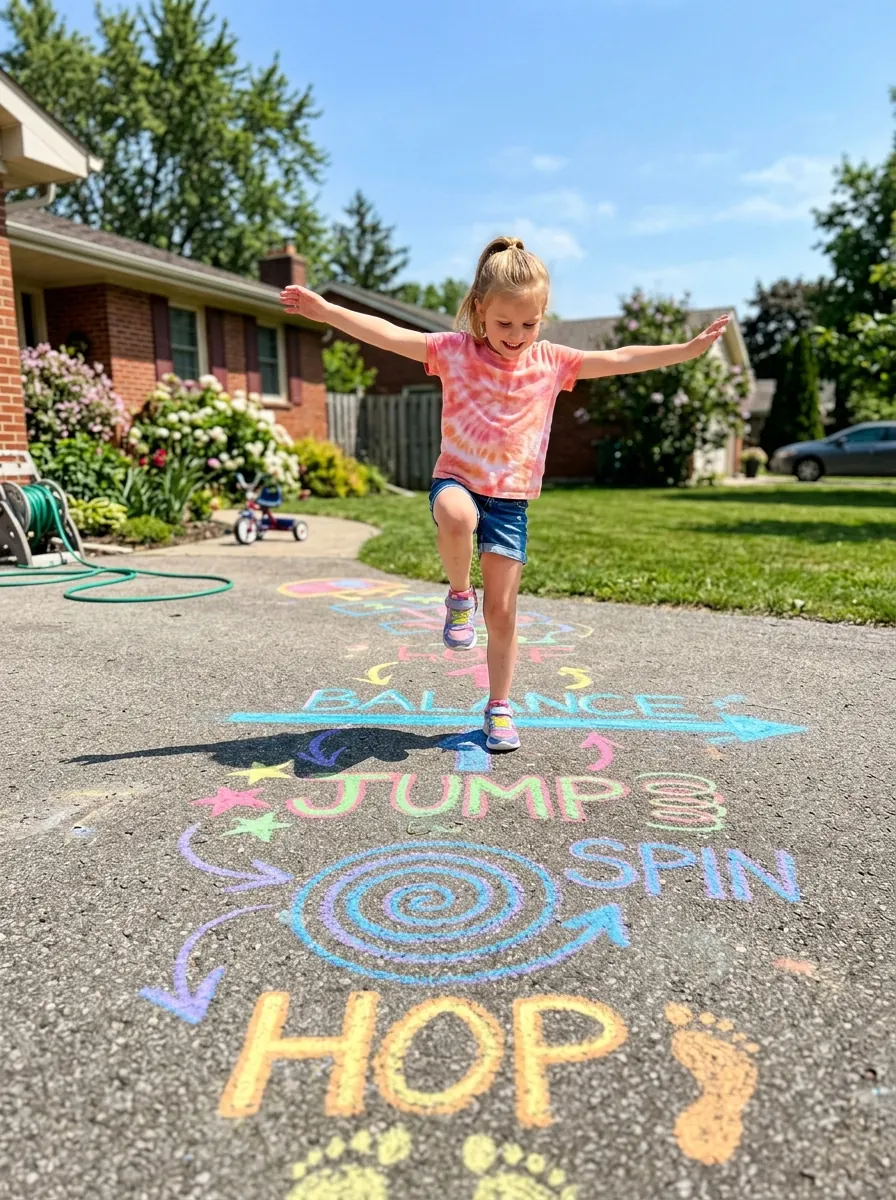
Draw a winding path on the driveway with sidewalk chalk. At each section, write a move: hop, spin, crab walk, jump twice. Kids follow the trail and do what it says.
It’s part hopscotch, part dance, part silly. You can stretch it the length of the whole driveway. Younger kids love calling out the next move; older ones race to finish without a mistake.
Best part? You design it once, and they run it for an hour. Swap the moves tomorrow for a fresh course.
6. Climbing a Tree (Yes, Really)
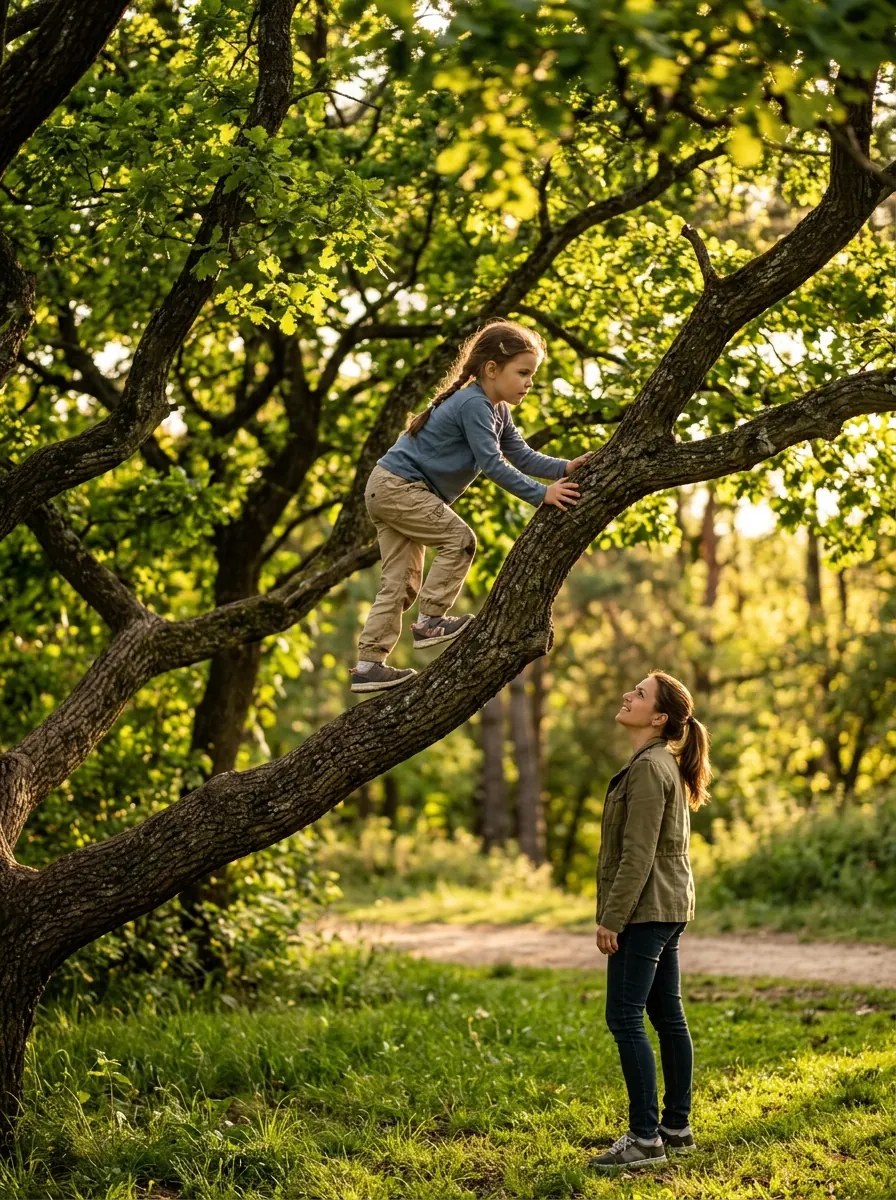
Most parents tense up at tree climbing. The instinct is to say, “Get down, you’ll fall.” I get it. But here’s where the common worry and the research part ways.
What most parents think: climbing is reckless, and a good parent stops it.
What’s closer to the truth: managed risk is how kids learn to judge danger for themselves. When a child reaches for a branch, tests it, and decides whether to trust it, they’re building real-world judgment—the kind no playground rule can hand them. Child development researchers call it “risky play,” and they tie it to stronger problem-solving, better coordination, and, oddly enough, fewer injuries over time, because the child learns their own limits.
So the goal isn’t to remove the risk. It’s to manage it. Pick a tree with low, thick branches. Check that the wood is alive and solid. Stay close enough to spot, far enough to let them work it out. Set one rule: only climb as high as you can get down on your own.
The child who climbs to a branch they chose, on their own steam, comes down taller on the inside. That look on their face is worth the held breath.
7. Giant Bubbles
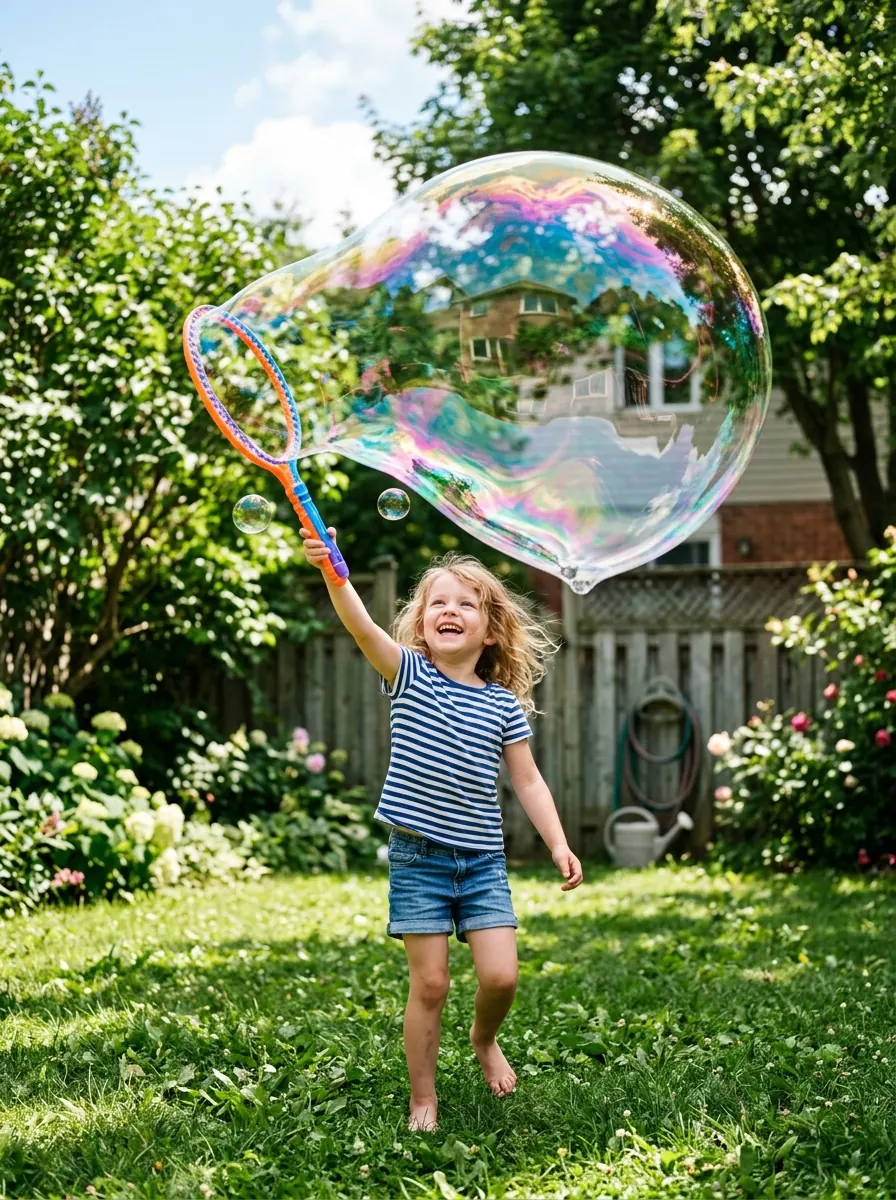
Mix dish soap, water, and a spoon of cornstarch. Bend two sticks and a loop of string into a wand. Now make bubbles bigger than the kids. Chase them, pop them, do it again. Five-minute setup, endless squeals.
8. The Balance Beam Challenge
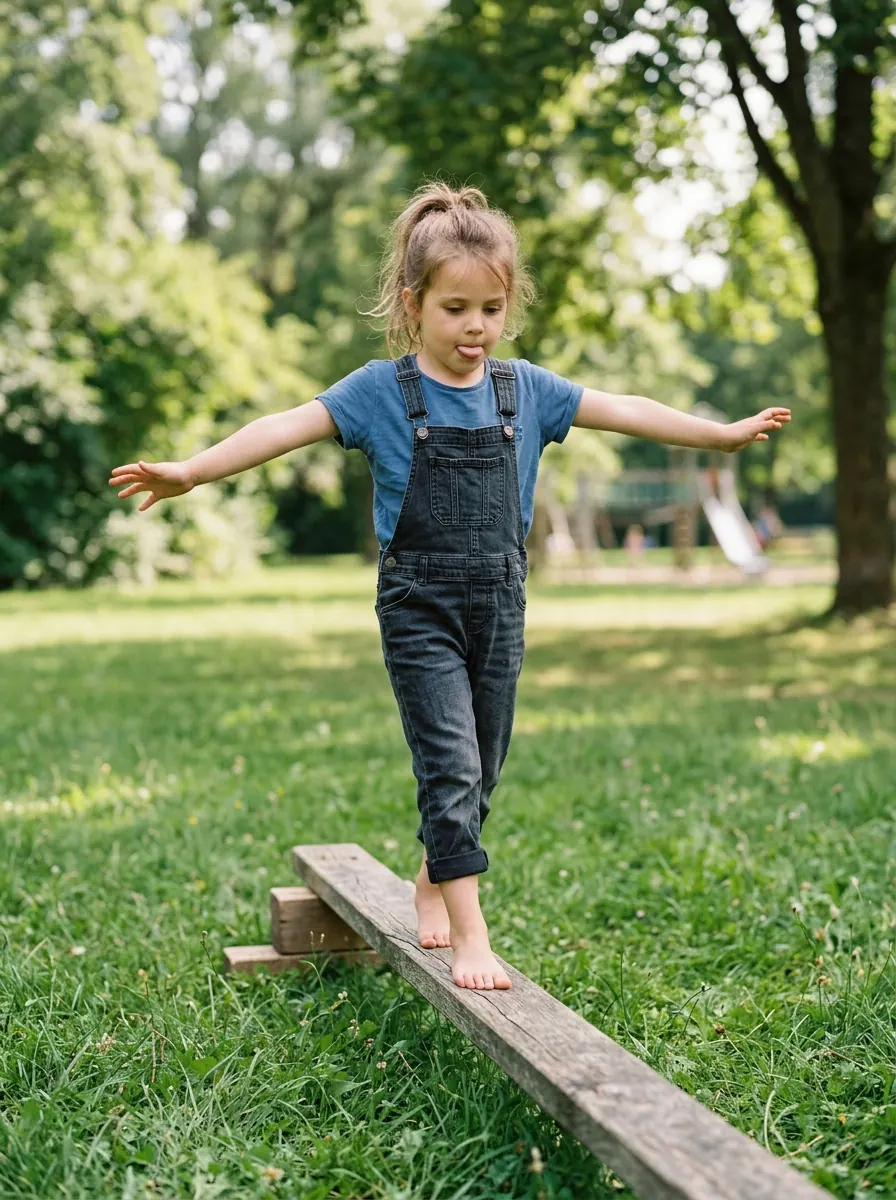
Lay a 2×4 flat on the grass. Have them walk it heel to toe, then backward, then carrying a cup of water. Each round is a little harder and a little prouder. Cheap, quiet, and a real coordination workout.
9. Hula Hoop Challenges
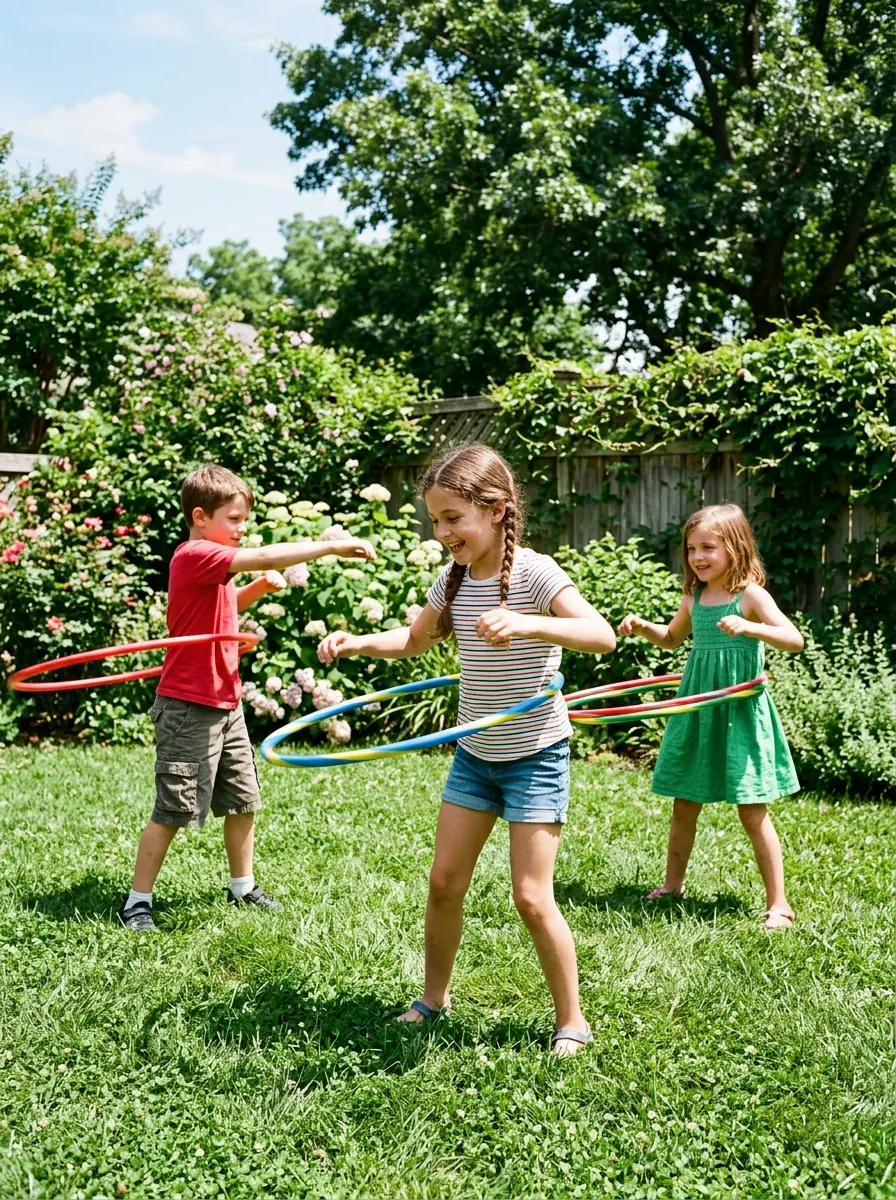
One hoop, a dozen games. Spin it, jump through it, roll it, and chase it, see who lasts longest. Set small dares and let them top each other.
10. A Family Backyard Olympics
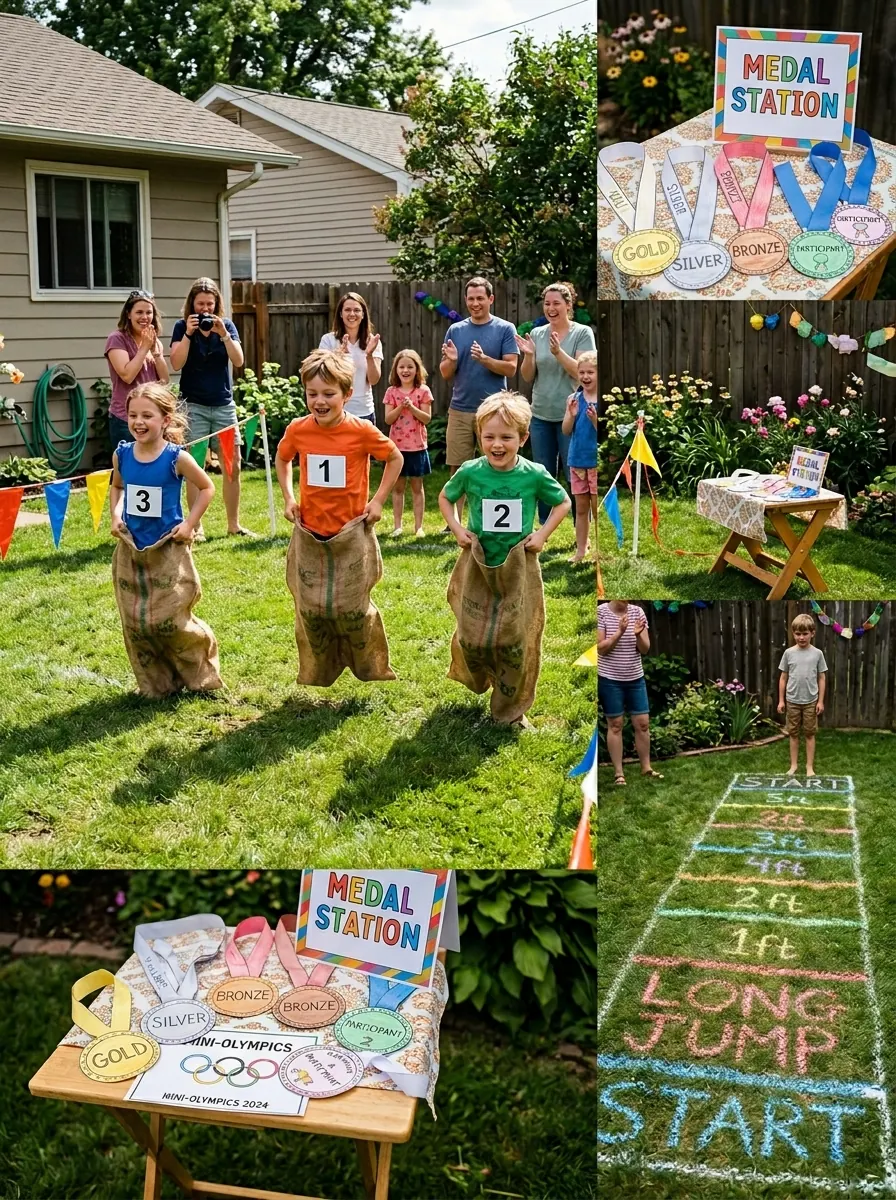
Set up five events and a medal ceremony. A sack race with old pillowcases. A long jump off a chalk line. A water-balloon shot put. A pool-noodle javelin. A balance walk to finish.
Kids help plan the events, which makes them care more. The losers learn to lose; the winners learn to win without gloating. Both matter.
Hand out homemade paper medals at the end. The photos alone are worth it, and a sibling rematch is always on the calendar.
Nature and Discovery
Curiosity is a muscle. The more a child looks closely at the world, the more questions they ask—and the braver they get about finding answers.
11. A Nature Scavenger Hunt
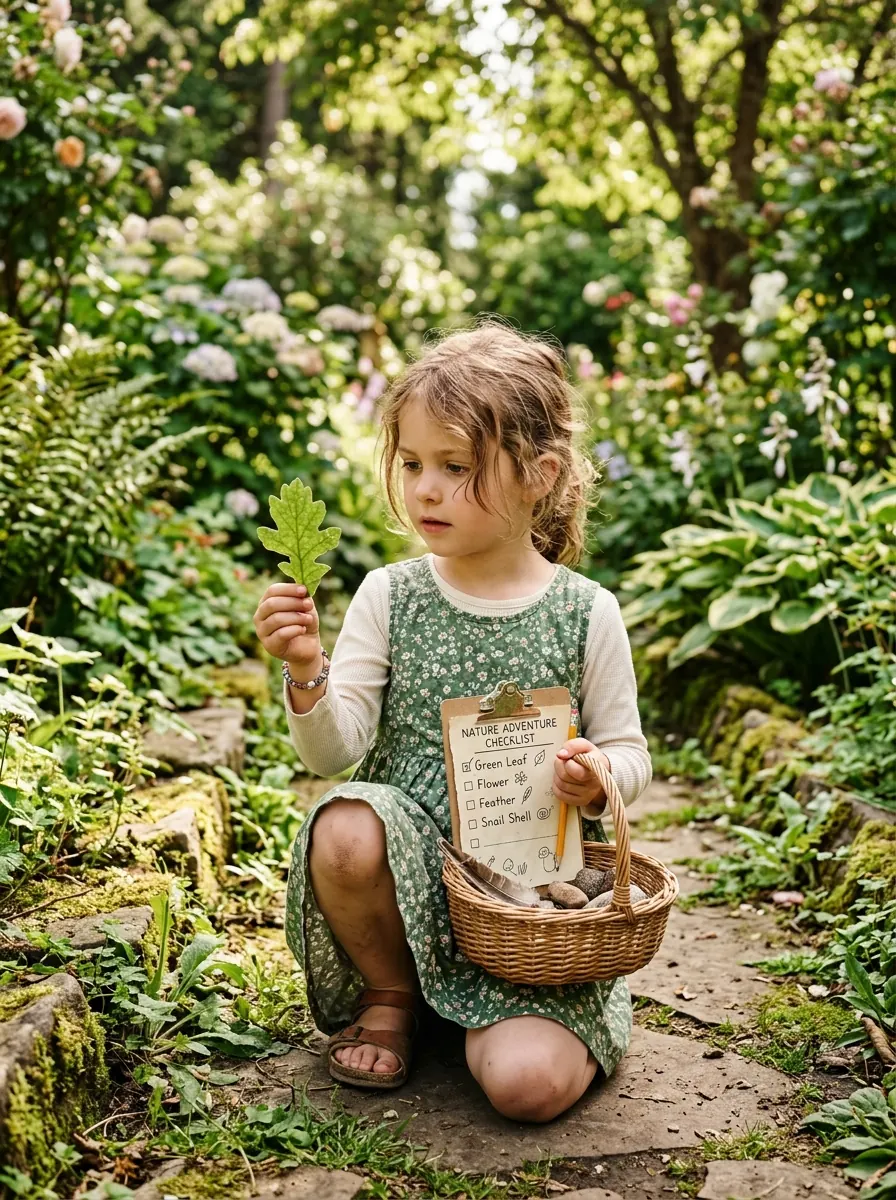
Write a list: something smooth, something that flew, a yellow flower, a seed. Hand it over and send them hunting. Younger kids love the chase; older kids can race the clock.
You can make a fresh list in two minutes. No printables required, though they’re nice if you want them.
12. Backyard Camping
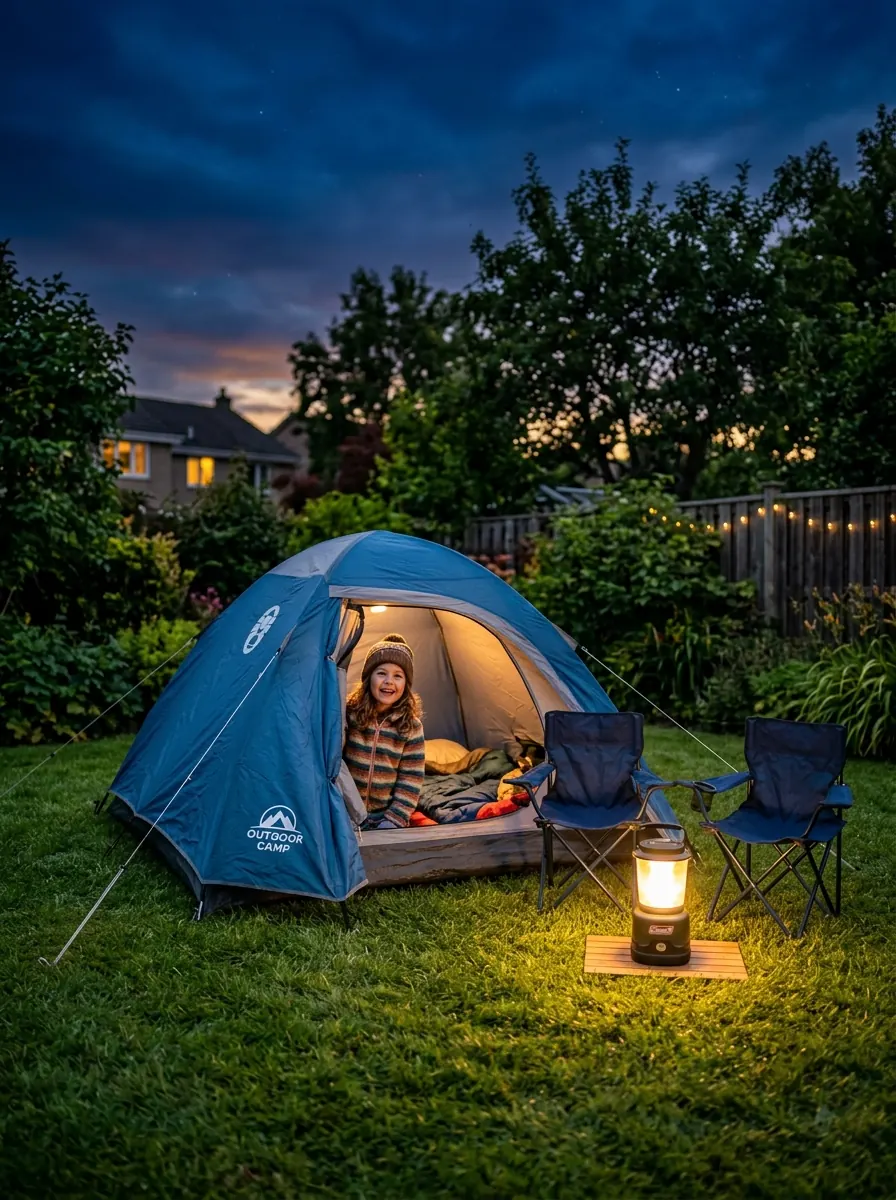
Pitch a tent in the yard and let the kids “camp.” Set up chairs, a lantern, and a snack stash. Tell stories. Spot a star or two.
A backyard sleepout is a low-stakes first taste of independence. They’re brave enough to sleep in the tent, safe enough that home is ten steps away. If nerves win at midnight, the back door is right there—and that’s fine.
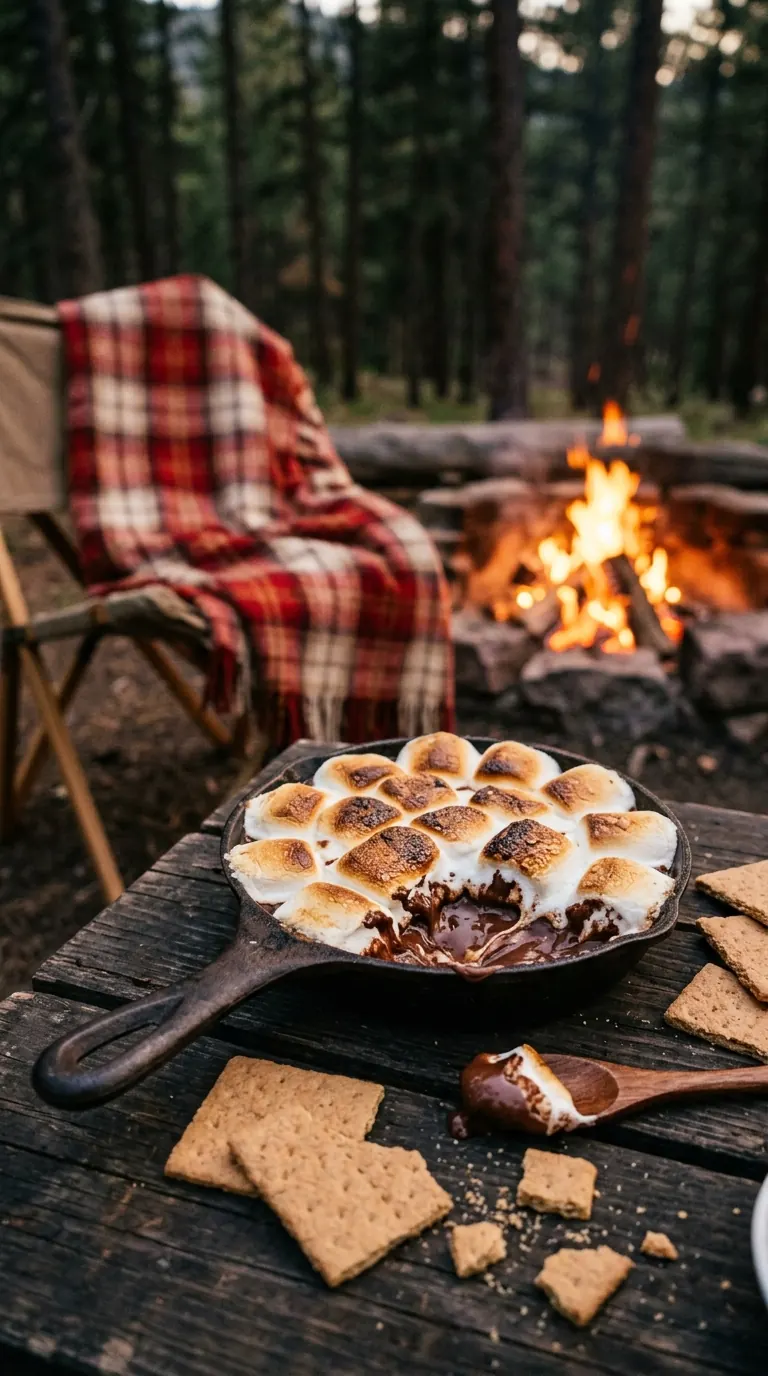
My kids gathered sticks for a pretend campfire and “cooked” s’mores in the microwave. They still talk about it.
13. Start a Nature Journal
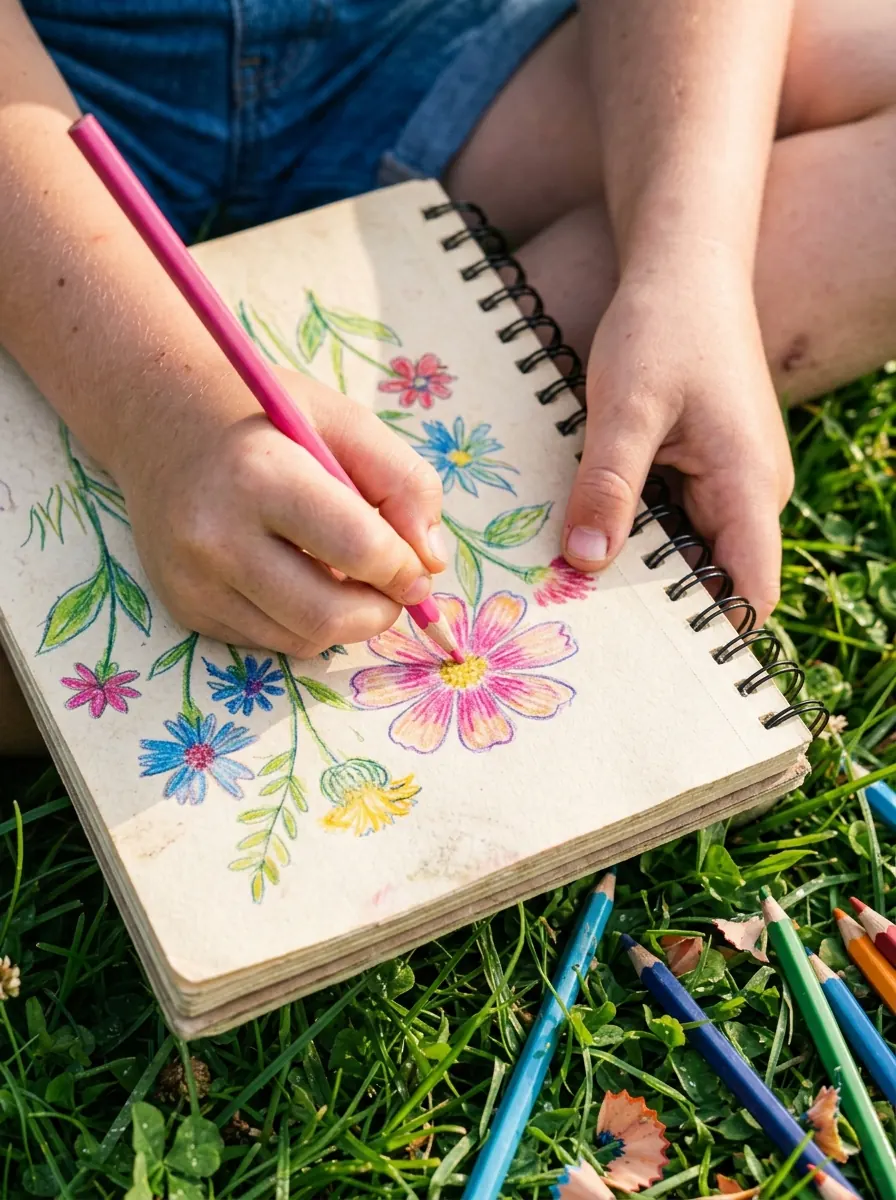
Give each kid a cheap notebook and a pencil. Outside, they draw what they see—a bug, a cloud, a leaf—and write a word or two. Over weeks, it becomes a record of their own world. Slow, calm, and a quiet builder of focus.
14. A Bug Hunt
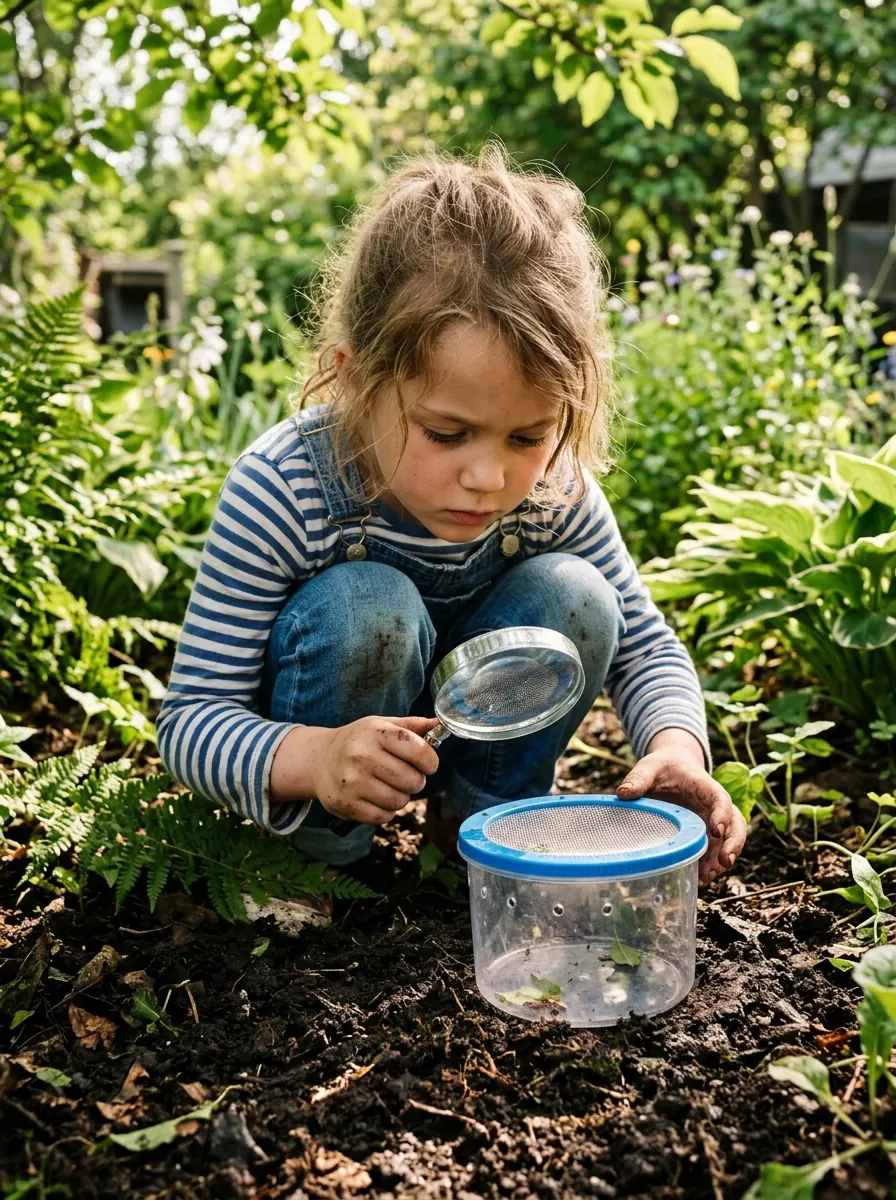
Grab a magnifying glass and dig. What lives under that rock? In the dirt? Kids turn into tiny scientists fast. Count legs, name colors, then let everything go.
15. Make a Pinecone Bird Feeder
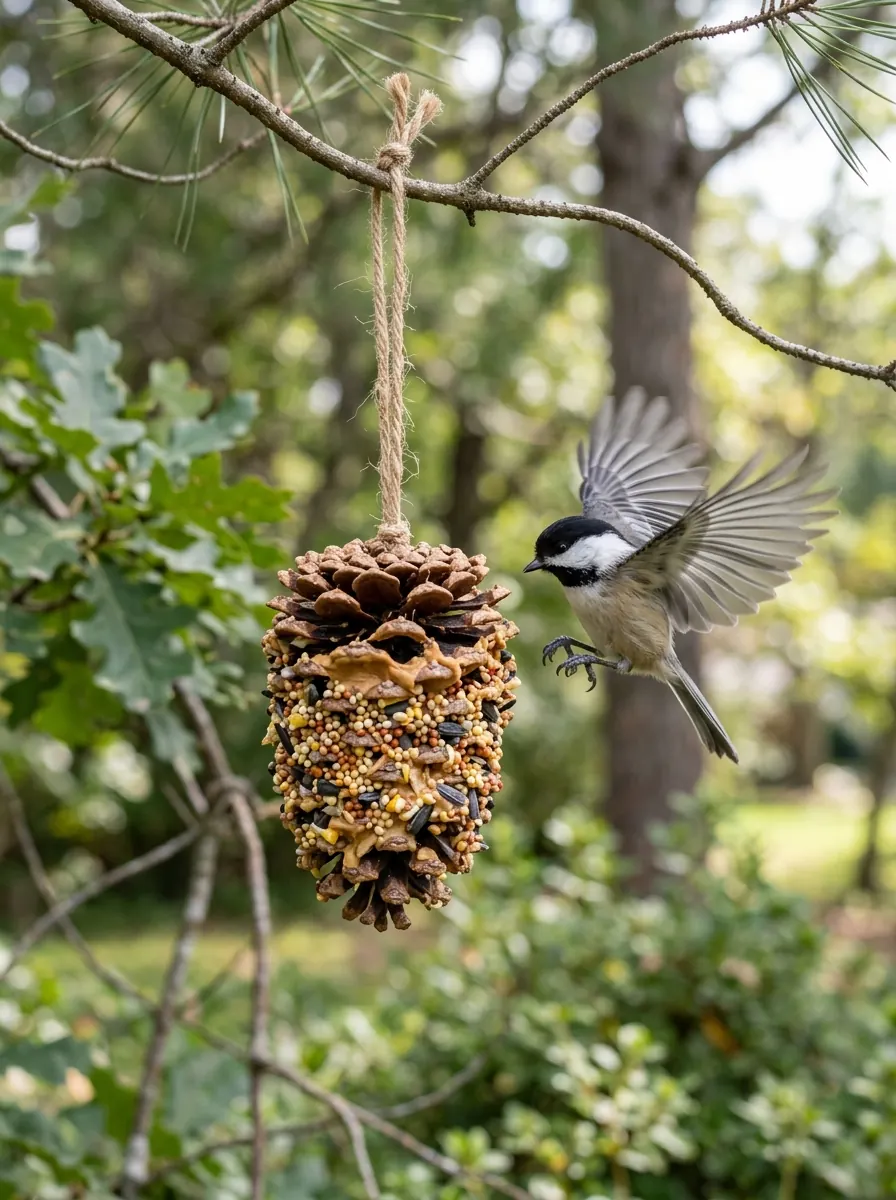
Spread peanut butter on a pinecone, roll it in birdseed, and hang it with a string. Then comes the patient part, waiting for birds.
The wait teaches more than the craft. A child checks the feeder each morning, learns which birds visit, and feels responsible for something small. Keep a notebook nearby, and you’ve folded in the nature journal too.
Art and Imagination Outside
Open-ended art has no wrong answer. That’s exactly why it builds creative confidence—there’s nothing to get wrong.
16. Sidewalk Water Painting
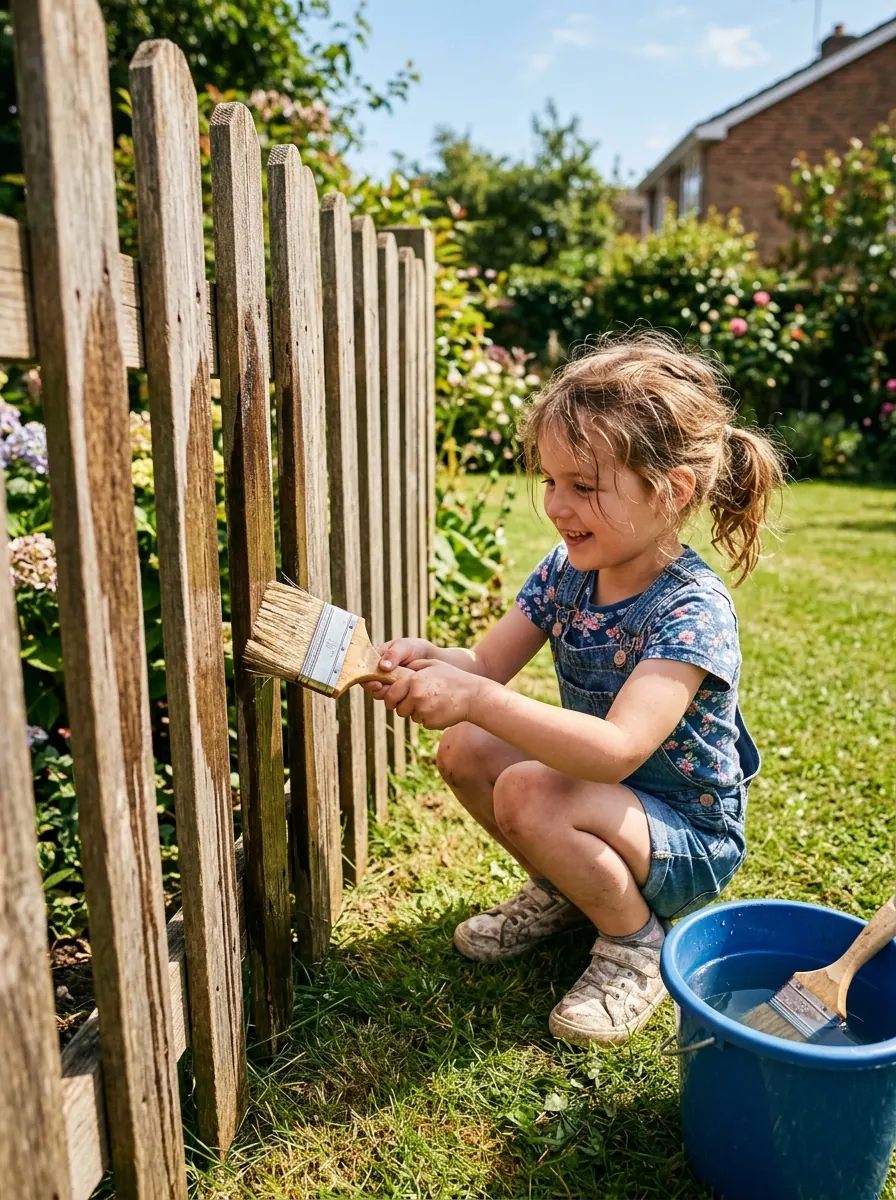
Give them a bucket of water and a paintbrush. Let them “paint” the fence, the steps, the dog house. It dries, they redo it. Zero mess, zero cost, and surprisingly absorbing.
17. Water Gun or Spray-Bottle Art
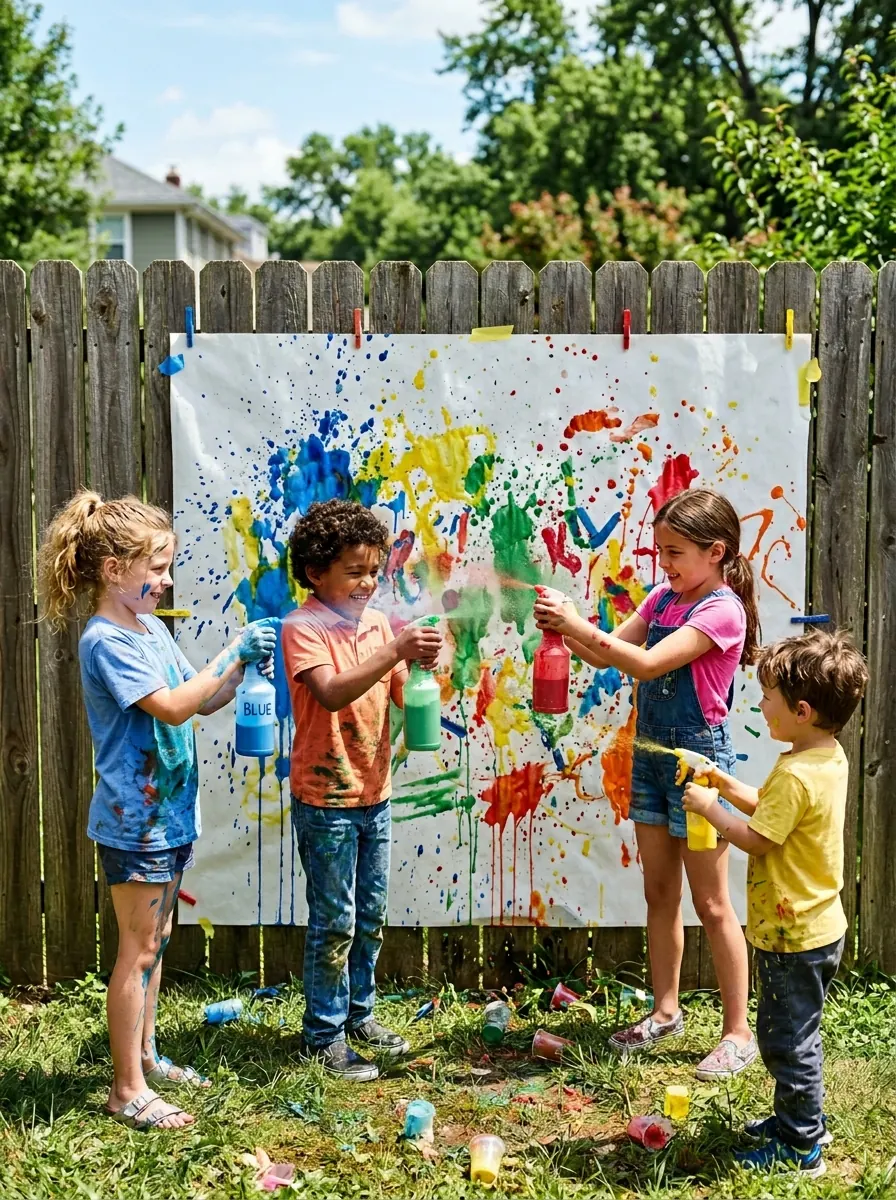
Fill spray bottles with watered-down washable paint. Pin a big sheet of paper or an old bedsheet to the fence. Let them blast away. The art is abstract and wild, and so is the joy.
It’s part art, part water play, which means it doubles as a way to cool down on a hot day. Wear swimsuits and let the overspray land where it may.
18. Loose Parts Play
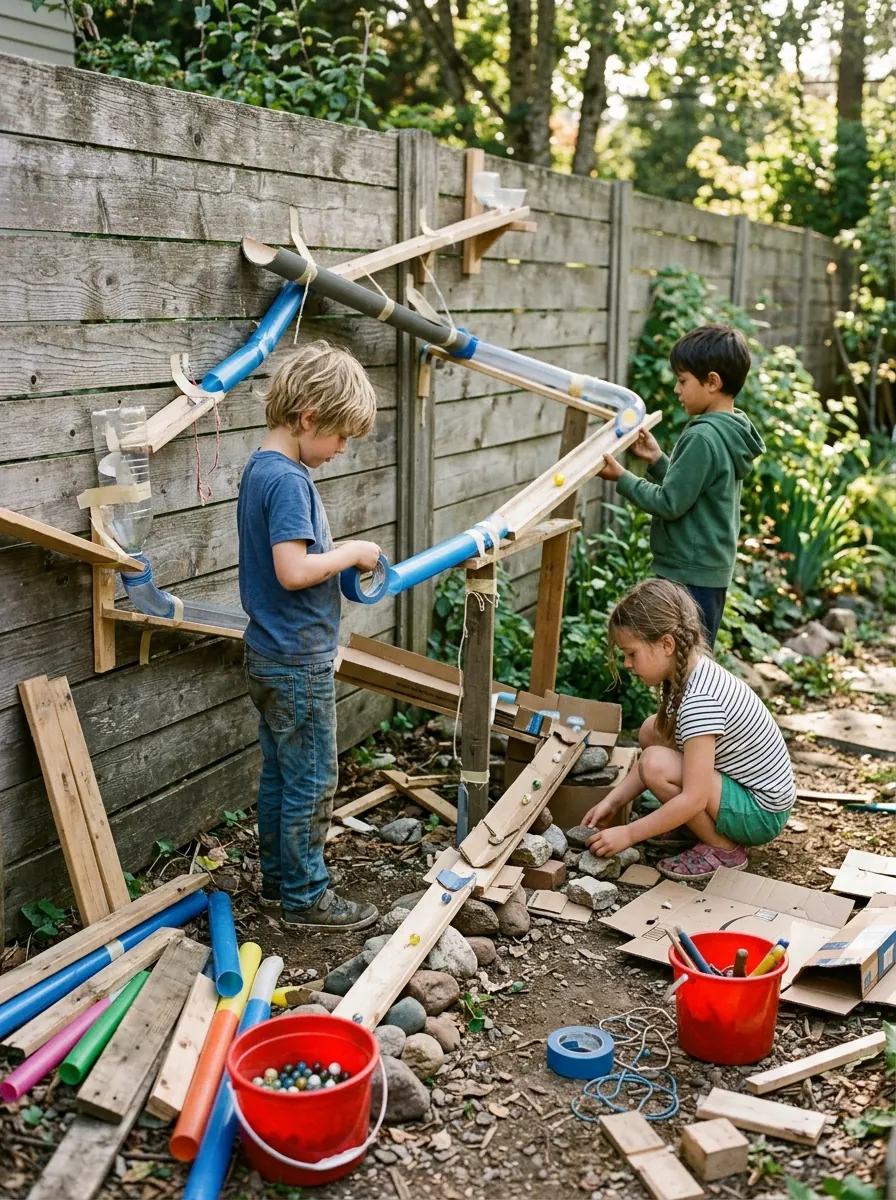
Pull together odds and ends: planks, pipes, buckets, tubes, rocks. Set the pile down with no instructions. Kids build ramps, ball runs, towers, and bridges.
This is the most creative play on the list because nothing tells them what to make. They test, fail, and rebuild on their own terms. A length of old gutter and a tennis ball can hold them for an hour.
Store the parts in a bin, and they’ll come back to it for years, building something new each time.
19. Make and Fly a Kite
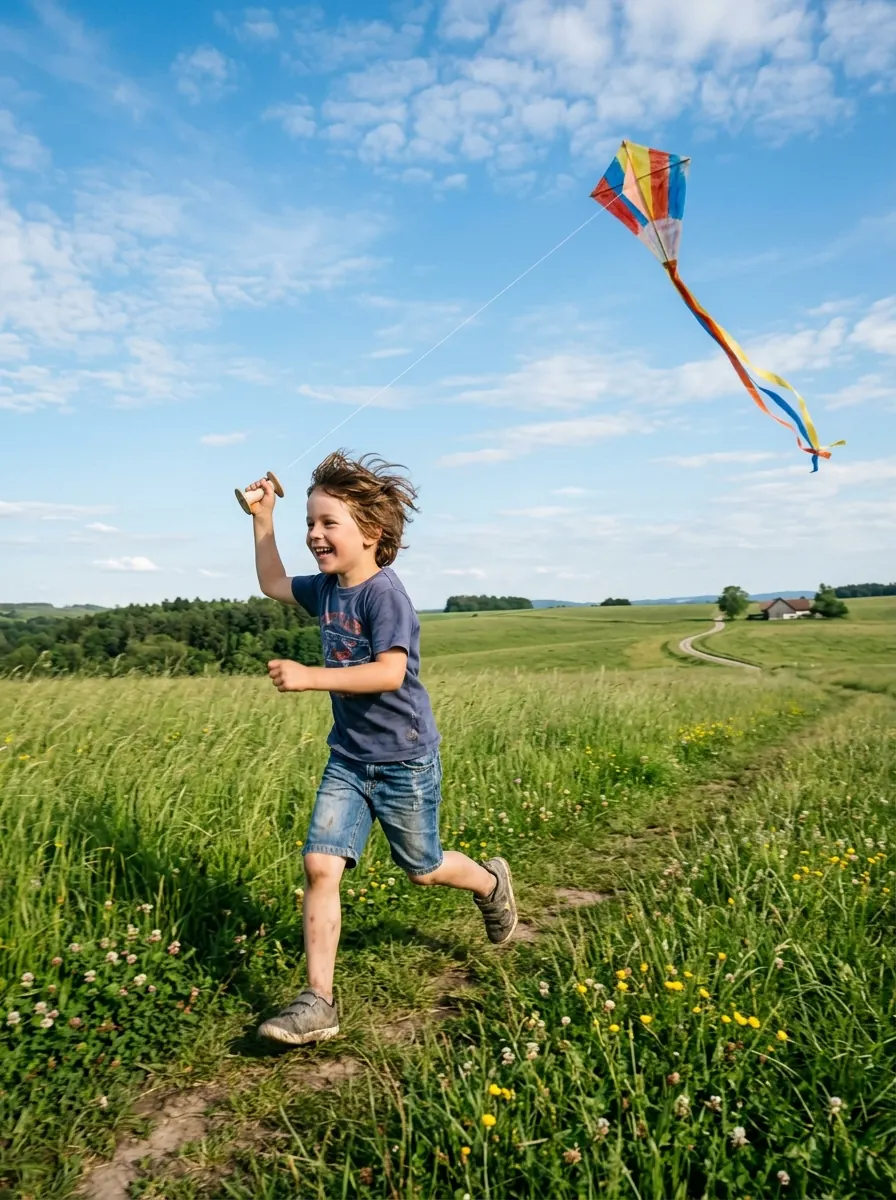
Build a basic kite from a paper bag, string, and a couple of sticks, then chase the wind. The first failed flight teaches patience. The first real lift teaches triumph.
Find an open spot away from trees and power lines. A breezy, not blustery, day works best. When it finally climbs, the whole street hears about it.
20. Sidewalk Chalk Art Show
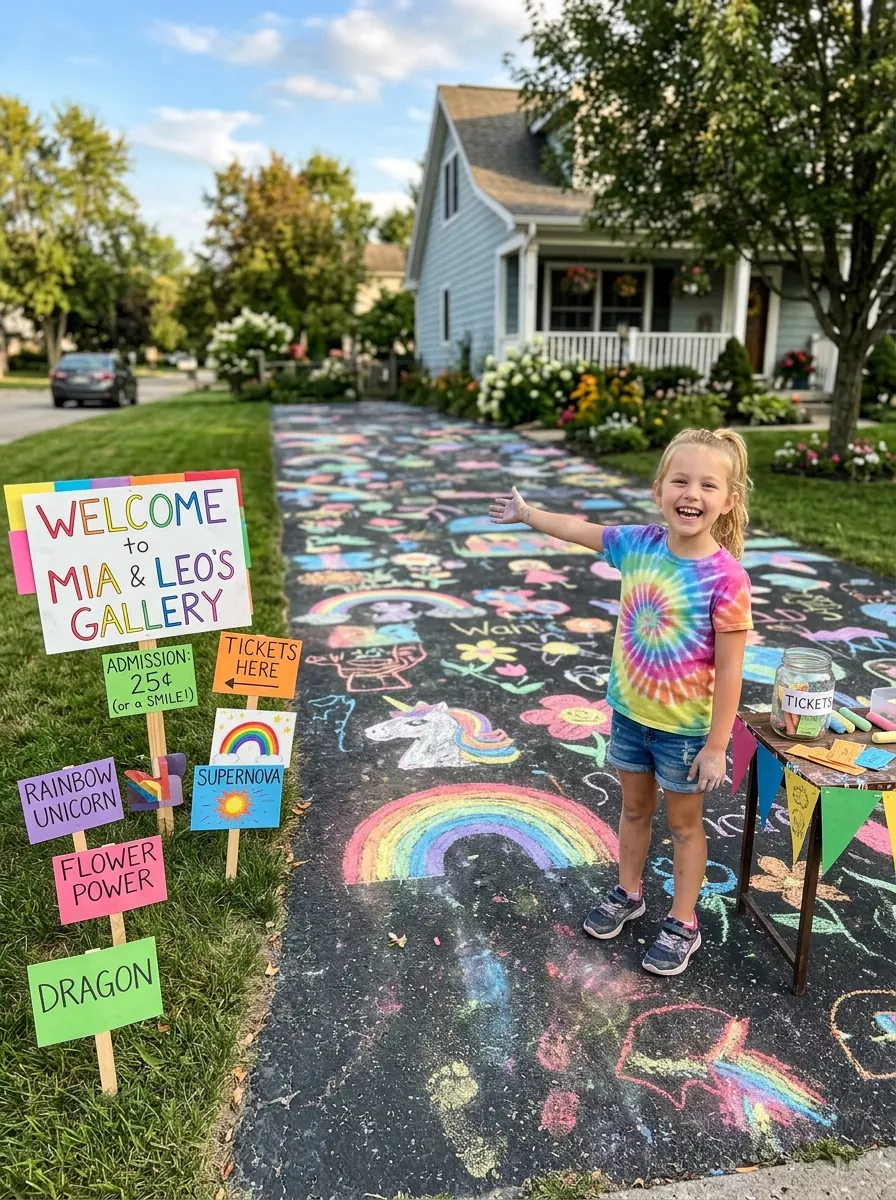
Turn the driveway into a gallery. Kids draw their best work, make tickets, and invite the neighbors for a “show.” The crowd, even a small one, gives a shy child a reason to stand tall and explain what they made.
21. Grow a Small Garden Patch

Give a child one square of soil or a single pot. Let them choose the seeds, plant them, and own the watering. Fast growers like radishes or sunflowers reward short attention spans.
A garden teaches the long game. Nothing happens for days, then a green shoot appears, and they did that. Kids who grow their own food often try eating it, too – even the picky ones.
How to Choose the Right Activity Today
Don’t overthink it. Match the idea to three things: your space, your time, and your kid’s energy.
Tiny yard or a balcony? Reach for chalk, bubbles, rock painting, or a nature journal. Loads of pent-up energy? Run the obstacle course, the Olympics, or hula hoops. Craving calm? Try the bug hunt, the garden, or the bird feeder.
And resist the urge to run every activity yourself. The best outdoor play happens when you set the stage, then step back. Boredom isn’t the enemy – it’s often the doorway to a child’s own ideas.
Final Thoughts
The goal here was never a tidy craft for the camera. It was a kid who came inside grass-stained and grinning, sure they can build, climb, paint, and grow.
Pick one idea this week. Just one. Set it up, hand it over, and watch what your child does with it. You’ll likely be surprised – and they’ll be a little braver and a little more inventive than they were yesterday. That’s the whole reward.
Frequently Asked Questions
What are good outdoor activities for kids with no equipment? Plenty need nothing but your yard. Try a nature scavenger hunt, a bug hunt, tree climbing, sidewalk water painting, or building a stick fort. A child’s imagination does most of the work.
What outdoor activities for kids work in a small backyard or space? Sidewalk chalk, bubbles, rock painting, a nature journal, a single-pot garden, and a pinecone bird feeder all fit a small patch or a balcony. None of them needs room to run.
How do these activities build confidence and creativity? Confidence grows when a child finishes something hard – crossing a balance beam or building a fort that stands. Creativity grows during open-ended play, like a mud kitchen or loose parts, where there’s no single right answer to get wrong.
What are screen-free outdoor activities for kids on a hot day? Water gun painting, sidewalk water painting, giant bubbles, and a water-balloon backyard Olympics all cool kids down while keeping them off screens. Pair them with shade and plenty of water breaks.
At what age can kids do these outdoor activities? Most suits ages 2 through 12 with small tweaks. Toddlers love bubbles, mud, and water play. School-age kids dig into the obstacle course, kite building, and the Olympics. Adjust the difficulty to fit the child.