You’ve sent the invitations. The cake is ordered. And now you’re lying awake at 11 p.m., wondering how on earth you’ll keep fourteen kids entertained for two straight hours without someone crying, fighting, or hiding under a table.
I’ve been there — more times than I can count. After hosting parties for my own kids and helping friends pull off theirs, I’ve learned one brutal truth about kids’ party games: the game itself matters less than when you play it and who you’re playing it with. A round of Freeze Dance is gold at 2 p.m. with a pack of five-year-olds. That same game with a room full of ten-year-olds? Crickets and eye-rolls.
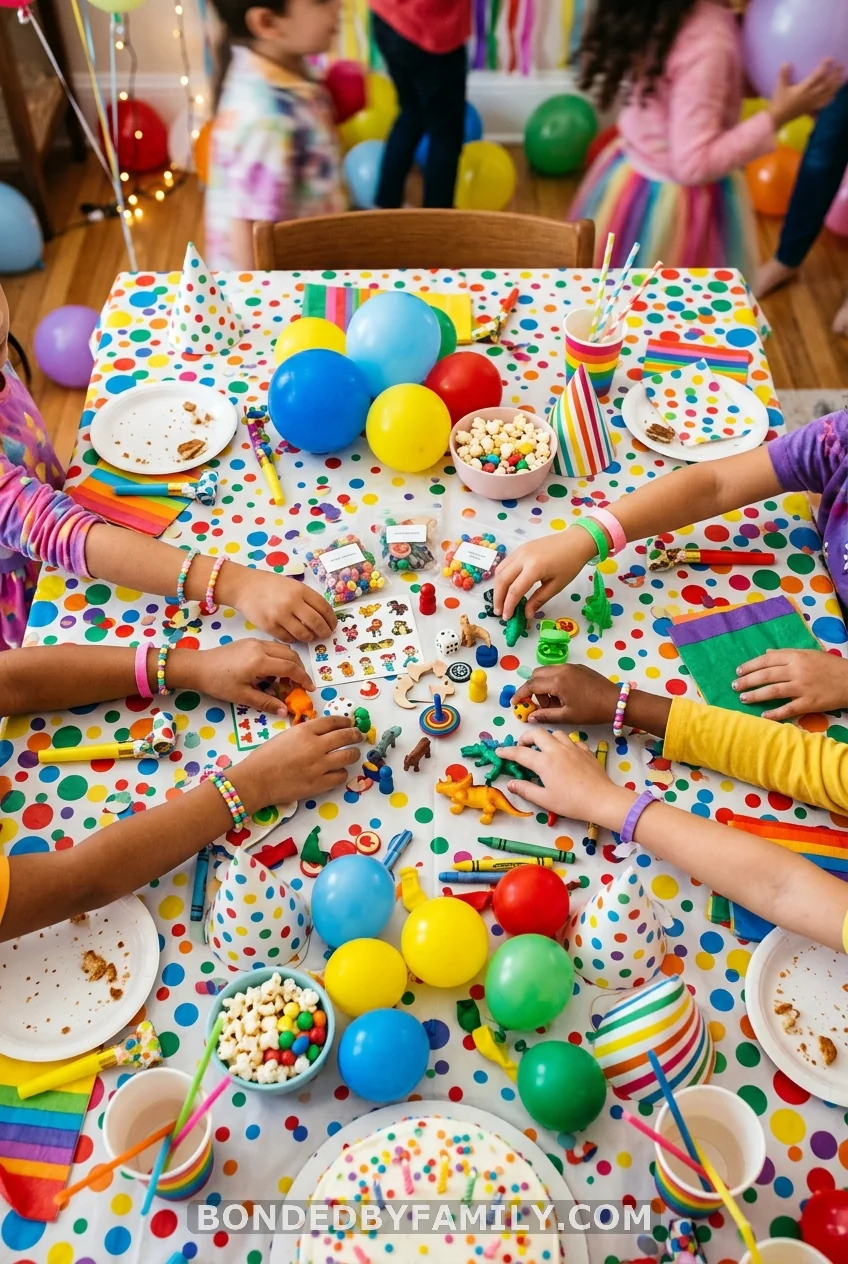
So I organized this list differently than most. Every game below is tagged with an age range, an energy level (high, medium, or calm-down), a group size sweet spot, and an honest estimate of how long it takes to set up and play. That way you’re not just picking random games off a list — you’re building a party timeline that flows.
Grab a pen. Let’s sort this out.
How to Use This List
Before you scroll, here’s the strategy. A two-hour party needs roughly three to five games. Start with a medium-energy game while guests trickle in, ramp up to a high-energy game in the middle, then wind down with a calm activity before cake. Sandwich food between the second and third game and you’ve got yourself a party that practically runs itself.
Every game is marked like this:
- Ages: the range where this game lands best
- Energy: 🔴 High / 🟡 Medium / 🟢 Calm
- Group size: minimum and maximum players
- Setup time: how long you’ll spend getting it ready
- Play time: roughly how long one round lasts
High-Energy Kids Party Games (Burn It Off)

1. Balloon Stomp
Ages: 5–12 | Energy: 🔴 High | Group: 6–20 | Setup: 5 min | Play: 10–15 min
Tie an inflated balloon to each kid’s ankle with a 12-inch piece of ribbon. On “go,” everyone tries to stomp and pop other players’ balloons while protecting their own. Last balloon standing wins.
Stuff a small piece of candy inside each balloon before you inflate it. That way, when a kid gets eliminated, they still get a prize — and the tears stay at zero. Use ribbon, not string. String tangles. Ribbon doesn’t.
The catch: This game gets loud. Warn the neighbors. And avoid it with kids under four — the popping scares them.
2. Freeze Dance
Ages: 3–10 | Energy: 🔴 High | Group: 4–30 | Setup: 0 min | Play: 10–15 min
Crank some music. Kids dance. Music stops. Everyone freezes. Move, and you’re out.
That’s it. No equipment. No prep. Works indoors and outdoors. This is the game I start with when guests are still arriving because kids can jump in mid-round without disrupting anything. For younger kids, skip eliminations entirely and just let them dance. Nobody under five cares about winning — they care about the music.
3. Relay Races (Pick Your Chaos)
Ages: 5–12 | Energy: 🔴 High | Group: 8–24 (even teams) | Setup: 5 min | Play: 15–20 min
Split kids into two or three teams. The relay format stays the same — run to a marker and back, then tag the next person. But the how changes everything:
- Egg and spoon: Balance a plastic egg (or ping-pong ball) on a serving spoon. Drop it? Start over.
- Balloon between the knees: Waddle across and back without dropping it. Comedy gold.
- Sack race: Pillowcases work if you don’t have burlap sacks.
- Over-under: Pass a ball over your head, between your legs, alternating down the line.
Run two or three relay types back-to-back. Each one takes about five minutes. Budget $3–5 for supplies you probably already own.
4. Musical Chairs
Ages: 4–10 | Energy: 🔴 High | Group: 6–15 | Setup: 3 min | Play: 10–15 min
You know this one. Chairs in a circle, one fewer than the number of players. Music plays, kids walk. Music stops, everyone grabs a seat. The one left standing sits out.
Three upgrades that make it better: First, let eliminated kids control the music — it keeps them invested. Second, use cushions on the floor instead of chairs if you’re short on seating. Third, for toddler parties, skip the elimination and just let everyone scramble every round for laughs.
5. Capture the Flag (Backyard Version)
Ages: 7–12 | Energy: 🔴 High | Group: 10–24 | Setup: 5 min | Play: 20–30 min
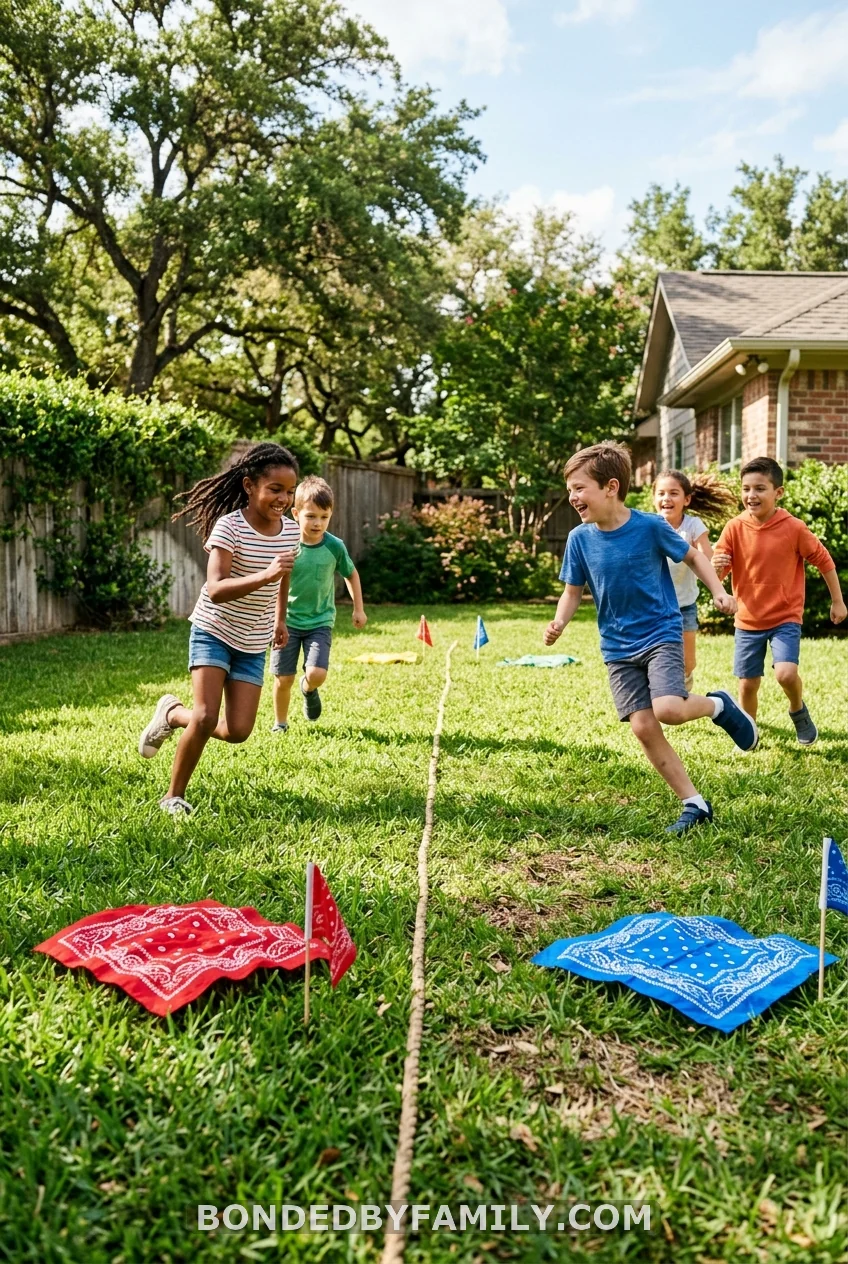
Split the yard in half with a rope or chalk line. Each team hides a bandana (their “flag”) somewhere on their side. The goal: sneak into enemy territory, grab their flag, and bring it back without getting tagged. Get tagged on the other team’s side and you freeze until a teammate tags you free.
This game eats twenty to thirty minutes like nothing. It’s the best option when you’ve got a big group of school-age kids and outdoor space. No supplies beyond two bandanas and something to mark the boundary.
6. Obstacle Course
Ages: 4–10 | Energy: 🔴 High | Group: 4–20 | Setup: 15 min | Play: 15–20 min
Crawl under a row of chairs. Hop through hula hoops. Zigzag around cones. Toss a bean bag into a bucket. Sprint to the finish line.
This takes the most setup time of any game on this list — about fifteen minutes. But it also holds attention the longest. Time each kid with a phone stopwatch and write scores on a whiteboard. They’ll want to run it five times.
Pro tip:
Build it in your hallway if you’re indoors. A straight path works better than a circuit for younger kids who lose track of where they’re going.
Medium-Energy Kids Party Games (Fun Without the Frenzy)
7. Hot Potato
Ages: 3–8 | Energy: 🟡 Medium | Group: 5–15 | Setup: 0 min | Play: 10 min
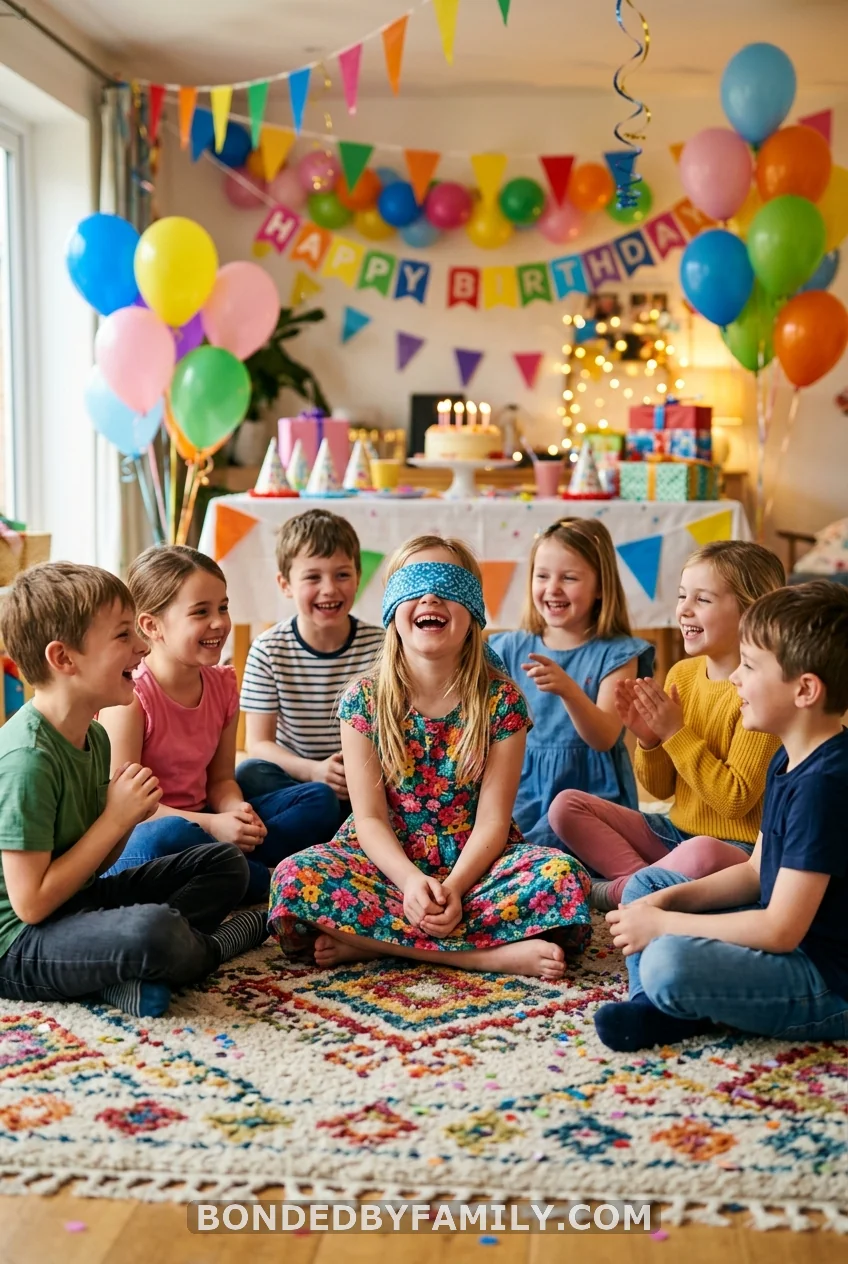
Sit in a circle. Pass a ball (or an actual potato — my kids think this is hilarious) while music plays. Music stops, and whoever’s holding it is out. Last one in the circle wins.
Swap the ball for a wrapped “mystery gift” and let the eliminated kid unwrap one layer — that’s a mash-up with Pass the Parcel and it keeps everyone engaged even after they’re out.
8. Pass the Parcel
Ages: 3–8 | Energy: 🟡 Medium | Group: 5–20 | Setup: 10 min | Play: 10–15 min
Before the party, wrap a small prize in ten to fifteen layers of newspaper or wrapping paper. Tuck a sticker, temporary tattoo, or piece of candy between each layer.
Kids sit in a circle and pass the parcel while music plays. When it stops, the child holding it peels off one layer and keeps whatever treat falls out. Final layer reveals the big prize.
This game is pure magic for four-to-seven-year-olds. It’s calm enough to play right before cake, and every kid gets something. Takes about ten minutes of wrapping prep, but you can do it the night before while watching TV.
9. Charades
Ages: 6–12 | Energy: 🟡 Medium | Group: 6–20 | Setup: 5 min | Play: 15–20 min
Write down thirty or so words on slips of paper — animals, actions, movie characters, foods. Fold them up in a bowl. Split kids into two teams. One kid draws a slip and acts it out. Their team has sixty seconds to guess.
For younger kids (six to seven), stick with animals and actions. Older kids can handle movie titles and book characters. Print a free charades word list ahead of time so you’re not scrambling at the party.
10. Limbo
Ages: 4–12 | Energy: 🟡 Medium | Group: 4–20 | Setup: 1 min | Play: 10 min
Two adults hold a broomstick or pool noodle at chest height. Kids take turns bending backward to pass under without touching the bar or falling. Lower it after each round.
Takes almost zero setup. Plays fast. Works indoors or outdoors. The secret weapon: play a limbo playlist in the background. Kids will start hamming it up for each other and the energy shifts from competitive to comedic.
11. Scavenger Hunt
Ages: 4–12 | Energy: 🟡 Medium | Group: 4–20 | Setup: 15–20 min | Play: 15–25 min
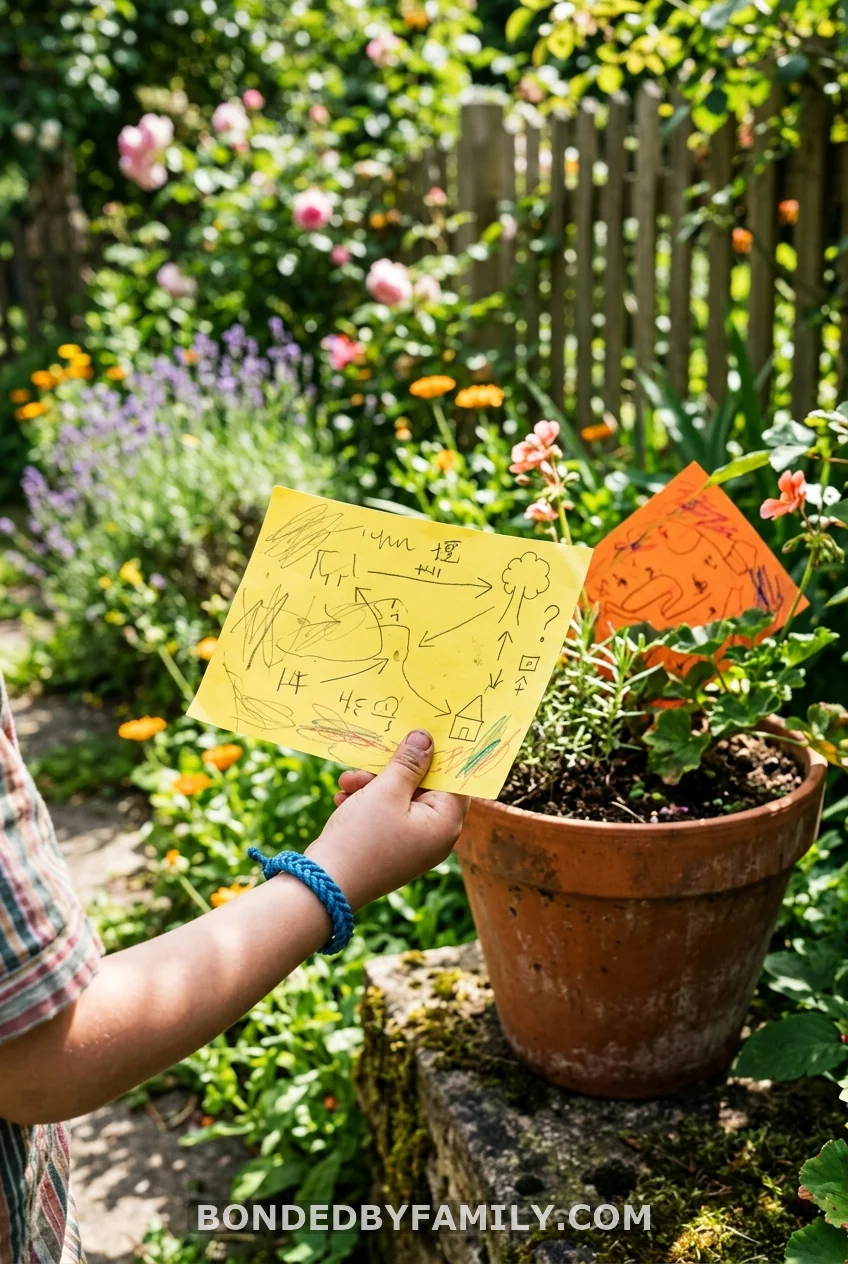
Write five to ten clues that lead kids from one hiding spot to the next. Final clue leads to a “treasure” — goody bags, a piñata, or a special treat. For younger kids, use picture clues instead of written riddles.
The exhaustive deep-dive: how to run a flawless scavenger hunt
This is the game that can make or break your party. Done right, it fills twenty-five minutes, builds anticipation for the final reveal, and gives you time to set up cake while kids are busy. Done wrong, it’s over in three minutes and you’re back to square one. Here’s how to get it right.
Materials you need
- 8–10 sheets of card stock or construction paper (about $4 for a 50-sheet pack at Dollar Tree)
- Markers or a printer
- Tape or clothespins for attaching clues to hiding spots
- A timer (your phone works)
- Final prize: goody bags, a piñata, or a bucket of small toys ($10–15 total)
Step-by-step setup (do this the night before)
- Pick your route. Walk through your house or yard and choose eight to ten spots: under a couch cushion, taped to the fridge, inside a shoe by the front door, under a plant pot. Write them down in order.
- Write your clues. Each clue should rhyme or use a riddle to point to the next location. Example: “I keep your food cold, day and night — open my door and find what’s right.” (Answer: fridge.)
- Number the clues on the back. If a kid picks up clue #7 before finding clue #4, you need to redirect them fast. Numbers save you.
- Place clues in reverse order. Start with the final prize, then work backward placing clues so you don’t accidentally reveal the sequence while setting up.
- Hand out the first clue at game time. Read it aloud for younger kids. For older kids, hand each team their own copy and let them race.
For mixed-age groups (the hard part)
Pair older kids with younger ones as “buddy teams.” Give older kids the reading responsibility and younger kids the job of physically finding the hidden clue. This keeps both age groups engaged and prevents the eight-year-olds from blowing through the whole hunt in ninety seconds while the four-year-olds stand confused.
Common mistakes to avoid
- Too few clues. Five clues for ten kids means it’s over before it starts. Use eight to ten minimum.
- Hiding clues too well. If a clue takes longer than two minutes to find, frustration sets in. The clue should be partially visible.
- All clues in one room. Spread them across at least three different areas so kids are moving.
- No prize for everyone. If only the “winner” gets something, prepare for tears. Make the final treasure a group prize — enough goody bags for every kid.
Cost reality
Total setup cost runs $10–20 depending on what you already own. Card stock, markers, and tape are probably in your craft drawer. The real cost is the final prize. Dollar Tree goody bag fillers — stickers, bubbles, candy, small toys — run about $1 per kid.
12. Duck, Duck, Goose
Ages: 3–7 | Energy: 🟡 Medium | Group: 6–15 | Setup: 0 min | Play: 10 min
Kids sit in a circle. One walks around tapping heads and saying “duck… duck… duck…” until they pick someone and yell “goose!” The goose jumps up and chases. If the tapper makes it back to the empty spot, they’re safe. If not, they go again.
The beauty of this game is zero equipment, zero explanation, and every three-year-old on the planet already gets it. Don’t bother with kids over seven — they’ll find it boring.
13. Simon Says
Ages: 3–9 | Energy: 🟡 Medium | Group: 4–30 | Setup: 0 min | Play: 10 min
“Simon says touch your nose.” Everyone touches their nose. “Jump up and down.” Anyone who jumps without hearing “Simon says” first is out.
Criminally underrated. This game requires nothing, works with any group size, and is the fastest way to get a loud room quiet. Use it as a transition between high-energy games and cake time.
14. Pin the Tail on the Donkey
Ages: 3–10 | Energy: 🟡 Medium | Group: 4–20 | Setup: 5 min | Play: 10–15 min
Blindfold a kid, spin them gently, and point them toward a poster on the wall. They stick a paper tail (or horn, or hat, or whatever matches your theme) where they think it belongs. Closest placement wins.
Skip the traditional donkey poster. Print or draw something that matches your theme: pin the wand on the fairy, pin the tail on the dinosaur, pin the star on the superhero. Takes five minutes of prep and kids love seeing their crooked attempts.
15. Musical Statues
Ages: 3–10 | Energy: 🟡 Medium | Group: 4–30 | Setup: 0 min | Play: 10 min
Same setup as Freeze Dance but with a twist. When the music stops, kids don’t just freeze — they have to hold whatever ridiculous pose they landed in. The silliest statue wins. Anyone who wobbles is out.
This is softer than Freeze Dance because it rewards creativity over speed. Quieter kids who might not thrive in a competitive game suddenly shine here.
Calm-Down Kids Party Games (Wind It Down Before Cake)

16. The Memory Tray Game
Ages: 5–12 | Energy: 🟢 Calm | Group: 4–20 | Setup: 5 min | Play: 10 min
Place fifteen to twenty small objects on a tray — a pencil, a coin, a small toy, a spoon, a button. Give kids sixty seconds to study the tray. Cover it with a towel. Everyone writes down as many items as they can remember. Most correct answers wins.
This is your secret weapon for calming the room before cake. It requires focus. Silence falls almost instantly. No running, no screaming, no chaos. Just quiet concentration and the scratch of pencils on paper.
17. Who Am I?
Ages: 6–12 | Energy: 🟢 Calm | Group: 5–20 | Setup: 5 min | Play: 15 min
Stick a name on each kid’s back or forehead — an animal, a celebrity, a cartoon character. They walk around asking yes-or-no questions to other guests until they figure out who they are.
Write the names on sticky notes before the party. For younger kids, use animals only. For older kids, mix in fictional characters and pop culture names. This game creates natural mingling — it’s brilliant for the first fifteen minutes of a party when kids who don’t know each other are standing around awkwardly.
18. Would You Rather
Ages: 5–12 | Energy: 🟢 Calm | Group: 4–30 | Setup: 2 min | Play: 10–15 min
“Would you rather eat a worm sandwich or drink a mud smoothie?” “Would you rather be invisible or be able to fly?”
Read questions aloud and have kids move to one side of the room for option A, the other for option B. No losers, no winners, just laughing and debating. Print a free list online or make your own. This is pure, low-effort gold for when you need five more minutes before food is ready.
19. Wink Assassin
Ages: 7–12 | Energy: 🟢 Calm | Group: 8–20 | Setup: 2 min | Play: 10–15 min
Everyone sits in a circle. While eyes are closed, tap one kid on the shoulder — they’re the assassin. Pick another kid to be the detective. The assassin secretly winks at other players. When you get winked at, you “die” dramatically. The detective gets three guesses to identify the assassin.
Kids go absolutely feral with the dramatic death scenes. It’s calm physically but high-energy emotionally. Best for kids seven and up who can keep a straight face.
20. Telephone
Ages: 5–10 | Energy: 🟢 Calm | Group: 6–15 | Setup: 0 min | Play: 10 min
Sit in a line. The first kid whispers a phrase to the next kid, who whispers what they heard to the next, all the way down. The last person says the phrase out loud. It’s never even close to the original. The funnier the starting phrase, the better the payoff.
Games That Work for Mixed Ages (When Siblings Tag Along)
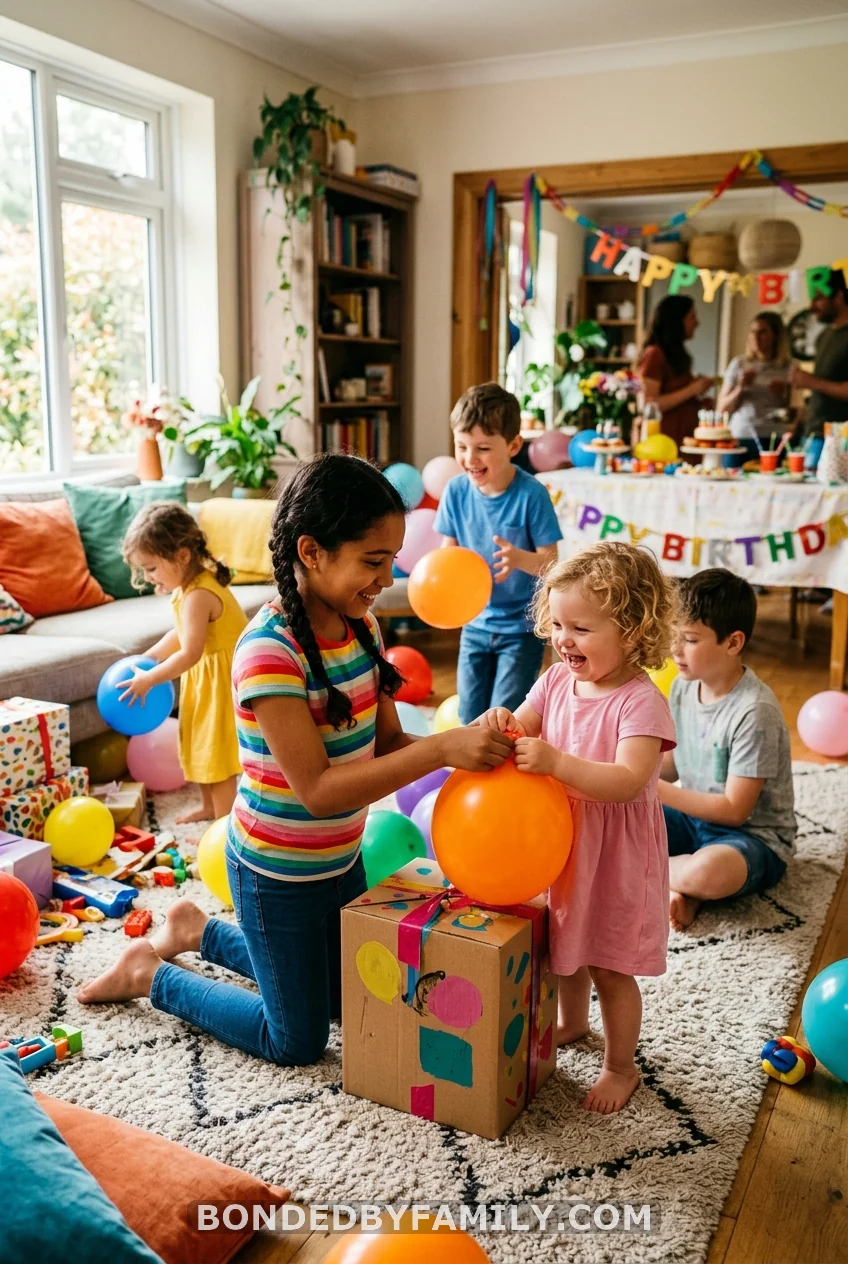
This is the section nobody writes, and it’s the section every parent needs. Because siblings come. Cousins come. Your friend’s two-year-old comes even though the party is for eight-year-olds. Here are games that bridge the gap.
21. Piñata
Ages: 3–12 | Energy: 🟡 Medium | Group: 5–25 | Setup: 5 min | Play: 10–15 min
Hang it from a tree branch or a ceiling hook. Line kids up youngest to oldest. Give the youngest kids a plastic bat and extra swings. Older kids get blindfolded and spun three times.
When it breaks, chaos erupts. Have a bag of extra candy ready for kids who were too slow to grab any off the ground. This keeps the post-piñata meltdown at a solid zero.
22. Treasure Hunt With Buddy Teams
Ages: 3–12 | Energy: 🟡 Medium | Group: 6–20 | Setup: 10 min | Play: 15 min
Pair every young kid with an older kid. Hide plastic coins, gemstones, or wrapped candies around the yard or house. Each team has a bag and five minutes to collect as many as they can. Oldest kid reads the clues; youngest kid does the finding and collecting.
It works because it gives both ages a role. The eight-year-old feels responsible. The four-year-old feels included.
23. Bubble Station
Ages: 2–10 | Energy: 🟢 Calm | Group: Any | Setup: 5 min | Play: Open-ended
Set up a folding table with cups of bubble solution and an assortment of wands — standard wands, pipe cleaners bent into shapes, slotted spoons, even flyswatters. Let kids come and go as they please.
This isn’t a structured “game” — it’s a station. And it’s a lifesaver. It gives toddlers something to do while older kids play organized games. It gives overwhelmed kids a quiet zone. A bottle of bubble solution costs $1 at most dollar stores. Buy four. You’ll use them all.
Minute-to-Win-It Party Games (Fast, Loud, and Hilarious)
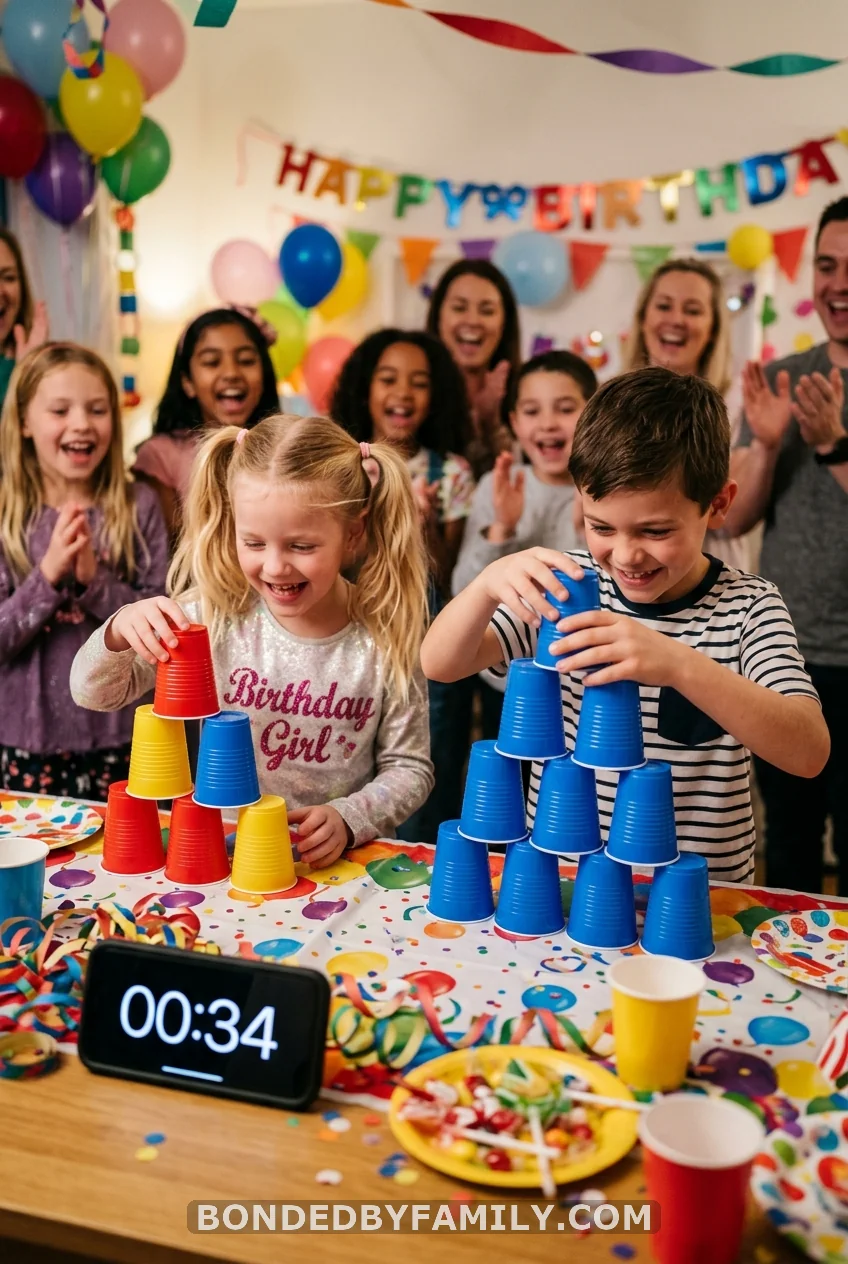
These are sixty-second challenges borrowed from the TV show format. They’re wild. They’re fast. They’re the best thing that ever happened to kids party games for ages six and up.
24. Cup Stack
Ages: 6–12 | Energy: 🔴 High | Group: 2–20 | Setup: 1 min | Play: 5 min per round
Give each player ten plastic cups. On “go,” build a pyramid — four cups on the bottom, three, two, one. First to finish and not collapse wins.
Buy a pack of 50 plastic cups for $2 at any grocery store. That’s your entire supply budget.
25. Cookie Face
Ages: 6–12 | Energy: 🟡 Medium | Group: 2–20 | Setup: 1 min | Play: 5 min per round
Place a cookie on each player’s forehead. Without using hands, they have to scrunch, wiggle, and contort their face to move the cookie into their mouth. The facial expressions alone are worth the whole party.
26. Donut on a String
Ages: 5–12 | Energy: 🟡 Medium | Group: 4–15 | Setup: 10 min | Play: 10 min
Tie donuts to strings. Hang them from a clothesline, tree branch, or broomstick held by two adults. Kids race to eat their donut with no hands. The donuts swing. Powdered sugar flies. Nobody keeps a straight face.
Budget about $5–8 for a dozen donuts. Use string that’s sturdy enough to hold the weight without snapping — butcher’s twine works well. Tie each donut at roughly each kid’s chin height.
27. Balloon Waddle
Ages: 5–12 | Energy: 🔴 High | Group: 4–20 | Setup: 2 min | Play: 5 min per round
Place an inflated balloon between each kid’s knees. They waddle from one end of the room (or yard) to the other without dropping or popping it. First across wins.
The walking is hilarious. The popping is hilarious. The face a kid makes when they squeeze too hard and it bursts — priceless.
Two Bonus Classics That Never Fail
28. Saran Wrap Ball Game
Ages: 6–12 | Energy: 🟡 Medium | Group: 5–15 | Setup: 20 min (night before) | Play: 15 min
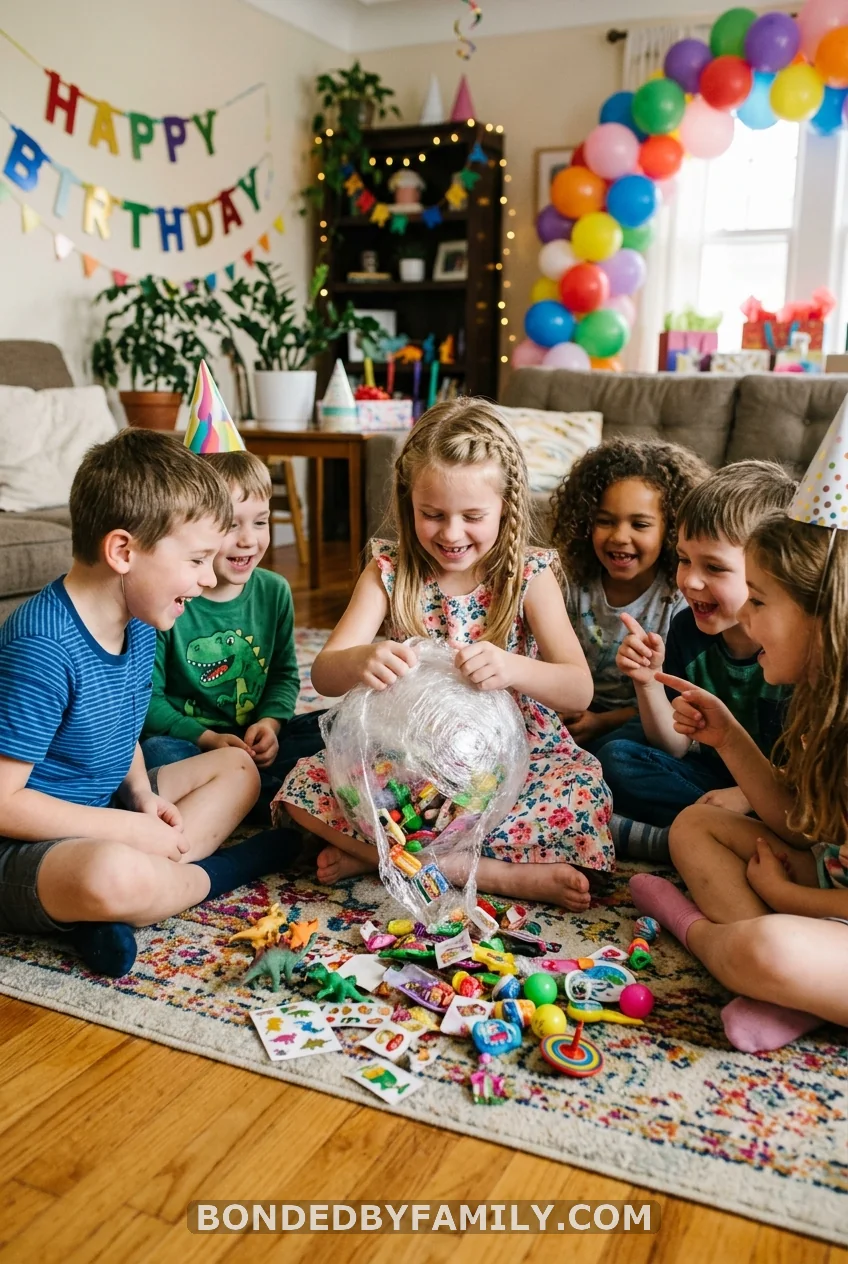
Before the party, wrap small prizes (candy, dollar-store toys, coins, stickers) in layers of plastic cling wrap until you’ve got a ball the size of a basketball. Use an entire roll — maybe two.
At the party, kids sit in a circle. One kid starts unwrapping as fast as they can while the kid next to them rolls a pair of dice. When the dice roller hits doubles, they yell “STOP” — the ball passes to them and the dice pass to the next person. Whatever falls out while you’re unwrapping is yours to keep.
This game creates more screaming and excitement than anything else on this list. It takes real effort to prep the ball — budget twenty minutes the night before — but the payoff is enormous. Wrap the best prize (a $5 bill or a full-size candy bar) in the very center.
Why this game works so well
Every kid gets something. The dice add unpredictability. Fast unwrappers get rewarded, but a lucky dice roll can snatch the ball away at any second. It’s suspense and comedy wrapped in plastic.
29. Pirate Treasure Dig
Ages: 3–8 | Energy: 🟢 Calm | Group: 4–15 | Setup: 15 min | Play: 15–20 min
Fill a large plastic bin ($6 at Walmart) with kinetic sand, rice, or dried beans. Bury small treasures throughout — plastic coins, mini figurines, gemstones, wrapped candies. Give each kid a small cup or bag and five minutes to dig.
This is one of those games that looks modest on paper and then steals the show. Young kids will dig for twenty minutes straight without getting bored. Set it up on a tarp and cleanup takes two minutes.
Building Your Party Timeline
Here’s a sample two-hour flow for a group of five-to-eight-year-olds:
0:00–0:15 — Arrival. Bubble station open. Freeze Dance running in the background.
0:15–0:30 — Balloon Stomp (high energy, gets everyone moving).
0:30–0:50 — Scavenger Hunt (medium energy, fills time, builds toward a prize).
0:50–1:10 — Food and cake.
1:10–1:25 — Saran Wrap Ball Game or Cookie Face (medium energy, post-food fun).
1:25–1:40 — Memory Tray Game (calm-down, quiet focus before pickup).
1:40–2:00 — Open play, goody bag distribution, parent pickups.
That’s five games plus a freeplay station. More than enough. You’ll have backup options on this list if something falls flat, but it rarely does when you match the energy level to the moment.
FAQ
How many games do I need for a two-hour kids party? Three to five structured games plus one open-ended activity (like a bubble station or coloring table) is plenty. Over-scheduling is the biggest mistake parents make. Leave breathing room between games for bathroom breaks, water, and the natural chaos of kids being kids.
What are the best kids party games for a small group of four to six kids? Charades, the Memory Tray Game, Pass the Parcel, and Donut on a String all work with small groups. Avoid games that rely on large teams (like Capture the Flag or big relay races) — they lose momentum with fewer players.
How do I handle kids who cry when they lose? Choose games where everyone gets something — Pass the Parcel with treats in every layer, the Saran Wrap Ball where prizes fall out constantly, or scavenger hunts where every kid keeps what they find. For elimination-style games, give “eliminated” kids a job: DJ, scorekeeper, or judge.
What are good kids party games that need zero supplies? Freeze Dance, Simon Says, Duck Duck Goose, Telephone, and Musical Statues all require nothing but your phone for music (and Telephone doesn’t even need that). Keep these in your back pocket as emergency fillers.
Do I need different games for indoor versus outdoor parties? Most games on this list work in both settings. The exceptions: Capture the Flag and Egg Toss need outdoor space, and the Memory Tray Game and Saran Wrap Ball work better indoors where wind won’t interfere.