My kids stopped asking “Are we there yet?” and started asking “Is it melted yet?” That switch happened the first afternoon we built a pizza box solar oven, which has since become my favorite of all the summer science experiments for kids I keep on rotation. It costs almost nothing. It runs on sunshine. And it pays you back in chocolate.
Here’s the promise: by the end of this guide, you’ll have a working oven made from trash, a soft gooey s’more, and a kid who can explain why the inside of a closed car gets so hot. Three things for the price of a pizza box. Let’s get the sun working for us.
Why a Pizza Box Cooks With Sunlight
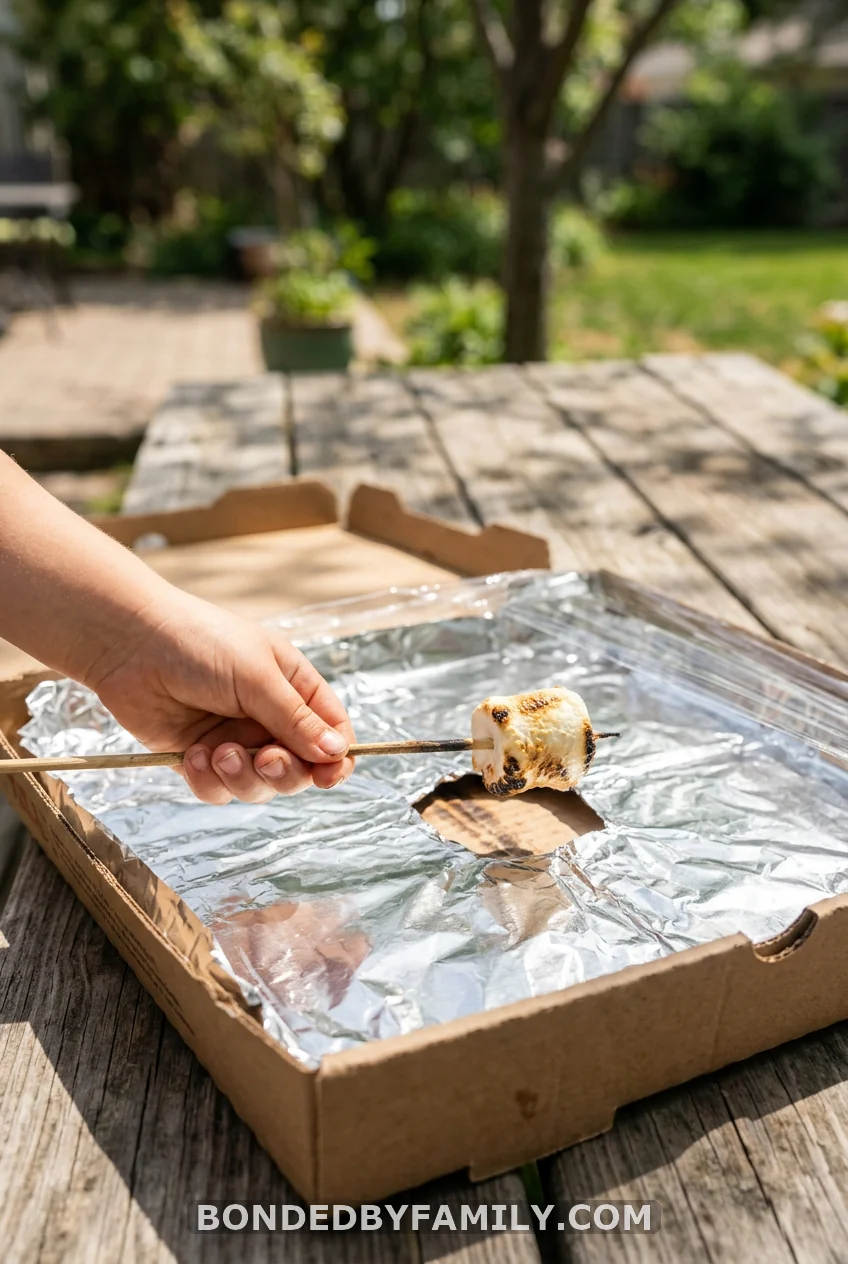
The science here is the same thing that bakes the air inside a parked car. Sunlight pours in through a clear window. It hits dark surfaces. Those dark surfaces soak up the light and turn it into heat. The heat tries to escape, but the clear window traps most of it inside. Heat goes in faster than it leaks out, so the temperature climbs.
Your oven has three jobs, and each part does one:
- The foil flap bounces extra sunlight down into the box.
- The plastic window lets light in and holds heat back, like a greenhouse roof.
- The black paper absorbs the light and warms up, acting as a heat sink for your food.
Kids get this fast. Dark soaks up the sun. Clear traps the warmth. Shiny redirects the rays. That’s the whole machine.
What You’ll Need
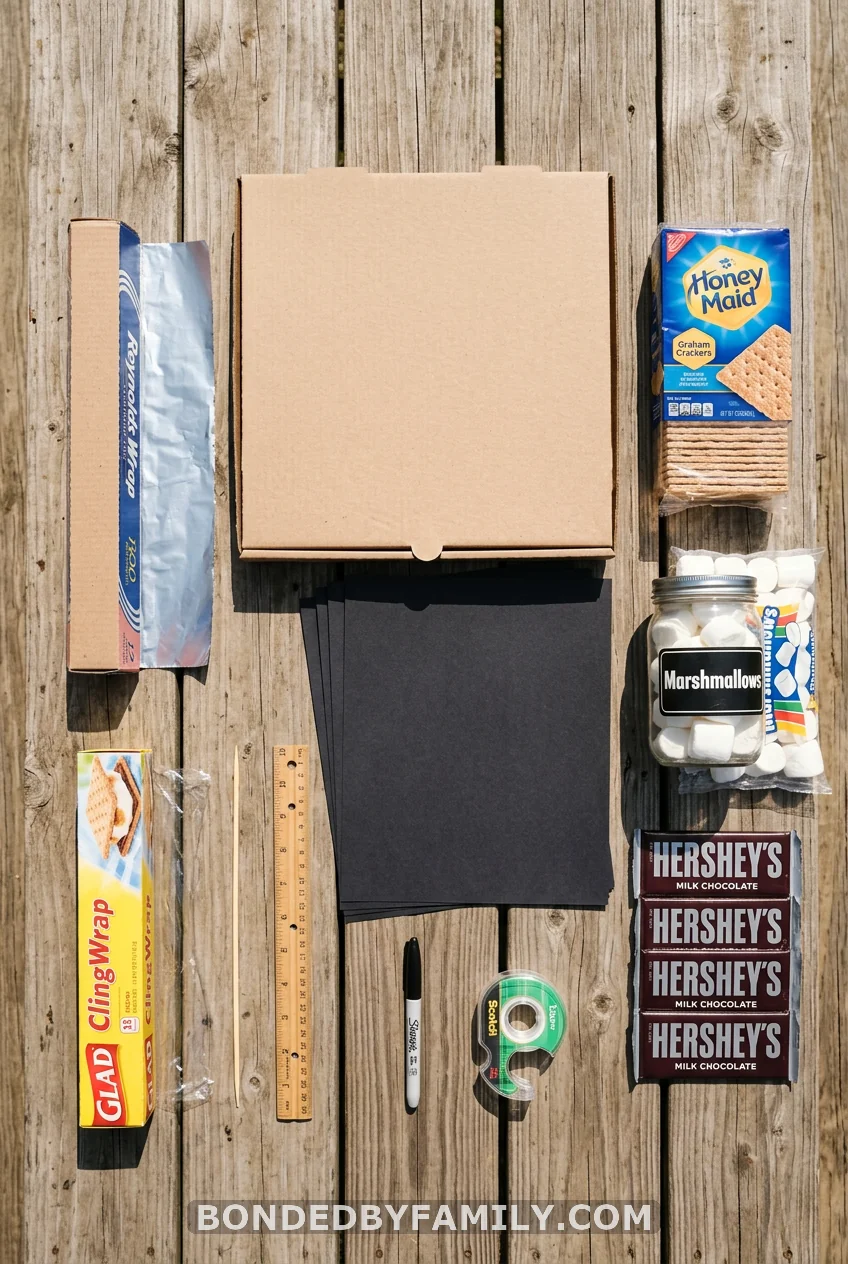
Most of this is already in your kitchen. The whole build runs well under $10, and the box itself is usually free from your local pizza shop.
- Pizza box — bigger is better; a shoebox with a lid works too
- Aluminum foil — a standard roll (Reynolds Wrap, around $4)
- Black construction paper — one sheet (a pack runs about $3)
- Plastic wrap — clingy kitchen wrap, the cheap stuff is fine
- Wooden skewer or a pencil — to prop the flap open
- Ruler, marker, scissors — for marking and cutting
- Utility knife — an adult handles this part
- Clear tape or a hot glue gun — to hold foil and plastic
- S’mores kit — graham crackers, marshmallows, a chocolate bar (Hershey’s melts beautifully)
A quick word on the weather, because it decides everything. You want a sunny day above 75°F, and the hotter the better. Wind is the enemy. It steals heat off the box faster than the sun adds it.
Build Your Solar Oven, Step by Step
The build takes about 20 to 30 minutes. Younger kids can do the foil and gluing while an adult handles the cutting.
Step 1: Cut the flap
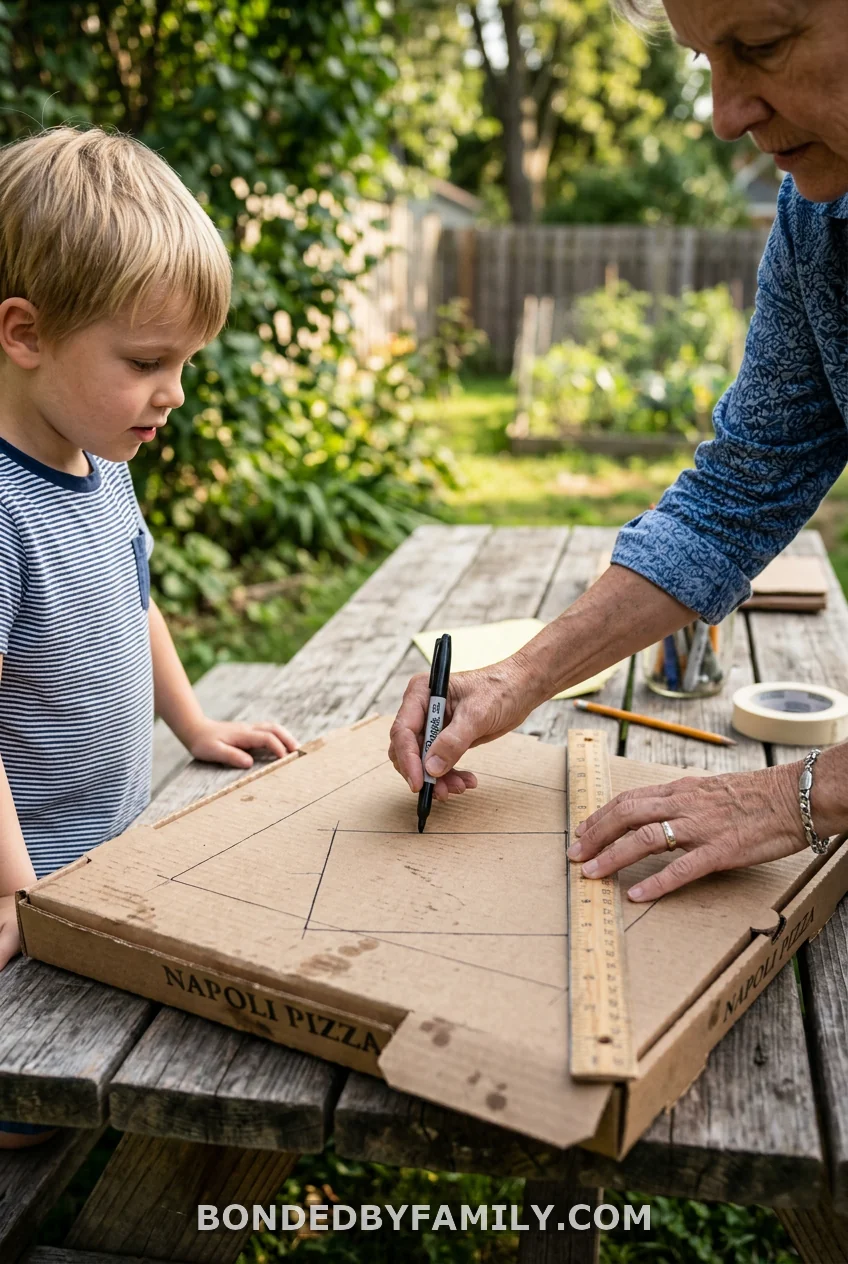
On the top of the lid, draw a square that sits about one inch in from every edge. Cut along three sides only. Leave the side nearest the hinge attached. Fold that flap up so it stands like a little reflector. This flap is your sun-catcher.
Step 2: Foil the flap
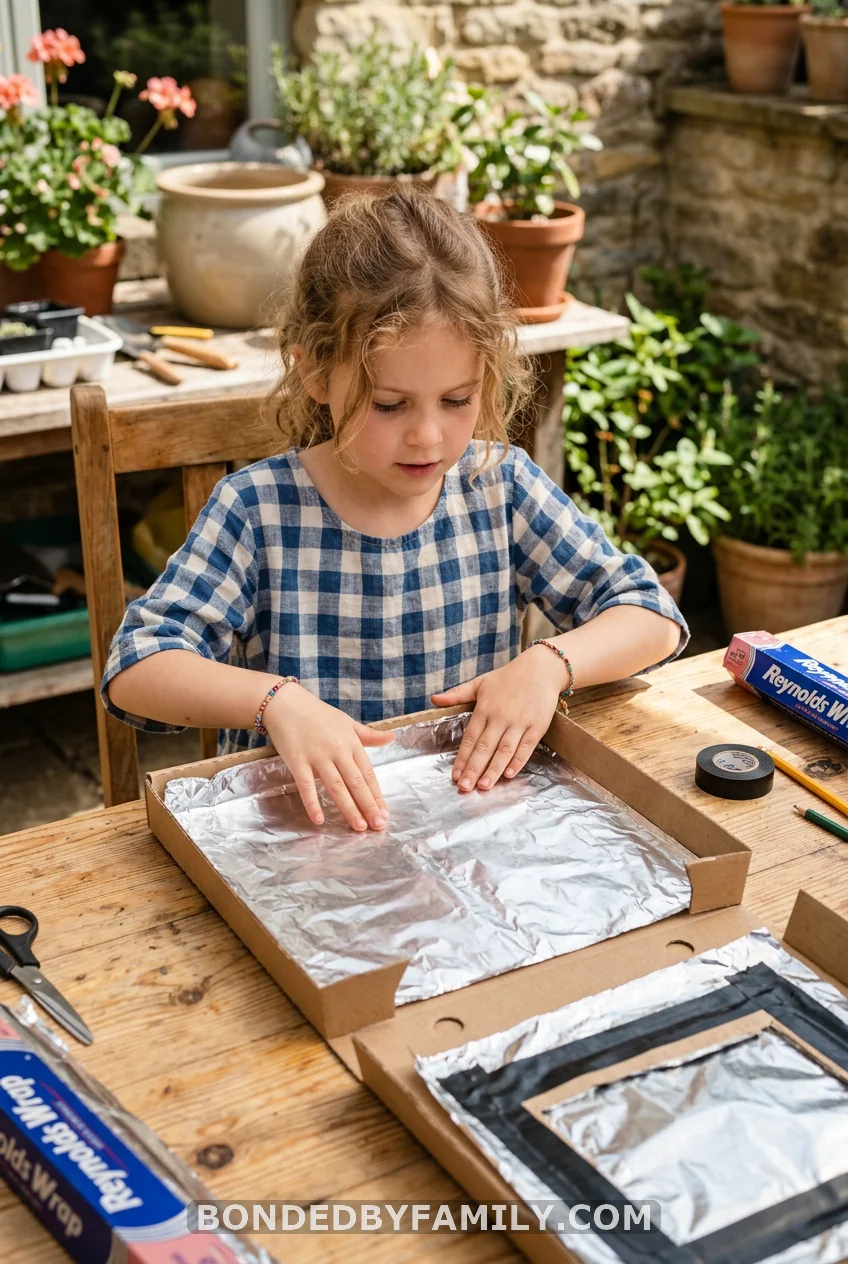
Cover the inside face of the flap with foil, shiny side out. Smooth it flat and glue or tape it down. Wrinkles scatter the light, so press out every bump you can. A flat mirror sends more sun into the box.
Step 3: Line the whole inside
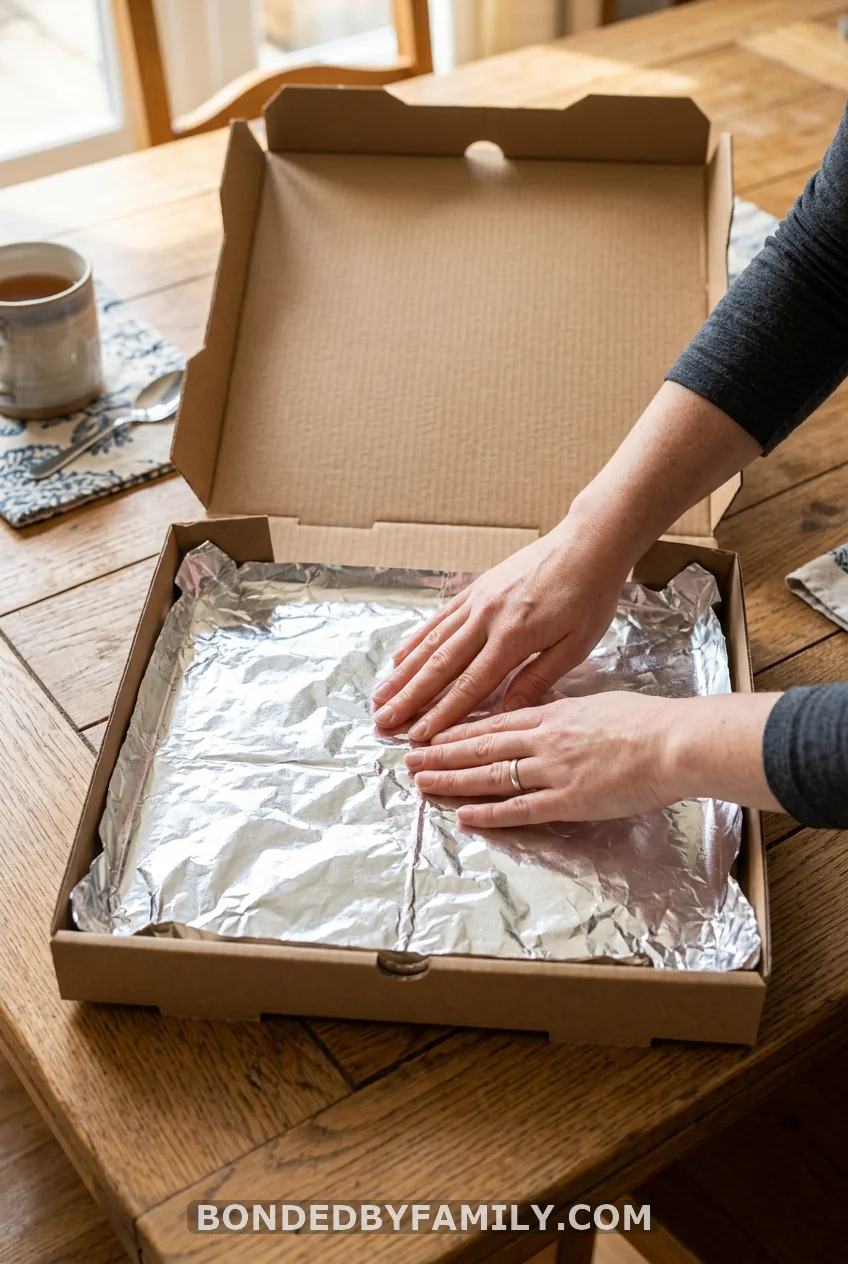
Here’s the upgrade most tutorials skip. Don’t just foil the flap. Line the entire inside of the box, walls and bottom, with foil. Every shiny surface bounces stray light back toward your food instead of letting it soak into plain cardboard. This one move can add real degrees to your final temperature.
Step 4: Add the black paper
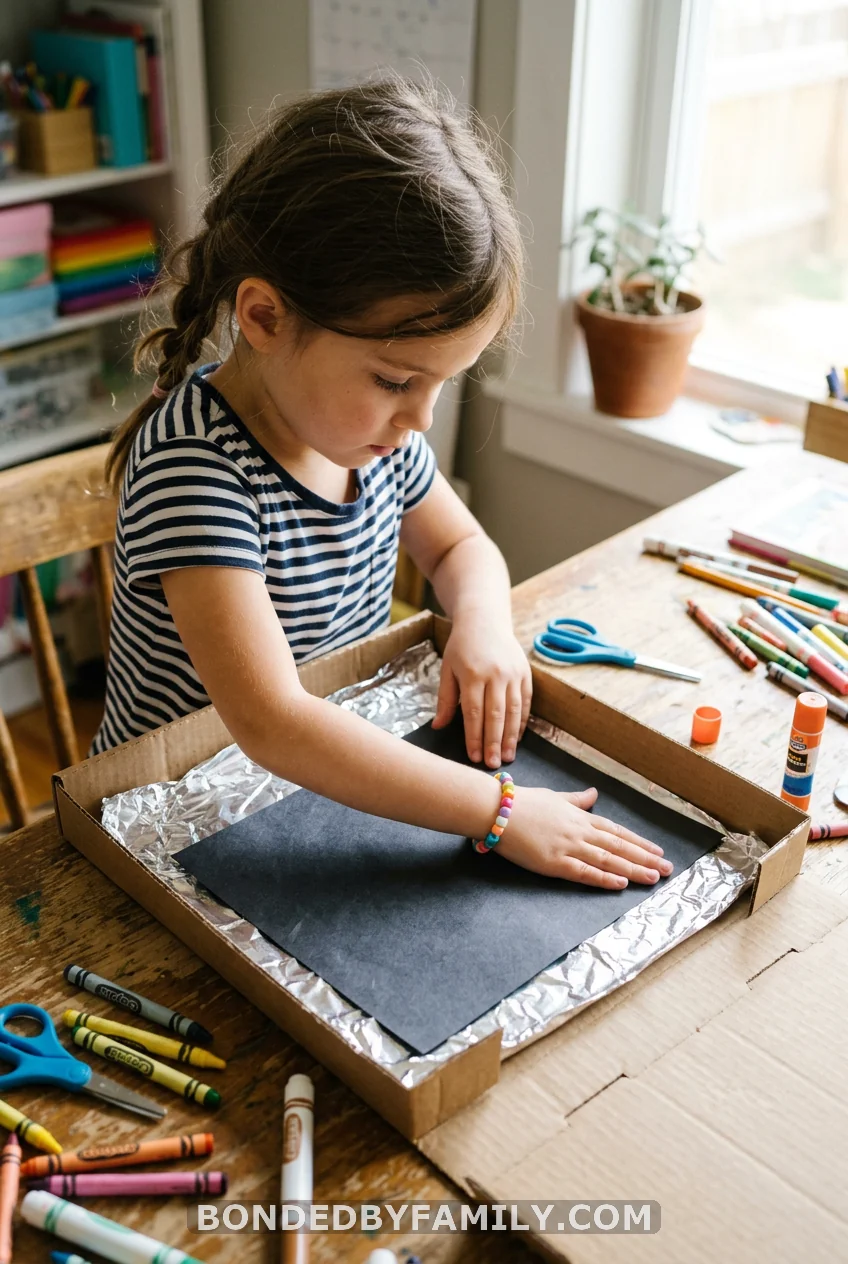
Glue a sheet of black construction paper to the center of the box floor, right on top of the foil. Black is hungry for sunlight. It pulls in the rays and heats up, then passes that warmth straight up into whatever sits on it.
Step 5: Seal the window
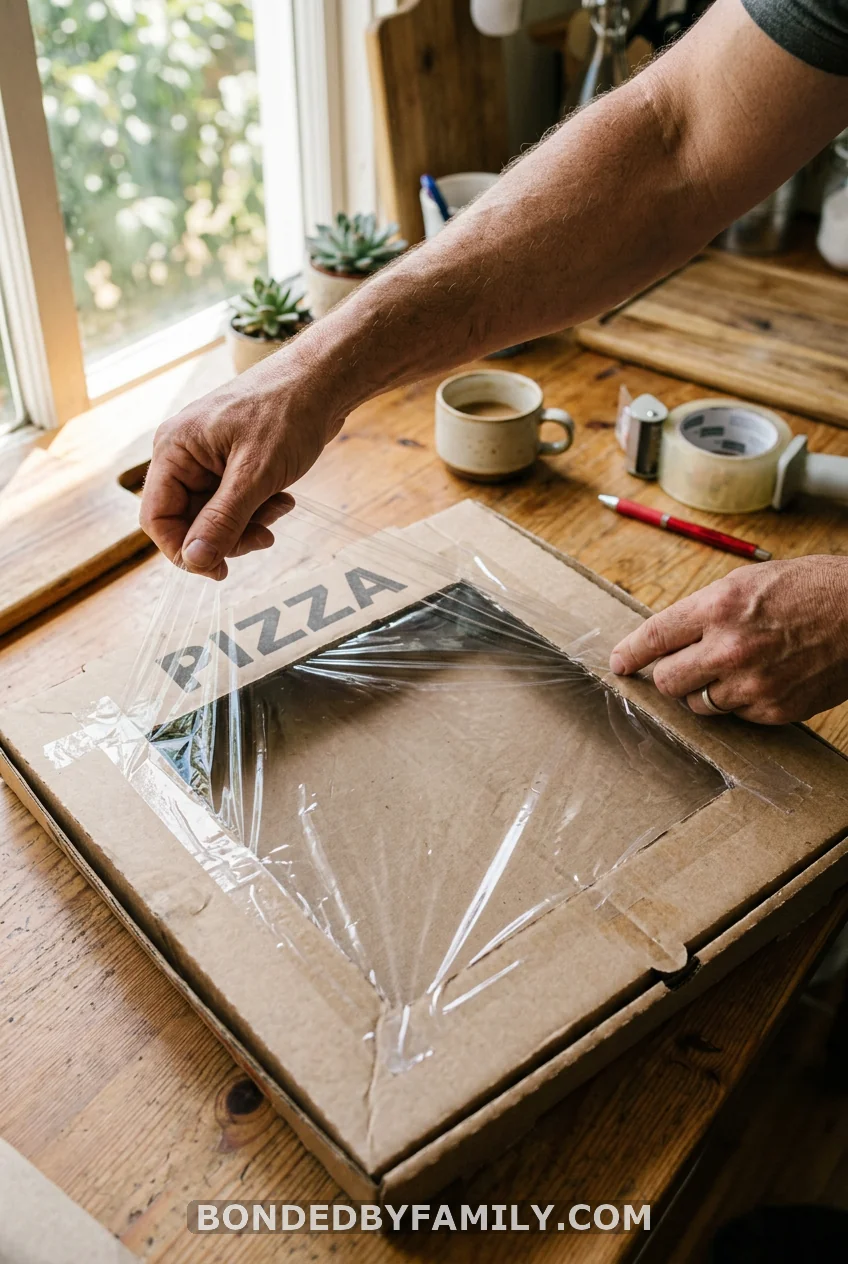
Stretch plastic wrap over the hole the flap left behind. Pull it tight and tape every edge down with no gaps. This window is what separates a warm box from a useless one. For a real heat boost, tape a second layer of plastic on the inside of the lid too, leaving a small air gap between the two sheets. That trapped air works like double-glazed glass and holds heat far better than one layer.
Step 6: Load your s’mores
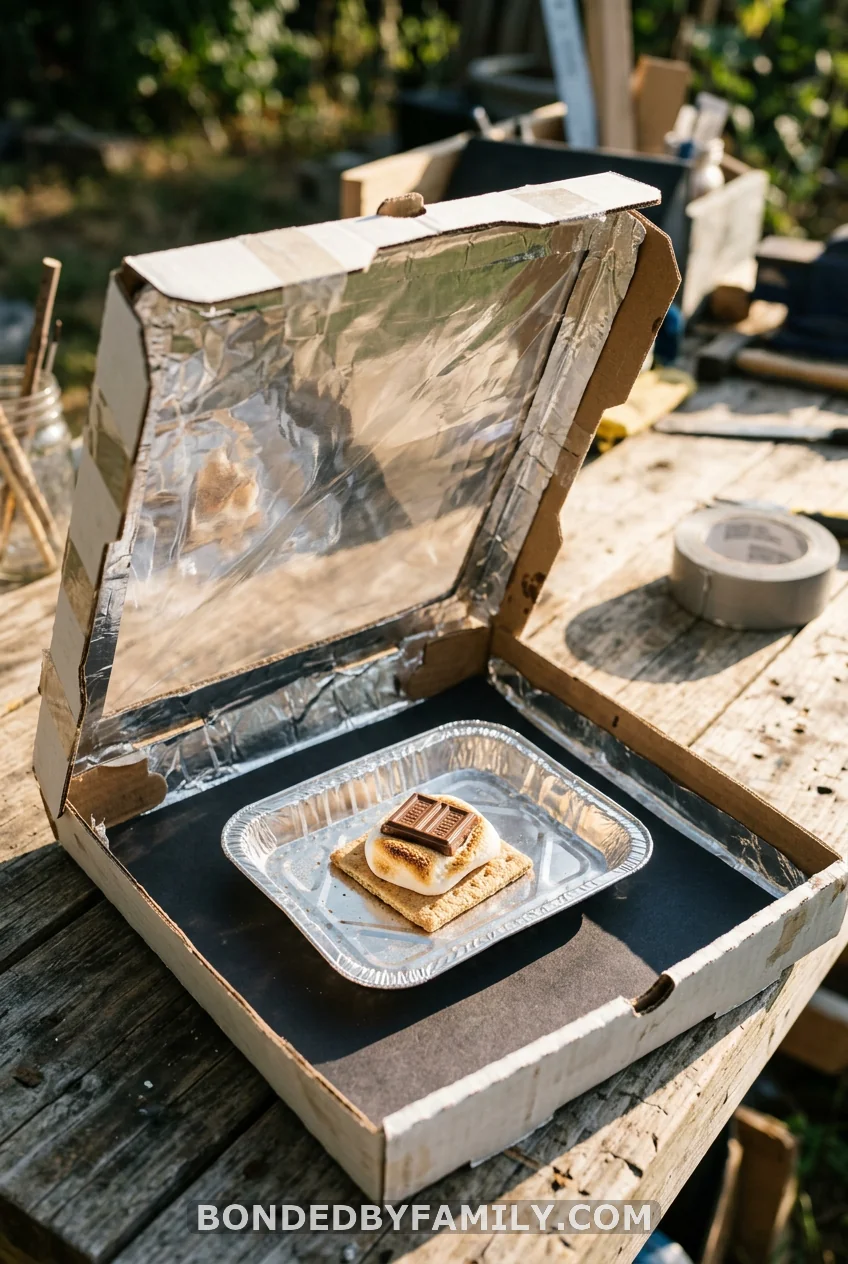
Set a graham cracker on a small square of foil so it acts as a tray. Top it with a marshmallow and a piece of chocolate. Place the tray on the black paper. Close the lid.
Step 7: Aim it at the sun
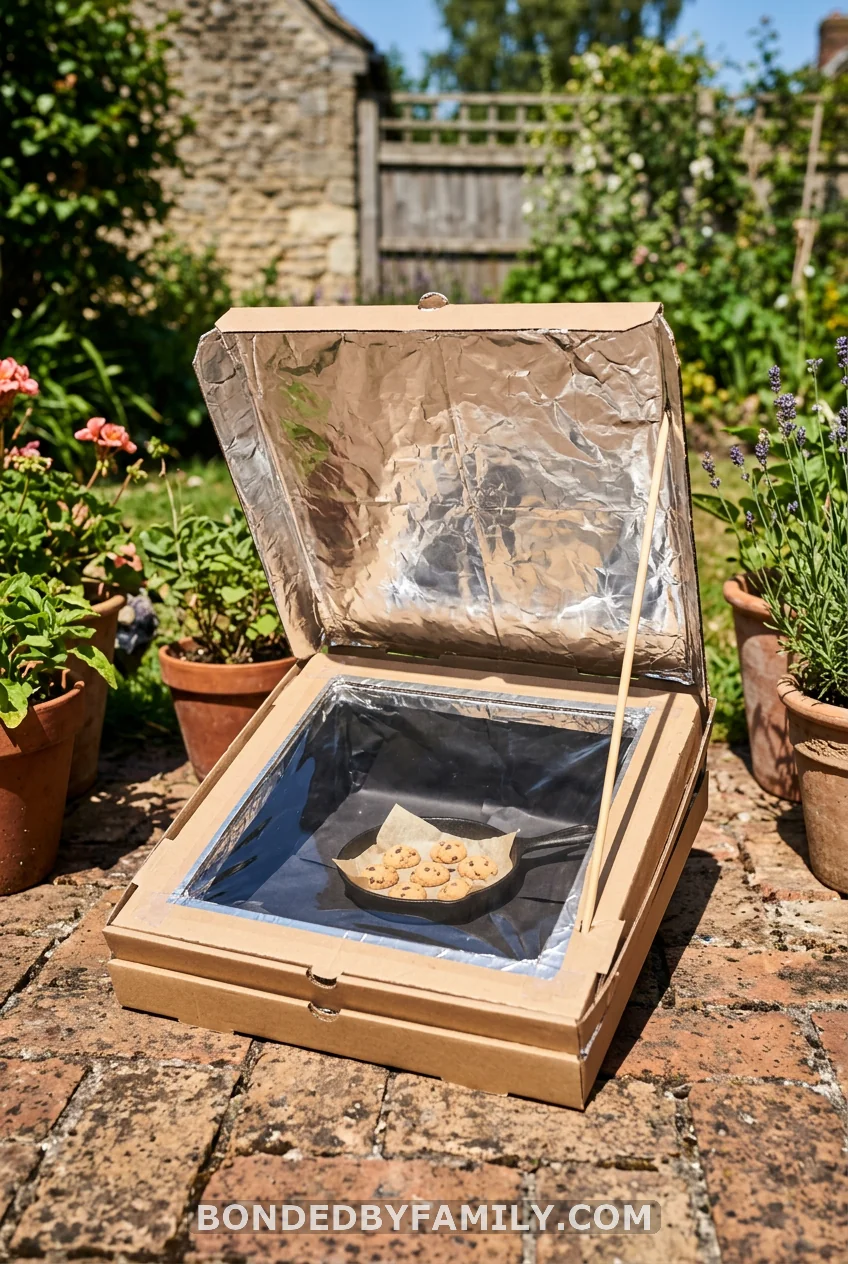
Prop the foil flap open with your skewer. Angle it so it catches the sun and throws light down through the window. Carry the oven outside into full, direct sun. The best window is between 11 a.m. and 2 p.m., when the sun sits high. Now wait. Give it 30 to 60 minutes, and turn the whole box every so often to keep the flap facing the sun.
How Hot Does It Get?
A pizza box oven climbs to about 150°F to 200°F on a clear, hot afternoon. That’s not enough to fry an egg, but it’s plenty to soften a marshmallow and melt chocolate. In one common test at 85°F to 90°F outside, the marshmallow went soft in roughly 30 to 35 minutes. Hotter day, faster melt. This is a warmer, not a 400°F kitchen oven, so think melting and softening, not baking and browning.
Turn It Into a Real Science Experiment
A melted s’more is fun. A melted s’more with data is a science fair project. Drop a cheap kitchen thermometer inside the closed box and read the temperature every five minutes. Write the numbers down. Graph them. Your kid now has a heating curve, and a real question to chase: what makes the line climb faster?
That question opens a dozen experiments from one box:
- Compare a foil-lined box against a plain cardboard one.
- Test one plastic window against the double-glazed version.
- Wrap newspaper around the outside as insulation and see if the temperature holds longer.
- Tilt the reflector flap to different angles and record which one wins.
- Run it at noon, then again at 4 p.m., and compare.
Change one thing at a time. That’s the heart of the scientific method, and a pizza box teaches it for free.
What Can You Cook In It?
S’mores are the classic, but the oven handles other low-heat treats. Try nachos with shredded cheese, a mini tortilla pizza, or soft cookies from pre-made dough. A pat of butter is a fast test run — if it melts, your oven works. Skip anything that needs high heat or could spoil. Raw meat and eggs are a no. This oven warms food; it does not reach safe cooking temperatures for raw protein.
When Your Oven Won’t Heat Up
Most “it didn’t work” days come down to a short list of fixable problems.
- Cloudy or hazy sky. Clouds cut the sun’s strength. Wait for clear skies.
- A windy spot. Moving air pulls heat off the box. Find a sheltered patch.
- A leaky window. Any gap in the plastic lets heat escape. Re-tape it.
- Wrong flap angle. If the foil isn’t bouncing light through the window, you get no boost. Adjust until you see the bright reflection land inside.
- Too early or too late. A low sun has to cut through more atmosphere and arrives weaker. Aim for midday.
Fix those, and a warm afternoon will do the rest.
You Built an Oven Out of Trash
Look at what your kid just did. They turned a greasy pizza box into a working solar cooker, watched sunlight become heat, and ate the proof. Somewhere in there, they learned how a greenhouse works, why dark colors get hot, and what insulation does. That’s a real lesson wrapped in a treat, and it cost almost nothing.
Save the box. On the next sunny day, change one part and test it again. Curiosity, like a marshmallow in the sun, just needs a little warmth to get going.
Frequently Asked Questions
How hot does a pizza box solar oven get?
On a clear, hot day, it reaches about 150°F to 200°F. That softens marshmallows and melts chocolate, but it won’t get hot enough to bake or brown food the way a kitchen oven does.
How long does it take to cook s’mores in a solar oven?
Around 30 to 60 minutes in full midday sun. At 85°F to 90°F outside, a marshmallow usually goes soft in about 30 to 35 minutes. Hotter, sunnier days speed it up.
Does a solar oven work on a cloudy day?
Not well. Clouds block the direct sunlight that the oven depends on, so heating slows to a crawl. Save the experiment for a clear, sunny afternoon above 75°F.
Is this safe for kids to make?
Yes, with supervision. An adult should handle the utility knife for cutting the flap. The oven itself won’t burn skin at these temperatures, though it gets warm enough to melt chocolate, so handle the inside trays with care.
What time of day works best?
Between 11 a.m. and 2 p.m., when the sun sits highest in the sky. That high angle delivers the strongest, most direct light, which means faster heating and meltier results.