“Mom, you’re not even listening.”
My daughter said that to me over a bowl of cereal last spring, and it landed like a gut punch. I was scrolling with one thumb, half-answering, fully somewhere else. That sentence sat with me for weeks. It’s why I started digging into what actually makes someone a better parent – not the Pinterest-board version, not the therapist-speak version, but the version that fits into a Tuesday with dishes in the sink and a toddler melting down over the wrong color cup.
Here’s what I found: better parenting isn’t one big transformation. It’s a stack of tiny, repeatable choices. Twelve of them, actually, and none require you to become a different person. Let’s get into them.
Start With Connection, Not Perfection
1. Stop Chasing Perfect Parenting – Aim for Connection Instead
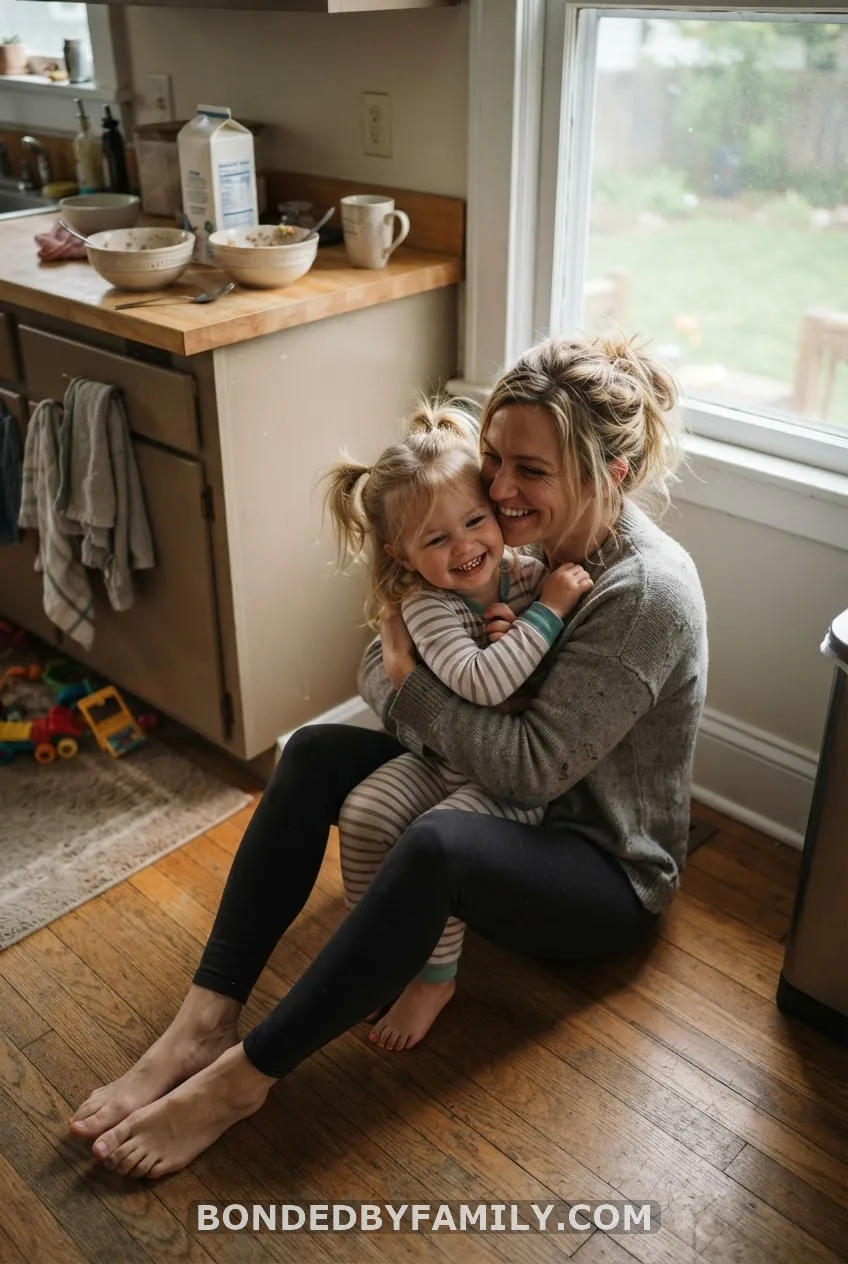
Guilt is loud, but it’s not useful. Parents who chase a flawless standard actually become more anxious and less responsive to their kids in real time – the fear of messing up crowds out the ability to just be there. Kids don’t need a parent who never raises their voice or never forgets the school form. They need someone present, kind, and emotionally safe more days than not. That’s the bar. It’s lower than you think, and it’s the one that actually matters.
2. Catch Your Child Doing Something Right
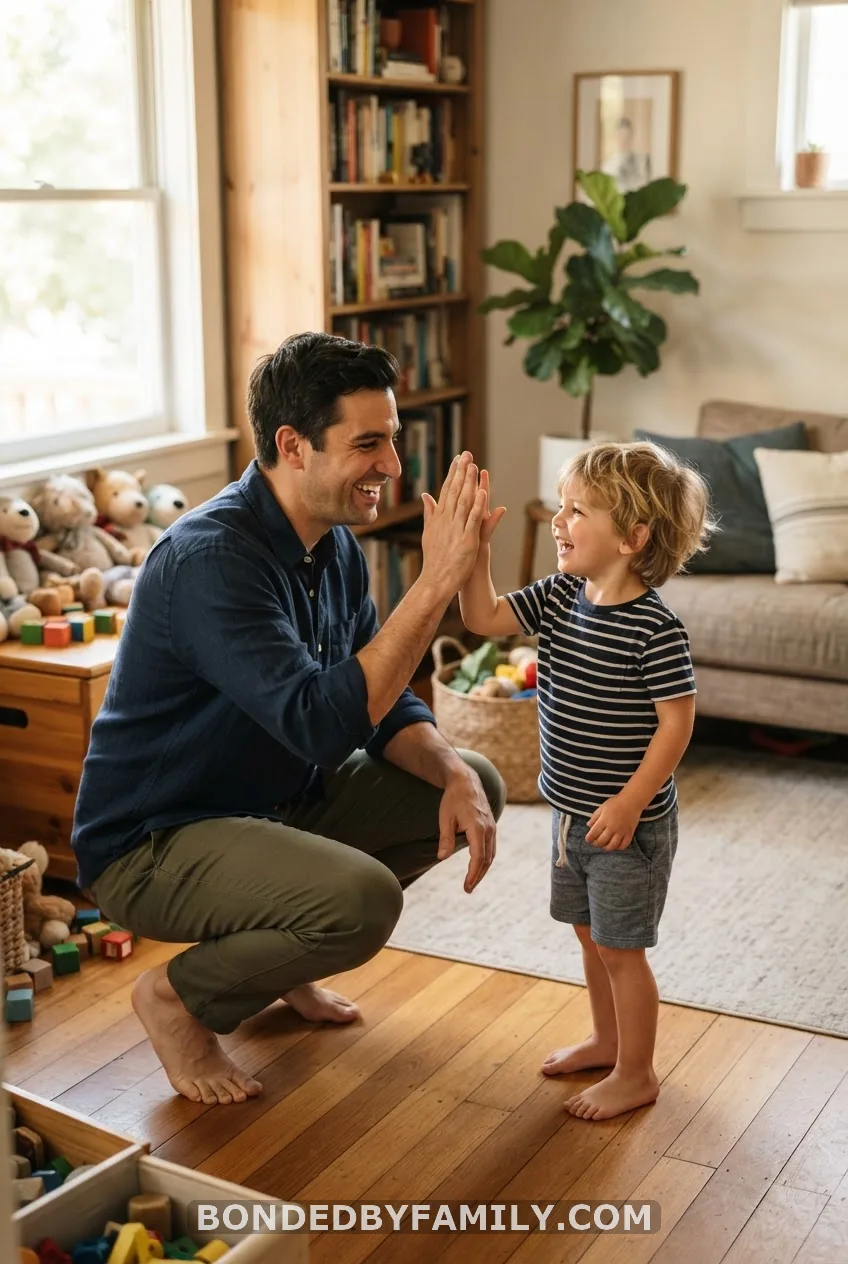
Most of us narrate the bad stuff instantly – “stop that,” “don’t touch,” “put it down.” Flip it. When your child makes the bed without being asked, say so: “You made your bed without being asked – that’s awesome.” Attention grows behavior. Point it at the good stuff, and you’ll see more of it.
3. Praise Effort, Not Just Results
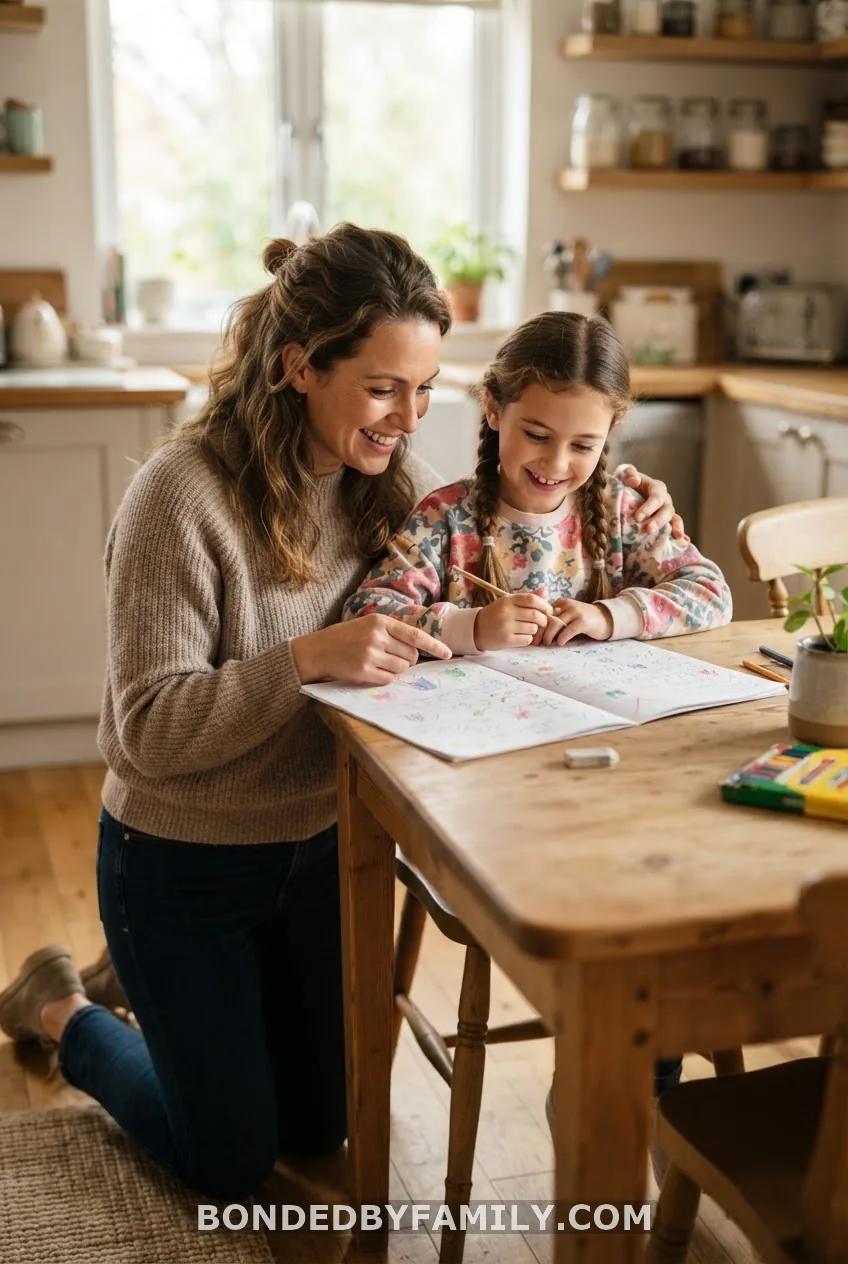
Swap “you’re so smart” for “you worked really hard on that.” It sounds like a small language tweak, but it changes how a kid relates to failure. Kids praised for intelligence tend to avoid hard tasks because a bad result threatens their identity. Kids praised for effort keep trying, because the effort itself was the win. Use it at report card time. Use it when they finally land the cartwheel after twelve tries. Use it when the science fair project flops but they stuck with it anyway.
One Caveat:
Effort praise only works if it’s specific. “Good job” is filler. “You kept rereading that paragraph until it made sense – that’s exactly how good readers work” actually sticks.
Boundaries, Listening, and Leading by Example
4. Create Boundaries With Empathy – Don’t Limit Emotions

This is the one parents get backwards most often, so let’s slow down here.
The mistake: shutting down the feeling along with the behavior. “Stop crying, it’s not a big deal” tells a kid their internal experience is wrong. Do that enough and they stop telling you how they feel at all – not because they’re calmer, just quieter.
The fix is a split. Feelings are always allowed. Behavior has limits. That’s the whole framework, and it holds up in almost every meltdown you’ll face between ages two and twelve.
Here’s what it sounds like in practice:
- “You’re really mad right now. I’m here. Can you tell me why?”
- “You can feel upset. You cannot hit your brother.”
- “It’s okay to cry. It’s not okay to throw the toy at the wall.”
Notice the structure: validate the emotion first, name the boundary second, no apology attached to either half.
Why this matters long-term: kids who grow up with clear, consistent limits report feeling more secure, not more controlled. The boundary isn’t the opposite of love. It’s a form of it. A kid who knows exactly where the edges are can relax inside them. A kid guessing at the rules stays on alert.
Common mistake to avoid: don’t negotiate the boundary mid-meltdown. Hold the limit calmly, repeat it once or twice, and save the conversation about feelings for after everyone’s regulated. Trying to reason with a nervous system in full meltdown just burns everyone’s patience.
Another mistake: switching the boundary based on your mood. If hitting is off-limits on a good day, it has to be off-limits on the exhausted, bad-day, “I have zero bandwidth” day too. Consistency is what makes the boundary trustworthy.
5. Listen More Than You Talk

When your kid wants to talk, put the phone down. Actually put it down – not face-down on the counter, in another room. Listen to understand what happened, not to correct it immediately. Let them finish the story before you jump to the lesson. Calm listening, before correcting, teaches kids how to manage their own emotions later, because they’ve watched you model it first.
6. Be a Role Model, Not a Lecture

Kids copy what you do, not what you say. If you want a calm kid, they need to see you handle frustration calmly – the spilled coffee, the missed appointment, the traffic jam. Narrate it out loud sometimes: “I’m frustrated, so I’m taking a breath.” That’s the whole lesson, delivered in eight seconds, no lecture required.
Rituals, Repair, and Real Presence
7. Build Daily Rituals That Make Kids Feel Secure

Predictable meals, a consistent bedtime, the same five-minute wind-down before lights out – none of it needs to be elaborate. What matters is repetition. A brain that knows what’s coming next feels safe, and a kid who feels safe pushes back less. Pick two anchors (dinner time and bedtime work well) and protect them like they’re non-negotiable, because for your kid’s nervous system, they kind of are.
8. Spend Small, Focused One-on-One Moments Daily

Ten to fifteen minutes. Phone in another room. Let your child pick the activity – Legos, a card game, doodling, whatever. It doesn’t need to be Pinterest-worthy. It needs to be undivided. That short window can build more confidence and emotional security than an entire afternoon of half-attention.
9. Model Emotional Repair – Own the Mess-Ups

What most people think: losing your temper occasionally ruins your relationship with your kid.
The reality: it’s not the yelling that does the damage. It’s what happens after.
I lost it at my son over a shoe that wouldn’t tie, three years ago, on a morning we were already late. I yelled. He froze. I saw his face and felt sick. So I got down to his level and said, “I yelled, and that wasn’t okay. Can we do that over?” We call it a “do-over” now, and it’s become a normal part of our house.
Here’s why that matters more than the outburst itself: kids who watch a parent apologize and repair learn that relationships survive conflict. They learn accountability by example, not lecture. A parent who never apologizes teaches a different lesson entirely – that power means never having to say sorry. Repair is the antidote, and it costs you nothing but a little pride.
Independence, Screens, and Kindness
10. Limit Screens as a Lifestyle, Not a Punishment
Set screen-free zones – meals and the thirty minutes before bed are the two that matter most for sleep and mood. It’s not about banning devices forever; it’s about protecting the windows where conversation and imaginative play actually happen.
The Catch:
Rules only stick if they apply to you too. A kid clocks it instantly when the “no phones at dinner” rule doesn’t extend to the adult at the head of the table.
11. Encourage Age-Appropriate Independence
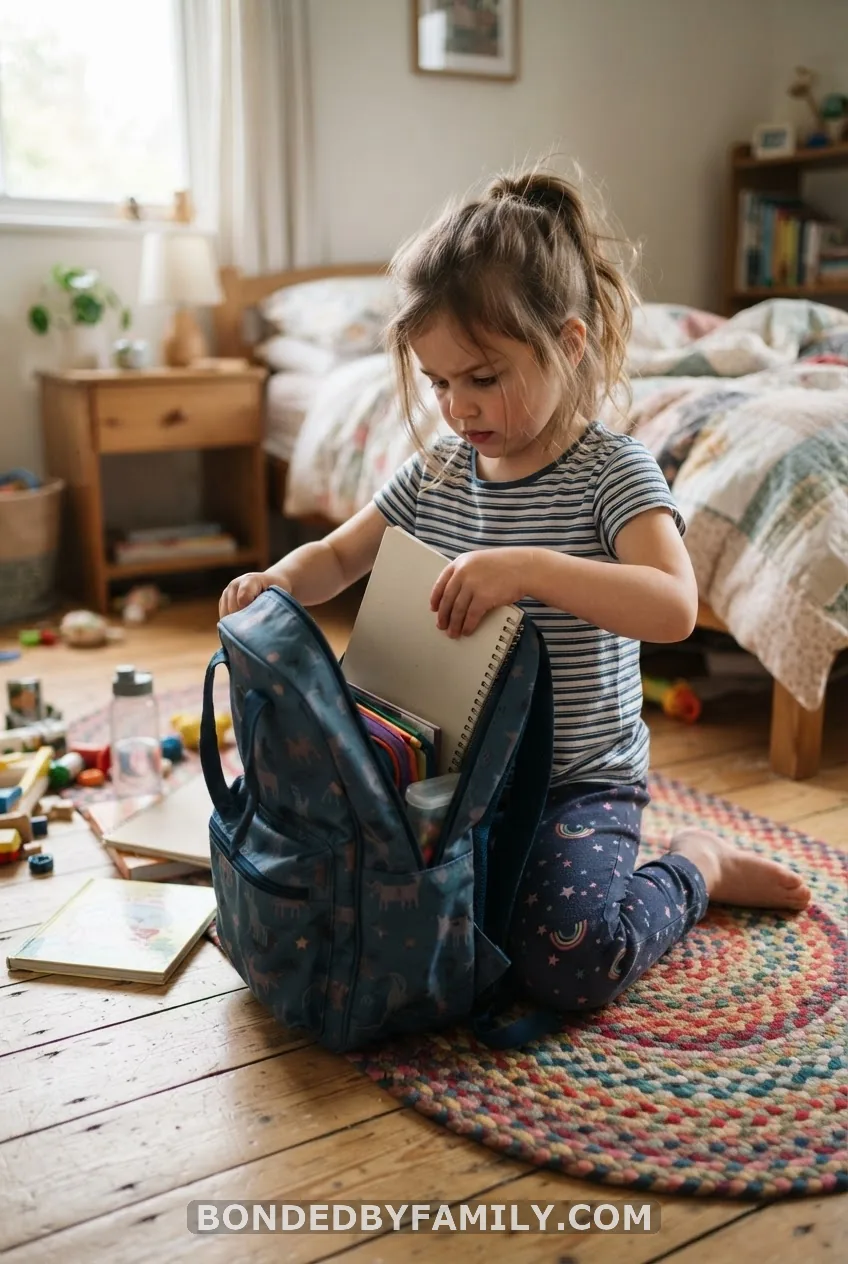
Let them organize their own toys. Let them pack their school bag, even if they forget the water bottle twice before it clicks. Let them attempt the zipper, the pour, the tricky puzzle piece, without swooping in at the first sign of struggle. Mistakes made safely at seven build the resilience they’ll need at seventeen. Rescuing too fast teaches the opposite lesson – that they can’t handle things without you.
12. Teach Kindness, Empathy, and Gratitude in Ordinary Moments

You don’t need a lesson plan for this one. Car rides, bath time, the walk to the mailbox – these are the moments where empathy actually gets built. Ask “how do you think your friend felt when that happened?” during a car ride home from school. Point out kindness when you see it, in strangers and in your own kid: “That was really thoughtful, sharing your snack.” And skip the comparisons – not to siblings, not to the neighbor’s kid, not to anyone. Compare your child only to their own last month. That’s the only fair measuring stick, and it’s the one that keeps the relationship, not the report card, at the center of the whole thing.
Better parenting doesn’t come from a twelve-step overhaul finished by Friday. It comes from picking one of these, doing it badly for a while, and doing it anyway.
Frequently Asked Questions
How can I be a better parent when I have a short temper?
Notice your own triggers before they blow – tight chest, clenched jaw, the urge to raise your voice – and practice pausing there. After an outburst, apologize and offer a do-over; that repair teaches your child more about emotional regulation than a perfect temper ever would.
What should I do when my child keeps misbehaving?
Look underneath the behavior first. Most repeated misbehavior is a big feeling or an unmet need for connection wearing a disguise, so address the emotion gently while still holding the boundary on the behavior itself.
What’s the single best thing I can do to be a better parent right now?
Be present and emotionally available in ordinary moments. Ten minutes of real listening beats an hour of distracted supervision, and it’s the habit that compounds the most over time.
How do I know if I’m already a good enough parent?
If you love your child, worry about getting it right, and try to repair after rough moments, you’re already doing the hardest parts well. Good enough parenting runs on consistency and warmth, not flawless execution.
Is it bad to compare my child to their siblings or classmates?
Yes – comparison chips away at a kid’s sense of their own worth faster than almost anything else you can say. Measure your child against their own progress last month instead; it’s the only comparison that actually motivates growth.