Your son comes into the kitchen after soccer and the room changes. You smell it before you see him. The deodorant you bought last week is still in the shopping bag, and you have no idea how to start this conversation.
That’s puberty in boys. It rarely arrives with a warning, and nobody hands you a schedule. This guide walks through 15 changes in the order they usually show up. Each one has an age window, what it looks like, the words to say, and one thing to do this week.
Boys usually start between ages 9 and 14, about two years after girls. Changes overlap, arrive out of order, and look different on two boys of the same age. Comparing him to his friends is the biggest source of needless worry, so try not to.
The First Signs (Usually Ages 9 to 13)
These changes start quietly. Most happen before anyone else can see them.
1. Testicular Enlargement: The True First Sign

The testicles and scrotum enlarge first, usually between ages 9 and 13. The scrotal skin gets thinner, looser and a bit darker. One testicle often hangs lower than the other, which is normal.
Many parents are surprised that the penis does not grow yet. That comes later.
You do nothing for now. Just add a note in your phone with the date you noticed. That date starts the clock for later check-ins with the pediatrician.
2. Early Pubic Hair

Pubic hair starts a few months after testicle growth. It is soft, light and sparse at the base of the penis. Over two to three years it darkens, coarsens and spreads.
Underarm hair usually follows about two years later.
Mention it casually, side by side. Try: “You’ll start getting hair in new places. Everybody does.
It’s not a secret. Then change the subject.
3. Body Odor and Sweating

Sweat glands wake up, and bacteria on the skin turn that sweat into an adult-strength smell. It often shows up before age 11. Other people notice it long before he does.
Skip the critique. Say: “This happens to everybody. Here’s a deodorant that’s yours.”
Here is the setup that works:
- Buy an aluminum-free deodorant stick in a scent he picks himself. It costs about $6 to $9.
- Put it where he gets dressed, not in the family bathroom cabinet.
- Add a second wash after sport or gym class.
- Set up a laundry rule: worn sports shirts go straight into the hamper, not back in the drawer.
- Check the underarms of his T-shirts every few weeks. A smell that stays after washing means the shirt needs a longer soak.
Pro tip:
Offer two or three deodorants and let him choose. Choice makes it his habit, not your lecture.
The Big Body Changes (Usually Ages 11 to 17)
Now the changes get louder. Friends, teachers and mirrors all notice.
4. The Growth Spurt
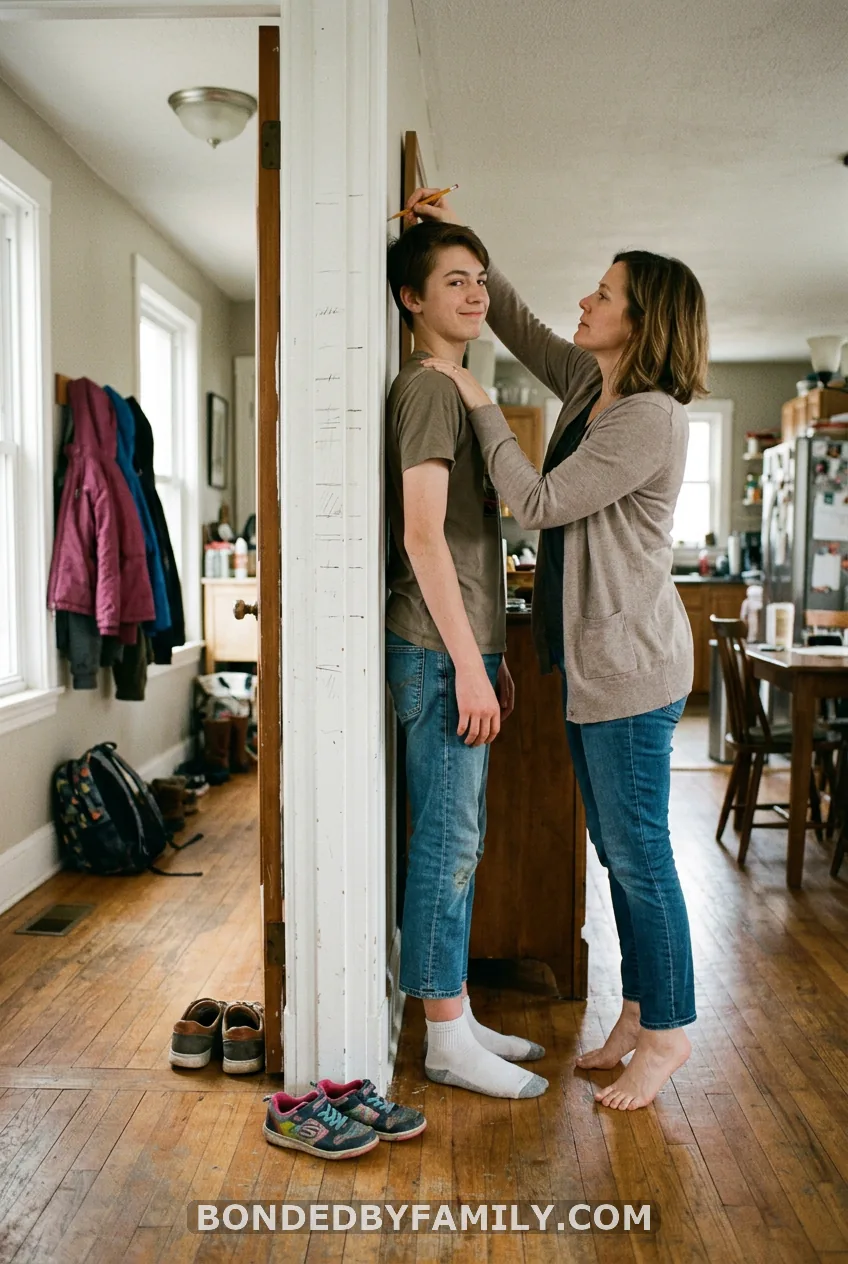
Boys grow fastest about a year to 18 months after testicle growth begins. That is usually ages 11 to 14, with the peak often around 12 to 15. Hands, feet, arms and legs outgrow the torso first, which explains the clumsy phase.
Growth comes in bursts. Some boys gain several inches in a few months. Most stop growing around 17 or 18, and some a little later.
Measure him every three months on a doorframe. Shoes and sleeves go first, so buy the next size up on sale rather than waiting.
5. Longer, Thicker Penis

What most boys think: everyone else is bigger, and there is a right size by age 13.
Reality: Growth in length and width begins about a year after the testicles start, usually between ages 11½ and 14. The pace differs hugely from boy to boy. Locker rooms make every boy misjudge what he sees.
Have one calm, factual talk. Silence leaves the job to his friends and the internet, and they get it wrong.
6. Erections and Wet Dreams

Erections can happen for no reason at all. They are not always about sexual thoughts. Wet dreams, called nocturnal emissions, often begin around ages 12½ to 14. Sperm production starts in this window.
Never tease. Say: “Your body will do things on its own. It’s normal, nothing is wrong, and you don’t need to tell me about it.” Then drop it.
Leave a spare set of sheets in his room. He can handle it quietly, and that is a kindness.
7. Oily Skin and Acne

Hormones turn up oil production, and breakouts hit the face, back and shoulders, usually between ages 11 and 15. Boys tend to get more severe acne than girls. Early treatment helps prevent scarring.
Set up a routine he will do without being nagged:
- A gentle cleanser twice a day.
- A light moisturizer after washing.
- A starter kit placed right next to his toothbrush.
Hard, deep, painful bumps (cystic acne) need a doctor, not another cream from the drugstore.
Worth knowing:
Squeezing makes scars. Say it once, kindly, and leave it there.
8. Muscle Growth and Broader Shoulders

Muscle builds as testosterone rises, usually from ages 13 to 17. Shoulders and chest broaden before the waist changes.
Feed him. Protein, iron and calcium matter, and so does sleep, more than any supplement. Skip the weight-gain powders marketed to teen boys.
9. Voice Cracking and Deepening

The voice box and vocal cords grow, so the voice drops. This usually comes after the peak growth spurt, between ages 12 and 16. Cracks and squeaks last for months and then stop.
One dinner table laugh can make a boy go silent for a week. Don’t mimic it, and don’t smile at it.
If he cracks mid-sentence, just say: “That’s your voice settling in.” Then keep listening.
10. Facial Hair and Shaving

Facial hair starts as a soft shadow on the upper lip, well after pubic and underarm hair. Between ages 13 and 17 it is often patchy. That is normal.
Let him decide when to shave. When he asks for a razor, that’s your cue.
Give him a five-minute lesson instead of a razor and hope:
- Wash his face with warm water to soften the hair.
- Apply shaving cream, not soap.
- Shave with the direction the hair grows, using light strokes.
- Rinse the blade after every pass.
- Finish with cool water and a bit of moisturizer.
A basic cartridge razor and a can of shaving cream cost about $10 to $15 together.
The Changes Nobody Sees Coming
These ones are about feelings, body worries and everyday pressure.
11. Mood and Emotional Changes

Emotions get stronger. He may be more irritable, withdrawn or self-conscious. The push for privacy and independence is development, not rejection.
Anxiety rises most in boys who develop much earlier or later than friends.
Talk side by side: in the car, on a walk, over dishes. It beats face to face every time. Keep one door open each day, even if he says nothing.
12. Breast Swelling (Gynecomastia)

This is the change nobody warns parents about. Roughly half of boys get some temporary swelling or tender lumps under the nipple, often on one side, between about ages 11 and 15. Hormone shifts cause it, and it usually settles within a year or two.
It also causes silent panic. A boy may hide in baggy clothes for months without telling you.
Bring it up first: “Lots of boys get a little swelling for a while. It’s not dangerous and it goes away.” See the pediatrician if it is painful, grows fast or lasts beyond two years.
13. Starting Early or Late

A boy starting at 9 and a boy starting at 14 are both in range. The sequence of changes matters more than the calendar.
An early boy may get treated as older than he is. A late boy may get teased in gym or kept off teams. Both can lose confidence.
Say the same thing to every son: “Your body has its own schedule. Nothing is wrong with it.” If one son is early and the other late, make sure both grown-ups give the same answer.
14. Autism, ADHD and Puberty

Puberty can feel sudden and confusing for boys who process change differently. Sensory shifts like new smells, hair and skin feel can be hard.
Social stories help. These are short, picture-based pages that explain what will happen, in order, in plain words. Tell him early, show him the steps for washing and deodorant, and use the same words each time.
15. Screens and Body Comparison
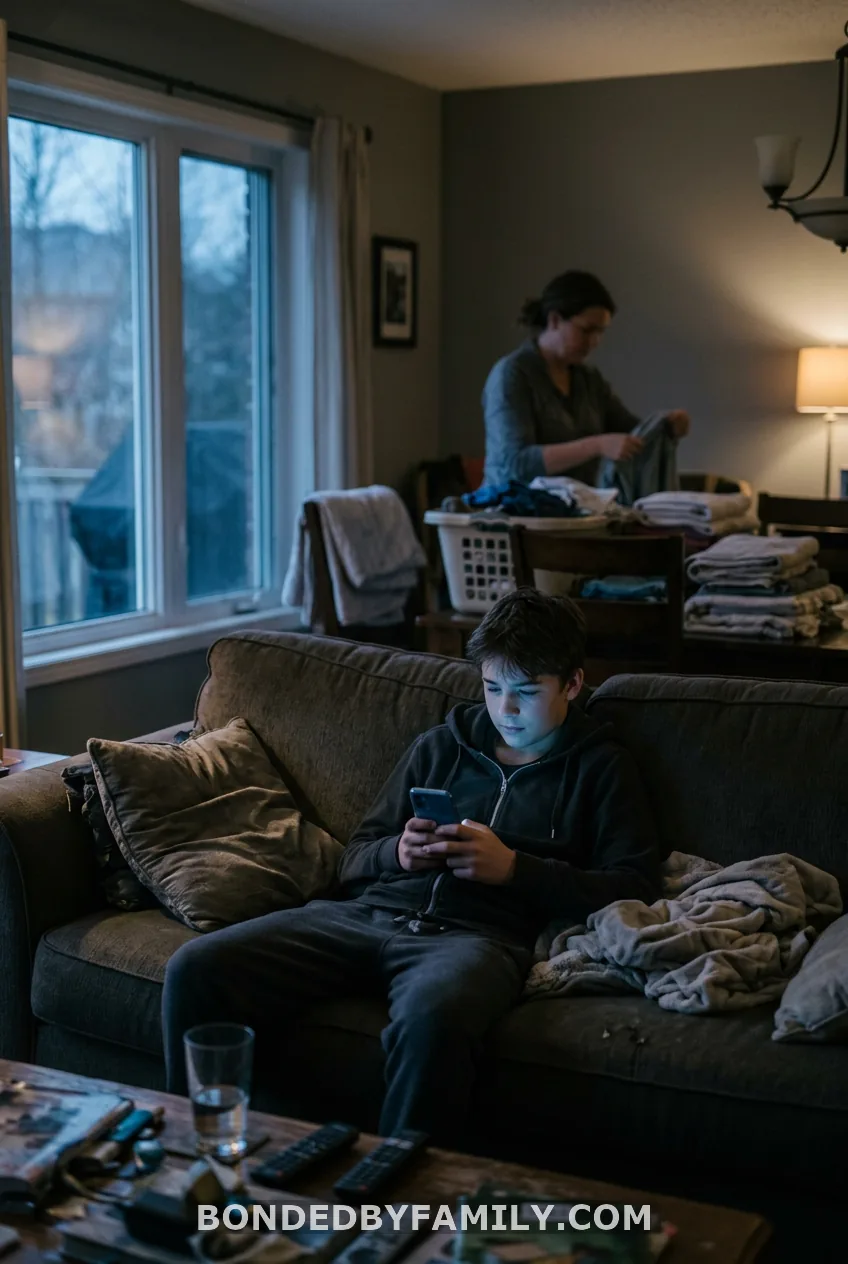
Around the same age, phones show him bodies and content that are not real. Online comparison can feed worry about size, muscles and skin. Porn often turns up in this window.
Decide your line before it happens. Tell him he can come to you without trouble, and that what he sees online is not how bodies really look.
When to See a Doctor
Call the pediatrician if you see any of these:
- Signs of puberty before age 9.
- No testicular enlargement by age 14.
- Changes that start, then stall or reverse.
- Severe or cystic acne, or breast swelling that is painful or lasts past two years.
Bring his growth chart, the date you noted for the first sign, and any family history of early or late puberty.
Your Checklist for This Month
- One aluminum-free deodorant, one gentle cleanser, one razor and one spare set of sheets.
- A log of his height and the first-sign date.
- A separate 20-minute talk from each grown-up at home, with the same answers.
- Your line on phones and porn.
Wrapping Up
Back in that kitchen, the smell hasn’t gone away. But now the deodorant is out of the bag, and you know the line to say: “This happens to everybody. Here’s one that’s yours.
Say it side by side and keep it short. He will remember that you made it easy.
FAQ
What is usually the first sign of puberty in boys?
Testicular enlargement, with the scrotum becoming looser and slightly darker. It usually starts between ages 9 and 14, often before anyone else can see it.
At what age do boys go through puberty?
Most start between ages 9 and 14, about two years after girls. The full process usually takes three to five years, and some boys keep growing into their late teens.
Do boys get breast swelling during puberty?
Yes. About half of boys get some temporary swelling, often on one side, between roughly ages 11 and 15. It usually settles within a year or two. See a doctor if it is painful, grows quickly or lasts past two years.
When should a parent worry about late puberty in boys?
Ask your pediatrician if there is no testicular enlargement by age 14, or if changes start and stall. A call is also worth making if signs appear before age 9.