Sink $200 into a bouncy castle or spend two hours blowing up 50 balloons – and the kids still end up chasing each other around the yard doing nothing. Sound familiar? Birthday party games for kids don’t need a massive budget or a Pinterest-worthy setup. They need structure, variety, and about ten minutes of prep. I’ve hosted more kids’ birthday parties than I can count, and the ones my daughter’s friends still talk about had the cheapest entertainment. A roll of crepe paper. A bag of balloons. A kitchen timer. That’s it.
This list gives you 29 birthday party games for kids organized by age group – toddlers through tweens – so you can scan straight to what fits your crew. Each game includes a recommended group size, how long it takes, and what you’ll spend. No guesswork. Just a lineup that keeps every kid off the couch and away from a screen for two solid hours.
Games for Toddlers and Preschoolers (Ages 2–4)
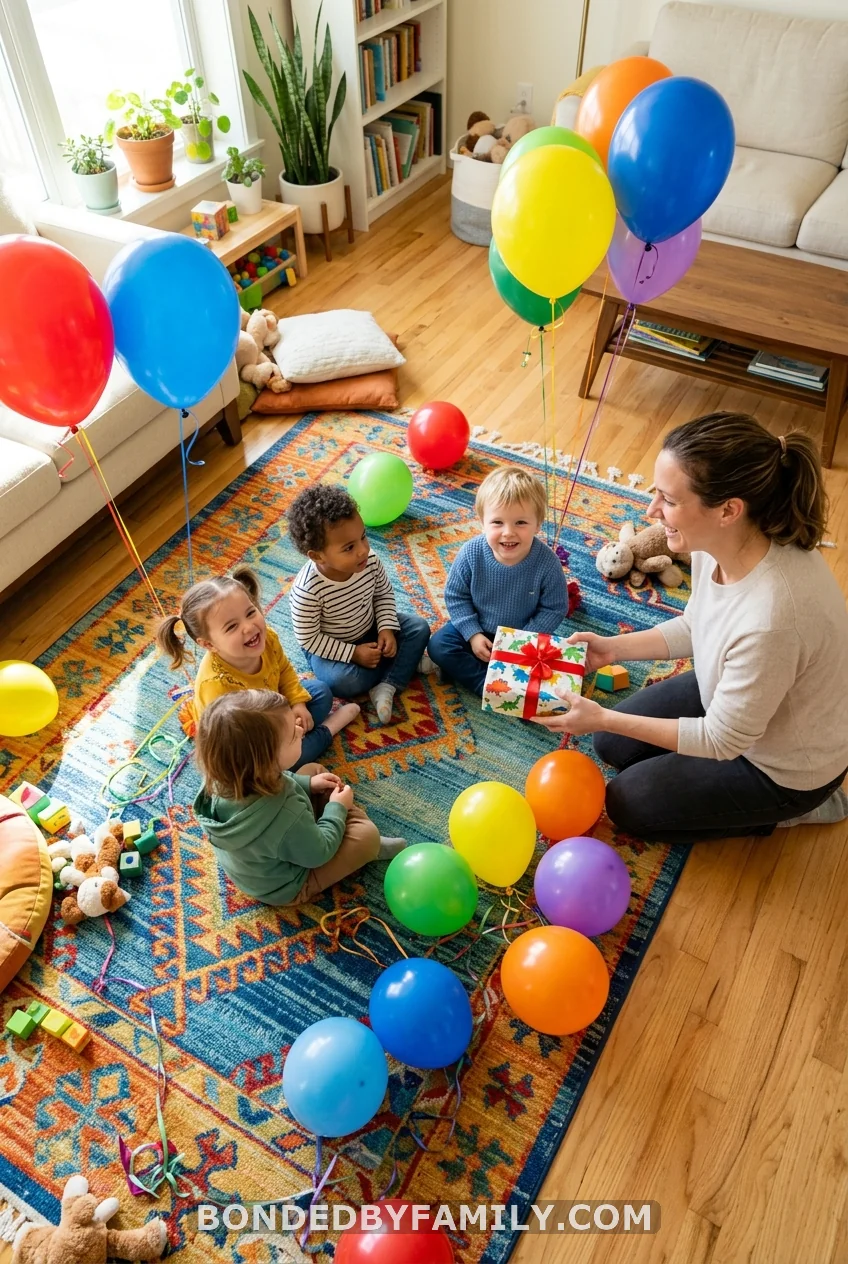
Little ones need short games, clear rules, and zero elimination. If a toddler gets “out,” you get tears. Keep rounds under five minutes, have a small sticker or stamp ready as a prize for everyone, and don’t expect them to follow complicated instructions. The magic at this age is movement and noise.
1. Bubble Wrap Stomp
Roll out a six-foot strip of bubble wrap on the floor. Crank up some music. Let the toddlers stomp. That’s the whole game. The popping sounds send them into fits of giggles, and you can pick up a 24-inch roll at Dollar Tree for $1.25. Tape the edges down so nobody trips.
2. Musical Statues
Play upbeat music — anything from Baby Shark to Taylor Swift works — and let kids dance. When the music stops, they freeze. Nobody gets eliminated at this age. Just cheer for the silliest statue. Run five or six rounds and hand out stickers at the end. The real entertainment is watching a three-year-old try to hold still for more than two seconds.
Why This Beats Musical Chairs for Young Kids
Musical chairs adds a competitive element that falls apart with toddlers. Someone ends up without a seat, cries, and suddenly you’re managing a meltdown instead of a party. Musical statues keeps everyone on the floor and in the game the whole time.
3. Parachute Play
A play parachute ($12–$18 on Amazon for a 6-foot version) is one of the most reliable party investments you’ll make. Kids grab the edges and shake it while stuffed animals or lightweight balls bounce on top. You can also have them take turns running underneath while the group lifts it high. Works indoors or out. Ages 2 through 7 love it. Even shy kids participate because they don’t have to be the center of attention.
4. Bean Bag Toss
Set three buckets at different distances — close, medium, and far — and hand out bean bags. Each bucket earns different points, but honestly, the scoring doesn’t matter at this age. They just want to throw things. A four-pack of bean bags costs about $8, and you can use laundry baskets if you don’t have buckets.
5. Simon Says (Toddler Edition)
Keep commands physical and visual: “Simon says touch your nose,” “Simon says jump,” “Simon says spin around.” Skip the elimination. Just play for laughs. This game burns three to five minutes and needs zero supplies. It’s also the fastest way to calm a room of hyper preschoolers, because they have to listen and focus.
Games for Little Kids (Ages 5–7)
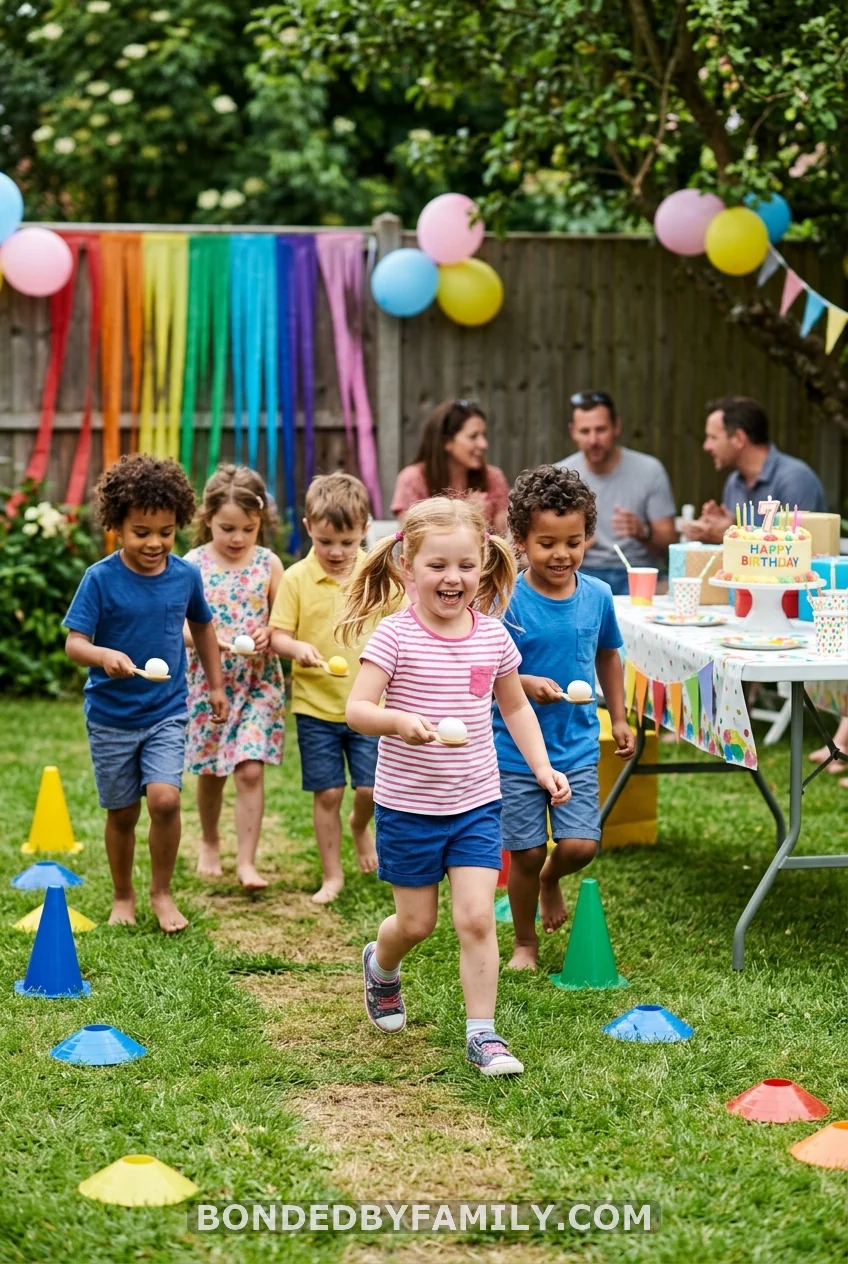
This age group can handle rules, teams, and mild competition. They’re old enough to understand “first to finish wins” and young enough to still think a plastic medal from the dollar store is a real trophy. The sweet spot for group size here is 8–15 kids.
6. Freeze Dance
Music plays. Kids dance. Music stops. Everyone freezes. Anyone who moves sits down and cheers for the remaining dancers. Rounds go fast. The whole game wraps in about ten minutes, and it burns off a shocking amount of energy. Use a Bluetooth speaker and a playlist you can pause quickly — fumbling with your phone kills the momentum.
7. The Donut Chomp
Hang glazed donuts from strings tied to a broomstick or clothesline. Each kid stands under a donut and tries to eat it without using their hands. The swinging makes it borderline impossible, and every single kid ends up with frosting on their nose. This costs about $6 for a dozen donuts and five minutes of setup.
Have towels ready. And maybe a change of shirt for the birthday kid.
8. Pass the Parcel — The Full Breakdown
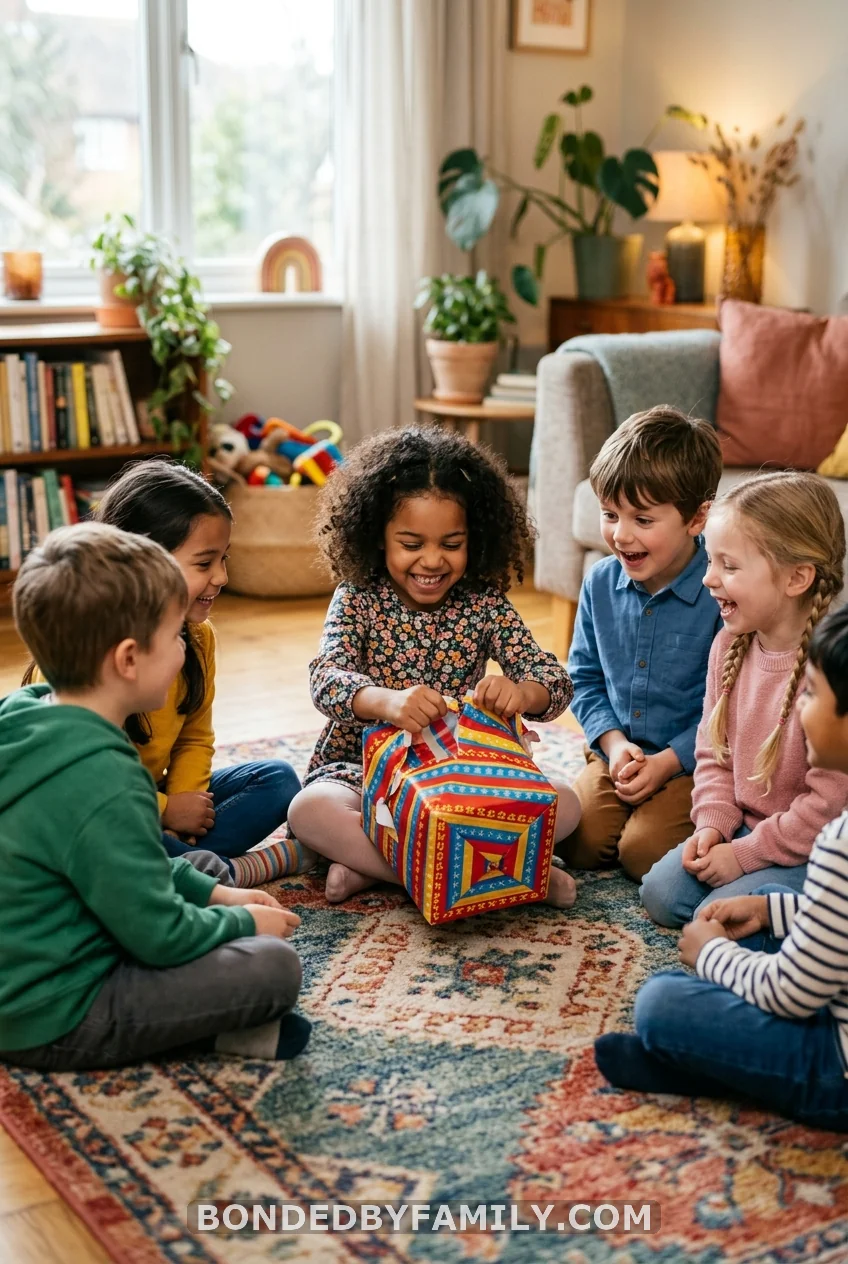
This is the one game that works at every single birthday party I’ve ever thrown. Bar none. It’s the game that keeps shy kids engaged, competitive kids satisfied, and restless kids seated — all at the same time.
What You Need
- One small prize (the center gift): Think a $5 toy, a bag of candy, or a craft kit.
- Wrapping paper or newspaper: Enough for one layer per child. If you’ve got 12 kids coming, wrap 12 layers.
- Small treats for each layer: Stickers, temporary tattoos, fun-size candy bars, mini erasers. Budget about $0.50–$1.00 per layer. Total cost for a 12-kid party lands around $15–$17.
- A speaker and a playlist you can pause quickly.
Step-by-Step Setup (Night Before)
- Start with the center prize. Wrap it in one layer of paper.
- Place a small treat on top of the wrapped layer. Wrap another layer around it.
- Repeat until you have one layer for each guest. The package gets bigger and messier with each layer — that’s fine.
- Write numbers on each layer if you want to track the order, but it’s not required.
How to Run It
Sit everyone in a circle. Start the music. Kids pass the parcel around the circle. When the music stops, whoever holds it peels off one layer and keeps the treat inside. Then the music starts again.
The trick: control the music so every kid gets a turn before anyone gets a second. Watch where the parcel is and time your pauses. Nobody needs to know you’re rigging it.
Common Mistakes to Avoid
- Uneven layers. If you wrap 8 layers for 12 kids, four children get nothing. Always match layers to headcount, plus two extras for insurance.
- Music too long between stops. Kids lose interest if they’re passing for 45 seconds between each pause. Keep intervals at 10–15 seconds.
- Center prize too exciting. If the center gift is a giant toy and the outer layers are stickers, the child who unwraps last feels like they won the lottery while everyone else got scraps. Keep the value gap small.
- Letting siblings sit next to each other. They’ll pass slowly between themselves. Separate them.
Why This Works
Pass the Parcel gives every child a guaranteed moment of excitement. There are no losers. Nobody sits on the sideline. The suspense builds naturally as the package shrinks, and the unwrapping sound alone keeps the group focused. For ages 5–7, this hits every emotional note — anticipation, reward, fairness, surprise.
9. Duck Duck Goose
No supplies. No setup. Sit kids in a circle, and let them play. If your group is larger than 15, split into two circles so nobody waits too long.
10. Balloon Stomp
Tie an inflated balloon to each child’s ankle with a 12-inch ribbon. On “go,” everyone tries to pop other kids’ balloons while protecting their own. Last balloon standing wins. The whole thing takes three minutes and sounds like a warzone. Cost: $3 for a pack of balloons and some string.
11. Obstacle Course Relay
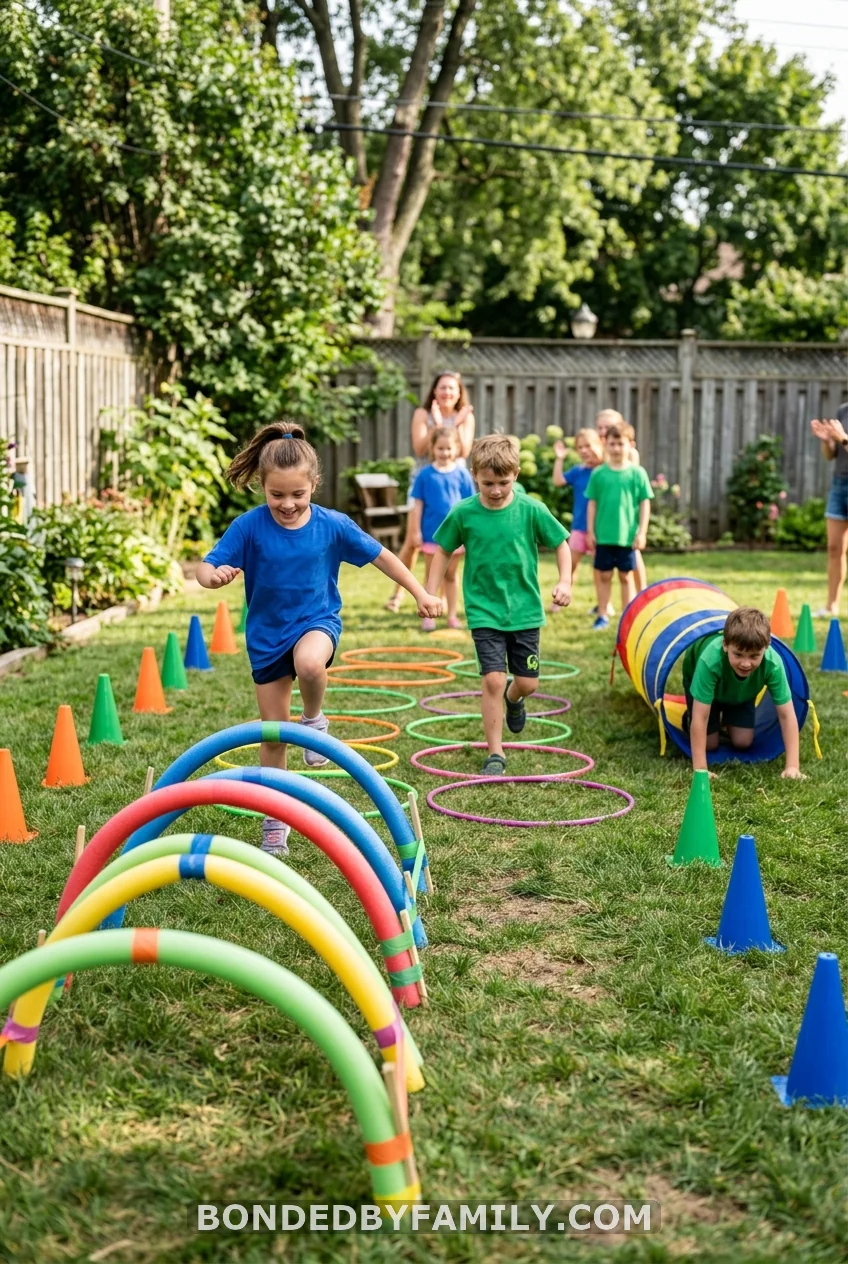
Line up five or six stations: crawl under a table, jump through hula hoops, weave between cones, toss a ball into a bucket, sprint to the finish. Split kids into two teams. Time each team or race them head to head. You can build the whole course from household items — pool noodles ($1.25 each at Dollar Tree), laundry baskets, and couch cushions. Setup takes about 15 minutes. The game itself keeps kids occupied for 20–30 minutes because they always want to run it again.
12. Sack Race
Pillowcases work if you don’t have burlap sacks. Line kids up. First one to hop to the finish line wins. The falling-over is the real entertainment. Budget: $0.
13. Egg and Spoon Race
Hand each kid a spoon and a plastic egg (or a ping pong ball). They race to the finish line without dropping it. If it drops, they restart from where it fell. Use real hard-boiled eggs if you want chaos. Use plastic if you value your sanity.
Games for Big Kids (Ages 8–10)
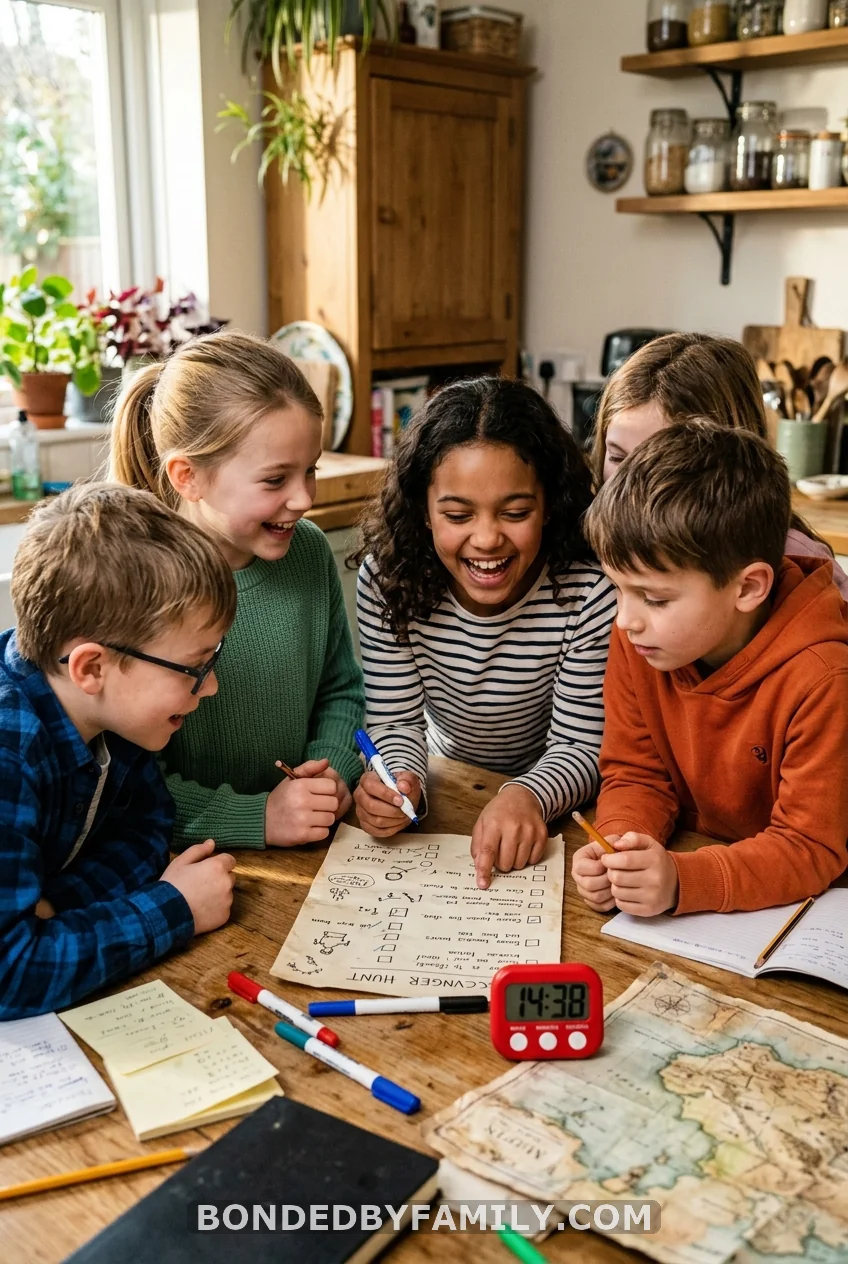
Eight-to-ten-year-olds want to feel like they’re doing something grown-up. They want strategy, mild chaos, and bragging rights. This is the age where team-based games and timed challenges shine.
14. Scavenger Hunt (Indoor or Outdoor)
Write 10–15 clues that lead kids from one hiding spot to the next. The final clue leads to a stash of prizes. For a 10-kid party, create two teams with separate clue paths that end at the same treasure. This prevents one team from following the other.
You can write your own clues or use a generator like Riddle Me ($4.99 for a printable set customized to your house layout). Total setup time: 20 minutes. Total game time: 15–25 minutes depending on how tricky you make the clues.
For Outdoor Parties
Hide clues in the yard, under rocks, inside a mailbox, taped behind a fence post. Add a physical challenge at each station — do 10 jumping jacks before you can open the next clue. It slows down the fast kids and gives the slower team a fighting chance.
15. Candy Bar Dice Game
This one has legs. I’ve used it at every birthday party since my daughter turned eight, and the kids go feral for it every single time.
Pile 20–30 different candy bars in the center of a table. Give each player a brown paper lunch sack. Everyone sits in a circle and takes turns rolling a single die. Roll a six, grab a candy bar from the pile, and drop it in your sack. Keep going until all the candy is claimed. Then set a timer for five minutes. Now, roll a six and you can steal a candy bar from anyone — but you have to remember who has what, because the bags are closed.
A variety pack of candy bars from Amazon runs about $15–$20 for 30 pieces. Total game time: 20 minutes. Chaos level: high.
16. Minute-to-Win-It Challenges
Set up four or five timed challenges:
- Stack Attack: Build a pyramid from 15 plastic cups in 60 seconds, then break it back down into a single stack.
- Cookie Face: Place a cookie on your forehead and wiggle it into your mouth without using your hands.
- Nose Dive: Transfer cotton balls from one bowl to another using only petroleum jelly on your nose.
- Defying Gravity: Keep three balloons in the air for 60 seconds.
Run each challenge tournament-style or let every kid attempt all of them. Award points, tally at the end, crown a winner. Setup costs: under $10 total.
17. Escape Room (DIY Version)
Print a set of puzzles and riddles (Escape Room Geeks and Lock Paper Scissors both sell birthday-themed kits for $10–$15). Hide the clues around one room. Teams have 20 minutes to solve the puzzles and “escape.” This is the single best game for groups of 8–10 year-olds who think they’re too cool for musical chairs.
18. Water Balloon Toss (Outdoor Only)
Pair kids up. Each pair starts standing one step apart. They toss a water balloon back and forth. After each successful catch, both players take one step backward. The balloon breaks, you’re out. Last dry pair wins. Buy a pack of 100 self-sealing water balloons for about $8. The game burns 15 minutes and guarantees everyone gets soaked.
19. Saran Wrap Ball
Wrap small prizes — candy, coins, stickers, mini toys — inside layers of plastic wrap until you’ve got a ball the size of a basketball. Kids sit in a circle. One child unwraps the ball as fast as they can while the person next to them rolls dice. When the dice roller gets doubles, the ball passes to them. Whatever falls out of the ball while you’re unwrapping is yours to keep. Frenzy guaranteed. Cost: $5 in plastic wrap plus $10–$12 in small prizes.
Games for Tweens and Mixed-Age Groups (Ages 11+)
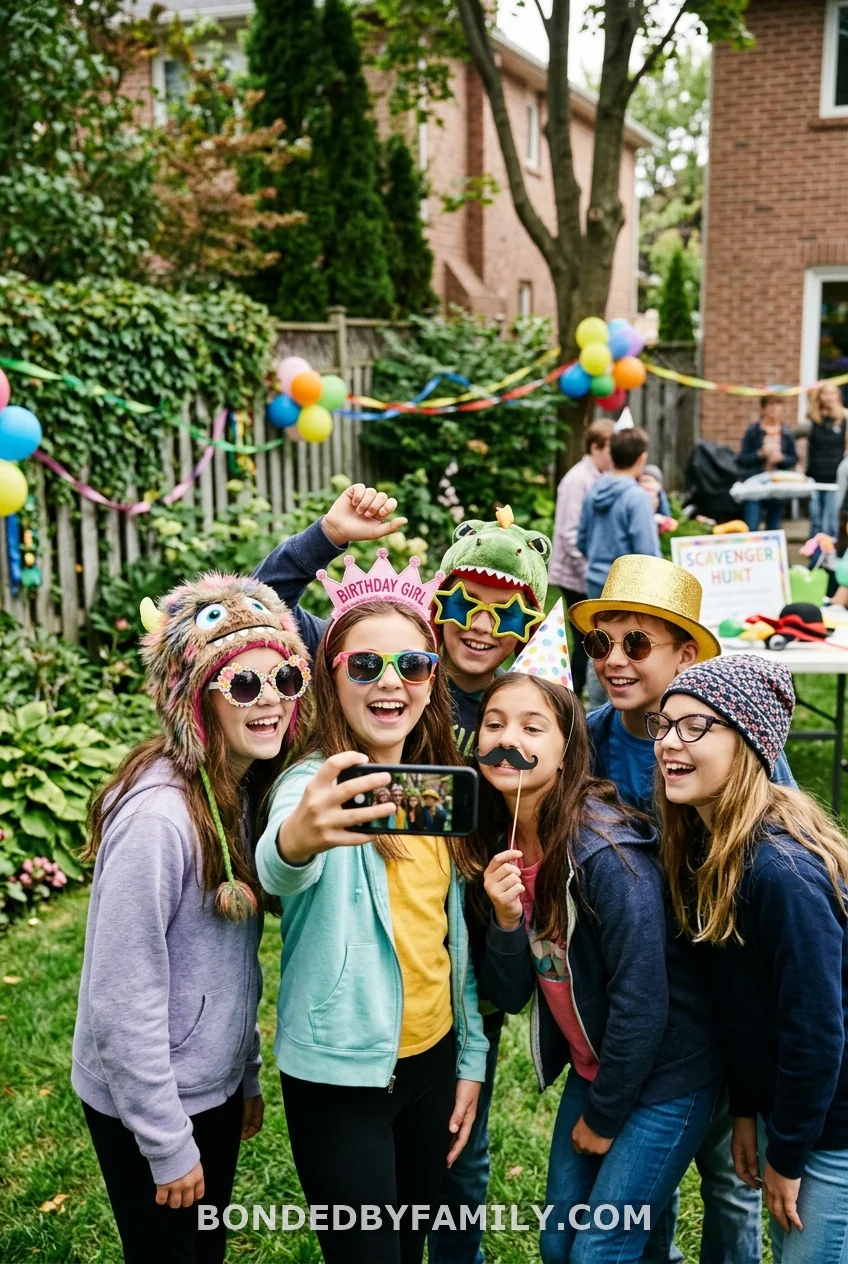
Tweens will cross their arms and say “this is lame” at literally anything — unless you frame it as a competition with real stakes (snack prizes count as real stakes). These games work for mixed-age parties too, where you’ve got a range from age 6 to 13.
20. Photo Scavenger Hunt
Create a list of 15–20 photo challenges: “whole team jumping at the same time,” “someone making a face like they just ate a lemon,” “a selfie with a stranger’s pet.” Give each team a phone or a disposable camera. Set a 30-minute timer. The team with the most completed challenges wins. Works at parks, malls, and backyards. Cost: free if the kids have phones.
21. Name That Song
Play five-second clips of popular songs. Teams huddle and write their answer. First team to shout the correct song name gets the point, or you can do it quiz-show style with written answers to avoid screaming matches. Use a Spotify playlist and a Bluetooth speaker. Twenty rounds takes about 15 minutes.
22. Emoji Charades
Write emoji combinations on slips of paper (skull + laughing face = dying of laughter; heart + broken = heartbreak). One player acts out the emoji while their team guesses. It’s charades updated for this generation — and tweens laugh instead of groan.
23. Human Knot
Everyone stands in a circle, reaches across, and grabs two different hands. The group then tries to untangle into a circle without letting go. It’s a team-building exercise disguised as a party game, and it takes 5–10 minutes per round. Groups of 8–12 work best. Larger groups should split into two knots.
24. Laser Tag / NERF Battle
A 4-pack of NERF guns runs $20–$30. Set up barriers with cardboard boxes and overturned tables. Establish two bases. Play capture the flag or team elimination. Twenty minutes of running, dodging, and shrieking. This is the one game where I’ve never once heard a kid complain.
For a more structured option, portable laser tag sets ($30–$45 for a 4-player set) keep score automatically and work indoors.
The Birthday Party Game That Backfired (A Cautionary Tale)
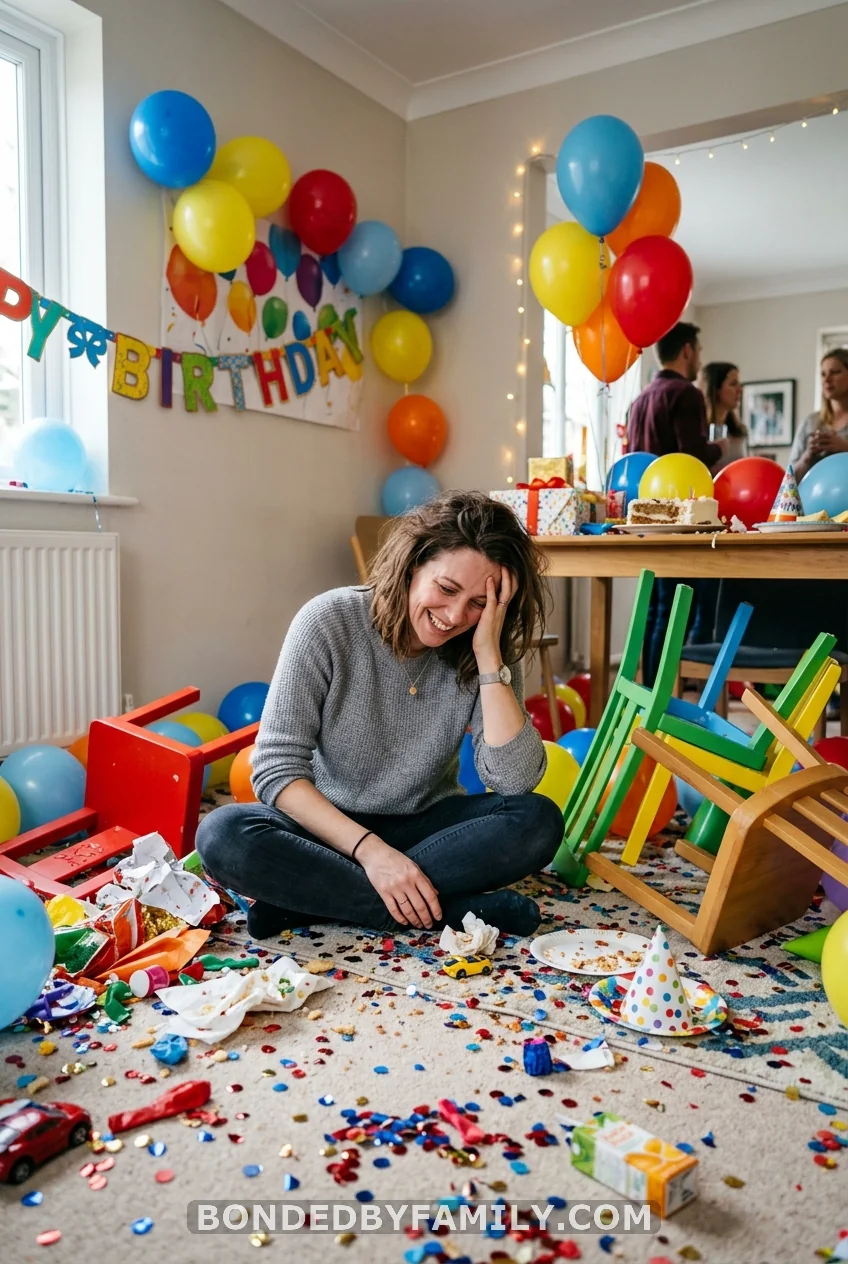
Let me tell you about the time I decided to get creative at my daughter’s seventh birthday.
I found a game online called “Flour Mountain.” The idea was to pack flour tightly into a bowl, flip it upside down onto a plate to form a dome, and place a gummy bear on top. Kids would take turns slicing away sections of the flour dome with a butter knife. Whoever’s slice caused the gummy bear to fall had to retrieve it with their teeth — face-first into the flour.
Sounds hilarious on paper. In practice, I had 11 seven-year-olds coughing, crying, and covered in flour within four minutes. One kid inhaled flour up his nose and had a sneezing fit that lasted ten minutes. Another decided to smash the flour mountain with both hands because he didn’t want to wait for his turn. My kitchen looked like a construction site.
The lesson: test any game before the party. If a game involves loose powder, liquid, or anything breakable, run a trial with your own kid first. And always have a towel station near the game area. Always.
Games That Work When Ages Are All Over the Map
25. Limbo
Two adults hold a broomstick. Kids line up and lean backward to pass underneath. Lower the stick each round. Everyone from age 3 to age 13 can play this. The little ones have a natural advantage because they’re short, which levels the field. Play some upbeat music. An inflatable limbo set ($10 on Amazon) saves you from needing two adults on permanent stick duty.
26. Treasure Dig
Fill a plastic kiddie pool with kinetic sand or plain rice. Bury small toys, coins, and candy inside. Hand each kid a spoon and give them two minutes to dig. This works for every age — toddlers love the sensory experience, and older kids get competitive about finding the most loot. Cost: $10–$15 for rice and prizes.
27. Red Light, Green Light
No supplies. No cost. Works for ages 3 through 12. One person stands at the far end and calls out “green light” (everyone runs toward them) and “red light” (everyone freezes). Anyone caught moving on red goes back to the start. First person to tag the caller wins and becomes the new caller.
28. Pin the Tail (Customized)
Forget the donkey. Match the game to your party theme. Pin the wand on the fairy. Pin the helmet on the astronaut. Pin the nose on the superhero. Print a large poster, blindfold each kid, spin them twice, and let them stick. A homemade version costs about $2 in printer paper and tape. A pre-made themed kit runs $8–$12 on Amazon.
29. Dance-Off Battle
Split kids into two groups. Each group picks a representative for each round. Play a 30-second song clip. Both dancers freestyle. The audience votes by cheering. Winner stays. Loser tags in the next teammate. Last team standing wins. Works indoors with a cleared living room or outdoors on a patio. No cost, high energy, and the performances alone are worth recording.
How to Plan Your Game Lineup (The 2-Hour Party Formula)
You don’t need 29 games at one party. You need four or five, chosen with intention. Here’s a lineup that fills two hours without a dead minute:
0:00–0:15 — Free play while guests arrive (bubble station, coloring table, or background music with a dance area)
0:15–0:30 — Warm-up game: Freeze Dance or Musical Statues (burns energy, requires zero explanation)
0:30–0:50 — Main event: Scavenger Hunt, Escape Room, or Obstacle Course (the game with the most setup)
0:50–1:10 — Food and cake break
1:10–1:30 — High-energy game: Balloon Stomp, Sack Race, or NERF Battle
1:30–1:45 — Sit-down game: Pass the Parcel, Candy Bar Dice, or Saran Wrap Ball
1:45–2:00 — Goody bags and goodbye
That formula has never failed me. It alternates energy levels, gives kids a food break in the middle, and ends with a calm seated game so parents aren’t picking up a wired child at the door.
FAQ
What are the best birthday party games for a mixed-age group?
Limbo, Red Light Green Light, and the Dance-Off Battle work across ages 3–13 without modification. Younger kids have a natural height or energy advantage in these games, which keeps the field competitive without needing to split groups. Scavenger hunts also work well if you pair younger kids with an older “buddy.”
How many games should I plan for a 2-hour birthday party?
Four to five games fill two hours comfortably when you include a 20-minute food break. Plan one warm-up game, one longer main event, one high-energy game, and one sit-down game. Have a backup ready in case a game falls flat or finishes faster than expected.
What birthday party games can I set up with no budget?
Freeze Dance, Duck Duck Goose, Simon Says, Red Light Green Light, the Human Knot, and Sack Races (using pillowcases) cost nothing. Musical Statues, Charades, and the Dance-Off Battle also require zero supplies. You can run an entire party on free games — the entertainment value comes from structure and enthusiasm, not equipment.
How do I keep kids engaged if a game isn’t working?
Cut it short. Don’t drag a flat game out hoping it’ll pick up. If the energy drops, pivot to a high-movement game like Balloon Stomp or a quick round of Freeze Dance. Kids have a 10-minute attention span for any single activity, so having a backup game ready is the most important thing you can do as a party host.
What’s the best birthday party game for kids who are shy?
Pass the Parcel is the safest choice because the child never performs solo — they just unwrap a layer when it’s their turn. Treasure Dig and Bean Bag Toss also work because kids participate at their own pace without being watched by the whole group. Avoid games where one child is the center of attention (like charades or dance-offs) unless the child volunteers.