Carnival games for kids sound fun until you’re the one Googling at midnight, drowning in Pinterest boards, wondering how you volunteered to run the entire spring fling booth by yourself. Thirty kids. Two hours. A budget that barely covers a bag of balloons.
I’ve been there – clipboard in hand, half a plan scribbled on a napkin, a trunk full of dollar store bags. And after running carnivals for school fundraisers, backyard birthday parties, and our church fall festival for the last six years, I’ve figured out which carnival games for kids keep the lines moving, which ones flop, and which ones eat your entire budget before you even hang the first streamer.
These 27 games work. They cost almost nothing. Most take under ten minutes to set up. And your kids will remember them way longer than they’ll remember the store-bought bouncy house.
1. Bean Bag Toss
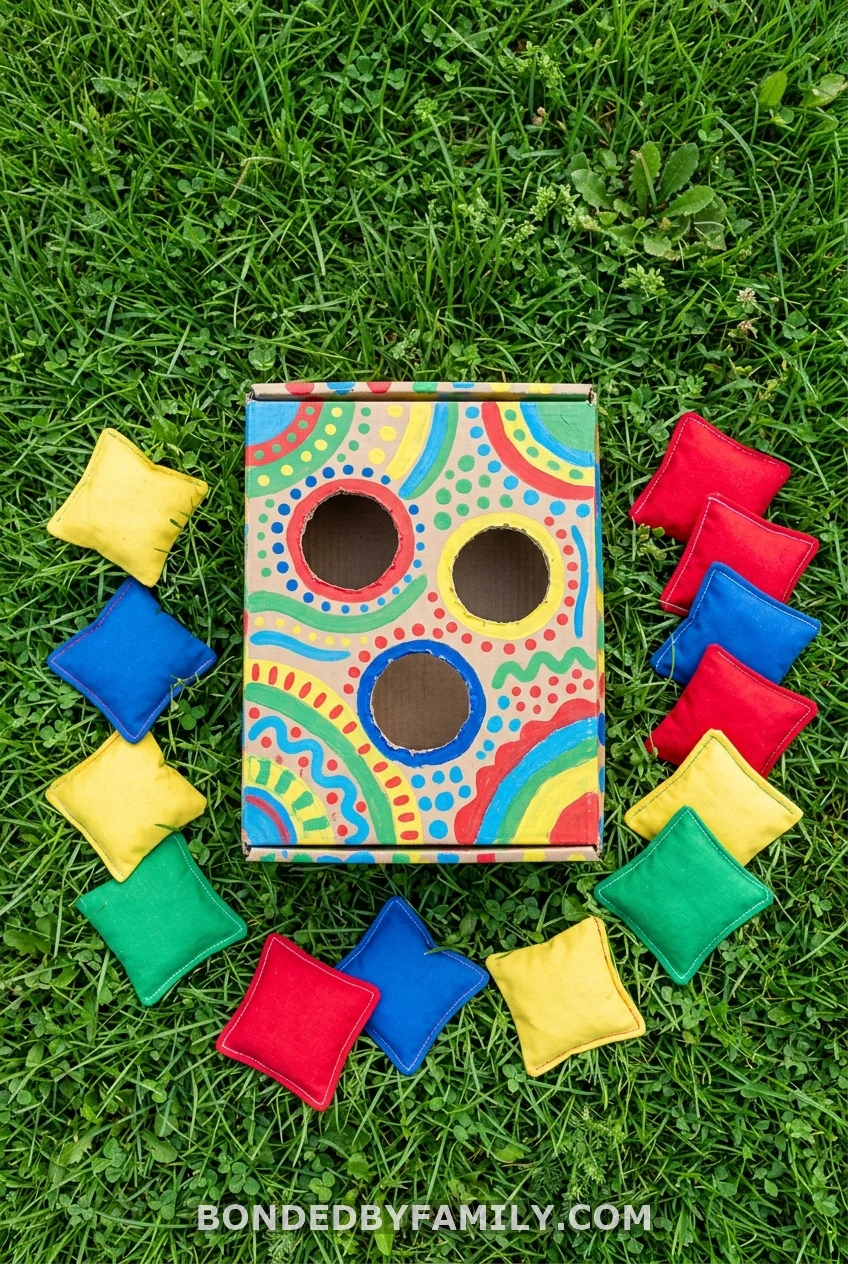
Grab a cardboard box from your recycling bin. Cut three holes — one large, one medium, one small. Paint the box in bold red and yellow stripes, or wrap it in leftover wrapping paper if paint feels like too much commitment.
Assign point values to each hole. The biggest opening gets 5 points. The smallest gets 25. Kids light up when you add a competitive scoring angle, and the parent running the booth doesn’t have to do much besides hand over bean bags and keep track.
Cost: about $2 for a pack of bean bags from the dollar store. The box is free.
2. Duck Pond
Fill a kiddie pool with water. Toss in a dozen rubber ducks. Number the bottoms with a Sharpie. Kids pick a duck, flip it over, and win whatever prize matches that number. Under $4 for the ducks, and the pool does double duty all summer.
3. DIY Ring Toss
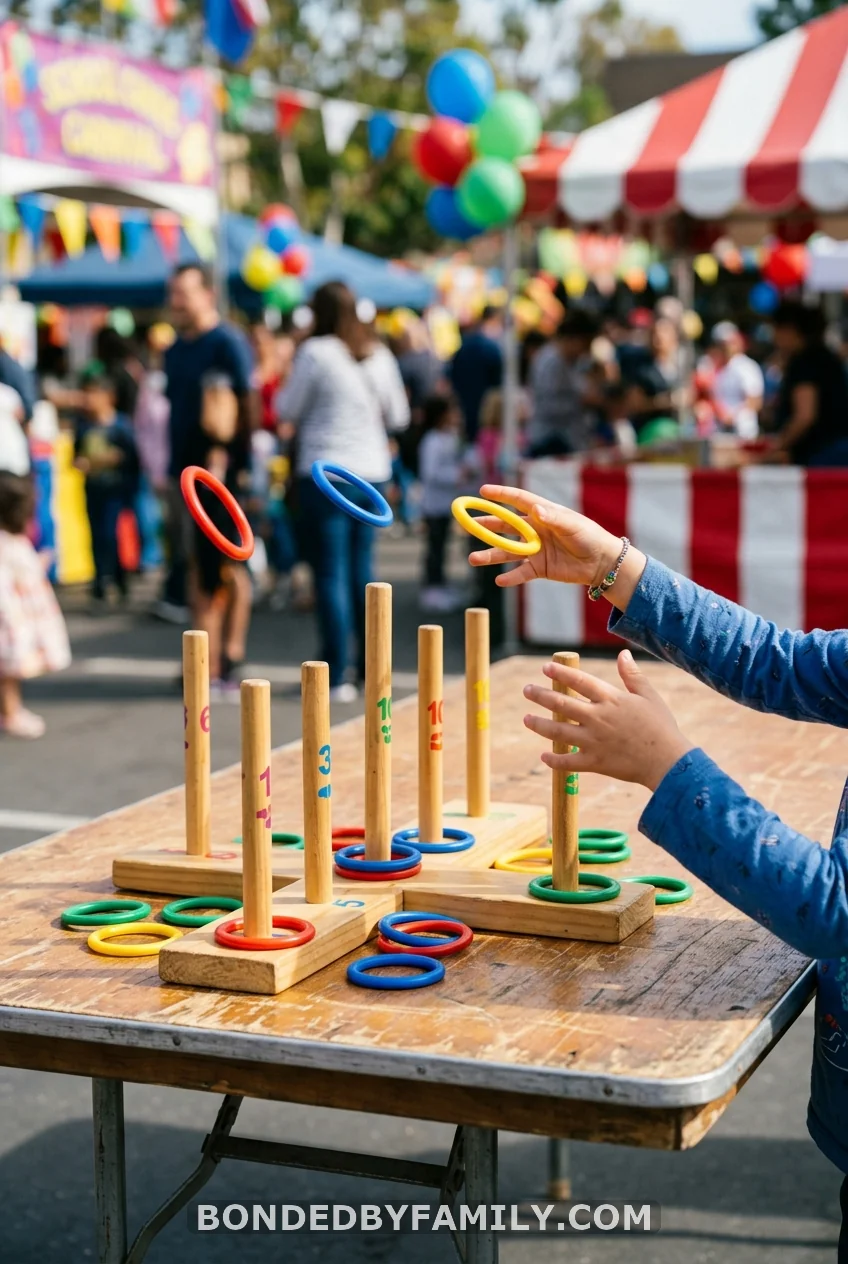
Ring toss is the carnival game every kid expects to see. It’s also the one that most organizers mess up — rings too stiff, posts too close together, or the whole thing topples after three throws. Here’s how to build one that holds up for a full afternoon of play.
What You Need
- One 18 × 12-inch wood base board (a scrap shelf or cutting board works)
- Five wooden dowels, each 3/4-inch diameter, cut to different heights: 4 inches, 6 inches, 8 inches, 10 inches, and 12 inches
- Wood glue and a drill with a 3/4-inch bit
- 12 plastic rings (pool dive rings from Dollar Tree work well) or cut the centers out of paper plates
- Spray paint in 2-3 carnival colors
- Sandpaper (120 grit)
Step-by-Step Build
- Sand the board smooth on all edges. Kids lean on these things, and splinters end the fun fast.
- Mark five spots on the board in a staggered pattern — not a straight line. Spacing should be at least 3.5 inches between dowels so rings can land without jamming against each other.
- Drill 3/4-inch holes about 1/2-inch deep at each mark.
- Glue the dowels into the holes. Let them dry for at least two hours. Overnight is better.
- Spray paint the whole thing. One coat of white primer first, then a bold color for the base and alternating colors on each dowel. Red, yellow, and blue look classic.
- Once dry, assign point values. Shortest dowel = most points (it’s the hardest to ring). Write the numbers directly on each dowel with a paint pen.
Why the Heights Matter
Same-height dowels turn ring toss into pure luck. Variable heights create tiers of difficulty. The tall 12-inch dowel is a freebie — rings slide right down. The short 4-inch peg demands a nearly flat throw. That difficulty range keeps older kids challenged while giving the little ones a win.
Cost Reality
If you own a drill and have scrap wood: about $3 for dowels and rings. Starting from zero: roughly $8–12 depending on what paint you already have. Compare that to a $25–35 premade ring toss set on Amazon that wobbles after one event.
Common Mistakes to Avoid
Spacing the dowels too tight is the number one problem. You’ll watch ring after ring bounce off two pegs at once and skitter across the table. Give each dowel breathing room. Second mistake: using rigid wooden rings. They bounce off hard surfaces like they’re spring-loaded. Soft plastic or foam rings grip better and land more often, which keeps the line from getting frustrated.
Pro Move
Set the game on a slight downward slope by shimming the back of the table up half an inch. Rings that miss the dowels will slide back toward the player instead of flying off the far edge. Saves you from chasing rings across the playground.
4. Balloon Pop Dart Throw
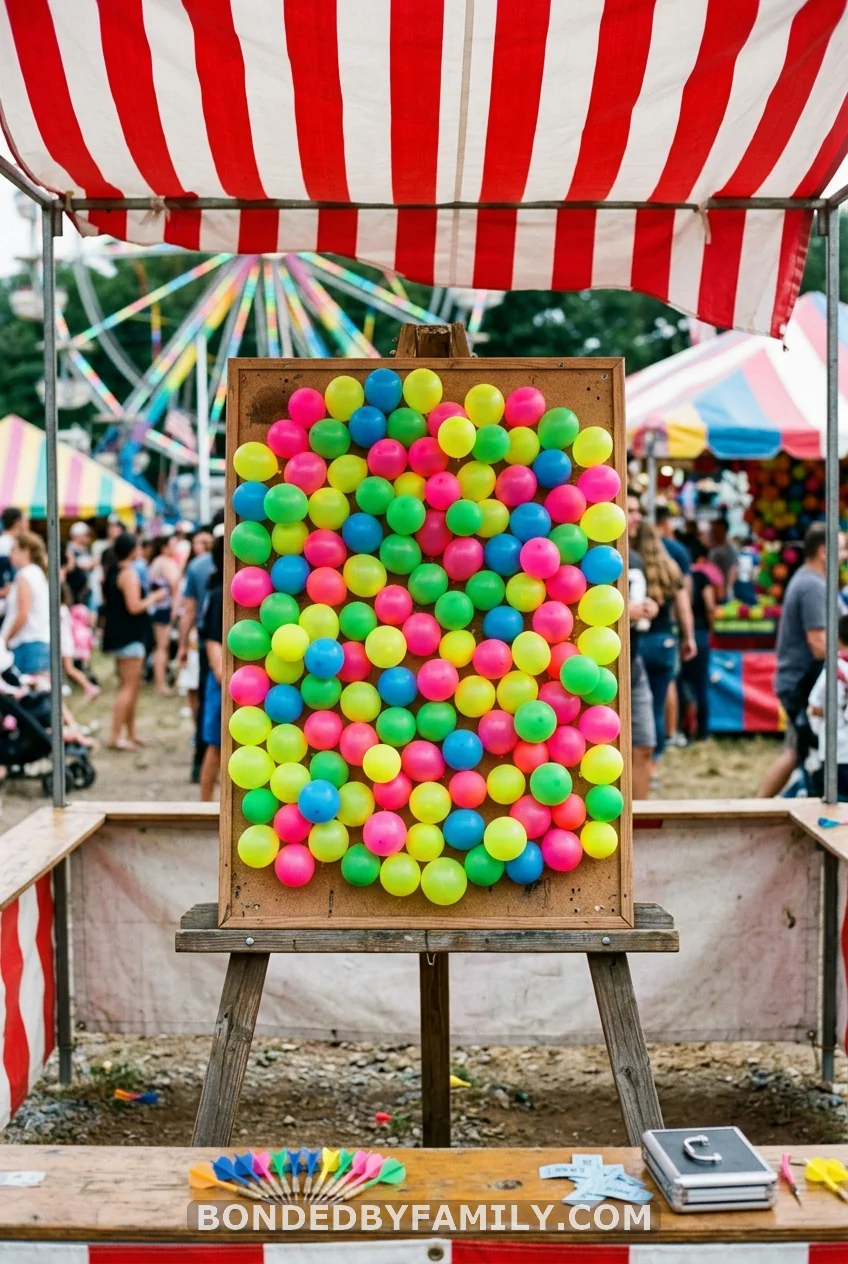
Pin inflated balloons to a large corkboard or foam insulation board using thumbtacks. Hand kids soft-tip darts or let them throw sharpened pencils if the crowd is older. Every popped balloon wins something.
Skip real metal darts for anyone under ten. Bean bags thrown at tack-pinned balloons work just as well and nobody ends up in the first aid tent.
5. Prize Punch Board
This one gets the biggest reaction at every carnival I’ve ever helped run. Kids punch through tissue paper to grab a hidden prize, and the suspense is unmatched.
You need a tri-fold foam display board, plastic cups, tissue paper, rubber bands, and a hot glue gun. Glue the cups to the board in rows, fill each one with a small prize — bouncy balls, candy, stickers, temporary tattoos — then cover each cup with two layers of tissue paper secured by a rubber band.
Decorate the board to match your theme. Circus stripes. Neon splatter. Superhero colors. Whatever fits.
Kids pick a cup and punch their fist through the tissue. The satisfying rip sound alone is worth the setup effort. One board holds 20–30 prizes and takes about 45 minutes to assemble.
Total cost: $3–5 if you buy cups and tissue at the dollar store.
6. Can Knock Down
Stack six tin cans in a pyramid on a table. Hand the kid a tennis ball. Three throws. That’s it. Zero prep beyond saving cans from your recycling bin for a week.
7. Cake Walk
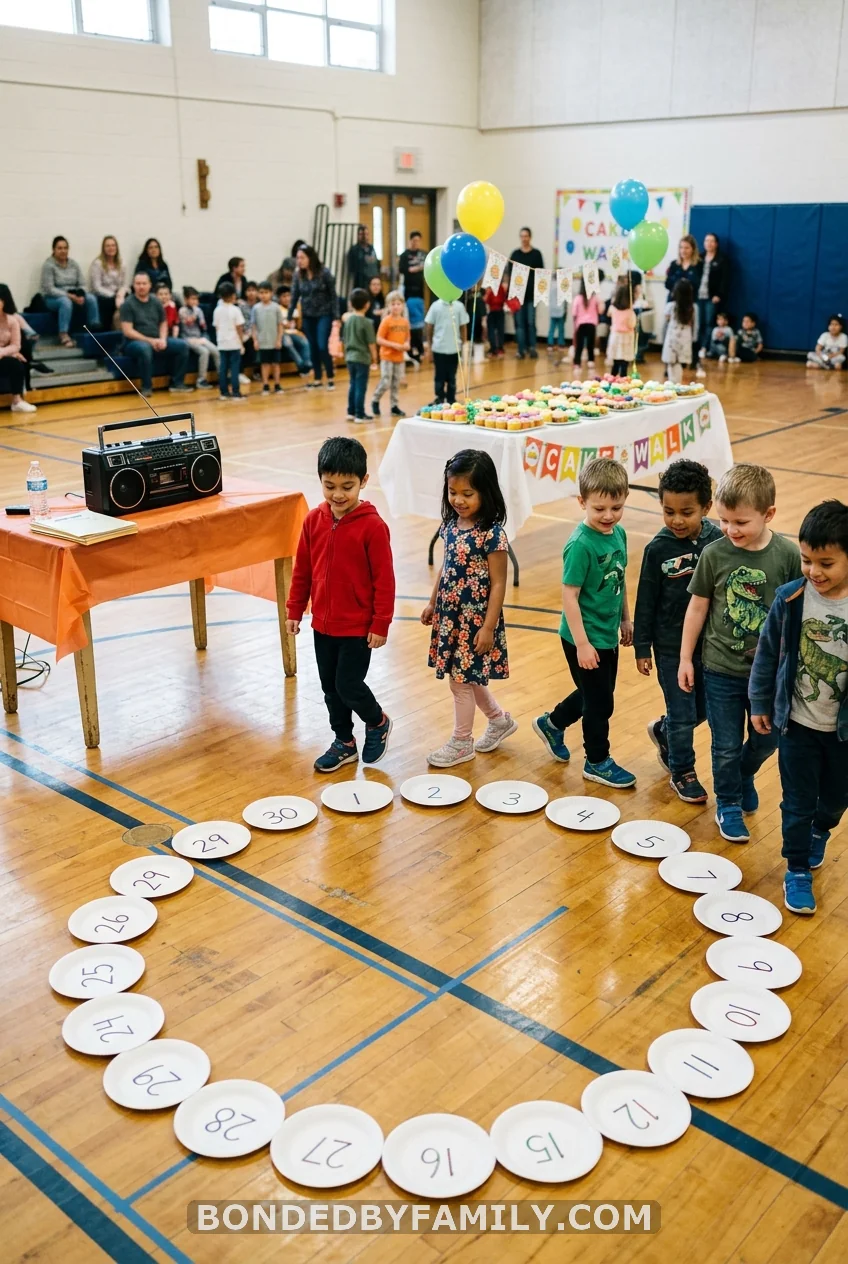
Tape numbered paper plates in a circle on the floor — twelve plates works well. Write matching numbers on slips of paper and drop them in a jar. Play music. Kids walk the circle. Music stops. Pull a number. Whoever stands on that number wins a cupcake or small treat.
The beauty of cake walk is its pacing. Each round takes about 90 seconds, so the line moves fast and nobody waits long. It’s also the quietest game at a loud carnival, which gives overwhelmed toddlers a gentler activity to join.
Ask parents to donate the cupcakes. That brings your cost to approximately $1 for paper plates and tape.
8. Guessing Jar
Fill a clear jar with jelly beans, marbles, or small erasers. Kids write their guess on a slip of paper. Closest guess wins the jar. Cost: one dollar store jar and whatever filler you choose.
9. Fishing for Prizes
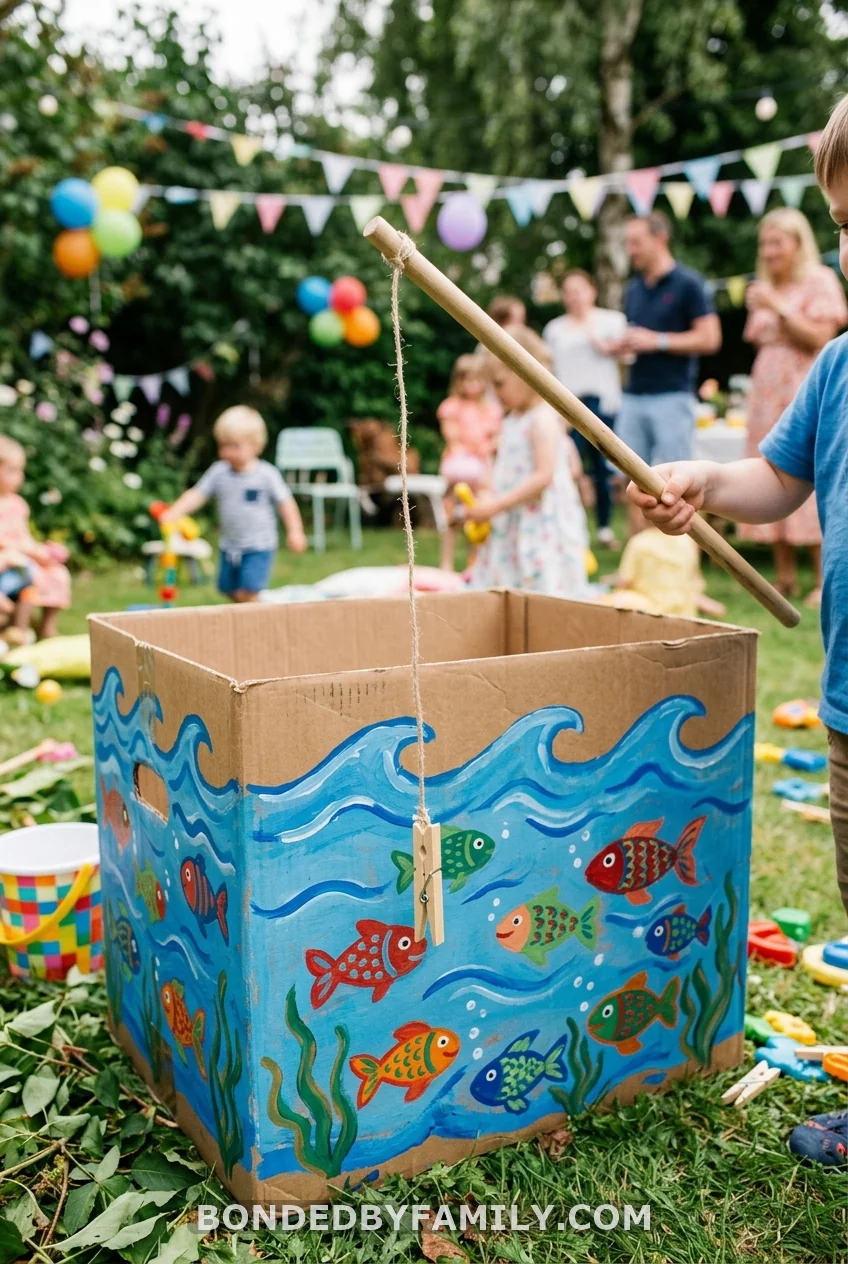
Set up a large cardboard box or drape a sheet between two chairs to create a barrier. One adult hides behind it. Kids cast a fishing pole — a dowel rod with string and a clothespin — over the barrier. The hidden helper clips a small prize to the line and gives a gentle tug.
Every child catches something. No skill required. That’s what makes it a hero game for the preschool crowd. The “magic” of feeling a tug on the line produces genuine squeals every single time.
Materials run about $2: a dowel, string, and clothespin. You probably own all three already.
10. Lollipop Tree
Poke lollipops into a foam block or upside-down colander. Mark the bottom of some sticks with a colored dot. Kids who pull a marked lollipop win an extra prize. Everyone else still gets the lollipop. No losers at this booth.
11. Soda Pop Ring Toss
Line up 2-liter bottles filled partway with water or sand. Toss rings over the bottle necks. If a ring lands, you win that bottle. Parents love this one because the prizes are the supplies — nothing extra to buy.
12. Water Blaster Target Shoot
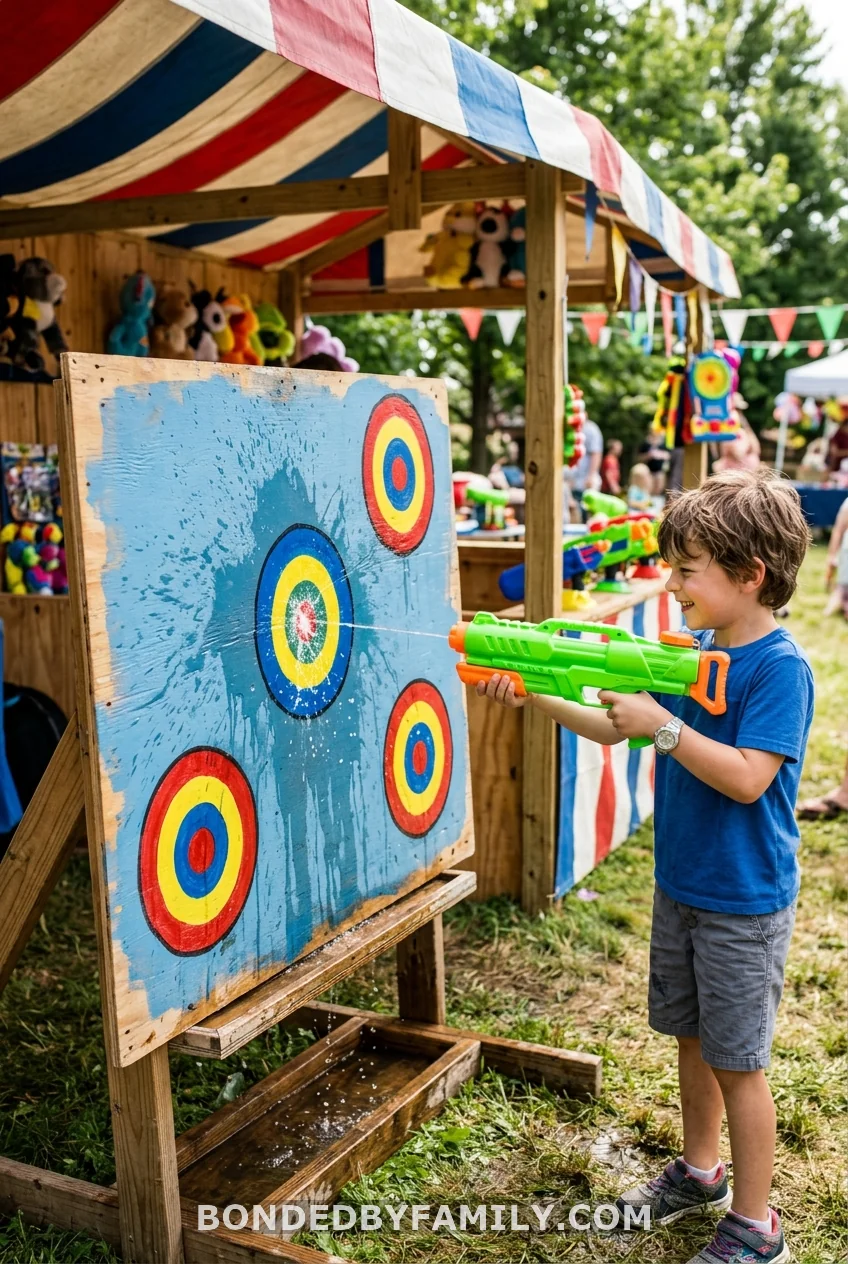
Paint bullseye targets on a piece of plywood or thick cardboard. Set them up about six feet from a throwing line. Hand kids water blasters and let them fire away. It’s loud, it’s wet, and on a hot day it’s the longest line at the entire carnival.
For a twist, balance ping pong balls on top of traffic cones and have kids knock them off with the water stream. The balls dance around before they fall, which adds a layer of difficulty that older kids love.
Budget: $4–5 for a two-pack of water blasters. Paint and board from your garage.
13. Spin the Wheel
Build a prize wheel from a round piece of plywood or a large pizza box mounted on a lazy Susan. Divide it into sections with different prizes or point values. Add a stationary pointer at the top made from a paint stir stick.
The satisfying click-click-click of a spinning wheel draws kids from across the field. If you want sound effects without buying a clicker mechanism, hot glue a row of clothespins around the outer edge of the wheel and let a fixed tab drag across them as it spins.
Label sections with prizes: “Winner — Pick a Toy,” “Try Again,” “Free Candy,” and one “Jackpot” section that earns a bigger prize. Weight the wheel so Jackpot is the narrowest section.
A pizza-box version costs under $3. A plywood version runs about $8–10 in materials and lasts for years.
14. Potato Sack Race
Pillowcases. Starting line. Finish line. Go. The entire setup takes 30 seconds and the chaos alone is worth filming.
15. DIY Photo Booth
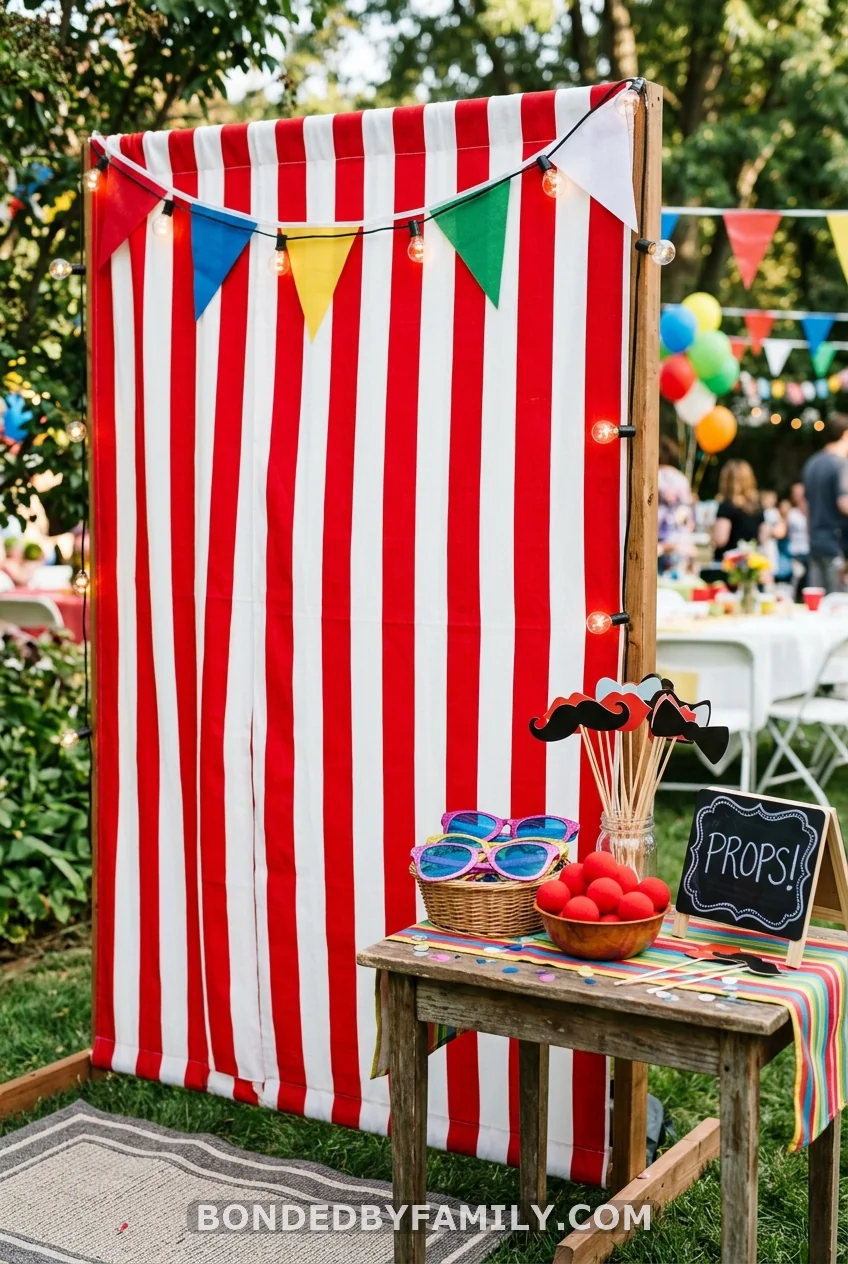
Hang a red-and-white-striped tablecloth as a backdrop. Set out props on a table — oversized sunglasses, feather boas, foam noses, funny hats. Print a hashtag sign if the parents want to share photos online.
Photo booths don’t require a booth runner, which frees up a volunteer. Parents snap their own photos and move on. Meanwhile, you’ve created a spot that generates Pinterest-worthy content for the school’s social media without any extra effort.
Prop haul from Dollar Tree: about $5 for a solid collection.
16. Clothespin Drop
Set a wide-mouth mason jar on the floor. Hand the kid five clothespins. They stand directly over the jar, hold each clothespin at nose height, and drop. Gravity does the rest — sort of. The pins spin and bounce in wild directions. Harder than it looks.
Two mason jars and a bag of clothespins: $2.
17. Temporary Tattoo Station
Lay out a binder of temporary tattoos. Kids pick one, an adult applies it with a damp sponge, and the line moves in about 15 seconds per child. Packs of 100+ tattoos cost $3–4 online. Fastest throughput of any carnival booth.
18. The Milk Bottle Disaster (Learn From My Mistake)
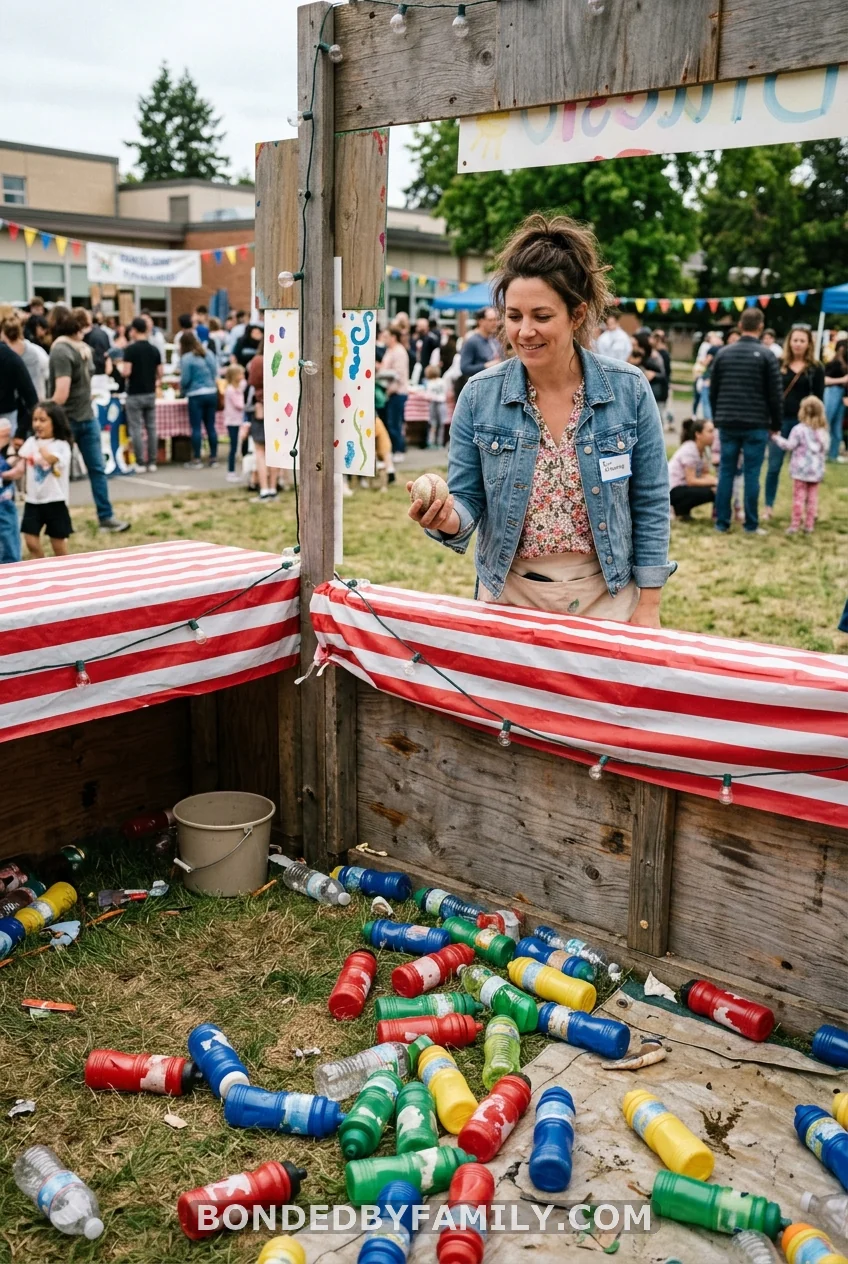
Let me tell you about the year I thought real glass bottles would make our carnival feel “authentic.”
I collected a dozen old-fashioned milk bottles from a thrift store. Spray painted them white. Stacked them in a gorgeous pyramid on a folding table in the school gym. They looked sharp. Then a seven-year-old named Marcus launched a baseball at them like he was trying out for the majors.
Glass shattered across the gym floor. One bottle ricocheted under the cake walk circle. A dad stepped on a shard. The rest of the carnival got paused for twenty minutes while we swept.
The lesson: never use glass for carnival knockdown games. Not even if they look charming. Not even if you found them for fifty cents each. Use empty aluminum cans, plastic bottles weighted with a little sand, or stack plastic cups. They bounce, they dent, they do not send anyone to urgent care.
And if you do use cans or bottles, put the game station on the ground — not a table. Projectiles that miss the target sail a lot farther from table height. Ground-level setup with a cardboard backstop keeps errant throws contained and your liability worries low.
19. Scavenger Hunt
Print small images of carnival-themed items — a clown, a cotton candy, a ferris wheel, a lion. Hide them around the carnival area. Hand each kid a checklist. First one to find all of them wins a prize.
Scavenger hunts require zero supervision once launched. Kids roam freely, parents follow, and the game runs itself while you manage the fixed booths. It also gets families moving to parts of the carnival they might otherwise skip.
Print cost: about 50 cents at a library printer. Free if you have a home printer and colored ink.
20. Parachute Games
Borrow a play parachute from the school PE closet. Toss lightweight balls on top. Kids grab the edges and shake. The balls go everywhere. Laughter erupts. Repeat.
Parachute play works for every age from toddler to fifth grade, and it fills big chunks of time with zero material cost since schools almost always own one.
21. Face Painting Station
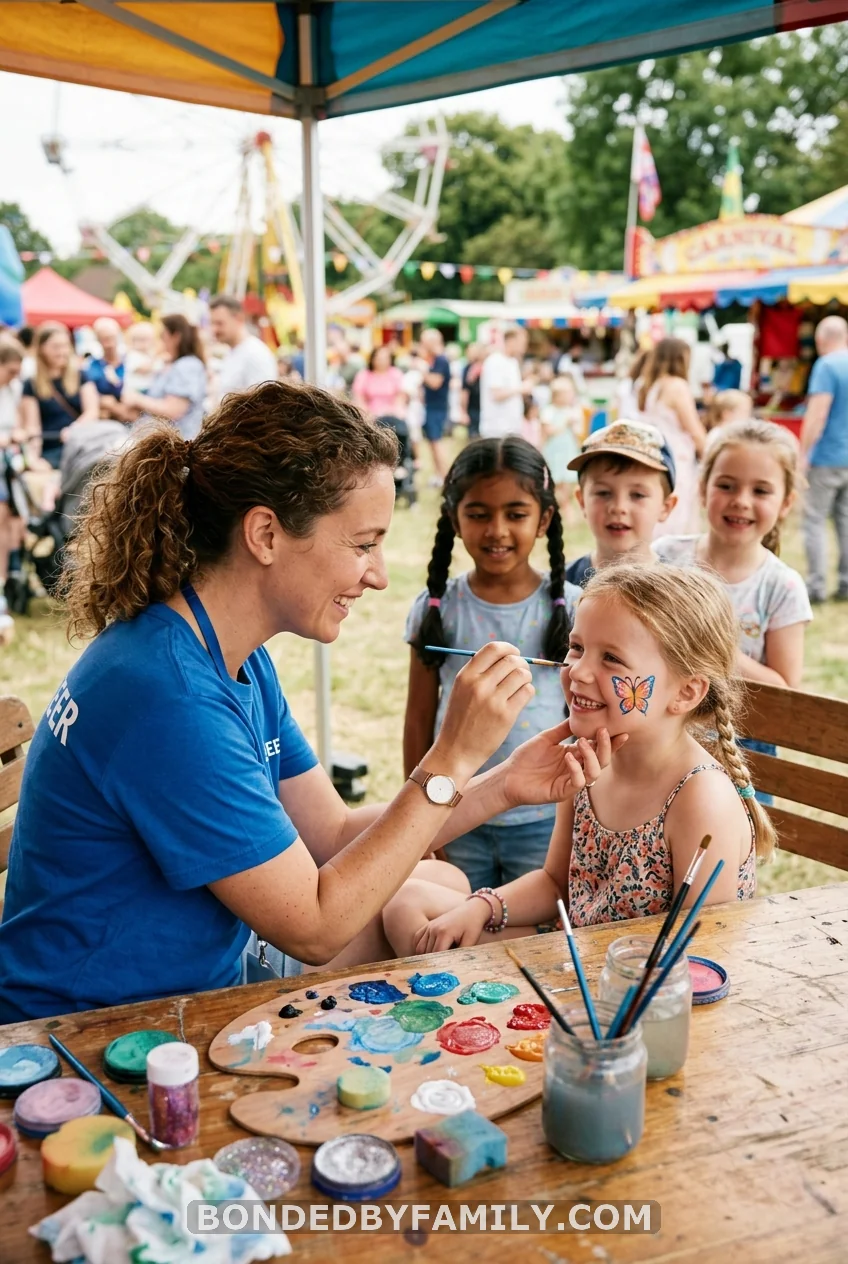
A basic face paint palette and a handful of brushes will keep this booth packed all day. Stick to three or four designs — butterfly, spider, rainbow, and a paw print — so you can move through the line without bottlenecking.
Non-toxic, water-based face paint is the only kind to use. Avoid craft paint, acrylic paint, or anything not labeled for skin contact. Snazaroo and Mehron are two brands that wash off with soap and water and don’t irritate sensitive skin.
Keep a laminated “menu” of designs at the front of the line so kids can decide before they sit down. This one trick cut our wait time in half.
22. Miniature Golf
Wrap a long cardboard box in colorful paper. Cut a few arch-shaped openings at the base — small, medium, large. Hand kids a pool noodle and a tennis ball. Putt through the arches for points.
Level it up by building a short ramp or adding a cardboard tunnel section. Two or three “holes” along a hallway creates a mini course that feels way more elaborate than its $3 material cost.
23. Straw Draw
Cut paper straws into one-inch pieces. Roll tiny slips of paper inside some — marked with an “X.” Kids pick a straw segment. Find an X, win a prize. Whole setup costs about $1 and fits on a single table.
24. Penny Pitch
Scatter plates, bowls, and cups across a table. Kids toss pennies. Land one inside a container, win whatever is assigned to that size. The smaller the target, the bigger the prize.
25. Backyard Obstacle Course
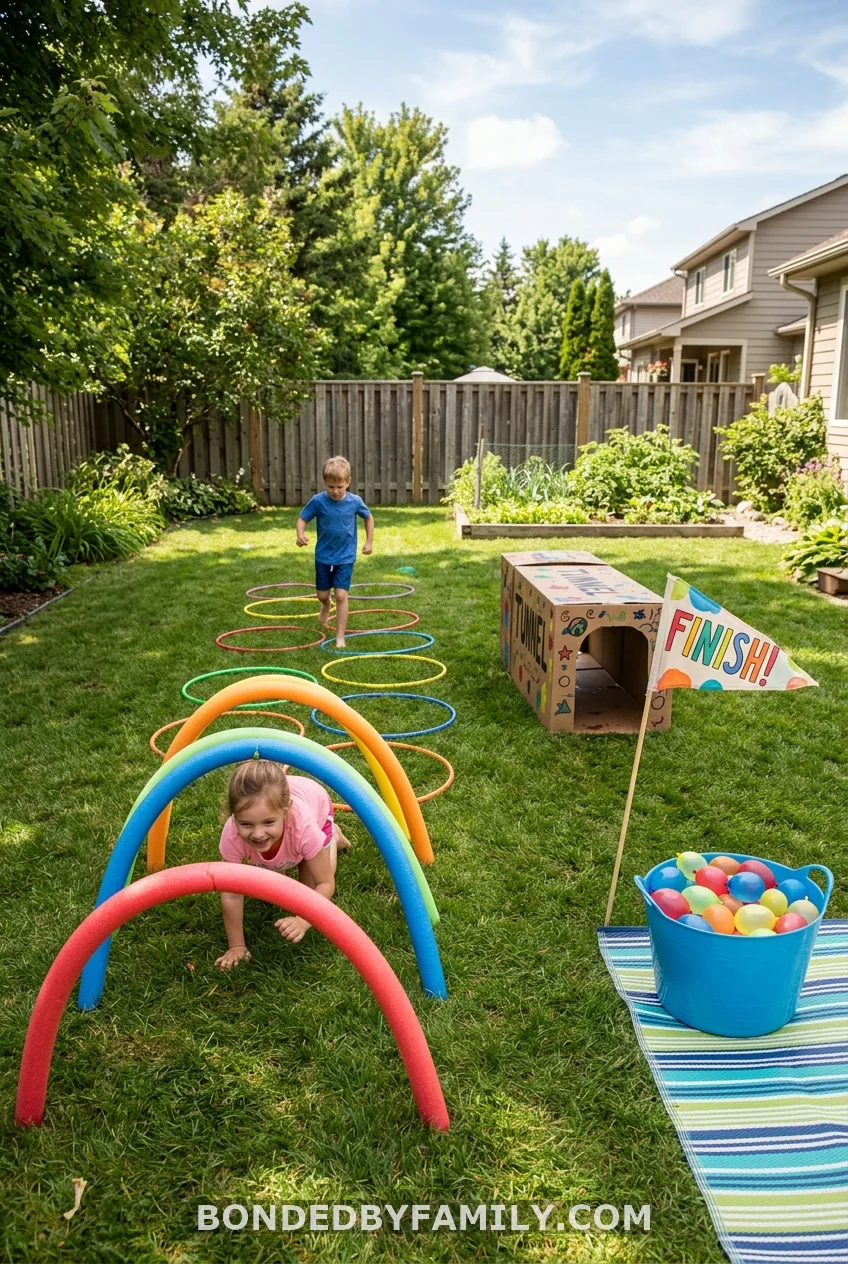
Combine pool noodle arches (bend a noodle and stake both ends in the ground), hula hoops laid flat for stepping stones, a crawl-through cardboard box tunnel, and a final challenge like tossing a ball into a bucket.
Time each kid with a phone stopwatch. Post the top three times on a whiteboard near the start. Nothing motivates a group of eight-year-olds like a public leaderboard.
The course doesn’t need to be long. Four to five stations over about 20 feet is plenty. Rotate the challenges every hour to keep repeat customers interested.
Materials: pool noodles ($1 each), hula hoops ($1 each), cardboard boxes (free), stopwatch (your phone). Total: around $4–6.
26. Slime Station
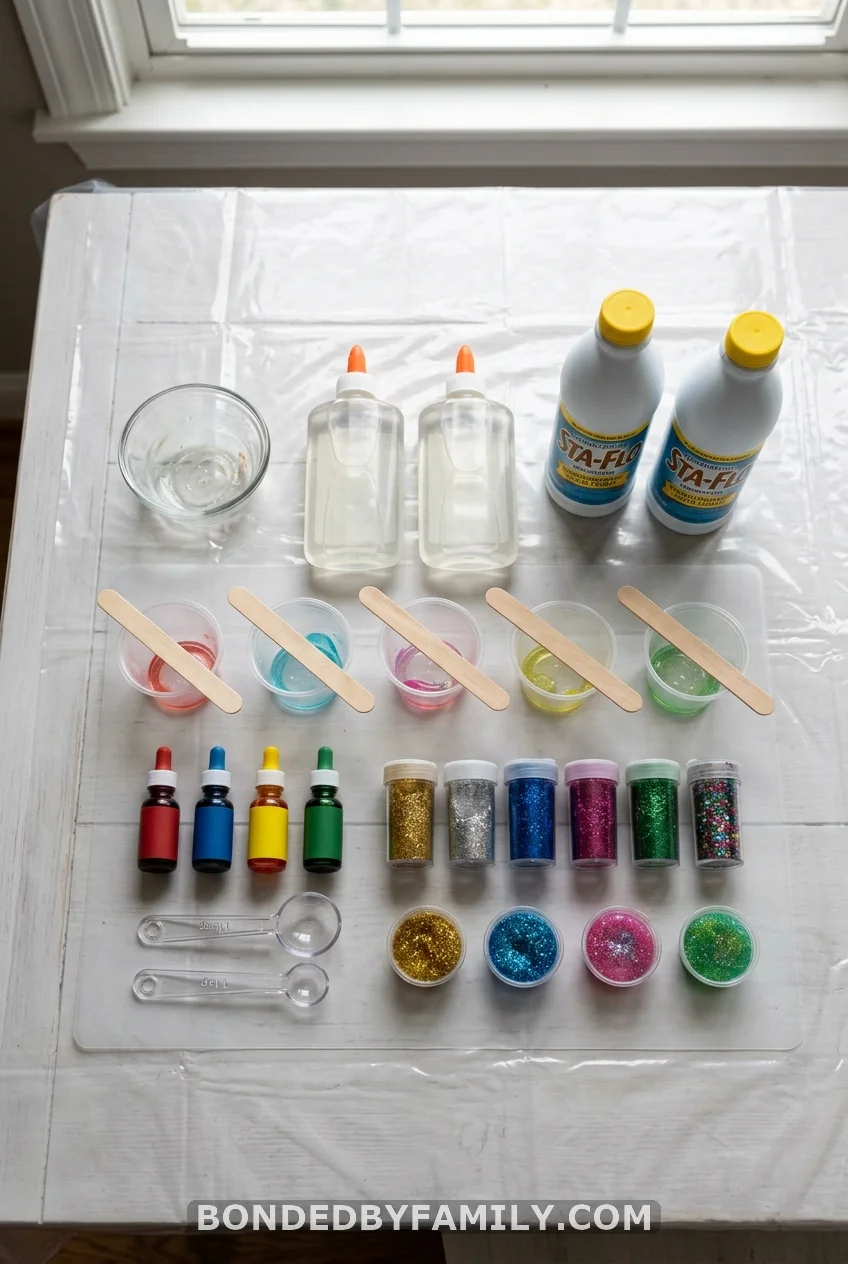
Slime is the game that didn’t exist at carnivals ten years ago and now pulls the longest line at ours. Kids don’t just want to play a game — they want to make something and take it home. A slime station delivers both.
Supplies for 30 Kids
- 4 bottles of clear or white school glue (Elmer’s, 7.6 oz each — about $1.25 per bottle at Walmart)
- 1 bottle of liquid starch (Sta-Flo, 64 oz — roughly $4, lasts for dozens of batches)
- Food coloring in 3–4 colors ($2–3 for a set)
- Glitter, sequins, or foam beads for mix-ins ($1–2 from Dollar Tree)
- 30 small plastic cups (one per kid, $1 for a 50-pack)
- 30 craft sticks for stirring ($1)
- Plastic tablecloth to protect the surface ($1)
- Small zip-lock bags for take-home ($1 for a box)
Total Cost: Roughly $12–15 for 30 kids — about 40–50 cents per child.
How to Run It
- Pre-pour glue into each cup (about 2 tablespoons per cup). Do this before the carnival opens. Pouring glue on the fly slows everything down and creates a sticky mess.
- Set out food coloring and mix-ins in the center of the table. Let kids add their own colors and glitter.
- Walk around with the liquid starch bottle. Add about 1 tablespoon of starch to each cup and tell the kid to stir. Then add another half tablespoon and stir again. The slime forms within 30 seconds of mixing.
- Once it holds together, drop the slime into a zip-lock bag. Label it with the kid’s name using a Sharpie.
Why This Works as a Carnival Game
Slime stations have a built-in wow factor. Kids watch liquid turn into a stretchy solid in their hands. They choose colors. They add sparkle. They feel ownership over the final product. Unlike most carnival games where the prize is handed to them, this one lets them create the prize. That emotional investment is why kids talk about the slime booth weeks later.
Common Mistakes
Using contact lens solution plus baking soda instead of liquid starch: it works at home, but the ratios are finicky and fail when you’re running 30 kids through in an hour. Liquid starch is far more forgiving at scale. Also, skip the fluffy shaving cream slime version for carnivals — it’s too messy, takes too long to mix, and deflates within hours.
The Catch
Slime is messier than any other game on this list. Lay down a plastic tablecloth. Have a roll of paper towels within arm’s reach. Station one volunteer at this booth permanently — you cannot leave it unattended or you’ll find glue on chairs, starch on shoes, and glitter in places glitter should never be.
Pro Move
Pre-make three sample slimes in different colors and display them in clear jars at the front of the line. Kids will crowd around the samples, decide what they want before they sit down, and the whole process speeds up by about 30%.
27. Hula Hoop Challenge
Lay hula hoops flat on the ground about three feet apart. Kids toss bean bags or small balls into them from behind a line. Or go classic: see who can keep a hula hoop spinning on their waist the longest. Both versions cost $1 per hoop and need zero explanation.
Quick Prize Strategy (So You Don’t Overspend)
Buy prizes in bulk from Oriental Trading or Dollar Tree. Divide them into three tiers: small (stickers, temporary tattoos, erasers — under 10 cents each), medium (bouncy balls, slap bracelets, mini notebooks — 25 cents each), and large (stuffed animals, glow sticks, candy bags — 50 cents to $1 each). Assign tiers to game difficulty so the hardest games offer the biggest payoff.
Budget about $15–20 in prizes for a 25-kid event. That sounds small because it is — most parents wildly over-buy prizes and end up hauling leftover bags of plastic toys home.
FAQ
How many carnival games do I need for a kids’ party?
Plan for one game per every four to five kids attending. A backyard birthday party with 15 kids runs smoothly with four or five games. A school carnival with 100 kids needs 15–20 booths to prevent long waits. Space the games far enough apart that lines don’t overlap and crowd each other.
What carnival games work best for toddlers?
Fishing for prizes, duck pond, and the lollipop tree are the strongest toddler picks. They require no throwing accuracy, no reading, and they guarantee a win every time. Toddlers melt down fast when they lose, so stack your youngest-kid zone with games where every child walks away with something.
How do I set up a carnival on a tight budget?
Raid your recycling bin first. Cardboard boxes, tin cans, plastic bottles, and old jars form the backbone of most games. Buy bean bags, rubber ducks, and small prizes at the dollar store. Ask parents to donate cupcakes for the cake walk and supplies for the slime station. A full 10-game carnival for 30 kids can run under $30 if you plan ahead and skip the pre-packaged game kits.
What are the best prizes for carnival games?
Kids gravitate toward candy, glow-in-the-dark items, slime, temporary tattoos, and anything they can wear (sunglasses, silly hats, slap bracelets). Avoid bulky prizes — they’re hard to carry and end up on the ground. Small, pocketable wins keep kids happy and keep your prize budget in check.
Can I run carnival games indoors?
Every game on this list works inside a gym, cafeteria, or large living room — except the water blaster. Swap that for a nerf target shoot and you’re set. Tape down tarps under the slime station if you’re on carpet, and use lightweight foam balls instead of tennis balls for any throwing game near windows.