You’ve got 15 kids hopped up on Peeps, a backyard that’s too muddy for an egg hunt, and exactly 47 minutes before the relatives arrive.
Sound familiar? That’s why you’re here. You need games that actually work when you’re juggling plastic eggs, chocolate bunnies, and at least three separate meltdowns. Not some Pinterest fantasy that requires a master’s degree in party planning.
I’ve been running Easter gatherings for my nieces and nephews for eight years now. Ages 2 to 12. Indoors when it rains, outdoors when it doesn’t, and once—memorably—in my sister’s garage when both happened at the same time. These 21 games? They’re the ones that worked when nothing else did.
Let’s get to it.
Classic Games That Never Let You Down
1. Egg and Spoon Relay Race
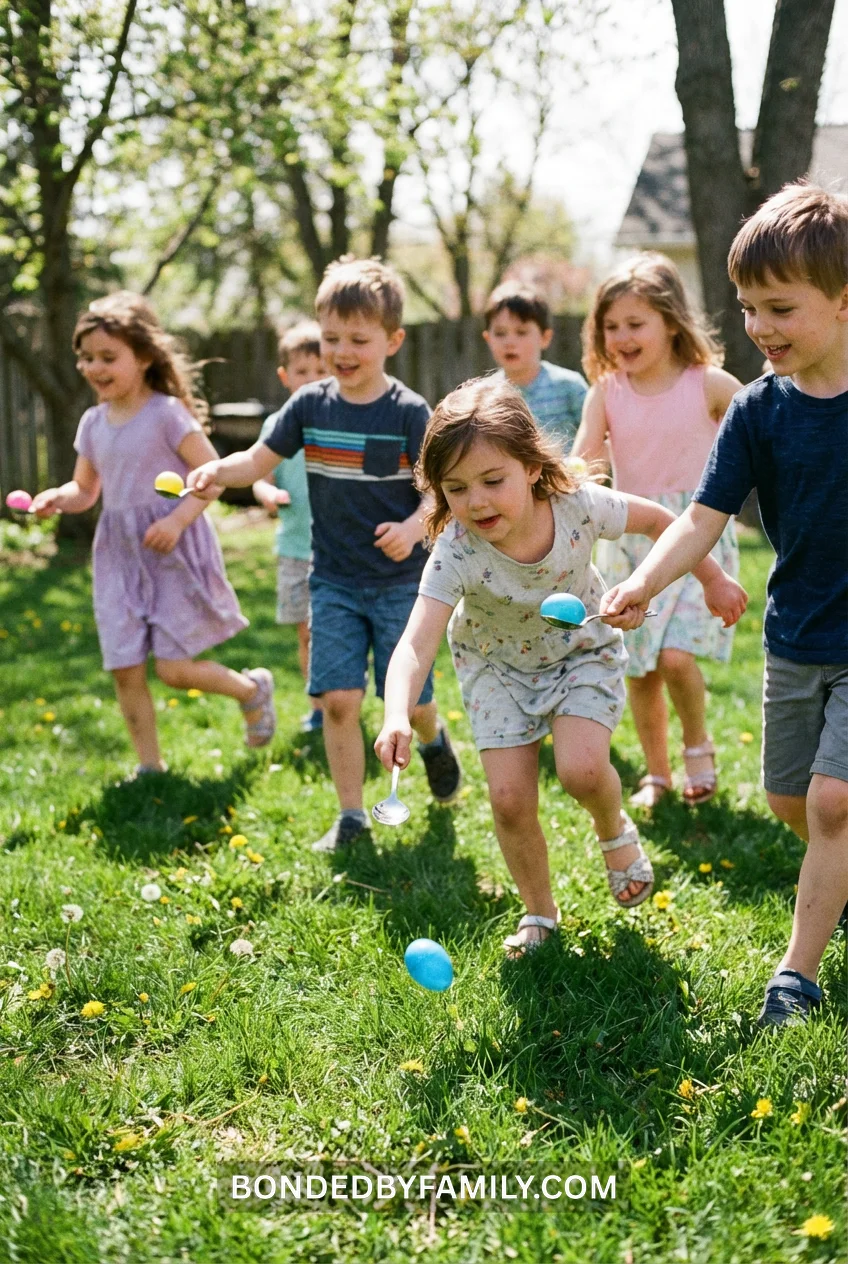
Set up two lanes with a start and finish line. Hand each kid a spoon and a plastic egg. First team to get all players across without dropping wins.
The genius here? You already own everything. Spoons from your drawer, eggs from last year’s hunt. Takes 30 seconds to set up and keeps them busy for 15 minutes while you finish hiding the real eggs.
2. Bunny Hop Sack Race (But With Pillowcases)
Why This Works
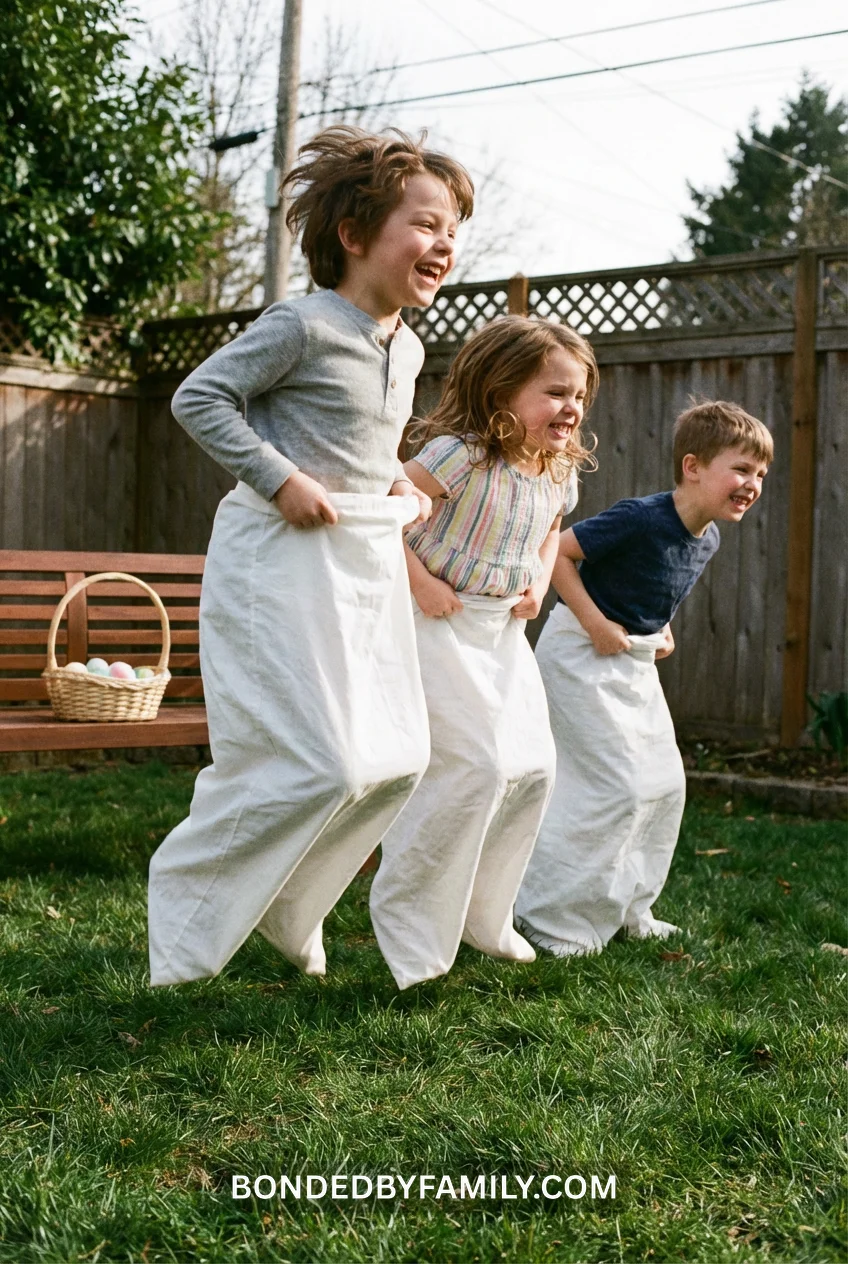
Burlap sacks cost $8 each on Amazon. Pillowcases cost nothing because you already have them. The kids don’t care about the difference, and you just saved $40.
How to Run It
Mark start and finish lines 20-30 feet apart. Kids step into pillowcases, hold the edges at waist height, and hop. First one across wins a chocolate bunny or gets to hide the golden egg—whatever motivates your crew.
Pro Move
Use old pillowcases you don’t care about. Grass stains are inevitable. The blue ones with the cartoon characters from 2015? Perfect candidates.
3. Egg Toss (The Only Way To Use Hard-Boiled Eggs)
Pair kids up. Give each pair one hard-boiled egg. Start them 3 feet apart. Toss the egg back and forth, taking one step back after each successful catch. Last pair with an intact egg wins.
This takes about 8 minutes, creates zero prep work beyond boiling eggs you were making anyway, and the inevitable egg casualties actually make it more fun. Just do it on grass, not the deck.
4. Pin the Tail on the Bunny
The Setup (5 Minutes Total)
Materials you need:
- Large white poster board ($1.25 at Dollar Tree)
- Black marker for bunny outline
- Cotton balls (you have these)
- Double-sided tape
- Bandana for blindfold
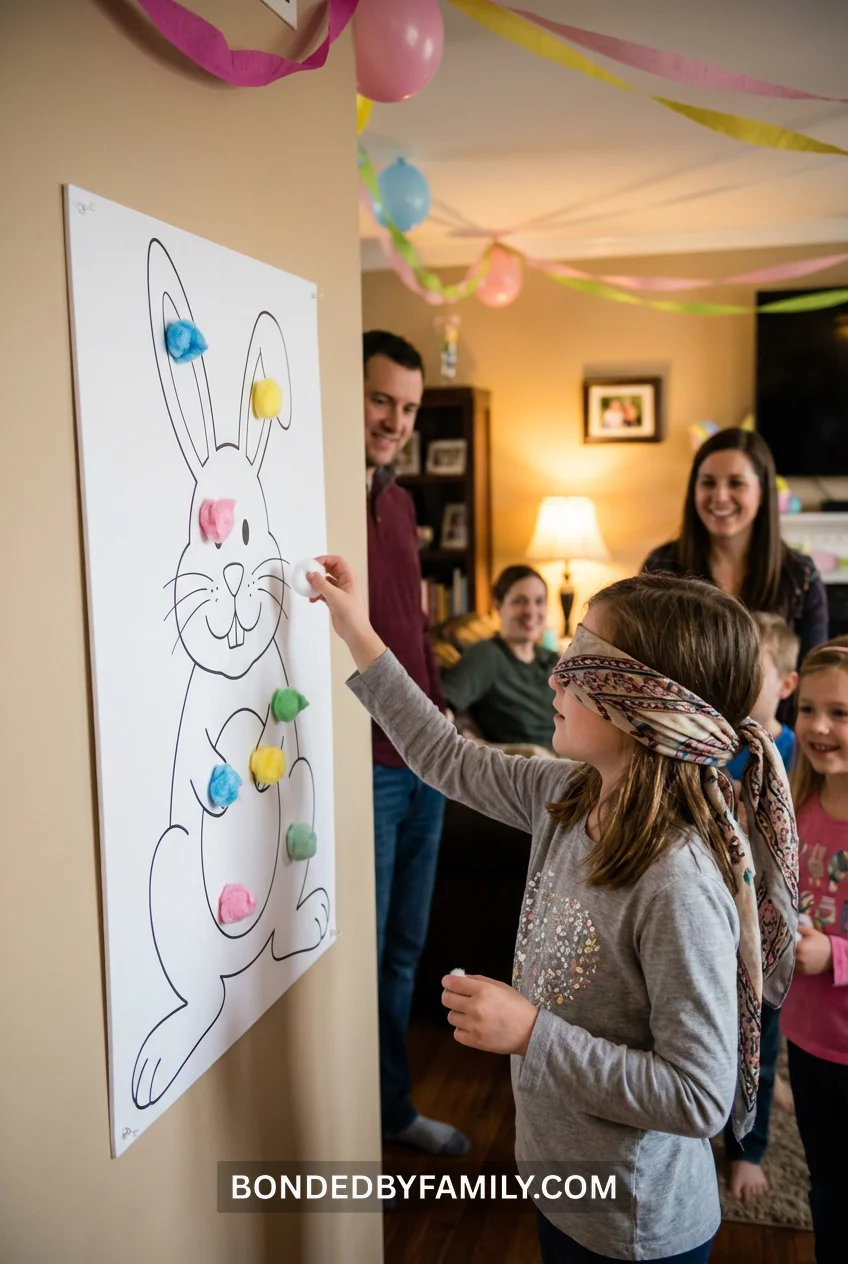
Draw a simple bunny on the poster. Don’t get fancy. Oval body, circle head, two long ears. That’s it.
The Game Itself
Stick the poster to a wall at kid height. Hand each child a cotton ball with tape on it. Blindfold them, spin them twice (three makes them genuinely dizzy and that’s not fun for anyone), point them toward the bunny.
Closest tail to the actual tail spot wins. Or if you want less competition and more participation, everyone who gets it within the bunny’s body outline gets a small prize.
What Actually Makes This Work
You’re not buying a $15 pre-made version that arrives crumpled from shipping. You’re spending 5 minutes with a marker and using supplies you already have. The kids cannot tell the difference between your version and the store-bought one. Neither can the other parents.
Cost Reality
- Store version: $12-18
- DIY version: $1.25 if you need poster board, $0 if you use the back of wrapping paper
- Time investment: 5 minutes max
Common Mistakes To Avoid
Don’t use a permanent marker on the wall thinking the poster will cover it. It won’t. Someone will bump it. Use a poster board or tape up wrapping paper.
Don’t spin kids more than twice. They get nauseous and that’s how someone throws up on your rug at 10 AM on Easter Sunday.
Don’t make the bunny too detailed. The simpler your drawing, the less time you spend on it and the easier it is for kids to recognize where the tail should go.
Active Games For When They’re Bouncing Off The Walls
5. Easter Egg Scavenger Hunt With A Twist
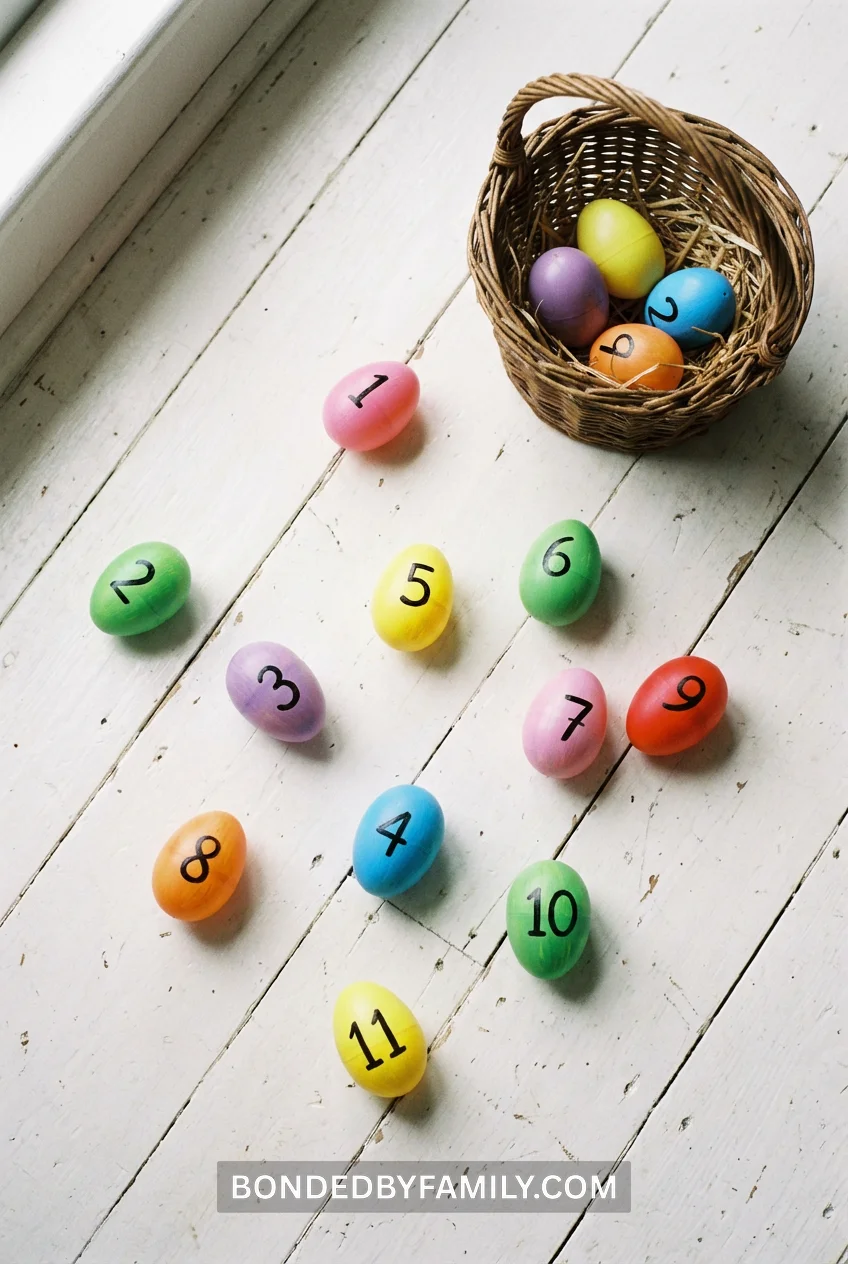
Hide numbered eggs instead of random ones. Kids have to find them in order. Found egg #1? Great, now find #2. Can’t move to #3 until you have #2.
Levels the playing field because the 8-year-old can’t just grab everything before the 4-year-old gets moving. Everyone’s hunting for different eggs at different times.
6. Bunny Says (Instead Of Simon Says)
Zero props needed. You already know the rules—Bunny says hop, they hop. Bunny says wiggle your nose, they wiggle. If you don’t say “Bunny says” first, anyone who does it anyway is out.
Good for 10-12 minutes of controlled chaos when you need everyone in one spot while you deal with whatever crisis just erupted in the kitchen.
7. Carrot On A Spoon Race
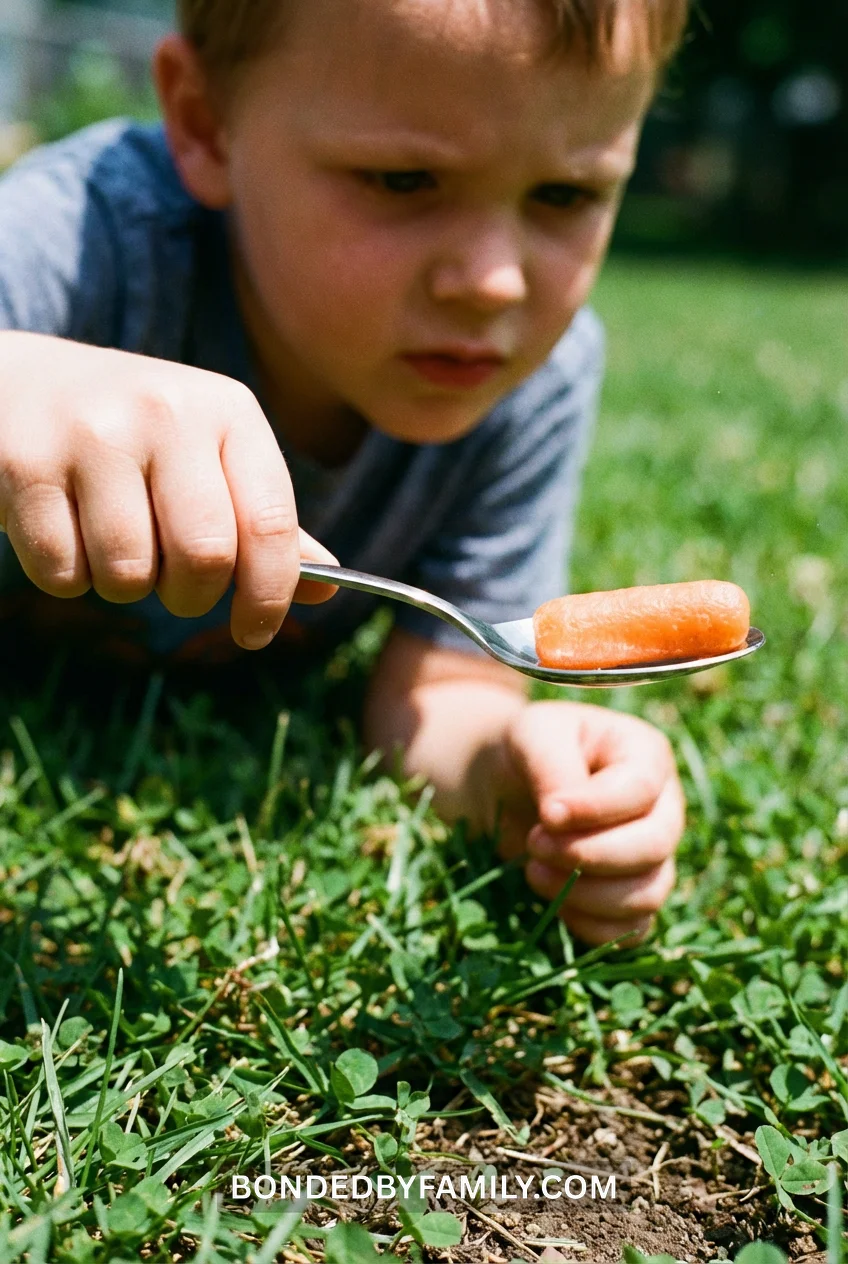
Same as egg and spoon, but with baby carrots. The irregular shape makes it genuinely harder. Use this version for older kids (8+) who found the egg version too easy.
Buy the pre-washed baby carrots. The 1-pound bag is $2 at any grocery store and you’ll use the leftovers for lunch anyway.
8. The Great Egg Roll
What You Need
- Plastic eggs (the ones that split in half)
- Masking tape for start/finish lines
- A slight hill, or just a flat floor if no hill available
The Three Variations
For toddlers (ages 2-4): Push eggs with their hands while crawling. First one across wins. This version takes about 3 minutes because their attention span is roughly 180 seconds.
For early elementary (ages 5-7): Use their nose to push the egg. No hands allowed. This is harder than it sounds and creates hysterical photos your sister will post everywhere.
For older kids (ages 8-12): Partner version. Each pair gets one egg. They can only touch it with their foreheads, working together to roll it across the finish line. Requires coordination and teamwork, which means it’s actually challenging for this age group.
Why Three Versions Matter
You’re not running three separate games. You’re running one game with three difficulty tiers so everyone from the toddler to the tween stays engaged. Set up all three lanes side by side. They can watch each other, which adds to the excitement.
Setup Time
2 minutes. Tape on floor. Eggs distributed. You’re done.
Quiet Games For When You Need A Break
9. Easter Bingo With Printables
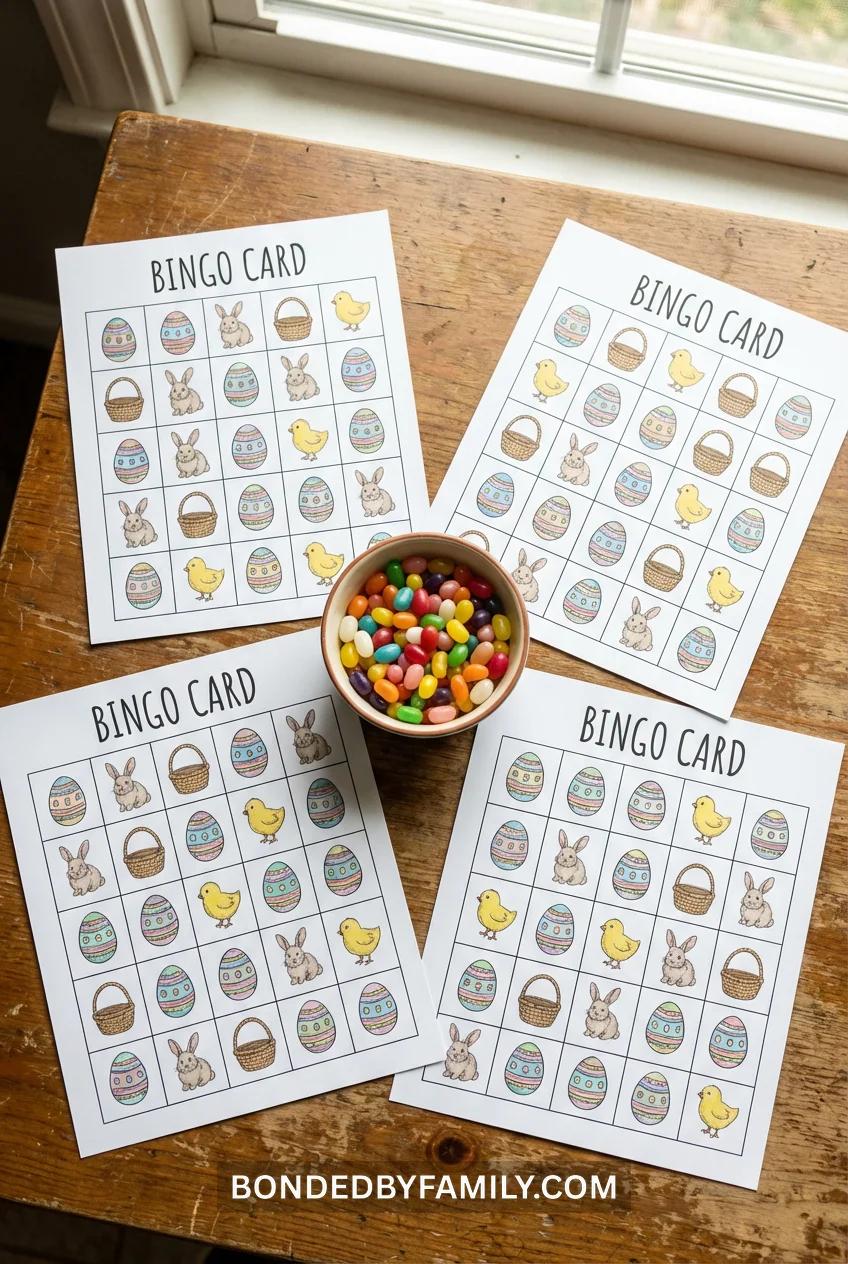
Print free bingo cards from any Easter bingo template site. Use jelly beans as markers instead of chips. Kids eat the markers between rounds. This is a feature, not a bug.
Quiet. Contained. Keeps them seated for 20 minutes. That’s long enough for you to actually have a conversation with another adult.
10. Egg Memory Match
Fill plastic eggs with matching items—two eggs with a penny, two with a button, two with a small toy. Scramble them. Kids take turns opening two eggs. Match wins the pair.
You’re using stuff from your junk drawer and plastic eggs you already have. Total cost: $0.
11. Easter Story Time Contest

Each kid tells a 2-minute story about an Easter bunny adventure. Silliest story wins. Judge on creativity, not accuracy.
Costs nothing. Needs nothing. Burns 15 minutes. The shy kids can pass without pressure.
Minute-To-Win-It Style Challenges
12. Peeps Tower Stacking Challenge
The Complete Game Breakdown
What you need:
- 2-3 boxes of Peeps ($2.50 each, or $6-7 for 36 Peeps total)
- Flat plates or cutting boards as base
- Timer (your phone)
- Towel for cleanup (sticky marshmallow is inevitable)
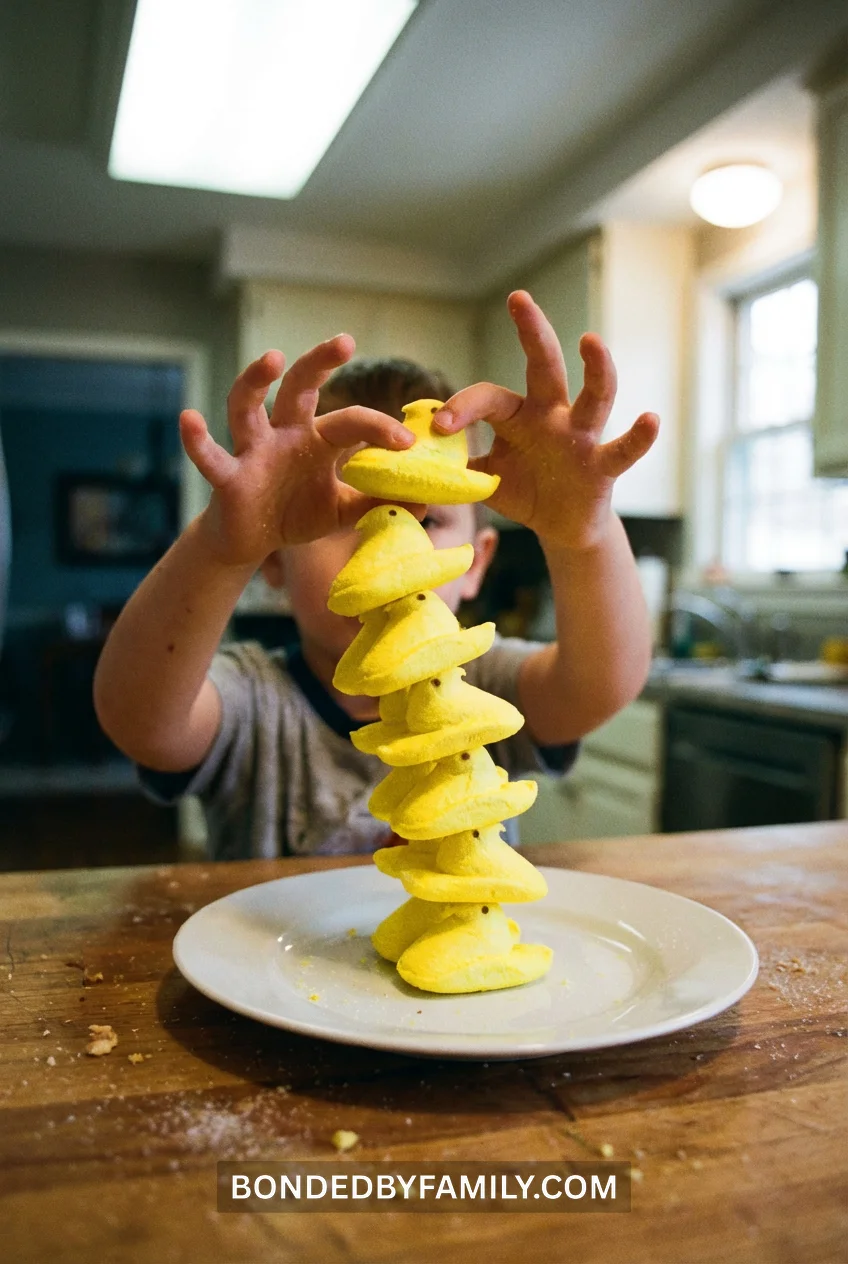
The rules: Give each player 12 Peeps and 60 seconds. Stack as high as you can. Tallest tower that’s still standing when the timer hits zero wins.
Why this works for different ages:
Ages 4-6 get excited about stacking anything. Their towers max out at 4-5 Peeps, which is perfect for their motor skills. They’re competing against themselves, not each other.
Ages 7-9 take it seriously. They engineer. They test stability. They go for 7-8 Peeps and get genuinely invested in the engineering challenge.
Ages 10-12 either go maximum height (trying for 10+) or they build bizarre sideways structures just to see if physics allows it. Both approaches work.
The strategy nobody tells you:
Let the Peeps sit out for 20-30 minutes before the game. Fresh Peeps are too soft—they compress under weight and collapse. Slightly stale Peeps hold their shape better. This is the difference between 6-high and 9-high towers.
Common mistakes:
Using a wobbly table. Find the most stable surface in your house. A kitchen counter beats a folding table every time.
Giving everyone fresh Peeps from different boxes. Peeps age at different rates. If one box is older, those Peeps stack better. Use all Peeps from the same box for fairness.
Not having backup Peeps. Someone will eat theirs before the game starts. This is guaranteed. Buy an extra box.
Post-game reality:
You now have 36 slightly-handled Peeps. The kids won’t eat all of them. Your options:
- Save them for s’mores next weekend (stale Peeps toast better)
- Use them for Easter decorating (stick them to cupcakes)
- Accept that $7 bought you 15 minutes of complete silence while everyone focused on stacking
Time breakdown:
- Setup: 2 minutes
- Actual game: 3-4 rounds of 60 seconds each = 5 minutes
- Kids arguing about whose tower was actually tallest: 3 minutes
- Total entertainment value: 10-13 minutes
The photo opportunity:
This game creates the best pictures. Kids get so focused you can see their tongues sticking out in concentration. The exact moment before a 9-Peep tower collapses is comedy gold. These photos are worth the $7 alone.
13. Jelly Bean Sorting Speed Round
Dump mixed jelly beans on a table. Kids have 60 seconds to sort them by color into muffin tins. Most beans correctly sorted wins.
A 1-pound bag of jelly beans runs $4-5 and works for this plus the bingo game. You’re getting double use from one purchase.
14. Cotton Tail Shake
Fill empty tissue boxes with ping pong balls. Strap boxes to kids’ waists (belt, ribbon, whatever works). They shake and jump to empty the box without using hands. First empty box wins.
Materials cost: $3 for ping pong balls if you don’t have them, $0 if you saved tissue boxes from cold season, which you should have.
Setup time: 4 minutes to load boxes and figure out how to attach them. Use a scarf or ribbon through the box opening, tied around waist.
Outdoor Games That Actually Work In Real Yards
15. Water Balloon Egg Hunt (For Hot Days)
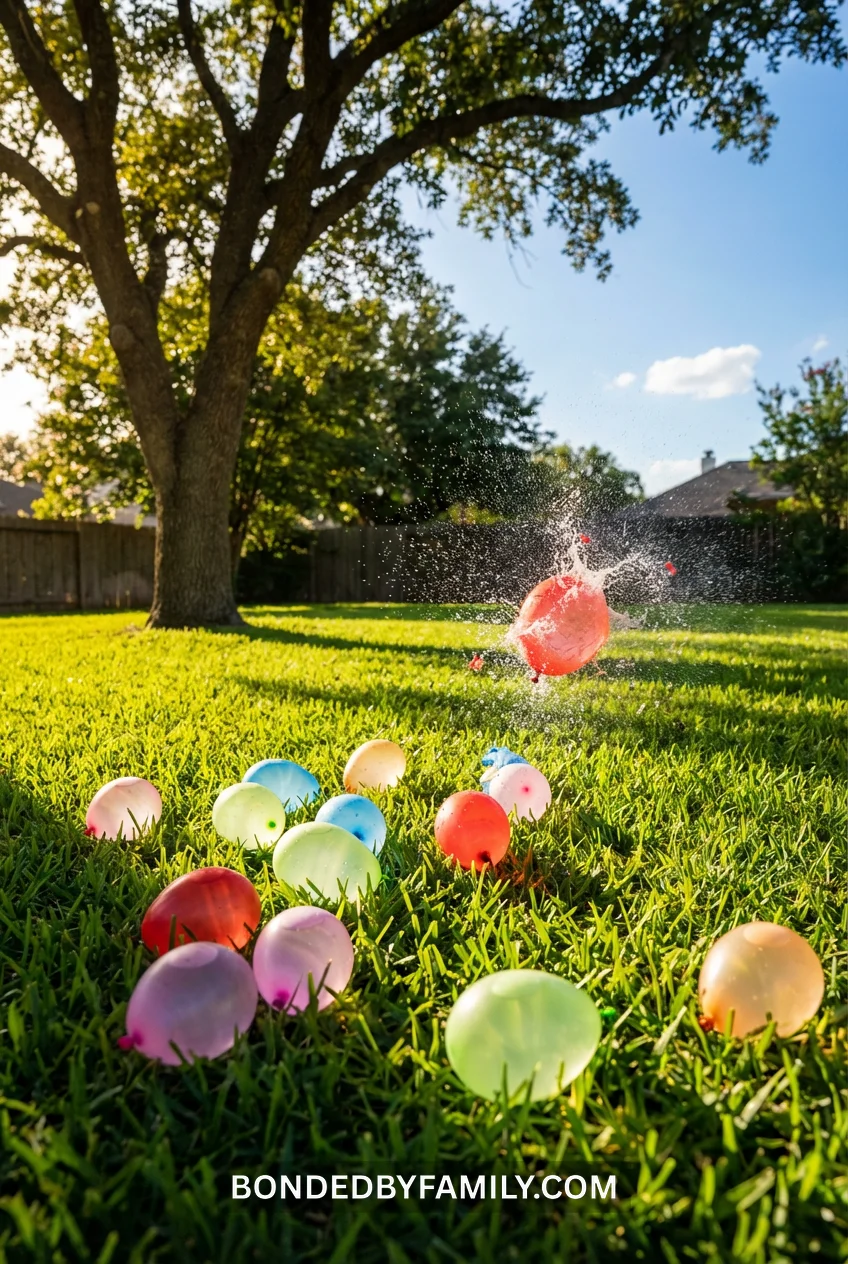
Hide filled water balloons instead of plastic eggs. When kids find one, they get to throw it at a target (tree trunk, fence, designated splash zone). Or just at each other if you’re okay with wet kids.
The payoff is immediate and satisfying. Finding stuff is fun, but smashing water balloons? That’s the whole day’s entertainment right there.
16. Bunny Trail Obstacle Course
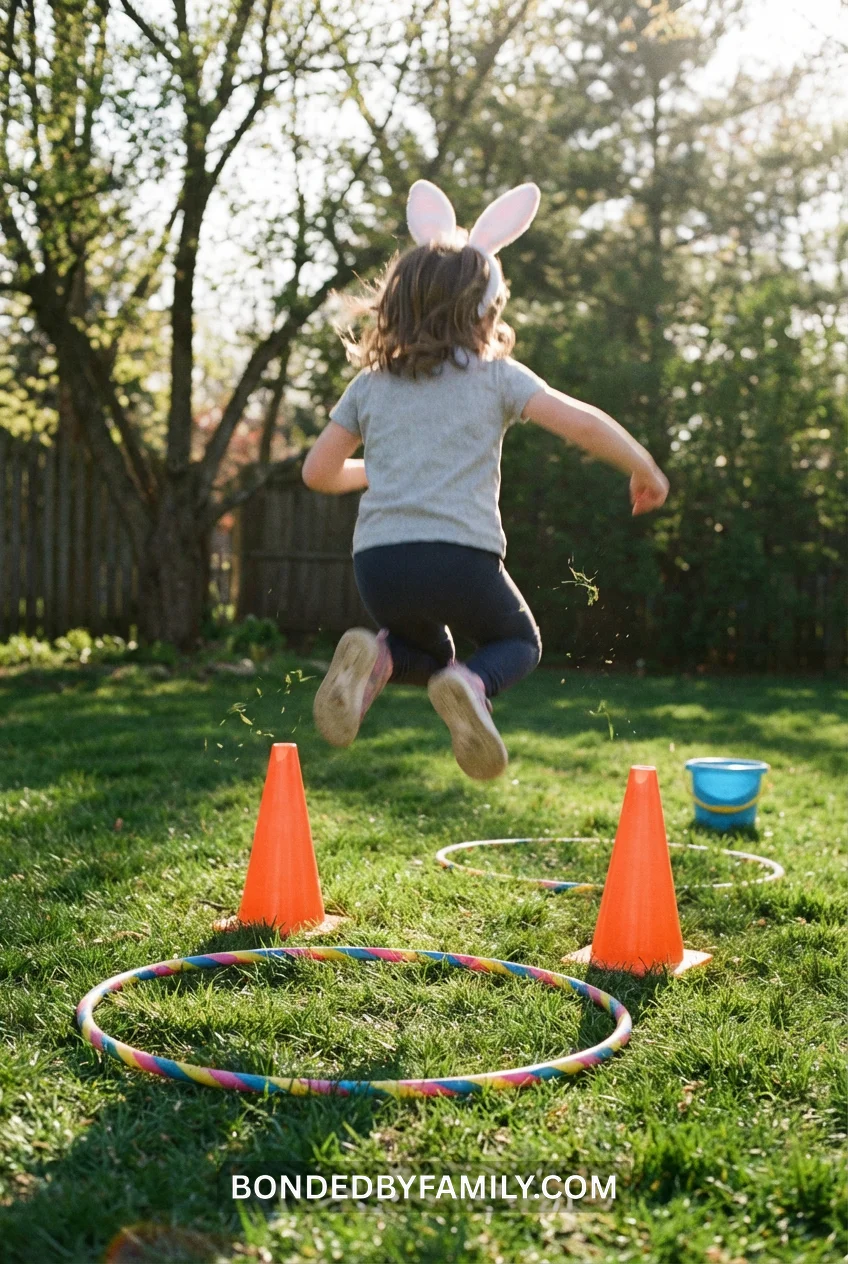
Set up whatever you have: hula hoops to jump through, cones to weave around, a basket to toss eggs into at the end. Kids bunny-hop the whole course—no running allowed.
Use pool noodles, lawn chairs, buckets, anything. The specific obstacles don’t matter. Making them hop like bunnies the entire time matters because it’s goofy and they love it.
17. Egg Bocce Ball
Mark a target spot with a stick or rock. Each player tosses plastic eggs toward it. Closest egg to the target wins the round.
This works on any surface—grass, dirt, even inside on carpet if rain forces you indoors. Zero cleanup since you’re using plastic eggs. Zero setup since the only equipment is eggs you’re using for multiple games anyway.
Games For Mixed Age Groups
18. Easter Charades
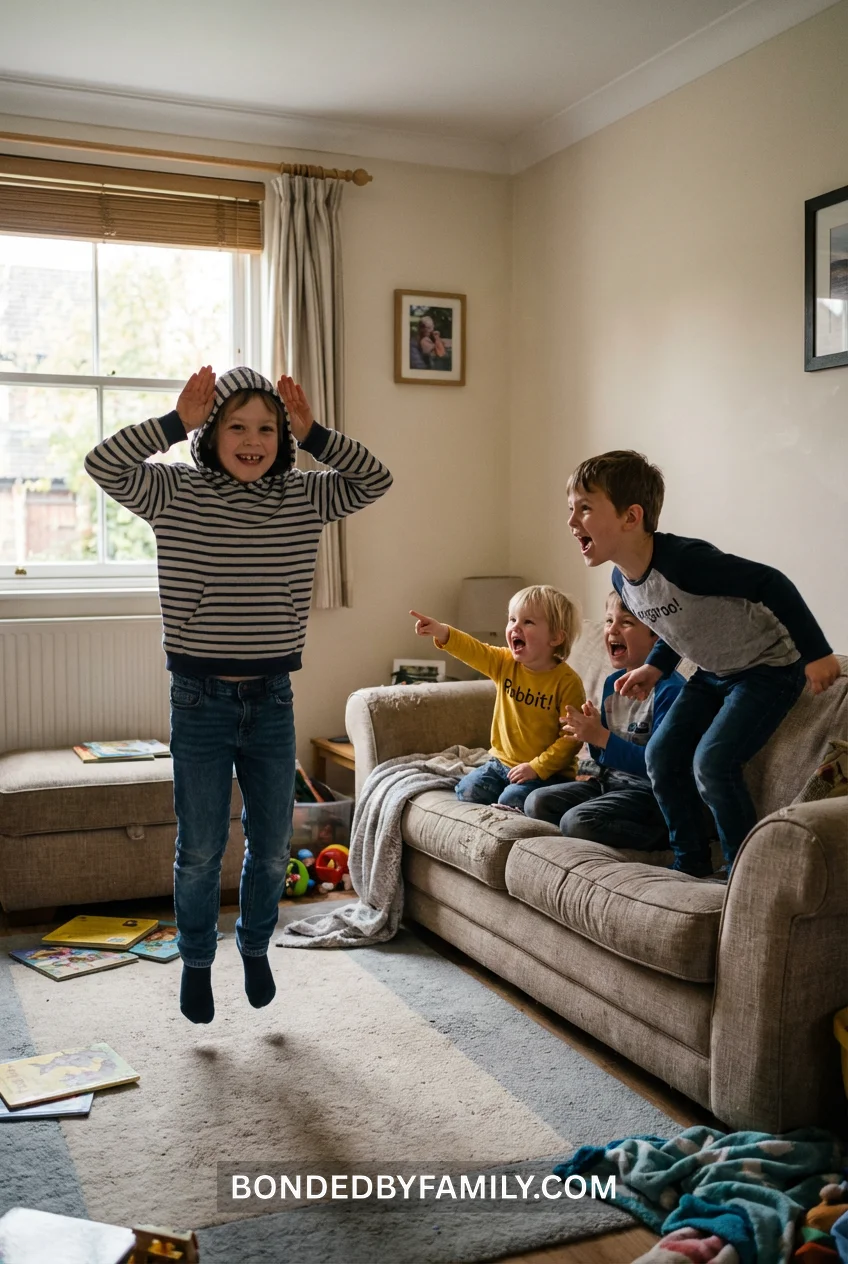
Write Easter-related words on slips of paper: “Easter bunny,” “decorating eggs,” “chocolate,” “spring flowers,” “baby chick.” Kids act them out, others guess.
Toddlers can participate by just being silly. Older kids can handle more complex phrases. Everyone plays together without anyone feeling left out or bored.
19. Build The Best Easter Basket Challenge
The Complete Setup
Materials needed per team (2-3 kids each):
- 1 paper lunch bag or small gift bag ($0.10-0.25 each)
- Pile of craft supplies: markers, stickers, construction paper scraps, ribbons, stamps
- Scissors and tape/glue
- Plastic grass from Dollar Tree ($1 for huge bag that covers 4-5 baskets)
Time limit: 10 minutes to decorate their basket
Judging categories (announce these at the start):
- Most colorful
- Most creative use of materials
- Best team name written on basket
- Most Easter-themed
Why multiple categories matter:
Every team wins something. The competitive 10-year-olds who went all-out win “most creative.” The 5-year-old who just covered everything in stickers wins “most colorful.” Nobody goes home upset.
The actual play:
Dump all supplies in the middle. Set the timer for 10 minutes. Chaos happens. You drink coffee and watch.
At 9 minutes, give a warning. At 10 minutes, hands off the baskets. Line them up and judge with exaggerated seriousness. Award prizes (extra chocolate, first pick at lunch, a dollar store toy—whatever you have).
What this game really does:
It kills 20 minutes total (10 creating + 10 judging and awarding). It creates a craft they actually care about because they made it themselves. And when it’s time for the real egg hunt, they use these baskets instead of the cheap plastic ones that break by April 2nd.
Cost breakdown:
- Bags: $1-2 for 6 bags
- Craft supplies: Raid your existing stash, or $5 at Dollar Tree if you need to stock up
- Plastic grass: $1
- Total: $2-8 depending on what you already have
- Time saved by not buying 6 pre-made baskets: $30-45
Pro tip for different ages:
Pair one older kid (8-12) with two younger ones (4-7). The older kid leads the design but the younger ones do the actual gluing and decorating. This prevents the little ones from getting frustrated and gives the big kids a leadership role they’ll take seriously.
20. Egg Relay With Varying Difficulty
Set up relay lanes. Each team has mixed ages. Everyone does the same relay but with age-appropriate modifications.
Ages 2-4: Carry egg in basket, walk to cone and back Ages 5-7: Balance egg on spoon, walk to cone and back
Ages 8-12: Balance egg on spoon, hop on one foot to cone and back
Same game, three difficulty levels happening simultaneously. Team with best combined time wins.
21. Photo Scavenger Hunt
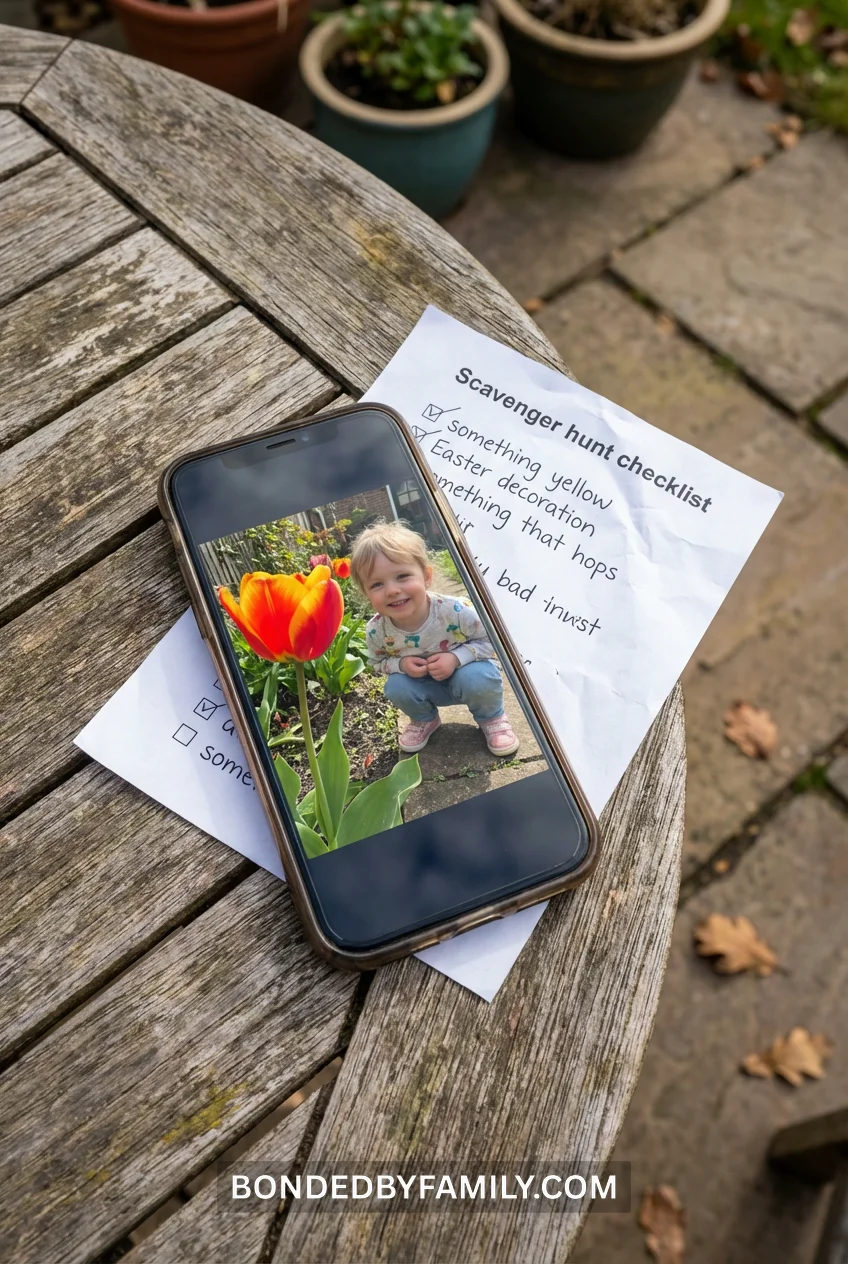
Give each team a phone or tablet with a camera. Hand them a list:
- Take a photo with something yellow
- Find a real bunny or bunny decoration
- Group photo making silly faces
- Something that represents spring
- A hidden Easter egg you placed earlier
First team back with photos of everything wins. The older kids handle the camera, younger kids spot the items. Everyone participates at their skill level.
The list should have 6-8 items. Too few and it’s over in 3 minutes. Too many and the little ones lose interest.
Conclusion
Here’s what you actually need to remember: these games work because they use what you already have, take less than 5 minutes to set up, and keep kids busy for longer than the setup took.
You don’t need to do all 21. Pick 4-5 that match your space and the ages you’re dealing with. Run each one until the kids start losing interest, then switch to the next.
The egg toss will end with broken eggs. The Peeps tower will leave sticky residue on your table. Someone will definitely cry when they don’t win egg bocce ball. These are features of Easter with kids, not bugs in your planning.
Your job isn’t to create the perfect Pinterest-worthy Easter party. Your job is to keep everyone reasonably happy while you finish cooking the ham and setting the table. These games do that job.
FAQ
Q: How many games should I plan for a 2-hour Easter party?
Plan for 5-6 games. You won’t use all of them. Kids will get obsessed with one game and want to play it three times in a row, which is great because it means you just killed 30 minutes with zero additional effort. Having backup options matters more than a rigid schedule.
Q: What if I have one kid who’s way older than the others?
Make them the referee or assistant. The 12-year-old doesn’t want to race against 5-year-olds in egg and spoon, but they’ll absolutely take the role of Official Timer seriously. Give them a whistle or a stopwatch, and a clipboard. They’ll feel important, and you’ve solved the age gap problem.
Q: Can these games work indoors if it rains?
About half of them, yes. Pin the tail, egg memory match, Peeps stacking, jelly bean sorting, Easter charades, and the basket decorating challenge all work inside. Skip the water balloons and relay races. Save those for the next year when the weather cooperates. Don’t try to force outdoor games inside—someone will break something, and you’ll regret it.
Q: How do I prevent the competitive kid from ruining the games for everyone else?
Two strategies: either make that kid the score-keeper (gives them control without competing), or run individual best-time challenges instead of head-to-head races. “How fast can YOU complete this?” is less triggering than “Who wins?” for the ultra-competitive personality.
Q: What’s the minimum age for these games?
Most work for ages 4 and up with modifications. Below age 4, stick with the simpler options like egg hunt variations and bunny hop races. Skip anything involving balancing eggs on spoons—toddlers will just get frustrated. The charades and photo scavenger hunt work great for mixed groups with toddlers included because older kids can help the little ones participate.