You know that feeling. The one where you’ve given everything to everyone else – the kids, the job, the household – and there’s nothing left for you. Your mental health activity ideas list starts and ends at “take a bath,” and even that feels like too much effort right now.
These 17 mental health activity ideas aren’t about fixing yourself. They’re about giving your nervous system something to hold onto when the ground feels wobbly. Most take under 10 minutes. None require an app subscription or a therapist on speed dial (though both are great if you have them).
By the end, you’ll have a real toolkit – not a vague suggestion list – of activities you can reach for on the hard days.
1. The 5-4-3-2-1 Grounding Technique
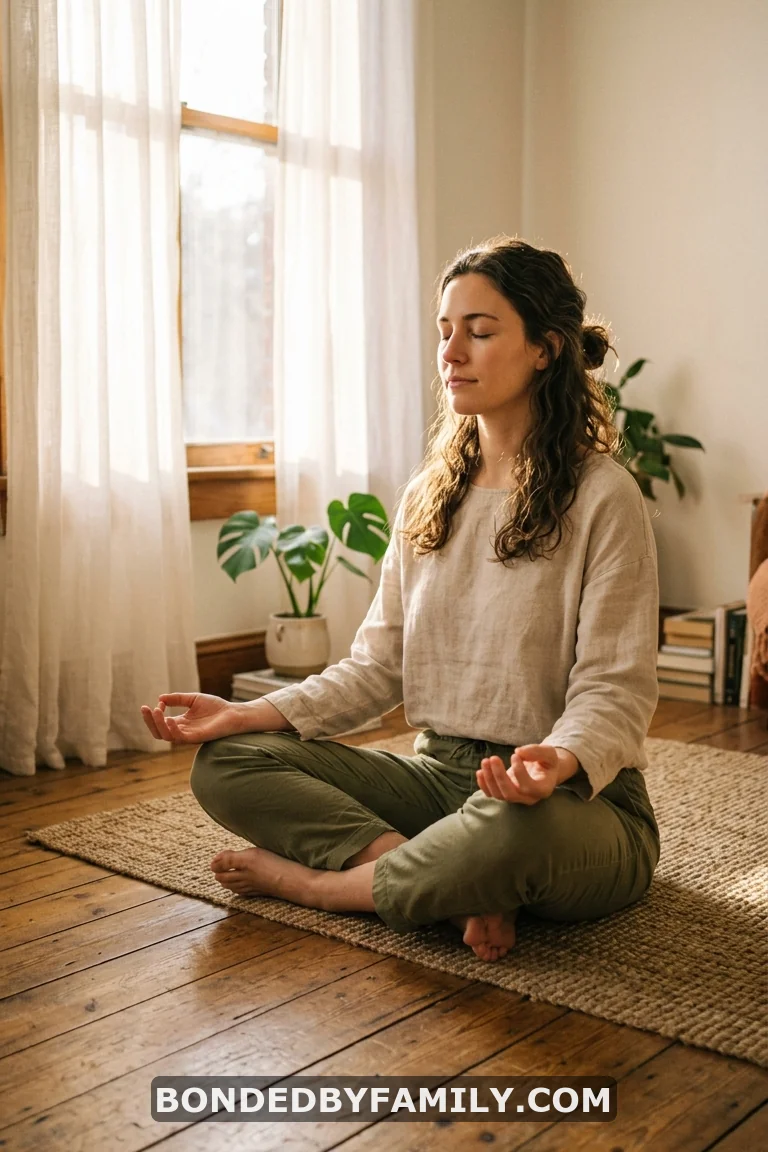
Your nervous system doesn’t know the difference between a looming deadline and a hungry lion. When anxiety spikes, your brain floods with stress hormones before you have time to reason through anything. Grounding cuts that cycle short.
You use your five senses to pull your brain back into the present moment — away from the worst-case scenarios it’s busy running. Here’s the sequence.
Name 5 things you can see. Right now. The mug on your desk, the crack in the ceiling, your own hands. Then 4 things you can touch — and physically touch them, notice the rough fabric of your chair or the cool surface of your phone. Then 3 things you can hear, 2 you can smell, and 1 you can taste.
The full exercise takes under two minutes. You’ll feel different afterward — not fixed, but steadier. Steadier is enough.
Pro tip: Do this in sequence if anxiety is spiking. If you’re just foggy or disconnected, work backwards (start with taste) — it requires more focus and snaps you back in faster.
2. The 2-Minute Brain Dump
Write everything that’s in your head. Right now. No editing, no punctuation, no filter. One page. Set a timer for two minutes and go.
That’s the whole activity. You’re not journaling. You’re clearing RAM. The thoughts circling your brain — the forgotten appointment, the thing you said wrong last Tuesday, the grocery list — are taking up processing power. Getting them on paper frees up mental space. Measurable mental space.
No special journal required. A napkin works.
3. Why Standard Gratitude Lists Fail (And What Works Instead)

What most people think: “Write three things you’re grateful for every morning.” Done.
What happens instead: After a week, you’re writing “my health, my family, my home” on autopilot. Your brain stops registering anything. The practice dies quietly.
The problem isn’t gratitude itself — the research is solid. A 2003 study in the Journal of Personality and Social Psychology found that weekly gratitude journaling increased well-being more than daily practice. Why? Because frequency breeds numbness.
What works instead: gratitude stacking.
Pick one thing you’re grateful for. Then go narrow and deep.
Instead of: “I’m grateful for my daughter.”
Try: “I’m grateful my daughter asked me why the sky is blue this morning, because for ten seconds I wasn’t thinking about anything else — and her face when I didn’t know the answer made me laugh out loud for the first time in days.”
That specificity activates a real emotional response. Your brain registers something genuine. The difference in how it feels is immediate and unmistakable.
Try stacking gratitude three times per week, not daily. Choose something new each time. The practice stays meaningful rather than becoming a checkbox because you’re not giving your brain time to go numb between sessions.
4. The 5-Minute Solo Dance Party
Put on one song that you loved in your twenties. Turn it up. Dance like nobody’s watching — because nobody is.
This is not a metaphor. Physical movement releases stored tension. Music activates the brain’s reward circuit. Doing both together, alone, where you can be ridiculous — it’s one of the fastest mood-shifts there is.
Five minutes. One song. Do it in the kitchen while the pasta cooks.
5. Box Breathing

Box breathing is used by military special forces to regulate under pressure. It also works for you, Tuesday afternoon, when you feel like you might cry in the school pickup line.
The pattern:
- Breathe in for 4 counts
- Hold for 4 counts
- Breathe out for 4 counts
- Hold for 4 counts
Repeat four to six times. That’s the box.
The hold phase is what sets this apart from other breathing exercises. Holding after the exhale activates your parasympathetic nervous system — your body’s own brake pedal. You cannot physiologically stay in a high-anxiety state while doing this correctly.
Four minutes total. Close your eyes and count slowly. Some people prefer the 4-7-8 pattern (in for 4, hold for 7, out for 8), which has a stronger sedative effect. Try both and see which one your body responds to faster.
6. The Feelings Wheel
Most of us default to four emotions: happy, sad, angry, stressed. That’s a tiny vocabulary for an enormous inner life — and a vague emotional vocabulary makes it genuinely harder to regulate how you feel.
The Feelings Wheel solves this. It’s a visual tool that starts with six core emotions at the center (joy, sadness, anger, fear, disgust, surprise) and breaks each into increasingly specific feelings as you move outward. “Angry” might be “frustrated” or “jealous” or “humiliated” — and those three things need completely different responses.
Free printable versions are available at brainframe-kids.com (they have adult-friendly versions despite the name) or search “Plutchik’s Wheel of Emotions” for the clinical version. Print one and tape it to a cabinet door.
When you feel off, use the wheel to find the precise word for what you’re experiencing. Naming an emotion with specificity — what researchers call “affect labeling” — reduces its intensity. The brain region driving the emotional response quiets when you give the feeling an accurate name.
7. Journaling with a Prompt That Does Something

Most journaling advice misses the point. “Just write your feelings!” sounds reasonable — but without structure, most people either stare at a blank page or spiral deeper into the thought patterns they were trying to escape.
The right prompt is the difference between venting and processing.
Why It Works
Research by psychologist James Pennebaker shows that expressive writing — specifically, writing about emotional experiences with reflection — reduces cortisol levels, improves immune function, and decreases symptoms of anxiety and depression. The key word is reflection, not just expression. You’re not dumping feelings; you’re building narrative around them. Your brain organizes and integrates experiences through story, and that process is genuinely stabilizing.
What You Need
A dedicated journal makes a difference. Having one notebook that’s only for this — not grocery lists, not meeting notes — signals to your brain that this is the space for internal work.
Options at different price points:
- Leuchtturm1917 A5 Hardcover (~$22–$26 at most bookstores): Numbered pages, back pocket, available in dotted/lined/blank. Paper is thick enough that ink doesn’t bleed through.
- Paperage Lined Journal (~$9–$13): Nearly identical paper quality to premium brands, much cheaper. Good choice if you’re not sure journaling will stick.
- Any composition notebook (~$2): Honestly, it doesn’t matter. What matters is that you use it.
Get a pen you genuinely like writing with. The Pilot G2 or Uni-ball Jetstream (~$1–$3 each) write smoothly enough that you don’t have to fight the pen while you’re thinking. Friction slows the process and your brain moves on before your hand catches up.
Step-by-Step: A 10-Minute Session
- Set a timer for 10 minutes. Open-ended time leads to avoidance. A timer removes the decision.
- Choose one prompt from the list below. Just one. Choosing three causes paralysis.
- Write without stopping until the timer goes off. Don’t edit. Don’t re-read mid-session.
- When done, read what you wrote. Circle or underline one sentence that surprises you.
- Write two more sentences in response to that sentence. This is where the processing happens — the rest is just warm-up.
Prompts That Work
Rotate these to prevent autopilot:
- What am I avoiding today, and what would happen if I stopped?
- Write about a moment in the last 48 hours when you felt most like yourself.
- What would I tell a close friend who was feeling exactly what I’m feeling right now?
- What’s one story I keep telling myself that might not be true?
- If the way I feel right now were a weather system, what would it look like?
Common Mistakes to Avoid
Mistake #1: Writing to an audience. If your journal sounds like a polished social media post, it’s not working. Write like no one will ever read it. Because they won’t.
Mistake #2: Journaling when exhausted. Late at night, tired journaling usually becomes rumination. Morning — even five minutes before the kids wake up — or midday works better for most people.
Mistake #3: Using a phone notes app. The physical act of handwriting slows you down, and slower is better here. Your brain catches up to your emotions when you write by hand in a way that typing doesn’t replicate. The research specifically references handwriting.
Mistake #4: Stopping after three days. Benefits accumulate over weeks. The first few sessions may feel uncomfortable or feel like nothing. That’s normal. Write through it.
Cost Reality
The full setup — journal plus pen — runs you $10–$30 depending on what you choose. A single therapy session averages $120–$250 in the US. Journaling isn’t a replacement for professional support when you genuinely need it. But as a daily maintenance tool, the ROI is absurd.
8. The Body Scan
Lie flat or sit upright. Close your eyes. Start at the top of your head and move your attention slowly downward — scalp, forehead, jaw, neck, shoulders, chest, belly, hips, legs, feet.
In each area, just notice. Tension? Consciously release it. Tingling? Acknowledge it. Nothing? That’s also useful information.
The whole thing takes 5–10 minutes. The UCLA Mindful app has free audio-guided body scans from 5 to 20 minutes. Insight Timer’s free version also has dozens of them. You don’t need a paid subscription for this to work.
The body scan is especially useful for people who live “from the neck up” — who intellectualize everything and lose touch with the physical signals that stress or sadness are building. Your body registers things before your brain admits them. This practice closes that gap.
9. Two Minutes Outside
Step outside. Look at something living — a tree, a patch of grass, a single weed growing through concrete. Stay there for two minutes.
Research from the University of Michigan found that even small doses of nature exposure reduce cortisol and improve attention. You don’t need a trail or a park. A doorstep works.
10. Mood Tracking
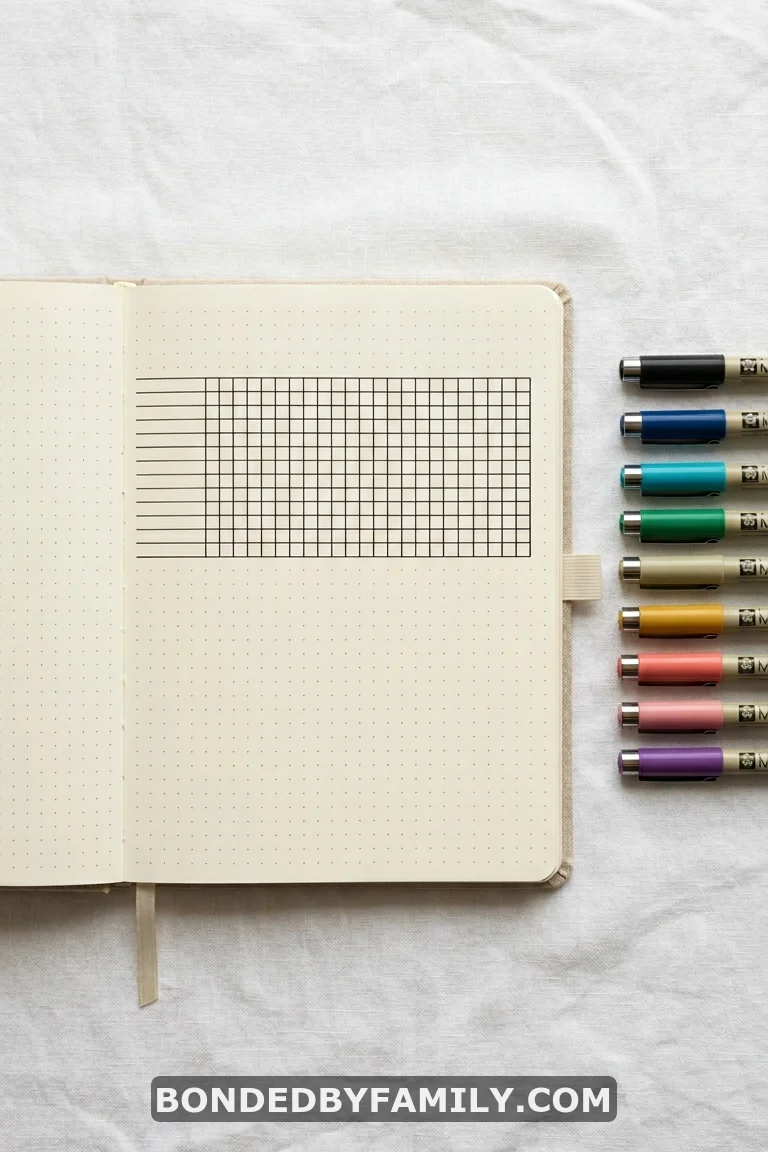
Most people only notice their mental health when it crashes. Mood tracking reverses this — you start seeing patterns in when you feel good, not just when things fall apart.
The method is low-effort. At the end of each day, rate your overall mood on a scale of 1–10 and write two to three words describing your dominant feeling. Do this for two to three weeks.
Patterns will surface that you couldn’t see before. You’re consistently lower on Sunday evenings (anticipatory stress about Monday). You feel noticeably better after 20 minutes outside. Your mood drops sharply when you skip lunch. None of these feel obvious until you have them mapped out.
Data replaces guesswork. Once you know your patterns, you can design around them rather than react to them.
Physical option: The Full Focus Planner by Michael Hyatt ($45) has a daily intention and reflection section built in. Any cheap notebook with dated pages works just as well. Digital option: The free Bearable app is excellent — not clinical-feeling, and it lets you log mood, sleep, activities, and physical symptoms together.
11. Creative Expression: The Five-Color Collage
You don’t need to be good at art. You need scissors, some magazines or printed images, and a piece of cardstock.
Choose five colors that represent how you’re feeling right now. Find images, textures, or words in those colors. Cut and arrange them on the page however feels right. Glue them down.
You’re not making something beautiful. You’re externalizing your internal state so you can observe it from the outside. This is the same principle behind art therapy — creating distance from a difficult emotion by giving it a physical form.
Takes 15–20 minutes. Works especially well when words aren’t coming and you need to process something but don’t know where to start.
12. The One-Text Check-In
Send a text to one person today. Just this: “Thinking of you. How are you doing?”
That’s it. Human connection is the most underrated mental health tool there is — and a genuine message is a two-person gift. They feel seen. You feel less alone. Both of you are reminded that the world contains people who care.
13. Naming the Emotion Out Loud

This sounds odd. Do it anyway.
When something difficult surfaces — anxiety before a hard conversation, sadness with no clear source, frustration that’s bigger than the situation warrants — say out loud: “I’m feeling scared right now.” Or whatever the word is. Out loud.
Neuroscientist Matthew Lieberman’s research at UCLA found that verbally labeling an emotion reduces activity in the amygdala — the brain’s threat-detection center — while increasing activity in the prefrontal cortex, the part that thinks clearly and makes decisions. The word transfers the experience from the reactive brain to the thinking brain.
You’re not dismissing the feeling. You’re metabolizing it faster.
14. Build a Comfort Sensory Kit

A comfort sensory kit is a small collection of objects that engage your senses and signal safety to your nervous system. Think of it as a physical reset button.
Build yours by choosing one item per sense:
- Touch: A smooth stone from any garden or river (free), a small square of velvet or fleece ($2–$5 from a fabric store), or a palm-sized stress ball (~$5)
- Smell: A lavender or bergamot essential oil rollerball (~$8–$15), a scented candle, or dried lavender (~$3–$6 in bulk from a craft store)
- Taste: One piece of quality dark chocolate (70%+ cacao) — eaten slowly and with intention, not as a snack
- Sound: A three-to-five song playlist of calming music on your phone (free)
- Sight: A photo of a place or person that makes you feel safe
Keep the whole kit in a small basket or pouch you can reach for easily. Total cost: roughly $15–$30.
On hard days, reach for the kit before reaching for your phone. The physical objects ground you in your body. Familiar scents and textures trigger associations with calm. Over time, your brain learns to link the kit with regulation — which means eventually, just seeing it starts to help before you’ve even opened it.
15. The Digital Sunset
One hour before you want to sleep, put your phone in a different room.
That’s the rule. Non-negotiable.
Blue light suppresses melatonin — that’s physiological fact. But the deeper issue with late-night phones isn’t the light. It’s the content. Social comparison, news alerts, work emails, notifications — all of it activates your threat-detection system right before you need it to wind down. You cannot force relaxation after your nervous system has just processed 47 inputs telling it to stay alert.
In the phone’s place, pick one low-stimulation activity: a physical book, a crossword puzzle, a cup of herbal tea with nothing else, a conversation that isn’t about schedules. The goal isn’t entertainment. It’s deceleration.
Most people who try this report that the first three to five days feel genuinely uncomfortable. That discomfort is real — it’s the dependency part. After a week, sleep improves noticeably, and the hour before bed starts to feel like something worth protecting.
16. The Self-Compassion Break
Dr. Kristin Neff at the University of Texas-Austin has researched self-compassion for over two decades. Her three-step practice takes under five minutes and has meaningful clinical support for reducing anxiety, depression, and emotional reactivity.
When you’re in a hard moment, try this:
Step 1 — Acknowledge: Place one hand on your heart. Say quietly: “This is hard right now.” Not “this is fine” or “I should be grateful.” Just honest acknowledgment.
Step 2 — Remember it’s shared: Remind yourself that suffering is part of the human experience, not evidence of personal failure. Something like: “I’m not the only person who has felt this way today.”
Step 3 — Offer something kind: Ask yourself: “What do I need right now?” Answer honestly — not what you think you should need, but what you genuinely need. Then give yourself even a small version of it.
This practice consistently disarms the self-critical inner voice faster than any reframing technique. It doesn’t eliminate pain. It changes your relationship to it.
17. The Life Jar: A 10-Minute Priority Clarity Exercise
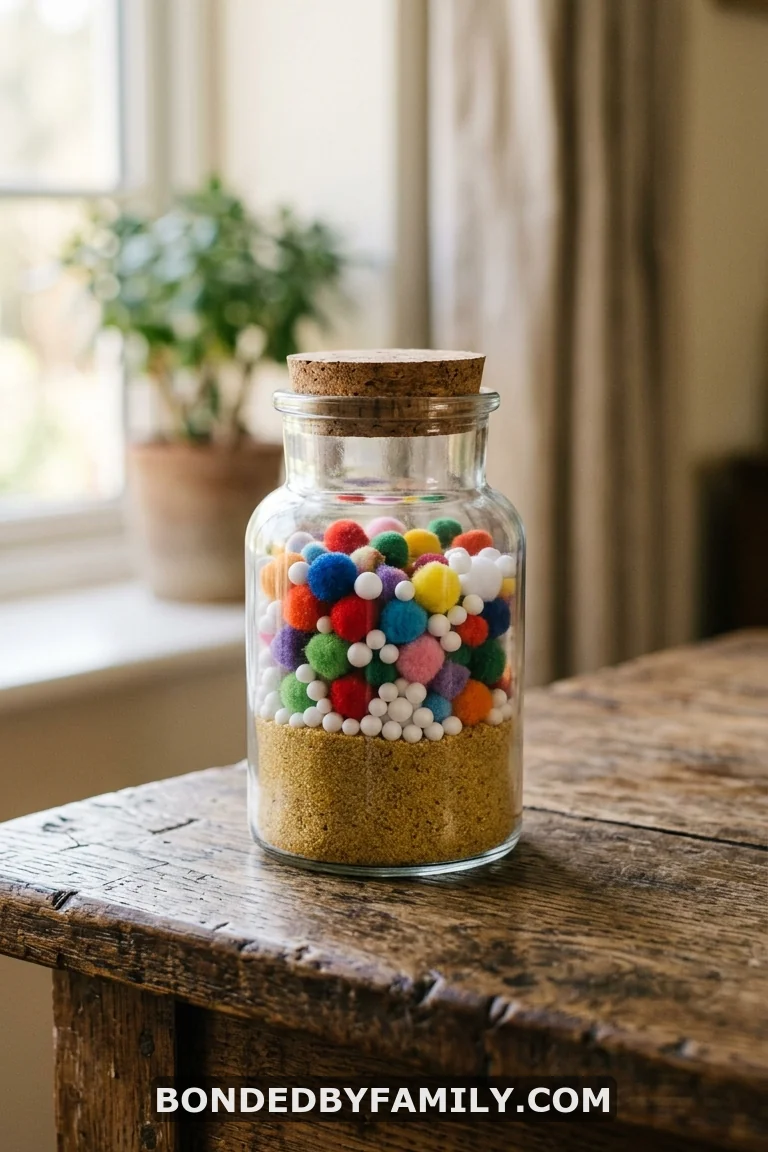
Mental exhaustion often isn’t about having too much to do. It’s about spending energy on things that don’t matter to you while the things that do go unattended. This activity makes that visible in a physical way that words on a planner never quite do.
You’ll need a clear jar, three sizes of small objects (foam balls or ping-pong balls for the largest, pompoms or marbles for medium, sand or rice for the smallest), and five minutes of quiet.
Add the largest objects first — the things most important to your wellbeing: your relationships, your health, your rest, the things that give your life meaning. The jar looks nearly full. Then add the medium objects — your work, your home, the commitments that matter but aren’t the core: they settle in around the big things, and everything fits. Now pour in the sand: the small things, the noise, the admin, the scrolling, the obligations you took on without choosing.
Notice: nothing overflows. The big things made room for everything else when they went in first.
But if you’d poured the sand in first? No room left for anything that matters.
This is a metaphor — but physical metaphors work in a way that abstract advice doesn’t. The image stays. Do this once a year when you’re feeling overwhelmed and need to see clearly where your energy is going.
You Don’t Need All 17
Pick two. Just two that felt possible, that felt like something you’d reach for on a Tuesday when things are hard. Start there.
Mental health isn’t a project you complete. It’s maintenance you return to. The best activity is the one you’ll use when you need it — not the one with the most impressive research behind it.
Save this list. Come back to it when you need it. Your toolkit grows over time, and so do you.
Frequently Asked Questions
How many mental health activities should I do each day? One is enough. Consistency matters far more than volume. A single 5-minute activity done daily for three weeks will have a greater impact than a two-hour wellness session done once and never repeated. Choose one or two that feel manageable and anchor them to something you already do — morning coffee, lunchtime, the few minutes before bed.
Can mental health activities replace therapy? No — and they’re not designed to. Activities like these are maintenance tools. They support your baseline and help manage day-to-day stress. If you’re experiencing persistent low mood, anxiety that affects your daily functioning, or symptoms that don’t lift, please reach out to a mental health professional. Many offer sliding-scale fees, and Open Path Collective lists therapists at reduced rates ($30–$80 per session).
Which mental health activities work best for anxiety specifically? Box breathing, the 5-4-3-2-1 grounding technique, and the self-compassion break are the most reliably effective for acute anxiety. All three directly engage the parasympathetic nervous system or interrupt the anxiety cycle at the neurological level. If you’re managing anxiety specifically, start with those three and rotate based on the situation.
What’s the fastest activity on this list? The two-minute brain dump and the one-text check-in both take under three minutes. The solo dance party is longer but tends to produce the most dramatic immediate mood shift for most people. Try all three and see which your body responds to fastest.
Are these activities suitable for children and teens? Many of them work across ages with small adjustments. The feelings wheel and the 5-4-3-2-1 grounding technique are both used in school counseling settings for children as young as six. The life jar activity is especially effective for kids — the visual format makes abstract ideas about priorities concrete and memorable. The journal prompts can be adapted into bedtime conversation starters: “What’s one moment from today you want to remember?” works well for children of almost any age.