Your kid just had a meltdown over mismatched socks. Again. And you’re standing there, coffee getting cold, wondering if there’s a better way than bribing them with screen time or counting to ten for the millionth time.
There is.
Mindfulness activities for kids aren’t about forcing your five-year-old to sit cross-legged and chant “om.” They’re about giving kids actual tools to notice when their emotions are running the show—and what to do about it. The catch? Most mindfulness exercises feel too abstract for kids. “Just breathe” doesn’t work when their nervous system thinks the world is ending because you cut their sandwich wrong.
These nine activities work because they’re concrete, quick, and hold a kid’s attention. I’ve tested every single one with my own kids (ages 4 and 7), and I’m sharing exactly what worked, what flopped, and the sneaky modifications that made all the difference.
1. The Breathing Buddy Technique
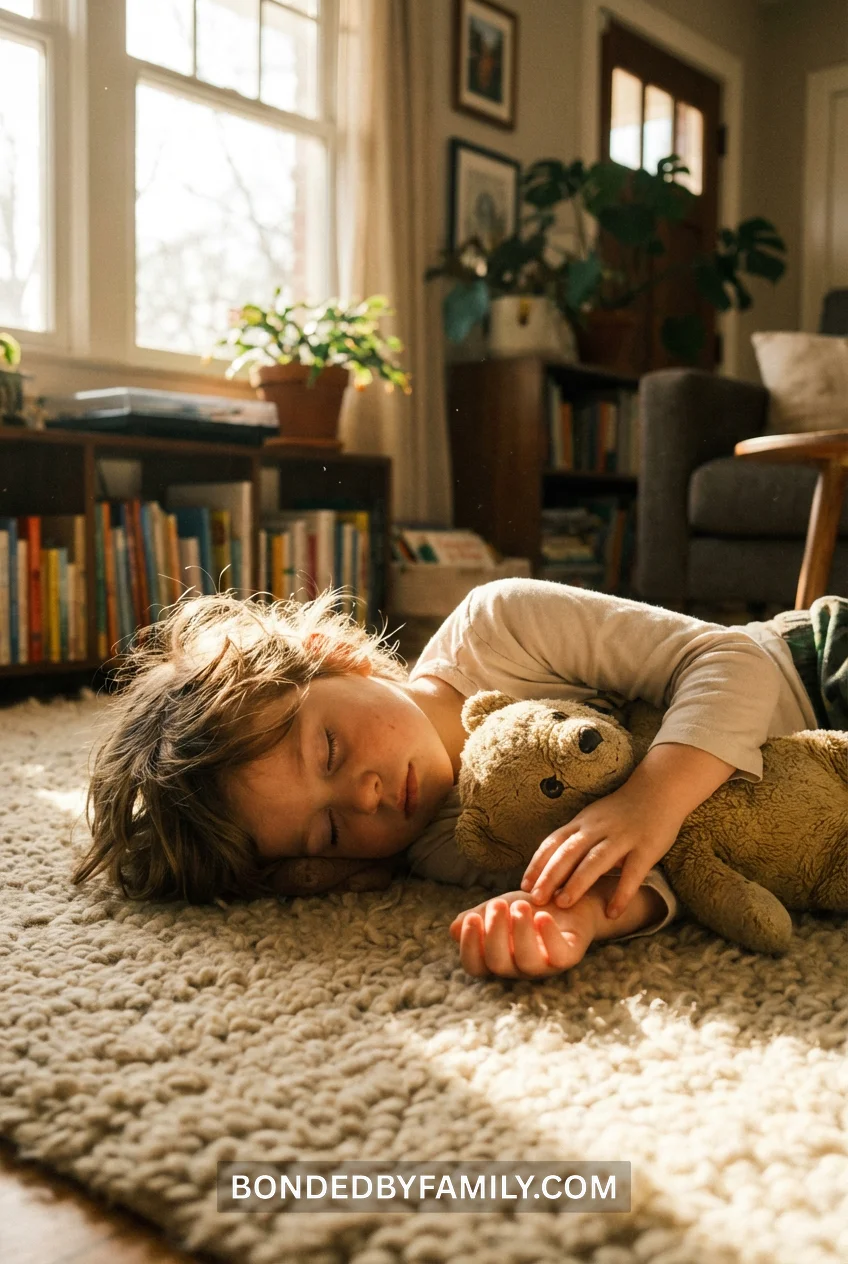
Place a stuffed animal on your child’s belly while they lie down. Their job? Make the “buddy” rise and fall with their breathing. That’s it.
Why this works when other breathing exercises fail: Kids can see their breath working. The visual feedback—watching that stuffed penguin or dinosaur bob up and down—gives their brain something concrete to focus on instead of the abstract concept of “taking deep breaths.”
Pro move: Let them pick the buddy. My daughter chose a tiny rubber duck. My son went with a Hot Wheels car. Neither is ideal for breathing exercises, but both worked because the kids were invested.
Time needed: 2-3 minutes
When to use it: Before bed, after tantrums, or when you need 120 seconds of silence to finish a work email.
2. Five Senses Scavenger Hunt
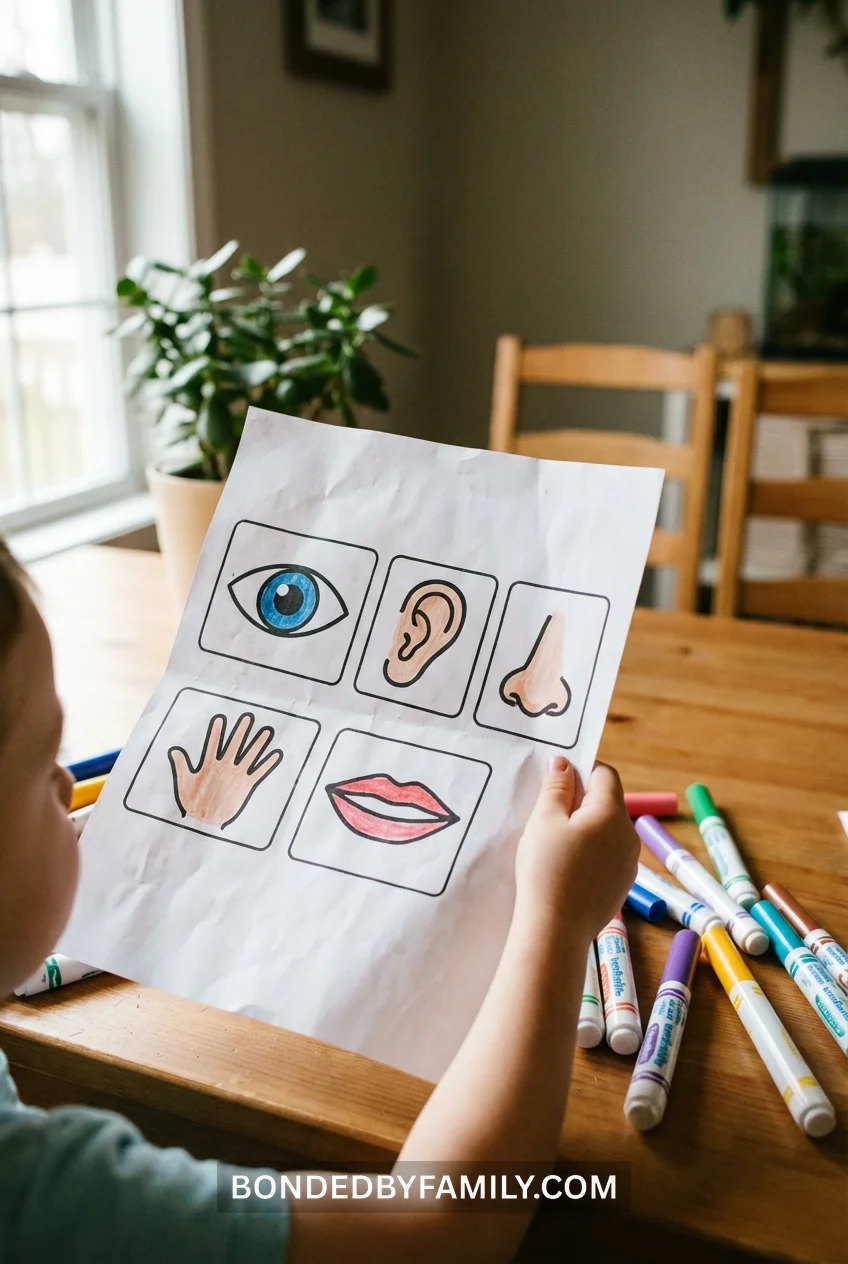
Hand your kid this challenge: Find one thing for each sense. Something they can see, hear, smell, touch, and (if safe) taste.
This one pulls kids out of their heads and into the present moment faster than any meditation app. When they’re spiraling about tomorrow’s math test or replaying an argument with their best friend, asking them to notice five specific things interrupts that thought loop.
The search itself—finding something soft, spotting something blue, listening for the quietest sound in the room—forces their brain to shift from worrying about the future or past to experiencing right now.
I keep a simple checklist printed and stuck to the fridge. On really rough days, we do this before we even try talking about what’s wrong.
3. The Feelings Flip Book (The One That Worked)
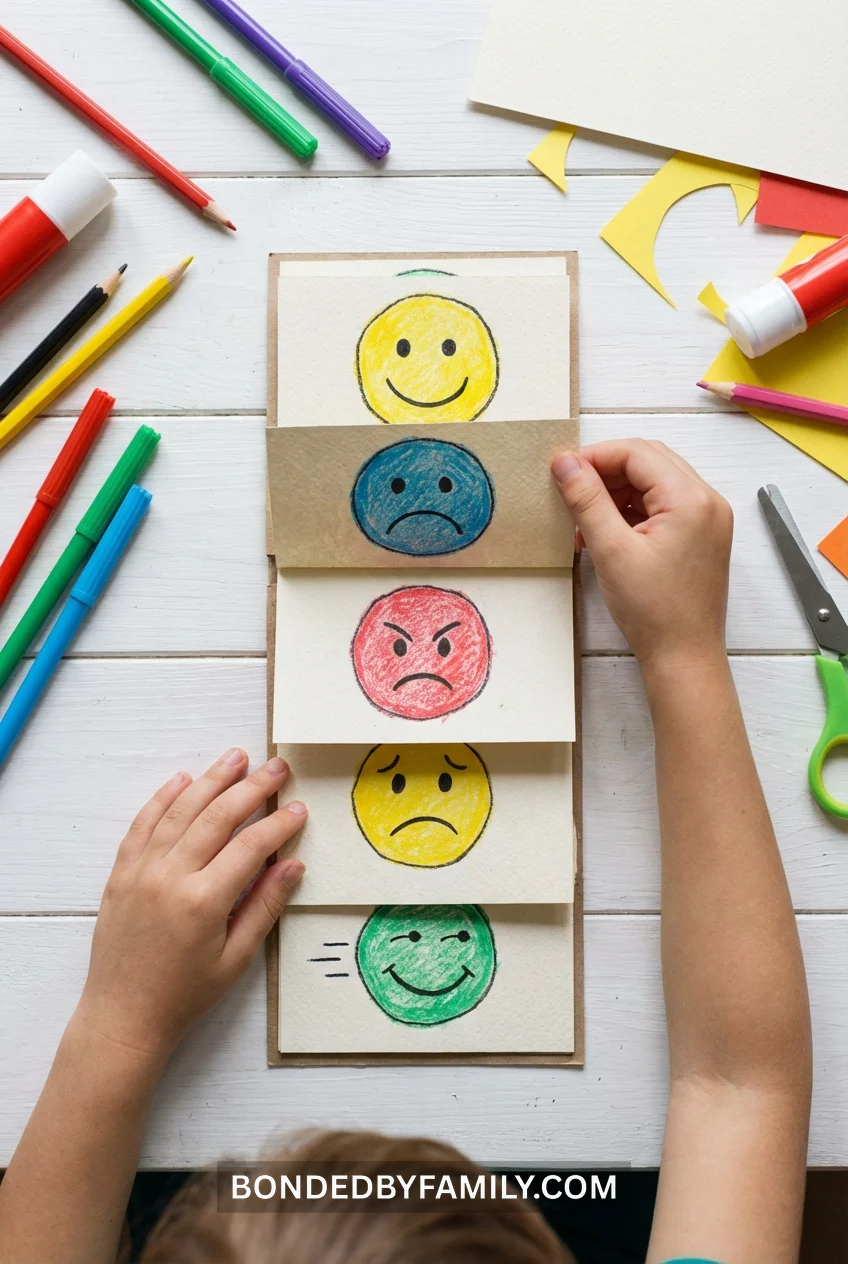
Grab some cardstock, fold it in half, and help your kid draw different feeling faces on each page. Happy, sad, frustrated, excited, worried—you pick based on what emotions your kid struggles to name.
Here’s where it gets useful: When emotions hit, they flip to the matching face instead of trying to verbalize. For kids who shut down or explode before they can find words, this flip book becomes a bridge.
The deep-dive version (because this one’s worth doing right):
Materials You Need:
- 5-7 sheets of cardstock or heavyweight paper (regular printer paper tears too easily)
- Markers or crayons (washable if you value your sanity)
- Stapler or hole punch + string
- Optional: Emoji stickers if drawing isn’t happening
Step-by-Step (The Way That Works):
- Cut the paper: Each sheet makes two pages. Cut cardstock into roughly 5×7-inch rectangles. You want 10-14 pages total.
- Stack and staple: Put all pages together and staple along the left edge. Three staples hold better than two. Trust me on this—kids are rough with tools they use constantly.
- Draw the feelings: One emotion per page. Start with the big four: happy, sad, mad, scared. Then add nuanced ones like “frustrated,” “overwhelmed,” or “disappointed” based on your kid’s emotional vocabulary.
- Make them weird: My kids insisted on adding “silly” and “hangry.” Both turned out to be incredibly useful. Let them include feelings that matter to them, even if they seem random.
- Add the back page: Final page gets “I don’t know how I feel.” This matters more than you’d think. Sometimes kids genuinely can’t identify the emotion, and having that option keeps them engaged instead of shutting down.
What Makes This Different From Printables:
You made it together. The wonky drawing of “angry” where they gave it three eyes by mistake? That’s their angry face. The ownership makes them reach for this instead of ignoring another worksheet.
Common Mistakes I Made (So You Don’t Have To):
Mistake #1: I made it too precious the first time. Pretty cover, laminated pages, perfect emoji faces. My daughter was afraid to use it because it looked “too nice.” Second version was messier and got used daily.
Mistake #2: Starting with too many emotions. We tried 20 different feelings. Overwhelming. Pare it down to 6-8 that your kid experiences regularly.
Mistake #3: Forgetting to model it. I’d hand it to her during meltdowns without ever using it myself. When I started flipping to “frustrated” and saying “This is how I feel when the grocery store is out of oat milk,” she started using it unprompted.
Cost Reality:
$3-5 if you’re buying supplies. $0 if you already have paper and markers.
The Part Nobody Tells You:
This works best if it lives somewhere accessible—not shoved in a drawer. We keep ours in a basket in the living room next to the couch. High-traffic area = high usage.
4. Mindful Eating (With One Raisin)
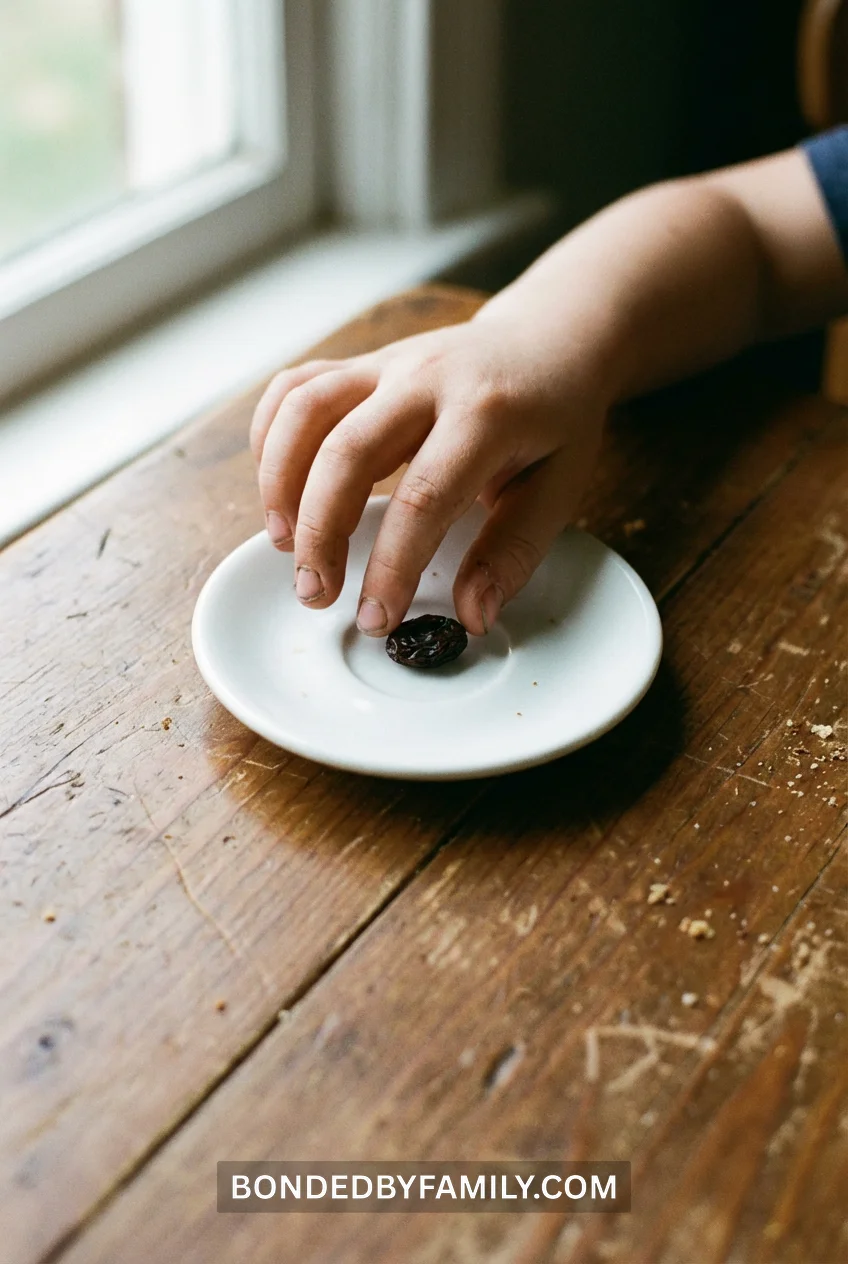
Give your kid one raisin. That’s the whole activity.
Before they pop it in their mouth, they have to:
- Look at it (really look—wrinkles, color, shape)
- Feel it (squishy? hard? rough?)
- Smell it
- Put it on their tongue without chewing (weird texture alert)
- Finally chew it super slowly and notice the taste changing
Takes 3-5 minutes. Feels like forever to a kid used to inhaling snacks. That’s exactly the point.
This is the gateway drug to mindfulness. If your kid thinks meditation is boring, start here. The novelty of treating a single raisin like a science experiment buys you their attention, and then the actual practice sneaks in through the back door.
Works with: raisins, chocolate chips, grapes, crackers, pretty much anything they won’t choke on. Avoid gum—learned that the hard way.
5. The Glitter Jar Calm-Down Tool
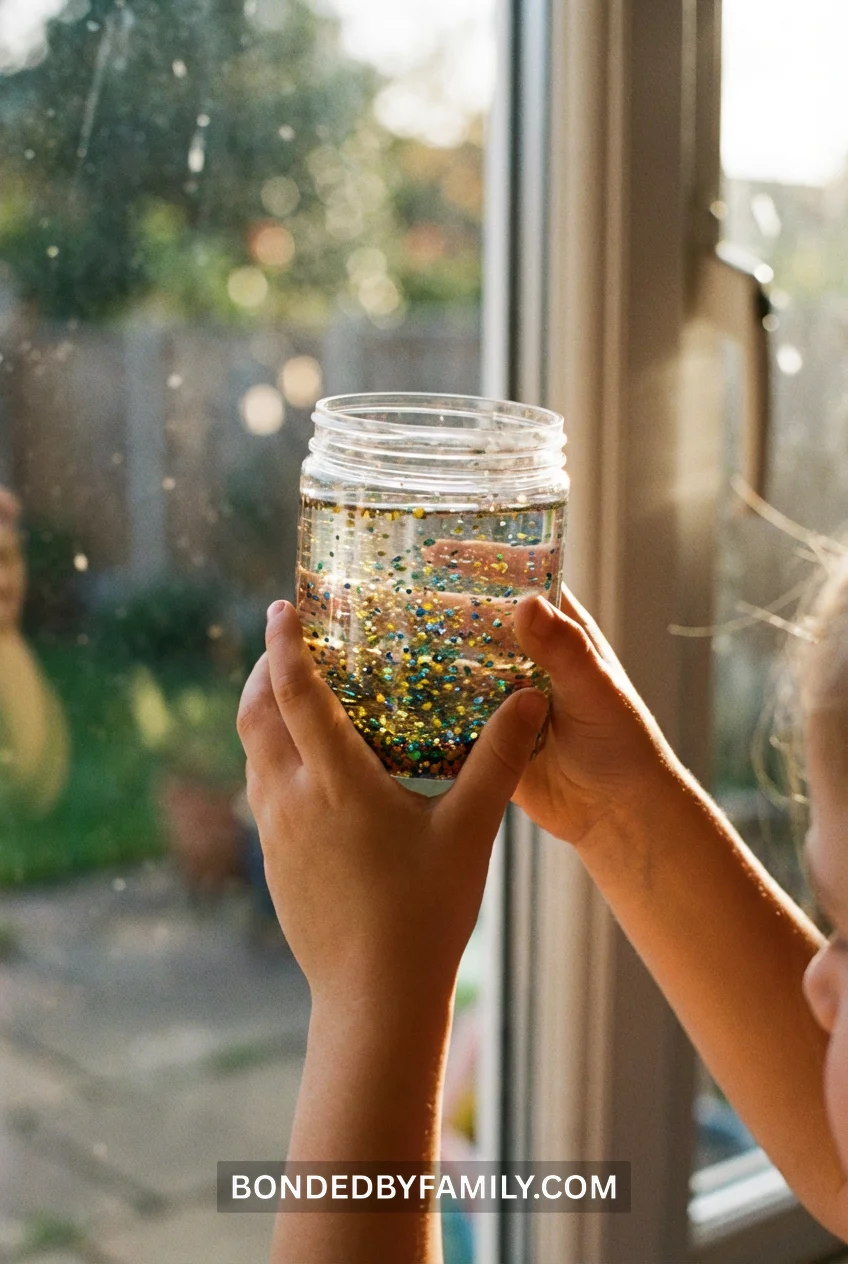
Fill a jar with water, glitter glue, and loose glitter. Shake it. Watch the glitter swirl and slowly settle.
The metaphor writes itself: your thoughts are like the glitter. When you’re upset, everything’s swirling and chaotic. As you watch and breathe, things start to settle.
But honestly? Most kids don’t care about the metaphor. They just think watching glitter is cool. That’s enough. While they’re mesmerized, their breathing slows down naturally. Their body gets the message to chill even if their brain hasn’t caught up yet.
How to make one:
- Clear plastic jar with tight lid (mason jars work, but plastic is better if it’s going to get thrown)
- Fill ¾ full with warm water
- 2 tablespoons clear glue or glitter glue
- 1-2 teaspoons loose glitter
- Drop of food coloring if you want
- Hot glue the lid shut unless you enjoy cleaning glitter off your ceiling
Cost: Under $5. One jar lasts indefinitely.
6. Body Scan Treasure Hunt
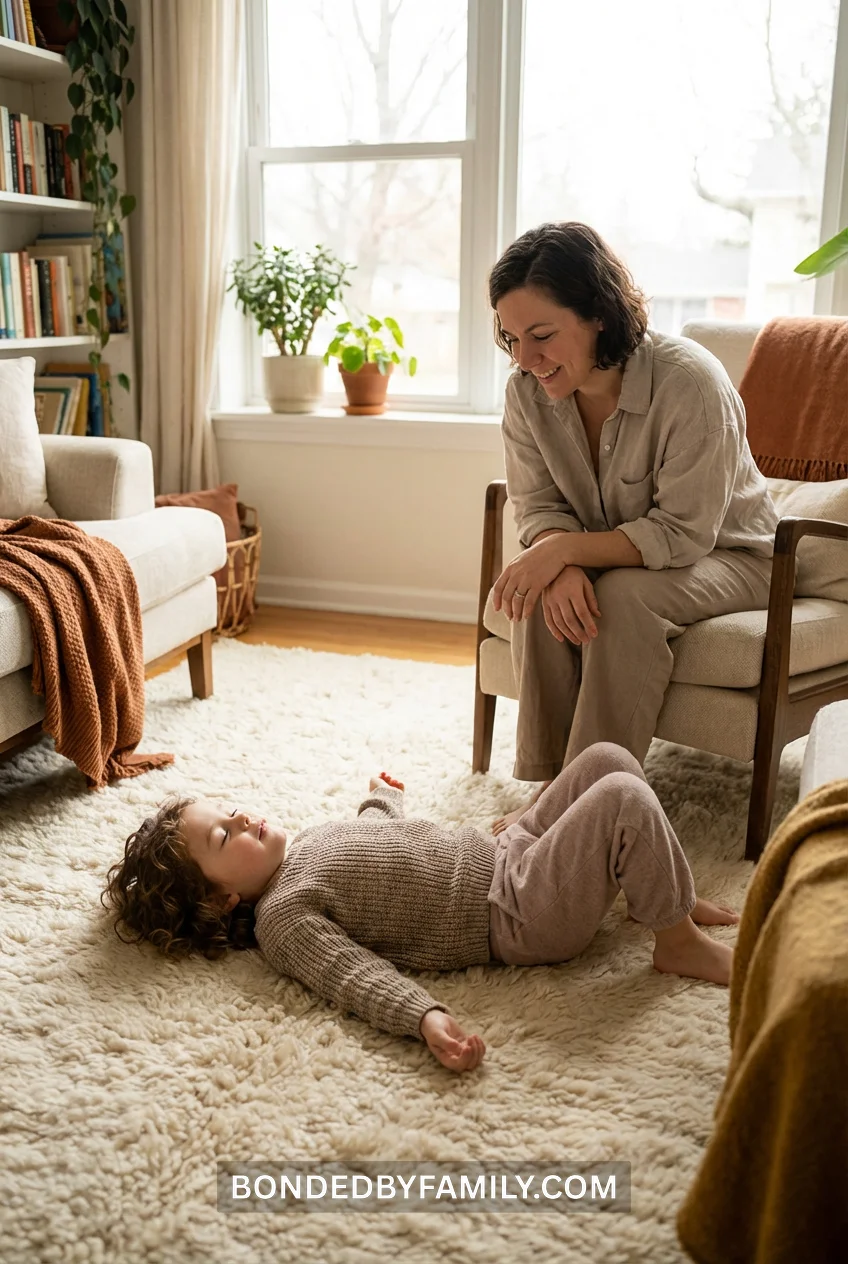
Lie down together. Starting at their toes, ask: “What do your toes feel like right now? Warm? Cold? Tingly? Relaxed? Tight?”
Move up through the body—feet, legs, belly, chest, arms, face. The goal isn’t to change anything, just notice.
This works for kids because you’re giving their mind a specific job. Instead of “relax” (vague and unhelpful), you’re asking “What does your left knee feel like?” That’s concrete. They can do that.
When it backfires: If your kid giggles through the whole thing, that’s fine. Laughing releases tension too. Don’t force seriousness.
My version: I turned it into a story. “The body scan robot is checking all your parts to make sure they’re working…” My kids tolerate this way longer when there’s a robot involved.
7. Emotion Check-In Cards (Better Than Asking “How Was School?”)
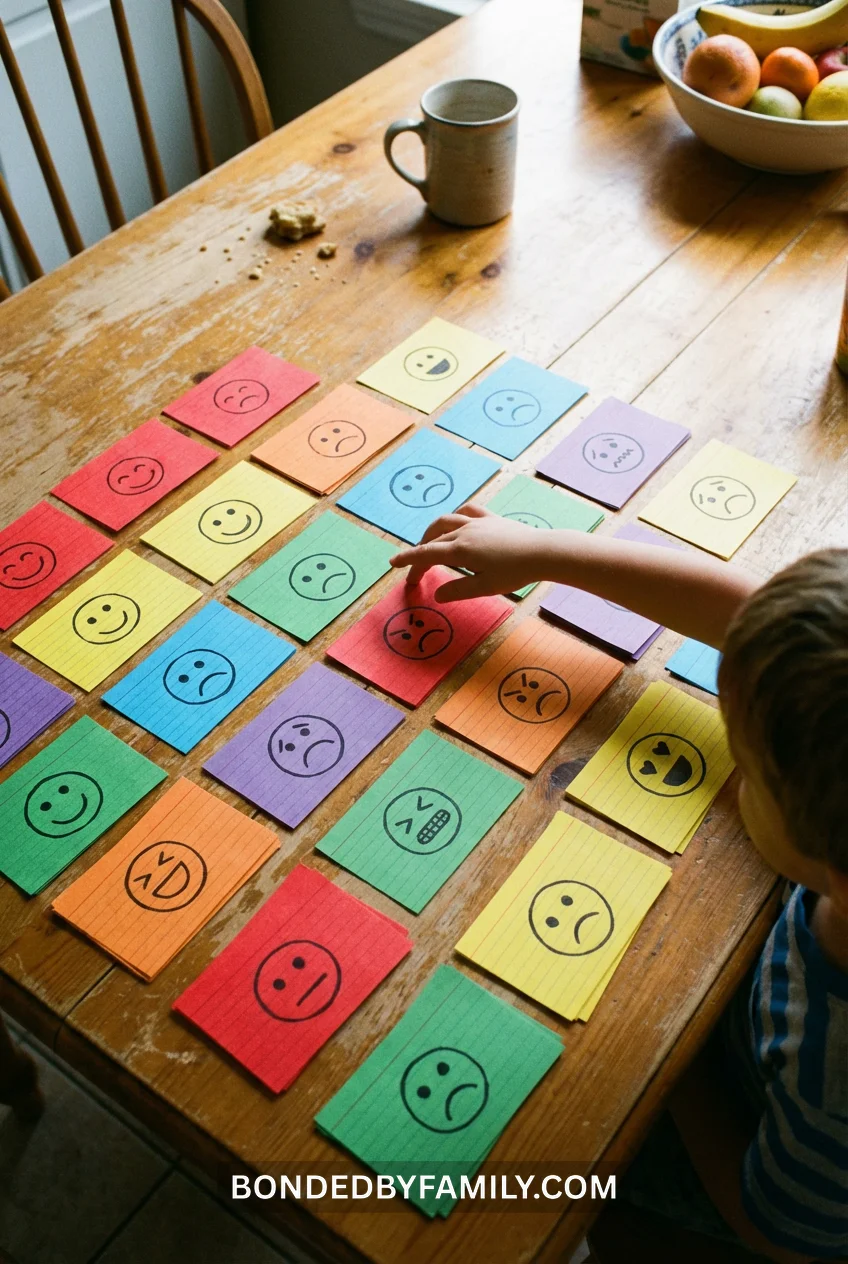
Skip the “How was your day?” question that kids answer with “fine” 100% of the time.
Instead, spread out cards with feeling faces. “Pick two—how you felt most of the day and how you feel right now.”
Then—and this is the part that matters—you pick two for yourself. “I felt worried this morning about that work meeting, but right now I feel relieved because it went okay.”
Modeling this is what makes it work. Kids learn emotional vocabulary by hearing you name your own feelings, not from being interrogated about theirs.
Make your own: Index cards + markers. Five minutes. Done.
Or print: Free emotion card PDFs exist everywhere online. But honestly, hand-drawn ones get used more. Kids like seeing your wonky smiley faces.
8. The Worry Time Box
Grab a small box (shoebox works perfectly). This is now the official worry container.
When worries pop up at random times—during homework, at dinner, before bed—write them on a slip of paper and put them in the box. Set a specific “worry time” each day (we do 10 minutes after school) to open the box and talk about what’s inside.
Why this isn’t just avoiding problems:
Kids’ brains don’t have great timing. They’ll spiral about next week’s dentist appointment in the middle of math homework, then forget about it completely during worry time. The act of writing it down and putting it away teaches their brain that worries don’t need to be addressed the instant they appear.
Some worries disappear by the time you open the box. Those get tossed. Others are still there and get real airtime.
The catch: You need to keep the worry appointment. If you blow it off, they’ll stop using the box because their brain learns “these worries never get addressed anyway, so I better keep them at the front of my mind.”
Pro tip: Decorate the box together. My son covered his in dinosaur stickers. Makes it less intimidating to use.
9. Mindful Coloring (But Not Like You Think)
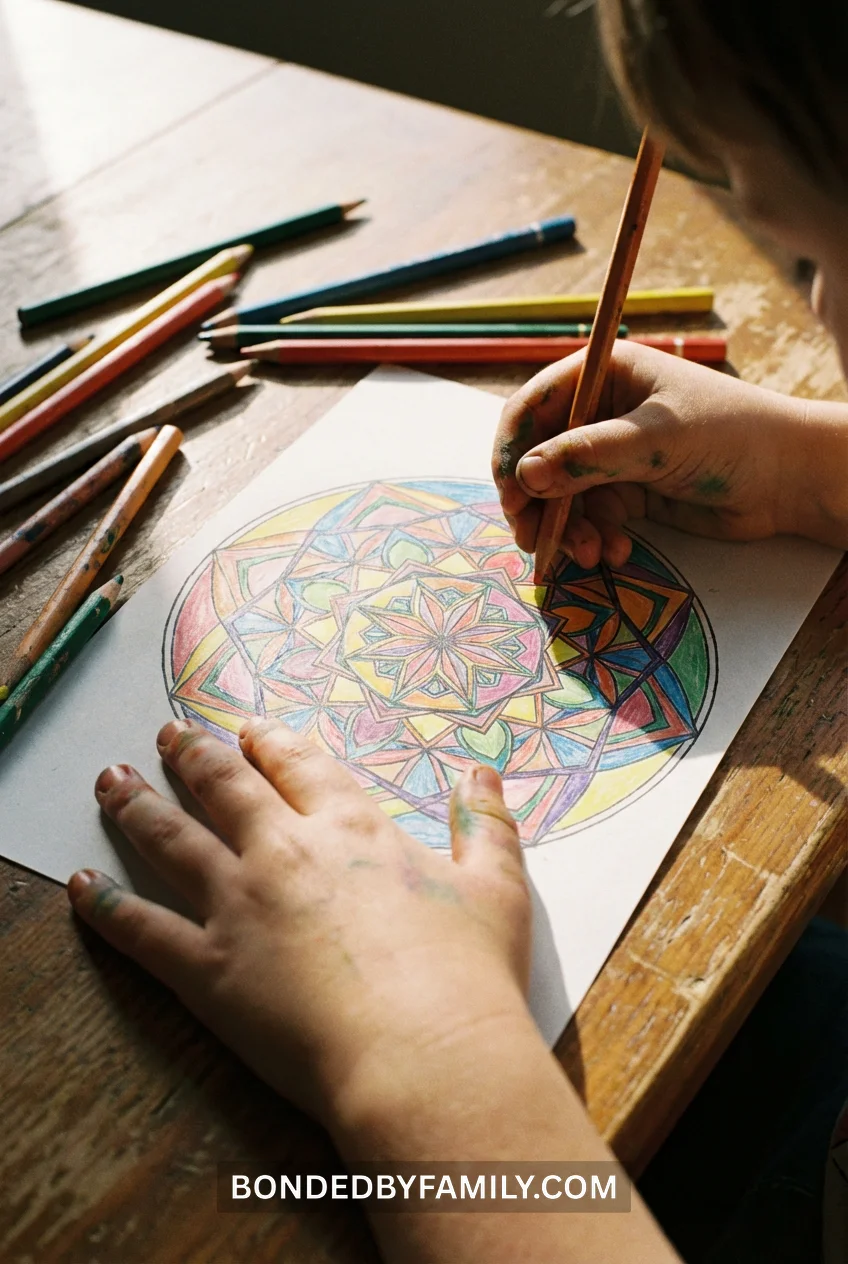
Forget the fancy adult coloring books with tiny intricate patterns that kids give up on in 90 seconds.
Print a simple mandala or geometric design. Hand them colored pencils (not markers—less bleed-through stress). One rule: Color one section at a time, and really pay attention to staying in the lines.
That’s it. No music. No talking. Just coloring with focus.
The repetitive motion combined with visual focus quiets the mental chatter. It’s meditation disguised as art time.
What works best:
- Larger patterns (nothing smaller than a quarter-inch section)
- Colored pencils over markers (more control = less frustration)
- 10-15 minutes max (diminishing returns after that)
- Let them stop when done, don’t force finishing
When kids resist: “This is boring” usually means “this is hard.” That resistance is the practice. Their brain wants to go fast and jump around. This teaches it to slow down and focus on one thing. Uncomfortable ≠ bad.
Conclusion
You don’t need a meditation cushion or a teaching degree to help your kids build emotional regulation skills. You need five minutes, a willingness to try stuff that feels a little weird, and the knowledge that imperfect practice beats perfect theory every single time.
Start with whatever seems easiest—usually the breathing buddy or glitter jar. Do it together for three days in a row. Then pick a second one to add.
Your kid might still melt down over mismatched socks tomorrow. But now you’ve got actual tools in your back pocket beyond “just calm down” (which has never worked for anyone in the history of feelings).
And honestly? Half of these work on stressed-out adults too. The glitter jar got me through a particularly brutal Tuesday last month. No shame.
FAQ
How old do kids need to be for mindfulness activities?
Most of these work starting around age 4-5, when kids can follow simple instructions and have enough language to talk about feelings. Younger kids (2-3) can do simplified versions—breathing buddy works great, emotion cards with just happy/sad/mad faces, and glitter jars for pure entertainment value. Older kids (8+) can handle longer body scans and deeper conversations during worry time.
What if my kid refuses to try mindfulness activities?
Don’t call it “mindfulness.” Seriously. Call it the glitter jar game, or breathing buddy time, or feelings check-in. The word “mindfulness” makes some kids shut down because it sounds like homework. Also, bribe them. I’m not above using screen time or dessert as motivation to try something new. Once they realize it feels good, the bribes become unnecessary.
How often should we practice these activities?
Daily is ideal, but don’t let perfect be the enemy of good. Three times a week beats zero times a week. We do a quick breathing buddy every night before bed (2 minutes), emotion check-in after school most days (5 minutes), and pull out the glitter jar or worry box as needed during rough moments. Consistency matters more than duration.
Can these replace therapy for anxious kids?
No. These are tools, not treatment. If your child’s anxiety interferes with daily life—school refusal, constant physical symptoms, persistent sleep problems—talk to their pediatrician about getting an evaluation. Mindfulness activities are fantastic supplements to therapy and medication when needed, but they’re not substitutes for professional help.
What’s the biggest mistake parents make with mindfulness for kids?
Trying to force it during a meltdown. If your kid is in full-blown tantrum mode, their nervous system is too activated to engage with mindfulness. Use these techniques before meltdowns (prevention), after the peak has passed (recovery), or during calm moments (practice). Attempting a body scan while they’re screaming about homework is like trying to teach someone to swim while they’re drowning—terrible timing.