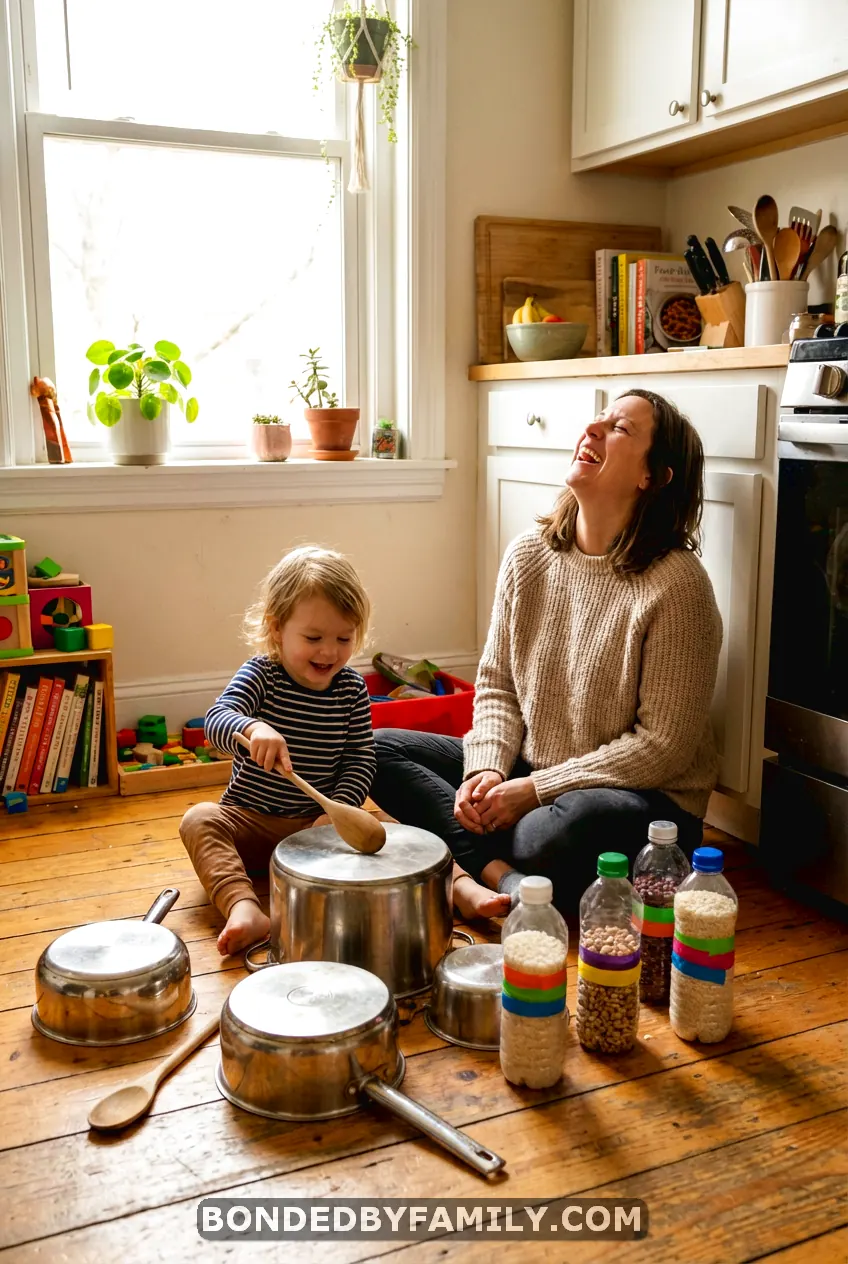
You know that moment when your kid discovers the joy of banging two wooden spoons together at full volume? That’s not chaos—that’s music education happening right in your kitchen.
I used to think music activities for kids required piano lessons, expensive instruments, or some kind of musical talent I definitely don’t have. Turns out, the best music activities are the ones that happen spontaneously with whatever you’ve got lying around. My daughter once spent an entire afternoon creating a “symphony” with plastic containers and dried beans. Was it melodic? Absolutely not. Did she learn about rhythm, sound patterns, and creative expression? You bet.
Whether you’re looking for rainy day activities, homeschool music ideas, or just ways to channel that endless energy, these music activities for kids work with what you already have at home.
Why Music Activities Matter (But Not How You Think)
Before we jump into the activities, let’s get real: I’m not here to tell you that music will turn your child into the next Mozart. But here’s what I’ve actually observed after years of doing these activities with my kids:
Music activities help kids understand patterns. When my son was struggling with reading, rhythmic clapping exercises helped him break words into syllables. It clicked in a way traditional phonics worksheets never did.
They’re sensory regulation tools in disguise. Got a kid bouncing off the walls? A structured music activity channels that energy. Got a kid who’s overstimulated? Calm instrumental play brings them down.
Music activities build confidence without pressure. There’s no “wrong” way to shake a maraca or bang on a drum. Kids who struggle academically often shine during music time because the rules are different.
And honestly? They’re some of the most genuinely fun things you can do together. There’s something about making noise together that dissolves the typical parent-kid dynamic and turns you both into co-creators.
The Setup: What You Actually Need
Forget the fancy music kits. Most of these activities use things already in your house:
From the kitchen: Pots, pans, wooden spoons, plastic containers, dried beans/rice, measuring cups, plastic bottles From the craft stash: Empty paper towel rolls, rubber bands, tissue boxes, aluminum foil, markers, tape From the toy bin: Blocks, balls, stuffed animals, toy cars Basic supplies: Painter’s tape, printer paper, crayons
The beauty of these activities is their flexibility. Don’t have plastic bottles? Use cardboard tubes. No dried beans? Beads, buttons, or small pebbles work. The specific materials matter less than the process of exploring sound.
12 Music Activities for Kids (Organized by Type)
Movement-Based Music Activities
1. Freeze Dance with a Twist
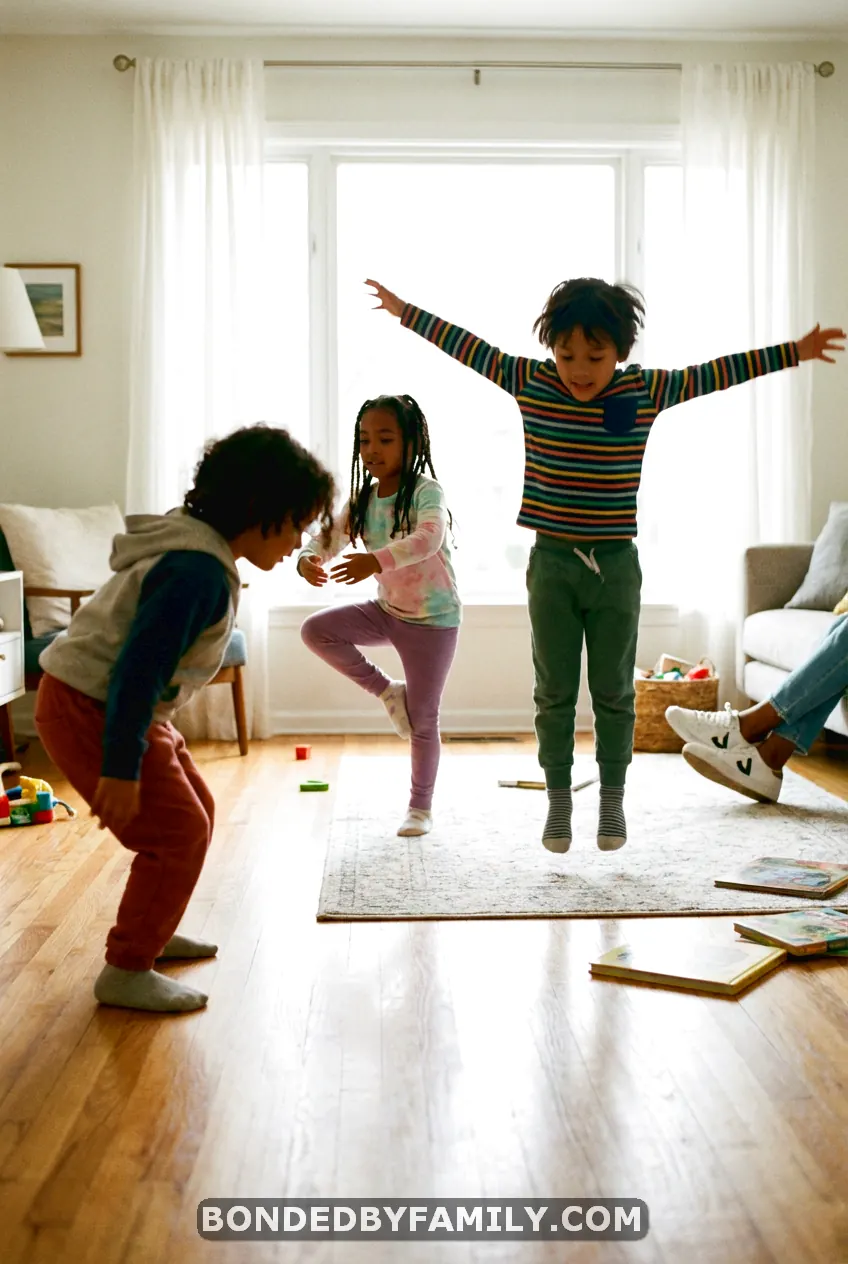
Standard freeze dance is great, but here’s how to make it educational: Assign different movement styles to different genres of music. Classical = slow, flowing movements. Pop = bouncy jumps. Reggae = side-to-side sways. When the music stops, everyone freezes.
Why this works: Kids learn to listen for tempo, rhythm, and style differences while burning energy.
Real talk: The first time we tried this, my kids just wanted to run in circles regardless of the music. We had to make it super exaggerated—I’d do dramatic ballet twirls during classical music until they started mimicking me. Now they request specific genres.
2. Musical Emotions Walk
This one’s brilliant for emotional intelligence. Play different styles of music and have kids walk around the room matching the “feeling” of the music—stomping angrily for intense music, tiptoeing for gentle music, marching proudly for brass band music.
The parenting win: When my daughter started labeling her own emotions better after we’d done this activity regularly. She’d say, “I feel like angry stomping music today” and I’d immediately understand where she was at.
3. Scarf Dancing
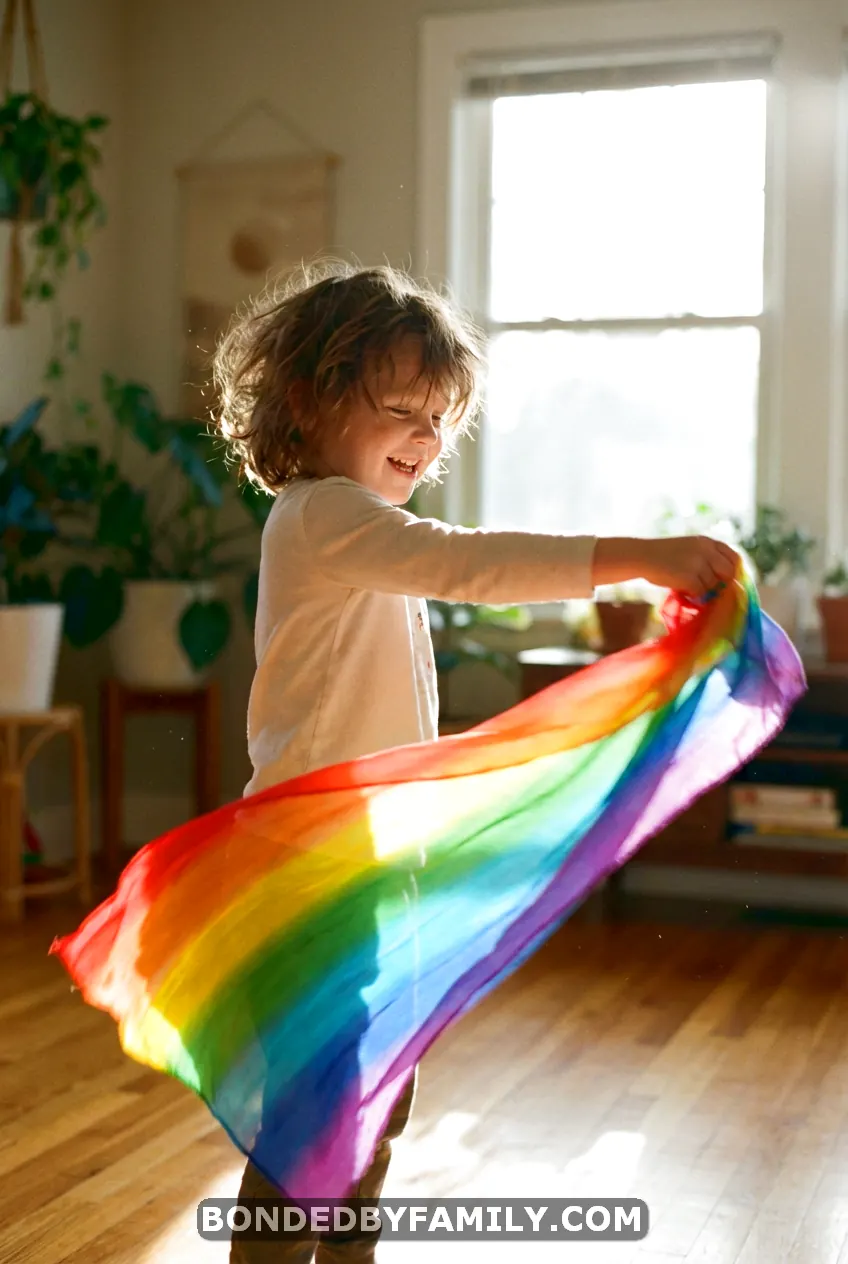
Give each kid a lightweight scarf or fabric. Play various tempos of music and let them move the scarves to match—slow floating for gentle music, fast whipping for energetic songs.
Why scarves? They make the “invisible” rhythm visible. Kids can literally see the patterns they’re creating.
Budget tip: Cut up old t-shirts into large squares. Works perfectly and costs nothing.
DIY Instrument Activities
4. Shaker Station Creation
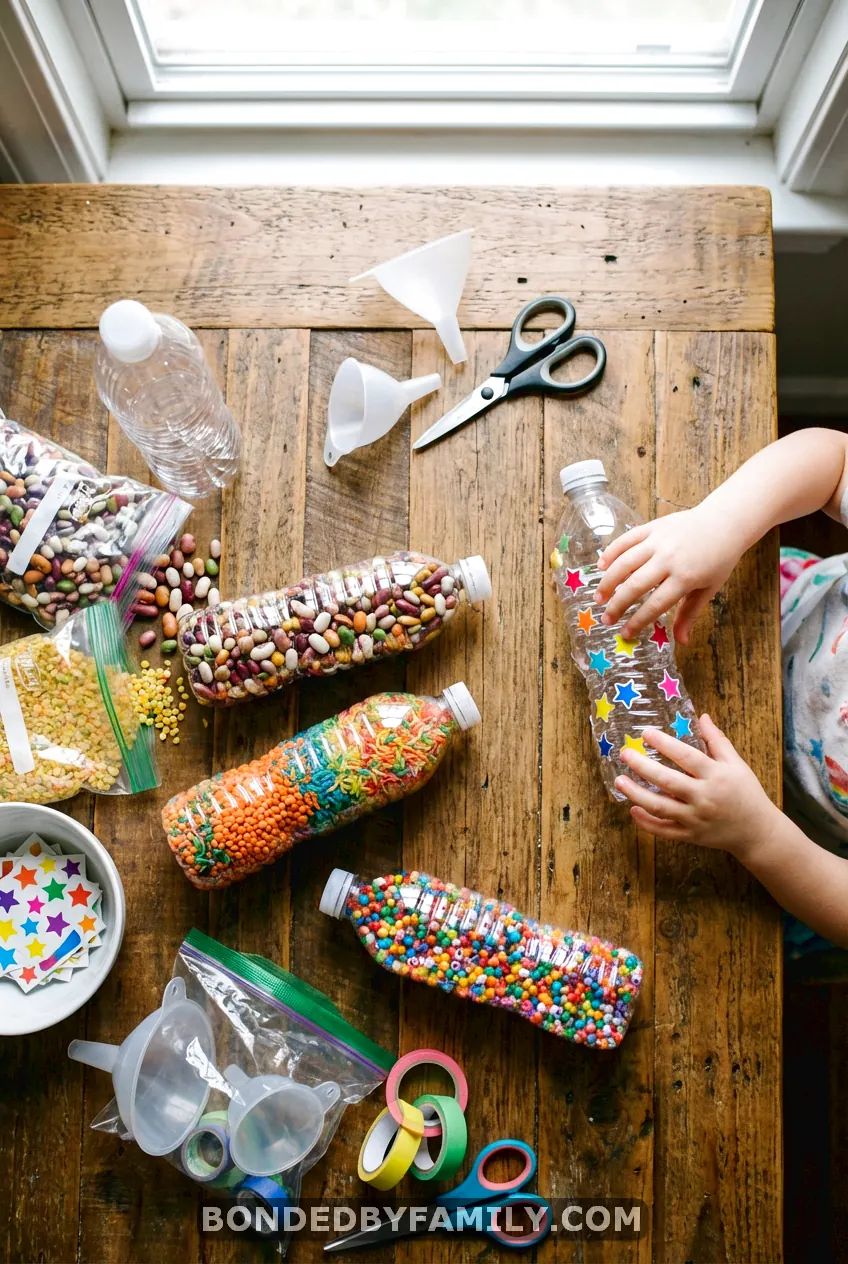
The classic: fill plastic bottles or containers with different materials (rice, beans, beads, buttons) and seal tightly. But here’s the upgrade—have kids test different materials and rank them by sound. Which is loudest? Softest? Highest pitch?
What I learned: Let them overfill one on purpose. The disappointment when it barely makes a sound is a fantastic physics lesson about space and movement.
Materials needed:
- Empty water bottles or small containers with tight lids
- Dried rice, beans, small beads, buttons, or small pebbles
- Duct tape to secure lids (trust me on this)
- Stickers or markers for decorating
5. Paper Plate Tambourine
Paper plates + dried beans between two plates + staples around the edge = instant tambourine. Decorate before assembling.
The real version: My kids wanted to put GLITTER inside. I said no. They did it anyway when I left the room. Now we have a glitter tambourine that leaves a trail wherever it goes. It’s been three years. I’m still finding glitter.
6. Rubber Band Guitar Box
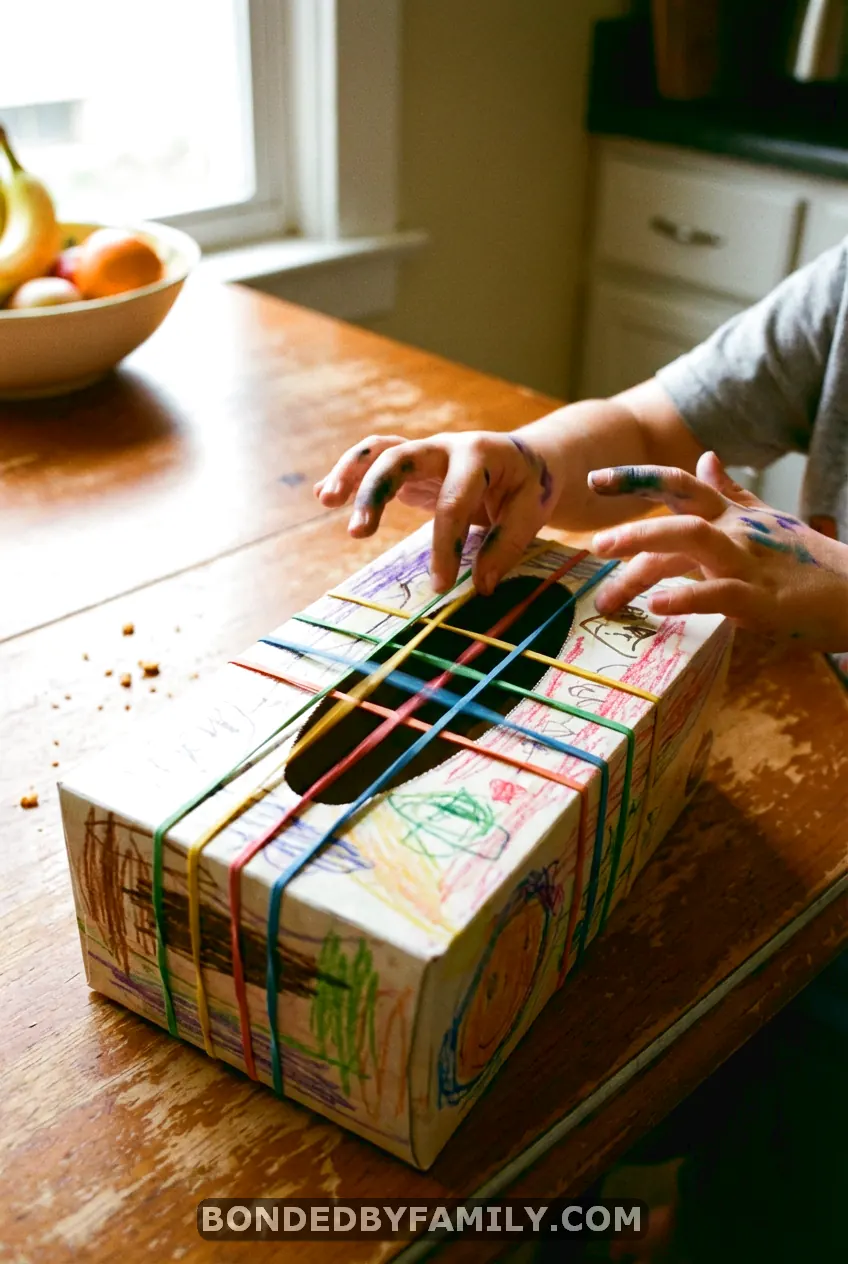
Take an empty tissue box, stretch 4-5 rubber bands of different thicknesses around it lengthwise over the opening. Instant guitar that actually demonstrates pitch differences.
The science lesson: Thicker rubber bands = lower pitch. Tighter rubber bands = higher pitch. Pull the bands to different tensions and show how sound changes.
Rhythm and Pattern Activities
7. Body Percussion Patterns
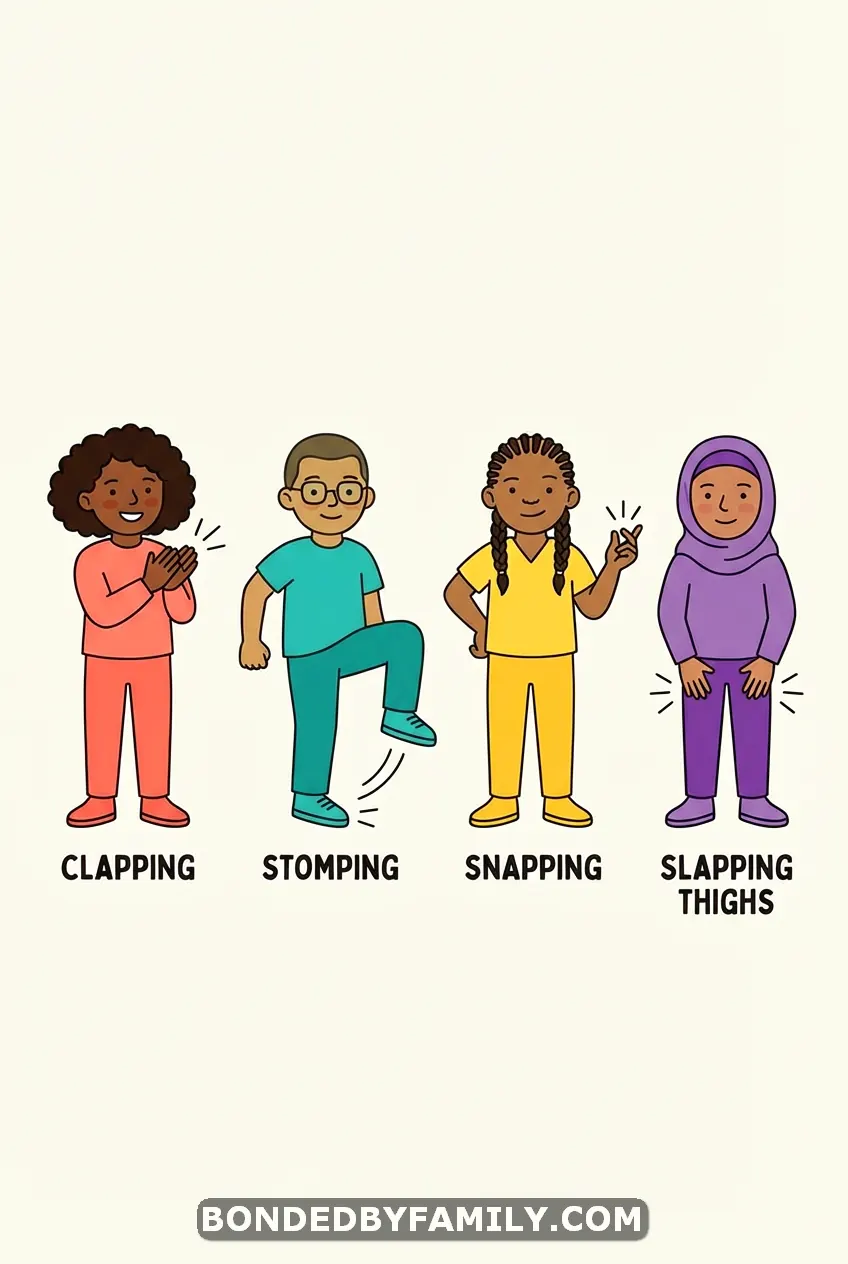
Teach simple rhythms using only body sounds: clap, stomp, snap, thigh slap. Start with simple patterns (clap-clap-stomp) and build complexity.
Why this matters: Body percussion costs nothing, works anywhere (waiting rooms, car rides, bedtime wind-down), and builds mathematical pattern recognition.
Progression that worked for us:
- Week 1: Simple two-beat patterns (clap-stomp, clap-stomp)
- Week 2: Three-beat patterns (clap-clap-stomp)
- Week 3: Four-beat with two sounds (clap-stomp-clap-stomp)
- Week 4: Let them create their own patterns
8. Echo Clapping Game
You clap a rhythm, they echo it back. Start stupidly simple (two claps) and slowly increase complexity. This is harder than it sounds and incredibly engaging.
The competitive angle: My kids turned this into a competition to see who could echo the longest pattern. Suddenly, they were begging to practice.
9. Sound Scavenger Hunt
Give kids 10 minutes to find items around the house that make interesting sounds when tapped, shaken, or scraped. Then create a “sound library” where you record what each item sounds like.
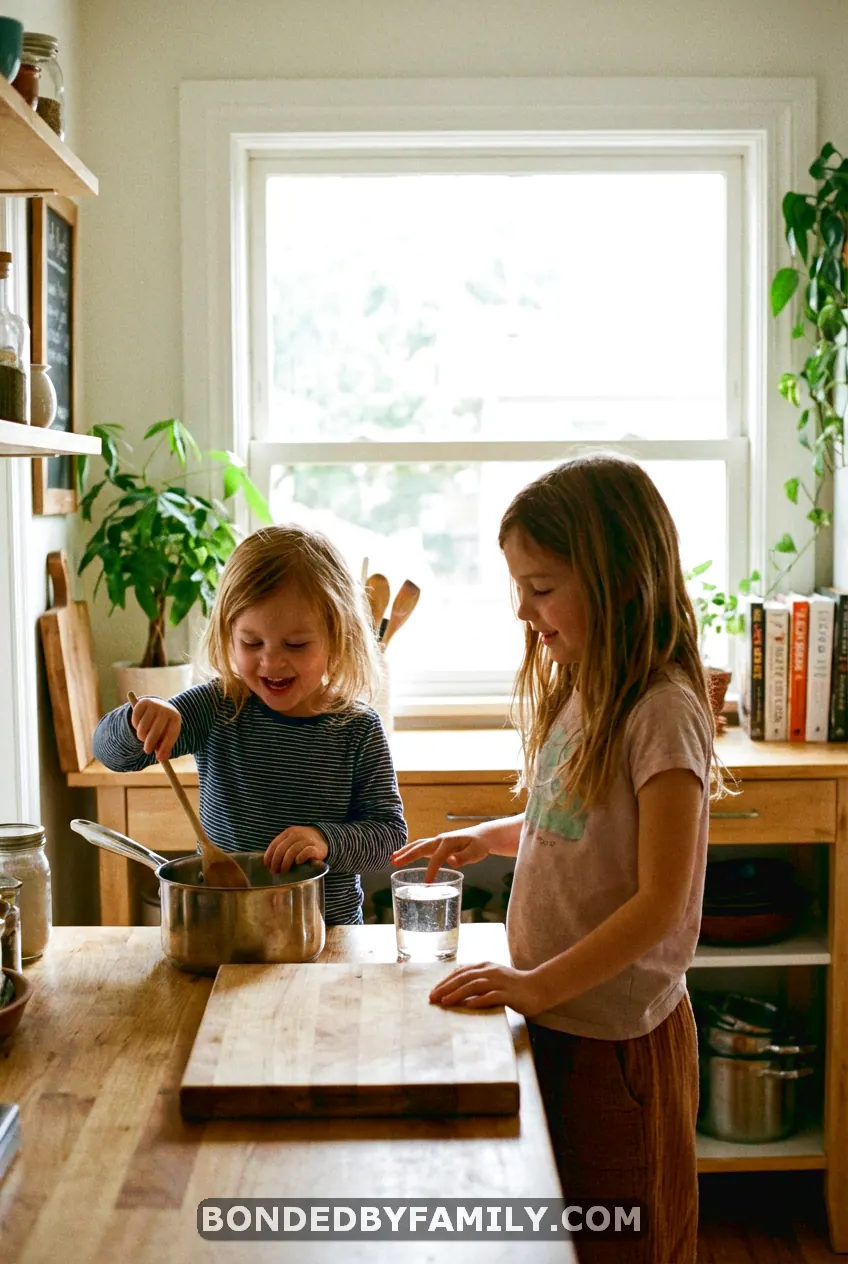
What they’ll discover: The bathroom sounds completely different than the kitchen. Metal sounds different than wood. Water in glasses at different levels creates different pitches.
Listening and Identification Activities
10. Instrument Identification Game
Play audio clips of different instruments (YouTube is your friend here) and have kids identify them. Start with obviously different ones (drum vs. flute) and progress to similar instruments (trumpet vs. trombone).
Make it visual: Print or draw pictures of instruments. Kids point to the picture when they hear it.
Extension activity: Assign actions to instruments. When you hear drums, everyone stomps. Piano = finger walking on tables. Flute = twirling.
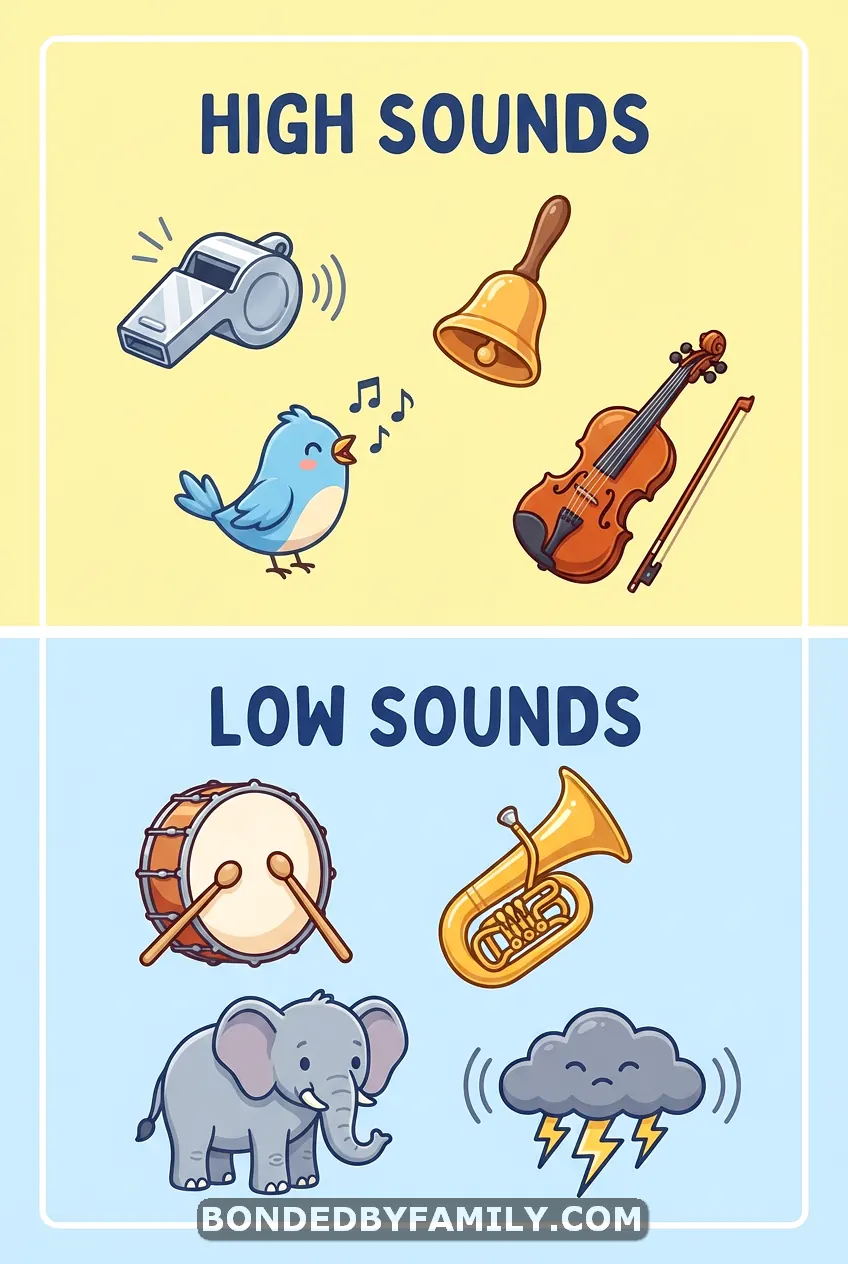
11. High-Low Sound Sorting
Collect or create sounds and have kids categorize them as “high” or “low” pitched. This builds auditory discrimination skills.
Easy version: You make sounds, they raise their hands for high, touch the floor for low. Advanced version: They create the high and low sounds using household items and explain why one is higher than the other.
12. Silent Song Guessing
Hum or play familiar songs (Twinkle Twinkle, Happy Birthday, Row Your Boat) on a homemade instrument without words. Kids guess the song.
Why this works: Forces kids to focus on melody instead of lyrics. It’s harder than you’d think and sparks hilarious guesses.
Our favorite twist: Let kids take turns being the “performer.” Their song choices reveal what’s actually sticking in their heads (prepare for Cocomelon and Baby Shark on repeat).
Making These Activities Actually Happen
The Reality of Implementation
Here’s what nobody tells you about kids’ activities: Planning them is the easy part. Actually doing them when you’re tired, they’re cranky, and you have seventeen other things to do? That’s the challenge.
What worked for my sanity:
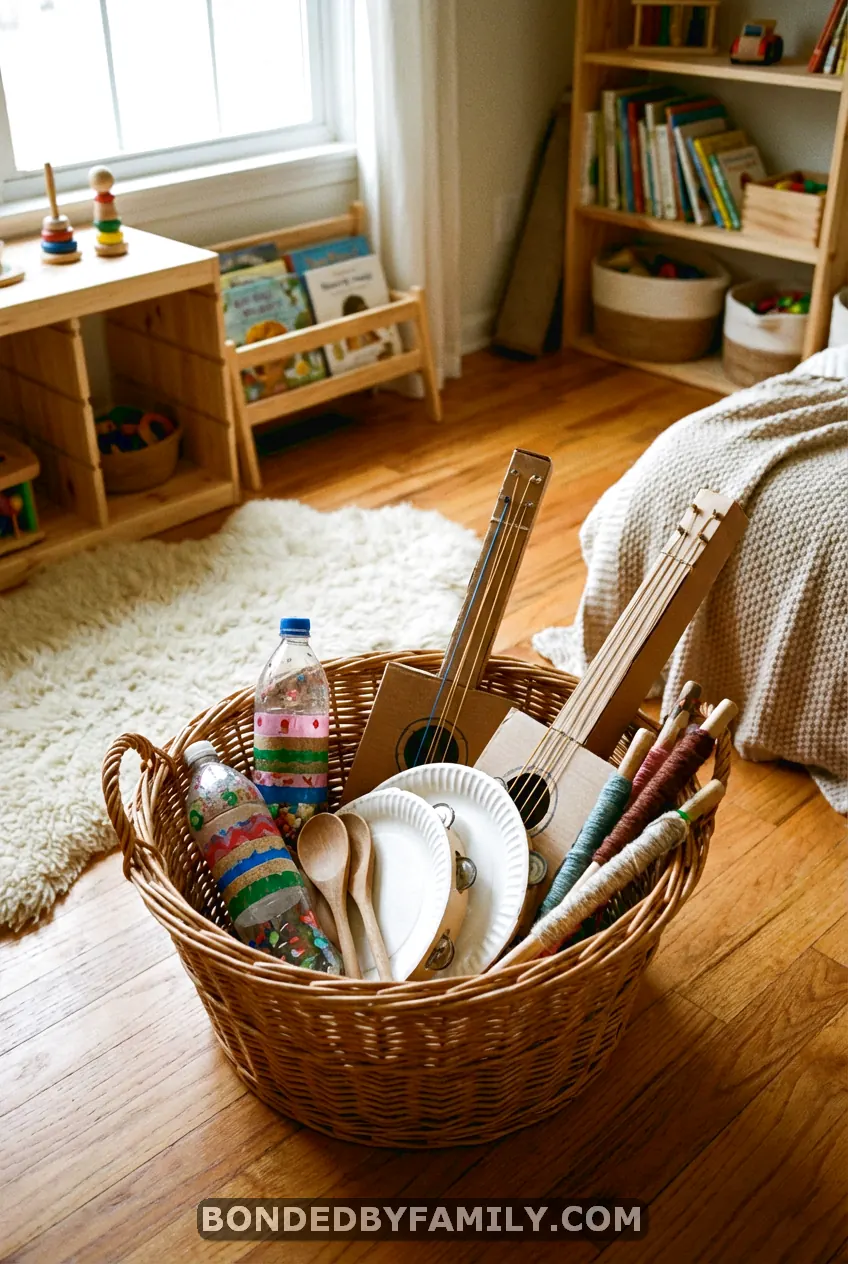
The activity basket approach: Keep a small basket with the essentials (shakers, drums, scarves, rubber bands) easily accessible. When someone says “I’m bored,” you can pull it out in seconds.
The 10-minute rule: Most of these activities hit peak engagement around 8-10 minutes. Don’t force it past that point. Better to end while they’re still having fun and want to do it again tomorrow.
The “exploration first” philosophy: The first time you do an activity, expect chaos. Kids need to bang every pot before they’ll follow rhythm patterns. Let them.
The documentation trick: Occasionally record videos of your kids doing these activities. They LOVE watching themselves, which makes them want to do the activity again to “perform better.”
Age Adaptations That Actually Make Sense
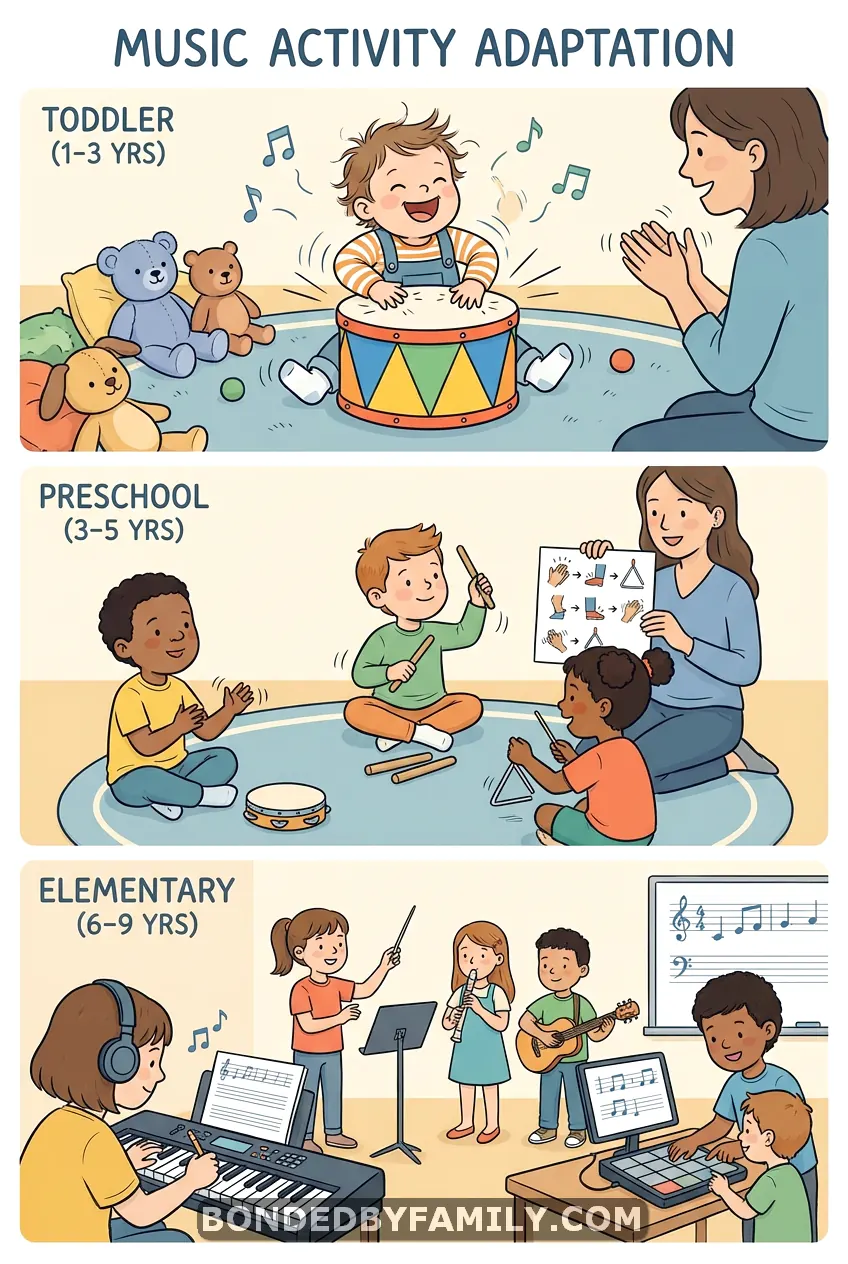
For Toddlers (18 months – 3 years)
Keep it simple and sensory. Focus on:
- Basic shaker activities
- Gentle drumming on pots
- Simple freeze dance
- Any activity where “loud” is celebrated
Real talk: At this age, it’s 90% chaos and 10% actual music. That’s completely normal. The goal is exposure to rhythm and sound, not precision.
For Preschoolers (3-5 years)
This is the sweet spot for most activities. They can:
- Follow simple rhythm patterns
- Participate in group music games
- Create their own instruments with help
- Start distinguishing between high and low sounds
What surprised me: Preschoolers LOVE performing. Set up a “stage” area and let them put on “concerts” for stuffed animals.
For Early Elementary (5-8 years)
They’re ready for:
- Complex rhythm patterns
- Instrument identification
- Musical composition (creating their own songs/patterns)
- Teaching younger siblings (huge confidence booster)
The shift that happens: Around age 6-7, kids start caring about being “good” at music. Emphasize experimentation and creativity over correctness.
The Mistakes I Made (So You Don’t Have To)
Mistake #1: Starting with too many instruments. My first attempt at “music time” involved laying out every possible instrument I’d created. The kids were overwhelmed, fought over the “best” ones, and nobody actually made music.
The fix: Introduce one or two activities at a time. Master them. Add more gradually.
Mistake #2: Expecting quiet, focused engagement. I don’t know what Pinterest-perfect vision I had, but my kids doing music activities looks nothing like serene concentration. It’s loud. It’s chaotic. Someone always ends up in tears.
The fix: Embrace the chaos. Set volume boundaries if you need to (“inside drums” vs. “outside drums”), but expect noise.
Mistake #3: Not having a clear endpoint. One time, I said, “Let’s do music!” with no plan for when it would end. Thirty minutes later, I was desperately trying to regain control while my kids escalated into a full drum circle rave.
The fix: Use timers. “We’re playing music until the timer beeps.” Works like magic.
Mistake #4: Making every session educational. Sometimes, I got so caught up in teaching concepts that I sucked all the joy out. “No, no, that’s not the right rhythm pattern!” is a terrible thing to say during supposed playtime.
The fix: Have “free play” music sessions where the only rule is to make sound and have fun. Save structured learning for when they’re receptive.
The Unexpected Benefits I Noticed
After doing these activities consistently for six months, here’s what changed:
Better emotional regulation: My daughter started using music to manage big feelings. She’d go drum out frustration or sing when anxious.
Improved focus: My son’s attention span for other activities increased. Turns out rhythm training builds concentration skills.
Sibling cooperation: Music activities were some of the only times my kids actually played together without fighting. There’s something about creating sound together that builds connection.
My own stress relief: Honestly? I started looking forward to these activities. There’s something deeply satisfying about making noise together.
When Music Activities Don’t Work
Some kids just don’t vibe with music activities. And that’s okay.
Signs your kid isn’t into it:
- Consistent resistance or complaints
- Shows more interest in other activities
- Gets overwhelmed by sound rather than engaged
What to try:
- Lower volume (quieter instruments, softer music)
- Shorter sessions (5 minutes instead of 15)
- Different times of day (music time right before bed might be overstimulating)
- Focus on movement over sound if they’re more kinesthetic
When to let it go: If, after trying modifications, they still hate it, move on. Plenty of other ways to build creativity and pattern recognition. Don’t turn music into a battleground.
Your 2-Week Music Activity Starter Plan
Want to try these, but don’t know where to start? Here’s what worked for us:
Week 1:
- Monday: Freeze Dance (5-10 min)
- Wednesday: Make shakers (15 min)
- Friday: Echo clapping game (5-10 min)
Week 2:
- Monday: Scarf dancing (10 min)
- Wednesday: Sound scavenger hunt (15 min)
- Friday: Body percussion patterns (10 min)
The rules:
- Pick a consistent time of day
- Keep sessions short
- Don’t force it if the energy is wrong
- Let kids revisit favorite activities
Final Thoughts: The Point of All This
Here’s what I’ve learned about music activities for kids: They’re not really about music.
They’re about giving kids permission to be loud in a world that constantly tells them to be quiet. They’re about creating together instead of you directing and them following. They’re about discovering that anything can make interesting sounds if you pay attention.
The paper plate tambourine you make today isn’t training a future musician. It’s showing your kid that they can take ordinary things and transform them into something new and interesting. That’s a life skill that goes way beyond rhythm and pitch.
Will your house be louder? Yes. Will you occasionally want to hide all the instruments? Absolutely. Will there be moments when your kid creates a perfect little rhythm pattern, and your heart unexpectedly swells? Also yes.
Start with one activity this week. Just one. See what happens. My guess? You’ll be surprised by how much your kids get into it – and how much you do too.
Now go make some noise together.