Your kid just threw a crayon across the room because the crayon was the wrong shade of blue. Sound familiar? Self-regulation activities for kids don’t have to be complicated — but they do have to be right for your child, right for the moment, and backed by something more than a quick Pinterest scroll.
I’ve spent a lot of time in this space, talking to OTs, testing activities with my own kids, and watching which techniques hold up past the first three tries. This list pulls from all of it. Twenty-three activities, sorted by body type, age, and situation — because “just breathe” is not a parenting strategy.
Body-Based Self-Regulation Activities (Movement First)
When a child’s nervous system is fired up, the body needs to move before the brain can listen. This is the part most parents skip — and it is the biggest gap in their toolkit.
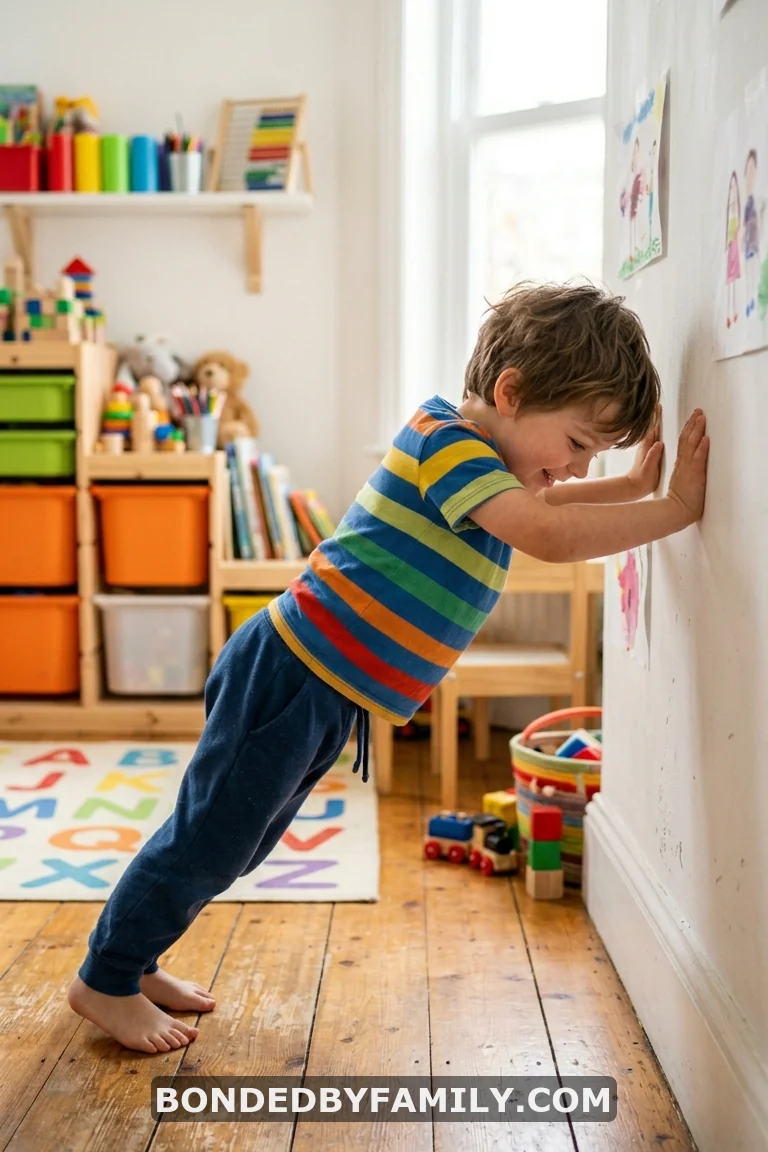
1. Wall Push-Ups
Find a wall. Hands flat, shoulder-width apart. Push. That is the whole activity.
The proprioceptive input — the pressure into the joints — tells the nervous system to calm down faster than any verbal instruction. Ten push-ups, ten seconds. Works at age 4. Still works at 14. Put sticky notes near any wall in your house that says “10 reps when you’re ready to lose it.” You’ll use it too.
2. The Heavy Work Circuit
Heavy work is the category occupational therapists talk about most. And parents rarely know it exists. Here’s the breakdown you won’t find in most listicles.
What Heavy Work Is
Heavy work refers to any activity that pushes or pulls against the body — carrying, pushing, pulling, climbing, crawling. It gives the proprioceptive system (your body’s GPS for position and force) a strong dose of organizing input. For kids who are dysregulated, that input is like a reset button.
Why It Works
When a child carries weight or pushes against resistance, their nervous system gets clear, organized feedback about where the body is in space. This reduces the “noise” of an overloaded sensory system, which is exactly what causes meltdowns in many kids — especially those with ADHD, sensory processing differences, or anxiety.
The research behind proprioceptive input and regulation is well-established in occupational therapy. It works faster than breathing techniques for kids who are already past the point of listening.
The Heavy Work Circuit: Step-by-Step
Best age range: 3–12 years (scale the weight and distance to the child)
Materials you’ll need:
- A small laundry basket ($8–$15, any store)
- A few heavy books or canned goods to fill it (items you already own)
- A backpack with 5–10% of child’s body weight in books ($0 — use their school bag)
- A hallway or yard with 10–20 feet of walking space
Time: 5–10 minutes per session; 2–3 sessions daily for regulated kids, on-demand during dysregulation
Step 1: Check the arousal level first. If your child is at a 9 out of 10 on the meltdown scale, skip straight to deep pressure (see item #22). Heavy work is most effective before full escalation — at the “getting wiggly” or “starting to argue” stage.
Step 2: Set up the circuit. Use whatever you have. Some ideas that work:
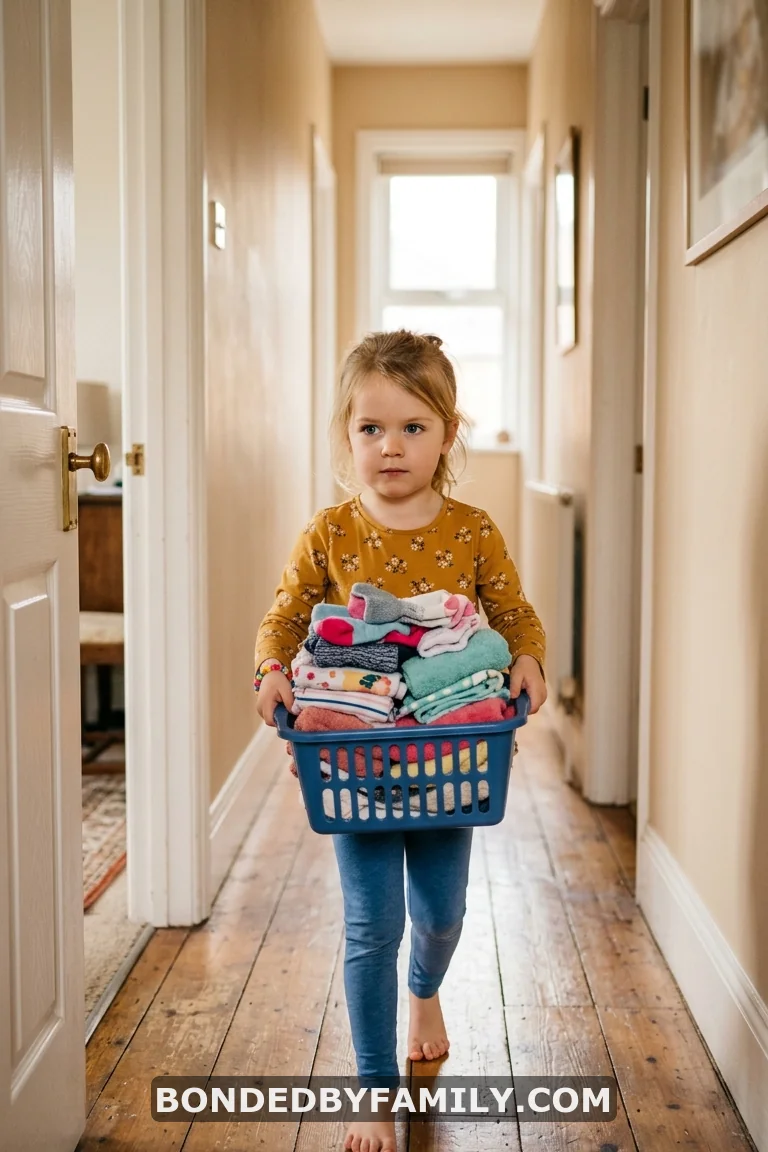
- Carry the laundry basket from one end of the hallway to the other (3 trips)
- Push a laundry hamper across the floor
- Wear the loaded backpack and walk to the mailbox and back
- Carry a bag of pet food to another room
- Push furniture — chairs, ottomans, a box — gently across the floor
Step 3: Make it a job, not a punishment. Frame it as “helper time.” Kids who feel like they’re contributing regulate better than kids who feel like they’re being managed. “Can you bring the heavy grocery bag inside?” lands better than “Go do your heavy work.”
Step 4: Follow up with 2 minutes of stillness. After the circuit, invite them to sit on the floor, close their eyes, and notice how their body feels different. This builds the self-awareness piece — which is what makes regulation stick over time.
Materials & Costs
| Item | Cost |
|---|---|
| Small laundry basket | $8–$15 |
| Backpack (already owned) | $0 |
| Heavy books/cans for weighting | $0 |
| Total setup cost | $0–$15 |
Pro Move
If your child resists the “jobs” framing, try an obstacle course format. Set three stations — carry the box, push the chair, crawl through a blanket tunnel — and time them. Kids who won’t “do heavy work” will absolutely race through an obstacle course.
Common Mistakes to Avoid
- Waiting until full meltdown. Heavy work is most effective at the 4–6 range on the dysregulation scale, not the 9–10.
- Using it as consequence. “Go carry that box because you’re out of control” teaches the opposite of self-regulation.
- Stopping too soon. Under-dosing gives minimal effect. Aim for 5–10 minutes of sustained heavy input.
- Forgetting the check-in. The body part works; the self-awareness comes from the follow-up conversation.
3. Animal Walks
Bear walk. Crab walk. Frog jumps. Inchworm across the living room floor.
These are heavy work in disguise, and kids who refuse “exercises” will happily be a bear for 60 seconds. Bear walking puts input into wrists, shoulders, and hips simultaneously — which is why OTs have used it for decades. Call it “bear races” and you have a regulation tool that doubles as entertainment at age 3.
4. Freeze Dance
Pick a playlist. Dance. Stop when the music stops. Freeze until it starts again.
This trains impulse control through a body the child already trusts — their own movement. It also burns the energy that’s sitting in a dysregulated nervous system like kindling. Two minutes of freeze dance before a homework session reduces oppositional behavior more reliably than most screen-time threats. Start it when they’re calm. Build the habit. Then use it when they’re not.
Breathing Activities for Self-Regulation
Breathing is the most-suggested and least-practiced regulation tool. The gap isn’t awareness — parents know breathing helps. The gap is making it accessible when the child is already losing it.
5. Bubble Breathing
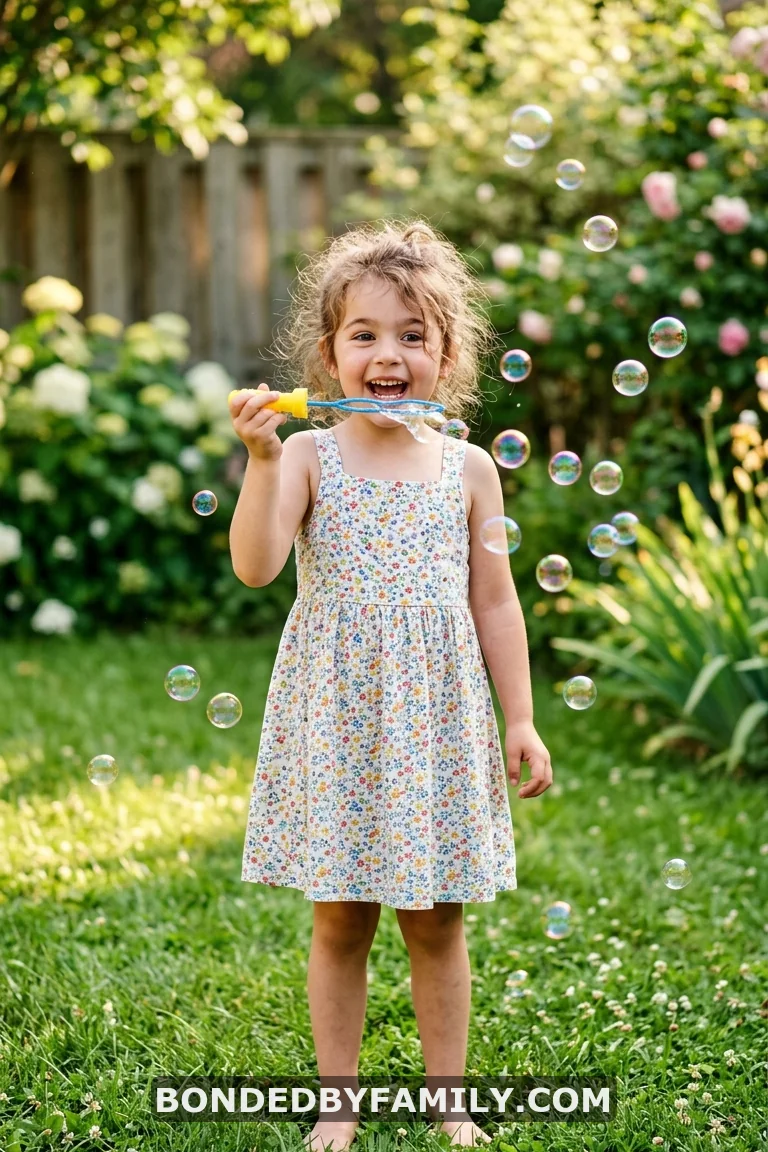
Hand your child a bubble wand and a bottle of bubbles.
That is a breathing exercise. They will take a slow, full inhale to load up, then a long, controlled exhale to make the bubble last. They won’t call it “calming down.” They’ll call it playing. Works from age 2. Costs under $2. Takes less than 30 seconds to set up.
6. Box Breathing (The 4-4-4-4 Method)
Box breathing works beautifully for school-age kids who can count to four — which is most kids over six.
Here’s the sequence: inhale for 4 seconds, hold for 4, exhale for 4, hold for 4. Repeat 3–4 times. The exhale activates the parasympathetic nervous system (the “rest” signal), and the counting gives the thinking brain something to hold onto while the emotional brain settles.
To make it concrete for young kids, draw a box together. Trace one side for each count. They’re physically moving their finger while they breathe, which adds a sensory anchor. Kids who roll their eyes at “just breathe” will often engage when there’s a visual and a physical action involved.
Best age: 6 and up. For younger kids, bubble breathing is more age-appropriate. When to use it: Before a difficult transition, after a tense moment, or as a nightly wind-down ritual. Teaching it when they’re calm means they can access it when they’re not.
7. Pinwheel Breathing
A pinwheel from a party supply store costs about $1.50.
Hold it in front of the mouth. Breathe out slowly and try to keep the pinwheel spinning without making it spin too fast. This is deep breathing with biofeedback — the child can see whether they’re exhaling too hard (anxiety-driven quick breath) or steadily (regulated breath). It’s a self-correcting tool that requires zero adult instruction after the first demonstration.
Good for kids who get frustrated when they can’t “do breathing right.” The pinwheel makes the target visible and achievable.
8. Body Scan for Kids
This one is for ages 8 and up, and it works best as a bedtime or quiet-time routine.
Have your child lie down and close their eyes. Ask them to notice their feet — are they tense or relaxed? Move up slowly: legs, belly, chest, shoulders, face. No fixing, just noticing. The point is to build interoception — awareness of the internal body — which is the foundation of all regulation.
Kids who struggle with emotional regulation often struggle because they can’t feel their body shifting states until they’re already in crisis. A regular body scan builds that early-warning sensor. Five minutes, three nights a week. Six weeks of this changes the baseline.
Sensory Calm-Down Tools

Calm-down tools work best when kids help build them during a calm moment — not when you hand them a stress ball during a meltdown.
9. The DIY Calm-Down Kit
A calm-down kit is a container of tools your child picks in advance for moments when regulation gets hard. The key word is in advance — assembled together, during connection, not during crisis.
What to include (and what to spend):
| Item | Purpose | Cost |
|---|---|---|
| Glitter sensory bottle (DIY) | Visual focus, slows breathing naturally | ~$5 to make |
| Koosh ball or squishy toy | Tactile input, redirects physical tension | $3–$8 |
| Fidget ring or tangle toy | Fine motor proprioception | $4–$10 |
| Laminated breathing card (printable) | Visual reminder for box breathing | $0 (print at home) |
| Soft scrap of fabric or small stuffed animal | Sensory comfort | $0–$10 |
| Mini notepad + pencil | For older kids: write/draw feelings out | $2–$4 |
| Total | $14–$37 |
The container matters more than parents think. Let your child pick a lunchbox, a shoebox decorated with stickers, or a small crate. Ownership increases buy-in. A kit they built is a kit they’ll use.
Review it every 3–4 weeks. Items that aren’t being used come out. New items can come in. This keeps it fresh and keeps the conversation about regulation alive.
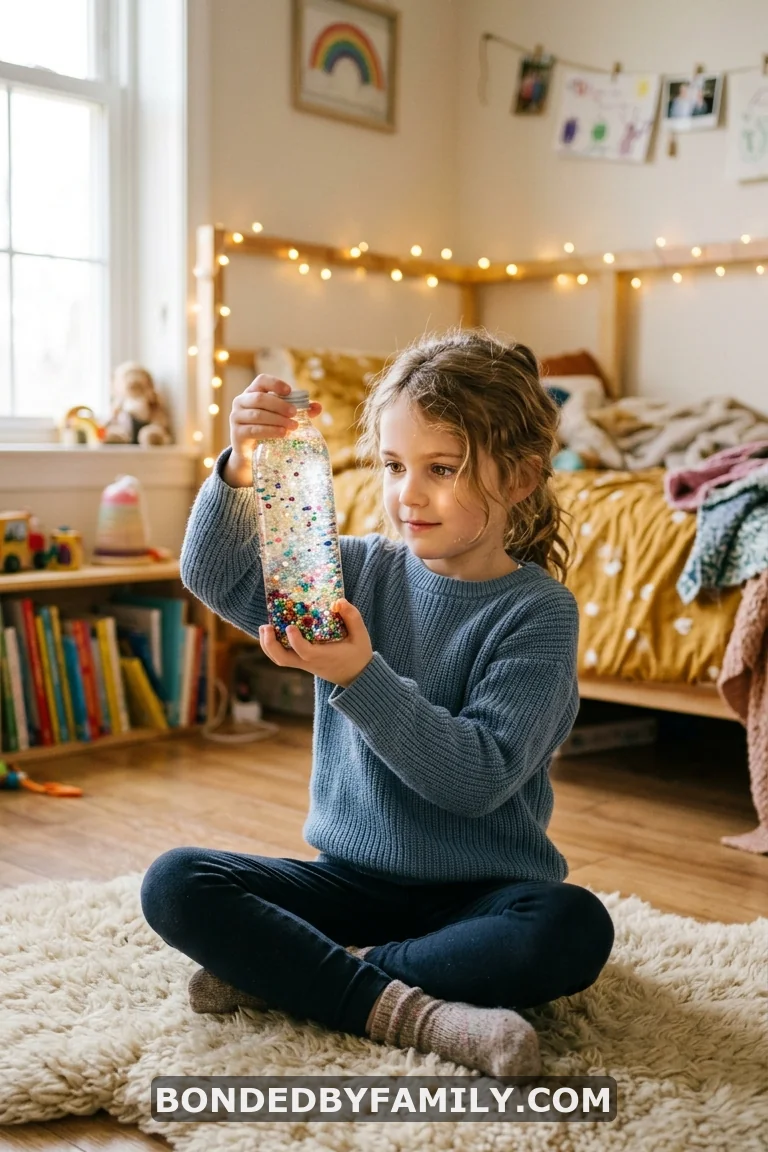
10. Glitter Sensory Bottles (DIY)
Making the bottle is the activity. Using it is a separate one.
What you need: A clear plastic water bottle (16 oz), warm water, clear school glue (the whole bottle — about $1.79), glitter glue in a calming color (blue, purple, silver), fine glitter, a drop of dish soap, superglue for the lid.
Steps:
- Fill the bottle halfway with warm water.
- Pour in the full bottle of clear glue.
- Add 2 tablespoons of glitter glue and a pinch of fine glitter.
- Add one drop of dish soap (slows the glitter fall).
- Top off with warm water, leaving a small air space.
- Superglue the lid shut.
Shake it. The glitter takes 60–90 seconds to settle — long enough for a child to slow their breath naturally while watching it fall. Cost: under $5. Works for ages 2–9.
11. The Fidget Toy Mistake Most Parents Make
What most people think: Buy a fidget toy → child becomes regulated.
What tends to play out: The child uses the fidget toy in class, the teacher confiscates it, the child becomes more dysregulated than before because a coping tool was removed without warning.
Fidget tools work. But the failure mode is common. Here’s how to avoid it:
The problem isn’t the fidget — it’s the setup. Fidget tools require explicit instruction (“This is for when you feel wiggly, not for playing”), a designated location (“It stays in your desk pouch”), and teacher awareness (“Your teacher knows you have it and why”). Without all three, fidget tools become a behavior issue instead of a solution.
What works:
- Tangle Jr. ($6–$8) — quiet, flexible, doesn’t roll off desks
- Fidget ring ($4–$7) — discreet, wearable, hard to confiscate
- Koosh ball in a pocket — classic for a reason
What often backfires:
- Spinners in classroom settings (visual distraction for other kids)
- Clicky or noisy tools (triggers in sensory-sensitive environments)
- Tools that look like toys (invites inappropriate use)
The cheapest effective option: a strip of hook-and-loop fastener (Velcro, $2 for a roll) stuck under a desk. Silent, invisible, and provides tactile input on demand. OTs have been using it for years. Most parents haven’t heard of it.
12. Weighted Blanket Routine
Weighted blankets work through deep pressure — same principle as the squish sandwich, but more sustained.
For kids who resist being touched or held (common in sensory-sensitive children), a weighted blanket offers deep pressure without human contact, which some kids need to regulate. Look for a blanket that weighs approximately 10% of your child’s body weight. A 50-pound child does well with a 5-pound blanket ($25–$65 for a child-sized option on Amazon).
The key is building it into a routine, not pulling it out only in crisis. Ten minutes under the weighted blanket after school — before screens, before demands, before anyone asks about homework — creates a daily regulation window that pays out over time.
Games That Build Self-Control
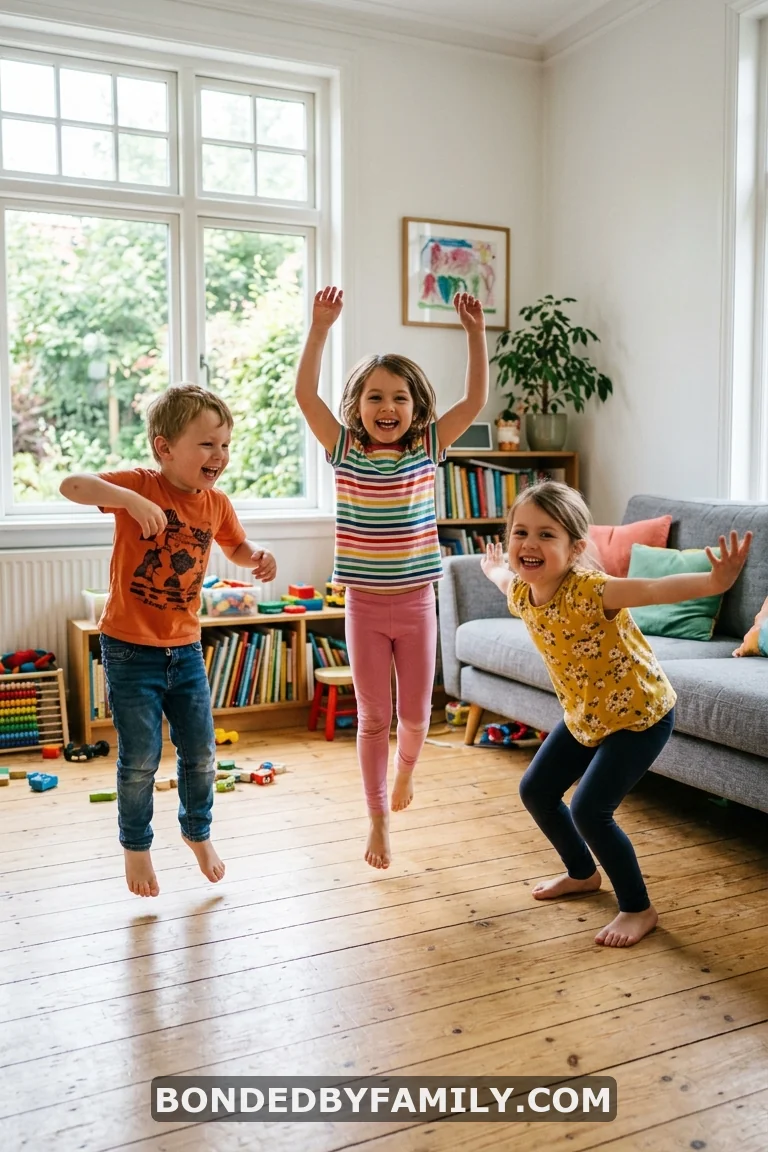
Games are the most under-used self-regulation tool in this niche. The kids don’t know they’re working. The parents do.
13. Red Light, Green Light
Four words. Zero materials. Takes 45 seconds to explain.
Red = stop everything. Green = go. The entire game is impulse control training in disguise. Kids have to override the impulse to keep moving when the “red” signal comes. That exact skill — pausing a behavior mid-action — is the core of self-regulation. Ages 2 and up. Works indoors and out. Add a “yellow light” (slow motion) for an extra challenge.
14. Simon Says With an Emotion Twist
You know Simon Says. Here’s the upgrade:
Add emotion labels. “Simon says stomp your feet like you’re frustrated.” “Simon says hug yourself like you’re calm.” “Simon says shake like you’re scared.” Children who can move an emotion through their body are building the connection between physical sensation and emotional label — which is the foundation of emotional intelligence.
Best for ages 3–7. Takes five minutes. No materials. Works as a pre-transition regulation tool (before getting in the car, before a challenging activity, before sleep).
15. Don’t Break the Ice With Coping Cards
You need the board game Don’t Break the Ice ($12–$18) and some round sticker labels.
Write a coping strategy on each ice block: take 3 deep breaths, do 5 jumping jacks, name 3 things you can see, squeeze something tight, say how you feel. Play the game normally — when a block falls, the child does the strategy printed on it.
This works because it gamifies regulation practice during a calm, connected moment. Kids who would resist a “feelings worksheet” will play this enthusiastically. By the time they need the strategies under pressure, they’ve practiced them through play — which is how kids learn.
Cost: $12–$18 for the game + $2 for stickers = under $20 total. Reusable across years.
16. Spot It (Dobble)
Pick Spot It, aka Dobble. Fast-paced, frustrating, and short. Costs about $10–$15.
The regulation value isn’t obvious until you watch a child play for ten minutes. They have to manage the frustration of being slower than their opponent, celebrate winning without gloating, and recover quickly when rounds turn. Thirty minutes of Spot It is more emotional regulation practice than most “feelings worksheets” accomplish in a week. Best for ages 6 and up.
17. Headbanz
In Headbanz, players can’t see the card on their own head. They have to ask questions and regulate the impulse to just guess before they have enough information.
It trains the self-regulation skill of pausing to gather data before acting — which is exactly what dysregulated kids struggle with. It also involves losing rounds gracefully, waiting for your turn, and managing excitement. Ages 7 and up. Cost: $15–$20.
Emotional Awareness Activities
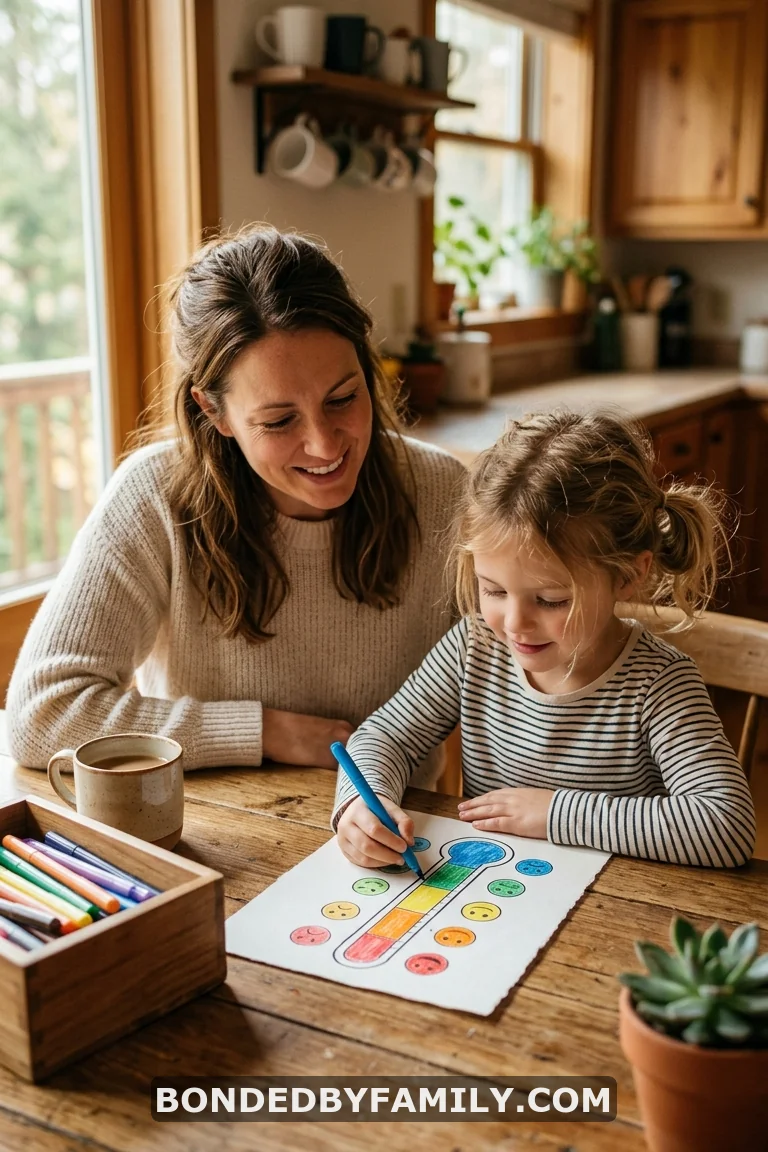
Kids who can name their emotional state regulate faster than kids who can’t. Emotional vocabulary isn’t a “soft skill” — it’s a direct input to the regulation process.
18. The Feelings Thermometer
Draw a thermometer on paper. Label the bottom “calm,” the middle “worried/frustrated,” and the top “volcanic.”
Let your child add their own words. Personalization is everything here. One child’s “volcanic” looks like “when my brother takes my stuff.” Another’s is “when I can’t find the right Minecraft block.” The more specific the labels, the more the child owns the tool.
Use it proactively. Before a challenging situation: “Where are you on the thermometer right now?” After a hard moment: “When you threw the book, where were you?” Over time, children develop the habit of self-checking — which is the exact skill regulation requires.
Best age: 5–12. Works well for kids with ADHD who benefit from visual systems. Costs nothing.
19. Emotion Charades
Write ten emotions on slips of paper. Act them out, one at a time, no words.
That’s it. Kids who can perform an emotion — scrunch their face into “embarrassed,” slump into “defeated” — have a much richer embodied vocabulary than kids who only encounter emotions on worksheets. Ten minutes. No materials except paper. Works at age 4. Still funny at 11.
20. The Cope-Cake Activity
Here’s a before and after for you.
Before: A mom I know — her name doesn’t matter — used to make a list of coping strategies with her 8-year-old. They’d sit down, she’d read the list, her daughter would nod. Three days later, mid-meltdown: “Use your strategies, honey.” Blank stare. The list was gone. The strategies felt like something mom wanted, not something the daughter had.
After: She tried the cope-cake method. She and her daughter sat down with a muffin tin and a pack of cupcake liners. They brainstormed every strategy that felt good to her daughter — not strategies mom thought were good. They tested each one against four questions: Does it calm your body? Does it not hurt you? Does it not hurt anyone else? Can you do it anywhere? If the answer was yes to all four, it went into a cupcake liner in the tin.
Her daughter chose: jumping on the trampoline, holding the cat, scrunching paper, drawing spirals, listening to one specific song through headphones. None of these were on any regulation chart. All of them worked.
The activity builds a regulation toolkit the child authored. That authorship matters more than the specific tools.
Best age: 6 and up. Takes 20–30 minutes. Costs nothing. Revisit and refresh every few months.
21. Picture Books for Big Feelings
For kids under 8, emotional regulation is heavily mediated through story. These books have a track record that holds up:
“Grumpy Monkey” by Suzanne Lang — Teaches that you can’t push feelings away; you have to feel them through. Best for ages 3–7.
“When Sophie Gets Angry — Really, Really Angry” by Molly Bang — Normalizes big emotions and shows self-soothing in action. Ages 3–7.
“The Whole-Brain Child” by Daniel Siegel and Tina Payne Bryson — Not a picture book. This is for you. Read it once and your approach to every item on this list will sharpen. There is no single parenting book more practically useful for understanding child regulation.
“Moody Cow Meditates” by Kerry Lee MacLean — Introduces mindfulness to kids through story. Ages 4–8.
Read them together, not at them. The conversation that follows the book is the regulation work. “What did Sophie do when she got angry? What do you do?”
When Nothing Else Works: Co-Regulation First
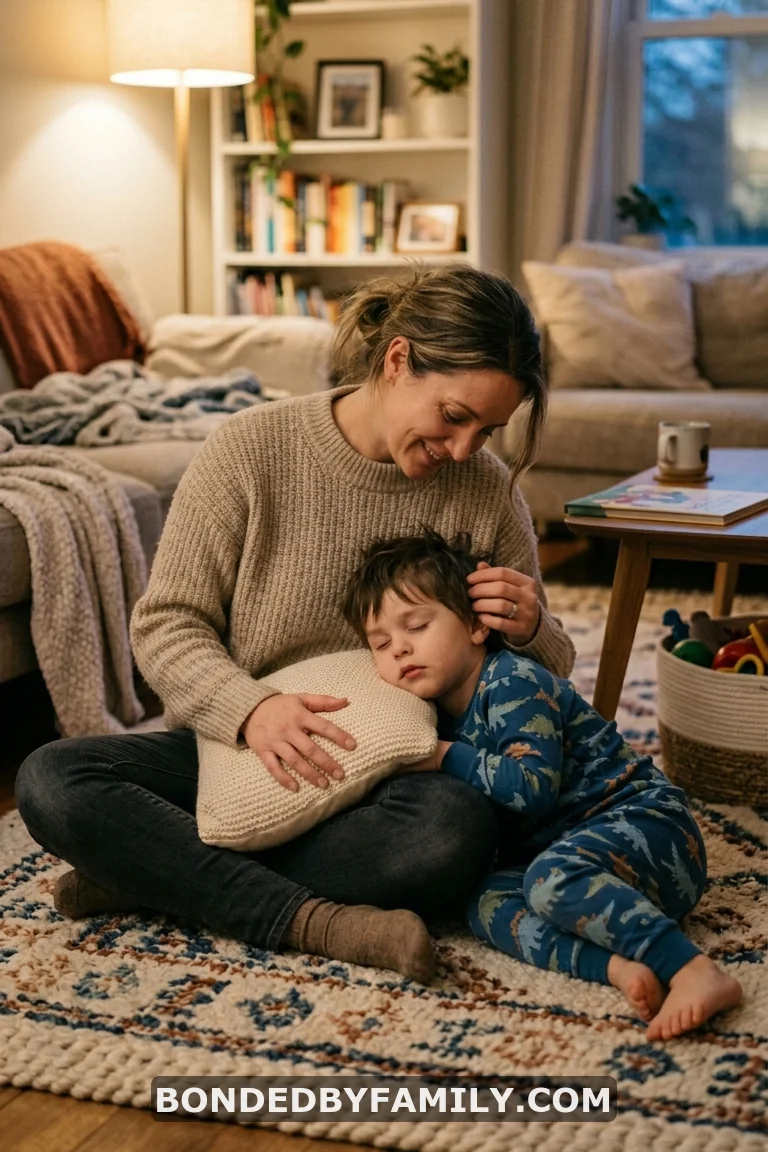
Here is the part most articles skip: a dysregulated child cannot regulate alone. Not because they’re being difficult. Because the co-regulation capacity — the ability to borrow another nervous system’s calm — develops slowly through childhood and requires a regulated adult to work.
22. The Squish Sandwich
Lie the child face-down on a soft surface (couch, carpet, yoga mat). Lay a pillow on their back. Press gently and evenly. That’s the whole activity.
The deep pressure to the spine and posterior body activates the parasympathetic nervous system quickly and reliably. Works for kids who resist being hugged, can’t tolerate overwhelming sensory input, or are too escalated to engage verbally. Keep pressure even and ask “more or less?” to build body awareness while you’re doing it.
Ages 3–10. Takes 2–5 minutes. While they’re in the squish, you can start talking softly. That is when the listening begins.
23. Zones of Regulation at Home
The Zones of Regulation is a curriculum developed by OT Leah Kuypers. It gives kids a four-color system for identifying emotional states: Blue (low energy/sad), Green (calm and ready), Yellow (heightened/worried), Red (out of control). It’s used in thousands of schools because it works — but you don’t need to buy the full curriculum to use it at home.
Start with a simple laminated poster on the fridge ($0 to DIY, or $8–$12 for a printed version on Etsy). Introduce the colors during a calm moment — not during a meltdown. Talk about which zone you’re in. Model checking in with yourself: “I’m in yellow right now because I have a lot to do. I’m going to take a walk.”
The full Zones curriculum book runs about $32 on Amazon. Worth it if you have a child who struggles significantly. The home version — just the four-color language, used consistently — is free and moves the needle on its own.
Wrapping Up
Self-regulation is not a trait some kids have, and others don’t. It’s a skill set built through thousands of small, supported moments — a deep breath before the meltdown, a heavy work circuit that starts to feel routine, a game that sneaks in impulse control practice.
You don’t need to implement all 23. Pick two or three that match your child’s age and nervous system type. Build the habit during calm. Deploy during hard moments. Revisit as they grow.
The kids who become regulated adults aren’t the ones who were compliant. They’re the ones whose caregivers kept showing up with tools.
Frequently Asked Questions
What are self-regulation activities for kids? Self-regulation activities help children manage their emotions, impulses, and physical arousal levels. They include movement breaks, breathing exercises, sensory tools, games, and emotional awareness practices — all of which build the nervous system’s capacity to return to calm after stress.
At what age should I start teaching self-regulation? You can introduce basic regulation tools as early as age 2 with bubble breathing and heavy work. Body-scan practices and four-color emotion systems work well from age 4–5. More abstract strategies like box breathing and journaling are better suited to kids 6 and up. Earlier is better, but it’s never too late to start.
How long does it take for self-regulation activities to work? Some activities (heavy work, deep pressure) produce near-immediate physiological effects. Building long-term self-regulation as a skill takes months of consistent practice. Most parents see meaningful behavioral change within 4–8 weeks of regularly using 2–3 strategies.
What are the Zones of Regulation, and is it worth using at home? The Zones of Regulation is a curriculum that categorizes emotional states into four color zones: Blue, Green, Yellow, and Red. It was developed by OT Leah Kuypers and is widely used in schools. A simplified home version using just the four-color language costs nothing and is effective for most families. The full curriculum book (~$32) is worth it for children who need more structured support.
What should I do when my child is already in a full meltdown? Skip verbal strategies entirely. Move straight to co-regulation: get down to their level, stay calm, offer deep pressure (squish sandwich or firm hug if tolerated), and say as little as possible. Wait for the nervous system to come down before any conversation or problem-solving. Teaching happens after the storm, never during it.