You bought the balloons. You frosted the cake. You invited every tiny human within a five-mile radius.
And now you’re standing in your living room at 9 PM the night before the party, Googling “toddler party games” while stress-eating goldfish crackers. I get it. I’ve been right there — barefoot on the kitchen floor, wondering how a two-year-old’s birthday turned into an event that needs a run sheet.
Here’s what I learned after throwing more toddler parties than I care to count: you don’t need 40 activities. You need five or six reliable ones, a loose plan, and the willingness to abandon that plan when a kid decides the cardboard box is more fun than anything you prepared. These 23 toddler party games cover every scenario — indoor, outdoor, high energy, low energy, and the crucial “everyone is losing it and we need a reset” moment.
Grab the ones that fit your space, your kid count, and your sanity level.
1. Freeze Dance
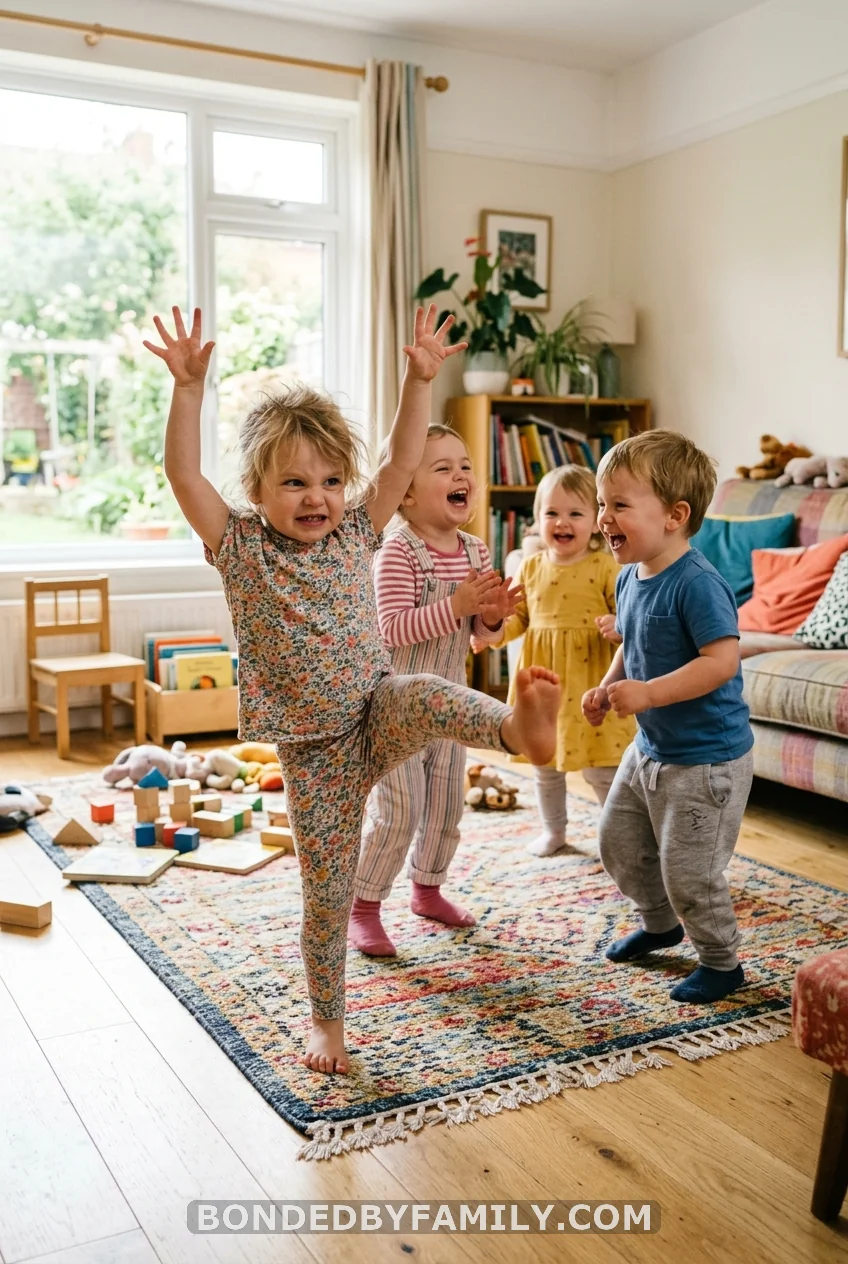
Freeze dance is the game you start with. Always. It burns energy fast, needs zero supplies, and every toddler on earth understands “dance” even if they ignore “freeze.”
Play a kid-friendly playlist. When the music stops, everybody freezes. That’s it. No elimination for this age group — just keep playing rounds until they’re winded. Toddlers will freeze in the strangest positions you’ve ever seen, and parents will be reaching for their phones within thirty seconds.
The whole thing runs on about three minutes of attention span per round, which is exactly what you want with this crowd.
2. Bubble Popping Frenzy
Bubbles are toddler catnip. There is no scenario where bubbles fail.
Get a battery-powered bubble machine ($12–$18 on Amazon — the Gazillion brand holds up well) and set it on a table in the yard or near a doorway. Let the kids chase and pop to their hearts’ content. No rules, no turns, no tears. If you want to make it a “game,” count how many each kid can pop, but really, just let them run.
One bottle of bubble solution lasts about 20 minutes of continuous machine use. Bring two.
3. Treasure Hunt (The One Game Worth Over-Preparing)
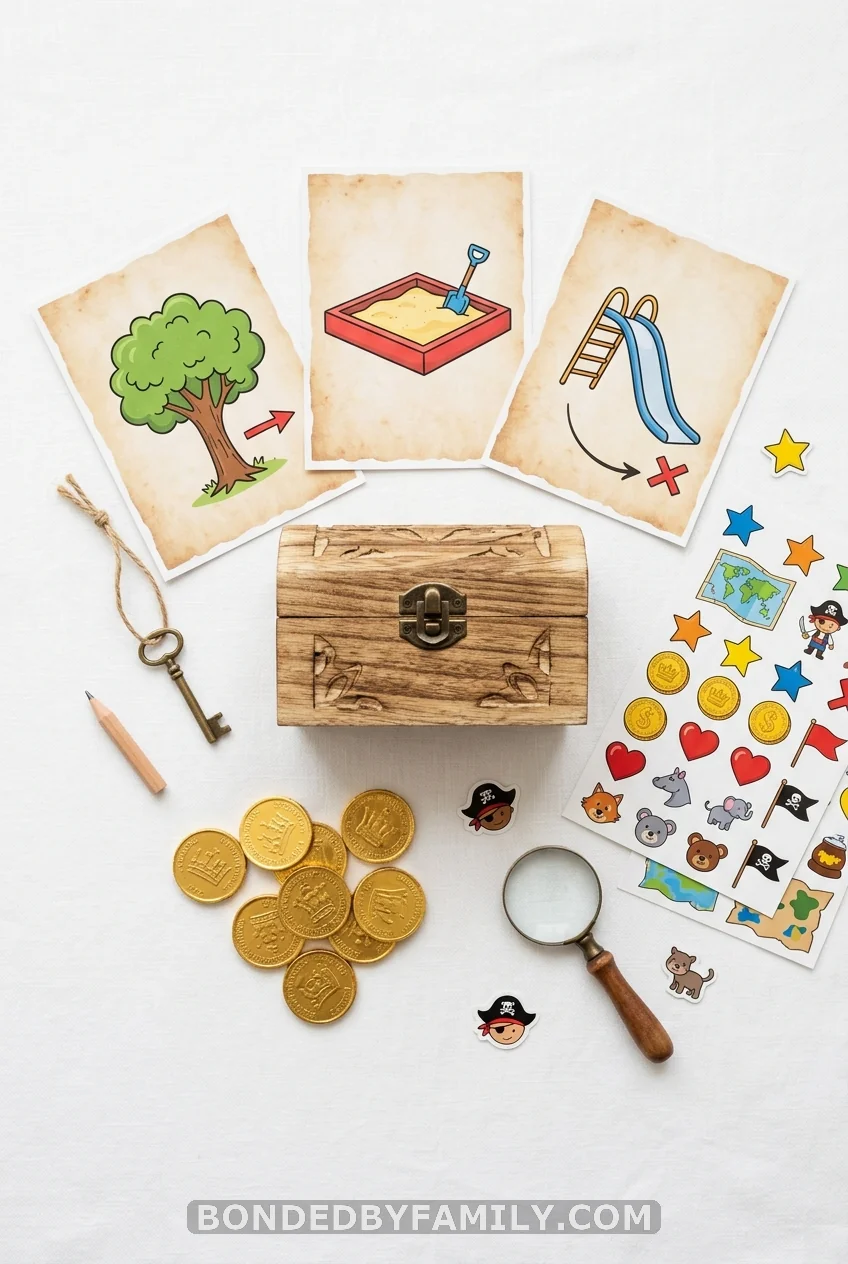
If you put real effort into one single toddler party game, make it this one. A treasure hunt is the rare activity that holds a toddler’s attention for 15 to 20 minutes straight — an eternity in party time. And the payoff? Every kid walks away clutching a prize, which means zero arguments about who won.
How to Set It Up
You need about 30 minutes of prep the morning of the party. That’s it.
Supplies: – Chocolate gold coins or small wrapped candies (one bag, roughly $5–$8) – 5–6 printed picture clues (draw them by hand or use free printables — A Visual Merriment and Mums Make Lists both offer them) – A “treasure chest” — any box, basket, or gift bag works – Small prizes for inside: stickers, bubbles, bouncy balls, stamps ($1 bins at Target or Dollar Tree cover this)
Step-by-step:
- Decide your route. Indoor works just as well as outdoor. For a living room hunt, use landmarks toddlers recognize — the couch, the fridge, the front door, the toy basket.
- Make picture clues, not word clues. Draw or print a picture of each landmark. Tape the first clue somewhere visible. Each clue leads to the next spot.
- At each clue stop, leave a small treat — one gold coin or one sticker per kid. This keeps slower toddlers engaged even if a faster kid finds the clue first.
- The final clue leads to the treasure chest. Fill it with enough goody-bag items for every child.
- Walk through the route once yourself before the party to make sure nothing is too hidden. Toddlers give up fast if they can’t find something within about 45 seconds.
Common Mistakes to Avoid
The biggest one: hiding things too well. You’re not planning an escape room. Tuck clues at toddler eye level — behind a pillow, taped to a chair leg, sitting on a low shelf. If a parent has to lift their kid to reach it, you’ve gone too far.
Second mistake: making the route too long. Five to six stops is the sweet spot for ages one through three. More than that and you’ll lose the younger kids by stop four.
Why This Works So Well
Treasure hunts combine movement, discovery, and rewards — the three things toddlers care about most. The picture clues also give parents something to do with their kids (“Look! What’s in the picture? A tree! Let’s go find the tree!”), which takes pressure off you as the host.
Cost reality
Total setup: under $15 if you shop the dollar bins. Under $5 if you skip the treasure chest and use a gift bag.
Pro tip
Pair every toddler with a parent or older sibling. This turns the hunt from chaos into a buddy activity and means no child gets left behind or overwhelmed.
4. Pass the Parcel
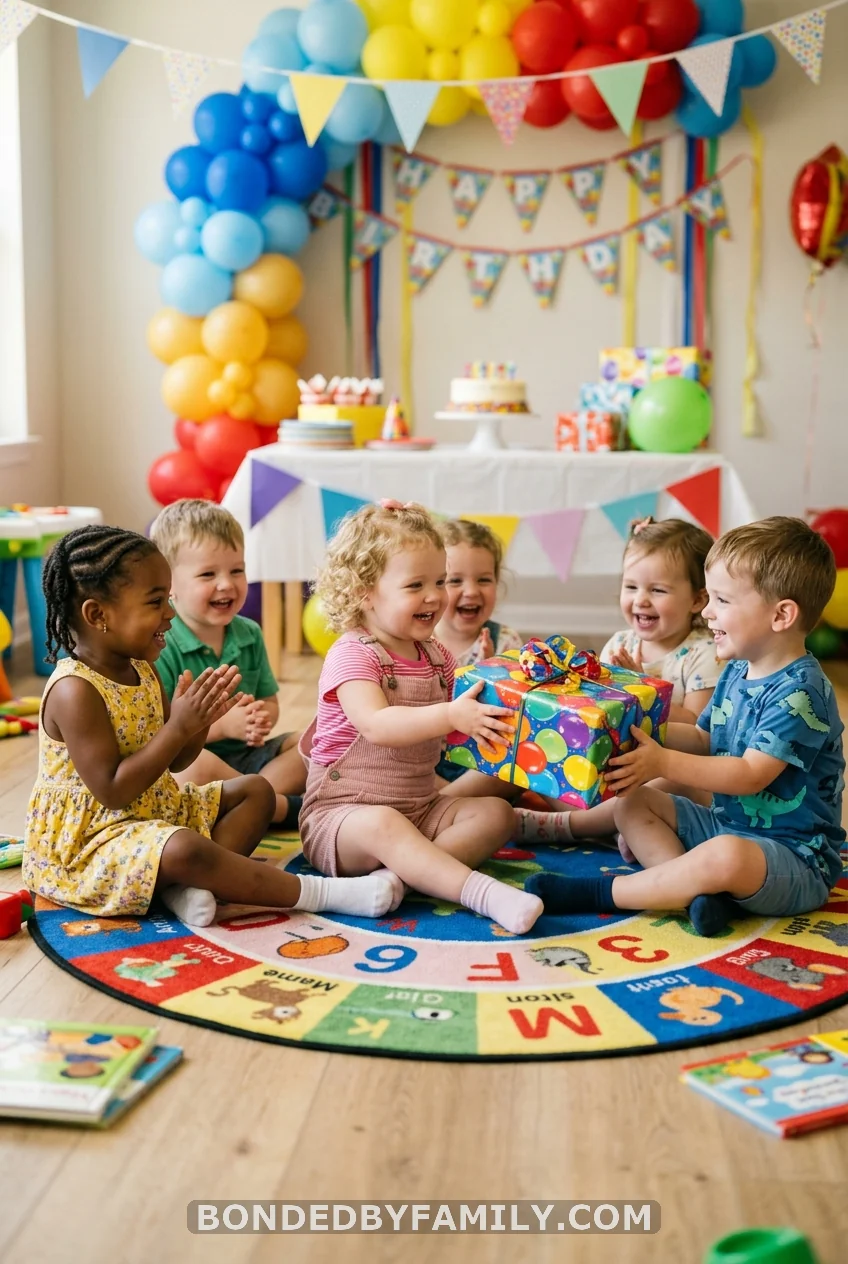
This one’s a staple at UK parties and deserves way more love in the States. Wrap a small prize in multiple layers of wrapping paper — one layer per kid. Sit everyone in a circle. Play music. Pass the parcel around. When the music stops, whoever holds it unwraps one layer.
For toddlers, skip the competitive version entirely. Tuck a tiny treat — a fun-size candy bar, a temporary tattoo, a mini play-doh tub — between every single layer. Every child gets a prize on their turn. No losers.
Cost: about $3–$5 for wrapping paper and filler prizes. Takes five minutes to wrap the night before.
5. Simon Says (Toddler Edition)
Skip this one for kids under two. But for a room full of two- and three-year-olds, a simplified Simon Says keeps them focused and giggling.
Use broad, physical commands: “Simon says jump!” “Simon says touch your nose!” “Simon says spin around!” Don’t bother eliminating anyone. Just keep the commands coming, throw in a few fake-outs, and watch the chaos.
The game lasts about four minutes before attention drifts. That’s fine. Four minutes is a full cycle.
6. Balloon Bop
Hand every kid a blown-up balloon. Tell them to keep it off the ground. Done.
No teams, no scoring, no rules beyond “don’t pop it.” This runs itself for a solid 10 minutes and works indoors or out. Have extra balloons ready — they pop, they float away, they get sat on. Budget a bag of 50 (roughly $4) and you’re covered.
7. Obstacle Course
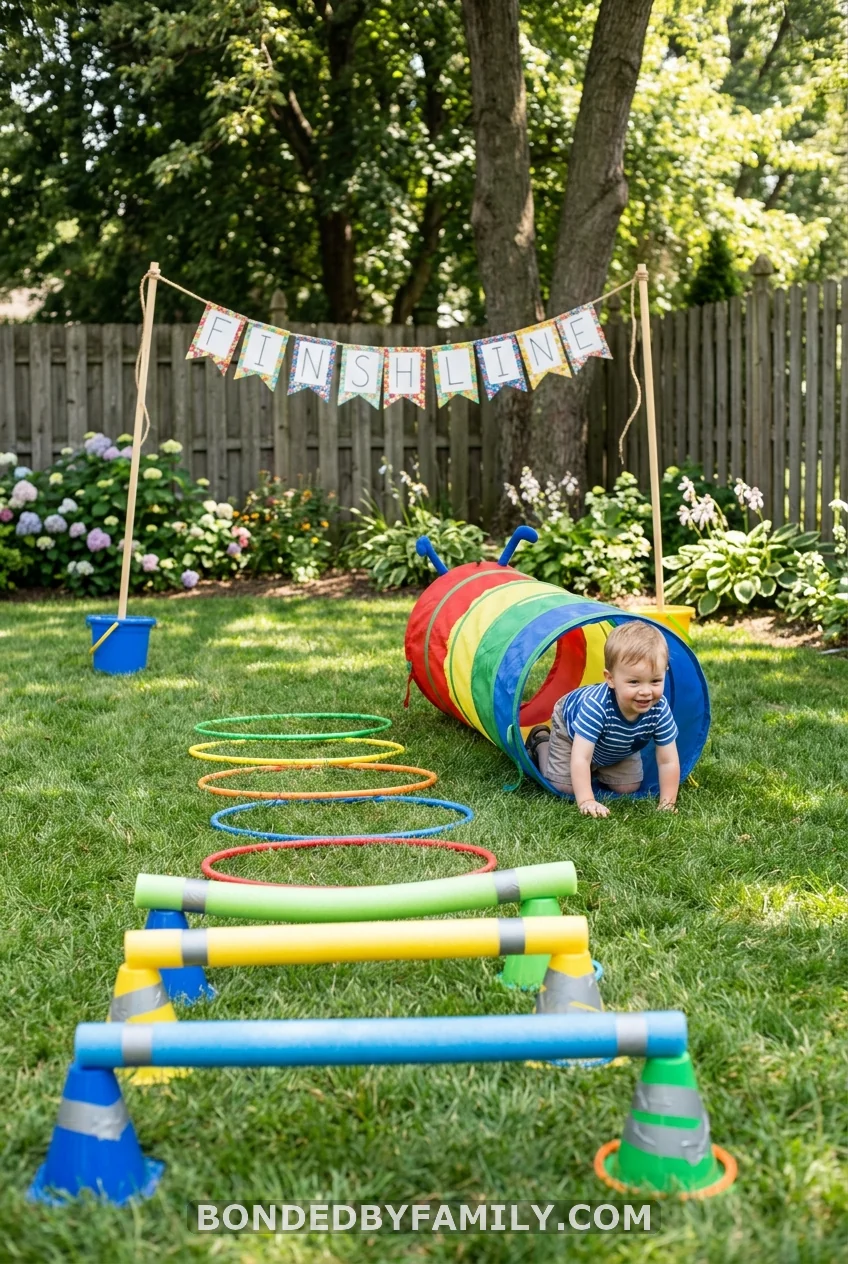
An obstacle course sounds ambitious, but it’s really just “stuff arranged in a line that kids walk through.” Pool noodles laid across chairs as hurdles (6 inches off the ground, max). Hula hoops flat on the grass for stepping stones. A play tunnel from the toy bin. A bucket of balls at the end to throw into a laundry basket.
Set it up in 10 minutes with items you already own. Let the kids run it at their own pace — no timing, no competition. Parents love this one because it tires kids out fast and makes fantastic photo content for the ‘gram.
For a group of 8–10 toddlers, expect the course to hold attention for about 12–15 minutes if you let them run it multiple times.
8. Pin the Tail on the Donkey (Or Anything Else)
A wall poster. Blindfold. Sticky tail pieces. You know the drill.
For toddlers, ditch the blindfold — most kids under three hate having their eyes covered. Instead, have them close their eyes (parents can gently cover with hands) and guide them toward the poster. Themed versions keep things fresh: pin the horn on the unicorn, pin the nose on the clown, pin the star on the wand. Amazon sells themed sets for $6–$10.
9. Duck Duck Goose
Every kid sits in a circle. One child walks around tapping heads — “duck, duck, duck… GOOSE!” The goose chases the tapper. If they make it back to the empty spot, the goose becomes the new tapper.
Fair warning: this one works best with three-year-olds who understand taking turns. With younger toddlers, it tends to devolve into everyone chasing everyone, which, let’s be real, is just as fun.
10. Sensory Bin Station
This is the quiet game you need when the energy gets too high and someone’s about to cry.
Fill a large plastic bin with dried rice, dried pasta, or kinetic sand. Bury small toys, plastic animals, or letter magnets inside. Hand each kid a spoon or a small cup and let them dig. It’s meditative for toddlers. Surprisingly calming.
Set this up on a tablecloth or tarp for quick cleanup. Cost: under $10 for supplies you’ll reuse at every future party.
11. Egg and Spoon Race
Boil the eggs first. Trust me.
Give each kid a large spoon and a hard-boiled egg. Line them up. Race to a finish line about 10 feet away. Eggs roll off. Kids giggle. Reset. Repeat.
For one-year-olds, swap real eggs for plastic Easter eggs or ping pong balls. Same fun, less mess.
12. Ring Toss
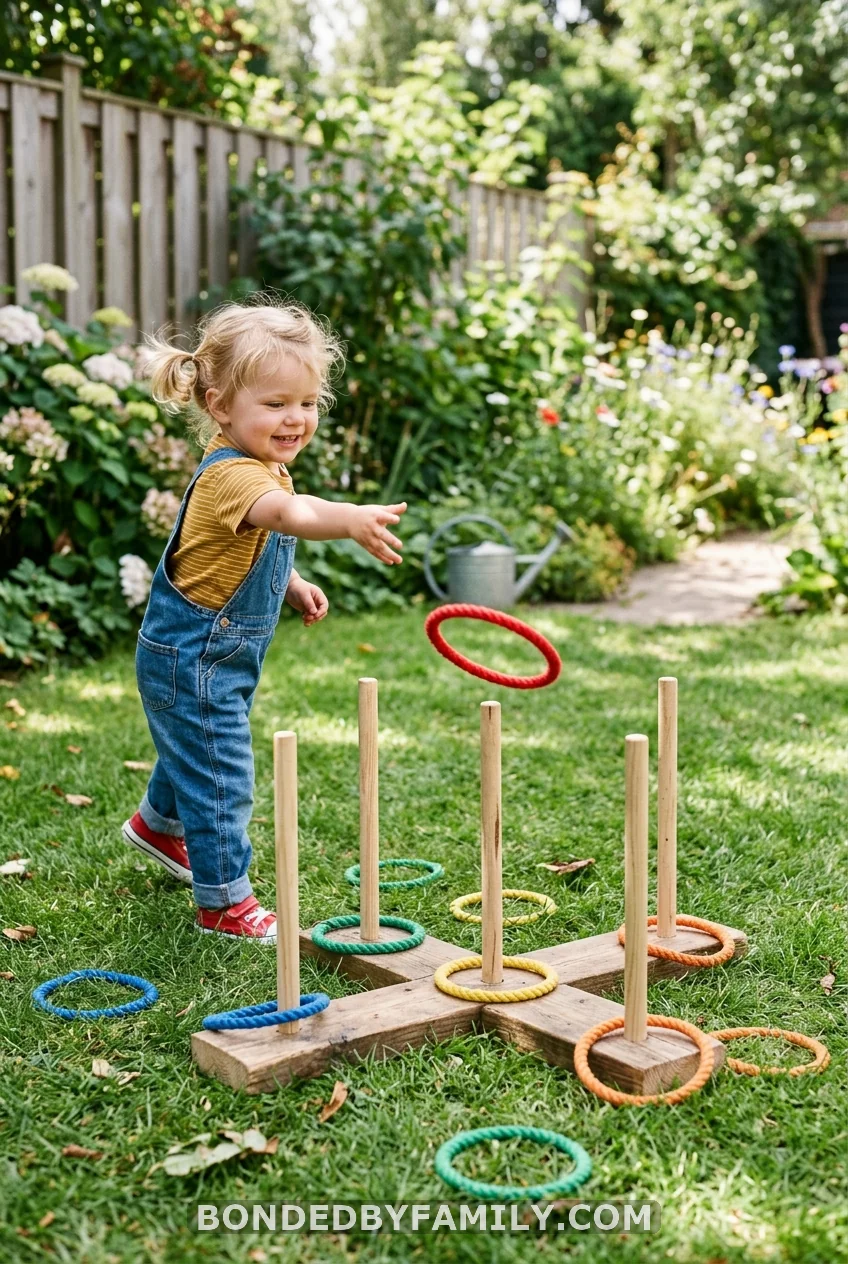
Buy a cheap ring toss set ($8–$12) or make one from paper towel rolls and paper plates with the centers cut out. Stand the posts about three feet from the toss line. Let each kid throw until they land one — no strict turns, no pressure.
Ring toss builds hand-eye coordination and keeps a small group occupied while you manage a bigger activity elsewhere. Think of it as a “station” game rather than the main event.
13. What’s the Time, Mr. Wolf?
One adult (or brave older sibling) is the Wolf. The Wolf stands at one end of the yard with their back turned. The toddlers line up at the other end and shout, “What’s the time, Mr. Wolf?”
The Wolf calls a time — “Three o’clock!” — and the kids take three steps forward. When the Wolf shouts “DINNER TIME!” and spins around, everyone screams and runs back to the start line.
Toddlers lose their minds over this game. The anticipation of “dinner time” creates the kind of squealing, scrambling chaos that makes a party feel alive. Keep one adult as the permanent Wolf so no toddler gets upset about being “it.”
14. Parachute Games
A play parachute ($15–$20 for a 6-foot version, which fits 8–10 toddlers) is one of the best party investments you can make.
Three games that work every time:
Mushroom: Everyone lifts the parachute up on the count of three, then pulls it down fast. It puffs up like a mushroom and toddlers scream with joy.
Popcorn: Toss lightweight balls or pom-poms onto the parachute. Everyone shakes it. Balls fly everywhere.
Under the Sea: Wave the parachute gently while one or two kids crawl underneath. Rotate who goes under.
15. Cookie Decorating Station
Hand each kid a plain sugar cookie, a squeeze bottle of frosting, and a cup of sprinkles. Step back.
This doubles as both a game and a party favor — kids eat their creation or take it home in a baggie. Pre-bake cookies the night before or buy plain ones from a bakery ($5–$8 for a dozen). Total setup time: under five minutes.
16. Bottom Shuffle Race
Line up every toddler sitting on the floor at one end of the room. Shout “GO!” Watch them shuffle across the room on their bottoms.
This game is for the parents as much as the kids. The visual of eight toddlers scooting furiously across a hardwood floor is the funniest thing you’ll see all year. No supplies needed. No rules needed. Pure hilarity, every single time.
17. Animal Parade
Announce an animal. Everyone walks (or crawls, or stomps) like that animal. “We’re elephants! STOMP STOMP STOMP!” “Now we’re bunnies! HOP HOP HOP!” “Now we’re snakes! Sliiiiither!”
This one kills two to three minutes between bigger activities and requires absolutely nothing except your willingness to get on the floor and slither like a snake in front of other adults.
18. Bowling with Water Bottles
Save six to ten empty plastic bottles. Fill them halfway with water (add a drop of food coloring if you’re feeling fancy). Set them up in a triangle. Roll a soft ball.
Toddlers don’t care about keeping score. They care about the satisfying crash of bottles falling over. Reset the pins and let them go again. And again. And again. This one self-entertains for a surprisingly long time.
19. Craft Corner
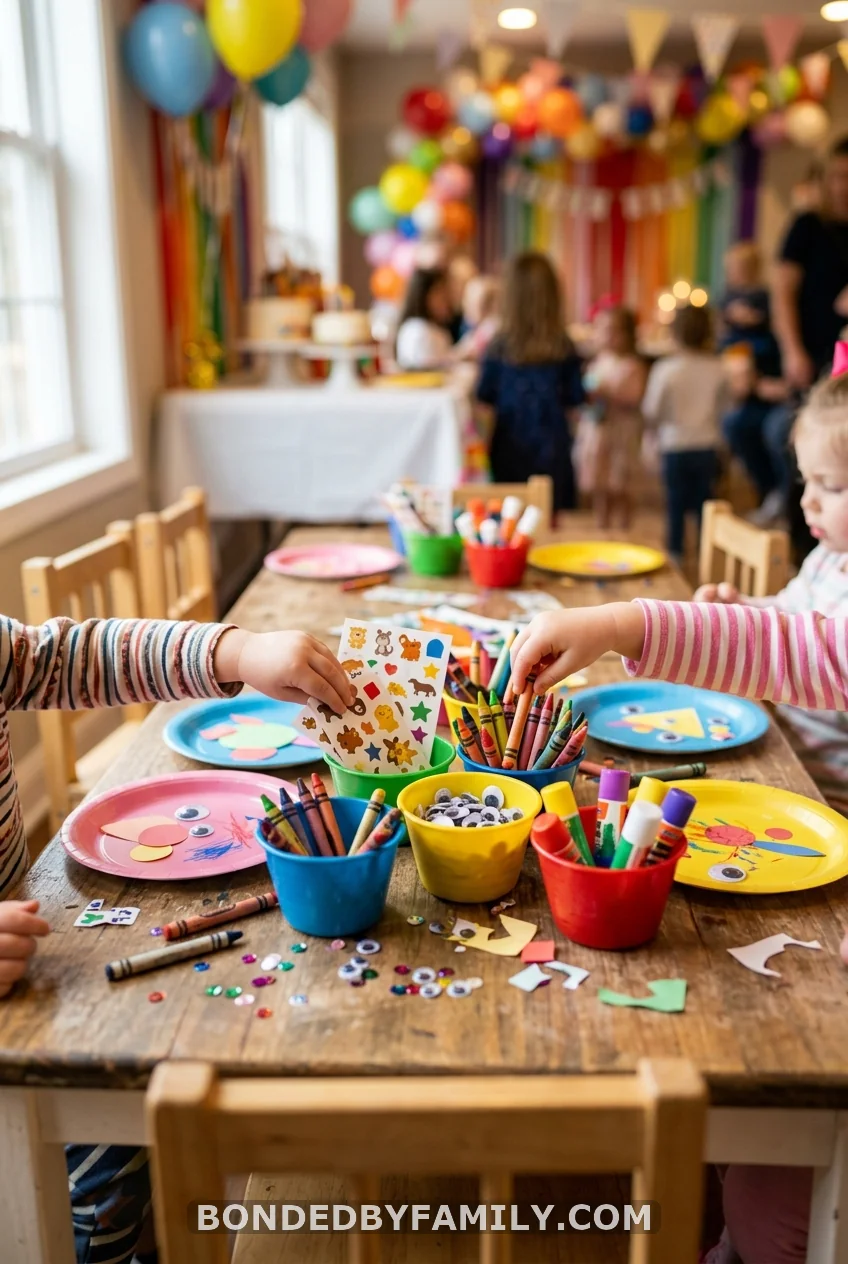
Set out paper plates, crayons, stickers, googly eyes, and glue sticks. Let toddlers make faces, animals, or abstract masterpieces. This is your “calm zone” — the station kids rotate to when they need a break from running.
Match supplies to your theme if you have one: ocean stickers for a mermaid party, star stickers for a space party. Pre-cut shapes so toddlers can glue rather than struggle with scissors.
20. Scavenger Hunt (Picture Version)
Print a sheet with six to eight pictures of items hidden around the yard or house — a red ball, a stuffed bear, a plastic cup, a pinecone. Give each kid (or parent-kid pair) a sheet and a crayon to mark off what they find.
This is different from the treasure hunt because there’s no route — kids roam freely and search at their own pace. It’s low-pressure and works especially well for shy toddlers who don’t thrive in group games.
21. Walk the Plank
Lay a strip of masking tape (or a long plank of wood flat on the ground) across the floor. Challenge each toddler to walk from one end to the other without stepping off.
The adults and other kids stand on either side, cheering and clapping. Every kid who makes it across gets a high five and a small prize. It takes about 90 seconds per child, works indoors on a rainy day, and costs you one roll of painter’s tape.
22. Sing-Along Circle
Gather everyone on the floor. Belt out “Wheels on the Bus,” “Head Shoulders Knees and Toes,” and “If You’re Happy and You Know It.” Songs with hand motions are the move here — toddlers follow along and the movements keep them engaged.
This is your secret weapon for the last 10 minutes of the party when energy is fading and you need everyone in one spot for cake.
23. The Cardboard Box
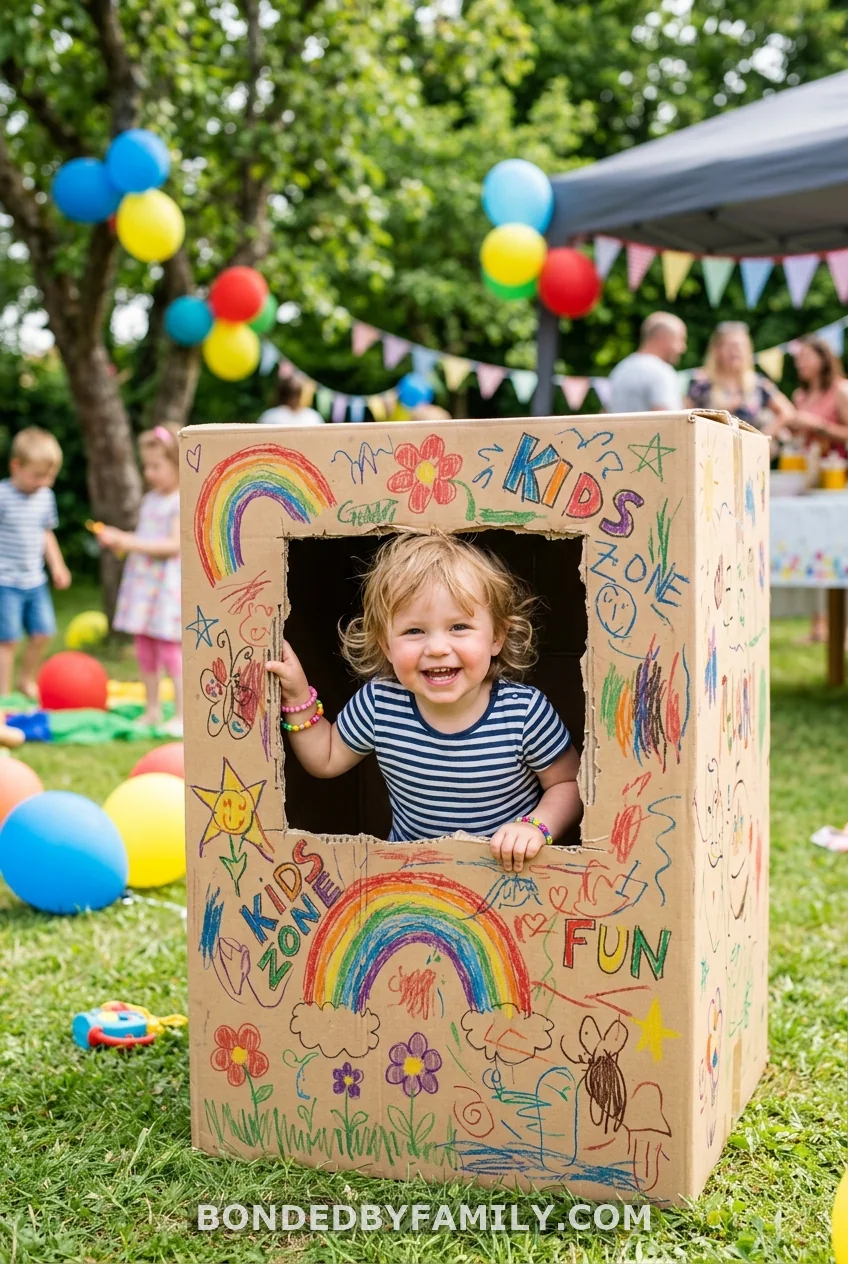
I’m dead serious. Save a large appliance box or order one. Cut a door. Maybe cut a window. Set it in the middle of the party space.
Toddlers will climb in. Climb out. Sit inside and refuse to leave. Decorate it with crayons. Use it as a “house,” a “car,” a “rocket ship.” Other kids will line up to take a turn inside. You’ll spend $0 and it will outperform half the games on this list.
The cardboard box is the toddler party game that nobody recommends, and everybody’s kid gravitates toward. Lean into it.
A Quick Note on Party Timing
You don’t need all 23 of these. Pick five or six. Rotate through them in 10-to-15-minute blocks. Here’s a loose schedule that works for a 90-minute party:
- 0–15 min: Free play and arrival (bubble machine running, craft corner open)
- 15–25 min: Freeze dance or musical game
- 25–40 min: Treasure hunt or scavenger hunt
- 40–55 min: Cake and snacks
- 55–70 min: One or two station games (ring toss, sensory bin, cookie decorating)
- 70–85 min: Parachute or group game
- 85–90 min: Sing-along wind-down, goody bags, goodbye
Don’t over-schedule. Toddler parties run best with breathing room between activities.
FAQ
What are the best toddler party games for a small indoor space?
Freeze dance, Simon Says, pass the parcel, and a sensory bin station all work in a living room with minimal furniture rearranging. Avoid anything that requires a running start — save those games for the backyard.
How many games do I need for a toddler birthday party?
Plan five or six, but expect to use three or four. Toddlers are unpredictable, and the cake break always takes longer than you think. Having backups is smart, but trying to squeeze in every game you planned creates more stress than fun.
What toddler party games work for mixed ages (babies through preschoolers)?
Bubbles, the treasure hunt, the craft corner, and balloon bop all scale across ages. Babies can pop bubbles and bat balloons while three-year-olds tackle the treasure hunt. The key is choosing games where there’s no single “right” way to play.
How do I keep toddlers engaged during party games?
Short rounds. Lots of praise. Zero elimination. Toddlers have about a four-to-six-minute attention span for any single activity, so rotate fast and don’t force anyone to participate. The kid sitting on the sidelines eating crackers is having a perfectly fine time.
Do I need prizes for toddler party games?
Not for every game, but small rewards help with the treasure hunt and pass the parcel. Stickers, temporary tattoos, stamps, and mini bubbles all cost under $1 per kid and prevent meltdowns at pickup time. Skip candy if you can — parents appreciate it.