My two-year-old nephew has a scoop in one fist and a felt gingerbread man in the other. Rice is flying across the kitchen floor. The whole room smells like cinnamon, and he is thrilled.
That is the charm of a gingerbread sensory bin. It costs very little, it smells like the holidays, and it keeps small hands busy for a good long stretch. Below you will find 15 gingerbread sensory bin ideas, from rice and cloud dough to mess-free bags for babies. Each one comes with tools, play ideas and age tips, plus notes on safety and storage at the end.
What a Gingerbread Sensory Bin Is (and Why Kids Love It)
A sensory bin is a shallow container filled with a material kids can touch, scoop and pour. Add a gingerbread theme and you get warm brown fillers, spicy smells, cookie cutters and little gingerbread men to hide and find.
The play builds fine motor skill, counting, early language and focus. It also gives kids a calm, hands-on activity in a busy month.
What You Need Before You Start
Most of this is already in your kitchen or a thrift store bin. Gather a few basics:
- A shallow bin or under-bed storage box, about 6 inches deep
- A vinyl tablecloth or old shower curtain to catch spills
- Scoops, measuring cups, wooden spoons and small wooden bowls
- Kid-safe tongs for older kids
- Gingerbread cookie cutters in two or three sizes
- A muffin tin for sorting
- Cinnamon sticks, large jingle bells and big buttons for older preschoolers
Thrift stores often sell cookie cutters and wooden bowls for under a dollar each. Skip small candy-style pieces if you cannot find them. Felt and wooden gingerbread men work just as well.
1. Classic Gingerbread Rice Sensory Bin
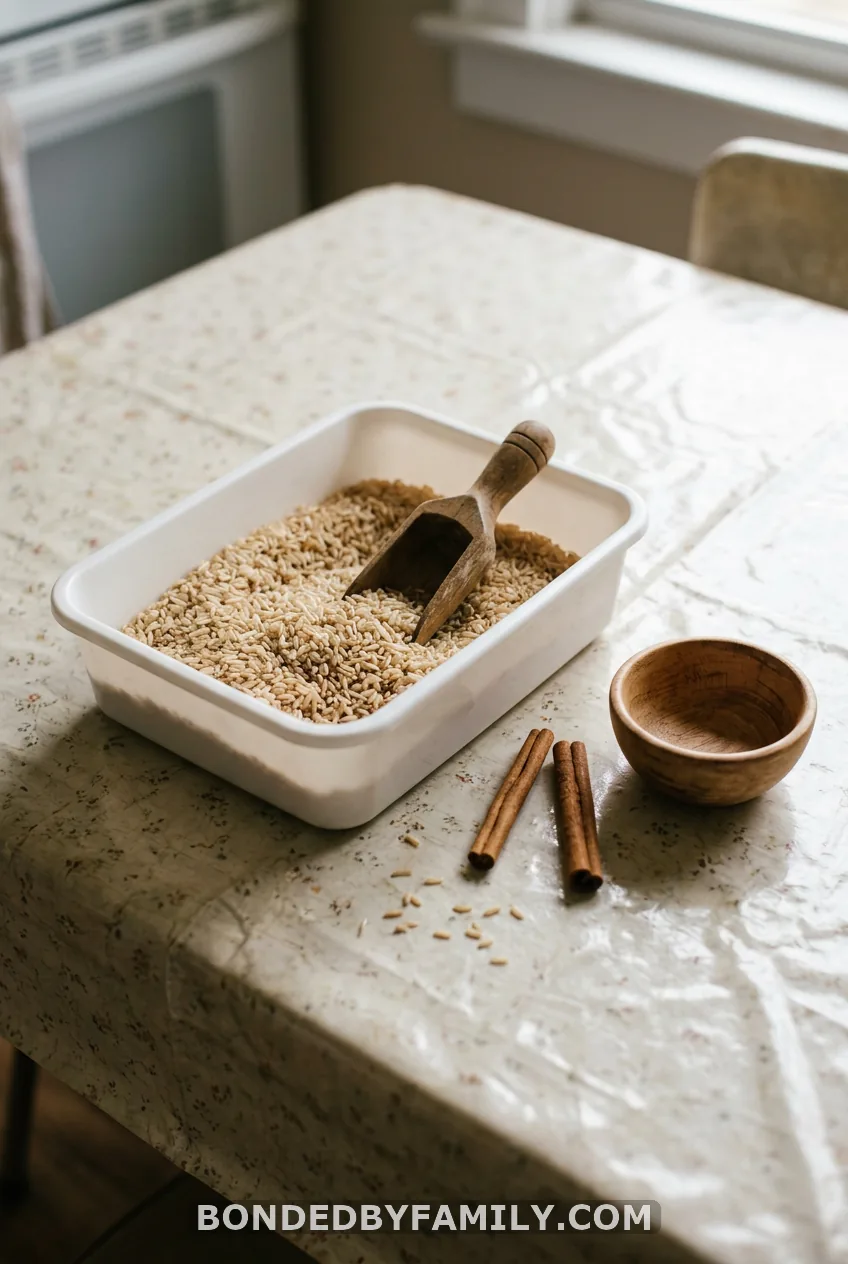
Here is a myth worth clearing up. Most people think cinnamon and nutmeg dye the rice brown. Reality: ground spices barely tint it and mostly sit in the grains as dust.
For real gingerbread color, shake 4 cups of white rice in a zip bag with 1 teaspoon of white vinegar and a few drops of brown gel food coloring. Spread it on a baking sheet and let it dry for about an hour. Then add 1 tablespoon of cinnamon, 1 teaspoon of ginger, and a pinch each of nutmeg and allspice, and shake again. Finish with a splash of vanilla if you like.
Offer scoops and bowls for toddlers. Give preschoolers tongs and cookie cutters to hide and find. Rice is a choking risk for the youngest mouths, so stay close with children under 3.
2. Gingerbread Cloud Dough Sensory Bin
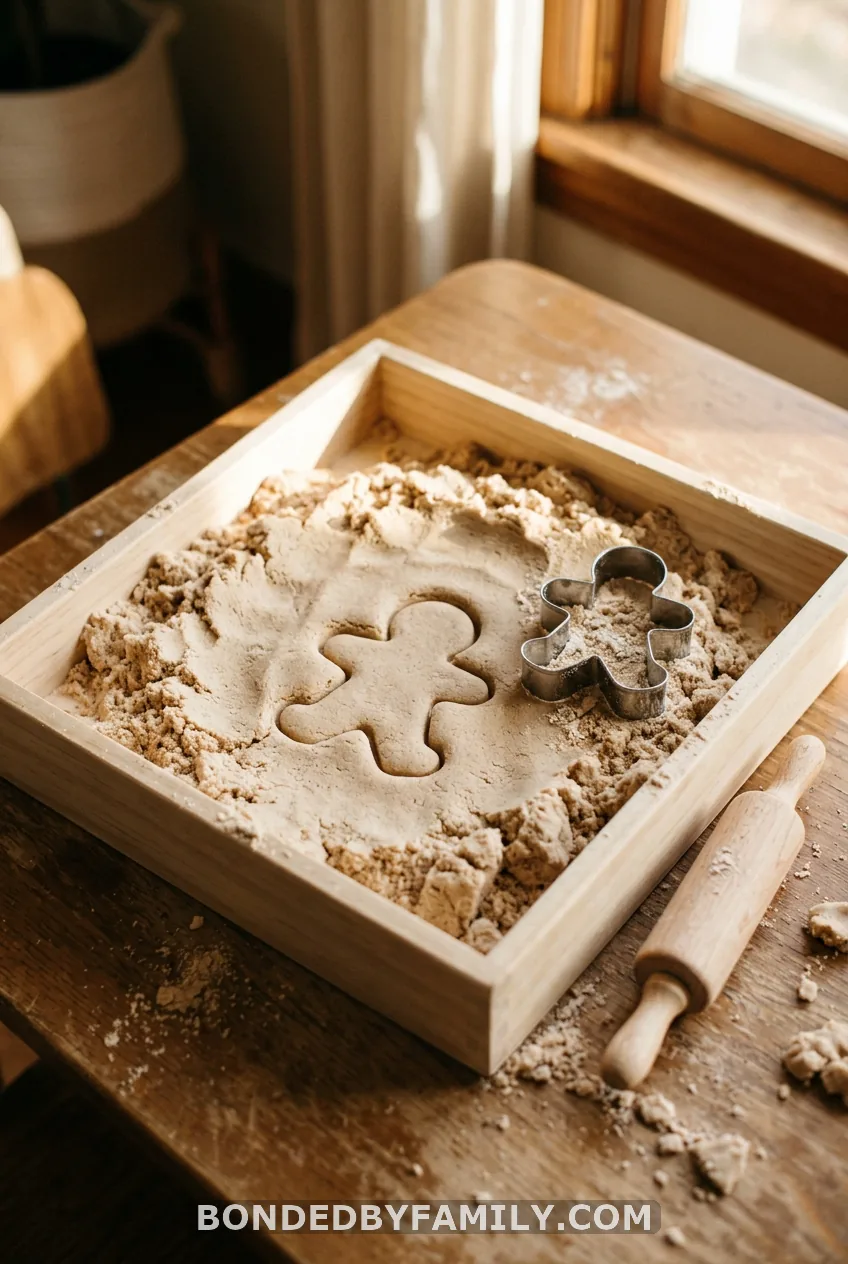
Cloud dough is soft, crumbly and moldable. It holds a shape when squeezed and falls apart when poked. Kids press cookie cutters into it and get a perfect gingerbread man every time.
This is the deep-dive, so here is the full method.
- Toast the flour first. Raw flour can carry germs, so heat 8 cups of all-purpose flour to 165°F. In the oven, spread it on baking sheets and bake at 350°F for about 5 minutes. Check with a food thermometer.
- Let the flour cool completely. This takes about 20 minutes.
- Pour it into a large bowl and stir in 3 tablespoons of cinnamon, 1 tablespoon of ginger, and 1 teaspoon of nutmeg.
- Add 1 cup of vegetable oil, a little at a time, and mix with your hands. Baby oil works too, but it is not taste-safe.
- Squeeze a handful. It should hold together, then crumble. If it is too dry, add a tablespoon more oil.
The common mistake is adding all the oil at once. You end up with a greasy paste that you cannot fix without more flour.
Add cookie cutters, big buttons and jingle bells for preschoolers. For toddlers, stick with scoops and cutters. Cloud dough keeps for about a month in an airtight container.
3. Gingerbread Playdough Station
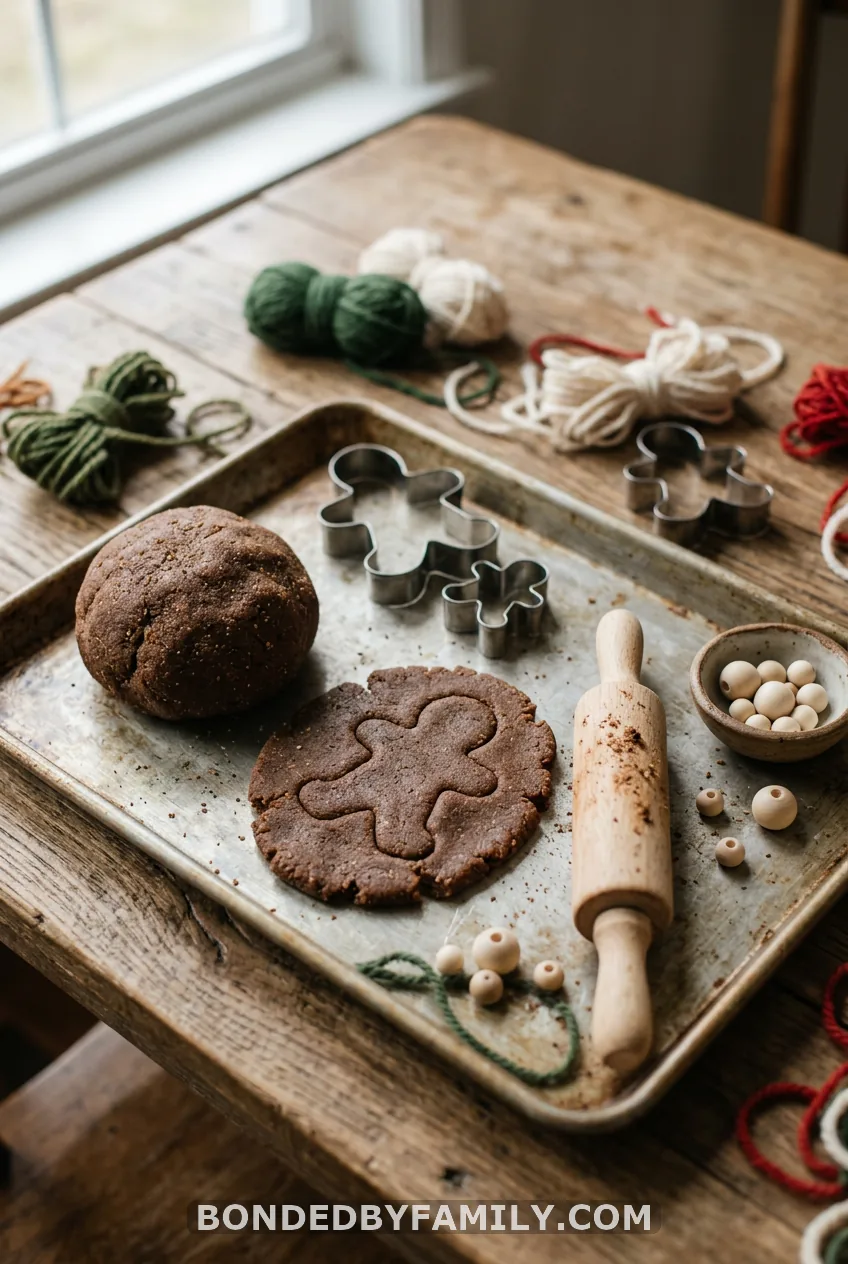
Make a batch of playdough with 2 cups of flour, 1/2 cup of salt, 2 tablespoons of cream of tartar, 2 tablespoons of oil, 2 cups of warm water, brown gel coloring and 2 tablespoons of cinnamon. Cook it in a pot over low heat, stirring until it pulls away from the sides. Knead it once it cools.
No stove? Mix 2 cups of flour, 1/2 cup of salt, 1 tablespoon of oil, 3/4 cup of hot water and your spices. It is a little stickier, but it works.
Set up a “bakery” with a cookie sheet and a rolling pin. Kids cut out men and decorate them with yarn, buttons and pom-poms. Roll the dough out thick so it holds up to poking.
4. Gingerbread House Sensory Bin
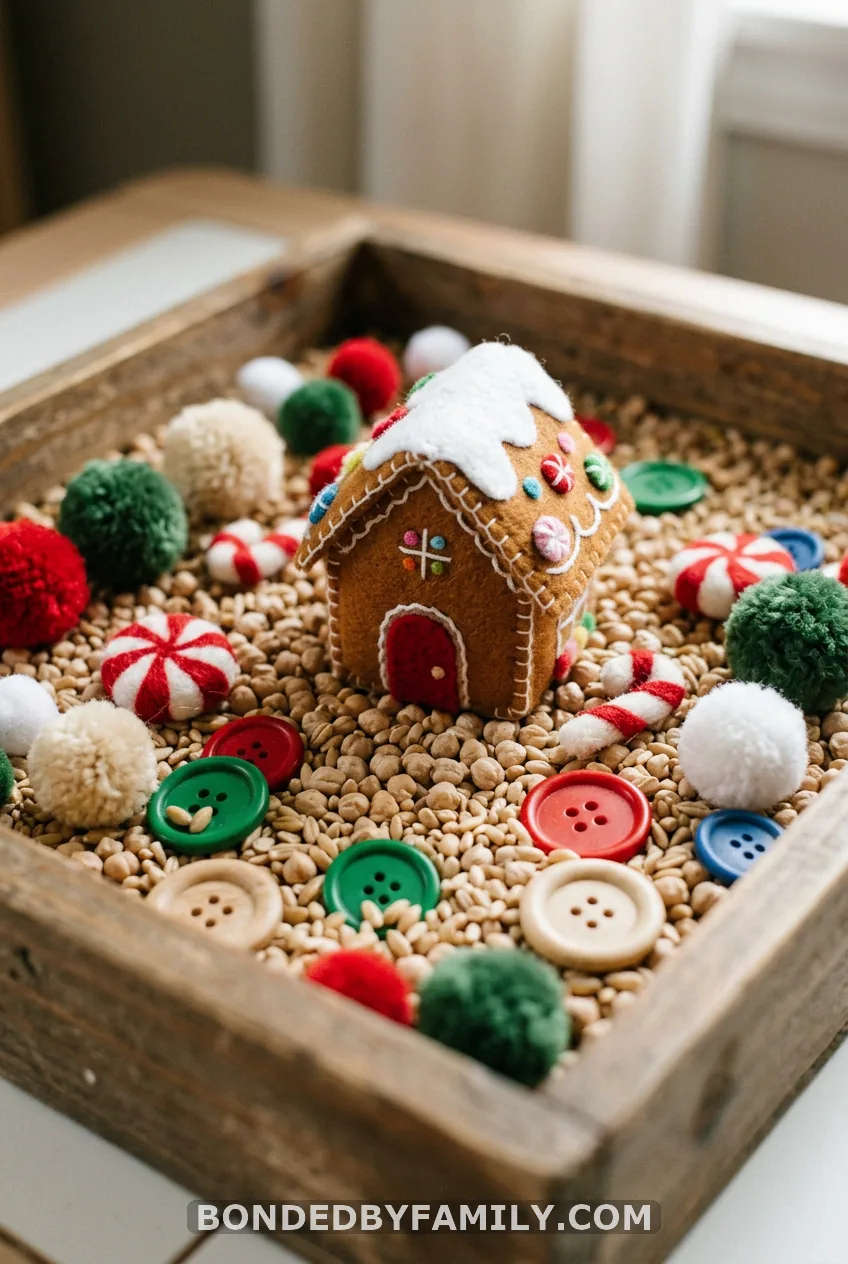
Use a small cardboard house, a felt one or a wooden birdhouse painted brown. Nestle it in rice, cloud dough or shredded brown paper.
Give kids pom-poms, felt “candies” and big buttons to decorate the walls and roof. Pom-poms and buttons are choking hazards for under-4s, so swap in large felt shapes for younger children.
Then tell a story. Who lives here? Who knocked on the door? Pretend play starts the minute you ask.
5. Gingerbread Cookie Sensory Bin
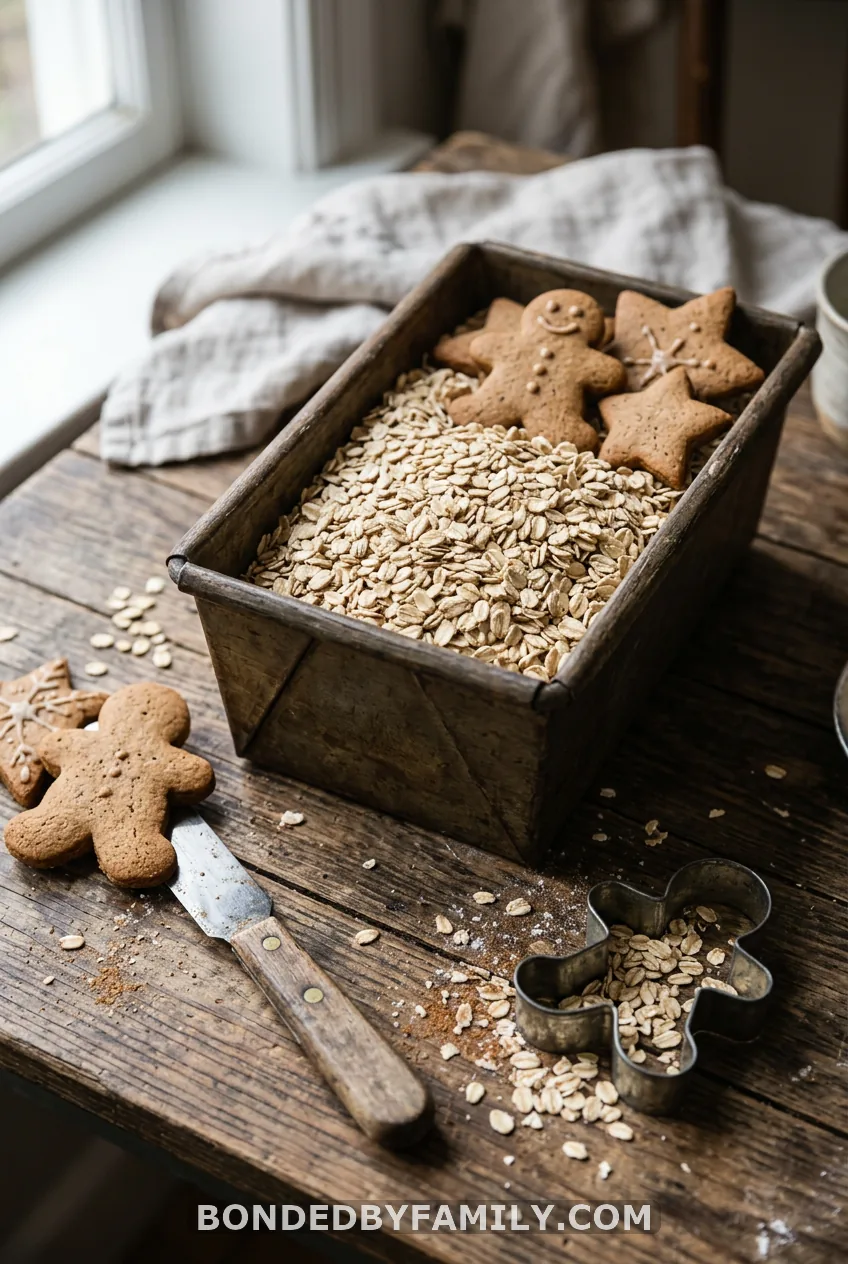
Real cookies make this one fun, and a bit crumbly. Bake a batch of sturdy gingerbread men, or use graham crackers when you want something cheap and fast. Let kids “bake” them in an oat or cloud dough bin with a spatula and a muffin tin.
Check allergies first. Gingerbread has wheat, and many recipes contain eggs. Use cookies the same day, since they go soft quickly, and toss them after play.
6. Gingerbread Man Sensory Bin
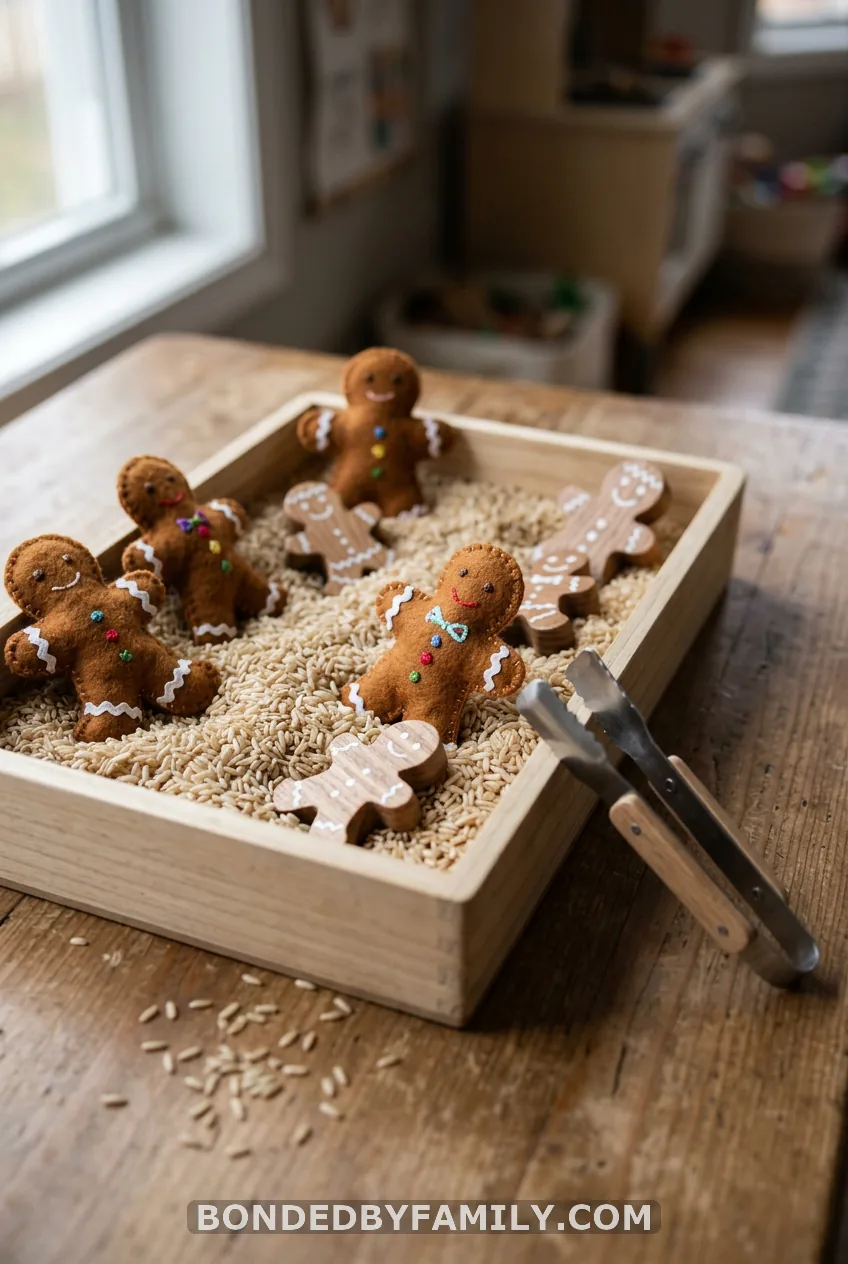
Hide 10 felt or wooden gingerbread men in the bin. Ask kids to find them all, then count them aloud.
Run, run, as fast as you can. Kids love to race to rescue the little guys. Bury them deeper for preschoolers.
7. Gingerbread Water Beads Sensory Bin
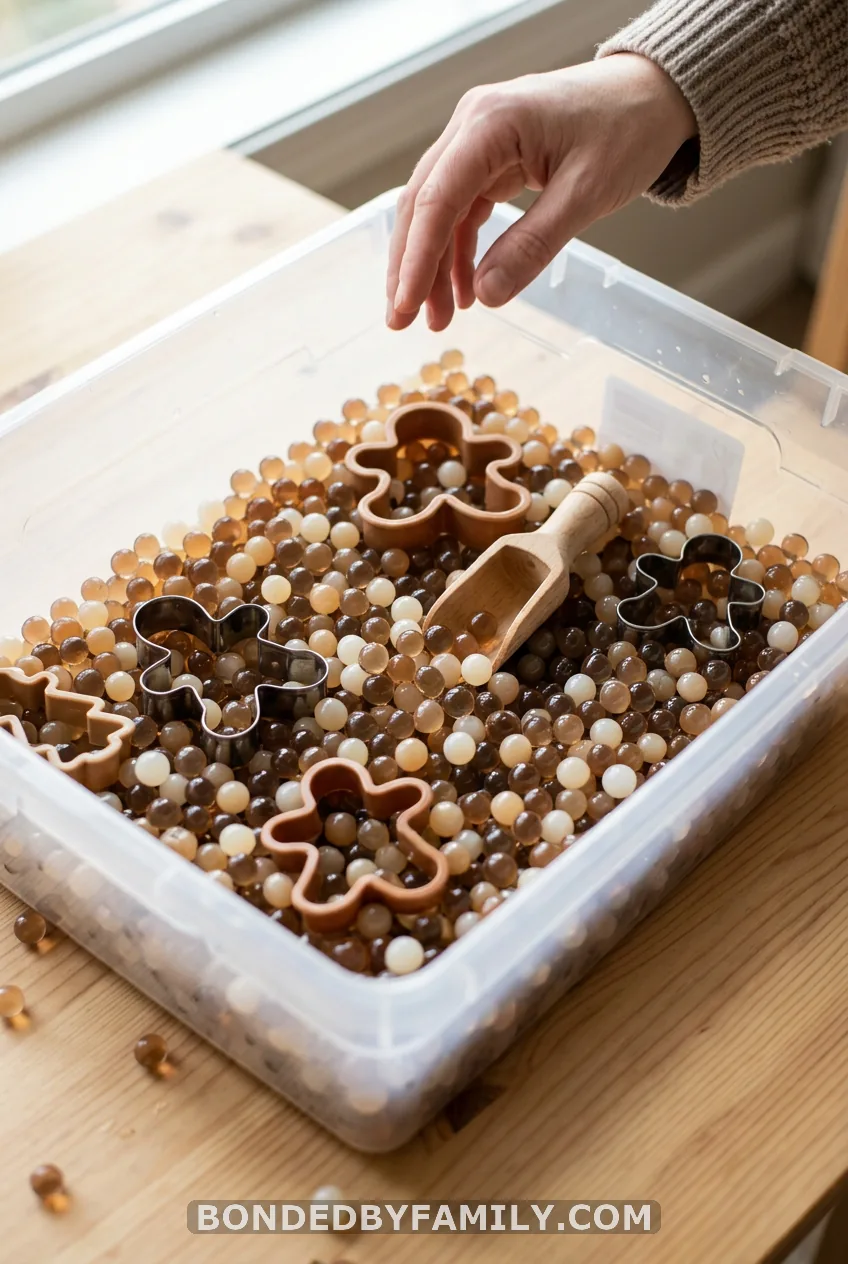
Here is the cautionary part. Water beads are tiny when dry and swell to the size of a marble or bigger. If a child swallows one, it can block the gut and need emergency care.
Use them only with children who no longer mouth things, and stay within arm’s reach the whole time. Skip them entirely with toddlers or if you have a baby in the house. Count the beads before and after play, and vacuum the floor.
For the setup, soak brown and cream beads in water for several hours. Drain them and add cutters, small bowls and scoops. The cool, slippery feel is a favorite with older preschoolers.
8. Gingerbread Oatmeal Sensory Bin
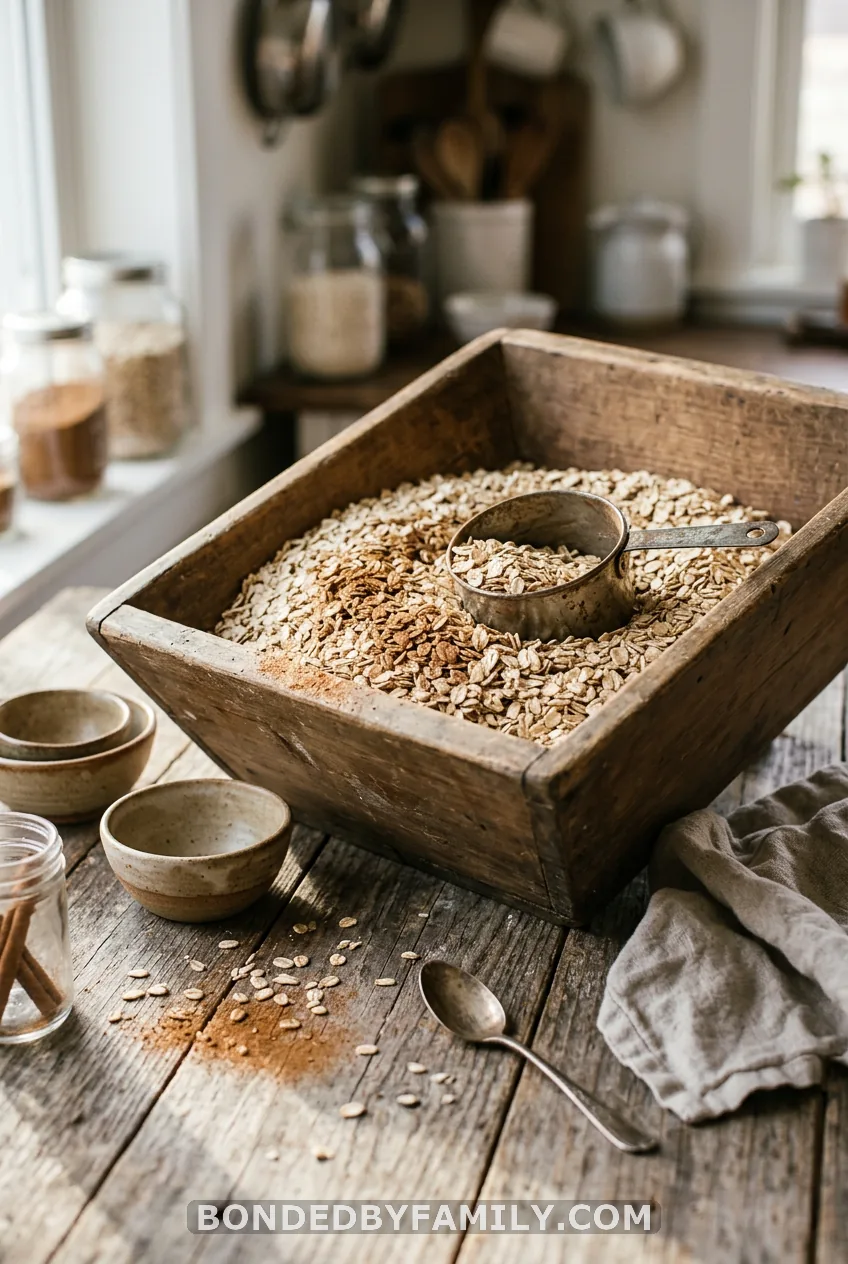
Stir 2 tablespoons of cinnamon and 2 teaspoons of ginger into 6 cups of dry oats. Add measuring cups, spoons and bowls. Oats are cheap, taste-safe and soft, which makes them a good first bin for toddlers.
9. Gingerbread Chickpea Sensory Bin
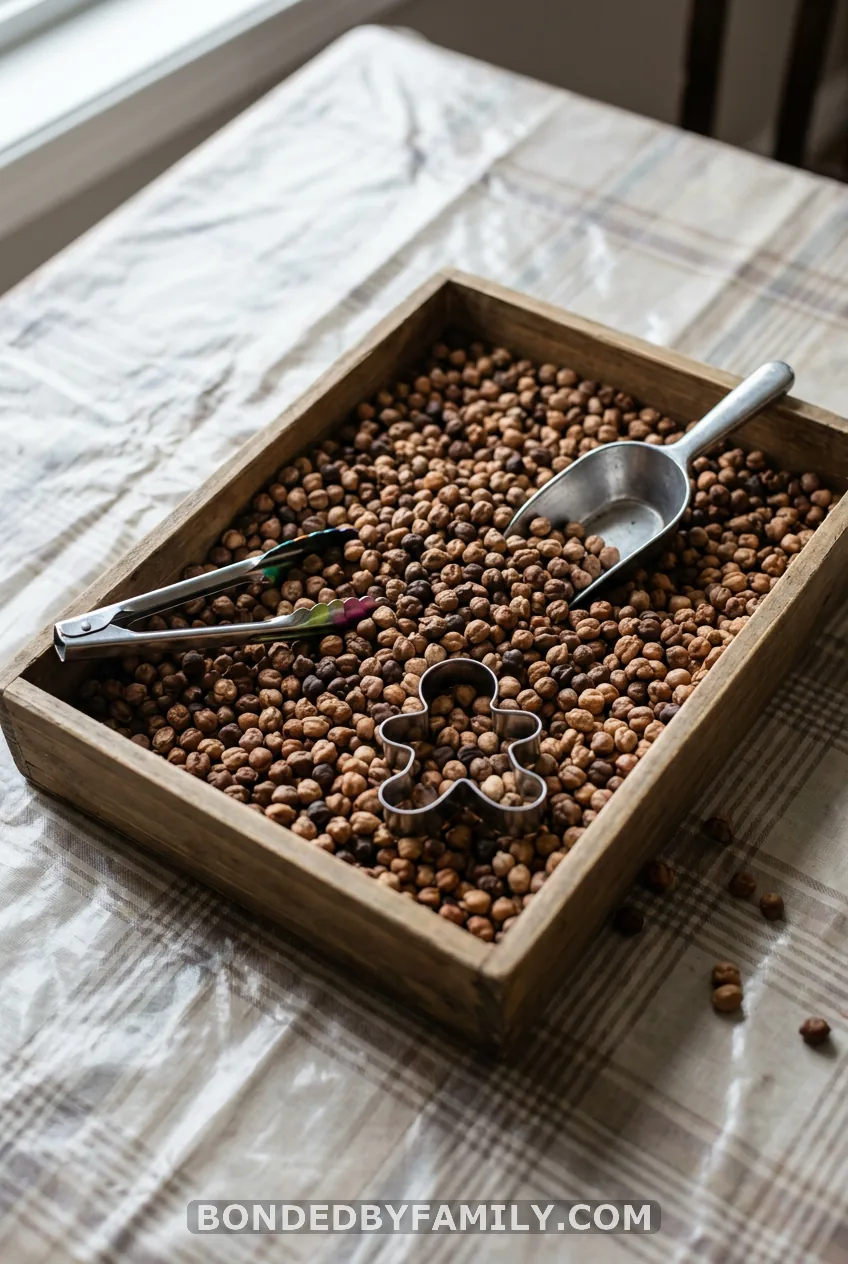
I once set up this bin for a four-year-old and a one-year-old at the same time. Big mistake. The little one grabbed a handful of chickpeas and went straight for her mouth, and I spent the next hour hovering over both of them.
Dried chickpeas are hard and round, so keep them for kids 4 and up. Dye them with a teaspoon of vinegar and a few drops of brown coloring, then let them dry on a tray overnight. They have a satisfying clatter and a firm feel that rice does not.
Give tongs and scoops. Store them in a sealed jar for months. They can also be reused every winter.
10. Mess-Free Gingerbread Sensory Bag
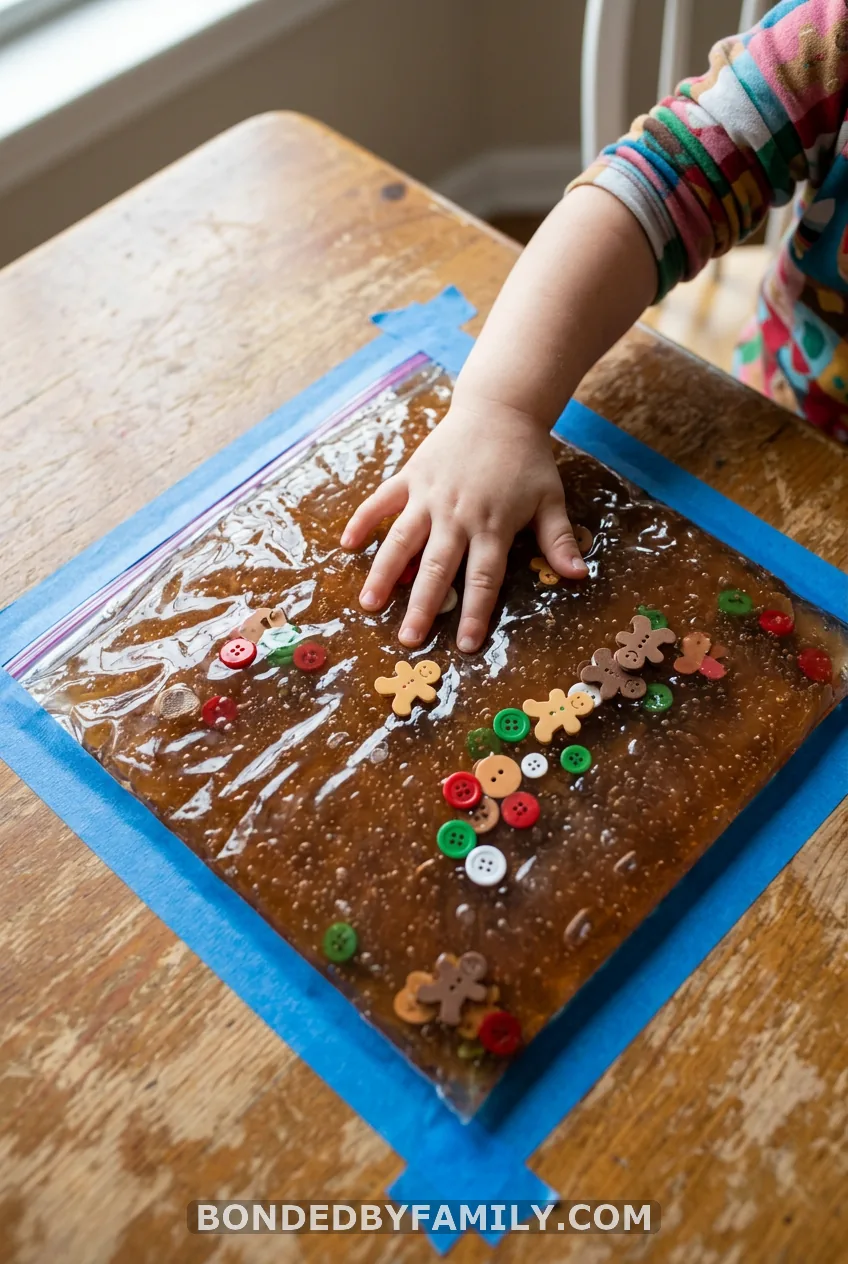
Fill a heavy-duty freezer bag about one-third full with clear hair gel and a squirt of brown paint. Add a few foam gingerbread men and a handful of flat sequins. Squeeze out the air, seal it, and reinforce the seam with packing tape.
Tape the bag to a table or high chair tray. Babies and toddlers press and push the shapes around with zero mess. Do not use this bag with children who mouth things.
The gel, paint, foam shapes and sequins are poisonous or choking hazards, so keep the bag away from them. Stay in the room and check the seal before each use.
11. Gingerbread Sensory Bottle

Fill a clear plastic bottle with water, a spoonful of baby oil, brown glitter and foam gingerbread confetti. Glue the lid shut with hot glue. Shake it, watch it settle, repeat. It is a lovely tool for a calm-down corner.
12. Gingerbread Scoop & Sort Sensory Bin
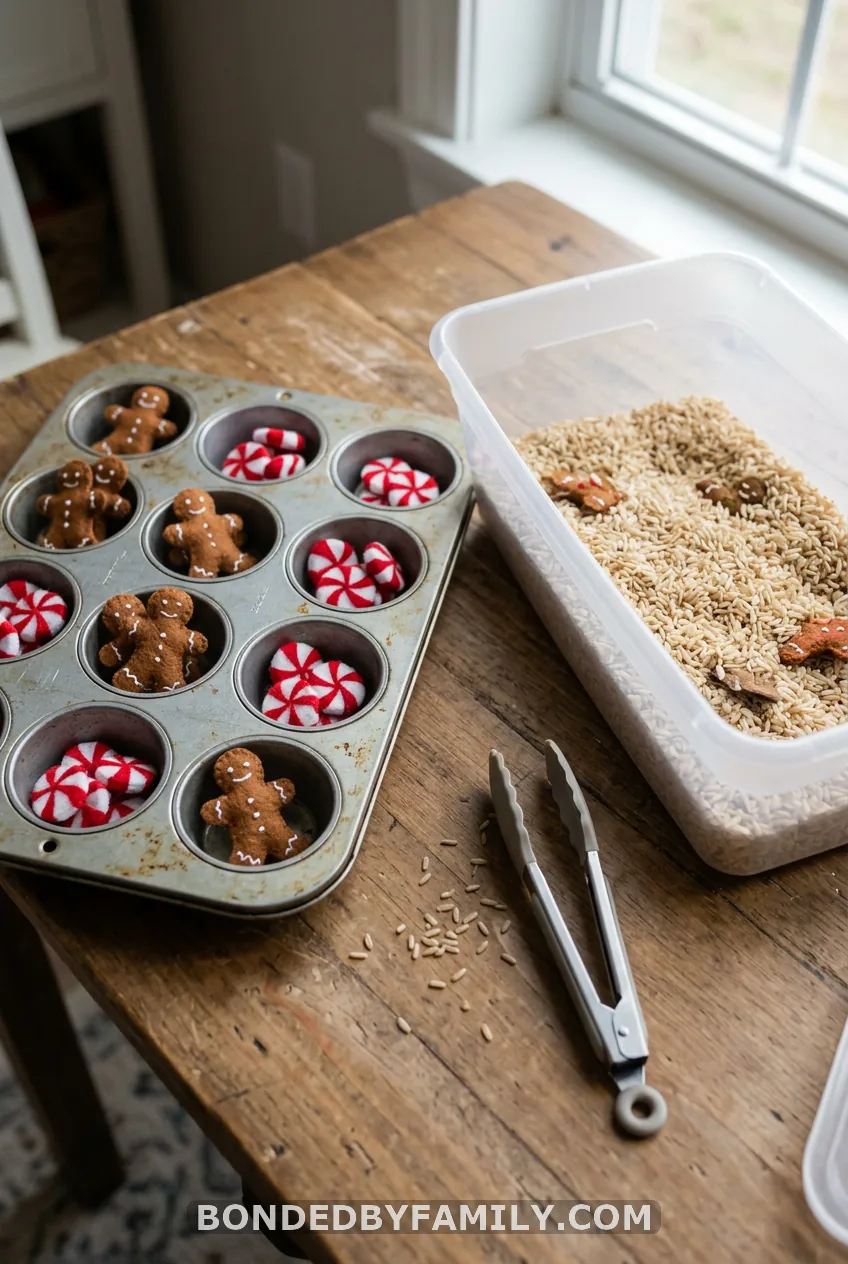
This one builds fine motor skill and sorting. Hide felt gingerbread men and red-and-white striped felt shapes in rice. Kids scoop them out and sort each kind into the muffin tin cups.
Make it harder with color and size sorting. Use big tongs first, then smaller ones as skill grows.
13. Gingerbread Letter Recognition Sensory Bin
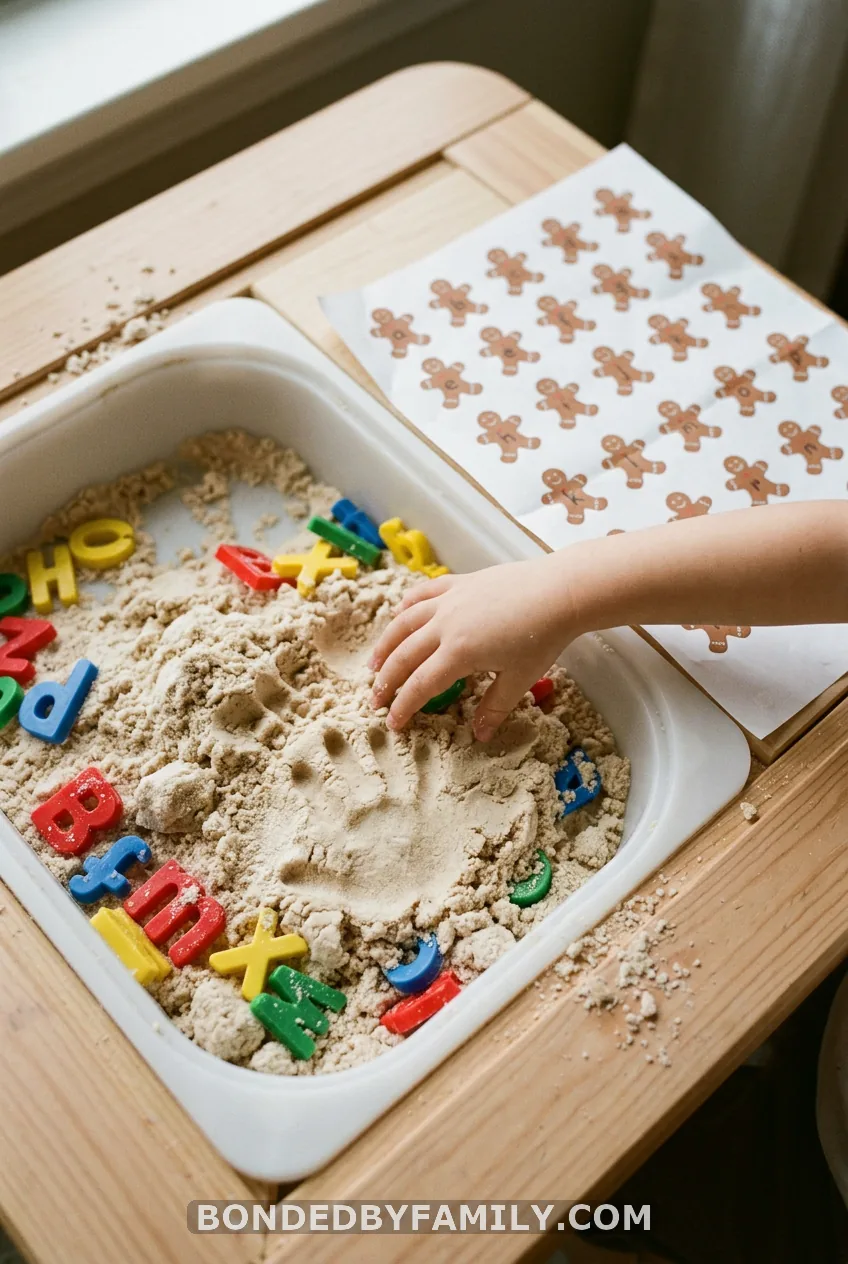
Bury magnetic letters or foam letters in the filler. Small letters are a choking hazard, so use them only with children over 4. Supervise closely, or give children under 4 large letters instead.
Kids dig one out, name it and match it to the same letter on a paper gingerbread man alphabet sheet. Start with the letters in their name.
Match uppercase to lowercase next. Older preschoolers can build short words like “cat” or “man” from the letters they find.
14. Gingerbread Unit Sensory Bin with Printable Activities
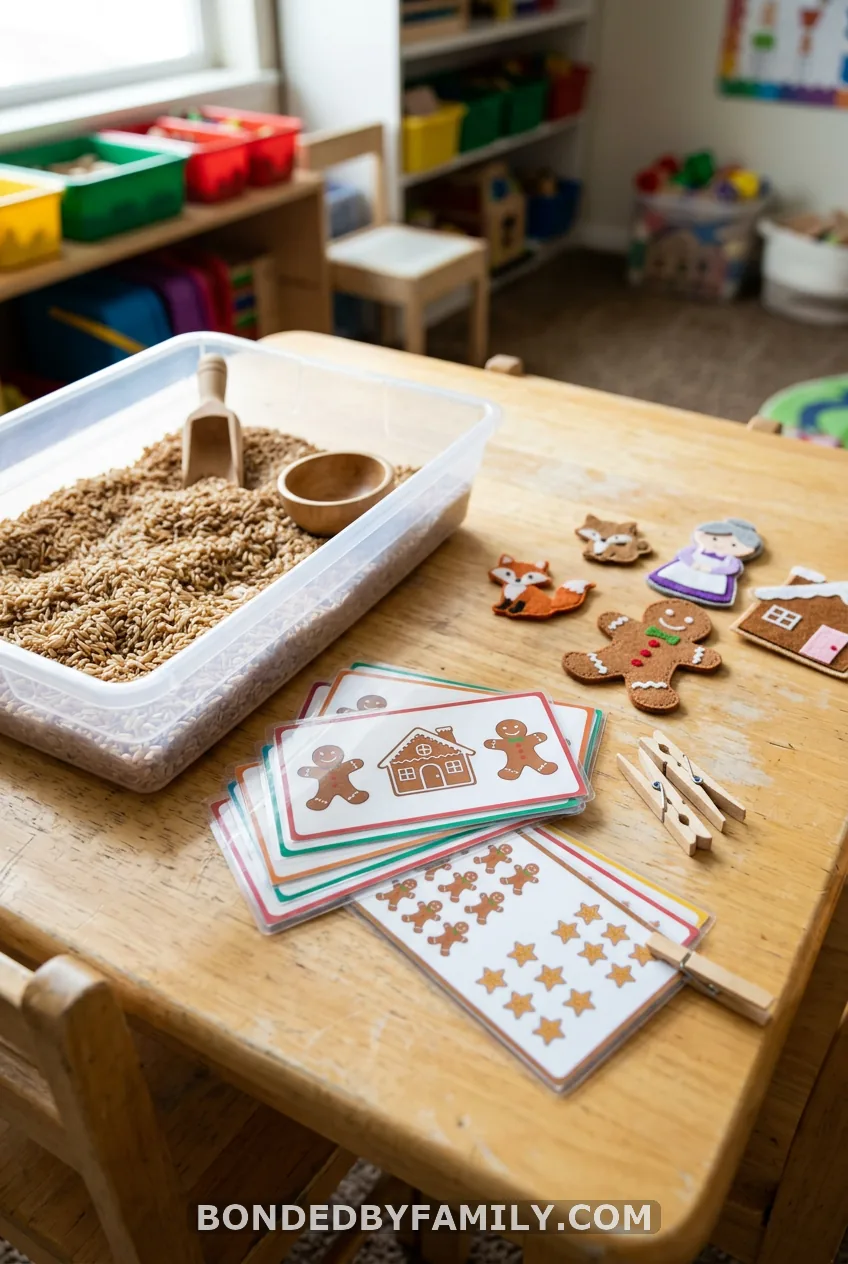
Teachers love this one. Print and laminate counting cards from 1 to 10, simple pattern strips and story sequencing cards for “The Gingerbread Man.” Clip them to the bin edge with clothespins.
Kids count out felt men to match a card, copy a pattern or retell the story with props. A fox, a cow and a horse cut from felt cover the whole chase. Rotate cards each week and you can run this bin for the whole unit.
15. Low-Prep Gingerbread Bin for Sensory-Avoiding Kids
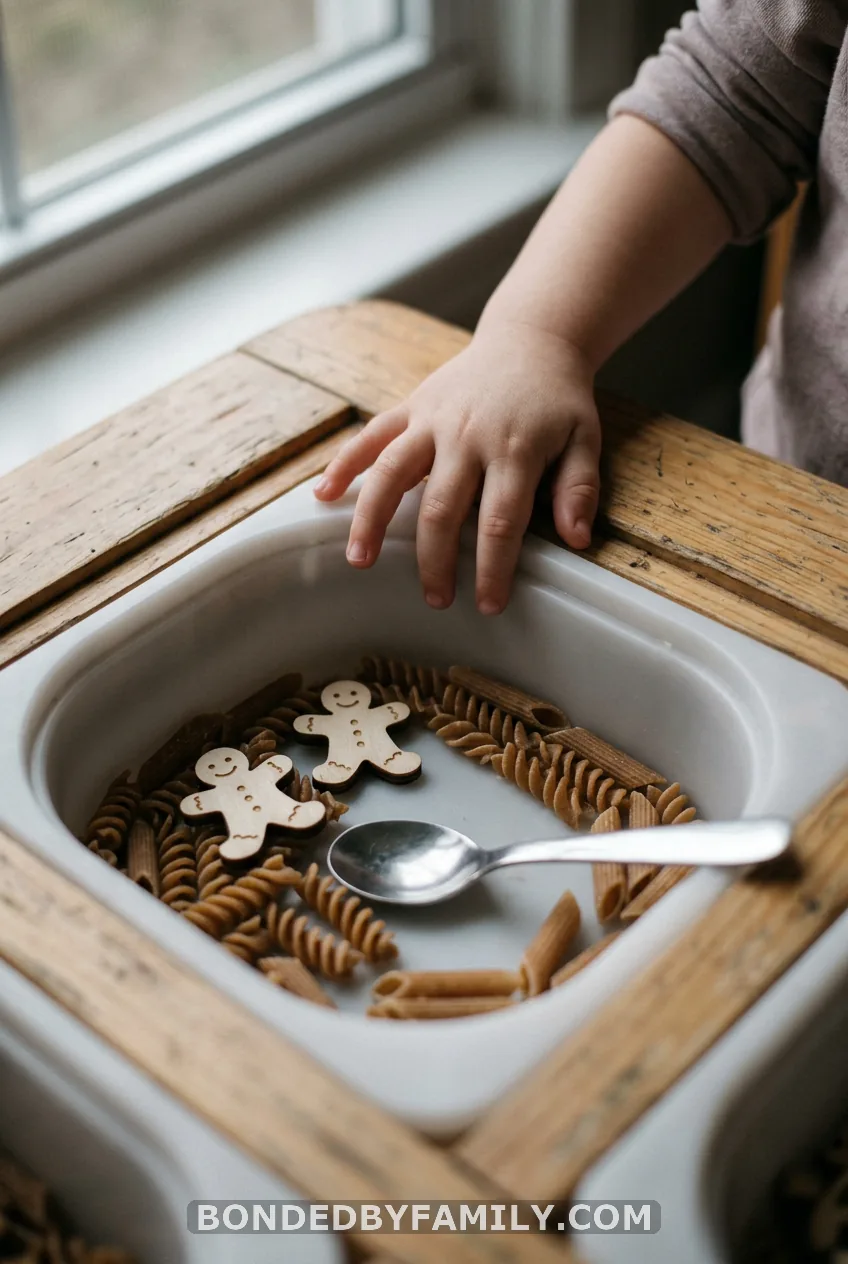
Some children hate sticky or gritty textures. Skip cloud dough and playdough and start with dry, clean items. Dry pasta, wooden men and a spoon take five minutes to set up.
Let your child choose the tools and keep a damp cloth nearby. A tray with a lid also helps, since they can step away and come back. Sensory-seeking kids can go the other way, with deep bins of rice or oats and full-arm scooping.
How to Choose a Gingerbread Sensory Bin Filler
Match the filler to the child, not the perfect photo.
- Rice: cheap, easy to dye, lasts for months
- Cloud dough: moldable and soft, best for cutters
- Playdough: reusable and builds hand strength
- Oats: gentle and taste-safe for toddlers
- Chickpeas: firm and loud, for ages 4 and up
- Water beads: visual and calming, but a real swallowing risk
- Bags and bottles: clean play for babies and mouthers
Safety and Allergen Notes
Taste-safe does not mean tasty. Say it clearly: this is for touching, not eating.
Keep children under 4 away from small parts like buttons, pom-poms, jingle bells and dried beans. Heat-treat flour before use. Check labels for wheat, eggs and nuts in any real cookies, and use gluten-free oats if gluten is a concern.
Cinnamon can irritate skin and eyes in large amounts. Use a light hand. Always stay in the room.
Storage and Cleanup Tips
Keep cloud dough and playdough in airtight containers. They last about a month in a cool spot. Dried rice and chickpeas keep for months in sealed bins, and oats are best used within a few weeks.
Wash tools in warm soapy water. Lay a vinyl tablecloth under the bin and shake it outdoors afterward. A hand vacuum handles the rice that escapes.
Which Bin Will You Set Up First?
You now have 15 ways to bring gingerbread play to your table, from a five-minute dry bin to a full unit with story props. Pick one that fits your child’s age and your patience level for cleanup. Which one will your little baker dig into first?
FAQs
What age is a gingerbread sensory bin for?
Most bins suit ages 1 to 5. For children under 3, pick taste-safe fillers like oats or cloud dough, or use a sealed sensory bag, and stay beside them the whole time.
Is gingerbread cloud dough taste-safe?
It is safe if you toast the flour to 165°F first and use only flour, vegetable oil and kitchen spices. A tiny taste will not hurt, but it is not food, so redirect kids who keep eating it.
How do you make gingerbread rice?
Shake 4 cups of white rice with 1 teaspoon of vinegar and brown gel coloring in a bag, then dry it on a tray. Toss it with cinnamon, ginger, nutmeg and allspice for the smell.
How do you store sensory bin fillers?
Keep cloud dough and playdough in airtight containers for about a month. Dried rice and chickpeas stay good in sealed bins for months.