Most Christmas sensory bins are not for babies. A christmas sensory bin for babies needs to work for a small person who puts everything in their mouth, and the rice-and-trinket bins you see everywhere do not.
This list fixes that. You get 14 festive setups for babies from about 6 to 18 months, each built from large pieces, taste-safe fillers, or sealed containers. You also get a quick safety checklist, tips for adapting toddler bins, and a storage plan.
Why Baby Bins Are Not Toddler Bins
A toddler bin is a pile of small stuff to scoop and sort. A baby bin has a different job. It helps your baby practice grasping, sitting balance, tracking with their eyes, and learning that a shake makes a sound.
Babies also taste the world. Loose rice, dried beans, small bells and tiny plastic trinkets are fine for a four-year-old and risky for a ten-month-old.
One rule covers most of it. If a piece fits through a toilet-paper roll, it stays out of the baby bin.
The 60-Second Baby-Safe Checklist
Run through this before every session.
- Drop every loose piece through a toilet-paper roll. If it fits, remove it.
- Pick taste-safe fillers or sealed setups with no loose filler.
- Skip loose rice, beans, glitter, small bells, broken ornaments and essential oils.
- Use a large, shallow tray or an under-bed storage bin so your baby can sit and reach.
- Stay within arm’s reach for the whole session.
- Check for allergies before offering any edible filler, such as wheat in flour dough.
- Wash and dry every piece before you store it, so mold does not grow.
1. Taste-Safe Snow Dough Bin
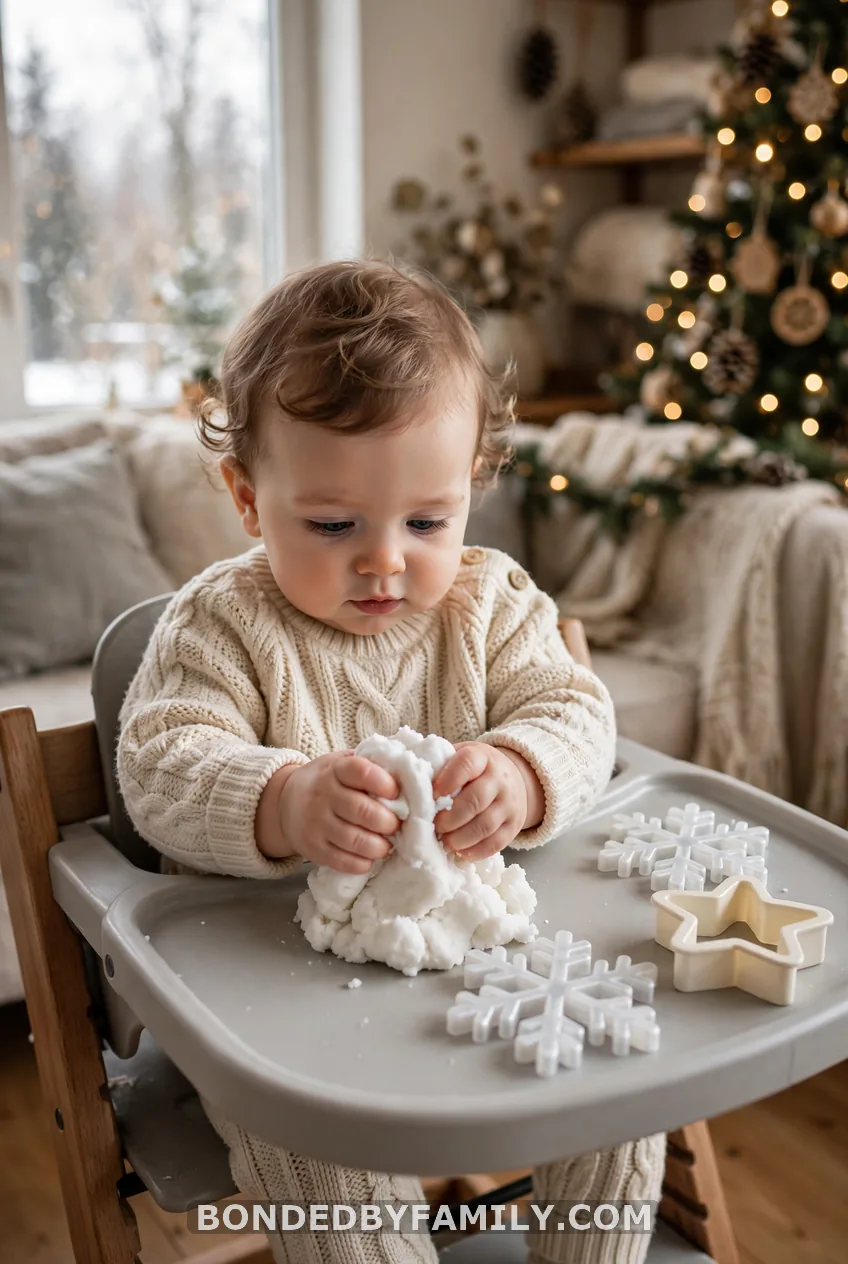
This is the one to start with. It feels cold and soft, and it is safe if it lands in a mouth.
What you need: 2 cups plain flour, 1/4 cup vegetable oil, a few tablespoons of water, a large tray, two big plastic snowflakes, one chunky cookie cutter (3 inches or wider) and a wide scoop.
- Heat-treat the flour first. Spread it on a baking tray and bake at 350°F for about 5 minutes, then cool it. Raw flour can carry germs.
- Mix the cooled flour and oil in a bowl.
- Add water one tablespoon at a time until the dough clumps when squeezed. It should feel like damp sand.
- Tip it into the tray and add the snowflakes, cutter and scoop.
- Sit your baby in front of it and let them pat, squeeze and crumble.
The whole setup takes about 10 minutes. Play for 10 to 15 minutes.
Common mistake: adding so much water that the dough turns sticky and glues to fingers. If that happens, stir in more flour.
Pro tip:
Taste-safe is not the same as a snack. Skip it if your family has a wheat allergy, and throw the dough away after play, especially if it has been on the floor.
2. Jingle Bell Sensory Bottle
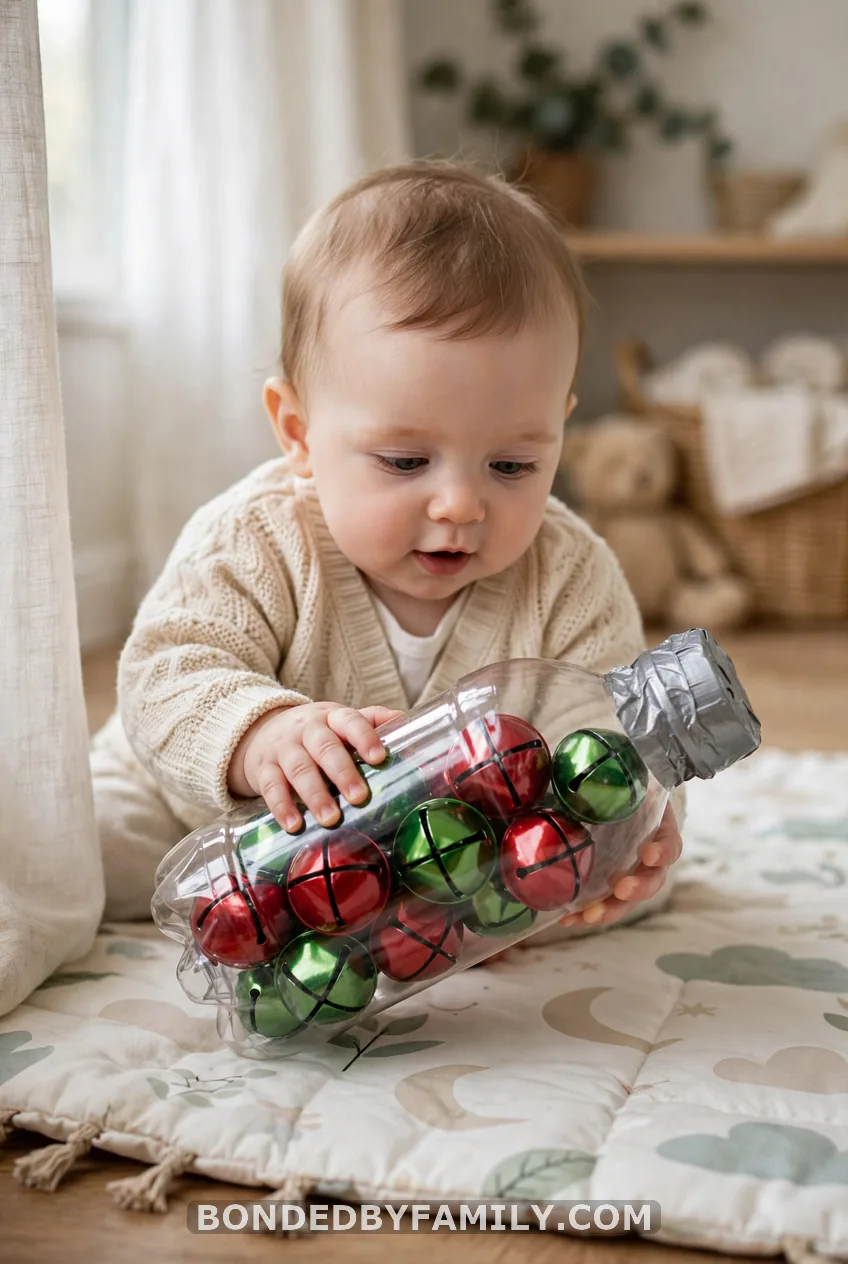
Loose bells are a common baby hazard, so seal them away. Use a sturdy 16-ounce plastic bottle and drop in 4 or 5 large jingle bells. Glue the lid on, then wrap it with heavy-duty tape so it cannot twist off.
Babies love the sound and the roll. It builds tracking, shaking and hand-to-hand transfer.
Check the bottle for cracks each time. Retire it the moment the lid loosens.
3. Large Pom-Pom Christmas Tree Tray
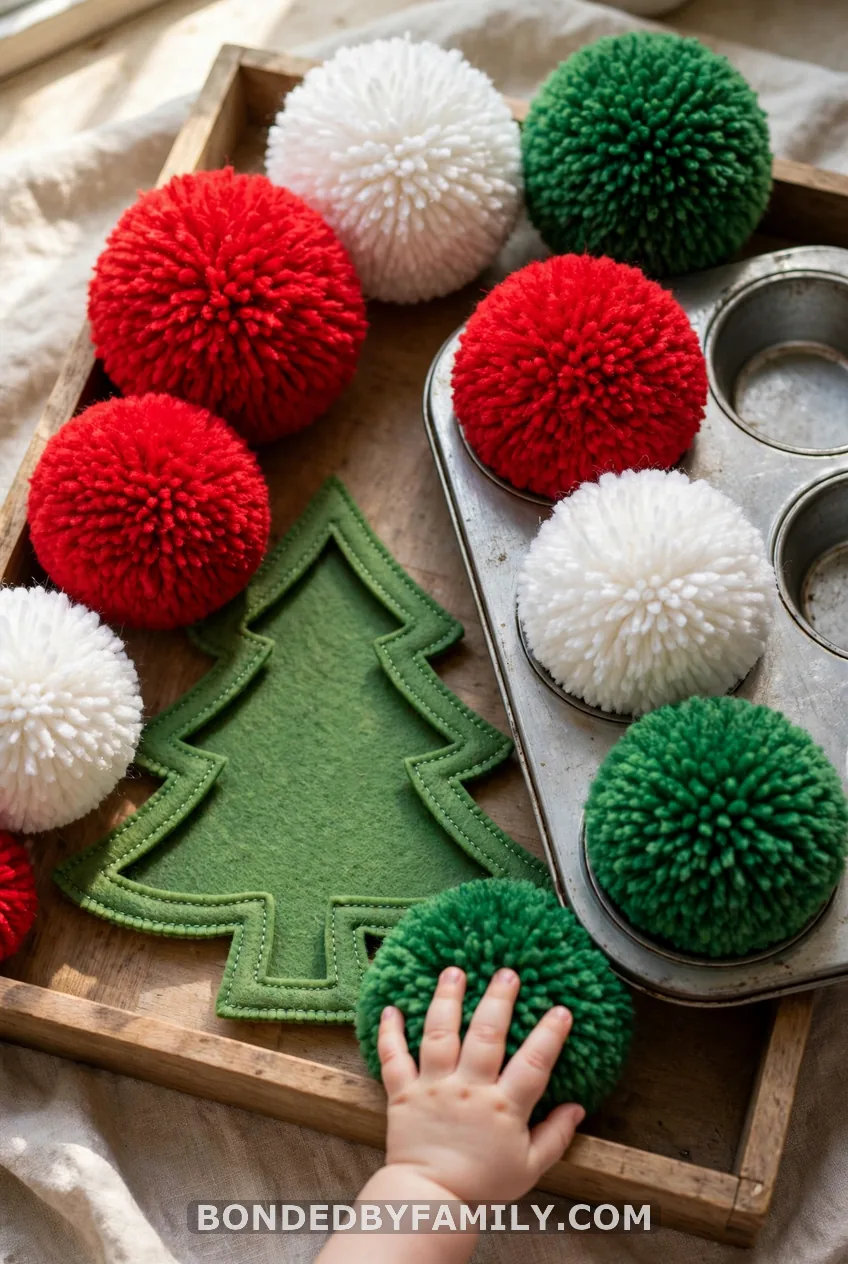
Cut a tree from green felt and lay it in a shallow tray. Add oversized pom-poms, 2 inches or bigger, in red, white and green. Put a muffin tin beside it for dropping them in.
This practices the palmar grasp (whole-hand grab) and release. Dumping the pom-poms out is part of the game.
Safety check: squeeze each pom-pom. If it sheds fluff or the glue gives, toss it. Dense, firmly made pom-poms only.
4. Warm Water and Plastic Ornament Bin
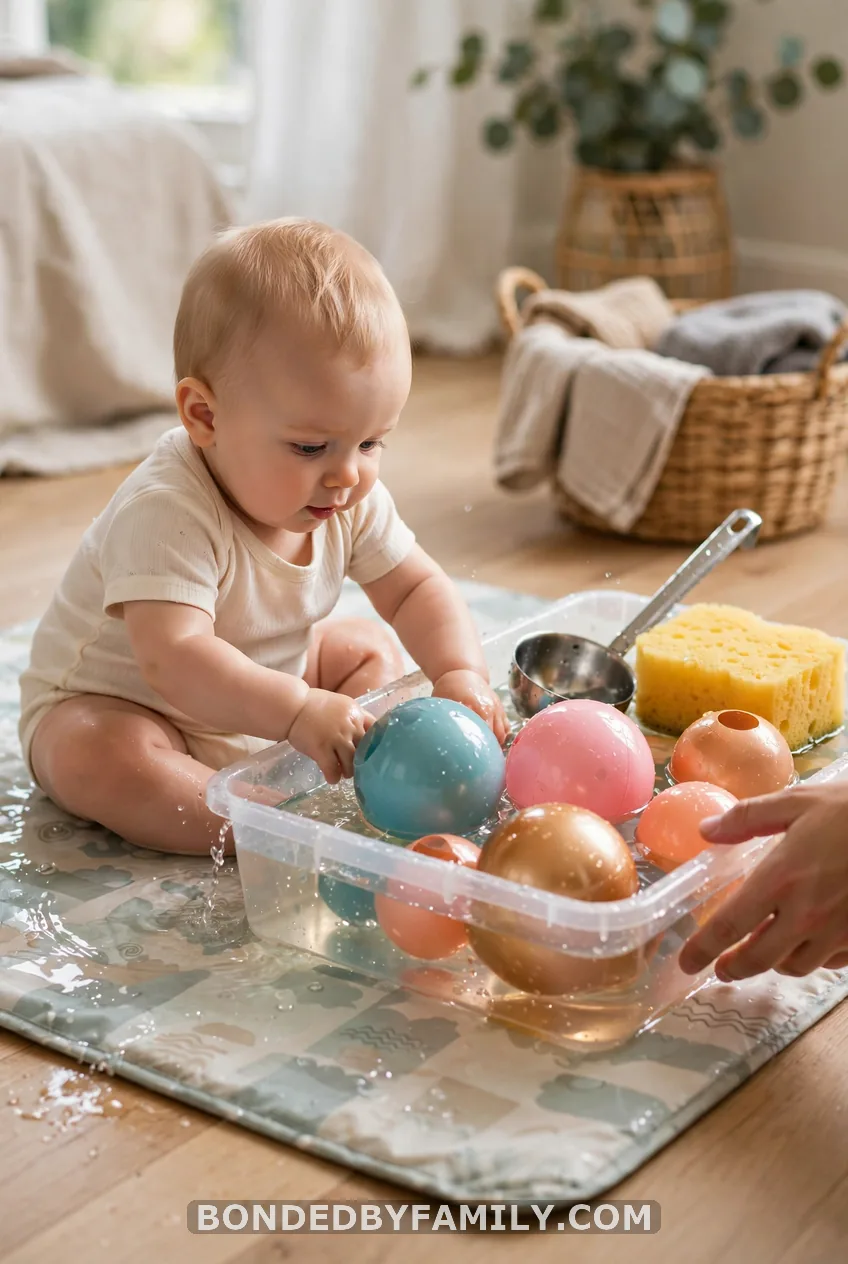
Fill a shallow bin with 1 to 2 inches of comfortably warm water. Add large shatterproof plastic ornaments (3 inches or wider), a ladle, a measuring cup and a big sponge.
Put a splash mat under the bin. Babies pour, splash and squeeze the sponge, which is great hand-eye practice.
Never leave your baby alone, even for a second. Empty the bin as soon as play ends.
5. Felt Christmas Tree Wall Set
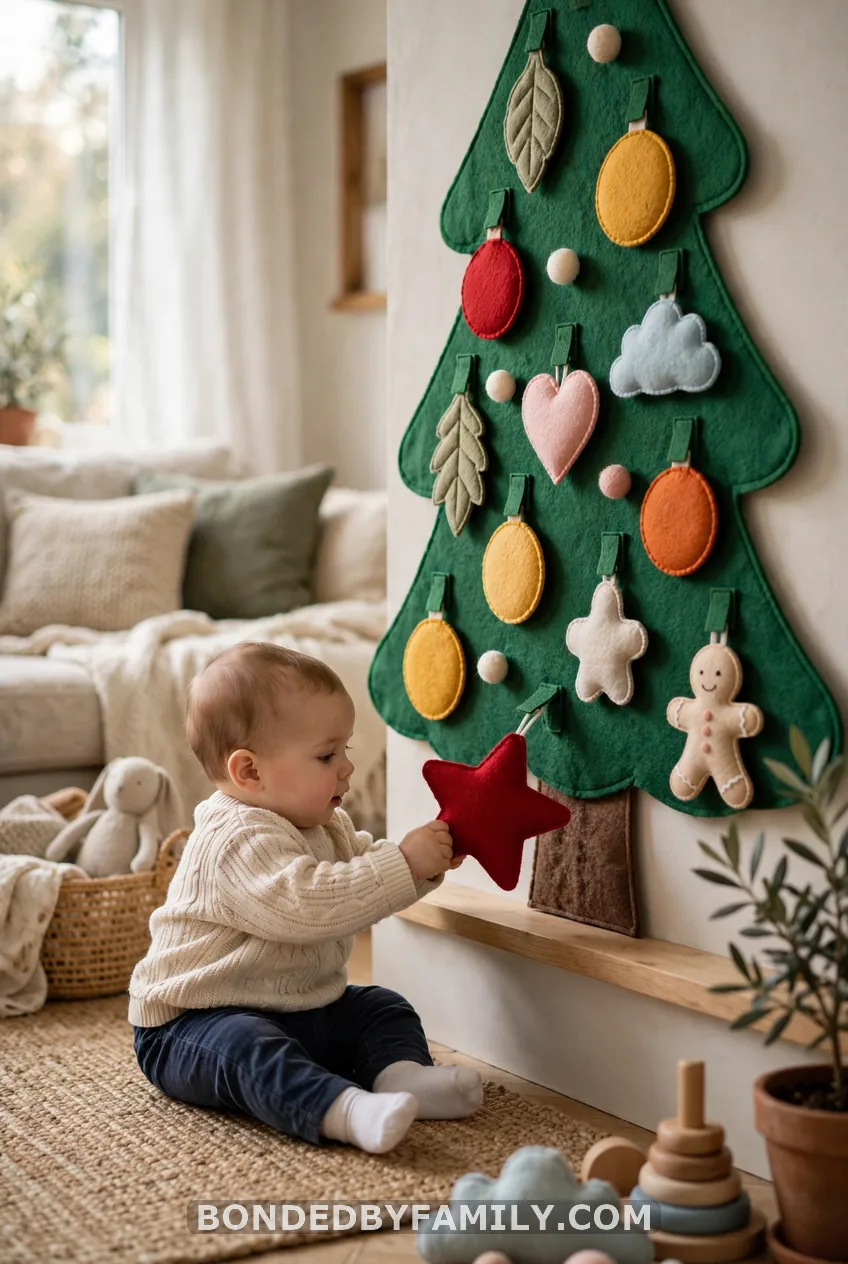
Here is a bin with no loose parts at all. Stick a large felt tree to a low wall or a sturdy tray, then add big felt ornaments backed with Velcro.
Keep every piece larger than your baby’s fist. Skip pins, small hooks and tiny felt balls. Babies pull, press and stick, which is fine-motor work in disguise.
6. Crinkle Paper Gift Basket
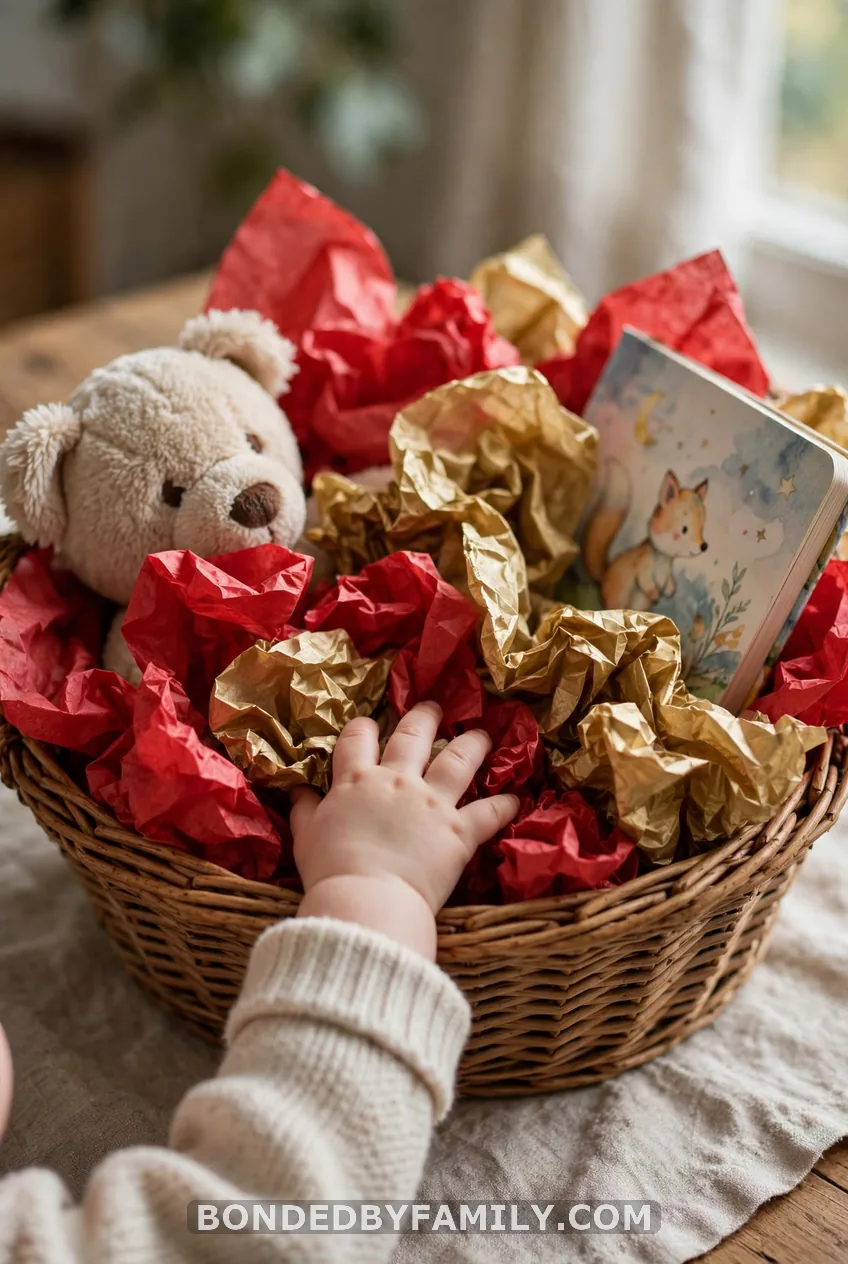
Crumple big sheets of tissue or wrapping paper and pile them in a basket. Hide a soft toy or a board book underneath. Your baby listens, grabs and digs.
It also teaches object permanence, the idea that something hidden still exists.
Skip shredded paper, ribbon and staples. Watch closely, because babies will try to eat paper. Take out any piece that has been chewed soft.
7. Taste-Safe Gingerbread Oobleck
What most people think: oobleck is a big-kid mess.
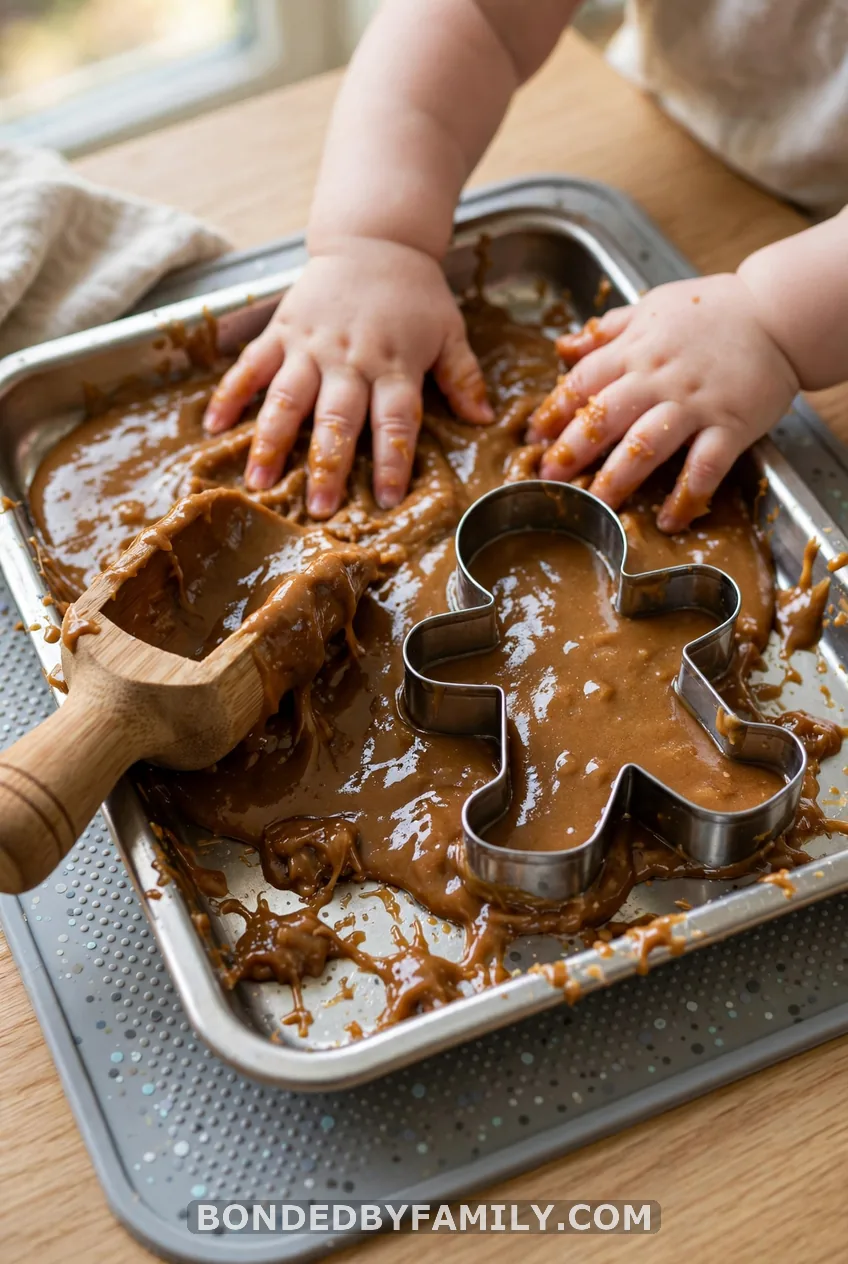
Reality: it is one of the best textures for a baby, because it is two plain ingredients. Mix 2 parts cornstarch with 1 part water, then stir in a spoonful of cinnamon for color and smell.
It flows when you tip it and goes hard when you press it. Babies find that fascinating.
Put a mat under everything and add a large cookie cutter and scoop. It is taste-safe, but a thick mouthful is not good for a baby, so keep a hand close and throw it away after play.
8. Christmas Sensory Bag for Tummy Time
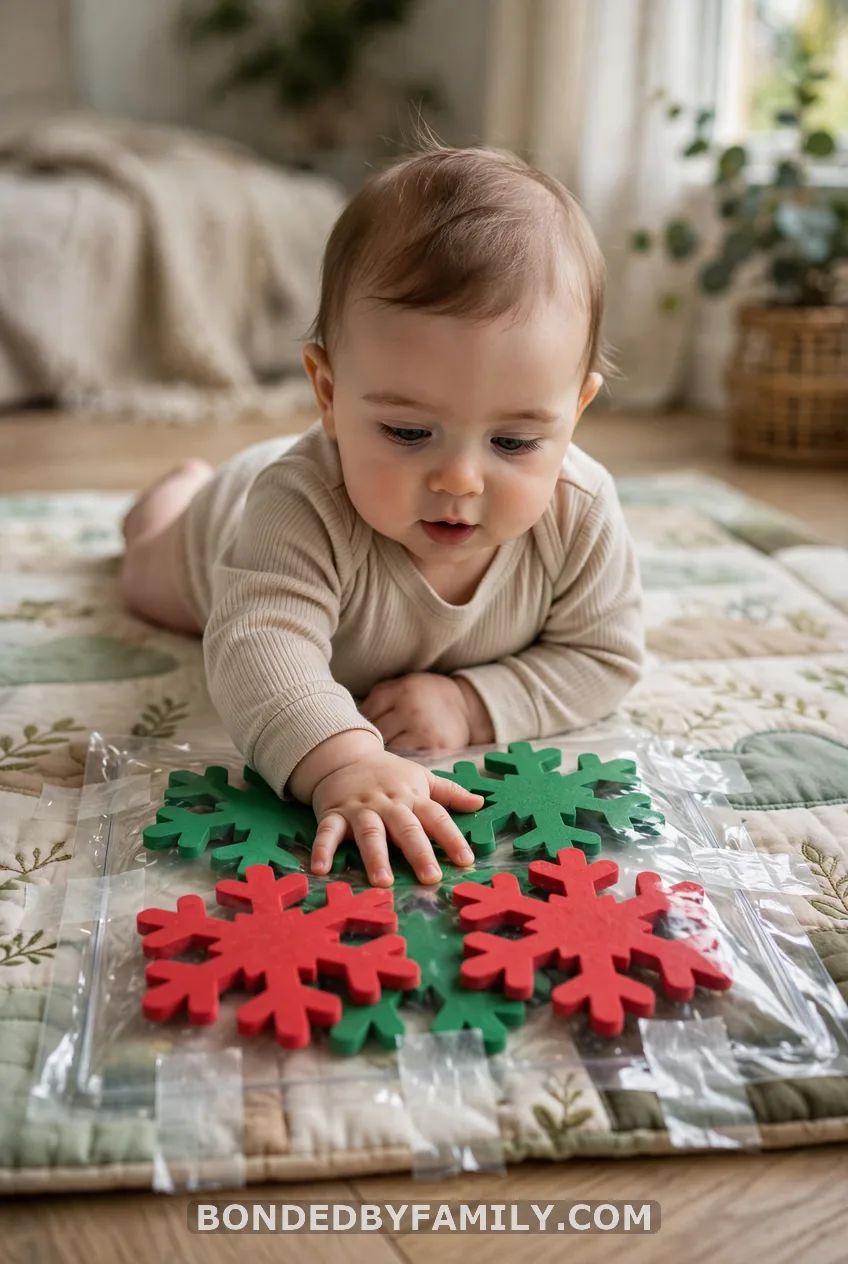
This works for younger babies who are not sitting yet. Put a few large foam snowflakes and a small amount of clear hair gel in a heavy-duty zipper bag. Double-bag it and tape the zipper with clear packing tape.
Tape all four edges to the floor. Your baby presses and watches the shapes slide, which builds visual focus and makes tummy time more fun.
Check the seams for leaks before and after play. Never leave a baby alone with a plastic bag. Skip glitter.
9. Stacking Cup and Sealed Bell Shaker Bin
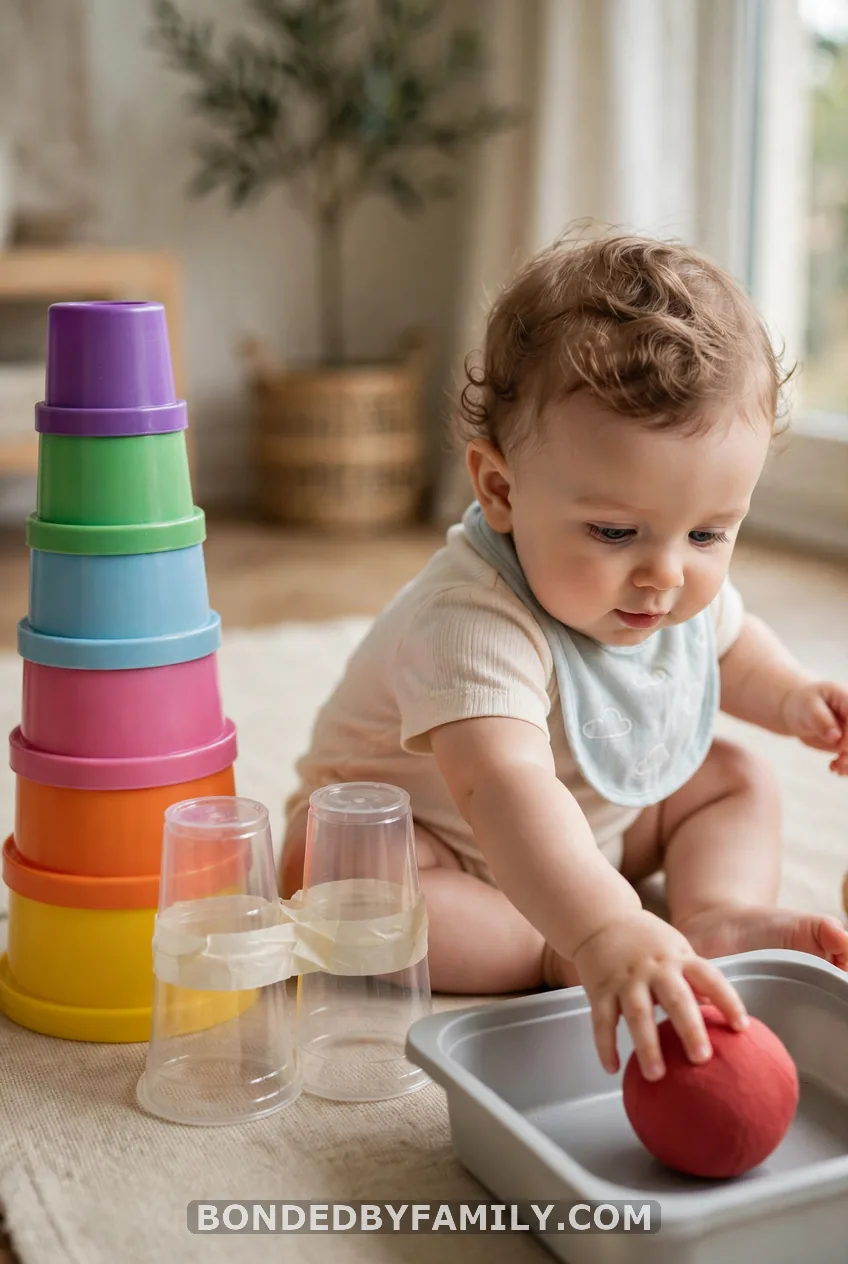
Make a shaker from two sturdy plastic cups taped rim to rim with a few large bells inside. Wrap the seam in tape twice. Put it in a bin with big stacking cups and a soft ball.
Your baby will stack, fill, dump and shake. Dumping is the main event.
Check the cups for cracks and the tape for peeling every time you set up.
10. Santa’s Sack Fabric Bin
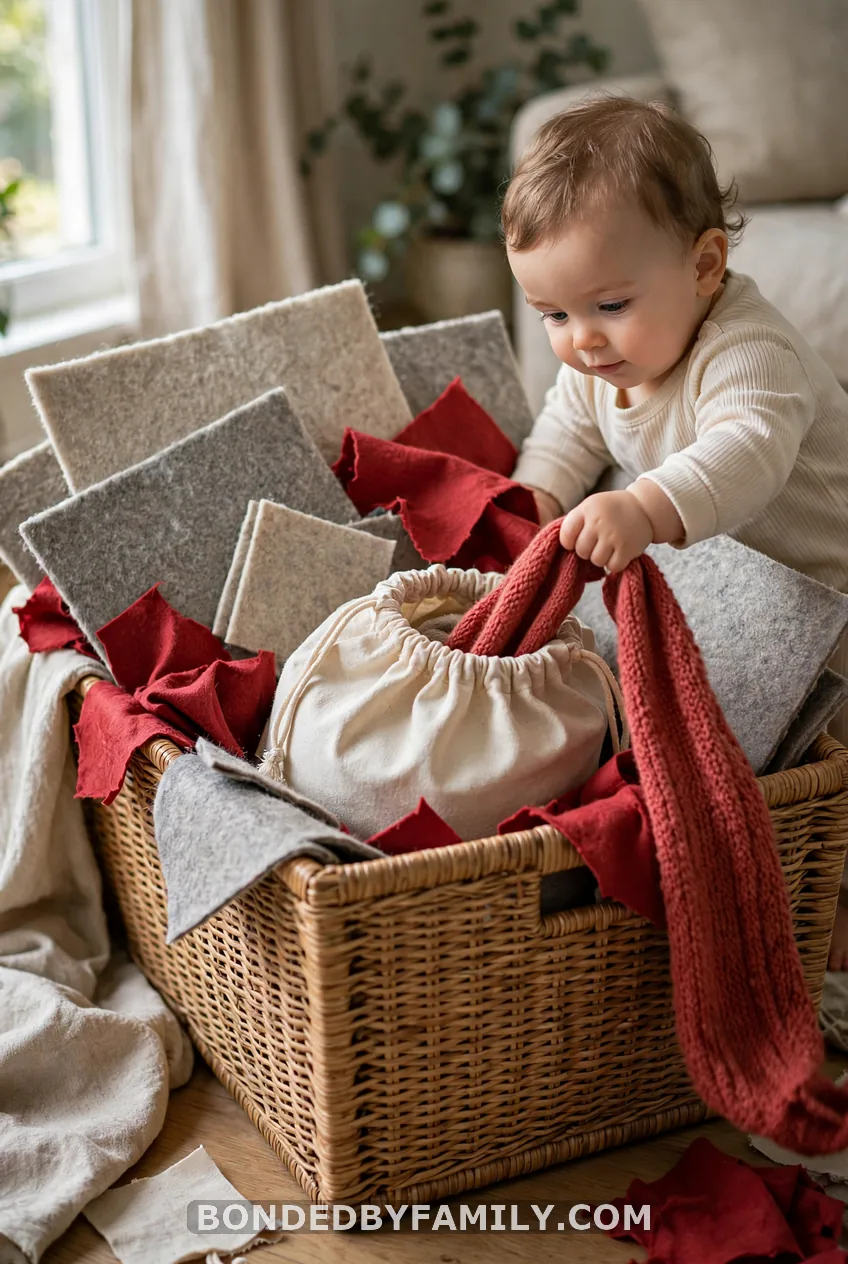
Fill a large bin with big felt squares, soft fabric scraps and one wide scarf. Add a big drawstring bag for put-in and take-out play.
Babies explore textures and learn to pull and release. Older ones start to pretend, like handing you a “present.”
Cut off any ribbon or long cords. Supervise scarf play closely and keep fabric pieces larger than a hand.
11. North Pole Ice Block Bin
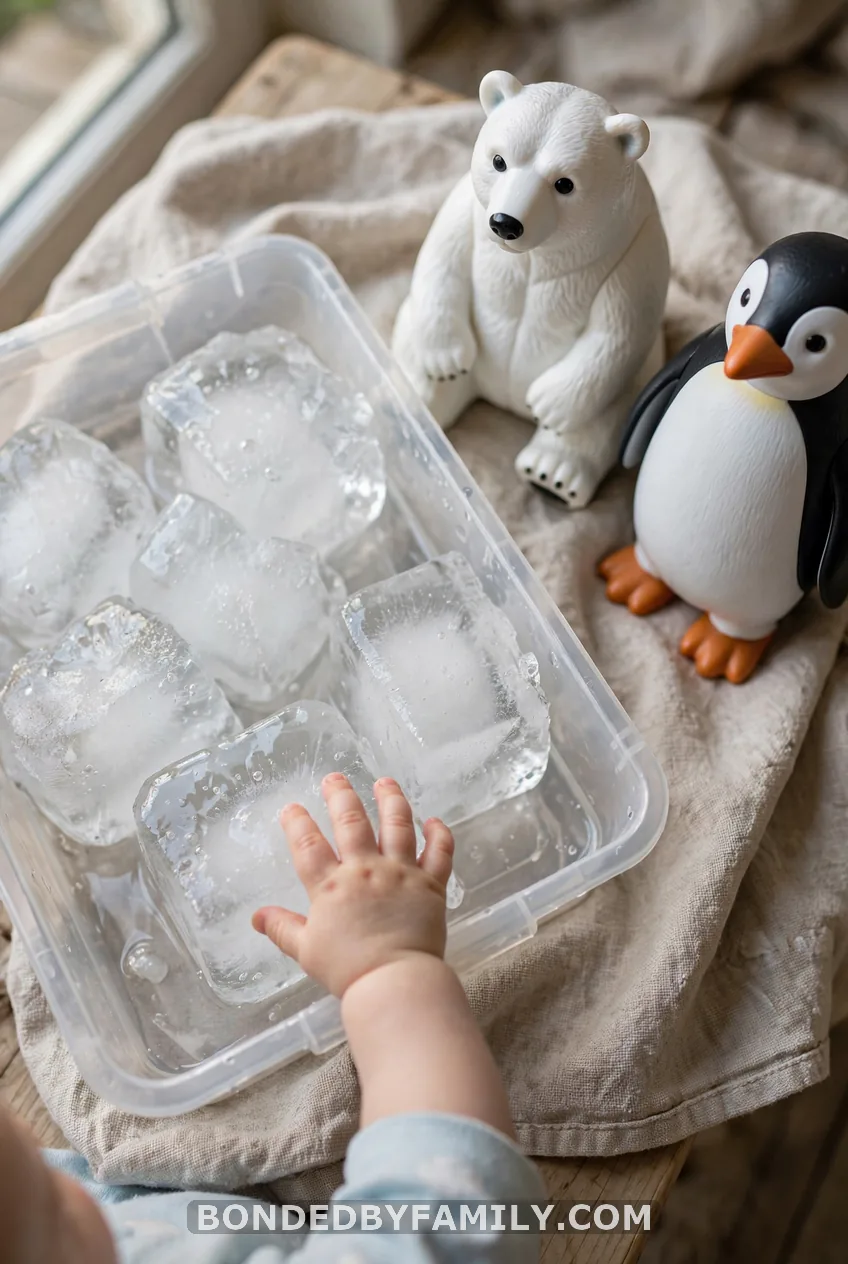
Freeze water in a loaf pan or large plastic container so the ice block is big, much bigger than a toilet-paper roll opening. Put it in a shallow bin on a towel with large plastic arctic animals and a big scoop.
Your baby gets cold input and watches the block melt. Keep play to 5 to 10 minutes.
Ice can chip off, and small chips are a choking risk. Never offer small ice cubes.
Pro tip:
Freeze a large plastic animal inside the block the night before. Your baby watches it appear as the ice melts.
12. Christmas Lights Color Match Tray
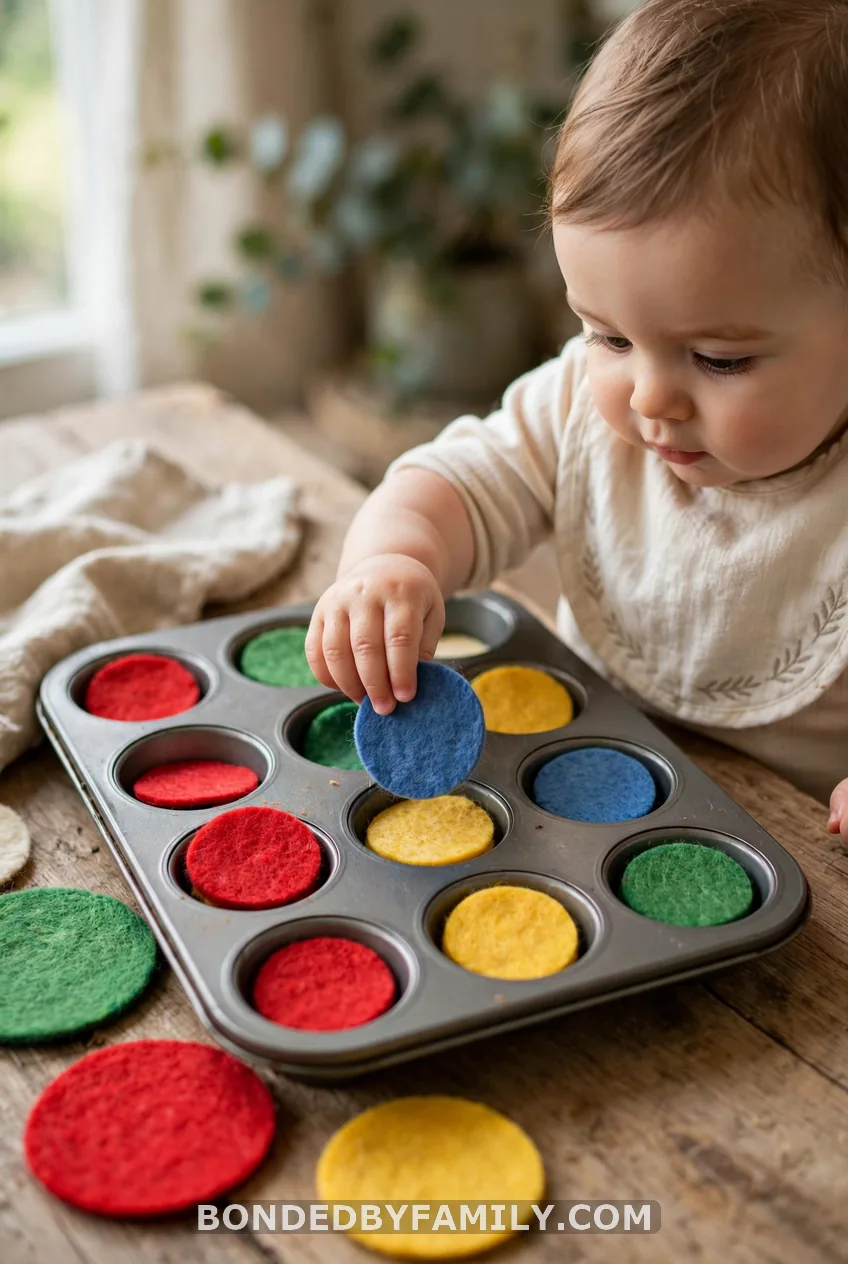
Skip real lights, battery lights and cords. Use oversized felt circles or large balls in light colors and set out a muffin tin or colored cups for matching.
Babies pick up, drop and match colors. Early on, they will just enjoy dropping.
13. Snowball Fleece Ball Bin
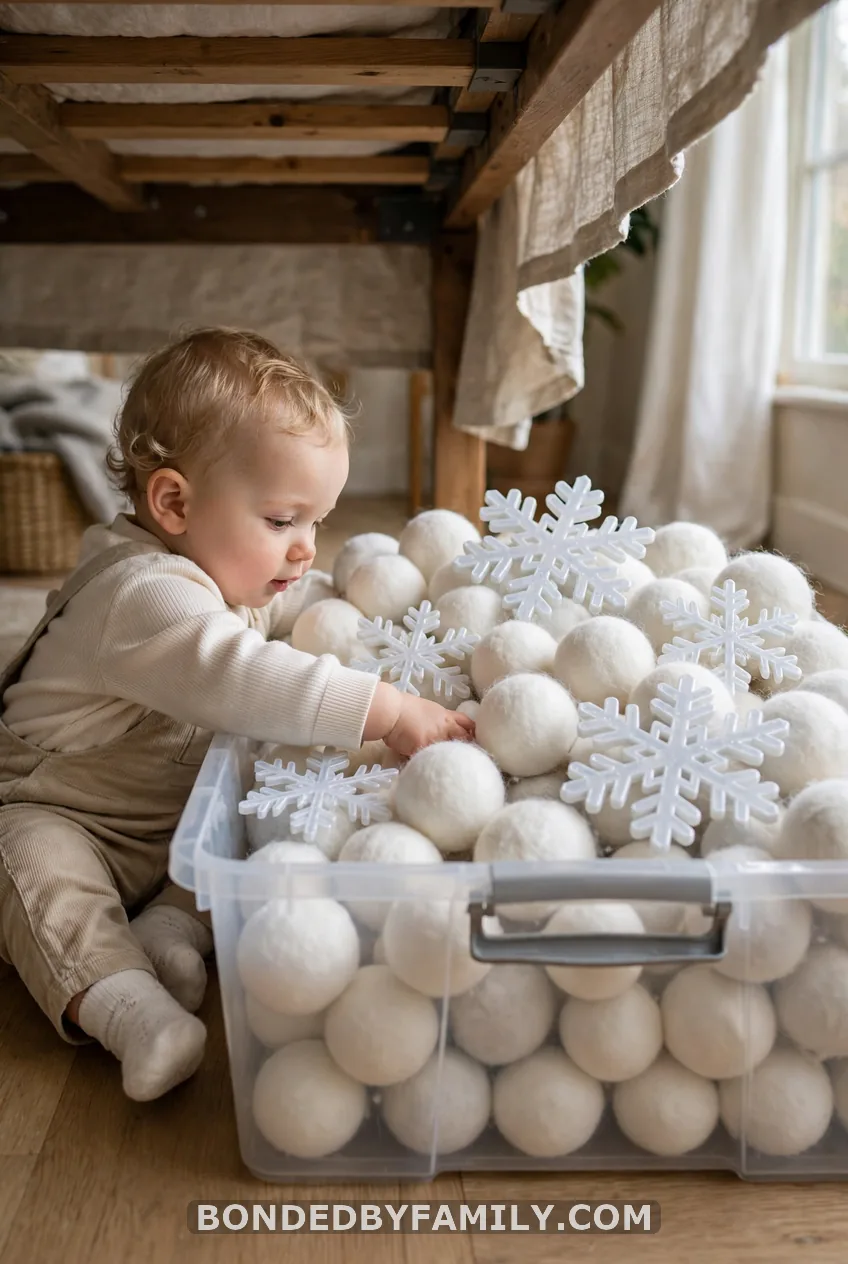
Fill a large under-bed bin with oversized white fabric or fleece balls, 3 inches or larger, and a few big plastic snowflakes. Sit your baby inside or beside it.
It is a soft, quiet snow pile with no mess. Great for sitters and crawlers who want to wade in.
14. Christmas Kitchen Treasure Basket
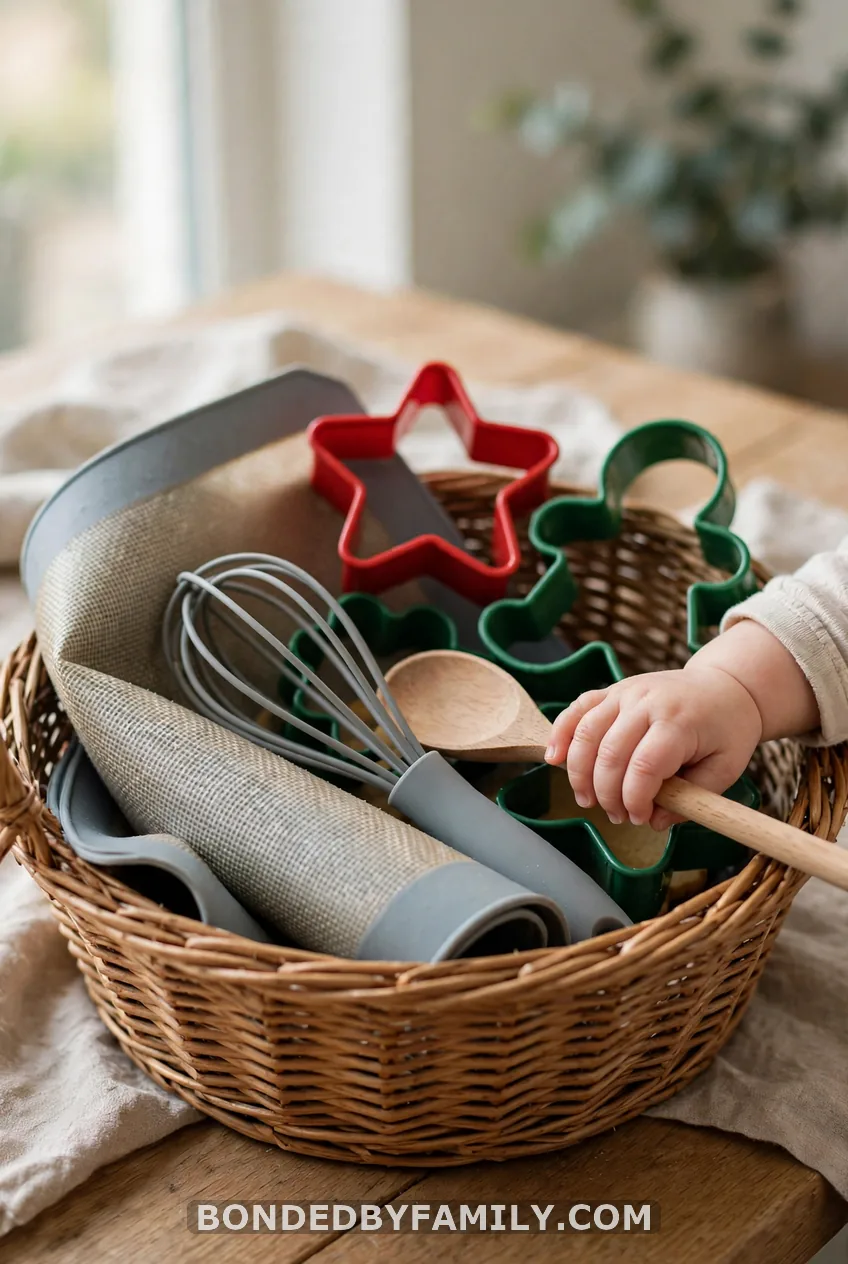
Raid your kitchen drawer. Fill a basket with a wooden spoon, a silicone whisk, a silicone baking mat and a couple of large cookie cutters. Keep ribbon, bows and cords out of the basket. Check that every item is clean, smooth and too big to fit in a baby’s mouth.
Each item has a different weight, texture and sound. Babies tap, mouth and wave them.
Wash everything first and check each piece against the toilet-paper roll test.
How to Adapt Any Toddler Bin for a Baby
Most toddler ideas can be rescued with four changes.
- Swap rice, beans and small trinkets for taste-safe fillers or large pieces.
- Move play from a small bin to a large tray or under-bed bin so your baby can sit and reach.
- Shorten play to 10 to 15 minutes and stop when your baby turns away.
- Let your baby lead. Dumping, patting and mouthing safe items is the activity.
Dyed rice is a toddler-only filler. Keep it away from babies completely.
How to Store and Reuse Baby Bins
Throw out taste-safe doughs and oobleck after play, or dry them fully if you want to keep them for decoration, not for baby play. Wash plastic pieces with soap and water and dry them well.
Store dry fillers in airtight bags and label them by age. Check plastic pieces for cracks before each reuse.
Keep baby bin pieces in a separate box from toddler small parts. An older sibling’s beads should never end up in the baby tray.
Baby Christmas Sensory Bin FAQs
What age can a baby use a Christmas sensory bin?
Most babies can start around 6 months, once they can sit with support. Every bin still needs full supervision and large, baby-safe pieces. Use a sensory bag for tummy time before that.
Can I use rice or beans in a baby sensory bin?
No. Loose rice and beans are choking hazards for babies, so save them for toddler bins. Use large pom-poms, felt, water or taste-safe dough instead.
Are jingle bells safe for babies?
Only if they are sealed inside a bottle or a taped shaker so they cannot come loose. Never offer loose bells.
What if my baby tries to eat the filler?
Choose taste-safe fillers and stay within arm’s reach. Remove any piece that breaks apart or could fit through a toilet-paper roll. If your baby chokes or has trouble breathing, get emergency help right away.
One bin, one safe piece at a time: if it fits through a toilet-paper roll, it does not belong in your baby’s Christmas.