The whining starts around 10 a.m. “I’m booored.” If you are hunting for outdoor games for kids that don’t involve a shopping trip, a setup video, or a single screen, you are in the right spot. I have three kids, a smallish yard, and a deep distrust of any “fun activity” that needs batteries.
One lesson I learned the hard way: the games that stick are the old ones. The free ones. The ones that get kids sweaty and laughing until someone calls a truce for popsicles.
Below are 17 games sorted from grab-and-go classics to one full backyard build worth the afternoon. Most need nothing but a flat patch of grass and a few willing bodies. I have flagged ages, group sizes, and the little tweaks that keep the peace when a 5-year-old and a 10-year-old want to play together. Read to the end and you will have a whole summer of “I’m bored” already solved.
1. Tag (and Its Dozen Disguises)
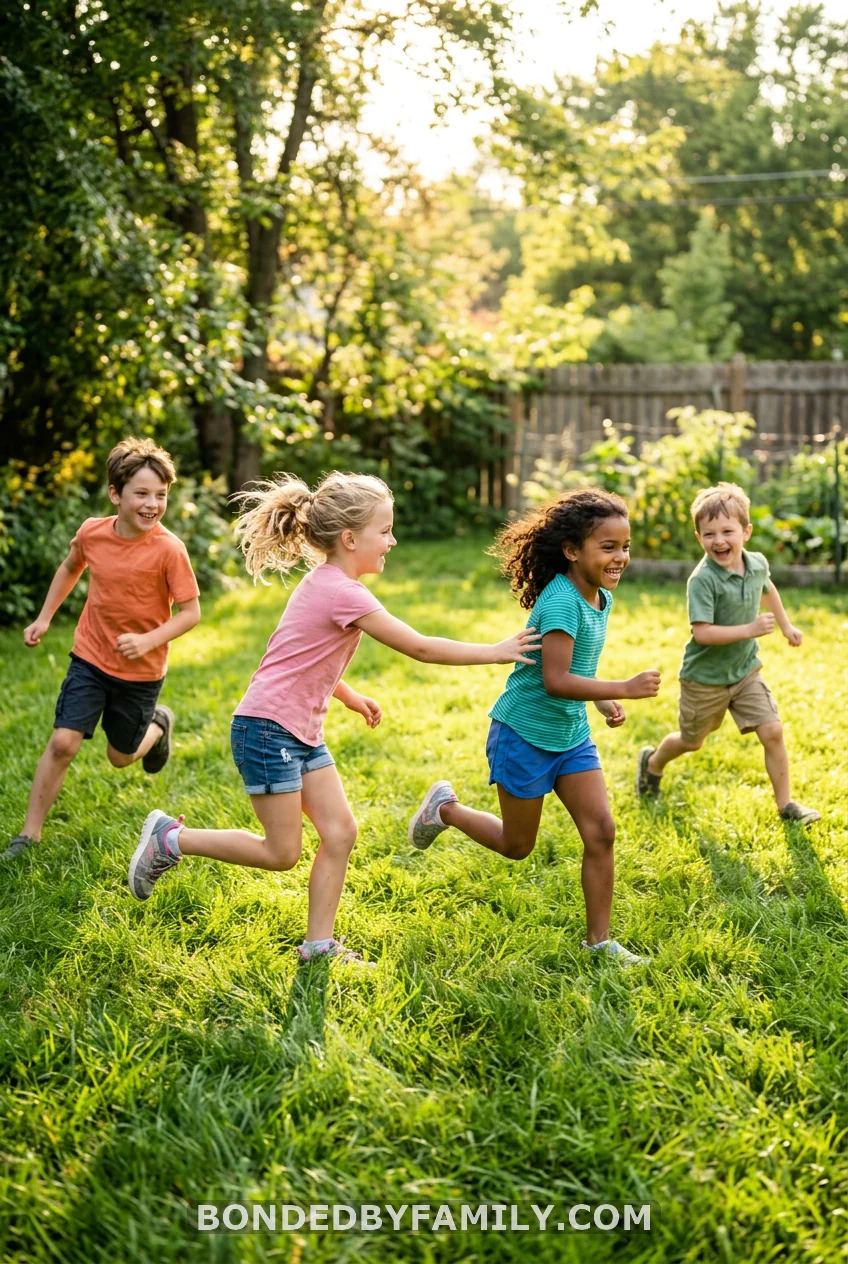
Plain tag gets boring fast. The trick is to keep swapping the rules. Freeze Tag: When you are tagged, you freeze until a teammate crawls under your legs to free you. Shadow Tag: You tag the shadow, not the body, so it only works on a bright day. Blob Tag: every kid you tag links arms and joins the “blob,” which grows into a giggling, stumbling chain.
Rotate through three or four versions, and a single game of tag can stretch past an hour. Best for ages 4 and up, three kids minimum. The more, the better.
2. Hide and Seek (Try the Sardines Twist)
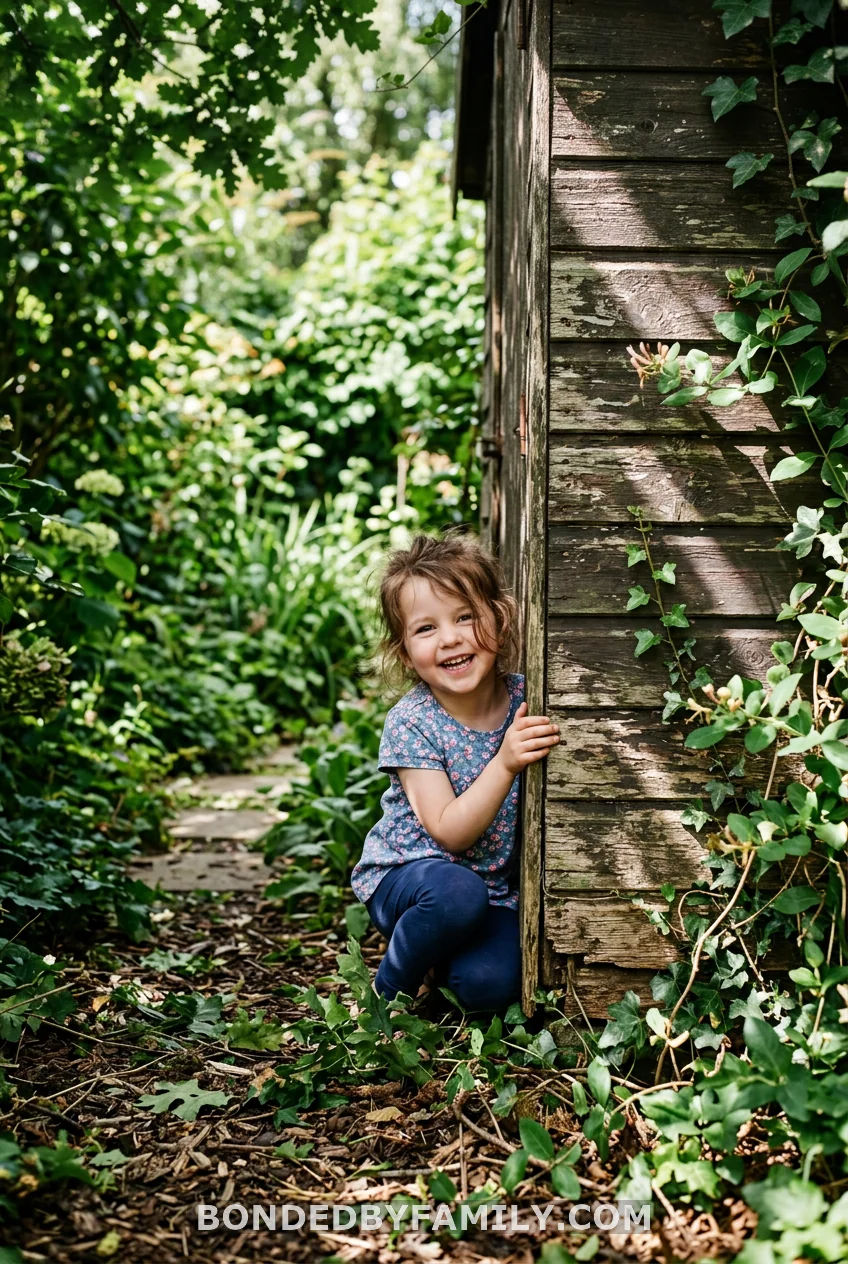
Everyone knows the basic version. One seeker counts, everyone scatters. But the better backyard variant is Sardines, where the roles flip. One kid hides, and everyone else searches alone. When you find the hidden kid, you squeeze into the spot with them. The last person still searching becomes the next hider.
Sardines turns a quiet game loud and funny, because by the end, you have six kids crammed behind one bush, trying not to laugh. Works for ages 5 and up. Set clear boundaries first so nobody hides three houses down.
3. Capture the Flag
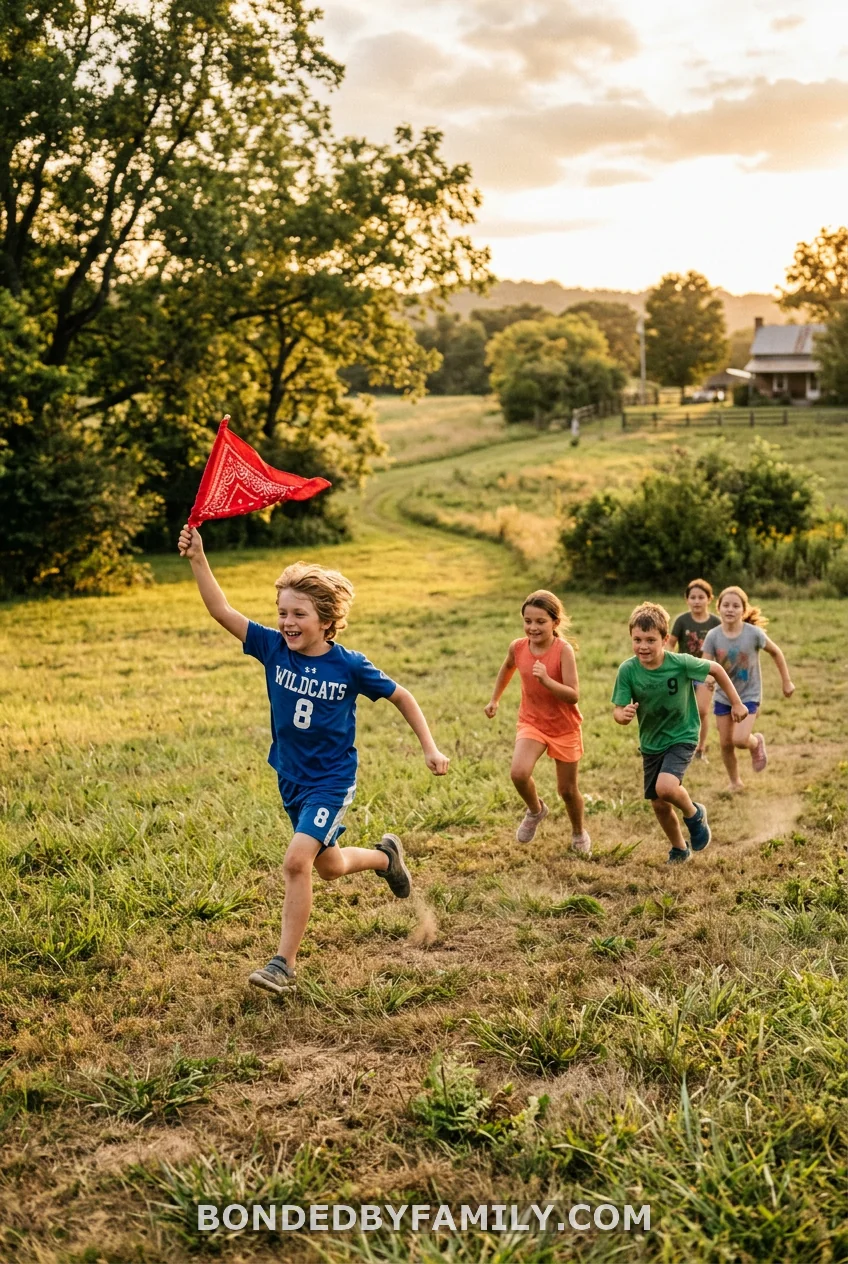
This is the big one. The game older kids beg to play, and the one that wears them out completely.
Split the yard down the middle into two territories. Each team plants a “flag” (a bandana, an old t-shirt, anything bright) on their side. The goal is to sneak into enemy territory, grab their flag, and run it back to your side without getting tagged. Tagged on enemy turf? You go to “jail” until a teammate tags you free.
The strategy is what makes it sing. Kids learn to post guards, send fast runners as decoys, and time a group rush. I have watched quiet kids turn into tiny generals.
A few setup notes that save arguments. Mark the center line with a rope or a row of shoes so it is not up for debate. Give each team a clearly visible jail spot. And agree on the tagging rule before you start: one-hand tag, no tackling. For mixed ages, give the younger kids a head start or a “safe zone” they can stand in to catch their breath. Best for ages 7 and up, six players or more.
4. Red Light, Green Light
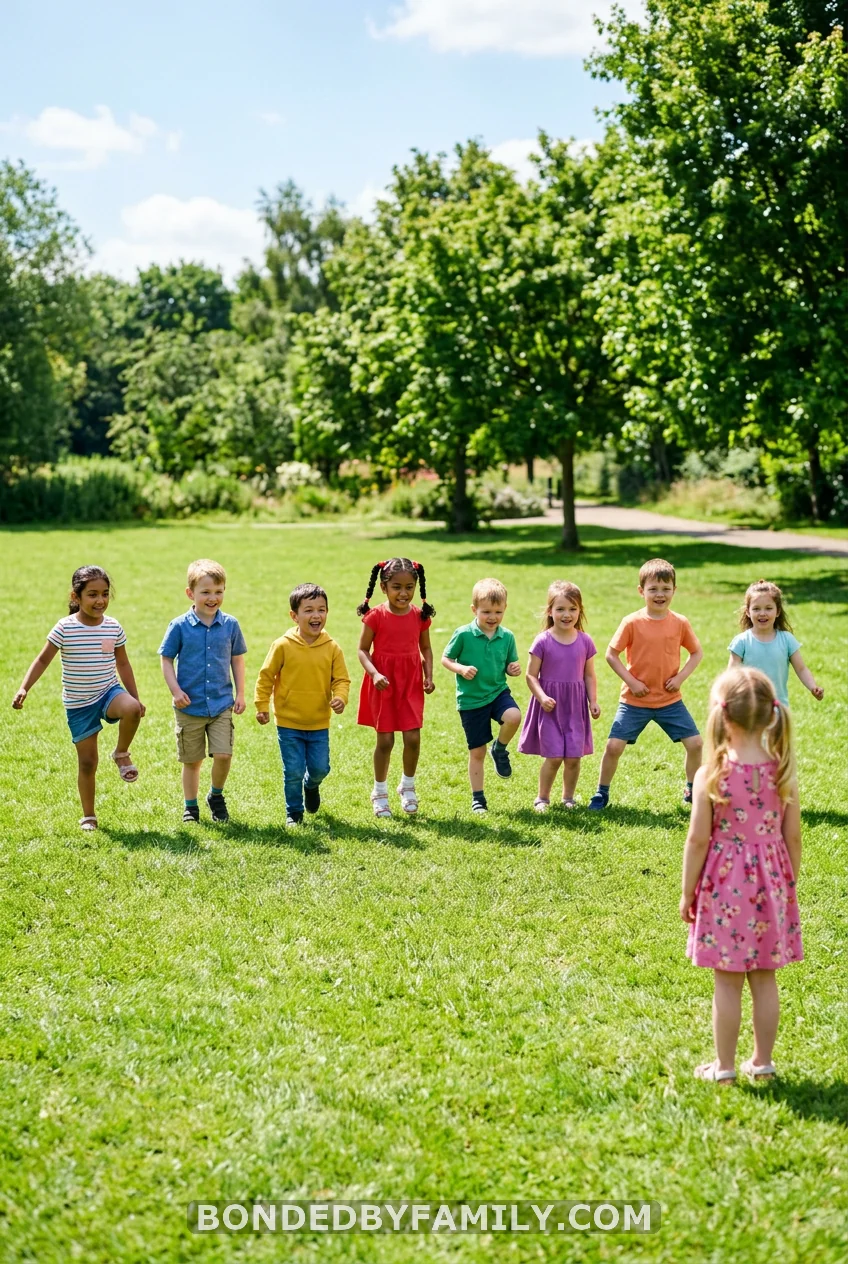
One kid is the stoplight, facing away. “Green light” means go. “Red light” means freeze, and the caller spins to catch anyone still moving. Get caught, and you go back to the start. First to tag the caller wins and takes over.
Made for the little ones. Works with just two kids or twenty.
5. Build a Backyard Obstacle Course (The Afternoon Project)
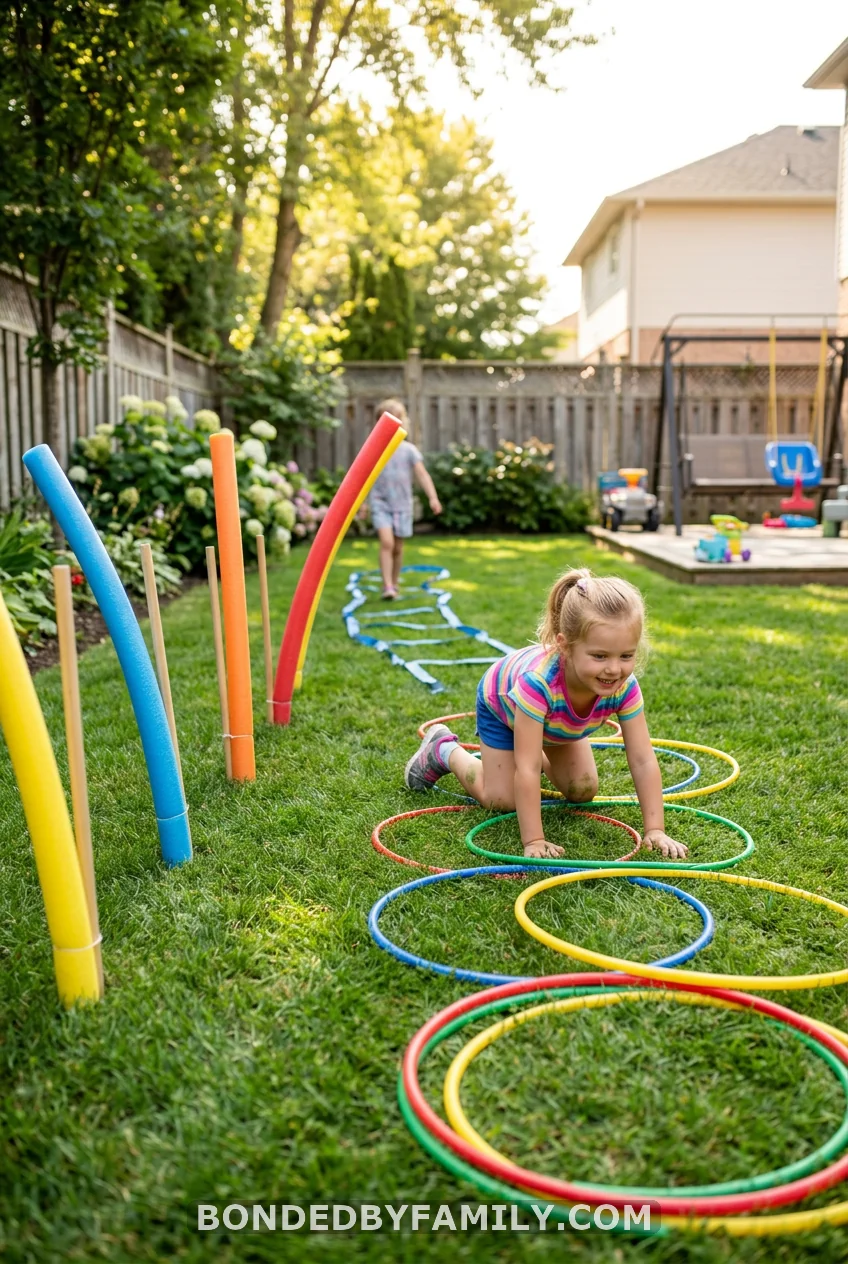
Every other game on this list is grab-and-go. This one earns its spot by being the thing kids run again and again, racing their own times until dinner. It is the single build on this list worth a small trip to the dollar store, and it pays you back in hours of quiet.
Why It Works
An obstacle course hits the sweet spot for a wide age range at once. A 4-year-old and a 10-year-old can run the same course and both feel challenged, because each kid pushes their own pace. It builds gross motor skills (balance, jumping, crawling) without anyone realizing they are “practicing” anything. And the stopwatch element gives older kids a reason to keep going long after a younger sibling has wandered off.
What You Need (And What It Costs)
You can build a solid course for under $15, and most of it is reusable for years.
- Pool noodles, 4 to 6 of them, about $1 each at Dollar Tree. Cut in half, they become hurdles, weave poles, or arch tunnels.
- Painter’s tape, one roll, around $5. Lay a balance line on the patio or driveway.
- Hula hoops, 2 or 3, about $1 to $5 each. Lay them flat for a hopping sequence.
- Plastic cones or empty 2-liter bottles, free if you save them. These mark turns and weave points.
- A jump rope you already own, for a “10 jumps here” station.
- Optional: a cheap kitchen timer or a phone stopwatch.
How to Build It, Step by Step
- Walk the space first and pick a loop that starts and ends in the same spot. A loop is easier to time than a straight line.
- Set your weave poles. Push 4 halved pool noodles into the grass in a zigzag, about 3 feet apart. Kids weave through without knocking them down.
- Lay the hopping zone. Place 3 hula hoops flat in a row. The rule: one foot in each hoop, no skipping.
- Build the crawl. Bend two pool noodles into arches and pin the ends down. Kids army-crawl underneath.
- Run the balance beam. Stick a 6-foot painter’s tape line on a hard surface. Arms out, heel to toe, no stepping off.
- Add a skills station. Mark a spot with a cone where kids do 10 jumping jacks or 10 jump-rope skips before moving on.
- Set the finish. Drop a cone at the end and have kids yell “done” so you can clock the time.
Common Mistakes to Avoid
Do not make it too long. Six to eight stations are the sweet spot. Any longer and little kids quit halfway. Do not put the crawl tunnel on hot pavement in the afternoon, because little hands and knees will protest. And resist the urge to make it a single-winner race. Let each kid beat their own time. That keeps the slowest kid in the game instead of in tears.
Pro Move
Once the course is built, hand the design over to the kids. “You get 10 minutes to change three stations.” Suddenly they are the architects, and they will play their own version twice as long as yours.
6. Hopscotch
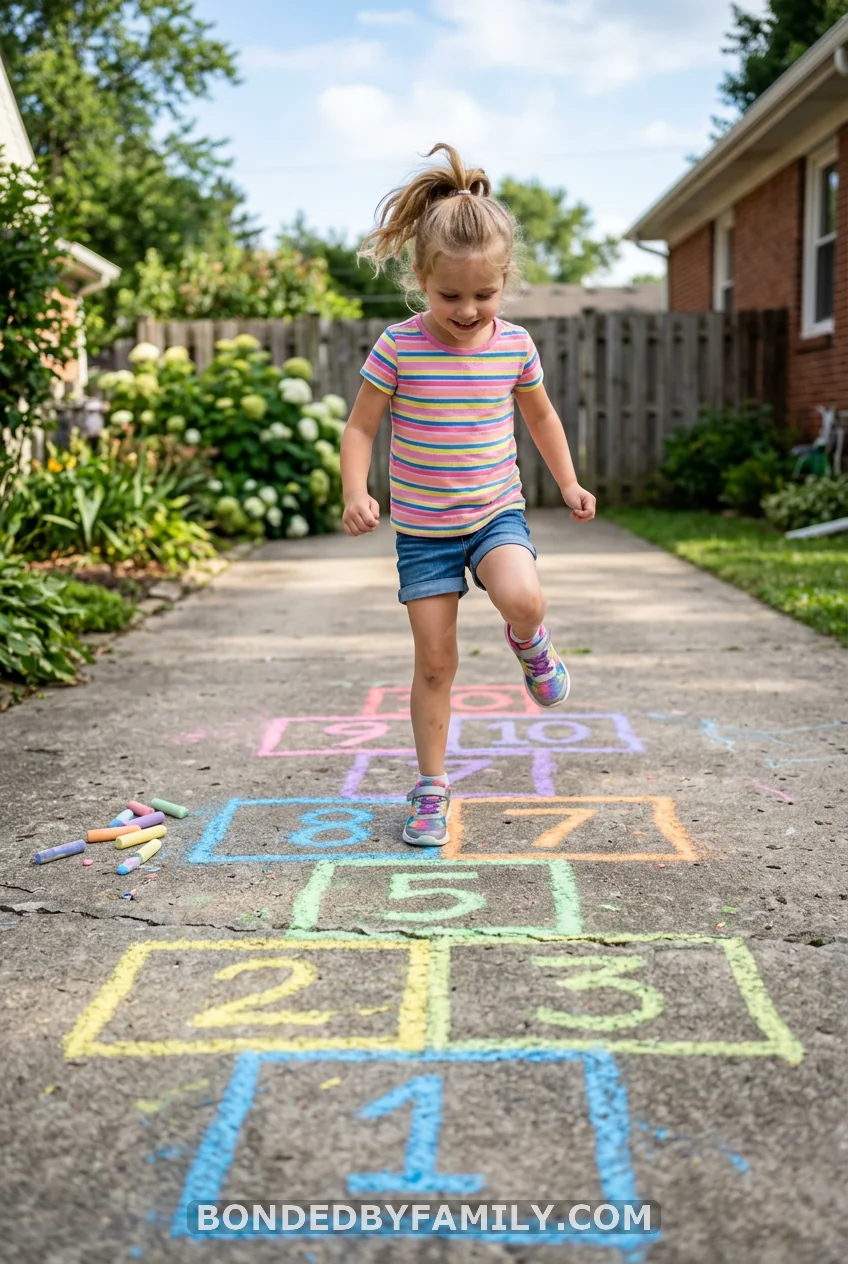
All you need is sidewalk chalk and a small stone. Draw the numbered grid, toss your stone on a number, and hop the course while skipping that square. Single squares get one foot, side-by-side squares get two.
Want it harder? Make older kids hop backward, or recite the number they land on. Great for ages 4 and up, and it plays fine solo.
7. Kick the Can
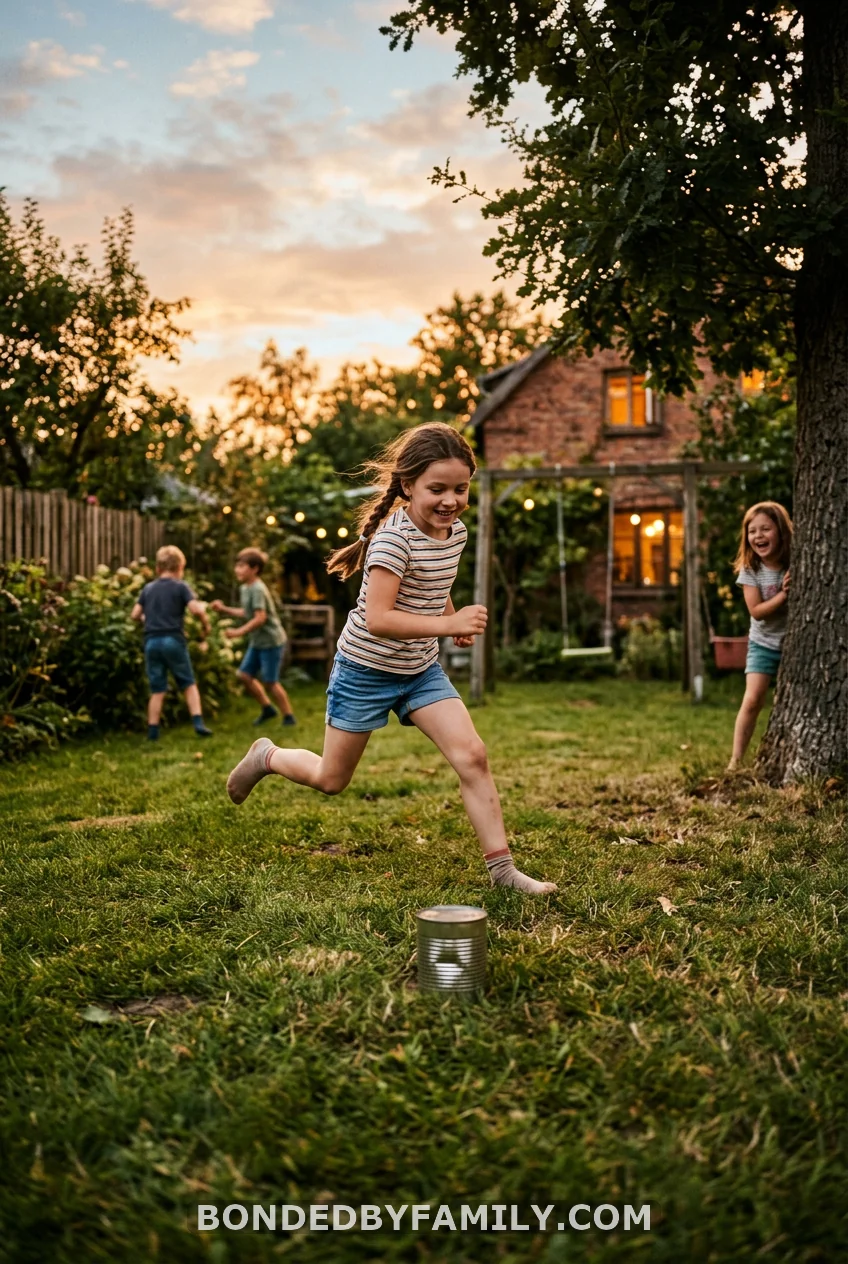
Think of this as hide and seek with a rescue mission. Set an empty can in the middle of the yard. One kid is “it” and guards the can while counting. Everyone else hides. When “it” spots a hider, they race back to tap the can and call the name.
But here is the catch that makes it great: any free hider can sneak in and kick the can, which frees everyone who has been caught. The guard has to balance hunting with defending. It creates this lovely tension where a bold kid can flip the whole game with one kick. Best for ages 6 and up, four players or more.
8. Ghost in the Graveyard
A dusk favorite. One kid is the “ghost” and hides in the dark while everyone else counts at base. Then the group creeps out to find them. When someone spots the ghost, they scream “Ghost in the graveyard!” and everyone bolts back to base. The last one tagged becomes the next ghost. Pure adrenaline. Ages 6 and up.
9. Four Square
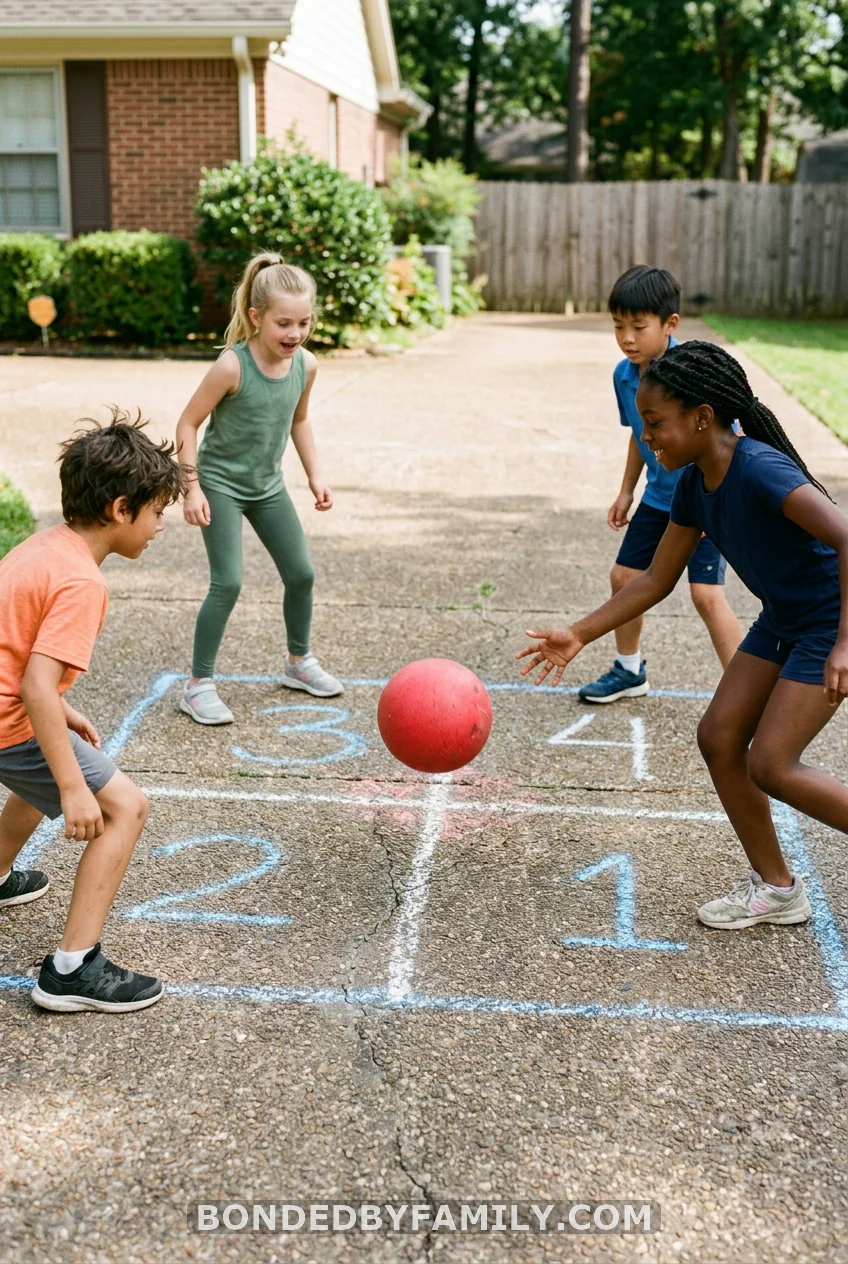
Chalk a big square split into four smaller squares, number them one through four, and grab a bouncy ball. The player in square four serves by bouncing the ball into someone else’s square. That player must bounce it into another square before it double-bounces. Miss, and you rotate out while everyone moves up.
The whole point is climbing to square one and defending it. Kids invent house rules constantly, which is half the fun. You need four players and a ball that bounces well. Best for ages 6 and up, since it takes a little hand-eye coordination.
10. Simon Says and Mother May I
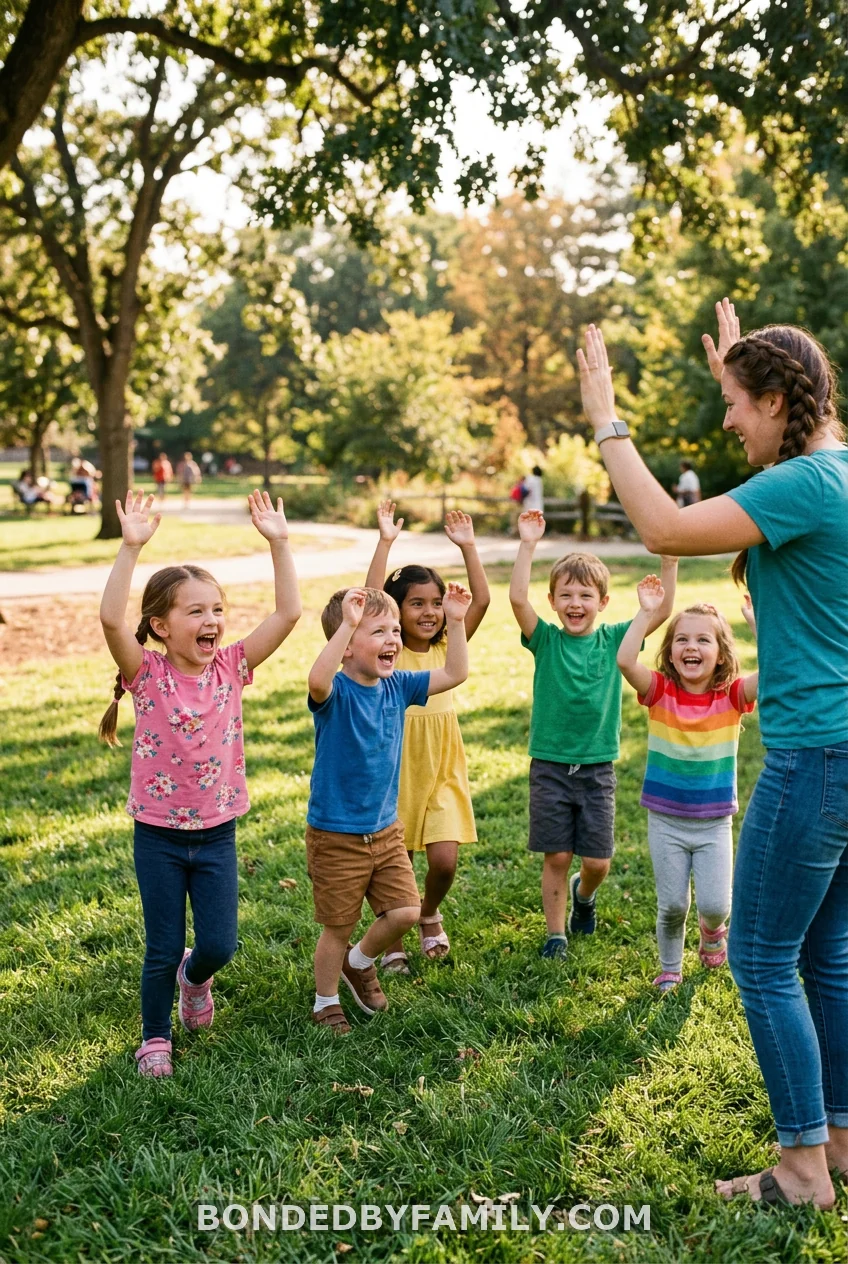
Two no-prep classics for the youngest crew. In Simon Says, kids only follow a command if it starts with “Simon says.” In Mother May I, kids ask permission to take giant steps, baby steps, or bunny hops toward the leader. Both teach listening and self-control while looking like pure silliness. Ages 4 to 8 love these most.
11. Backyard Field Day: Sack and Three-Legged Races
Want to fill a whole hour and burn real energy? Run a mini field day. You only need a few old pillowcases and a roll of soft fabric or a couple of bandanas.
For the sack race, kids step into a pillowcase, grip the top, and hop to the finish line. For the three-legged race, tie two kids together at the inside ankle and let them figure out the rhythm. Cue the falling, the laughing, the trying again.
Run a few “events” back to back: a sack race, a three-legged race, a crab walk, a balance-a-beanbag-on-your-head walk. Give out goofy ribbons made of construction paper. The ceremony matters more to kids than the winning, every time. Works for ages 5 and up, and it shines with a bigger group.
12. Water Balloon Toss
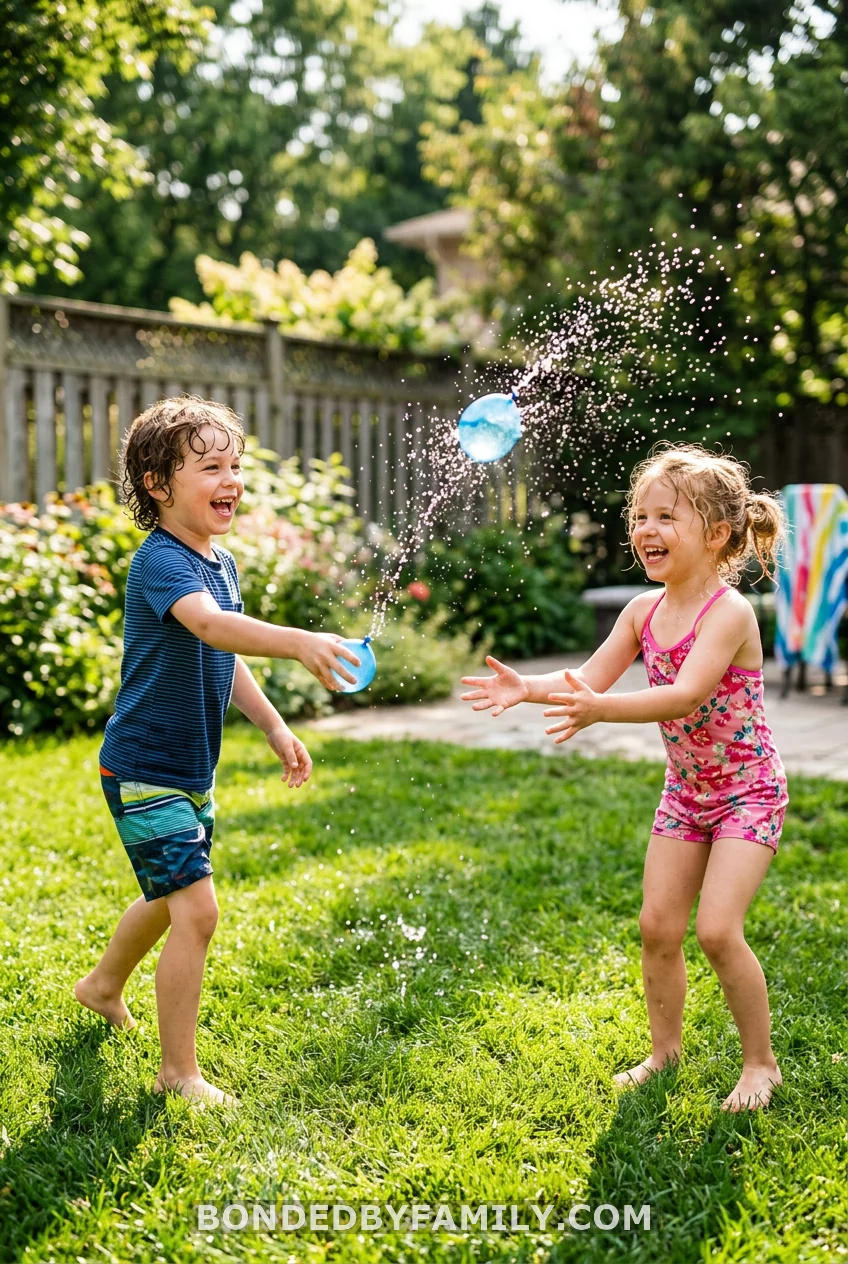
On a scorching day, this is the only game anyone wants. Partners stand close and toss a filled balloon back and forth, taking one step back after each catch. Drop it or pop it, and you are out. Last dry pair wins.
Sneak in some math: give little kids five balloons and have them add up successful catches. Ages 4 and up. Expect everyone to be soaked, which is the goal. Water Balloon Toss is a classic for a reason.
13. Nature Scavenger Hunt
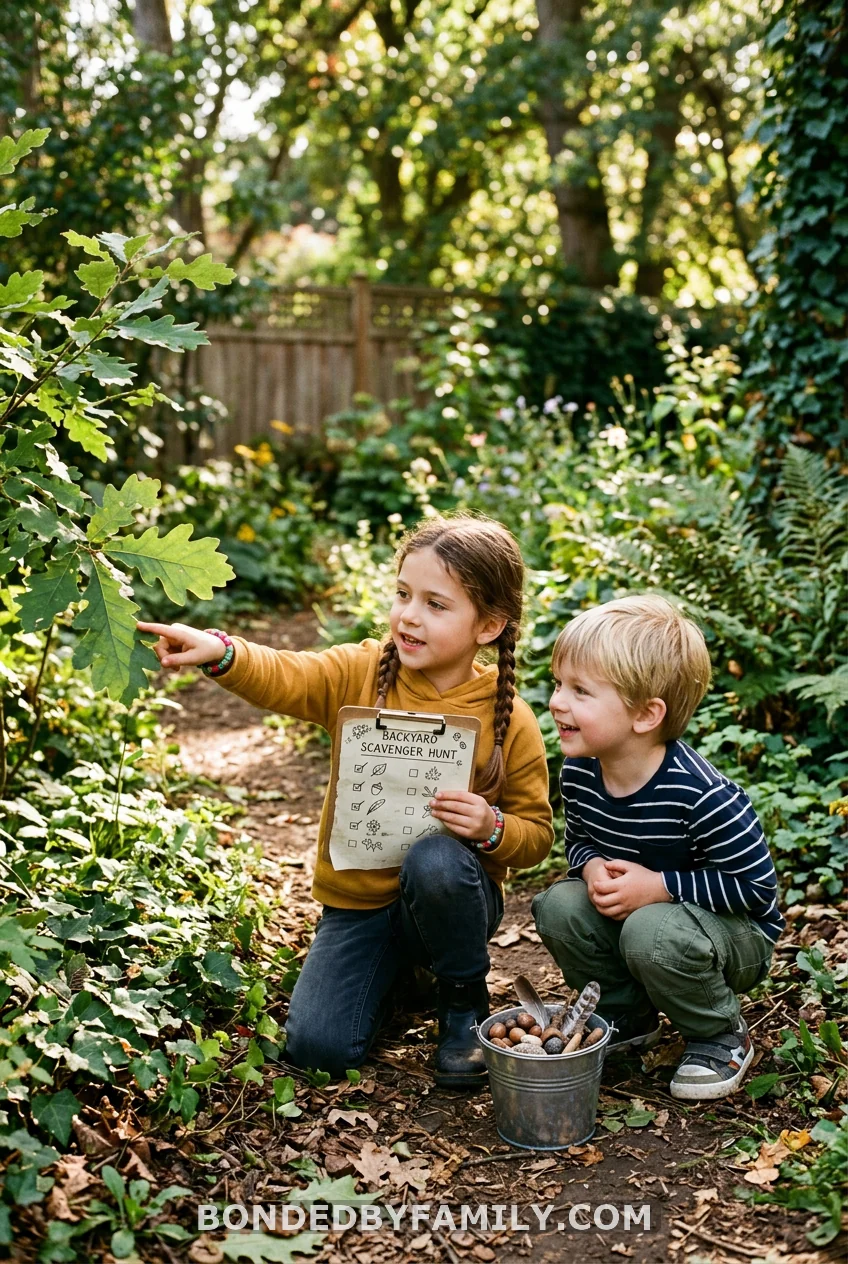
Hand each kid a short list: something red, a smooth rock, a feather, a leaf with three points, a bug (no touching), something that smells nice. Send them off to hunt and report back. It slows the energy down without killing it, which is useful right before lunch.
For mixed ages, pair a reader with a non-reader so the big kid runs the list. For older kids, add a photo challenge or a time limit. Cheap, calm, and weirdly competitive. Ages 4 and up.
14. Spud
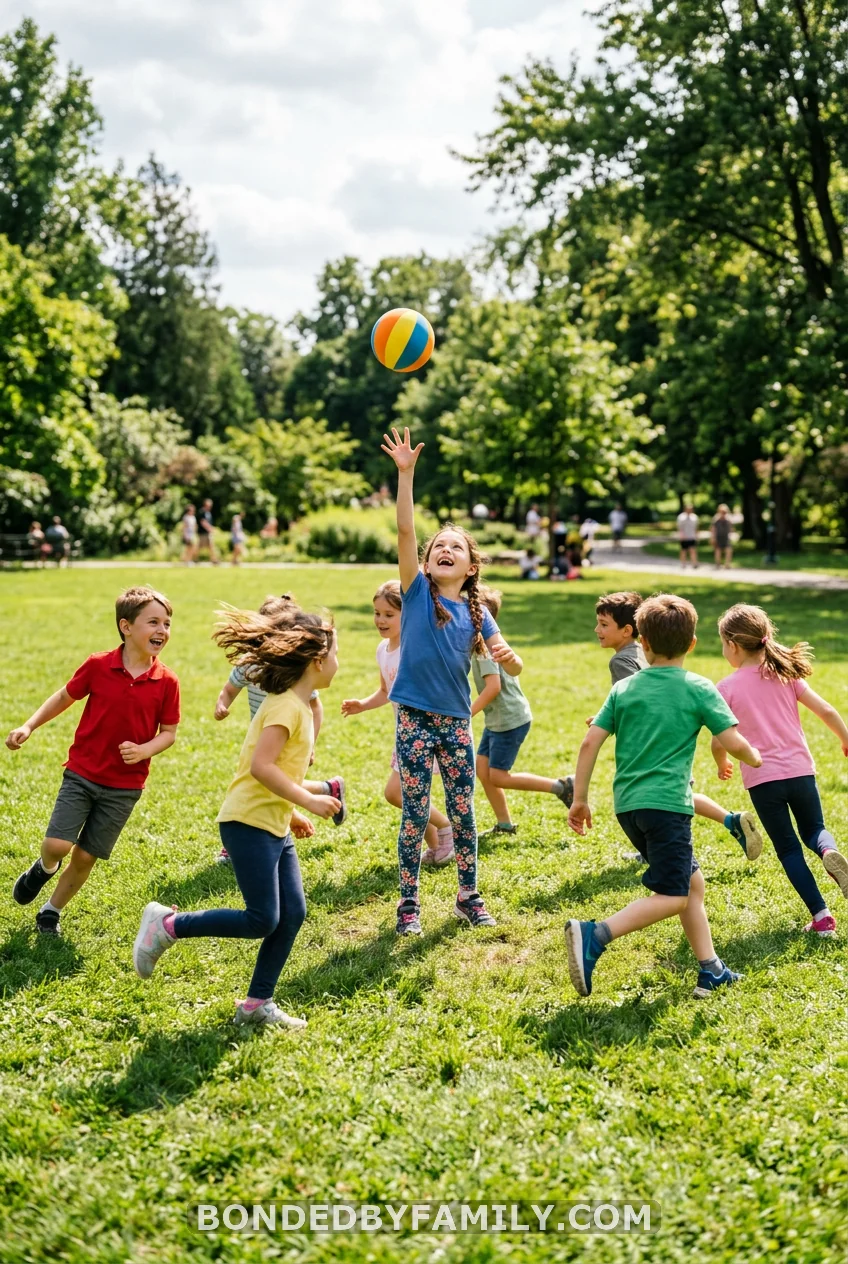
Everyone gets a number and bunches together. One kid tosses a soft ball straight up and yells a number. That kid grabs the ball while everyone else runs. Once they have it, they shout “Spud,” and everyone freezes. The ball-holder takes three giant steps toward anyone and tries to hit them gently below the waist. A hit earns the target a letter. Spell S-P-U-D, and you are out.
Use a soft foam ball so nobody gets hurt, and keep throws low. Best for ages 6 and up, five players or more.
15. Freeze Dance
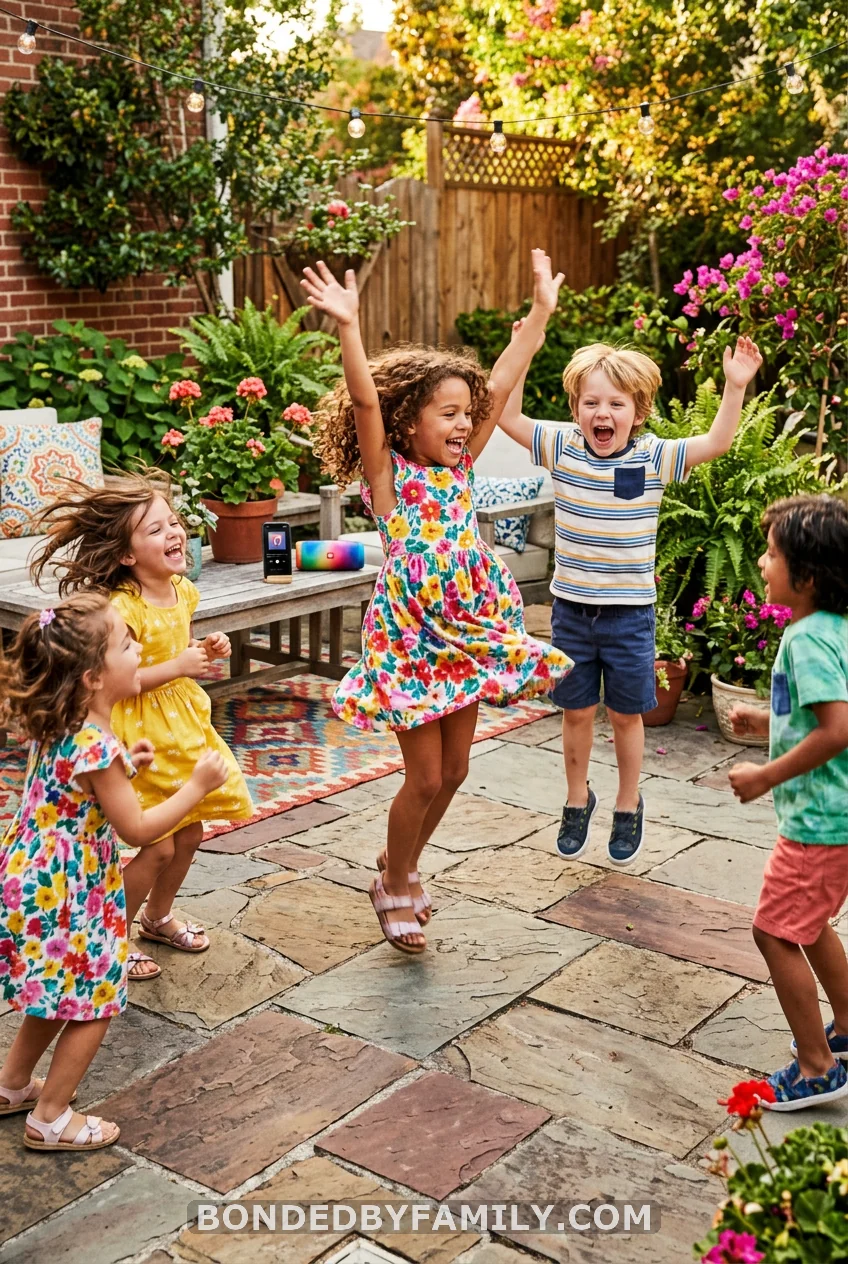
Play music. Everyone dances. Stop the music, and everyone freezes. Anyone caught moving is out. Cut the music at weird times to catch the wigglers. Two kids or a whole birthday party, ages 3 and up. The shortest setup on this list and the best for burning energy fast.
16. The “Just Hand Them a Ball” Myth
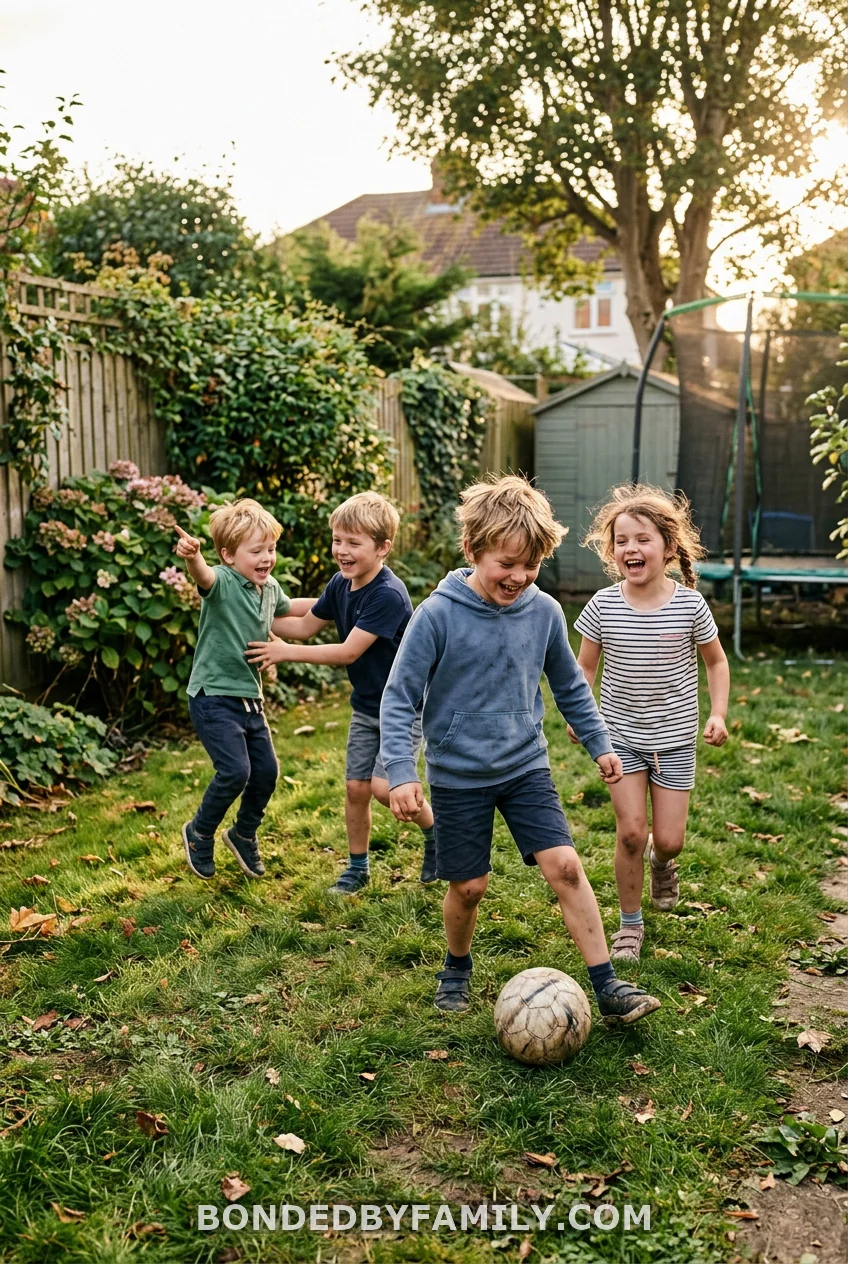
What most parents think: kids need a structured game, full rules, and a referee, or it falls apart.
What really happens: hand a group of kids one ball and walk away, and within five minutes, they have invented a game with rules more elaborate than anything you would have organized. I have watched my kids create a sport involving a soccer ball, the patio steps, and a system of points only they understood.
The lesson worth keeping: your job is not to run every game. It is to provide a ball, a boundary, and the freedom to figure out the rest. The best outdoor games for kids are often the ones they make up when no adult is directing traffic. Resist the urge to fix the rules. Let the squabble sort itself out. They learn more from negotiating the call than from you making it.
17. Flashlight Tag
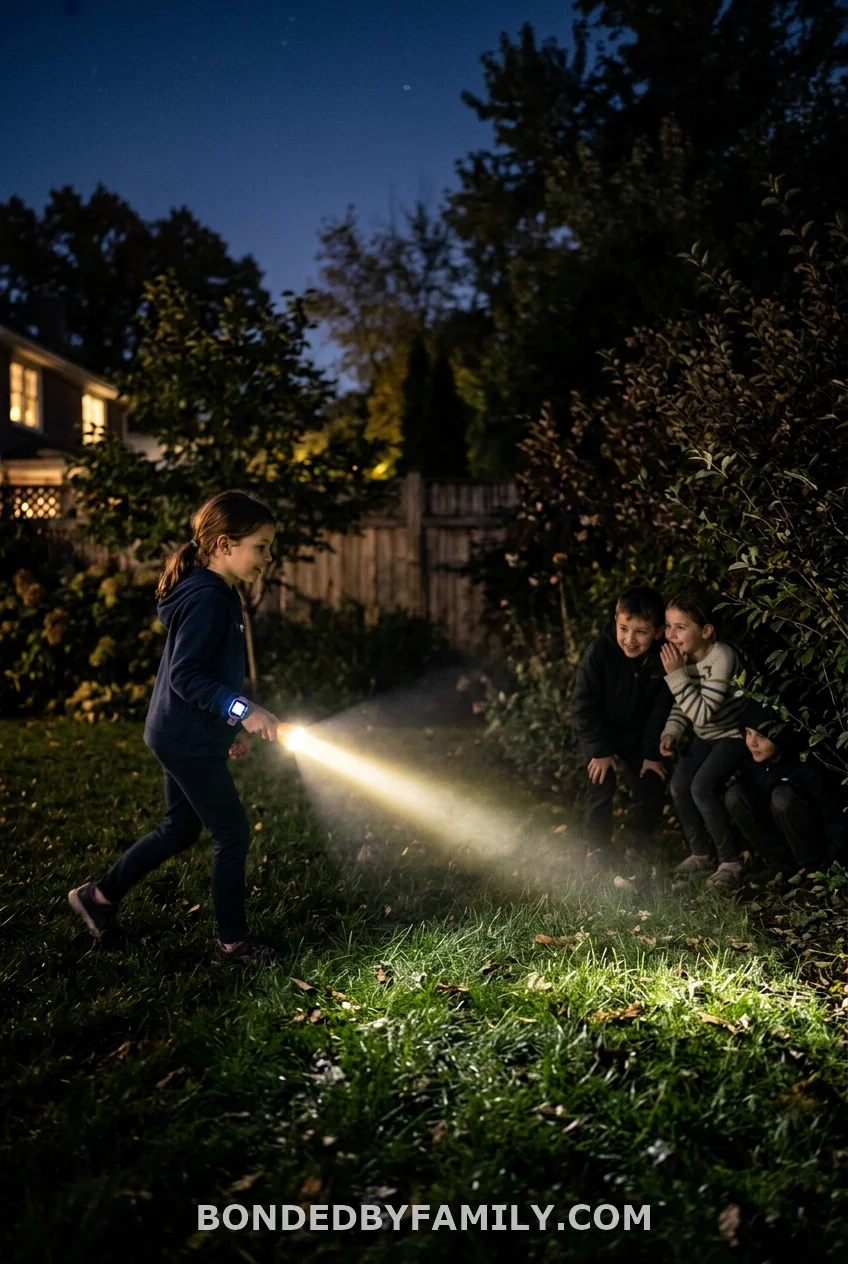
When the sun goes down, the games do not have to stop. Flashlight tag is hide and seek for the dark. One kid holds a flashlight and counts while everyone hides. Instead of touching, “it” tags players by catching them in the beam and calling their name.
A safety note worth taking seriously: walk the yard in daylight first and flag any holes, hoses, or steps. Set a hard boundary that everyone can see, like the edge of the patio light. And keep it to your own yard, never the street. With those rails in place, it is a great way to squeeze the last hour of fun out of a summer night. Best for ages 7 and up.
The Real Secret to Outdoor Games for Kids
Notice how little any of this costs. A few balloons, some chalk, a couple of pool noodles, and a willingness to send the kids outside and let the boredom turn into invention. That is the whole formula.
You do not need an elaborate setup or a closet full of equipment. You need a flat patch of grass, a handful of these games in your back pocket, and the patience to let the first ten minutes of grumbling pass before the magic kicks in. Start with one game tomorrow. By next week, your kids will be running the obstacle course they redesigned themselves, and you will be the one calling them in for dinner.
FAQ
What are the best outdoor games for kids with no equipment?
Tag and its variations, hide and seek, Sardines, Red Light Green Light, and Simon Says need zero gear and almost no setup. They work the moment you step outside, which makes them the easiest to reach for when the whining starts.
What outdoor games work in a small backyard?
Four Square, hopscotch, freeze dance, and Red Light Green Light all fit a small space or even a driveway. For a tiny yard, skip running games like Capture the Flag and lean on chalk games and balance challenges that stay in one spot.
How do you keep mixed-age kids playing together?
Give younger kids a head start, a safe zone, or a simpler role. In Capture the Flag, let little ones guard the flag. In a scavenger hunt, pair a reader with a non-reader. The goal is to let each kid succeed at their own level so nobody quits.
What outdoor games can just two kids play?
Plenty. Water balloon toss, hopscotch, Red Light Green Light, freeze dance, and catch all work great with two. A backyard obstacle course is also fun for two, since each kid races their own time instead of each other.
What are good outdoor games for younger kids ages 4 to 6?
Red Light Green Light, Simon Says, Mother May I, freeze dance, and a short nature scavenger hunt are ideal. They build listening and motor skills, need no equipment, and have rules a 4-year-old can follow on the first try.