You know that moment when the kids have been in the pool for 20 minutes, and someone inevitably shouts “Marco”? And then someone else groans? That’s the signal. You need pool party games for kids that hit — not a list of things that technically involve water, but games so good kids forget about their phones, adults get dragged in, and nobody wants to leave when it’s time to eat.
I’ve been running birthday parties and neighborhood pool days for years. Some games died in three minutes flat. Others ran so long we lost track of time completely. This list only has the survivors.
I’ve loosely sequenced them by energy level, so scroll to the planning section at the end if you want a full 2-hour party arc. But if you’re here for the games themselves, keep reading — and don’t skip #3.
1. Sharks and Minnows
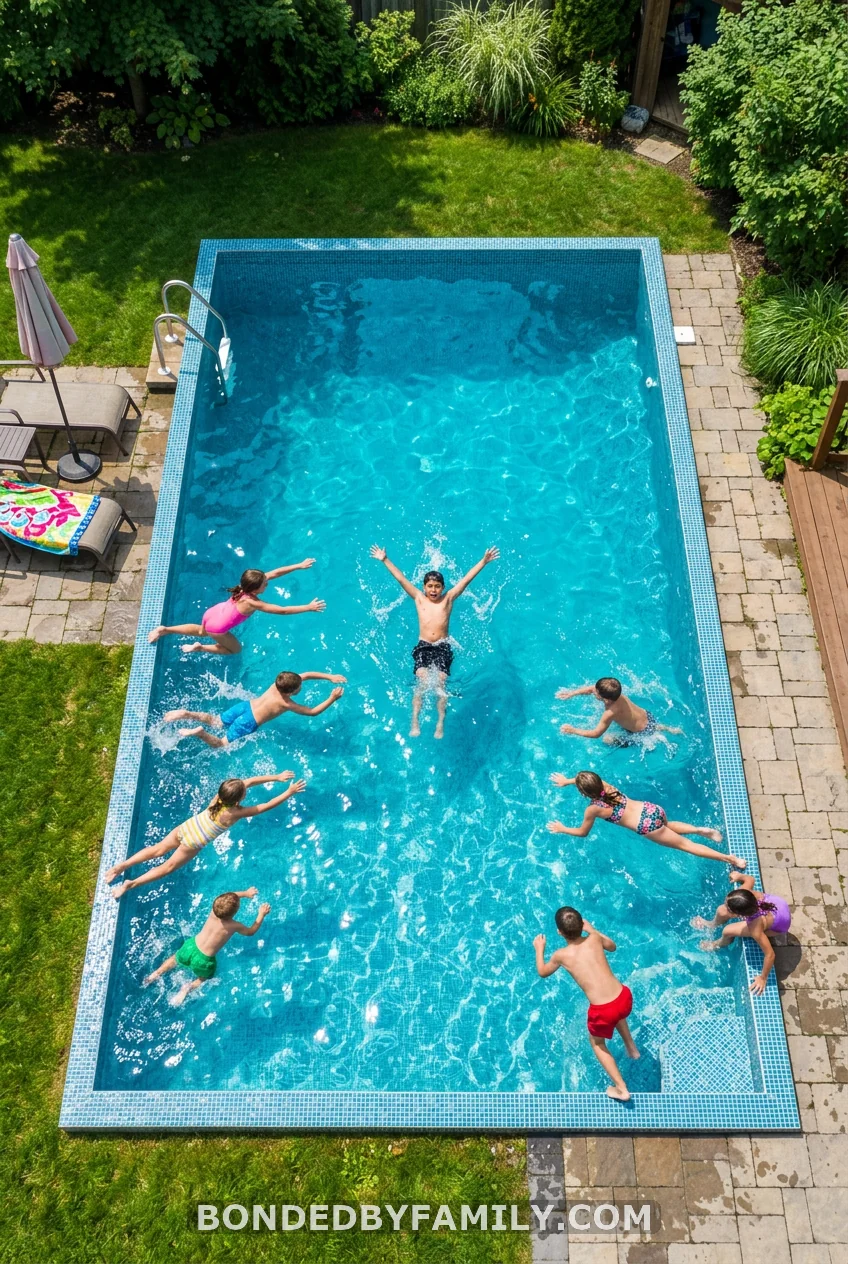
One player is the shark. Everyone else is a minnow. The shark stands in the middle; all minnows start pressed against one wall. They swim to the opposite side without getting tagged. A tagged minnow becomes an additional shark. Last minnow standing wins.
Zero setup. Zero cost. Works for ages 5 to 55. It’s the warm-up game you run while everyone’s still adjusting to the water temperature — and somehow it devours 20 minutes without anyone noticing.
2. Underwater Treasure Hunt
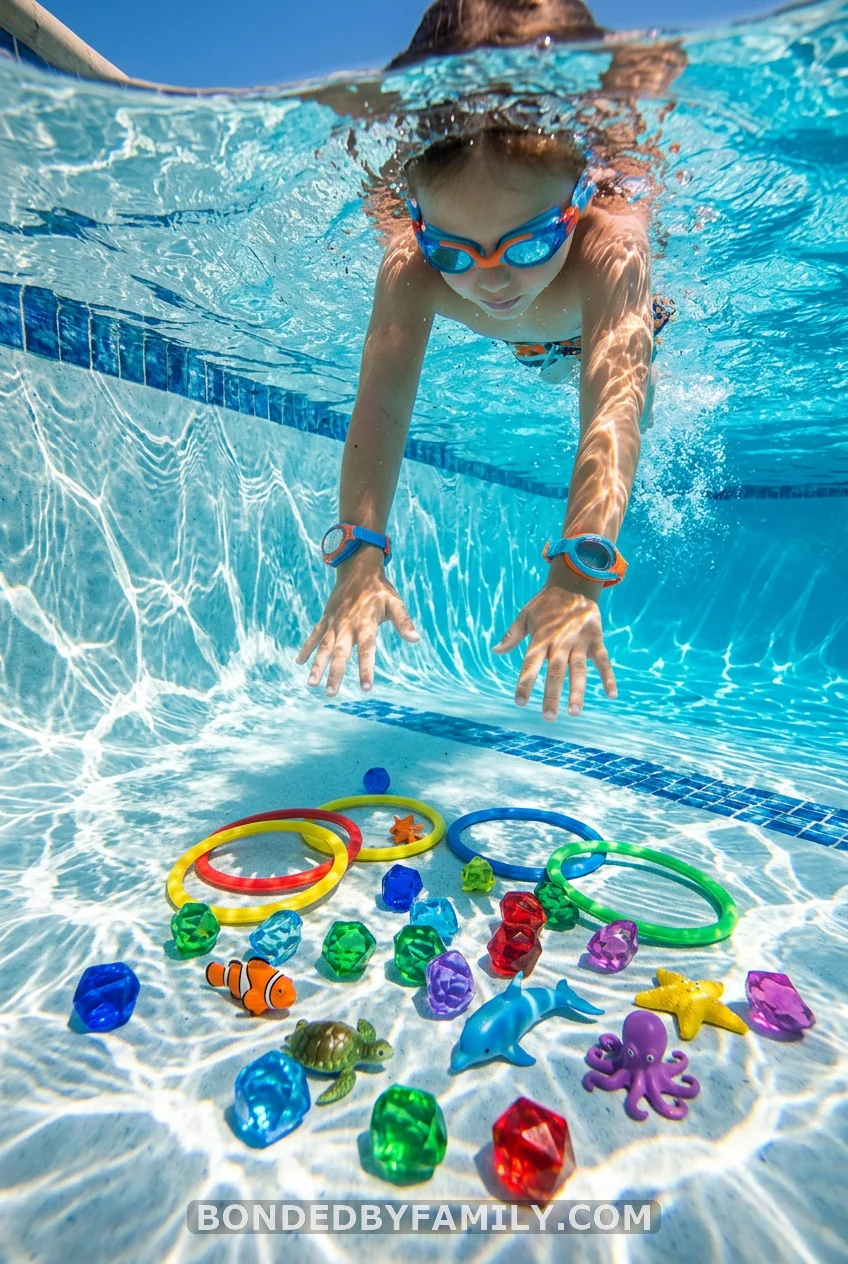
Toss 20–30 weighted dive toys to the bottom of the pool — rings, weighted gems, or plastic figurines all work well. Give each kid a number or a small colored mesh bag and set a 2-minute timer. Most objects collected win.
The upgrade that makes it even better: Use numbered poker chips or weighted bath toy letters instead of rings. Assign point values — a “10” chip beats five “2” chips — and suddenly you’ve layered strategy on top of the scramble. Older kids stop grabbing randomly and start hunting specifically for high-value pieces. A $3.99 poker chip set from Dollar Tree transforms a classic into something fiercely competitive.
Group size: 3–10 players. For kids under 5, scatter toys on the steps and shallow area rather than the deep end.
Cost: $5–$15, depending on what you already own. The Intex Dive Rings 5-Pack runs about $4 and holds up across dozens of games.
3. DIY Life-Size Hungry Hungry Hippo
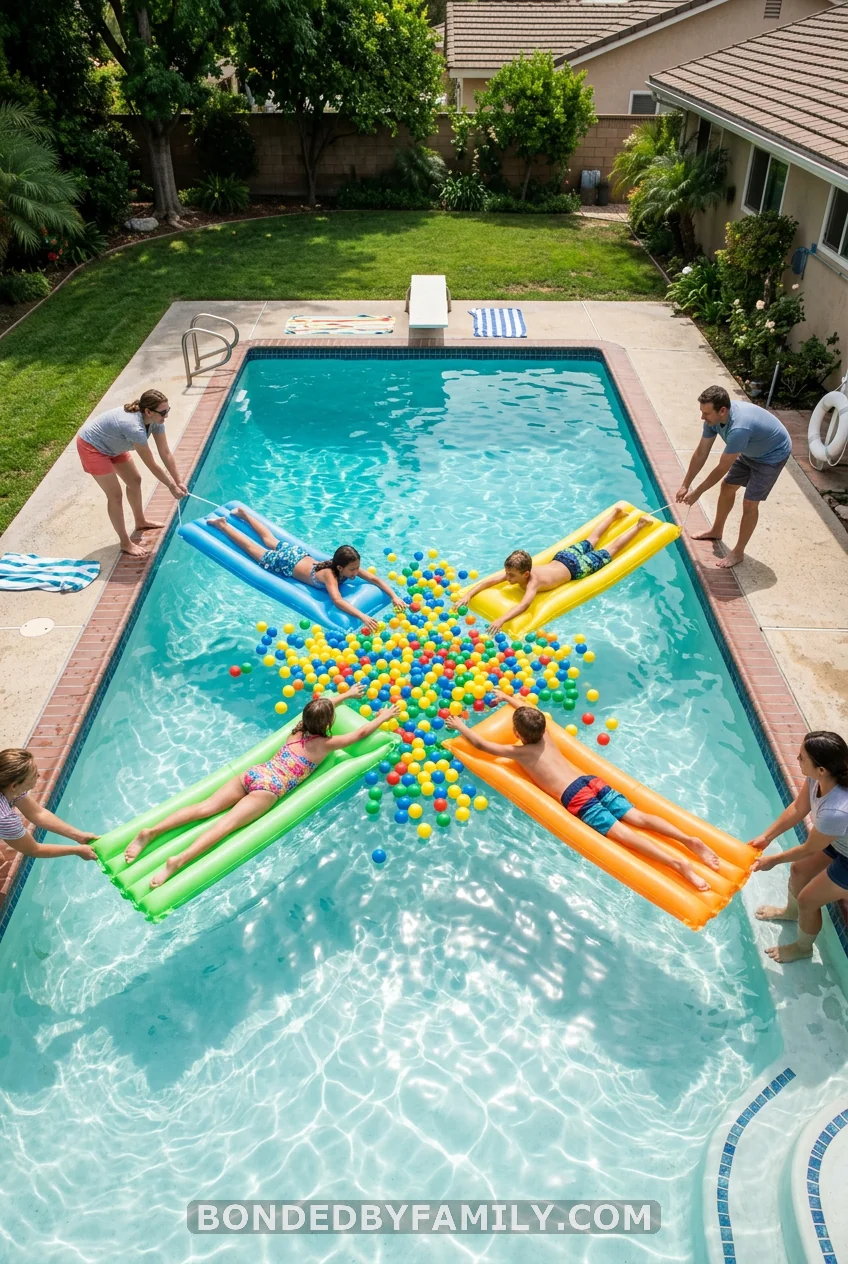
This is the game. The one that makes kids talk about “that party” for a full calendar year. If you’ve never run the life-size pool version of Hungry Hungry Hippo, your pool parties have a gap — and this section is going to fix that.
Why It Works
The original Hungry Hungry Hippos has something most games lack: pure, frantic, simultaneous urgency. Nobody waits for their turn. Everyone scrambles at the same moment. The life-size pool version amplifies all of that by a factor of ten, because now players are physically launching themselves across water on inflatable rafts while teammates hold their ankles over the edge.
It’s ridiculous. Kids go absolutely feral for it. Adults almost always end up in the pool within 20 minutes of watching.
What You Need
| Item | Estimated Cost |
|---|---|
| 4 full-size inflatable pool rafts (~72 inches long) | $8–$15 each (Total: $32–$60) |
| 50–100 hollow plastic balls (2.5-inch ball pit balls) | $12–$20 for a 100-pack |
| 4 laundry baskets or large plastic buckets | $3–$5 each, or items you own |
| 1 mesh laundry bag (to store balls between rounds) | $2–$4 |
Total estimated cost: $50–$90. The rafts are the main expense. Once purchased, this game runs at every future party for years at zero additional cost.
Budget shortcut: Full-size rafts go on clearance at Target and Walmart from late July onward at 50–70% off. Stock up at the end of the season for next year.
How to Play — Step by Step
Players needed: 4 is the classic setup (2 teams of 2). Scale to 8 players with 2 simultaneous rounds if your pool is large enough.
Age range: 7 and up for independent play. Ages 5–6 work well with an older partner helping guide the raft.
Step 1: Scatter the balls. Dump all the plastic balls into the center of the pool. They’ll float immediately. If the pool is calm, give them a stir with a noodle so they spread across the surface.
Step 2: Position the rafts. One raft per team, laid at the pool edge so the front points toward the center. Place each raft at a different wall of the pool — think compass directions for a 4-player game.
Step 3: Assign roles. One player per team is the “hippo.” They lie flat on their stomach on the raft, head pointing toward the center, holding a laundry basket. Their teammate is the “handler” — they stand at the pool edge and hold the hippo’s ankles or the back end of the raft.
Step 4: Start the round. On “go,” the handler pushes the hippo forward toward the balls. The hippo scoops as many balls as possible into their basket, then the handler pulls the raft back to the edge.
Step 5: Score. Count the balls in each basket. Most balls wins the round. Dump everything back into the center and go again.
Step 6: Switch roles. After 2–3 rounds, hippo and handler swap positions so everyone gets time in the water.
Timing: Each active round takes 60–90 seconds of scrambling. Total gameplay with role swaps runs 10–15 minutes.
Pro Move
Use balls in two distinct colors — yellow and white, for example. Yellow balls are worth 2 points each; white ones are worth 1. Teams now have to make real-time decisions: go for volume or hunt for the premium balls? That one rule change adds at least 5 minutes to gameplay and a noticeably higher level of shouting.
Common Mistakes to Avoid
Using kickboards instead of full-size rafts. This kills the game. Small kickboards don’t support a child’s full weight and flip constantly. You need full-length rafts so the player can lie flat and extend both arms without tipping into the water.
Not enough balls. A 20-ball game ends in 8 seconds. You want at least 50 in the water. If rounds feel too short, double the ball count before the next go.
Handlers in bare feet. The handler is repeatedly pulling a raft hard from a wet pool deck. Bare feet plus wet concrete is a falls situation. Water shoes for the handler, every time.
Running this game in deep water with younger kids. Keep it in the 3-to-4-foot zone for children under 10 who aren’t strong swimmers. The handler stays on the edge; the hippo is always tethered to their grip.
4. Cannonball Contest
Three judges, five jumpers, one rule: biggest splash wins. Appoint a panel of poolside critics — towel-wrapped younger siblings work brilliantly. Each jumper gets three attempts. Judges score on splash height, splash radius, and the noise the pool makes on impact.
Add a style round if kids want variety: biggest belly flop, best dive form, most creative entry. Under 5 minutes. Zero setup. Never gets old.
5. Pool Noodle Jousting
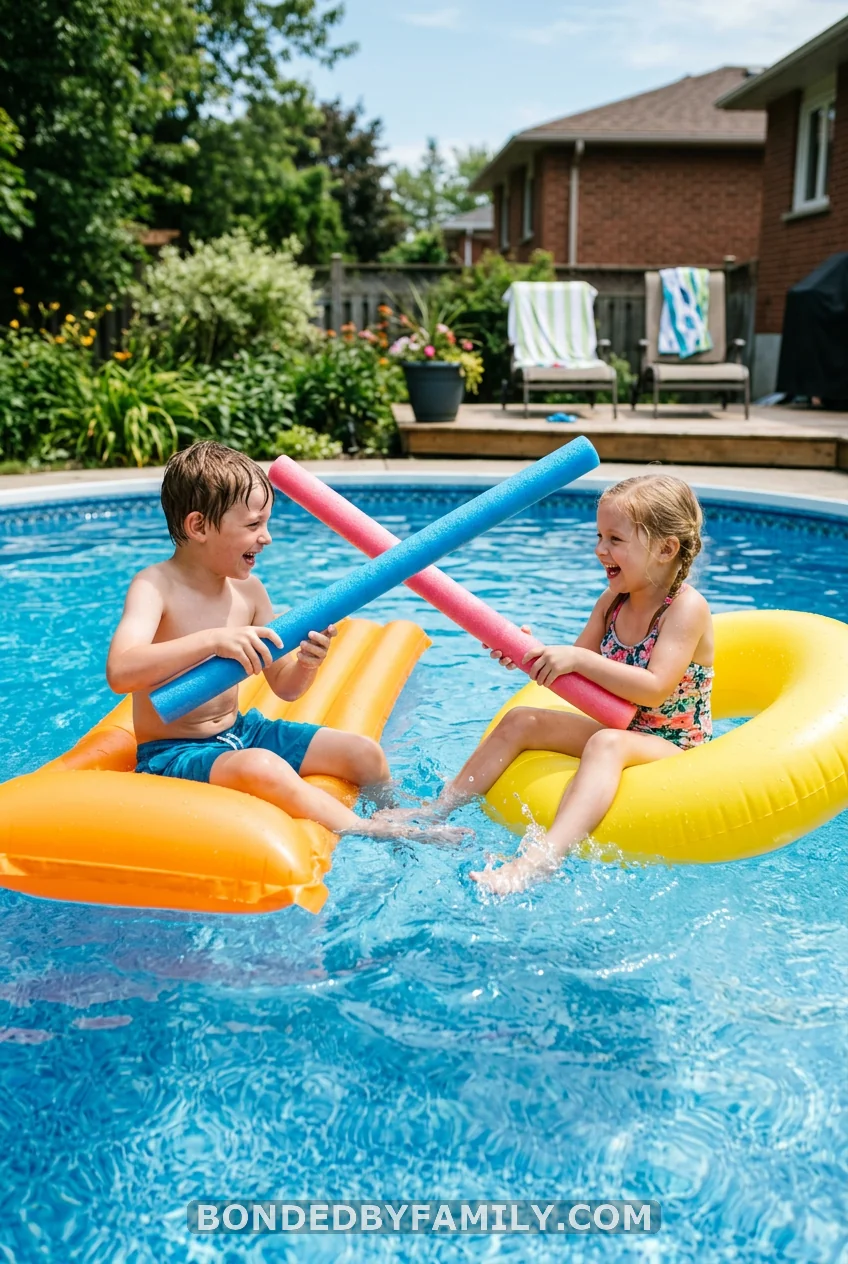
Two players sit on pool rafts facing each other, one pool noodle each. Goal: knock your opponent into the water without falling in yourself. A third player calls rounds and runs the bracket if you want a tournament.
The physics of maintaining balance on a squishy raft while swinging a foam noodle is fundamentally chaotic and wonderful. Kids who don’t want to joust will stand at the edge watching, completely riveted.
What you need: 2 pool noodles ($1–$2 each at Dollar Tree) and 2 inflatable pool rafts. Total cost if you don’t own rafts: $5–$35.
Age range: 7 and up works well without extra supervision. For ages 5–6, have a parent spot from the pool edge.
6. The Real Problem With Marco Polo — And How to Fix It
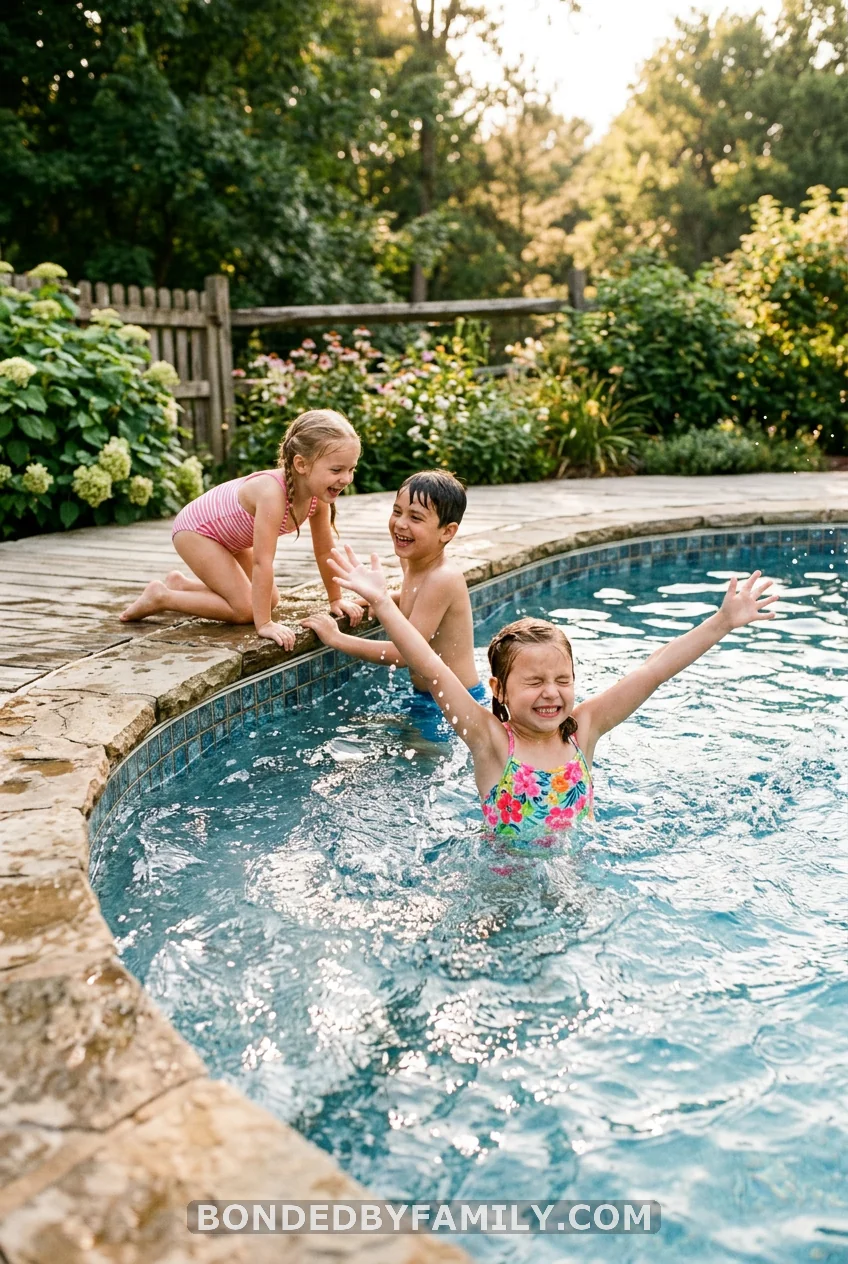
What most people think: Marco Polo runs itself. It’s a classic. Just start it, and the kids are occupied for half an hour.
What happens at the party: One kid ends up being “it” four times in a row because they can’t swim fast enough to tag anyone. The others drift toward the steps. Two are eating chips by minute six. The kid in the middle starts opening their eyes. Someone calls them out. Now there’s a dispute, and the game collapses.
Marco Polo has ended more pool parties than bad weather. The problem isn’t the game — it’s the rules.
The fix:
Add one rule: if the “Marco” player calls “fish out of water” and anyone is sitting on the pool edge or standing on the steps, that player is automatically eliminated. No tagging required. This does three things: it keeps everyone in the water, it gives the “it” player a tactical option that doesn’t require pure swimming speed, and it adds a psychological layer — players now have to decide whether resting on the steps is worth the risk.
Second fix: rotate the “it” player every 3 minutes by phone timer, even if nobody has been tagged. This prevents any one kid from getting stuck in the middle and tuning out.
These two changes add maybe 12 words to the rules, and the game runs for 25 minutes without drama.
7. Musical Pool Floats
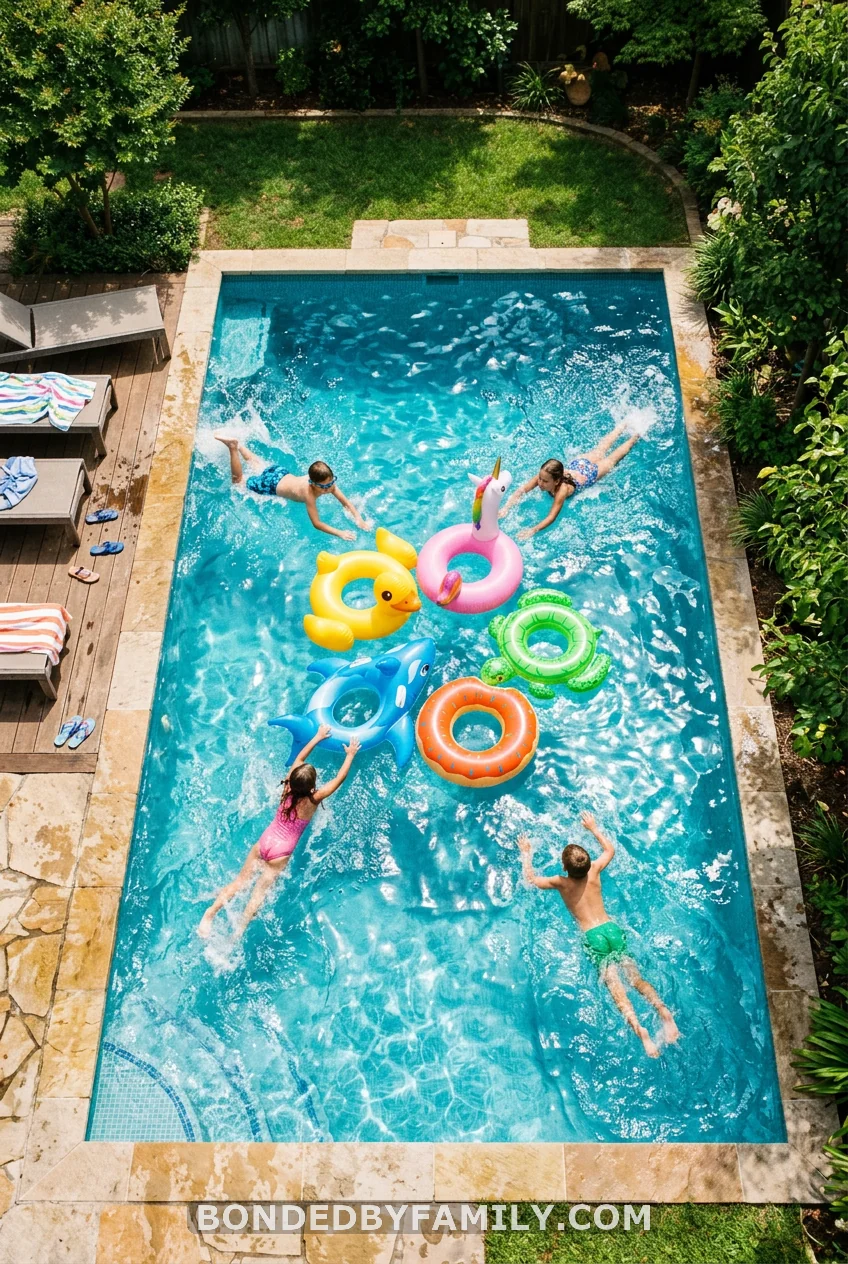
Musical chairs, but wetter. Line up one fewer float than players in the center of the pool. Play a summer playlist. When the music cuts, everyone scrambles to a float and climbs on. Whoever doesn’t reach one is out. Remove a float each round.
Parent note: Use basic swim rings or low-profile foam floaties, not large inflatable lounge chairs — lounge chairs tip easily when a group of kids races for them. Standard inflatable swim rings ($2–$4 each) sit low in the water and stay stable under pressure.
Sweet spot for group size: 4–10 players. Below four and the elimination rounds move too fast; above ten and the pool gets too congested to navigate safely.
8. The Invisible Bottle Hunt
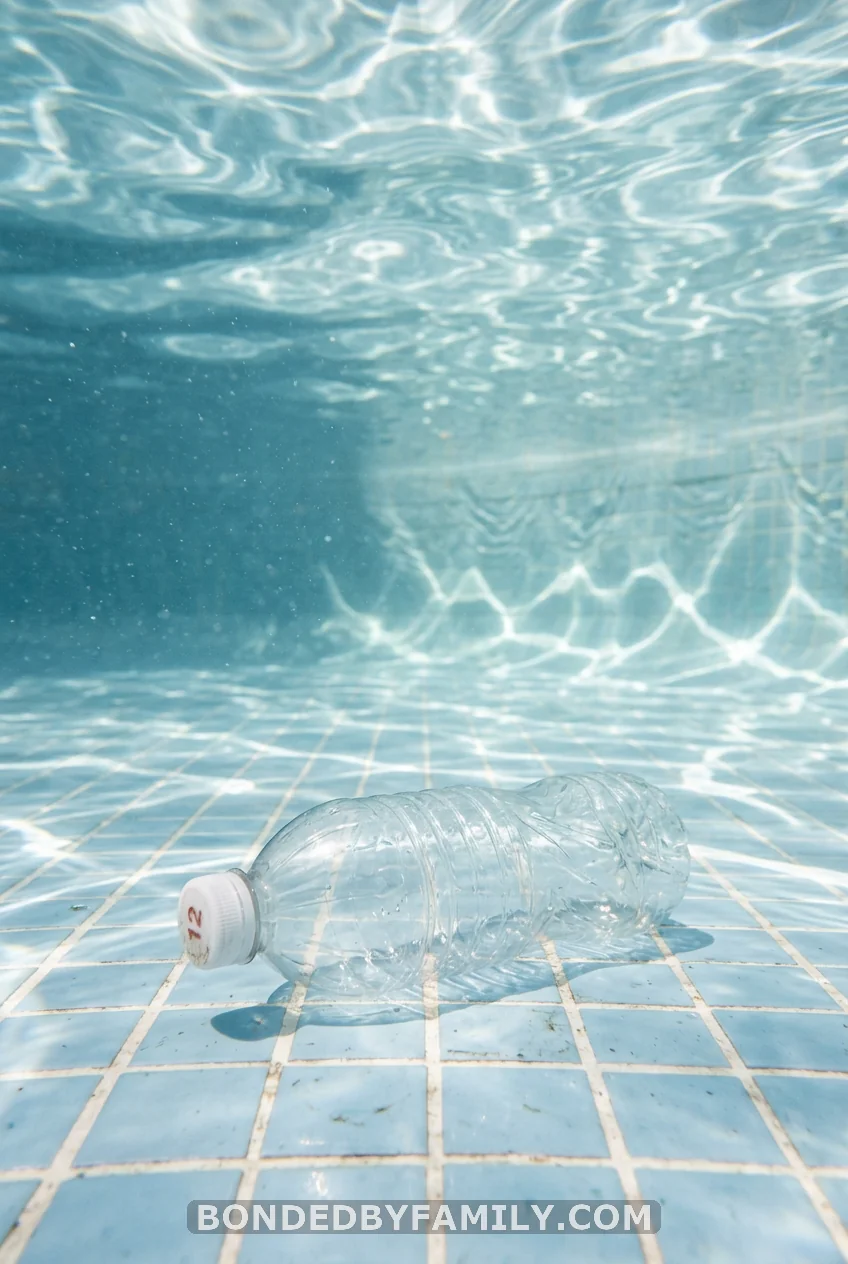
Fill a clear plastic water bottle completely with pool water. Cap it underwater so no air bubbles are trapped inside. Toss it in.
Watch everyone scan the pool with zero success.
The bottle is nearly invisible in the water. Finding it requires real concentration, goggles, and patience — which makes this game a natural equalizer. A careful 7-year-old will beat a distracted 13-year-old every time. For multiple rounds, use numbered stickers on caps and throw in 3–4 bottles simultaneously for a scored hunt.
9. Water Cannon Noodle Fight
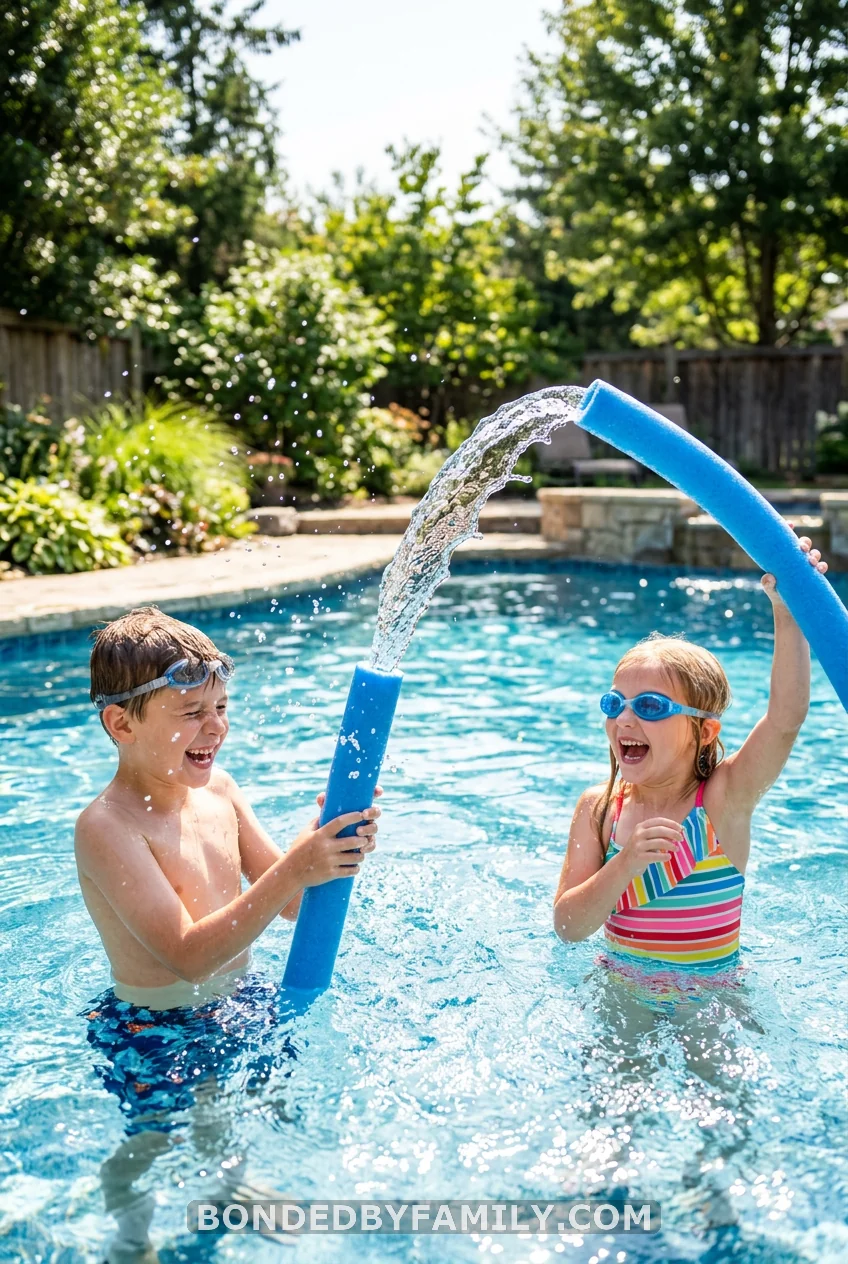
Submerge a standard hollow pool noodle to fill it with water. Quickly raise one end above the surface and put the other to your mouth — then blow hard. The water launches out the far end in a surprisingly powerful stream with a range of 4–6 feet.
Set up team battles: two kids per side, each armed with a noodle, first team to run out of ammunition (pool water) loses. Refills are instant because the pool is right there.
This one is less well known, but kids love it. It’s one of our neighborhood favorites specifically because the setup cost is exactly zero — you need a pool noodle you already own.
10. Pool Noodle Whack-a-Mole
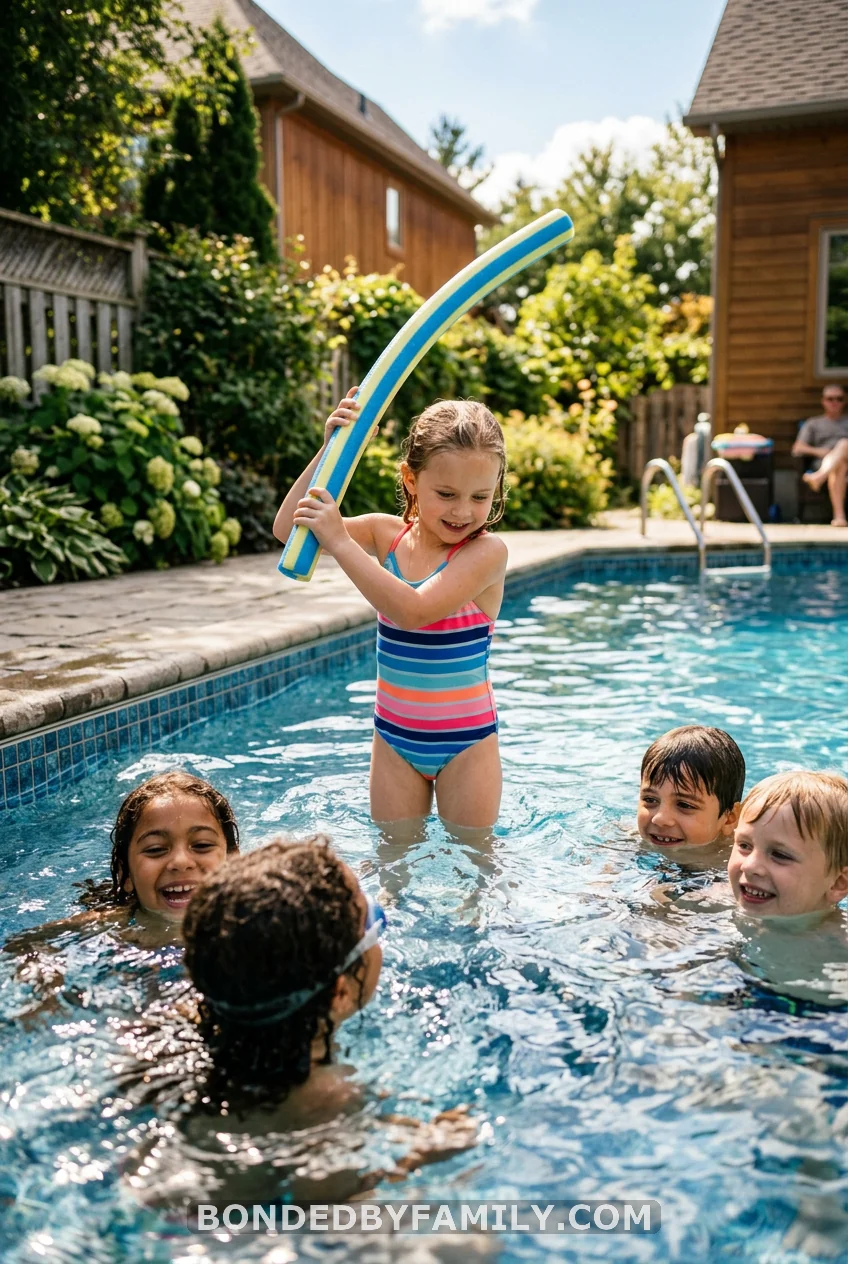
One kid is the “wacker,” standing in the shallow end with a pool noodle. All other players bob — repeatedly dipping below and surfacing — within a ring around the wacker. Every time a bobber surfaces, the wacker tries to tap them before they duck back under. Tagged players join the wacker team. Last free bobber standing wins.
11. Timed Pool Obstacle Course
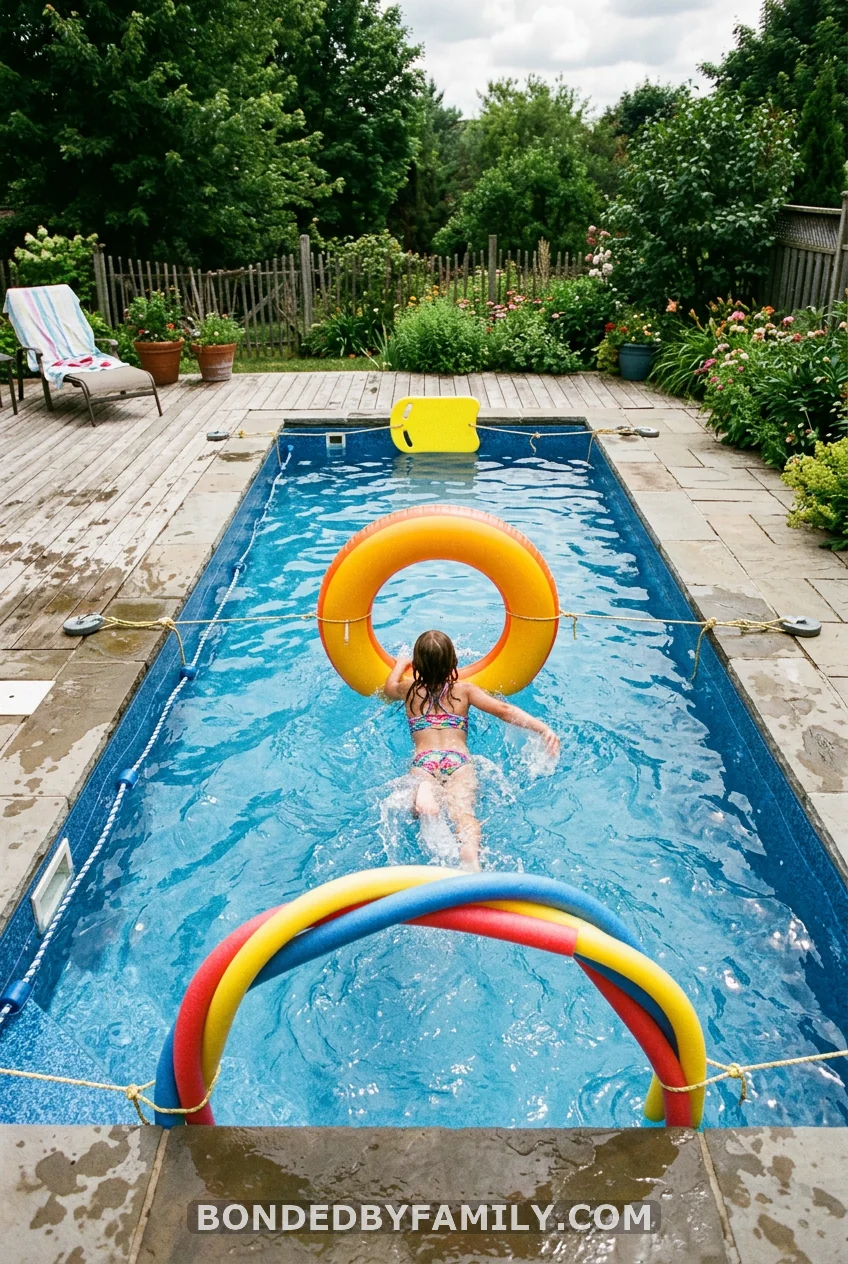
Design a 5-checkpoint course using whatever pool toys you own. A course that works well for ages 7–12:
- Jump in from the side (no diving)
- Swim to the center and retrieve a specific dive ring from the bottom
- Pass through a pool noodle arch held by a volunteer on the pool edge
- Float on your back for 5 full seconds without touching the sides
- Race to the far wall and tag it
Time each kid individually with a phone stopwatch. Post results on a notepad poolside. Run it twice — the second-round goal is to beat your own first-round time.
What this does that other games don’t: It introduces a personal challenge layer. Kids who aren’t competitive against others are often very competitive against themselves. The “beat your own time” framing pulls in kids who drift away from group games.
Difficulty scaling: For younger ages, swap the floating-on-your-back step for “sit on the raft for 5 seconds” and skip the deep-end dive ring retrieval.
12. Frozen Popsicle Relay
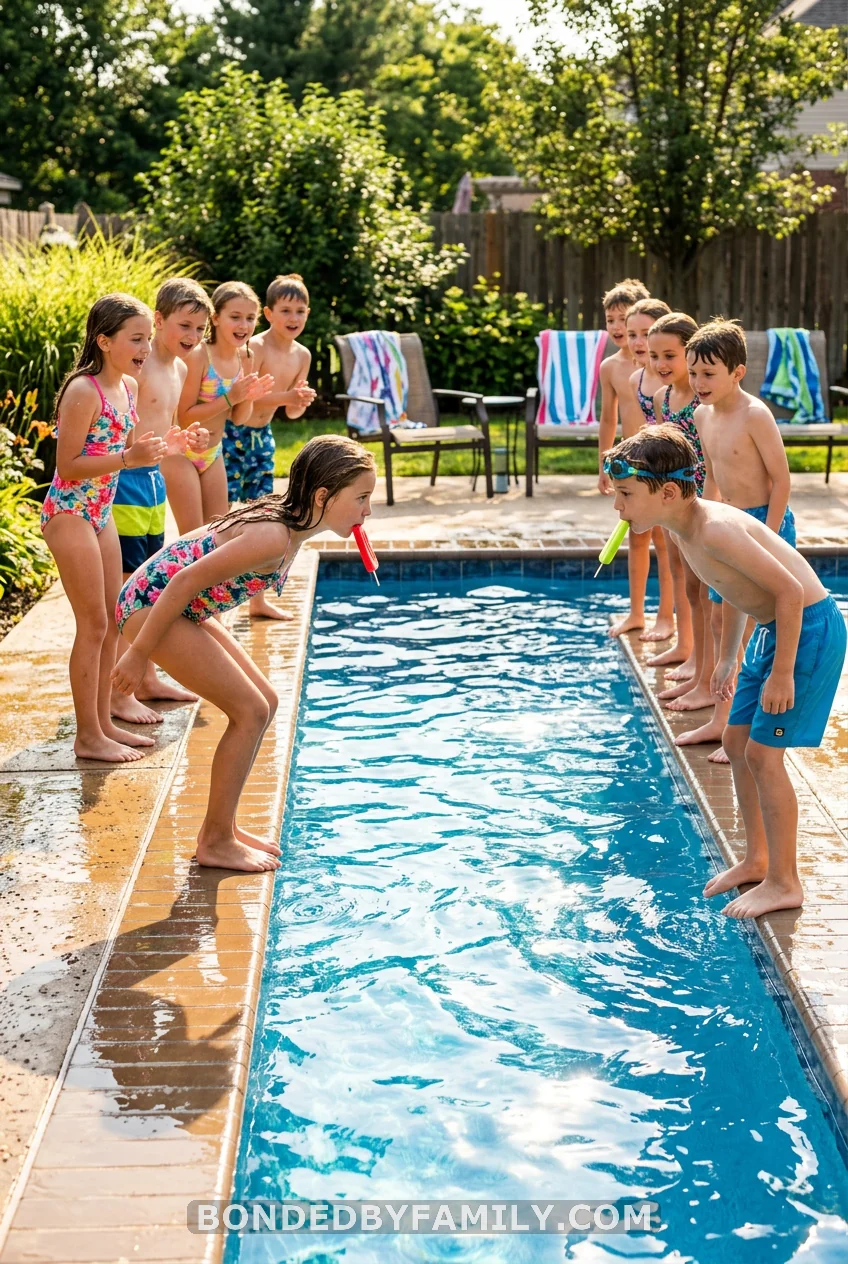
Freeze popsicles the night before (any flavor). Divide kids into two even teams. Each player must swim their popsicle from one end of the pool to the other without touching it with their hands — held under the chin or balanced across their arms. Drop it and you restart from the wall. First team to have all players finish wins.
The twist that makes this better than a standard relay: the popsicles are melting. The longer the race goes, the harder balance becomes. This naturally equalizes fast swimmers versus careful ones.
Cost: $3–$6 for a box of popsicles. Run this early in the party before the sun turns them into puddles.
13. Ping Pong Ball Scramble
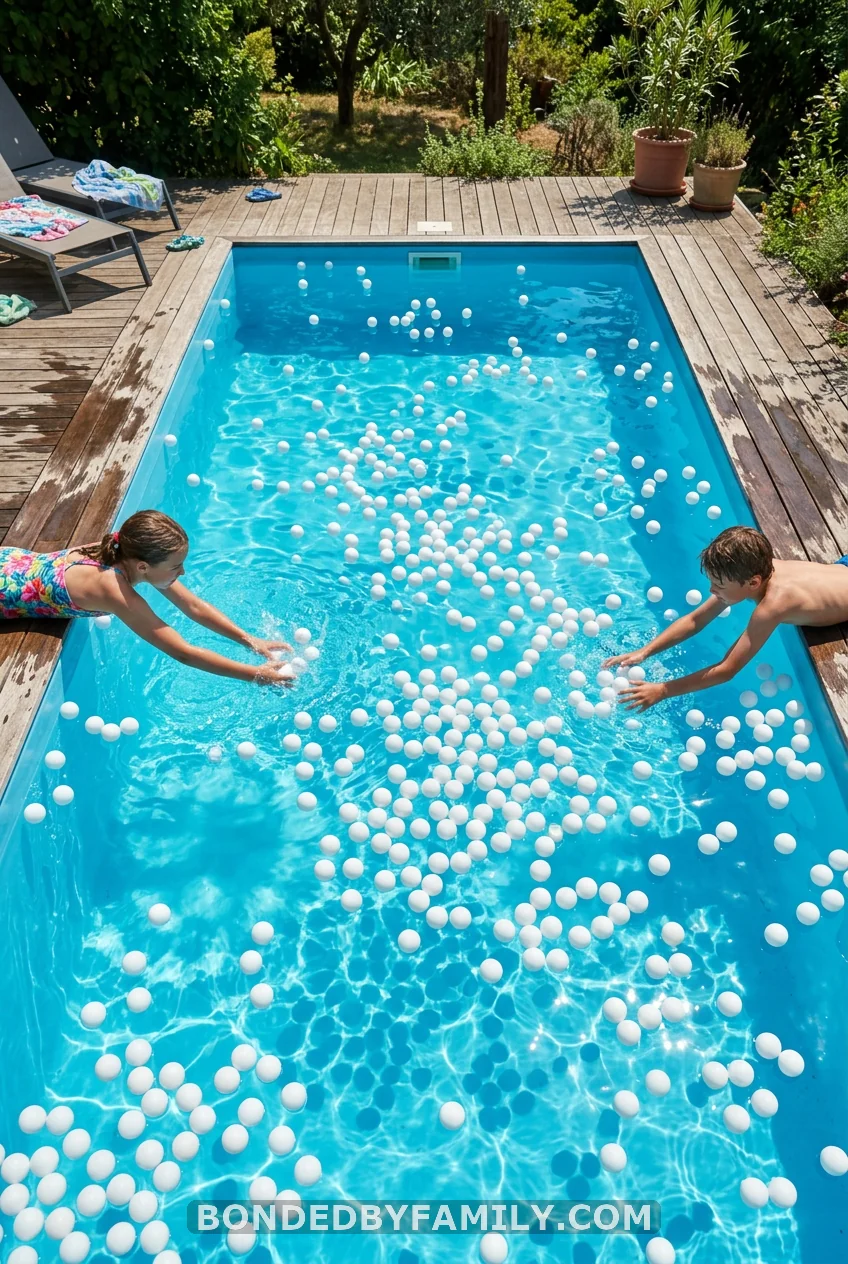
Dump 50+ ping pong balls into the pool. Players scramble to collect as many as possible in 60 seconds. Count them up.
Write point values on half the balls with a permanent marker first — now it’s not just about volume. You have 60 seconds, 50 balls, and a live decision to make about which ones are worth hunting.
14. Floating Ring Toss
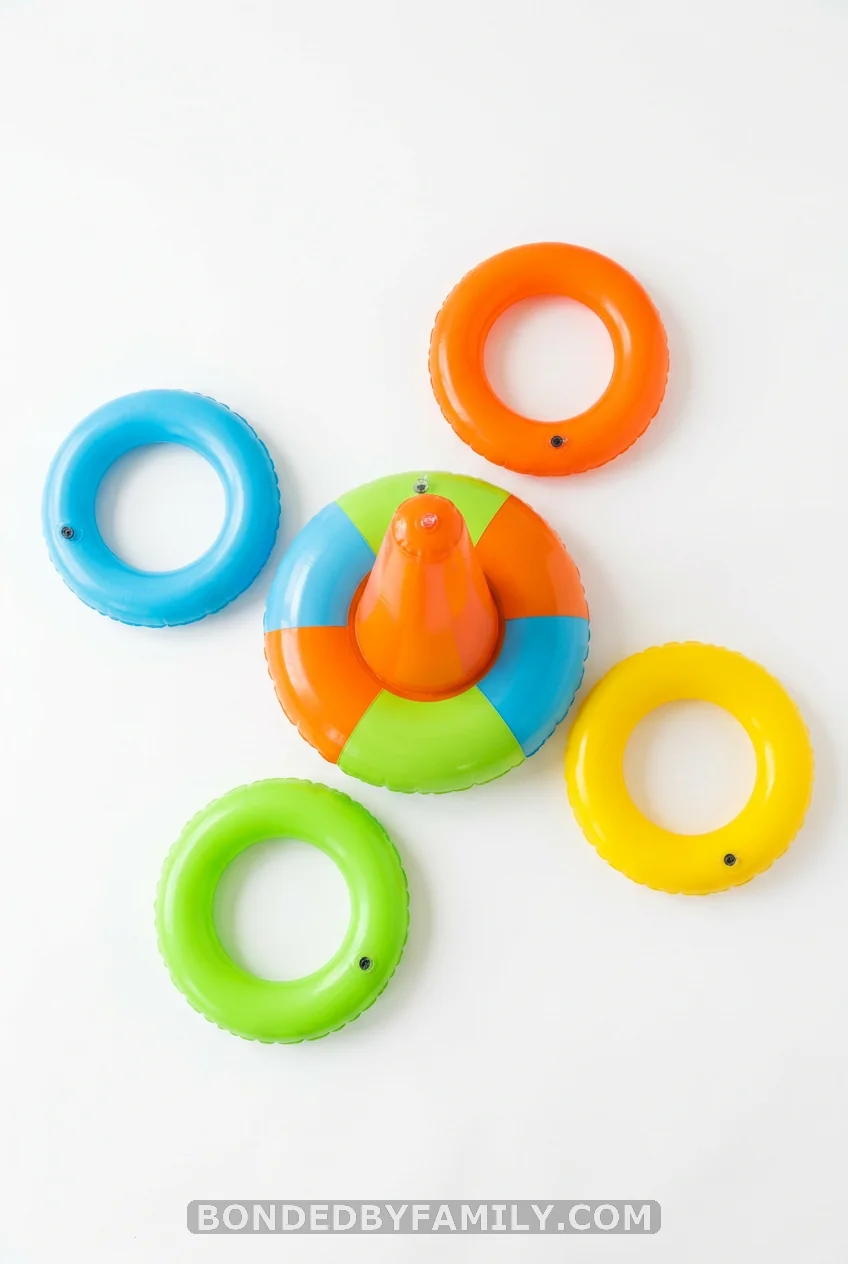
Set up a floating ring toss target in the shallow end (the WowMazing Floating Ring Toss runs about $14 on Amazon). Three rings each, track cumulative points across multiple rounds, rotate players.
Even small waves from other swimmers nudge the target between throws, which keeps this from feeling mechanical. For an upgrade that costs nothing: have one player hold the target and move it subtly between throws. Changes the difficulty entirely and turns a solo game into a cooperative one.
15. Whirlpool Shark Attack
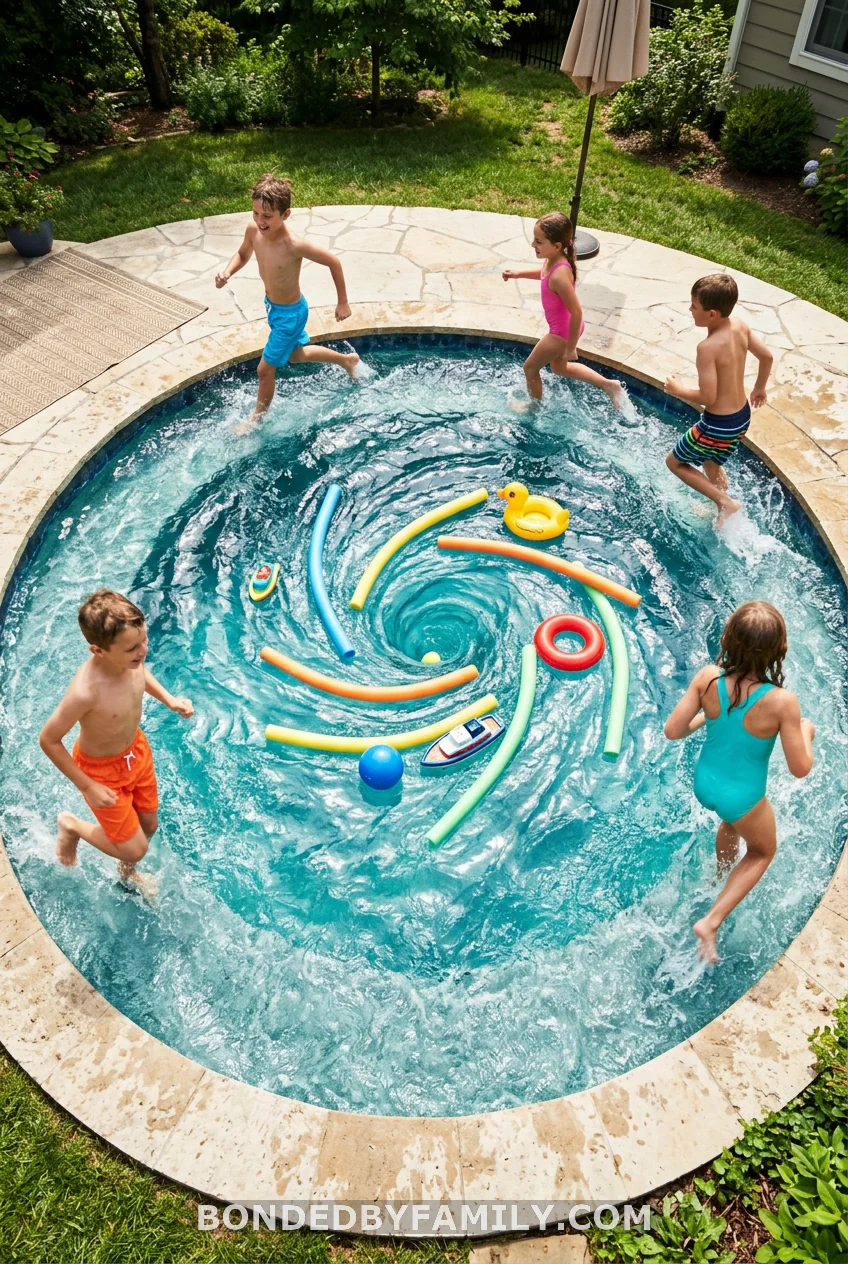
Everyone lines up along the pool walls and jogs in the same direction for 2–3 minutes. A real current builds. Stop running and jump in — it carries you. The “sharks” are pool toys (noodles, rings, inflatables) tossed into the center at the start. Try to navigate through the whirlpool without getting touched by a floating toy.
This works best in a round pool or a backyard pool 12 feet across or larger. The current in a 15-foot round pool after 2 solid minutes of jogging is one of those experiences that stops kids mid-sentence — most have never felt anything like it.
16. Night Glow Dive
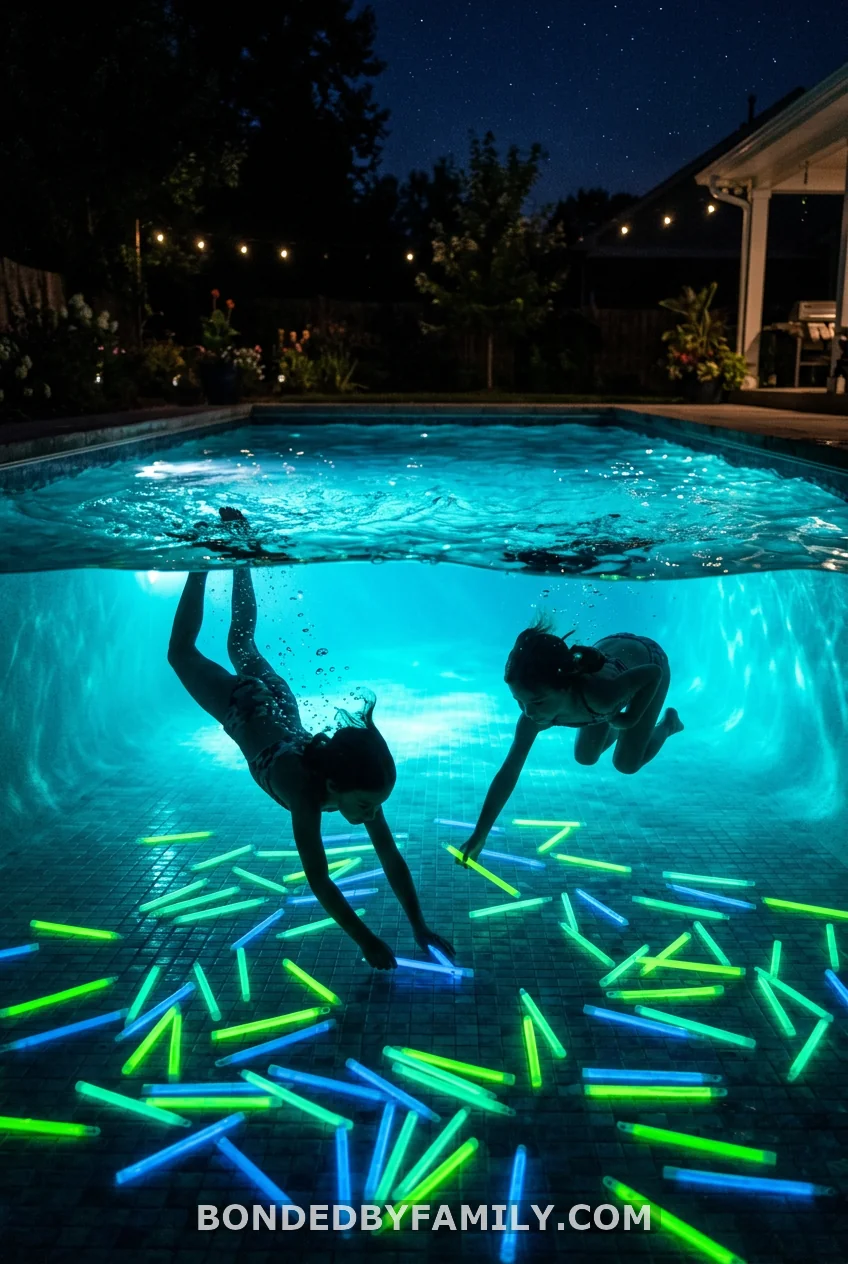
After dark — or even at dusk — toss 20–30 glow sticks to the bottom of the pool. Add glow-in-the-dark dive rings if you have them. Cut the exterior lights. Set a 3-minute timer and let kids collect as many as possible.
What the pool looks like from underwater during this game is something else entirely. The shifting aqua glow field across the pool floor stops kids cold — even the ones who usually resist going fully underwater will put on goggles without prompting.
Cost: A pack of 50 glow sticks runs $6–$9 on Amazon (Koogel 50-Pack Glow Sticks Party Pack). Get the longer 11-inch sticks — they’re visible from above the surface and easier to grab.
Timing note: Waiting for complete darkness isn’t necessary. Dusk is enough. Run this as the final game before dinner, when the sky is dimming, but you don’t need exterior lights to see.
17. Coin Toss Dive
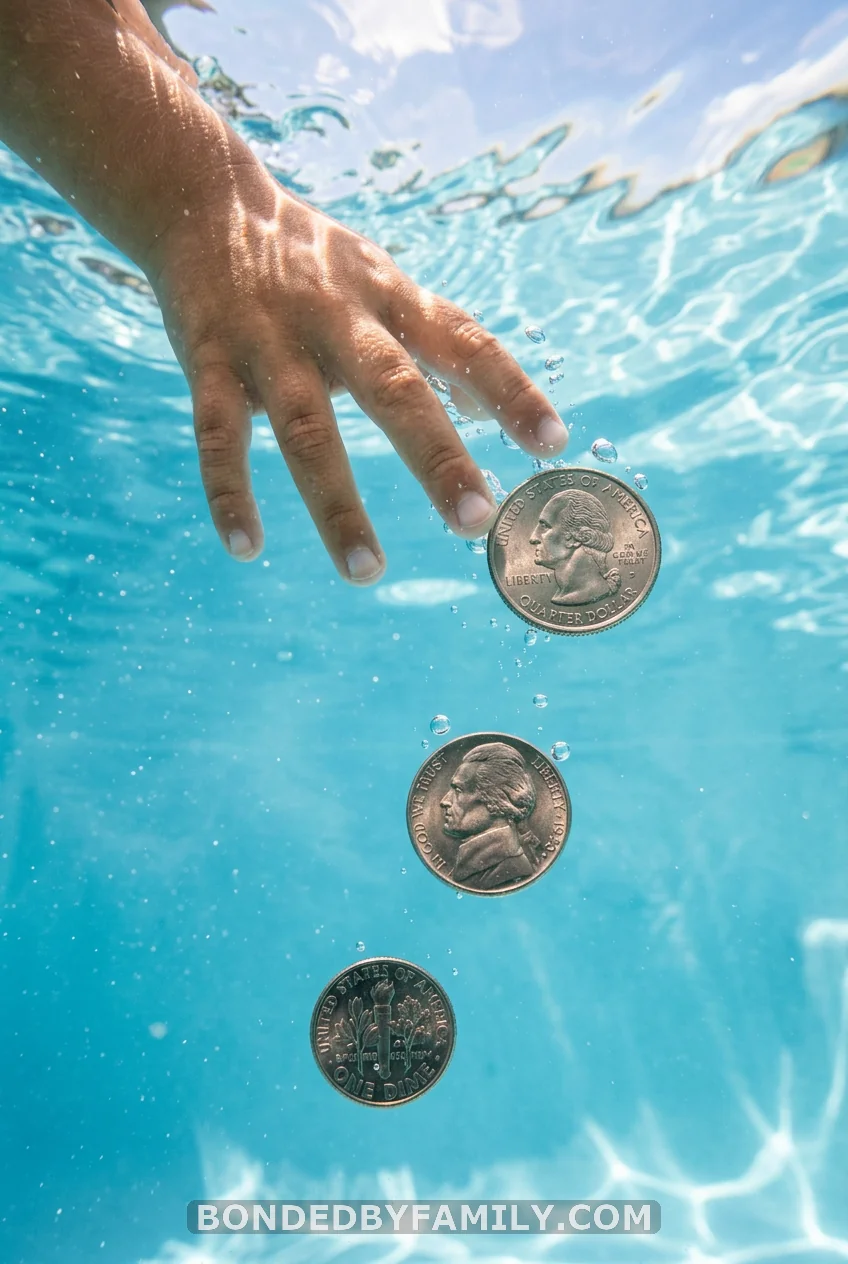
The oldest pool game there is, and one that still works on 4-year-olds and 14-year-olds equally. One player turns their back. Another tosses a coin — or several — into the pool. Everyone races to find it first.
The version that adds real stakes: Use actual change. Whoever retrieves a coin keeps it. Run 10 rounds with a mix of quarters, dimes, and nickels. You’re out $1.75 total, and children are motivated in a very specific, very focused way that no plastic trophy ever replicates. You’ll notice even kids who drifted from earlier games suddenly snapping to attention.
How to Build Your Party Arc
Here’s a game sequence that works well for a 2-hour pool party with kids aged 6–12:
Opening (first 15 minutes) — low entry barrier: Sharks and Minnows, Invisible Bottle Hunt. Latecomers can jump in without disruption. Water temperature anxiety dissolves within the first three minutes of Sharks and Minnows.
Mid-party ramp (minutes 15–60) — energy builds: Timed Obstacle Course, Pool Noodle Jousting, Musical Pool Floats, Water Cannon Noodle Fight. Games get louder and more competitive. This is where the party finds its own rhythm.
Main event (minutes 60–90): DIY Hungry Hungry Hippo deserves its own 20–30 minute block as the centerpiece. Don’t bury it mid-list. Set it up while kids are in the pool and announce it — the setup itself becomes a spectacle.
Wind-down (last 30 minutes): Cannonball Contest, Coin Toss Dive. Energy settles naturally while everyone stays in the water.
Night extension (optional): Night Glow Dive as the final act if the party runs past sunset. This is a strong closer — it leaves kids with an image they don’t shake for weeks.
Conclusion
You don’t need a professional party coordinator or a $200 game set to run a pool party that kids talk about for weeks. You need 4–6 well-chosen games, the right sequence, and one showstopper.
The DIY Hungry Hungry Hippo is your showstopper. The other pool party games for kids on this list fill out the arc around it — warm-ups, competitive mid-games, and a finale that earns its reputation. Pick 5–7, set up a playlist, and let the pool do the rest.
Frequently Asked Questions
What pool party games work for kids who can’t swim well?
Sharks and Minnows, Musical Pool Floats, and Noodle Whack-a-Mole all run beautifully in the shallow end with non-swimmers. Treasure Hunt works on the pool steps for younger children, and the Water Cannon Noodle Fight requires only that kids stand chest-deep. Always pair non-swimmers with an adult spotter, and consider foam swim vests for children under 6 — they build confidence and allow full participation without restricting movement.
How many games should I plan for a 2-hour pool party?
Plan 8–9 games and run whichever ones the group gravitates toward. In practice, 5–6 games will fill 2 hours naturally when you account for setup transitions and spontaneous re-runs. Avoid planning 12+ games with the hope of hitting them all — rushed transitions drain energy faster than the games themselves. A short list of great games beats a long list of adequate ones.
What’s the best pool party game for a large group of 15 or more kids?
Sharks and Minnows scales to virtually any group size and costs nothing to set up. For simultaneous play with large groups, the Ping Pong Ball Scramble runs for all players at once with no waiting. For structured competition, the DIY Hungry Hungry Hippo adapts to bracket-style play for larger groups by running simultaneous rounds on opposite ends of the pool.
How do I keep pool games safe for younger kids?
Designate game zones by depth. Run all scramble and balance games in the shallow end. Use foam swim vests or learn-to-swim float arms for any child under 5 or any non-swimmer, regardless of the game. Keep pool noodle jousting away from the deep-end dropoff. For the Timed Obstacle Course, run one child at a time with a dedicated adult spotter watching the water — this is the single game that most benefits from individual supervision rather than general poolside watching.
Can these games work at a community pool or rented pool venue?
Most can. Marco Polo with the “fish out of water” rule, Cannonball Contest, Invisible Bottle Hunt, Coin Toss Dive, and Ping Pong Ball Scramble all require zero setup and work anywhere there’s a pool. Call the venue ahead of time to confirm whether dive toys, pool noodles, and personal inflatables are permitted — many community pools allow them in designated areas during private party sessions, but policies vary widely.