Here’s a number that stopped me cold: kids as young as toddlers already tune out repeated verbal warnings within seconds. Parenting educator Amy McCready, founder of Positive Parenting Solutions, calls this “parent deafness” – and she says most families accidentally train it into their kids by age four. We yell, they wait us out, we yell louder, they wait longer. Nobody wins.
The good news? You can retrain the whole pattern without becoming a different parent overnight. Positive parenting solutions aren’t about being permissive or perfect. They’re small, specific shifts – in how you talk, how you praise, how you set limits – that add up to a kid who actually cooperates because they want to, not because they’re scared of you.
Here are seven that work in real, messy, Tuesday-at-5pm-everyone’s-hungry life.
Connect Before You Correct
Kids don’t misbehave because they’re bad. Amy McCready’s whole framework rests on one idea: children have two core needs – belonging and significance. When those needs go unmet, misbehavior is just a kid’s clumsy way of asking to be noticed.
1. Fill Your Child’s Emotional Bucket Before You Correct Anything

McCready’s “bucket-filling” concept is simple: ten minutes of undivided, phone-down attention a day does more for behavior than any consequence chart. This is the mind-blowing part – it doesn’t need to be big. Building a block tower, reading one book cover to cover, or just lying on the floor next to them while they narrate a game all count.
The trick is undivided. Not folding laundry while half-listening. Not glancing at your phone between sentences. Set a timer if you have to. Ten real minutes tells a child, “you matter to me,” in a language they understand better than words. Do this daily for two weeks and watch what happens to the whining, the clinginess, the attention-seeking meltdowns. They usually shrink, because the need behind them got met before it had to escalate.
2. Listen Before You Jump to “No”
Let your kid finish the sentence. That’s the whole tip. Before you correct, punish, or explain why they’re wrong, ask “what happened?” and actually wait for the answer. It costs you ten seconds and it tells your child their side matters – which, more often than not, makes them far more open to hearing yours.
Guide With Structure, Not Shouting
Positive discipline isn’t the absence of rules. It’s rules delivered with respect instead of fear.
3. Praise the Effort, Not the Grade
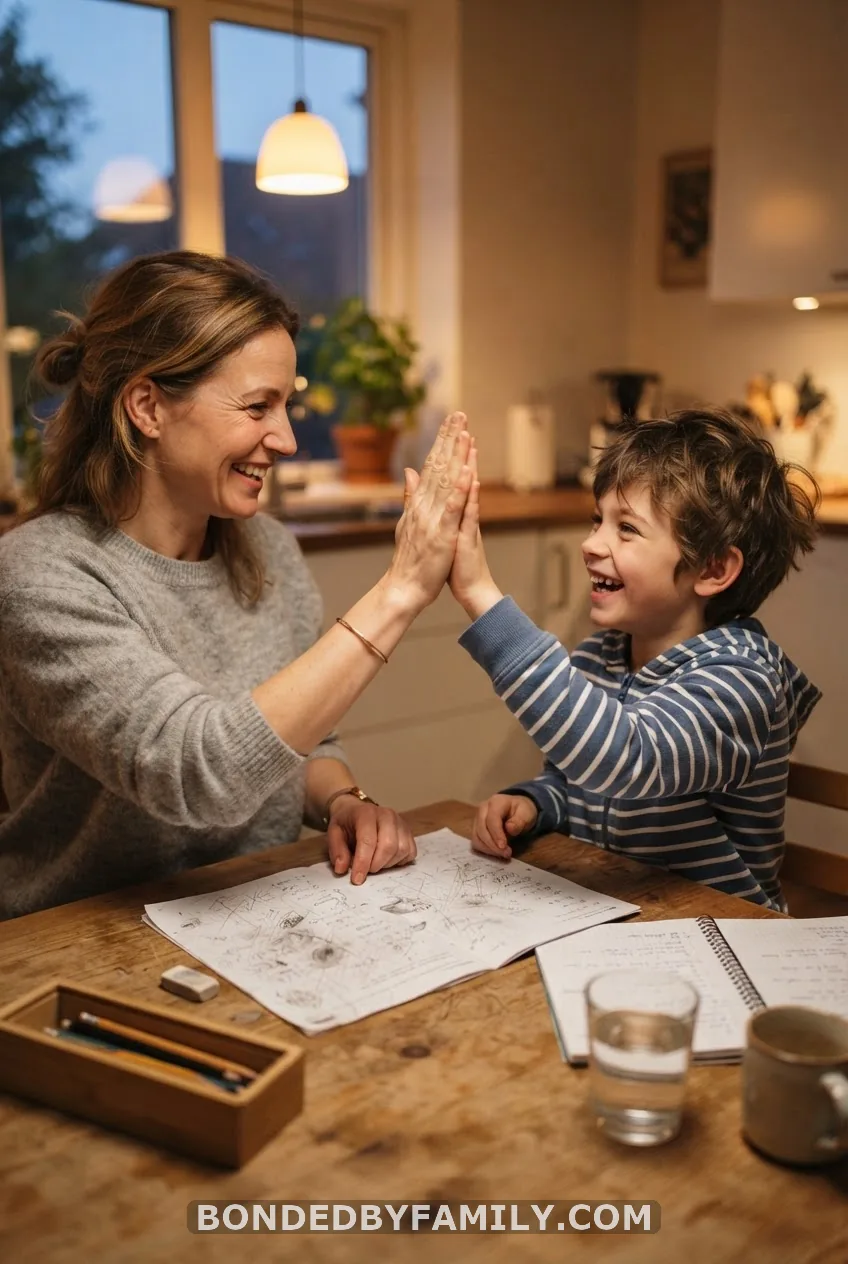
What most people think: Telling your kid “you’re so smart” builds confidence.
Reality: Research on praise (popularized by psychologist Carol Dweck, and echoed across every Pinterest parenting board you’ve scrolled) shows the opposite. Kids praised for being smart start avoiding hard tasks – because failing would threaten the “smart” label. Kids praised for effort take more risks, because trying hard is something they control.
So swap your script. Instead of “you’re so smart,” try “you worked really hard on that” or “I saw you keep trying even when it got tricky.” Instead of “good job” after every drawing, get specific: “you used three colors and filled the whole page.” Specific effort-praise does two things generic praise can’t – it tells your child exactly what behavior worked, and it teaches them that struggle is the point, not the enemy.
This one habit, repeated for months, is one of the strongest predictors of a kid who doesn’t fall apart at the first sign of difficulty.
4. Set Boundaries That Are Firm and Kind
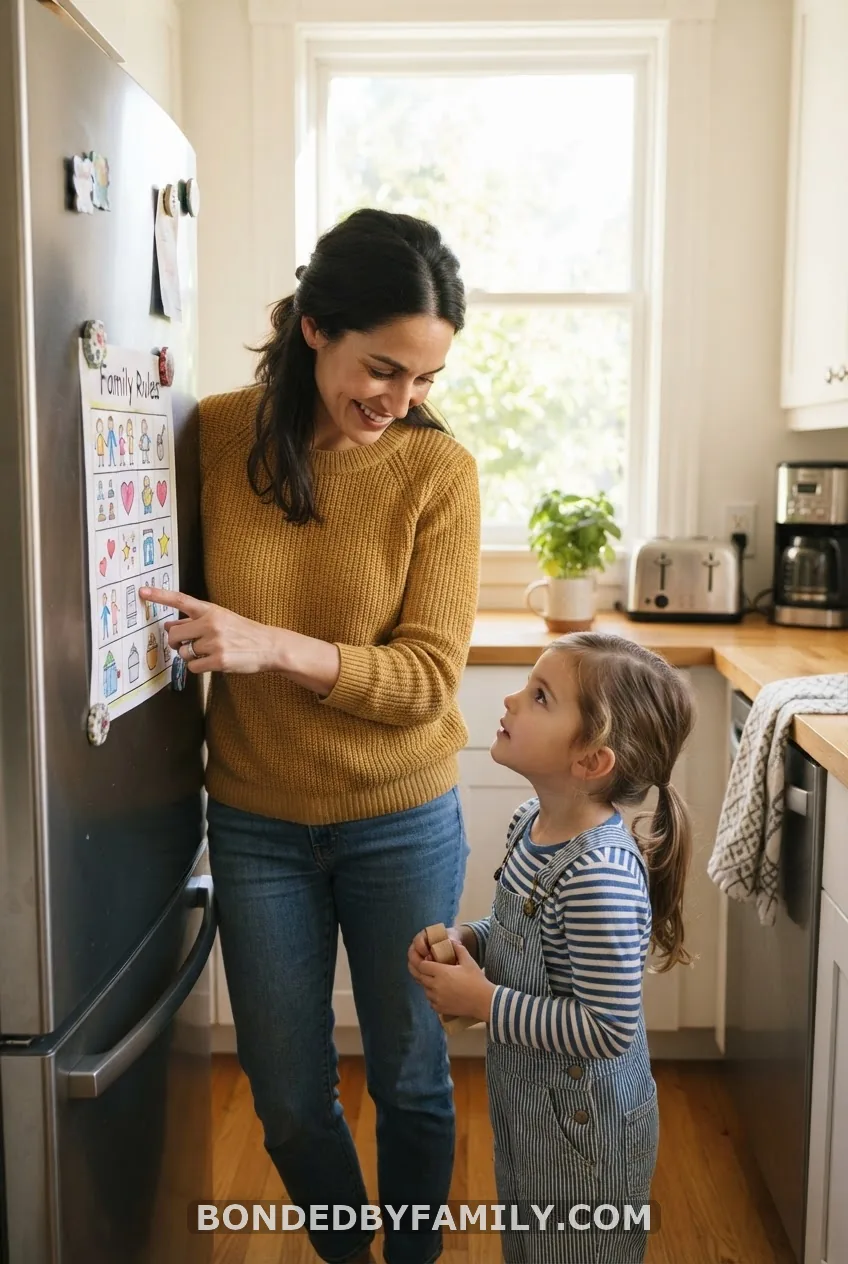
This is the deep end of positive parenting, and it’s worth doing properly, because a boundary without warmth turns into control, and warmth without a boundary turns into chaos.
Why Boundaries Actually Calm Kids Down
A child without limits isn’t a free child – they’re an anxious one. Boundaries function like the walls of a playpen: kids push against them precisely so they can feel where the edges are. When the edges hold, consistently, kids relax. When they shift depending on your mood, kids escalate to find out where the real line is today.
Step 1: Decide the Non-Negotiables
Pick three to five rules that matter most in your house right now – hitting, screen time cutoffs, bedtime, seatbelts, whatever’s causing daily friction. Write them down. Fewer, clearer rules beat twenty vague ones every time.
Step 2: Set the Rule Before the Moment, Not During It
Tell your child the boundary calmly, ahead of the situation: “When we’re at the park, we hold hands crossing the lot.” Rules announced mid-meltdown feel like punishment. Rules announced in advance feel like information.
Step 3: Pair Every Limit With an Empathy Statement
This is the piece most discipline charts skip. When you enforce a limit, name the feeling underneath it first: “You’re really mad you have to stop playing. It’s hard to stop something fun. And screens are off now.” You’re not negotiating the rule – you’re acknowledging the emotion while holding the line. That combination is what actually reduces the pushback over time, because the child feels heard even while being told no.
Step 4: Use Logical, Not Punitive, Consequences
Skip vague punishments (“no dessert for a week”) in favor of consequences tied to the behavior. Threw toys? Toys get put away for the rest of the afternoon. Wrote on the wall? They help wipe it down. Logical consequences teach cause and effect. Punitive ones just teach kids to fear getting caught.
Common Mistakes to Avoid
- Changing the rule because you’re tired – this teaches kids that persistence beats consistency.
- Adding a lecture on top of the consequence – the consequence is the lesson; the lecture just breeds resentment.
- Enforcing rules only when you’re stressed, and letting them slide when you’re not.
Budget note: Consistency here costs you nothing in dollars but plenty in willpower the first few weeks. Expect pushback to spike before it drops – that’s the boundary being tested, not evidence it’s failing.
Build Independence and Character
5. Hand Over Small Jobs

Let them pack their own bag, organize their own toy bin, set the table. It’ll be messier and slower than doing it yourself. Do it anyway. Kids who handle real responsibilities at home build a sense of competence no amount of praise can fake – and it cuts down on the daily nagging, because the job is theirs, not yours to remind them about.
6. Be the Example, Not the Lecture

I used to lecture my daughter about screen time while scrolling my own phone at the dinner table. One night she said, “you always tell me to put my tablet away, but you never put yours away.” That sentence rearranged something in me.
Kids don’t learn manners from your speeches. They learn manners from your tone on the phone with customer service, your face when the internet goes out, whether you say sorry when you snap at them. Debbie Godfrey of PositiveParenting.com puts it plainly: children copy the atmosphere you create more than the rules you announce. If you want a calmer household, the fastest lever isn’t a new chore chart – it’s your own reaction the next time something goes wrong. That’s uncomfortable advice. It’s also the one that changes the most, the fastest.
7. Teach Kids to Name Their Feelings
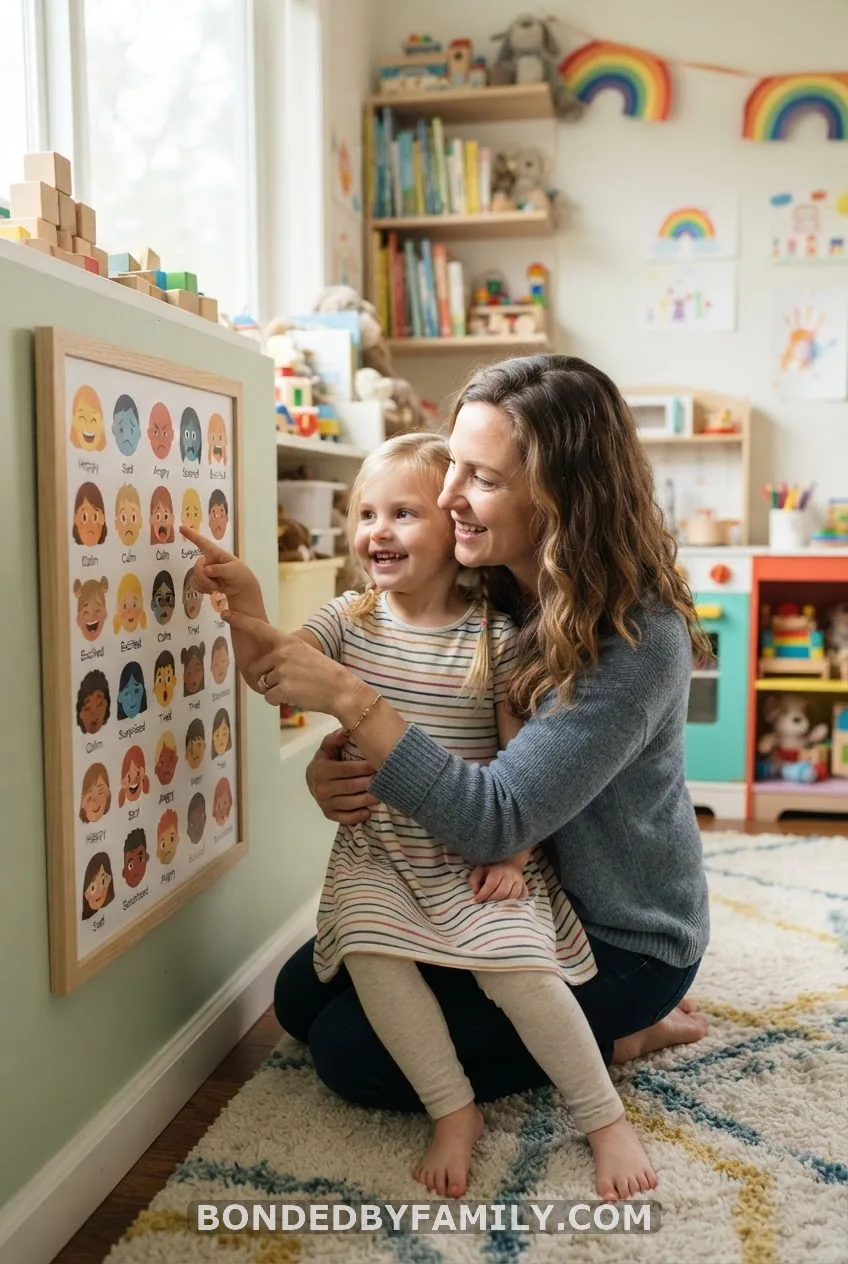
A cheap laminated emotion chart, or even just drawn faces on paper, gives kids words for what’s happening in their body. “Are you feeling frustrated, or more like jealous?” turns a meltdown into a conversation. Kids who can name a feeling are far less likely to act it out with their fists. This takes minutes to set up and pays off for years – pair it with a designated calm-down corner stocked with a soft pillow and a couple of books, so naming the feeling has somewhere to go next.
Frequently Asked Questions
What does “positive parenting solutions” actually mean?
It’s a discipline approach – popularized by Amy McCready’s Positive Parenting Solutions program and her 7-Step Parenting Success System – that guides behavior through connection, clear boundaries, and logical consequences instead of yelling, shaming, or punishment.
Does positive parenting mean I never say no?
No – it means the “no” comes with a boundary held calmly and consistently, not with fear or guilt. Kids in positive-parenting homes often have more structure, not less, because the rules are clear and dependable.
How do I get a strong-willed child to listen without a fight?
Get on their eye level, use fewer words, and offer real choices within the limit (“shoes on now, or in two minutes – you pick”). Strong-willed kids resist control but respond well to a sense of ownership over small decisions.
What if I yell anyway, despite trying all this?
Repair it. Say “I’m sorry I raised my voice, I was frustrated, that wasn’t fair to you,” and follow with a hug. Kids learn more from watching you recover from a mistake than from a parent who never makes one.
Are there resources to go deeper than a blog post?
Amy McCready’s All-In-One Parenting Success System and her free introductory webinar are solid starting points, and her Positive Parenting Solutions podcast, along with Debbie Godfrey’s Pep Talks Podcast, cover specific scenarios like tantrums, sibling rivalry, and screen battles in far more depth than any single article can.