“Mama, the reindeer are hungry.”
My three-year-old said it while holding a plastic reindeer in one fist and a wooden spoon in the other. The only thing in front of him was a bin of oats I had dumped out ten minutes earlier. Twenty minutes later, every reindeer in the house had been fed, tucked in and fed again.
That is the whole charm of a reindeer sensory bin. You add a filler, a few toys and a scoop, and kids invent the story themselves. Below are 22 versions, from feed the reindeer to reindeer soup to a Rudolph red-nose bin, with materials, setup and taste-safe swaps for each.
What Is a Reindeer Sensory Bin?
A reindeer sensory bin is a shallow tub of filler, like oats, rice, fake snow or water, paired with reindeer toys and tools. Kids scoop, pour, bury and rescue. They also make up stories.
Here is what they get out of it:
- Fine motor skills: scooping, pinching and tonging small items
- Sensory exploration: dry, wet, cold, crunchy and soft textures
- Imaginative play: feeding, hiding and racing the reindeer
- Self-regulation: slow, repetitive pouring calms a wound-up kid
Reindeer work well for Christmas because they feel festive but not too fancy. Kids already know Rudolph. Many also leave out carrots and oats on Christmas Eve, so a “feed the reindeer” bin fits right in.
Feed the Reindeer Bins
1. Feed the Reindeer Sensory Bin
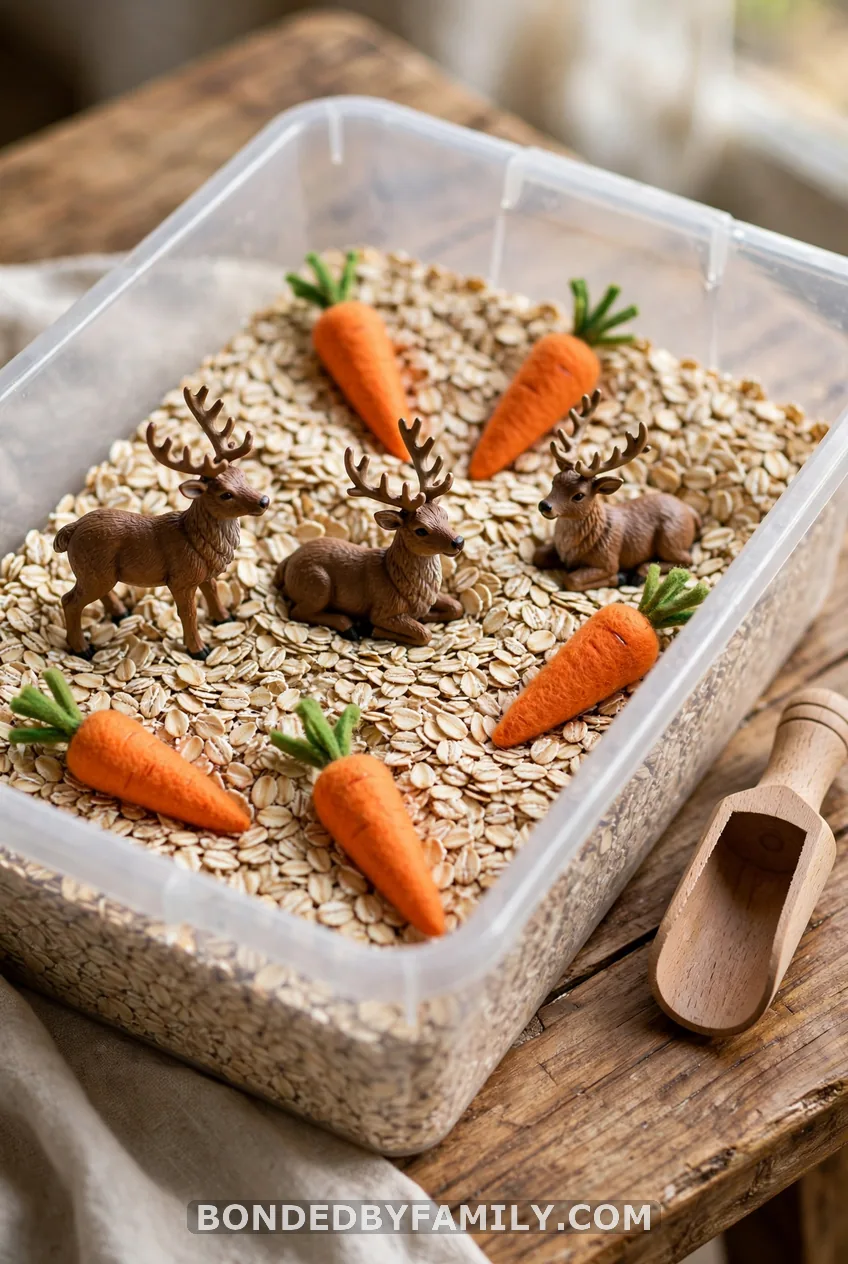
This is the classic, and the one I’d start with. It takes about five minutes to set up and costs a few dollars if you already own toys.
Materials:
- 4 cups of rolled oats (a standard canister holds about 18 cups)
- 3-5 reindeer figurines
- 5-6 orange felt carrots, each about 3 inches long
- A scoop, a spoon and two small bowls
- A shallow under-bed bin or baking tray with sides
Setup:
- Spread the oats about 2 inches deep across the bin.
- Hide the felt carrots under the oats.
- Line the reindeer up along one edge.
- Put the bowls and scoop on the opposite side.
- Tell your child the reindeer are hungry and they need to find the carrots.
Common mistake: overfilling the bin. Oats shoot across the floor when the bin is full to the top. Lay an old sheet or shower curtain underneath and you’ll sweep up in two minutes.
Swap the oats for dyed rice or pom poms if oats are not your thing. For preschoolers, add number cards so each reindeer needs a set number of carrots.
2. Reindeer Farm Sensory Bin with Fake Snow
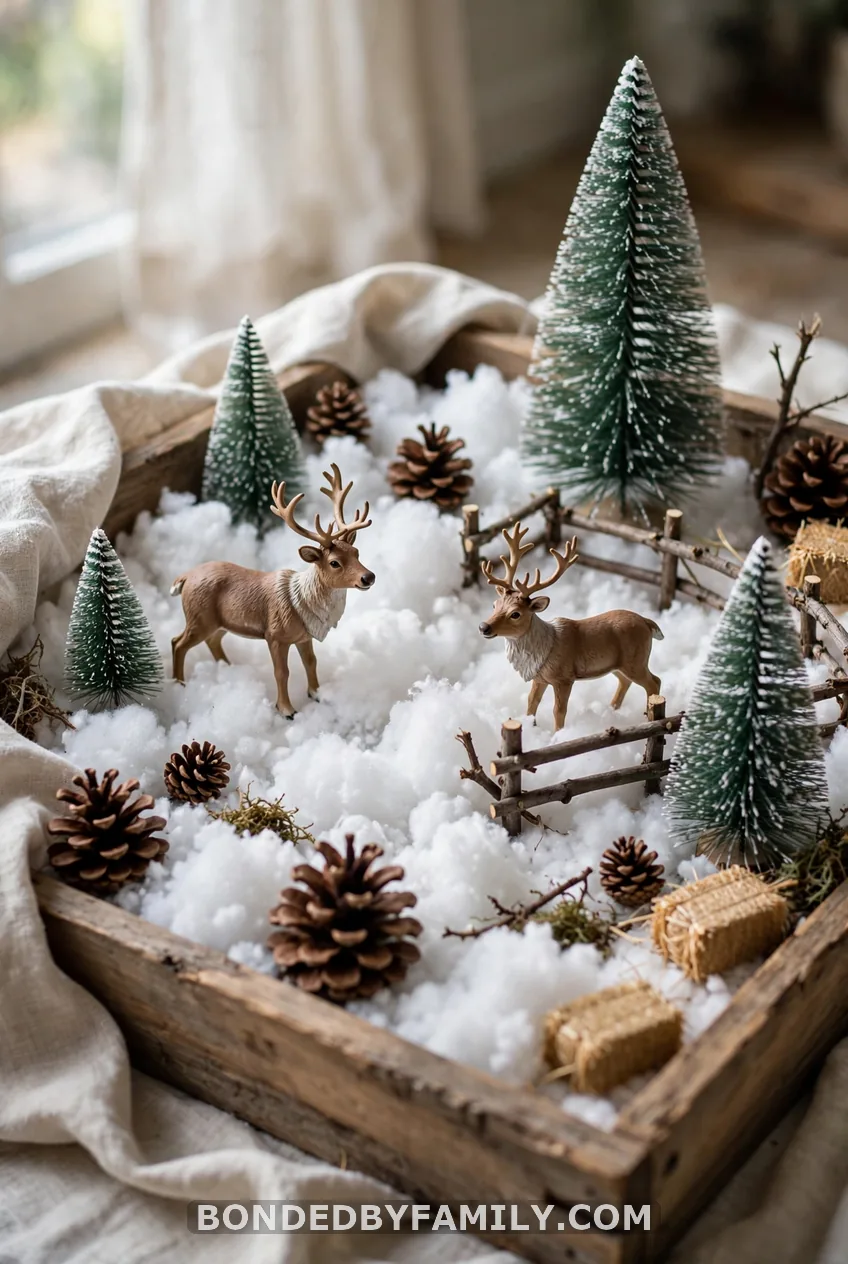
Mix Insta-Snow powder with water. It puffs up into cold, fluffy “snow” in seconds. One small jar makes enough for a medium bin.
Add bottle brush trees, pinecones and a few craft sticks for fences. Kids build a farm, then herd the reindeer around it. Insta-Snow is not edible, so keep it away from kids who mouth things.
3. Reindeer Food Sensory Bin
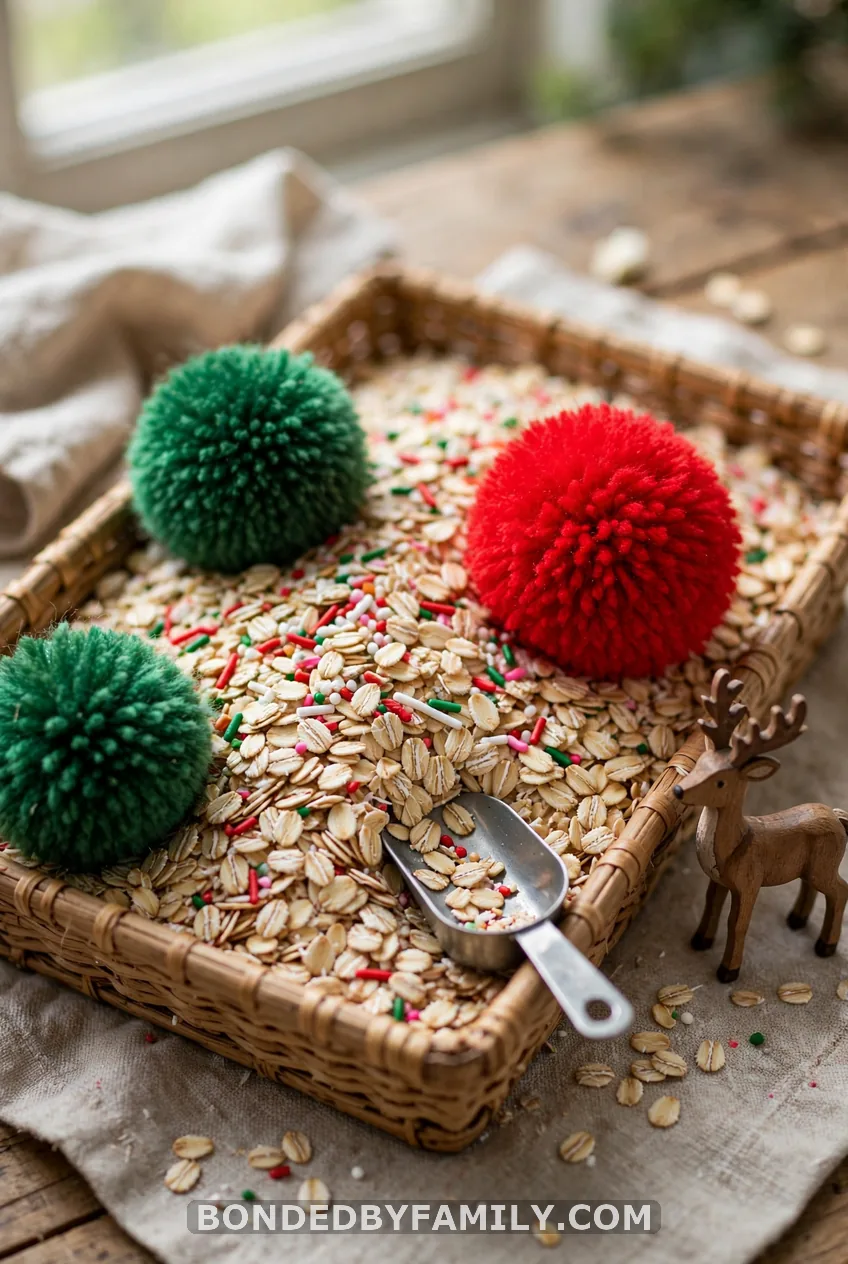
Mix oats with sprinkles and sanding sugar for the sparkle. Add a few big jingle bells for the “treats.” Kids scoop the food into little bowls for the reindeer.
For a taste-safe version, skip glitter. Use crushed plain cereal with a pinch of colored sanding sugar. Glitter is not food, even the “edible” kind in some tubs.
4. Reindeer Soup Sensory Bin
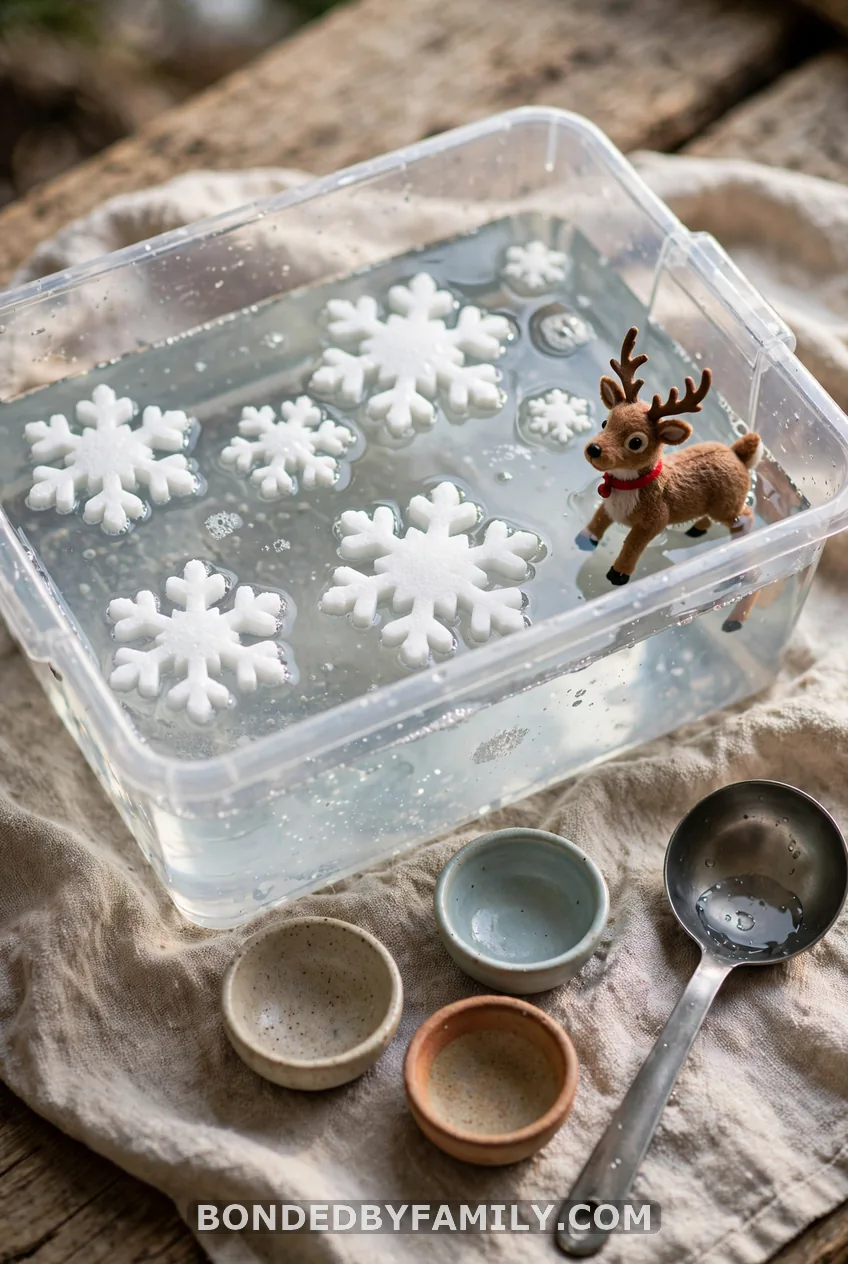
Fill a bin with a few inches of warm water. Float foam snowflakes and drop in a few reindeer. Hand over ladles and small bowls and let them “cook.”
Water play settles a lot of kids who are bouncing off the walls. Put a towel under the bin first. Skip water beads for anyone under 5, since they swell and are dangerous if swallowed.
5. Rudolph Red-Nose Sensory Bin
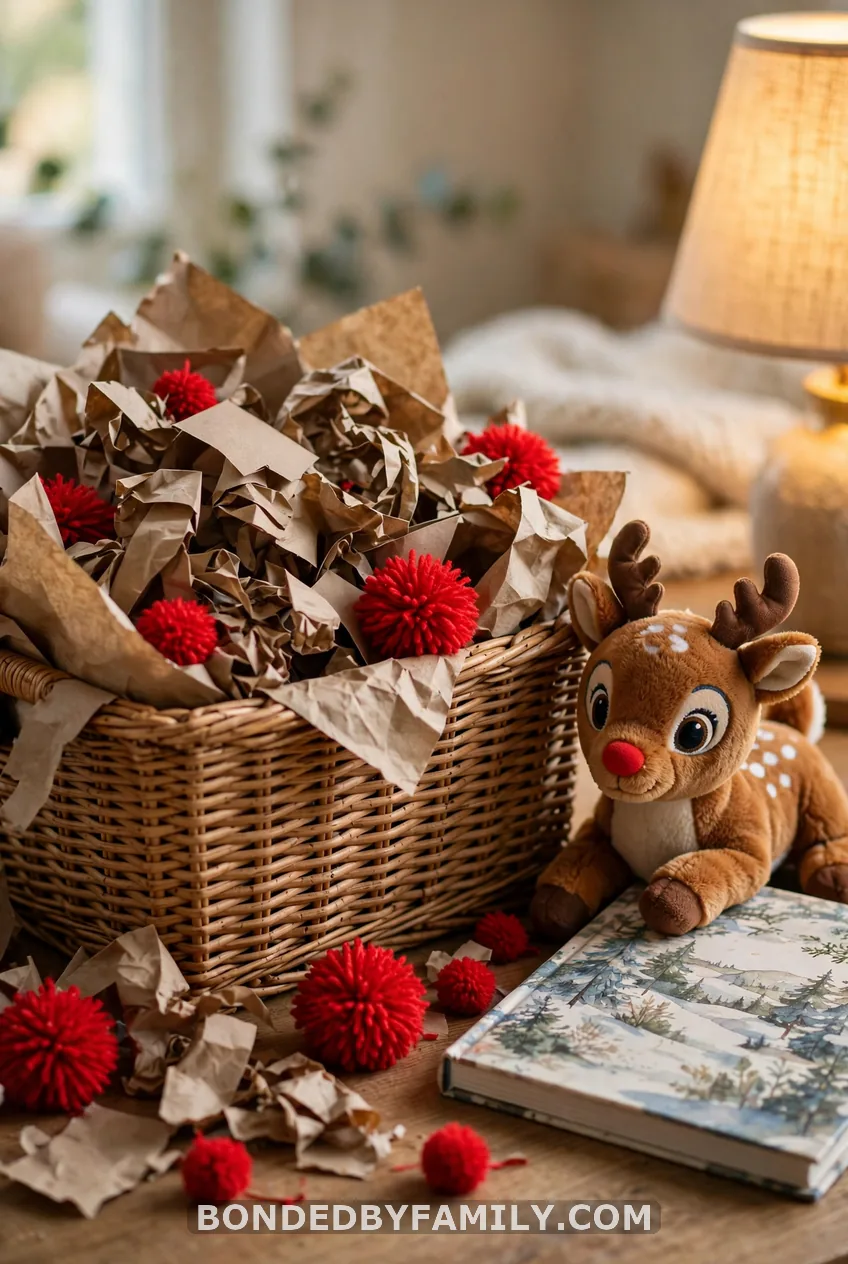
Fill a bin with crinkled brown paper scraps. Hide red pom poms (the “noses”) and pair them with a Rudolph toy.
Read the Rudolph story first, then ask your child to find Rudolph’s nose. Pom poms are a choking hazard for children under 4. For toddlers, skip them or use items too big to swallow, like a soft red toy ball or a red paper nose. Keep small pom poms out of reach and supervise closely at all times.
Snowy and Wintry Reindeer Bins
6. Reindeer Bait Sensory Bin
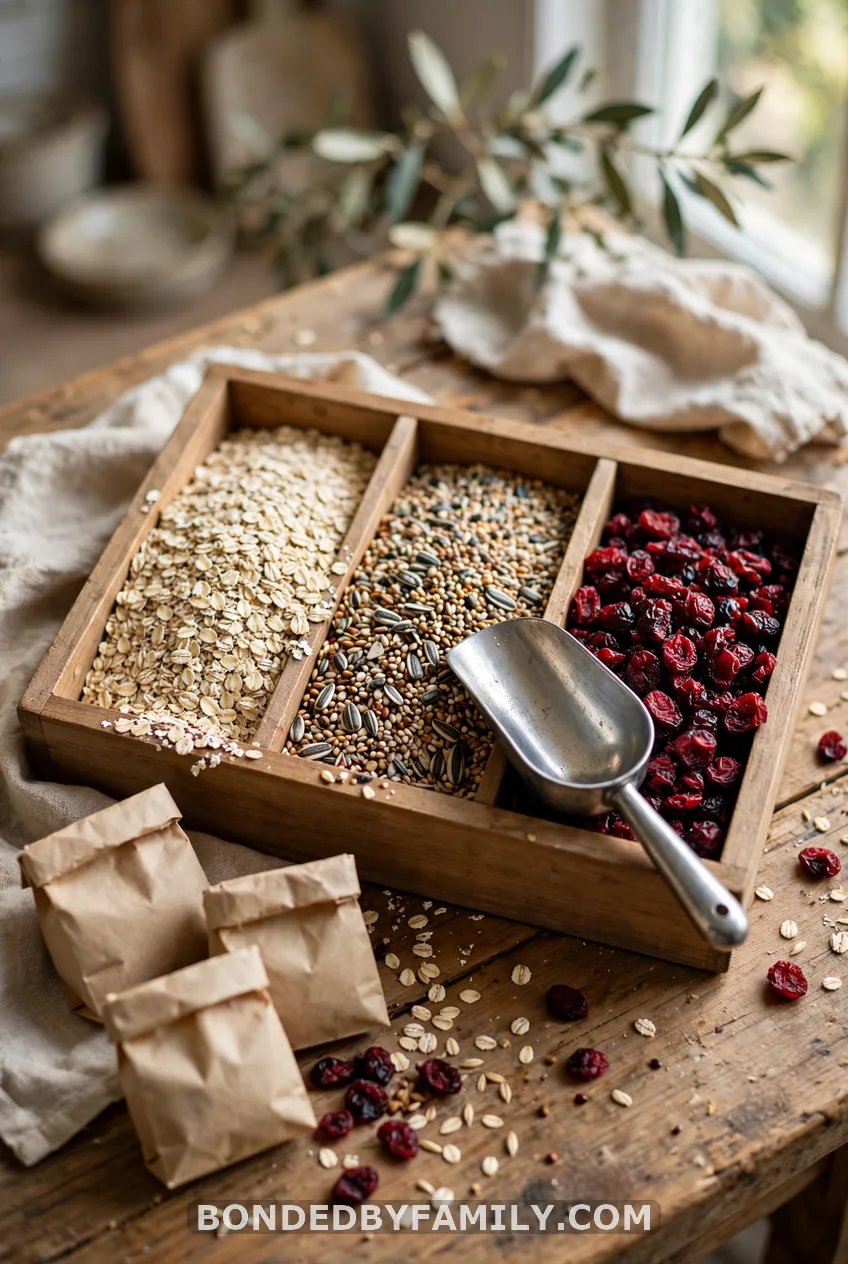
Mix oats, birdseed and dried cranberries. Kids scoop it into small paper bags, then seal them to use as take-home “bait” or to scatter on the lawn on Christmas Eve. Birdseed is fine outdoors but check for nut allergies first.
7. Reindeer Sensory Bag for Toddlers
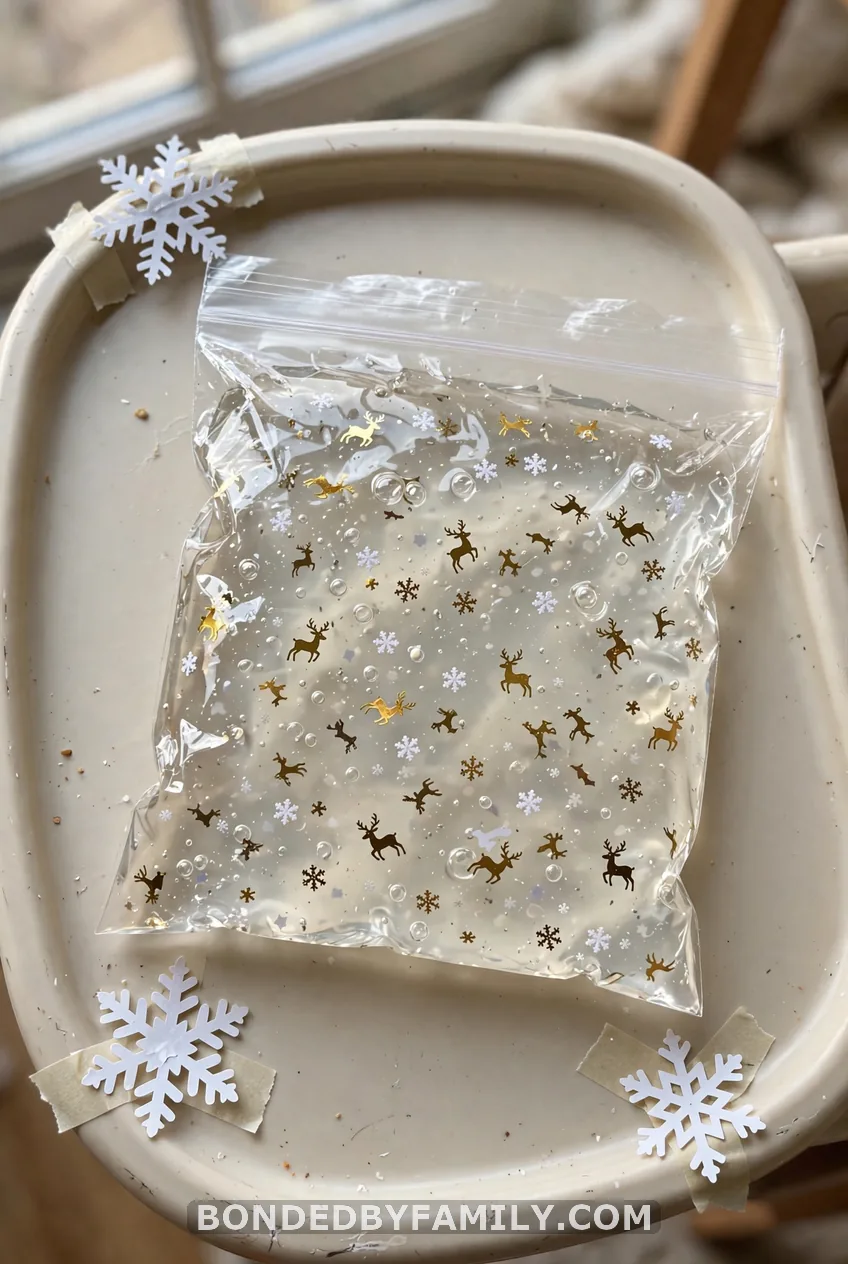
Squeeze a cup of clear hair gel into a heavy freezer bag. Add reindeer confetti and a few foam snowflakes. Press out the air, seal it and run packing tape along the whole top edge.
Tape it flat to a table. Toddlers squish it and chase the shapes with their fingers. It makes zero mess, so it works for under-3s who still taste everything.
8. Montessori Reindeer Sensory Bin
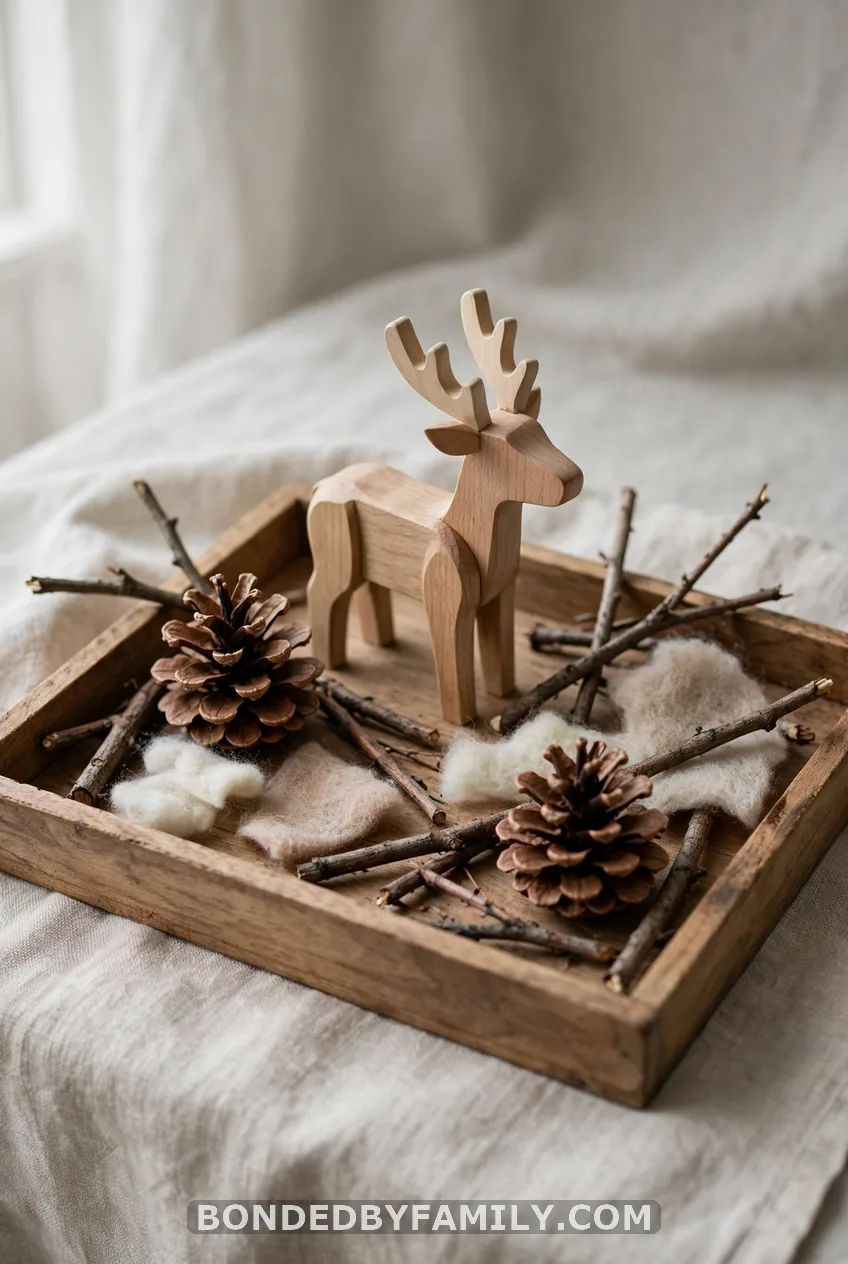
Keep it natural and quiet. Use a wooden reindeer, pinecones, sticks, wool scraps and a small wooden bowl on a tray. No bright plastic.
Offer no instructions. The goal is open-ended exploration, so let your child decide what the reindeer do.
9. Reindeer Carrot Patch Sensory Bin
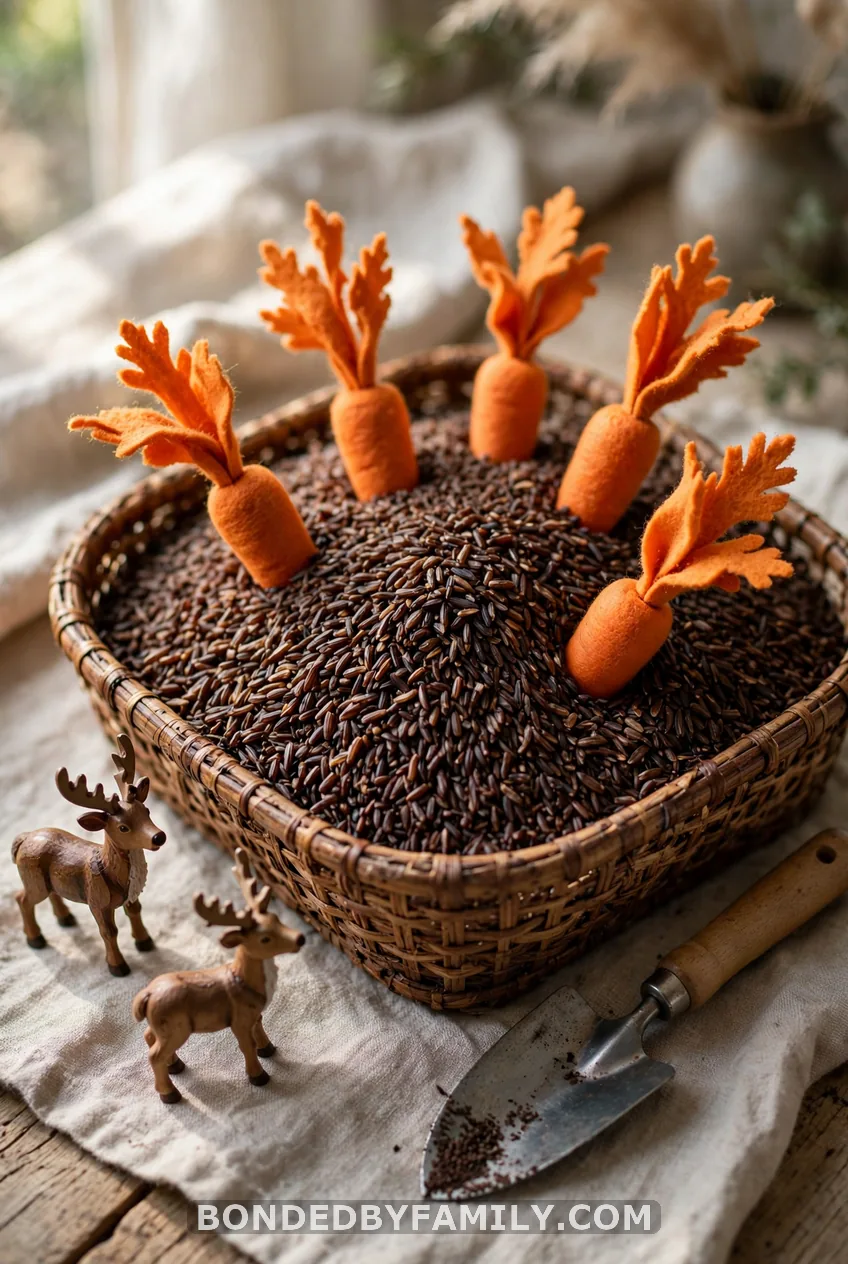
Fill the bin with brown-dyed rice. To dye it, shake 2 cups of rice with 1 teaspoon of vinegar and a few drops of brown food coloring in a zip bag, then spread it on a tray for an hour to dry.
Push the felt carrots into the “soil.” Kids dig them up with a trowel and feed them to the reindeer. Plant them back for round two.
10. Reindeer Tray Sensory Bin
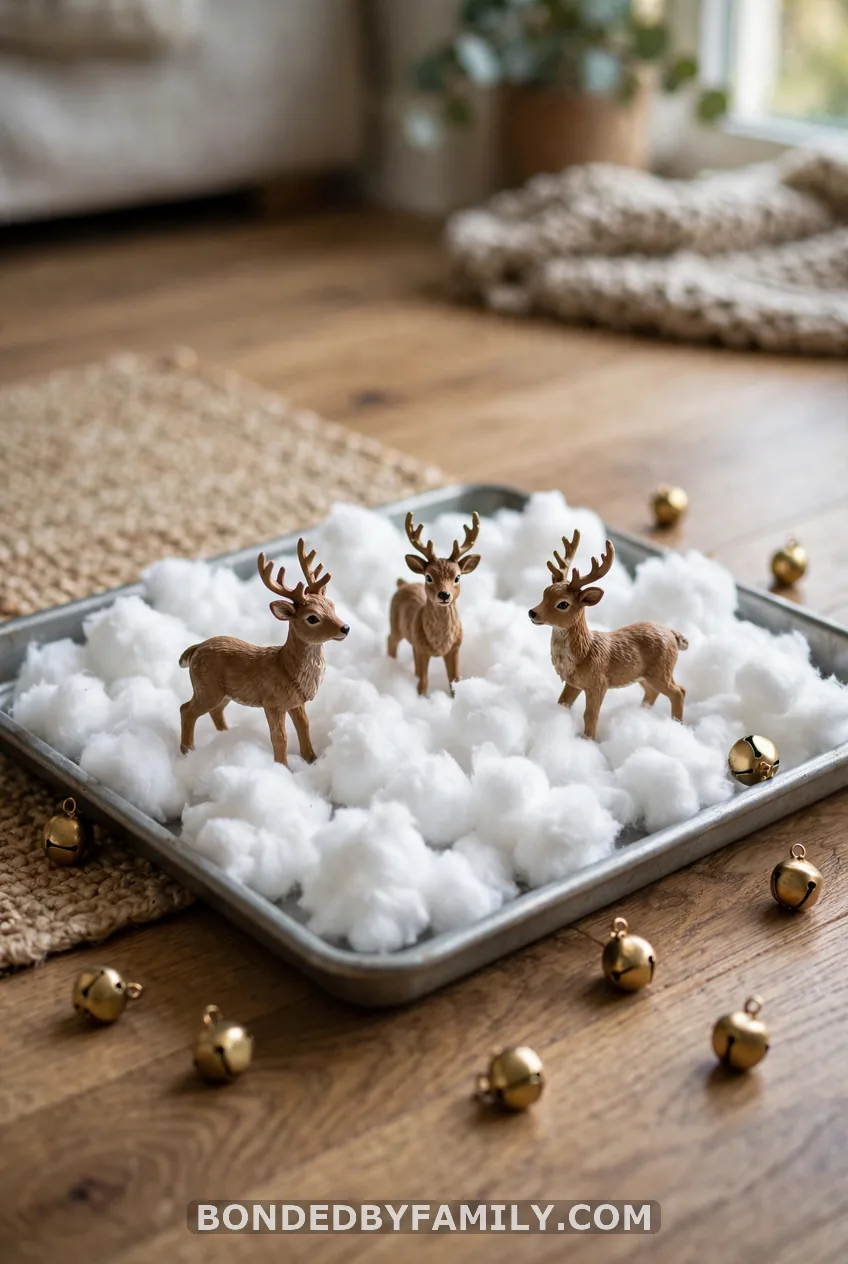
A baking tray with raised edges is plenty. Add cotton balls for snow, mini reindeer and a few bells. It fits on a coffee table, which makes it a good option for small spaces.
11. Snowy Reindeer Sensory Bin
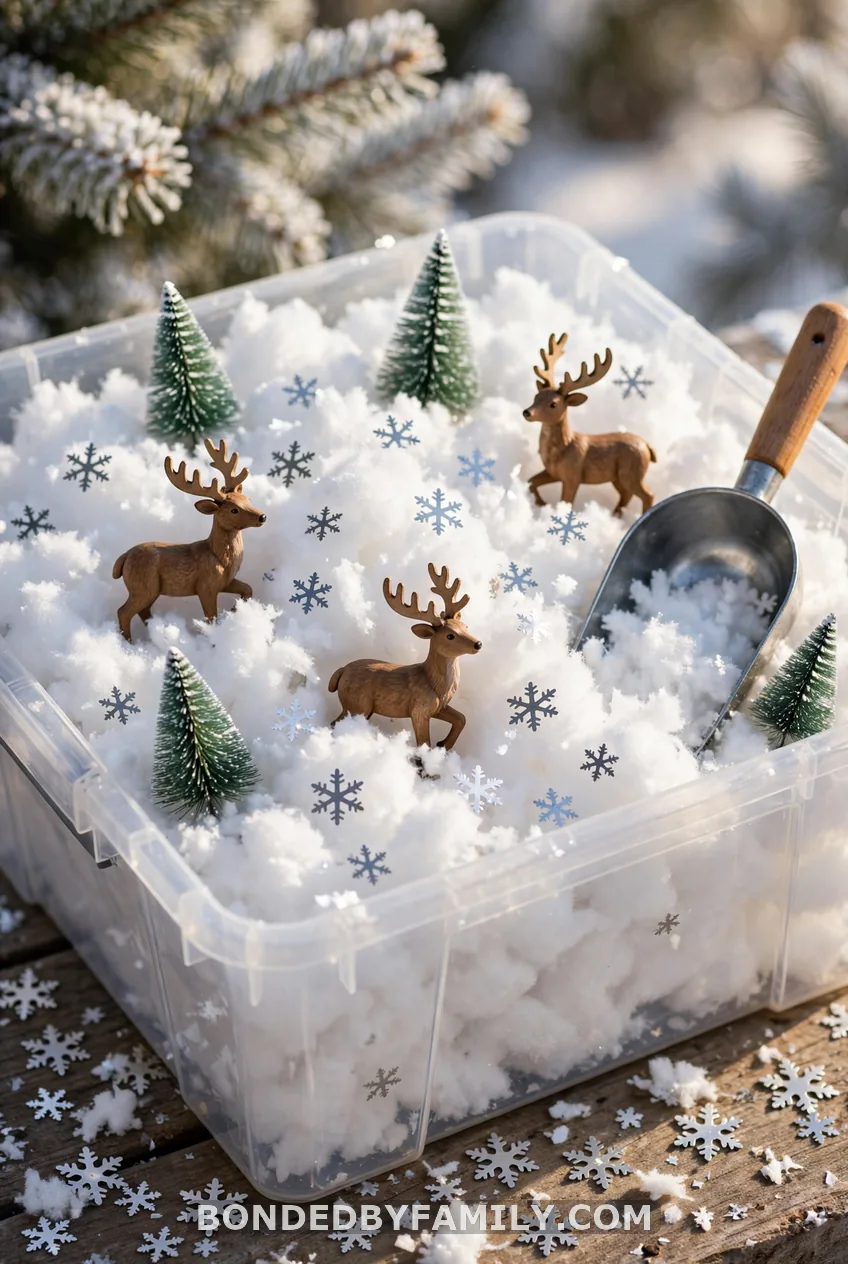
What most people think: Fake snow means a huge mess. Reality: Insta-Snow stays damp and clumpy, so it mostly stays in the bin.
Make it a little wetter than the instructions say. Sprinkle snowflake confetti on top. Kids love how cold it feels, and it stays soft for days if you keep it covered.
12. Reindeer and Jingle Bells Sensory Bin
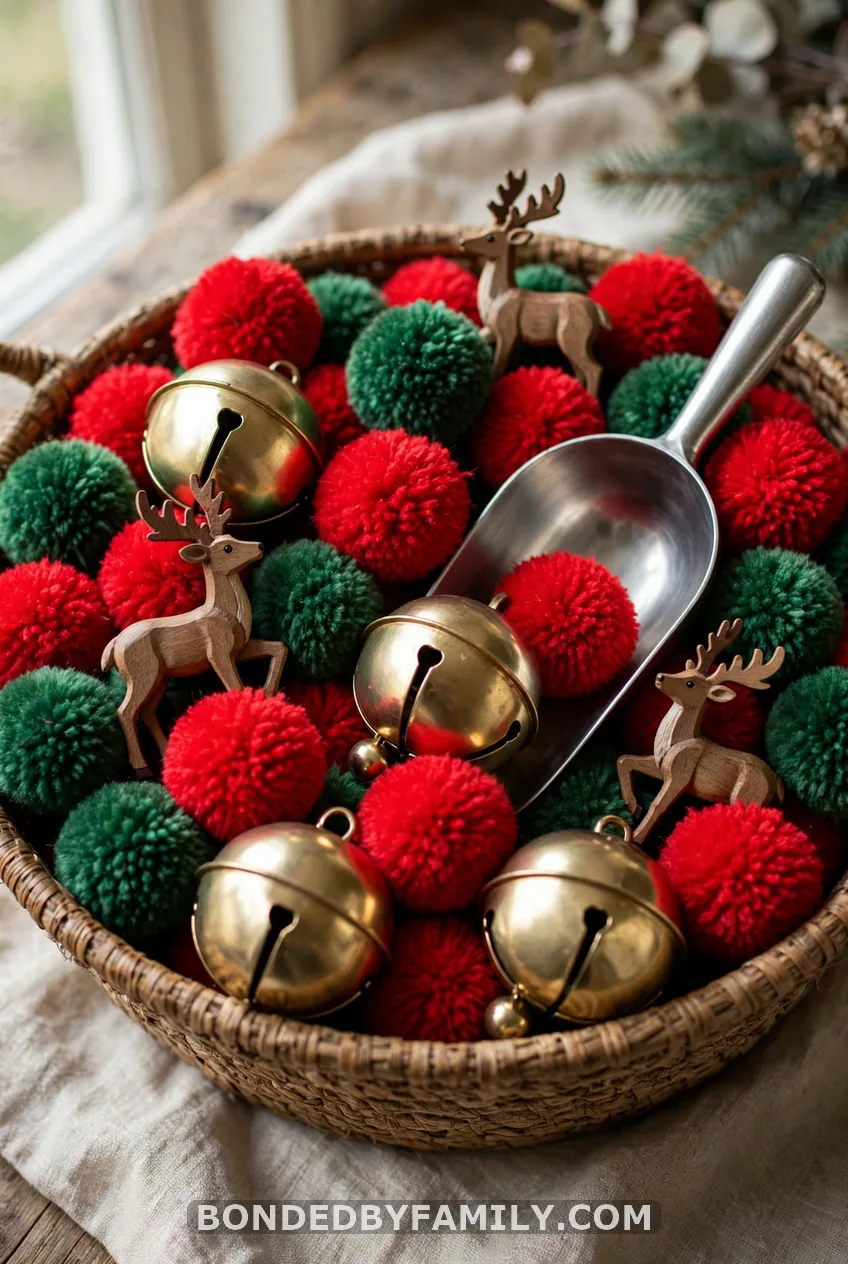
I once used tiny craft bells in a bin for my two-year-old niece. Within a minute, one was in her mouth. Nothing happened, but I never made that mistake again.
Use bells at least 1.5 inches wide, bigger than a toilet paper tube opening, or skip them for under-4s. Kids love the ringing. Shake a bell and ask them to find the matching sound.
Wet, Crunchy and Squishy Reindeer Bins
13. Reindeer Parade Pom Pom Bin
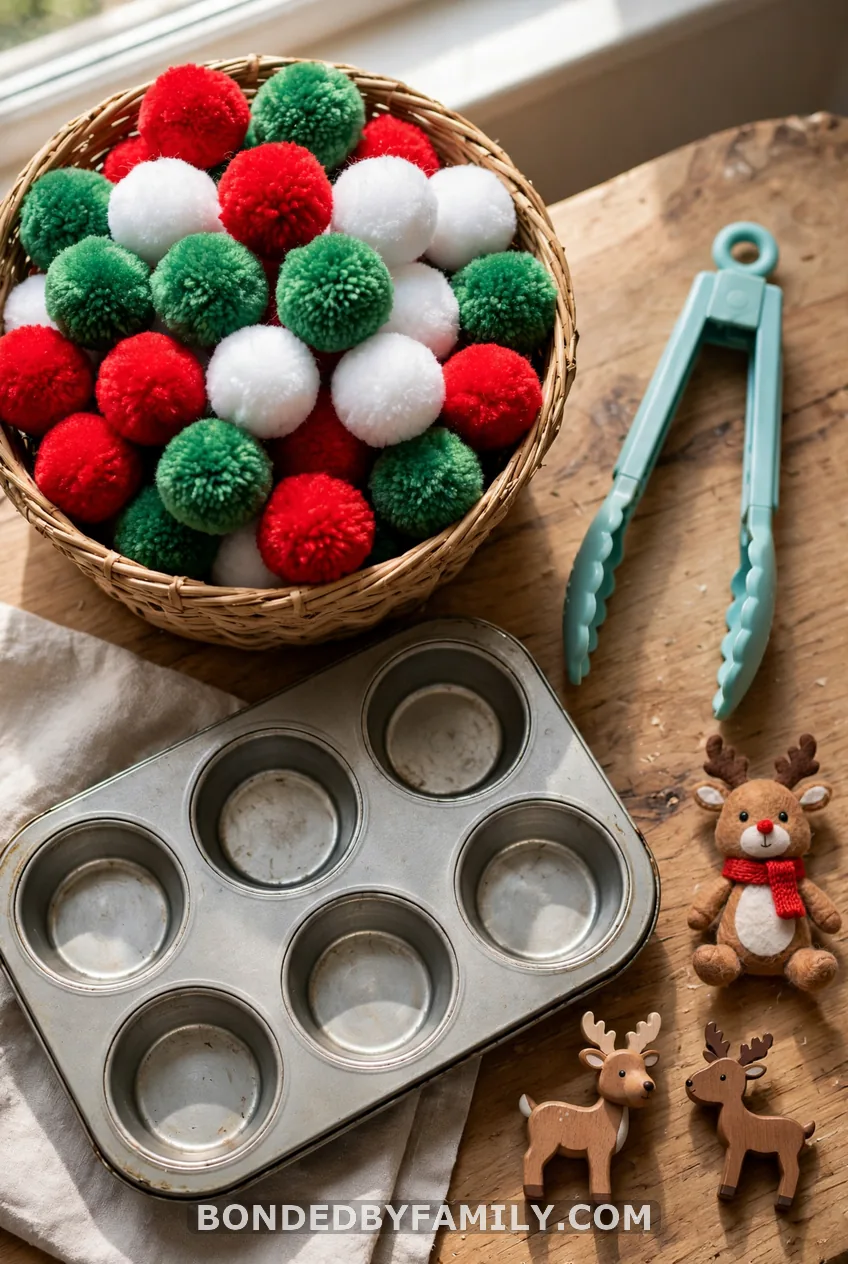
Hand your child tongs and a muffin tin. Sort red pom poms into one cup and green into another. The reindeer “parade” lines up beside the cups.
14. Reindeer Stable Hay Bin
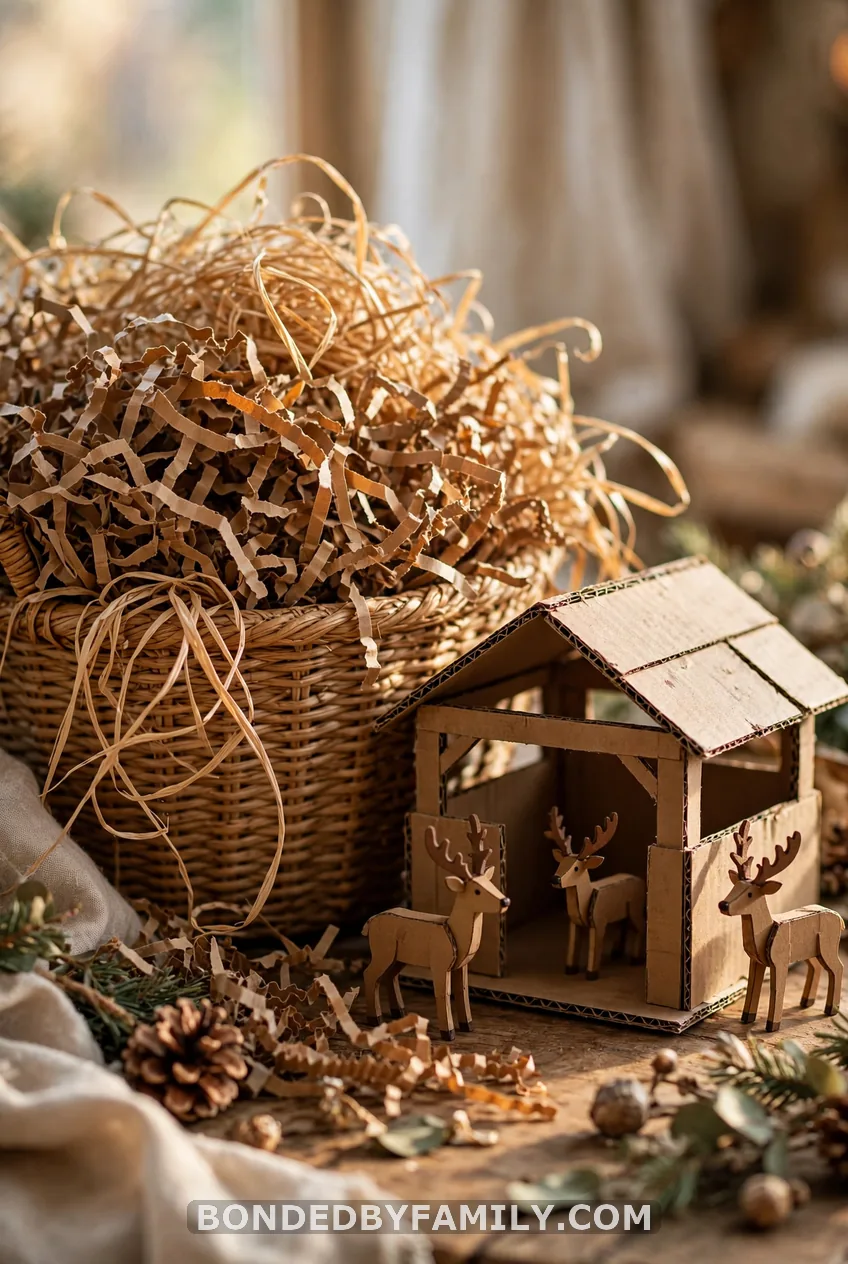
Shred brown paper or use raffia as hay. Build a stable from a small box. Kids bed the reindeer down and “feed” them hay.
15. Reindeer Sleigh Pull Bin
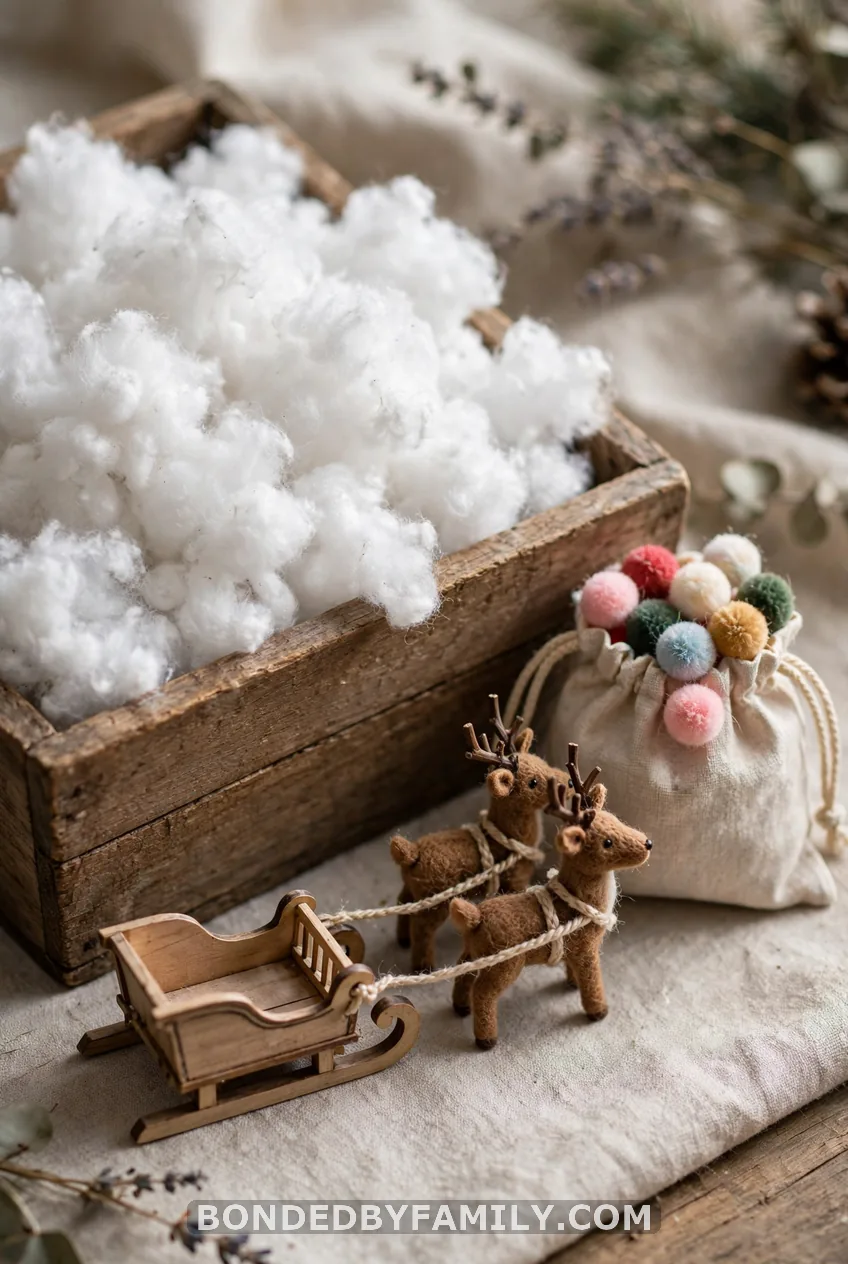
Tie a short piece of yarn from a toy sleigh to a reindeer. Load the sleigh with pom pom “presents.” Kids pull it across the snow and unload at each stop.
16. Reindeer Antler Fine Motor Bin
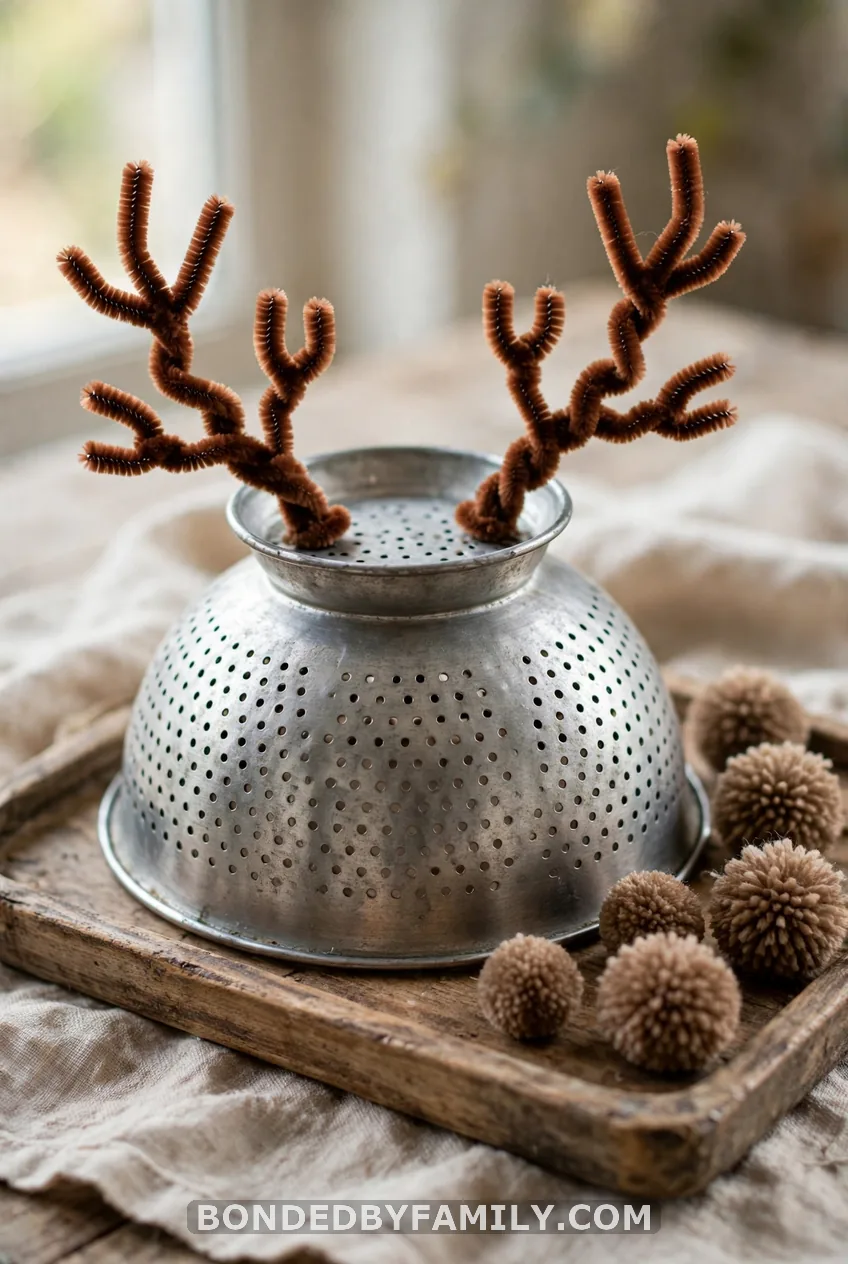
Flip a colander over. Kids poke brown pipe cleaners through the holes to make antlers. It builds fine motor strength fast. Bend the sharp ends back for safety.
17. Reindeer Cereal Bin for Under-3s
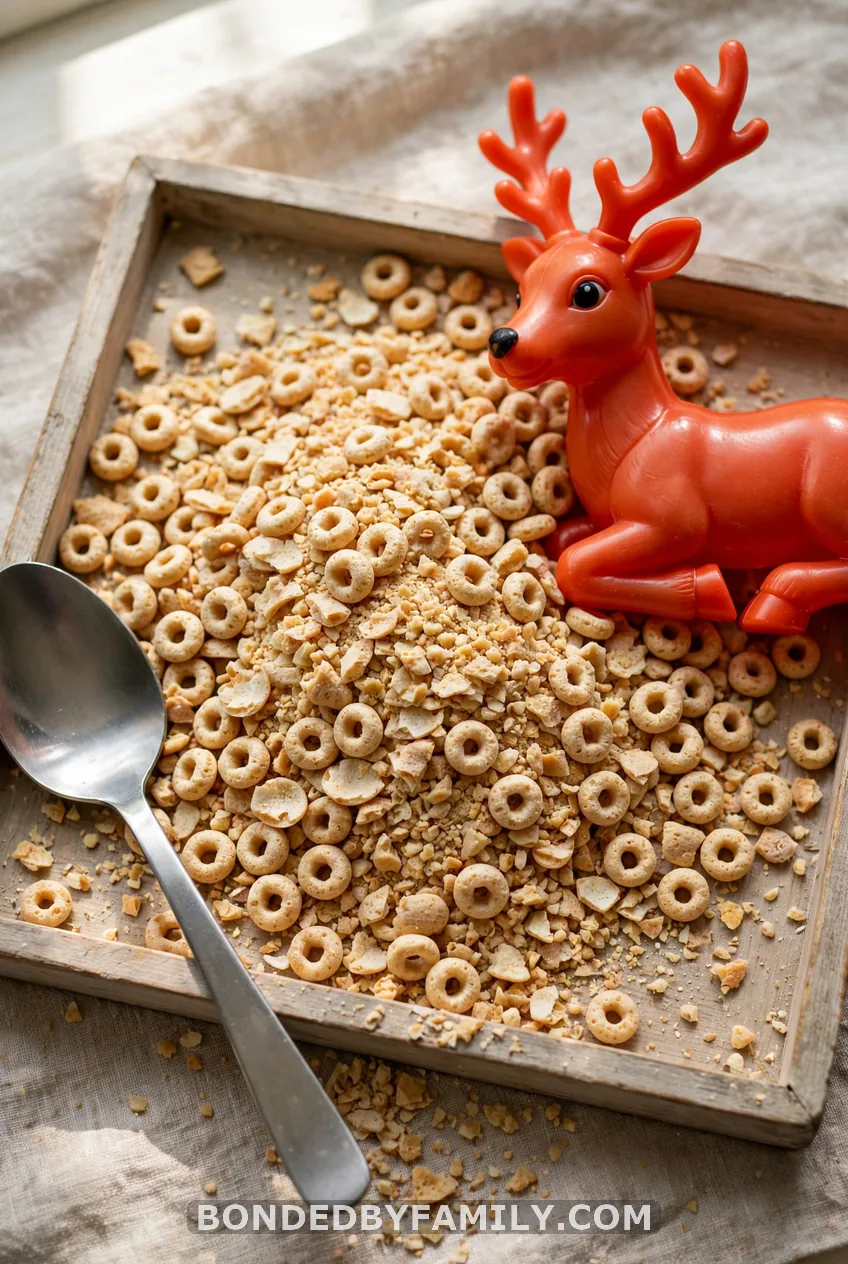
Crush plain O-shaped cereal in a bag with a rolling pin. Pour it into a tray with one large reindeer and a big spoon. If it ends up in their mouths, nobody panics.
18. Frozen Reindeer Rescue Bin
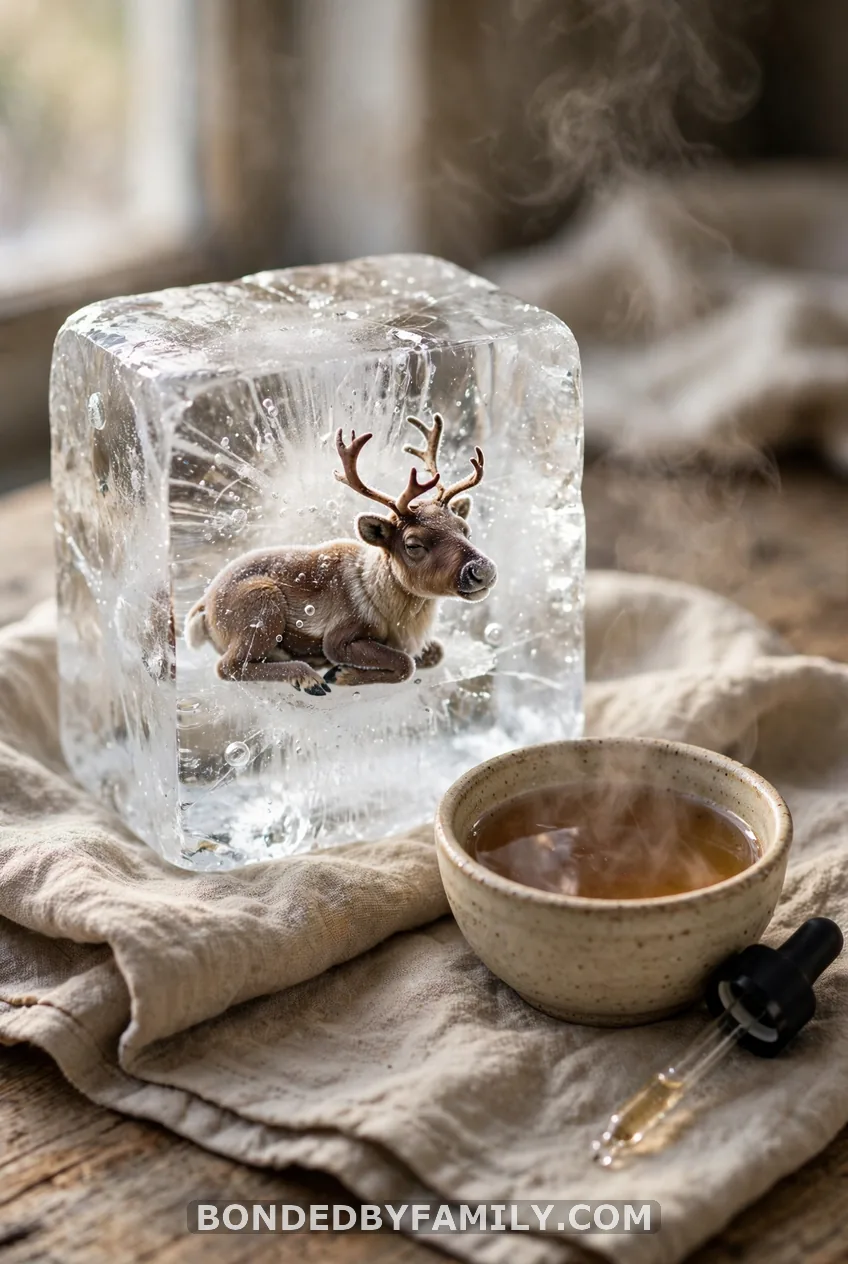
Freeze a small reindeer in a container of water overnight. Give your child a dropper and a bowl of warm water. They melt the ice to set the reindeer free.
Learning Reindeer Bins and Extras
19. Reindeer Counting Bin
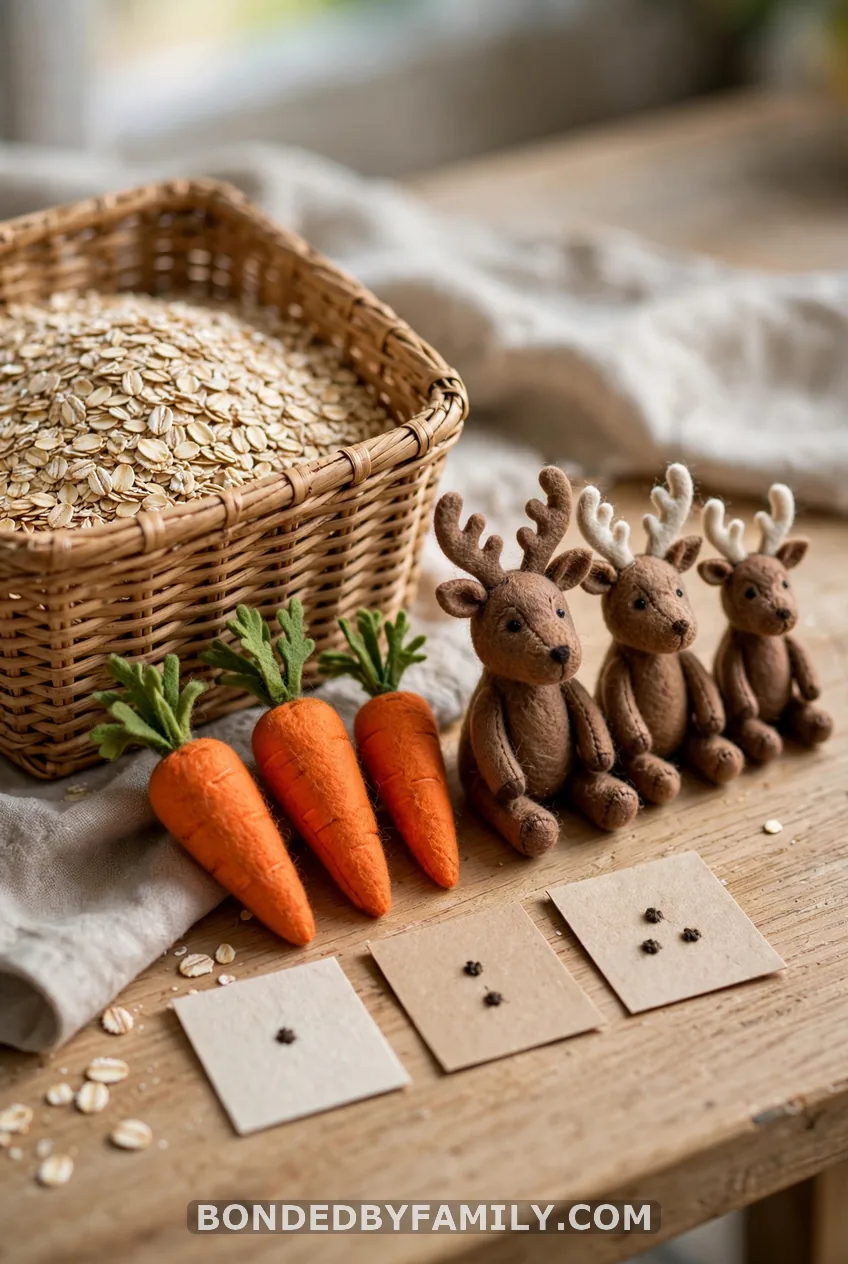
Number each reindeer card 1 to 10. Your preschooler feeds each reindeer the right number of carrots. Print color and black-and-white versions so you can reuse them as coloring pages.
20. Alphabet Reindeer Hunt
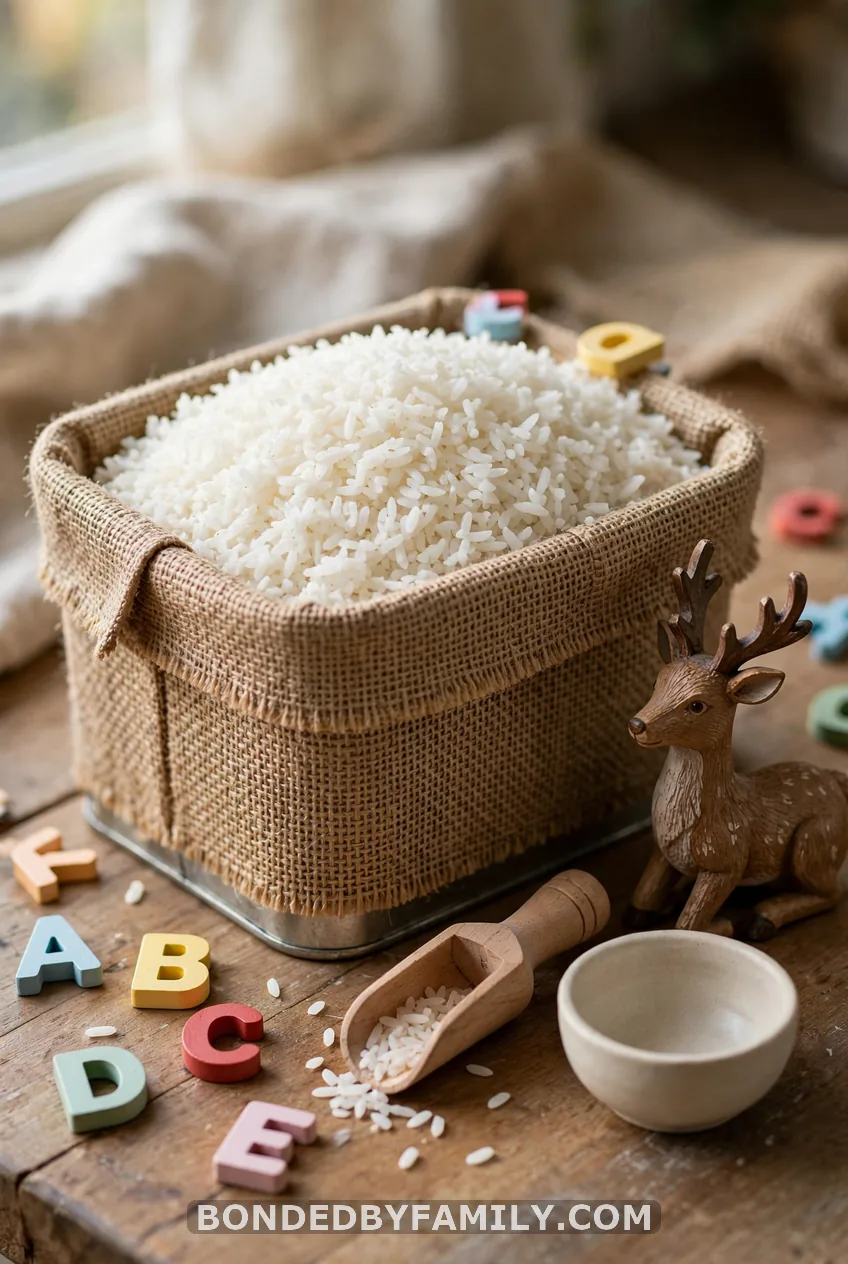
Bury magnetic letters in white rice. Your child finds a letter, says its sound and drops it into the reindeer’s bowl.
21. Take-Home Reindeer Food Jar
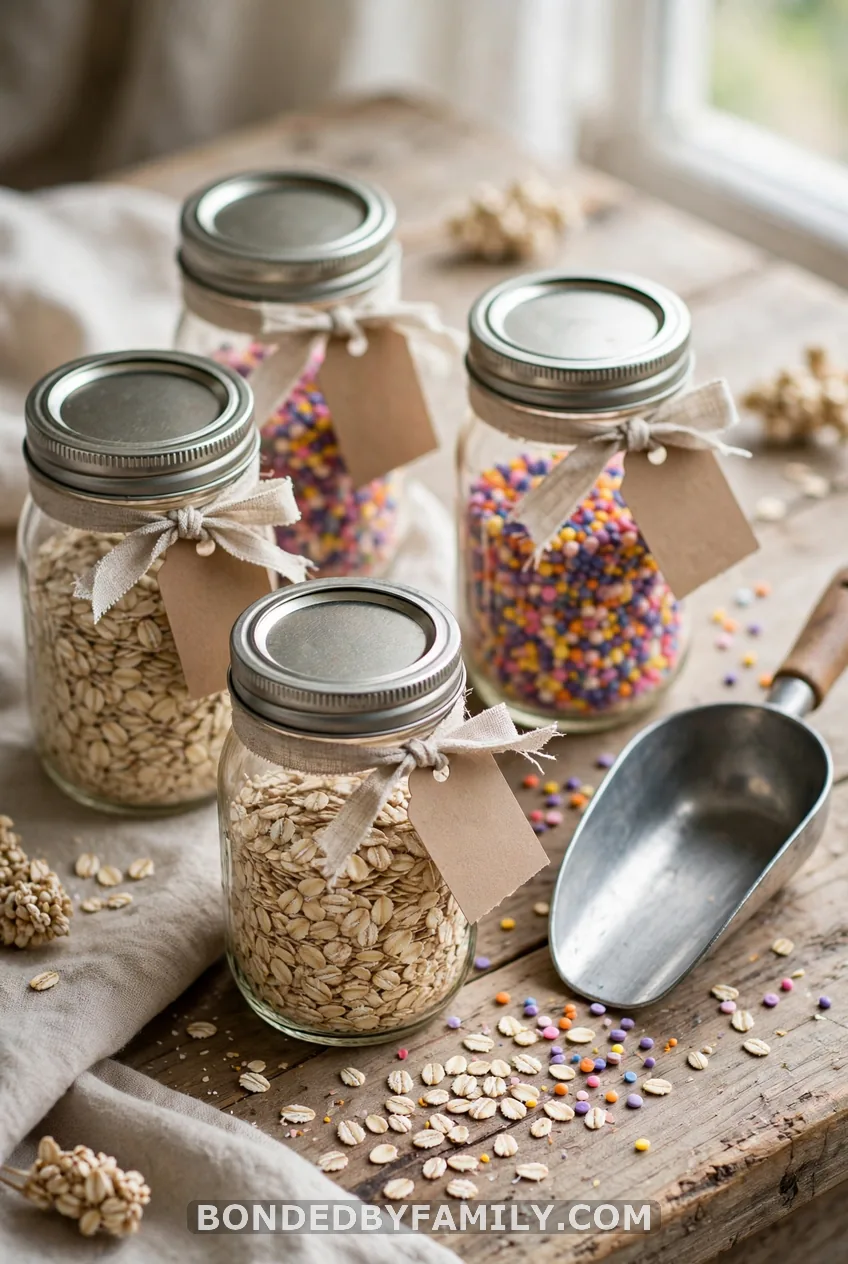
Kids fill small jars with oats and sprinkles using a scoop. Tie on a ribbon. It works as a party favor and doubles as a tiny sensory activity.
22. Real Snow Reindeer Bin
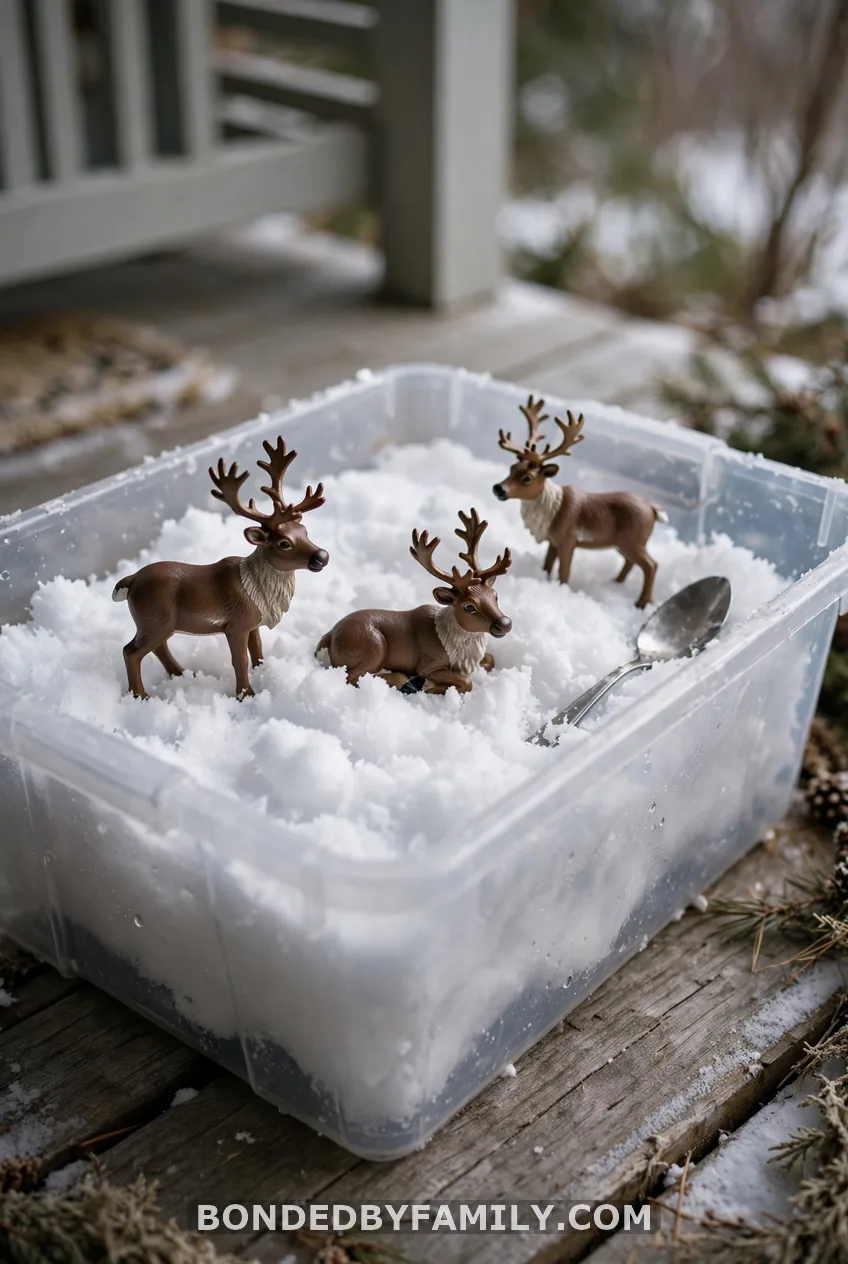
If you have snow, scoop it into a bin and keep it outside. Add reindeer and a few spoons. It melts fast indoors, so play on the porch.
Tips for Making the Most of Your Reindeer Sensory Bin
Safety First
Stay close for the whole time. Skip small bells, beads and tiny parts for under-4s. Check labels for allergies, especially oats (cross-contact with wheat) and birdseed (nuts).
Pick the Right Base
- Oats: cheap, smells good, mild mess
- Fake snow: cold and fun, not edible
- Dyed rice: colorful, but spreads far
- Water: calming, needs towels
Storage and Cleanup
Store dry fillers in airtight containers or zip-top bags. Keep wet fillers separate. Label each one with the date. Oats last a few weeks in a sealed container.
Toddler vs Preschool
Toddlers need big pieces and one tool. Preschoolers can handle tongs, counting cards and letters.
Free Reindeer Sensory Bin Printables
Search for “feed the reindeer printable” and look for sets with both color and black-and-white versions. The best ones include feeding cards, number mats and carrot cut-outs. Print on cardstock and laminate if you want to reuse them.
Single takeaway: grab a bin, some oats and a reindeer, and let your kid tell you what happens next.
FAQ
What age is a reindeer sensory bin for?
Toddlers and preschoolers, ages 2 to 5, usually enjoy it most. Stay close because of small parts. For under 3, use bigger items or a sealed sensory bag.
What filler should I use for a reindeer sensory bin?
Oats look like reindeer food and are taste-safe. Insta-Snow gives a cold, snowy feel. Dyed rice, pom poms and water all work too, so pick based on mess tolerance.
How do I store a reindeer sensory bin?
Keep dry fillers in an airtight container or zip-top bag. Store wet and dry items separately. Label each bin so you can pull it out next December.