1. Listen to Understand, Not to Reply

Most of us listen like we’re waiting for our turn to talk. Kids feel that gap instantly. Try this instead: put the phone face-down, get down to their eye level, and let them finish the whole story before you jump to fixing or correcting anything.
Swap “That’s not a big deal” for “Tell me more about that.” Swap yes-or-no questions for open ones like “What happened next?” Kids who feel heard talk more, not less – and they’re the ones who come to you first when something’s actually wrong.
2. Connect Before You Correct

Here’s a hard truth: a dysregulated brain can’t learn a lesson. When your child melts down or breaks a rule, the instinct is to correct immediately. Resist it.
Say their name softly. Get close. Say, “You’re upset because your tower fell – that’s frustrating.” Only after that connection lands do you address the behavior. This isn’t permissiveness. It’s sequencing. Connection opens the door; correction walks through it. Skip the first step and the second one just bounces off a closed door.
3. Praise Effort, Not Just Perfect Results

“Good job” is filler. It tells a kid nothing about what worked. Instead, name the specific effort: “You kept trying even when the puzzle piece didn’t fit right away.” Or, “I saw how you erased that three times until it looked right to you.”
This single swap – effort language over outcome language – is what child psychologists call building a growth mindset. Kids praised for effort tend to take on harder challenges later, because failure feels like information, not identity.
4. Help Your Child Name Their Big Feelings
Emotional vocabulary is a skill, not an instinct. Kids aren’t born knowing the difference between disappointed and embarrassed. Teach it directly.
Use a feelings chart with faces on the fridge. When your child is worked up, offer choices: “Are you feeling frustrated, or more like left out?” Naming a feeling shrinks it in the brain – that’s not a metaphor, it’s basic neuroscience (the amygdala calms when the prefrontal cortex gets involved in labeling). Practice this on calm days, too, not just during a crisis.
5. Offer Choices Instead of Orders

“Do you want to brush teeth now or in five minutes?” beats “Brush your teeth” every time. Kids resist orders. They rarely resist a choice – because a choice hands them a slice of control. Keep the options limited to two, and make sure both are acceptable to you.
6. Set Clear, Kind Boundaries
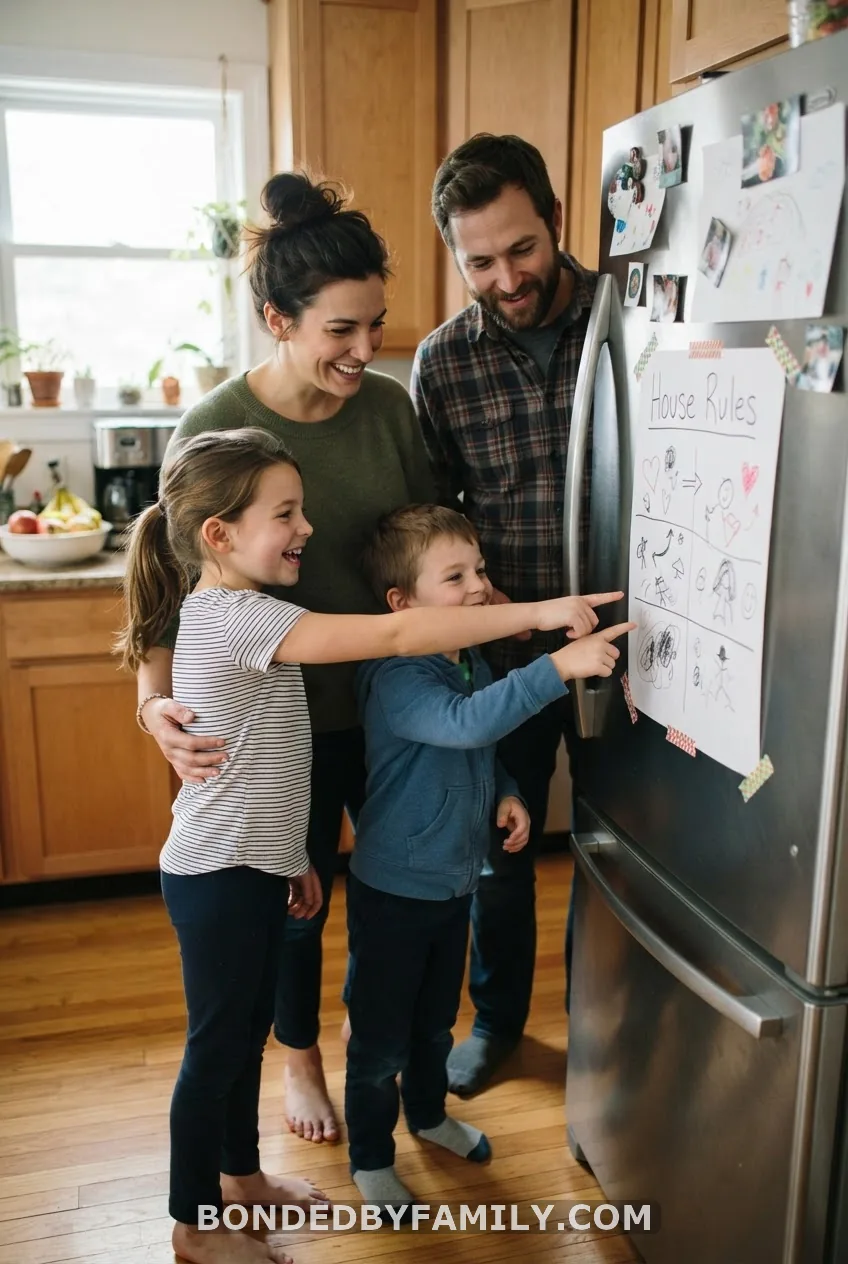
Boundaries aren’t punishments. They’re the fence around the playground – kids actually play harder and feel safer when they know exactly where the edge is. The trick is consistency: the same rule gets the same response, whether you’re tired, rushed, or in public.
Write down three or four non-negotiables (screens off by 7 p.m., shoes by the door, no hitting) and stick to them daily. For kids over five, explain the “why” once, briefly – not as a lecture, just a sentence. “We wear seatbelts because they keep bodies safe in the car.” Done. No need to repeat the speech every single time.
7. Build Simple Daily Routines That Actually Save Your Sanity
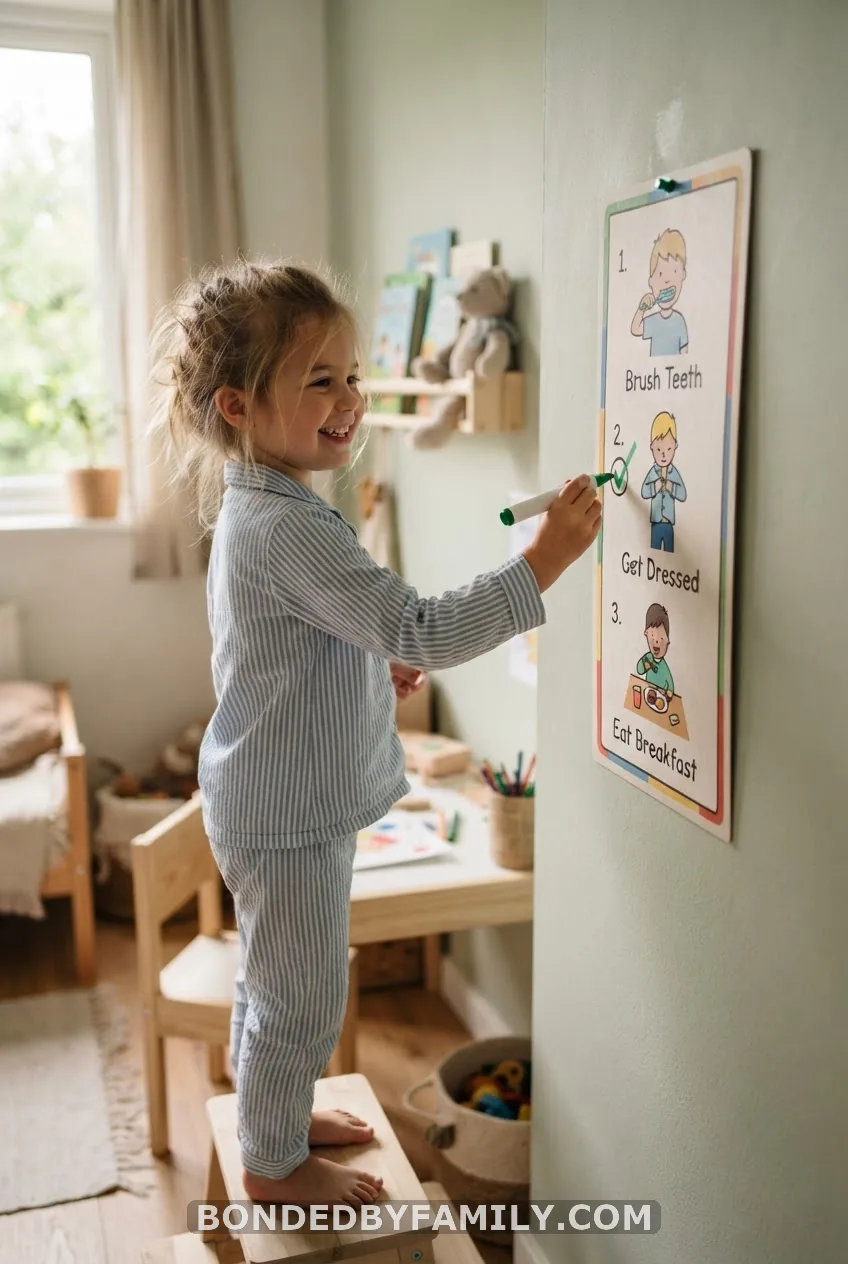
If you take away only one tip from this list, make it this one. Routines are the single biggest lever for reducing daily friction – bigger than any reward chart, bigger than any lecture about behavior. Predictability calms the nervous system, in kids and parents both.
Build a morning routine (ages 3-8): Wake up, potty, get dressed, eat, brush teeth, shoes, out the door. Six to seven steps, max. Print pictures for each step (free printables exist all over Pinterest, or draw stick figures yourself) and laminate the chart with $3 contact paper from the dollar store. Let your child move a magnet or check a box as they go.
Build an evening routine: Bath, pajamas, two books, lights dim, one song or quiet chat, lights off. Keep it under 30 minutes total. The order matters more than the exact activities – same sequence, same order, every single night, including weekends when you can manage it.
Add the 5-minute warning. Before any transition – leaving the park, turning off the tablet, starting dinner – give a heads-up. “Five more minutes, then we’re packing up.” Set a timer on your phone so the warning isn’t just your voice; it’s an outside, neutral signal. This alone cuts transition meltdowns dramatically, because kids aren’t blindsided.
Common mistakes to avoid: Don’t add too many steps (more than 7 or 8 and even adults would give up). Don’t skip weekends entirely – a slightly looser version beats none. Don’t punish a broken routine; just restart it tomorrow.
Why this works: Kids under about age 9 don’t have a fully developed sense of time. A routine chart replaces “hurry up” with a visual map they can follow independently, which means fewer instructions from you and fewer power struggles for everyone.
8. Spend Ten Undivided Minutes With Each Child Daily
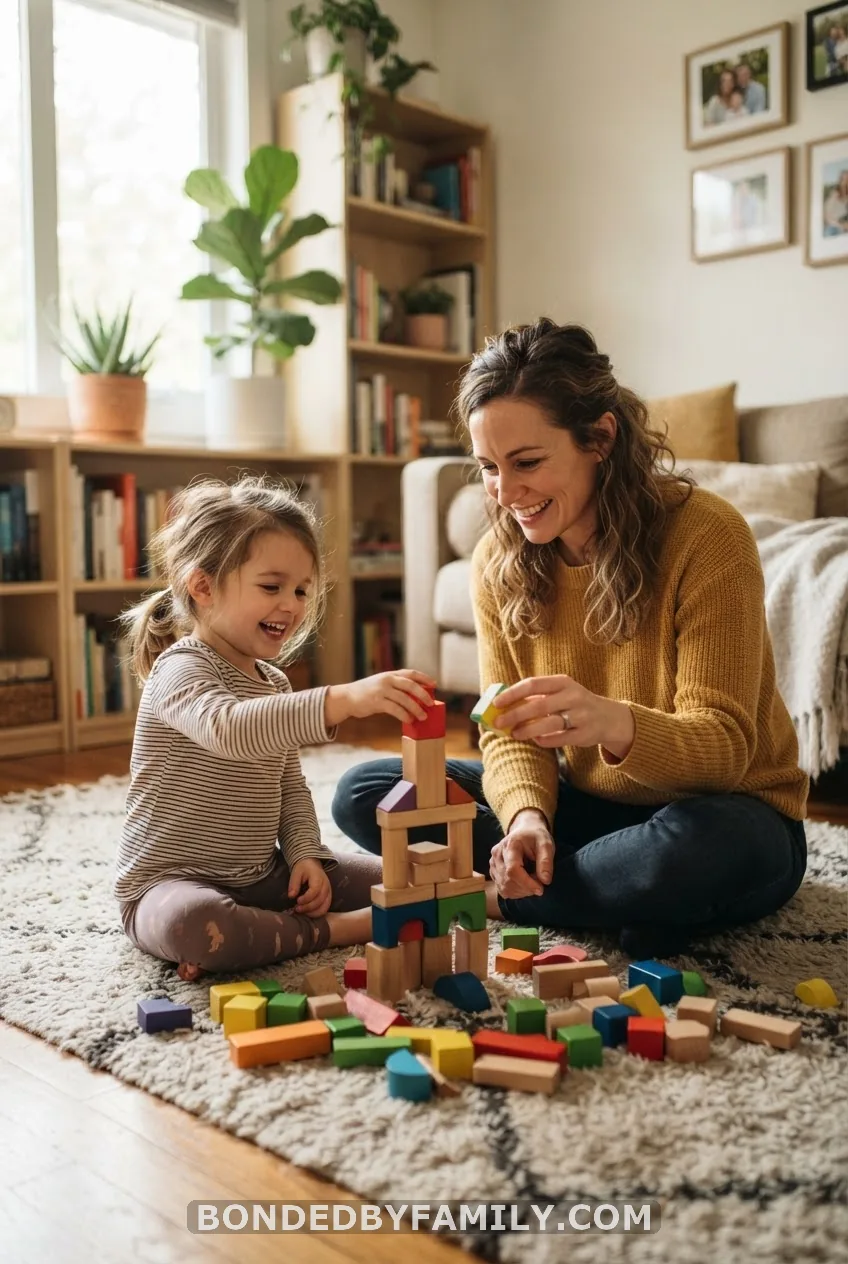
You don’t need an hour. Ten minutes of phone-down, fully-present time, where your child picks the activity, does more for connection than a whole distracted afternoon. Let them lead – even if that means building the same Lego tower for the fifth time this week. Children may forget what you bought them, but they remember how you made them feel.
9. Manage Screen Time With Systems, Not Battles

Fighting about screens in the moment rarely works, because the fight starts after the screen is already on. Build the system before that moment arrives instead.
Designate screen-free zones: the dinner table, bedrooms, and the 30 minutes before bed. Use a visible kitchen timer, not just a verbal countdown – when the timer dings, the decision isn’t coming from you anymore, it’s coming from the clock. State the limit plainly and once: “Screens go off at 6. You can set the timer.” Then offer a real alternative nearby – a puzzle, sidewalk chalk, a book – so “off” doesn’t just mean boredom.
10. Be the Role Model They’re Always Watching

Kids copy what they see, not what they’re told. If you want a calm household, you have to be the calm one first, even on the hard days. Apologize out loud when you mess up. Say “I’m sorry I raised my voice, that wasn’t fair.” That single sentence teaches more about accountability than any lecture ever could.
11. Give Kids Real Life-Skill Chores
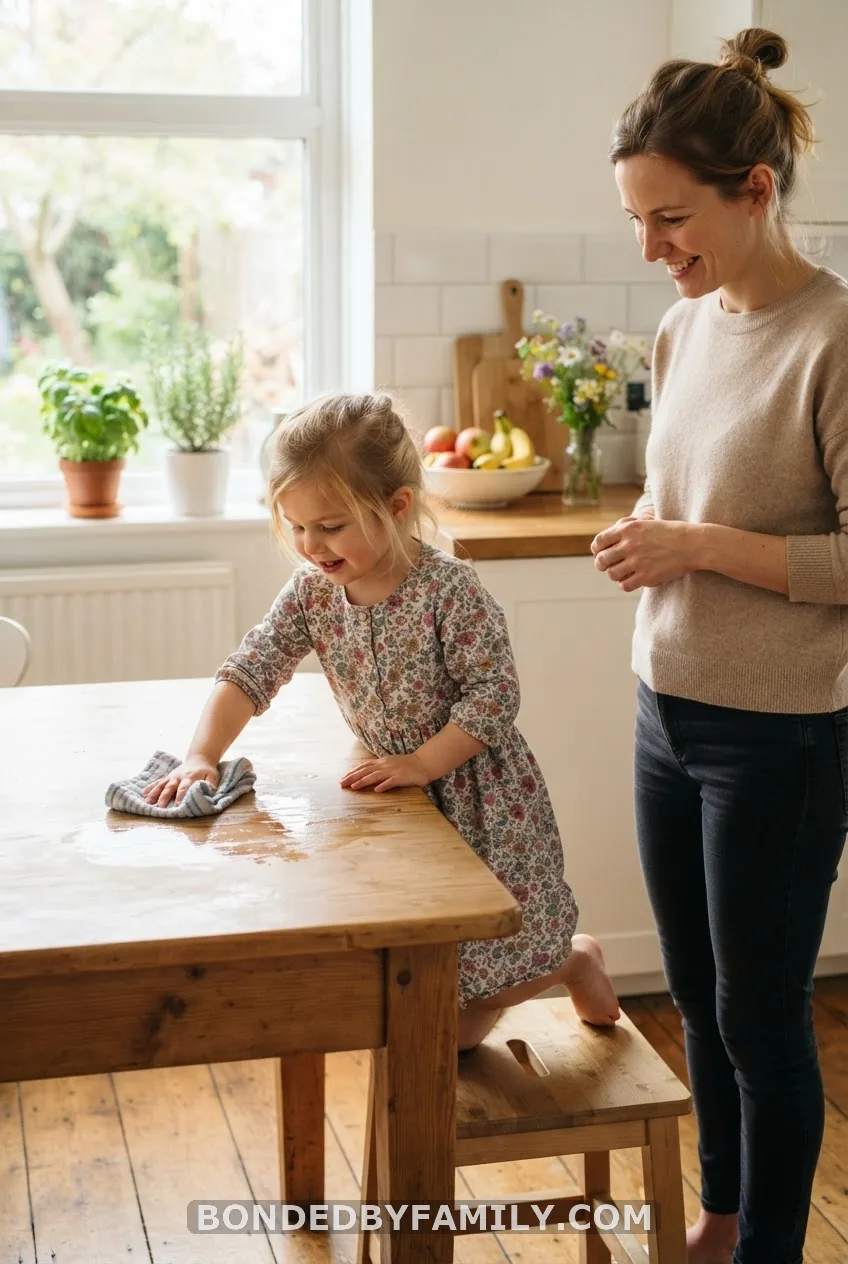
Skip the fake chores. Give real ones, sized to their age. A three-year-old can put napkins on the table. A six-year-old can pack their own school bag with a checklist taped inside it. A ten-year-old can start a load of laundry.
Break bigger jobs into small steps and turn some into a challenge: “Let’s beat the timer and see if we can clear the table in two minutes.” Praise the effort, not the wobbly folded towel. Kids who feel useful at home build genuine confidence – not the empty kind that comes from being told they’re special, but the kind that comes from actually being capable.
12. Stay Calm During Meltdowns (Even When You Don’t Feel Calm)

Your nervous system is contagious. Reacting with anger to a tantrum adds fuel, every time. Take one slow breath before you respond. Lower your voice instead of raising it – a whisper often pulls a screaming kid’s attention faster than shouting ever will. Your calm isn’t just crowd control. It’s literally teaching their brain what emotional regulation looks like, because they don’t have the wiring to do it alone yet.
13. Use a Behavior Jar for Positive Reinforcement

Grab a $2 jar and a bag of pom-poms. Every time you catch good behavior – sharing, kindness, trying hard – add a token, out loud: “That was so patient, adding one to the jar.” Once it’s full, celebrate with something small: a movie night, a trip to the park. This works because it catches kids being good instead of only noticing when they’re not.
14. Create a Cozy Calm-Down Corner

Set up a soft spot with pillows, a stuffed animal, and maybe a glitter jar to shake and watch settle. Frame it as a reset space, not a punishment spot – big difference. When emotions spike, you can say, “Do you want to go calm down in your cozy corner, or do you want me to sit with you?” Either answer works.
15. Give a Five-Minute Warning Before Every Transition

Kids resist sudden stops, not activities themselves. A simple warning – “Five more minutes at the park, then we go” – turns an ambush into a plan they can prepare for. Pair it with a visual or audible timer so it’s not just your voice nagging.
16. Turn Chores and Cleanup Into a Game (A Cautionary Tale)
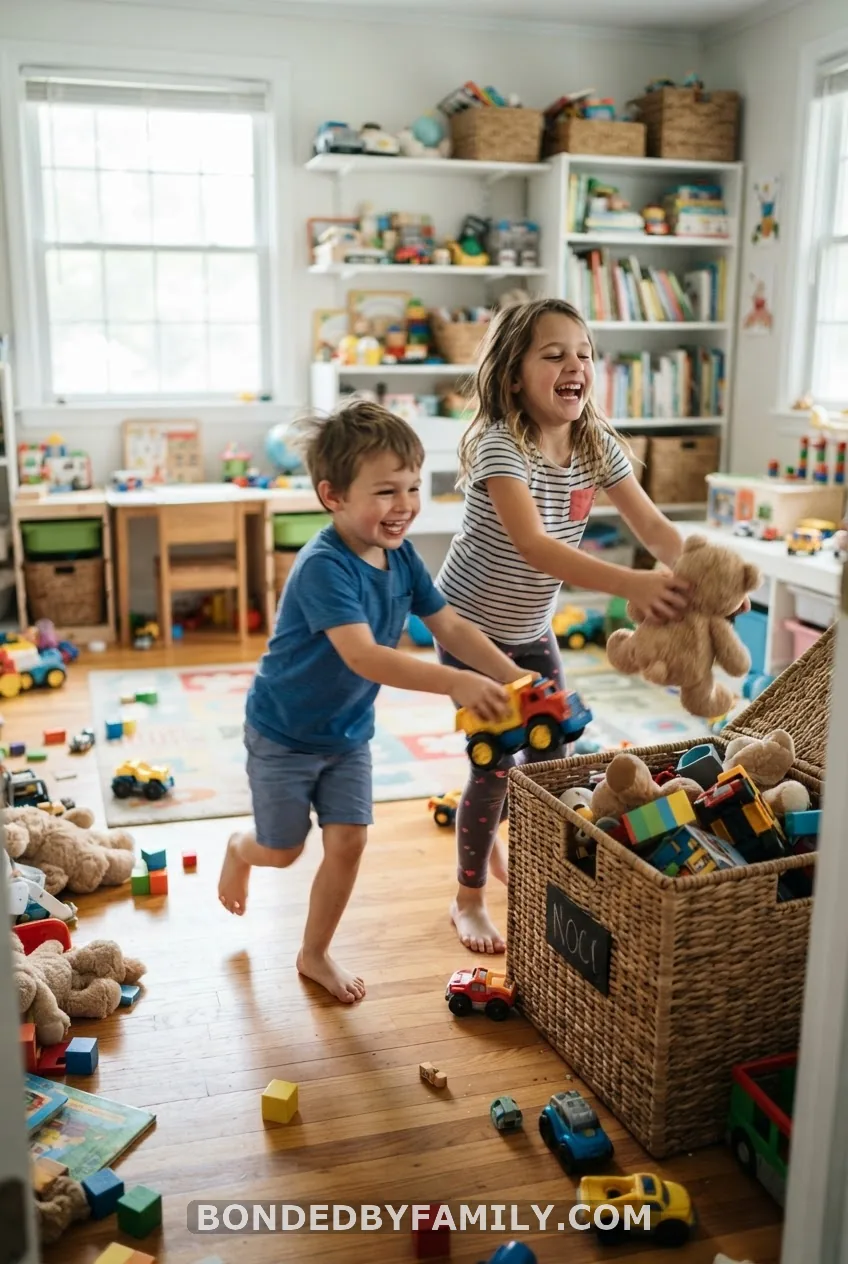
For months, I nagged my kids through cleanup time every single evening. Same fight, same whining, same me finally just doing it myself out of exhaustion. Then a friend suggested turning it into “beat the timer” – three minutes, whoever grabs the most toys wins bragging rights.
I was skeptical. It felt like a gimmick. But the first night, both kids sprinted for the toy bin like it was a competition worth winning, because to them, it suddenly was. What changed wasn’t the chore. It was the frame around it. I’d spent months treating cleanup like a chore to enforce, instead of a game to invite them into.
Now we rotate: robot walk while carrying blocks, whisper-only cleanup when everyone’s overstimulated, “beat the timer” on regular nights. The lesson wasn’t about toys. It was about how much unnecessary conflict I created by assuming kids needed to be told rather than invited.
17. Give Yourself Grace – You Don’t Need to Be Perfect

Every child grows at their own pace, and so does every parent. Compare your kid to who they were six months ago, not to the neighbor’s kid or their older sibling at the same age. Compare yourself the same way.
Some days you’ll yell. Some days the routine falls apart and everyone eats cereal for dinner. That doesn’t undo the good days. A calm, loving, imperfect parent who keeps showing up is exactly what your child needs – not a flawless one.
So, what’s one thing from this list you’re going to try tonight?
FAQ
What are the most important smart parenting tips to start with?
Start with connection before correction, praising effort over results, and building one predictable daily routine. Those three alone reduce most of the daily friction that makes parenting feel exhausting.
How can I stay calm when my child is melting down?
Take a slow breath, lower your voice instead of raising it, and connect emotionally before you address the behavior. Once your child feels understood, they’re far more capable of hearing what you actually need from them.
How do I get my child to listen without yelling?
Get down to their eye level, keep instructions short, and offer a choice instead of a command. Also make sure you’re listening to them regularly, too – kids listen better to parents who’ve shown they listen back.
How much screen time should I allow, and how do I enforce it?
There’s no single magic number, but creating screen-free zones (meals, bedrooms, the hour before bed) and using a visible timer with a five-minute warning makes the limit feel like a system, not a fight you start every single time.