Sixteen two-year-olds. One bin of construction paper. A clock that will not slow down no matter how hard you stare at it.
If that sentence made your stomach drop a little, you already know what daycare craft time can feel like. Two-year-olds are not exactly known for patience, and they are definitely not known for sitting still while you dig through a supply closet.
Here is the good news: crafts for 2-year-olds at daycare do not need to be elaborate to work. They need to be fast to set up, safe for hands that still go straight to mouths sometimes, and forgiving enough that “doing it wrong” is not really possible.
These 13 ideas are built around exactly that. Every one uses supplies you probably already have in a supply closet or could grab from a dollar store on the way in tomorrow. Stick with me to the end, and you will have a rotation ready for the next month of craft time, no scrambling required.
The List: 13 Crafts That Work for a Room Full of Two-Year-Olds
1. Salt Dough Handprint Keepsake Ornaments
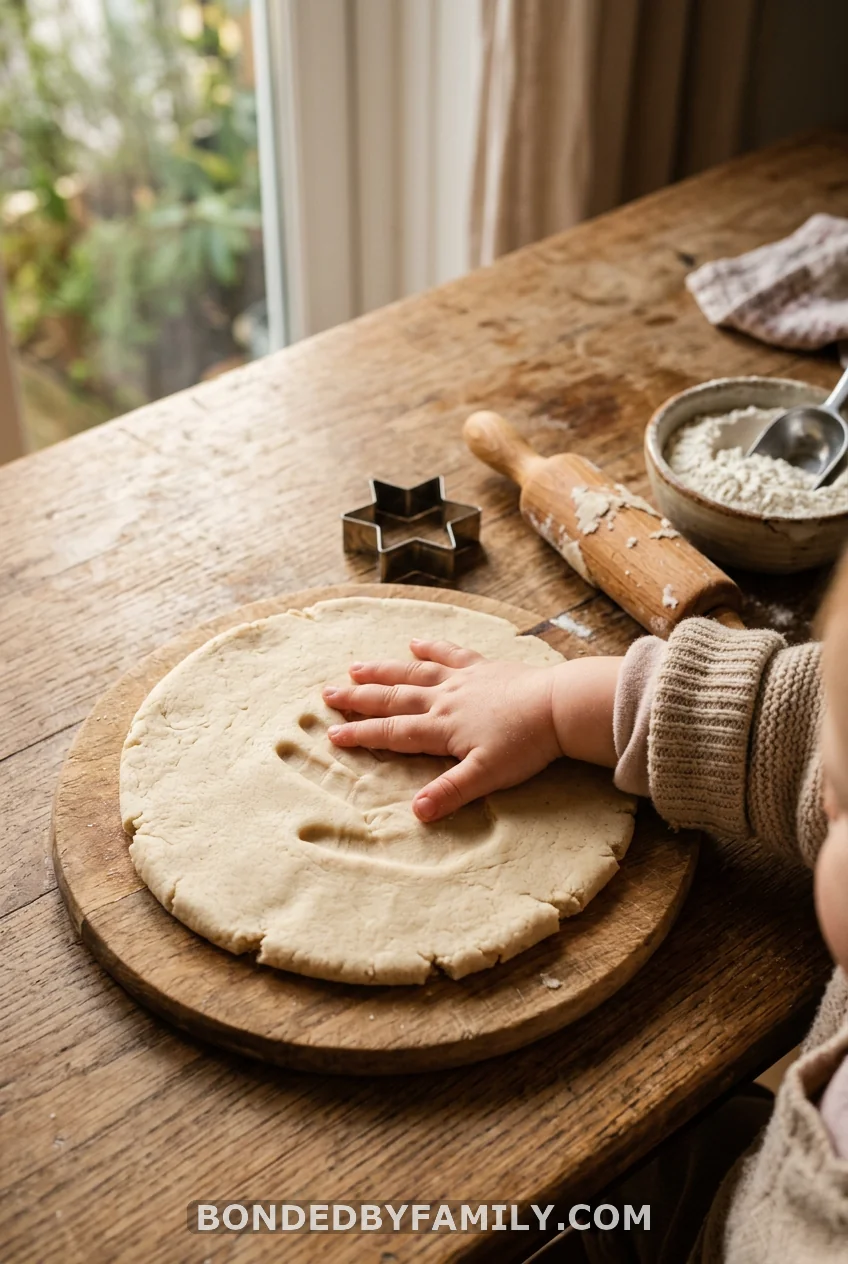
Handprint keepsakes are the one craft that turns a Tuesday afternoon into something a parent keeps for twenty years. And salt dough beats paint-and-paper handprints for one big reason: it survives. No fading, no cracking paper, no lost artwork at the bottom of a backpack.
Why This Works
Two-year-olds respond to texture more than almost anything else at this age. Salt dough is soft enough to press into but firm enough to hold a print, which means even a wiggly toddler who pulls their hand back too fast still leaves a usable impression. Unlike wet clay, salt dough will not stick under fingernails or dry out mid-session, so you get a full room through the activity before it stiffens up.
Dimensions and Setup
Roll the dough to about 1/2 inch thick and cut circles roughly 4 inches across, big enough for a toddler palm plus fingers with room to spare. Set up one workstation per 3 to 4 children rather than one giant shared bowl. This keeps hands from fighting over the same dough and cuts down on the waiting-in-line meltdowns that eat up your whole session.
Materials and Costs
- 4 cups all-purpose flour
- 1 cup table salt
- 1.5 cups warm water
- A drinking straw (for the hanging hole)
- Ribbon or twine, about 8 inches per ornament
Total cost runs $3 to $5 for a full batch that covers 15 to 20 handprints, since flour and salt are pantry staples most centers already stock. If you need cutters, a basic circle set from a dollar store adds another $1 to $1.50.
Step-by-Step Build
- Mix flour and salt in a large bowl, then slowly add warm water while stirring.
- Knead the dough for 3 to 4 minutes until it stops being sticky and holds together.
- Roll to 1/2 inch thickness on a floured surface.
- Cut circles with a cutter or the rim of a cup.
- Press each child’s hand firmly into the center for 3 to 5 seconds.
- Use a straw to punch a hanging hole near the top edge.
- Air dry for 24 to 48 hours, flipping once, or bake at 200°F for 2 to 3 hours until fully hardened.
- Thread ribbon through the hole once cooled.
Common Mistakes to Avoid
Skipping the flip during air-drying leaves the bottom soft and prone to cracking weeks later. Baking at too high a temperature also causes puffing and surface bubbles, so keep the oven low and slow rather than trying to speed things up. And do not skip labeling each ornament with a name and date on the back in permanent marker before it dries. Twenty identical beige circles look exactly alike by pickup time.
Pro Move
Mix a drop of food coloring into the water before combining with the flour and salt. You get a colored keepsake without adding a separate painting step, which saves real time across a full room of two-year-olds.
2. Bubble Wrap Stomp Prints
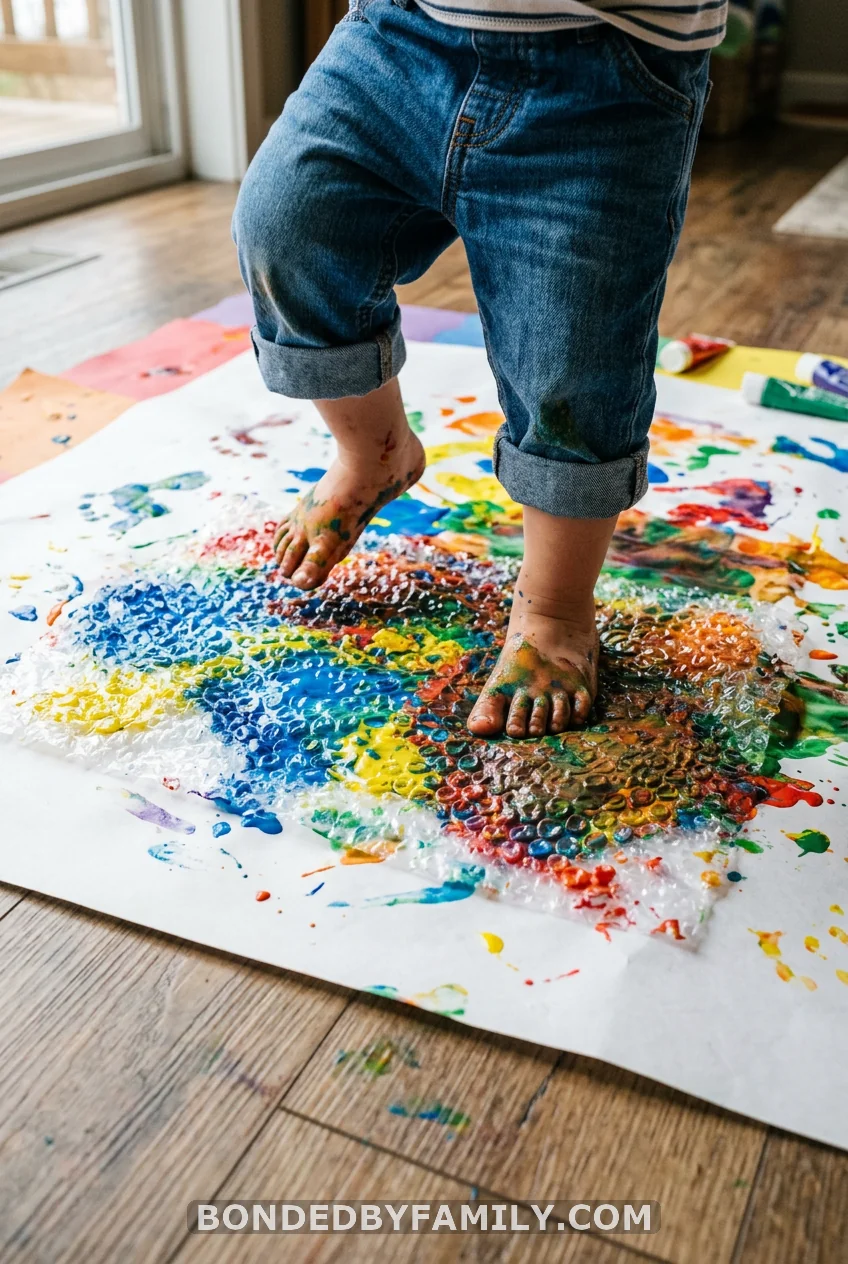
Tape bubble wrap to the floor, brush on washable paint, lay paper over the top, and let toddlers stomp. Peel back the paper for a polka-dot print every kid in the room will want to repeat. One roll of bubble wrap covers a whole class and holds up for several rounds before it needs replacing.
3. Footprint Butterflies
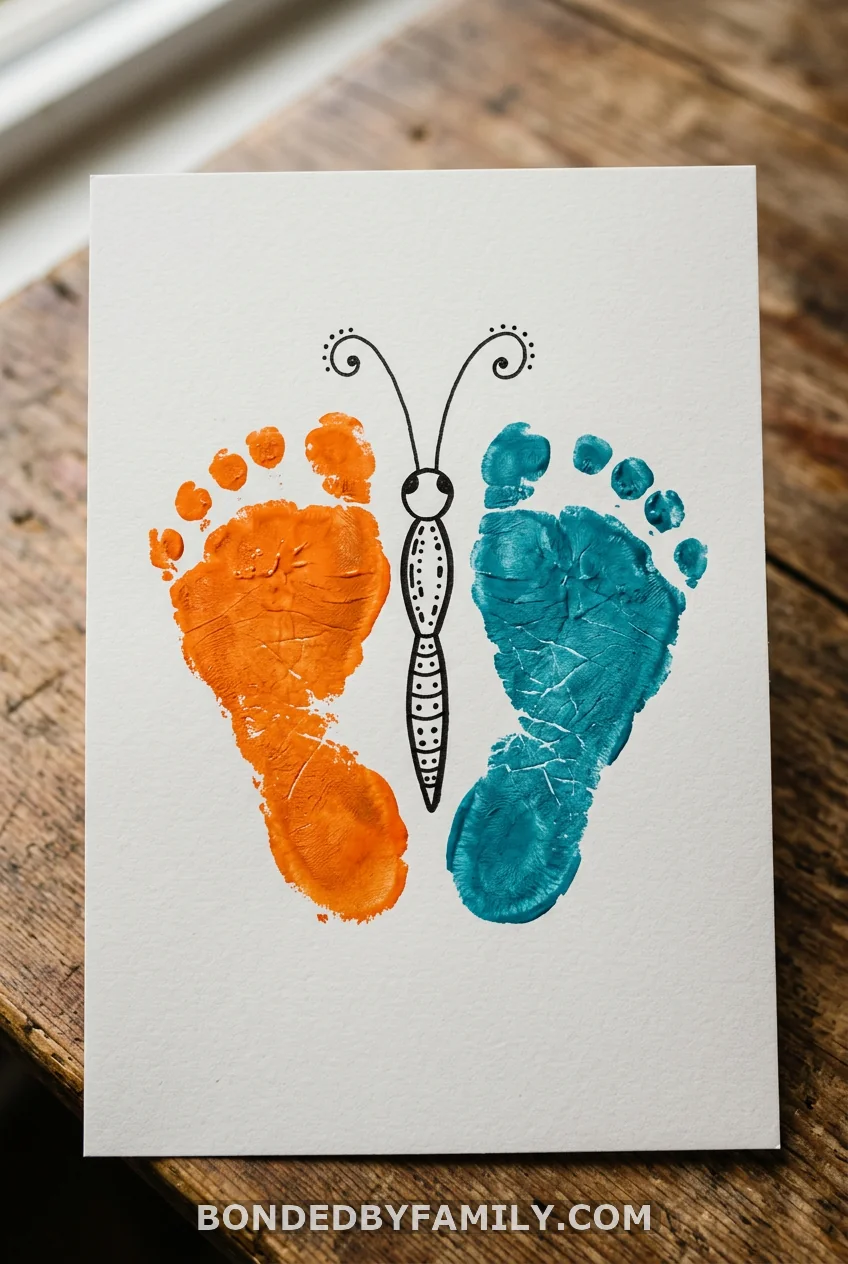
Paint the bottoms of small feet and press them heel-to-heel onto paper so the toes point outward, forming butterfly wings. Add a body and antennae with marker once dry. Have paper ready before you start, since painted feet do not like to wait around.
4. Dot Sticker Art
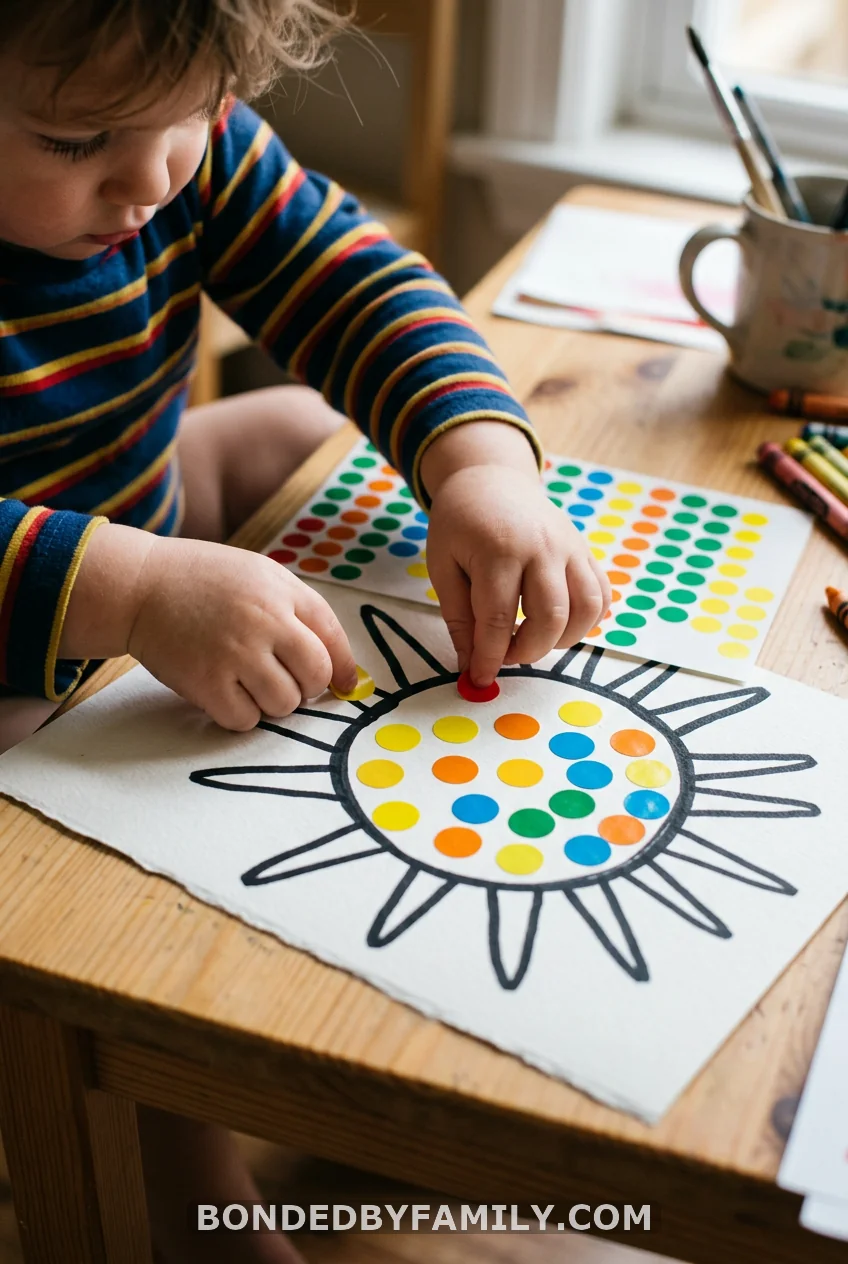
Round color-dot stickers, sold in sheets of a few hundred at office supply stores for around $3, might be the best return on investment in this whole list. Draw a basic outline on paper, a sun, a flower, a fish, whatever fits your theme that week, and hand a two-year-old a sheet of dots.
Peeling a sticker off a backing sheet is trickier than it looks for a toddler-sized thumb and forefinger, which makes this a legitimate fine motor workout disguised as a craft. Kids who cannot sit through painting will often sit through dot after dot after dot, since the small, repeatable motion holds attention differently than a big messy activity does. Keep a few sheets on hand for repeat requests, because this one gets asked for again.
5. Torn Paper Collage
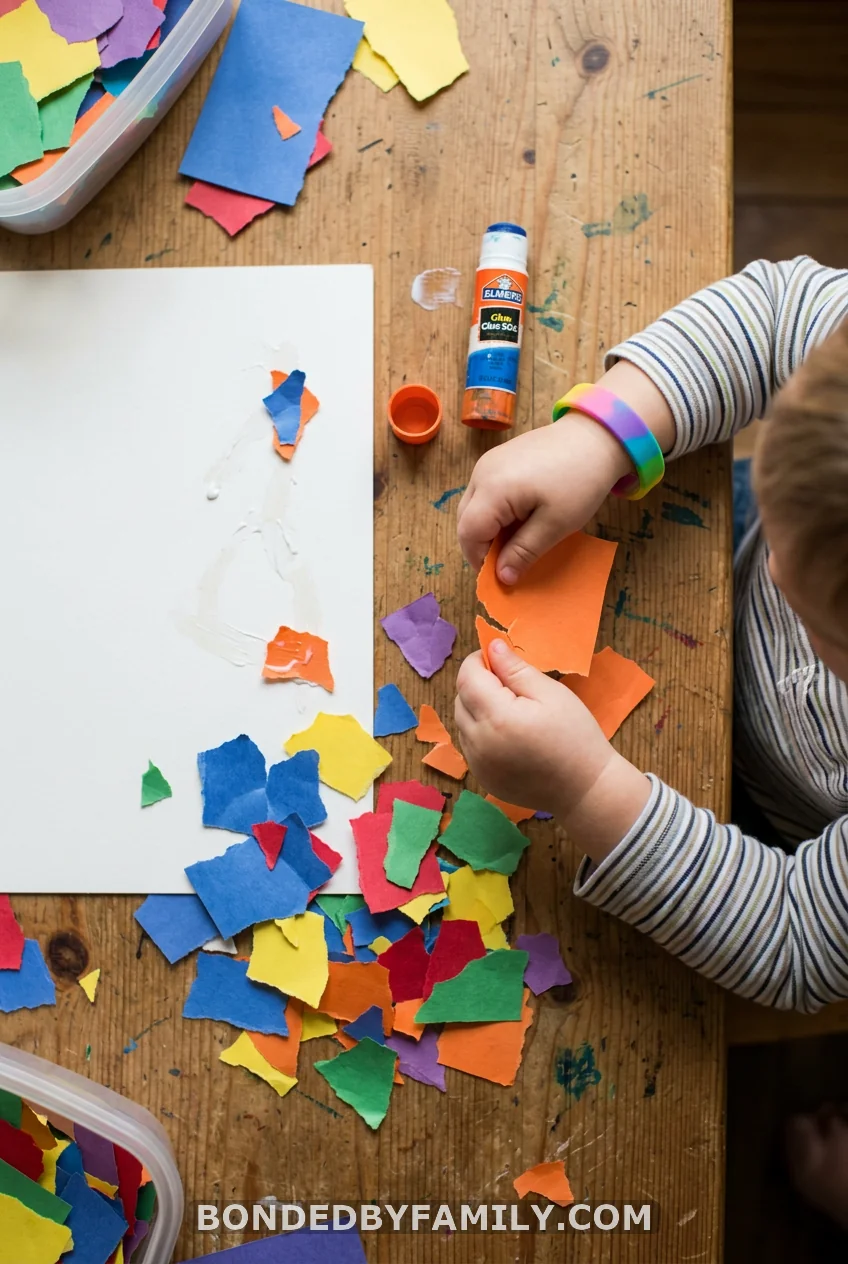
Tear colorful construction paper into pieces ahead of time for younger toddlers, or let 2-year-olds tear their own for extra practice. Hand over a glue stick and a piece of cardstock and let them place pieces wherever they land. No paint, no drying time, and the tearing motion builds the pincer grip toddlers will later use to hold a pencil.
6. Contact Paper Window Suncatchers
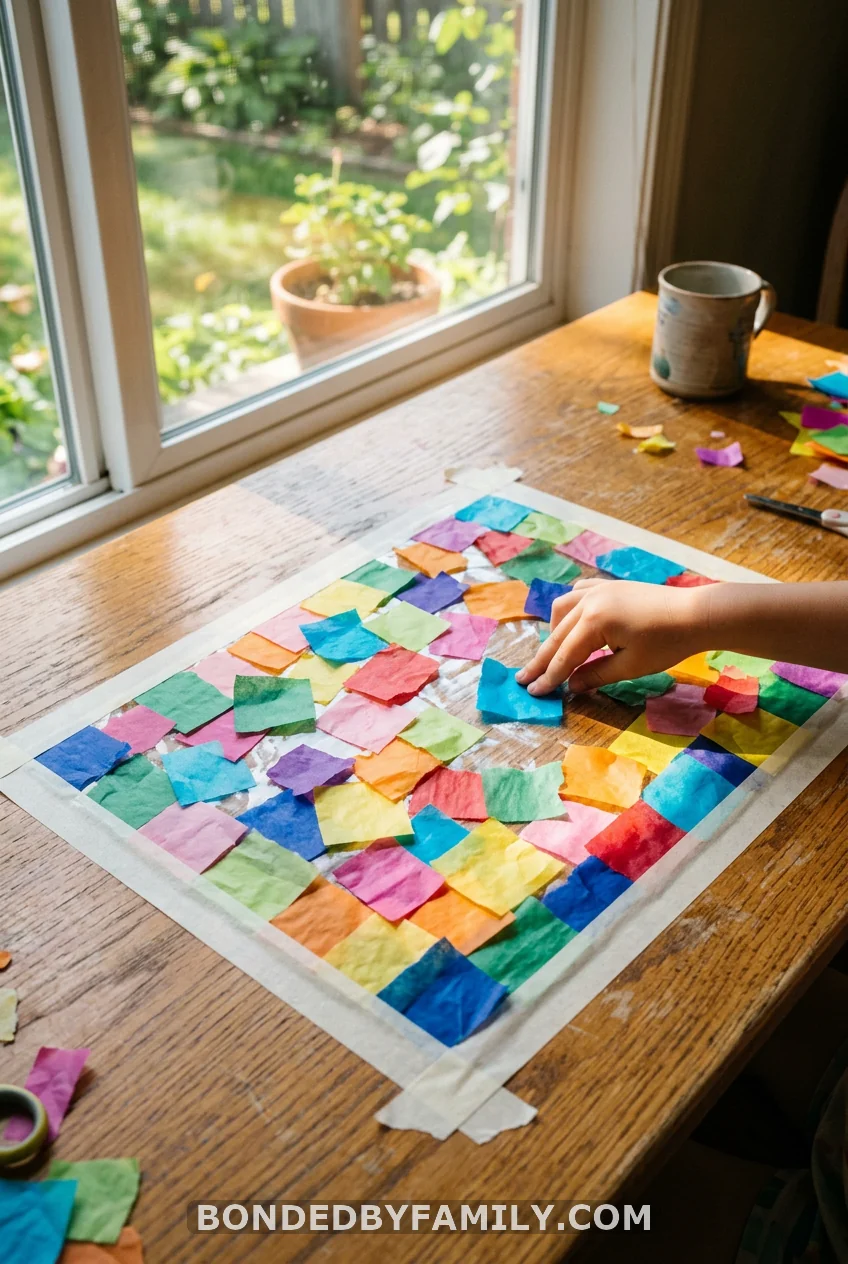
Tape a piece of contact paper sticky-side up to the table. Cut tissue paper into small squares and let toddlers press them on however they choose. Seal with a second sheet of contact paper, trim to a shape, punch a hole, and hang it in a window. The result looks like stained glass and costs close to nothing, since a roll of contact paper runs about $4 and covers a dozen suncatchers.
7. Cotton Ball Snowman or Sheep
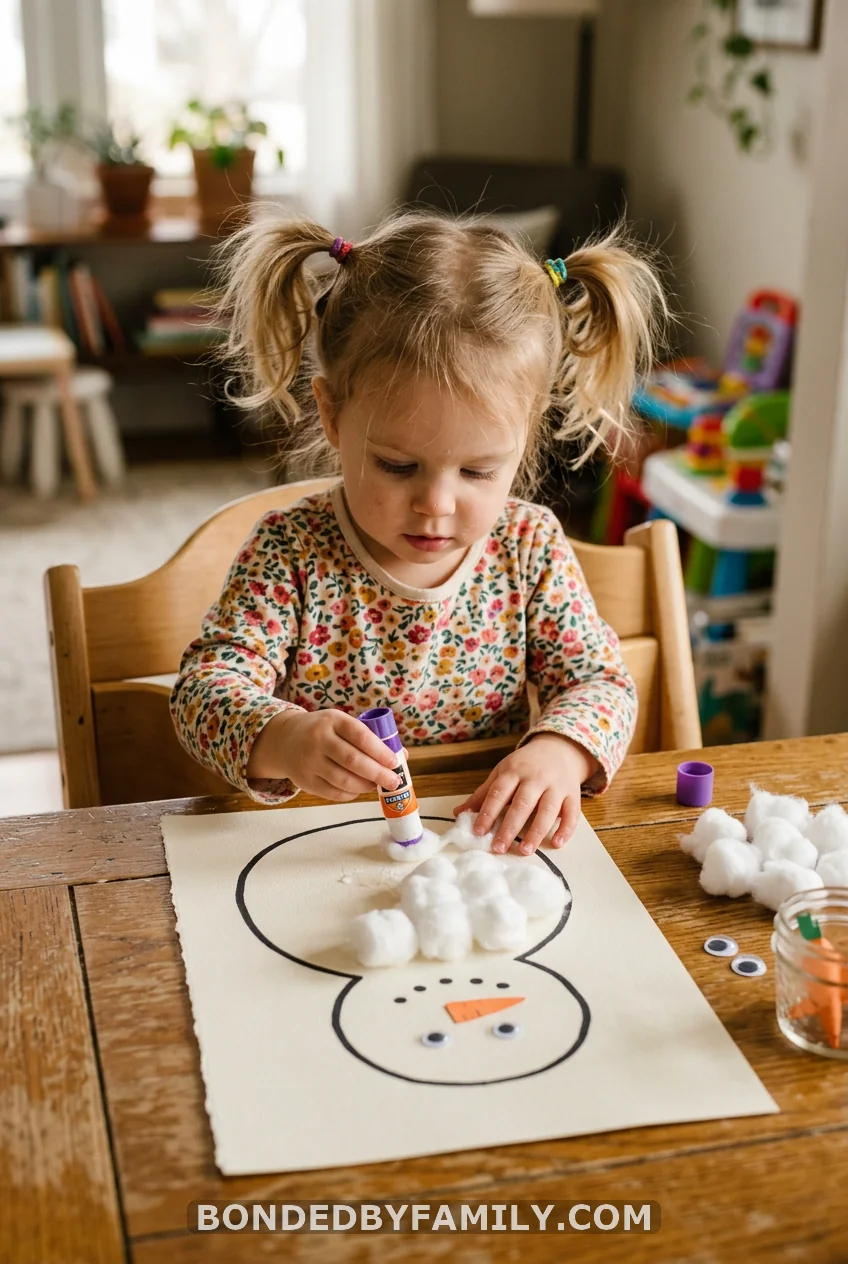
Draw three stacked circles on dark paper, squeeze glue into a shallow dish, and let toddlers dip cotton balls and press them onto the shapes. Add googly eyes and a small paper triangle nose once the base is filled in. This works for any season if you swap the outline: a snowman shape in winter, a fluffy sheep body in spring. Cotton balls are big enough for a two-year-old’s grip, so it is one of the more forgiving pincer-grasp crafts on this list.
Myth vs. Reality: “Two-Year-Olds Are Too Young for Real Crafts”
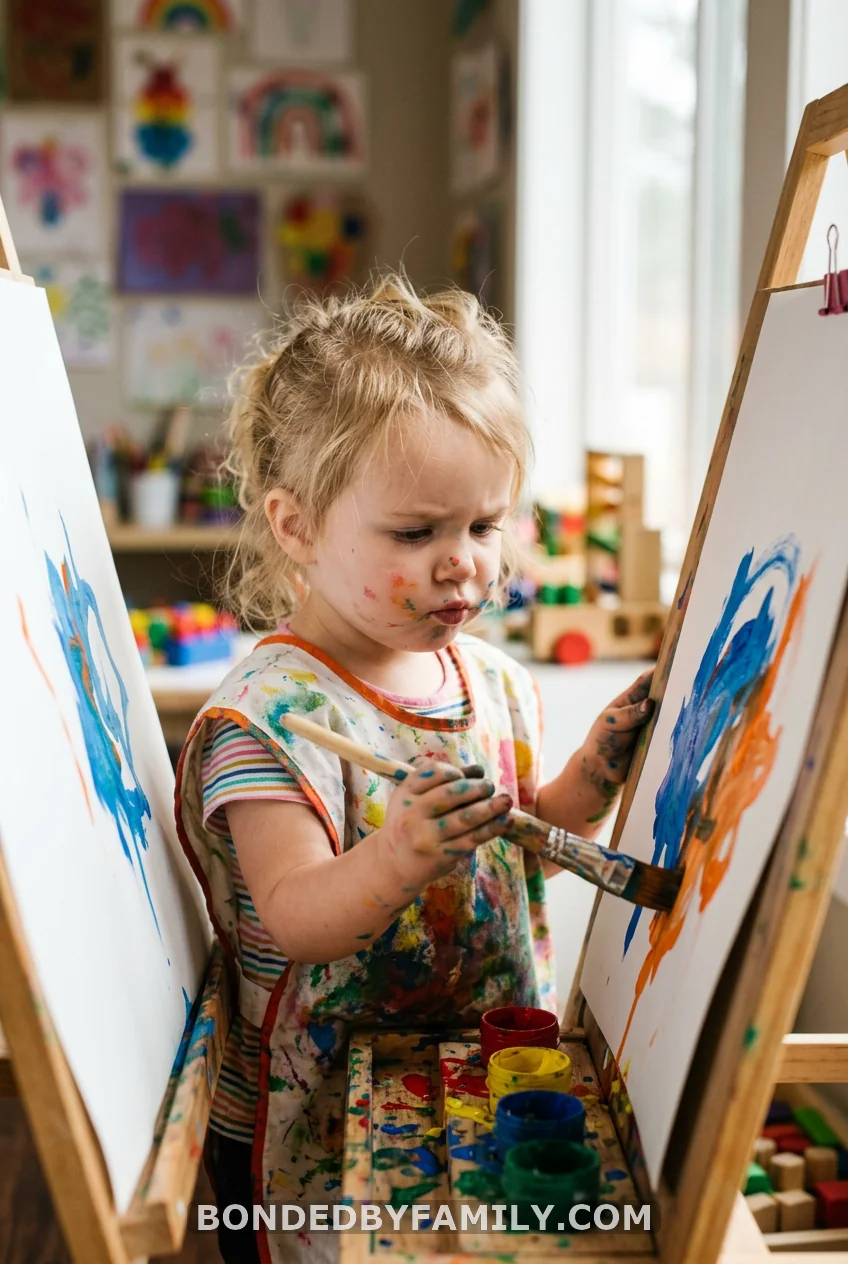
What most people assume: A 2-year-old smearing paint around a page is not really crafting. There is no finished product worth keeping, so why bother with the setup and cleanup at all?
What is happening under the surface: Every craft on this list targets a specific developmental skill, whether that is pincer grip, hand-eye coordination, or bilateral coordination from tearing paper with both hands. The finished product is not the point at this age. Occupational therapists consistently point to process-based art, meaning art focused on the doing rather than the outcome, as one of the most reliable ways to build fine motor foundations before a child ever picks up a pencil for writing.
A 2-year-old dipping cotton balls in glue is quietly rehearsing the same three-finger grip they will use to hold a crayon next year. That is not a small thing hiding behind a messy paper plate. That is the whole point.
8. Sponge Shape Stamps
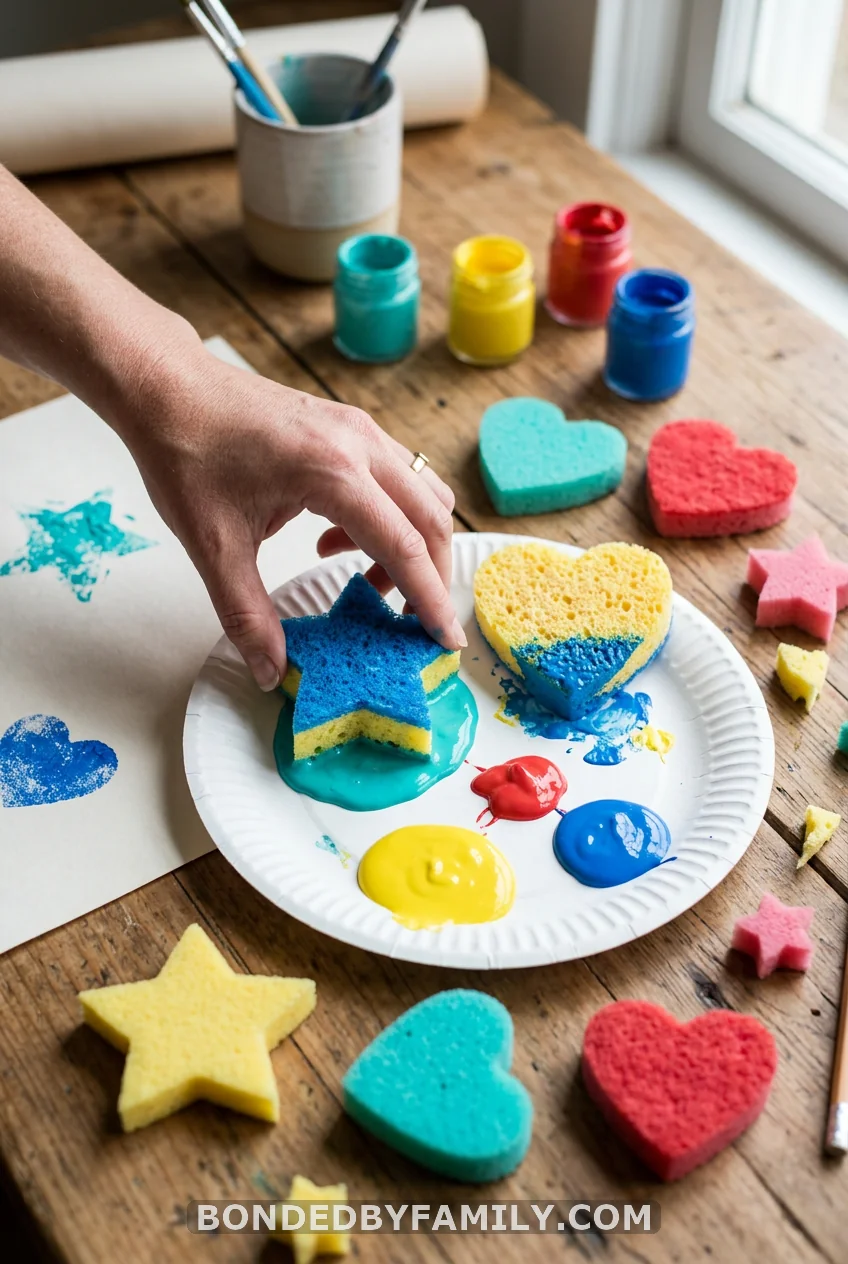
Cut cheap kitchen sponges into basic shapes, stars, hearts, circles, and pour washable paint onto a paper plate. Show a toddler how to dip and press. Sponges rinse clean and reuse for the next group, so a $1 pack from a dollar store covers weeks of sessions across multiple age groups.
9. Puffy Paint Clouds
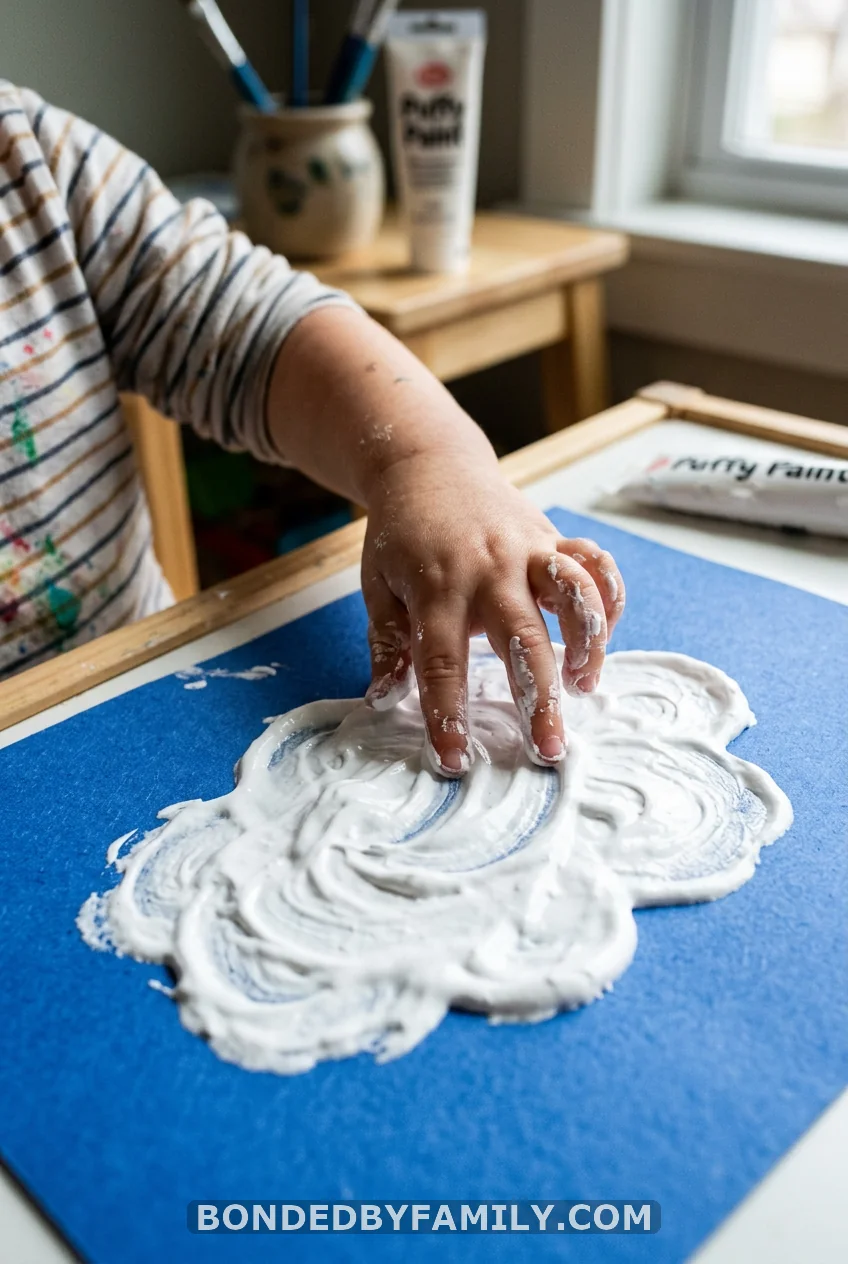
Mix equal parts white glue and shaving cream, then stir in a splash of washable paint. What comes out is a fluffy, squishy texture that spreads like a cloud, which makes it a natural fit for a sky-and-cloud craft on blue construction paper. Reach for the cheap, unscented foaming shaving cream rather than a gel formula, since gel versions do not whip up the same way and the mentholated ones leave the whole room smelling like a barbershop.
The texture alone tends to hold attention longer than a flat painting session, since toddlers spend as much time squishing the mixture between their fingers as they do spreading it around. Budget about $4 total for glue and shaving cream, both of which stretch across several sessions if stored in a sealed container between uses.
Cautionary Tale: The Glitter Glue Afternoon Nobody Warned Me About
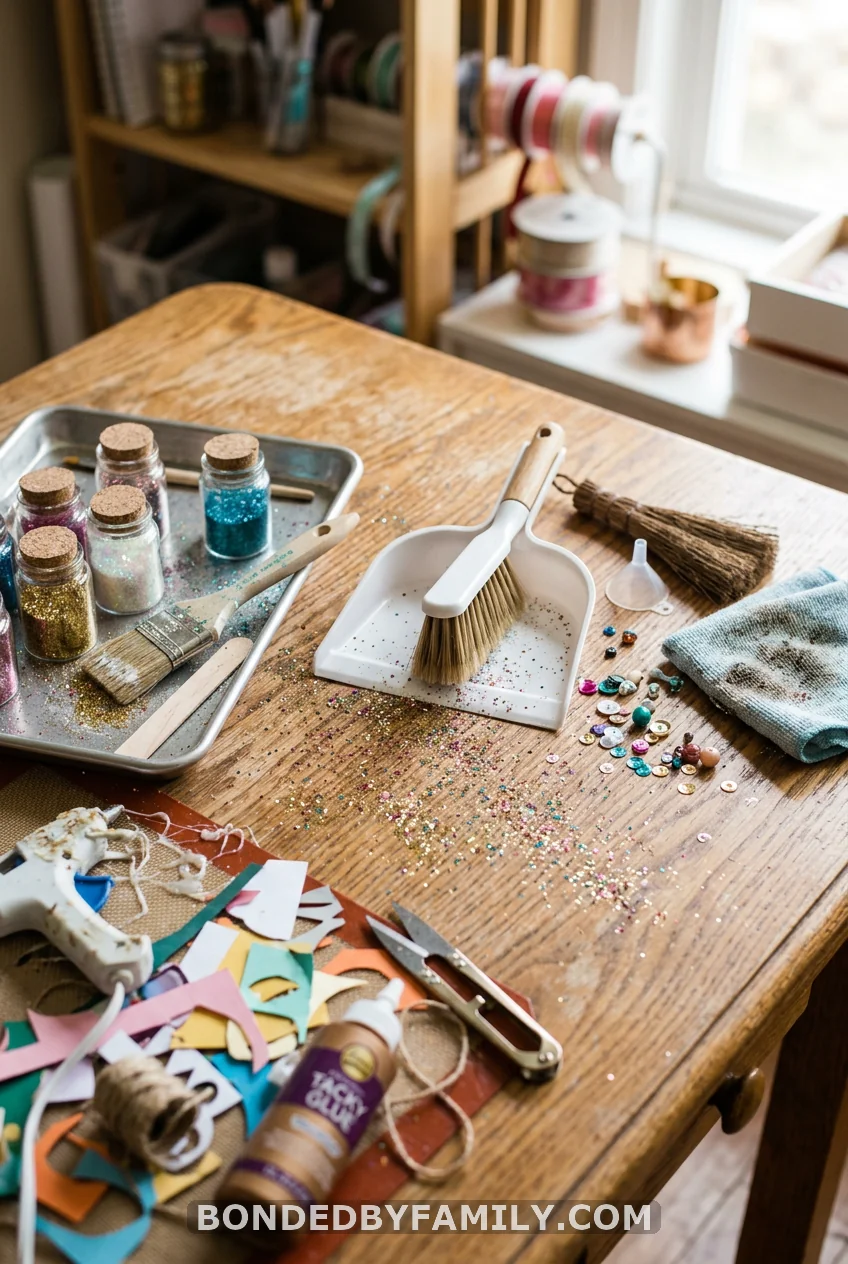
A center director I know once handed out uncapped glitter glue bottles to a room of eight 2-year-olds with zero containment plan. Within four minutes, glitter had traveled onto the carpet, into the sensory bin across the room, and somehow onto a child who had not even touched a bottle yet. The vacuum ran twice that day and still, weeks later, someone would spot a stray fleck catching the light near the reading corner.
The fix is not avoiding glitter. It is portioning it out ahead of time into small cups, one per child, and doing the whole activity over a taped-down plastic tablecloth that catches the runoff before it hits the floor. Fine glitter specifically, rather than chunky craft glitter, is the version that travels the farthest and hides the longest, so if a supply list gives you a choice, pick the chunkier grade for group settings.
10. Q-Tip Dot Painting
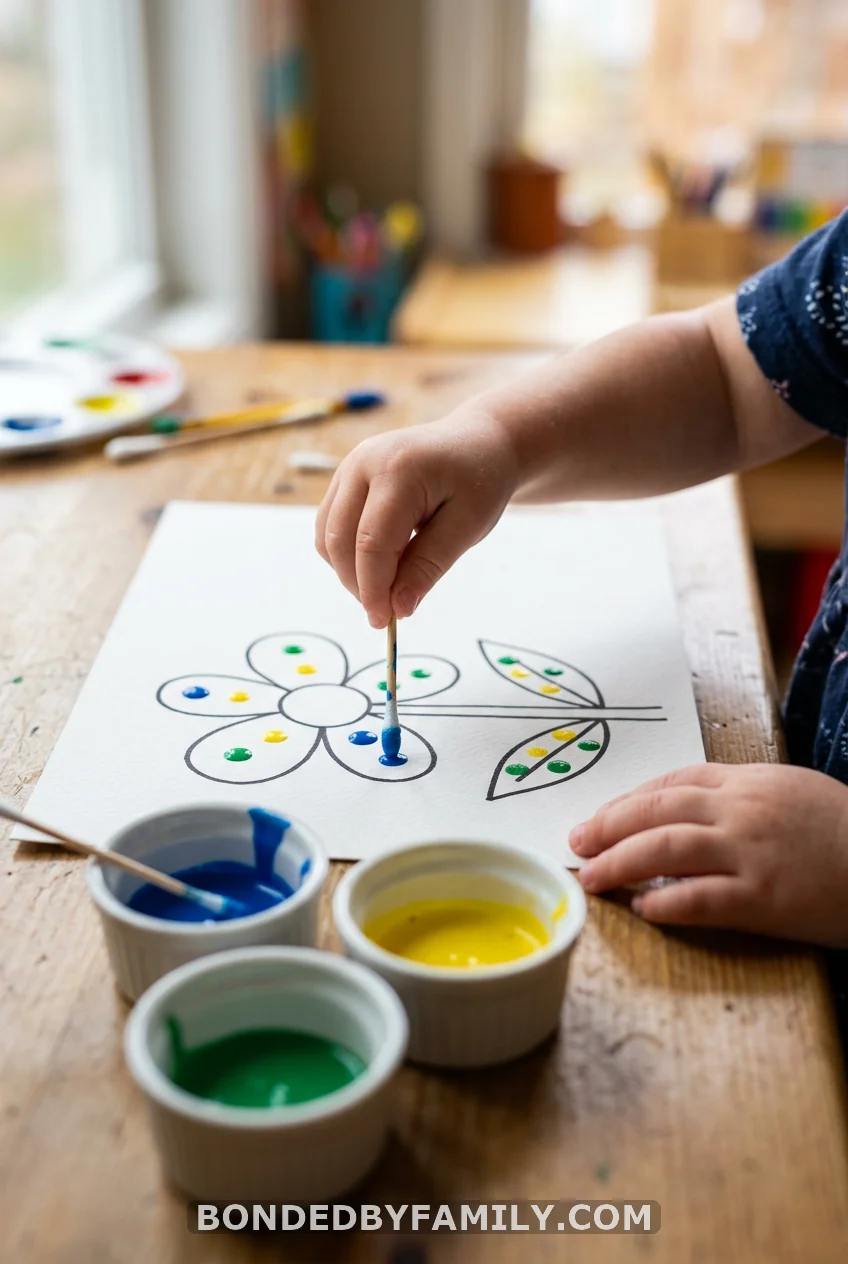
Dip cotton swabs into small dishes of washable paint and let toddlers dot a printed outline, a flower center, a ladybug’s spots, whatever shape fits. The narrow grip works a different set of small muscles than a paintbrush does, and cleanup is close to nothing since a swab does not drip the way a loaded brush can.
11. Toilet Paper Roll Binoculars
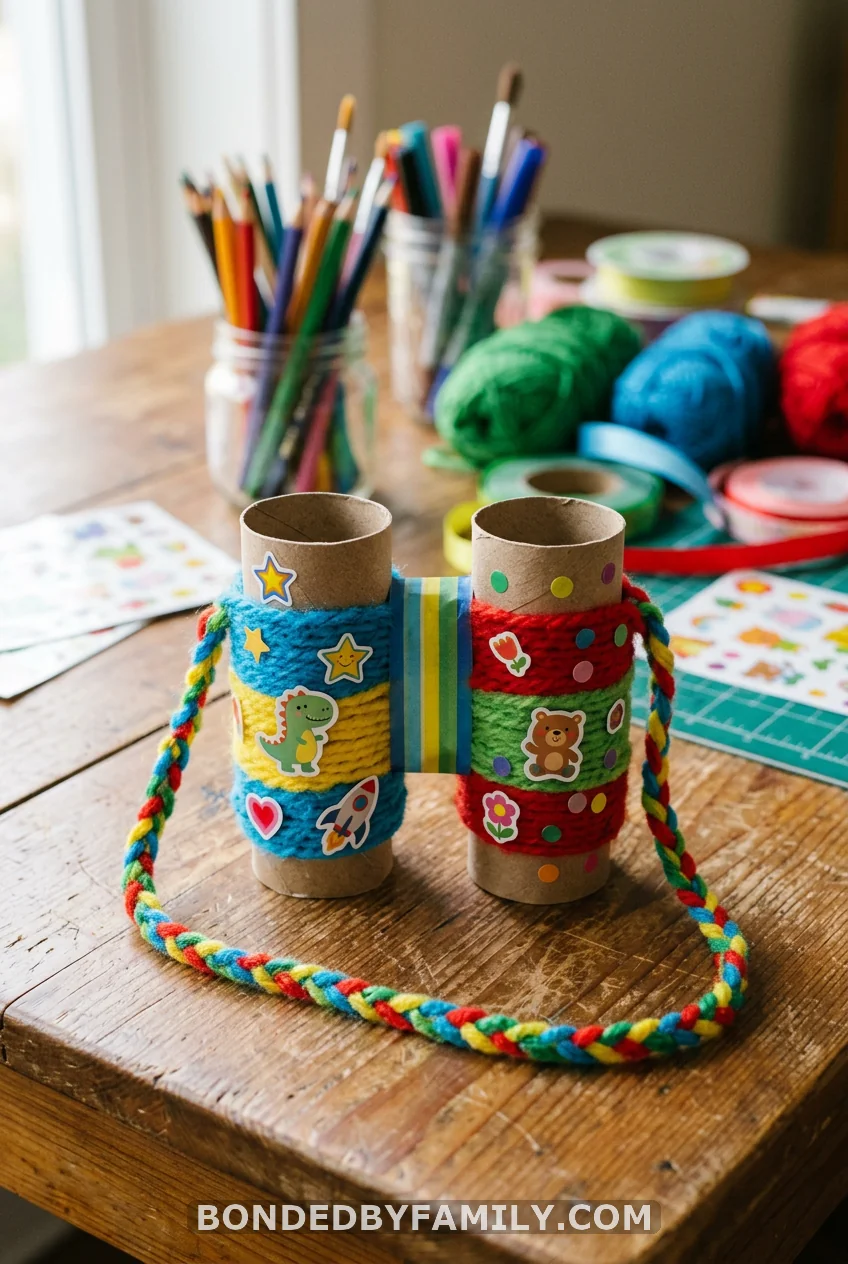
Tape two toilet paper rolls side by side and let toddlers decorate them with stickers, washable markers, and washi tape. Punch a hole on each outer side, thread yarn through for a strap, and the craft turns into a wearable toy. Take the group on a short walk afterward to look for birds or clouds through their new binoculars, and the activity stretches from a five-minute craft into twenty minutes of imaginative play. Free materials, since toilet paper rolls are already piling up in most supply closets.
How to Pick the Right Craft for Your Room
Not every idea on this list fits every room on every day. A few questions help narrow it down fast:
How many kids are you managing at once? Anything involving paint dishes or shared supplies, like sponge stamping or Q-tip painting, works better in small groups of 3 to 4. Dot sticker art and torn paper collage scale up more easily since each child works with their own sheet and does not need to wait for a shared bowl.
How much cleanup time do you realistically have? Salt dough and puffy paint both need a few minutes of drying or set-up time built in, so save those for days with a longer block on the schedule. Bubble wrap stomping and footprint art need immediate access to a sink, so plan those for right before a bathroom break or snack time.
What is the mouthing risk in your room today? For toddlers on the younger edge of 2, skip anything with small stickers or beads that could end up as a choking hazard, and lean toward the sensory-safe options like puffy paint or contact paper suncatchers instead.
Keeping Craft Time From Becoming Chaos
None of these 13 crafts need a Pinterest board’s worth of supplies or an hour of prep the night before. What they need is a little bit of setup before the kids sit down, because once sixteen two-year-olds are staring at you waiting for glue, you have already lost the moment.
Pick two or three from this list to rotate through over the next few weeks. Notice which ones your specific group gravitates toward, because every room of toddlers has its own personality, and the craft that flops in one classroom might become the most-requested activity in another. Either way, you now have a stocked rotation ready whenever the schedule calls for craft time.
Looking for options that skip setup entirely? Our guide to no-prep toddler crafts for daycare rounds up ideas that need almost nothing beyond what is already sitting on your shelf.
Frequently Asked Questions
What crafts work best for 2-year-olds who still put everything in their mouths?
Stick with non-toxic, washable materials and skip anything with small detachable pieces like beads or buttons. Salt dough, puffy paint, and contact paper suncatchers are lower risk since nothing small can break off and become a hazard.
How long should a craft activity last for a 2-year-old at daycare?
Five to ten minutes is a realistic and developmentally appropriate window for this age. Pushing a session longer than that usually leads to frustration rather than deeper engagement, so let attention span guide when to wrap up.
What supplies should a daycare room always keep stocked for crafts?
Washable paint, glue sticks, contact paper, construction paper, cotton balls, kitchen sponges, and dot stickers cover almost every craft on this list. All are low-cost, reusable across age groups, and quick to restock from a dollar store.
How do I manage craft time with a full room and only one adult?
Set up stations ahead of time so kids move through in small groups of 3 to 4 rather than all sitting down at once. Crafts with shared supplies, like paint dishes or glue bowls, work better broken into rotations than one all-at-once session.
Do toddler crafts build any real skills, or is it just messy play?
Fine motor skills, hand-eye coordination, and early pincer grip all develop through repeated small-hand movements like tearing paper, peeling stickers, and pressing dough. These movements lay groundwork for pencil grip and handwriting readiness well before a child starts school.