A toddler room goes quiet for exactly four minutes. Then someone finds the glue.
If you run a daycare room, you know that window. Blink, and it closes. That’s the whole problem with most “no prep toddler crafts for daycare” lists floating around online: they promise five minutes of setup, but five minutes is five minutes you don’t have between snack time and nap time and the kid who needs his shoe retied for the ninth time today.
So here’s a different kind of list. Every single craft below uses stuff you already have in a supply closet, a junk drawer, or a recycling bin. No trip to the craft store. No laminating the night before. No pre-cutting forty felt shapes at your kitchen table while your own kids ask why dinner is late again.
Grab what’s on hand. Let’s get into it.
Sticky, Squishy, and Sensory Crafts
Toddlers learn with their hands before they learn with words. These first few crafts lean into that, using textures and stickiness instead of paint and mess.
1. Scoop and Pour Sensory Bin
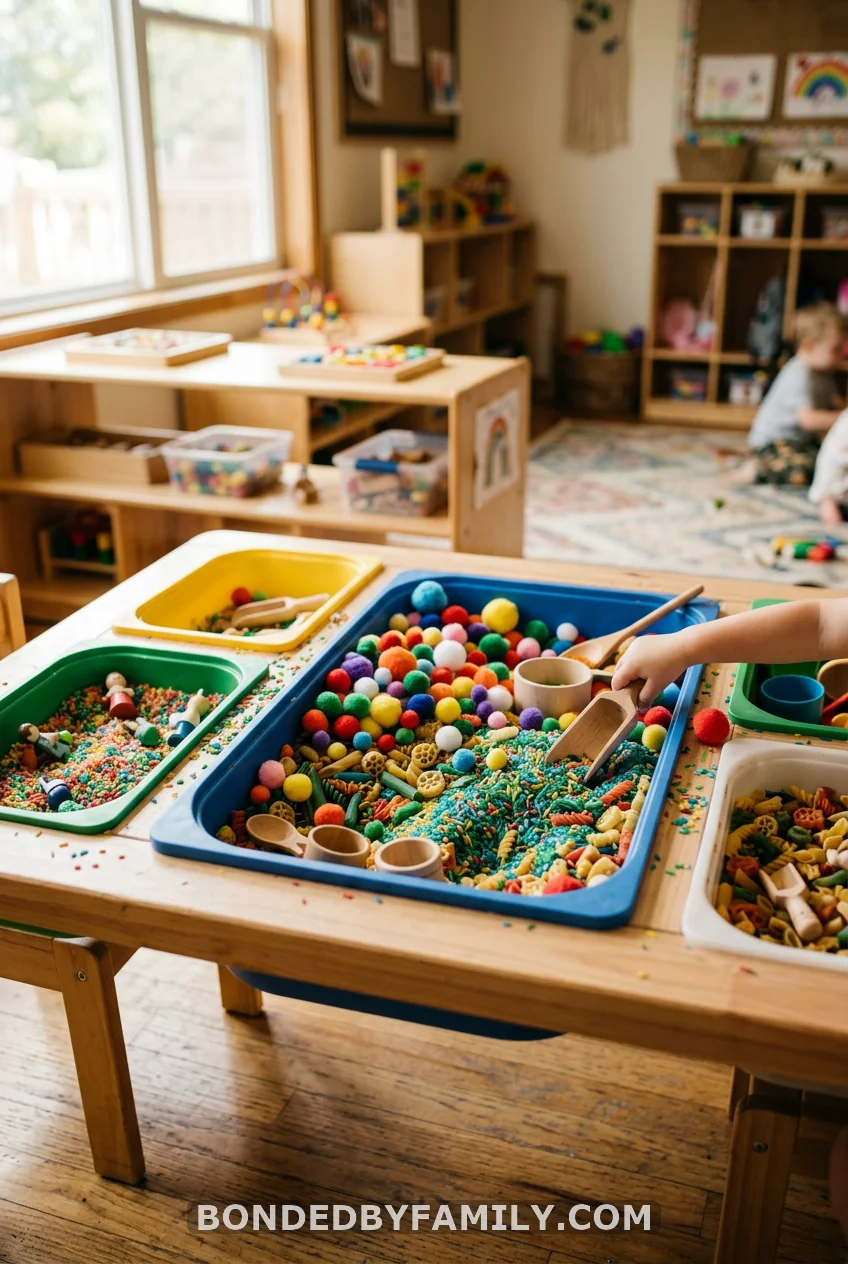
Fill a shallow bin with dry rice, dry pasta, or shredded paper. Hand over a few plastic cups and spoons. That’s it. Toddlers will scoop, pour, and dump for a solid stretch of independent play, and you get to drink your coffee while it’s still warm.
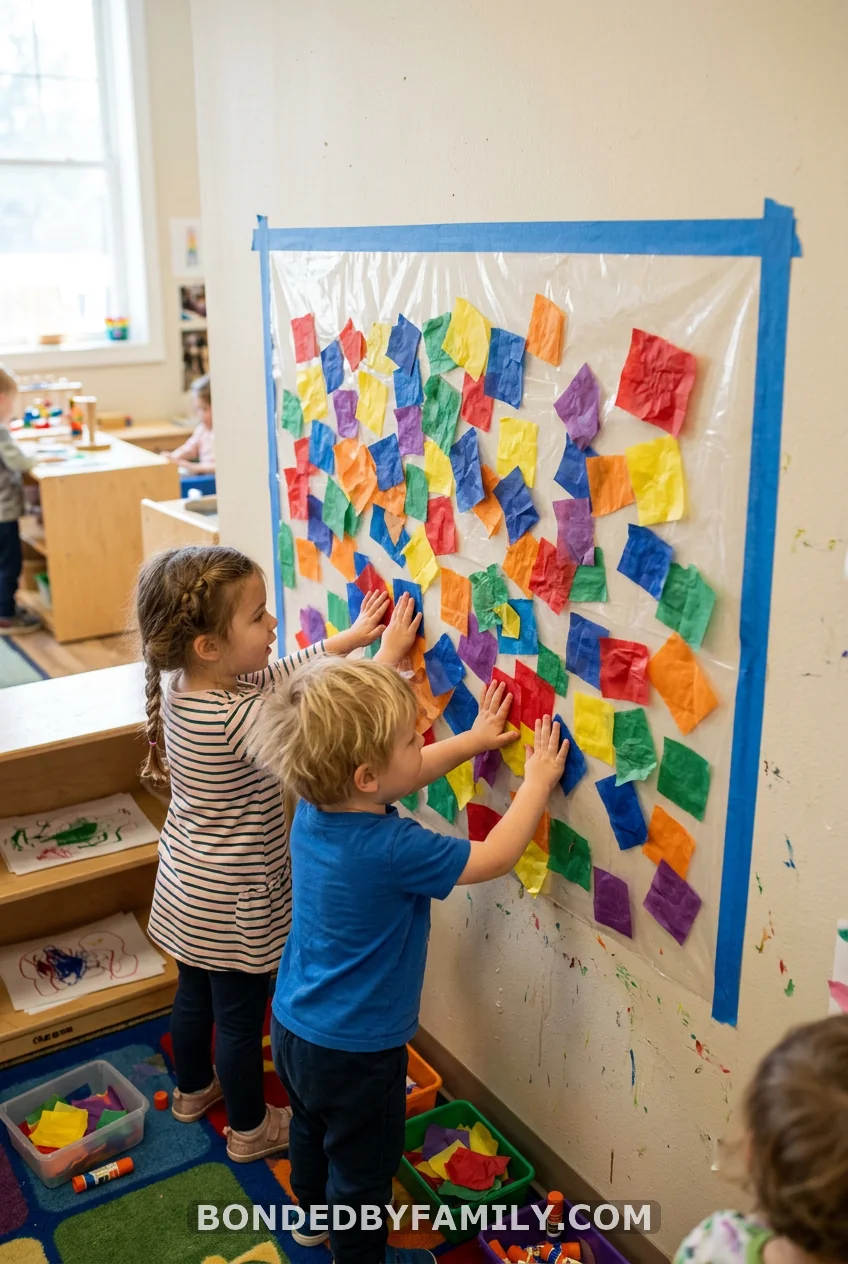
2. The Giant Sticky Wall
If you keep only one craft station stocked all year, make it this one.
Why This Works
A sticky wall solves the two biggest daycare headaches at once: it fills long stretches of time, and it cleans up in about ninety seconds. Contact paper is naturally tacky, so toddlers stick things to it and peel them off again, over and over, without a drop of glue anywhere near the floor. Occupational therapists like this activity too, since the peel-and-press motion builds the same pincer grip toddlers need for holding crayons and using zippers.
Dimensions and Setup
Cut a strip of contact paper roughly 24 by 36 inches for a group of four to six toddlers standing shoulder to shoulder. Anything smaller and you’ll get elbows in faces. Tape the strip to a wall at toddler height, meaning the bottom edge should sit around 18 to 20 inches off the floor. Peel the backing off in one motion right before the kids arrive, since contact paper loses its grip fast once dust settles on it.
Materials and Costs
- Roll of clear contact paper: $6 to $10, covers several sessions
- Painter’s tape: $4, you likely already own a roll
- Tissue paper scraps, cut felt, cotton balls, fall leaves: free, pulled from your existing craft bin
Total cost per session lands under $1 once you account for reuse across the roll.
Step-by-Step Build
- Cut your contact paper strip to size.
- Tape all four edges to the wall, sticky side facing out.
- Peel the paper backing off just before the activity starts.
- Set out a shallow tray of lightweight materials within arm’s reach.
- Let toddlers press items onto the wall and peel them off at will.
- Swap in new materials halfway through if attention starts to drift.
- At cleanup, fold the whole sticky sheet in on itself and toss it.
Common Mistakes to Avoid
The top mistake is hanging the wall too high. Toddlers can’t reach above their shoulders comfortably, so anything mounted at adult eye level just gets ignored. The second mistake is using heavy materials like buttons or blocks. They fall right off a contact paper surface and become a tripping hazard on the floor.
Pro Move
Keep a second pre-cut sticky sheet folded in a drawer, backing still on. When the first one loses its grip mid-session, you swap it in without missing a beat.
3. No-Mess Paint Squish Bag
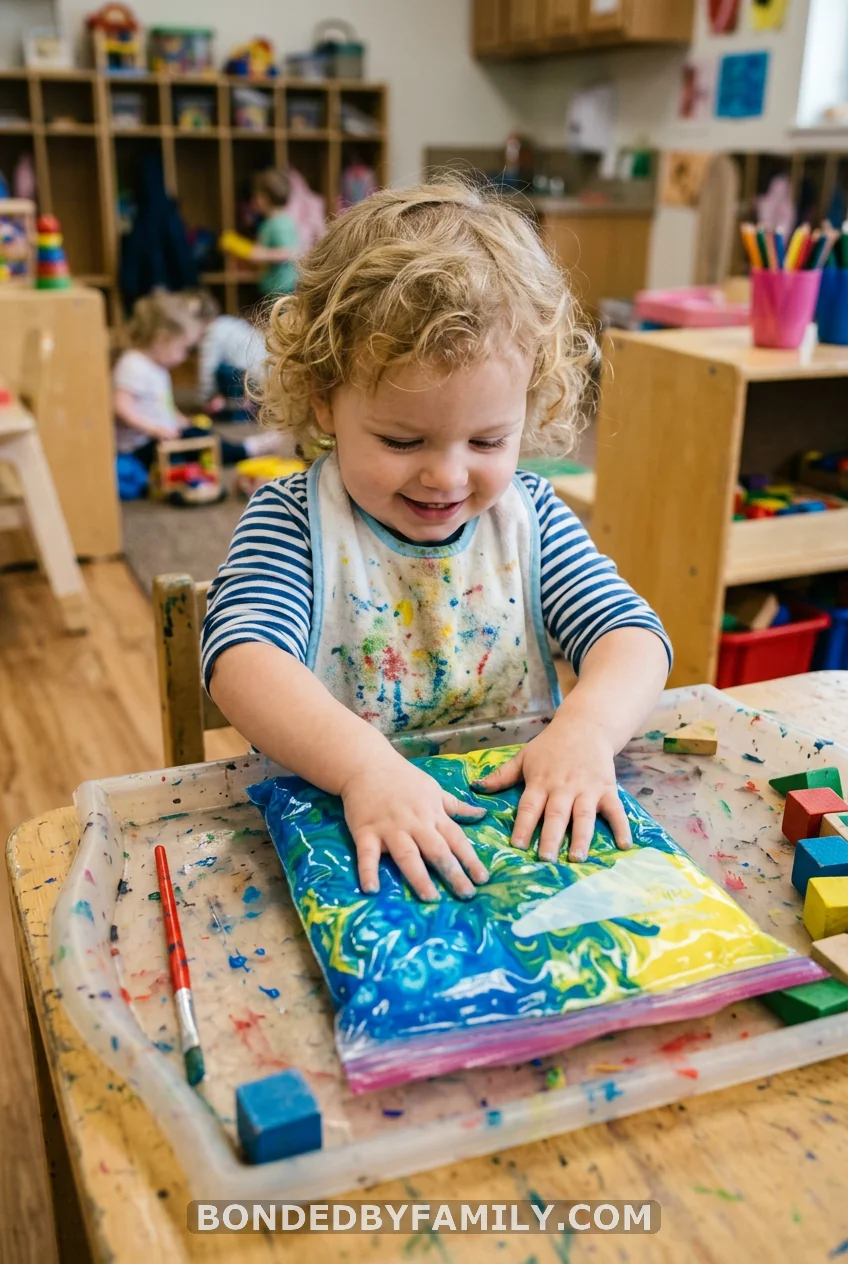
Squeeze a few dollops of washable paint into a gallon zip bag, press the air out, and seal it tight with packing tape over the zipper for good measure. Tape the bag to a table or window. Toddlers push, squish, and swirl the colors together with zero paint ever touching skin, clothes, or your walls.
4. Cotton Ball Pom Pom Animals
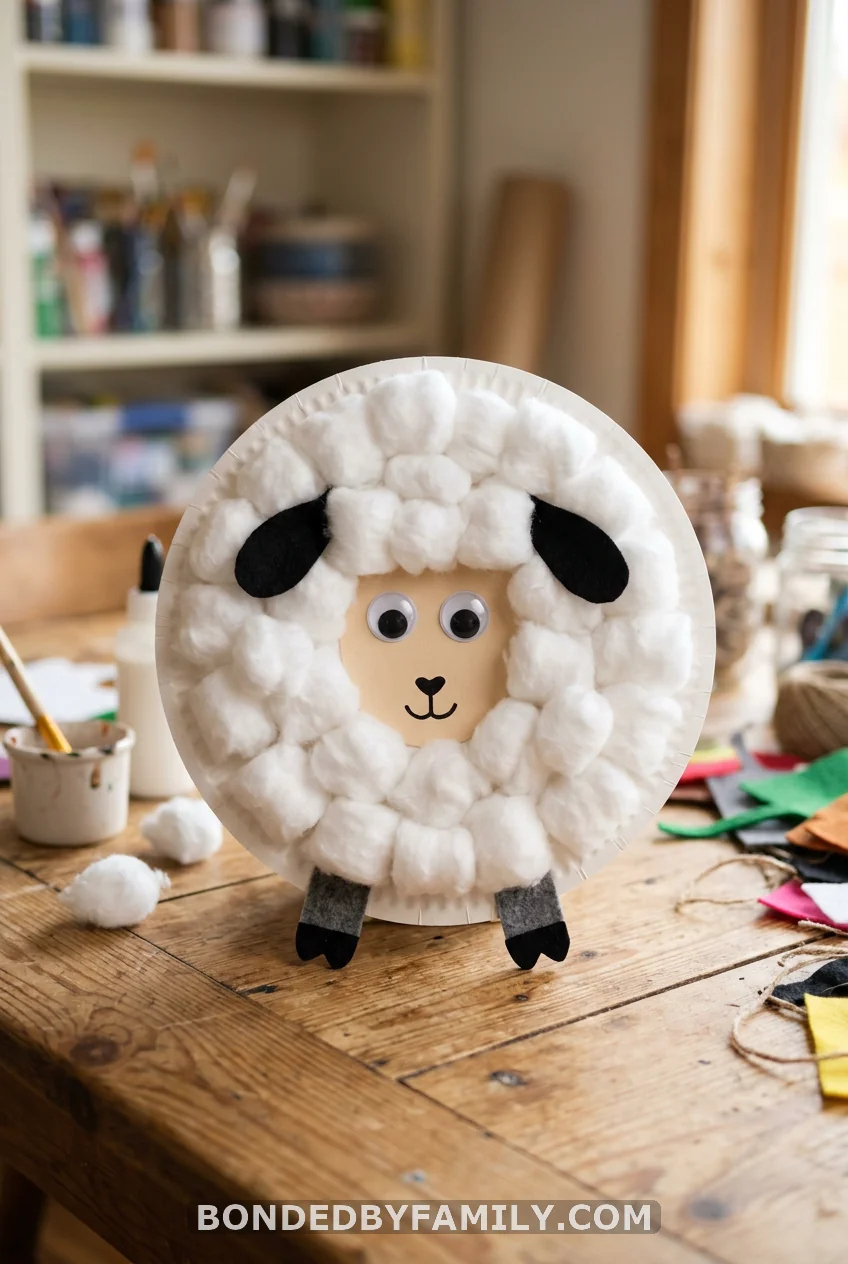
Pre-cut paper plate shapes work as instant animal bodies. Set out white cotton balls and let toddlers press and glue them into place for a sheep, a cloud, or a polar bear. The pulling and pressing motion works those same fine motor muscles toddlers need for buttoning coats.
Paper, Tape, and Torn Bits
Nothing in a daycare room goes to waste, least of all paper scraps. These next crafts turn leftover construction paper into something new.
5. Torn Paper Collage
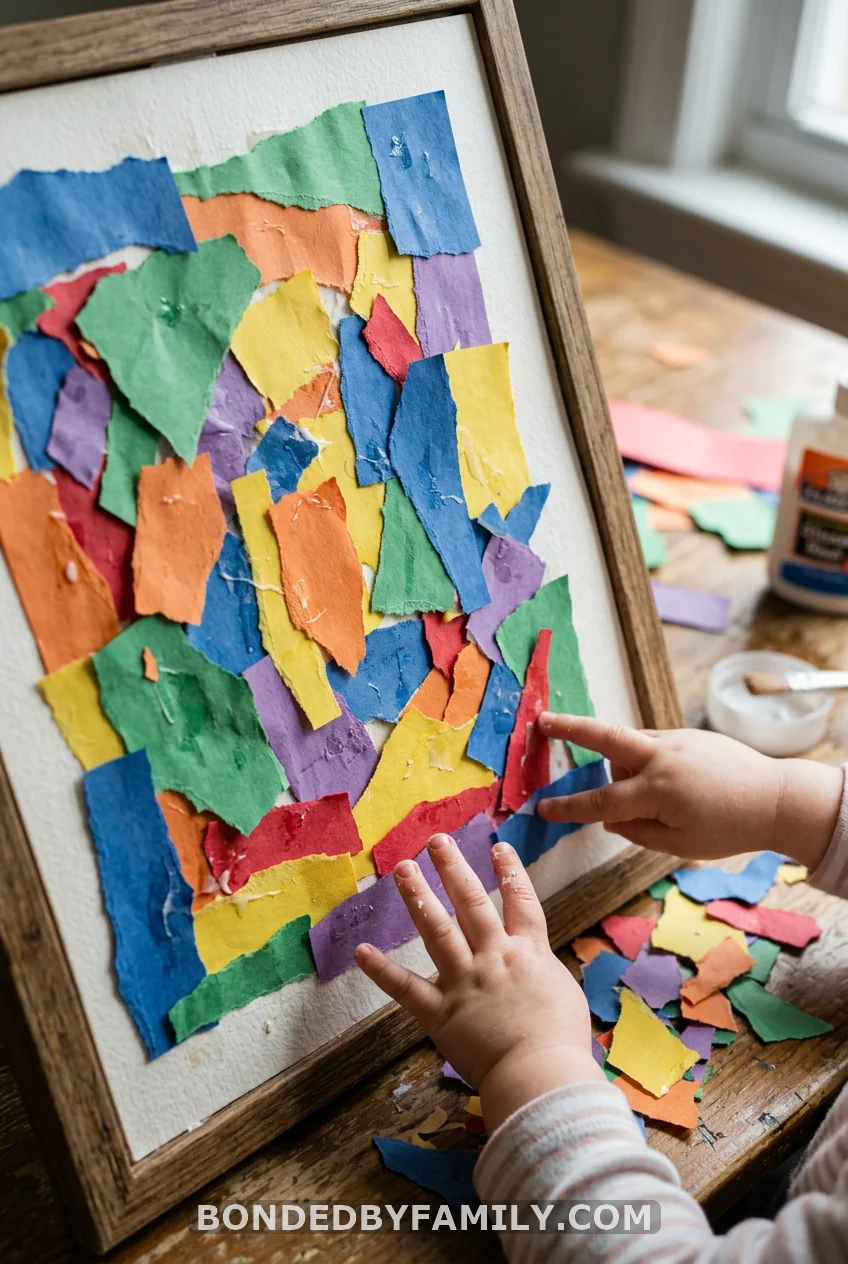
Give toddlers a stack of scrap construction paper and a bottle of glue. Let them tear the paper into pieces and stick the pieces wherever they land on a blank sheet. There’s no wrong way to do it, which is exactly the point at this age.
6. Stained Glass Window Art
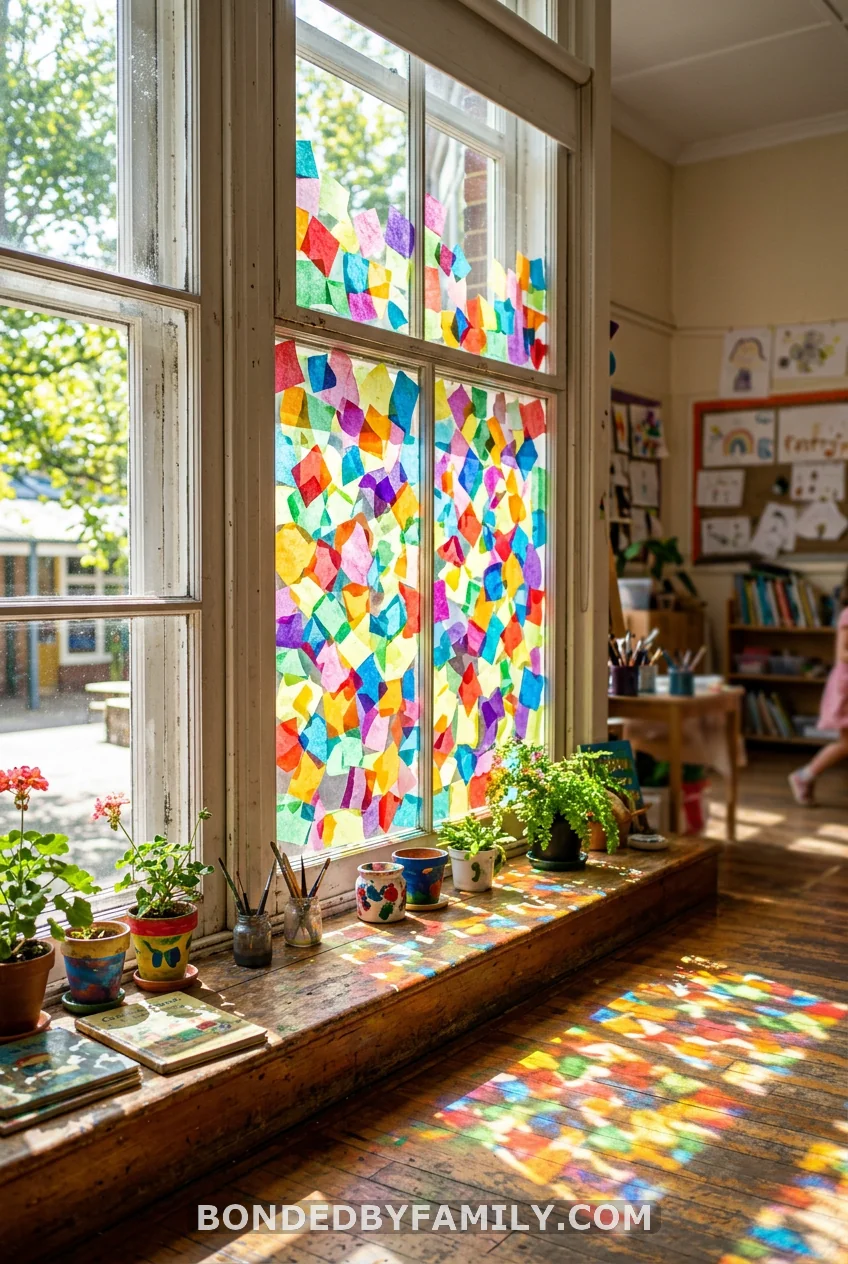
Tape a sheet of clear contact paper to a window, sticky side facing the room. Toddlers press torn tissue paper squares onto the sticky surface. When the sun hits it, the whole window glows like stained glass, and the finished piece stays up for weeks without fading fast.
7. Nature Walk Suncatcher
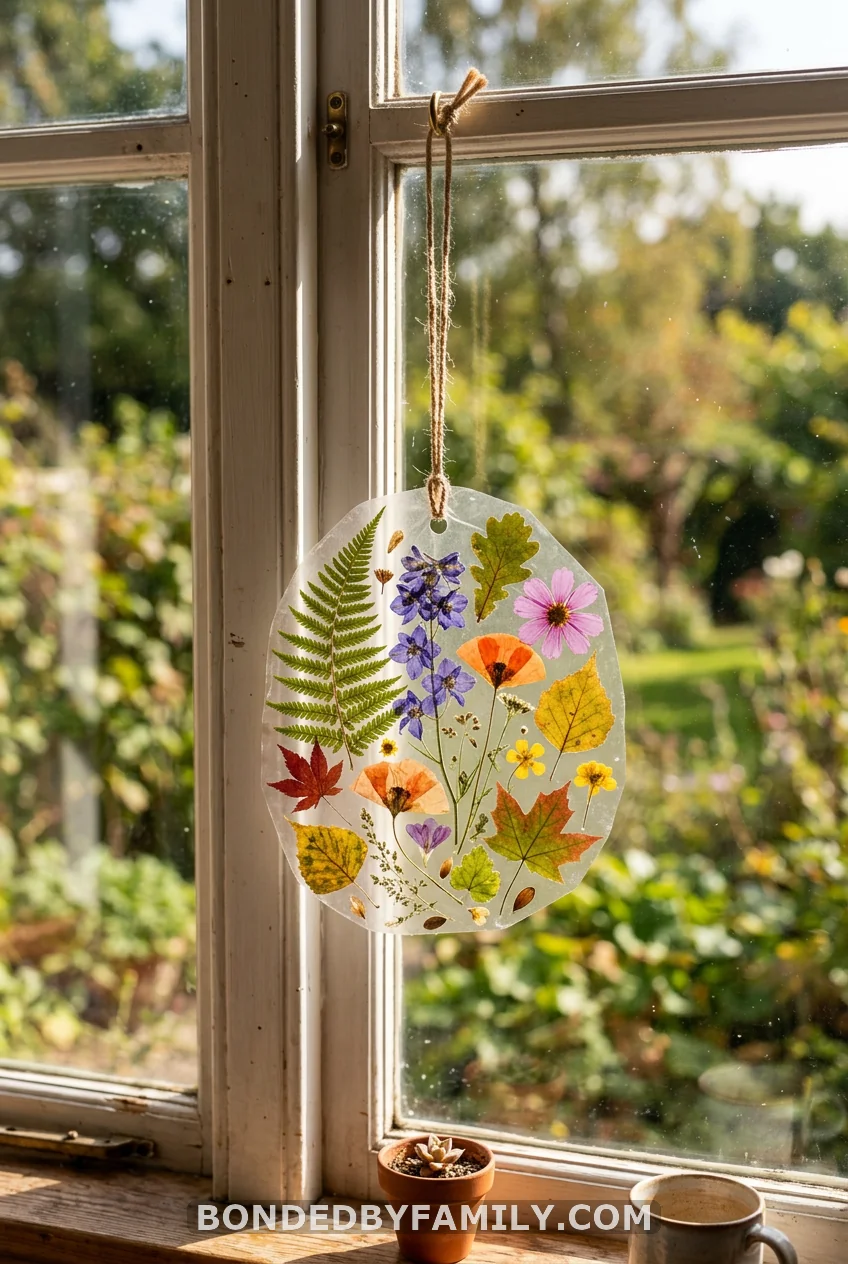
Take five minutes on the way back from the playground to collect flat leaves, petals, and grass blades. Press them between two sheets of contact paper cut into a circle, punch a hole near the top, and thread string through for hanging. It’s a keepsake and an outdoor break rolled into one activity.
Myth vs. Reality: The No-Prep Question
What most daycare providers assume: no-prep crafts must be developmentally thin, a way to fill time rather than build a skill.
What holds up under a closer look: every craft on this list works a specific fine motor or sensory skill, the same skills occupational therapists target in early intervention sessions. Squishing a paint bag builds hand strength. Threading cereal onto yarn builds hand-eye coordination. Peeling tissue paper off contact paper builds the pincer grip toddlers need before they can hold a pencil correctly. Low prep and low value are not the same thing. The materials are pared down, not the learning.
Cause, Effect, and a Little Bit of Noise
Toddlers are obsessed with making things happen. Drop, push, pour, repeat. These crafts turn that obsession into quiet, focused play.
8. Box Drop Game
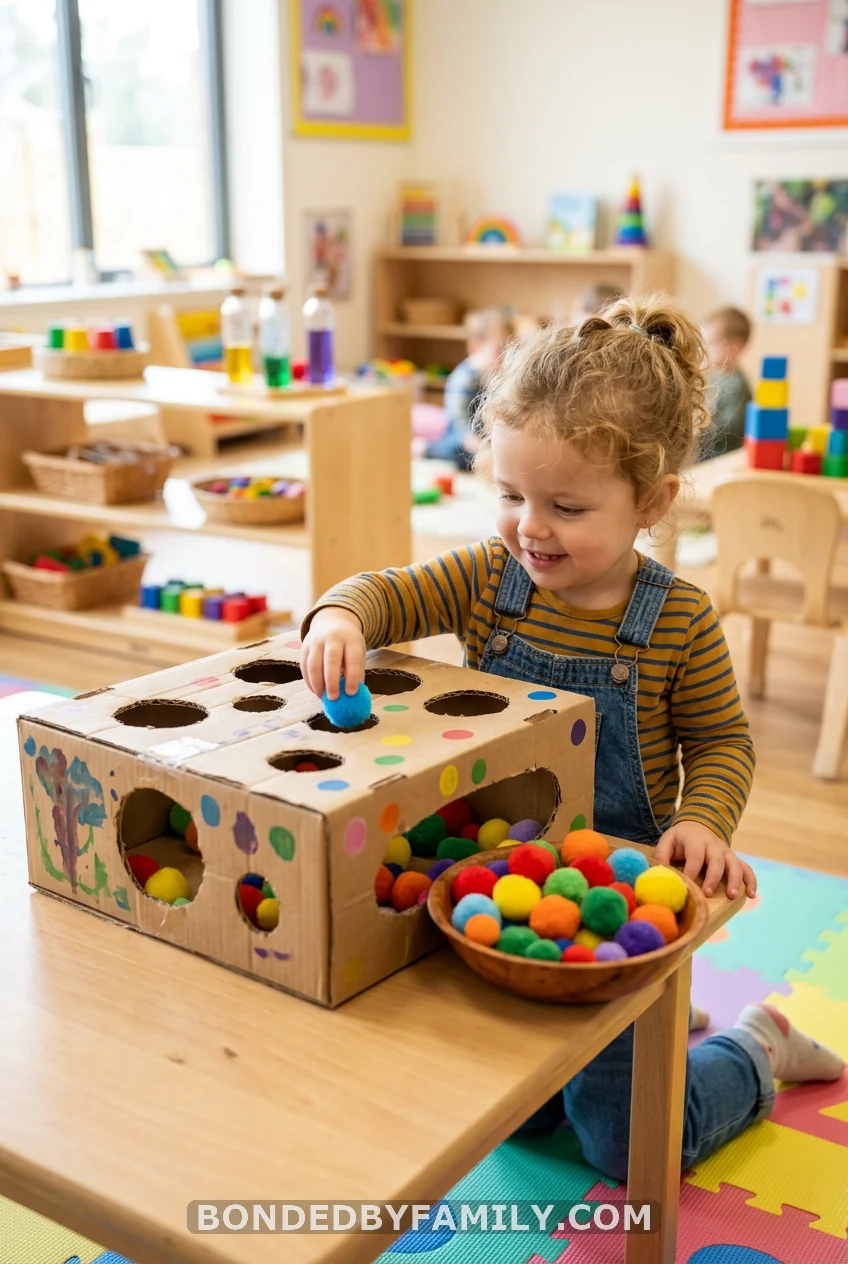
Cut three or four holes of different sizes into the side of a sturdy cardboard box. Hand over a basket of pom poms, bottle caps, or small blocks and let toddlers figure out which shape fits which hole. It looks like play. Underneath, it’s early problem-solving practice.
9. Toilet Paper Tube Drop
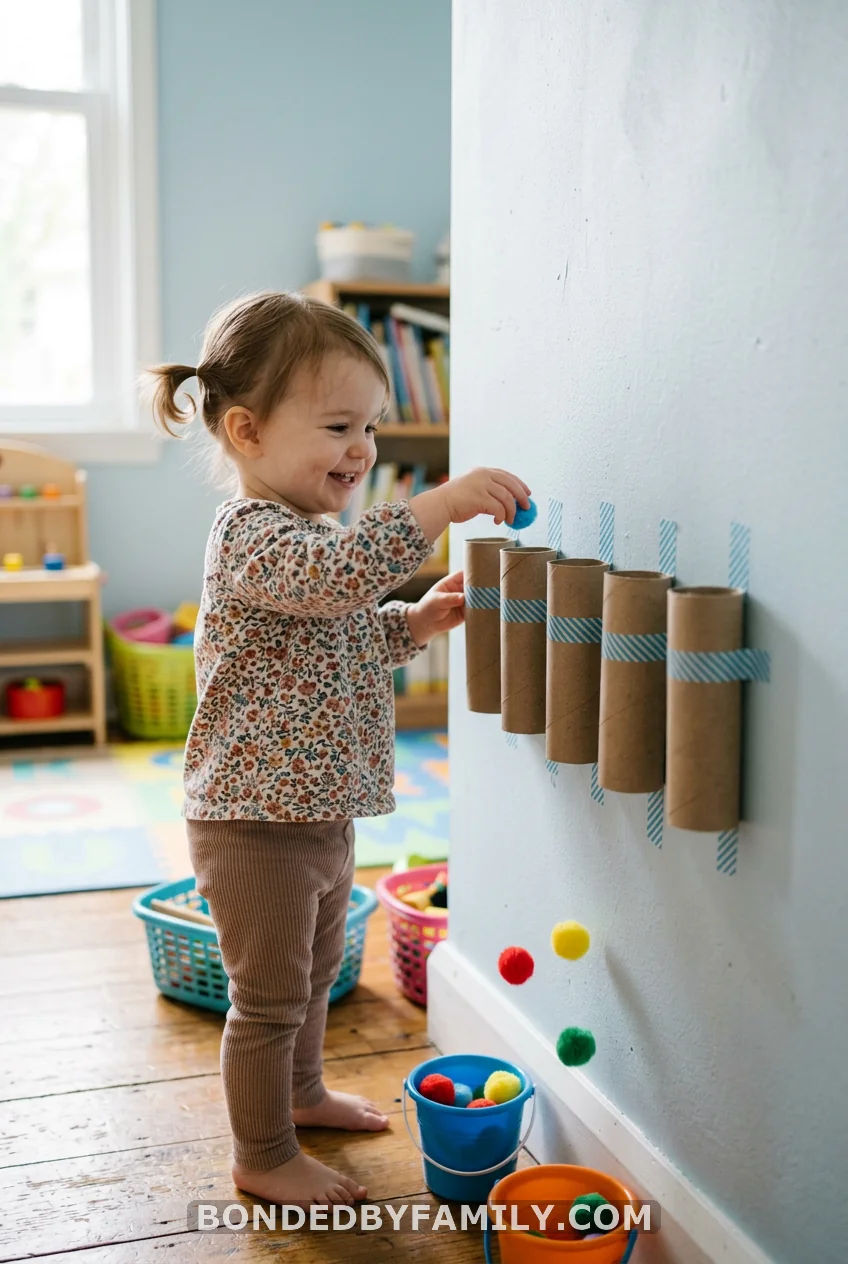
Tape a row of empty toilet paper tubes to a wall, angled slightly so small pom poms roll out the bottom when dropped in the top. Toddlers drop, watch, and drop again. Save your tubes for a week and you’ll have a whole row ready without buying a thing.
10. Straw Blow Painting
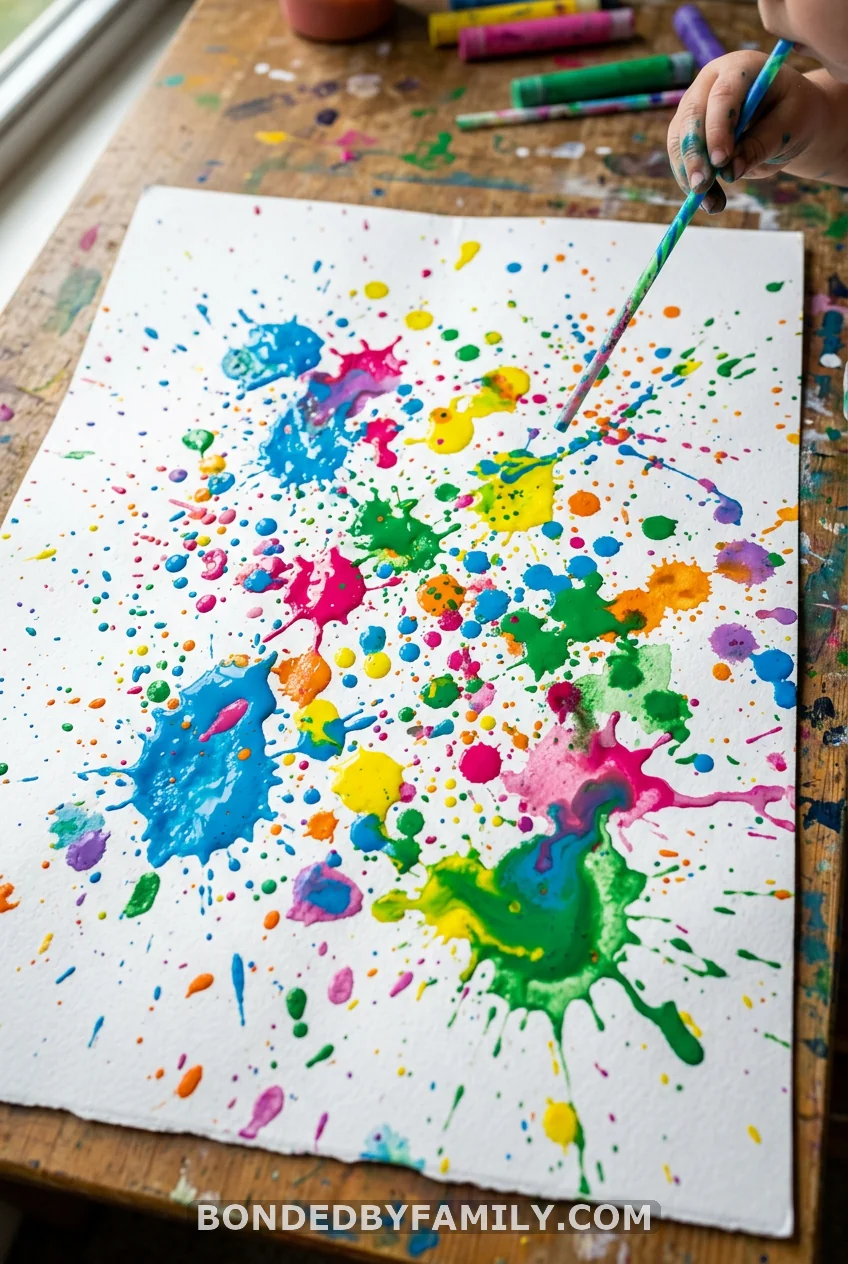
Drop a few dots of thin, watered-down paint onto paper. Hand a toddler a straw and let them blow the paint across the page. The colors spread in wild, unpredictable directions, and the mess stays contained to the paper.
A Word of Caution From a Rushed Tuesday
I once handed a group of eight toddlers a tray of shaving cream with zero plan for what came next. Someone tasted it. Someone else decided the table needed a coat too. We were still finding shaving cream in the coat closet three days later.
Here’s the lesson that saved my sanity after that: contain the mess before you introduce it, not after. A cookie sheet, a shallow bin, or a taped-down sheet of paper turns a chaotic material into a focused one. The shaving cream itself wasn’t the problem. The lack of a boundary was.
Threading, Sorting, and Quiet Focus
These last crafts slow the pace down. Great for right after outdoor play, when little bodies need to settle before nap time.
11. Cereal Necklace Threading
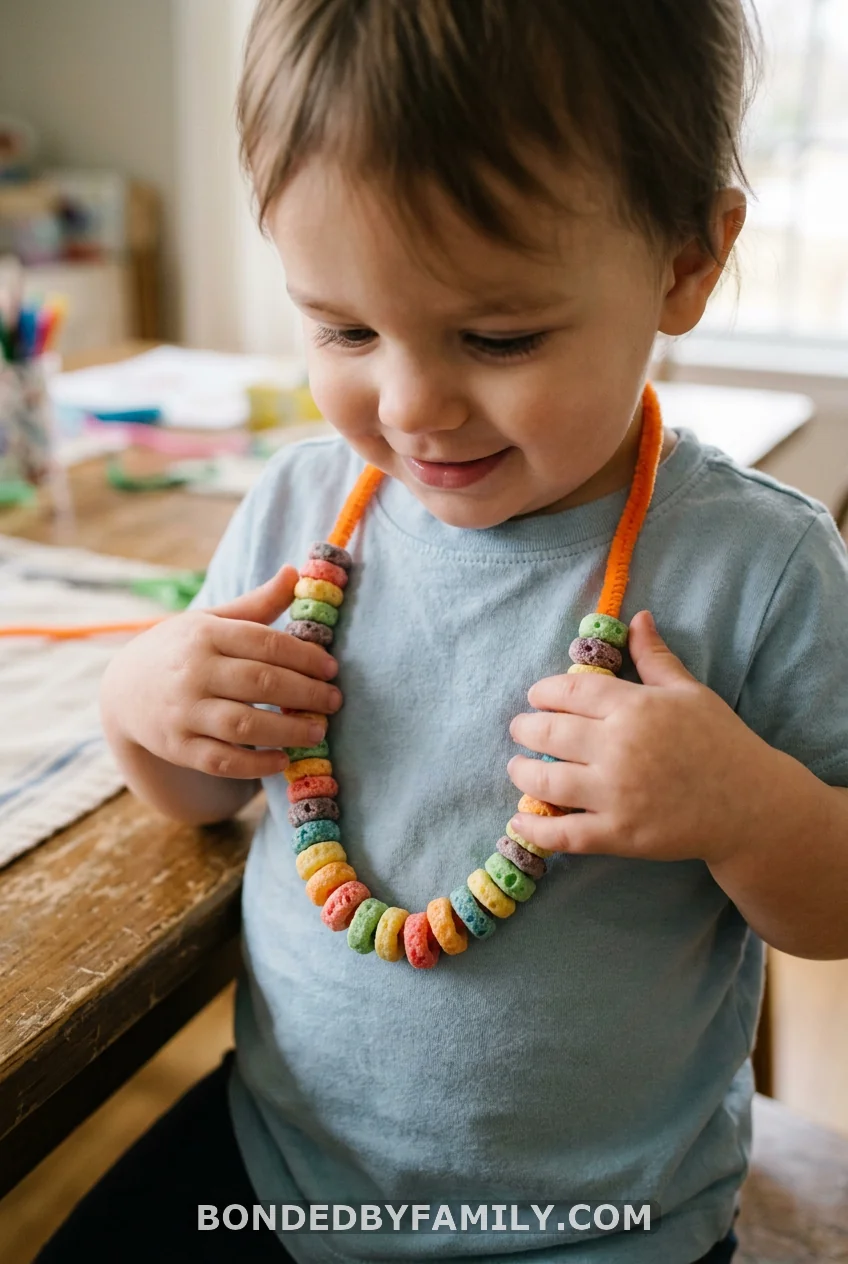
Bend one end of a pipe cleaner into a small hook so cereal pieces don’t slide off. Let toddlers thread O-shaped cereal onto the open end until it’s full, then twist the ends together to close the loop. It’s a snack and a craft at once, and cleanup is just letting them eat the extras.
12. Lid Sorting Station
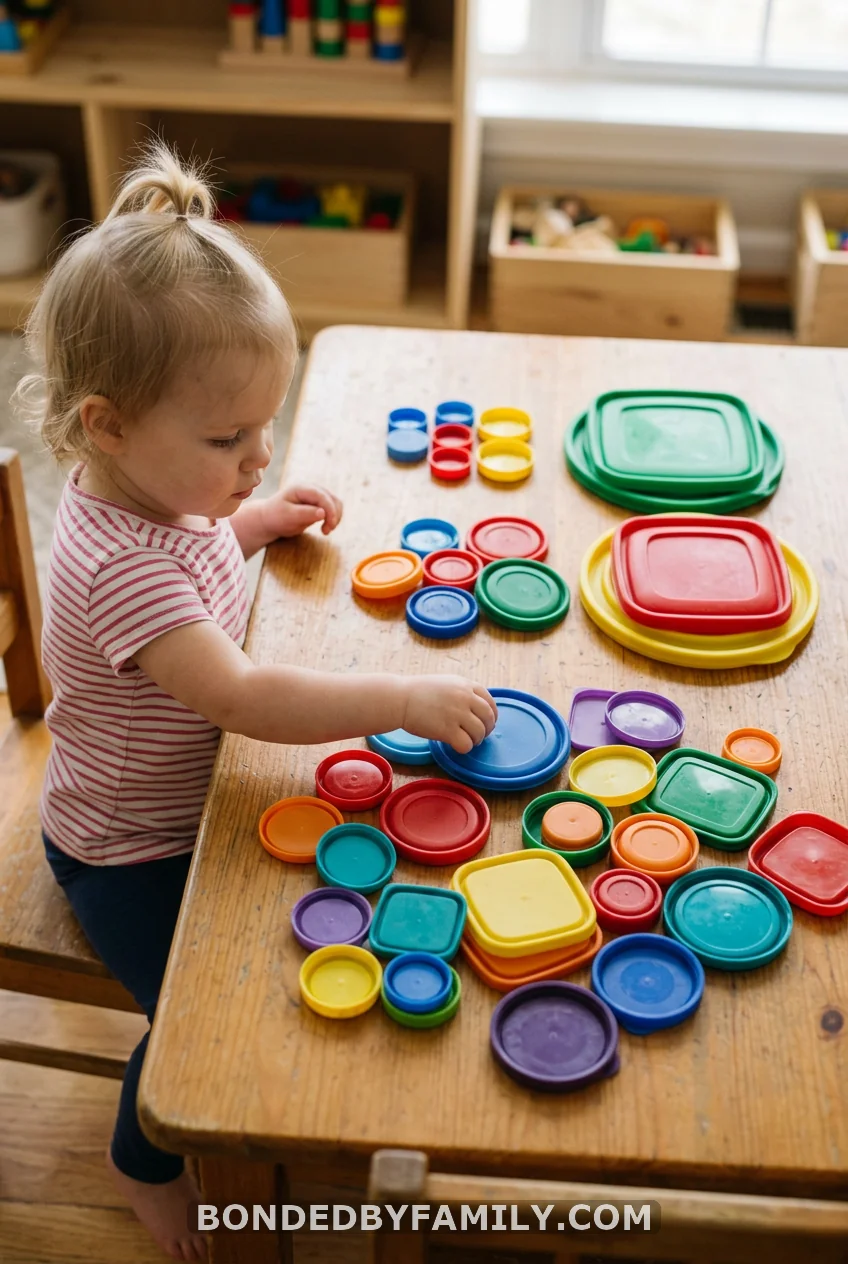
Wash and save plastic lids from yogurt cups, jars, and containers for a week. Set them out and let toddlers sort by size, color, or shape into small bins. No craft supplies needed at all, just a recycling bin you were about to empty anyway.
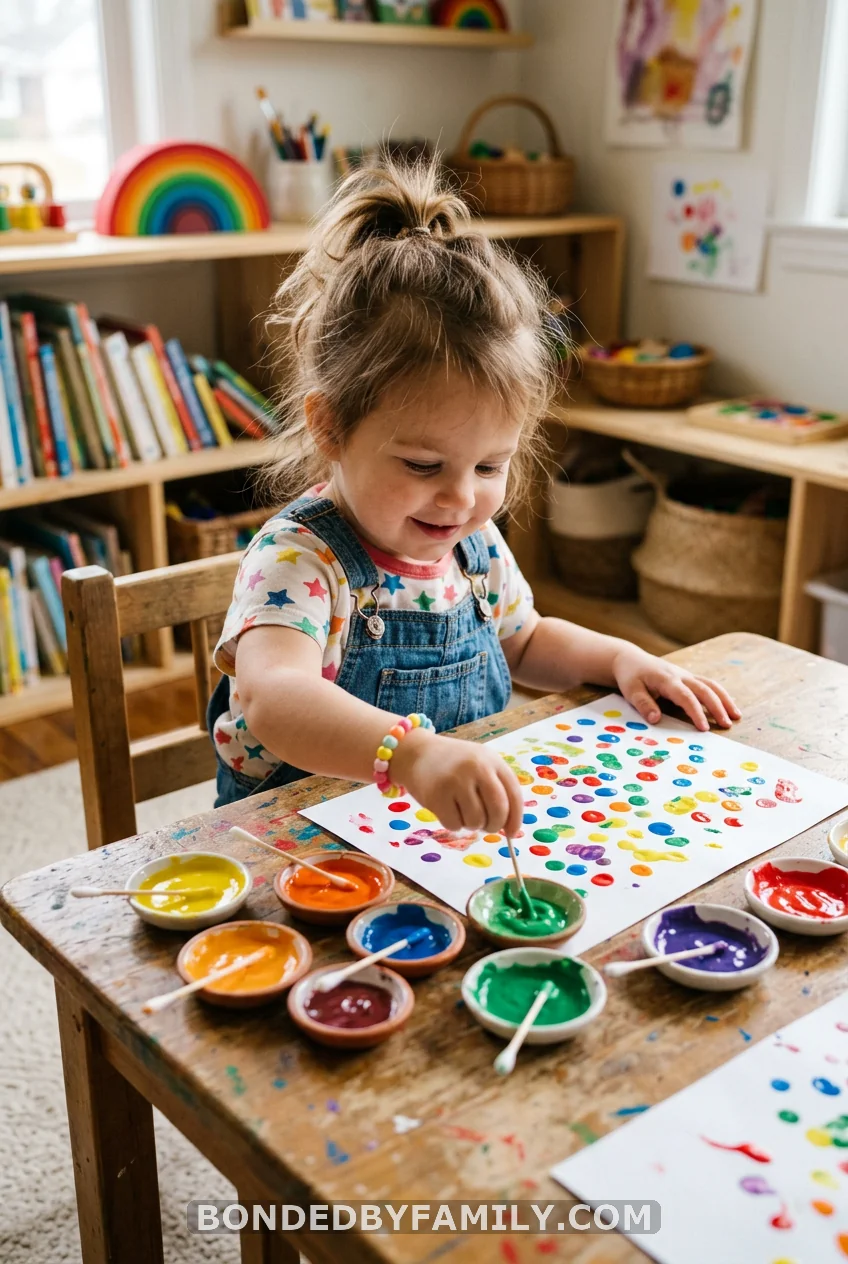
13. Q-Tip Dot Painting
Dip a cotton swab in paint and dot it onto paper to build a pattern. It’s a smaller, more controlled motion than a full paintbrush, which makes it a good bridge activity for toddlers just starting to hold writing tools with any real control.
14. Bead and Pipe Cleaner Threading
Hand over a pile of large wooden beads and a bundle of pipe cleaners. Threading beads onto a bendy pipe cleaner is more forgiving than a stiff string, so younger toddlers get the same hand-eye coordination practice without the frustration of a floppy shoelace.
Outdoor and Water Play Crafts
When the weather cooperates, take the mess outside where it belongs.
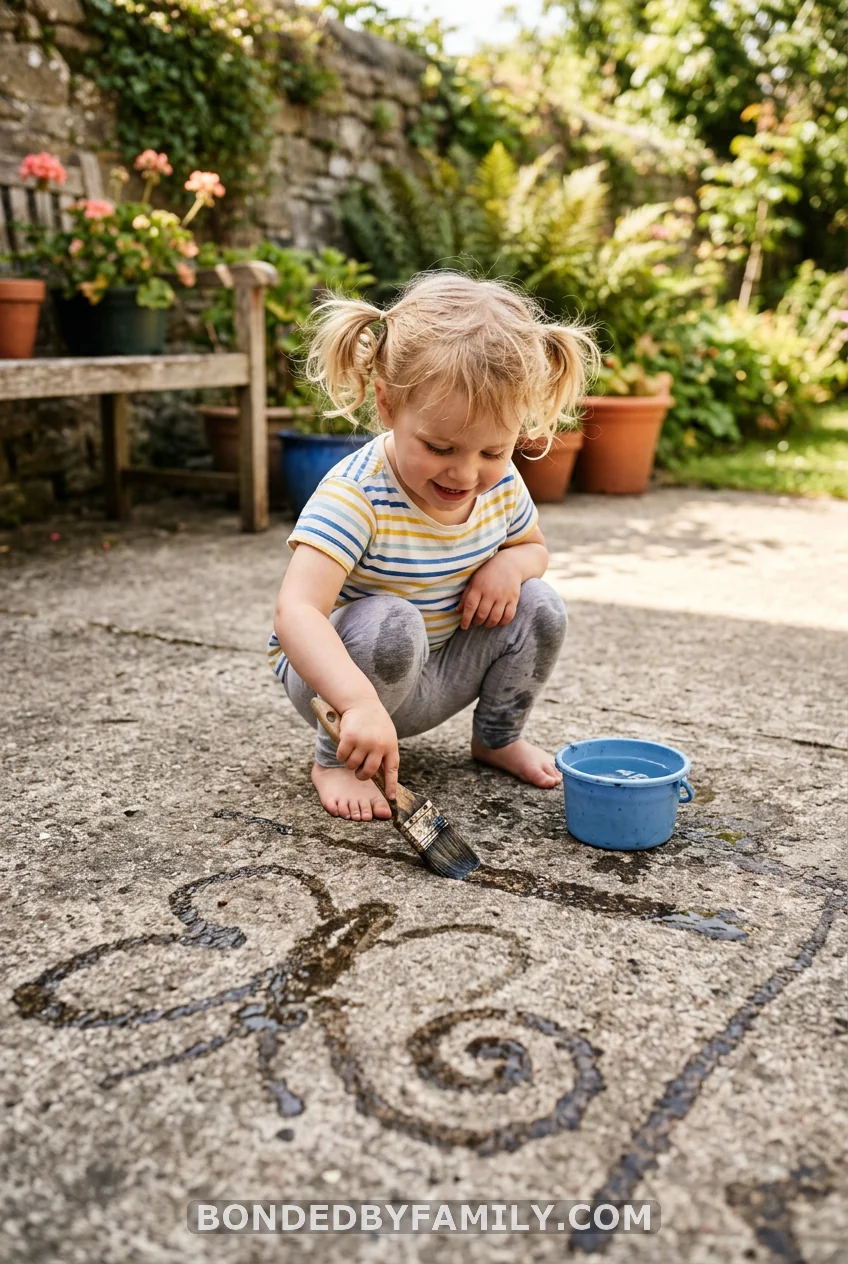
15. Water Painting on the Patio
Hand a toddler a wide paintbrush and a cup of plain water. Let them “paint” the sidewalk, the fence, or the side of the building. The water darkens the surface for a minute, then evaporates in the sun, so there’s nothing left to clean up and nothing to explain to a curious parent at pickup.
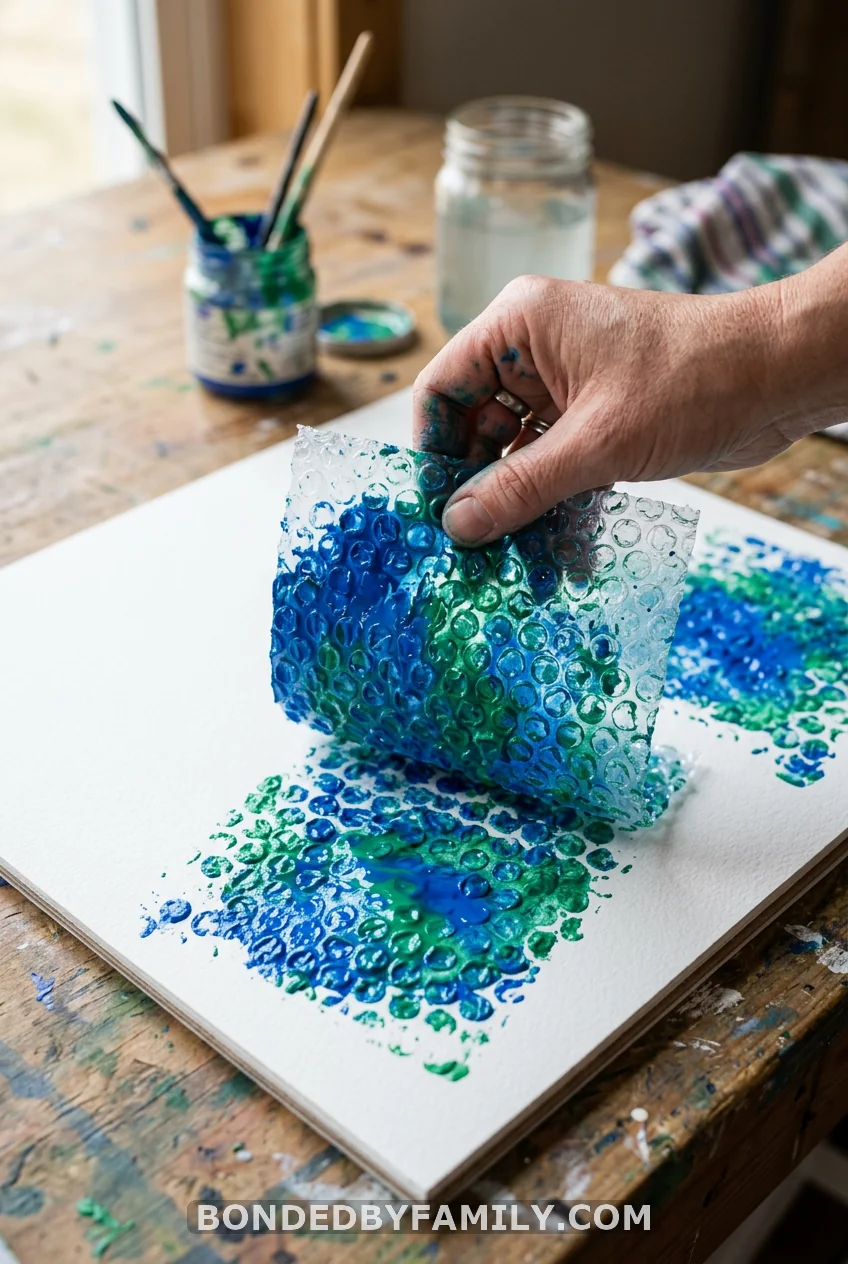
16. Bubble Wrap Stamp Painting
Cut a scrap of bubble wrap, dip it in a shallow tray of paint, and press it onto paper. The bubbles leave a dotted texture that toddlers find endlessly interesting to press and re-press, and any leftover bubble wrap from a shipping box works fine.
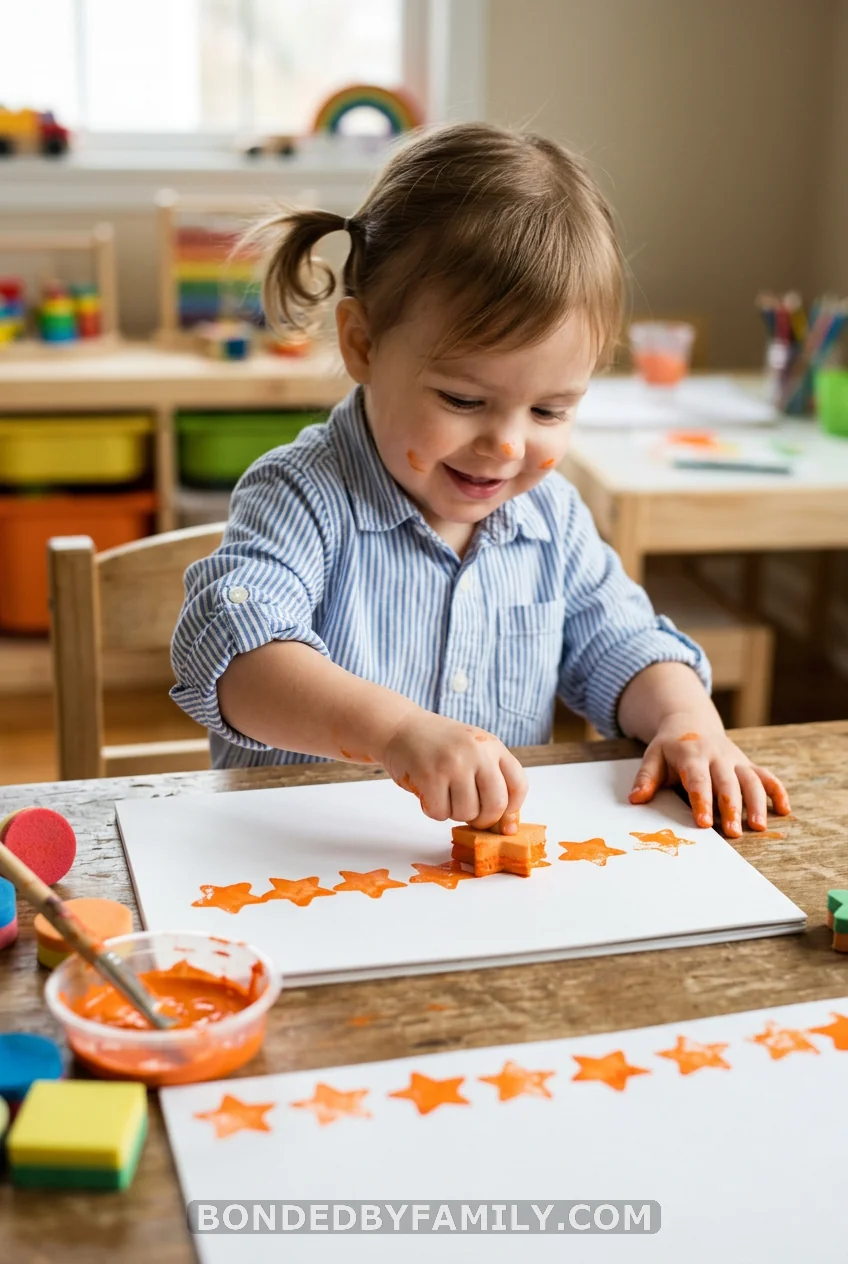
17. Foam Shape Stamping
Dip a foam shape or a cut potato half into paint and stamp it across paper. Quick, repeatable, and forgiving of a toddler’s short attention span since each stamp only takes a second before they move on to the next spot.
Building a Craft Bin That Works for You
The real trick behind every no-prep list isn’t the crafts themselves. It’s a supply bin already stocked and ready before the day starts. Keep contact paper, tape, cotton balls, pipe cleaners, and a bag of clean lids and tubes in one spot, and any morning where the schedule falls apart, you’ve got a fallback ready in under a minute.
You don’t need a Pinterest board full of ideas you’ll never get to. You need seventeen that fit into a real Tuesday. Pick two or three from this list, stock the bin, and see which ones your group reaches for first.
Frequently Asked Questions
What toddler crafts require zero prep time at all?
Sensory bins, sticky walls, and lid sorting stations top the list since they use materials straight from a recycling bin or supply closet with no cutting, printing, or pre-assembly required.
How do I keep toddler crafts mess-free in a daycare setting?
Contain the material before you hand it over. A shallow tray, a sealed zip bag, or a taped-down sheet of paper turns almost any messy material into a contained one.
What age is best for no-prep crafts?
Most of these work for toddlers between one and three years old, though younger toddlers do best with sensory bins and sticky walls, while three-year-olds handle threading and cutting-based crafts with more control.
Can these crafts work for a large daycare group at once?
Yes. Sticky walls, sensory bins, and stamping stations scale up easily since several toddlers can work at the same station side by side without needing individual supplies.
Do I need to buy special supplies for daycare crafts?
Almost none of these require anything beyond what a daycare already has on hand, including contact paper, tape, recycled containers, and basic craft paint.