Six toddlers. One rained-out playground. Forty-five minutes until snack time.
If that sentence made your stomach drop a little, you already know why indoor activities for toddlers at daycare matter more than almost anything else in your bag of tricks. A good outdoor day runs itself. A good indoor day? That takes a plan.
I’ve spent years running toddler rooms through every kind of weather sabotage: thunderstorms, heat advisories, that one week in February where the playground turned into a skating rink. What I’ve learned is this: toddlers don’t need more stuff. They need more ideas for the stuff already sitting in your supply closet.
Here are 25 activities that ask nothing of your budget and everything of your creativity. Pull from this list on your next indoor day, and watch a room full of restless toddlers turn into a room full of busy ones.
High-Energy Gross Motor Activities
Toddlers store energy like a battery bank, and if you don’t give them somewhere to spend it, they’ll spend it on each other. These activities burn it off fast.
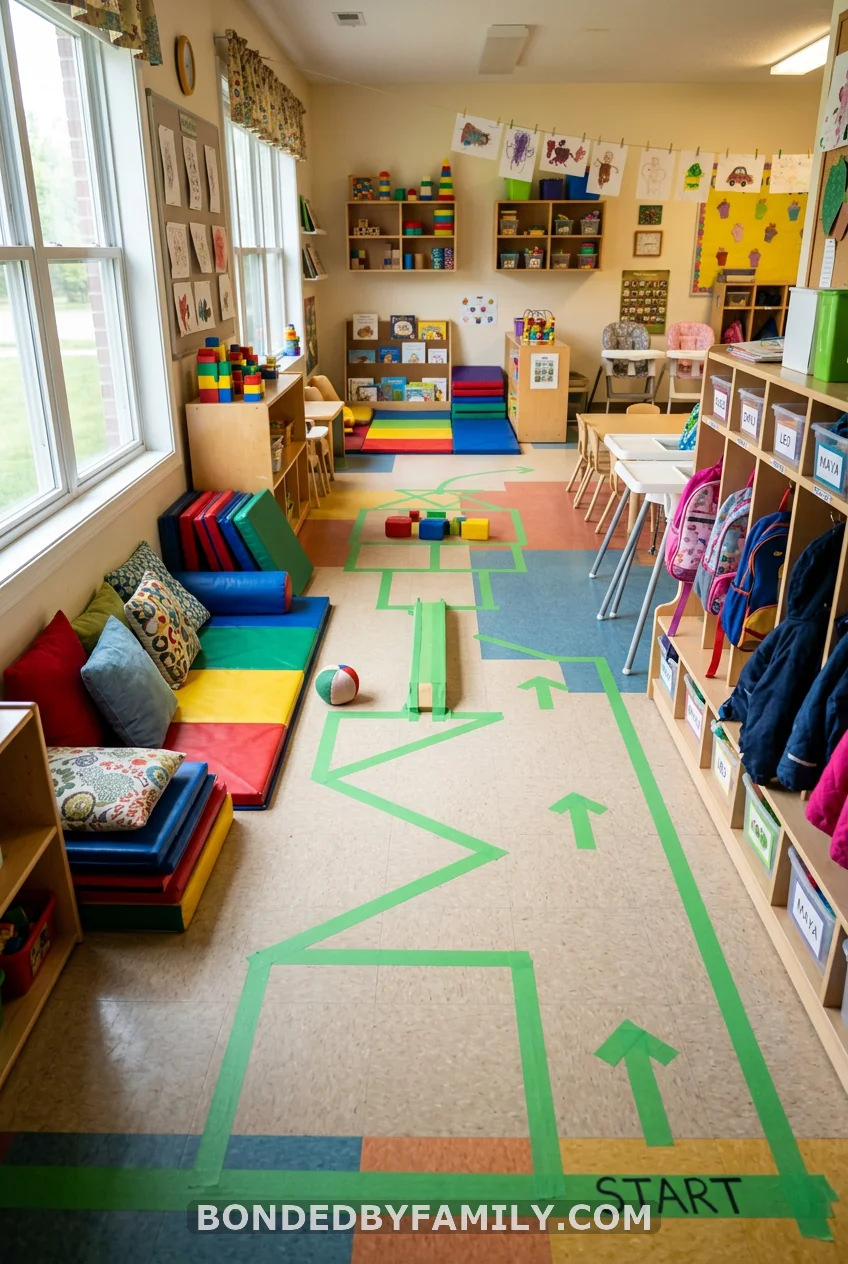
1. The Ultimate Painter’s Tape Obstacle Course
This is the one activity I build almost every single indoor day, and toddlers never seem to tire of it. Here’s why it earns its own deep dive instead of a two-line blurb: it scales up or down depending on your room, your group size, and how much chaos you’re prepared to referee that day.
Why This Works
Toddlers between 18 months and 3 years are wiring up their vestibular system, the part of the brain that handles balance and spatial awareness. An obstacle course forces a child to plan several movements in a row: step, crawl, hop, duck. That sequencing is a cognitive workout wearing a gross motor costume.
Dimensions and Setup
Aim for a course that runs 12 to 15 feet in a loop, using whatever floor space your room allows. A hallway works if your classroom is tight. Leave at least 24 inches of width at every point so two toddlers can pass without a collision, and keep any climbing element under 12 inches high for the 1 to 2 age group.
Materials and Costs ($8-15)
You need painter’s tape (about $5 for a roll that lasts a full term), a few sofa cushions or crash pads if your center has them, and empty cardboard boxes with both ends cut out for tunnels. Most daycare supply closets already have everything except the tape.
Step-by-Step Build
- Tape a wavy line along the floor for a balance-beam walk.
- Set two cushions a stride apart for a jumping section.
- Place a cut-open box as a crawl-through tunnel.
- Add a hula hoop or taped circle as a “landing pad” where kids pause and do three jumping jacks.
- Tape a finish line with a hand-drawn star.
- Walk the course yourself first, at toddler eye level, to catch any tripping hazards.
Common Mistakes to Avoid
Don’t make every station the same type of movement. A course that’s all jumping wears kids out fast and skips other skill-building. Don’t skip the walkthrough at toddler height either; a chair leg that looks harmless from adult height can be a face-level hazard for a two-year-old.
Pro Move
Rotate the course layout weekly rather than rebuilding from scratch. Move the tunnel, swap the balance line for a zigzag, and the same $10 in materials feels brand new to a toddler’s brain every time.
2. Balloon Volleyball Over a Blanket Net
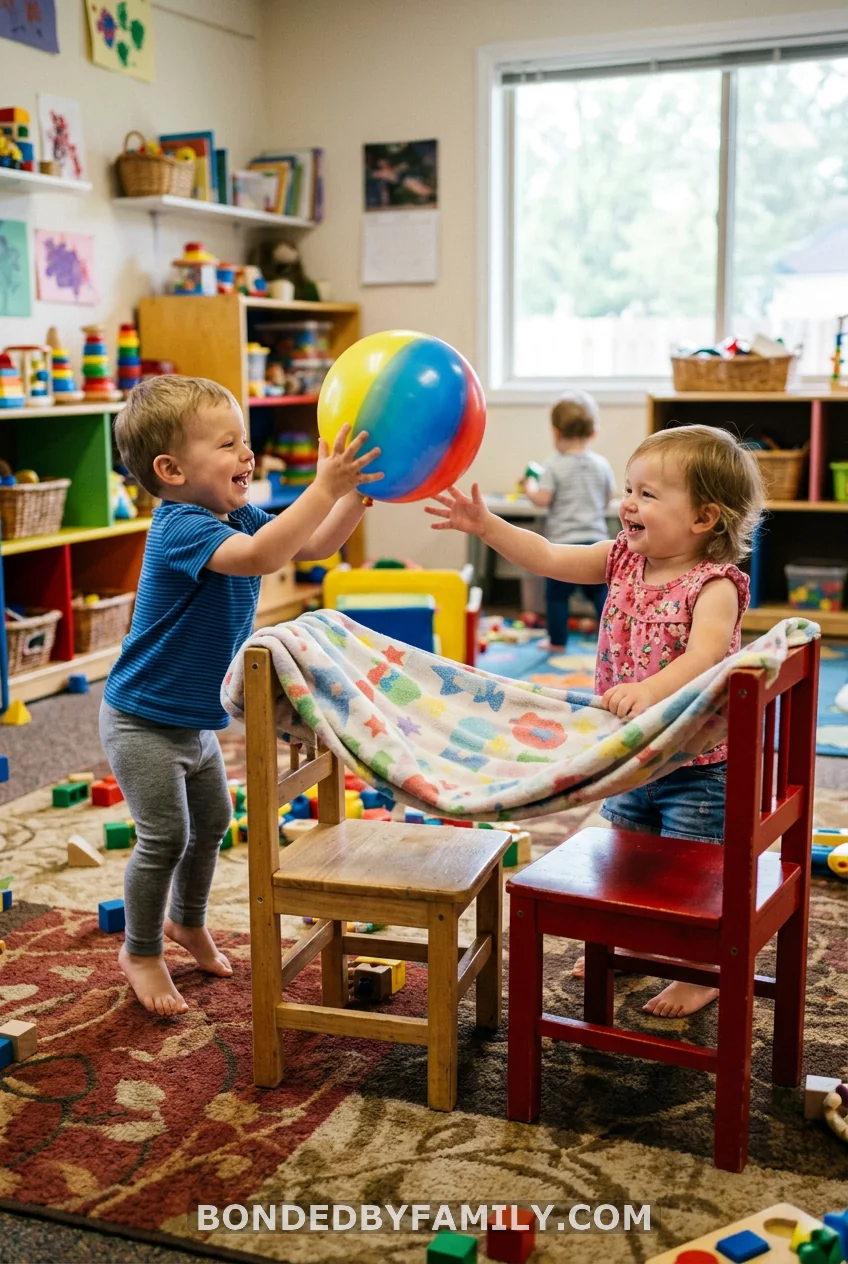
Drape a blanket over the backs of two chairs to make a low net. Give each toddler a balloon and let them bat it back and forth. Balloons move slowly enough that toddlers can track them, which builds hand-eye coordination without the frustration a real ball brings at this age. Keep an adult within arm’s reach at all times, since burst balloons are a choking risk for children under three (more on that further down).
3. Freeze Dance Statues
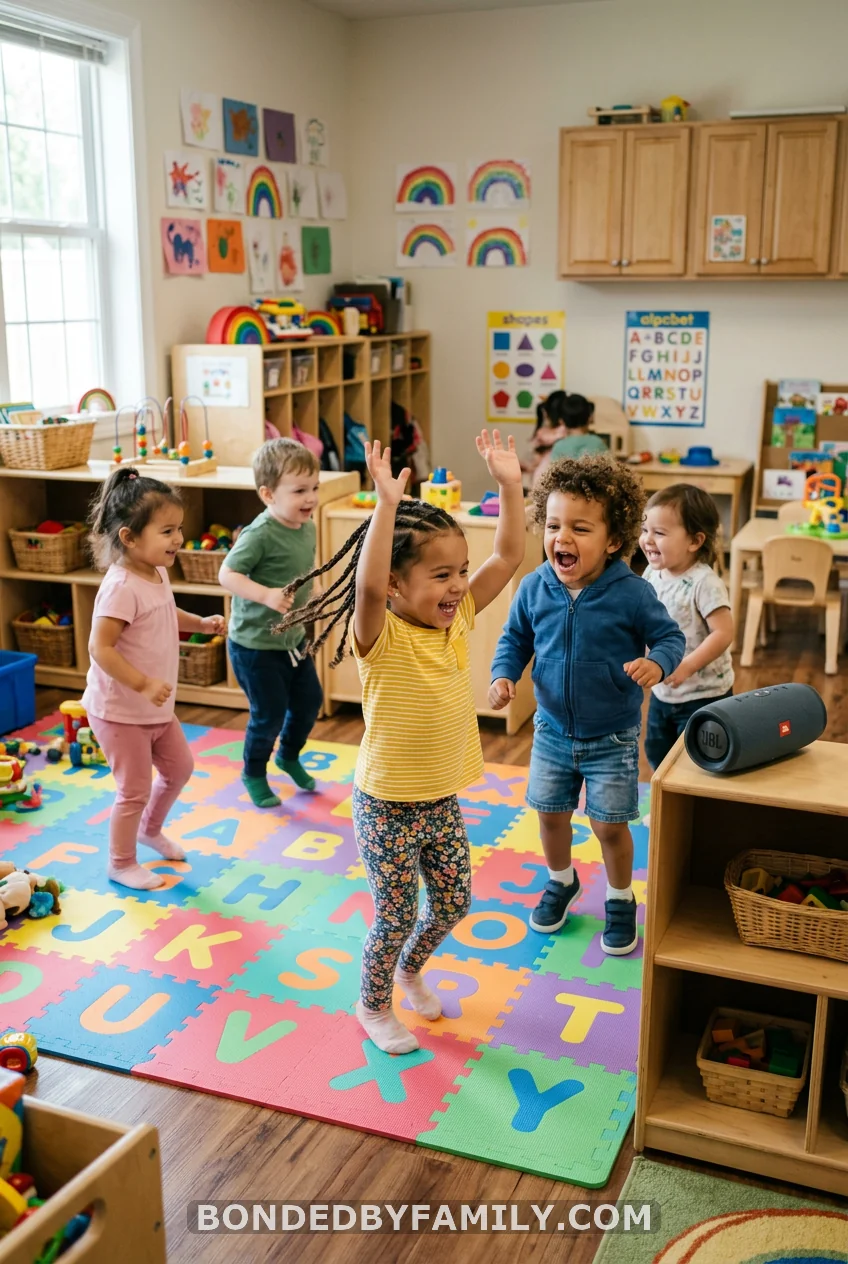
Play music, let them dance, then cut the sound and call “freeze.” Toddlers hold their pose until the music starts again. It sounds almost too basic to work, and yet it reliably burns fifteen minutes of wiggles while sneaking in a listening-skills lesson. Add silly poses like “freeze like a flamingo” once your group has the basic game down.
4. Sock Ball Basket Toss
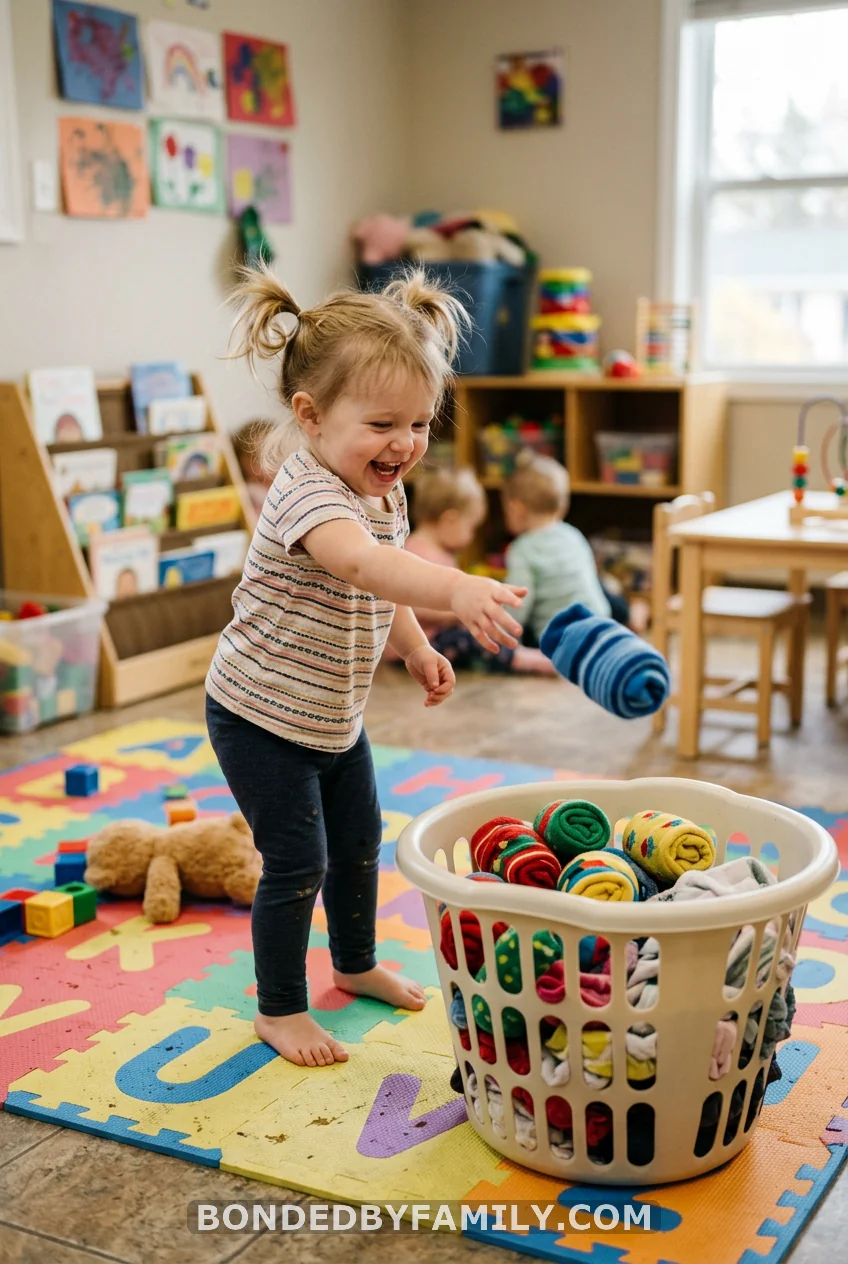
Roll a dozen mismatched socks into balls. Set out a laundry basket. Toss, retrieve, repeat. That’s the entire activity, and it’s still one of the highest-requested games in my room. Zero prep, zero cost, and it works on throwing accuracy every single time.
5. Animal Walk Relay
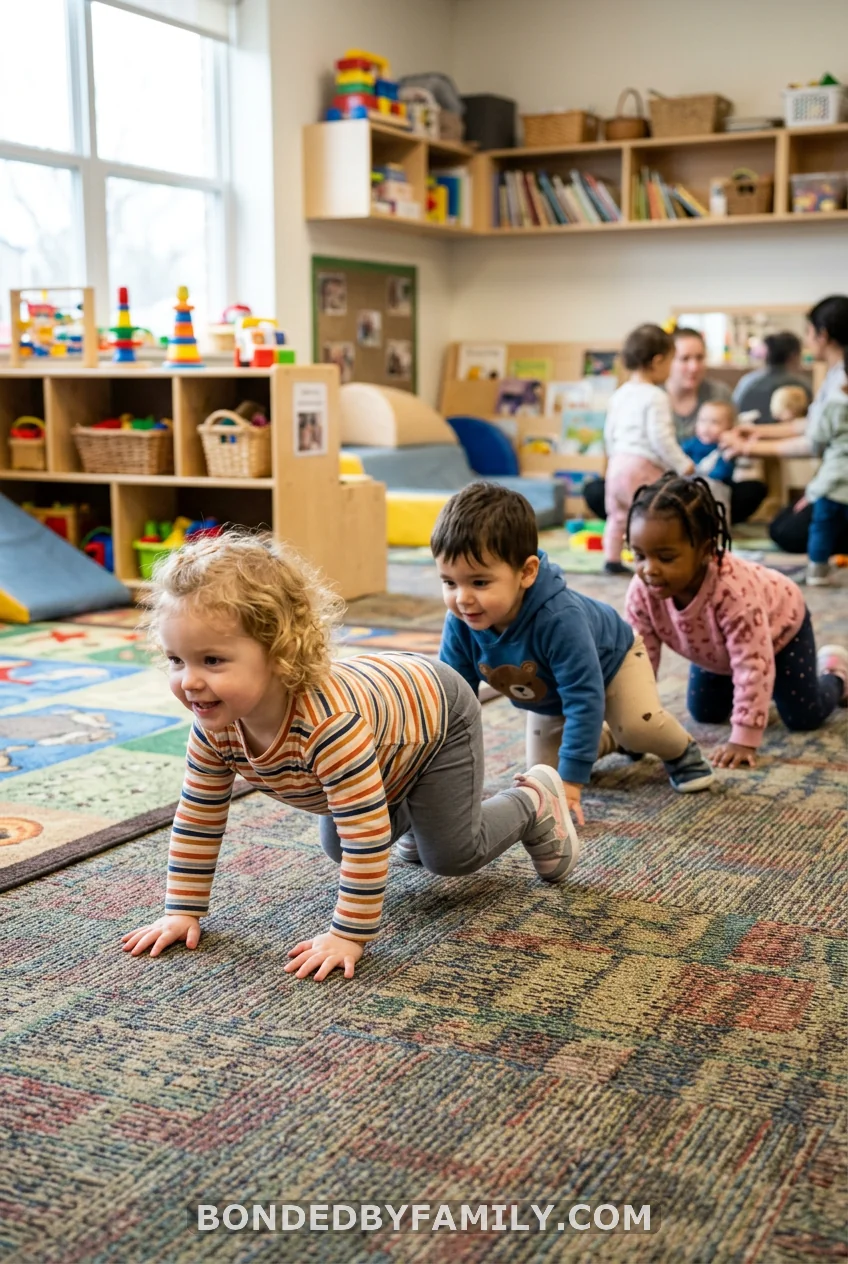
Mark a start and finish line with tape, then call out an animal for kids to imitate as they travel between them: bear crawl, bunny hop, crab walk, penguin waddle. Each animal targets a different muscle group, so cycling through four or five animals gives toddlers a surprisingly full workout disguised as a game.
6. Bubble Wrap Stomp Path
Tape a strip of bubble wrap to the floor in a straight line and let toddlers stomp their way down it. The popping sound gives instant feedback, which toddlers find endlessly satisfying. Swap in fresh bubble wrap from your shipping boxes and this costs exactly nothing.
7. Cushion Island Hop
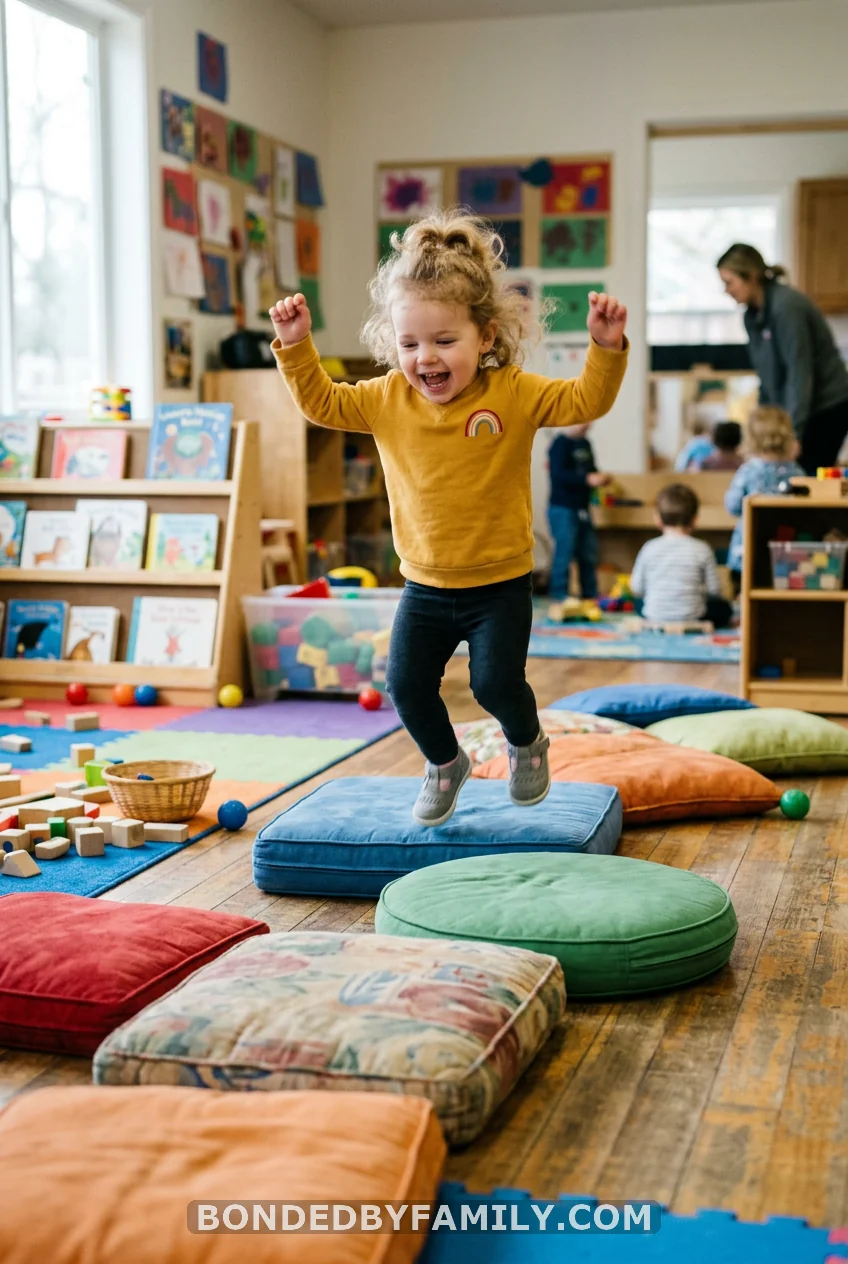
Scatter floor cushions or foam mats a small hop apart and tell toddlers the floor between them is “water.” They hop island to island without touching the ground. Space the cushions closer together for younger toddlers and farther apart as balance improves through the year.
Sensory & Calm-Down Activities
After a high-energy stretch, toddlers need somewhere to land. Sensory play slows heart rates and gives busy hands something quiet to do.
8. Rice Bin Treasure Dig
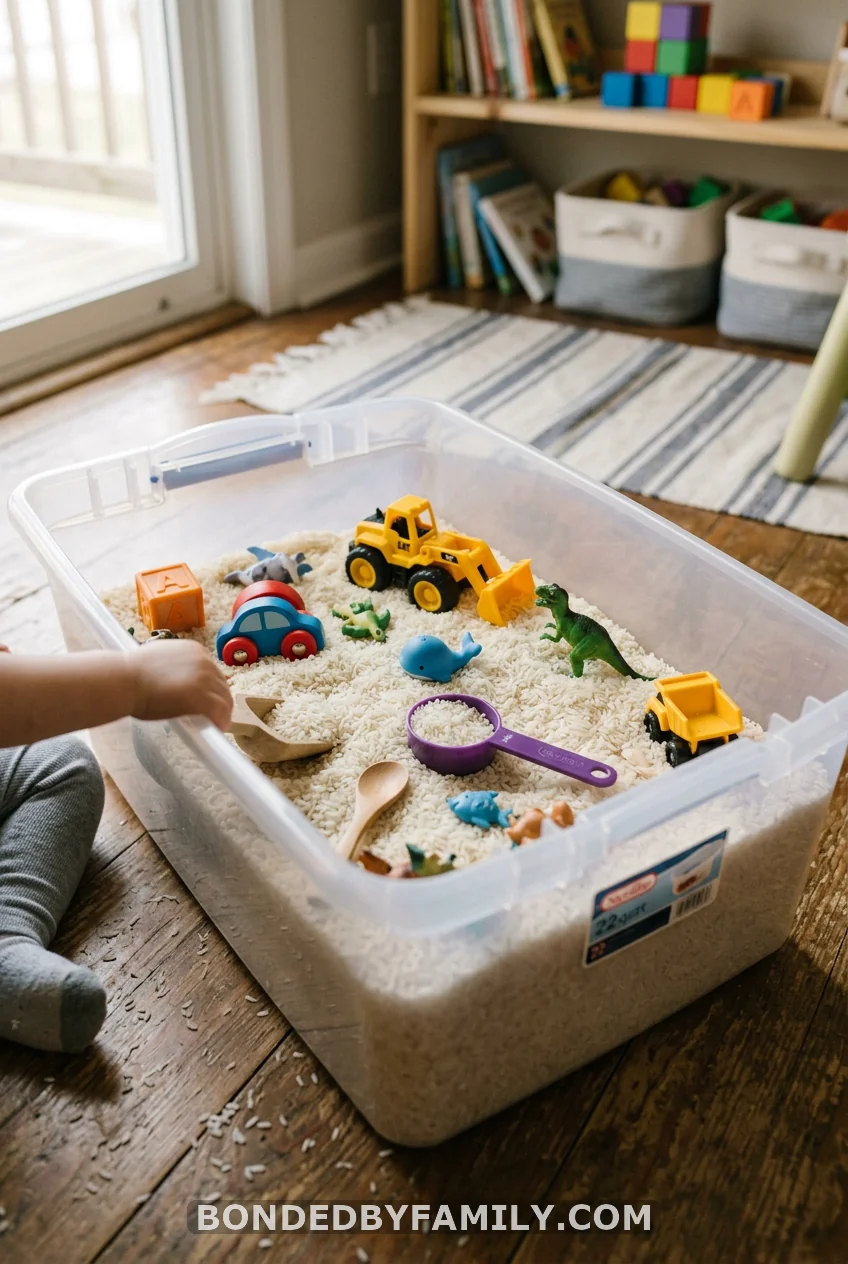
Fill a shallow bin with dry rice and bury small toys, plastic animals, or textured beads inside. Toddlers dig with their hands or a spoon to find what’s hidden. This one activity can occupy a toddler for twenty straight minutes, which makes it worth the ten minutes it takes to set up. Dye the rice with a few drops of food coloring and rubbing alcohol the night before for a colorful twist.
9. No-Mess Bag Painting
Squeeze a few dollops of washable paint into a zip-top bag, seal it flat, and tape it to a table or window. Toddlers push the paint around with their fingers through the plastic. Zero cleanup, and it works for toddlers who aren’t ready to keep paint off their clothes yet.
10. Cloud Dough Station
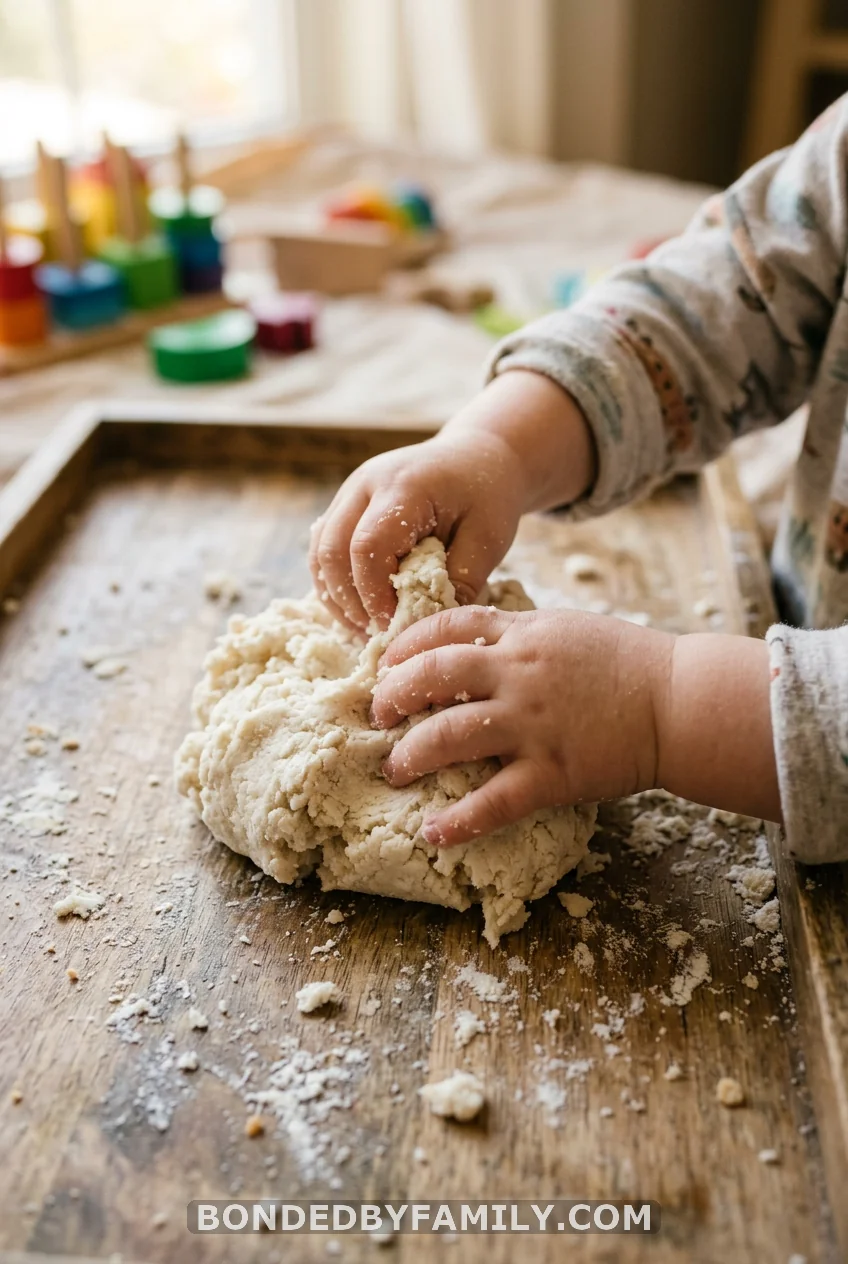
Mix eight parts flour to one part baby oil until it holds a shape when squeezed but crumbles when released. Set it on a tray with scoops and cups. Cloud dough has a texture unlike anything else toddlers touch at home, which is exactly why it holds their attention so well.
11. Frozen Toy Excavation
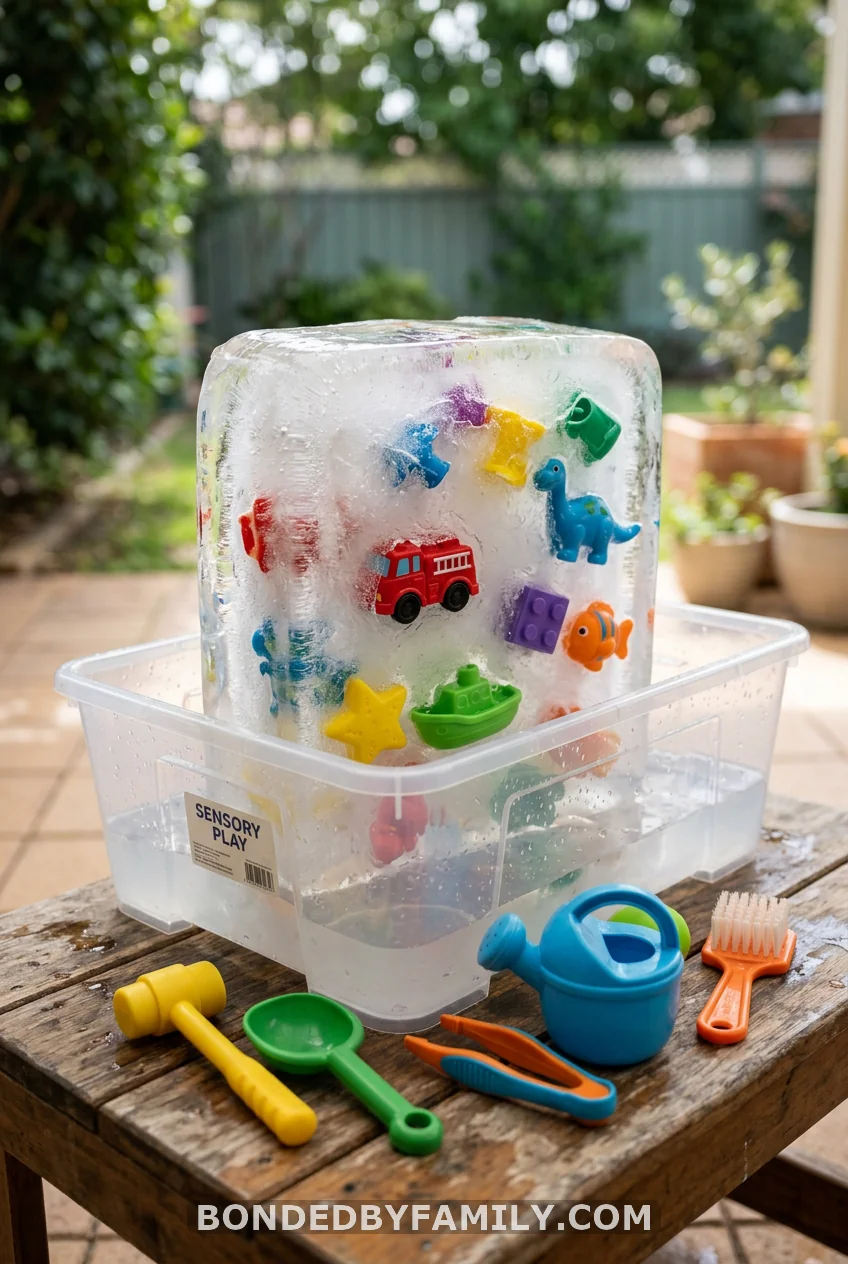
Freeze small toys inside a container of water overnight. Give toddlers warm water in squeeze bottles, plastic spoons, and a little salt to melt their way to the toys inside. It’s part science lesson, part treasure hunt, and it buys you a solid chunk of quiet, focused time.
12. Texture Bottle Roll
Fill a few clear plastic bottles with different fillings: dried beans, water and glitter, rice, cotton balls. Seal the lids tight with hot glue. Toddlers roll the bottles, shake them, and compare the sounds and movement inside. Keep the fillings large enough that a cracked bottle wouldn’t pose a choking risk.
13. Cotton Ball Snowstorm
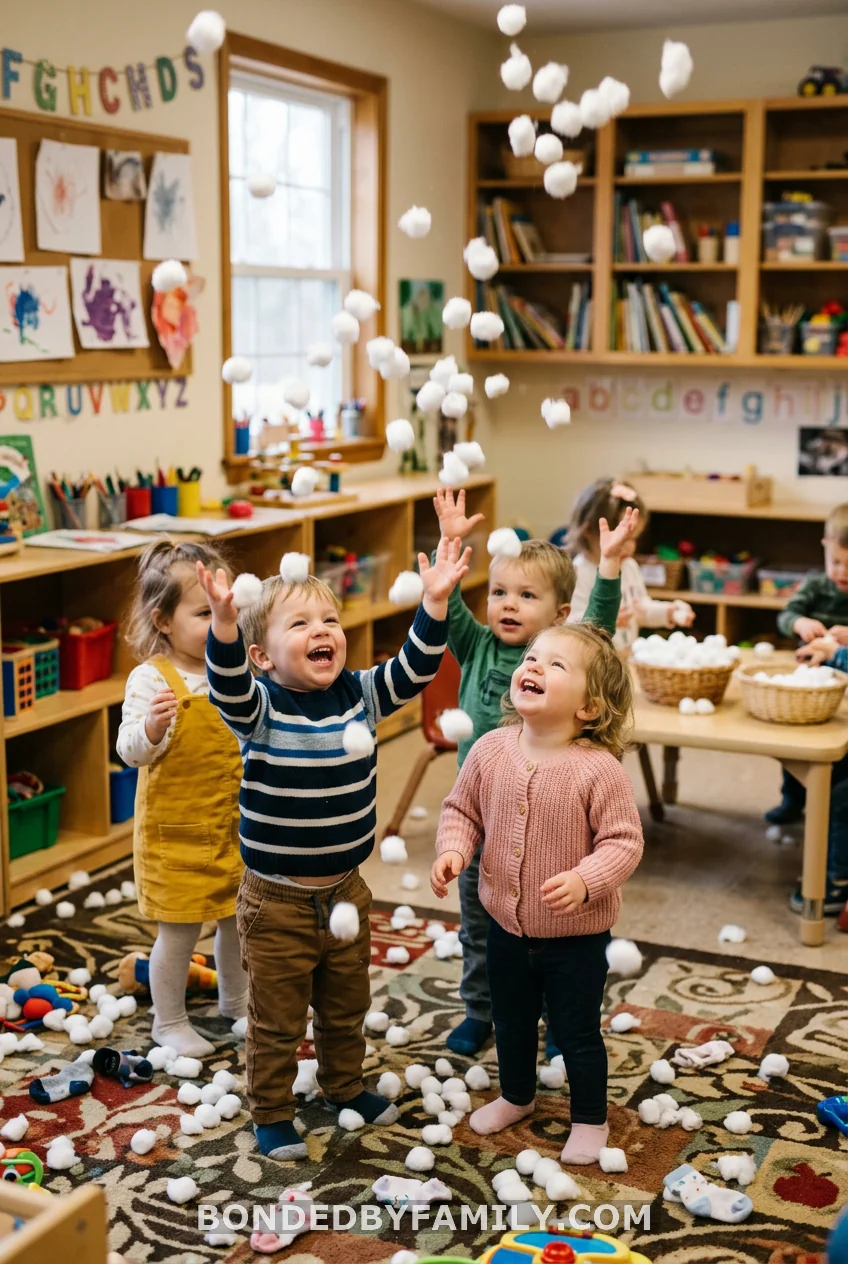
Hand out a basket of cotton balls and let toddlers toss them up like snow, then race to collect them all back into the basket before the timer runs out. It’s loud, it’s a little chaotic, and toddlers ask for it by name for weeks afterward.
Fine Motor & Learning Activities
These activities slow the pace and target the small muscles in the hands, the ones toddlers need for holding crayons, buttoning coats, and eventually writing their name.
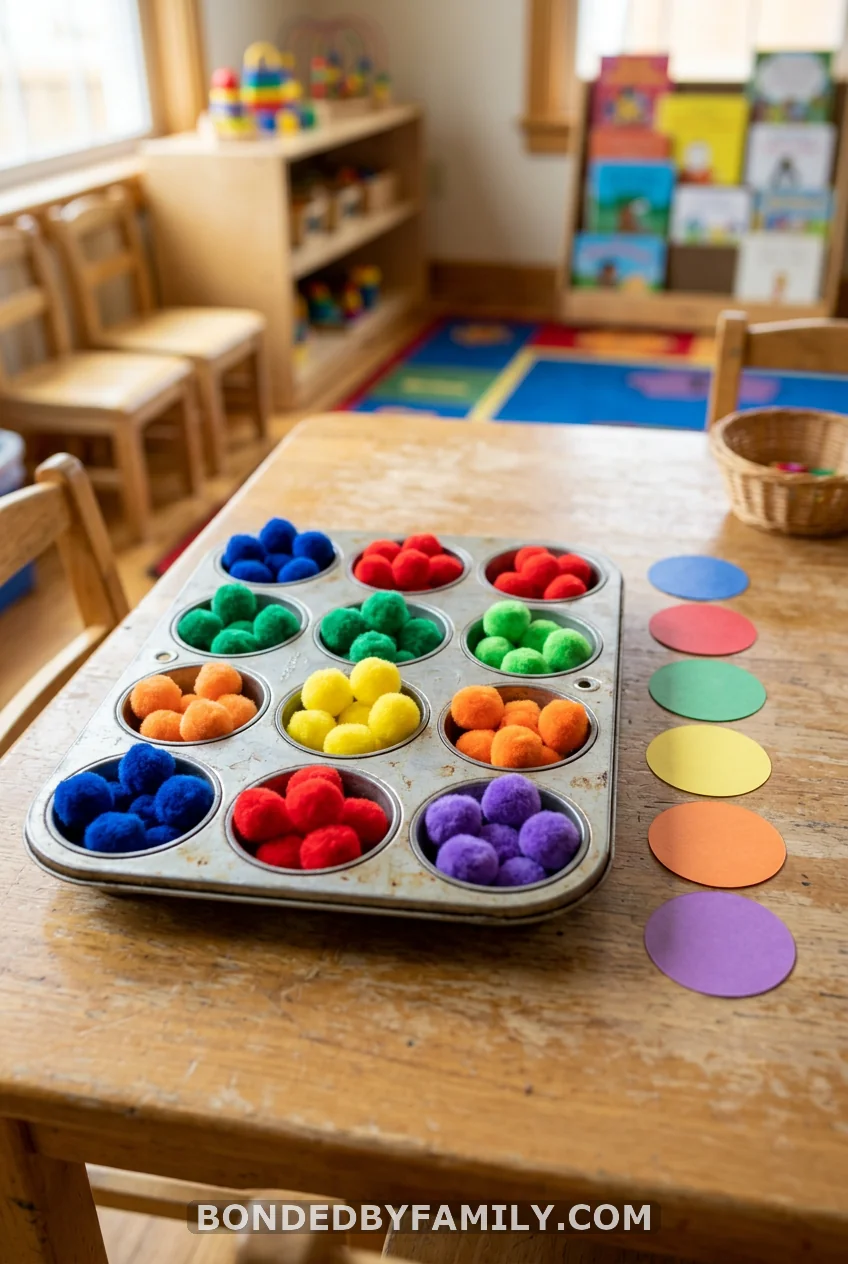
14. Muffin Tin Color Sort
Label each cup of a muffin tin with a colored dot, then hand toddlers a mixed pile of colored pom poms or buttons to sort by cup. It looks almost too basic to matter, but color sorting builds the same categorization skills toddlers later use in math. Swap the colors for shapes once sorting gets too fast.
15. Q-Tip Dot Painting Cards
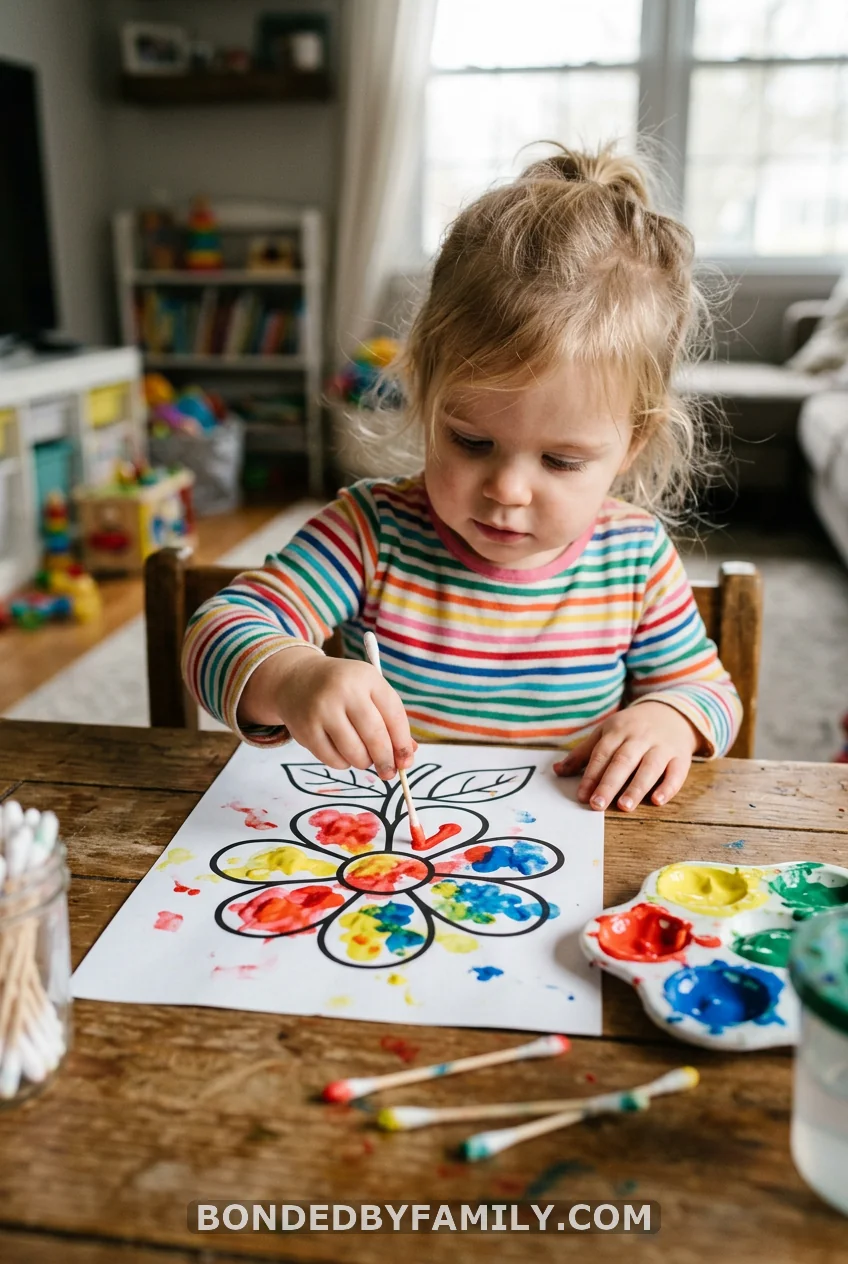
Print or draw thick outlines like a flower or a caterpillar, and let toddlers fill them in using cotton swabs dipped in paint. The narrow swab tip forces a pincer grip, the same grip toddlers need for holding a pencil later.
16. Straw and Pom Pom Blow Race
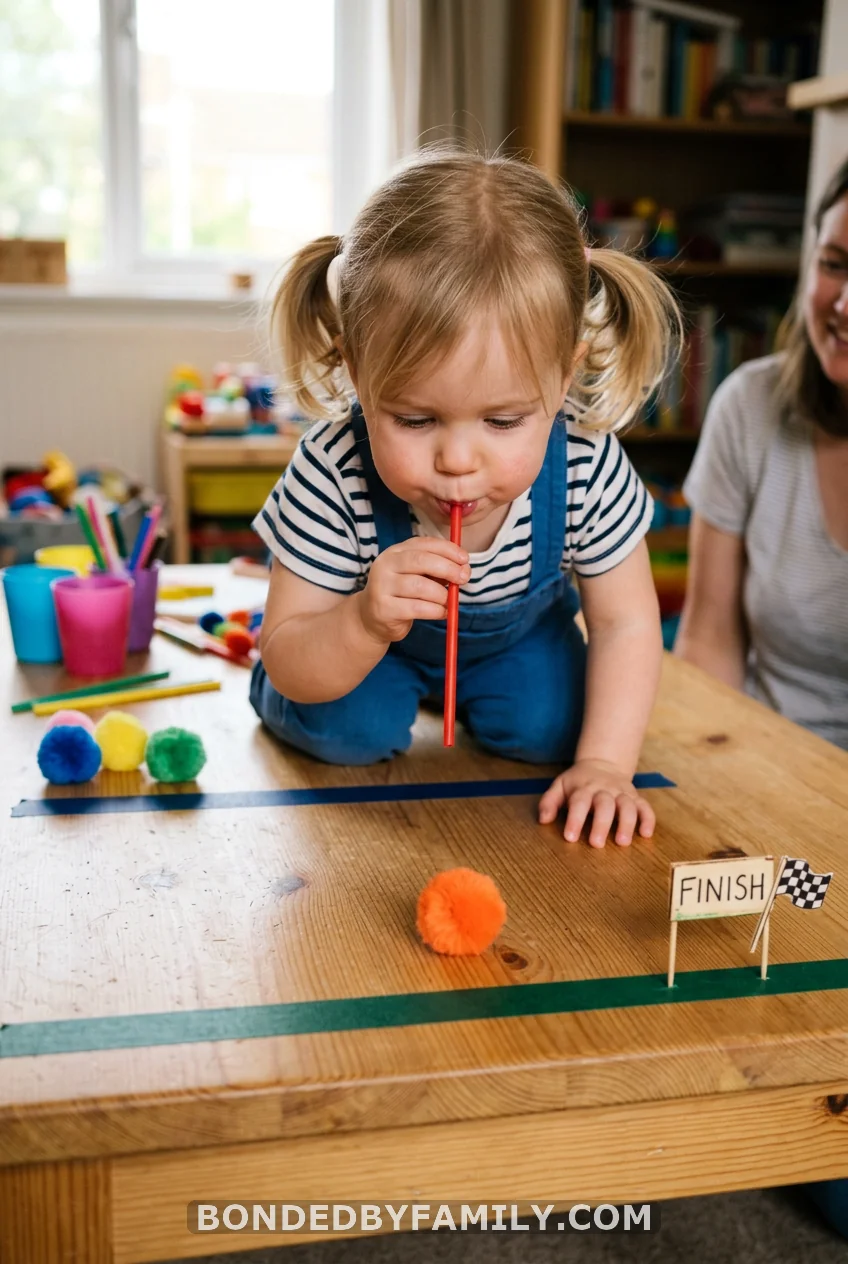
Draw a start and finish line on a table, hand each toddler a straw, and let them blow a pom pom across the table to win. It builds the same breath control toddlers use for speech sounds, and the giggling alone makes it worth the five minutes of setup.
17. Lacing Cardboard Shapes
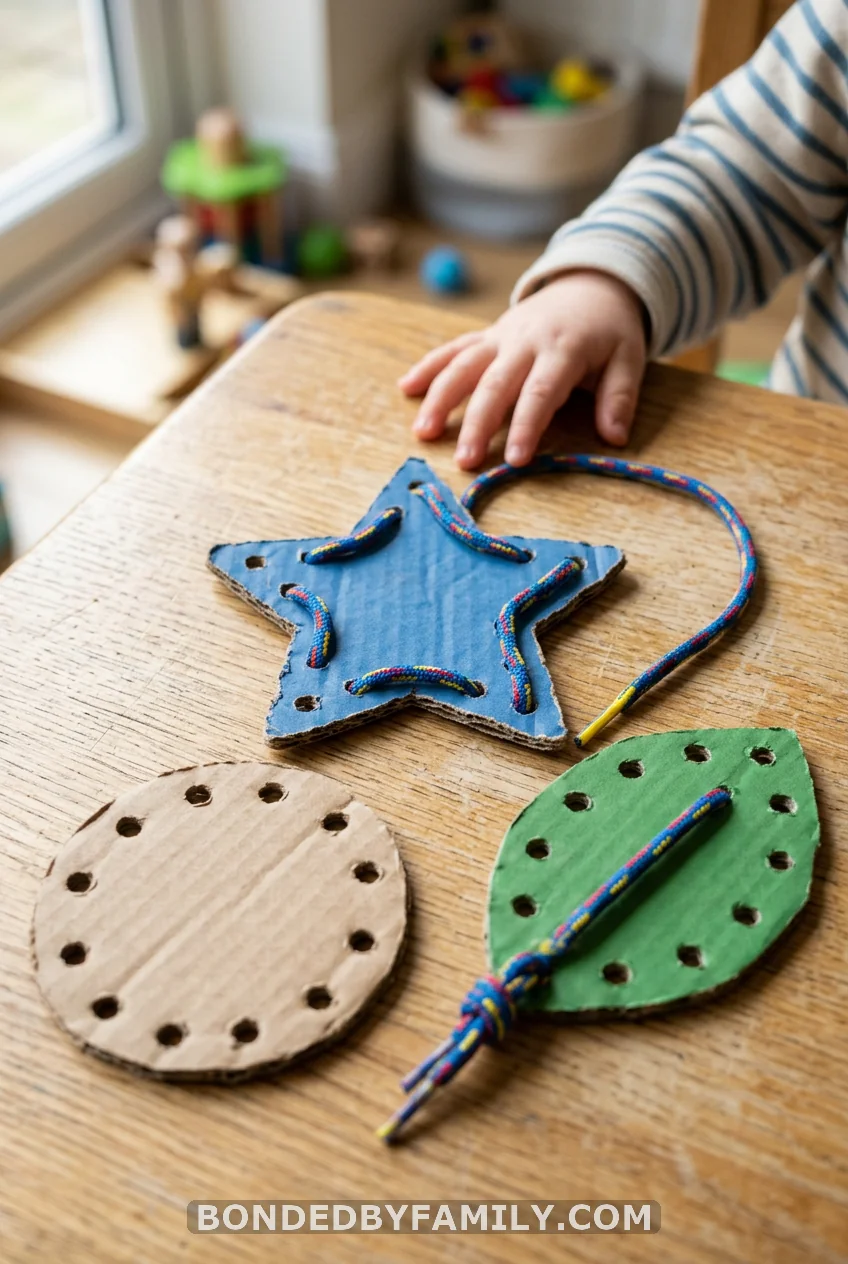
Cut cardboard into large shapes, punch holes around the edge with a hole punch, and give toddlers a shoelace with a knotted end to thread through. It’s a direct precursor to shoe-tying and works those tiny finger muscles hard.
18. Sticker Matching Board
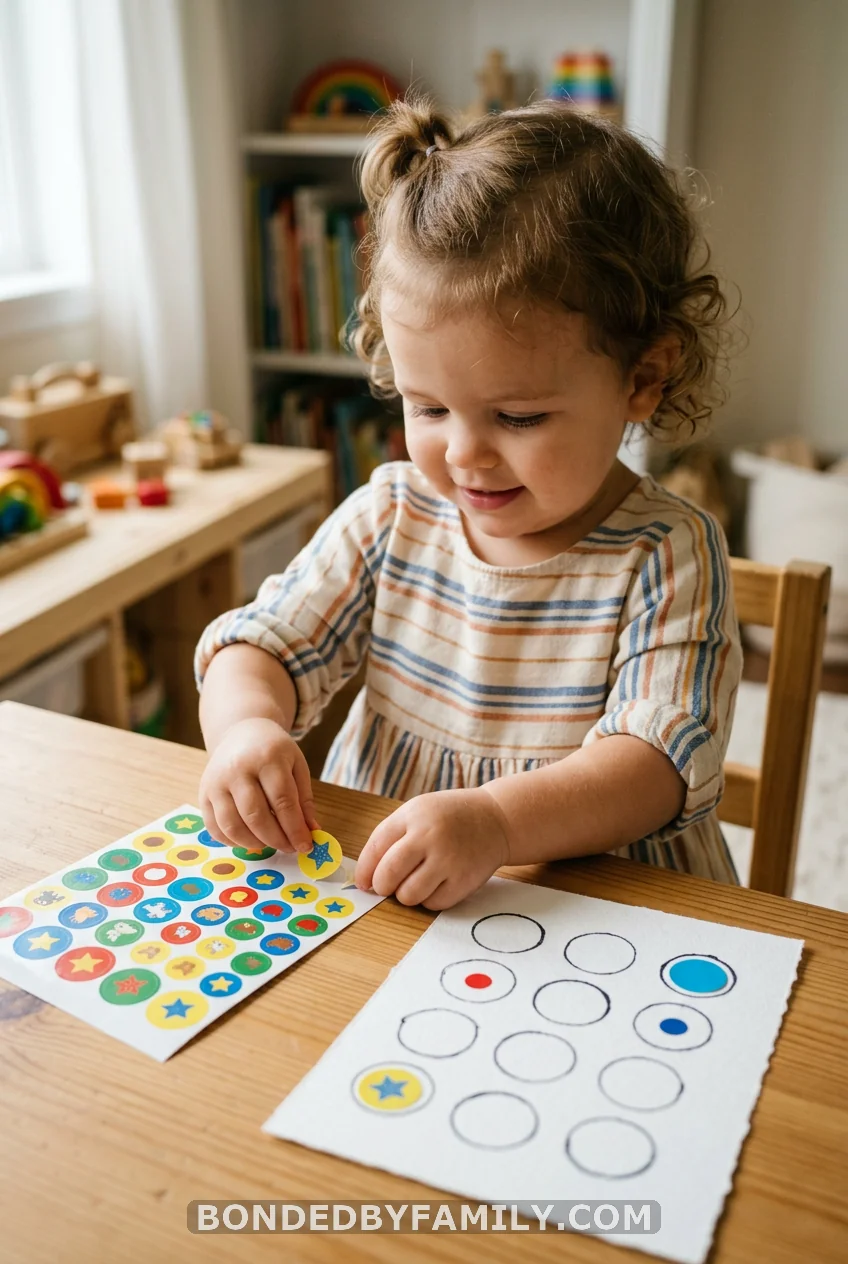
Draw a grid of shapes or colors on paper, then give toddlers a sheet of matching stickers to peel and place. Peeling a sticker off its backing takes real finger strength for a toddler, which is exactly why this activity is worth including even though it looks like a filler task.
19. Myth-Bust: “Indoor Activities Can’t Build the Same Skills as Outdoor Play”
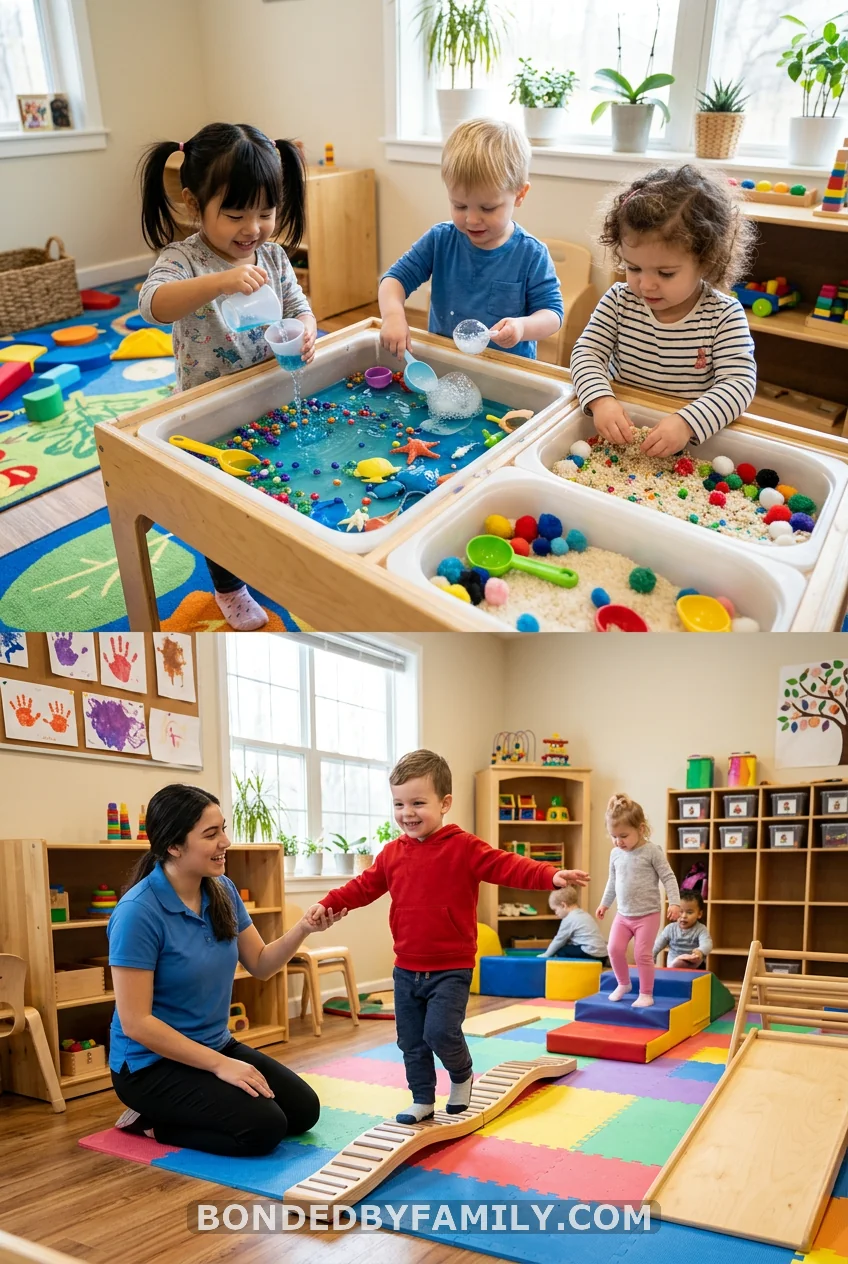
What most people think: Indoor time is a holding pattern, something to survive until the weather clears so real development can resume outside.
The reality: Outdoor play is unmatched for cardiovascular endurance and open-ended exploration, but indoor activities target skills outdoor play often misses entirely. Balance beams and obstacle courses build the same vestibular skills as a playground climber. Sensory bins develop tactile discrimination that sand and grass can’t replicate in the same controlled way. Fine motor stations like lacing and sorting directly rehearse the finger strength toddlers need for writing, buttoning, and using utensils, skills a swing set was never designed to teach.
The clear answer is that indoor and outdoor play develop different skill sets, not lesser and greater ones. A daycare room stocked with a rotating set of indoor activities isn’t a consolation prize for bad weather. It’s a second, equally valuable curriculum running alongside the outdoor one.
Music, Imagination & Group Games
Close out an indoor day with activities that lean on pretend play and group energy rather than materials.
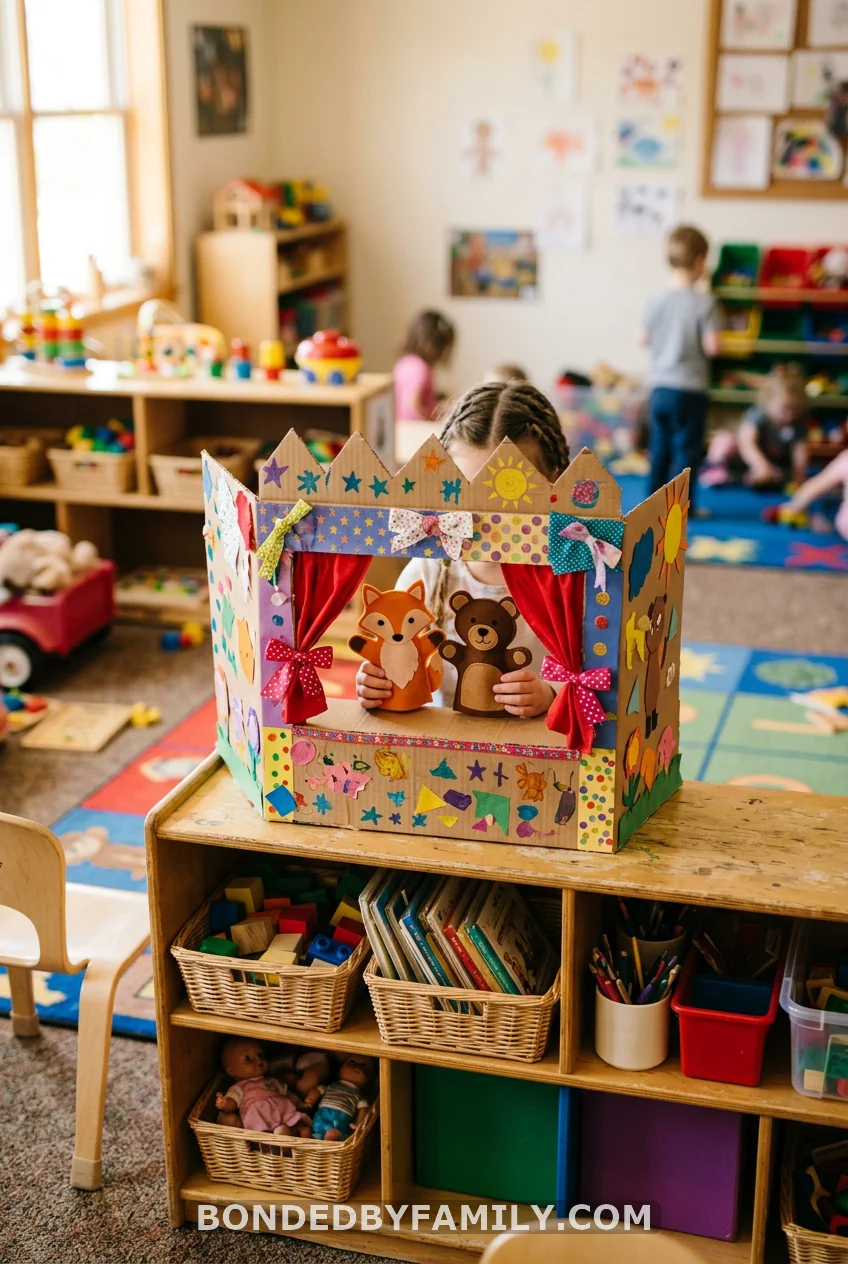
20. Cardboard Box Puppet Theater
Cut a rectangular window into a large box, decorate the front with markers, and toddlers pop paper-bag or sock puppets up through the opening below. Group play in front of a theater builds turn-taking and early storytelling skills, and the box itself becomes a rotating prop for weeks after the puppet show ends.
21. Wooden Spoon Band
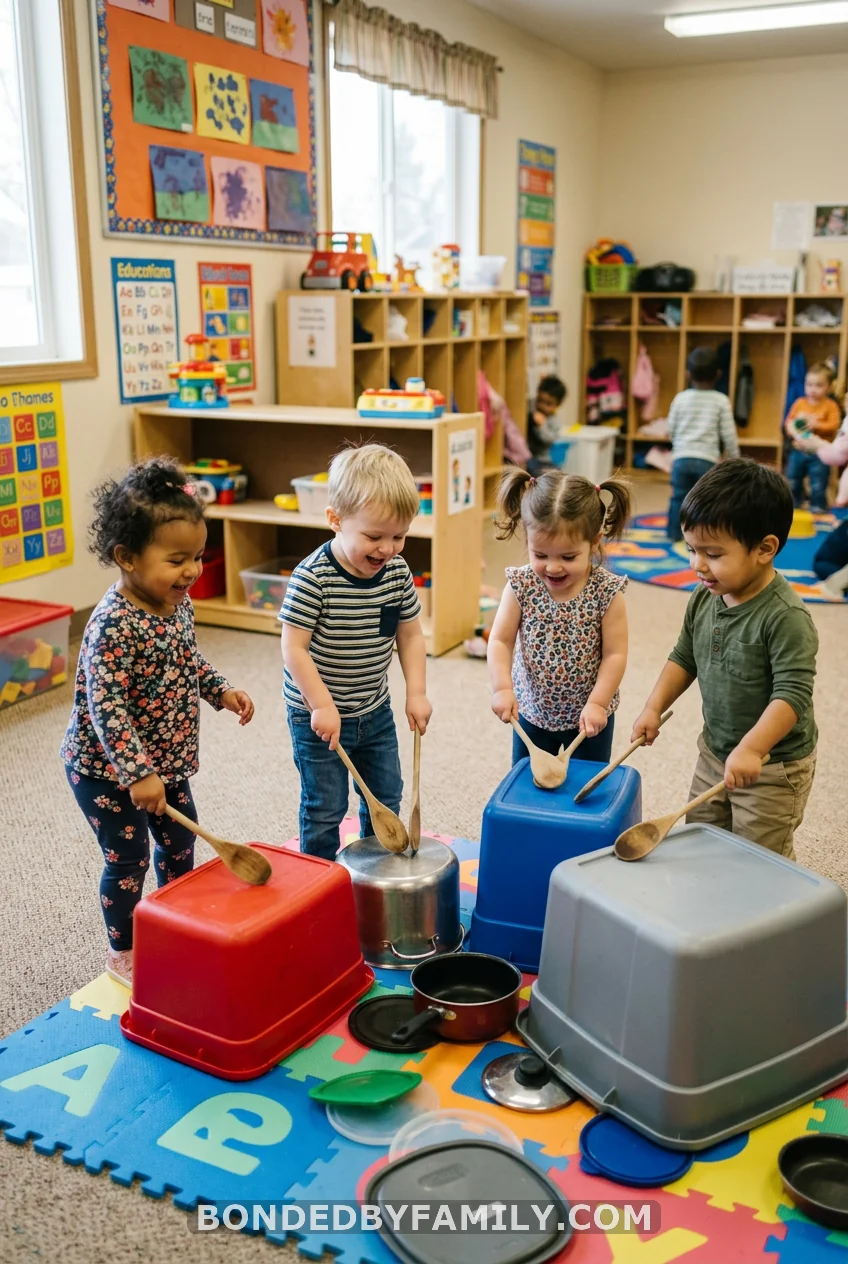
Hand out wooden spoons and set up overturned bins, pots, and plastic containers as drums. Let toddlers march in a loop, banging as they go. It’s loud enough to burn energy and structured enough to teach rhythm, and every daycare kitchen already has the materials on hand.
22. Simon Says with Toddler Twists
Play Simon Says using only actions toddlers can physically manage: touch your nose, stomp your feet, spin in a circle. Skip the elimination rule entirely at this age; toddlers lose interest the second they’re asked to sit out, so let everyone keep playing through every round.
23. Blanket Fort Storytime
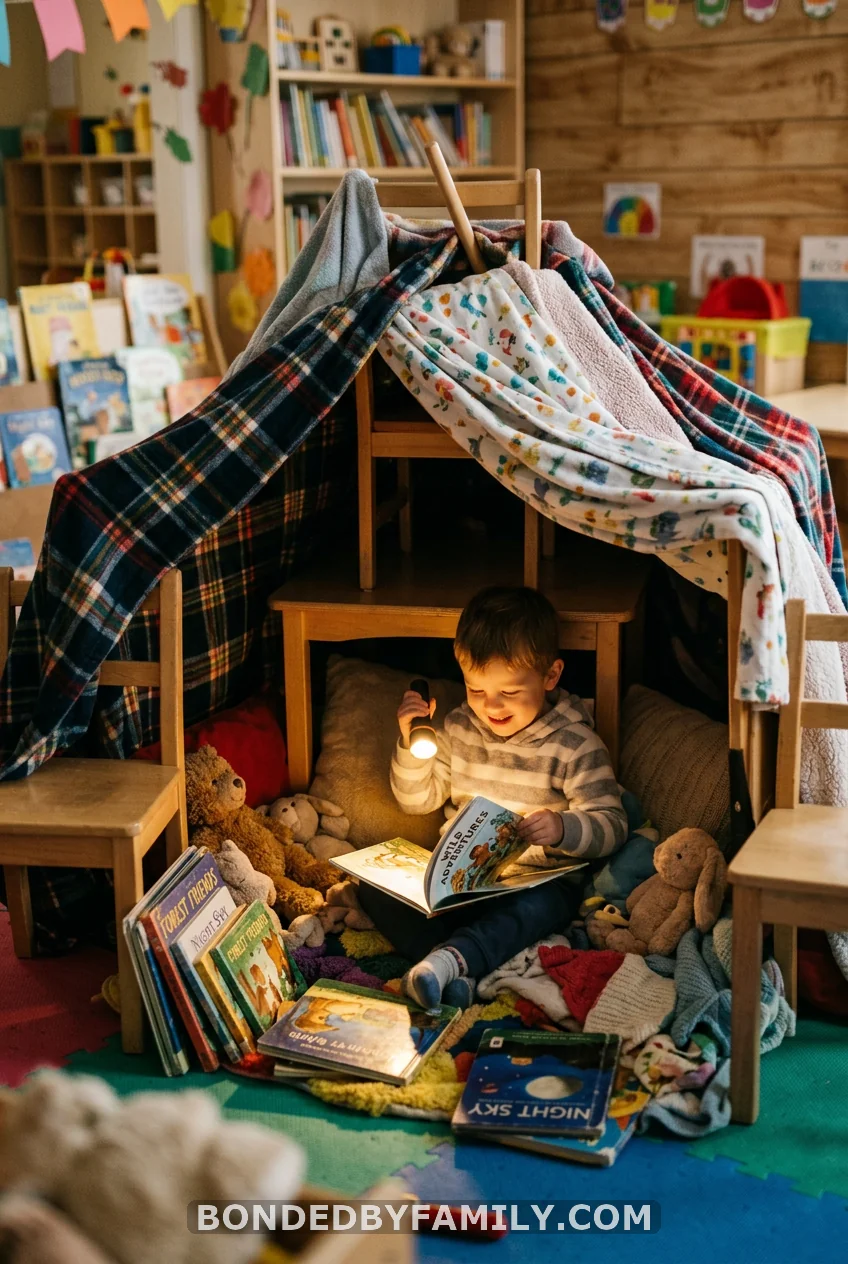
Drape blankets over a few chairs to build a fort, toss in some cushions and a flashlight, and read stories inside. The enclosed space feels private and calming to toddlers who’ve had a loud, busy morning, which makes this a strong choice right before naptime.
24. A Word on Balloon Safety
Balloon games show up twice on this list, and for good reason: they’re cheap, they’re slow enough for toddlers to track, and kids love them. But a burst balloon is one of the leading choking hazards for children under three, right alongside small round foods and button batteries. I learned this the hard way early in my career, watching a toddler pop a balloon and bring the rubber scrap straight to her mouth before I could reach her.
The fix isn’t to ban balloons from your daycare room. It’s to never leave a child under three alone with one, to sweep up every popped fragment immediately, and to consider swapping balloons for a soft foam ball with any group under 24 months where supervision ratios get stretched thin. A five-second scan of the floor after every balloon game is the habit that keeps this activity safe.
25. Copycat Mirror Game
Stand facing your toddlers and have them copy your movements exactly: arms up, wiggle, tiptoe, freeze. Swap roles once they’ve caught on and let a toddler lead the group. It needs no materials, no setup, and no cleanup, which makes it the activity to reach for when you have thirty seconds’ notice and a room full of energy.
Wrapping Up Your Indoor Day
A rained-out playground doesn’t have to mean a rough morning. Between gross motor bursts, sensory stations, fine motor practice, and a little imaginative play, you’ve got enough here to fill an entire indoor day without repeating a single activity or spending a dollar you didn’t already have budgeted.
Keep this list bookmarked for the next thunderstorm, heat advisory, or snow day. Your toddlers won’t know the difference between a planned lesson and a stormy-day fill-in, as long as you’ve got a plan ready to go.
Looking for more daycare-tested ideas? Check out our busy bags for toddlers at daycare, no-prep toddler crafts for daycare, crafts for 2-year-olds at daycare, and daycare bulletin board ideas for toddlers for even more ways to fill your indoor days.
Frequently Asked Questions
How many indoor activities should a daycare room have on hand?
Aim for at least five to eight go-to activities across different categories: gross motor, sensory, fine motor, and quiet play. That variety lets you match the activity to the group’s energy level at any given moment, rather than reaching for the same game every rainy day.
What indoor activities work for mixed-age toddler rooms?
Sensory bins, obstacle courses, and music-based games flex well across ages since you can adjust the difficulty on the fly. A rice bin dig works for an 18-month-old the same way it works for a nearly-three-year-old; only the conversation around it changes.
How long will a toddler stay engaged with one indoor activity?
Expect anywhere from five minutes for a fast game like Simon Says to twenty or more minutes for an absorbing sensory bin. Rotating through three or four activities across a morning tends to hold attention better than expecting one activity to fill the whole stretch.
Are homemade sensory materials like cloud dough safe for daycare use?
Yes, as long as ingredients stay food-grade and supervision stays close, since young toddlers still explore new textures by mouth. Avoid small loose parts like beads or dry rice with children under two unless supervision is direct and constant.
What’s the cheapest way to stock indoor activities for a daycare room?
Painter’s tape, cardboard boxes, dry pantry goods like rice and flour, and mismatched socks cover the majority of activities on this list for under $20 total. Most of it likely already sits in a supply closet or recycling bin.