A toddler with nothing in her hands will find something to do with them. That’s the whole problem, isn’t it?
If you run a daycare room or you’re the parent dropping off a bag each morning, you already know the moment I’m talking about. Nap time isn’t quite nap time yet. Circle time just ended, and the next activity hasn’t started. Three kids are fine, and one is climbing the bookshelf. A busy bag is the quiet, portable answer that buys you five real minutes without a screen in sight.
By the end of this, you’ll have twelve tested ideas, a system for keeping them organized in a room full of toddlers, and a good sense of which ones are worth your prep time and which ones aren’t.
Getting the Basics Right First
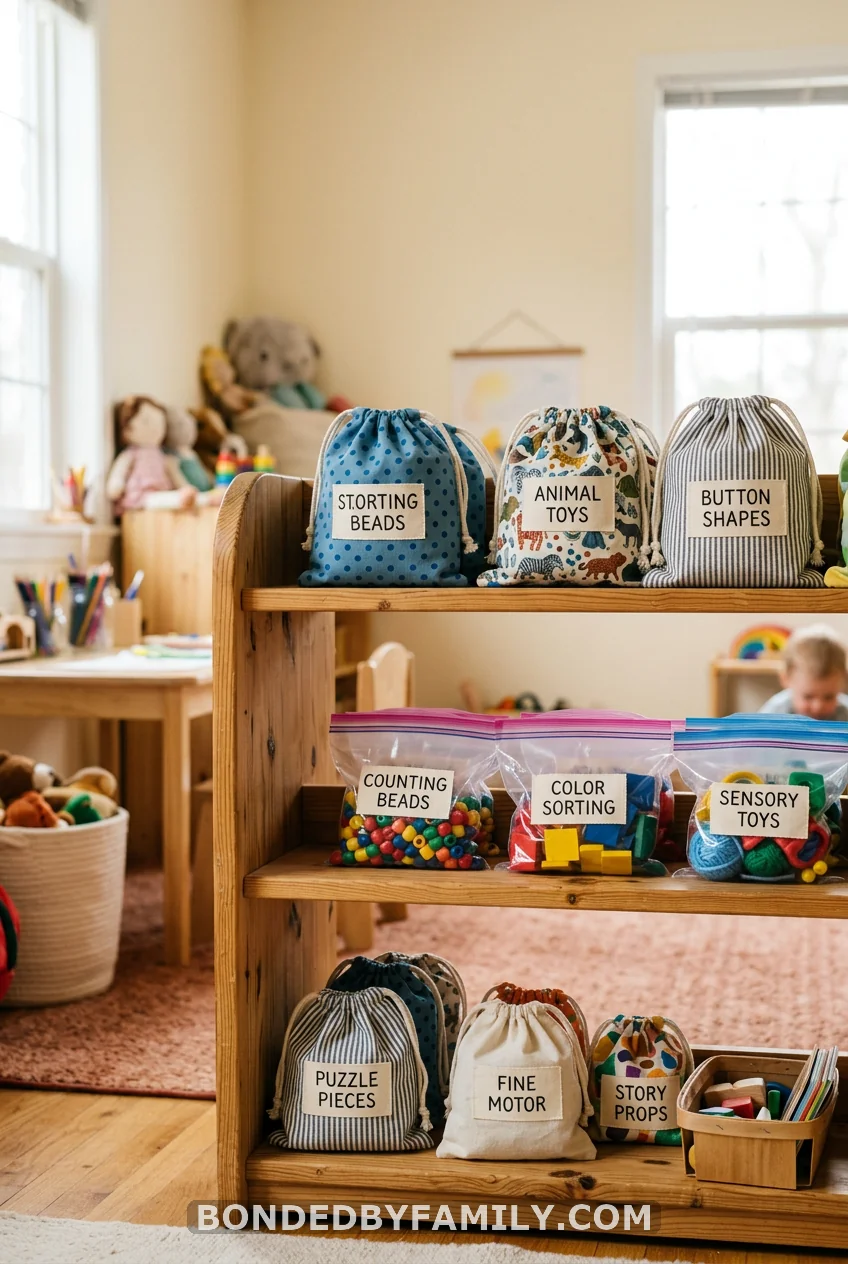
Busy bags work because they’re contained. One activity, one bag, one small win for a toddler who wants to feel capable. The trick for a daycare setting specifically is durability and quick cleanup, since these bags get handled by six different sets of sticky fingers a day, not just one kid at home.
Stick to gallon zip bags or small drawstring pouches. Skip anything with pieces small enough to disappear into a rug, and always supervise directly, since toddlers put things in their mouths before they think twice about it.
1. The Busy Bag Rotation Caddy
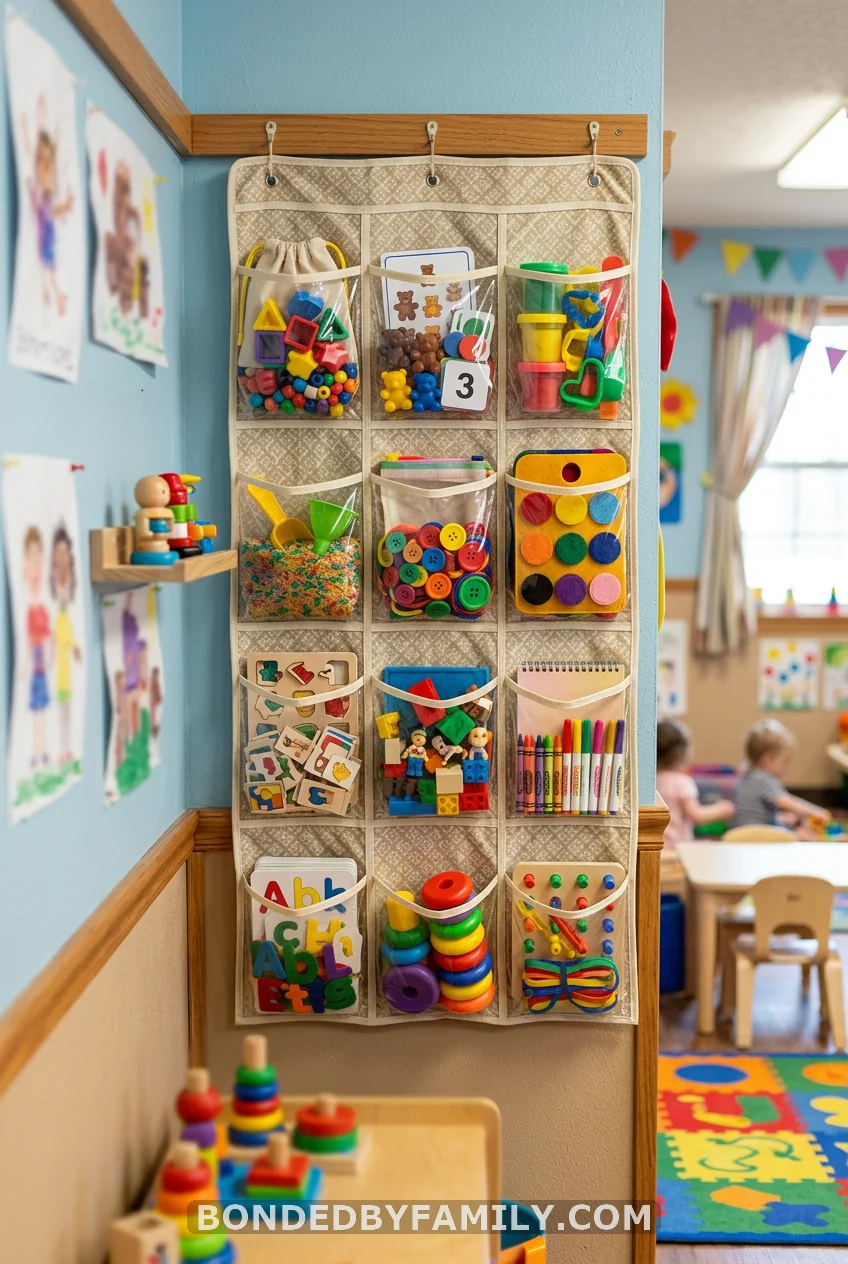
This is the piece that makes everything else on this list function in a group care setting, so it earns the deep dive.
Why This Works
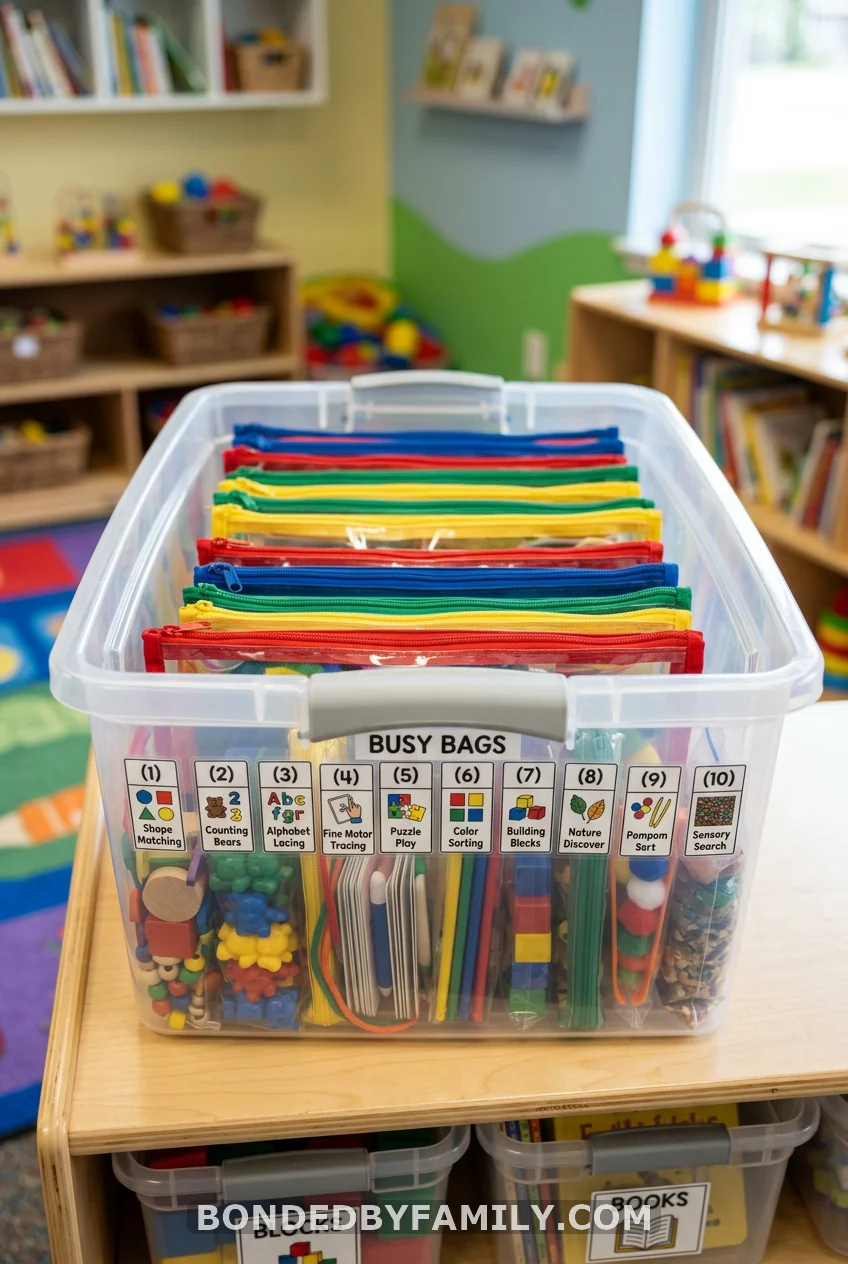
A single busy bag is fine for one kid at home. A room of eight to twelve toddlers needs a system, or you’ll spend your day hunting for the pom-pom bag while three kids ask for it at once. A hanging rotation caddy solves that by giving every activity its own labeled slot at toddler eye level, so kids can grab and return bags with minimal adult help.
Dimensions and Setup
Standard over-the-door shoe organizers run about 54 inches tall by 22 inches wide, with 12 pockets averaging 9 by 11 inches each, which is exactly the footprint you need for a dozen busy bags. Mount it on a wall using 3M command strips rated for at least 10 pounds, or hang it from a low coat-hook rail so the bottom pockets sit around 24 inches off the ground, right where a toddler’s arm can reach.
Materials and Costs
- 12-pocket hanging organizer: $12–18
- Heavy-duty command hooks or a mounting rail: $6–10
- Laminated picture labels for each pocket: $3 if you already own a laminator, $8–10 if printed at a shop
- Total: roughly $21–38 for a caddy that holds an entire room’s rotation
Step-by-Step Build
- Choose a wall near your quiet corner, not near the door where traffic knocks bags loose.
- Mount the organizer so the lowest pocket sits at toddler height, and the top pocket stays reachable for staff.
- Photograph each finished busy bag activity and laminate a small picture label for its pocket.
- Slide one busy bag per pocket, labeled side facing out.
- Rotate two or three bags out weekly so the options stay fresh instead of ignored.
- At day’s end, do a five-minute reset where kids help return bags to their labeled slot, which doubles as a matching activity in itself.
Common Mistakes to Avoid
Don’t skip the labels. An unlabeled caddy turns into a junk drawer within a week, because staff shove bags back wherever there’s an open pocket. Also avoid overstuffing pockets with bulky items like wooden puzzles; the fabric pockets sag and eventually tear if you push past a pound or two per slot.
Pro Move
Color-code pocket labels by skill area, fine motor in blue, colors and shapes in yellow, so a new staff member can grab an appropriate activity for a specific kid without digging through all twelve.
2. Pom-Pom Color Match Bag
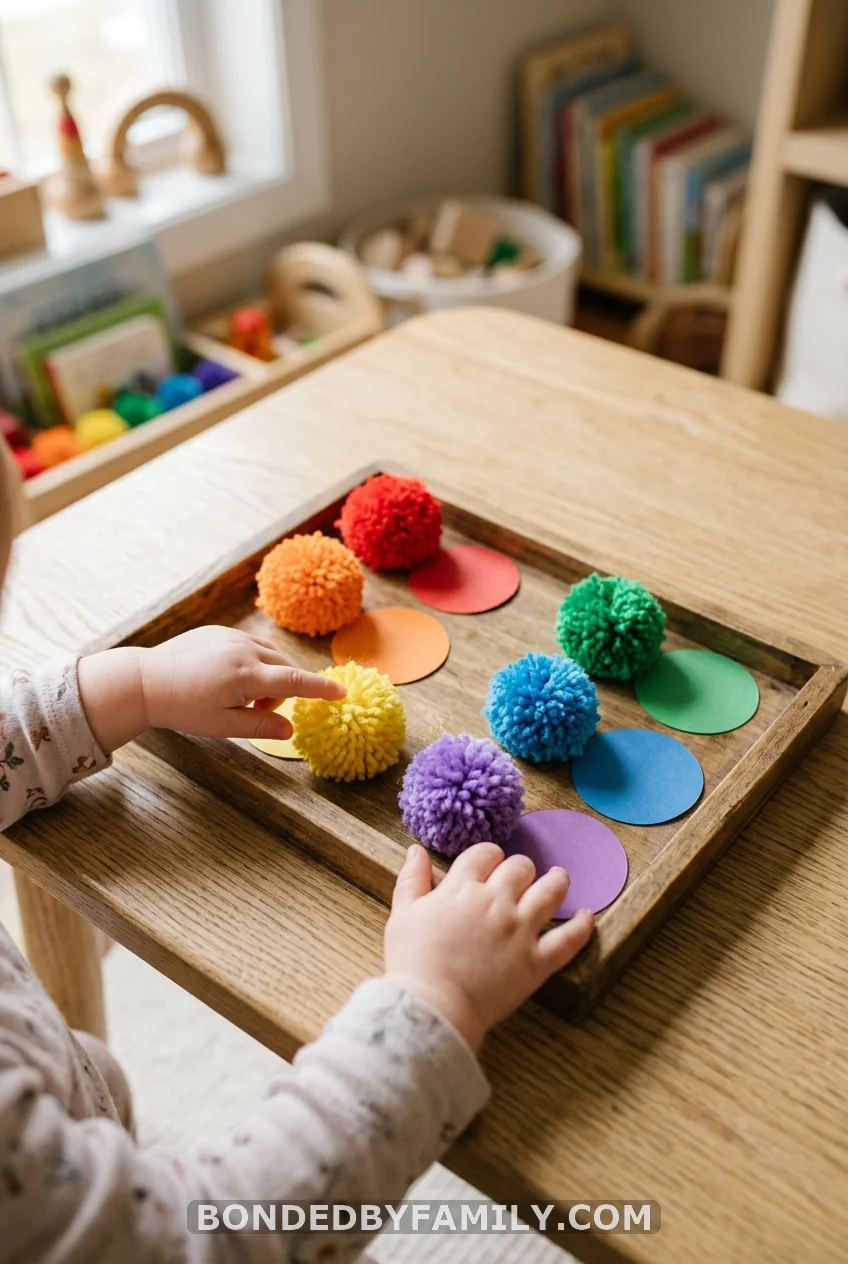
Print or draw colored circles on cardstock, then hand a toddler a small cup of pom-poms to sort onto matching colors. It costs almost nothing and builds color recognition alongside the pincer grip needed for later writing skills. Swap in tongs for older toddlers who’ve mastered the basic version.
3. Chunky Lacing Cards
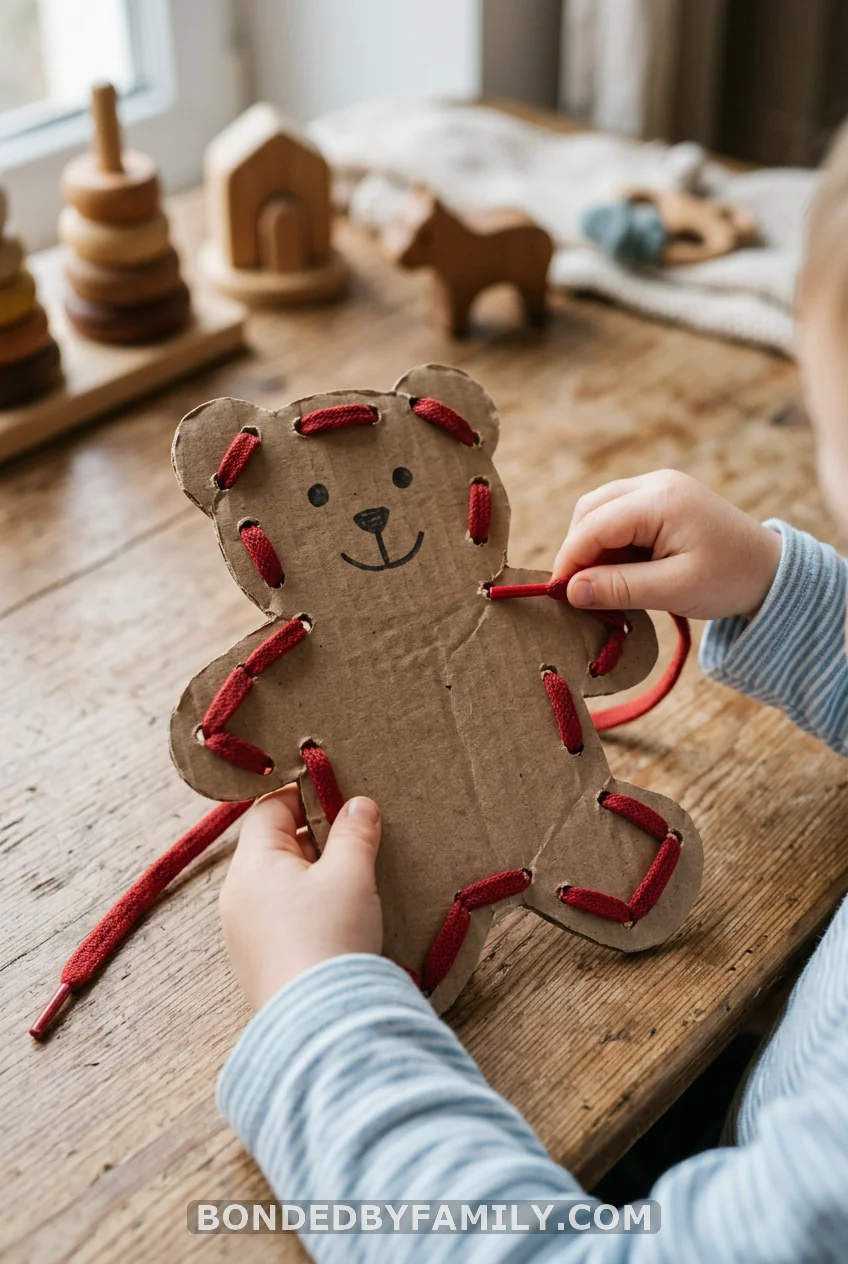
Cut a basic shape from cardboard, punch holes around the edge, and tie on a shoelace. That’s the whole project. It’s one of the cheapest bags on this list at under a dollar in materials, and it holds attention far longer than you’d expect from something this basic.
4. Sensory Discovery Bottle
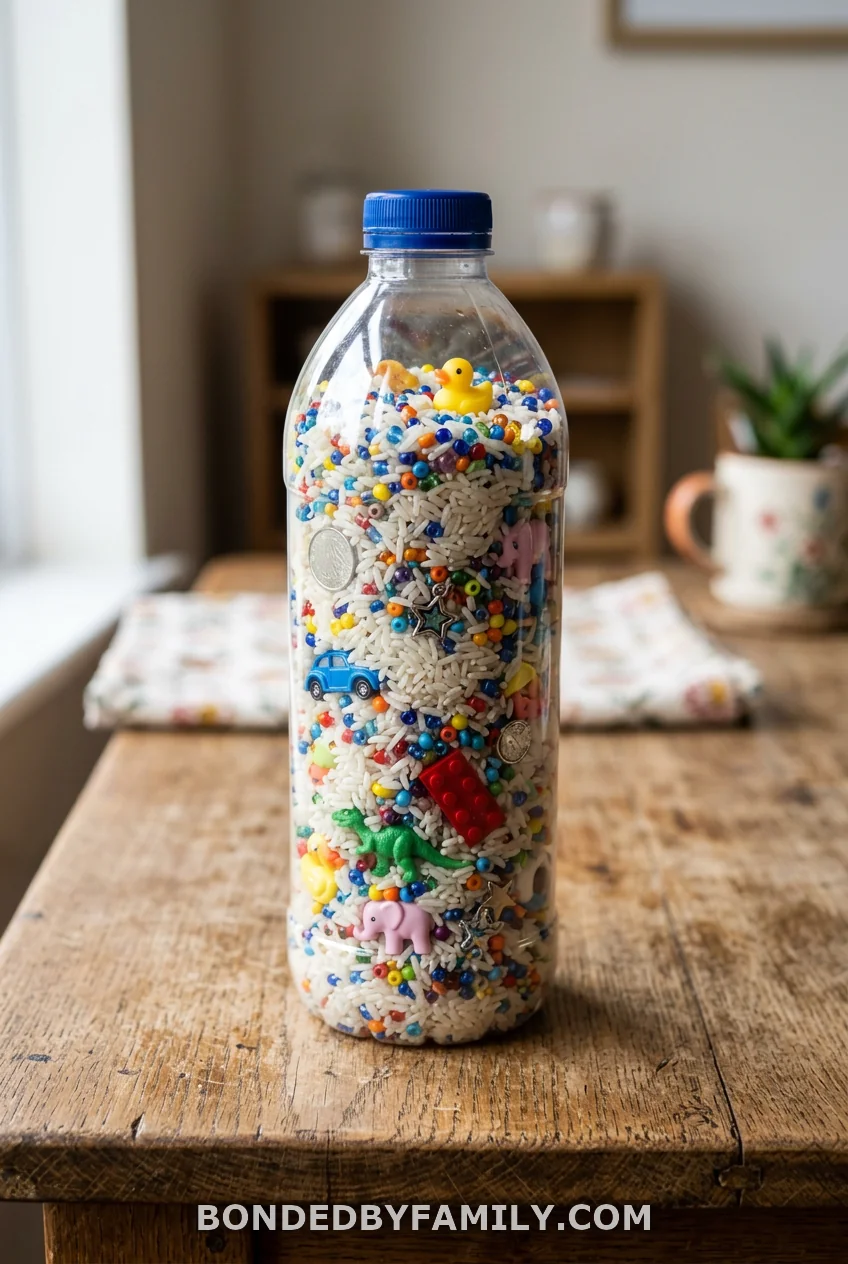
Fill a clear plastic bottle with rice, small beads, and a few tiny hidden toys, then hot glue the lid shut for safety. Kids shake, roll, and hunt for the hidden pieces without any risk of choking, since nothing ever leaves the bottle. This one’s a favorite for kids too young for small-piece bags.
5. Nuts and Bolts Match
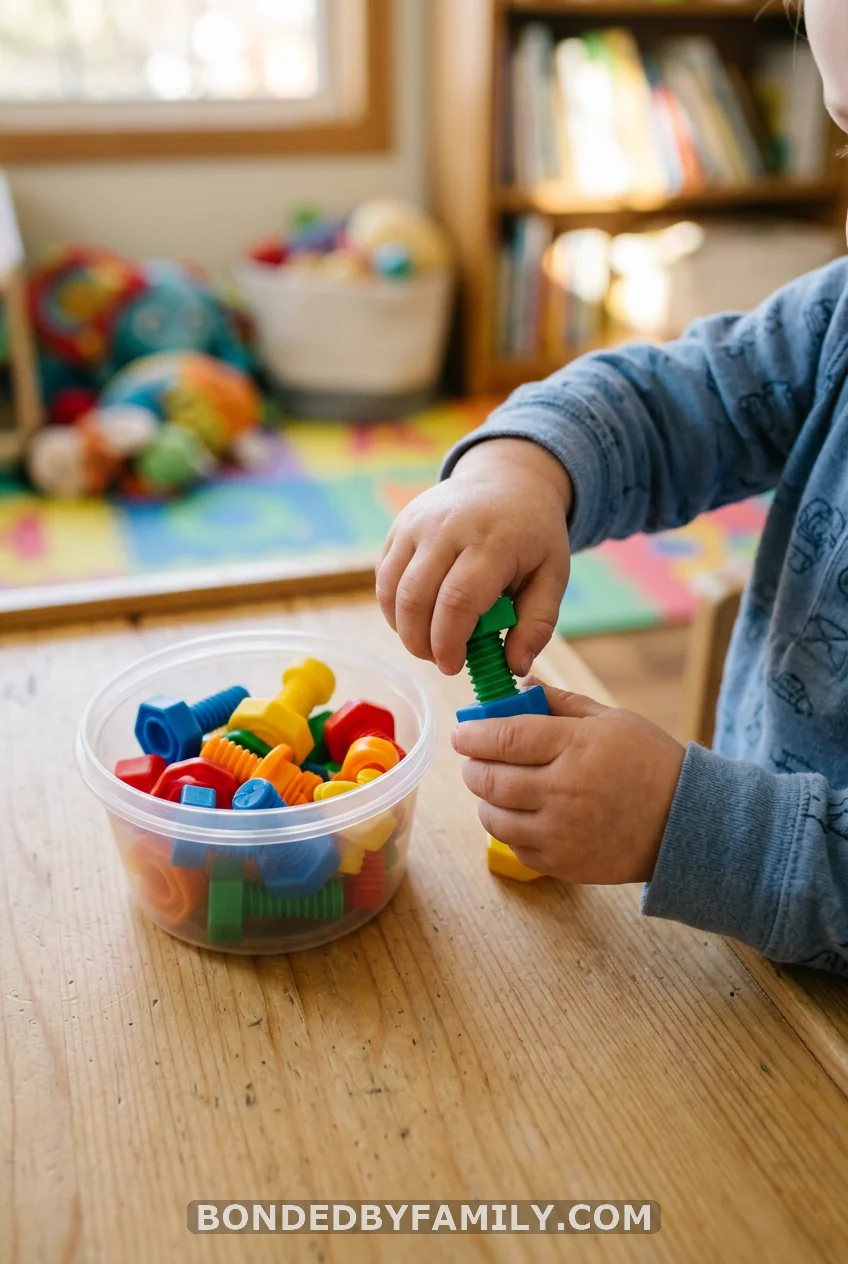
Real or toy nuts and bolts in a small container let toddlers practice twisting motions that strengthen the same hand muscles they’ll use for pencils later. Keep it in the older-toddler rotation if you’re using real hardware, and inspect for rust or sharp edges before every use.
Myth-Busting: “Busy Bags Just Park Kids in Front of an Activity”
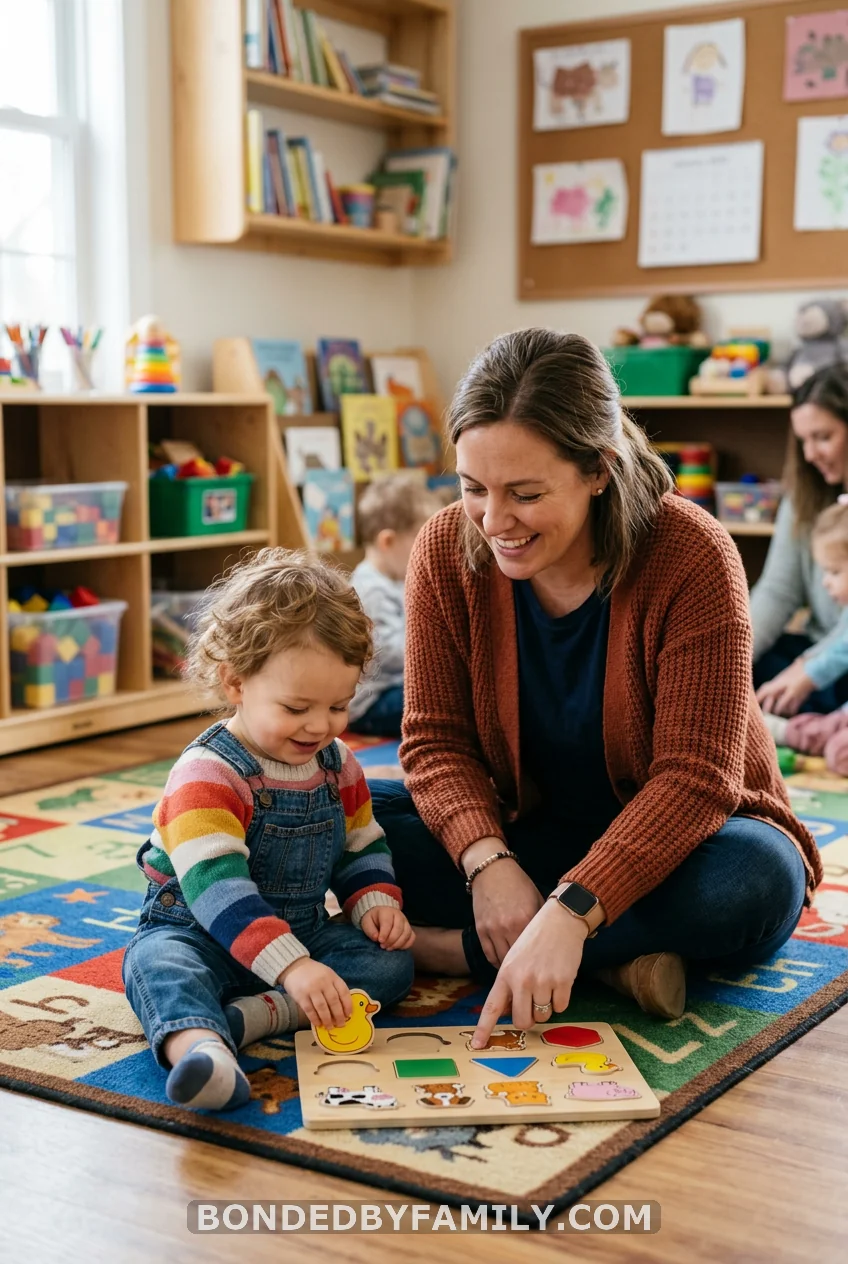
What people assume: Handing a toddler a busy bag is basically the analog version of handing them a tablet, a way to occupy them so an adult can check out.
What happens instead: A well-chosen busy bag targets one specific skill, color matching, pincer grip, cause and effect, and gives a caregiver a natural opening to sit down and narrate what the child is doing. “You matched the red one! What color is this one?” turns a five-minute activity into a language-rich moment. The bag isn’t the babysitter. It’s the prompt for a short, focused interaction, one that’s far easier to sustain consistently than open-ended free play, because the activity gives both of you something concrete to talk about.
6. Shape Sorting Felt Board
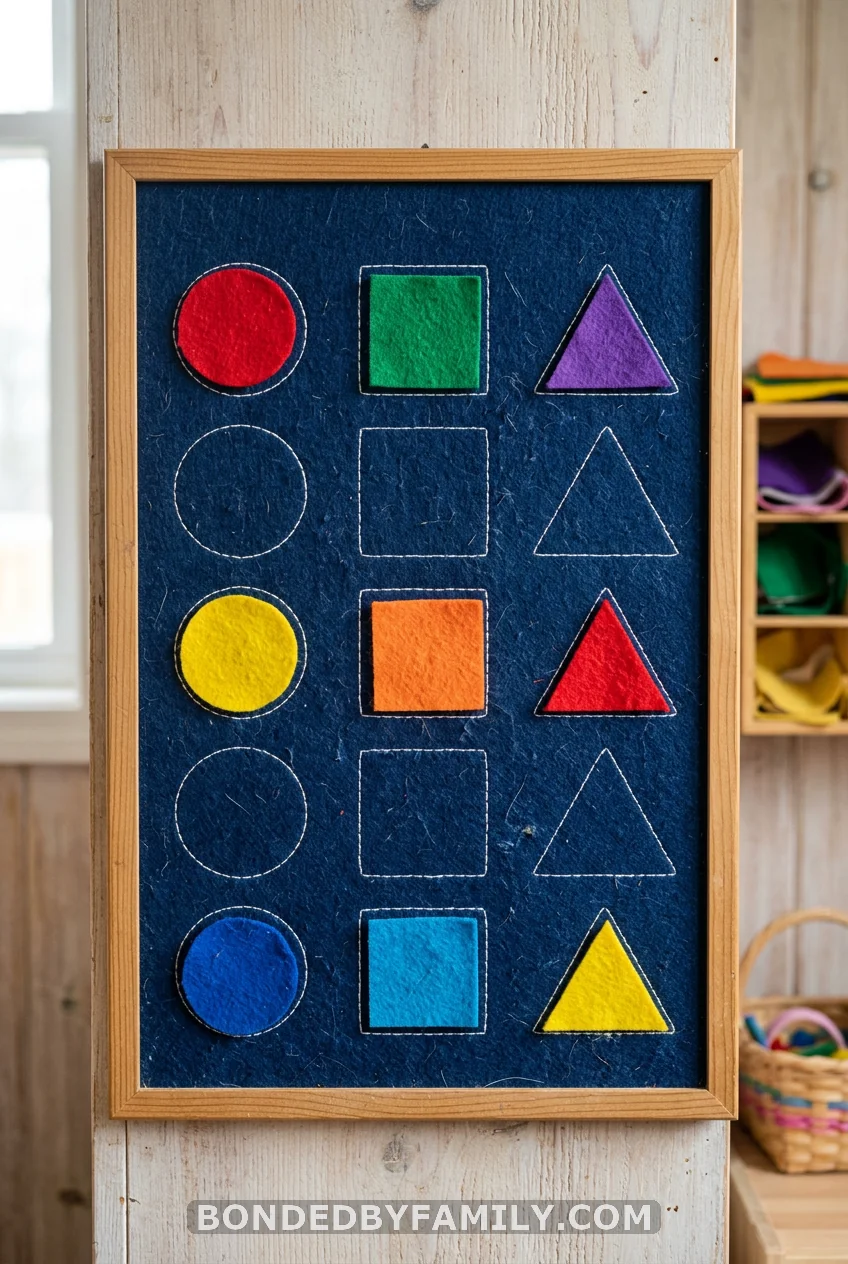
A square of felt and a handful of felt shapes cut in basic outlines make a soft, quiet sorting activity that travels well and never breaks. Toddlers place shapes onto a printed or drawn outline, building shape recognition without a single hard edge in the bag.
7. Alphabet Clothespin Match
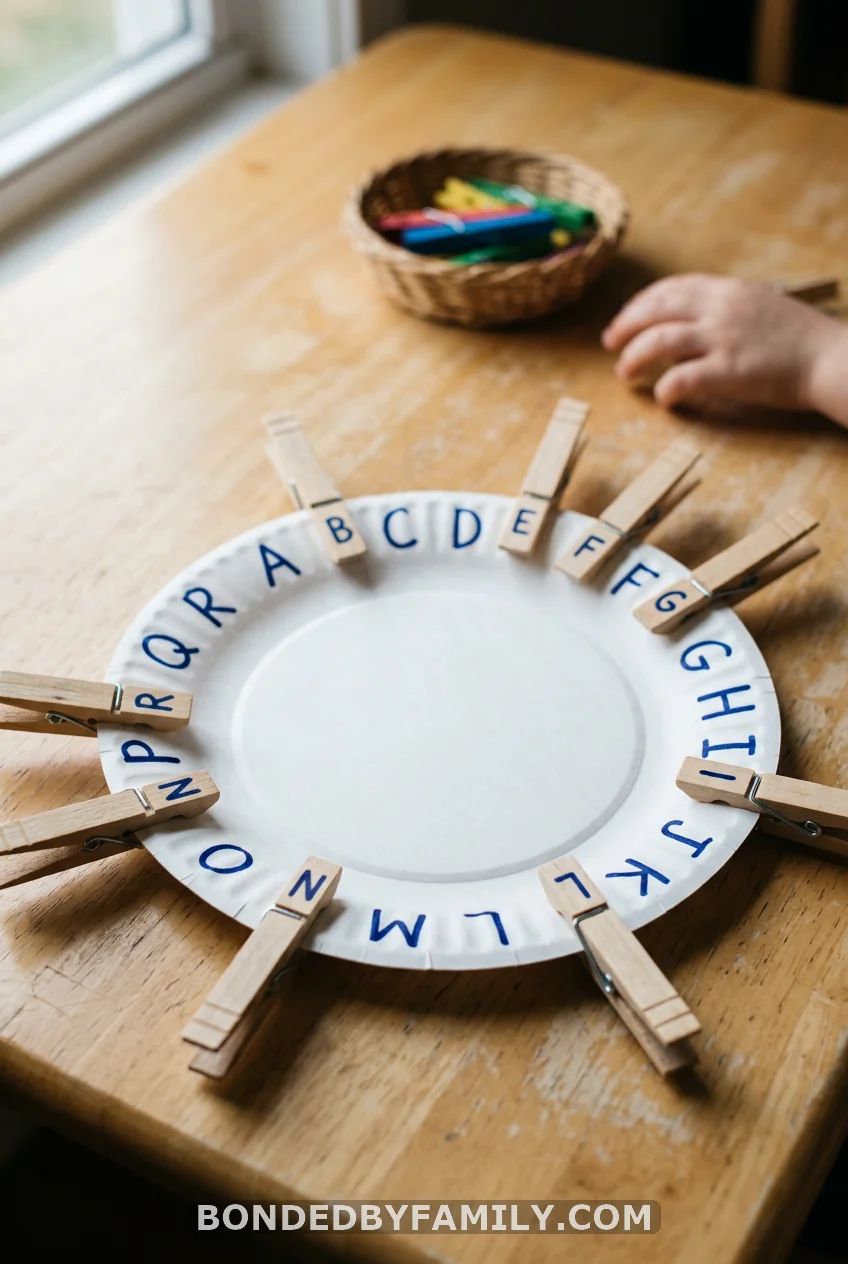
Write letters on wooden clothespins and matching letters around the edge of a paper plate. Clipping the clothespin to its letter builds fine motor strength in the exact pincer grip needed for holding a crayon, and most daycare rooms already have clothespins on hand.
8. Texture Matching Bag
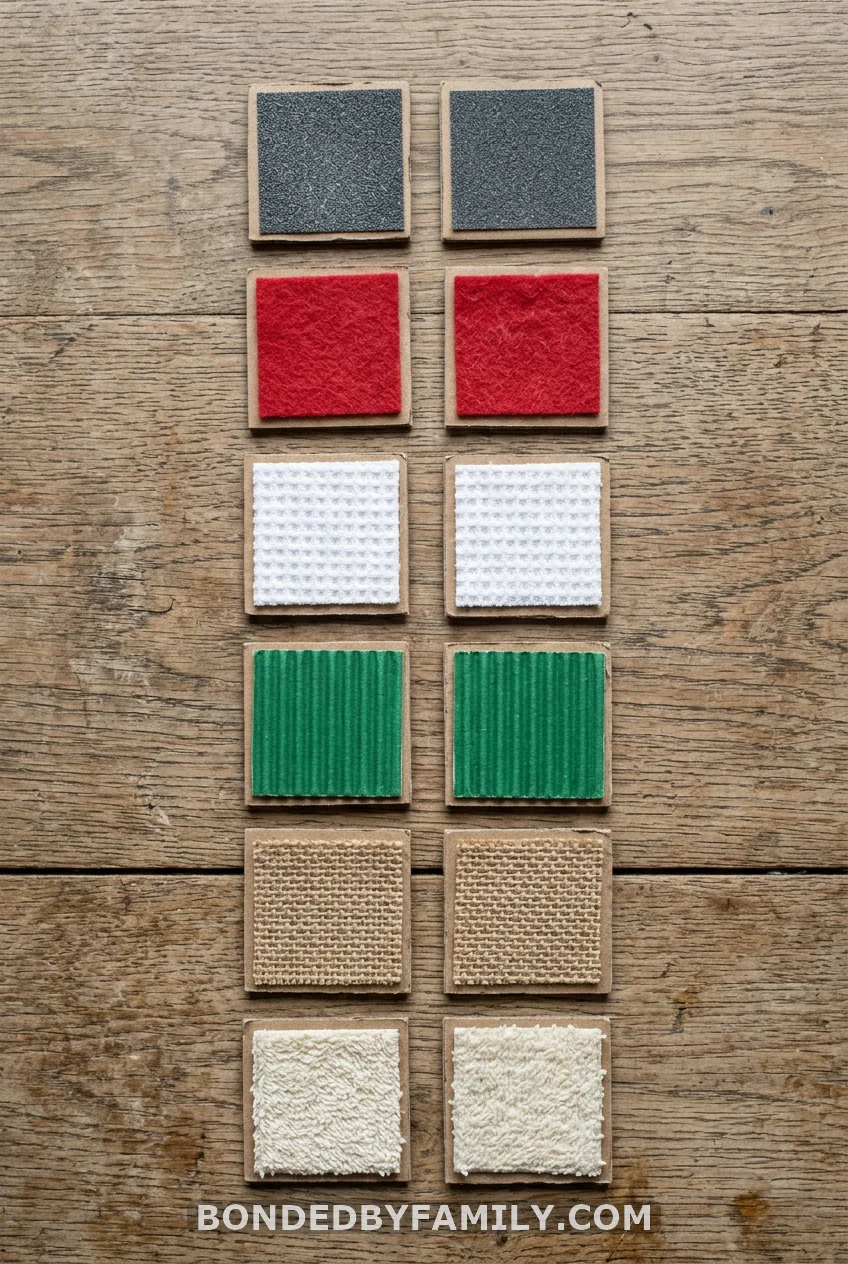
Glue different textured materials, sandpaper, felt, bubble wrap, cotton, onto small matching cardboard squares. Kids find the pairs by touch alone. It’s a five-minute setup that quietly builds sensory vocabulary long before a toddler can say the word “texture.”
9. Counting Bead Threading
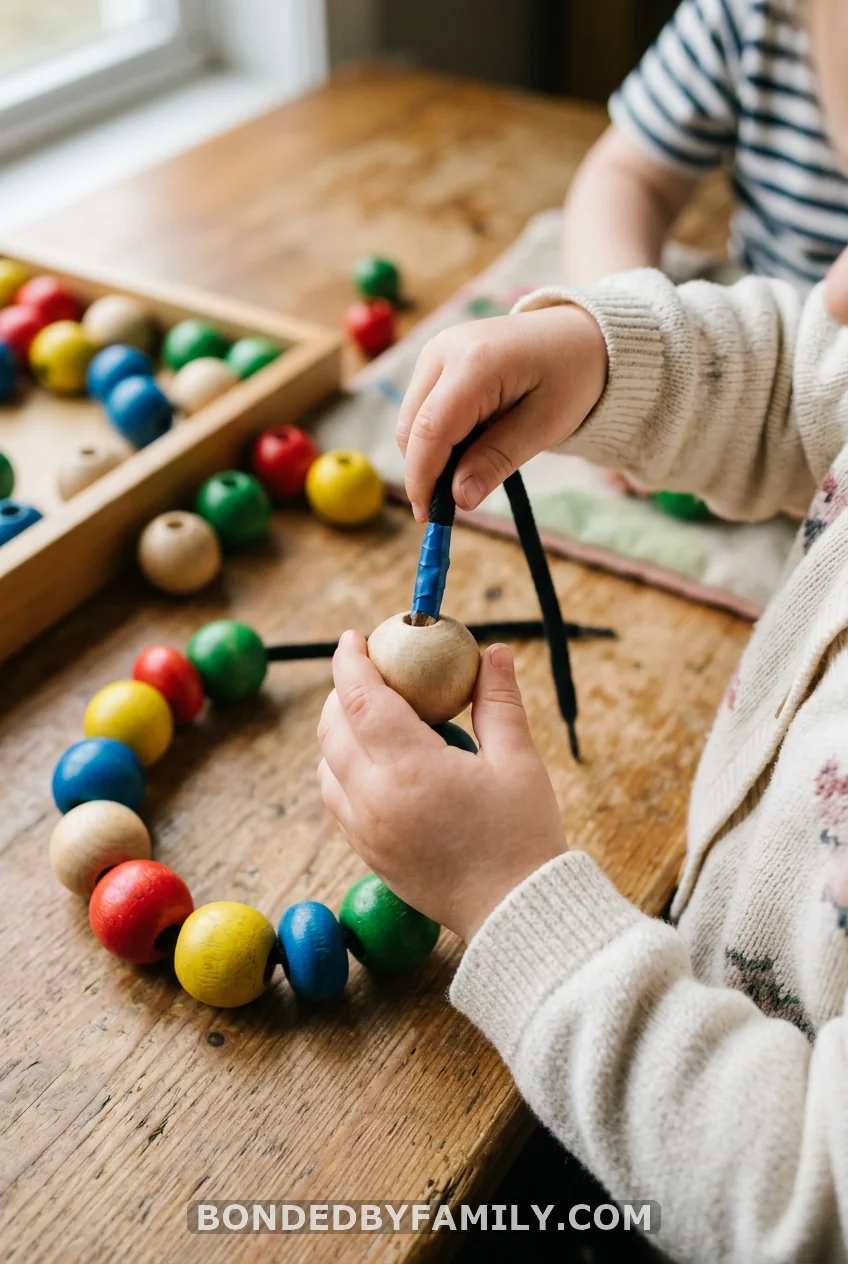
String large wooden beads onto a shoelace with a taped tip for easier threading. Count out loud together as each bead goes on. Quick to set up, cheap, and calming for a toddler who needs to slow down after an active outdoor block.
Cautionary Tale: The Bag That Wasn’t Ready for Group Care
A provider I know once put together a beautiful busy bag using dried beans for a counting activity. It worked perfectly at home with her own toddler, who understood not to eat them. In a daycare room with six toddlers rotating through the same bag over one week, a bean ended up in a nose within the first two days.
The fix wasn’t complicated. She swapped the dried beans for large wooden counting beads too big to fit in a nostril or throat, kept the concept identical, and the activity went right back into rotation. The lesson carries past this one bag: anything designed at home for a single known child needs a second look before it goes into a room where you can’t personally track every kid’s mouthing habits every second. Size everything to the youngest child who might grab it, not the oldest.
10. Puzzle Piece Match Bag
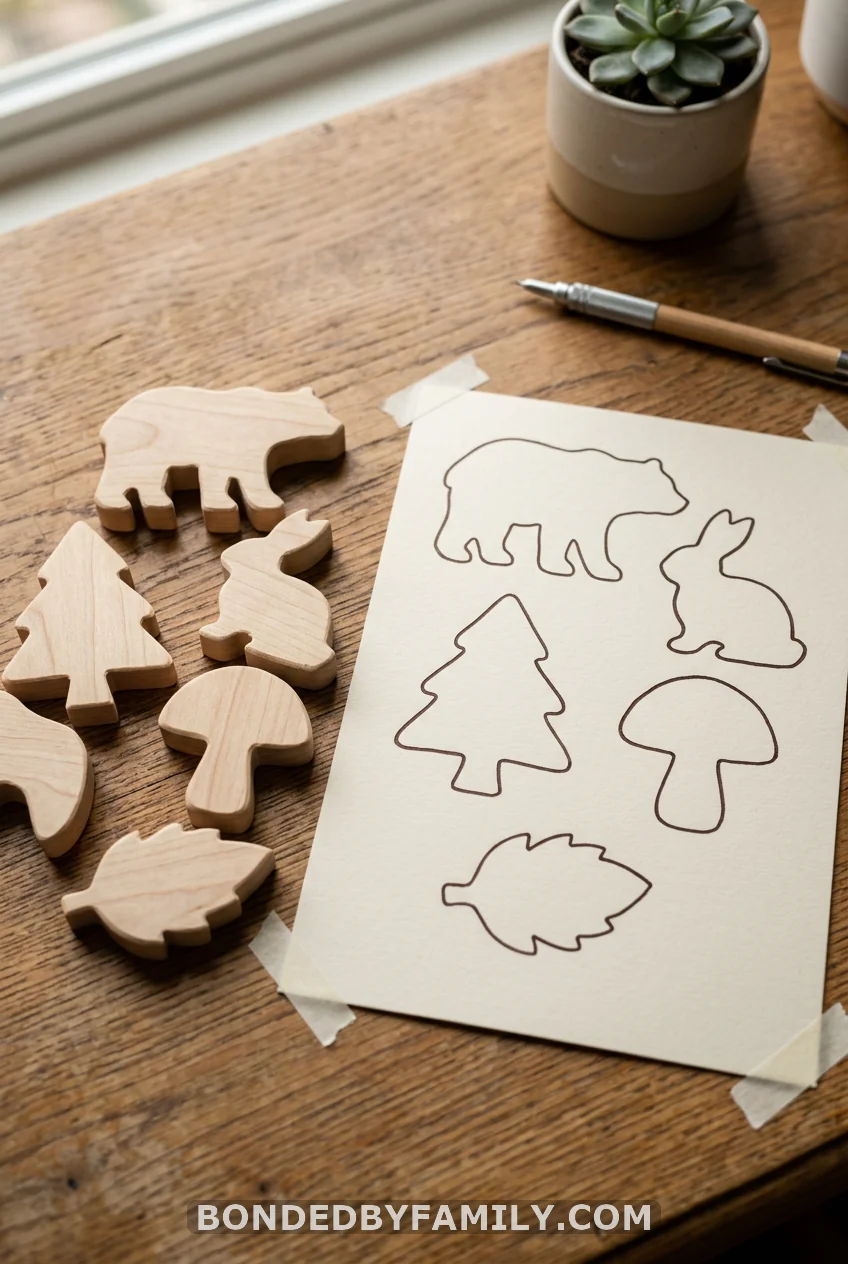
Take one puzzle apart, trace each piece’s outline onto cardstock, and let toddlers match pieces to their traced shapes. It reuses puzzles that are missing a home box and gives kids a lower-pressure version of puzzle work.
11. Fabric Scrap Sorting Bag
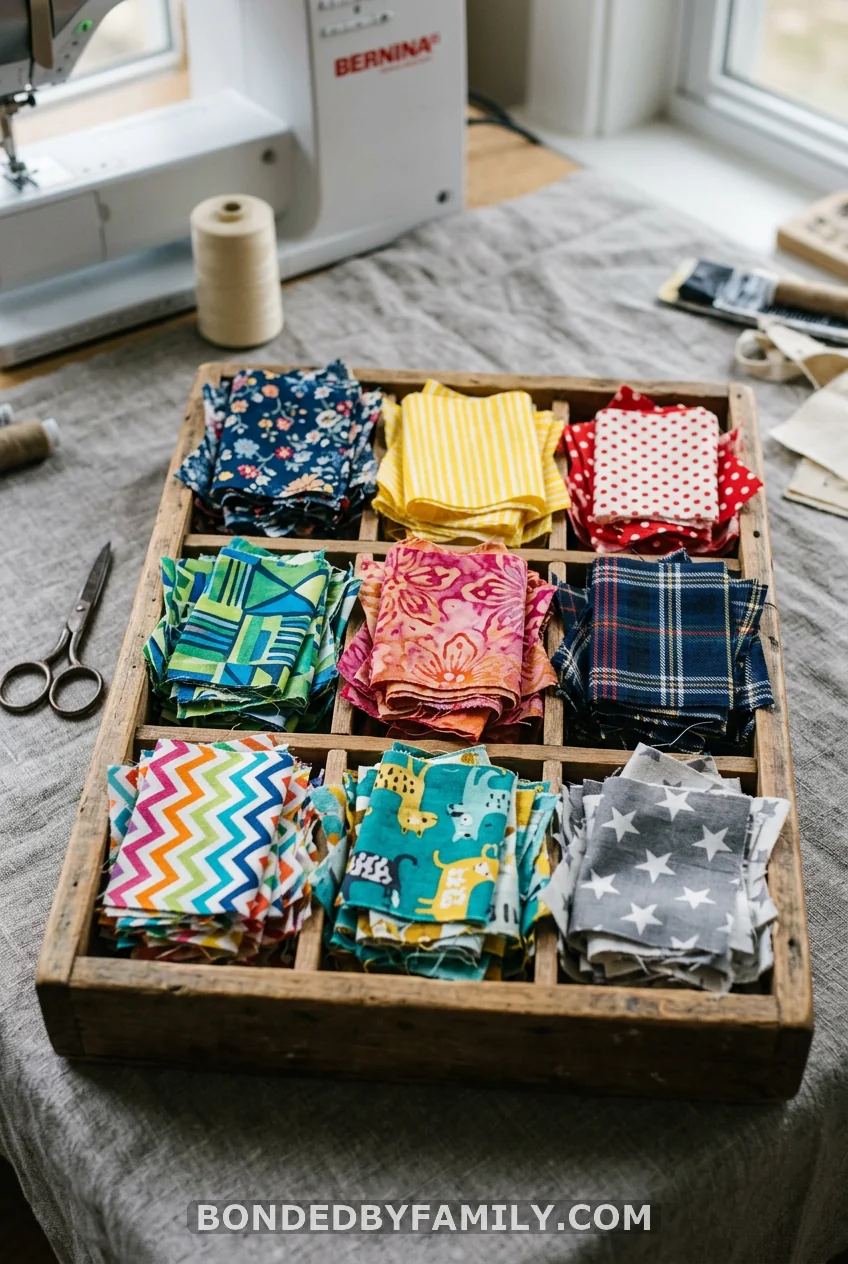
Collect fabric scraps in three or four distinct patterns, then have kids sort them into matching piles. It’s a scrap-bin project that costs nothing if you already sew or know someone who does, and it introduces pattern recognition in a tactile, low-mess way.
12. DIY Spinning Top Match
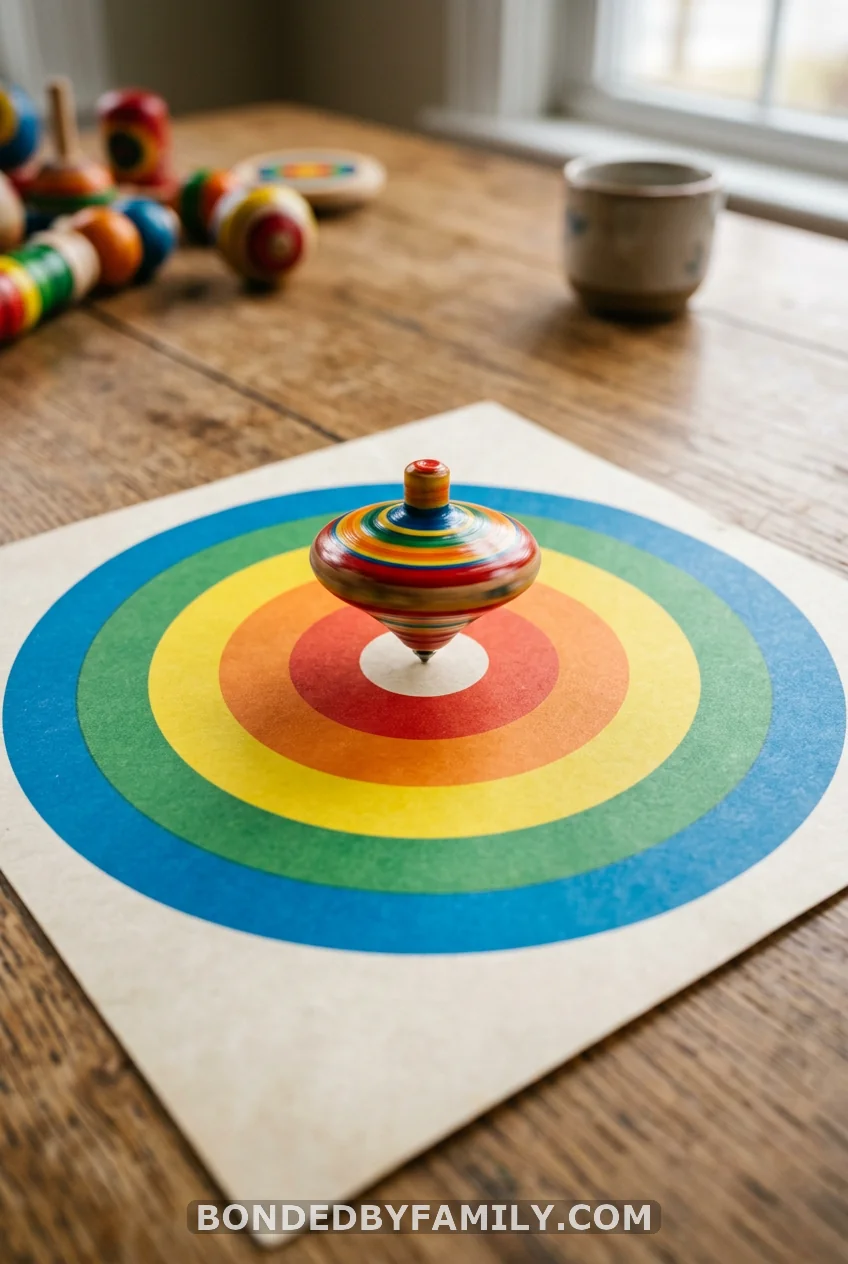
Small wooden or plastic spinning tops paired with a printed target circle give toddlers a cause-and-effect activity with a satisfying visual payoff. Spin it, watch it land, match the color it stops on. It’s a quick five-minute favorite that doubles as a calm-down tool between busier parts of the day.
Bringing It All Together
None of these bags need to be fancy. In fact, the fanciest ones aren’t usually the ones toddlers reach for first. What makes a busy bag work in a daycare setting is the system around it: labeled, rotated, sized for the youngest kid in the room, and paired with a few minutes of real interaction instead of silent parking. Start with three or four bags from this list, get your caddy set up, and add more as you see which activities keep getting picked up week after week.
You’ve got twelve solid options now. Pick the ones that fit your room, your budget, and the kids you’re caring for today.
Looking for more low-prep options for the same age group? Check out our guides to no-prep toddler crafts for daycare and crafts for 2-year-olds at daycare for even more ways to fill those in-between moments.
Frequently Asked Questions
How many busy bags does a daycare room really need?
Most rooms do well with 10 to 15 bags in rotation, enough variety that kids don’t get bored but not so many that staff can’t keep track of what’s inside each one.
What age is too young for busy bags?
Anything with small, loose pieces should wait until a child reliably stops mouthing objects, usually somewhere past 18 months, though every child develops at their own pace. Sensory bottles and sealed bags work well for younger toddlers in the meantime.
How often should busy bags be cleaned in a daycare setting?
Wipe down bag exteriors daily with a childcare-safe disinfectant, and fully wash or replace fabric components weekly, since these bags pass through many hands and mouths over a single day.
Can busy bags replace structured learning time?
No, and they’re not meant to. They fill transition moments and quiet stretches between planned activities, not the activities themselves.
Where can daycare providers find cheap busy bag supplies?
Dollar stores, recycling bins, and craft store clearance sections cover most of this list. Very little on here requires anything beyond materials most homes and centers already have on hand.