I once poured peppermint oil straight from the bottle into a tub of rice. Too much. The whole kitchen smelled like a dentist’s office, my toddler wrinkled her nose, and she walked away from the bin without touching it. Twenty minutes of dyeing and drying, wasted by one heavy hand.
A good candy cane sensory bin needs a light scent, a base that feels great, and a few tools for little fingers. Here are 14 candy cane sensory bin ideas, from make-ahead rice to squishy oobleck, with exact amounts so you skip my mistake.
Start Here: Supplies and Scent Safety
Master Supply List
You can build nearly every bin below from this short list:
- A shallow plastic tub or under-bed storage box
- Rice, cornstarch, flour, chickpeas, pasta, and water beads for bases
- Red gel or liquid food coloring (Wilton icing color gives the deepest red)
- White vinegar for dyeing
- Peppermint extract
- Mini candy canes, plus plastic or foam candy canes
- Scoops, small cups, bug tongs, and tweezers
- Red pom poms and striped pipe cleaners
- Shredded crinkle paper
Scent Without the Headache
Use peppermint extract first. About 1/2 teaspoon per 4 cups of dry base is plenty. Stir it in, then smell it. You can always add more.
Peppermint essential oil is stronger. Use 2 to 3 drops per 4 cups at most, and keep it away from eyes and mouths. Skip it for children who still mouth toys.
The catch:
Scent fades. Dyed rice smells strong for about a week, then softens. Refresh with a few drops of extract on a cotton ball tucked into the bag.
Scented Bases You Can Make Ahead
1. Classic Peppermint Candy Cane Rice
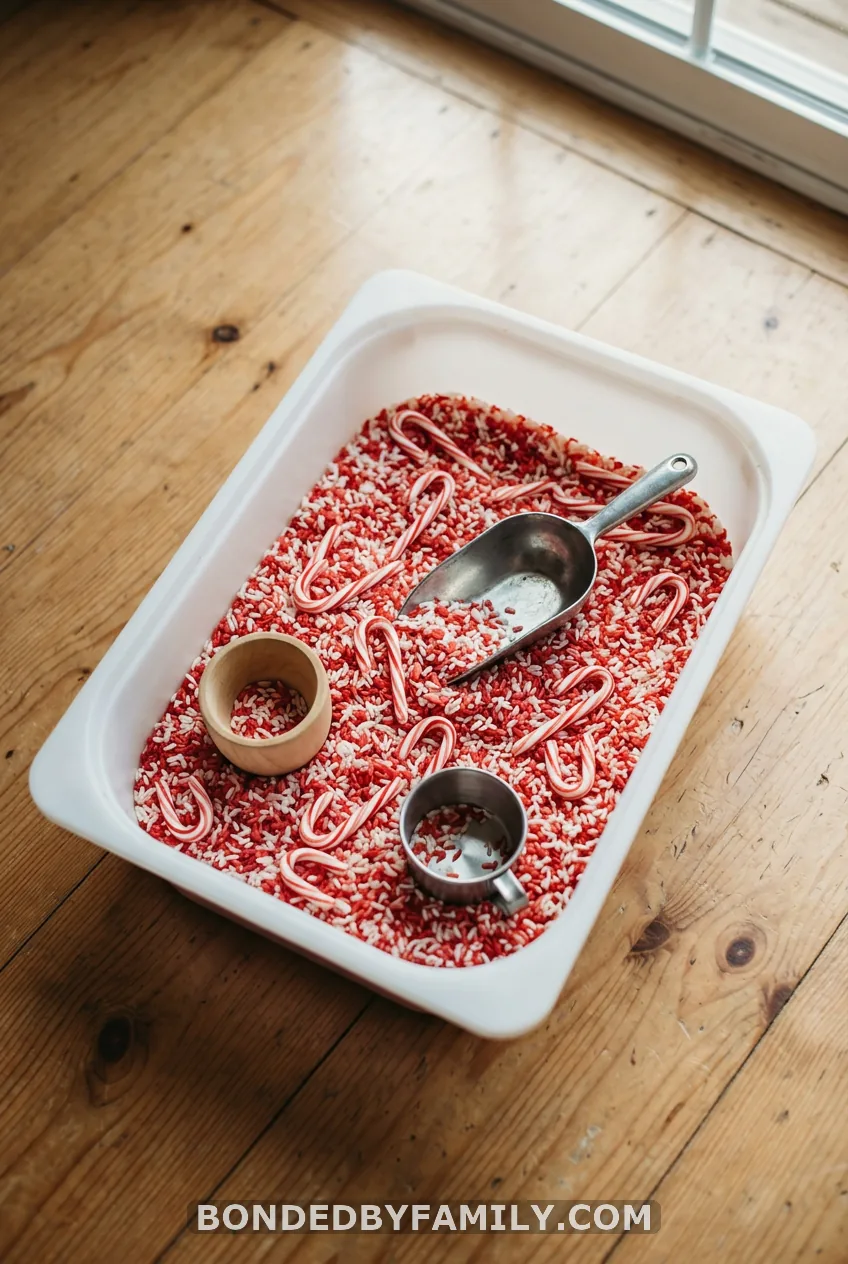
This is the staple. Rice scoops, pours, and hides small treasures, and it lasts for months.
- Split 4 cups of white rice into two zip bags.
- Add 1 teaspoon of vinegar and 15 to 20 drops of red food coloring to one bag. Leave the other bag white.
- Seal and shake for a full minute until the red is even.
- Spread both on a baking sheet lined with parchment. Let them dry for 1 to 2 hours.
- Stir 1/2 teaspoon of peppermint extract into each batch.
Bury 6 to 8 large foam or plastic candy canes and hand over two scoops and three cups. Do not use real mini candy canes with children under 4. They are a choking hazard. That is the whole bin.
The catch:
Wet rice grows mold in storage. Make sure every grain is bone dry before it goes back in a bag.
2. Peppermint Cloud Dough
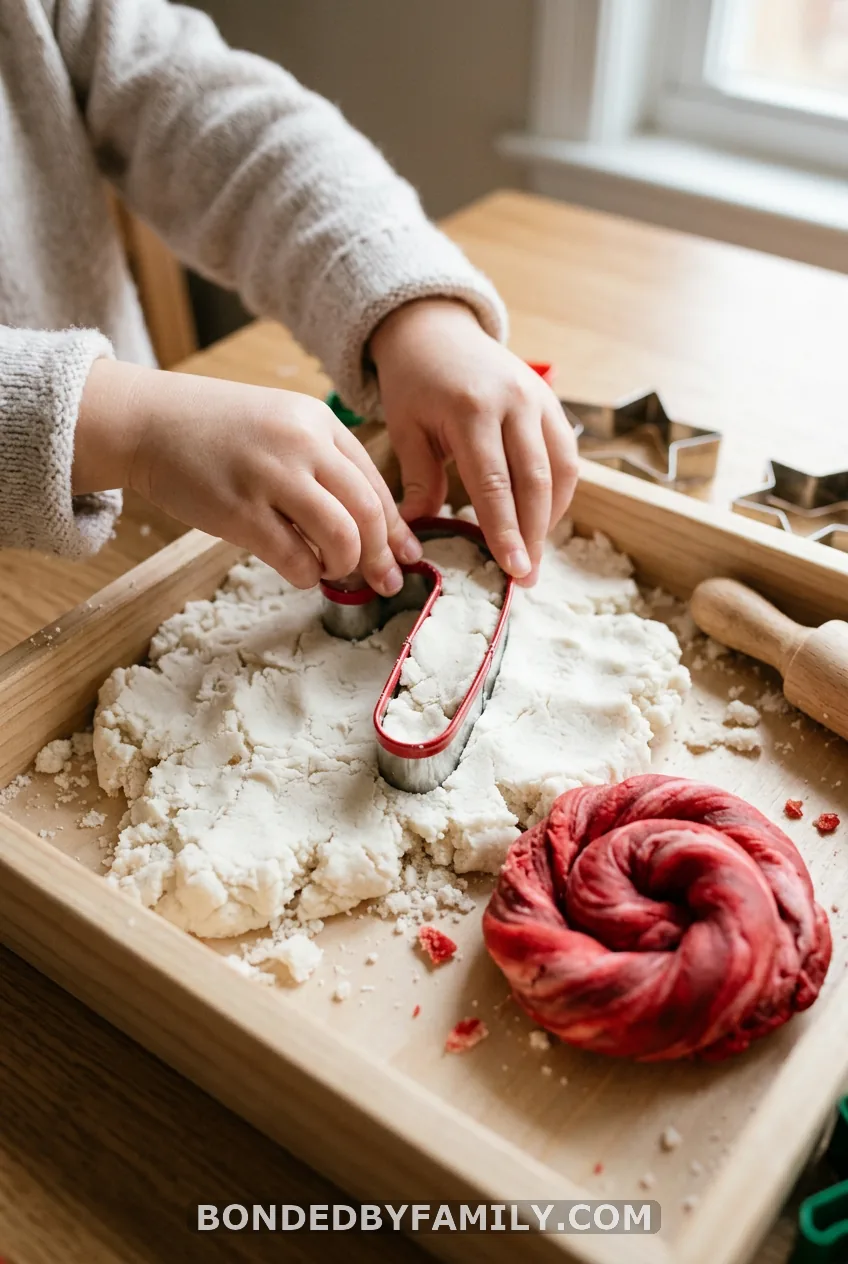
Mix 4 cups of flour with 1/2 cup of vegetable oil. Add 1/2 teaspoon of peppermint extract. It feels like silky, crumbly snow that holds a shape when squeezed.
Make a second batch and tint it with red coloring in the oil first. Swirl the two together for a candy cane stripe effect. Add cookie cutters and a rolling pin.
Keep it in an airtight container for up to a month.
3. Candy Cane Oobleck
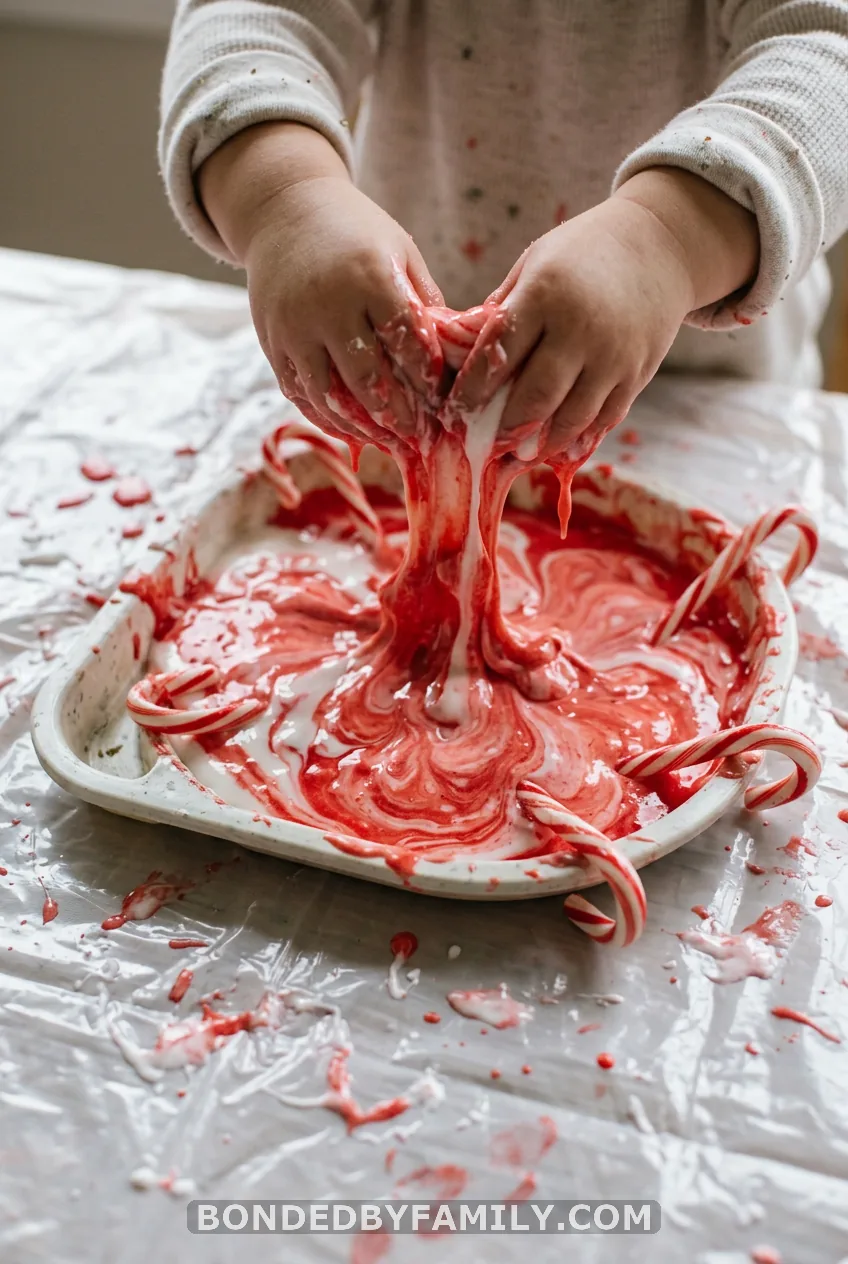
Use 2 parts cornstarch to 1 part water. Try 2 cups cornstarch and 1 cup water. Tint the water red, mix a white batch plain, and add a few drops of peppermint extract to each.
Press it hard and it turns solid. Let go and it drips. Toss in mini candy canes and challenge your child to fish them out with tongs.
Do this on a tray over a plastic tablecloth. Let leftovers dry, then sweep them into the trash. Never pour oobleck down the drain, because cornstarch clogs pipes.
4. Candy Cane Chickpea Bin
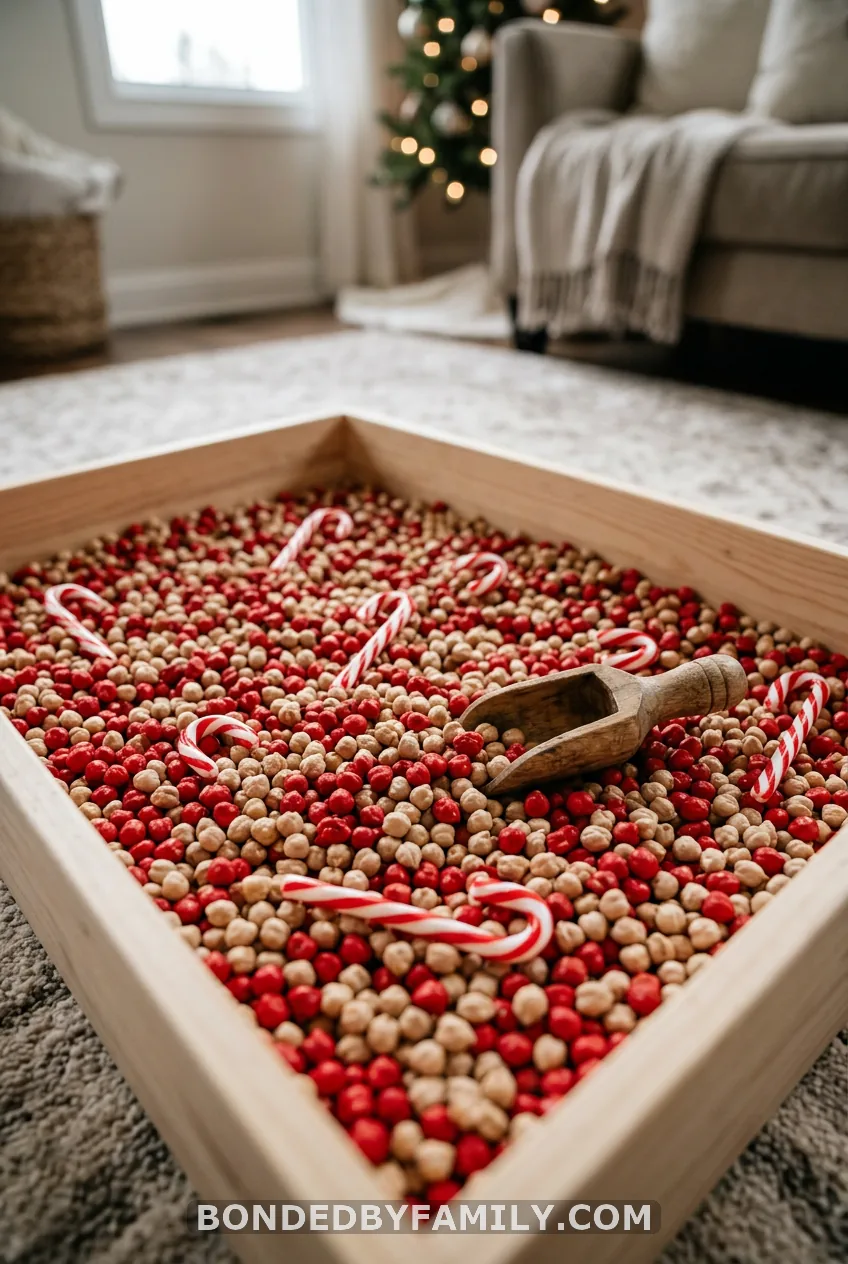
Chickpeas are sturdy, heavy, and satisfying to scoop. They sound great pouring into a metal bowl.
To color them, toss 2 cups of dry chickpeas with a tablespoon of washable red paint in a zip bag. Dry them in a single layer overnight. Add peppermint extract once they are fully dry.
The painted chickpeas are not edible, even though plain chickpeas are a food. They are also hard and round, so an adult must watch closely and they are not suitable for children who still mouth things or anyone under 3.
5. Water Bead Candy Cane Bin
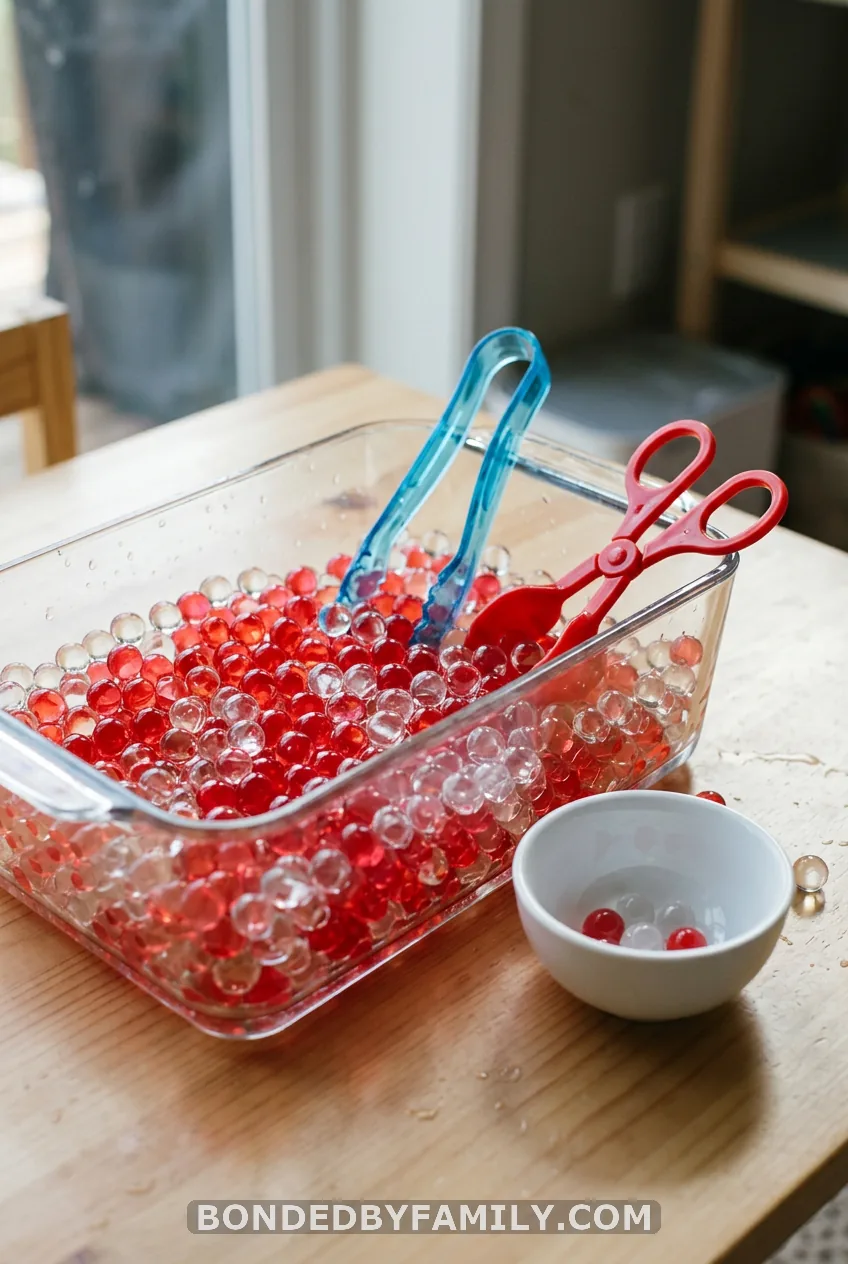
Soak 1 tablespoon of dry beads in about 4 cups of water for 4 to 6 hours. For red, use red beads. For white, use clear beads and let them stay clear. Add a few drops of peppermint extract to the soaking water.
Hand over tongs and a bowl for sorting by color.
The catch:
Water beads are not food, and they are dangerous if swallowed. Skip this bin for toddlers and anyone who still mouths toys. For preschoolers, stay within arm’s reach the entire time.
Squishy, Sortable, and Sneaky Bins
6. Dyed Candy Cane Pasta
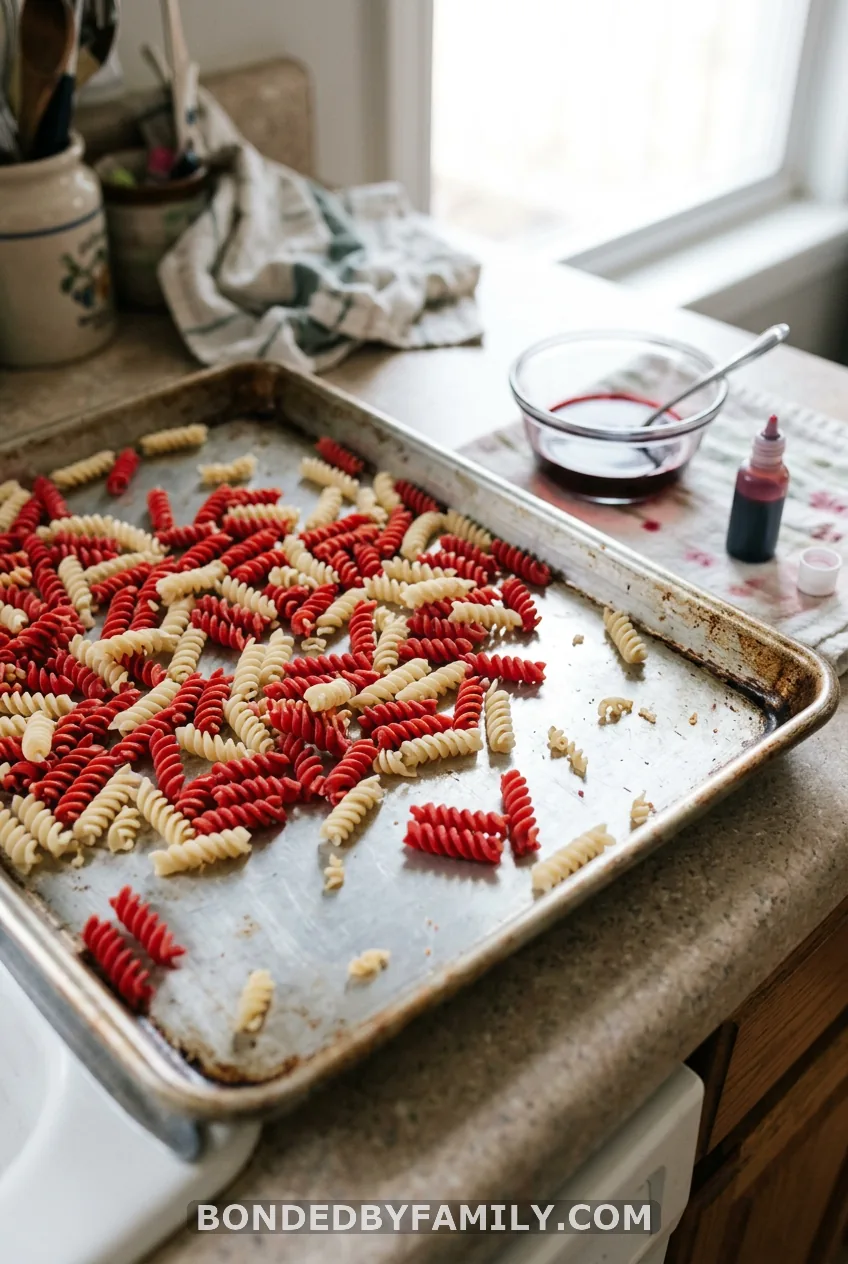
Pasta is cheap and holds color well. Put 2 cups of dry rotini or bow ties in a bag with 1 tablespoon of vinegar and 15 drops of red coloring. Shake, then dry on a tray for about an hour.
Scoop, sort, and count. Preschoolers can build red, white, red, white patterns on a strip of paper.
7. The No-Dye Bin
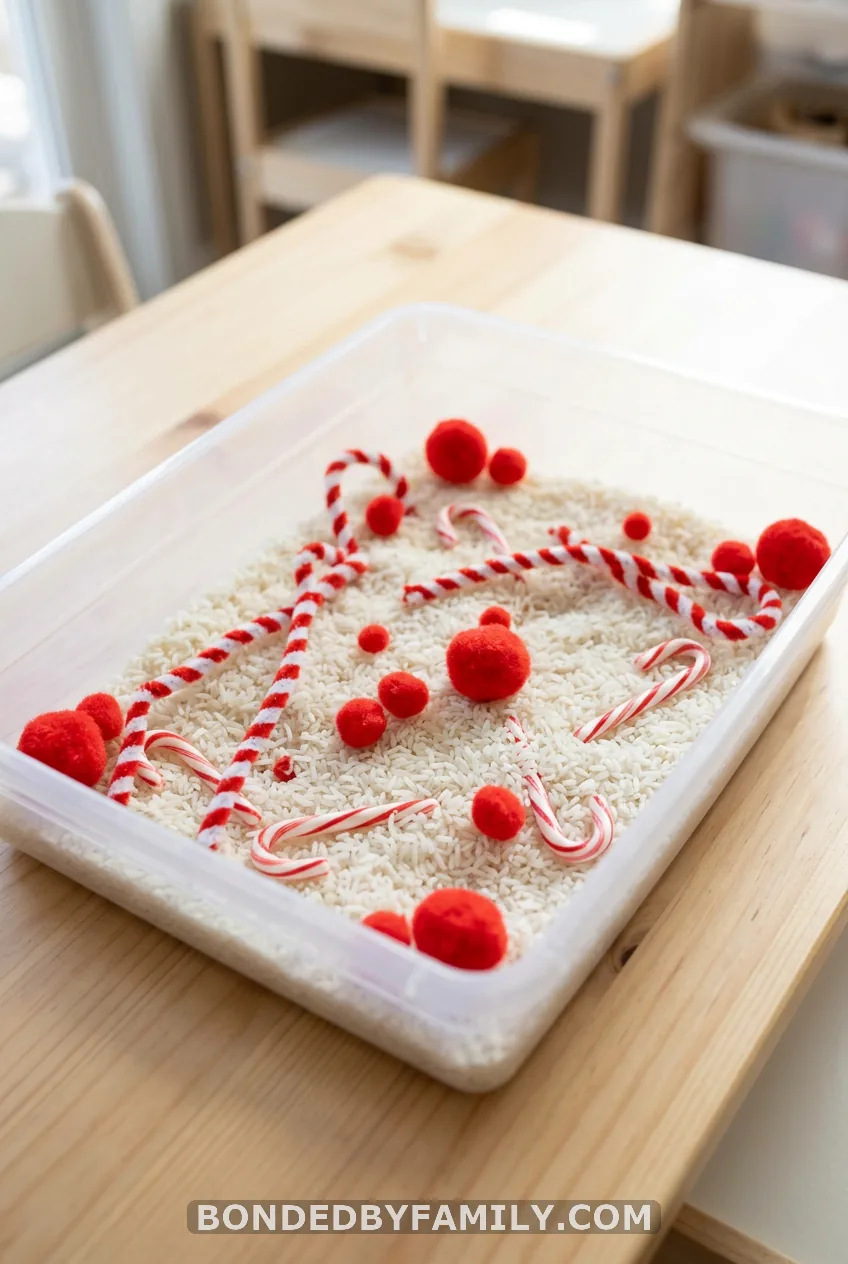
No staining, no drying time. Pour plain rice into a tub and add red pom poms and candy canes. Done in five minutes.
It suits sensitive skin and last-minute afternoons.
8. Find the Ten Candy Canes
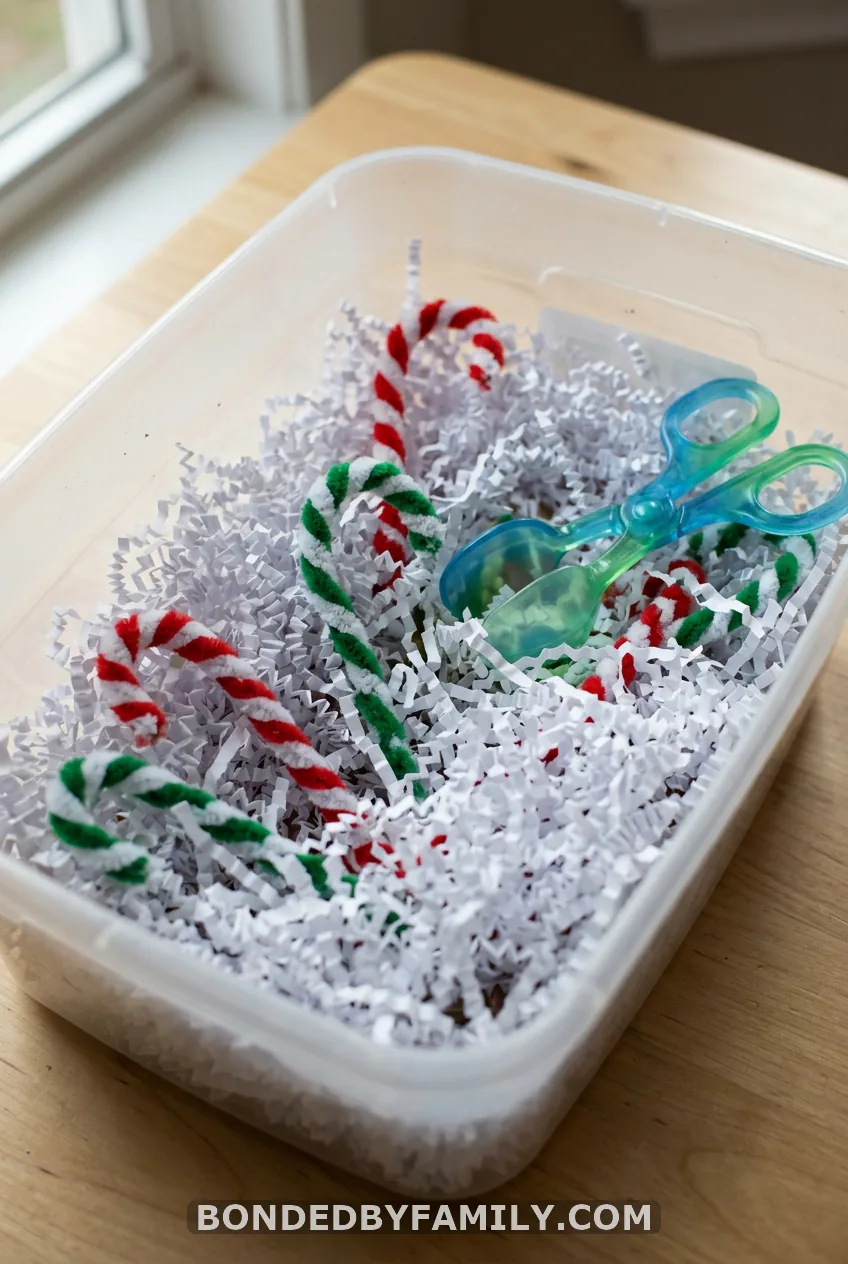
Cut striped pipe cleaners in half and bend each into a hook. Make ten. Bury them in a big bin of shredded crinkle paper.
Your child hunts with tongs and counts each cane as it comes out. Ten is a great number for preschool counting, and no one needs to know it is basically math.
9. Candy Cane Tube Scoop Bin
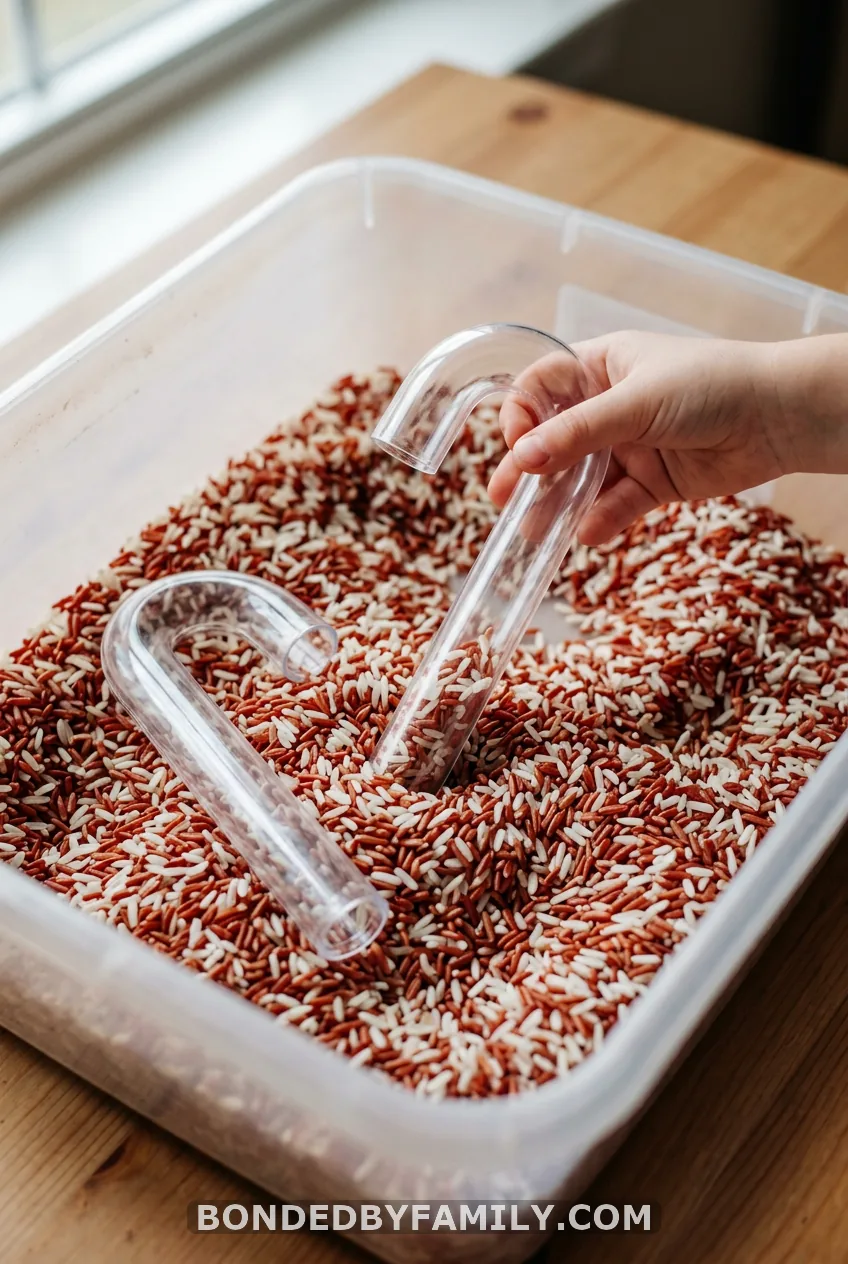
Those clear plastic candy cane tubes from the dollar aisle make fun scoops. Pour rice through the narrow end and watch it stream out the bottom. Free tool, free giggles.
10. Peppermint Salt Writing Tray
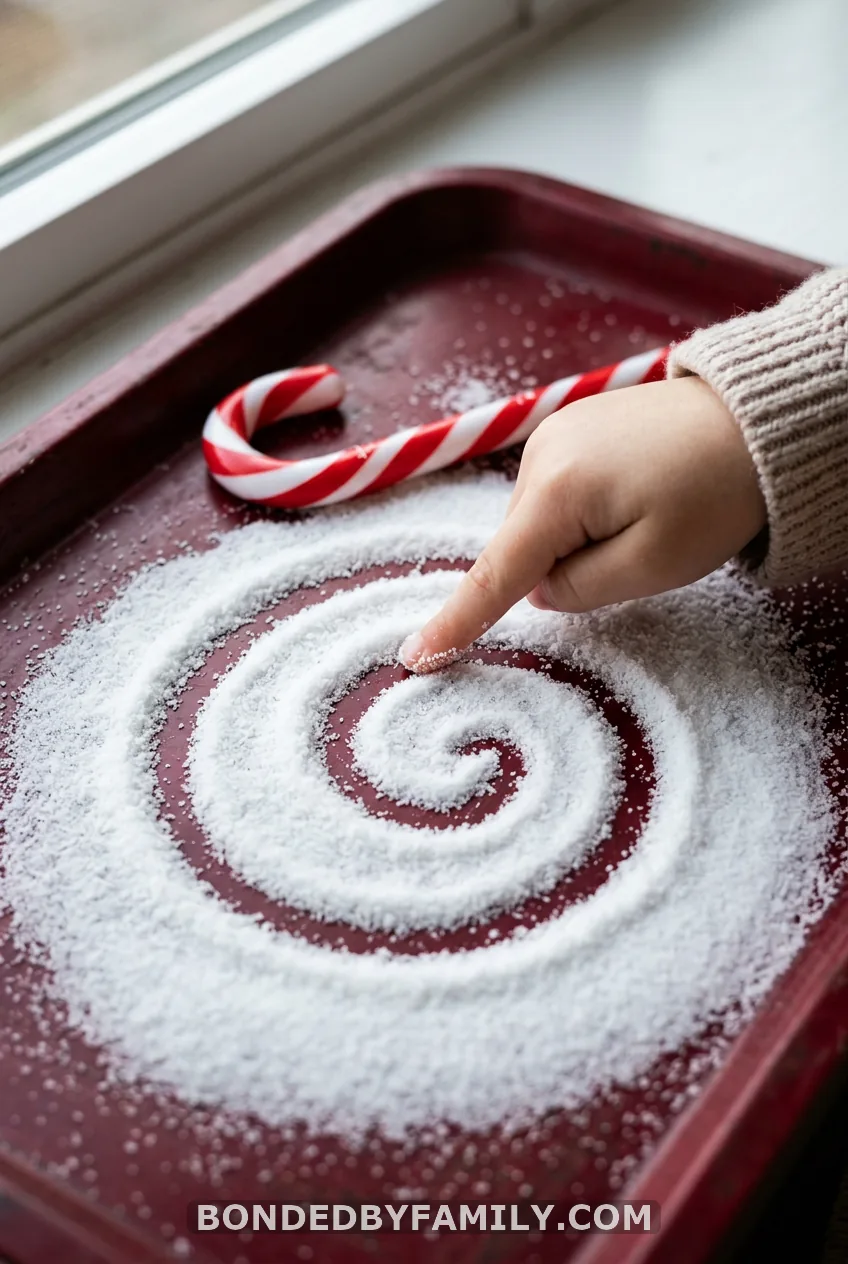
Spread a thin layer of salt on a red baking tray. Add a drop of peppermint extract and stir. Kids draw lines, letters, and candy cane hooks with one finger.
It works well for kindergartners practicing the letter J. Shake the tray to reset the page.
11. Candy Cane Bakery With Play Dough and Kinetic Sand
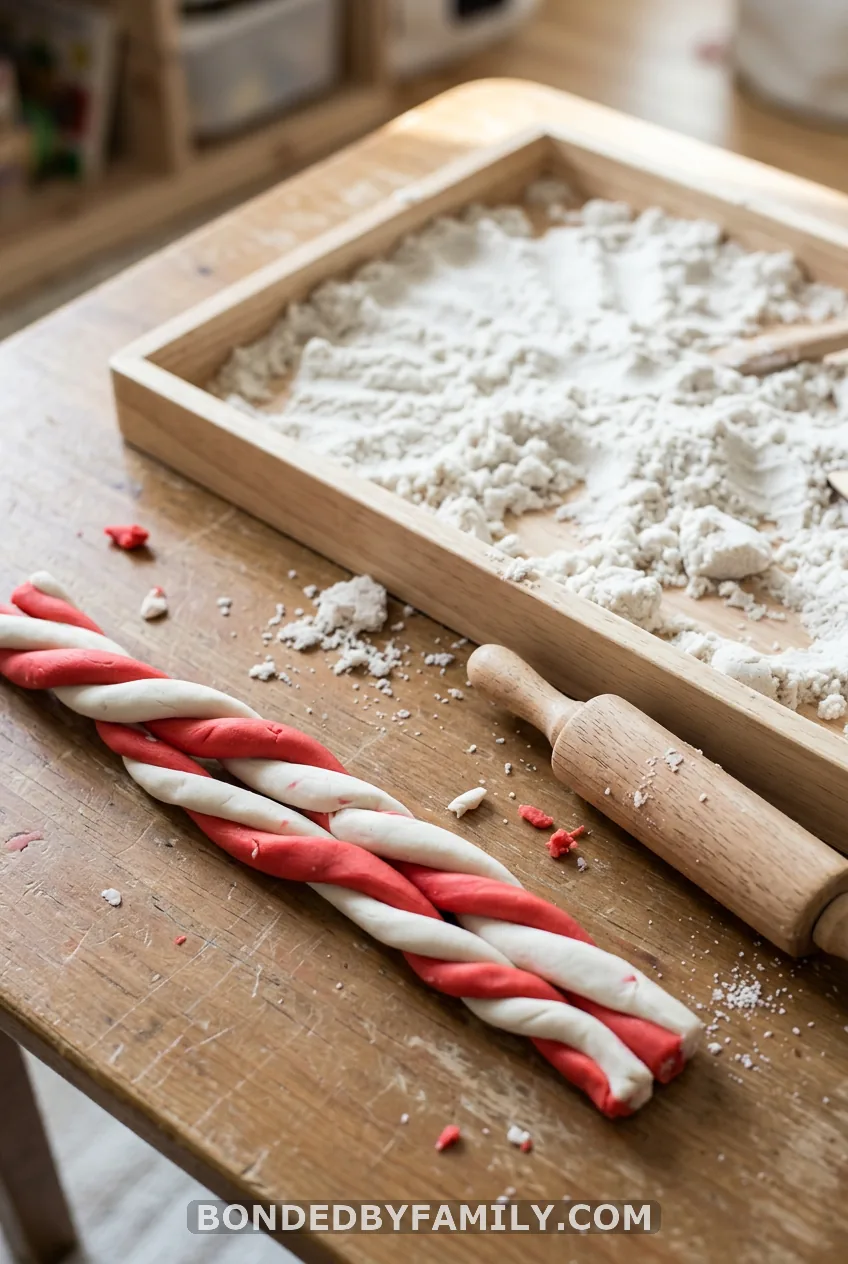
Roll one red rope and one white rope. Twist them together and bend the top into a hook. That is a play dough candy cane.
Set the canes on a tray of white kinetic sand “snow.” Add a few drops of peppermint extract to store-bought dough for scent.
12. Pony Bead Candy Canes
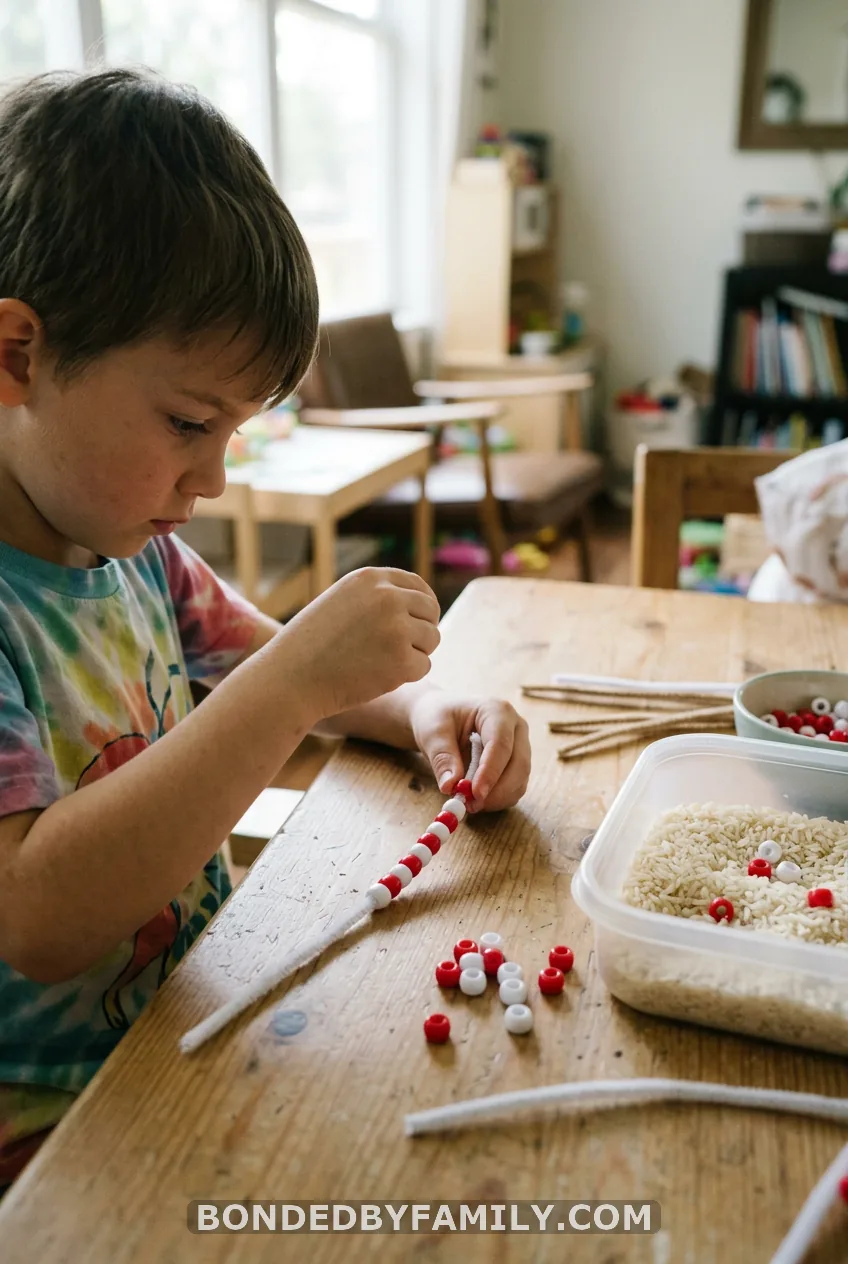
Thread alternating red and white pony beads onto a pipe cleaner. Bend the top into a hook. Hide the finished canes in a rice bin for a hunt.
Pony beads are a choking hazard. Use this one only with children 4 and up, and count the beads before and after play.
13. Color Sorting Pom Pom Bin
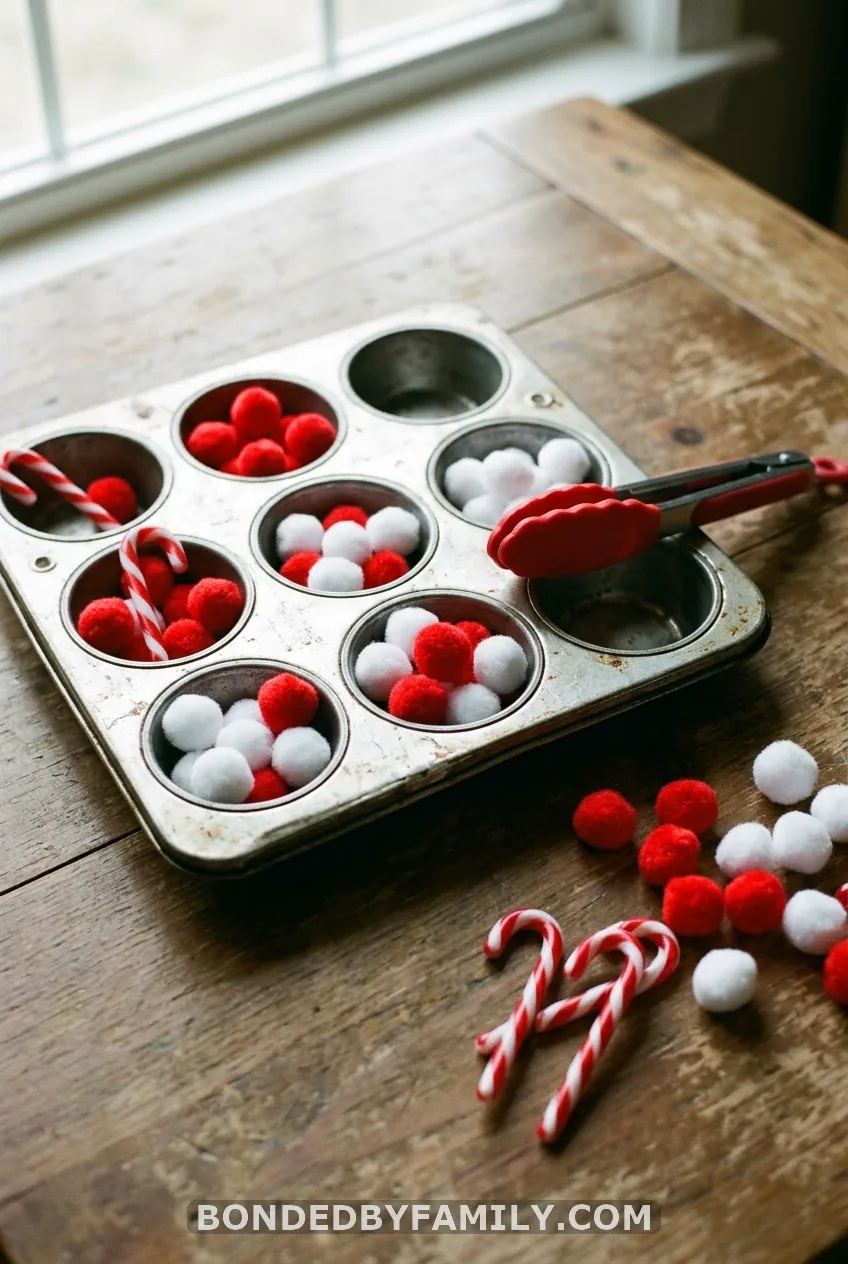
Dump a bag of red and white pom poms in the bin and give your child a muffin tin. Sort red in one cup, white in the next.
Switch tools to challenge them. Bug tongs work first, then tweezers for older preschoolers.
14. Book and Song Bin
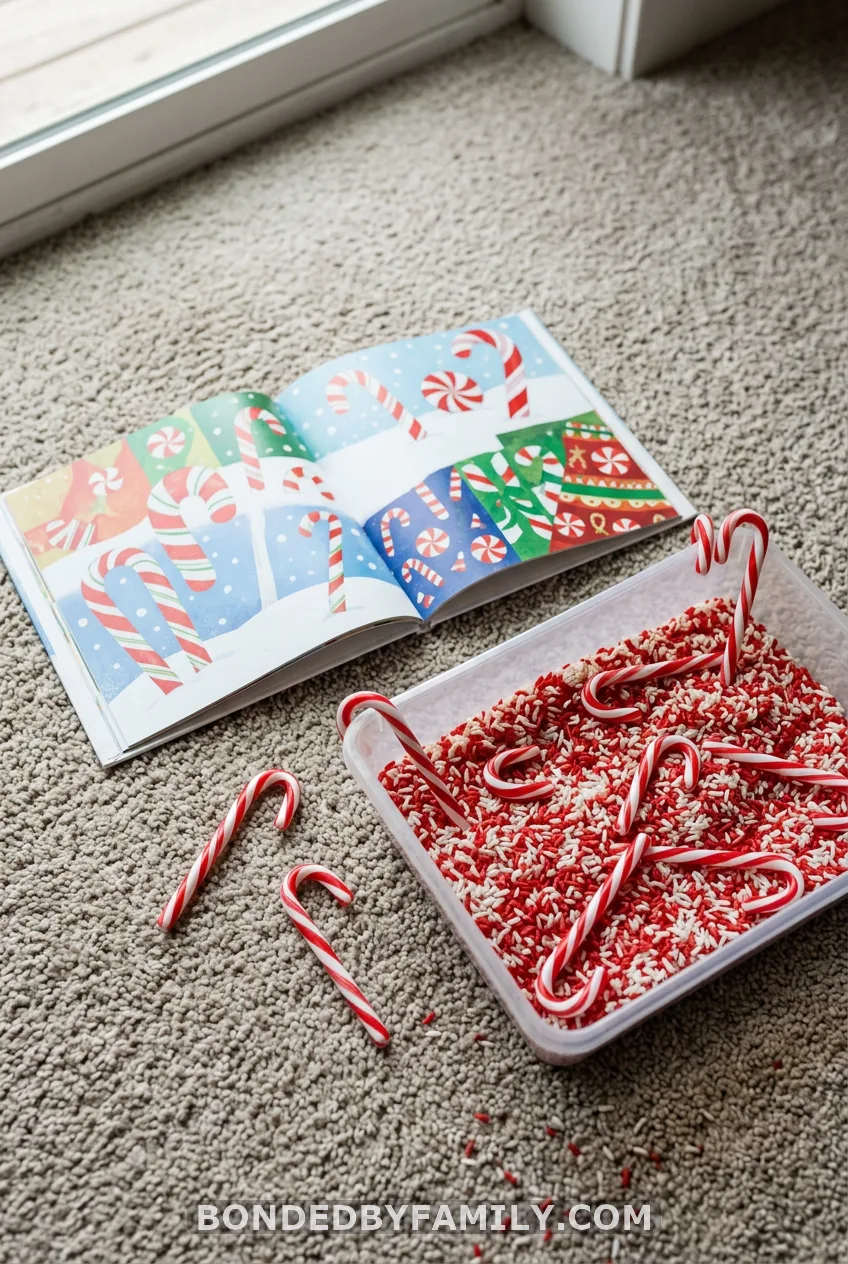
Pair any bin with Ten Little Candy Canes. Read a page, then pull out one cane to match the story.
Sing “Five Candy Canes” by The Kiboomers while your child hides and finds canes in the rice. Songs and stories build language right alongside scooping.
Match the Bin to the Age
Toddlers (18 months to 3 years)
Pick rice or cloud dough. Skip the no-dye bin for under 3s, because the small pom poms are a choking hazard. Use large foam or plastic candy canes, not tiny pieces.
Skip water beads and pony beads. Stay in arm’s reach.
Preschoolers (3 to 5 years)
Add tongs, counting, and color sorting. Oobleck, chickpeas, and the hunt in bin 8 all fit here. Keep scoops and cups in a tray so play stays in the bin.
Kindergarten (5 to 6 years)
Try patterns, writing trays, and simple addition with the canes. Ask them to make an AB pattern or count by twos.
Real Candy Canes and Storage
Real candy canes snap into sharp shards. Use them only with older kids, or let little ones play with foam and plastic canes instead. Wrapped canes are safer for handling and keep the peppermint smell.
Store dry rice and pasta in zip bags or airtight tubs for up to a year. Store cloud dough in a lidded container for about a month. Toss oobleck within a day.
FAQs
Is a candy cane sensory bin edible?
Most bases here are not. Rice, oobleck, cloud dough, pasta, and water beads are for play only. Chickpeas are the taste-safe pick, but they are still a choking risk for under-3s.
How do I scent a candy cane sensory bin safely?
Peppermint extract is the gentlest choice. Use 1/2 teaspoon per 4 cups of dry base. Use essential oil only in tiny amounts, and never for children who mouth things.
How long does dyed rice last?
Up to a year in an airtight bag, as long as it is fully dry before storing. If it smells musty or looks fuzzy, throw it out.
Back to the Peppermint Rice
My over-scented rice disaster taught me one thing: a gentle smell wins. Now I mix a half teaspoon, stir, and sniff. My daughter dives straight in, scoop in hand.
Pick one bin from this list and set it up tonight. Your little one will be pouring peppermint snow by morning.