Psychologists Peter Salovey and John Mayer put the term “emotional intelligence” in print in 1990. Daniel Goleman made it famous with his 1995 book. Yet most of us were never taught it at a kitchen table, and now we are trying to teach it with no lesson plan.
Good news: you don’t need a plan. You need paper, crayons, five minutes, and a few emotional intelligence activities that fit your kid’s age. This list has 24, sorted from toddlers to teens, with a few for the grown-ups too.
Every idea works at home with free printables or things you already own. Pick one tonight.
What Emotional Intelligence Means at Home
Emotional intelligence is the skill of noticing, naming, understanding, and handling feelings. Your own and other people’s. Goleman breaks it into four parts, and I label every activity below with one of them.
- Self-awareness: “I know what I feel.”
- Self-management: “I can calm down and choose what to do.”
- Social awareness: “I can tell what you feel.”
- Relationship skills: “I can talk, listen, and fix things with you.”
Researchers also describe it in other ways. Petrides treats it as a set of self-perceived traits, like well-being and sociability. At home, the four parts above are enough.
One message runs through everything here: all feelings are okay. Every feeling has a job. Anger helps you stand up for what’s wrong.
Fear keeps you safe. Sadness helps you heal. Behavior is what we steer, not the feeling itself.
How to Pick the Right Activity
Match the activity to the age.
- Ages 2-5: faces, movement, books, and colors.
- Ages 6-10: charts, games, and drawing.
- Tweens and teens: private writing, real scenarios, and talking as equals.
- Whole family: short rituals at the table.
- Parents: pausing and repairing.
Keep it to five to ten minutes for kids under ten. Teens and adults can handle twenty to thirty minutes. Three rules before you start: name the feeling and don’t fix it, never force sharing, and go first yourself.
If your child refuses, don’t push. Draw side by side without talking. Read a book and let them listen from the next room. For kids who are sensory-sensitive or non-verbal, offer pointing, colors, or thumbs up and down instead of words.
One printable a week beats ten at once. Slip each page into a dry-erase laminating pouch so you can reuse it.
1. Mirror Feelings Game (Ages 2-5)
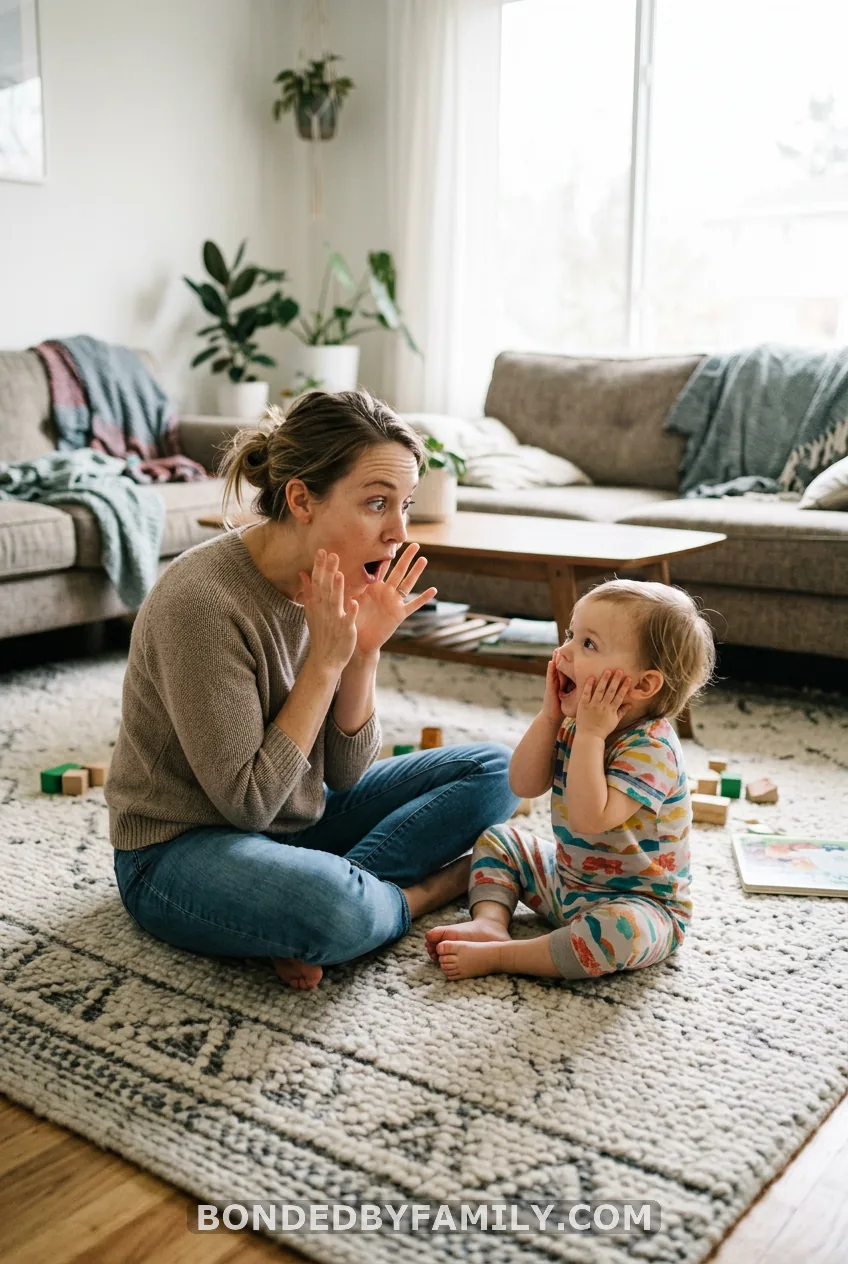
Skill: self-awareness. Make a face. Say the feeling. “Surprised!
Let your child copy you, then swap. Two minutes is plenty.
Toddlers learn feeling words by seeing them on a face first.
2. Color the Emotions Sheet (Ages 3-6)
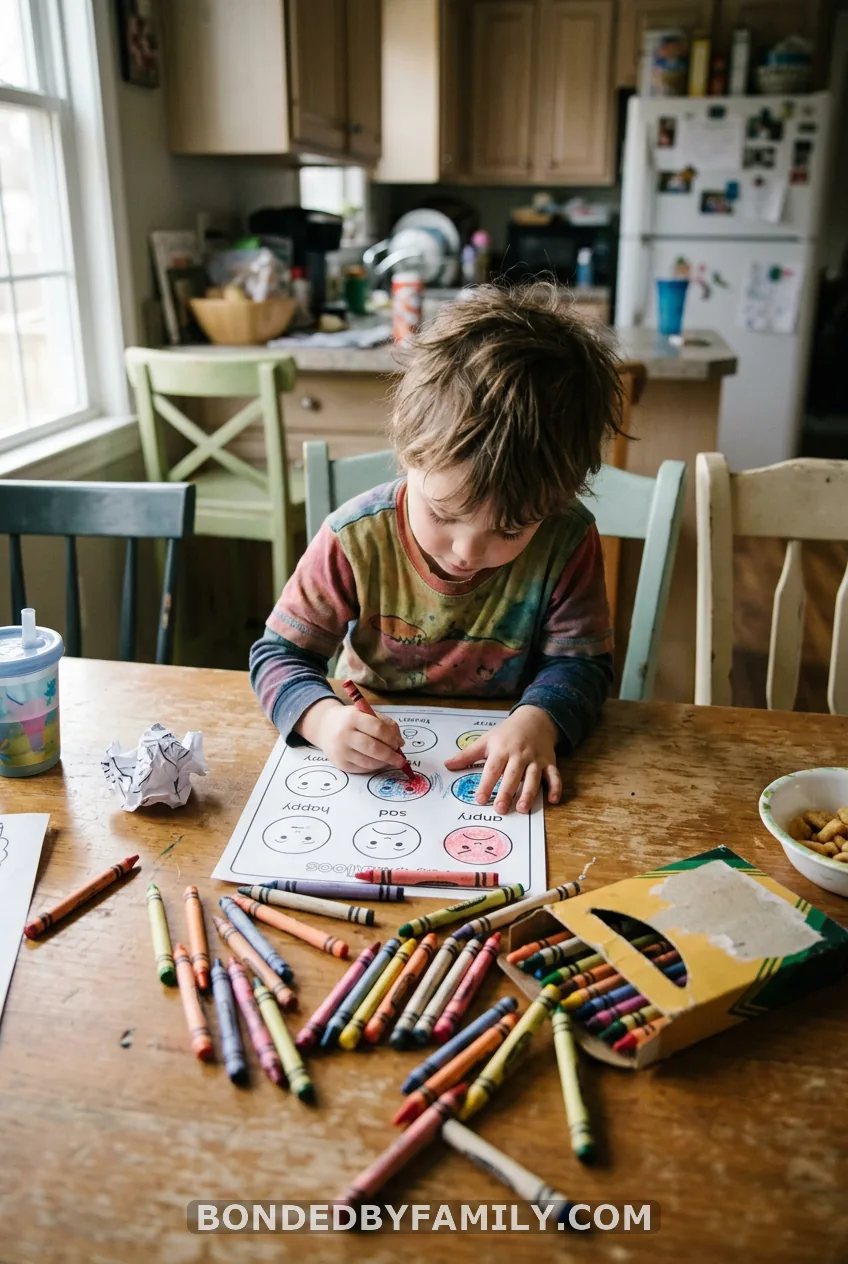
Skill: self-awareness. Print a page with faces for happy, sad, sleepy, surprised, confused, and loved. Ask your child to color each one however it feels to them.
Some kids color sad in blue. Others use red or black. Ask “Tell me about that color” and accept the answer. There is no wrong one.
3. Animal-Walk Emotion Charades (Ages 3-7)
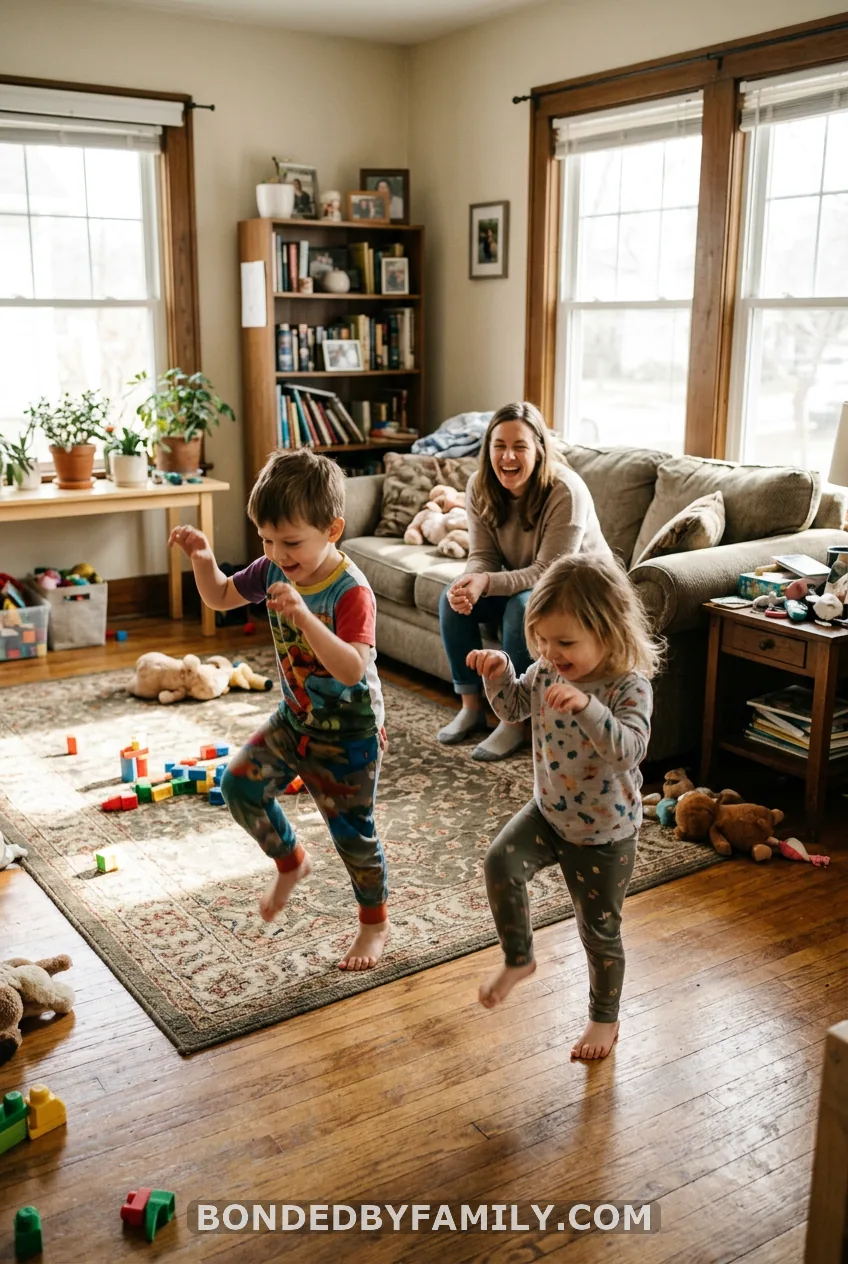
Skill: self-regulation. Call out a feeling plus an animal. Angry bear. Sleepy sloth.
Nervous mouse. Proud peacock. Your child acts it out with their whole body.
Then try the reverse. “Show me how a calm bear walks.” Moving big and then moving slow teaches kids that their bodies can shift gears.
4. Calm-Down Corner With a Sensory Basket (Ages 2-7)

Skill: self-regulation. A calm-down corner is a spot your child chooses to go, not a time-out. It takes about 20 minutes to set up and costs $10-15 if you buy everything new. Most families already own half of it.
What goes in the basket:
- A floor cushion or beanbag, plus a soft blanket
- A pinwheel for slow breaths (blowing makes it spin, so kids see their breath working)
- A squeeze ball or a lump of Play-Doh
- A few feelings cards with faces
- One picture book
Set it up in three steps:
- Pick a quiet corner away from the TV, not behind a closed door.
- Let your child help choose and place the items. Ownership matters.
- Visit it together when everyone is calm, so it’s a happy place before a meltdown.
The common mistake is sending a child there as punishment. Then it becomes a place they avoid. Say “Want to go to your corner, or want me to come with you?”
Safety: keep tiny items like beads out of the basket for kids under four, and stay nearby for pinwheel play.
5. Feelings Read-Alouds (Ages 2-6)
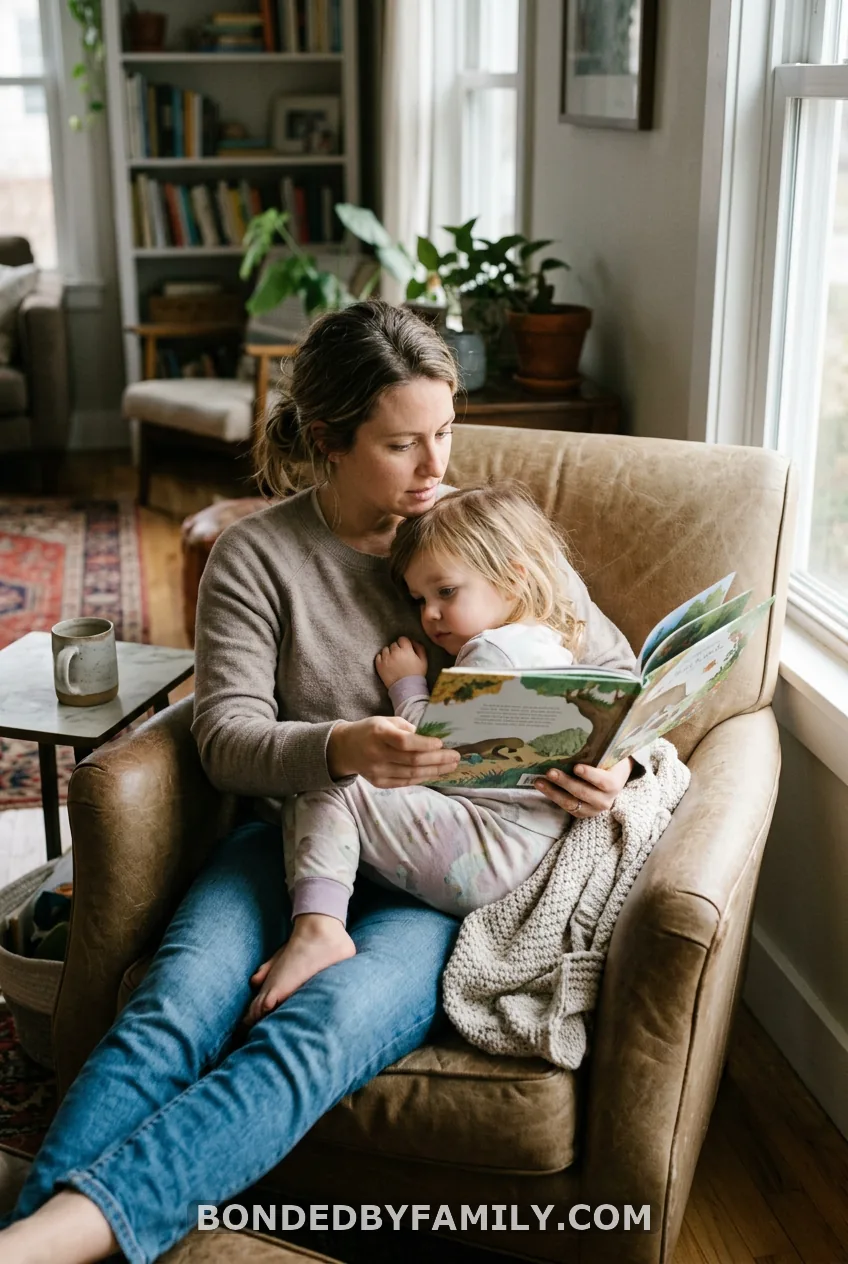
Skill: social awareness. Try The Color Monster by Anna Llenas, In My Heart by Jo Witek, or an episode of Daniel Tiger’s Neighborhood. Stop on a page and ask, “How do you think she feels? How can you tell?”
Pointing at faces counts as an answer. Books let kids talk about feelings without talking about their own.
6. My Feelings Wheel (Ages 6-10)
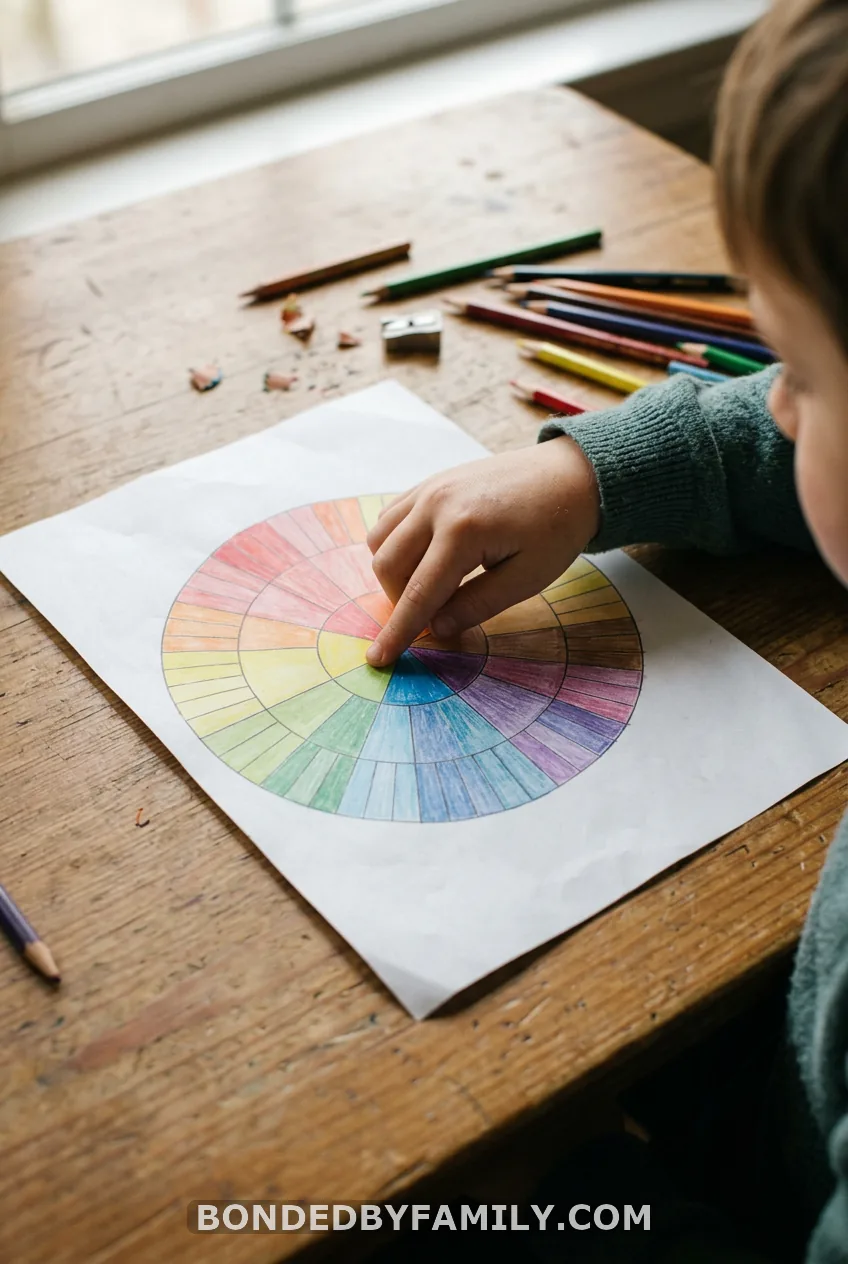
Skill: self-awareness. Start in the middle with the big feeling: mad, sad, glad, scared, or calm. Then move outward to a more exact word. Mad becomes annoyed, frustrated, or furious. Sad becomes lonely, disappointed, or homesick.
Print one and tape it to the fridge. Finding the right word helps, because a feeling that has a name feels smaller. Ask your child to point to the word at bedtime.
7. Feelings Thermometer (Ages 5-10)
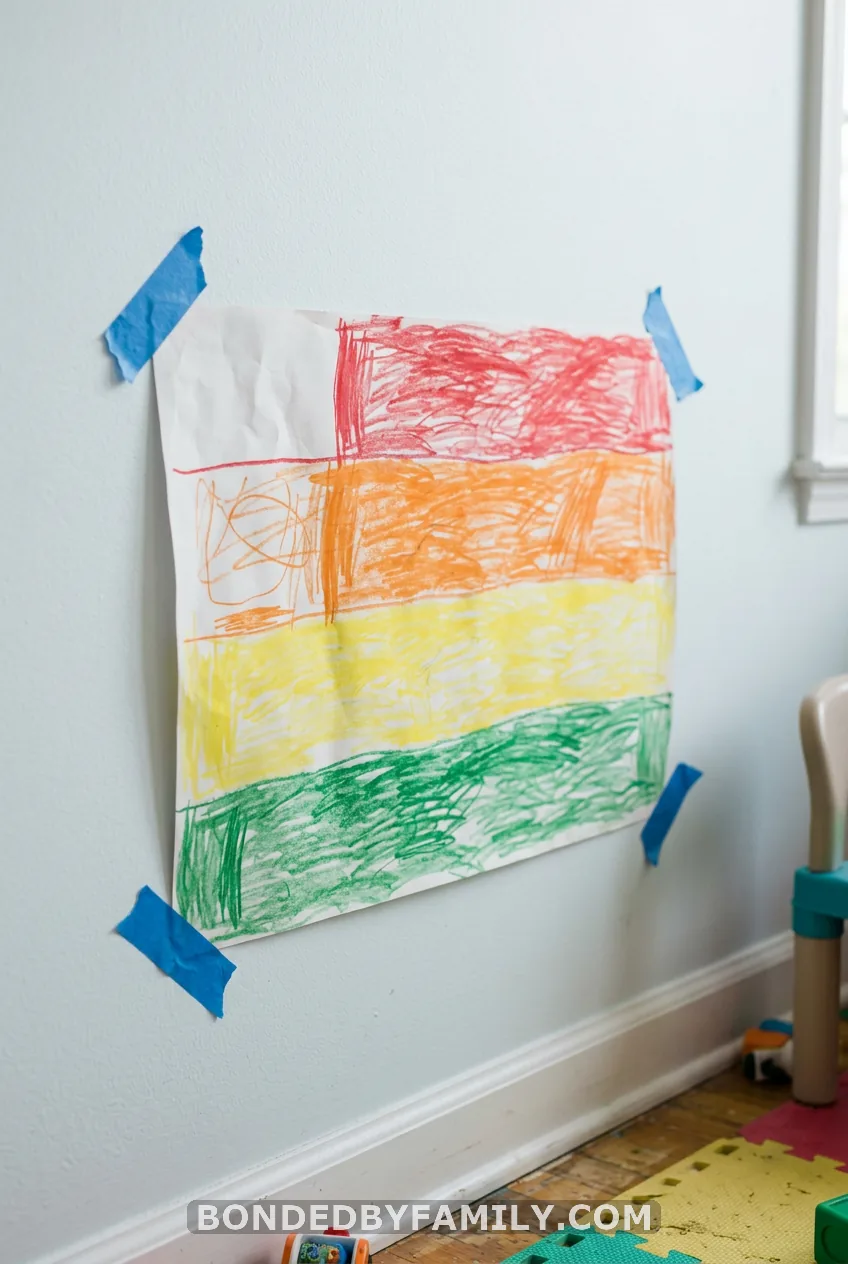
Skill: self-regulation. Divide a page into color zones, like the Zones of Regulation. Green is calm and ready to learn. Yellow is a little upset or unsure.
Orange is frustrated or worried. Red is out of control.
Next to each zone, write one tool your child picks. Green: keep going. Yellow: sip water and stretch.
Orange: draw or listen to music. Red: deep breaths and ask for help. Kids point to a zone, which beats finding words mid-meltdown.
8. Feelings Talk Dice (Ages 6-12)
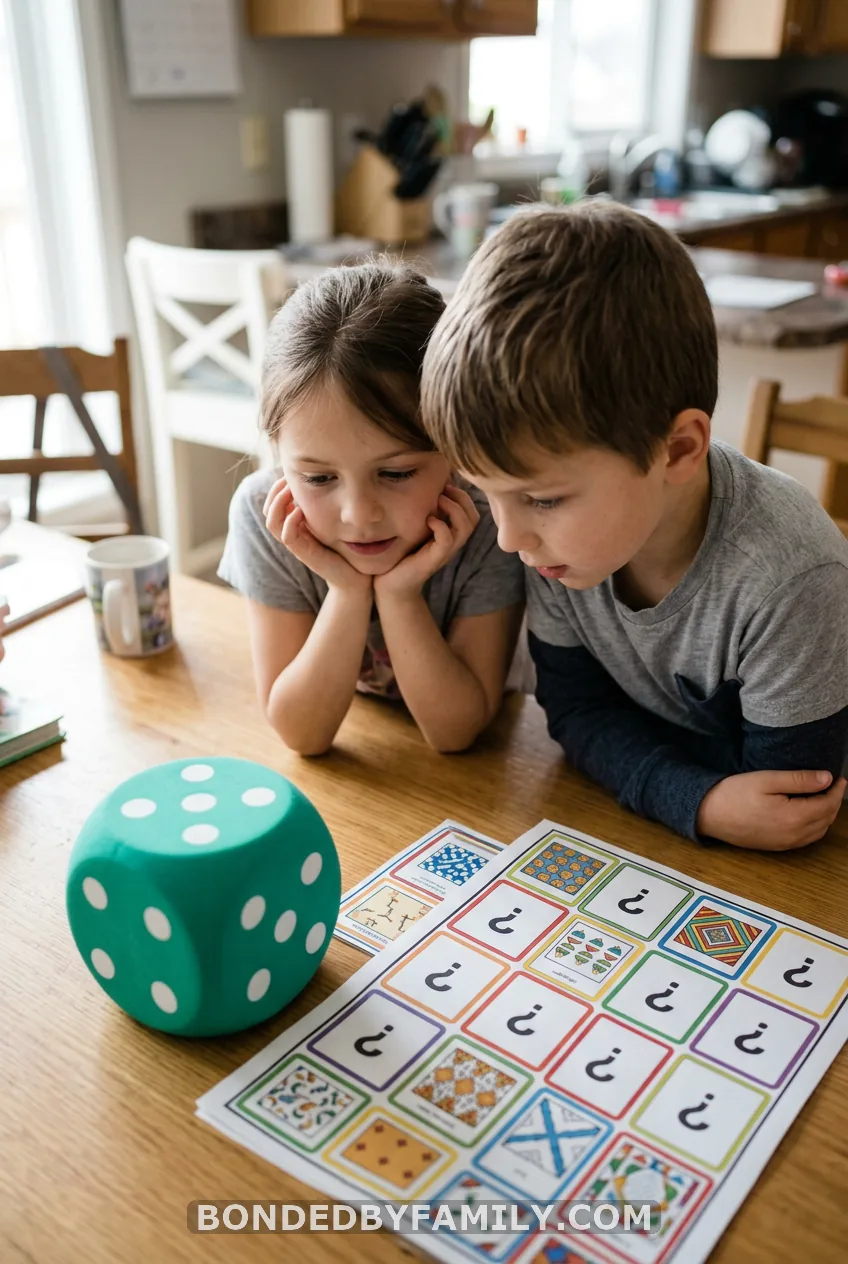
Skill: relationship skills. Print a grid of questions: “What made you smile today? “Who makes you feel safest? “What helps you calm down?
Roll the die and answer the matching question. Everyone takes a turn, adults too.
Let kids pass once. Passing is a skill.
9. Inside My Head Worksheet (Ages 7-12)
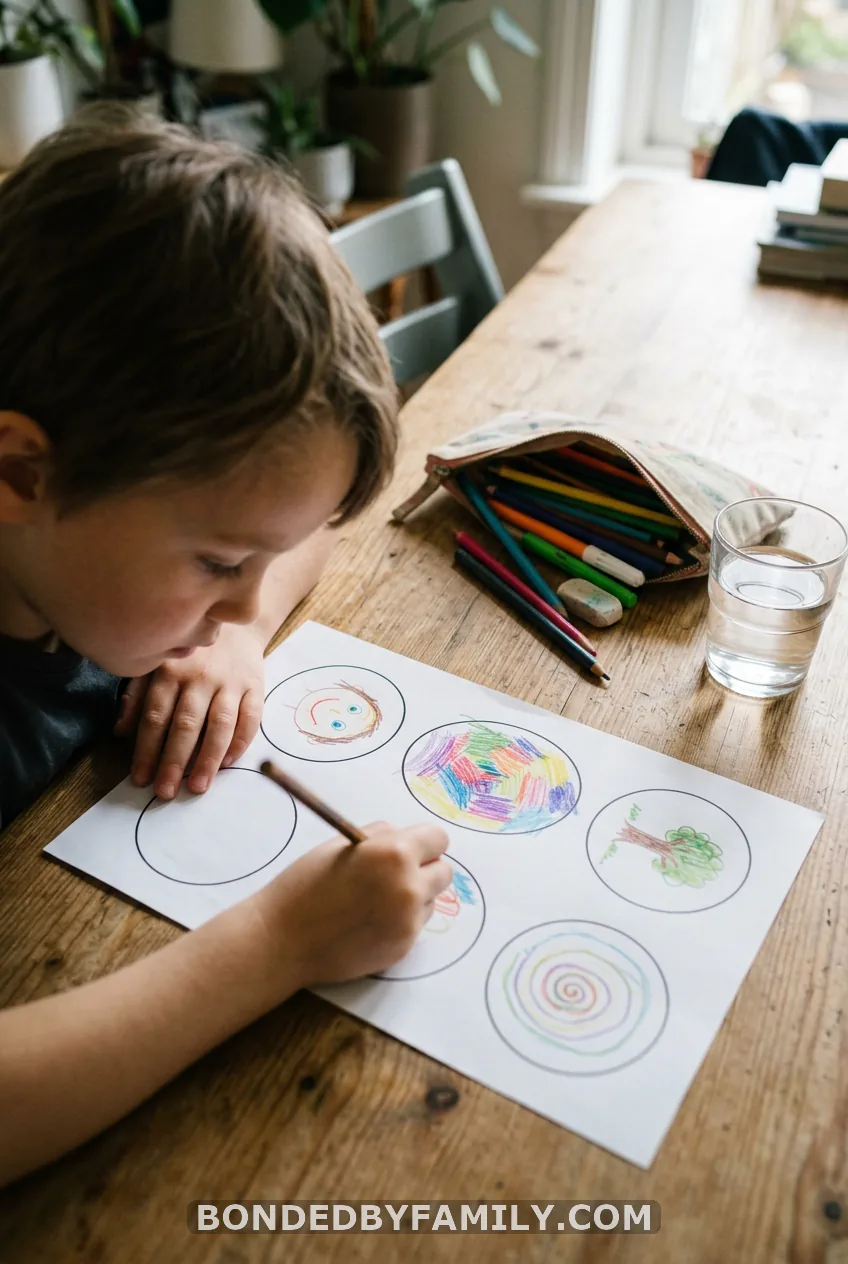
Skill: self-awareness. Give your child a page with a head outline and sections: calm thoughts, worries, questions, happy moments, and things I keep thinking about. They fill in each with words or doodles.
Don’t read it unless they invite you. The point is getting thoughts out of the head and onto paper.
10. Inside Out Movie Night With Pauses (Ages 6-12)

Skill: social awareness. Pixar’s Inside Out gives kids a picture of five feelings working together. Pause two or three times and ask, “Which feeling is driving right now?”
Popular idea: one feeling is the bad guy.
What the film shows: Sadness turns out to matter most.
Use that to start the talk about why every feeling has a purpose. Serve popcorn only to children over four.
11. Three-Line Nightly Journal (Ages 7-12)

Skill: self-awareness. Three lines: “Today I felt… Because… Tomorrow I’d like to…
A sticker notebook works well. Big Life Journal makes a kid-friendly one if you’d like a ready-made version.
12. Name It to Tame It Prompts (Ages 11-17)

Skill: self-awareness. Teens hate assignments. So give them prompts they can ignore:
- “A moment this week that felt heavier than it should have.”
- “Something I said yes to but wanted to say no to.”
- “What I’d tell a friend who felt like this.”
Naming a feeling in writing often lowers its volume. Offer the notebook and walk away. Don’t ask to read it.
13. Role-Play Real Scenarios (Ages 11-17)
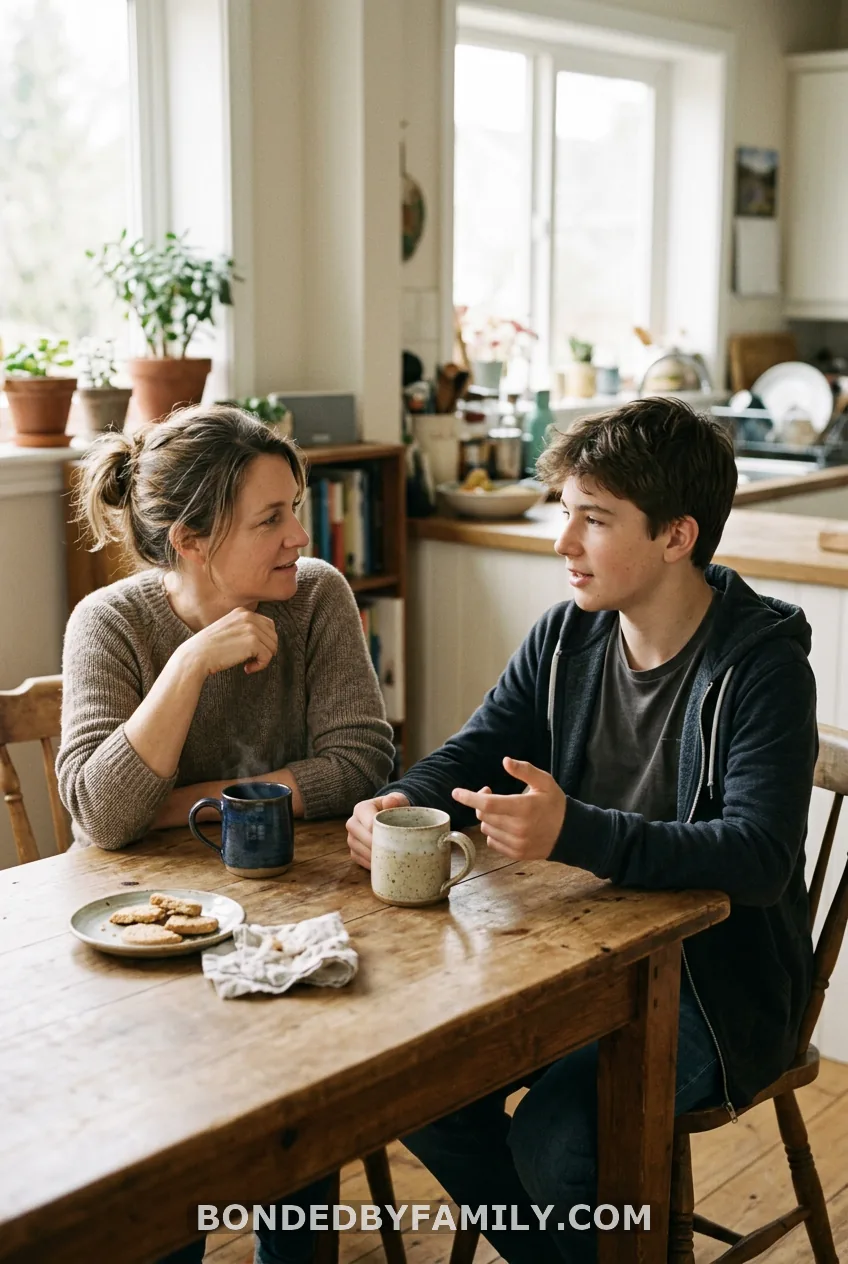
Skill: relationship skills. Pick one situation your teen faces: group chat drama, a teacher conflict, or being left out of plans. Write two or three sentences they could say. Then act it out.
Let your teen play the other person first. Seeing the situation from the other side builds empathy faster than any lecture. Then switch, and have fun with it. Silly voices are allowed.
14. Active Listening Pairs (Ages 10-Adult)

Skill: social awareness. One person talks about their week for three minutes. The listener only reflects back the feelings they heard: “Sounds like you felt left out.” No advice, no fixing. Then swap.
The same exercise works in team meetings. Pairs at work rotate every five minutes, and it takes about twenty minutes in total.
15. Mood Tracker and Trigger Log (Ages 12-Adult)
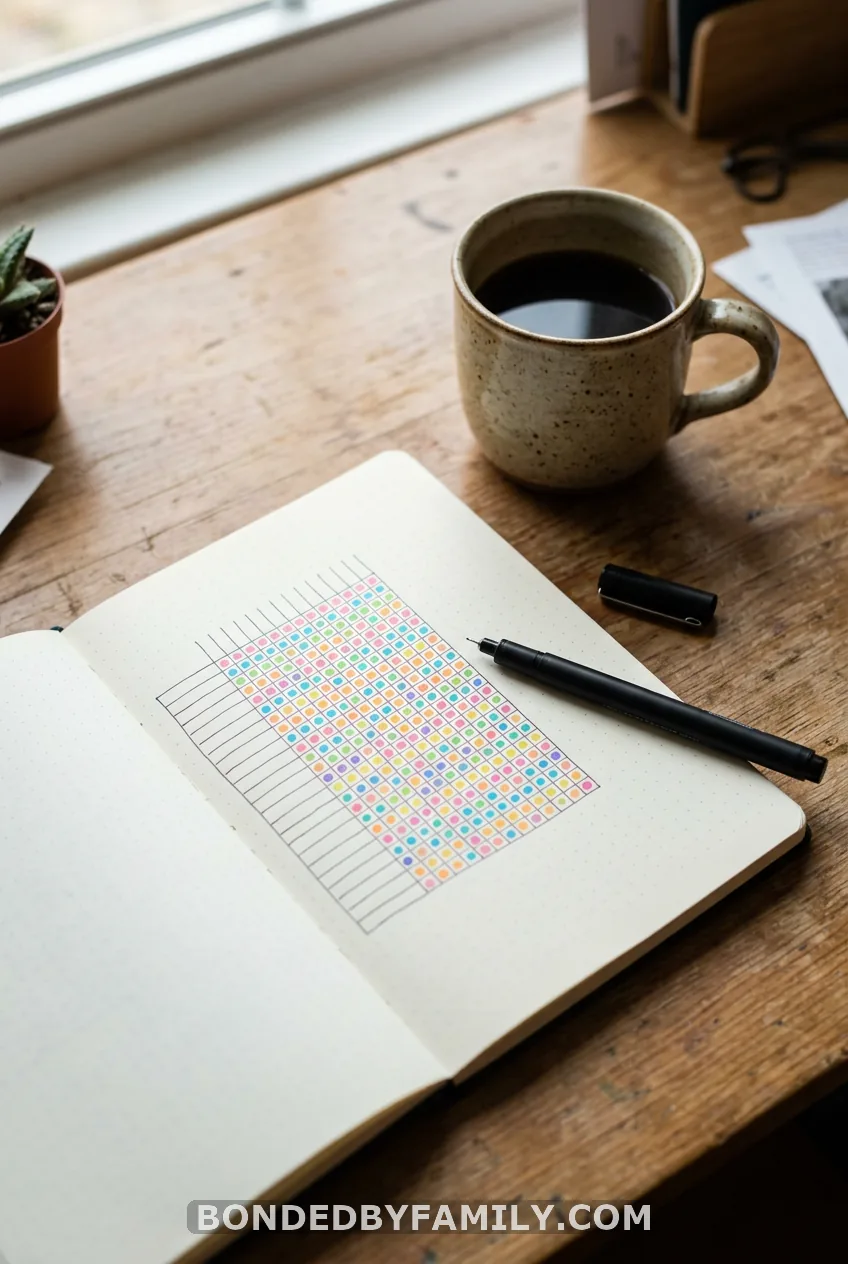
Skill: self-awareness. For seven days, pick a color for each mood and dot the page once at night. Beside the dot, jot what happened right before.
On day seven, look for patterns. Maybe every red dot follows a bad night’s sleep. Patterns turn vague moods into things you can plan around.
16. Fogging for Criticism (Ages 12-Adult)

Skill: self-management. Fogging means agreeing with a small piece of the criticism and staying calm. “You might be right, I could have texted.” Then stop. The fog absorbs the hit without a fight and without a collapse.
Practice with silly insults first (“Your socks don’t match!” “True, they don’t!”). Once that feels easy, try real ones.
17. Boundary Scripts (Ages 12-Adult)

Skill: relationship skills. Write three ways to say no that keep the friendship: “I can’t make it, but thanks for asking.” “I’m not up for that, want to do something else?” “That’s not for me.”
Keep a few on your phone’s notes app. It’s easier to use a line you already wrote.
18. Emotional Check-In Circle (All Ages)
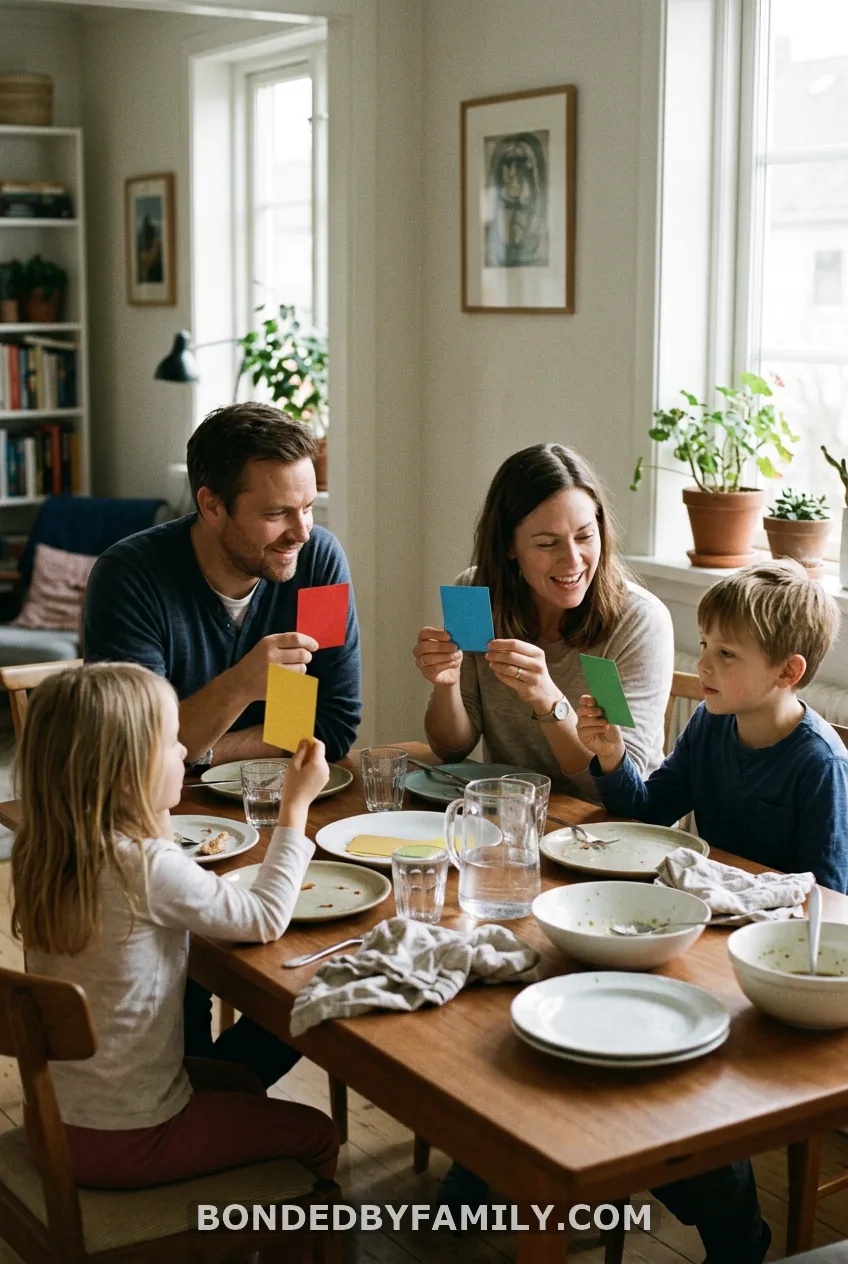
Skill: self-awareness. Before anyone eats, each person shows one word or one color for how they arrived. Nobody explains unless they want to.
Keep a small stack of paint-chip cards by the table. Non-verbal kids can simply hold up a card.
19. High, Low, and Gratitude (All Ages)

Skill: relationship skills. Each person shares a high, a low, and one thing they’re grateful for. Takes five minutes. Keep it going for a month and kids start volunteering their lows.
20. The Family Feelings Jar (All Ages)
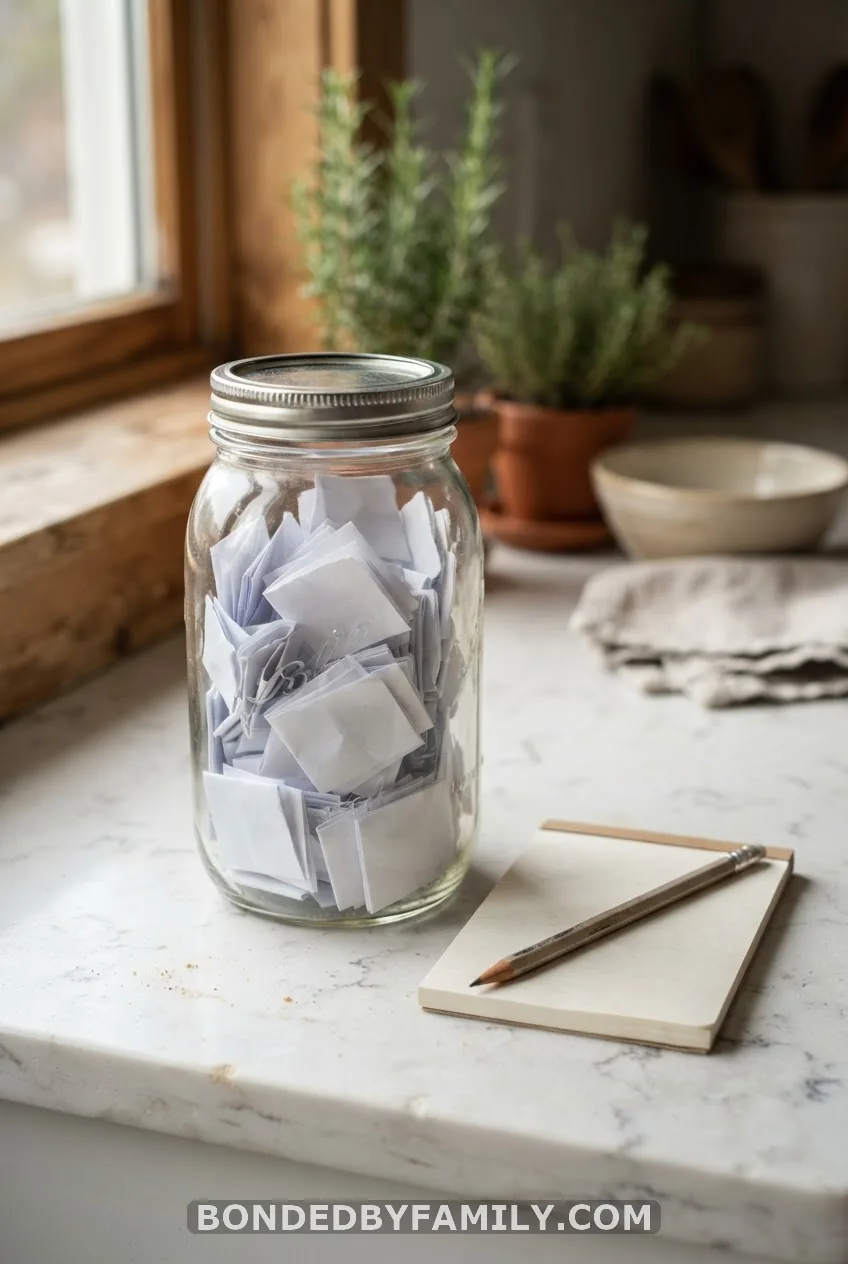
Skill: relationship skills. Anyone can drop in an unsigned note about a hard day. Read a few on Sunday night. Say “Thanks for telling us” and nothing more.
21. Feelings Charades Across Generations (All Ages)

Skill: social awareness. Write feelings on slips: jealous, embarrassed, proud, nervous. One person acts it out with no words. Others guess.
Grandparents love this one. Add a rule that the actor must also say a time they felt it, which sparks stories you may never have heard.
22. The Repair Round (All Ages)
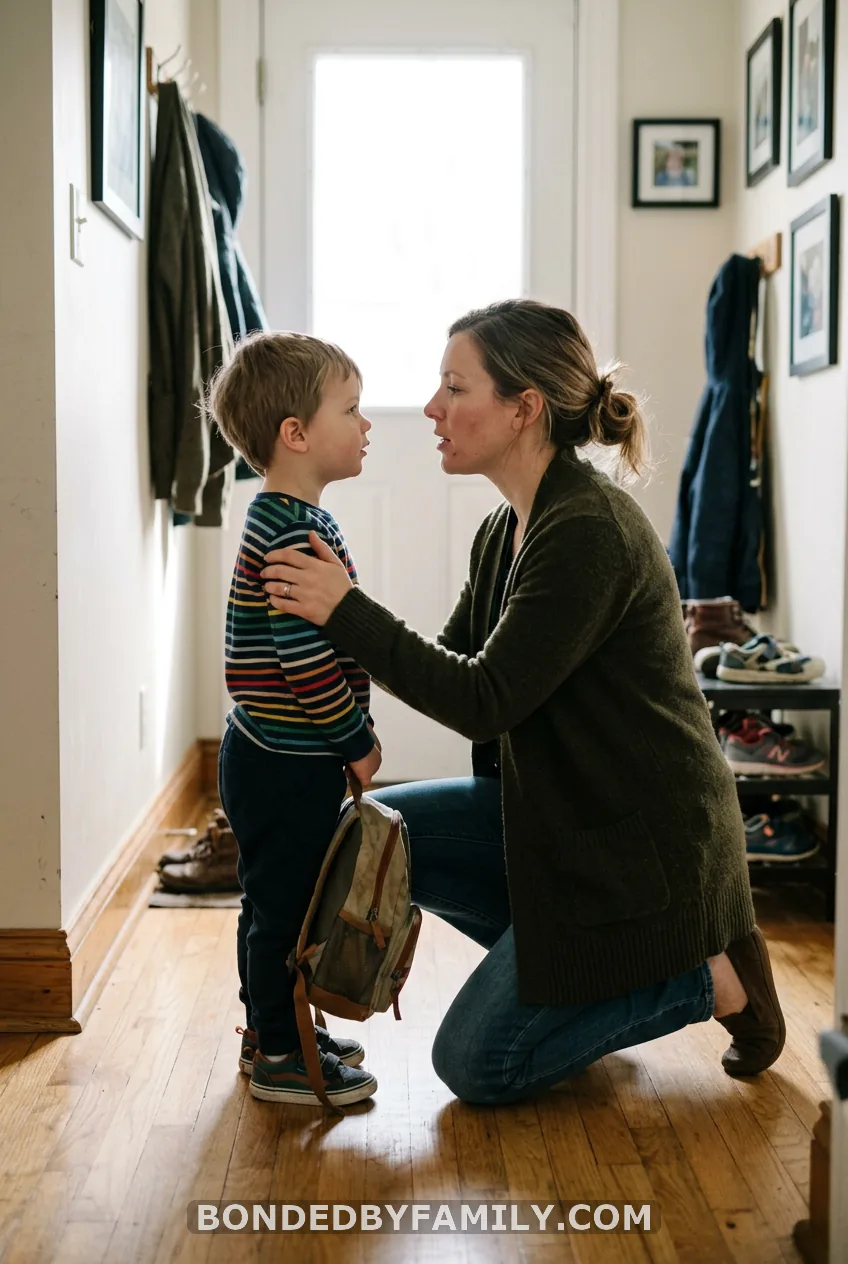
Skill: relationship skills. A confession. Last winter I snapped at my daughter over spilled juice, and then I pretended nothing had happened. The whole evening felt stiff. Her shoulders stayed up by her ears.
The next morning I tried this script: “I’m sorry I yelled. I was stressed and the juice was the last straw. That wasn’t your fault.” She hugged me hard.
Kids learn more from the repair than from a perfect moment. The steps: name what you did, name what you were feeling, say it wasn’t their fault, and say what you’ll try next time.
23. The Pause (Parents)

Skill: self-management. Before you answer, breathe in, count to five, and breathe out. Then respond. It takes five seconds and saves an hour of apologies.
Your calm body is the real lesson. A regulated parent teaches regulation without saying a word. For a longer reset, color an ocean mindfulness page together.
24. Parent Trigger Log (Parents)

Skill: self-awareness. Keep one note on your phone. When your child does something that makes you boil, write what happened and what you felt underneath. Tired?
Embarrassed? Scared?
After a week, look for patterns. Often the trigger says more about your day than your child.
Putting It Together: A 7-Day Plan
Don’t try all 24. Try this week:
- Feelings wheel
- Feelings thermometer
- Charades
- Check-in circle
- Journal prompt
- Story time
- Family feelings jar
Five to ten minutes each. You’ll know it’s working when your child’s feeling vocabulary grows, meltdowns get shorter, and they show empathy without being asked. Don’t quiz them. If a child seems stuck in big feelings for weeks, talk with a school counselor or therapist.
Back to the Kitchen Table
Remember that gap in the intro, the one where nobody handed us a lesson plan? You just filled it. A pinwheel, a paper wheel, and five minutes at the kitchen table are enough to start.
Pick one activity tonight and go first yourself. Your kids will follow.
FAQ
What are good emotional intelligence activities for kids at home?
Start with a feelings wheel or thermometer so kids can name what they feel. Add a daily dinner check-in and one hands-on game like emotion charades. Repetition matters more than any one lesson.
How do I teach emotional intelligence to a toddler who can’t talk yet?
Narrate feelings aloud: “You’re frustrated that the tower fell.” Use mirror games and pair big feeling words with faces and colors. Toddlers learn emotional vocabulary by hearing it attached to real moments.
What’s one emotional intelligence activity for teens?
Active listening pairs. One person talks for three minutes while the other reflects back only the feelings they hear, then they swap. It builds empathy without feeling like a lecture.
Are there free printable emotional intelligence worksheets?
Yes. The feelings wheel, thermometer, color-the-emotion page, and talk dice cards are the four most reusable. Print them once, slip them into laminating pouches, and use dry-erase markers.
How long should an emotional intelligence activity take?
Five to ten minutes is plenty for kids under ten. Teens and adults can handle twenty to thirty. A short daily check-in does more than a monthly deep dive.