Does your toddler grab the crayon like a caveman holding a club? Mine did too, for way longer than I want to admit.
Fine motor skills – the small, precise movements of fingers and hands – don’t build themselves overnight. They build through repetition, through squeezing and pinching and dropping things a hundred times a day. And here’s the good news: you don’t need a therapist’s toy closet or an Amazon cart full of “educational” gadgets to build them. You need a kitchen drawer, five spare minutes, and a toddler who’s willing to sit still for at least one of them.
By the end of this list, you’ll have 11 activities ready to go tonight, using items already scattered around your house.
Why Fine Motor Skills Matter More Than You Think
The Everyday Stuff Depends on It
Buttoning a coat. Holding a spoon steady. Eventually, gripping a pencil to write their own name. All of that traces back to the tiny muscles in your toddler’s hands, the ones getting stronger every time they pinch a raisin or squeeze a lump of dough. Skip the practice, and those everyday tasks stay frustrating longer than they need to.
Play Beats Flashcards Every Time
Toddlers don’t learn from instructions. They learn from doing – poking, dropping, tearing, mashing. That’s actually the whole point of this list. Every single item below is disguised as play, not a lesson, because a toddler can smell a lesson coming from a mile away and will refuse it on principle.
The Bonding You Didn’t Expect
Nobody tells you this part: sitting across from your toddler while they jam pom-poms into an ice cube tray is oddly one of the best parts of the day. No screens. No multitasking. Just you, narrating their every move like a sports announcer, and them grinning like they just won a gold medal for stuffing a cotton ball into a slot.
A Quick Safety Note Before You Start
Several of these activities use small objects – buttons, pom-poms, dry pasta. If your toddler still mouths things (common under 2), skip anything smaller than a golf ball unless you’re sitting right there watching every second. Supervision isn’t optional here; it’s part of the recipe.
The 11 Zero-Prep Activities
1. Sticker Peel-and-Stick Target Practice
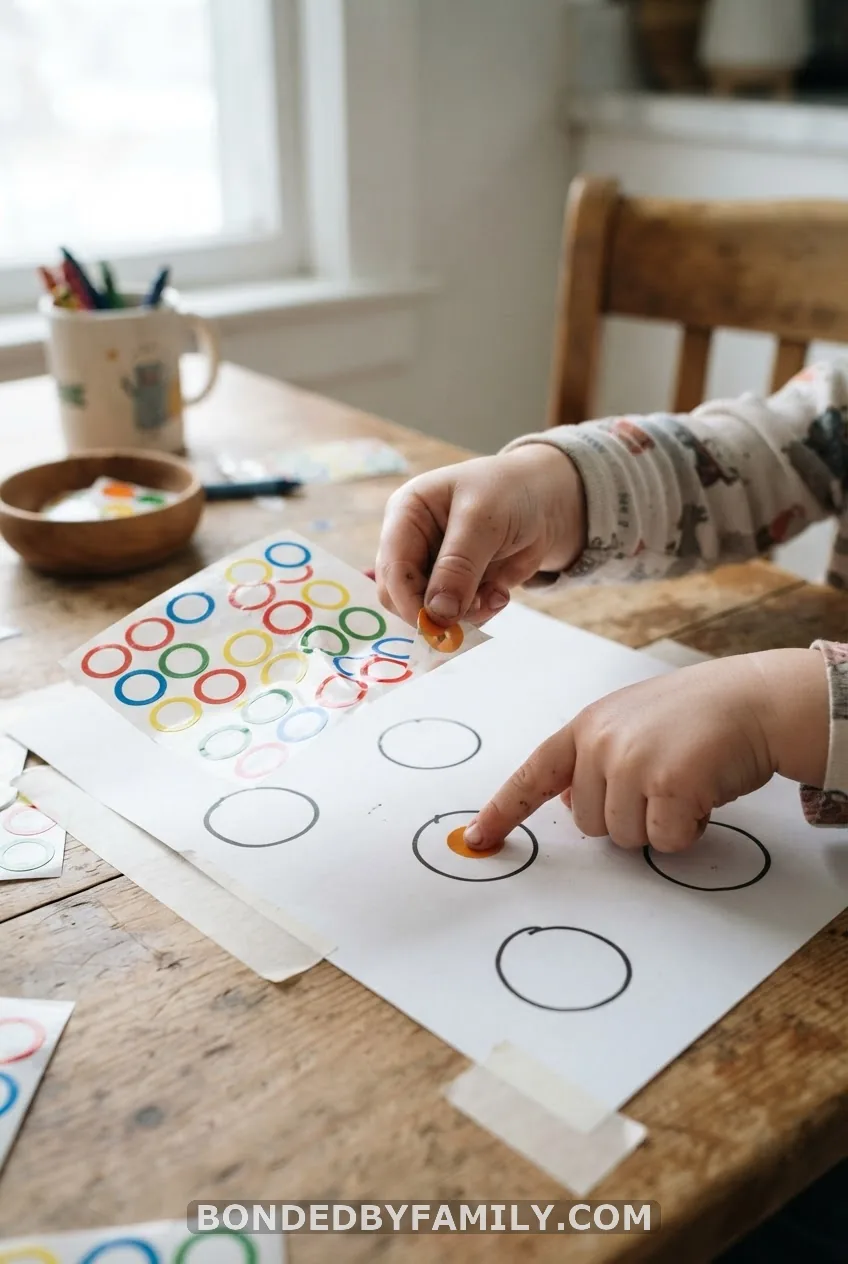
Draw three or four wobbly circles on a plain sheet of paper. Hand your toddler a sheet of large dot stickers – the kind sold in the office aisle for a couple dollars – and tell them to stick one inside each circle. Peeling the sticker off the backing works the pincer grasp hard; placing it inside a target adds hand-eye coordination on top. If peeling frustrates a younger toddler, pre-lift one corner of each sticker so it’s easier to grab.
2. Pom-Pom Tong Transfer
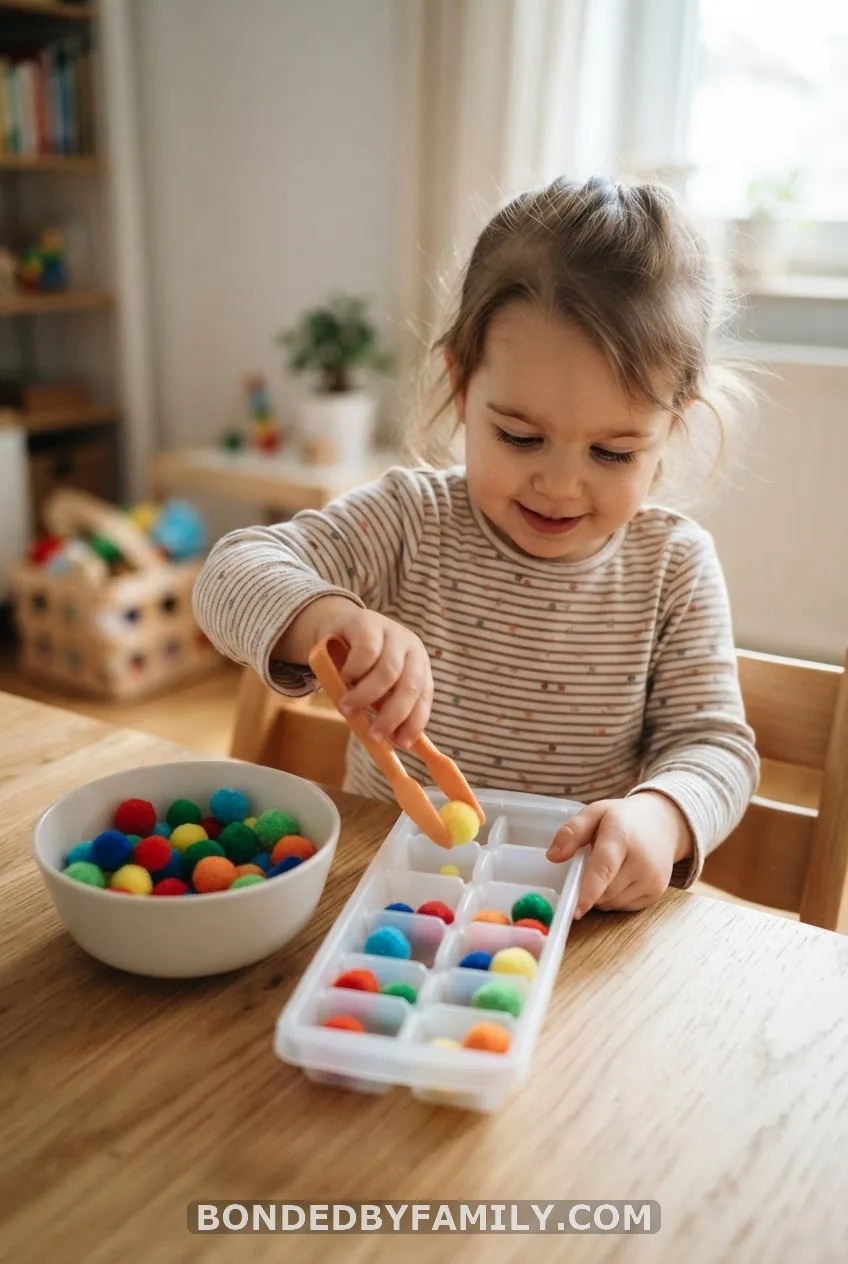
Set out a bowl of craft pom-poms, a pair of kid-sized tongs or tweezers, and an empty ice cube tray. The job: move one pom-pom into each little compartment. This one looks simple and it is – for about the first ten seconds. Then the tongs slip, the pom-pom rolls, and your toddler has to problem-solve their grip all over again. That struggle is the whole benefit. It’s building the same muscles they’ll later use to hold a pencil correctly instead of fisting it like a hammer.
3. Tape Rescue on a Cookie Sheet
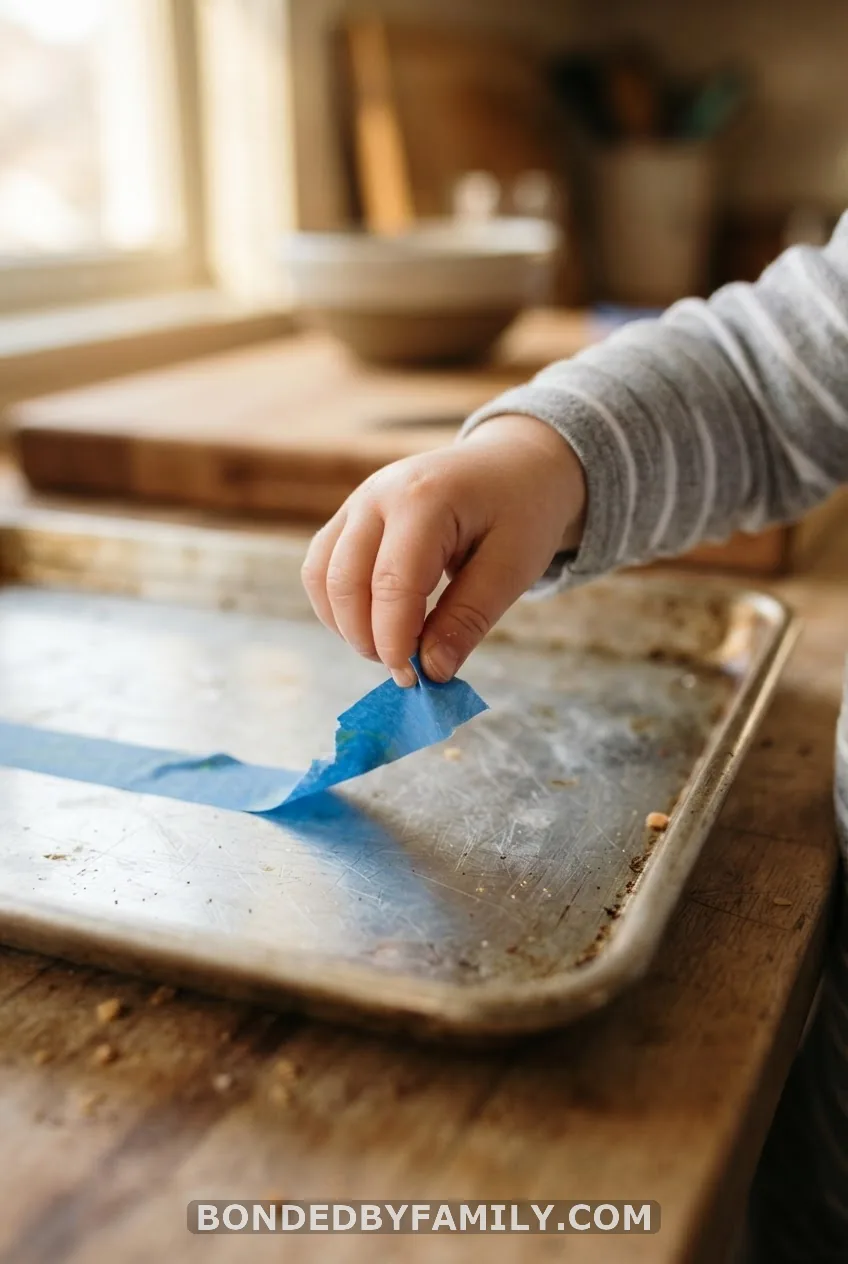
Stick five or six short strips of painter’s tape onto an old cookie sheet. Hand it to your toddler and let them peel every piece off. That’s it. Peeling tape takes real finger strength, and there’s zero setup beyond ripping tape – under a minute, start to finish.
4. Straw Post Drop
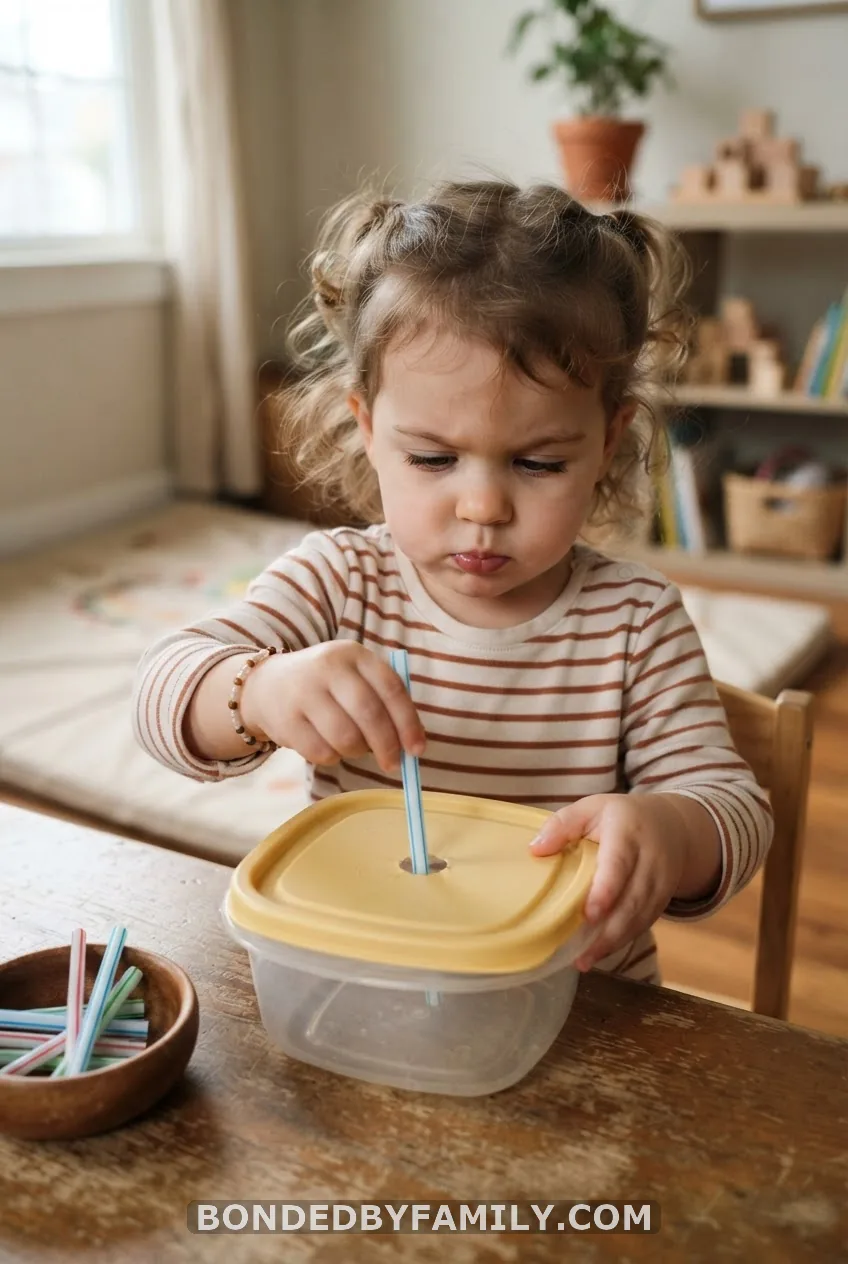
Poke a few holes into an old yogurt tub lid or a plastic coffee can lid with scissors, sized just a bit wider than a drinking straw. Cut a handful of straws into two-inch pieces and let your toddler post them through the holes one by one. This builds the same hand-eye targeting skill they’ll need later for stringing beads, minus the frustration of thread and knots.
Pro tip:
Shake the container afterward so all the straw pieces rain back out. For a toddler, dumping the results is honestly half the appeal – don’t rush past it.
5. Egg Carton Scoop and Sort
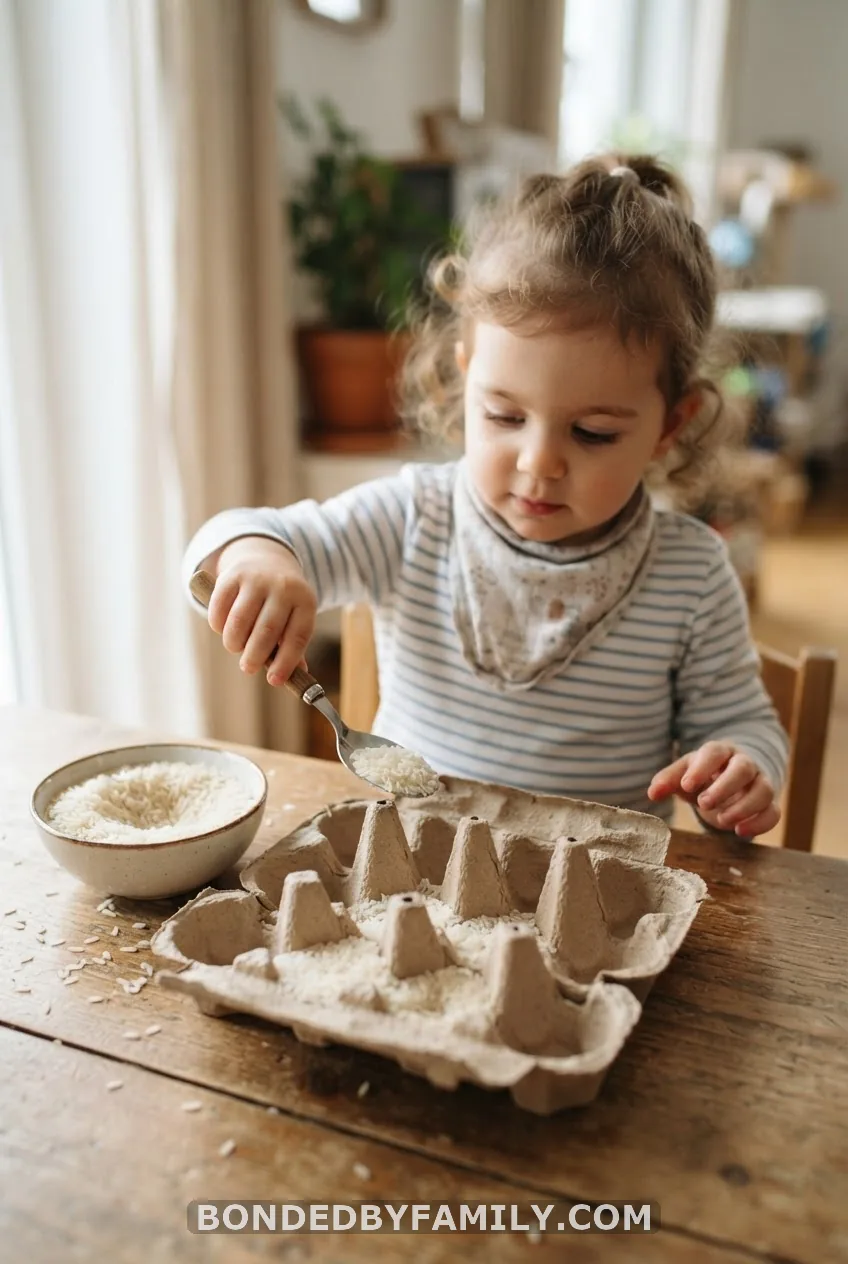
Grab an empty egg carton, a bowl of dry rice or pasta, and a small spoon. Ask your toddler to scoop one spoonful into each cup of the carton. It sounds easy for an adult, borderline impossible for a two-year-old wrist that hasn’t learned to rotate a spoon without dumping half the load onto the table. That wobble is exactly the coordination work this activity is training. If your toddler still mouths objects, swap the rice for large dried beans or skip small grains entirely and use mini marshmallows instead.
6. Play Dough Squeeze and Hide
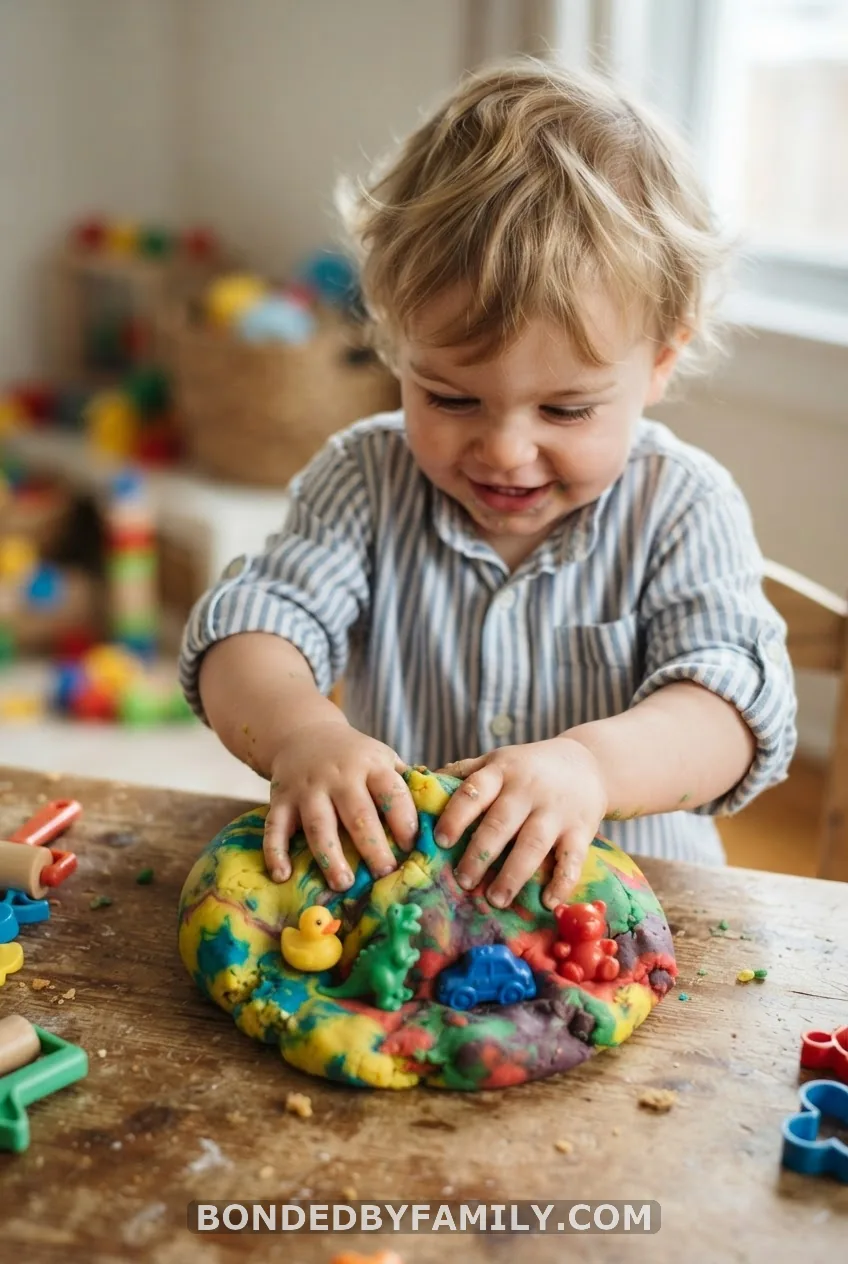
Roll, pinch, flatten, squeeze – plain Play-Doh (or a homemade batch of flour, salt, oil, and water) does more for hand strength than almost anything on this list. Hide a few small toys or buttons inside a ball of dough and let your toddler dig them out with just their fingers. No tools needed. The resistance of the dough against tiny finger muscles is what builds the grip strength they’ll eventually use to hold a pencil steady for more than four seconds.
7. Clothespin Clip Match
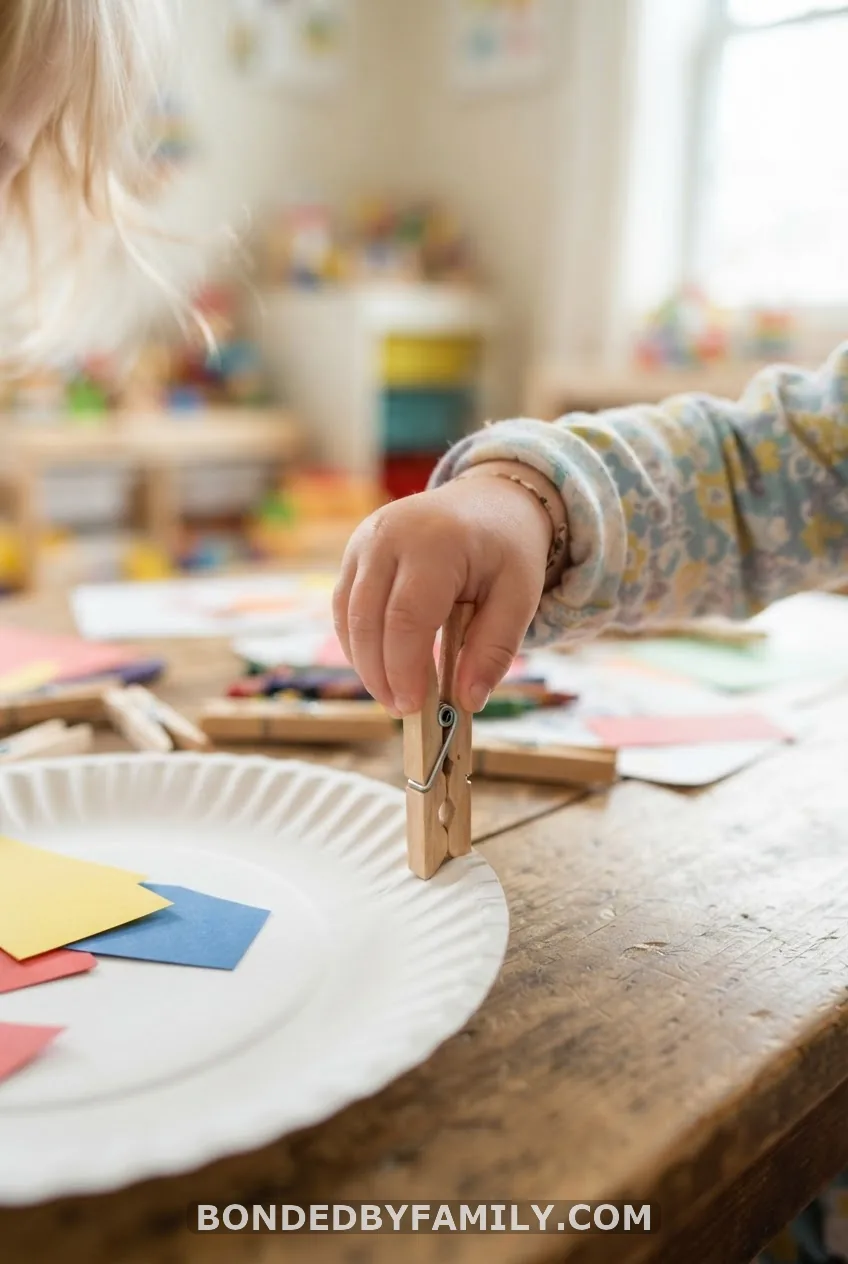
Clip a handful of wooden clothespins around the rim of a paper plate ahead of time, then let your toddler pull them off and clip them back on. Squeezing a clothespin uses the exact three-finger pincer grip needed for holding scissors later. If your toddler can’t manage the squeeze yet, that’s fine – even attempting the motion builds strength for next time.
8. Cheerio Necklace on a Pipe Cleaner
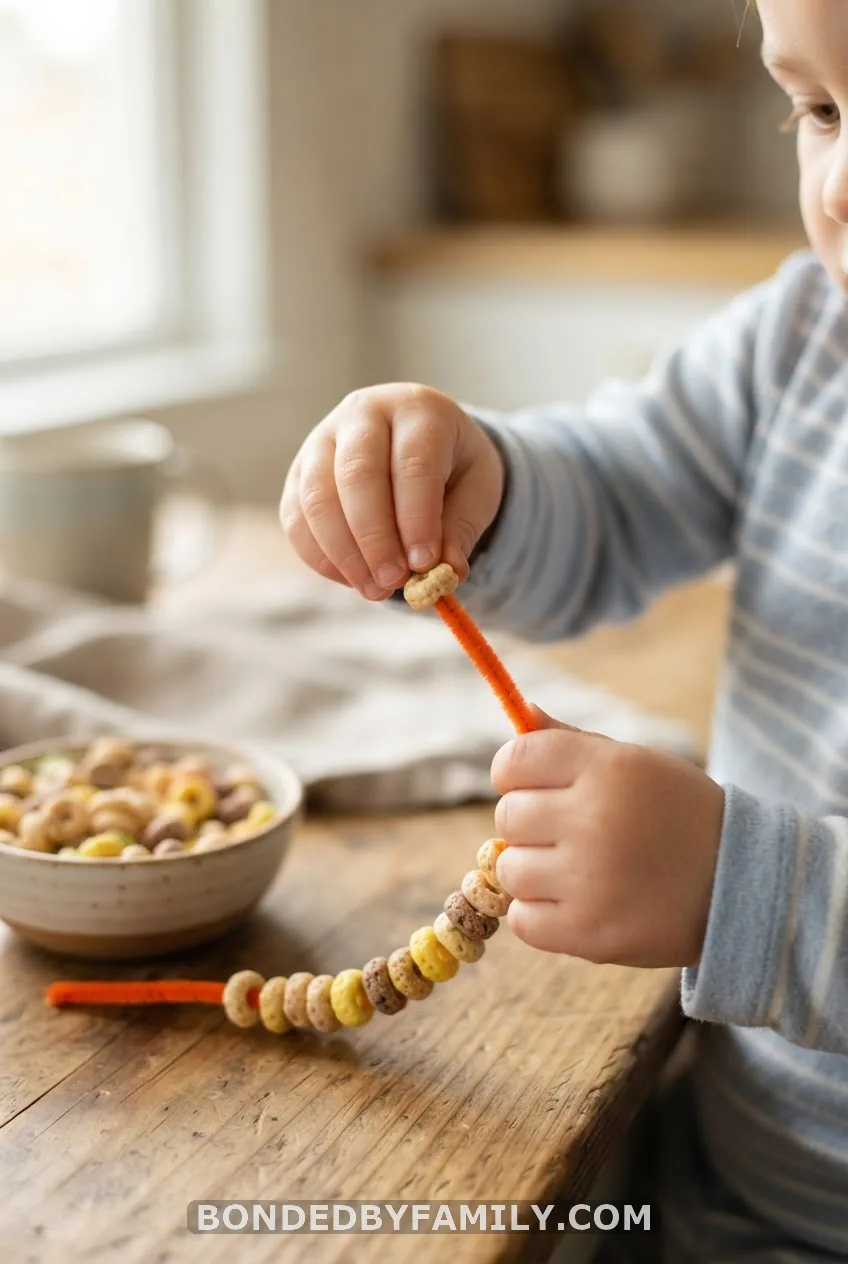
Bend one end of a pipe cleaner into a small hook so nothing slides off, then let your toddler thread Cheerios or any round cereal onto the straight end. The pipe cleaner’s slight stiffness makes it far easier than string for beginners – no floppy thread to chase. Once they’ve threaded a few, they’ll probably eat one. That’s fine. It’s a snack and a fine motor drill in one sitting, which is the most efficient toddler activity ever invented.
9. Torn Paper Fringe with Safety Scissors
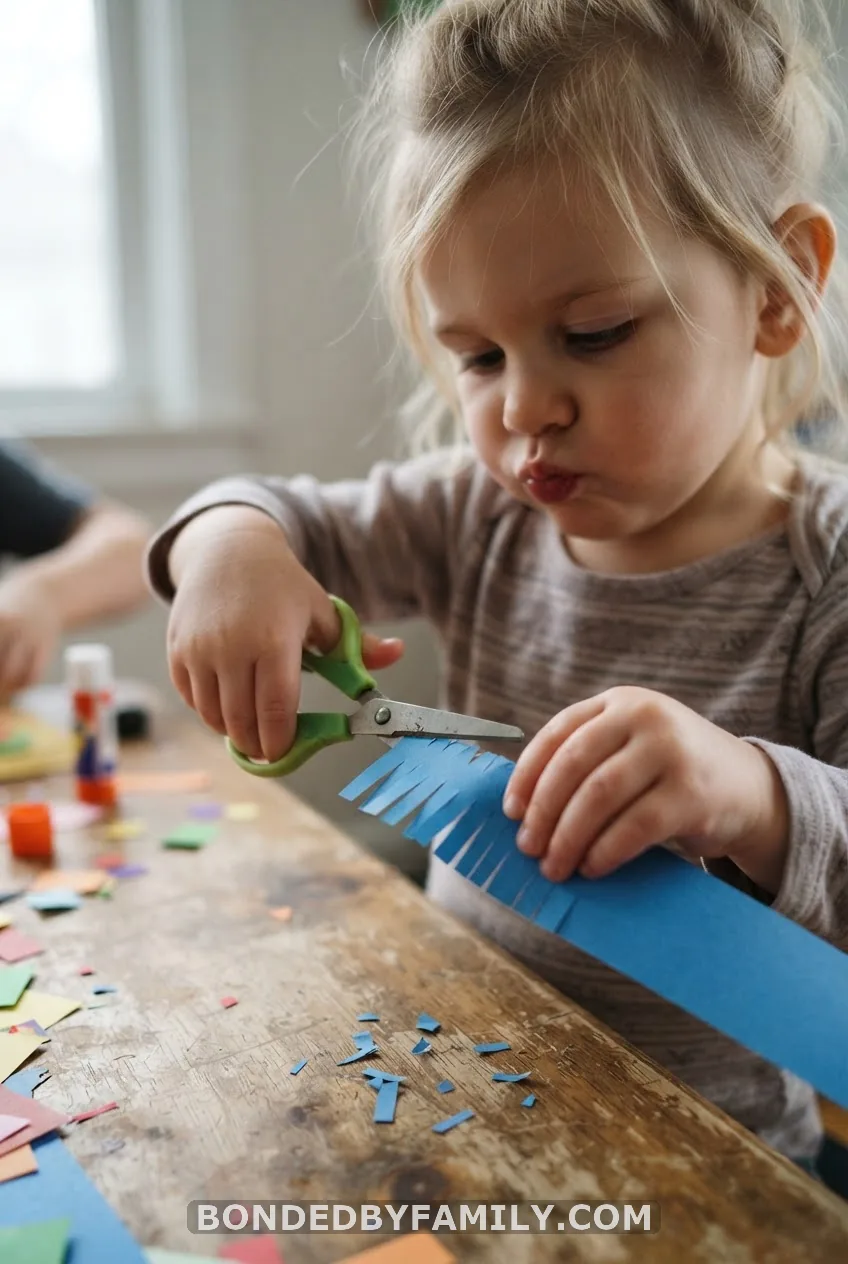
Cut a strip of construction paper about two inches wide. Draw a few short lines along one edge and hand your toddler a pair of blunt-tip child-safe scissors, like Fiskars’ toddler-friendly training scissors. Ask them to snip along each line, turning the strip into a fringe. Scissor skills come after squeezing and pinching skills, not before – if scissors feel impossible right now, go back to clothespins and dough for a few weeks and try again. Full cutting-through-paper mastery usually lands closer to age three, so fringing is the perfect stepping stone.
10. Paper Tearing Collage
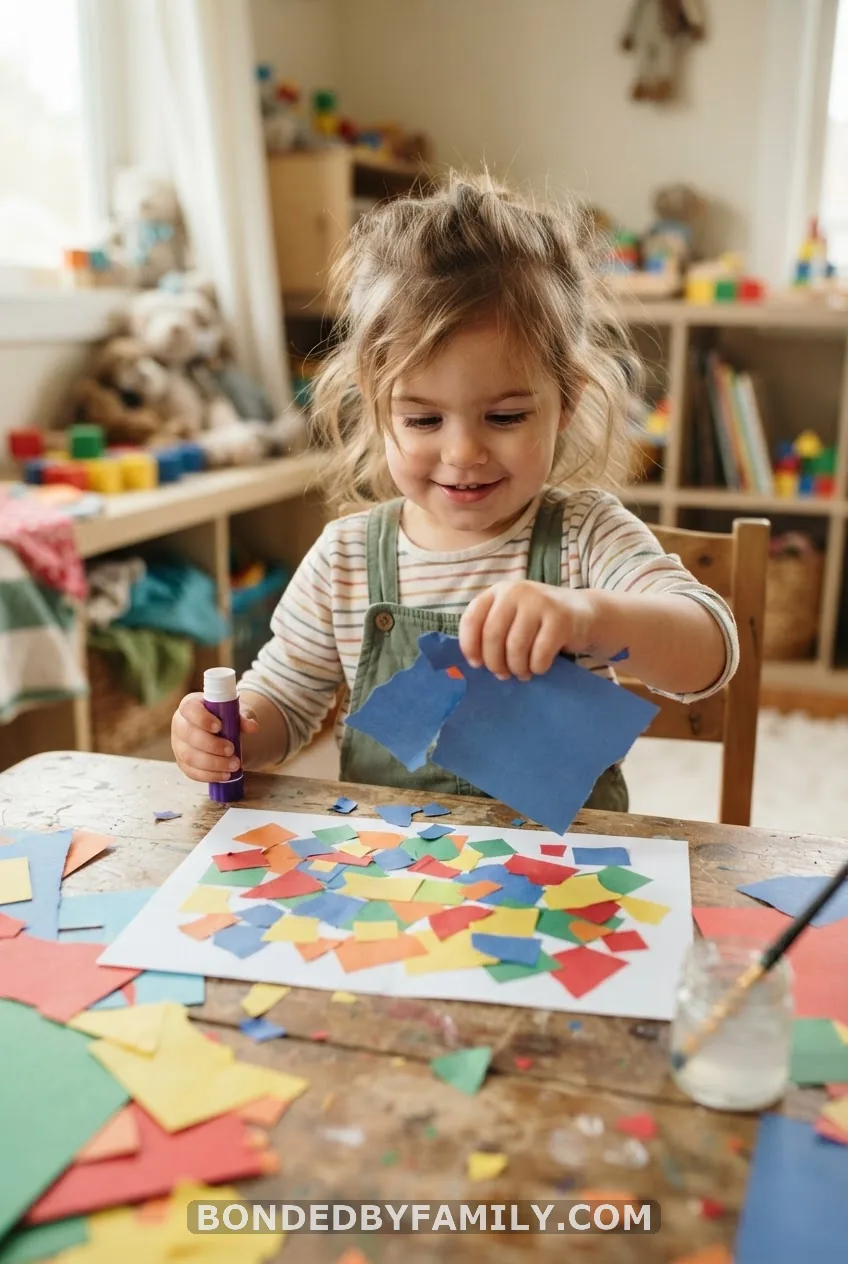
Give your toddler a stack of old newspaper or scrap construction paper and let them rip it into pieces of any size. Then dot some glue on a blank sheet and let them press the torn pieces down to make a collage. Tearing paper builds a completely different grip than pinching or squeezing – it uses both hands working against each other, which is a coordination skill toddlers rarely practice anywhere else.
11. Laundry Helper Sort and Snap

Dump a basket of clean socks in front of your toddler and ask them to match the pairs. While you’re at it, hand them a shirt with snaps, buttons, or a zipper and let them practice opening and closing it, supervised. This one barely counts as “an activity” since it’s just chores – but matching socks and working a snap closed uses the same bilateral coordination as any store-bought toy, and it gets the laundry folded faster. Sort of.
Making It Stick Without the Meltdown
You don’t need all 11 activities in one sitting – pick two, maybe three, and let your toddler’s mood decide how long you stay. Five or ten focused minutes beats thirty minutes of a bored toddler dragging their feet. If they walk away after thirty seconds, that’s not a failure on your part. Try again tomorrow, maybe with a different one from the list.
Sit at their level, not across the room on your phone. Narrate what they’re doing – “you’re pinching that pom-pom so hard!” – because that kind of running commentary builds language skills right alongside the hand skills. And when they dump the whole tray of rice on the floor and grin like it’s the funniest thing they’ve ever done? Let it happen. Dumping and repeating is its own kind of practice, even when it doesn’t look like progress from where you’re standing.
So which one are you trying first tonight – the pom-poms, the play dough, or the sock basket you were going to fold anyway?
FAQ
What are fine motor activities for toddlers?
They’re playful tasks that use the small muscles in the hands and fingers – pinching, squeezing, threading, tearing, dropping. For toddlers, the trick is dressing those movements up as games so they feel like fun instead of practice.
At what age should I start fine motor exercises with my toddler?
You can start as early as six to nine months with big, safe motions like tearing paper or pulling ribbons. Between 12 and 36 months, sticker play, scooping, and posting games become the sweet spot for building real hand strength.
How many minutes a day should a toddler practice fine motor skills?
Five to ten focused minutes is genuinely enough. Weave the rest into daily life – snack time, getting dressed, helping unpack groceries all count.
Do I need to buy fine motor toys or print special cards?
No, and that’s the whole point of this list. Empty containers, tape, yarn, clothespins, dry pasta, and pom-poms cover almost every skill a toddler needs to practice right now.
What if my toddler still mouths everything?
Stick to larger items – oversized beads, big buttons, dough, containers – and stay within arm’s reach the entire time. Save coins, small buttons, and tiny beads for after the heaviest mouthing phase passes, usually somewhere around age two to three.
When should I worry about fine motor delays in my toddler?
If your toddler isn’t pincer-grasping small objects by 12 months, isn’t using both hands together by 18 months, or shows zero interest in scribbling by 24 months, mention it to your pediatrician. An occupational therapist can offer a real assessment if something feels off.