A chart will not fix your mornings. Connection will. Most advice on a morning routine for kids is a list of tasks, and tasks alone just give you something new to nag about.
The ideas below start with how your child feels, then add the practical steps. You’ll get a night-before system, a launch pad, a visual chart, word-for-word scripts for power struggles, and ways to adapt it for homeschool, summer and more than one child. Pick two or three and ignore the rest until those stick.
Why a Morning Routine for Kids Matters
Kids feel safer when they know what comes next. A steady routine teaches them to do things on their own, and it builds confidence one small win at a time.
It also lowers the volume for everyone. When your child knows the order of the morning, you stop being the person who says “shoes!” nine times. The routine does the reminding.
Before the Morning Starts
1. Prep the Night Before
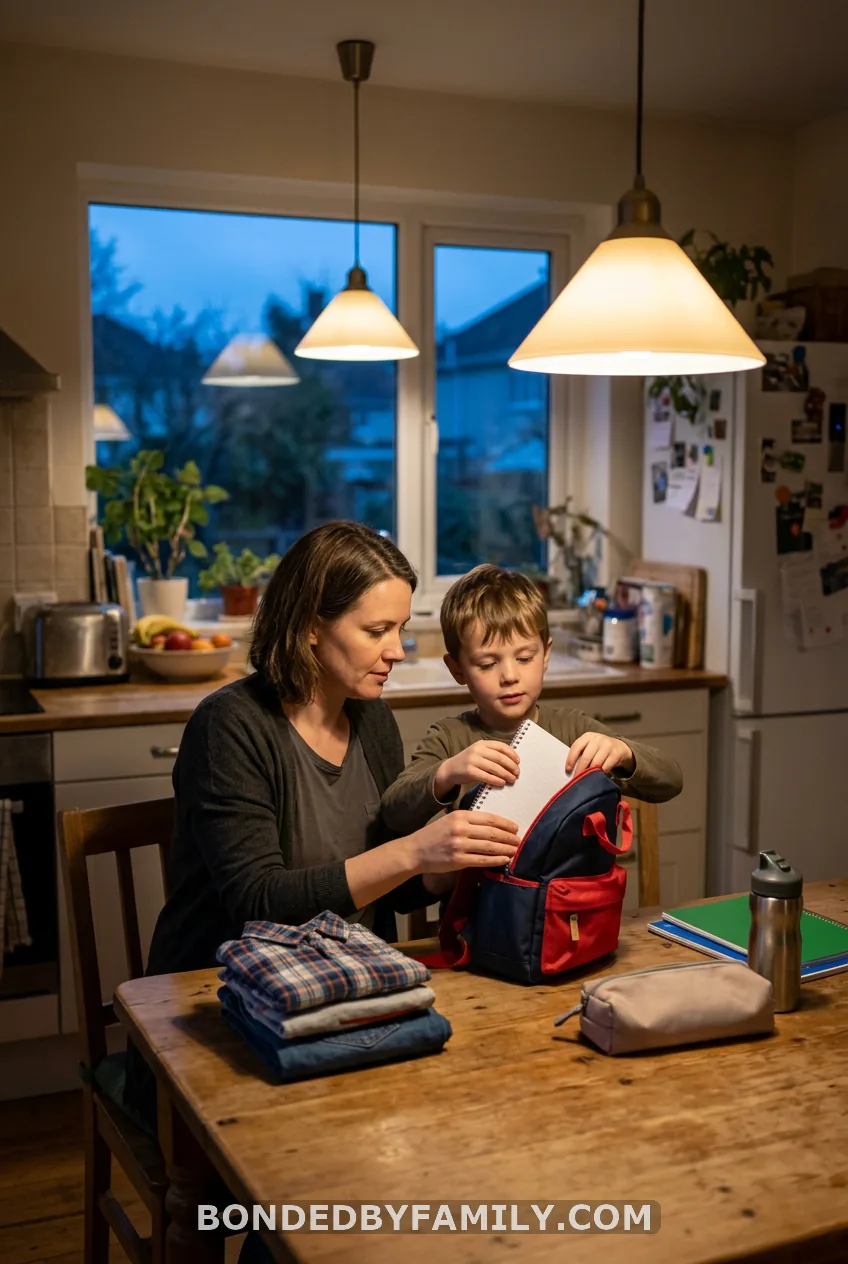
Mornings are won at 7 p.m. Anything you decide at night is something you won’t argue about at 7 a.m. Here is a 15-minute evening reset that works for most families:
- Let your child pick tomorrow’s outfit, down to socks and underwear. Lay it on the dresser or a chair.
- Pack the backpack together: homework folder, library book, water bottle.
- Make the lunch, or at least prep the parts (wash fruit, portion crackers). Keep it in the fridge on one shelf.
- Set out breakfast items like bowls, spoons and cereal.
- Check the weather so jackets and boots are ready.
Sleep matters here too. Pick a bedtime that gives your child the sleep they need for their age, and keep it close to the same time every night, weekends included. A tired child wakes up grumpy no matter how good your chart looks.
Involve your child at every step. A kid who chose the outfit has a harder time complaining about it.
The catch:
Night-before prep fails when it turns into a second round of chores. Keep it to 15 minutes and stop. A done-enough routine beats a perfect one you quit by Thursday.
2. Build a Launch Pad by the Door
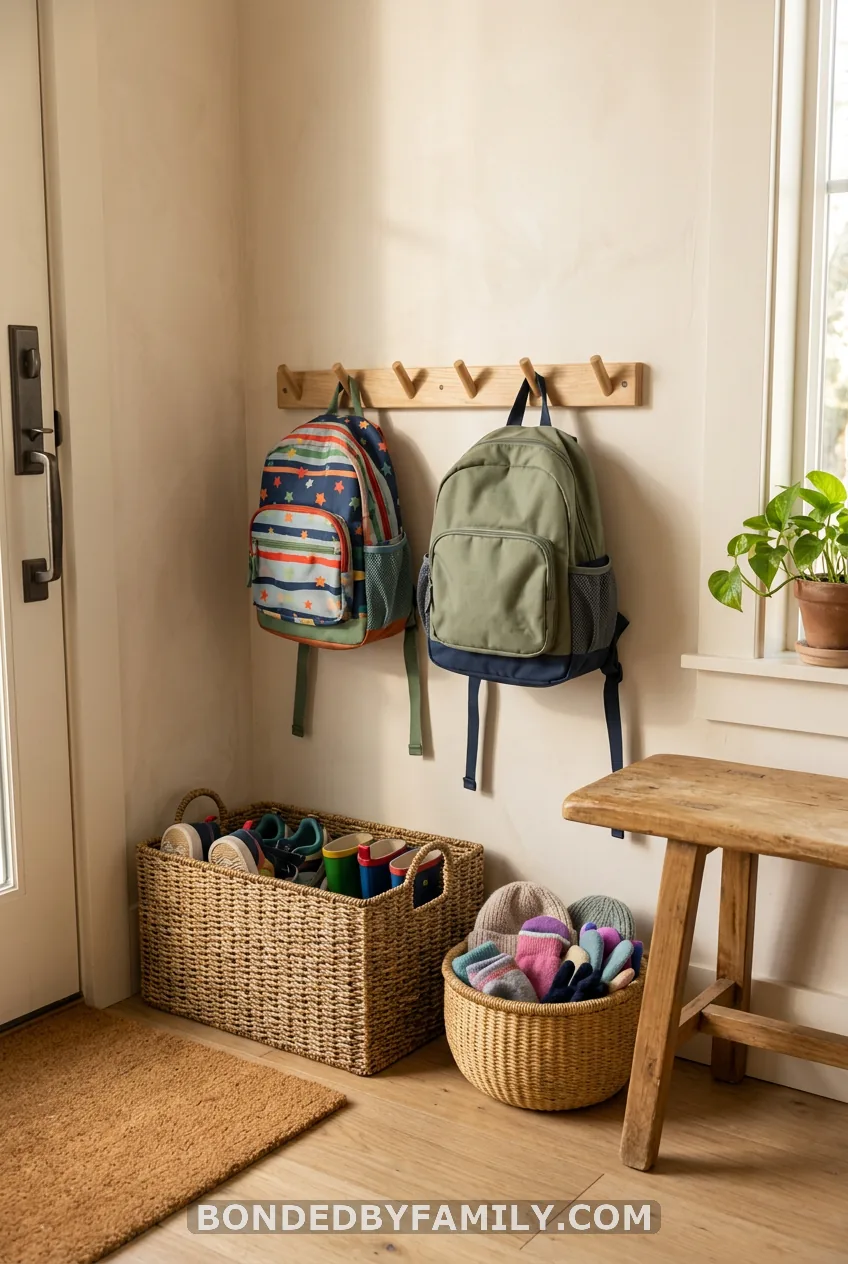
Give every item one home. Hooks at kid height for backpacks and jackets, a bin for shoes, a basket for hats, a shelf for lunchboxes. Do a quick check at bedtime and again before leaving. No more hunting for one shoe at 7:50.
3. Use a Visual Routine Chart
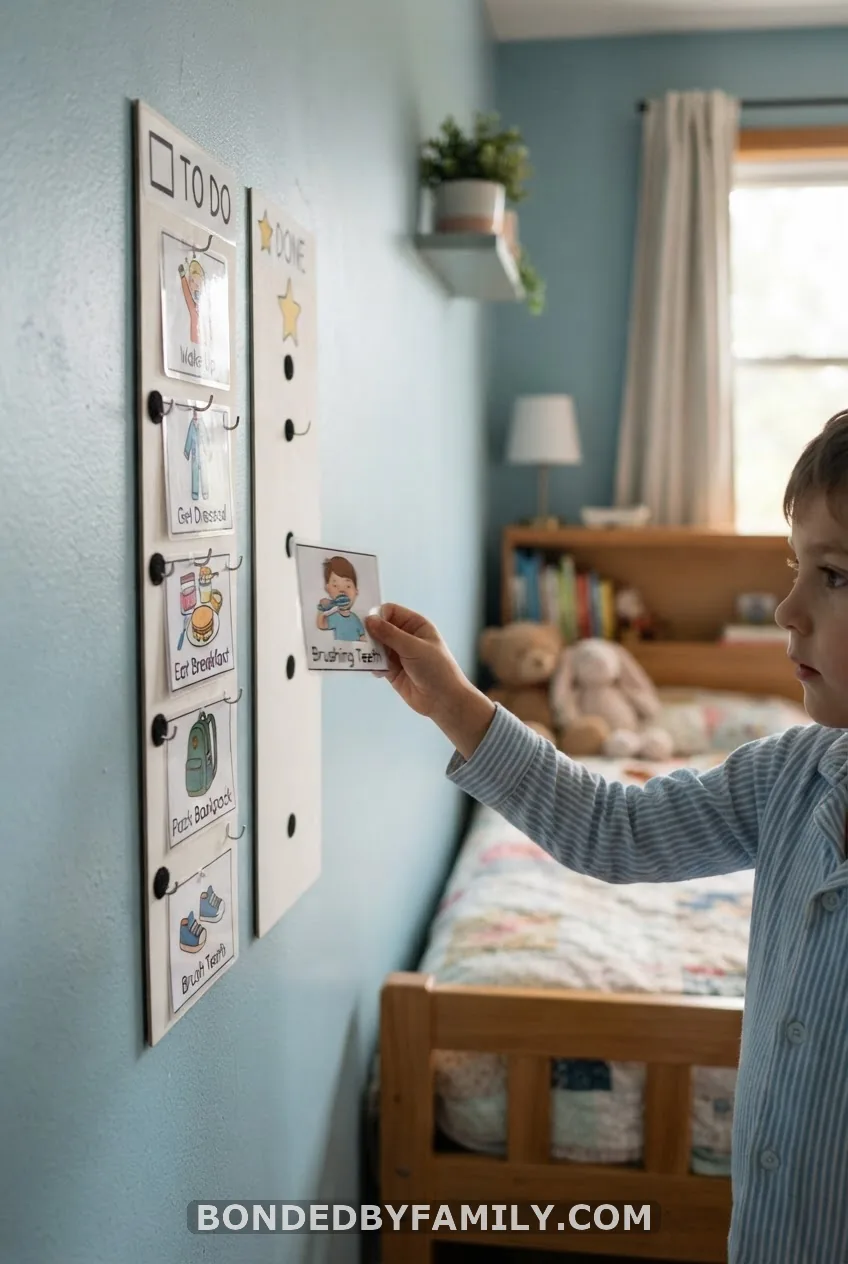
A chart works because it becomes the boss instead of you. Your child checks the chart, not your face.
For kids under 6, use photos or drawings: a bed, a toothbrush, a bowl, a shoe. For ages 6 to 8, pair short words with small pictures. Hang it at your child’s eye level, not yours.
A sample order that fits most school mornings:
- Use the bathroom and wash your face
- Get dressed
- Eat breakfast
- Brush teeth and hair
- Shoes on and backpack by the door
- Hug and go
Let your child choose the order of the middle steps, as long as everything gets done. Choice cuts resistance. Use velcro cards they can move to a “done” column, or a laminated sheet with a dry-erase marker. A free printable checklist works fine, and so does a drawing you make together.
Keep screens off until the last box is checked. Morning cartoons are the quickest way to stall a routine.
The First Hour
4. Wake Up with Light and Music

Skip the blaring alarm. Open the curtains, sit on the bed, and play one soft song. A sunrise-style alarm clock works for kids who wake slowly. Upbeat music suits the kitchen once everyone is up.
A calm smell helps too. Fresh toast or a lightly scented lotion at wake-up is enough. Avoid grabbing a phone first thing.
5. Start with Five Minutes of Connection

Before you say a single instruction, give five minutes of you. Snuggle. Ask what they dreamed about.
Take three slow belly breaths together, in through the nose and out like blowing a candle. Ask what one thing they’re looking forward to today.
It sounds small. But a child who feels seen first is much more willing to cooperate second.
When a power struggle does hit, try these scripts:
Refuses to get dressed
- Don’t say: “Get dressed right now!”
- Try: “Do you want the red shirt or the blue one? I’ll set the timer and we’ll see if you can beat it.”
Whining about breakfast
- Don’t say: “Stop complaining.”
- Try: “You sound hungry and tired. Want to help me pour, or should I?”
Dragging their feet
- Don’t say: “We’re going to be late again!”
- Try: “I see your chart has two boxes left. Want a hand with one, or can you do both?”
Meltdown over the day ahead
- Don’t say: “There’s nothing to cry about.”
- Try: “That feels big. Let’s breathe together first, then we’ll figure it out.”
Name the feeling, offer two choices, and then step back. Short sentences beat long speeches every time.
6. Make Breakfast a Low-Pressure Family Affair
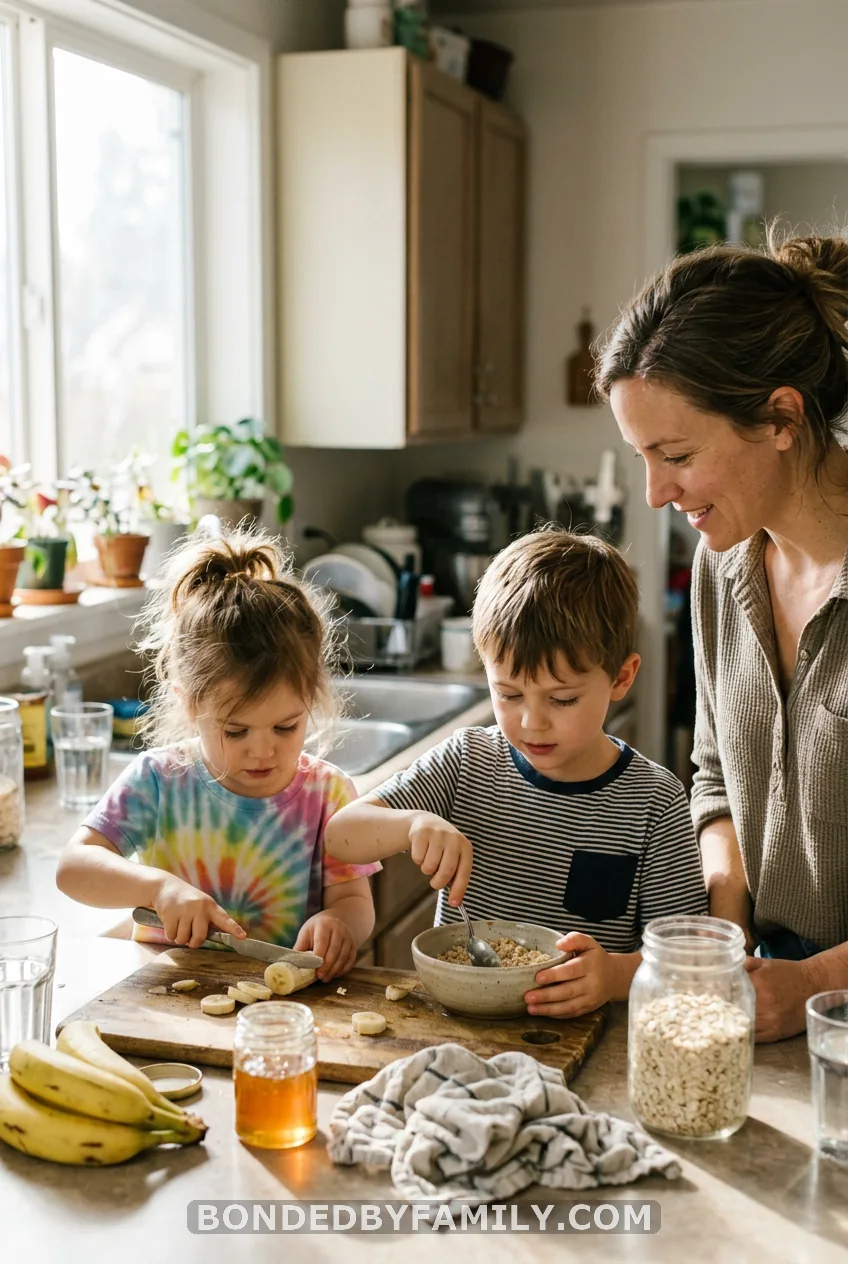
Keep it simple and let kids help. A seven-year-old can stir oats, spread nut-free butter on toast or peel a banana. For under-4s, cut grapes into quarters and skip whole nuts, which are choking hazards.
Sit down together if you can, even for ten minutes. Make one rule: no phones at the table, yours included.
7. Turn Tasks into a Game (and Use a Timer)
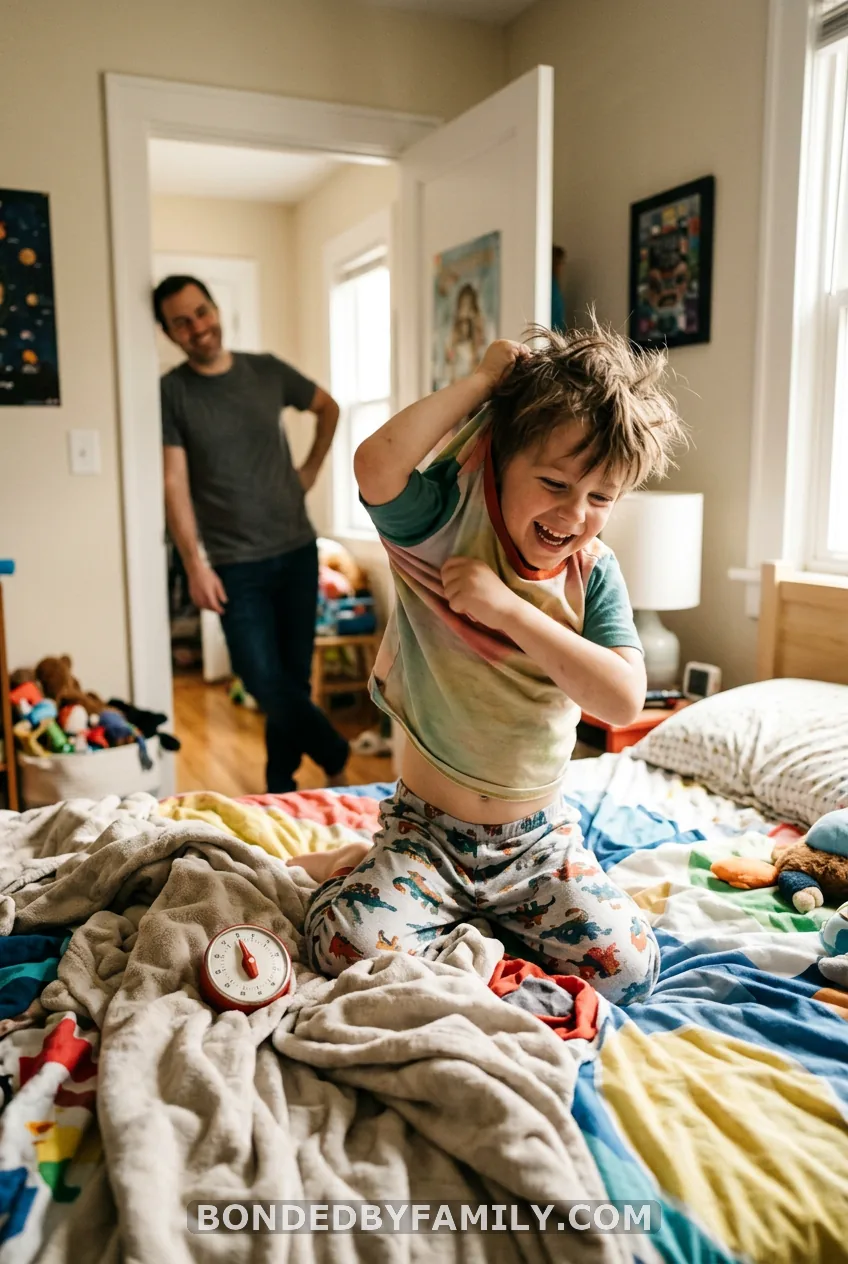
Timers turn “hurry up” into “let’s see.” Try Beat the Buzzer: set a visible timer for five minutes, and see if your child can get dressed before it rings. Make it playful, not a race against you.
Use these round-ups for other steps:
- Brushing teeth: Play a two-minute song and brush until it ends.
- Getting dressed: Pretend the socks are secret agents who have to find their match.
- Waking the body: Put on one dance song, or do ten jumping jacks and a stretch before breakfast.
- Yoga pose cards: Pick one card each morning for a quiet stretch before shoes.
Movement wakes up the brain, and it burns off wiggles that would otherwise show up at the breakfast table.
One caveat:
Praise effort, not only speed. If the winner is always the fastest kid, a slower or younger sibling will quit the game. Say “you kept going even when your sock was twisted” and celebrate that.
Keeping It Going
8. Give Age-Appropriate Jobs
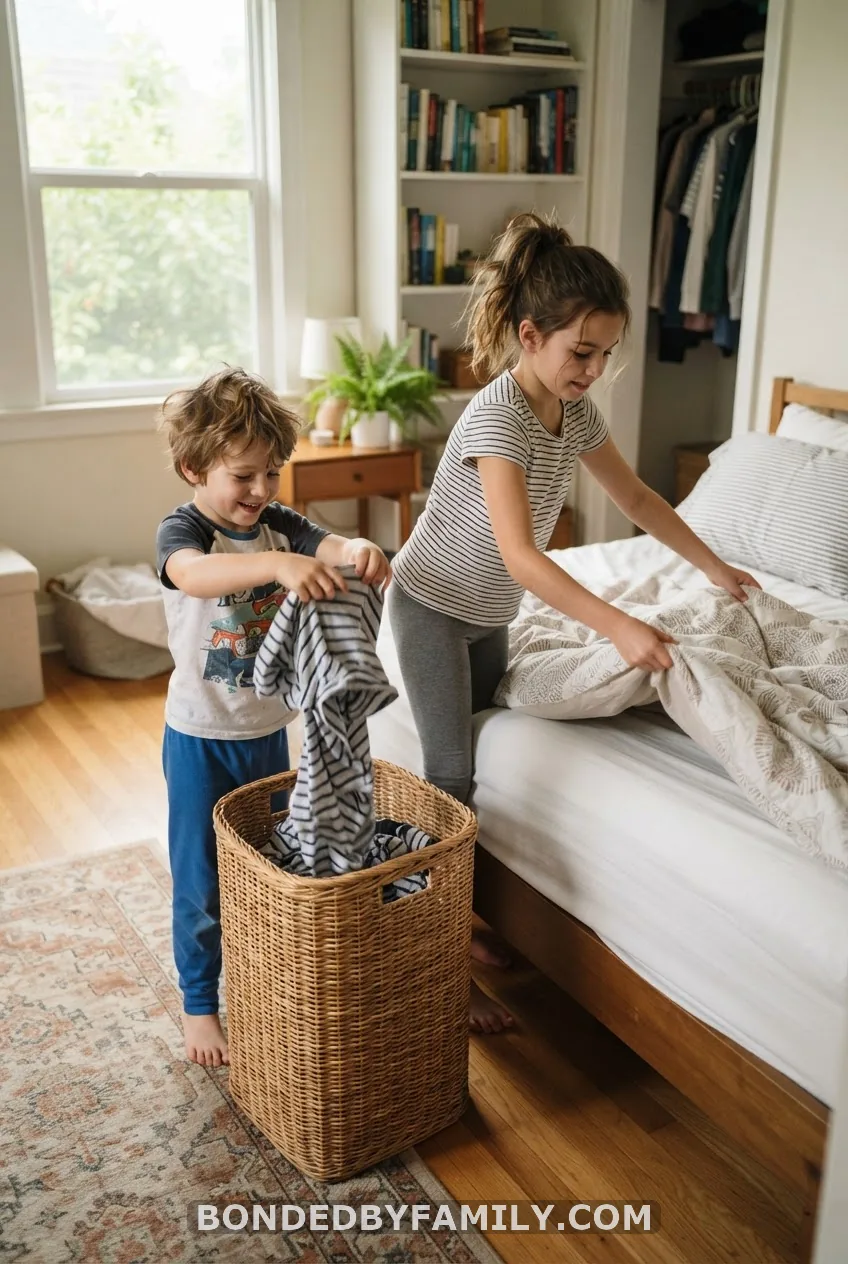
Ownership is the point. A child who does a job each morning starts to feel capable. Match jobs to what they can truly do:
- Ages 2 to 3: Put pajamas in the hamper, pick between two outfits, carry a cup to the table.
- Ages 4 to 5: Get dressed with help on buttons, wash their face, put shoes by the door.
- Ages 6 to 7: Brush teeth and hair, make the bed, pack the folder from the checklist.
- Ages 8 to 10: Pack the whole bag, pour breakfast, set their own timer.
A sticker chart helps for a few weeks. Use five stickers for a small reward, like choosing the weekend movie. Move to praise alone once the habit holds.
With more than one child, give each their own chart and let older kids help younger ones as a bonus job, not a requirement. Stagger wake-ups by ten minutes so the bathroom isn’t a traffic jam.
The catch:
Don’t redo your child’s work when they leave. A bed with a lumpy blanket still teaches ownership. Fix it later when they’re gone, or let it be.
9. Add Affirmations and Plan for Delays

Pick a family phrase and say it at breakfast. Short “I am” lines work well: “I am kind,” “I am brave,” “I can try hard things.” Write a dozen on slips of paper, drop them in a jar, and let your child draw one each day. Or share one thing you’re thankful for, going around the table.
Now plan for the morning that falls apart. The milk spills. A shoe vanishes. You will have these days, so build in a 10-minute buffer and tell yourself the buffer is part of the plan.
When things slip, drop a step instead of raising your voice. Brush teeth in the car, eat the banana on the way. Connection first, schedule second.
The same routine bends to different seasons:
- Homeschool: Keep the wake-up, chart and breakfast, then replace the door with a “start school” step like gathering books at the table.
- Summer: Loosen the clock but keep the order. Wake, breakfast, teeth and sunscreen, then play.
- Saturdays: Keep two anchors, like breakfast together and getting dressed, and let the rest flex.
Frequently Asked Questions
How long should a morning routine for kids take?
Plan 45 to 60 minutes from wake-up to leaving for young children, and 30 to 45 for older kids. Add a 10-minute buffer so nobody feels rushed. If you’re always late, wake your child 10 minutes earlier rather than rushing each step.
What if my child resists the morning routine?
Connect before you direct. Spend five minutes snuggling or chatting, then offer two choices, like the order of tasks or which game to play. Resistance usually fades when a child feels heard, though it can take a few weeks of steady practice.
How do I use a visual chart for school mornings effectively?
Use pictures for children under 6 and words with pictures for ages 6 to 8. Hang it at your child’s eye level and let them move or check off each card. Review it together the night before so there are no surprises.
Start With Two
You don’t need all nine tomorrow. Start with the night-before prep and five minutes of snuggle time, then add one more idea each week. Which one will you try first?