What do you actually do with a baby for eight, ten, twelve hours a day? Not the Pinterest version. The real version, where you’re standing in your kitchen at 10 a.m. wondering if tummy time for the third time today counts as “enrichment.”
Here’s the good news: infant activity ideas don’t need to involve a $40 sensory box from a baby brand. Babies under a year old are wired to find the world fascinating with almost zero props. A wooden spoon, a yogurt cup, a spare sock – that’s a full curriculum if you know how to run it. This list gives you five activities, each written so you know exactly what to grab, how long it takes to set up, and what skill it’s actually building. No shopping list. No screen time. Just five things you can start in the next five minutes.
Before You Start: The Rules Behind Every Idea Here
Three rules run through everything below, and they’re worth knowing before you dive in.
First, short is fine. A baby’s attention span at this age is measured in minutes, not hours – two to five minutes of focused engagement is a complete, successful activity. You are not failing if your toddler-to-be loses interest after ninety seconds. That’s developmentally normal, not a sign you set it up wrong.
Second, supervision is non-negotiable. Every idea here involves something a baby could put in their mouth, pull toward their face, or wrap around a wrist. Stay within arm’s reach the entire time, and never leave a baby alone with anything smaller than a toilet-paper tube, a balloon, or loose string. That includes homemade shakers, sock activities, and anything sealed in a bag – check the seal before every single use, not just the first.
Third: everything on this list comes from your kitchen, your laundry basket, or your recycling bin. No links to click, no cart to fill. If a competitor tells you to buy a $25 texture set, just know a wooden spoon and a strip of bubble wrap will teach the same lesson.
The 5 Infant Activities Worth Setting Up Today
1. Taste-Safe Yogurt Finger Painting
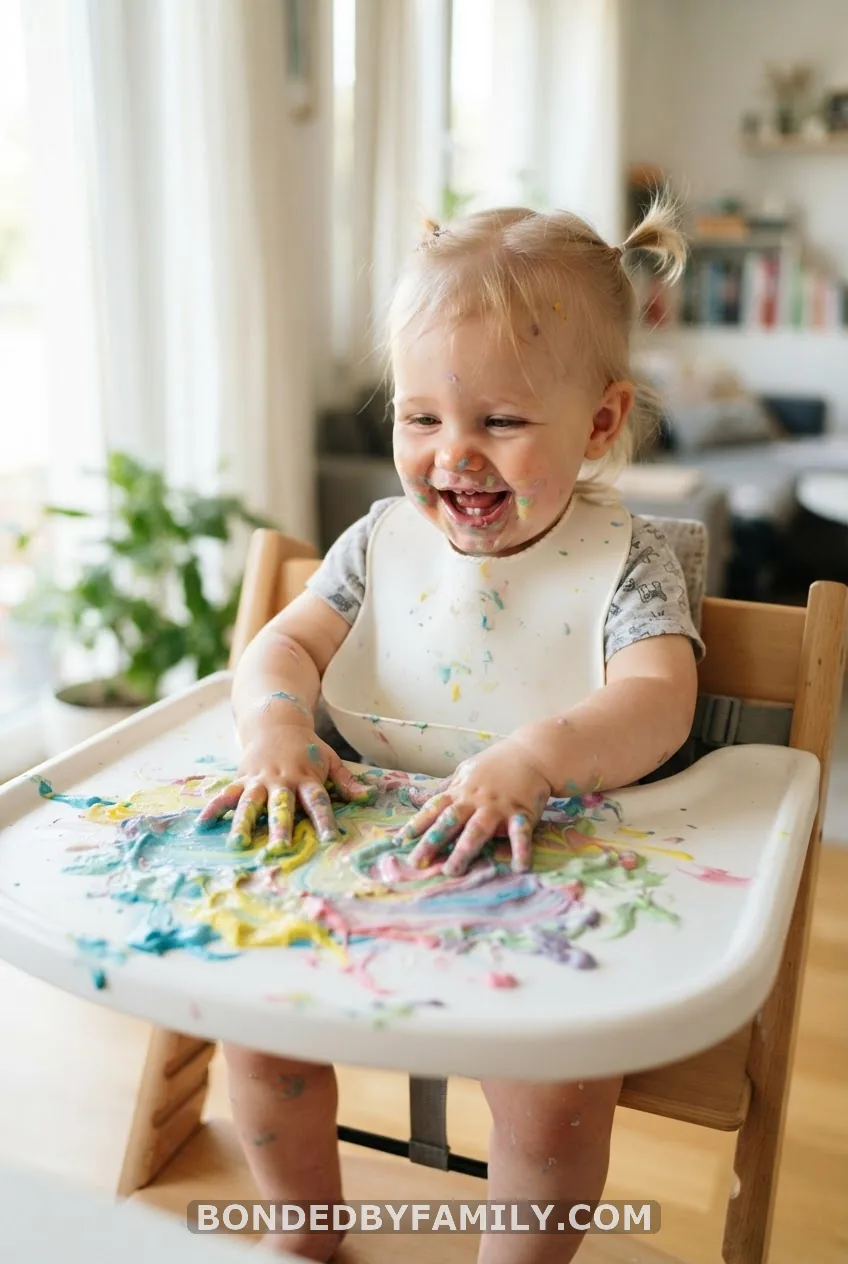
This is the activity that shows up on nearly every top-saved infant Pinterest board, and there’s a reason: it’s taste-safe, it’s messy in a good way, and it teaches cause and effect while a baby literally eats the “paint” off their fingers.
What you need: Plain full-fat yogurt (about a half cup per color), a few drops of natural food coloring, a high-chair tray or a large dinner plate, and an old bib or a stripped-down diaper for the baby.
How to set it up: Spoon the yogurt into two or three small bowls. Stir a drop of food coloring into each until you get separate colors. Dollop each color onto the tray in its own corner, and let the baby go. That’s it – no brushes, no rules, no “correct” way to touch it.
Common mistakes to avoid: Don’t use flavored or sugary yogurt – plain yogurt keeps things simple if a baby decides to taste-test, which they will. Don’t do this activity right before a nap; the cleanup and the excitement both run long. And don’t add glitter or craft paint “just to make it prettier” – anything not explicitly labeled edible has no place near a mouthing baby.
Why this works: Babies under a year learn primarily through their hands and mouths, not their eyes. Yogurt painting lets a baby explore color, temperature, and texture using the exact sensory tools they already trust – no translation needed from “toy” to “safe.”
Develops: Fine motor control, sensory exploration, and an early, safe introduction to cause and effect – press down, see a mark appear.
Pro tip:
Line the tray with a sheet of parchment paper first. When the baby’s done, fold the paper over the mess and toss the whole thing – zero scrubbing required.
2. Mirror Self-Awareness Chat

Prop an unbreakable mirror in front of a baby lying on their tummy or sitting supported. Point to the reflection and name what you see – “there’s your nose, there’s your mouth, look at that hair.” That’s the whole activity.
It sounds too simple to matter, but self-recognition is a real developmental milestone, and mirror talk builds toward it long before a baby can name their own reflection. It also doubles as language exposure, since you’re narrating body parts out loud the entire time.
3. Sock-Pull Problem-Solving Game
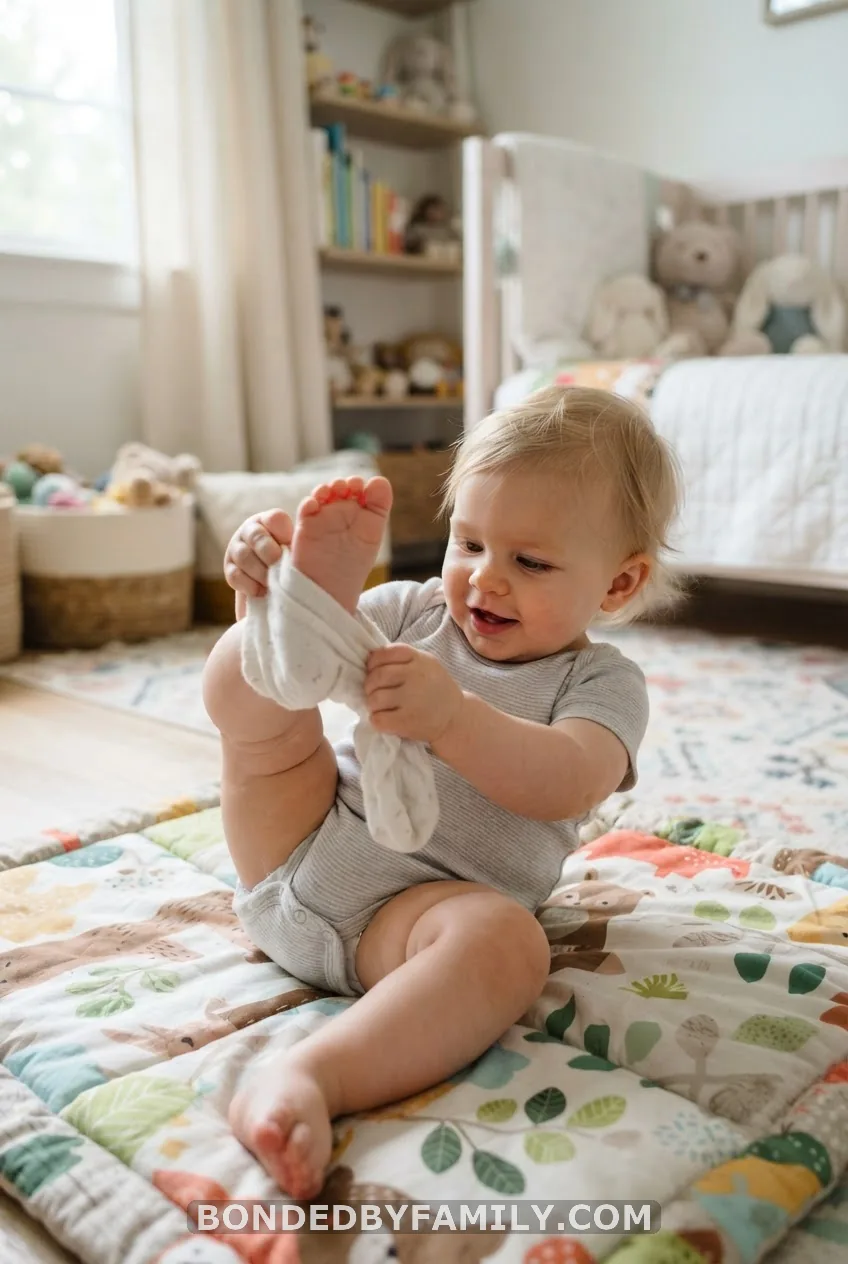
Slip a loose sock over one foot – loose enough to come off with a tug, not so loose it slides off on its own. Encourage the baby to notice it, reach for it, and pull it free.
This one takes ten seconds to set up and gives a baby a genuine puzzle: something is on my body, and I can make it not be on my body anymore. That’s problem-solving and fine motor grip practice in a single sock. Repeat with the other foot once the first one’s off, and watch how much faster the second attempt goes.
4. DIY Shaker Music Basket
What most people think: Music activities for babies require an actual instrument – a xylophone, a rattle set, something from the baby aisle with a brand name on it.
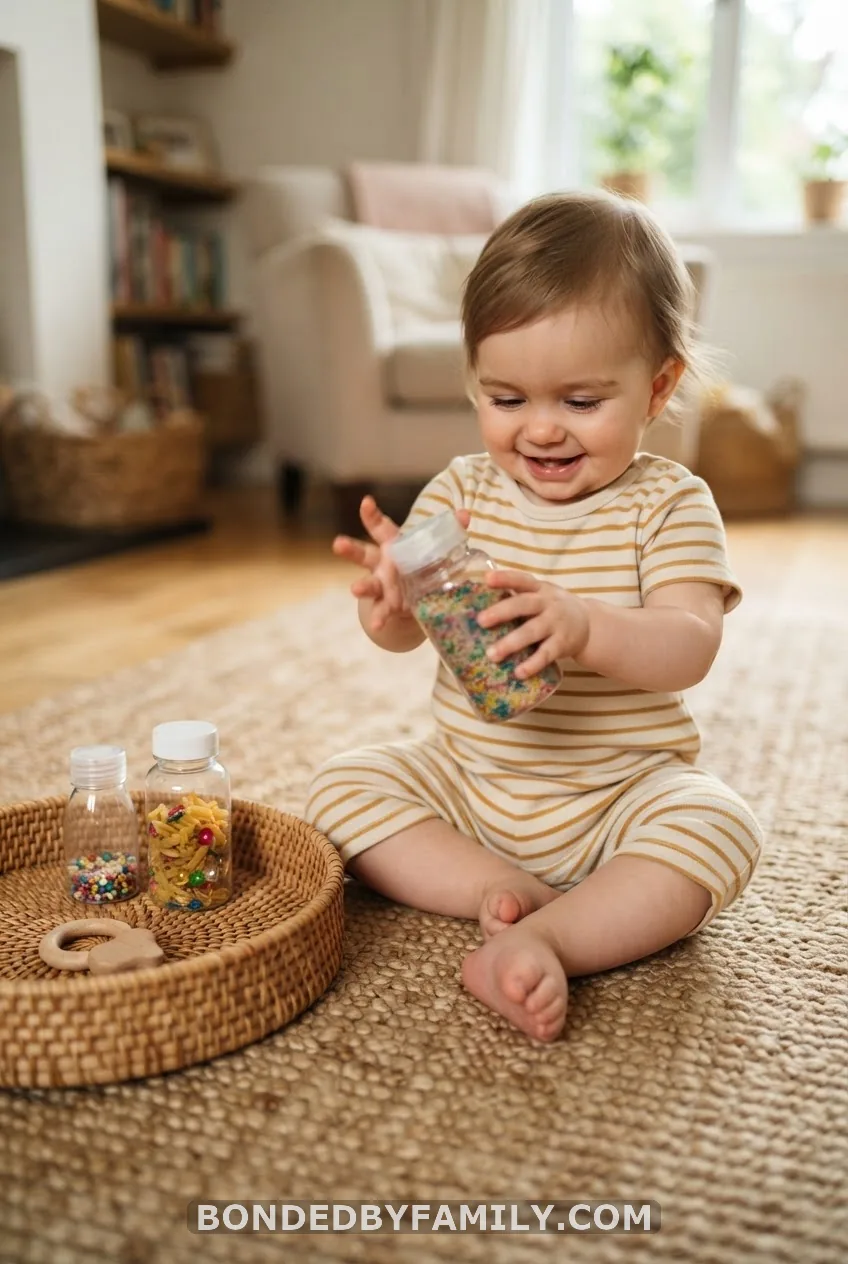
The reality: A clean, empty water bottle with a tablespoon of dry rice or dried beans inside, lid glued or taped shut, makes a shaker that sounds just as good to an eight-month-old as anything battery-powered. Make three or four with different fillers – rice, pasta, dried beans – so each one has its own sound, and drop them all into a shallow basket.
Sing while the baby shakes. Pause the song and wait for them to shake again before you continue – that’s an early back-and-forth, the same skill that eventually turns into conversation. The “expensive toy” myth is the biggest thing standing between parents and easy infant activity ideas. Musical instruments marketed for babies are almost always louder, more plastic, and less interesting than a homemade shaker with an actual sound.
Develops: Rhythm, listening, gross motor shaking control, and turn-taking through the pause-and-shake pattern.
Worth knowing:
Skip glass jars and anything with a lid a baby could pry open. Tape isn’t optional – wrap it fully around the seam, not just across the top.
5. Frozen Washcloth Texture Play
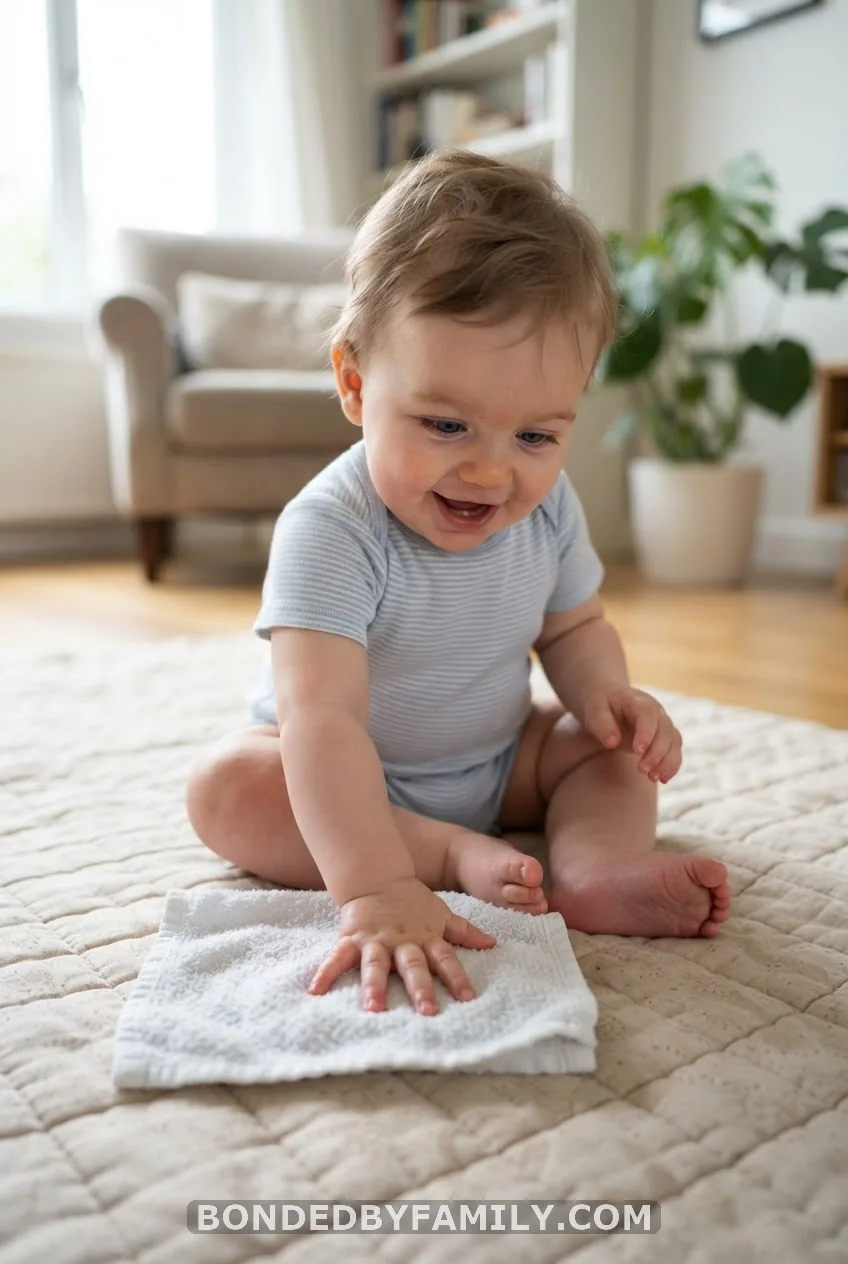
Run a clean washcloth under cool water, wring it out so it’s damp rather than dripping, and let the baby press their hands or feet against it for a minute. Room-temperature, not fridge-cold – this is texture and temperature exploration, not an ice bath.
Older babies who are already crawling can do the same thing barefoot, walking across the damp cloth laid flat on the floor. It builds sensory discrimination and body awareness without a single purchase, and it takes about the same effort as grabbing a towel out of the hamper.
If Baby Hates the Activity, Change One Thing
Before you scrap an idea entirely, change a single variable – the time of day, the baby’s position, or how many objects are in front of them. A baby who refuses yogurt paint at 4 p.m. might dive in at 10 a.m. when they’re rested and not hungry for an actual snack. If an activity flops twice, shelve it for three days and try again; babies’ interests shift fast, sometimes overnight.
The One Thing to Remember
You don’t need a toy box to raise a curious baby – you need five minutes, a clean spoon, and your own full attention.
FAQs About Infant Activity Ideas
How many activities should I do with my baby each day?
Two planned slots are plenty – one active sensory or movement activity earlier in the day, and something calmer, like mirror talk or a picture book, later on. The rest of the day should stay open for free floor play, since that unstructured time matters just as much for development.
What ages do these infant activity ideas work for?
This list covers newborns through about twelve months. The yogurt painting and sock-pull game work best once a baby can sit with support, while mirror chats and washcloth texture play suit even very young infants who are still working on head control.
Are homemade sensory activities safe for a teething baby?
Yes, as long as anything sealed – like the shaker bottles – has taped seams a baby can’t pry open, and anything edible, like the yogurt paint, stays plain and unsweetened. Always supervise directly rather than setting something up and stepping away.
Do I need to buy anything to get started?
No. Every activity on this list uses items already sitting in a typical kitchen, laundry basket, or recycling bin – yogurt, a spare sock, an empty water bottle, and a washcloth cover all five.