“Mom, my hand is tired.” My four-year-old said this after coloring for exactly ninety seconds. Ninety seconds. That’s when it hit me – she wasn’t being dramatic. Her little hand muscles genuinely weren’t strong enough yet to hold a crayon steady for longer than that.
If you’ve watched your kid grip a pencil like a shovel or struggle to peel a sticker, you already know fine motor skills matter. These are the small muscle movements in the hands, fingers, and wrists that let a child button a coat, hold scissors, or eventually write their name. And here’s the good news: you don’t need a therapy office or a curriculum to build them. You need a kitchen drawer, twenty minutes, and a preschooler who wants your attention anyway.
Below are 17 fine motor skills activities that use things you already own, each one naming the exact skill it targets so you’re not just playing – you’re playing with a purpose.
Before You Start: Build a Fine Motor Basket
Grab a shoebox or an old lunch tote and fill it with the boring stuff: clothespins, a bag of pom-poms, dried pasta, a few coins, kitchen tongs, stickers, string, and a container of play dough. That’s it. That’s your whole toolkit. No Amazon order required. Keep it somewhere your child can reach it without asking, and refill it every couple weeks. A basket that’s always ready beats a Pinterest board you’ll never open again.
1. Playdough Pinch, Roll & Squeeze
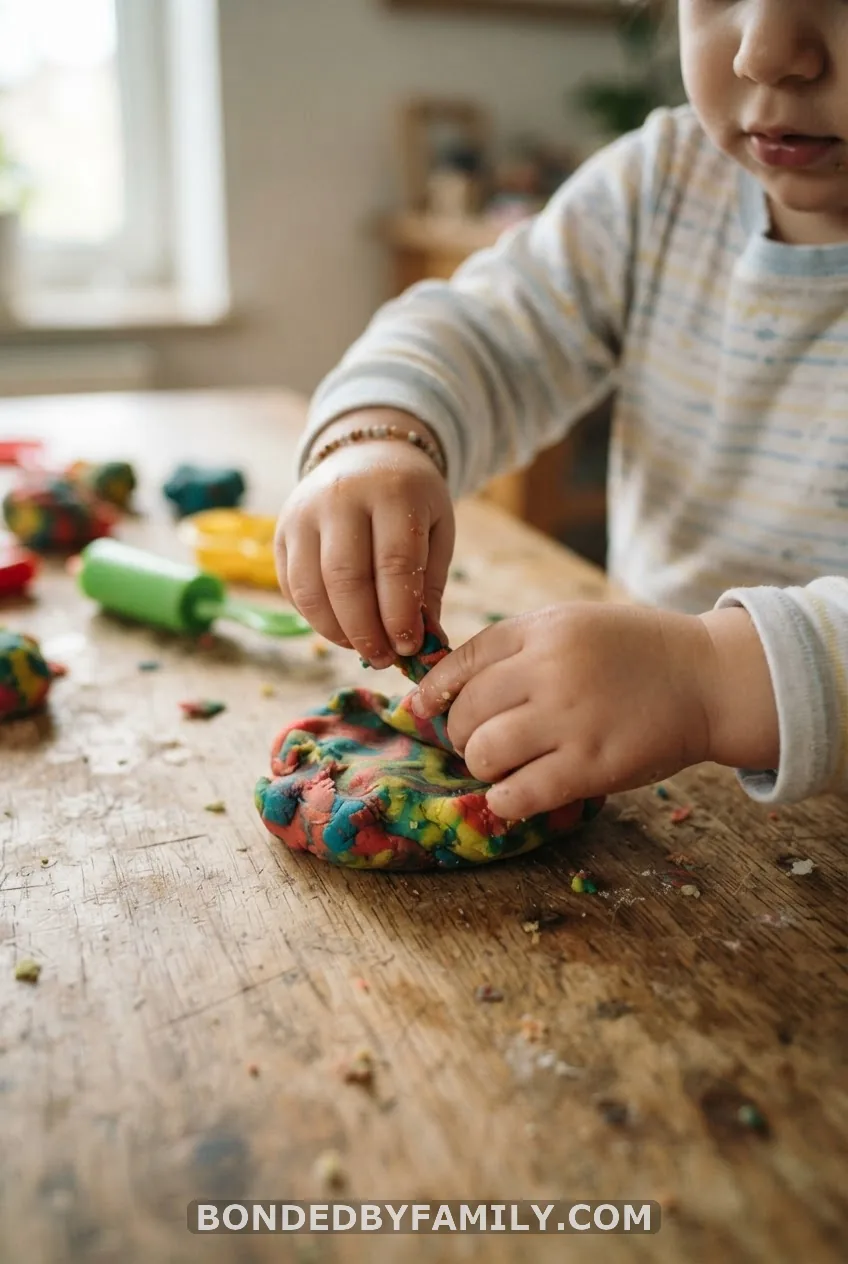
Rolling, pinching, flattening, and squeezing play dough works nearly every muscle in the hand at once. Hand over a plastic knife, a few cookie cutters, and let your child go to town making “cookies” or snakes. Sit beside them and ask what they’re baking – that thirty seconds of conversation is the whole bonding piece, and it costs you nothing extra.
2. Sticker Peeling & Sticker Targets
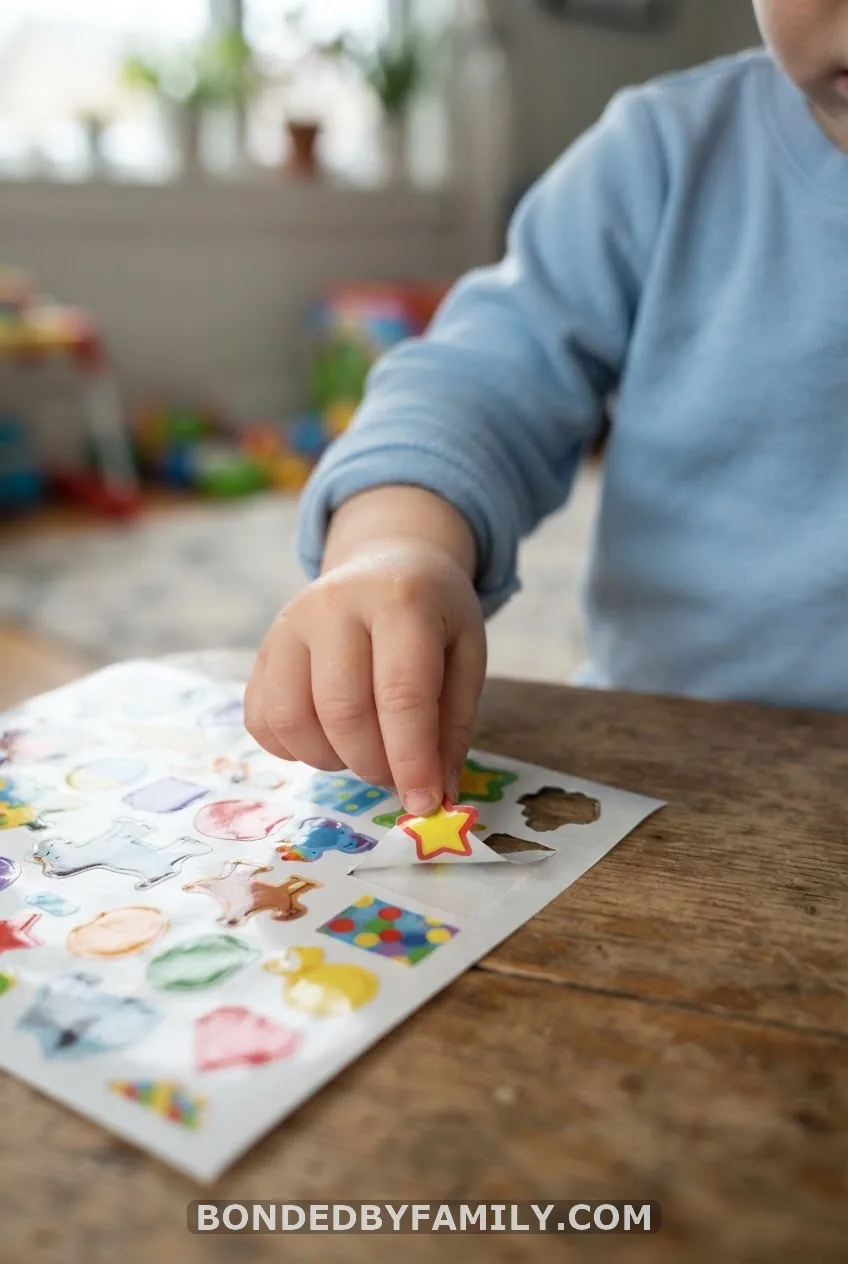
Peeling a sticker off its backing is pure pincer-grasp training. Draw a few circles on paper and challenge your child to place a sticker inside each one. It takes two minutes and builds the exact grip they’ll later use to hold a pencil.
3. Paper Tearing Mosaic
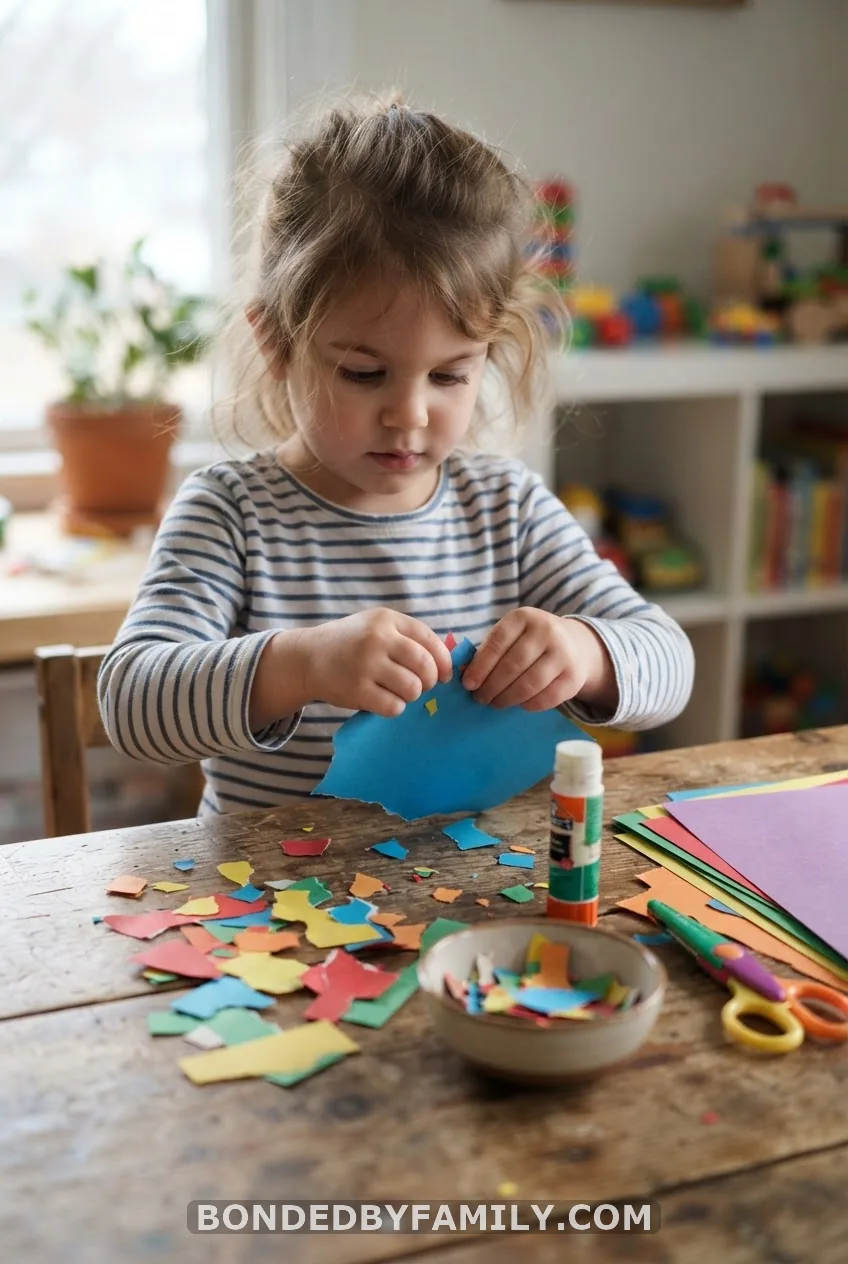
Tearing strips of paper into confetti isn’t just messy fun – it strengthens the small muscles at the base of the fingers that a crayon grip depends on. Glue the torn pieces onto a shape outline for a mosaic, or skip the glue entirely and let the tearing be the whole activity. Add real leaves or dried flowers for a nature version that costs nothing but a walk around the yard.
4. Clothespin Clip & Play
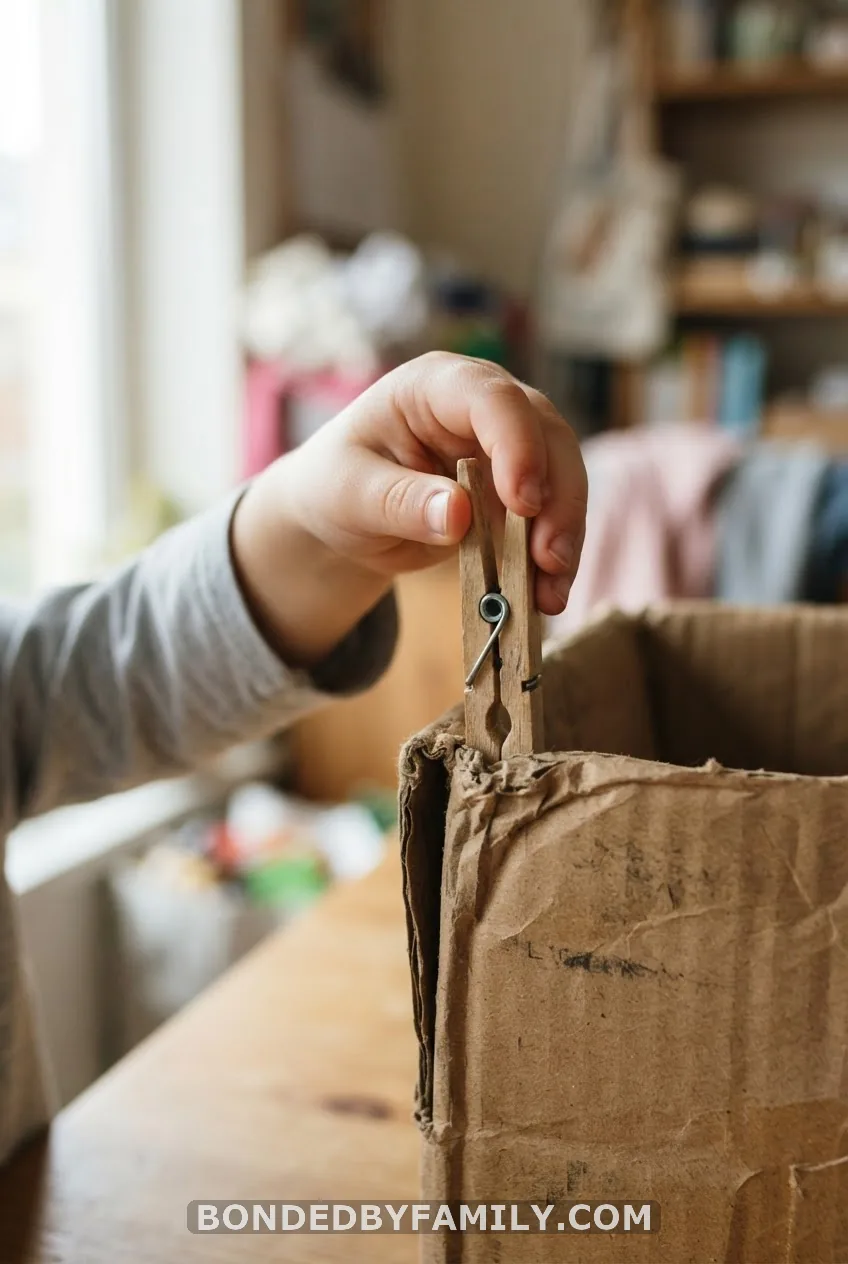
Clipping a clothespin open and shut is one of the best hand-strengtheners you have lying around, and most of us have a whole bag of them in the laundry room.
The Setup
Draw a simple sun on a paper plate and hand your child clothespins to clip on as “rays.” Or clip clothespins around the rim of a plastic cup as a stand-alone challenge – no drawing required.
The Grasp That Matters
Watch how your child holds the pin. You want thumb on one side, index and middle finger on the other – that’s the exact three-finger “tripod” grip they’ll eventually use on a pencil. If they’re using their whole fist, gently show them the two-finger pinch instead.
Level It Up
Once clipping feels easy, bury a handful of clothespins in a tub of play dough for a “peg rescue” dig. Pulling a clothespin free from dough adds resistance and turns a two-minute task into ten.
5. Pom-Pom Transfer with Tongs
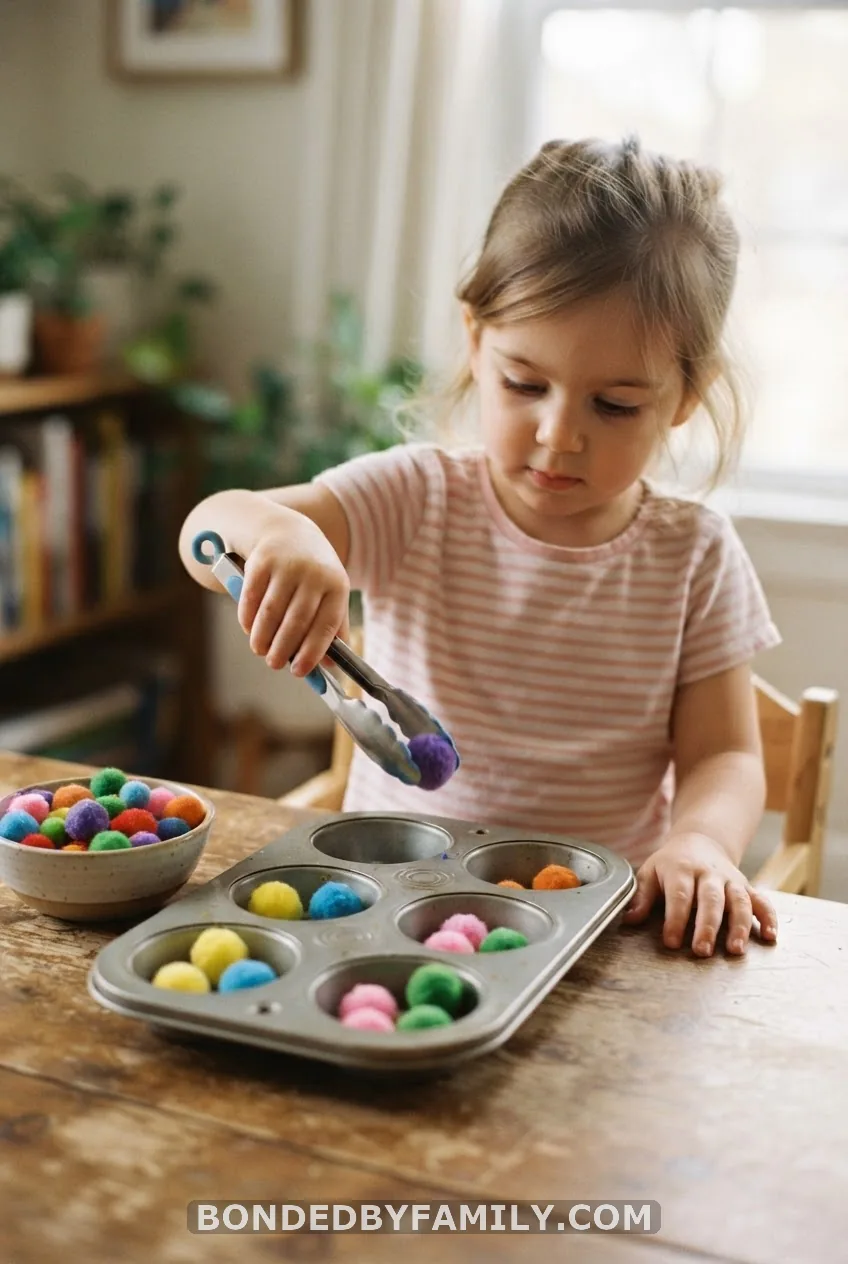
Handing a preschooler a pair of kitchen tongs and a bowl of pom-poms turns an ordinary Tuesday into a fine motor workout. Ask them to sort the pom-poms by color into the cups of a muffin tin or an empty egg carton. Once tongs feel easy, swap in a smaller set of tweezers to raise the difficulty without changing the game.
6. Bead & Pasta Threading
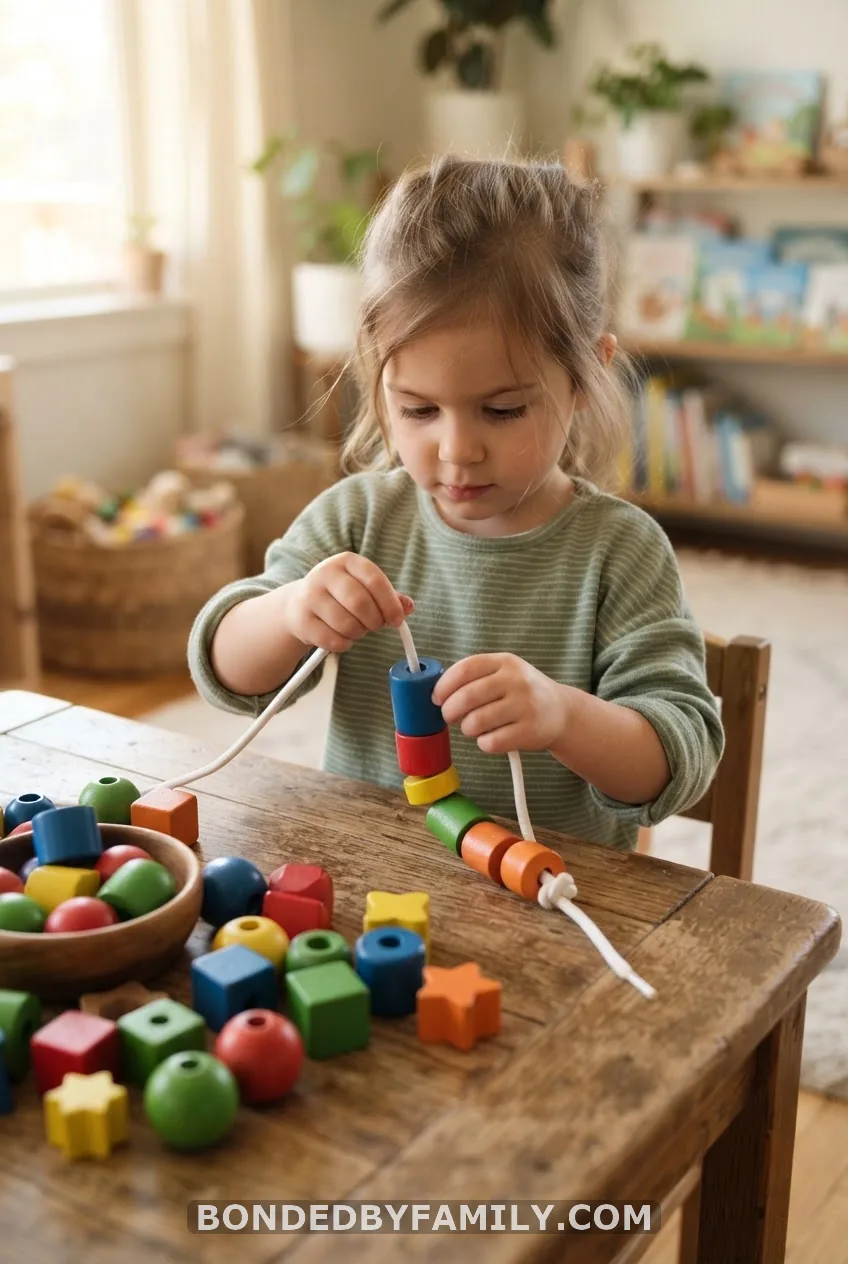
Threading beads, rigatoni, or Cheerios onto a pipe cleaner or shoelace demands both hands doing two different jobs at once – one holds the string steady, the other guides the bead. That split-task coordination is called bilateral integration, and it’s a skill kids need for everything from tying shoes to using scissors. Start with rigatoni and a stiff pipe cleaner since both are forgiving. As control improves, move to smaller beads and a floppier string like yarn or a shoelace. Finished necklaces make a natural reward – wear it to the grocery store and watch your child beam.
7. Scissor Skills with Lines & Mazes
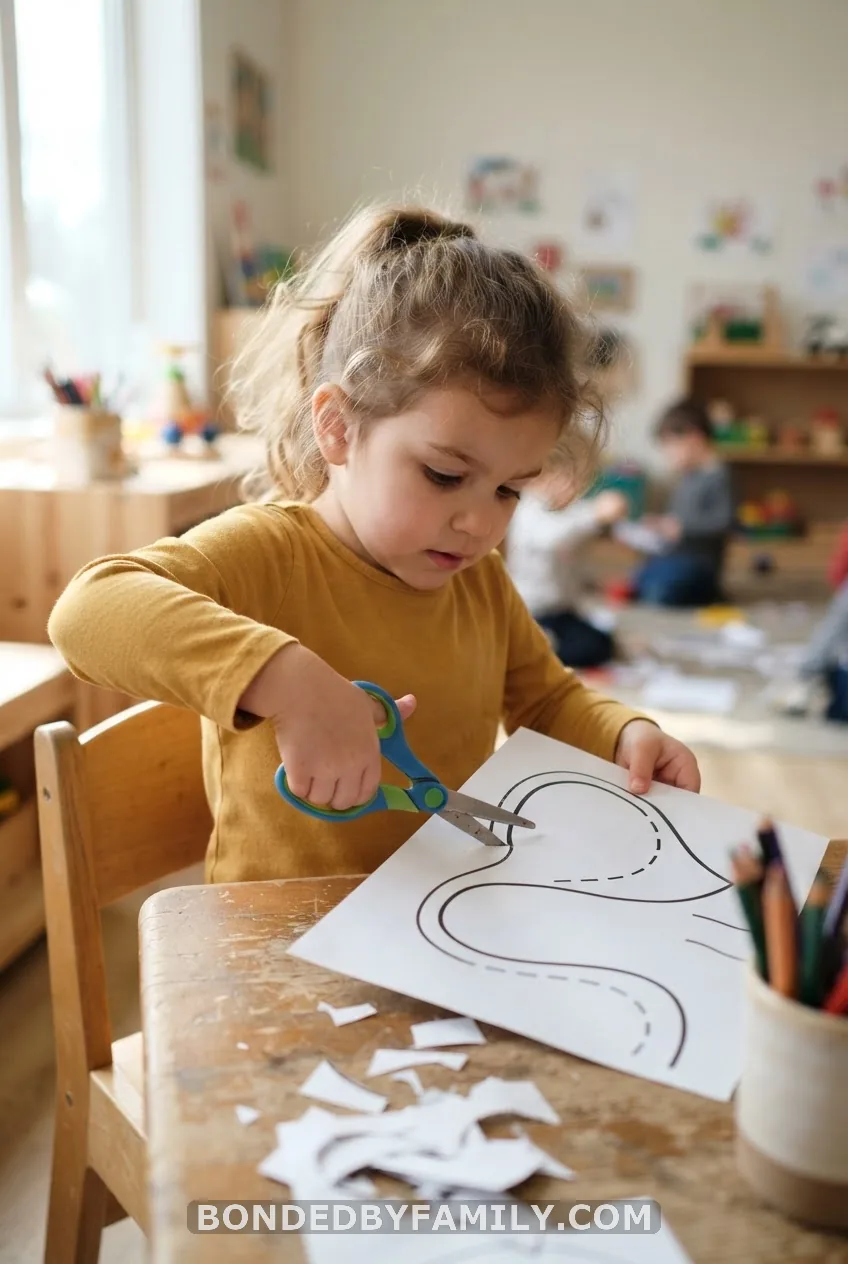
Scissors terrify a lot of parents, and honestly, that’s fair. But cutting is one of the single most valuable fine motor skills activities you can offer a preschooler, because it demands the same open-close hand pattern they’ll use for years.
Start Before Paper
Skip paper entirely at first. Roll play dough into thin snakes and let your child snip them into coins. There’s zero risk of a paper cut and the resistance of the dough builds hand strength faster than flimsy paper does.
Move to Straight Lines
Once snipping dough feels natural, draw a few thick straight lines on cardstock – cardstock holds up better than printer paper and doesn’t flop around mid-cut. Child-safe scissors like Fiskars’ blunt-tip training scissors (around $6-8 at most craft stores) work well because the spring-loaded handle helps kids who haven’t built enough grip strength yet to open the blades on their own.
Graduate to Curves and Zigzags
After straight lines click – usually within a couple weeks of short daily practice – introduce gentle curves, then zigzags, then a full scissor maze where the “path” winds between two printed borders.
Common Mistakes to Avoid
Don’t hand a child adult scissors “just this once.” The grip size is wrong and it teaches a bad hand position that’s hard to unlearn. Don’t rush from straight lines to intricate shapes in one session – frustration kills motivation fast at this age. And don’t correct every wobbly cut; a slightly jagged edge is still a successful rep.
Why This Works
Cutting requires the same muscles used to stabilize a pencil for writing. Occupational therapists often use scissor practice as a direct predictor of handwriting readiness, which is exactly why it earns this much space on the list.
8. Coin Drop, Sort & Piggy Bank
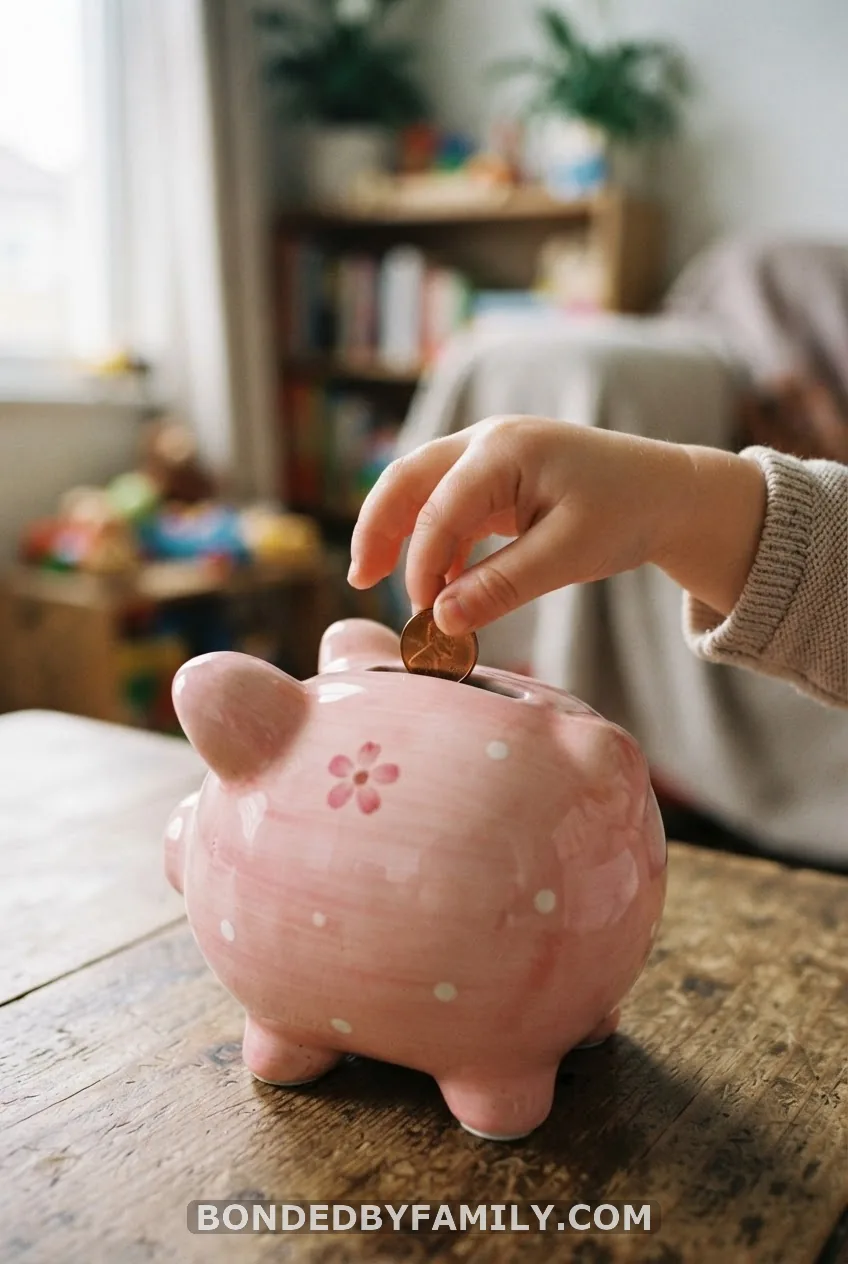
Dropping coins through a slot builds the exact pincer precision needed for buttons later. Cut a coin-sized slit in a plastic container lid if you don’t own a piggy bank, and use large tokens or bottle caps instead of real coins if your child still mouths small objects.
9. Q-Tip Dot Painting & Dot Markers
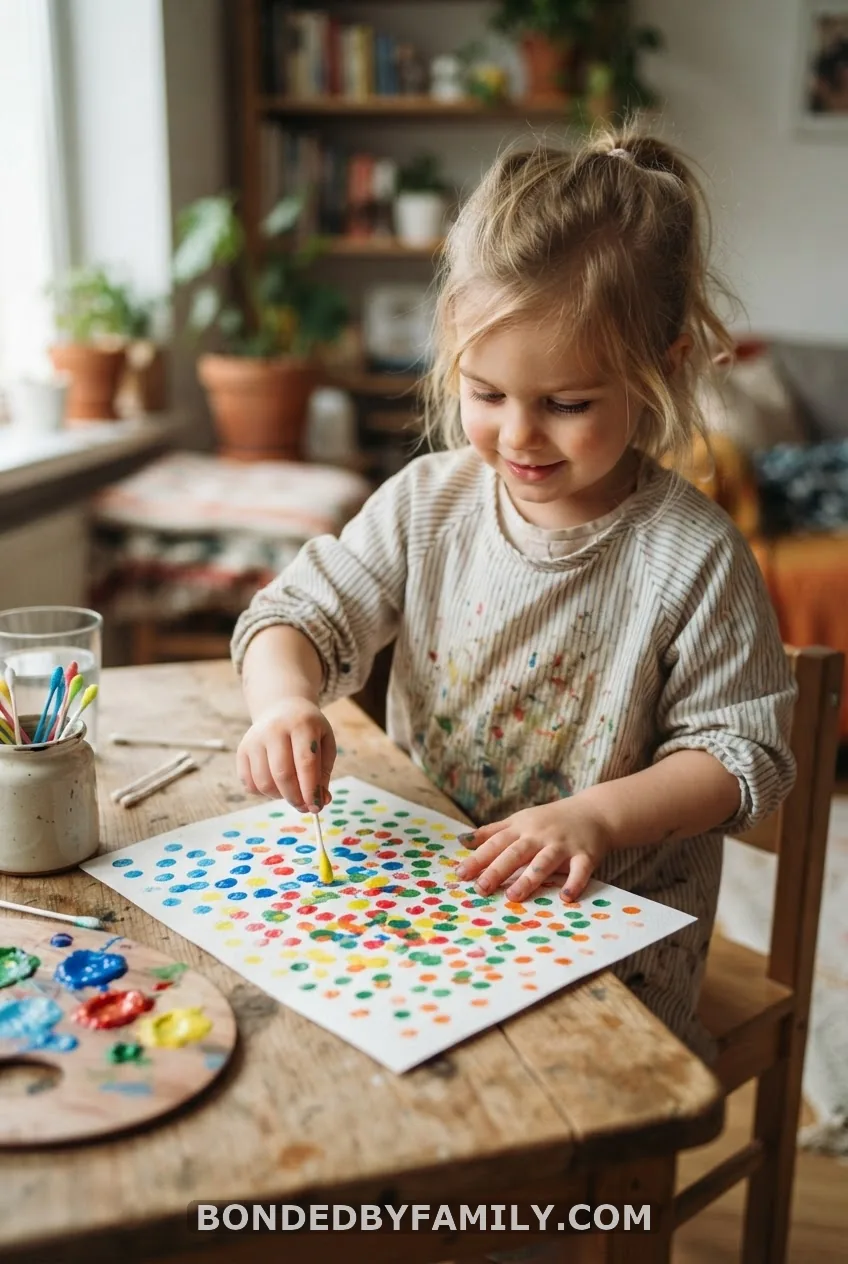
Dip a Q-tip in paint and make dots to fill a simple shape. The pincer grip needed to hold a cotton swab steady is nearly identical to a pencil grip, and dot markers work the same way if you’d rather skip the mess.
10. Tracing Without Worksheets: Salt, Sand & Sidewalk Chalk
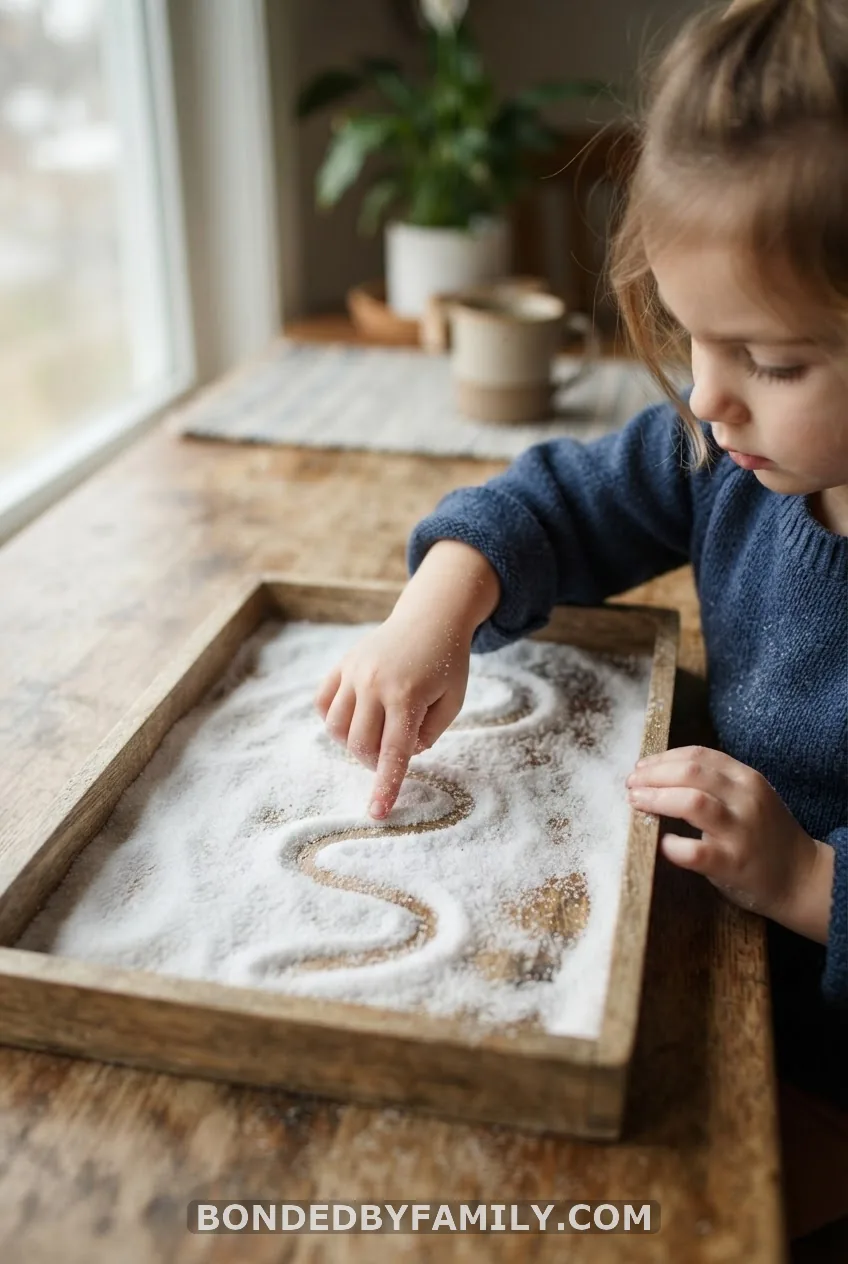
Pour a thin layer of table salt or sand into a baking tray and let your child trace lines and shapes with a finger or the end of a chalk stick. It’s pre-writing practice with zero paper waste, and mistakes disappear with a shake of the tray. Outdoors, hand them sidewalk chalk and ask them to trace over lines you draw first – the large arm movement builds the same directional control they’ll need for letters later.
11. Scoop, Pour & Spoon Transfer
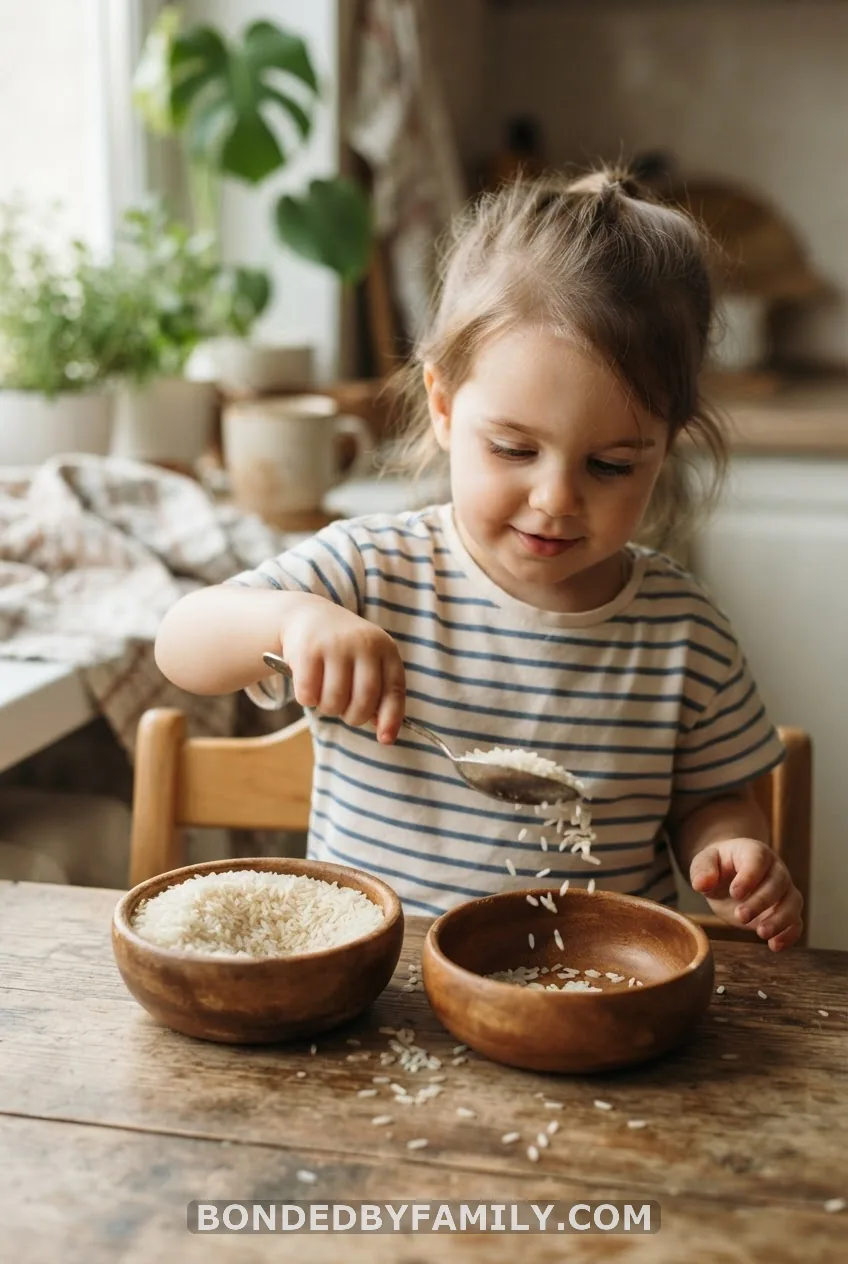
Scooping dry rice, beans, or pasta from one bowl to another builds wrist stability most parents never think to target. Water works too, in small cups on a towel-covered counter – the spills are part of the lesson, not a failure of it.
12. Sensory Bin Treasure Dig
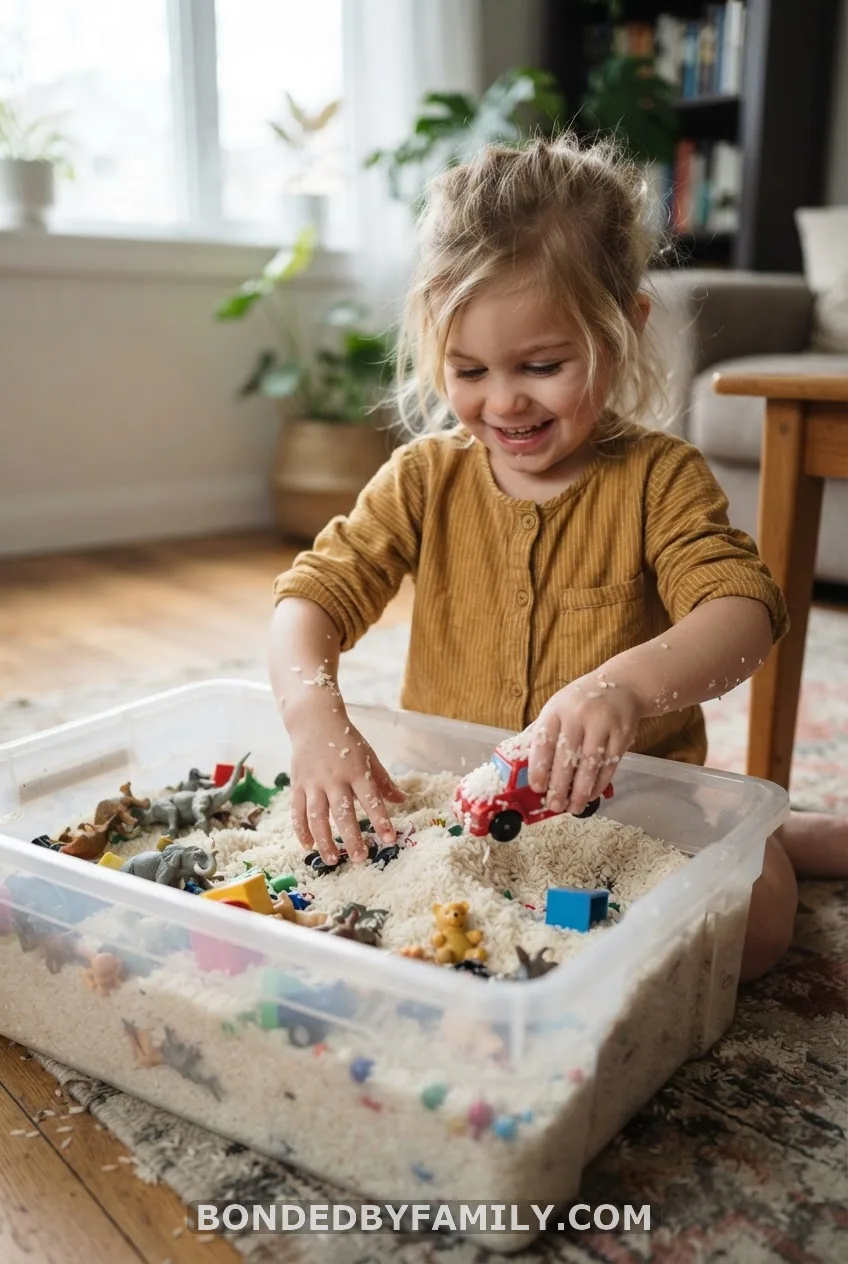
What most parents think: a sensory bin is just a way to buy fifteen quiet minutes while dinner cooks. The reality: it’s one of the densest fine motor activities on this entire list. Hide small toys, buttons, or coins in a bin of dry rice or beans, then hand your child tweezers or a small scoop to retrieve them. Every dig works the pincer grasp, every “found it” moment builds sustained focus, and sorting the treasures afterward by color or size adds an early math skill on top. The quiet-time payoff is real, but it’s a bonus, not the point.
13. Button, Snap, Zip & Velcro Board
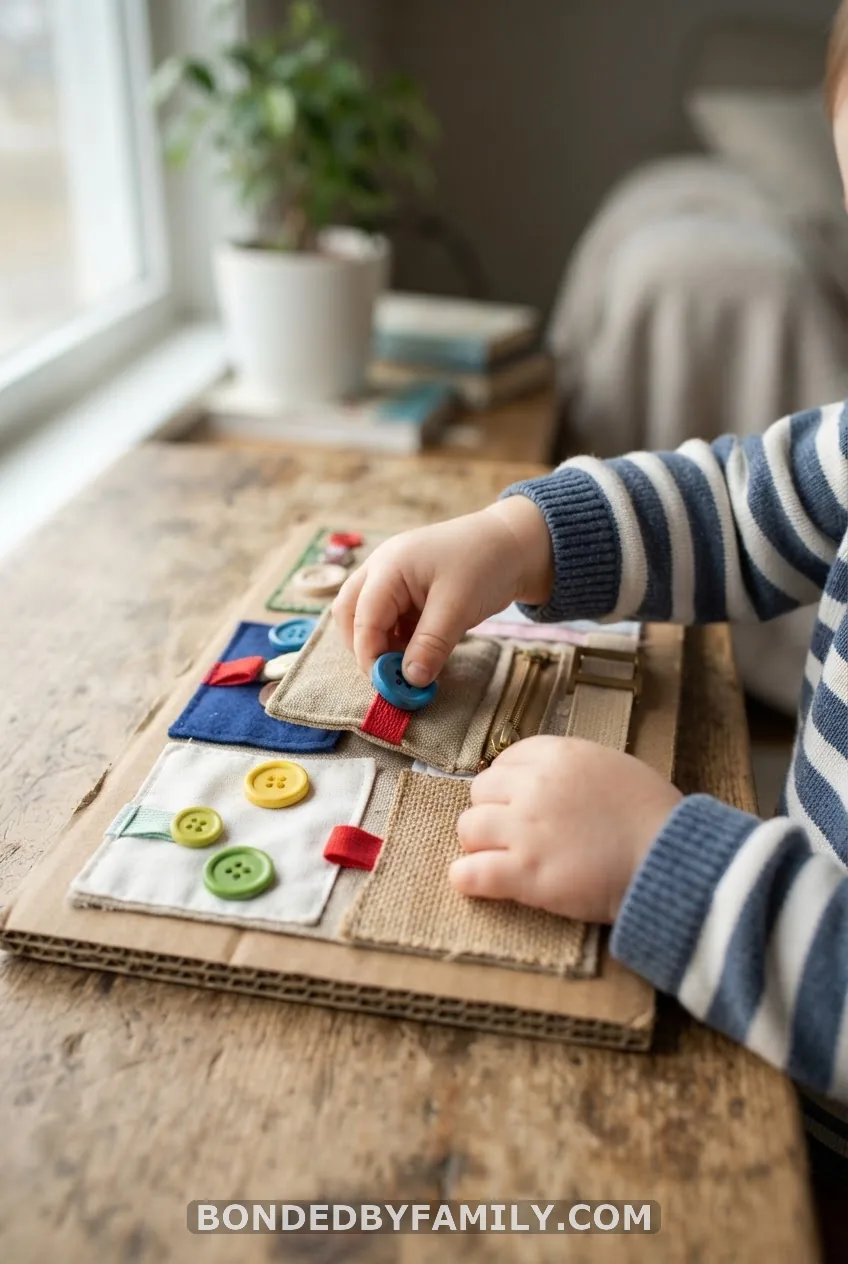
Sew or glue an old shirt’s button placket, a zipper, a snap, and a strip of Velcro onto a piece of sturdy cardboard. Practicing fasteners here – with no time pressure and no need to actually get dressed – builds the exact hand strength kids need for real mornings later.
14. Straw Posting & Cardboard Box Games
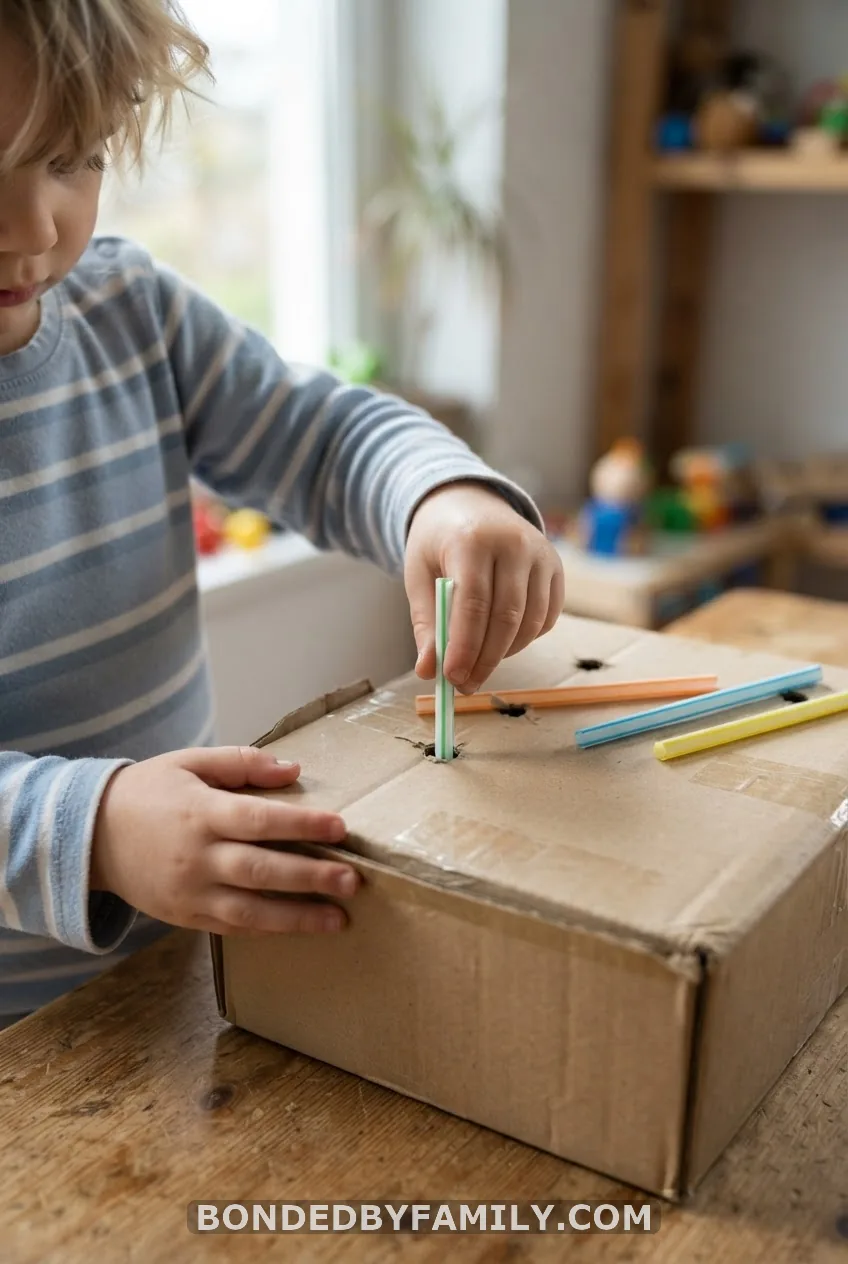
Cut a few holes in a shoebox lid and hand your child cut-up drinking straws to post through, one at a time. Swap straws for large paper clips clipped onto the box’s edge for a second round of the same idea with a different grip challenge.
15. Finger Painting & Texture Play
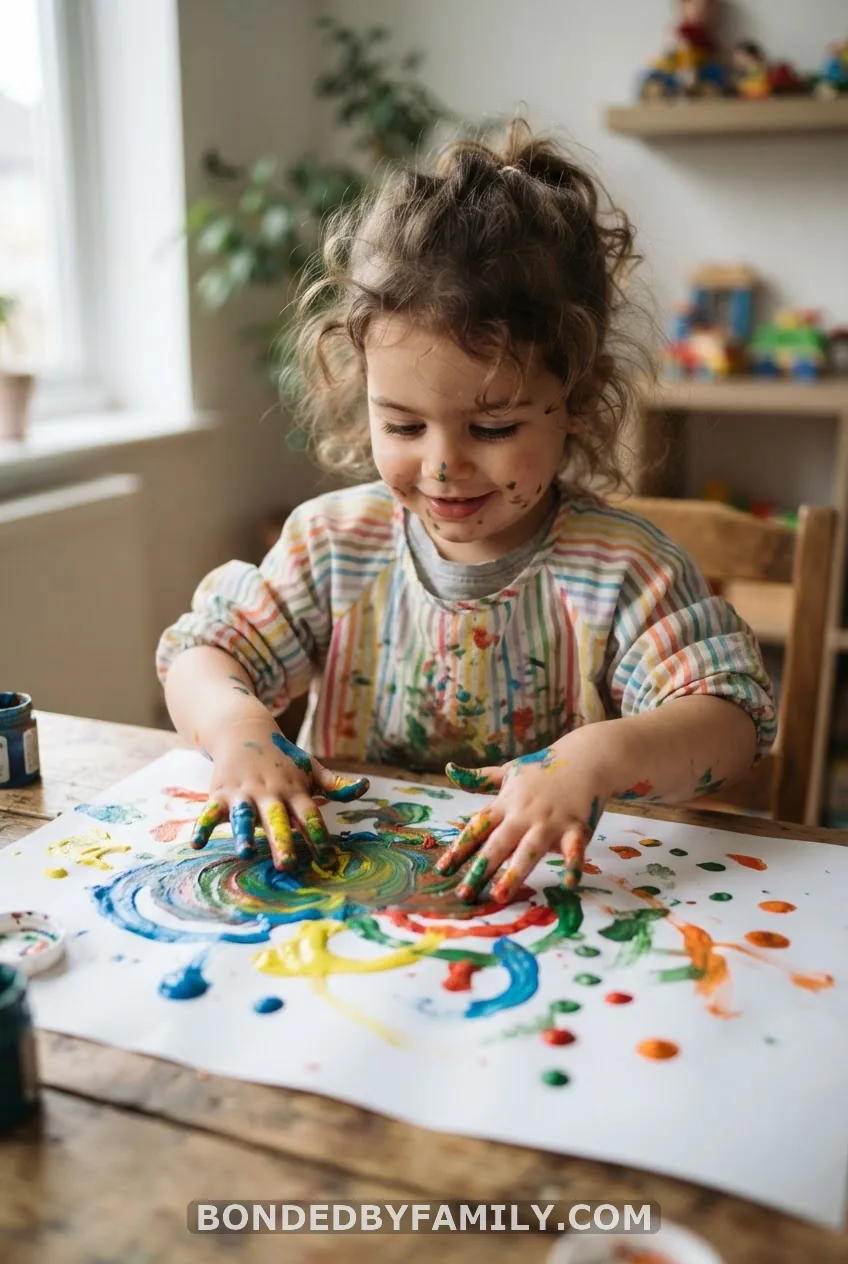
Skip the brush entirely and let fingers do the painting. Dragging a finger through wet paint to make dots, swirls, and lines strengthens hand muscles while giving your child full creative control. Washable paint from any craft aisle keeps the cleanup from becoming its own project.
16. Lacing Cards & Shoelace Fun
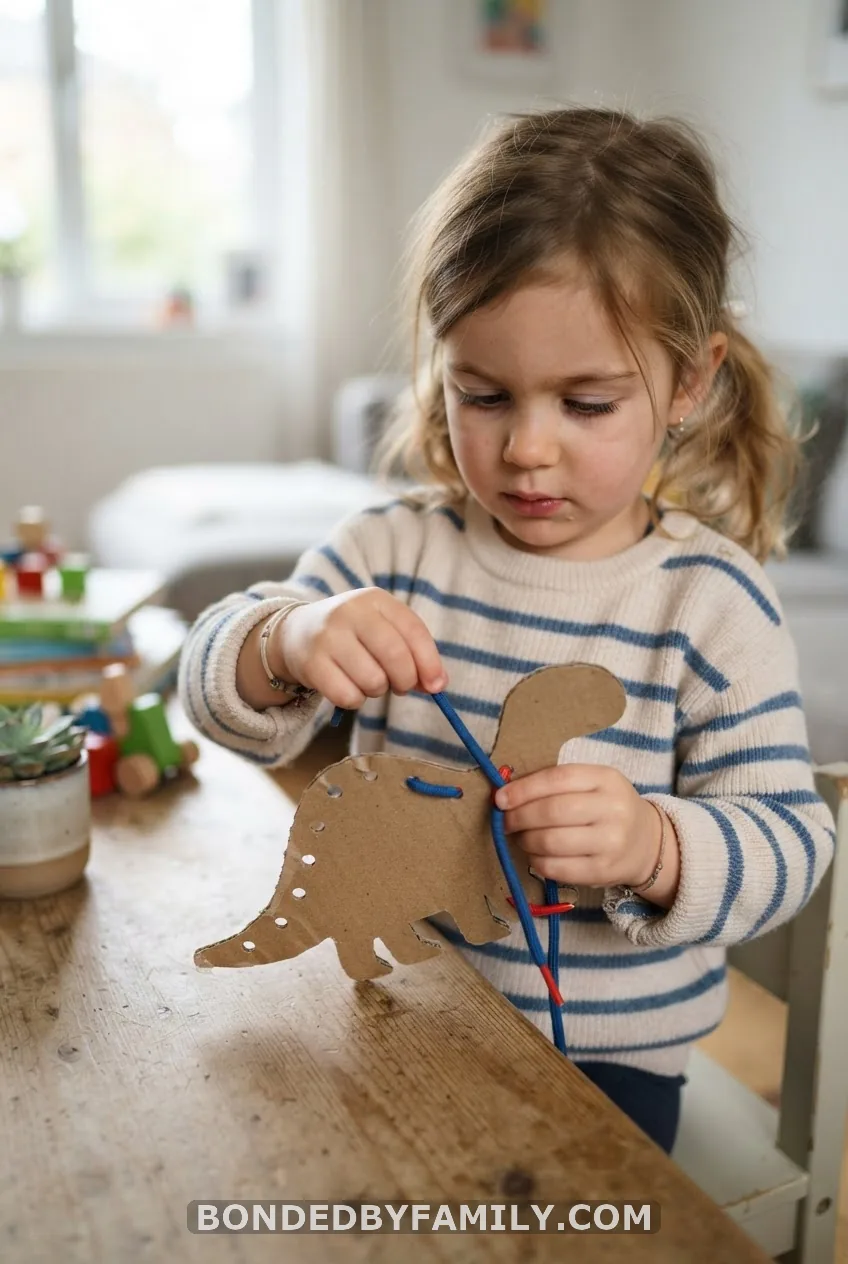
Punch a few holes around the edge of a cardboard cutout and thread a shoelace through, one hole at a time. One hand feeds the lace, the other guides it – the exact split-hand coordination they’ll eventually need to tie their own shoes.
17. Building Blocks, Bricks & Peg Boards
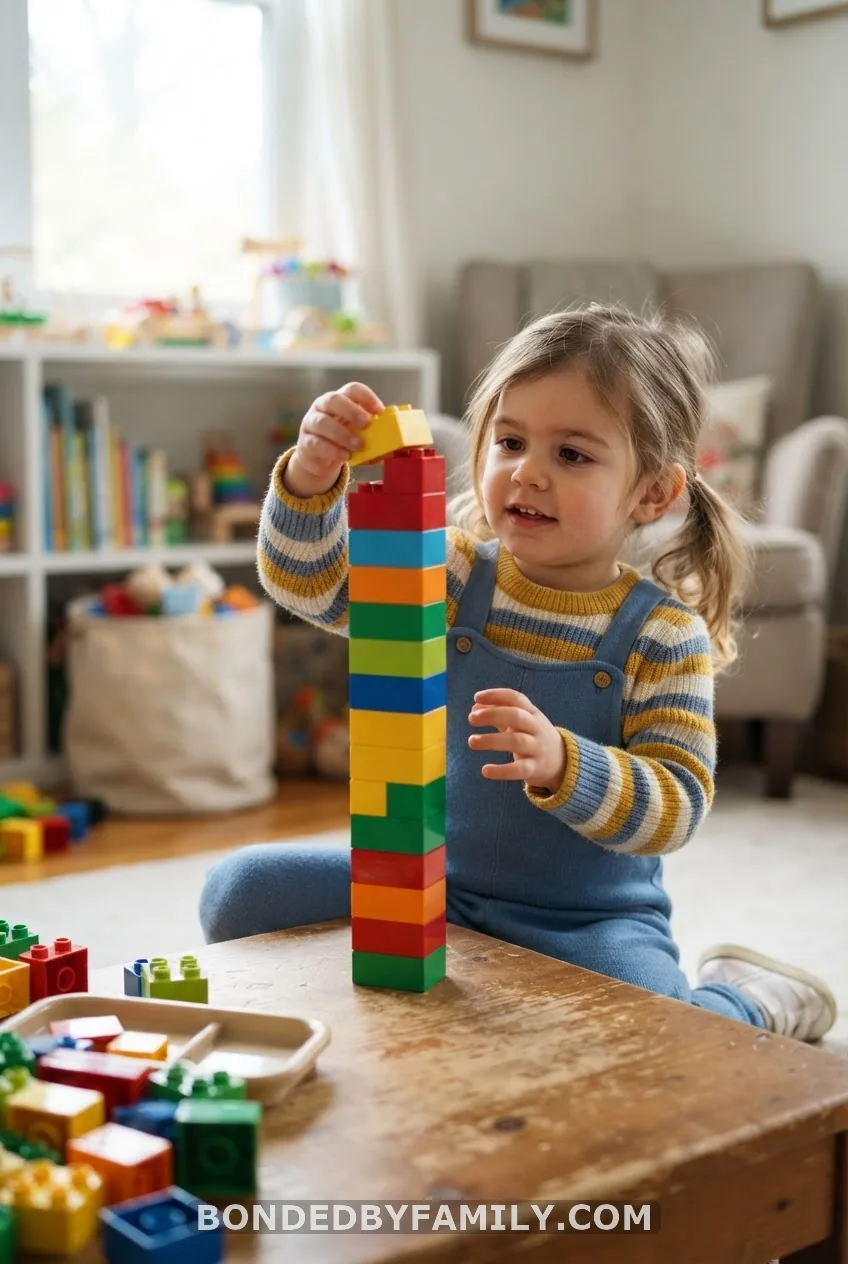
I used to think blocks were a “when I run out of other ideas” activity – a filler, not real practice. Then I watched my son spend twenty straight minutes trying to fit a DUPLO onto a slightly crooked tower, adjusting his grip four separate times before it clicked into place. That wasn’t filler. That was grasp, release, and problem-solving happening in real time. Stack Lego DUPLO or Mega Bloks and try copying a simple tower pattern together – one hand stabilizing the base while the other places the next piece is a genuine fine motor skill, not a throwaway one.
Tips for Making Fine Motor Play Actually Stick
Keep every session short – five to ten minutes is plenty at this age, longer and you’re fighting a losing battle against a tired hand. Praise the effort, not the neatness of the result; a lopsided sticker placement still counted as pincer-grasp practice. Let your child pick which activity from the basket, since interest drives repetition far better than your agenda does. And always supervise anything smaller than a golf ball – beads, coins, and buttons are choking hazards for kids under three, no exceptions.
The Unpopular Take
Everyone wants the printable worksheet, the laminated tracing card, the curriculum with a name on it. But I’d argue the fanciest fine motor kits on Pinterest are often the least effective ones – they’re designed to look good in a photo, not to survive contact with an actual toddler having an actual Tuesday. A bag of clothespins from the dollar aisle will build more hand strength than a $40 wooden toy that sits untouched on a shelf. Skip the search for the perfect product. Open your junk drawer instead.
FAQ
At what age should I start fine motor activities?
You can start in infancy with baby-safe grasping toys, but the activities on this list suit ages two through five best. Adjust difficulty by sizing objects up or down based on where your child is right now, not where the label says they should be.
What are the best fine motor activities for a 3-year-old?
Sticker peeling, play dough, pom-pom transfer with tongs, and paper tearing tend to click fastest at this age. Keep sessions to five or ten minutes and use larger materials while confidence builds.
When should I worry about my preschooler’s fine motor skill development?
If your child avoids using their hands, gets unusually frustrated with easy self-care tasks, or seems to lose a skill they once had, mention it to your pediatrician. These play activities support development, but they don’t replace an evaluation from an occupational therapist if something feels genuinely off.