A two-pound bag of white rice costs about two dollars, and it can fill six different Christmas sensory bins before December ends. That’s the whole secret behind the best Christmas sensory bin for preschool: one cheap filler, a few festive treasures, and tools small hands can work.
Below you’ll find 12 bins, each with its setup time, mess level, and the exact skill it builds. Scan the labels, pick one, and be done in 30 seconds.
Before You Pick a Bin: The Basics
What Preschoolers Need From a Bin
Ages 3 to 5 love to scoop, pour, fill, dump, and hide-and-find. Give them those five actions and they’ll play for 20 minutes or more.
Follow one rule: one filler plus 3 to 5 treasures. More than that overwhelms them, and they dump the bin instead of exploring it.
Filler options: dyed rice, pom poms, oats, cloud dough, water, oobleck, shredded paper, tinsel, crinkle paper, kinetic sand.
Tools that build fine motor skills: scoops, tongs, funnels, measuring cups, magnetic wands, basters, strainers, and safety scissors. Tools turn a bin from a sandbox into practice. Squeezing tongs builds the pincer grasp for holding a pencil. Pouring into a narrow jar trains hand-eye coordination.
Sensory play also builds language (“it’s bumpy,” “it’s cold”) and early science skills like prediction and cause and effect.
Safety First
Anything that fits through a toilet paper tube can choke a child who still mouths objects. Small jingle bells, beads, and candy cane pieces all qualify. Stay within arm’s reach. Dyed rice and oobleck are taste-safe, but they aren’t a snack.
Low-Mess Dry Bins
1. Dyed Red and Green Rice Christmas Bin
Setup: 10 minutes plus 1 hour drying | Mess: low | Skill: pouring and scooping | Cost: about $4
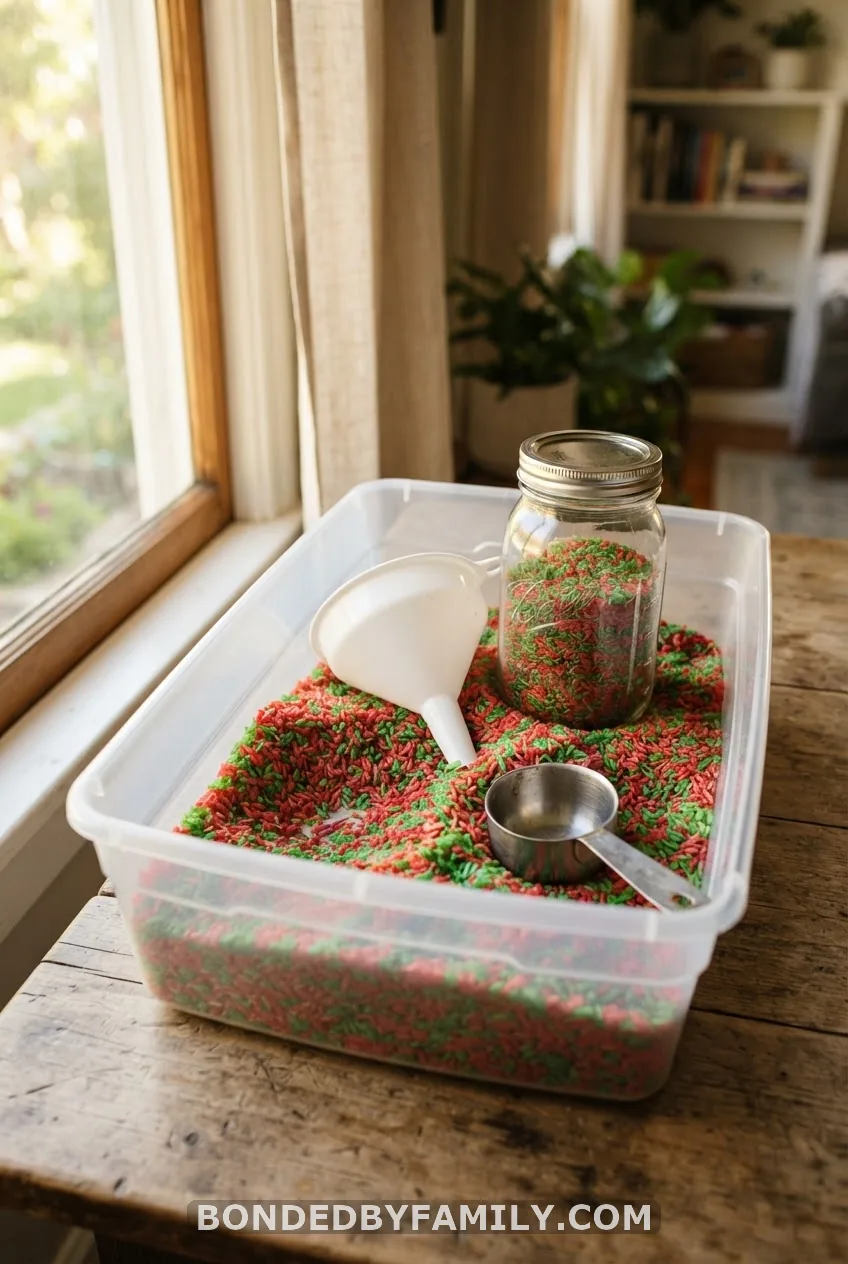
This is the workhorse bin. Dye once in November and you can use the rice for years.
What You Need
- 2 cups white rice per color
- 2 tablespoons white vinegar per color
- Red and green food coloring (Dollar Tree carries both)
- Two zipper bags
- One rimmed cookie sheet
- A funnel, a mason jar, and a scoop
Steps
- Pour 2 cups of rice and 2 tablespoons of vinegar into a zipper bag.
- Add 10 to 15 drops of food coloring.
- Seal the bag and shake for one minute, until no white shows.
- Spread the rice on the cookie sheet in a thin layer.
- Let it dry about 1 hour. Break up clumps with a spoon halfway through.
- Pour both colors into your bin, add the funnel, jar, and scoop, and hand it over.
Why It Works
The vinegar helps the dye grip the rice, so the color stays off little hands. The narrow jar mouth makes pouring a real challenge, and preschoolers love a challenge they can win.
Common Mistakes
- Too much coloring makes the rice bleed onto fingers. Stick to 10 to 15 drops.
- Bagging damp rice grows mold. Wait until it’s fully dry.
- Adding ten toys hides the rice. Keep it to three treasures.
The catch: Rice escapes. Put a bath towel under the bin and you’ll sweep up in two minutes instead of twenty.
2. Jingle Bell Sensory Bin
Setup: 5 minutes | Mess: low | Skill: sound exploration and hand strength
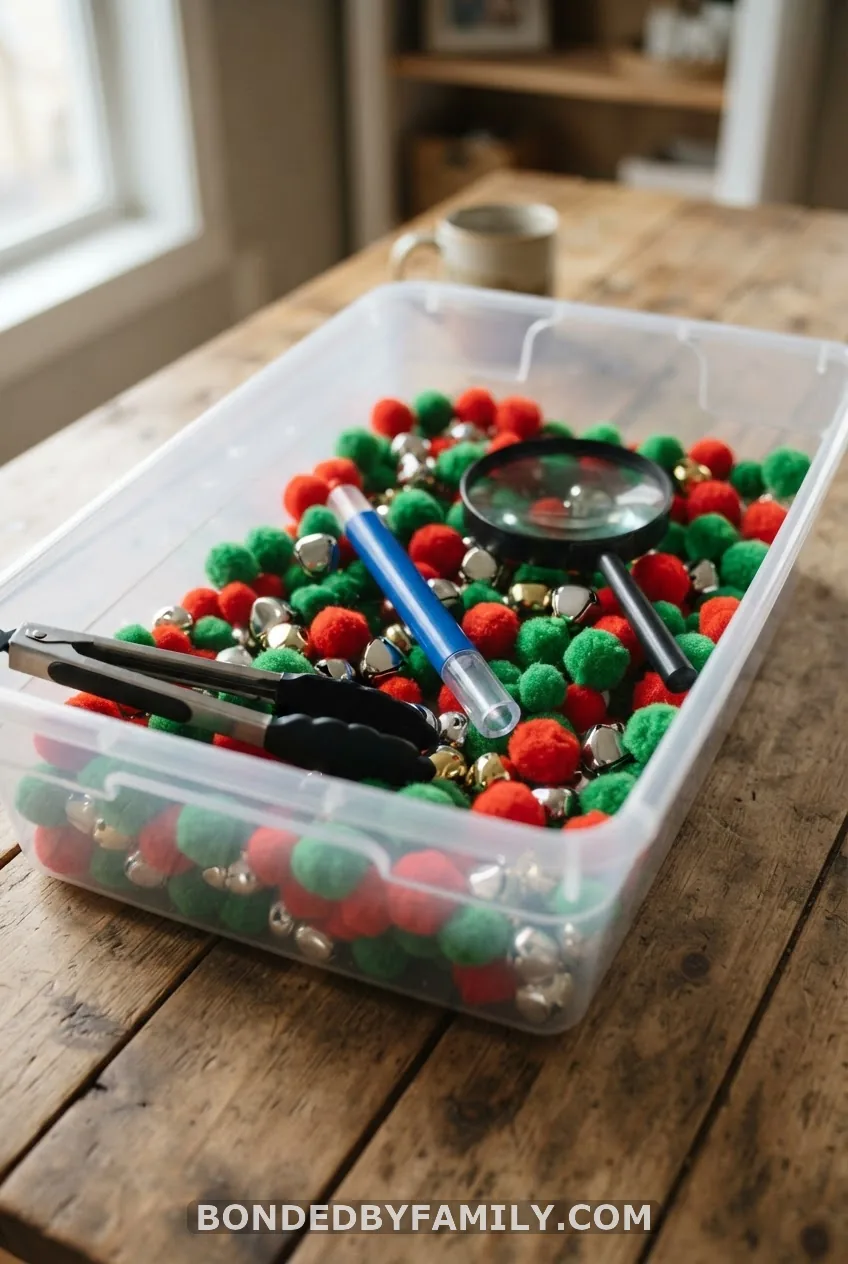
Fill a bin with red and green pom poms and toss in assorted metal jingle bells. Add a magnifying glass and a magnetic wand. Kids test which bells stick and which don’t, and the room fills with cheerful noise. Squeezing pom poms with tongs builds hand strength.
One caveat: Small bells are a choking risk. Use larger bells for kids who mouth things.
3. Christmas Magnetic Tubes STEM Bin
Setup: 5 minutes | Mess: none | Skill: prediction and early science
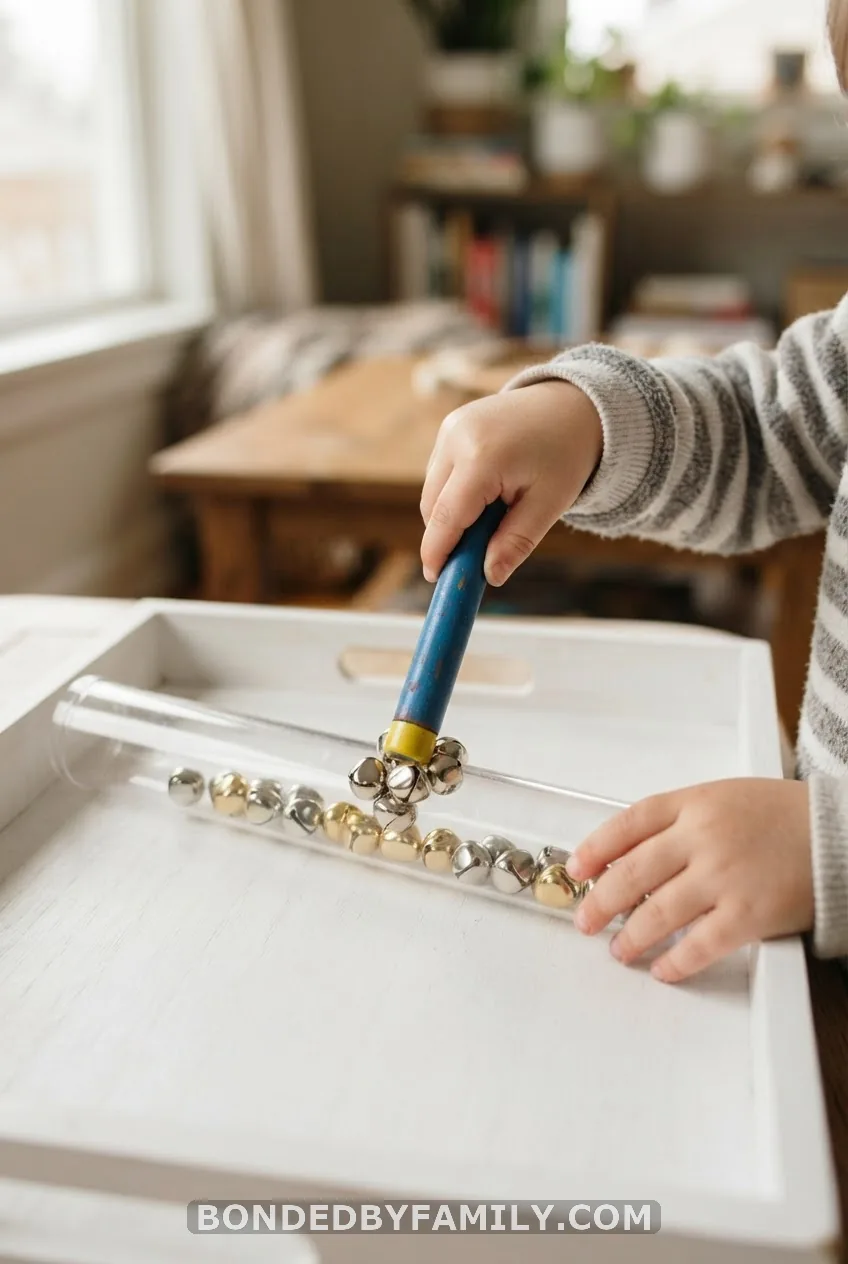
Drop steel jingle bells into clear tubes, cut-down water bottles, or a clear plastic container. Give your preschooler a magnetic wand. Then run the predict-pull-check routine: “Will this bell stick? Pull it and see.”
That’s a full STEM challenge in a five-minute setup. Ask which bells are strongest and which slide fastest.
4. Candy Cane Sensory Bin
Setup: 10 minutes | Mess: low | Skill: pincer grasp and scent play
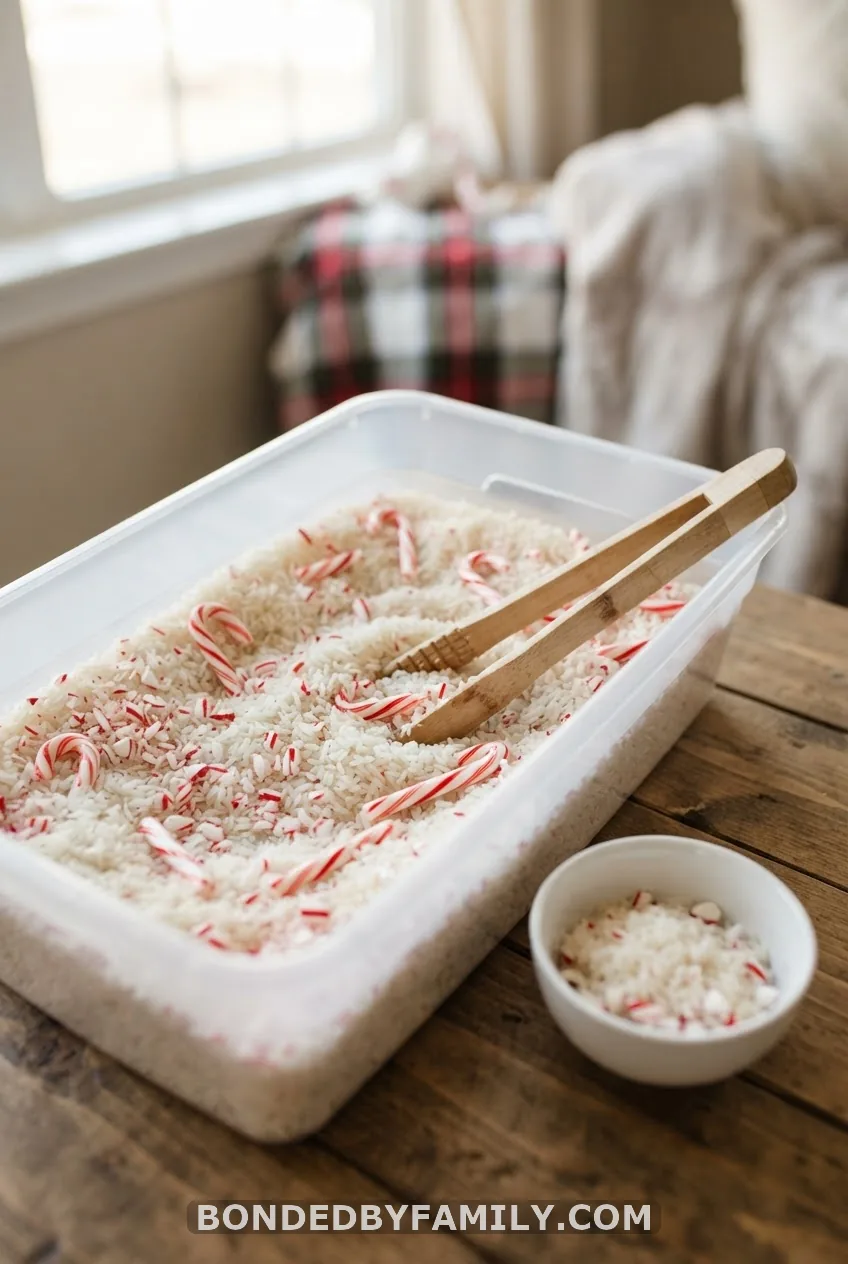
Start with white rice. Mix in a few drops of peppermint extract, then bury mini candy canes. Tongs turn the treasure hunt into pincer practice. Wrapped mini canes are safer than broken pieces, which have sharp edges and small bits.
5. Gingerbread Sensory Bin
Setup: 10 minutes | Mess: low | Skill: counting and matching
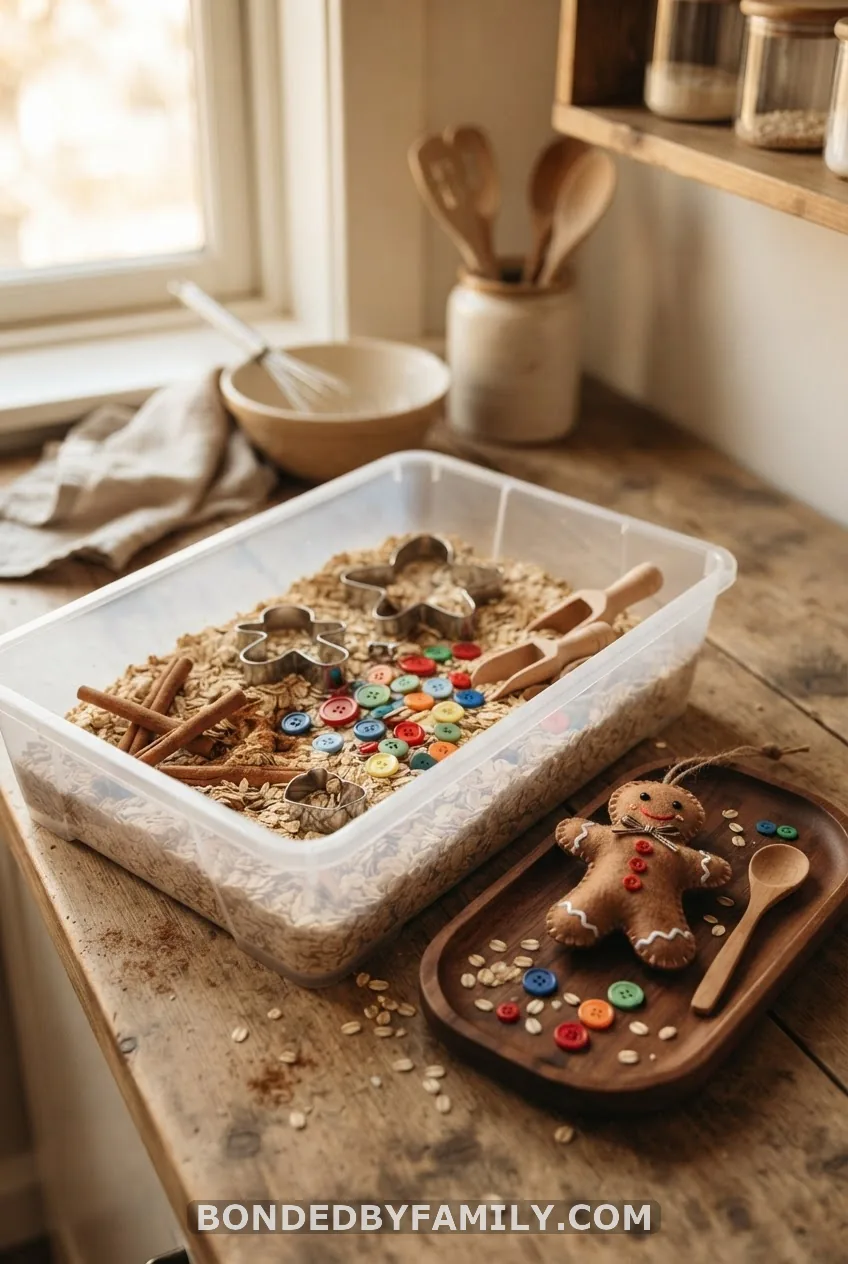
Stir a teaspoon of cinnamon into 3 cups of dry oats. Bury gingerbread cookie cutters and cinnamon salt dough ornaments. Add a felt gingerbread man on a tray and a pile of buttons. Your preschooler decorates him, counting buttons to 5 or 10. The scent alone pulls kids in.
6. Christmas Tree Sensory Bin
Setup: 5 minutes | Mess: low | Skill: color sorting
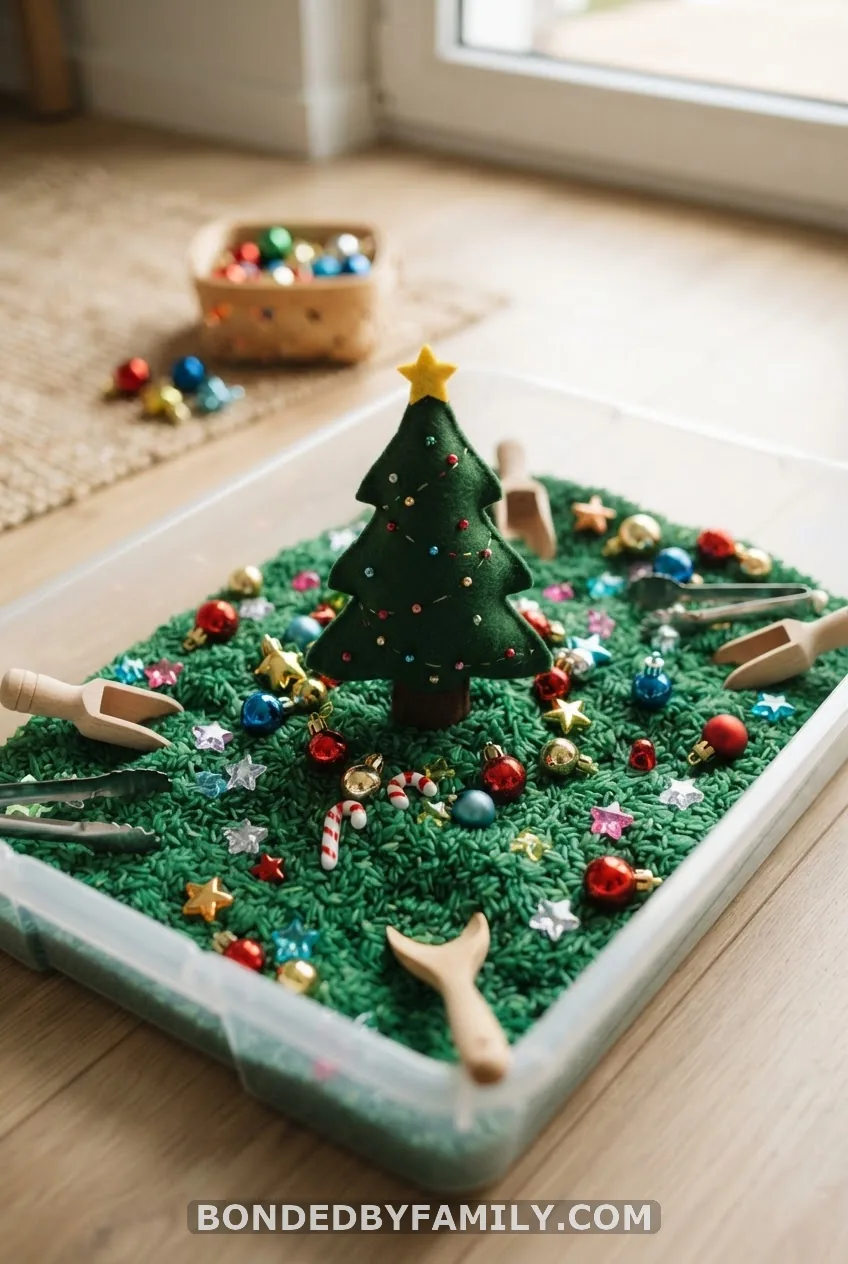
Green rice or shredded green paper makes the forest. Prop up a felt tree, then let kids decorate it with mini ornaments and stars, and sort ornaments by color. Redecorating never gets old.
7. Hot Chocolate Sensory Bin
Setup: 10 minutes | Mess: medium | Skill: pretend play and scooping
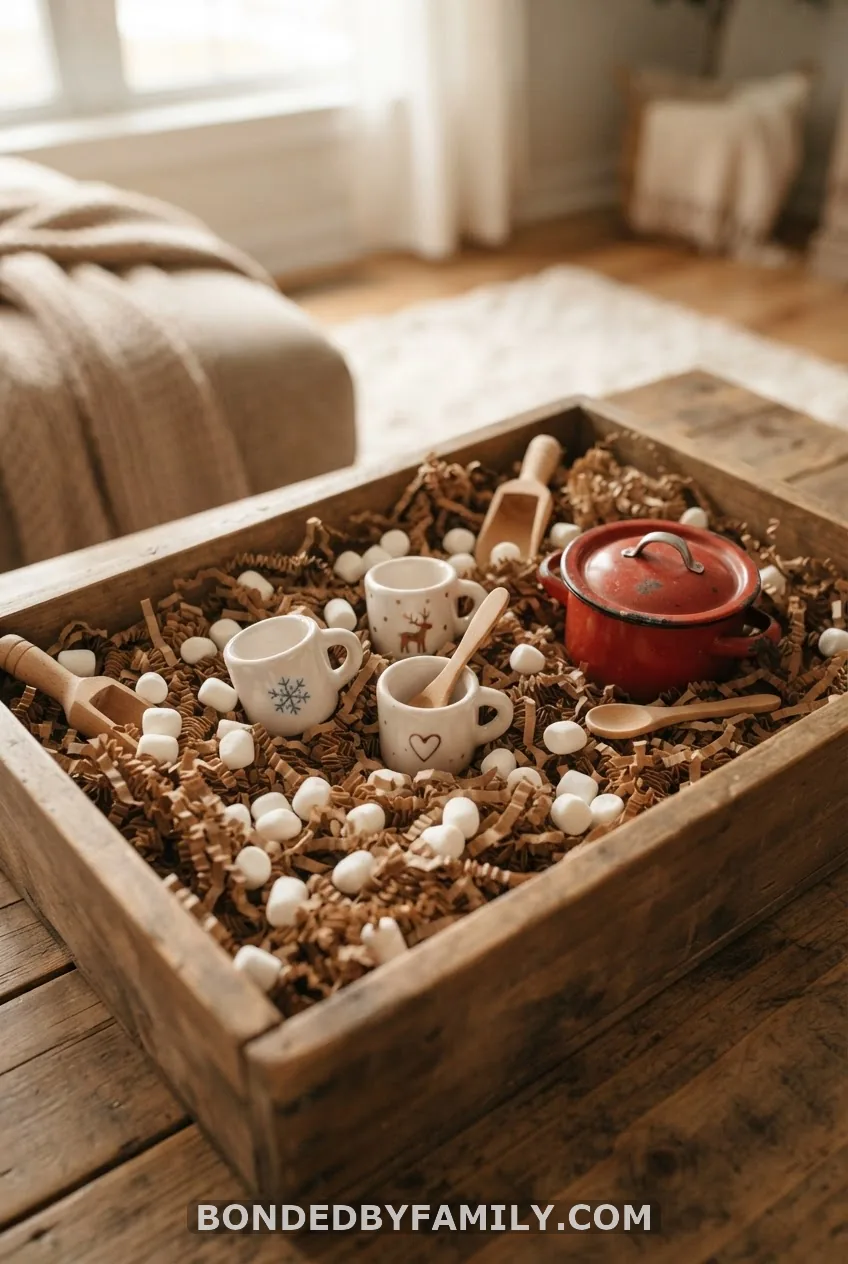
Use brown crinkle paper or brown-dyed rice as “cocoa.” Add mini marshmallows, mugs, spoons, and a small pot. Top with fake whipped cream from white cloud dough. Add a sprinkle of real cocoa powder for the smell. Your preschooler opens a hot cocoa stand, and now the bin builds language too: “Would you like marshmallows?”
8. Tinsel and Ribbon Sensory Bin
Setup: 3 minutes | Mess: low | Skill: scissor practice
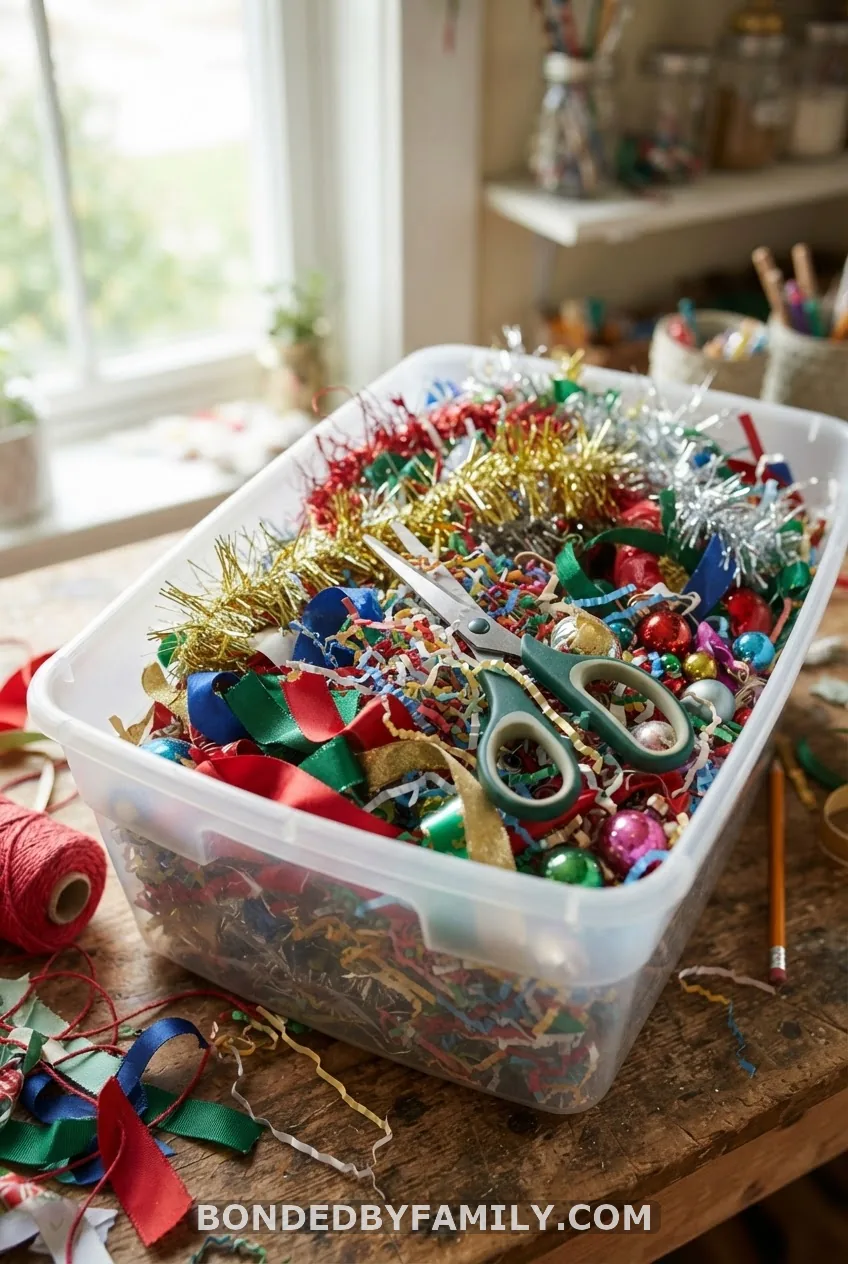
Toss tinsel, ribbon scraps, and crinkle paper into a bin. Hand over safety scissors and let them snip ribbon. It’s cheap, shiny, and great for mixed-age siblings.
The catch: Keep tinsel away from kids who mouth things.
Wet and Messy Bins
9. Snow and Frozen Sensory Bin
Setup: 5 minutes plus overnight freezing | Mess: medium | Skill: science talk
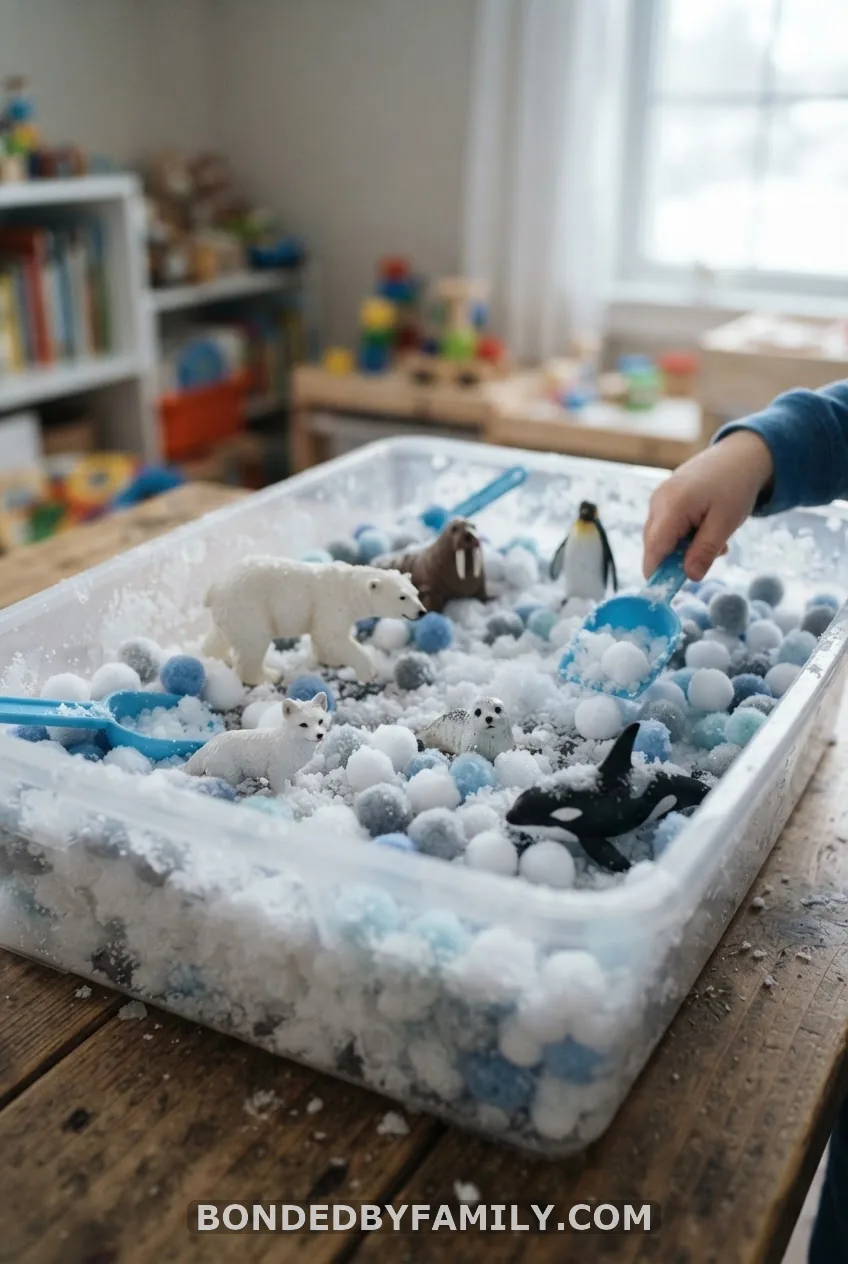
Freeze pom poms in ice cube trays overnight, or mix baking soda with a little conditioner for snow. Add arctic animals, plastic snowflakes, and blue scoops. Then set out a bowl of warm water and a bowl of cold. Ask what melts first. That’s early science in a pile of fake snow.
10. Peppermint Oobleck Sensory Bin
Setup: 5 minutes | Mess: high | Skill: tactile play
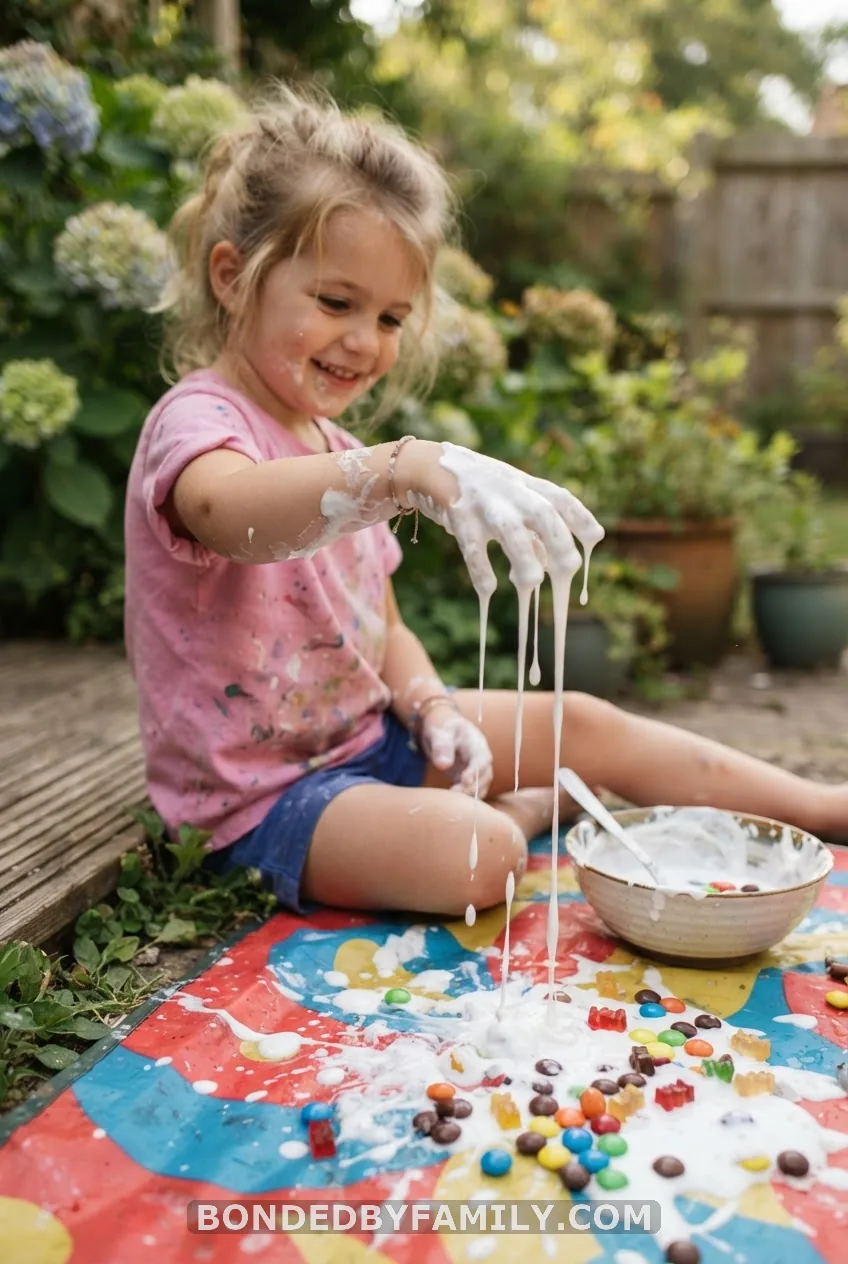
What most people think: Oobleck is a quick, harmless, five-minute win.
Reality: It works, and it will find every corner of your kitchen.
Mix 2 cups cornstarch with 1 cup water, then add peppermint extract. It flows when you tip it and turns solid when you squeeze. Kids who crave touch will scoop, drip, and squeeze for half an hour.
I once set this up on a living room rug. Dried oobleck flakes off a rug like a bad memory, and I vacuumed for a week. Now I do it outside or on a splash mat.
One caveat: Never pour oobleck down the drain. Scrape it into the trash.
11. Christmas Cloud Dough Cookie Bin
Setup: 5 minutes | Mess: medium | Skill: shaping and pretend play
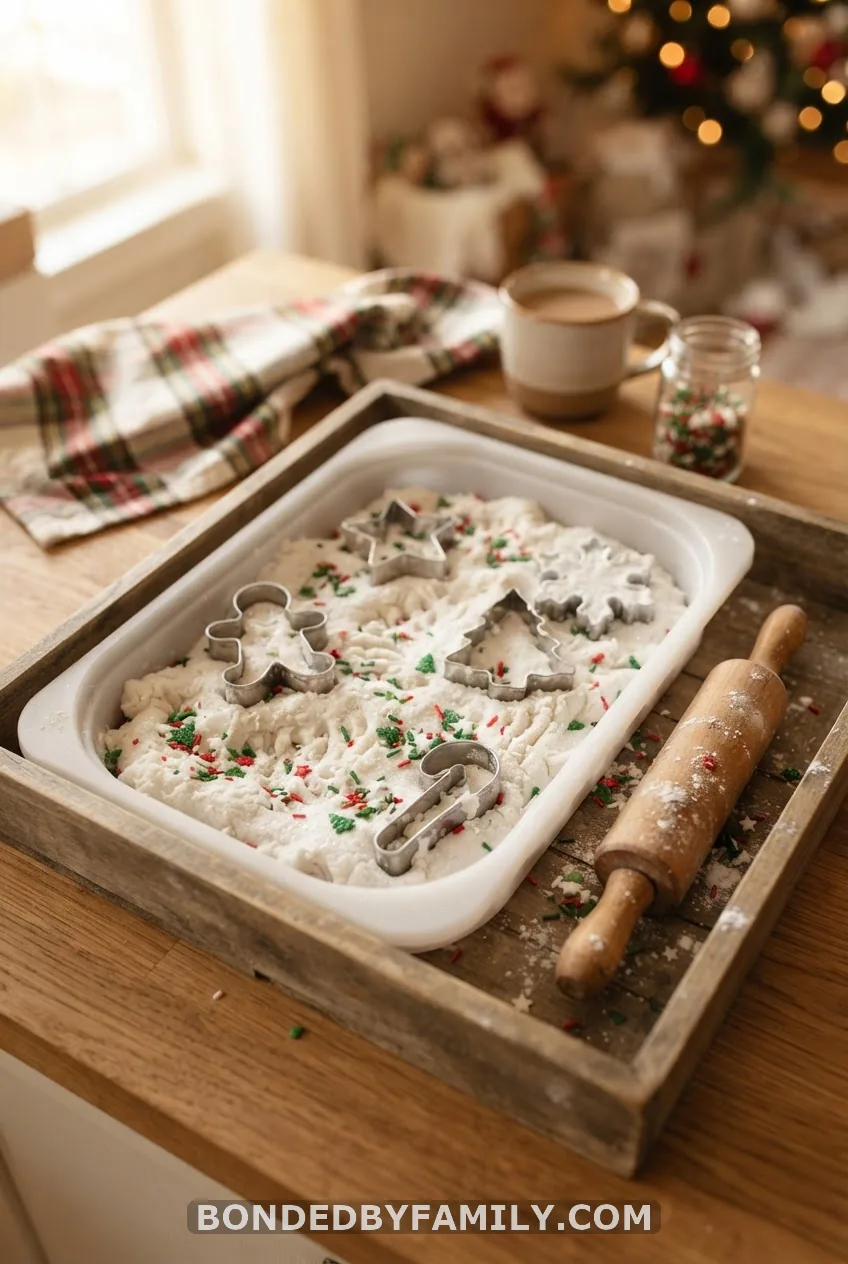
Mix 8 cups flour with 1 cup baby oil. Add sprinkles, cookie cutters, and a mini rolling pin. Splash in a little vanilla for scent. It’s a pretend bakery, and it molds like damp sand.
12. Christmas Water Play Bin
Setup: 5 minutes | Mess: high | Skill: hand strength and pouring
Myth: Sensory bins have to be dry.
Reality: Warm water may be the best fine motor builder of the bunch. Squeezing a baster works the same muscles as squeezing a glue bottle.
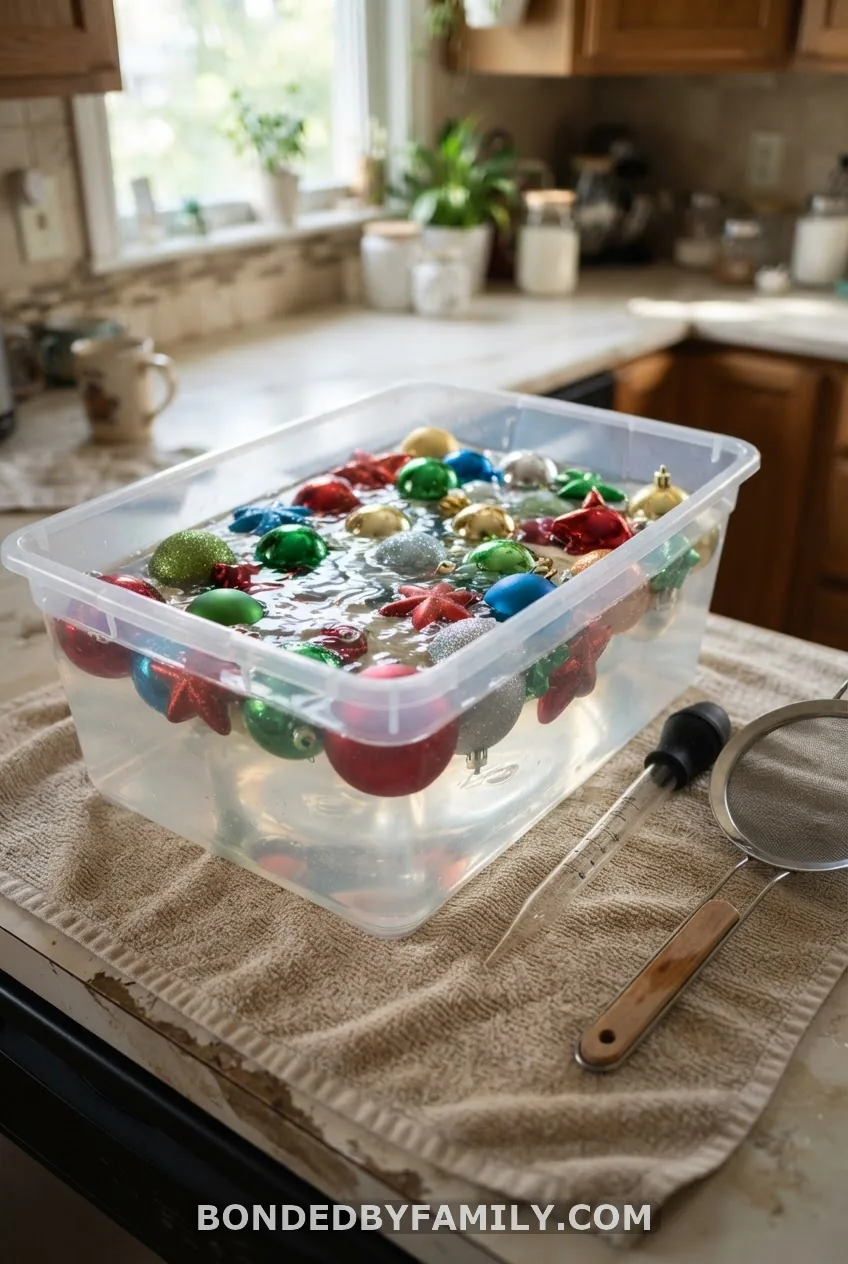
Fill a bin with warm water and add plastic ornaments, basters, and strainers. Put a towel underneath and a drying rack nearby for the ornaments. It’s also the friendliest option for kids who dislike dry textures.
Set Up, Store, and Adapt
The 5-Minute Formula
- Pick a filler.
- Add 3 to 5 treasures.
- Add 2 to 3 tools.
- Set the rules: “The rice stays in the bin.”
Use a shallow clear storage bin on a towel or tray. Rotate the same filler for two weeks by swapping the treasures.
Rough Cost Per Bin
Rice, pom pom, and tinsel bins run $3 to $6. Oobleck and cloud dough cost about the same. A one-trip Dollar Tree bin (filler, treasures, tools, and the bin itself) stays under $10, which helps a teacher who needs six matching bins.
Low-Mess Tricks and Storage
Keep a rimmed cookie sheet under the bin, a handheld vacuum nearby, and a wet cloth for oobleck. Store dyed rice in labeled mason jars or zipper bags. It keeps for years.
For Kids Who Hate the Feel
Some kids won’t touch rice or oobleck. Start with tools only. Offer tongs, a scoop, or gloves, and let them watch first. Water and pom poms are gentle entry points.
Back to the Rice
That two-dollar bag of rice from the beginning is still the best deal in the pantry. Dye it red and green once, and it’s ready every December. Pick one bin from this list tonight, hand over the scoop, and watch.
FAQs
What do I put in a Christmas sensory bin for preschoolers?
Start with one filler such as dyed rice, pom poms, or water. Add 3 to 5 Christmas items like jingle bells, mini ornaments, or gingerbread cookie cutters, plus tongs or scoops for fine motor practice.
How do you make dyed rice for a Christmas sensory bin?
Shake 2 cups of white rice with 2 tablespoons of white vinegar and a few squirts of food coloring in a zipper bag. Spread it on a cookie sheet and let it dry for about an hour.
Are sensory bins safe for 3 and 4 year olds?
Yes, with supervision. Skip anything that fits through a toilet paper tube if your child still mouths objects, and stay within arm’s reach.
What age is a Christmas sensory bin appropriate for?
Bins work from about 18 months through kindergarten. Preschoolers ages 3 to 5 get the most from them when you add tools like tongs, funnels, and cups.