Grab a zip bag, two cups of white rice, and a bottle of red food coloring. Shake, spread, wait an hour. That is how a Christmas sensory bin starts in my house, and it costs about the same as a candy cane. Every idea below runs on that same low-effort spirit, and I’ve sorted them so you can find the right one for a baby, toddler, preschooler, or kindergartener.
The 3-Part Formula Behind Every Bin
Every bin that works has three parts: a filler, a set of tools, and a few festive treasures.
The filler is what hands dig through (rice, oats, snow). Tools are scoops, tongs, funnels, and cups. Treasures are the small holiday pieces that make a child say, “Look!”
A good bin has a clear job, like scooping or hunting. A Pinterest fail has twelve themes crammed into one tub and no room to pour. Pick one filler, three tools, and five treasures. Stop there.
Scented and colored fillers hold attention longer because they give two senses something to do. Print this checklist: clear 28-quart under-bed bin (Target sells one), a towel, two scoops, one funnel, filler, treasures.
1. Red and Green Dyed Rice Bin (Ages 2 to 5)
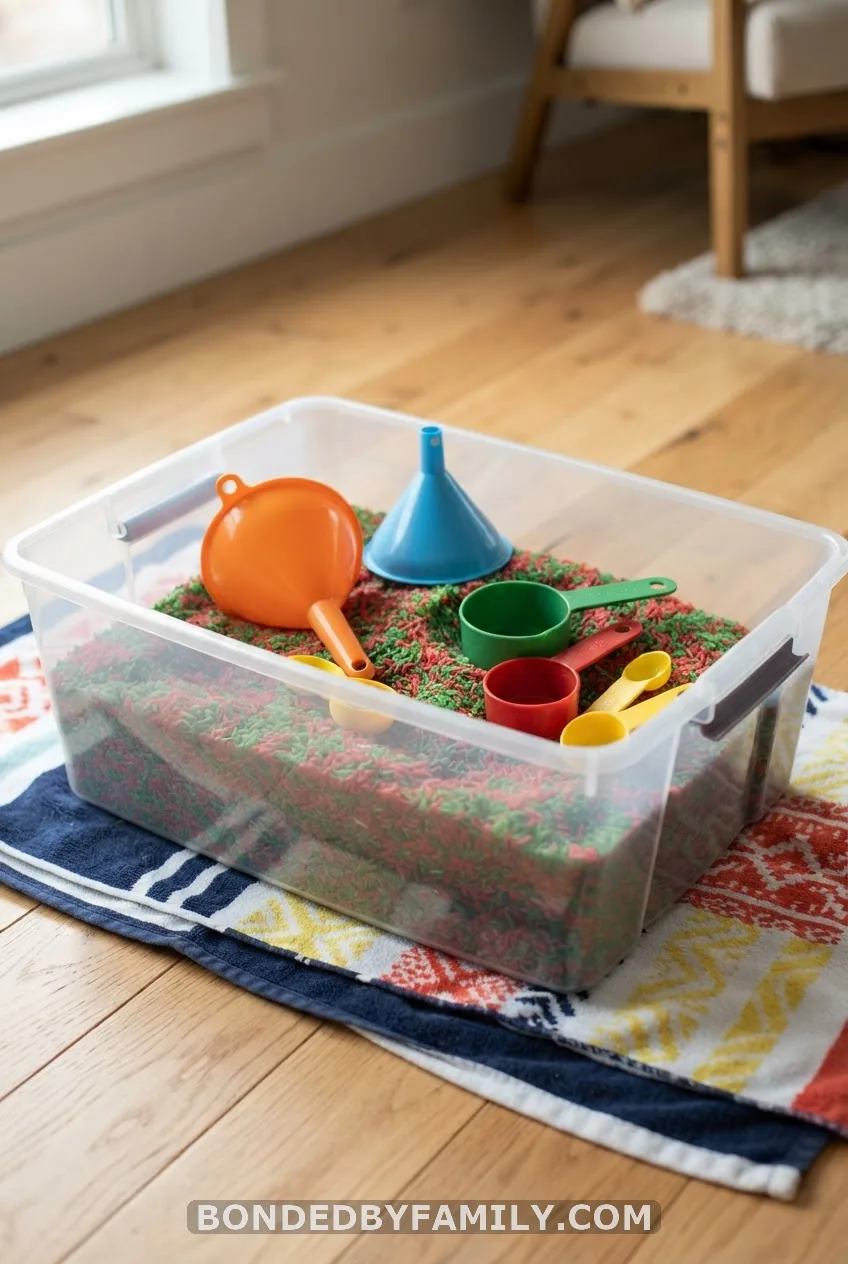
This is the Pinterest classic, and it earns the spot. Dyed rice is cheap, it pours like water, and it lasts for years.
Materials (about $3 to $4 total):
– 4 cups white rice
– 4 tablespoons white vinegar
– Red and green food coloring (Spice Supreme works well)
– Two gallon zip bags
– One cookie sheet
– 28-quart clear under-bed bin
Steps:
1. Put 2 cups of rice and 2 tablespoons of vinegar in each bag.
2. Add 10 or so drops of one color per bag. Use more for deep color.
3. Seal and shake for a full minute.
4. Spread each color on a cookie sheet lined with parchment.
5. Let it dry for about an hour. Stir once halfway.
6. Pour both colors into the bin.
Why the vinegar matters
Vinegar helps the dye grip the grain. Skip it and the color rubs off on little hands and shirts.
Common mistakes
Pouring rice in while it’s damp. It clumps and can mold. Also, don’t fill the bin to the brim. Two inches deep leaves room to scoop without a flood.
Add funnels, cups, and a few wooden spoons. That’s the whole bin.
The catch:
Rice slips under sofas and into socks. Lay a beach towel or old shower curtain underneath, and keep a hand vacuum nearby.
2. Hot Chocolate Sensory Bin (Ages 2 to 4)
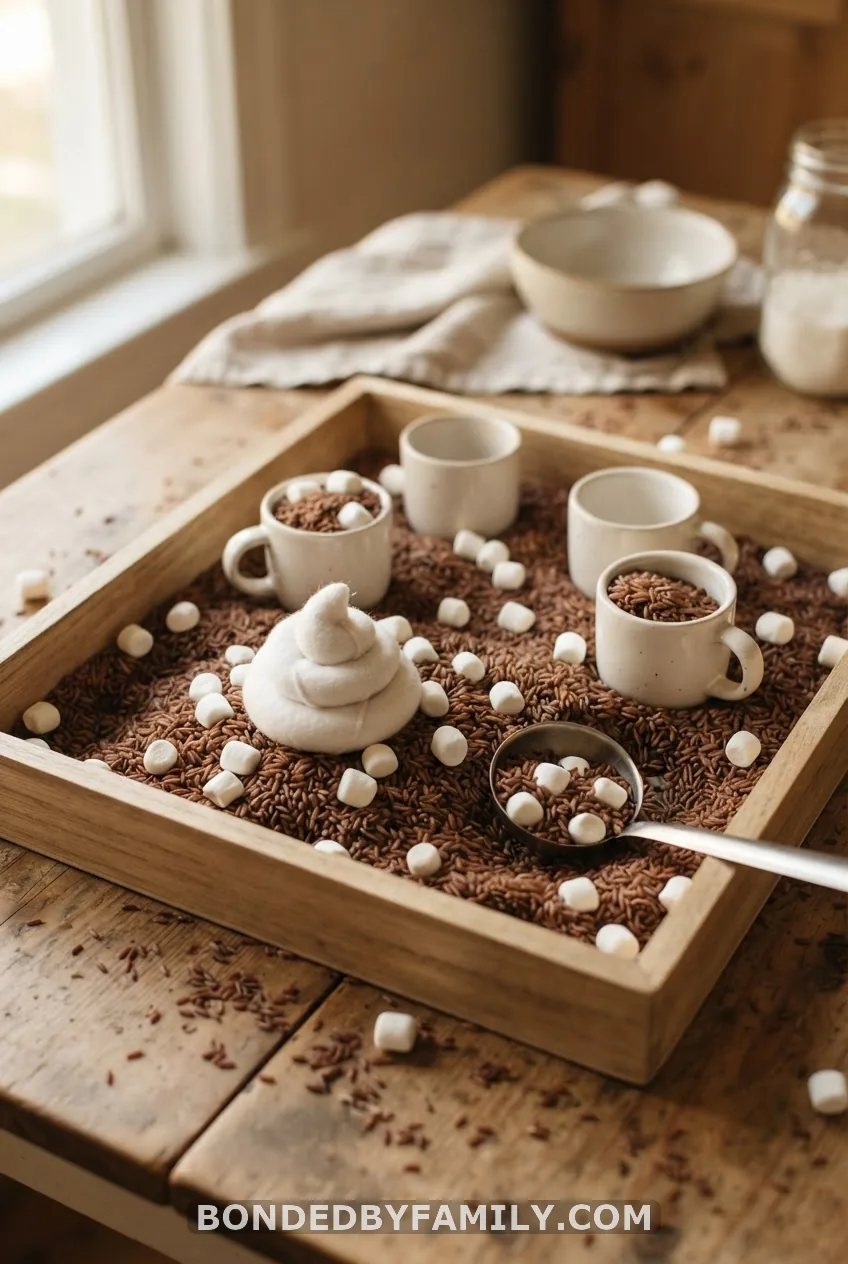
Toddlers love pretend play, and this bin gives them a cafe. Use brown rice or dry oats as the base and stir in a spoonful of cocoa powder for scent. Add mini marshmallows, a ladle, three small mugs, and felt “whipped cream” cut from a white sheet.
Kids scoop, pour, stir, and serve. You get language practice for free: “More cocoa, please!”
It’s the top-saved bin on Pinterest for a reason. It looks cozy, costs about $6 with mugs from the Dollar Spot, and needs no dyeing.
One caveat:
Marshmallows look edible because they are. Toddlers will eat them. Use plastic or felt ones if your child still mouths everything.
3. Christmas I-Spy Sensory Bin (Ages 3 to 6)
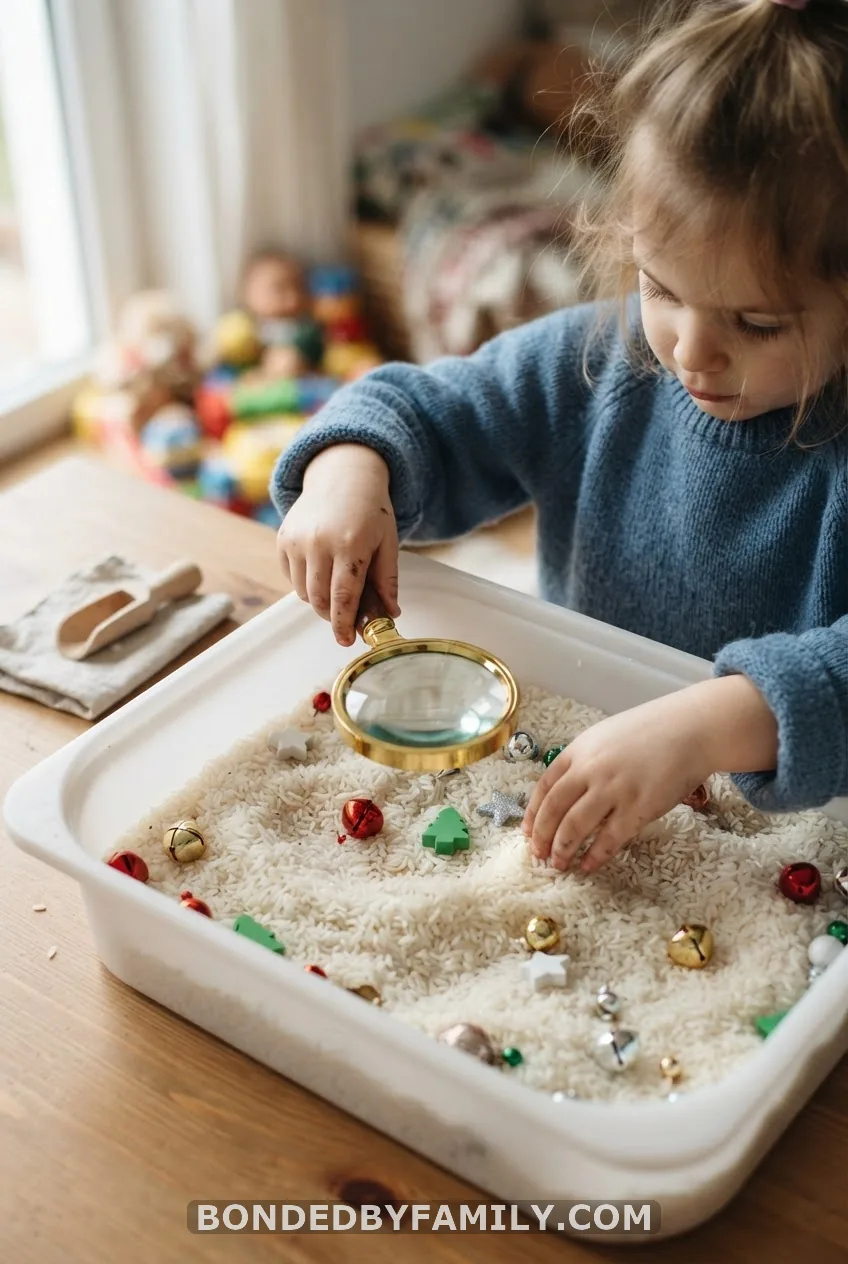
Bury mini ornaments, tiny tree erasers, and stars in white rice. Print a picture checklist and hand over a magnifying glass. Kids hunt, name, and tick off each find. Counting and color words come built in.
4. Dollar Tree Christmas Sensory Bin (About $9)
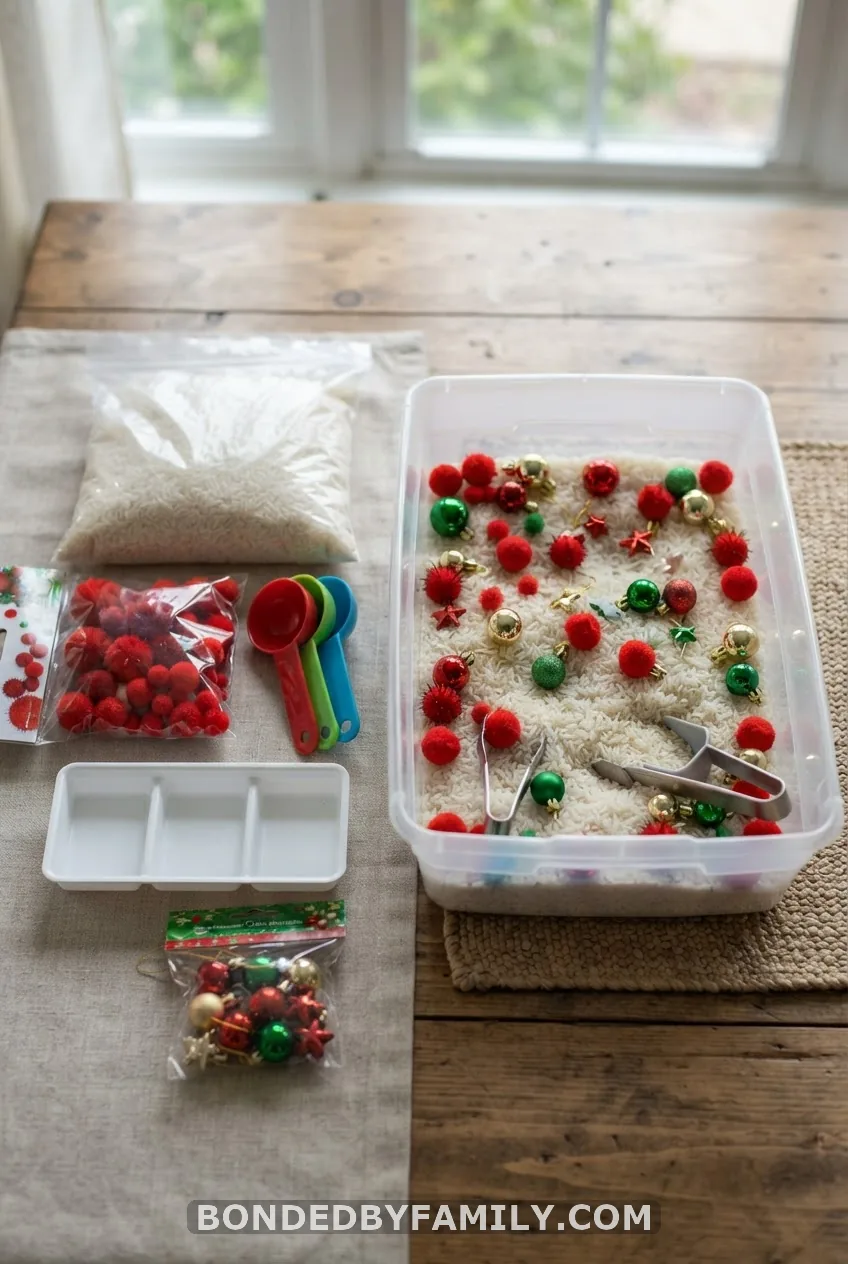
Here’s the real cost, so you can skip the vague “budget-friendly” talk.
Shopping list, nine one-dollar items:
– Two bags of white rice
– One bottle of food coloring
– Two plastic scoops
– One pack of mini ornaments
– One pack of red and green pom poms
– One plastic tray or bin
– One pack of small cookie cutters
Total: about $9, and you’ll have leftovers for a second bin. One haul builds three: rice, a pom pom scoop bin, and a cookie cutter sort.
Cost reality:
The filler runs under $3. Everything else comes back next year.
Skip anything with glued-on glitter or tiny detachable parts. They shed or snap, and they’re a choking risk for under-3s.
5. Winter Spice and Cranberry Bin (Ages 3 and Up)
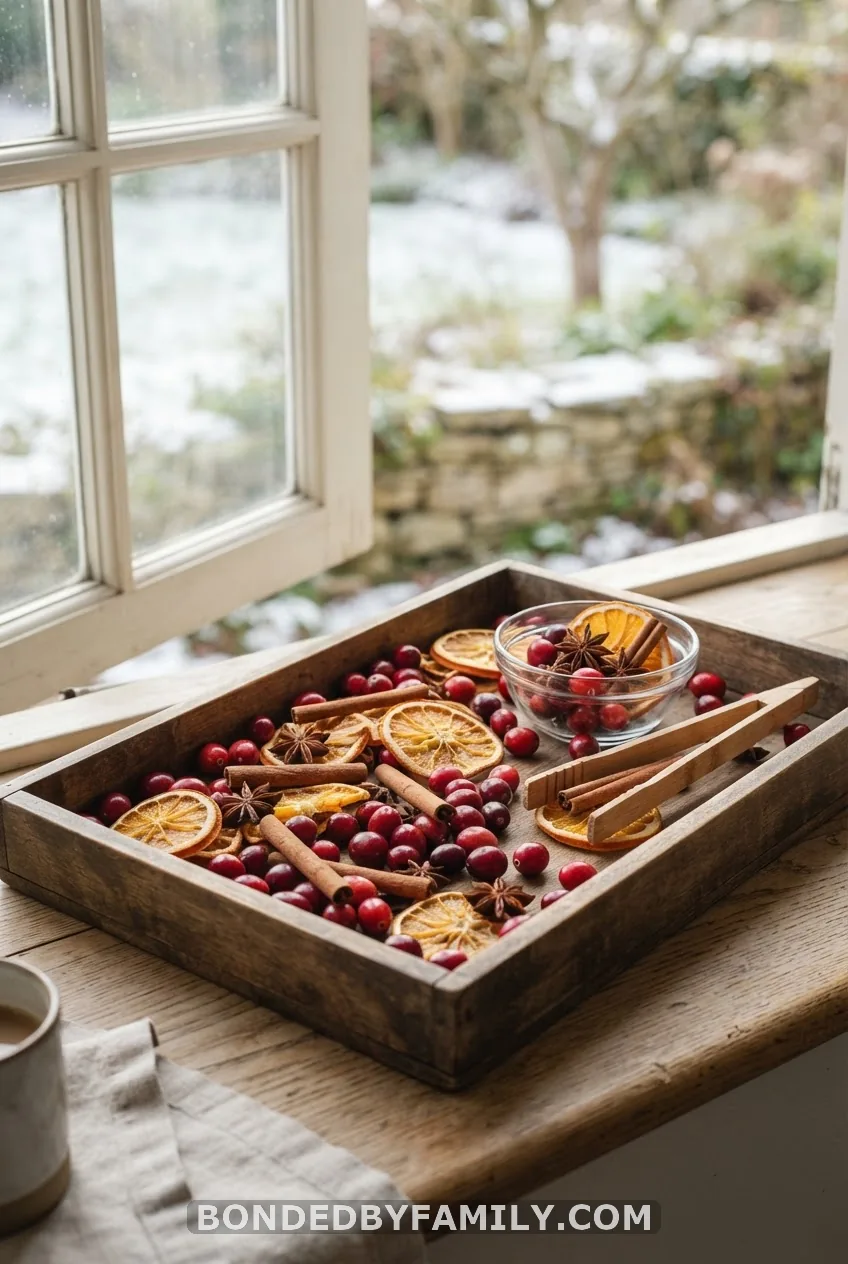
Smell does the work here. Fill a tray with whole cranberries, dried orange slices, cinnamon sticks, and star anise. Add tongs and small bowls.
The scent calms a wound-up child better than a lecture. For a wet version, float cranberries in a water bin with a few orange slices.
Dry spices last a week or two. Fresh cranberries and oranges go in the trash after a day or two.
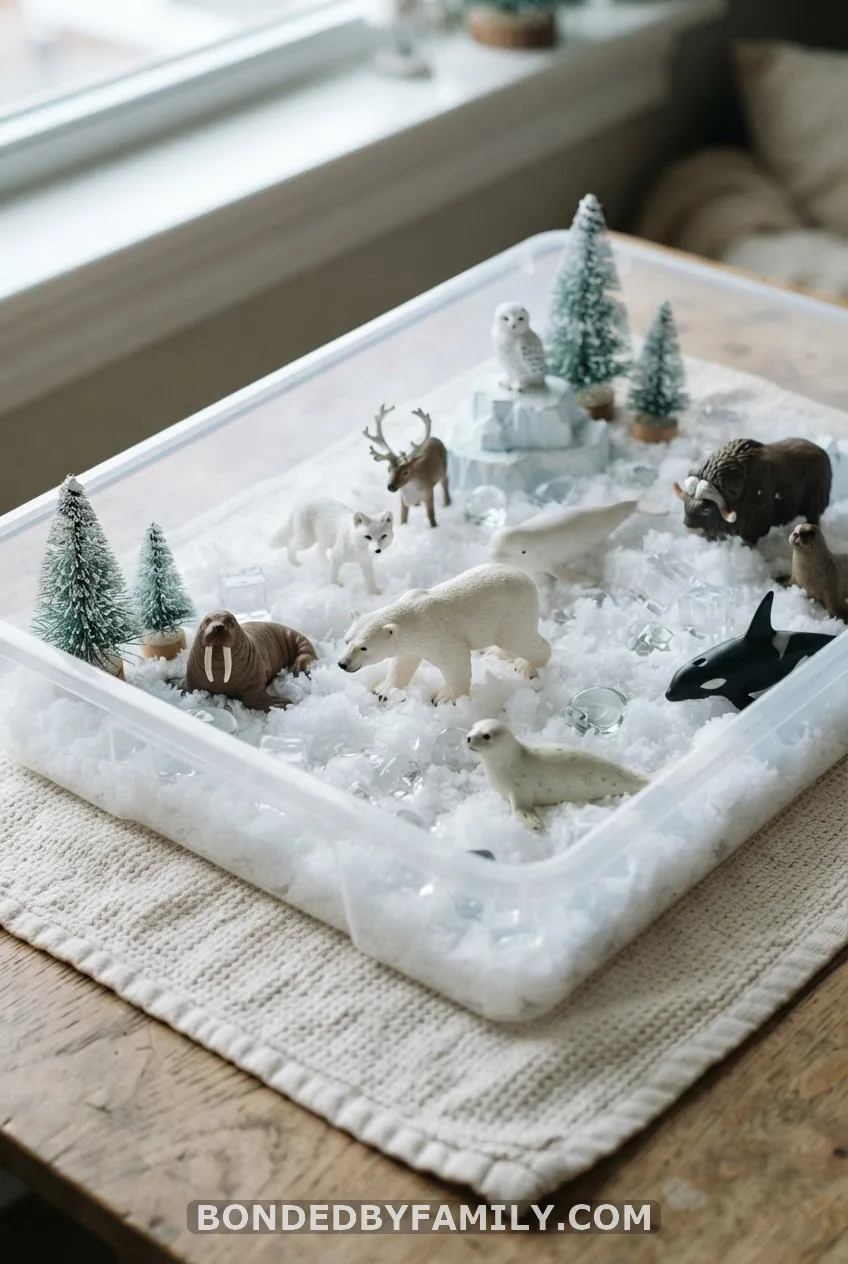
6. Instant Snow North Pole Bin (Ages 3 to 6)
What most people think: Snow bins are a quick win.
Reality: I once mixed Insta-Snow in a big bowl and left it overnight. By morning it had grown into a wobbly mountain that took over the counter, and I learned to measure. A tablespoon of powder makes about a cup of snow.
Use Insta-Snow, or mix baking soda with hair conditioner for a cold, moldable snow that’s cheaper. Add arctic animals, ice cubes, and bottle-brush trees.
Warm climate? Fill a bin with crushed ice or shaved ice from the freezer.
The catch:
Damp fillers grow mold fast. Dry snow on a tray in the sun, then toss it within three days.
7. Candy Cane Playdough Bin (Ages 3 to 5)
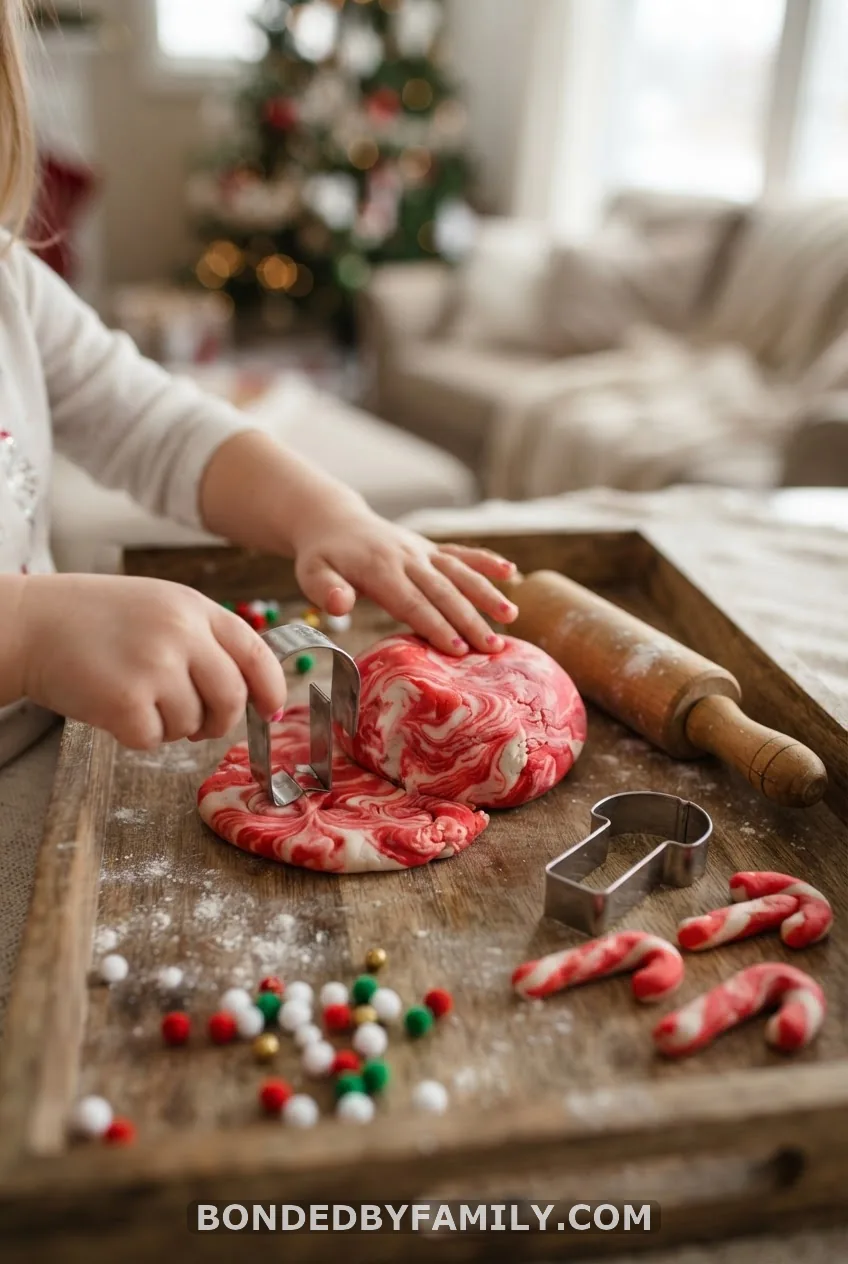
Mix a no-cook dough: 2 cups flour, 1/2 cup salt, 2 tablespoons oil, and hot water. Add red coloring and a few drops of peppermint extract. Roll, cut, and decorate with loose parts. Pack a jar as a gift.
8. Christmas Cloud Dough Bakery (Ages 3 to 6)
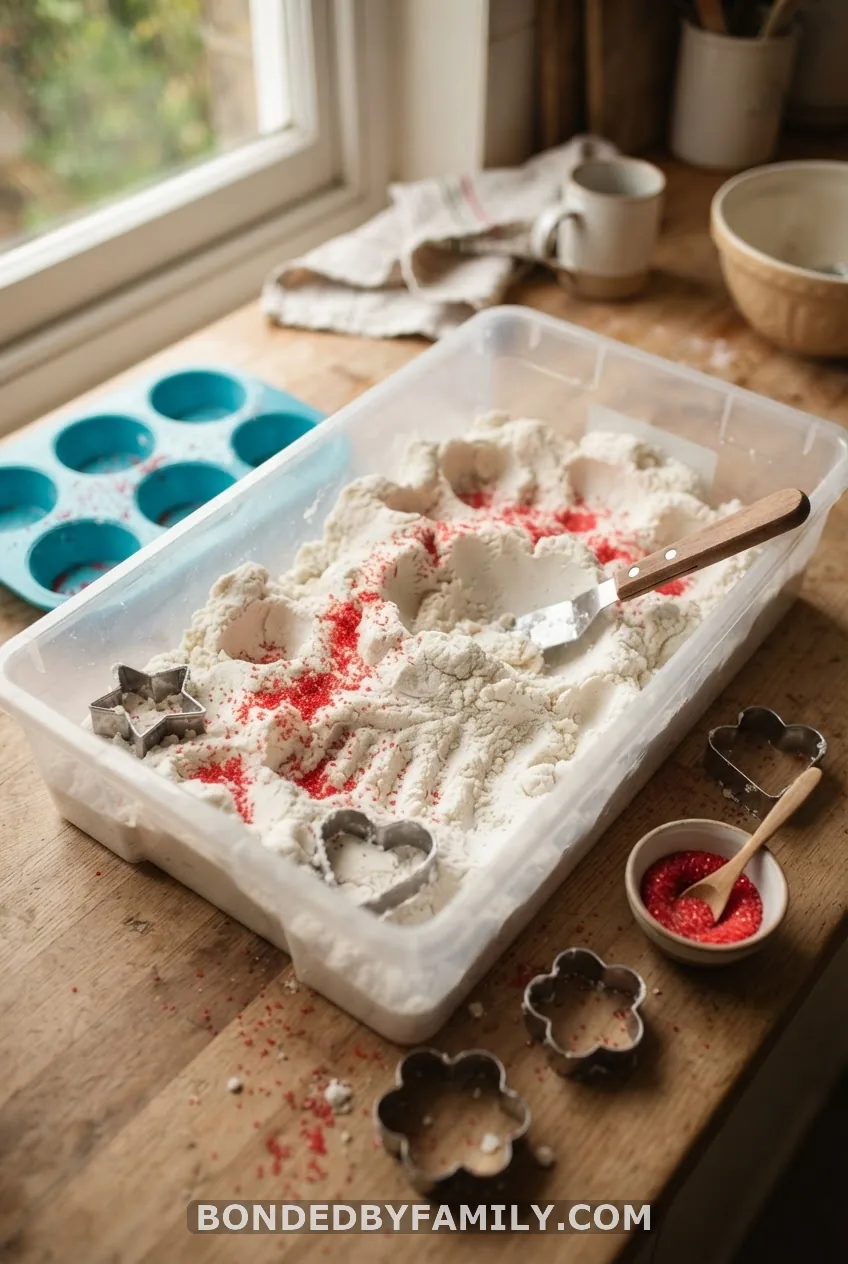
Cloud dough uses eight parts flour to one part baby oil or vegetable oil. It molds when squeezed, then crumbles. Kids love that.
Set up a pretend bake shop with a muffin tin, cookie cutters, and sprinkles. Talk through orders: “Two gingerbread men, please.”
Sweep it up with a dustpan and reuse it. Store it in an airtight container for a few weeks.
9. Jingle Bell Fine Motor Bin (Ages 3 to 5)
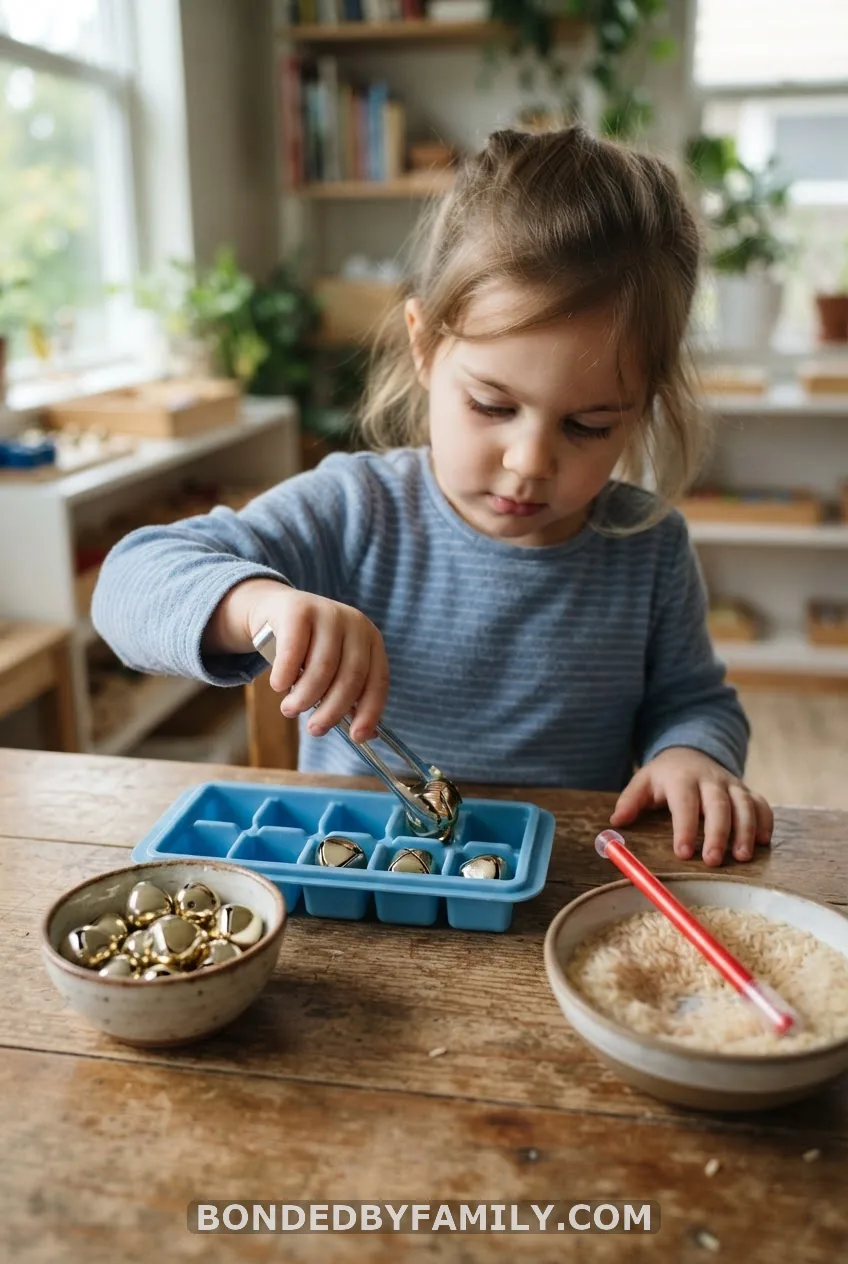
Hide jingle bells in a bin of rice. Kids pluck them with tongs and drop them into an ice cube tray. A magnetic wand works for steel bells, and the jingle rewards every catch.
Little hands get stronger with tongs, which helps with writing later. Younger kids can use big scoops. Kindergarteners can sort by size or count by twos.
Bells are a choking risk, so keep this one to ages 3 and up.
10. Christmas Lights Color Sort Bin (Ages 3 to 6)
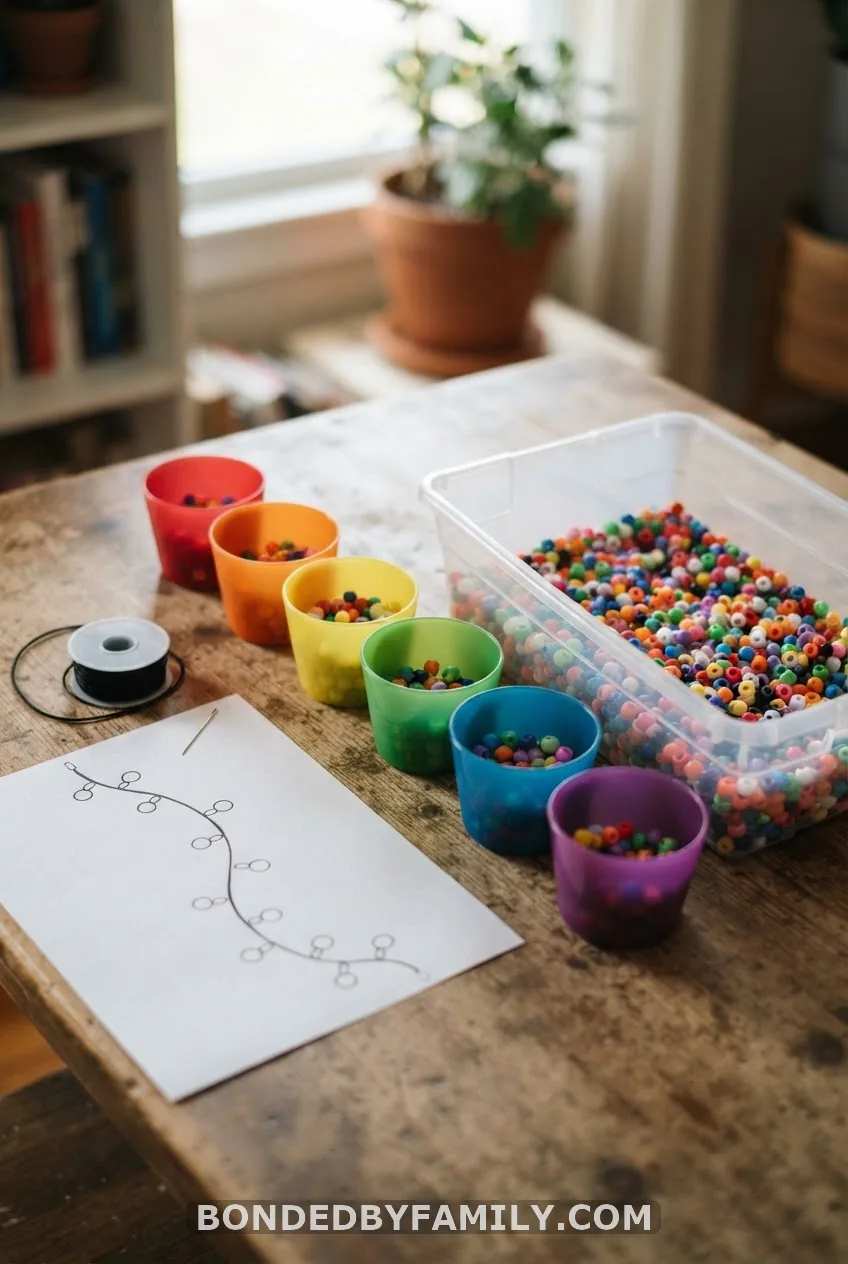
Line up cups in red, green, blue, and yellow. Kids sort beads, buttons, or colored rice into them. Kindergarteners can make patterns: red, green, red, green.
11. Taste-Safe Bins for Babies and Under-3s (6 Months and Up)
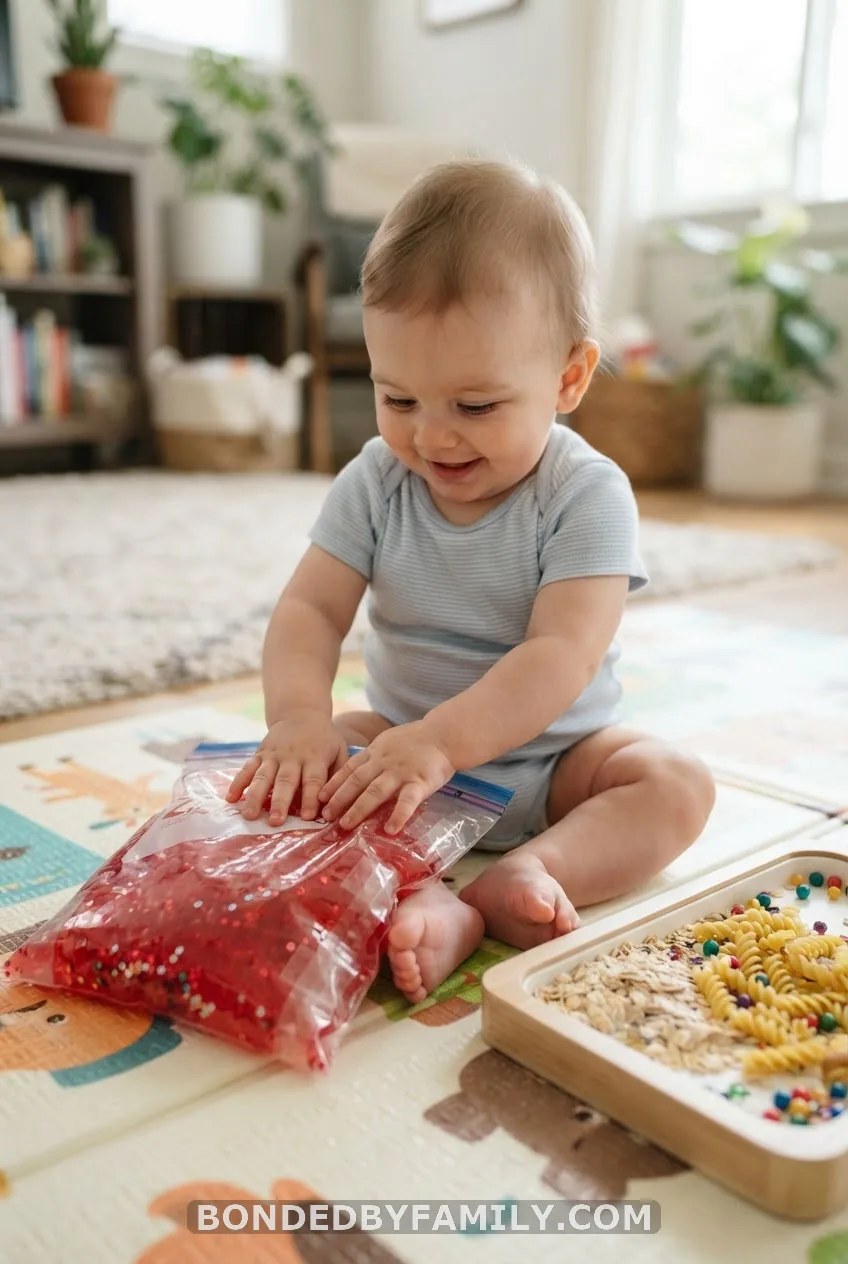
Every competitor skips this, so let me give it real space. Babies mouth everything. Plan for that.
Safe fillers: cereal, dry oats, yogurt melts, cooked and cooled pasta, gelatin, plain water.
For 6 months and up: Fill a zip bag with hair gel (or water and red coloring), tape all four edges with painter’s tape, and press it to the floor. Baby pats and pokes with zero mouth risk.
Skip these: water beads, buttons, jingle bells, unpopped popcorn, and anything that fits through a toilet paper tube.
An adult stays within arm’s reach the whole time. No exceptions.
One caveat:
Edible does not mean choke-proof. Whole cereal is fine for most toddlers, but dry oats can be dusty. Watch the face, not the phone.
The Big Filler Cheat Sheet
Pin this one. Reusable: rice, beans, chickpeas, pasta, pom poms, felt, kinetic sand, cloud dough (for weeks). One season: cranberries, oranges, cooked pasta, baking soda snow. Age 3 and up only: water beads, jingle bells, buttons.
How to Keep One Bin Feeling New All December
You don’t need eleven bins. You need one filler and a calendar.
- Week 1: Rice with scoops and funnels.
- Week 2: Add foam letters and numbers for hunting.
- Week 3: Swap the tools for tongs and tweezers.
- Week 4: Add a themed card set, like a picture checklist.
Store filler in labeled zip bags between weeks. Rotate three bins instead of building twelve. When interest drops, change the tool, not the filler.
Set-Up, Clean-Up and Storage
A clear 28-quart under-bed bin holds the most for the least. An IKEA Flisat table works if you’ll use it every week. A dollar-store tray is fine for one-time play.
Lay a beach towel or shower curtain under any bin. Vacuum dry fillers. Wet ones go in the trash.
Store dry rice, beans, felt, and pom poms in labeled bags for next December. You buy once.
Frequently Asked Questions
What is the best filler for a Christmas sensory bin?
Dyed rice, because it’s cheap and lasts years. Beans, chickpeas, cloud dough, and instant snow are good swaps depending on age.
Are Christmas sensory bins safe for babies?
Only with taste-safe fillers and constant supervision. Use sealed sensory bags for babies under one year, and skip bells, buttons, and water beads.
How do you dye rice for a Christmas sensory bin?
Mix 2 cups rice, 2 tablespoons white vinegar, and food coloring in a zip bag. Shake, spread on a cookie sheet, and dry about an hour.
How much does a Christmas sensory bin cost?
Most run $5 to $15 at Dollar Tree or the Dollar Spot. The filler is under $3 and can serve for several seasons.
What age are Christmas sensory bins for?
They work from about 6 months through kindergarten. Babies get sealed bags, toddlers get big scoops and chunky pieces, and older kids add letters, numbers, and sorting.
Which Bin Are You Setting Up First?
Will it be the cozy hot chocolate cafe, or the red and green rice that started it all?