Every baby registry has a bouncer, a jumper, and some kind of “activity center” with flashing lights. Here’s my contrarian take: most of that stuff is a waste of floor space.
Gross motor activities for infants don’t require a single purchase beyond what’s already sitting in your linen closet. A towel, a laundry basket, some painter’s tape – that’s the whole toolkit. What actually moves the needle is time on the floor, repeated in short bursts, matched to where your baby is developmentally.
This list gives you fifteen activities, sorted month by month from head lift to first cruise, with the exact household item to grab and the cue that tells you it’s working. No Pikler triangle required.
What Counts as a Gross Motor Activity for an Infant?
Gross motor skills use the big muscle groups – neck, trunk, arms, legs. That’s different from fine motor skills, which are the small stuff: pincer grasp, finger feeding, stacking a block. When your baby lifts her head during tummy time, that’s gross motor. When she picks up a Cheerio between two fingers, that’s fine motor.
Every infant gross motor milestone follows roughly the same order: head lift, then rolling, then sitting, then pivoting on the belly, then crawling, then pulling to stand and cruising along furniture. You can’t skip steps, and you shouldn’t rush them. Tummy time is the foundation underneath all six – the American Academy of Pediatrics has said as much for years, and it’s still the single most underused activity in most households.
Short and frequent beats long and forced. Three five-minute sessions spread through the day build more strength than one twenty-minute marathon that ends in tears. Keep that ratio in mind as you work through the list below – this isn’t a toddler list with running and jumping. Everything here fits inside the 0-12 month window.
Your Free Baby Movement Kit: Ten Things You Already Own
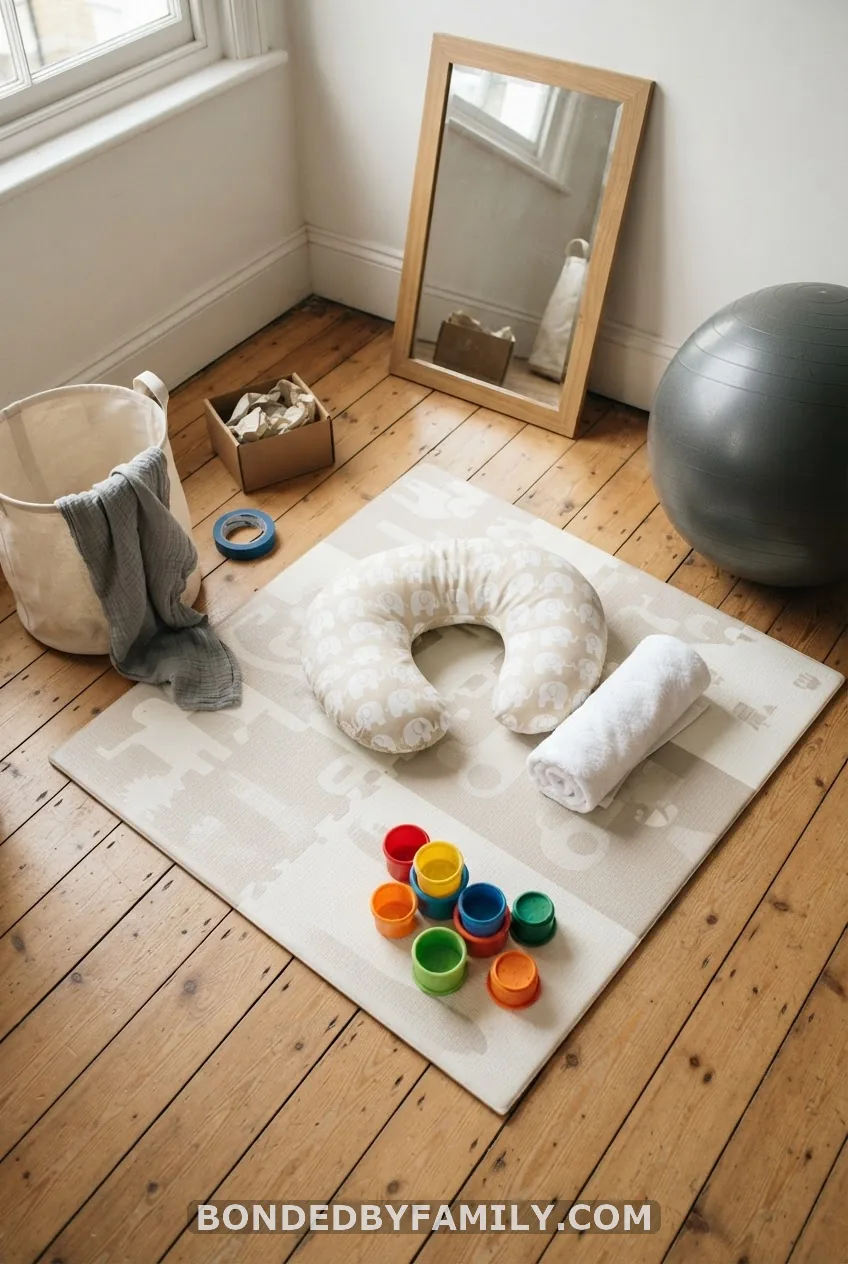
Grab a foam play mat or thick blanket, a Boppy or nursing pillow, a couple of rolled bath towels, a roll of painter’s tape, a laundry basket, a cardboard box (the diaper box works great), a mirror, a muslin swaddle or scarf, an exercise ball, and stacking cups or soft balls. That’s the entire kit. You don’t need a Pikler triangle or a scooter board at this age – those come later, if ever.
Before you start any session: clear a three-foot radius of hard corners and cords, work barefoot so tiny toes get grip on the mat, and never set up on a bed or couch. Stay within arm’s reach the whole time. A ten-minute “movement zone” fits in a studio apartment or a daycare corner – just roll out the mat, drop in two or three items from the kit, and rotate them daily so the same box of stuff feels new.
0-3 Months: Head Control & Tummy Time
1. Chest-to-Chest Tummy Time

Lie back on the couch or bed at a 45-degree angle and lay your baby belly-down on your chest. Gravity is gentler here than on the floor, so most newborns tolerate it longer. Narrate what’s happening – “you’re lifting your head, look at you” – while she works to see your face. Start with sixty seconds, a few times a day, and build from there.
2. High-Contrast Mirror Card Prop
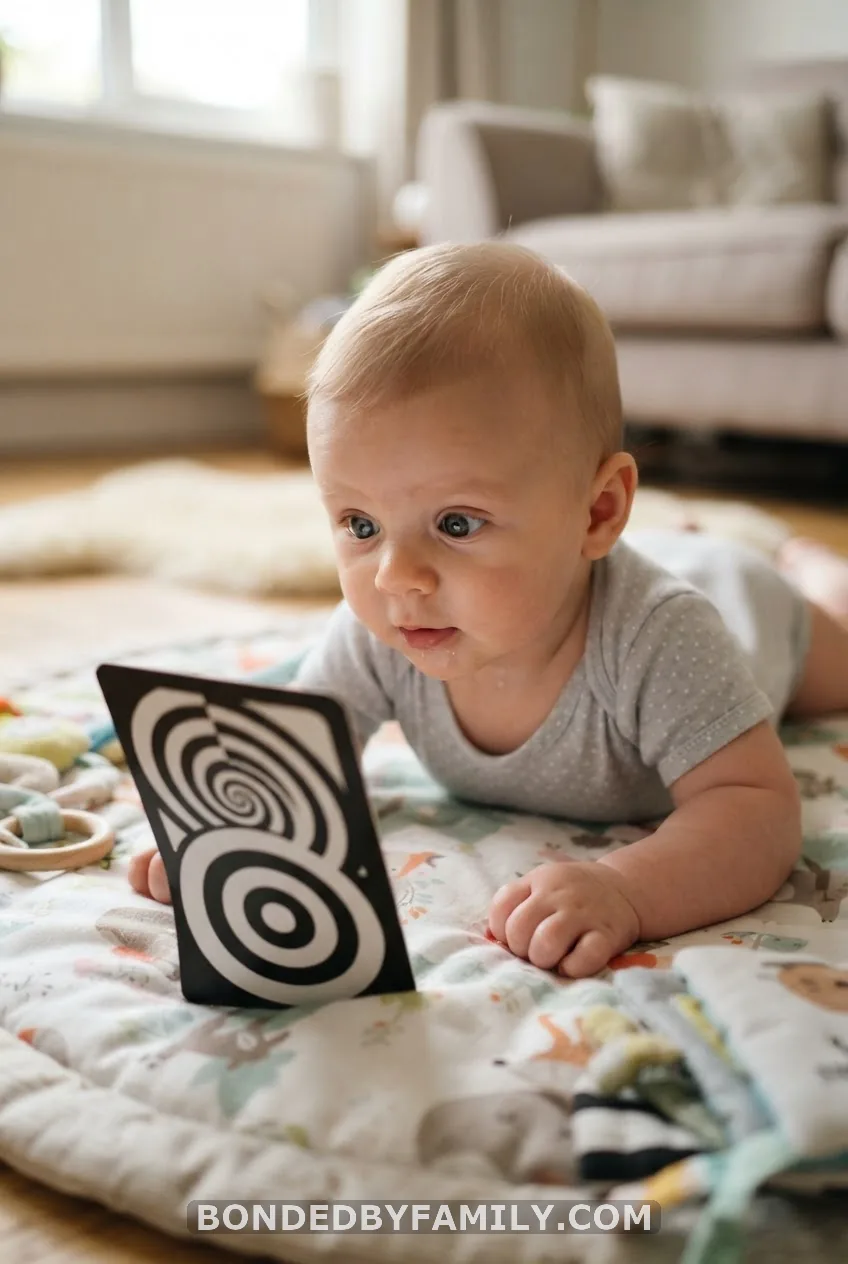
Newborn eyes see high-contrast patterns before they see soft pastels, which is why those black-and-white cards work better than the plush toys everyone buys. Prop one about eight inches from her face, or use a small unbreakable mirror. Watch for her turning her head side to side to track it – that’s the neck-strengthening rep you’re after, disguised as play.
3. Rolled-Towel Tummy Time Ramp
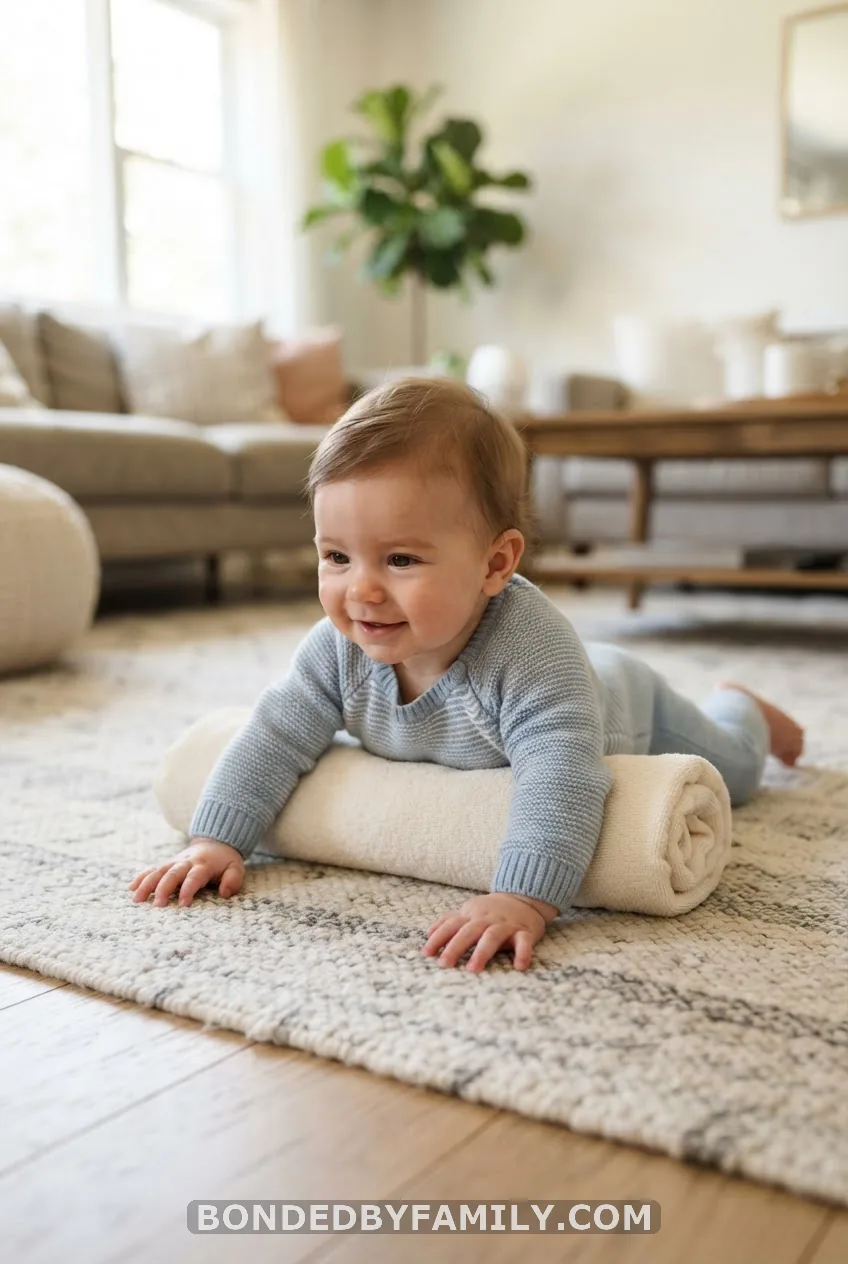
Some babies scream the second you set them flat on their belly. A rolled bath towel tucked under the chest and armpits creates a gentle ramp that takes pressure off the neck and makes lifting the head feel almost accidental. Slide it out gradually over a few weeks as strength builds. This one small towel fix has rescued more tummy-time-hating babies than any toy I’ve tried.
4-6 Months: Rolling & Reaching
4. Roll-and-Reach with a Toy
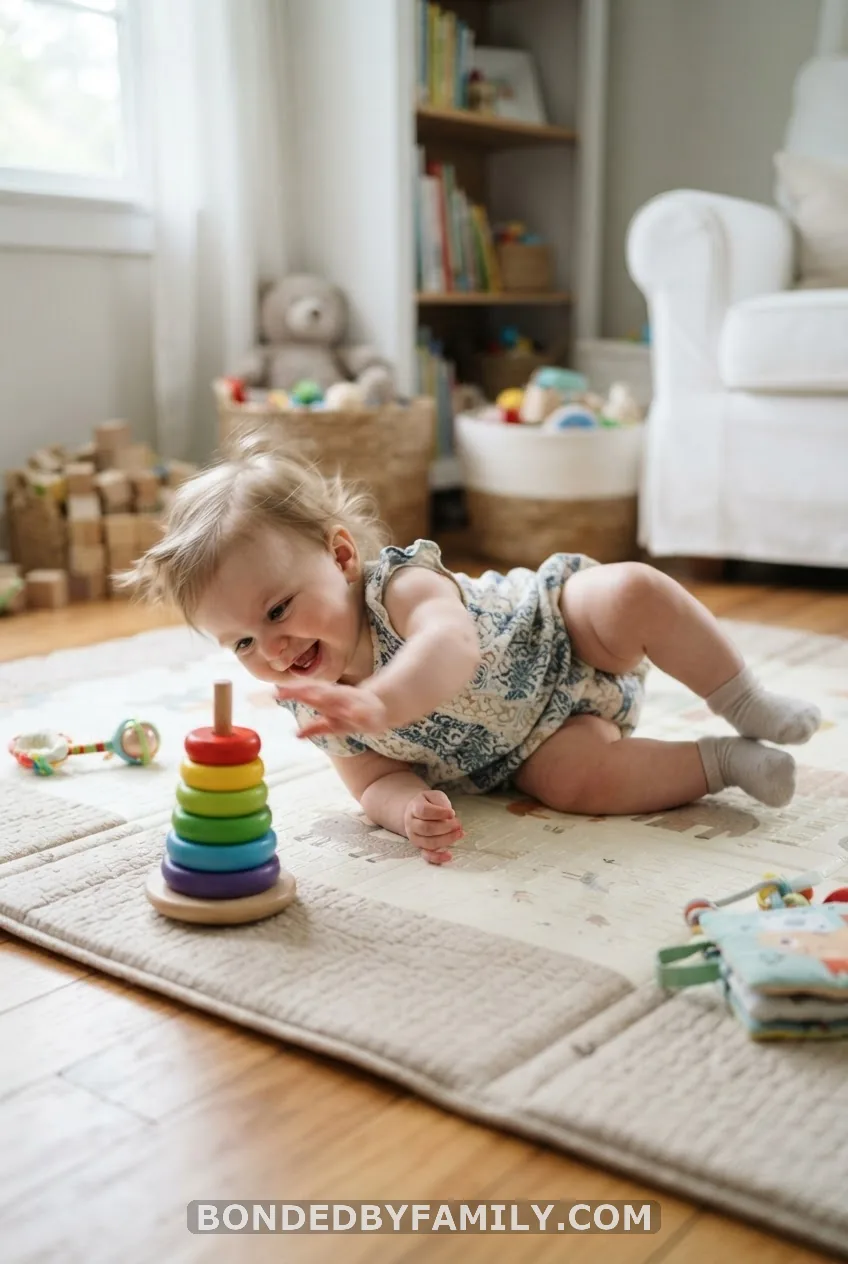
Place a favorite toy – a set of stacking cups works well because of the noise – just past her fingertips while she’s on her back. The reach shifts her weight, and the weight shift teaches the body the exact sequence it needs for a full roll. Move the toy a little farther each session as she gets stronger. Watch for a deliberate reach and, eventually, a full roll to grab the prize.
5. Balloon or Ball Kick
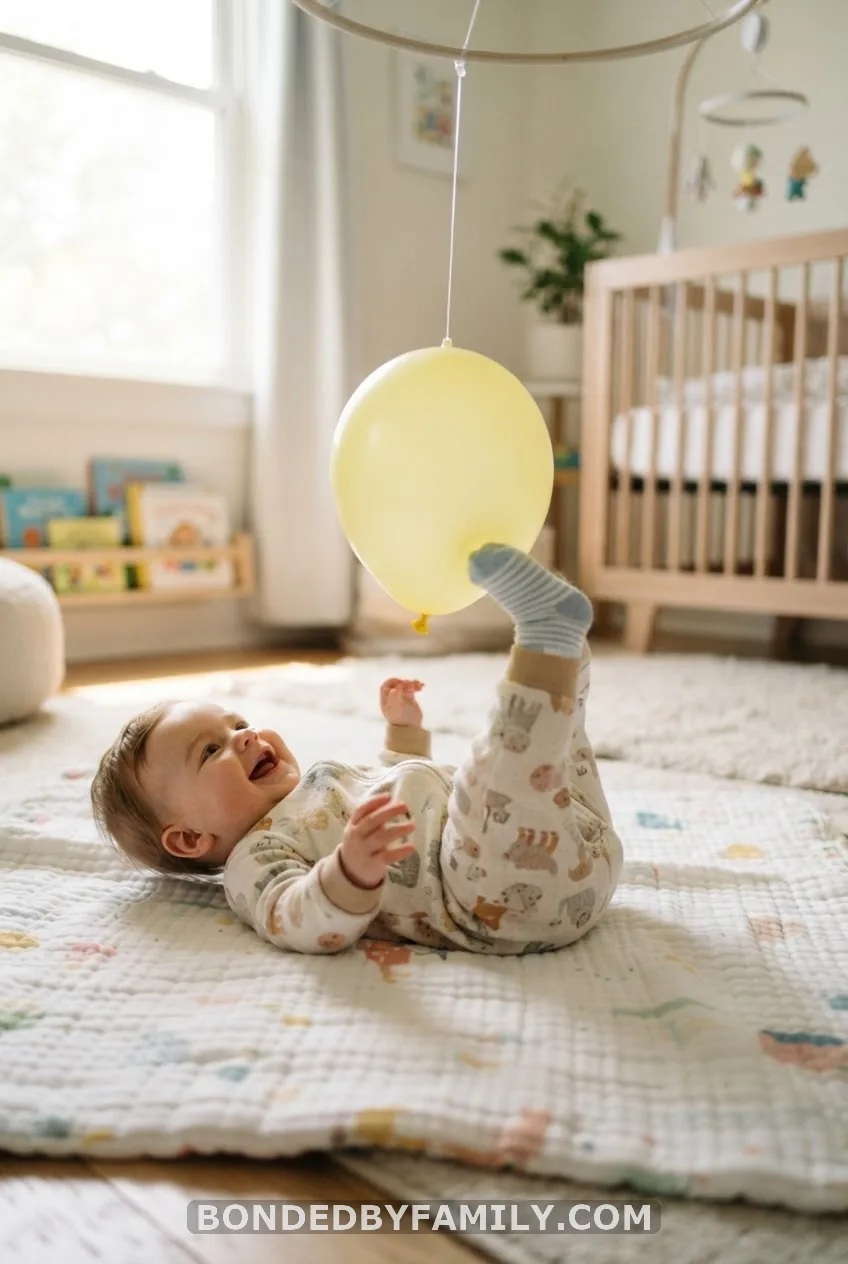
Blow up a balloon (tie it off and supervise closely – deflated balloons are a choking hazard) or use a soft ball, and hold it a few inches above her feet while she’s on her back. The kicking motion fires the hip flexors and core in a way that’s almost impossible to replicate lying still. Two minutes, a few times a day, is plenty.
6. Pull-to-Sit with a Head-Lag Check
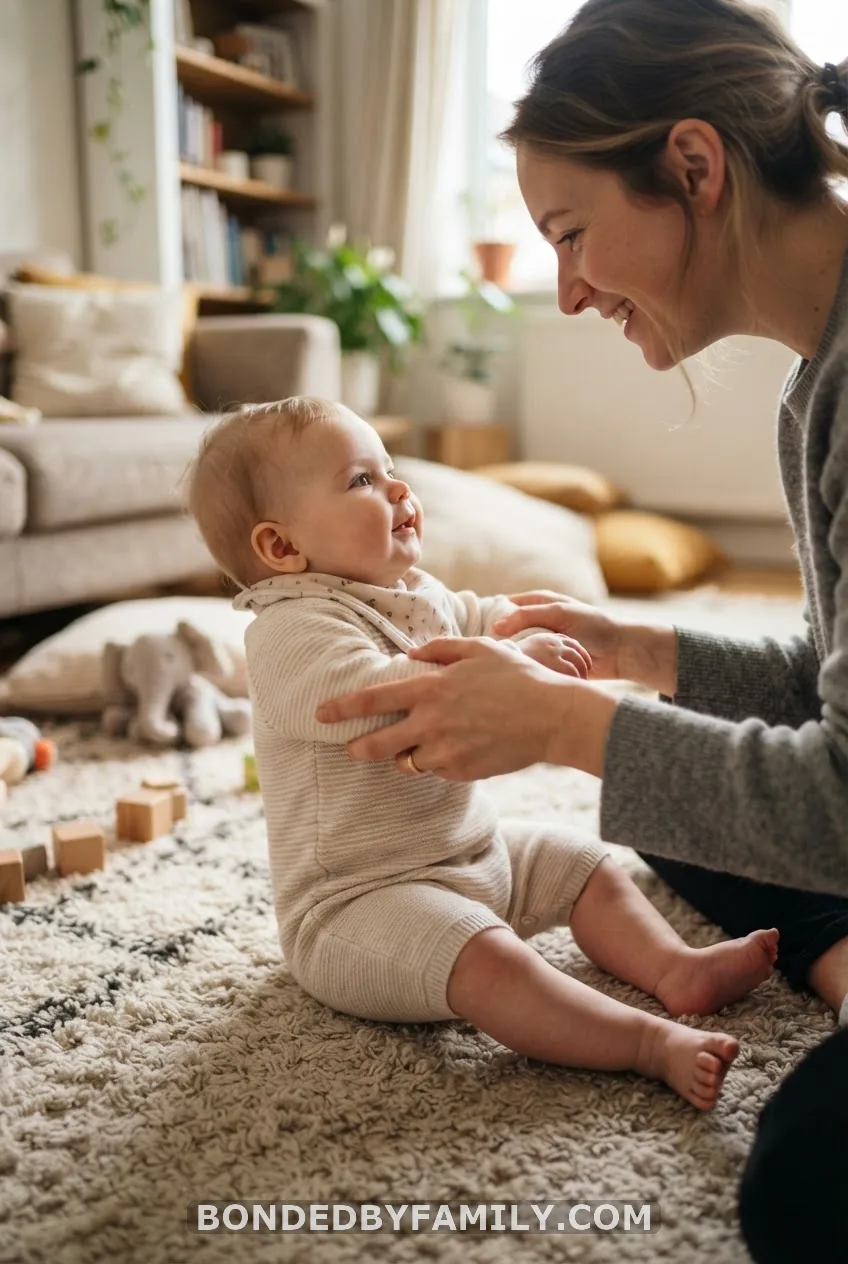
Here’s what most parents assume: pull-to-sit is just a cute party trick for the camera. The reality is it’s a diagnostic tool disguised as an activity. Hold both hands and slowly pull your baby from lying flat to sitting. Around four months, her head should come up with her body instead of flopping backward – that’s called head lag, and by six months it should be mostly gone. Do this gently, a couple of times a day, and you’re building core strength while quietly tracking a real milestone at the same time.
7-9 Months: Sitting, Pivoting & Pre-Crawling
7. Texture Crawl Strip
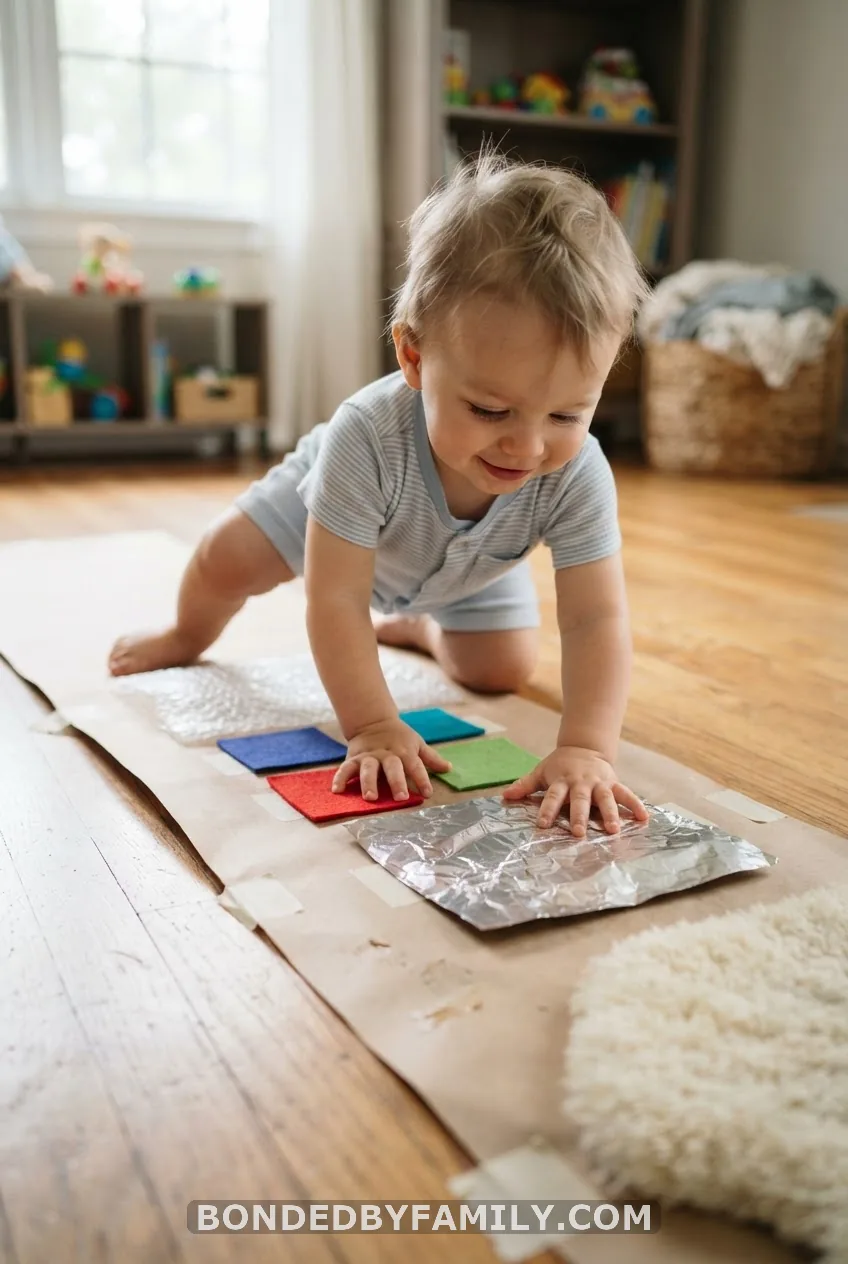
This is the one activity worth building properly, because it does double duty for sensory input and pre-crawling strength.
Materials, roughly $5 total: a roll of butcher paper (or an old flattened cardboard box), bubble wrap, a sheet of felt, aluminum foil, and painter’s tape.
Step-by-step: Roll out four to six feet of butcher paper. Tape down a section of bubble wrap, then a strip of felt, then a sheet of foil, then a leftover fuzzy bath mat square, spacing each texture about a foot apart. Tape every edge down flat – loose corners are the number one hazard here. Set your baby at one end on her belly and place a toy at the far end.
Why this works: crawling requires the brain to process unfamiliar sensory input from the hands and knees while planning a movement sequence at the same time – what occupational therapists call praxis. A flat, boring mat gives the brain nothing to sort through. Varied texture forces that sorting to happen, which is exactly the skill crawling depends on.
Common mistakes: using tape that curls up within a day (masking tape fails here – stick with painter’s tape or packing tape), spacing textures too far apart so the game gets boring, and leaving foil unfolded at sharp edges. Trim every foil edge before taping.
Watch for weight shifting onto flat hands, rocking on all fours, and eventually a full commando crawl toward the far end.
8. Supported Sitting in a Laundry Basket

Set a shallow laundry basket on the mat and prop your baby inside with a few toys balanced on the rim. The curved walls give gentle support on all sides, which means fewer face-plants than sitting flat on the floor, and she still has to engage her core to reach for toys at the edge. Five minutes is enough.
9. Pillow-Climb Course
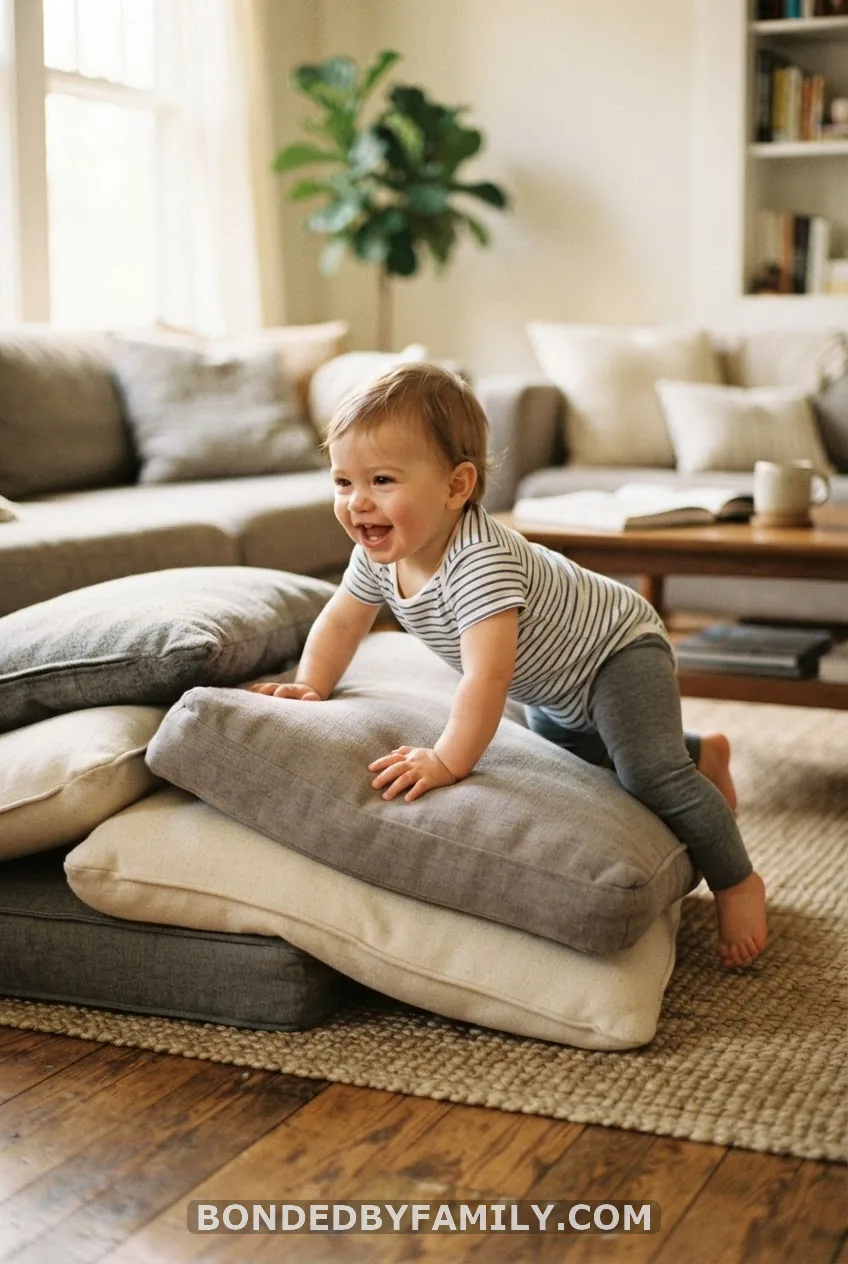
Stack two or three couch cushions into a low, wide hill – nothing taller than her hip height. This is quadruped play in its purest form: to get over the pillow, she has to shift weight from hand to hand and knee to knee, which is the exact motor pattern hands-and-knees crawling uses. Stay within arm’s reach the entire time, since tipping is common in the first few tries. Once she’s cruising over pillows without much thought, raise the height slightly.
10. Hallway Ball Grab
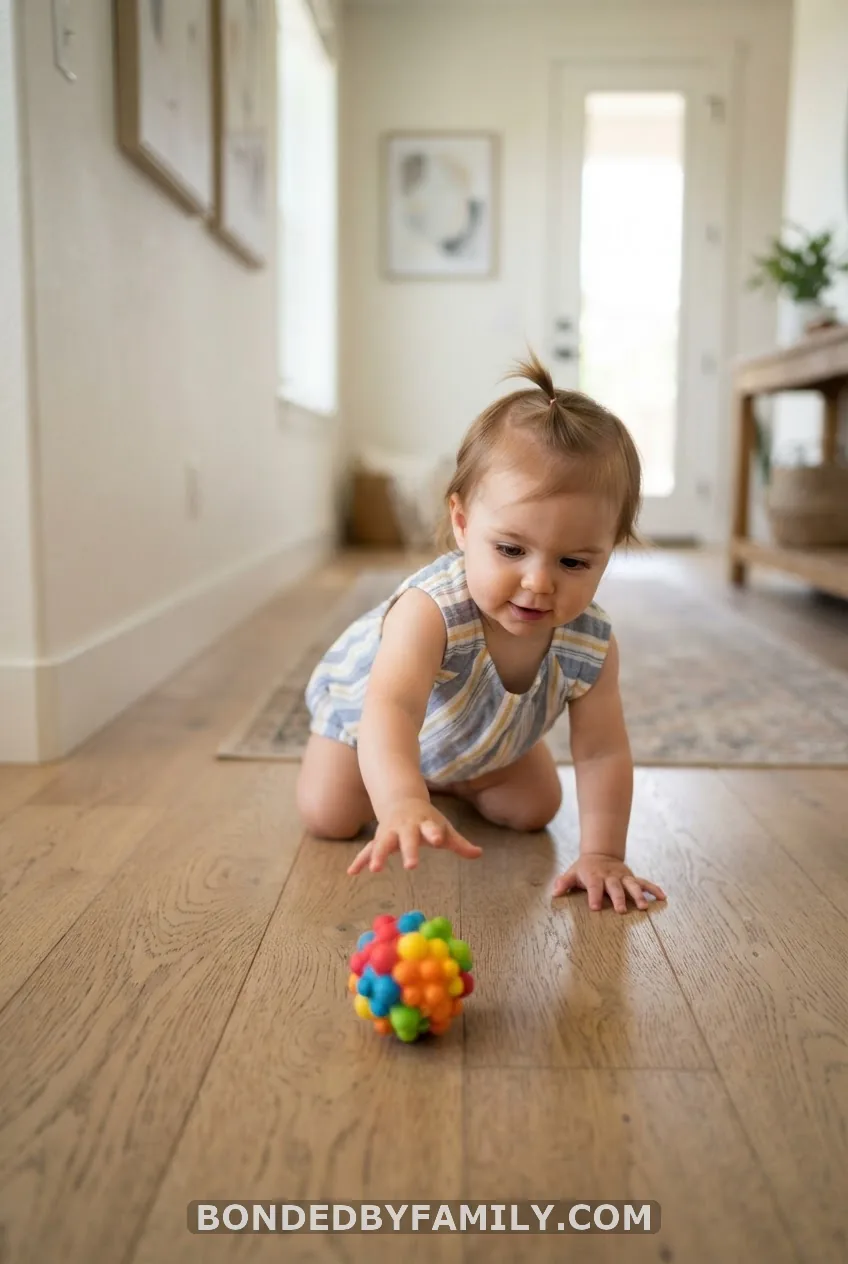
I first saw this trick on a Pinterest photo of a seven-month-old, and it’s become a staple in my own house since. Tape a row of lightweight balls to a hallway wall at your baby’s eye level while she’s sitting or on all fours. She has to crawl or scoot down the hallway to reach each one, batting them loose as she goes. The narrow hallway does something a wide-open living room can’t – it removes the option to wander sideways, so every bit of forward motion actually counts as crawling practice. My daughter went from army-crawling to a real hands-and-knees crawl inside about ten days of doing this most afternoons. Use painter’s tape so it peels off the wall clean.
10-12 Months: Crawling, Pulling Up & Cruising
11. Cushion Mountain
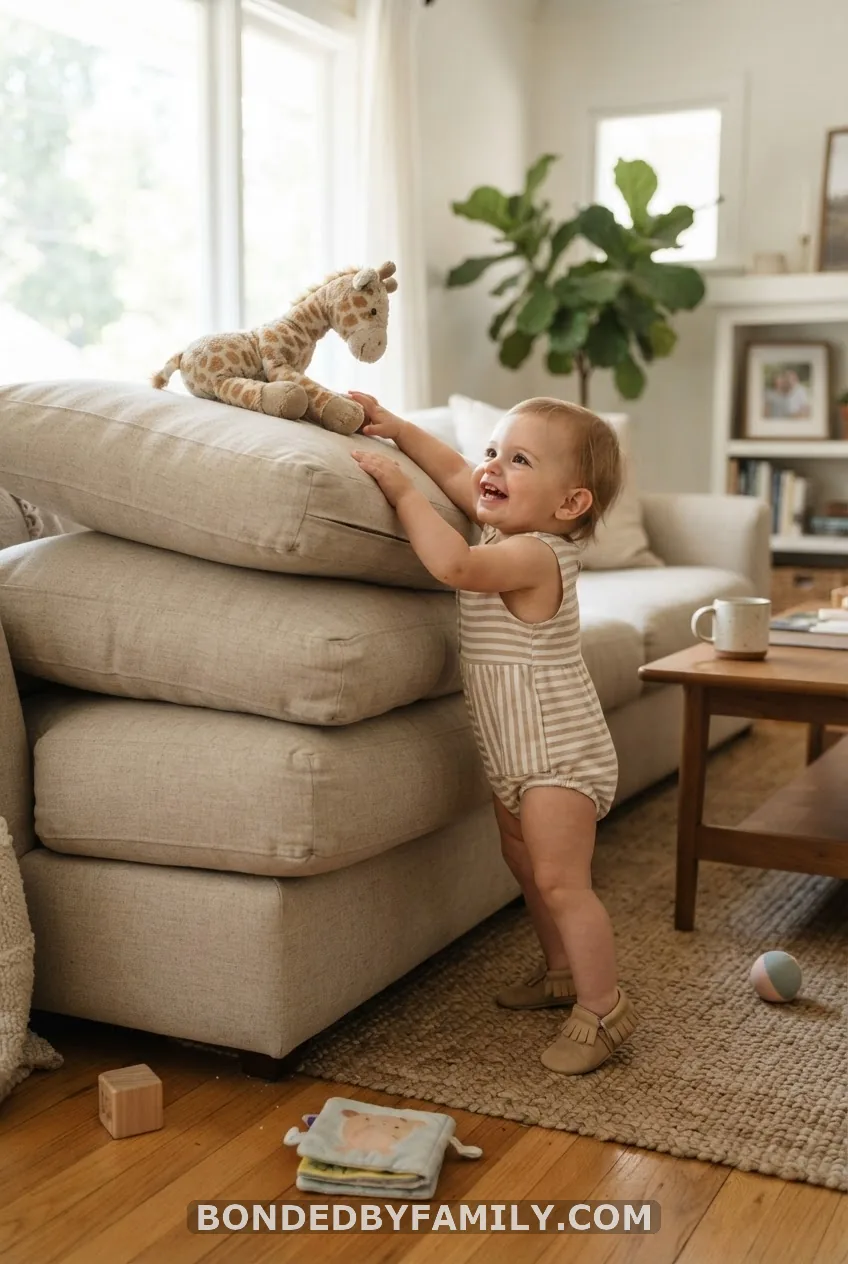
Stack cushions higher than the pillow-climb version and set a favorite toy at the summit. Getting to the top now means crawling, then pulling to stand against the pile, which layers two milestones into one game. Spot from the side, not the front, so you can catch a backward tip.
12. Sofa Cruising with Tape Flags
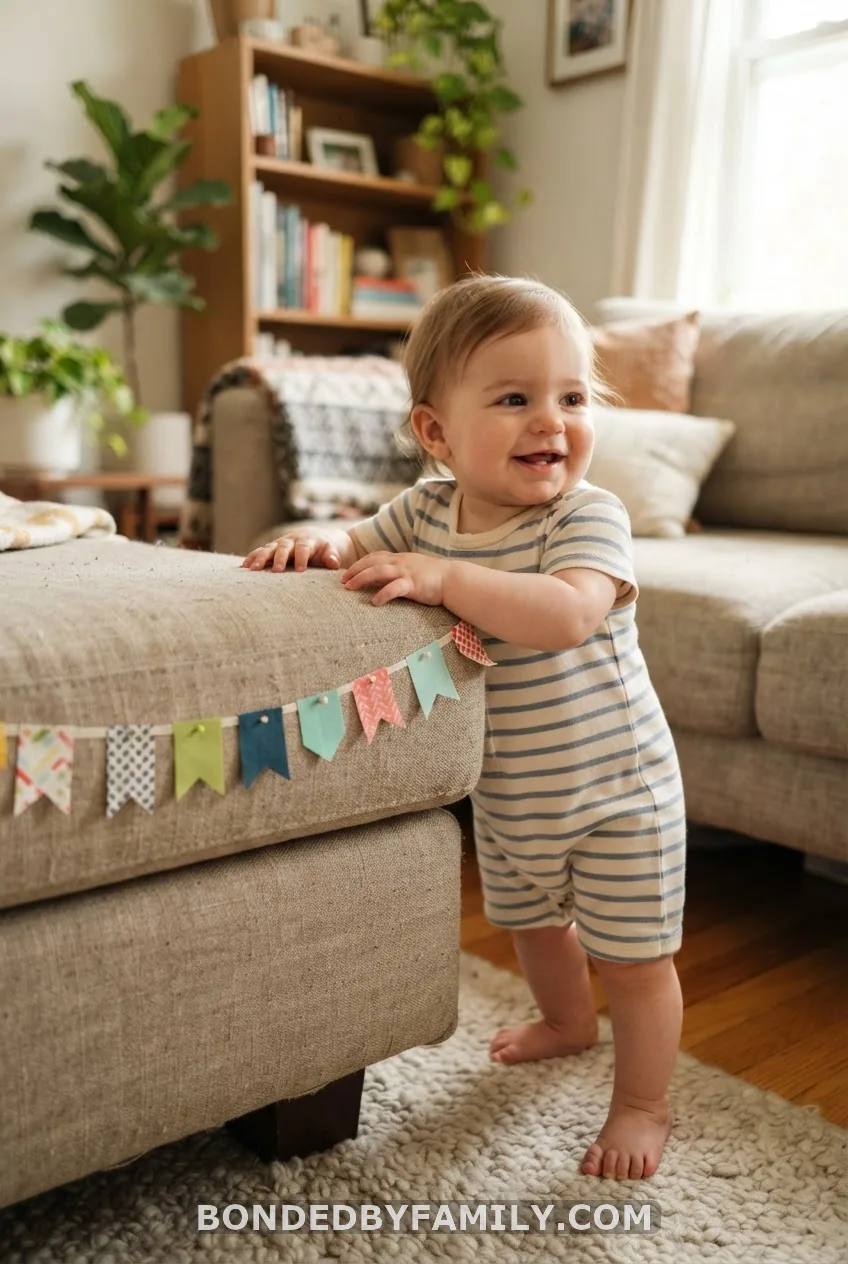
Stick small strips of painter’s tape shaped like little flags along the front edge of the sofa, spaced eight to ten inches apart. Your baby cruises sideways along the furniture chasing each flag, which turns aimless sidestepping into a game with a clear finish line. Peel and re-stick the flags farther apart each week as her steps get more confident.
13. Push-and-Chase with a Box
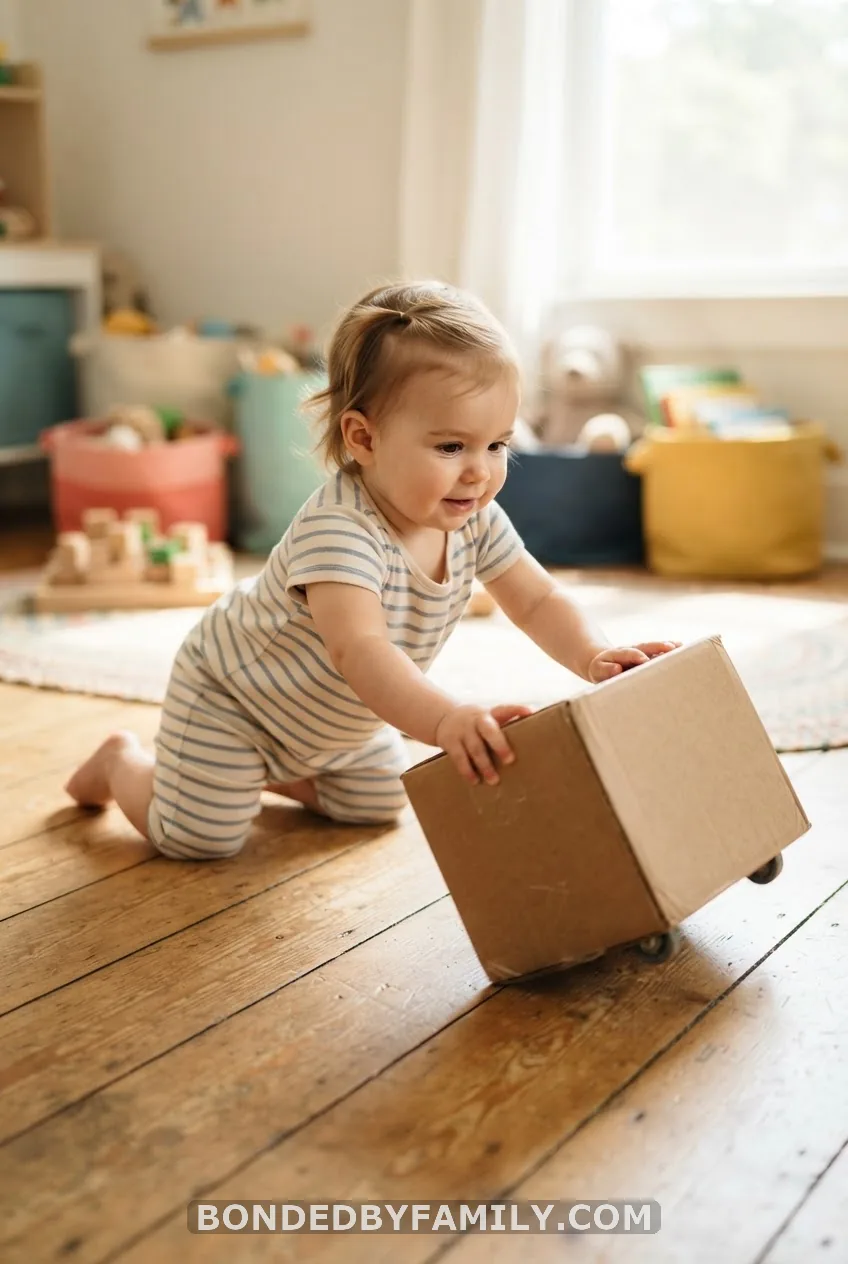
Flip a cardboard diaper box upside down and let her push it across the floor while crawling behind or beside it. The box gives just enough resistance to build shoulder and core strength without tipping like a real push toy might on carpet. It’s loud, it’s messy-looking, and it works.
14. Animal-Walk Preview
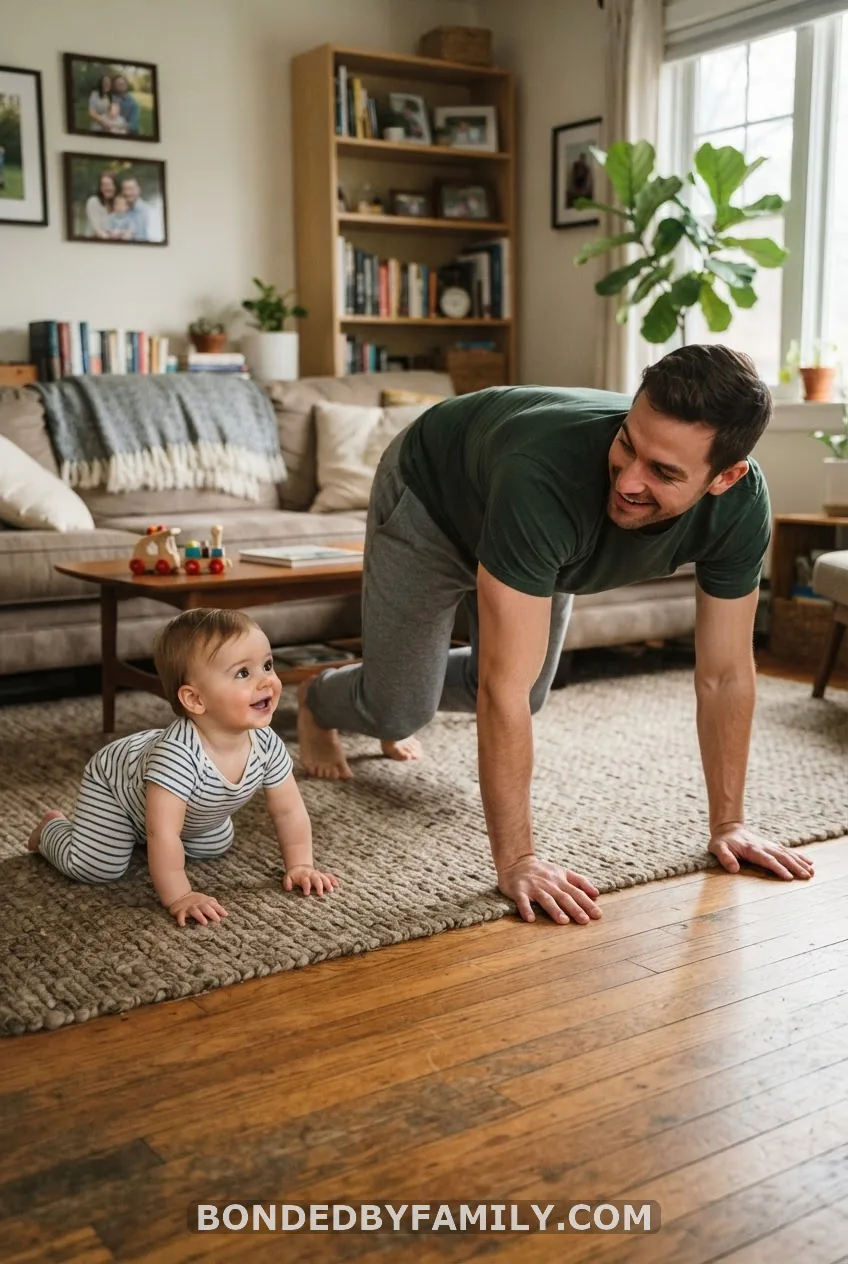
Full animal walks – the bear walk, the bunny hop, the crab walk – belong to toddlers, but ten-to-twelve-month-olds learn plenty just by watching you model them. Get down and do a slow bear walk across the room, narrating as you go: “look, hands and feet, just like a bear.” Babies at this age imitate constantly, and modeling the movement now builds the visual blueprint they’ll draw on once they’re steady walkers looking for an obstacle course to run through.
15. Big Paper Paint Crawl
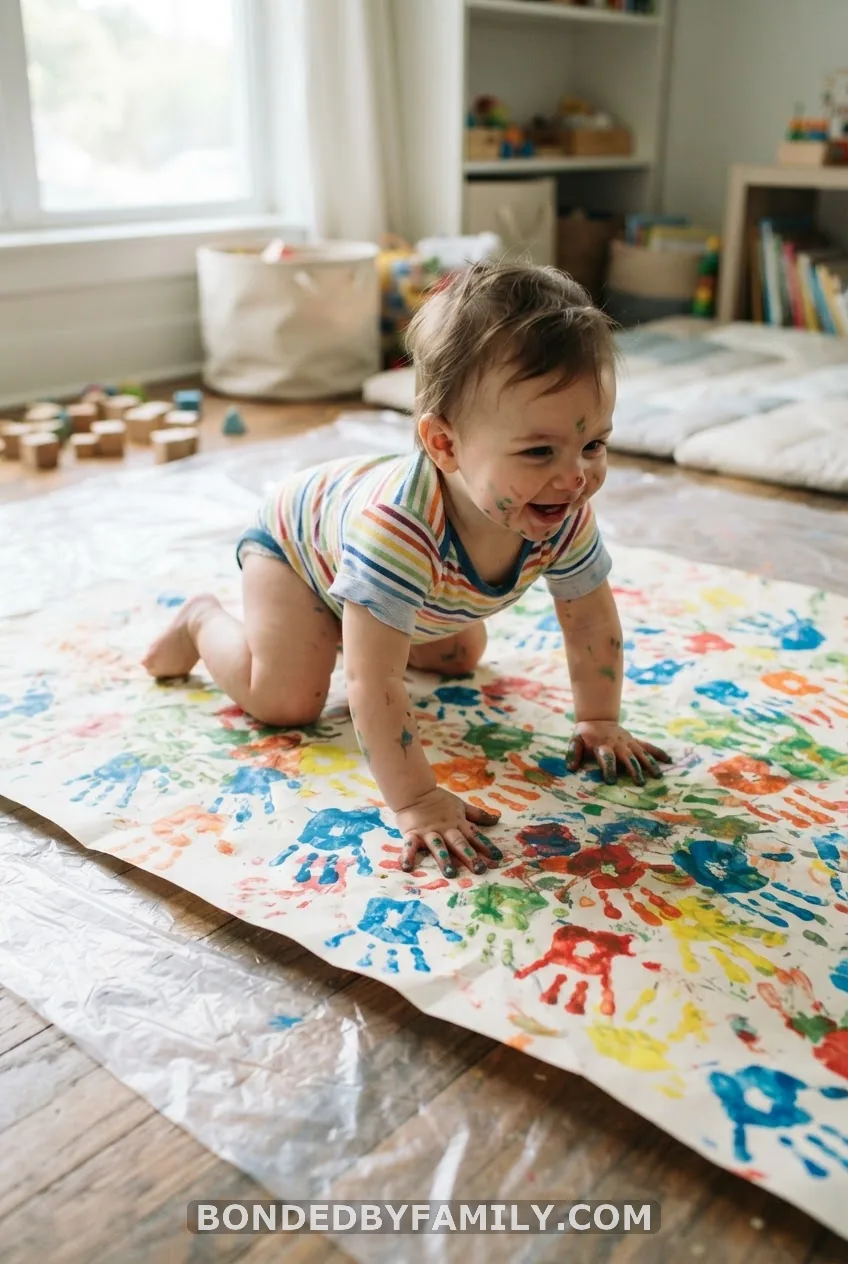
Roll out a long sheet of butcher paper, dab a few blobs of washable tempera paint at one end, and let her crawl through it in a diaper and nothing else. It’s sensory play and gross motor practice stacked into one activity, since crawling through wet paint changes the friction under her hands and knees with every foot of progress. Keep a warm washcloth ready, because this one ends in a bath every time.
Indoor, Outdoor, Winter & Daycare Swaps for Every Activity
Almost every idea above travels. Swap the hallway ball grab for a grass texture crawl on a blanket outside in warm months. Trade the pillow-climb course for couch-cushion play on snowy days when the yard is off-limits, or let kicking happen in the bathtub instead of on the mat. In spring, turn the texture crawl strip into a nature tray with leaves, smooth stones, and pinecones instead of foil and felt. Daycare rooms with limited floor space can run an eight-foot rug circuit with one baby rotating through at a time, using only wipeable, nap-safe materials – skip the paint crawl in a shared classroom and stick to the pillow course and ball grab instead.
Safety, Supervision & When to Talk to a Pediatric PT
Keep every session on a firm, flat surface, never a bed or a pile of loose pillows near sleep areas. Stay within arm’s reach the entire time, and skip walkers and long stretches in a jumper or bouncer – they don’t build gross motor skills, and pediatric guidance has flagged them as something to avoid because they can actually delay crawling and walking by encouraging an unnatural posture.
Talk to your pediatrician if there’s no head lift by three months, no rolling in either direction by six months, no sitting with support by eight months, no crawling or creeping by twelve months, or a strong preference for one side of the body over the other. A pediatric physical therapist evaluation is a low-key appointment – mostly watching your baby move and play – and in the US, early intervention evaluations under IDEA Part C are free through your local school district or health department, no diagnosis required just to get assessed.
How to Keep Baby Moving Without the Meltdown
Follow the baby, not the milestone chart. If she’s obsessed with pivoting on her belly, join that game instead of forcing a sitting drill she’s not ready for. Three five-minute sessions beat one forced twenty-minute block every time, and narrating the movement out loud builds body awareness and vocabulary in the same breath. End every session on a win – even a small one – and close with a cuddle or a song so the whole thing stays fun. Rotate five of these fifteen activities each week, and the same short list of household items will feel brand new for months.
So – which one are you trying with your baby first thing tomorrow morning?
FAQ
What are gross motor activities for infants?
They’re play-based movements using the large muscle groups – neck, trunk, arms, and legs – like tummy time, rolling, sitting practice, crawling, and cruising. Each one builds the strength and balance needed for the next milestone in line.
How often should I do gross motor activities with my baby?
Aim for several short sessions spread through the day rather than one long block – three to five minutes at a time, three or more times daily works well. Consistency matters far more than duration at this age.
What if my baby hates tummy time?
Try chest-to-chest tummy time first, or slide a rolled towel under her chest and armpits to ease the strain. Start with thirty seconds and stop before frustration sets in, so the activity stays a positive one instead of a fight.
Can I do these activities outdoors or in winter?
Yes – swap the play mat for a blanket on the grass in warm weather, or use a couch-cushion course and bath-time kicking on snowy days. Cold weather is never a reason to skip daily floor time entirely.
When should I be concerned about my baby’s gross motor skills?
Flag it with your pediatrician if there’s no head lift by three months, no rolling by six months, no supported sitting by eight months, or no crawling by twelve months. Free early intervention evaluations are available in the US under IDEA Part C, and a pediatric physical therapist visit is far less intimidating than it sounds.