The first time I dyed rice for a Christmas sensory bin, I got the vinegar ratio wrong, skipped the drying step, and dumped the whole soggy, pink-red mess into a bin on my white living room rug. My toddler shrieked with joy. I did not. By nightfall the rug looked like a crime scene, the house smelled like a salad, and a single grain of red rice was stuck to the cat.
I’ve learned a lot since then. Christmas sensory play can be gorgeous, calm, and nearly mess-free when you pick the right setup. This list gives you 10 ideas with exact amounts, age notes, and safety flags, so you can pull off the Pinterest-worthy version without repeating my rug disaster.
Why Christmas Sensory Play Is Worth the Mess
December is loud. Lights blink, relatives visit, and routines fall apart. Kids feel all of it.
What kids get out of it
Scooping, pinching, and pouring build the hand muscles kids need for writing later. Squishing dough or shaving cream gives the nervous system a steady dose of touch input, and that helps many kids settle. Play also builds language. You’ll hear words like bumpy, sparkly, cold, and more in the first five minutes. Counting bells into a cup? That’s early math, and nobody groaned about it.
Christmas adds something special: smells like cinnamon and peppermint, sounds like jingle bells, and textures like fake snow. Few seasons pack in this much sensory input.
The age guide
- Babies (6-12 months): sealed items only, or taste-safe materials, with you at arm’s length.
- Toddlers (1-3): big scoops, large loose parts, and bins with a lid nearby.
- Preschoolers (3-5): small parts, tongs, and science twists, always with supervision.
I’ll flag the age for each idea below. Full safety rules sit near the end.
Bins and Trays for Scooping and Pouring
Pinterest loves a bin. So do kids. These four ideas center on a container and a scoop.
1. Dyed Rainbow Rice Christmas Sensory Bin
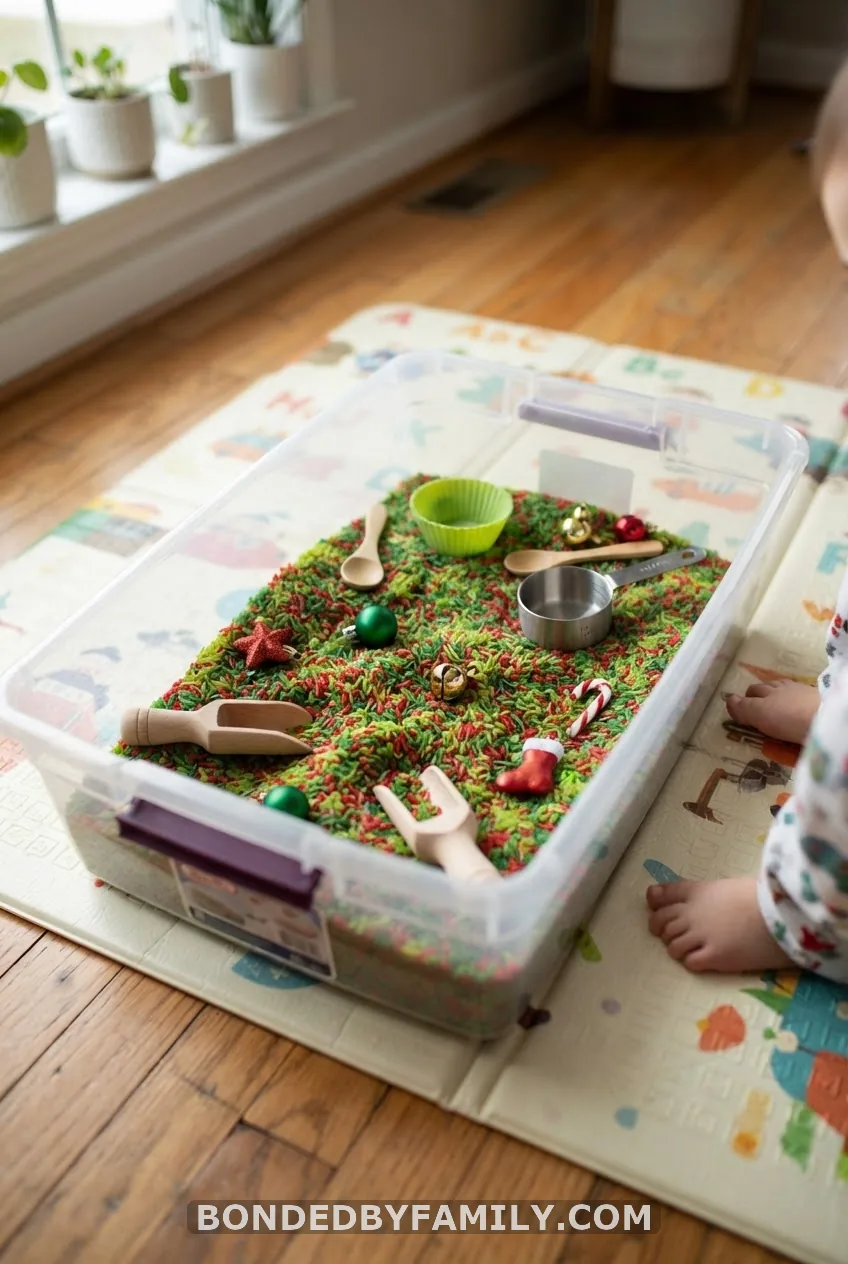
This is the classic, and it’s the one to start with. Dyed rice costs a few dollars, keeps for months, and works for toddlers and preschoolers (ages 2-5). It’s the base for several other ideas here, so learn it first.
What you need
- 6 cups white rice (a 5-pound bag runs about $4-6 at Walmart or Target)
- 6 tablespoons white vinegar (2 tablespoons per color)
- Red, green, and lime green food coloring (a grocery store gel set runs $5-8)
- 3 gallon-size zip bags
- 2 cookie sheets lined with parchment
- A shallow plastic storage bin, about 6 quarts
- Scoops, cups, and spoons from the Dollar Tree (about $1.25 each)
How to dye it
- Pour 2 cups of rice into each bag.
- Add 2 tablespoons of vinegar and 10-15 drops of food coloring to each bag.
- Seal the bag, squeeze out the air, and shake for one full minute.
- Spread the rice in a single layer on the parchment.
- Let it dry for at least one hour. Stir it once halfway through.
- Mix all three colors in the bin.
For a smaller batch, use 1 cup of rice, 1 tablespoon of vinegar, and a few drops of coloring per color. It works the same way.
Add the Christmas part
Toss in plastic ornaments, wooden trees from a craft store, and small bells. Give your child a scoop, a funnel, and three little bowls. Ask them to “fill Santa’s bowl.” Kids at this age take a job seriously.
Common mistakes to avoid
- Skipping the dry time. Damp rice clumps, smells sour, and molds. Give it a full hour, or two on a humid day.
- Too much coloring. Extra drops will stain small hands and your table. Start with 10.
- Using a deep bin. Shallow bins keep the rice at hand level and stop it from spilling over the sides.
- Skipping the mat. A cheap $8 splash mat, or an old bedsheet, saves your vacuum.
Why this works
Rice pours like water but feels like tiny beads. Kids can sift it, bury things in it, and hear it hiss. That’s a lot of sensory information in one cheap material. Store it in an airtight container and it lasts until spring.
2. Jingle Bell Scoop Tray
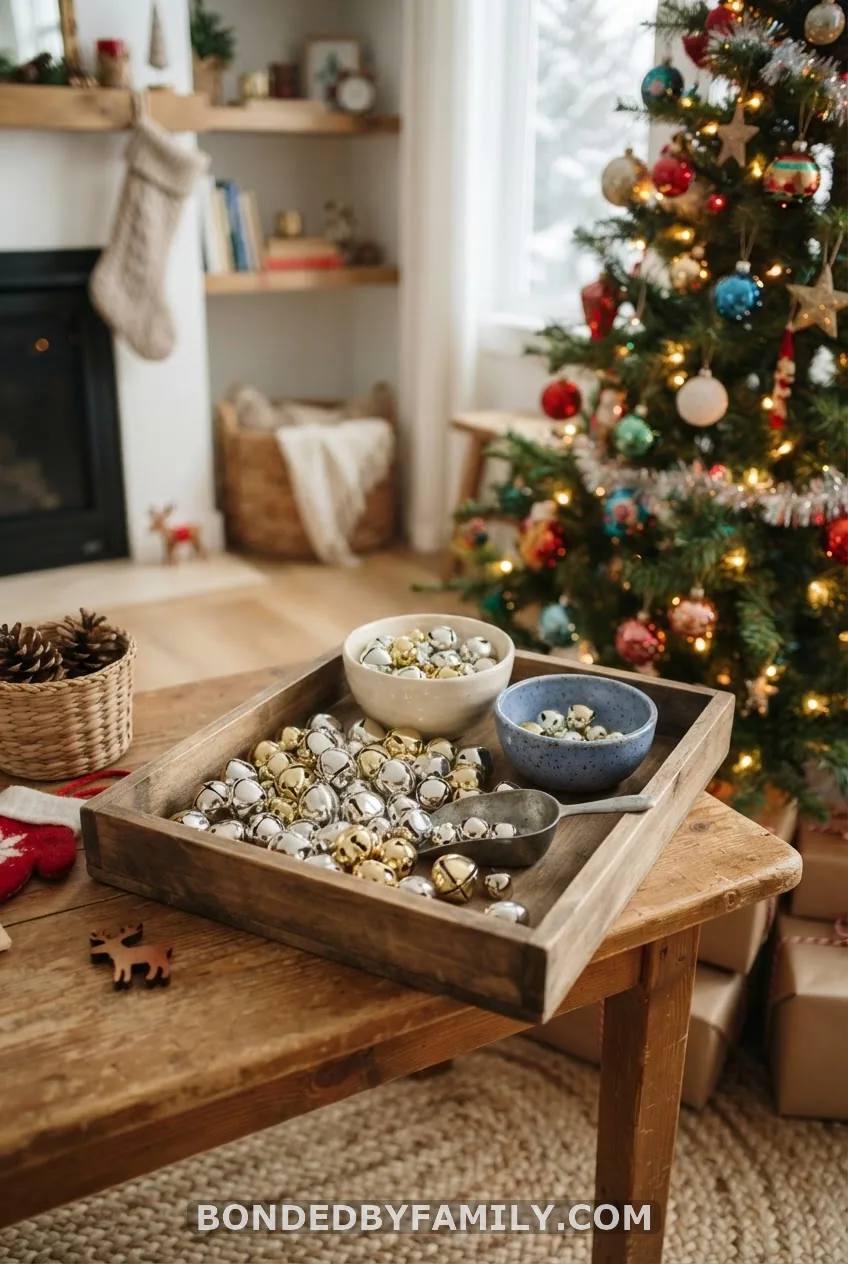
Pour 30 large jingle bells into a tray. Add a scoop and two bowls. Now the bin has a voice. Every scoop jingles, and kids repeat it again and again. For preschoolers, add tongs and a sorting task: gold in one bowl, silver in the other. Use bells larger than a golf ball’s width for anyone under three.
3. Scoop the Ornaments Tray
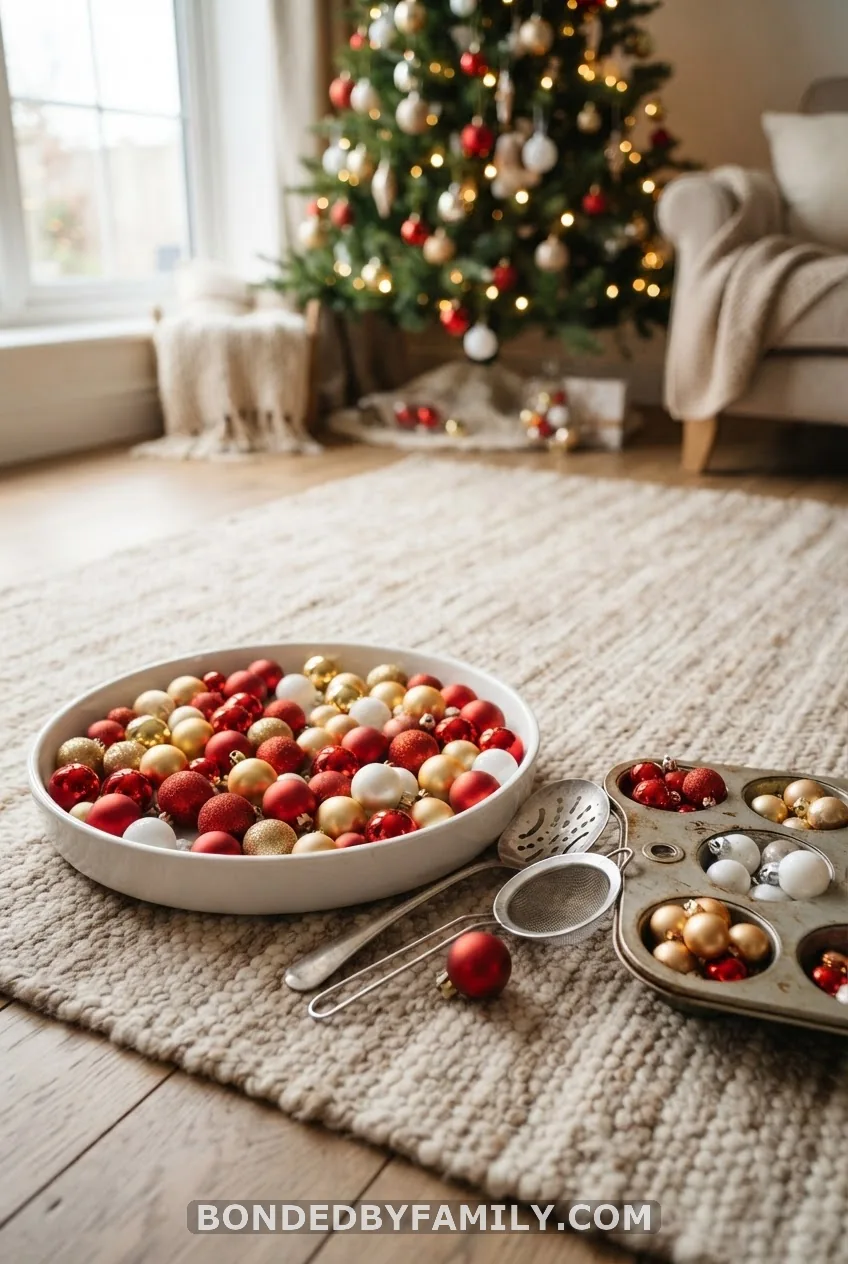
A tray works better than a bin when you want a clean, photo-ready look. Use a shallow baking sheet or a wooden serving tray with a rim. Fill it with plastic, shatterproof ornaments in three colors. Add a slotted spoon, a small strainer, and a 12-cup muffin tin (that’s the tin, not our list number).
Let the child transfer ornaments from the tray to the tin, one cup at a time. Sorting by color makes it a match game. Transferring builds hand-eye coordination. It takes maybe ten minutes of setup and lasts a good half hour.
For a “feed the reindeer” twist, cut a reindeer face from a cardboard box and make the mouth a wide oval hole. Kids “feed” it pom-poms or bells using tongs. This is a Montessori-style favorite: a clear job, a clear finish, and no adult needed once it starts.
4. Teal Snow and Star Rice Bin
What most people think: Christmas bins must be red and green.
Reality: Teal, white, and silver photograph beautifully and look calmer in a room full of holiday color.
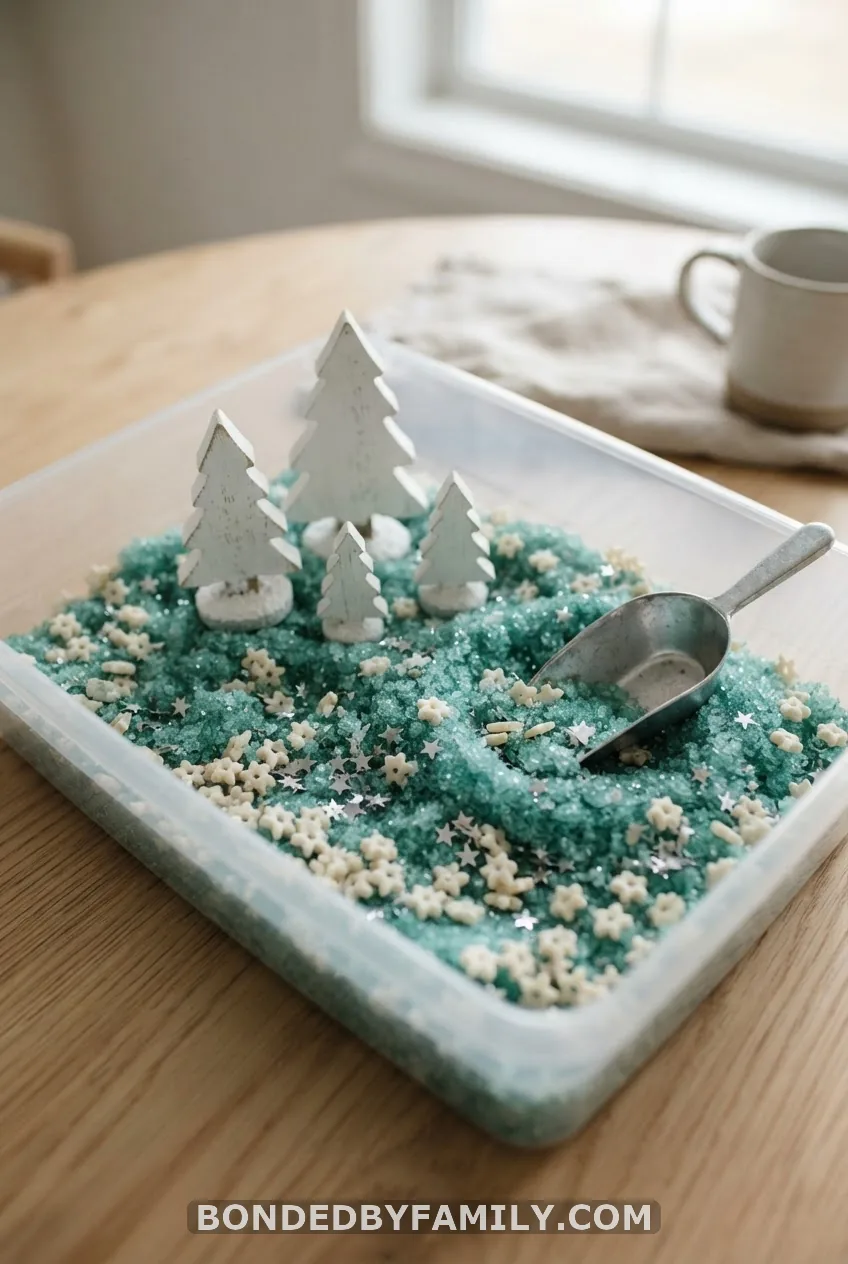
Dye your rice with teal food coloring (mix blue with a drop of green), or tint a batch of fake snow (see idea 5). Toss in dry star-shaped pasta, sold in the soup aisle. Add white wooden trees and a silver scoop. It looks like a snow globe you can touch. Ages 2-5, with pasta kept out of babies’ reach.
Cold, Soft, and Messy: Snow, Foam, and Dough
5. Two-Ingredient Fake Snow with Penguins
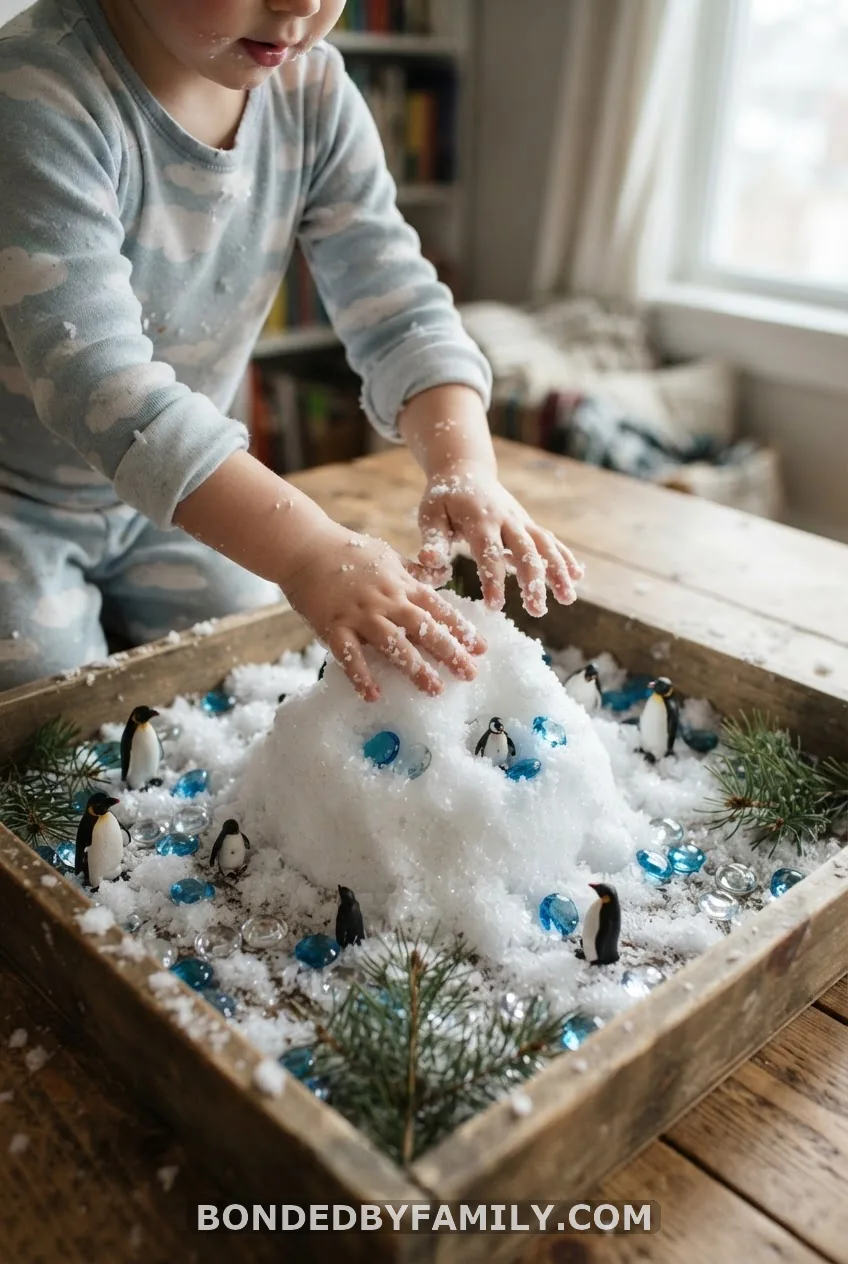
Mix 1 cup of hair conditioner (cheap white kind, about $1.50) with 3 cups of baking soda in a bin. Squeeze it, knead it, and it turns into a cold, moldable snow that holds shape. It feels like packed powder and smells clean.
Now set the scene. Add three or four penguins, a few blue plastic “ice” gems, and a sprig of real pine or a plastic tree. Make a small hill for the penguins to slide down, or a cave for them to hide in. This is small world play, and it gets kids talking. Expect narration: “The penguin is cold. He needs a hat.”
Store leftover snow in a sealed container. It lasts about a week and gets crumbly when it dries out; a spoonful of conditioner brings it back. Not for babies, since it isn’t food-safe. For mouthing ages, use plain cooked oatmeal flour and coconut oil instead.
6. Shaving Cream Christmas Sensory Play
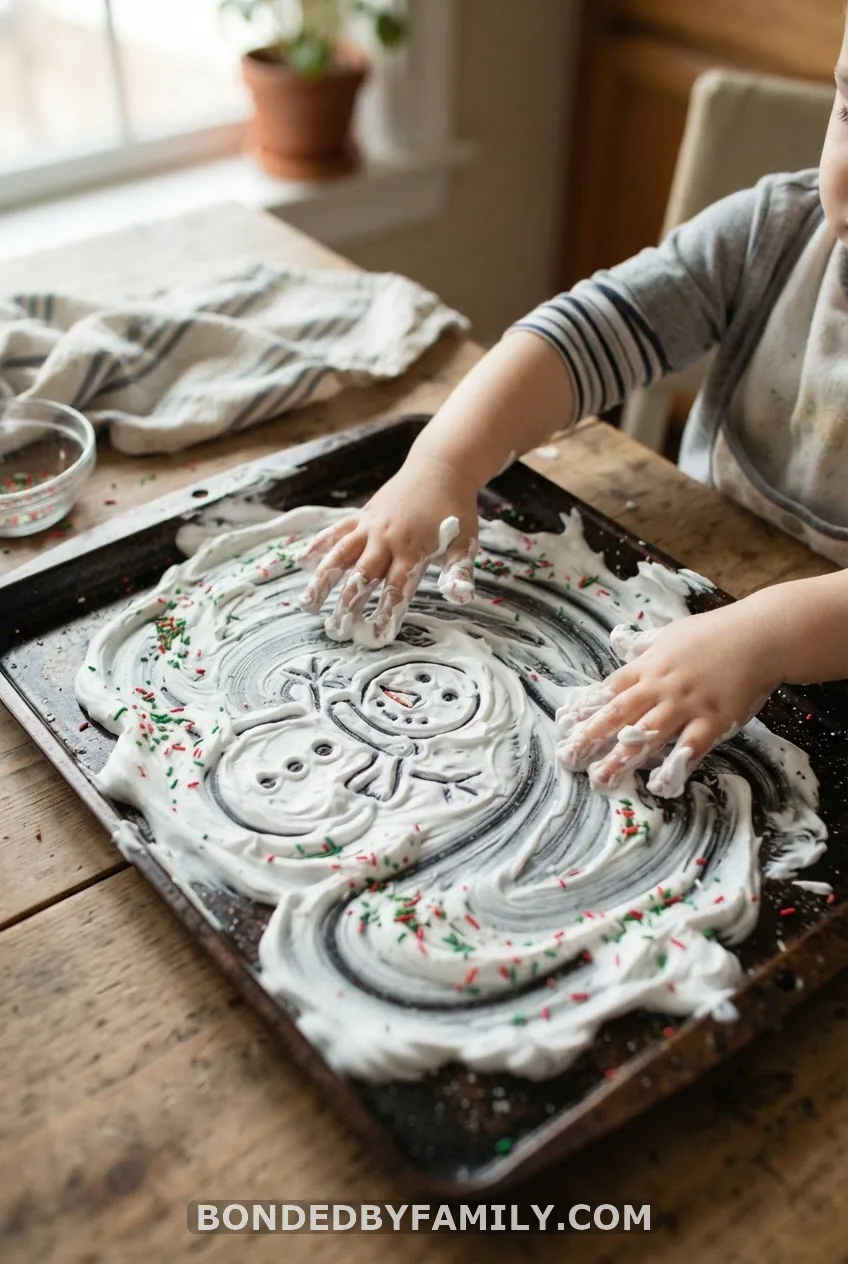
Spray plain white shaving cream onto a dark baking sheet. Add two drops of peppermint extract to the foam for the smell. Kids draw trees and snowmen with a finger. Clean-up takes one wipe and a rinse. Keep it out of eyes and mouths, and skip it for babies.
7. Christmas Playdough Invitation with Spice Scents
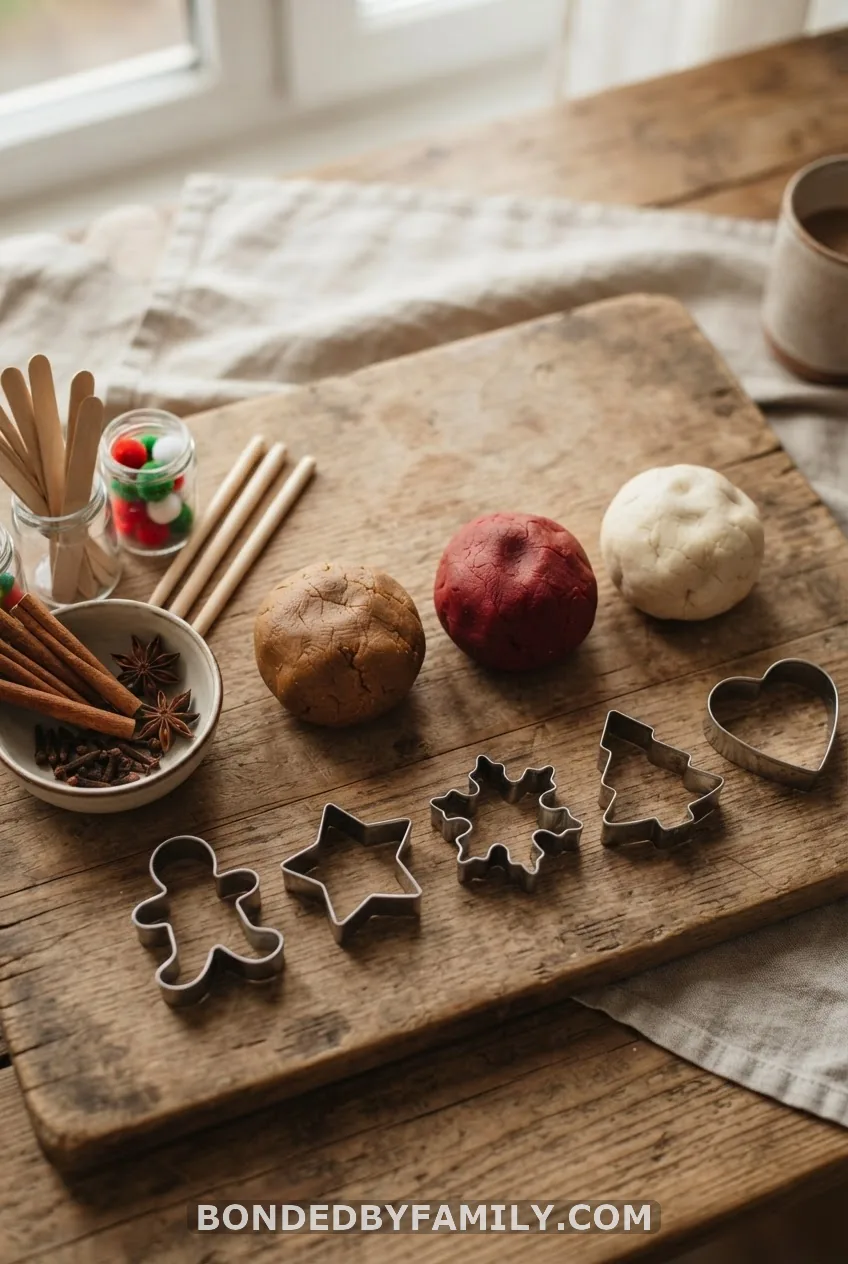
An “invitation” just means you set the table before the kids arrive. Put down three colors of dough and a handful of loose parts. That’s it.
Use store-bought Play-Doh, or make your own: 2 cups flour, 1/2 cup salt, 4 teaspoons cream of tartar, 2 tablespoons oil, and 2 cups boiling water. Stir until it pulls away from the pot. It takes about ten minutes and lasts a month in a sealed bag.
For scent, knead 2 teaspoons of ground cinnamon or ginger into brown dough. That gives you gingerbread. Add a few drops of peppermint extract to white dough. Kids notice smell, and the smell links to memory. Next December, that same scent will bring this afternoon flooding back.
Set out gingerbread cutters, buttons for eyes, and short sticks for antlers. Use cloves for decoration only with preschoolers who no longer mouth things, and always pick them out after play. For toddlers, skip the loose parts and hand over a rolling pin.
Light, Sound, and Science
8. Light Box Christmas Sensory Play
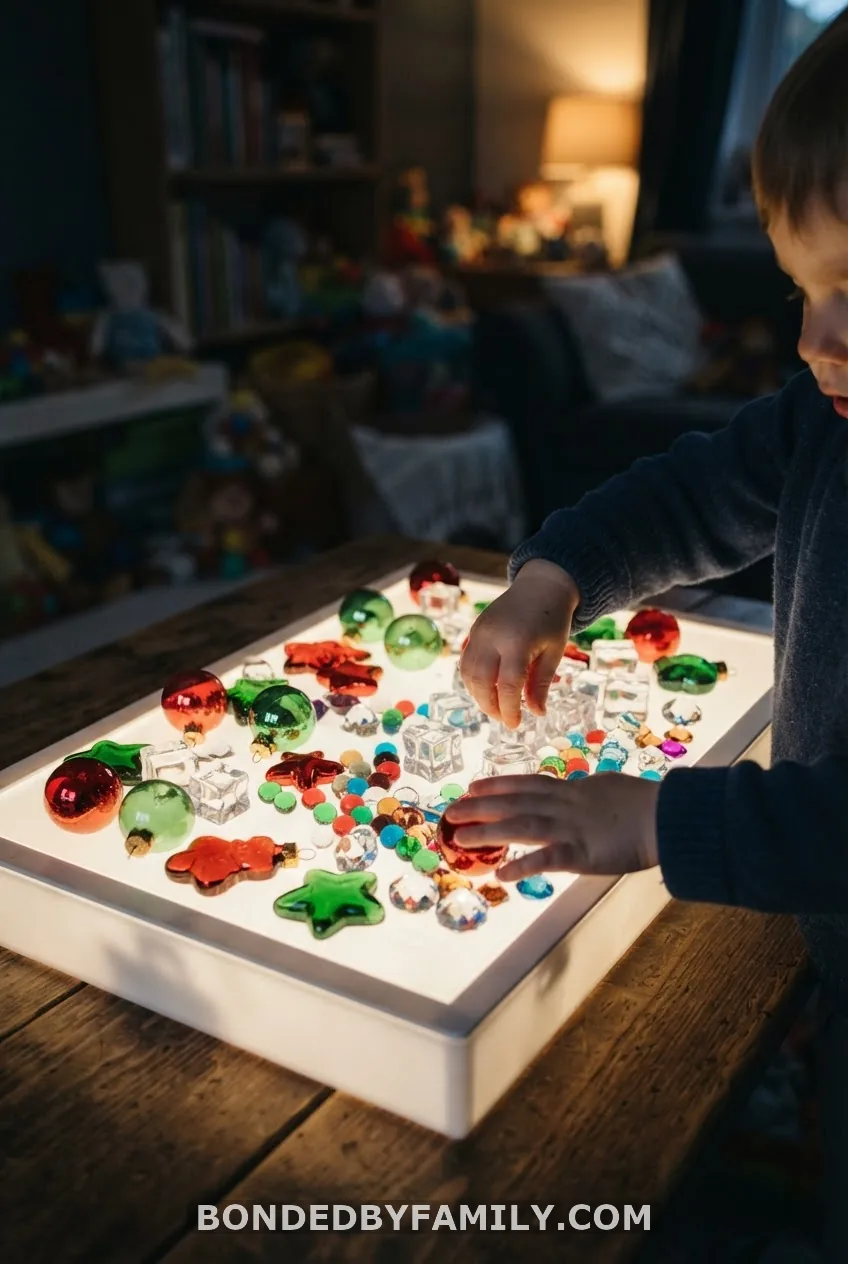
Light box play is the Pinterest star of the season. A basic LED light pad costs about $20-30 on Amazon, and a clear plastic storage lid over a string of lights works in a pinch. Dim the room, and translucent items glow.
Good things to put on top:
– Clear or red plastic ornaments
– Cellophane cut into tree shapes
– Colored water beads (soak 1 tablespoon of dry beads in water for four hours; never for babies or kids who mouth things)
– Ice cubes tinted with a drop of food coloring, which melt into little glowing puddles on a lipped tray
That last one covers water play too. Add a shallow tray of warm water and floating ornaments beside the light box, and kids get two textures in one session. Ages 2-5.
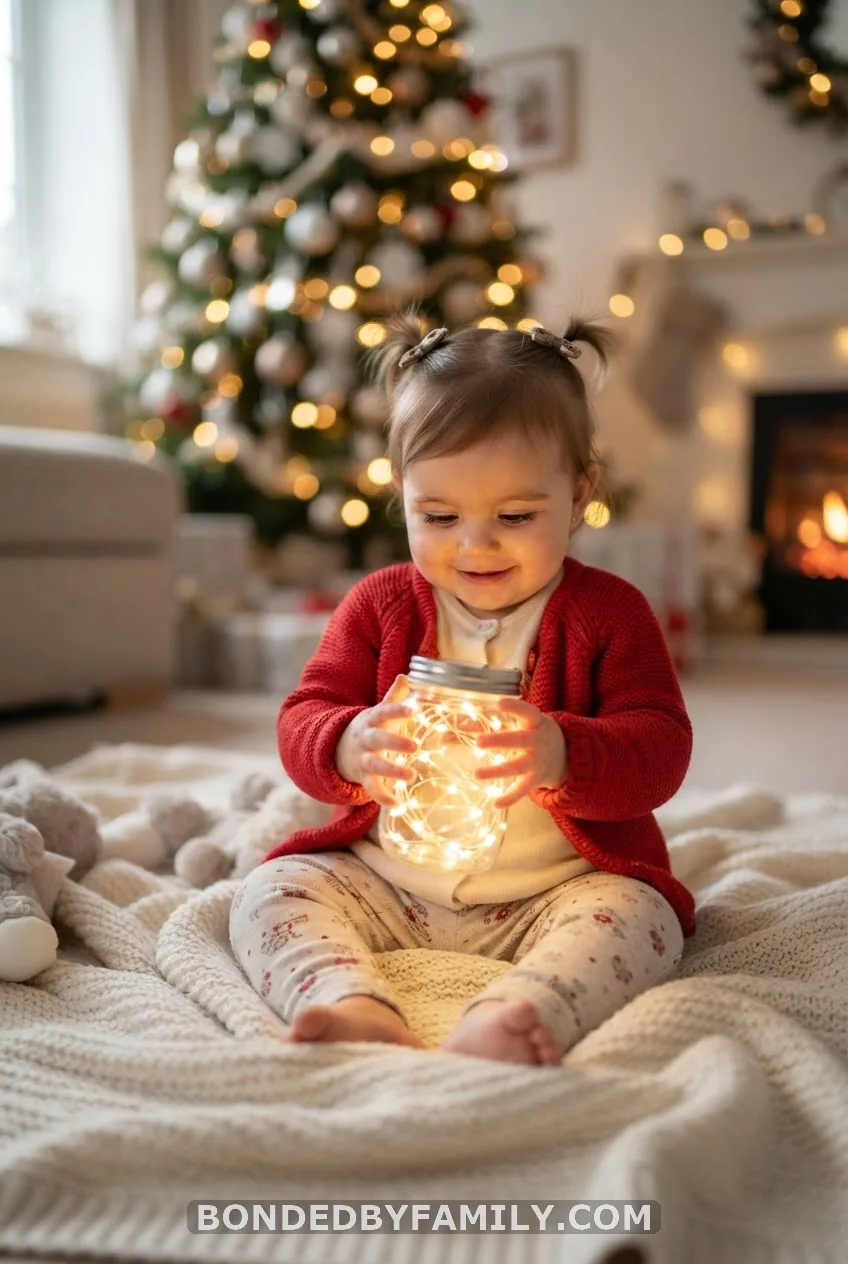
9. Baby’s First Christmas Light Jar
A cautionary tale. I once made a “baby-safe” sensory bottle with glitter and water. I sealed it with the factory cap and figured we were done. Ten minutes later, my nephew had the cap loose, and the glitter water was on the floor. Nobody was hurt, but it scared me.
Here’s what I do now.
Take a clear, shatterproof plastic jar (a peanut butter jar works) and drop in a coiled string of battery-powered LED fairy lights, with the battery pack outside or taped inside a sealed compartment. Run a bead of hot glue around the lid, or use strong waterproof tape, so it can’t twist off. Turn the lights on and let your baby roll it, bang it, and watch.
Rules that matter:
– Use LED lights only, since they stay cool.
– Never use a glass jar.
– Stay within reach every second.
– Check the lid before every session.
A sealed snow globe jar works the same way: fill a plastic bottle with water, a teaspoon of glycerin, and fine glitter, then glue the cap shut. Shake it and watch. Babies from about 6 months can enjoy either one.
10. Magnetic Tubes Jingle Bell STEM
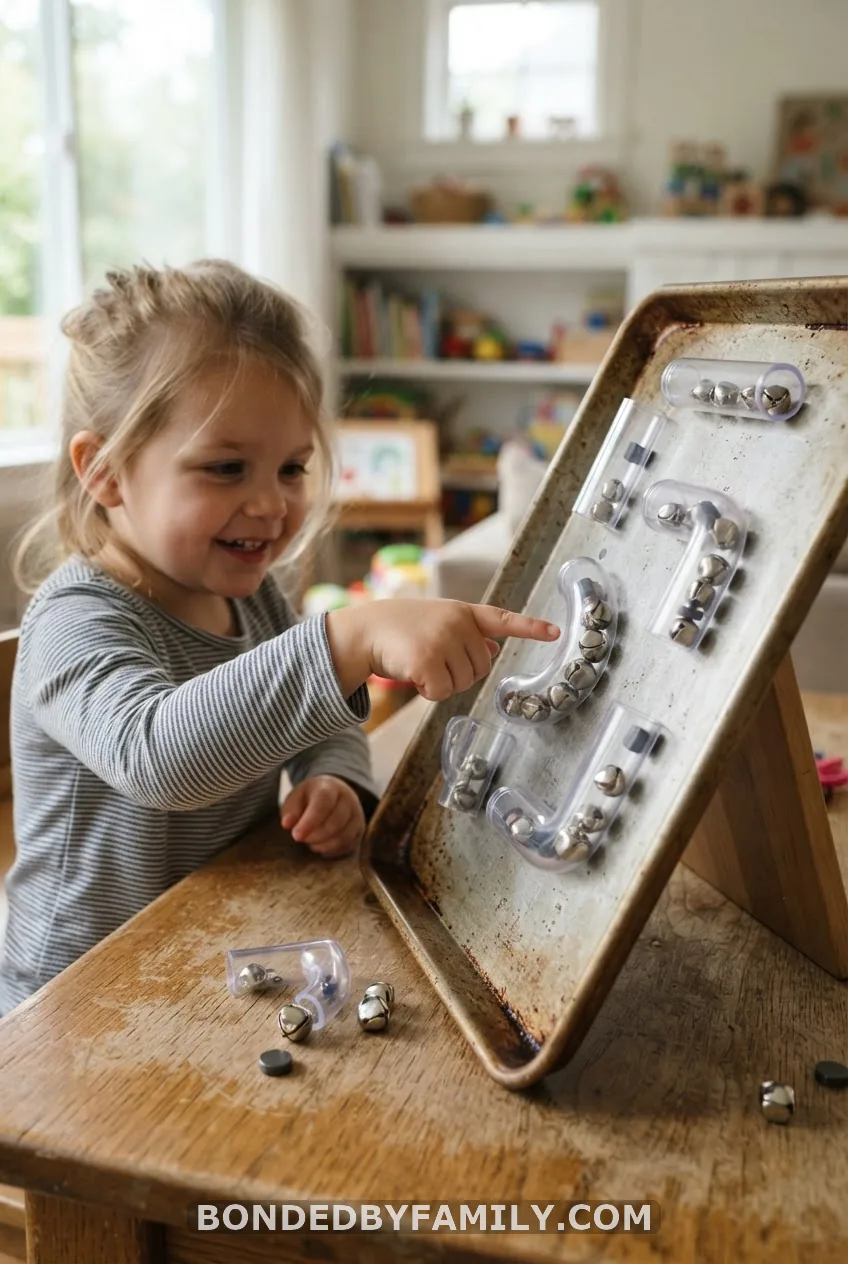
Drop steel jingle bells into clear plastic tubes and seal the ends. Hold a strong magnet on the outside and drag the bells along. Prop the tube on a slope and watch gravity fight the magnet. Preschoolers will experiment for twenty minutes without noticing it’s science. Check that the tubes are sealed tight.
Picking the Right Idea for Your Kid
Match the idea to the child, not the photo. A quick guide:
- Baby: the light jar (idea 9), or taste-safe yogurt and mashed banana on a tray.
- Toddler: dyed rice (1), jingle bells (2), or dough (7).
- Preschooler: ornaments tray (3), light box (8), or magnets (10).
- Mixed ages: put a lid on the small parts and use one big bin (1 or 5).
Want more? A 24-compartment advent tray, with one small sensory item per day (a pom-pom, a bell, a felt star), builds anticipation. And a zip bag filled with hair gel, glitter, and foam stars, taped shut on a table, gives you a no-mess sensory bag that travels well.
Safety in five lines
- Anything smaller than a toilet paper tube’s opening is a choking hazard under age three.
- Stay within arm’s reach with babies.
- Check food coloring, extracts, and nuts for allergies.
- Skip water beads for any child who still mouths things.
- Put toys away in an airtight container afterward, so pets stay safe too.
The Unpopular Take
Here’s my contrarian opinion after all this: you don’t need any of it. Not the bin, not the teal snow, not the light box. Pinterest makes it look like a child’s December depends on matching color palettes and wooden trees. It doesn’t.
A cardboard box, a bowl of dry pasta, and a wooden spoon will keep a toddler happy for the same twenty minutes. Kids don’t care if the setup photographs well. They care that you sat down beside them. Use these ideas as a menu, pick one, and let the rest go. The rug will thank you.
FAQ
What age is Christmas sensory play for?
Every age, with the right setup. Babies can enjoy sealed light jars and taste-safe foods, toddlers do well with large scoops and dyed rice, and preschoolers can handle tongs, small parts, and science tricks like magnetic tubes. Match the materials to what your child still puts in their mouth.
How do you make Christmas sensory rice?
Put 1 cup of white rice in a zip bag with 1 tablespoon of vinegar and a few drops of food coloring. Shake it for a minute, then spread it on a parchment-lined cookie sheet. Let it dry for about an hour before playing.
What can I use instead of rice in a sensory bin?
Try fake snow, kinetic sand, dried pasta, shredded paper, or cotton balls. Playdough and water beads also work for older kids. For babies and kids who still mouth things, skip water beads and stick with taste-safe options like cooked oats or yogurt.