Your daughter is six months old, sitting propped against a pillow, and she’s just noticed the maple leaf you dropped in front of her. Her hand hovers. She swats it. It crunches. Her whole face changes – surprise, then this delighted little grin – and she does it again. That’s it. That’s the whole activity. No Pinterest board, no craft supplies, no plan.
That moment is worth more than most people realize, and that’s the whole point of this list. Fall activities for babies don’t need to be elaborate to matter. Every idea below comes tagged with the age range it fits, how much mess to expect, and the actual developmental skill it’s building – sensory exploration, cause and effect, visual tracking, fine motor, object permanence, language. You’ll walk away knowing exactly what to grab for the twenty minutes you actually have before nap time.
1. Mess-Free Fall Leaf Sensory Bag
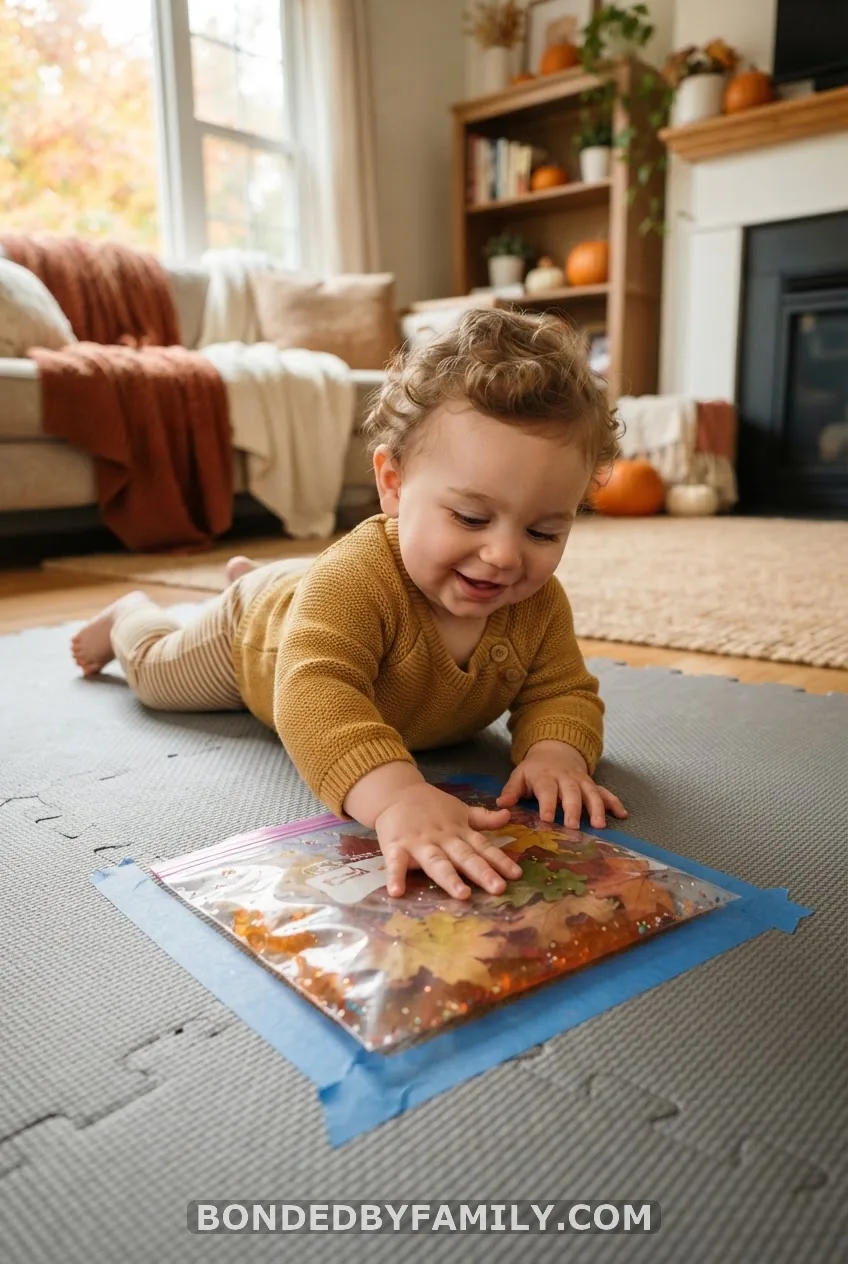
This is the one activity you’ll pull out over and over, so it’s worth doing right the first time.
What you need: one gallon-size zip-top freezer bag (Ziploc brand holds up best – the store-brand ones split), a handful of real or faux fall leaves, a cup of clear hair gel or water tinted with two drops of food coloring, three or four dots of washable non-toxic paint (Crayola Washable is the safe pick), and a roll of painter’s tape.
How to build it: Lay the bag flat and drop in your leaves. Squeeze in the hair gel or colored water until it’s about an inch deep. Add the paint dots. Press out as much air as you can before sealing – this is what keeps it flat enough for baby to actually move things around inside. Double up the seal with a strip of tape across the top for extra insurance, because a curious nine-month-old with strong hands will test that zipper.
Tape the bag down. This part isn’t optional. Run a strip of painter’s tape along all four edges, whether you’re sticking it to the floor for tummy time or a high-chair tray for a sitting baby. A bag that isn’t taped down gets picked up, and a bag in a baby’s mouth is a bag you have to explain to a pediatrician.
Skill tags: sensory exploration through touch and pressure, cause and effect (baby presses, the leaf moves), visual tracking of bright fall colors, and fine motor development from reaching, pressing, and squishing.
Age range: 3 to 12+ months. For younger babies, tape it at eye level during tummy time. For sitting babies, tape it flat on the high-chair tray.
Common mistakes: using a thin sandwich bag instead of a heavier freezer bag (it tears), skipping the tape and letting the bag slide around, or overfilling it so there’s no room for the leaves to shift when baby presses.
Budget note:
This costs under $3 if you already own hair gel and paint. The whole setup takes about five minutes, and one bag survives multiple sessions if you keep it sealed between uses.
2. Fall Sensory Bottles for Visual Tracking
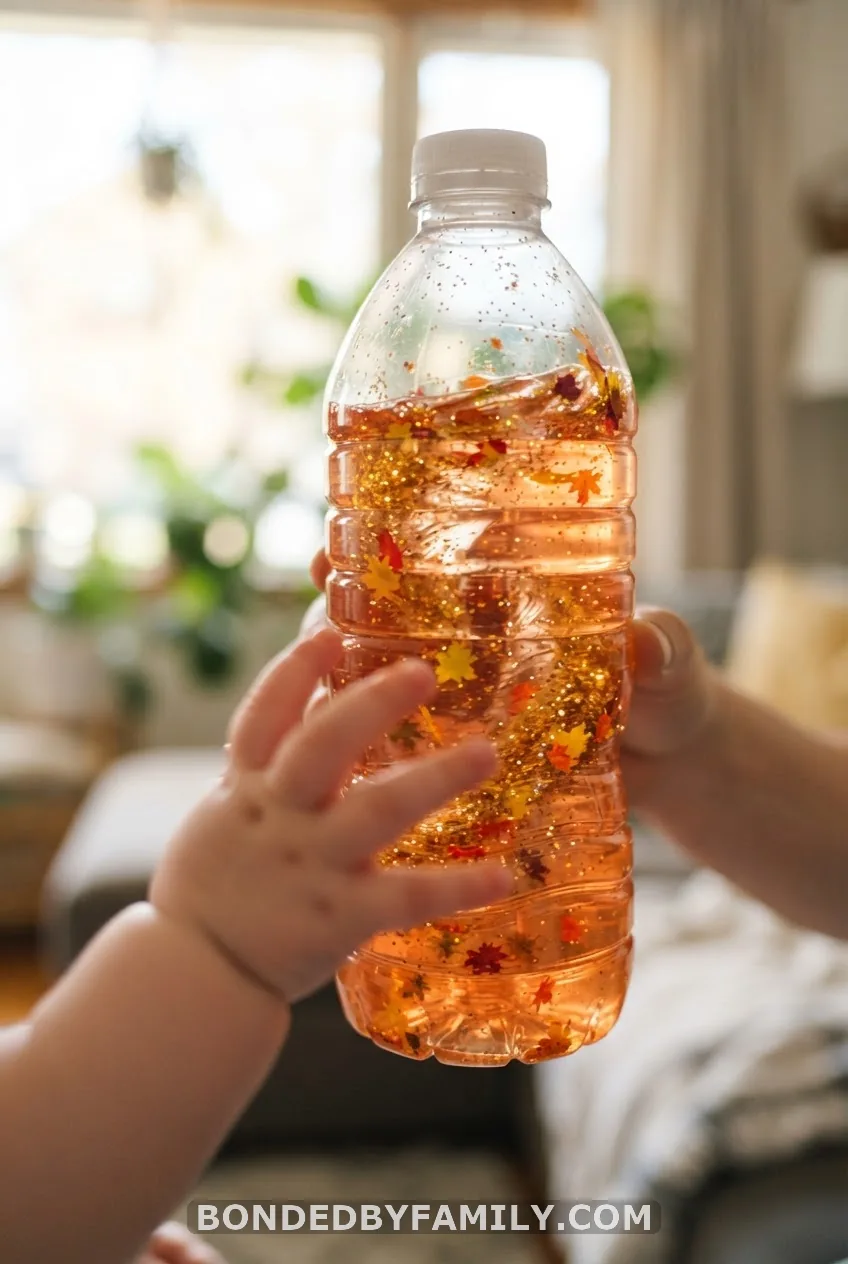
Fill an empty 16-ounce plastic bottle (a cleaned-out water bottle works fine) with warm water, two tablespoons of clear glue, a spoonful of gold or orange glitter, and a few small faux leaves. The glue thickens the water just enough that the glitter drifts instead of dumping straight to the bottom – that slow drift is what holds a baby’s attention.
For younger infants, skip the glitter and leaves entirely and go high-contrast instead: black and orange pom-poms in plain water do more for a two-month-old’s developing eyes than any pastel toy on the market. For a dark-room variation, drop a cracked glow stick into a bottle of clear water and watch a nine-month-old track the glow as you roll it across the floor.
Hot-glue the cap shut before handing over any bottle, then check it upside down for leaks. This is a supervised-only toy – the cap seal is strong, but nothing is baby-proof forever.
Skill tags: visual tracking, sustained attention, and early cause-and-effect understanding as baby learns that tilting the bottle changes what happens inside. Works well from newborn through 12 months, scaling the visual complexity up as baby ages.
3. Pumpkin and Gourd Texture Exploration
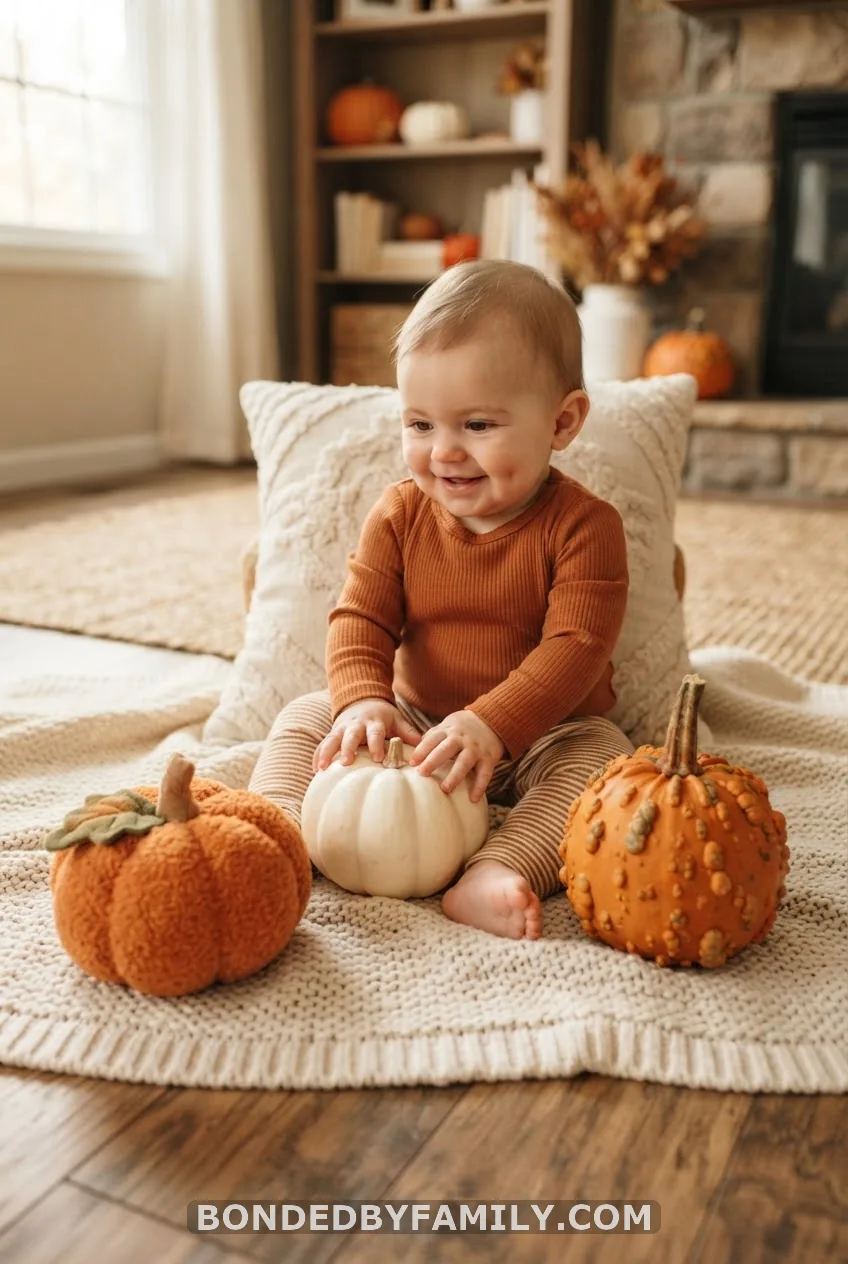
What most parents think: a pumpkin is a fall decoration, not a baby toy – something to keep out of reach until it’s carving season.
The reality: a small, clean pumpkin or gourd is one of the richest texture experiences you can hand a baby, and it costs less than a rattle. Let baby touch the smooth, waxy outside of a mini pumpkin, then the rough, fibrous stem. Set a bumpy warty gourd next to it and narrate the difference out loud – “smooth, bumpy, smooth, bumpy.” Then hand over a soft fabric pumpkin and let baby compare heavy versus light. Babies as young as four months, once they’ve got some grasp control, can bat at these; babies who sit independently around six to eight months can hold and rotate them in both hands.
Add a shallow bin with metal and plastic lids from your recycling for a pumpkin lid bang session – babies love tapping them together and hearing the different pitches. Once baby sits well with support, a bin of soapy water, a small pumpkin, and a sponge turns into a whole scrubbing session that tires out those little arm muscles fast.
Skill tags: sensory science, comparison vocabulary (heavy/light, smooth/bumpy), cause and effect, and finger strength.
4. Taste-Safe Fall Flavors
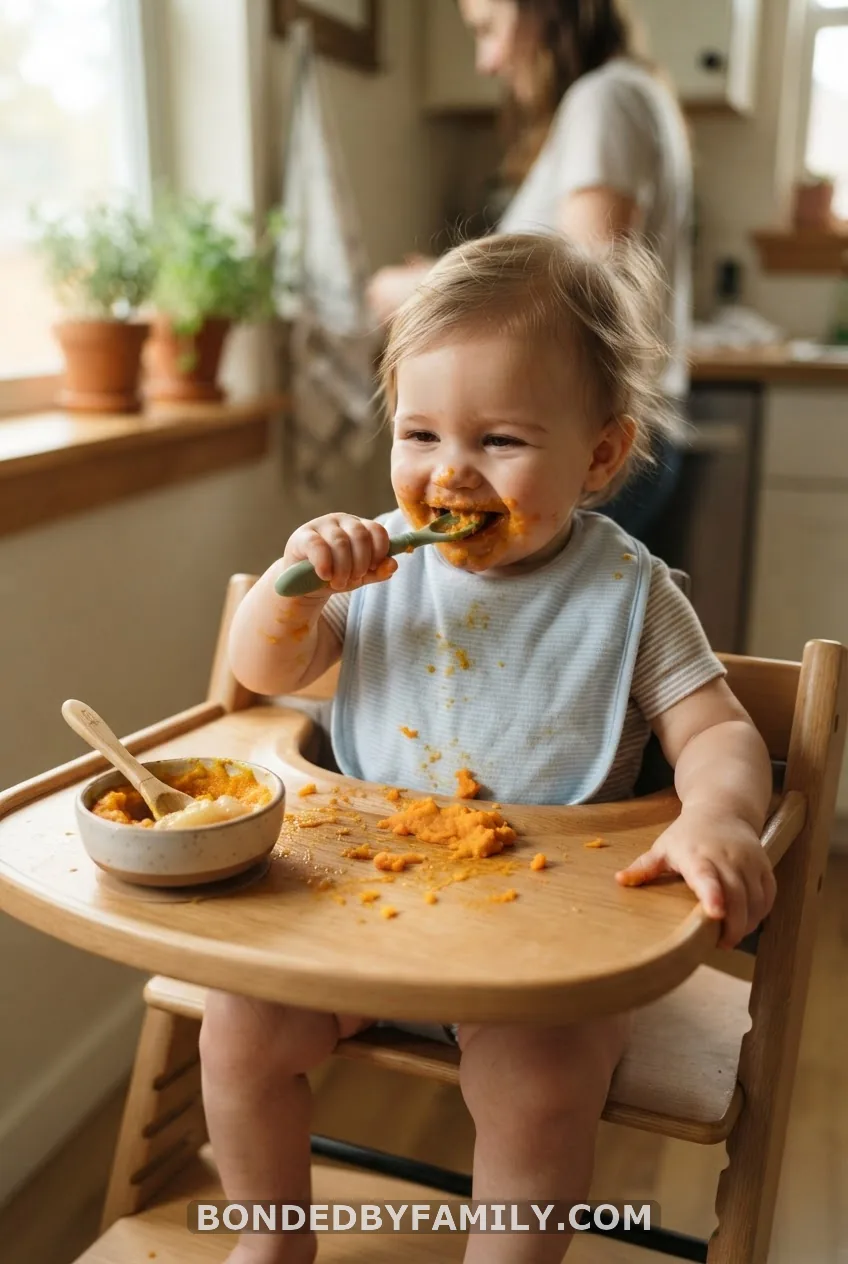
Once baby is around six months and showing readiness signs – sitting with support, reaching for food, losing the tongue-thrust reflex – fall produce doubles as sensory play and dinner. Cook and mash butternut squash, sweet potato, or plain pumpkin (canned pumpkin puree with no added sugar works too) and let baby smear it across the high-chair tray with a silicone spoon before ever getting a bite in. Applesauce works the same way, and a whisper of cinnamon on cooked apple adds a new scent and flavor without any added sugar.
For babies who mouth every single toy in the house, this solves the biggest objection to sensory play: nothing on the tray is off-limits if it goes in their mouth. Introduce each food alone first and watch for reactions before mixing flavors.
Skill tags: oral sensory tolerance, self-feeding practice, fine motor pincer development, and hand-eye coordination. Best for 6-12+ months, once solids have started.
5. Autumn Nature Walk
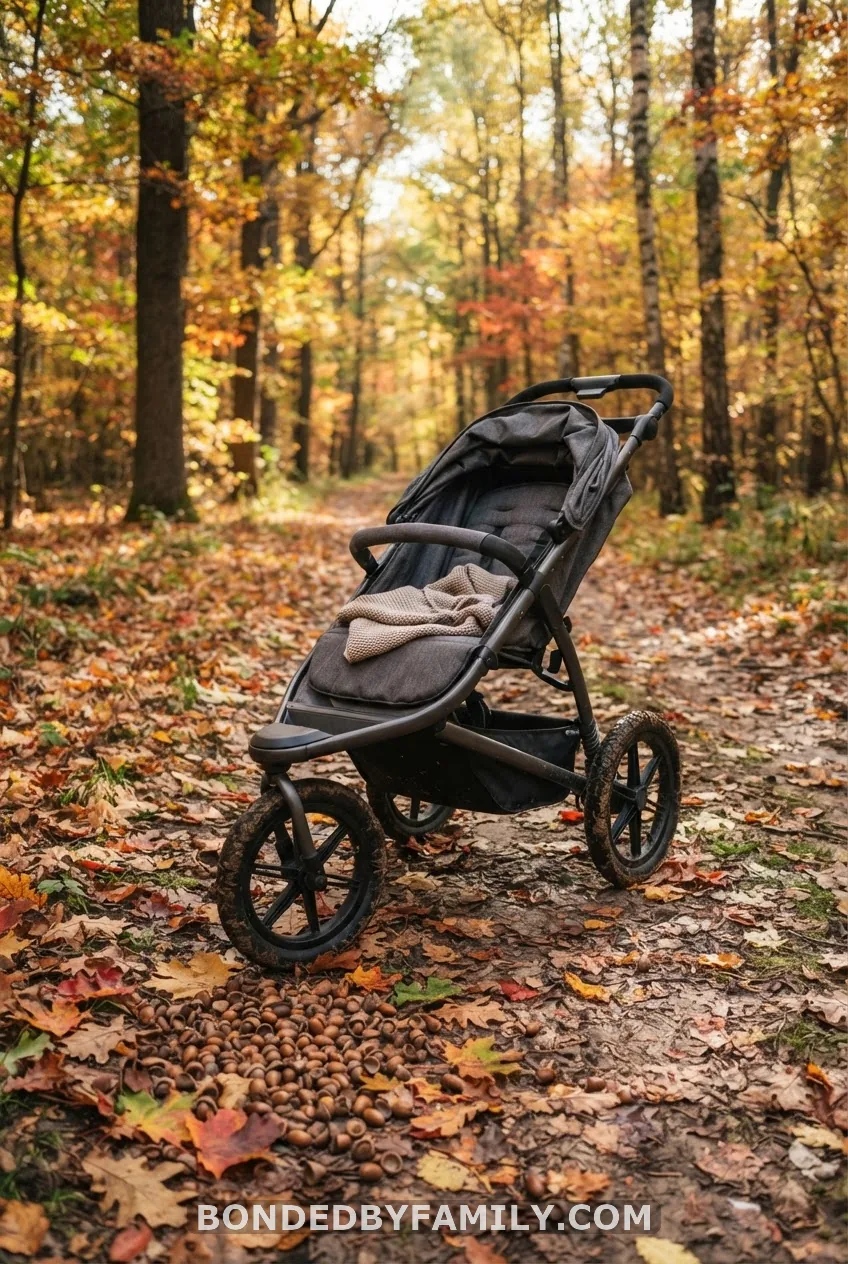
Strap baby into the carrier or stroller and point at everything – the red maple, the pile of crunching leaves underfoot, the smell of woodsmoke from a neighbor’s chimney. You’re not teaching vocabulary yet at three months old, but you are laying down the sound patterns that language builds on later. Works at any age, zero mess, zero cost.
6. Pumpkin Patch or Farmers Market Outing
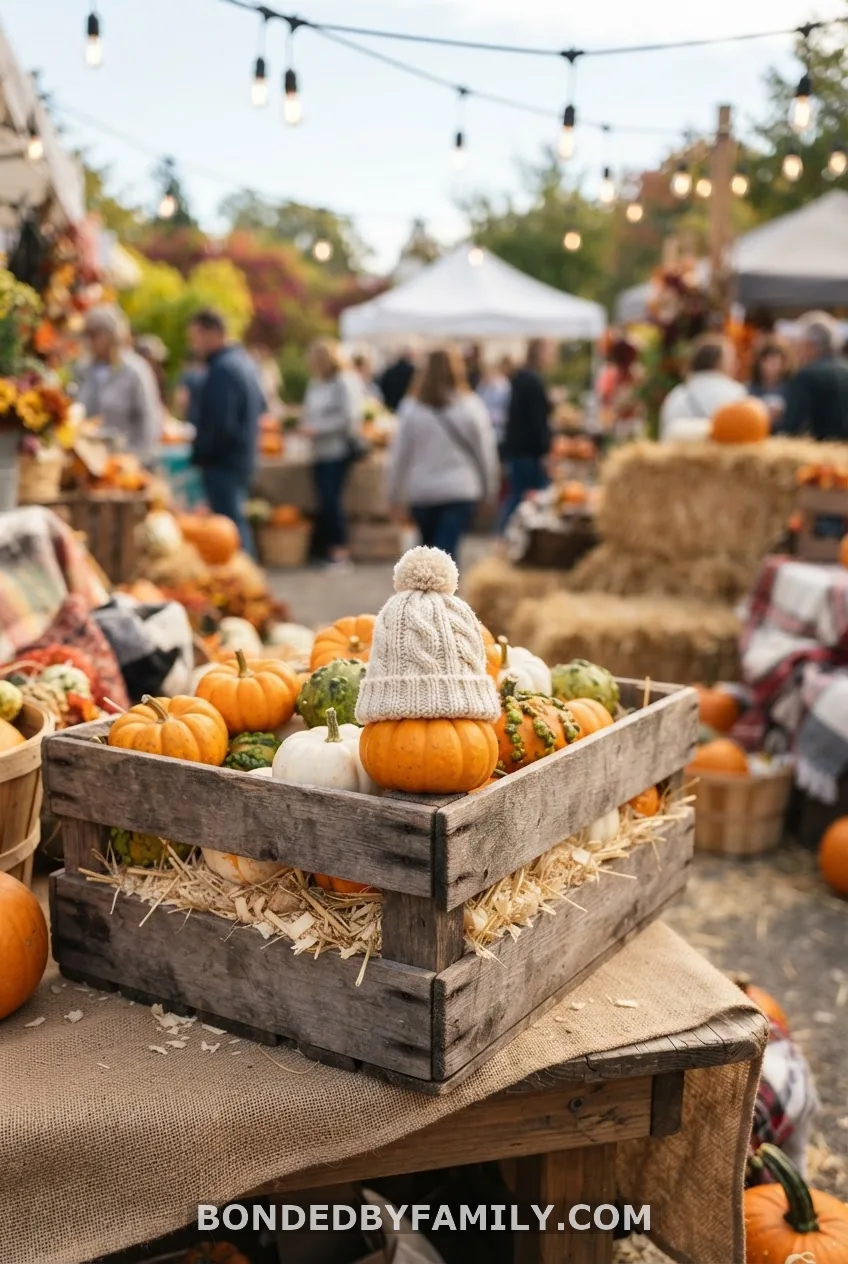
Even a baby too young to walk gets something out of a pumpkin patch trip – the orange everywhere, the crunch of hay underfoot, strangers cooing over the stroller. A farmers market works the same magic on a smaller budget: fresh apples, cider smell, live music if you’re lucky. Neither costs more than gas money, and both make for the fall family photo everyone’s already expecting on your feed.
7. Crawling “Pumpkin Patch” and Cause-and-Effect Play
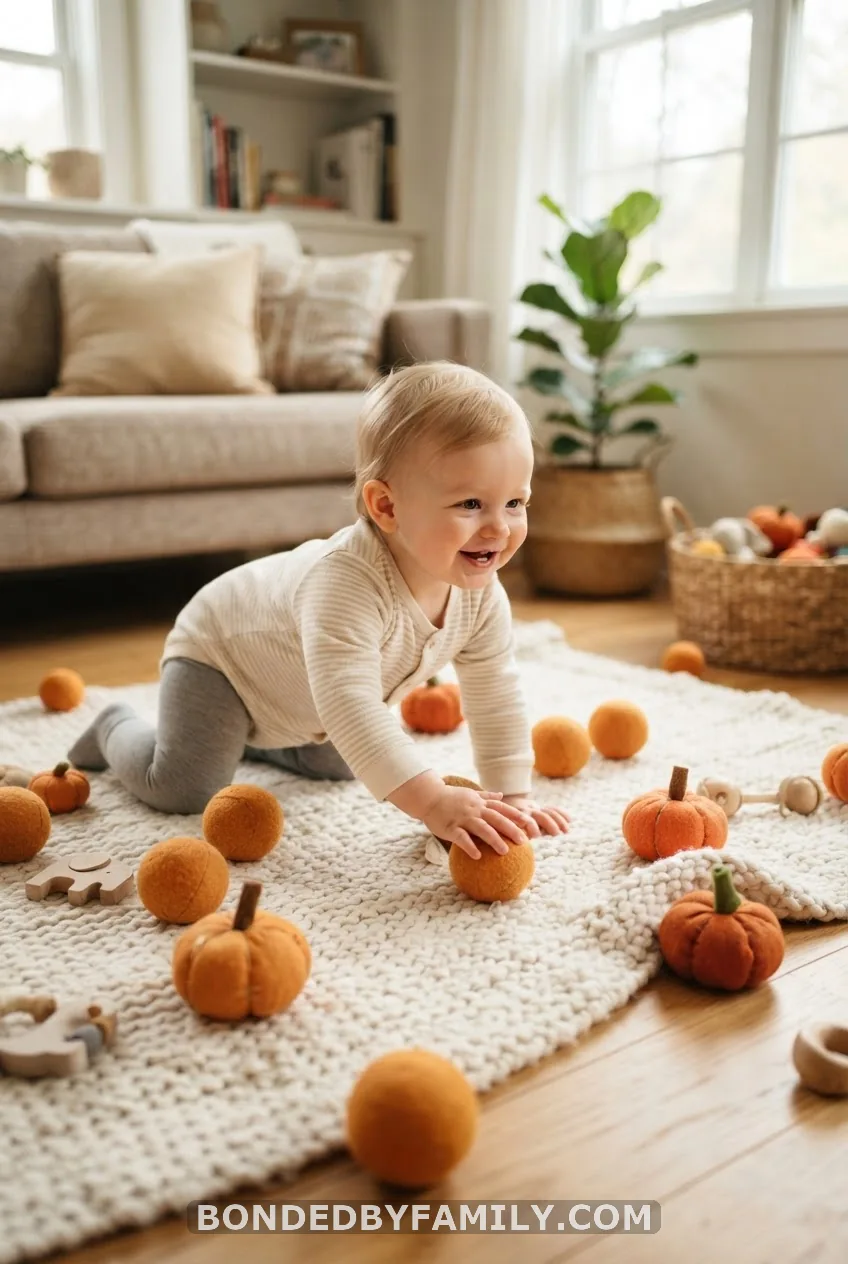
Scatter soft play balls or fabric pumpkins across a blanket and encourage a crawling baby to roll or climb over them – it’s a gross motor workout disguised as a game, and most babies eight months and up will do it without any coaxing. Stretch a loose length of yarn between two chairs a few inches off the ground for an “spider web” crawl-under, always supervised and always loose enough to release under light pressure.
Pair it with a cause-and-effect box: decorate a cardboard box with a big silly monster mouth, cut a hole, and let baby drop soft balls in and watch them roll back out. A white scarf draped over your face for a game of “ghost” peek-a-boo builds the same object-permanence understanding babies are wiring up around six to nine months – the idea that something still exists even when it disappears from view.
Skill tags: gross motor development, cause and effect, object permanence.
8. Handprint Keepsake and Fall Board Book Read-Aloud
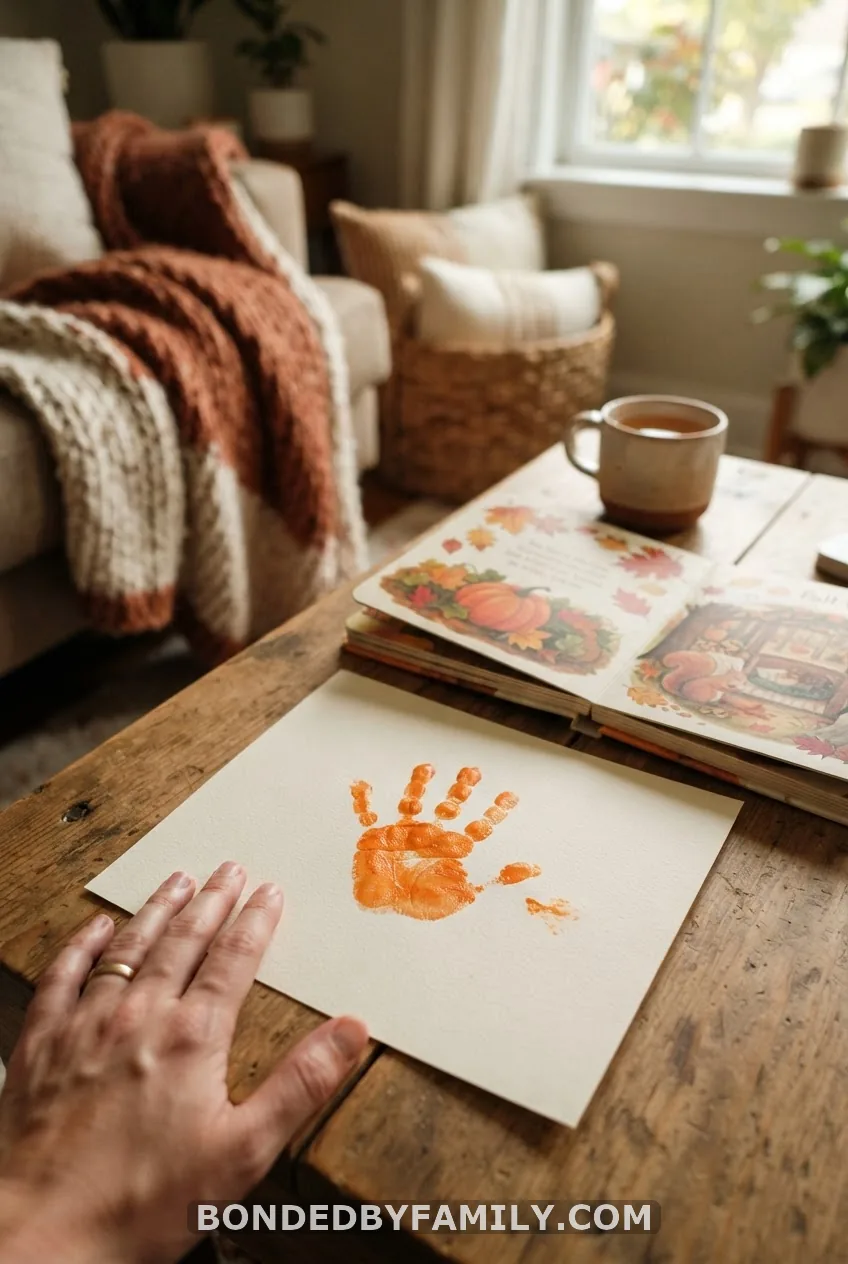
Press baby’s hand or foot into washable orange paint and stamp it onto cardstock, then draw on stem and vine details once it’s dry – instant “baby’s first fall” keepsake, and it takes under ten minutes if you have wipes ready the second the print lands. If baby won’t unclench a fist, try a foot instead; feet are far more cooperative than fists.
Pair it with five minutes of a fall-themed board book before nap, pointing at every pumpkin, leaf, and squirrel on the page. That fifteen-minute combo – craft plus book – builds language, fine motor tolerance for a new texture, and caregiver bonding all in one low-effort afternoon window.
Cost reality:
A tube of washable paint and a pack of cardstock runs under $10 and covers keepsakes for the whole season, siblings included.
Matching the Activity to Baby’s Age
0-3 months: sensory bottles, tummy time with a taped leaf bag, carrier walks.
3-6 months: batting at pumpkins, longer tummy time with visual targets, sensory bags.
6-9 months: sitting-up texture exploration, taste-safe flavors, supervised leaf piles.
9-12+ months: crawling over the “pumpkin patch,” lid banging, ball-drop boxes.
If an activity feels too advanced or too babyish, scale it one stage up or down instead of hunting for something new – most of these ideas stretch across three or four months without any changes.
Fall Sensory Play Safety Notes
Keep acorns, whole nuts, pumpkin seeds, pinecone pieces, whole grapes, and raw apple chunks off any play mat – all are choking hazards. Use only clean, dry leaves from an untreated yard, never a roadside or a lawn that’s been sprayed, and skip damp or moldy piles entirely. Seal every bag and bottle, supervise every second of play, and never leave a baby alone with either one. Wash hands, pumpkins, and gourds before any mouthing happens, and hold off on loose glitter for babies who still put everything in their mouth. On the food side: no honey before 12 months, no raw pumpkin flesh, cook and mash everything, and introduce one new food at a time.
FAQs About Fall Activities for Babies
What fall activities can I do with a newborn or 3-month-old?
Keep it passive and visual: tape a leaf sensory bag to the floor at eye level during tummy time, use a high-contrast black-and-orange sensory bottle, and take carrier walks narrating the changing colors. Babies this young learn plenty just from watching and listening.
Are real leaves safe for babies to play with?
Yes, as long as you supervise closely and use clean, dry leaves from an untreated yard. Skip roadside leaves, damp or moldy piles, and never let baby mouth them since they tear into small pieces.
Is pumpkin safe for my baby to eat?
Cooked and mashed pumpkin is a solid first fall food around 6 months once baby shows readiness signs. Use plain cooked pumpkin or unsweetened canned puree, introduce it alone first, and skip the seeds and raw flesh entirely.
How do I make a fall sensory bag for a baby?
Seal leaves, hair gel or colored water, and a few dots of washable paint inside a zip-top freezer bag, press out the air, and tape it down on all four sides to the floor or a high-chair tray. The tape is what keeps it in baby’s reach instead of their mouth.